

Showcase Feature
When Whitney and Elliott purchased their home in Emeryville in the spring of 2024 it was a given that Whitney, a Master Birder and Director of Conservation at the Golden Gate Bird Alliance, would want to plant a garden that would attract birds.
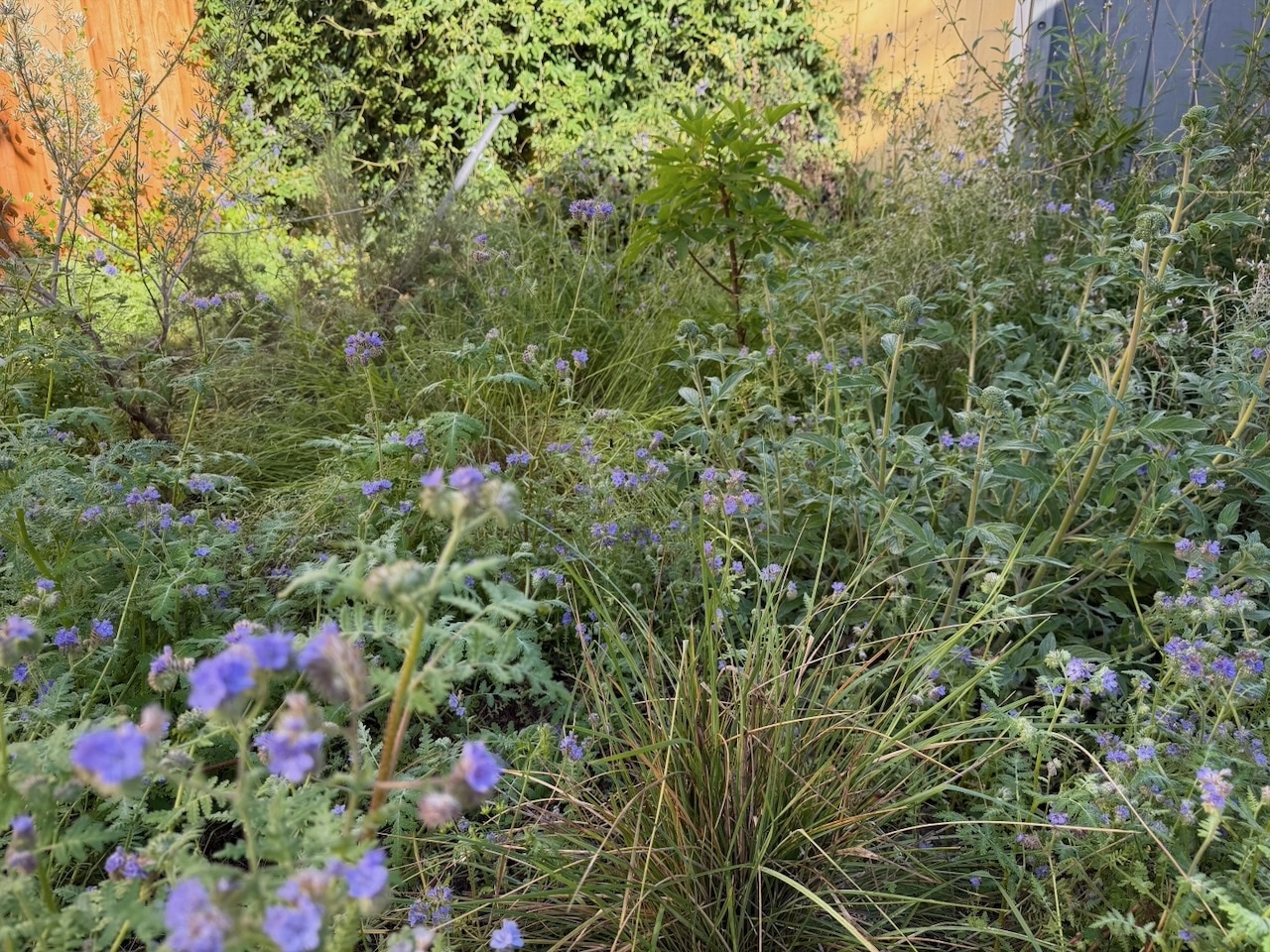
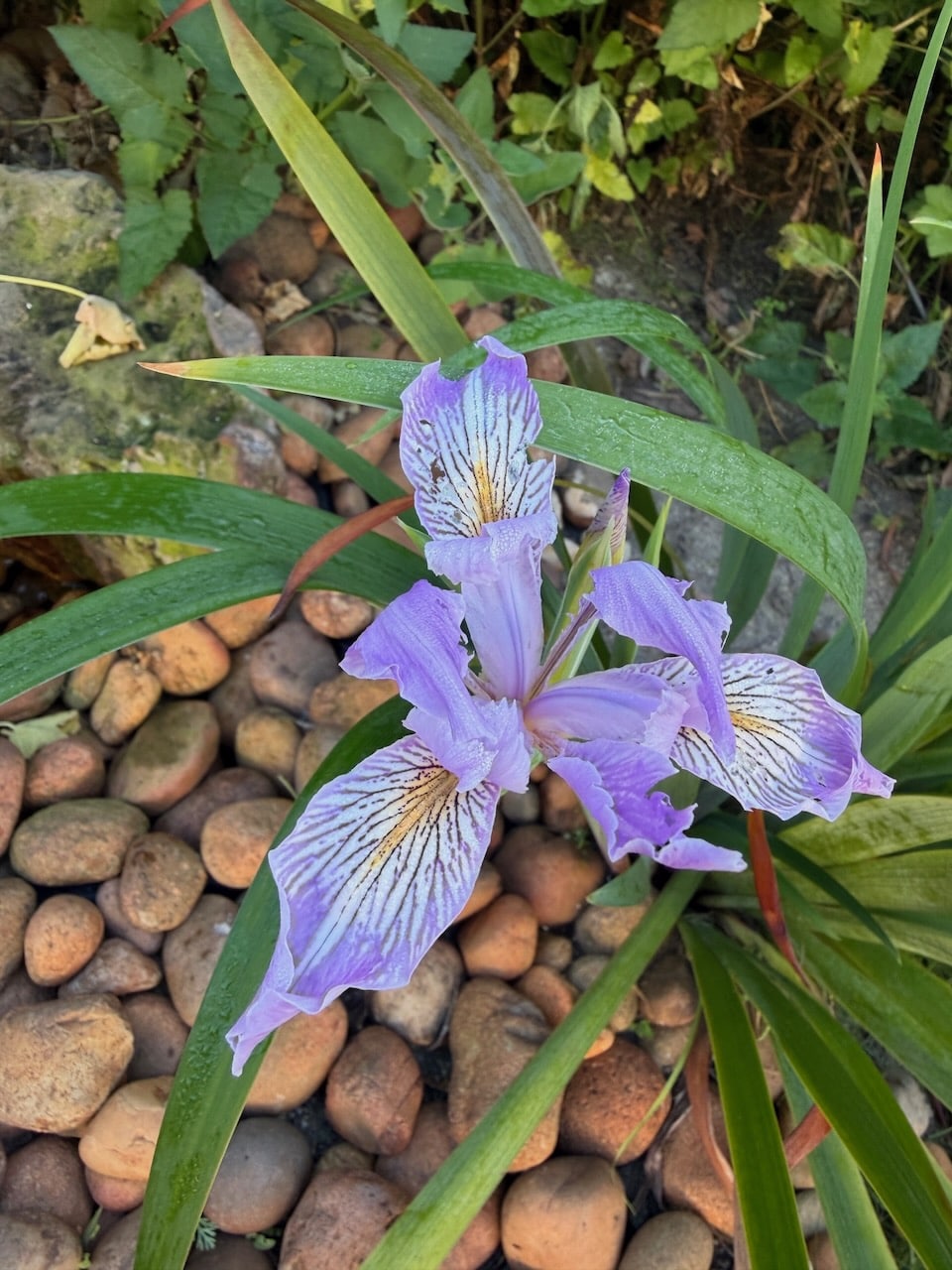
 The Astroturf and concrete that had encased the front and back yards were removed. Whitney chose hardy, water-conserving, locally native plants that would provide insects, seeds, berries and nesting places and shelter to birds, and pollen and nectar to native bees and butterflies. Amy Chong from The Nestled Garden provided the design; Whitney and Elliott installed and maintain the garden.
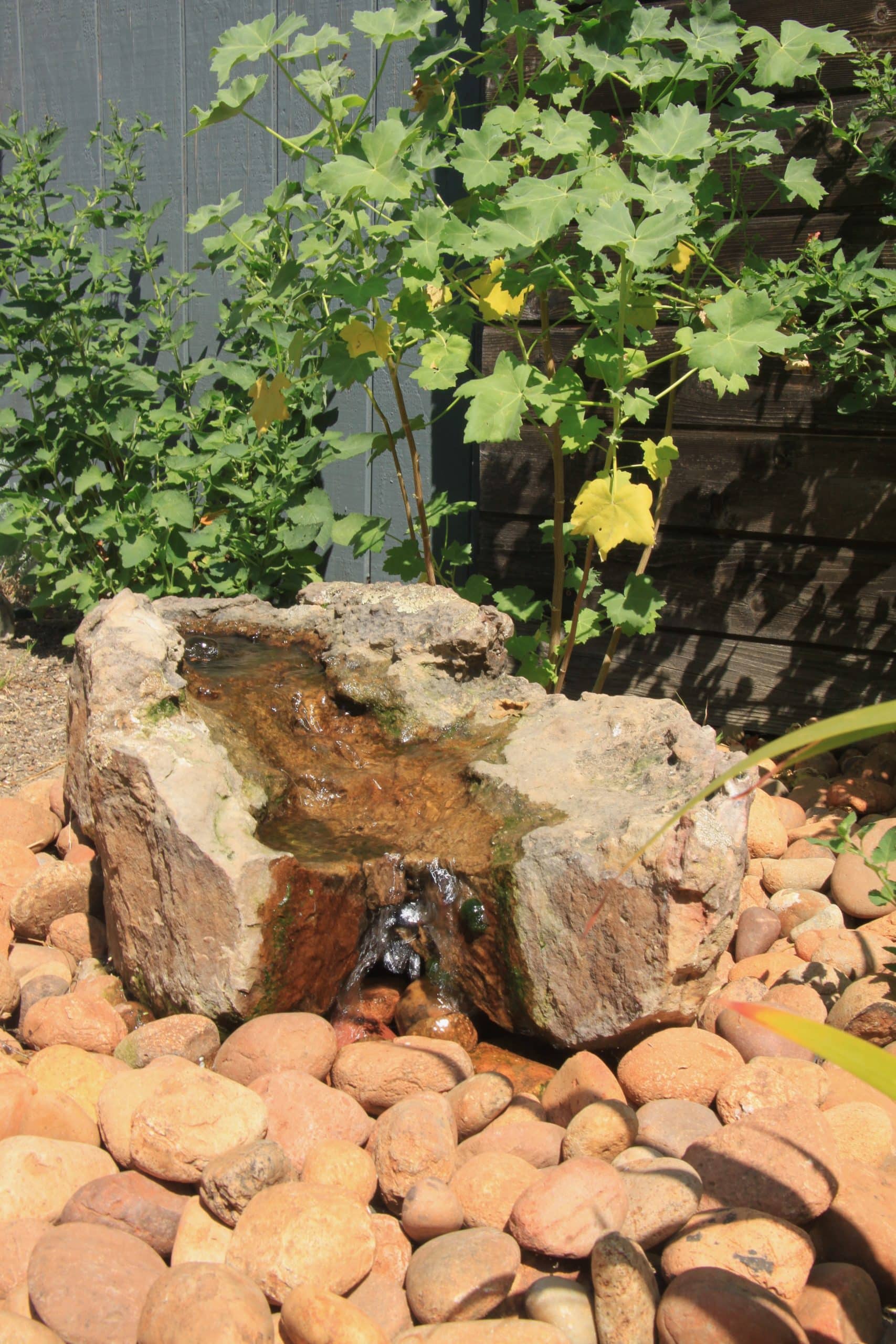
A pondless, natural rock fountain bubbles cheerily in the back garden, providing clean water for birds to drink and bathe in, and the relaxing sound of splashing water for Whitney and Elliot to enjoy.
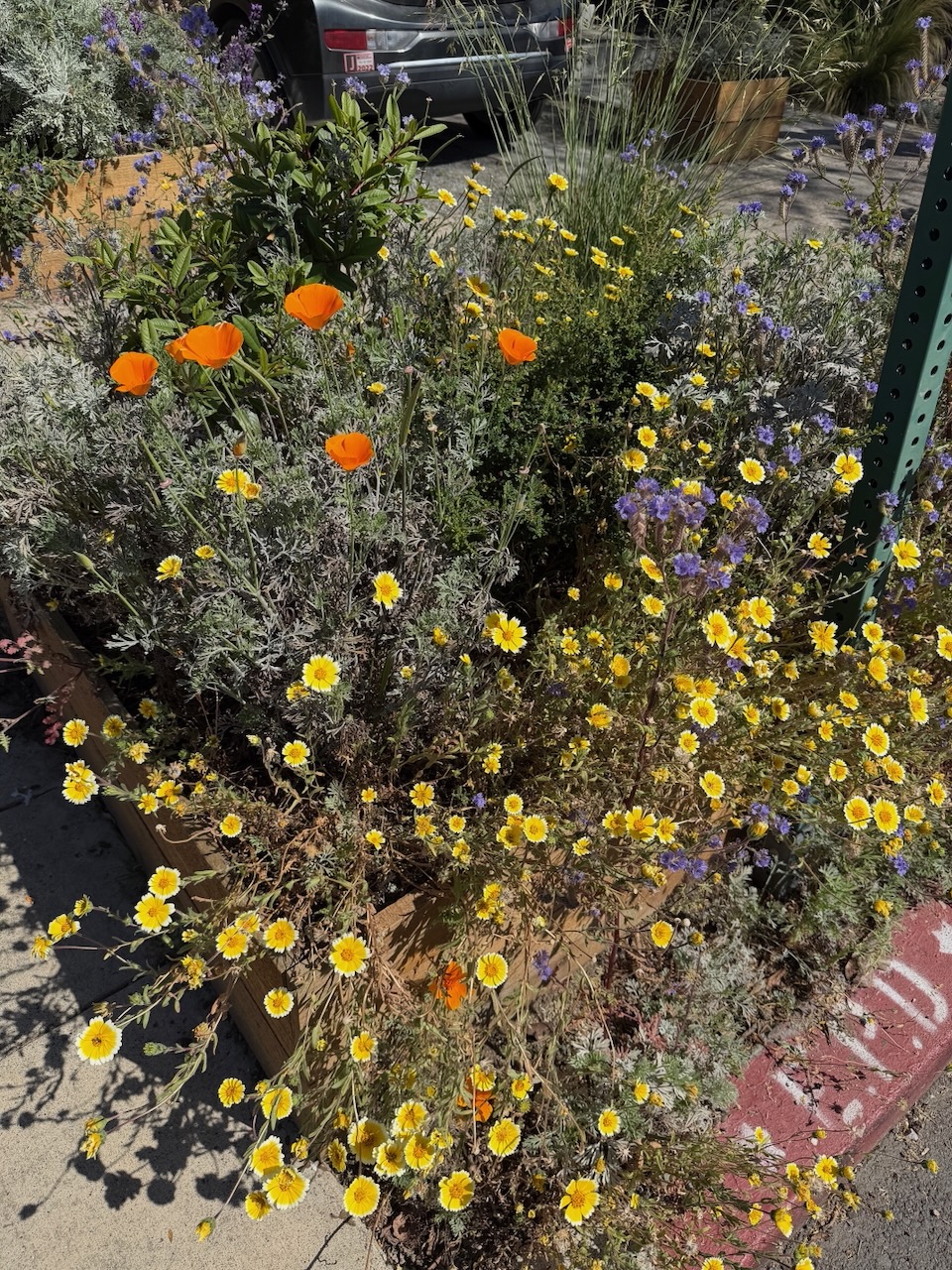
In spring the garden is a riot of wildflowers, including yellow and white tidy tips, lavender phacelia, and orange poppies.
This small but mighty space is now a peaceful resting place for both resident (meaning, they live in the Bay Area year-round) and migrating birds, which stop in to refresh themselves on insects they find in the garden, and to have a drink of cool water on their long journeys across the Continent.
 Ask Whitney about the Alliance’s “Lights Out for Birds” program, and the benefits to people, birds, and other wildlife of:
• turning off unnecessary exterior lights
• installing motion sensors and down-shielding on necessary exterior lights
• turning off inside lights that are not in use
• closing blinds or pulling drapes at night
Turning your lights off, reducing the number of lights you have on, and keeping light inside your home will help reduce bird / glass collisions, help birds stay on their migration routes, protect moths (which are bird food) from battering themselves to death on your exterior lights, and reduce your energy bill. The Dark Skies at Night website also has a lot of information on this topic.
Other Garden Attractions
• Many dogs pass by the small front garden: raised wooden garden beds were built in order to protect the sagebrush, sages, native grasses, and wildflowers planted near the street.
• The scent of black sage wafts across the garden on warm summer breezes.
• A wo rm composting bin turns kitchen scraps into beautiful soil.
Gardening for Wildlife
Thirty-five species of birds, including California towhees, Anna’s hummingbirds, oak titmouse, chestnut-backed chickadees, Western tanagers, Wilson’s and orange-crowned warblers, and Downy and Nuttall’s woodpeckers have been seen in the garden – including a thrilling sighting of a lazuli bunting! Eight species of butterflies and moths flutter about, in the company of grasshoppers, katydids, and spiders. They have been attracted by the diverse array of local native plants, fresh water, and the brush pile at the back of the garden. (Whitney has seen a baby white crowned sparrow sheltering in the brush pile, and darting out nervously to peck at insects and seeds on nearby plants.)
Keystone species (watch this talk by Doug Tallamy!) Keystone species—our own, local ecological powerhouse plants—in this garden include red flowering currant, manzanita, goldenrod, sagebrush, buckwheat, beach strawberry, coffeeberry, and honeysuckle.
Green Home Features 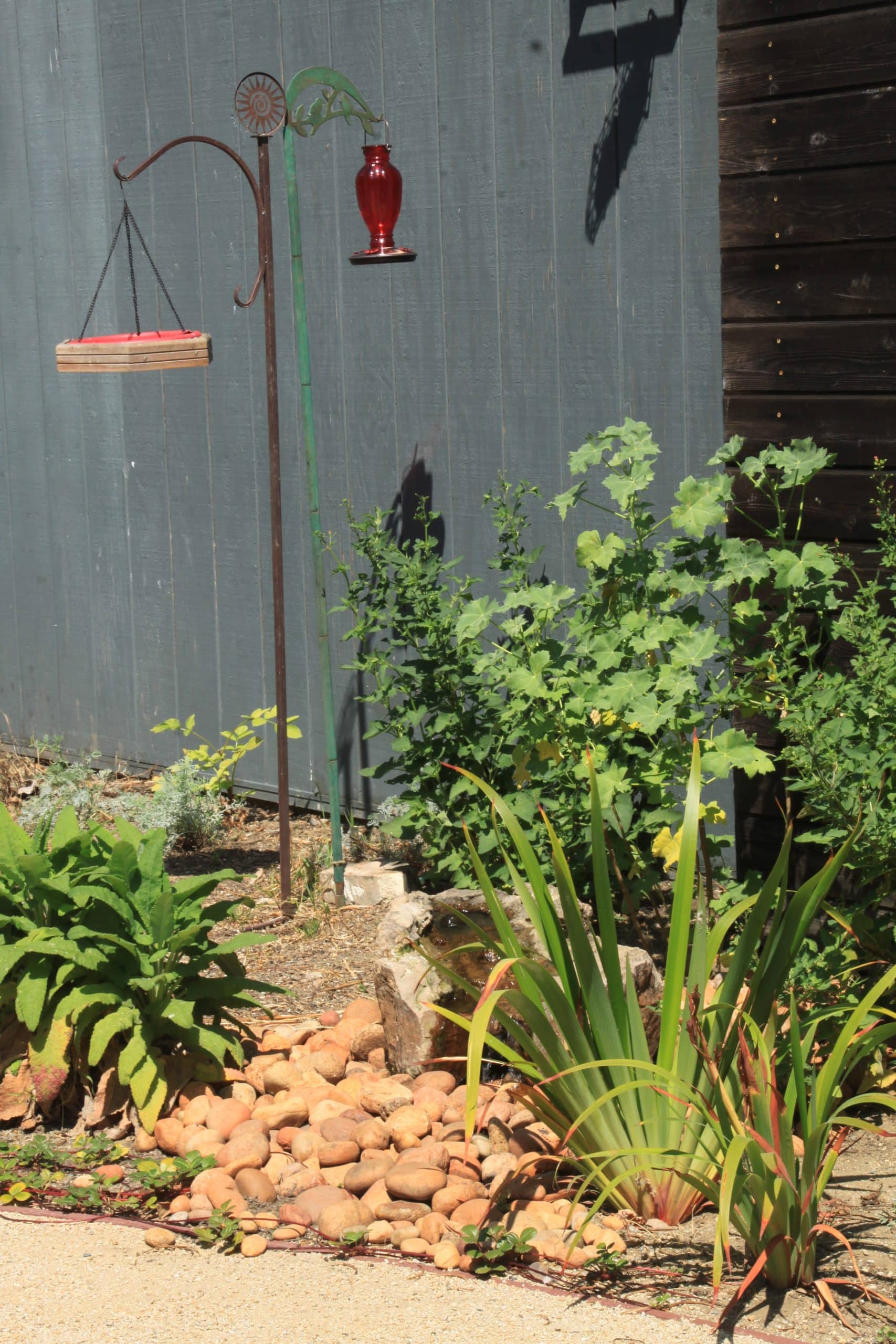
• Heat pump for heating and cooling the house
• Electric vehicle
At least partially wheelchair accessible? Yes
Parking
Will be tight; be prepared to walk a block or two.
Photos
Click to see as a slideshow: