

Assembly Bill 1572

Scroll down to see examples of schools, libraries, businesses, and HOAs that have replaced lawns with beautiful native plant gardens
Assembly Bill 1572: The Statewide Irrigation Ban On Non-Functional Turf
In late 2023 AB-1572 became state law. This law prohibits the use of potable (non-recycled) water to irrigate decorative lawn on government, commercial, and in common areas of homeowner association properties, as well as many others, including schools, libraries, and more.
This law will effec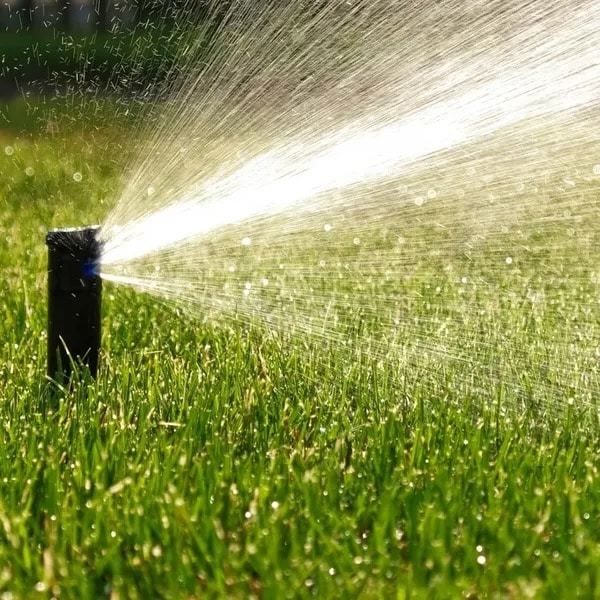 tively eliminate ornamental lawns in California by 2031 anywhere other than single-family homes, fundamentally reshaping the California landscape. The first deadline for compliance is coming right up, yet most people have never heard of the regulation.
While the law does not technically require the removal of turf, anyone that has grown grass knows that without water, lawns die or succumb to weeds, ultimately forcing a change.
AB 1572 is an unprecedented opportunity to transform vast amounts of ecologically unproductive land into native plant gardens that support our local birds, butterflies, and bees.
However, there is little time to act; the law begins phasing in on January 1st, 2027 and will reach full implementation over the next few years, so every affected property owner or manager in California should start budgeting and planning for compliance now.
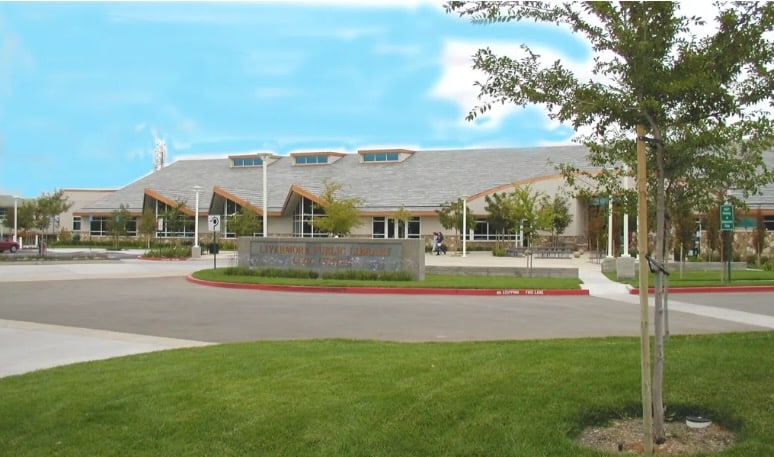
Livermore Public Library
WHAT IS FUNCTIONAL VS NON-FUNCTIONAL TURF?
NON-FUNCTIONAL TURF (NFT) is any lawn that does not serve any real purpose besides aesthetics. Examples are:
• Parking strips
• Decorative lawns on the fronts or sides of buildings
• Lawns in center medians
• Lawns in areas that cannot be accessed
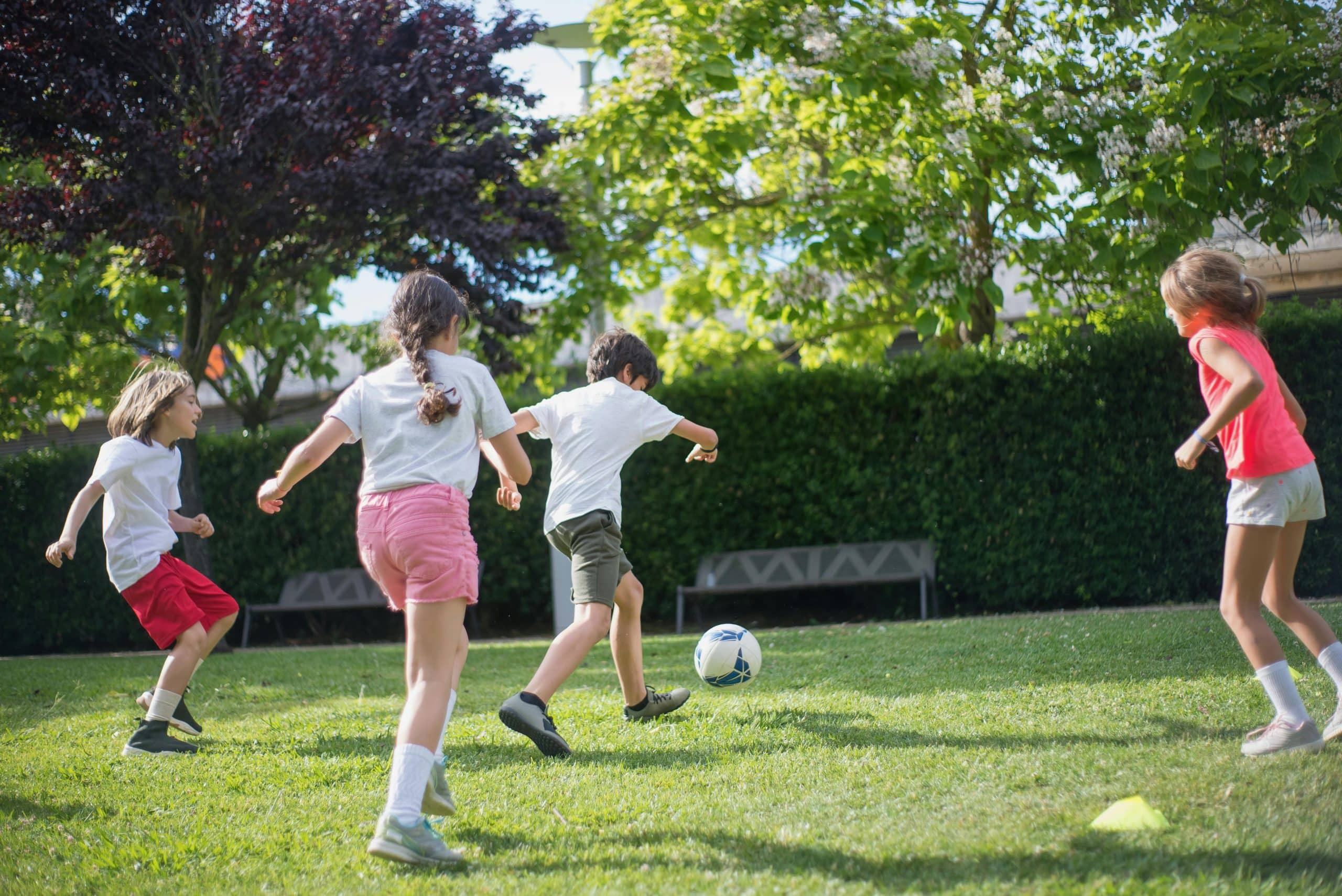 FUNCTIONAL TURF is not affected by this law. Functional turf is defined as an area used for recreational purposes or community gathering and may be formal or informal. Examples of functional turf are:
• Sports fields
• Golf courses
• Playgrounds
• Picnic grounds
• Pet exercise areas
• Civic or ceremonial gathering areas
• Social gathering areas
Information on compliance and timing is provided after the examples of converted landscaping
Examples of schools, libraries, a civic center, businesses, and HOA’s (and similar living situations) that have complied with AB 1572
Schools
Prospect Sierra Elementary School , 2060 Tapscott, El Cerrito, CA
“Native plants in the schoolyard: how these vibrant hubs of learning are used in every classroom, and have been embraced by faculty, staff, and families” by Prospect Sierra’s Science Teacher Melody Esquer Gil
Video of the Prospect Sierra Elementary School lawn conversion project
Creating Native Gardens in the Schoolyard” – by Science Teacher Melody Gil, Facilities Manager Steve Harrington, and Teacher Genie Barry
“How to convert your school lawn to a native plant garden” by Kelly Marshall
 Leadership Public High School, 28000 Calaroga Ave, Hayward, CA
The entrance-way to Leadership Public High School, formerly a scruffy lawn and hedges, has been planted with deer grass, manzanitas, sages, coyote brush, hummingbird sage, and a few other species of native plants. It is full, and lush. Directly across the street is Mount Eden High School; the long parking strip there, a former weedy area, was sheet mulched in the fall of 2025: it will be planted with natives in January of 2026.
Libraries
The El Sobrante Library 4191 Appian Way, El Sobrante, CA 
The library’s entrance features an extensive native plant garden that contains mostly sun-loving plants. This beautiful, low-maintenance, and water-conserving garden—which, in addition to its other great features also provides habitat for wildlife—is a model for public spaces. Completed in 2017, the library landscape contains a simple but delightful combination of mostly native plants that is attractive year-round: massed low-growing, fragrant sages line the gently winding path; drifts of fuchsia brighten the garden in summer and fall; rushes stay green all year; and deergrass provides visual interest with its tall, delicate, fountain-like blades.

The entrance garden was created by a partnership between Supervisor John Gioia’s office, the Contra Costa County Public Works Department, the El Sobrante Library, the San Pablo Watershed Neighbors Education & Restoration Society (SPAWNERS), and local community members. (Congratulations, all, on a job well-done!)
Bring a picnic lunch, take a seat in the amphitheater at the back of the library, and enjoy this peaceful setting.
The Woodside Library, 3140 Woodside Road, Woodside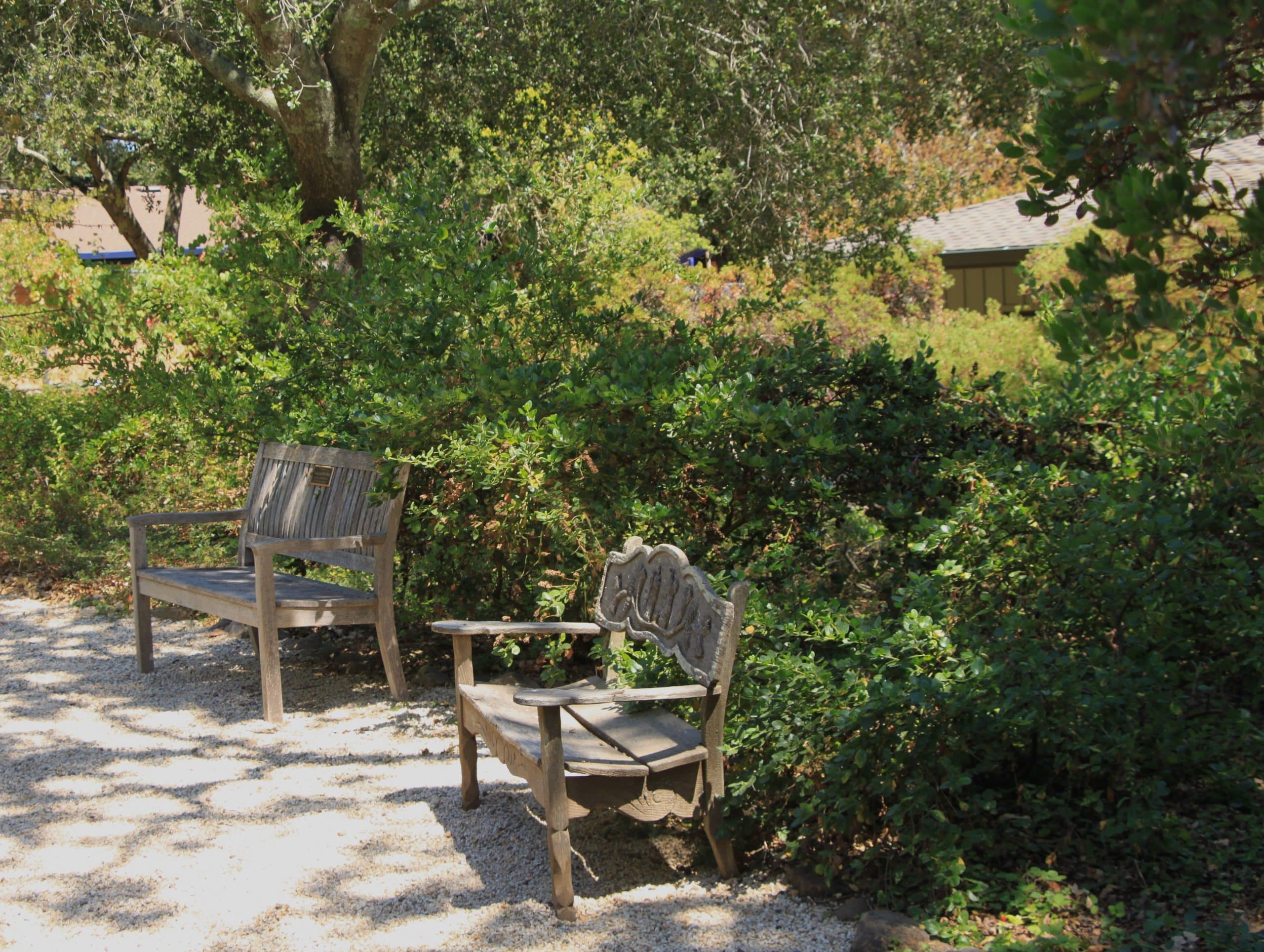
The Woodside Library has an astonishingly beautiful native plant garden behind the Woodside Library has to be seen to be believed. It was planted in 1970 by members of the Woodside-Atherton Garden Club, and it contains a redwood grove, oak woodland area and a sunny chaparral area. The garden is enjoyed by library patrons, local school children and gardeners interested in native plants. It is still maintained by the Garden Club today. This garden can only be seen when the library is open, as access is through the library.
Businesses with native gardens
 The Google Campus 2000 N. Shoreline, Mountain View
The Google Campus in Mountain View has four acres of gorgeous native plant gardens! In addition, the Google Cafe is open to the public from 10:00-5:00. Drop by to enjoy a delicious lunch and check out the gardens. There is free parking in the parking structure on Huff: it is a short walk to the Cafe, or you can take the free shuttle, which runs every 15 minutes.
About this project Google writes: Creating ecologically rich campus environments is not only good for the planet, but also good for people. Healthy, diverse ecosystems and landscapes support biodiversity, increase ecological resilience, and have major benefits for human health. That’s why our landscape design is centered on regenerating biodiverse local ecosystems.
On four vegetated acres we worked to reestablish ecosystem elements once prevalent in Silicon Valley, including oak woodlands, willow groves, chaparral, and grasslands. The landscape is composed almost entirely of native species, including approximately 400 native trees and pollinator-friendly native plants, such as milkweed, yarrow, and sage. The goal is to revive the area’s ecological heritage and bolster the human experience, while creating thriving, functional landscapes for a biodiverse constellation of species.
A key piece of our ecology strategy centers around one specific type of tree: oaks. Iconic trees of the California landscape, oaks once dominated Silicon Valley. The native oaks are drought-tolerant, fire-resistant, and efficient at removing air pollution and absorbing carbon from the atmosphere. Additionally, oak woodland ecosystems sustain some of the highest plant and animal diversity in California, supporting 2,000 additional plant species and around 5,000 insect species. Hundreds more birds, mammals and other wildlife rely on the richness of oak woodlands for food, shade and shelter.
 We worked with local scientists to design a connected tree canopy for the landscape that includes oaks, along with other native tree species like buckeye, sycamore, and willow. A connected canopy creates wildlife corridors through the built environment and mitigates the urban heat island effect.
Native pollinator plantings serve as the understory to the native trees, providing resources for local butterflies, birds, and bees. A portion of the landscape is designed to specifically support the western monarch butterfly population, applying the best available science to create the right mix of milkweed plants, which support monarch eggs and caterpillars, and flowers, which fuel butterflies passing through on their long migration.
Monarch caterpillars on narrow-leaf milkweed
Civic Offices
City of San Carlos City Offices, 600 Elm Street, San Carlos
The City of San Carlos has planted natives outside of the city offices. 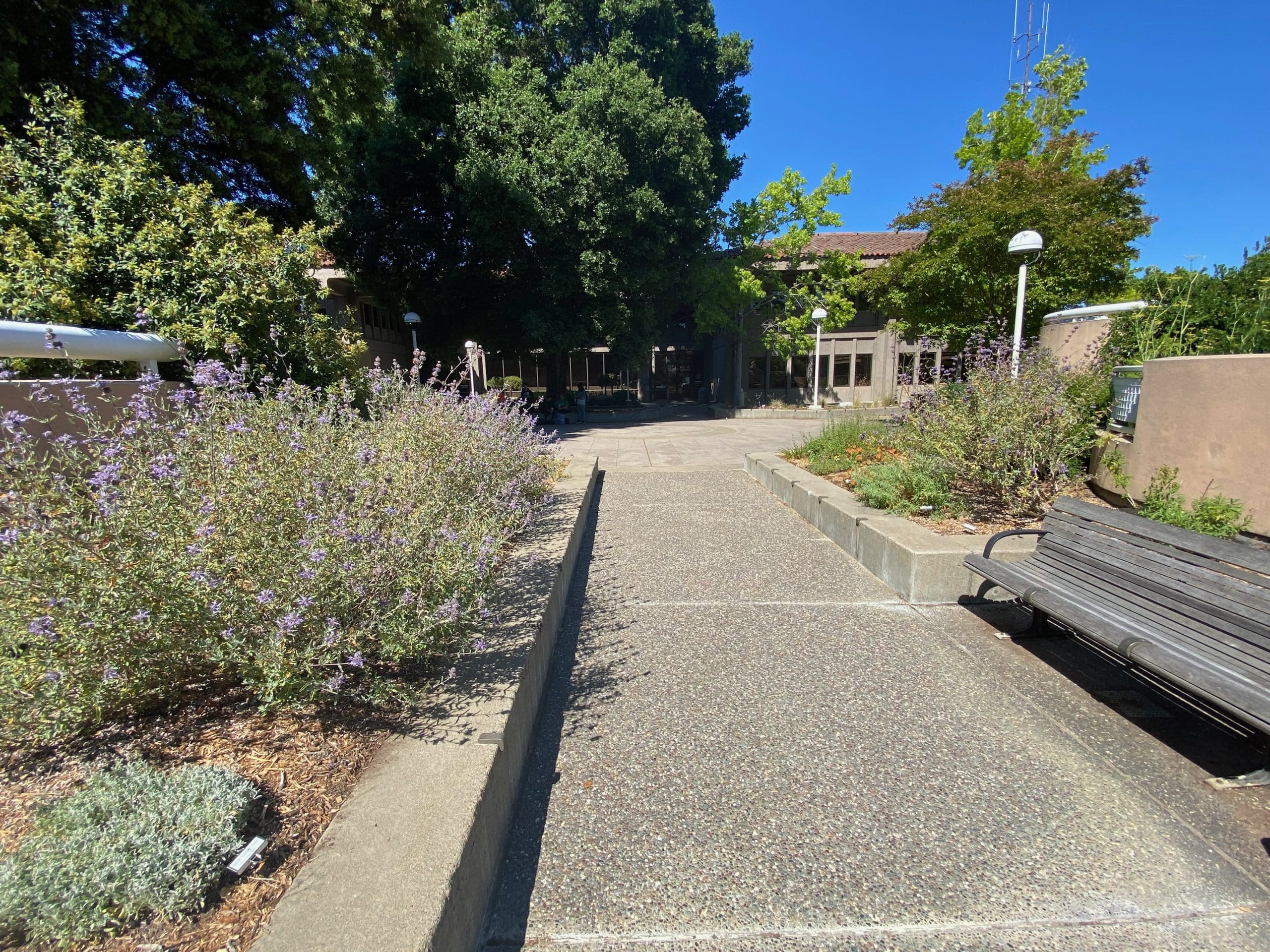
San Carlos Native Habitat Garden
In 2019 the City was approached by representatives of the Master Gardeners of San Mateo County with the idea to convert the overgrown and drab landscaping in the area behind City Hall into a native garden with the intent to promote more native and natural habitats for pollinators.
This turned out to be a wonderful partnership between the Master Gardeners and the City. Parks staff cleared much of the old landscaping and provided the soil and installed a new irrigation system, while the Master Gardeners planned the garden, obtained California native plants at specialized nurseries, and planted the new Native Habitat Garden. The City created signage specific to each area of the garden with information about the wildlife that benefit from the specific plants in the garden, while plant identification markers were also placed at each plant varietal. These 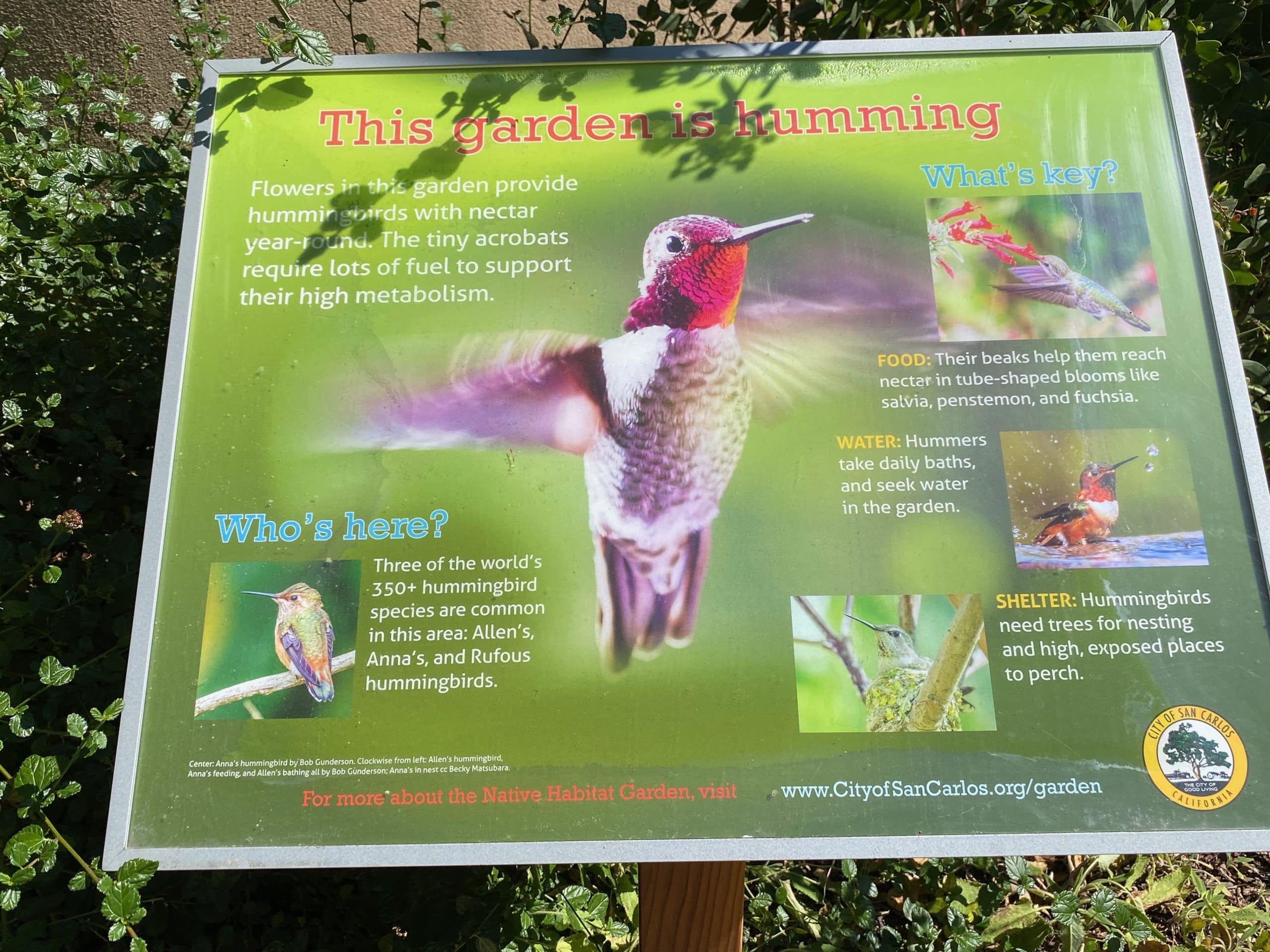 plants are known to attract pollinators such as hummingbirds, butterflies and bees. The Master Gardeners will continue to be involved in maintaining and advising on the garden. If you are visiting City Hall or the Library in the future, stop by the garden and check out all the “buzz”!
HOAs and other communal living situations
 Piedmont Gardens, 110 41st St, Oakland
Piedmont Gardens, a non-profit senior living facility, removed lawn and planted a native plant garden.
Videos of Condos, Apartments, and HOAs that have installed native plant gardens
“Condo? Apartments? HOA? Getting them to go green!”
How to get your homeowner’s association, or your fellow apartment residents, or the management of any group living facility to agree to transition from lawns and non-indigenous species to a native plant garden. Marilee Maringa, Stepanie Falzone, and Lois Richerson—three people who have successfully done—this share their tips about overcoming objections and offering incentives. The benefits may include saving time and money on landscape maintenance and lowering the water bill, as well as the aesthetic benefits of attracting birds and butterflies. Learn how to reassure your fellow residents that a properly-desgned habitat can be an attractive garden.
“Going native in multi-unit situations (HOAs, etc): Q&A with Rebecca Pollon”
Convincing residents and/or the management of homeowners associations, apartment buildings, senior residential centers, etc., to shift their landscaping toward a native plant ecosystem can be a challenge. Rebecca Pollon was for many years the Landscape Manager for Rossmoor, an 18-acre senior living community in  Walnut Creek. Rossmoor is actually a collection of 22 distinct homeowers associations. In this video, Rebecca goes into detail about how to come up with strategies to address the variety of objections she encountered to transitioning from alien species to natives. There is a discussion about how these same solutions can be applied to public and private schoolyards and other public places.
“An HOA Success Story: From Lawn to Native Plant Garden at an HOA Managed Landscape”
When Stephanie Falzone moved into her HOA managed home, the landscaping was mismanaged to say the least. She became an HOA board member and set out to make improvements and that included adding native plants to the mix. Check out her story.
COMPLIANCE AND TIMING OF AB 1572
GOVERNMENT PROPERTIES AND PUBLIC AGENCIES: January 1, 2027
These include but are not limited to:
• Public Schools and Universities: Including campuses, administrative buildings, and sports facilities.
• Parks and Recreation Areas: Public parks, playgrounds, sports fields, community centers, and nature reserves.
• Libraries and Cultural Institutions: Public libraries, museums, art galleries, and historical landmarks.
• Government Offices: City halls, municipal buildings, courthouses, and administrative offices.
• Public Transit Infrastructure: Bus stations, train stations, and maintenance facilities for public transportation.
• Public Healthcare Facilities: Public hospitals, clinics, & health departments.
• Utilities: Water treatment plants, power plants, and public works facilities.
• Public Safety Buildings: Police stations, fire stations, and emergency response centers.
COMMERCIAL, INSTITUTIONAL AND INDUSTRIAL PROPERTIES (CII): January 1st, 2028
These include but are not limited to:
• Businesses: Business parks, plazas and individual business buildings.
• Private Schools and Universities: Educational campuses, administrative buildings, and student housing.
• Private Hospitals and Medical Centers: Private hospitals, clinics, and specialized medical facilities.
• Religious Institutions: Churches, mosques, temples, synagogues, and other places of worship.
• Non-Profit Organizations:
• Research Institutes: Private research centers and laboratories not affiliated with government entities.
• Corporate Training Centers:
• Cultural Institutions: Private museums, art galleries, and theaters.
• Private Retirement Homes and Nursing Homes: Residential facilities for seniors that are privately operated.
• Manufacturing and processing plants
• Warehouses and distribution centers
HOMEOWNER ASSOCIATIONS and COMMUNITY SERVICE ORGANIZATIONS or similar entities: January 1st, 2029. These include but are not limited to the common areas of:
• Condominium associations
• Planned communities
• Common Interest Developments (CIDs)
• Boys and Girls’ clubs
• YMCA/YWCA
January 1st, 2031: government buildings and public agencies in disadvantaged communities. A disadvantaged community is one with an annual median household income that is less than 80% of the statewide annual median household income. The median household income for a family of four in California in 2025 is $91,905.
EXCEPTIONS AND EXTENSIONS:
• Properties irrigated with recycled/reclaimed water are exempt.
• Single family homes that are not part of a homeowners association are exempt.
• Watering is permitted to ensure the health of trees and non-turf plantings.
• Cemeteries are exempt.
• Extensions of up to three years may be granted if economic hardship, critical business need, or potential impacts to health and safety can be sufficiently demonstrated.
ENFORCEMENT:
Compliance: Properties will need to certify every three years that their property is in compliance.
Monitoring and enforcement will likely become the responsibility of the water district but this has not yet been fully determined.
Penalties: Those which are defined by the water district (this doesn’t exist yet) or in accordance with California Water Code 1846, which permits fines of up to $10,000 a day, or $2,500 for each acre-foot of water.
Thank you, Rebecca Pollon, for this summary of AB 1572! Rebecca is a consultant who specializes in helping HOA’s and similar organizations comply with AB 1572. You can reach Rebecca at:
Rebecca Pollon, MLA, RQP, CNPLC, QWEL
California Landscape Consulting
calandconsulting@gmail.com
California Landscape Consulting (CLC) helps HOA communities and organizations identify and quantify non-functional turf and develop plans to convert them into vibrant, sustainable, AB 1572 compliant landscapes.