Showcase Feature
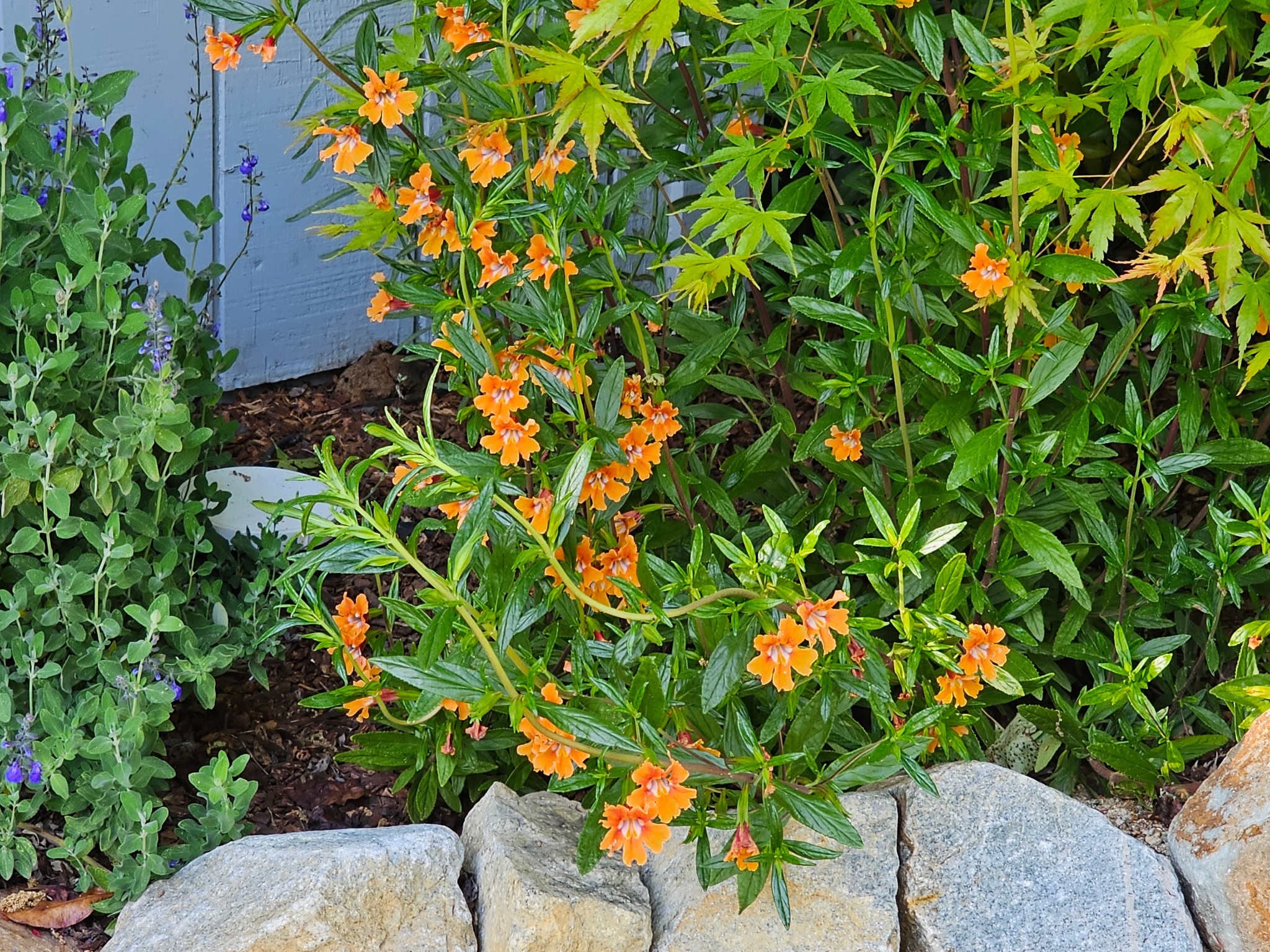
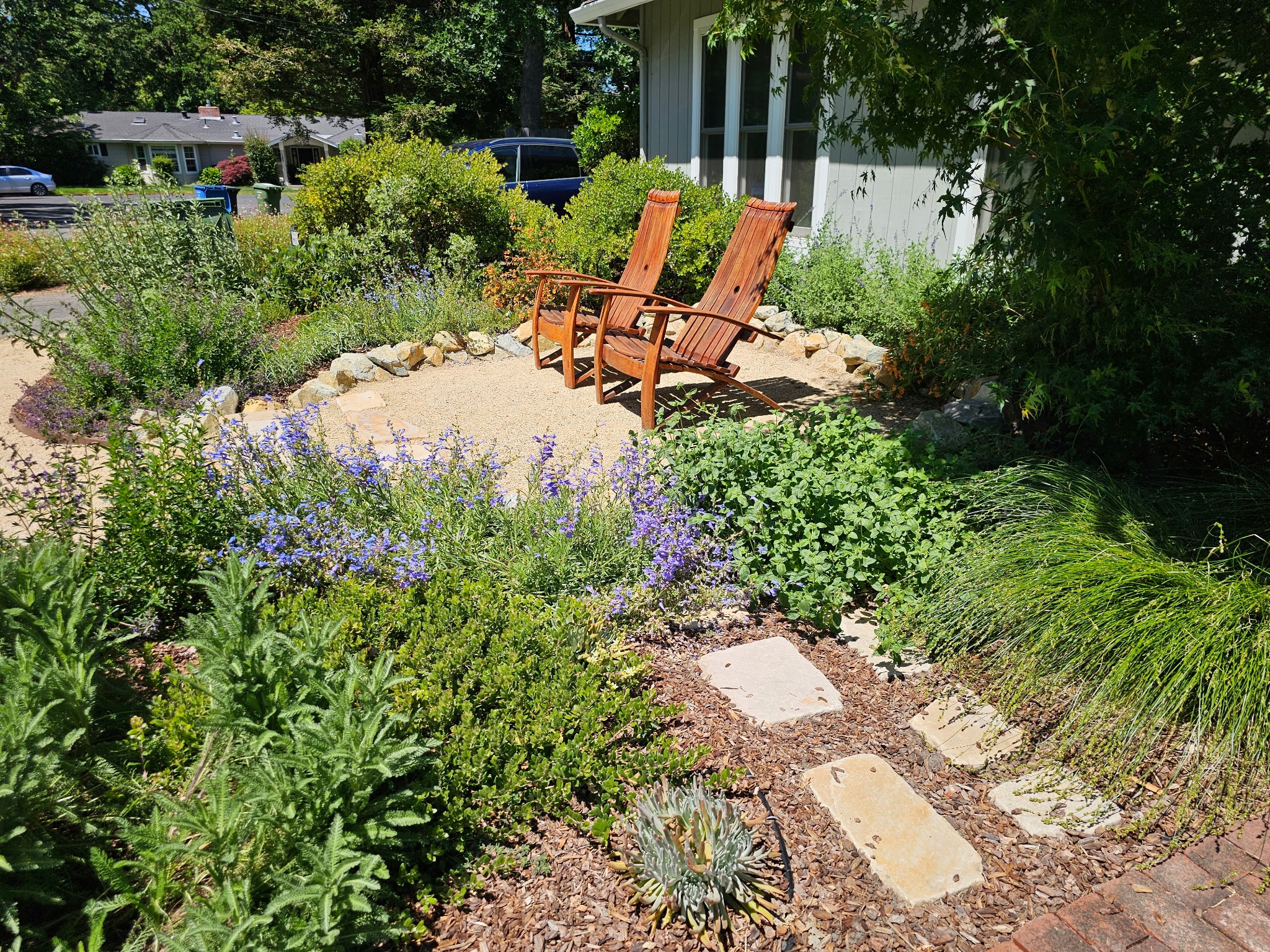
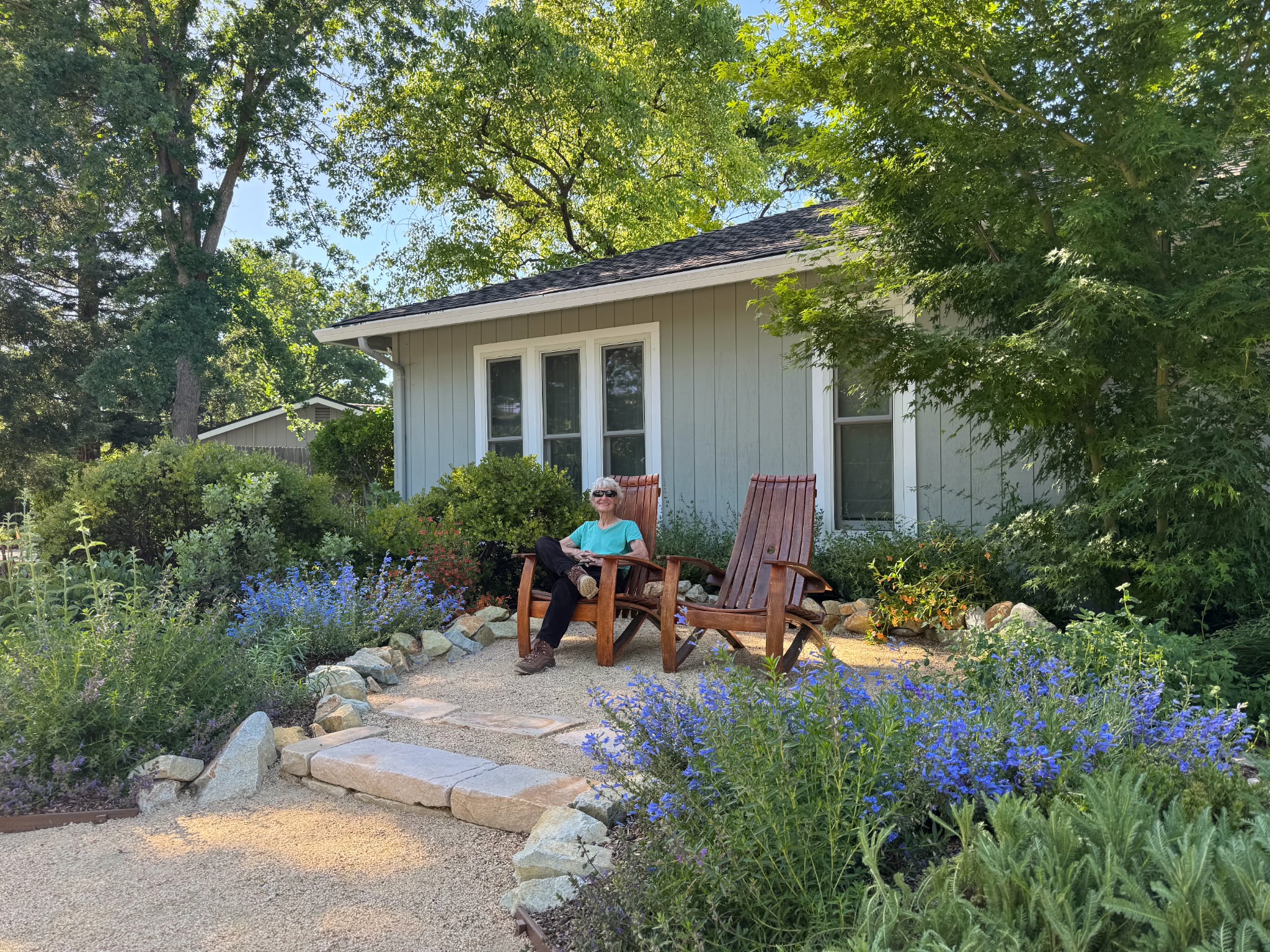
In this beautiful front garden make-over, designed and installed by Lois Simonds of Gardening by Nature’s Design, the front lawn was replaced with a charming seating area, which is surrounded and embraced by a delightful assemblage of manzanitas, coffeeberry, wooly blue curls ‘Midnight Blue’, and monkeyflower. To provide a sense of privacy these evergreen natives, and others, were planted in raised beds bordered by whimsical, dry-stacked Napa basalt boulder walls that meander through the garden.
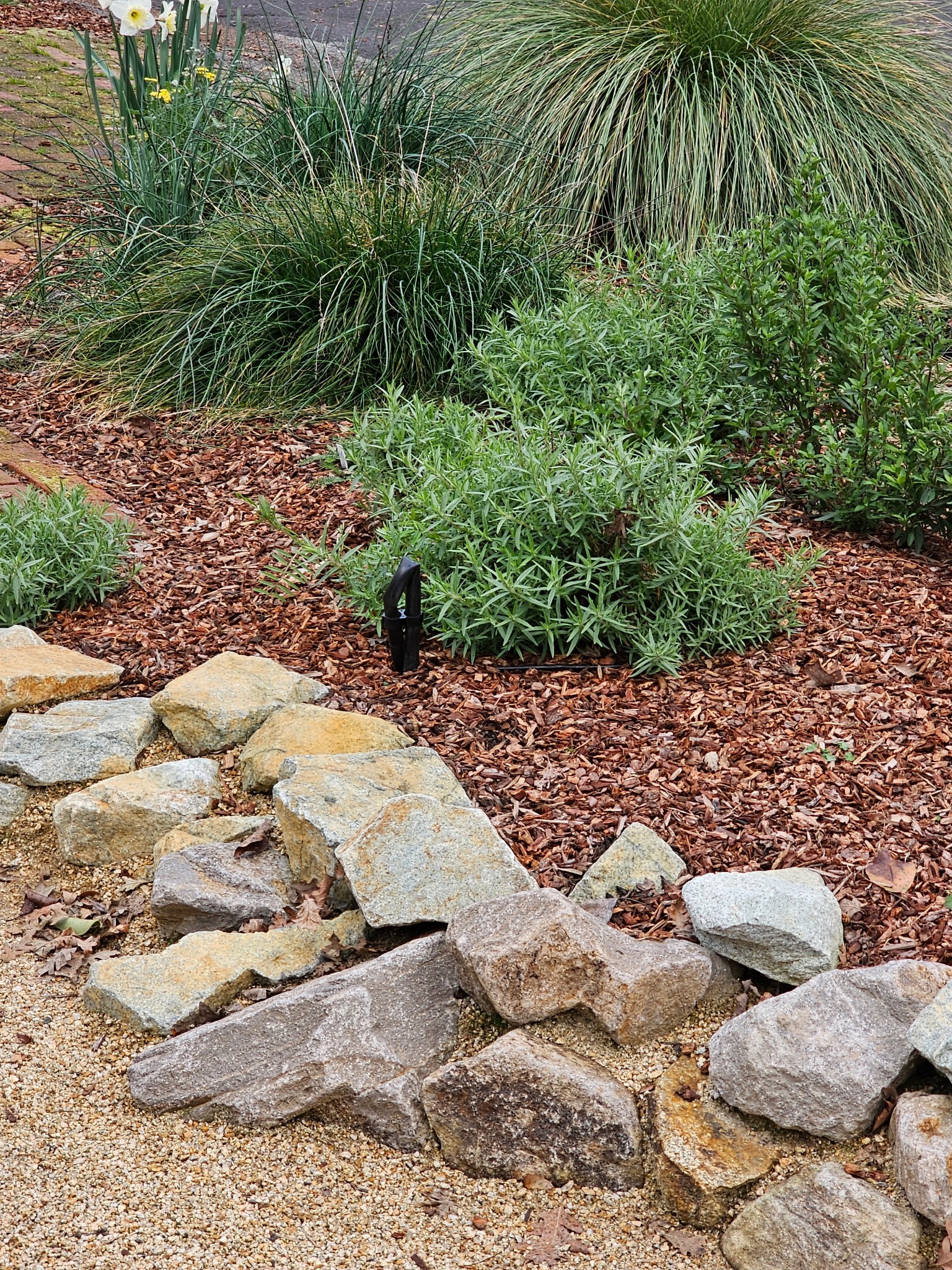
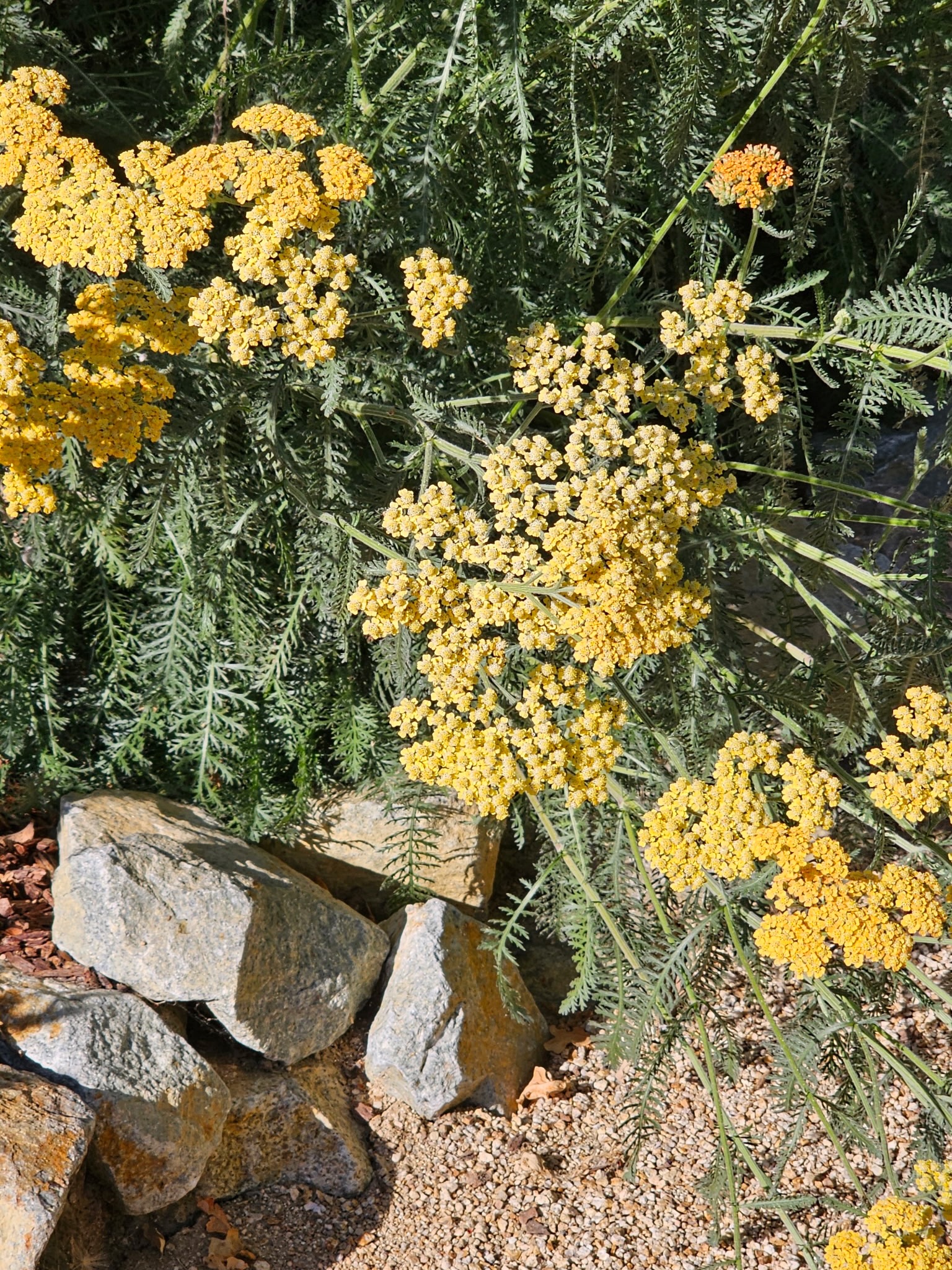
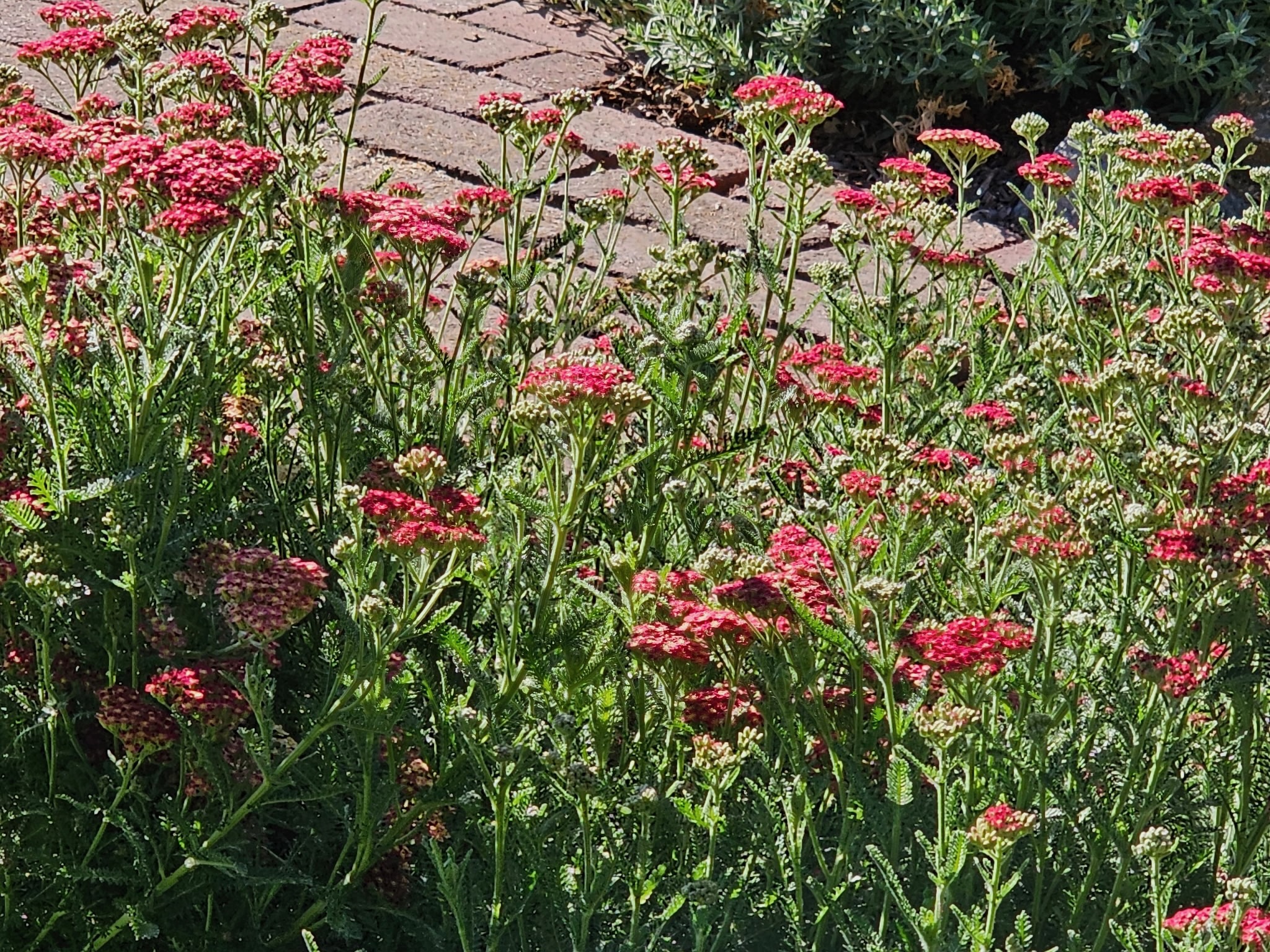
The bright green leaves of the prostrate coyote brush, ridged foliage of the California lilac, finely feathered yarrow, sleek lines of the eyelash grass, and delicate gray-green leaves of the fuchsia provide a variety of textures and colors that create interest throughout the year.
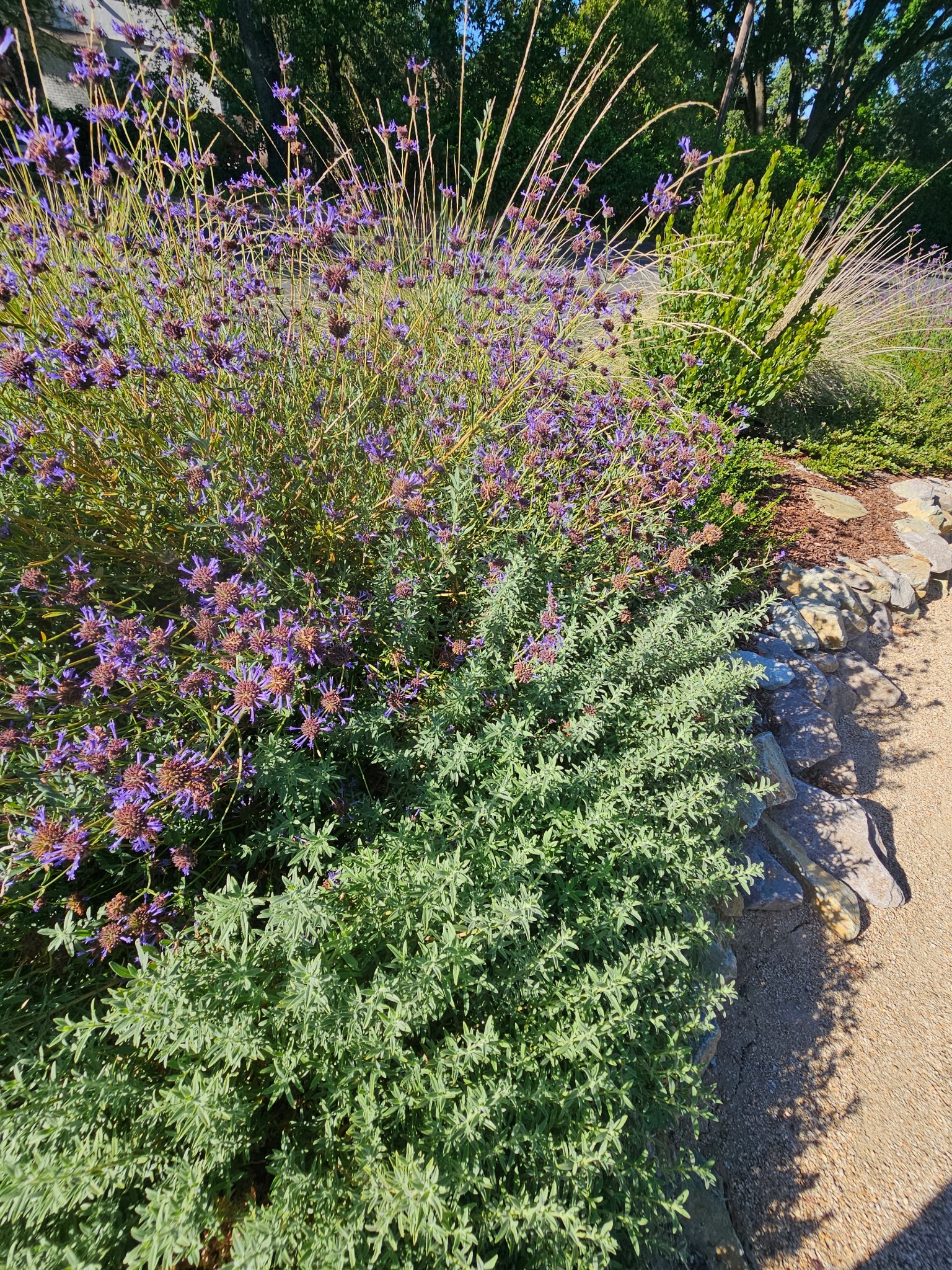
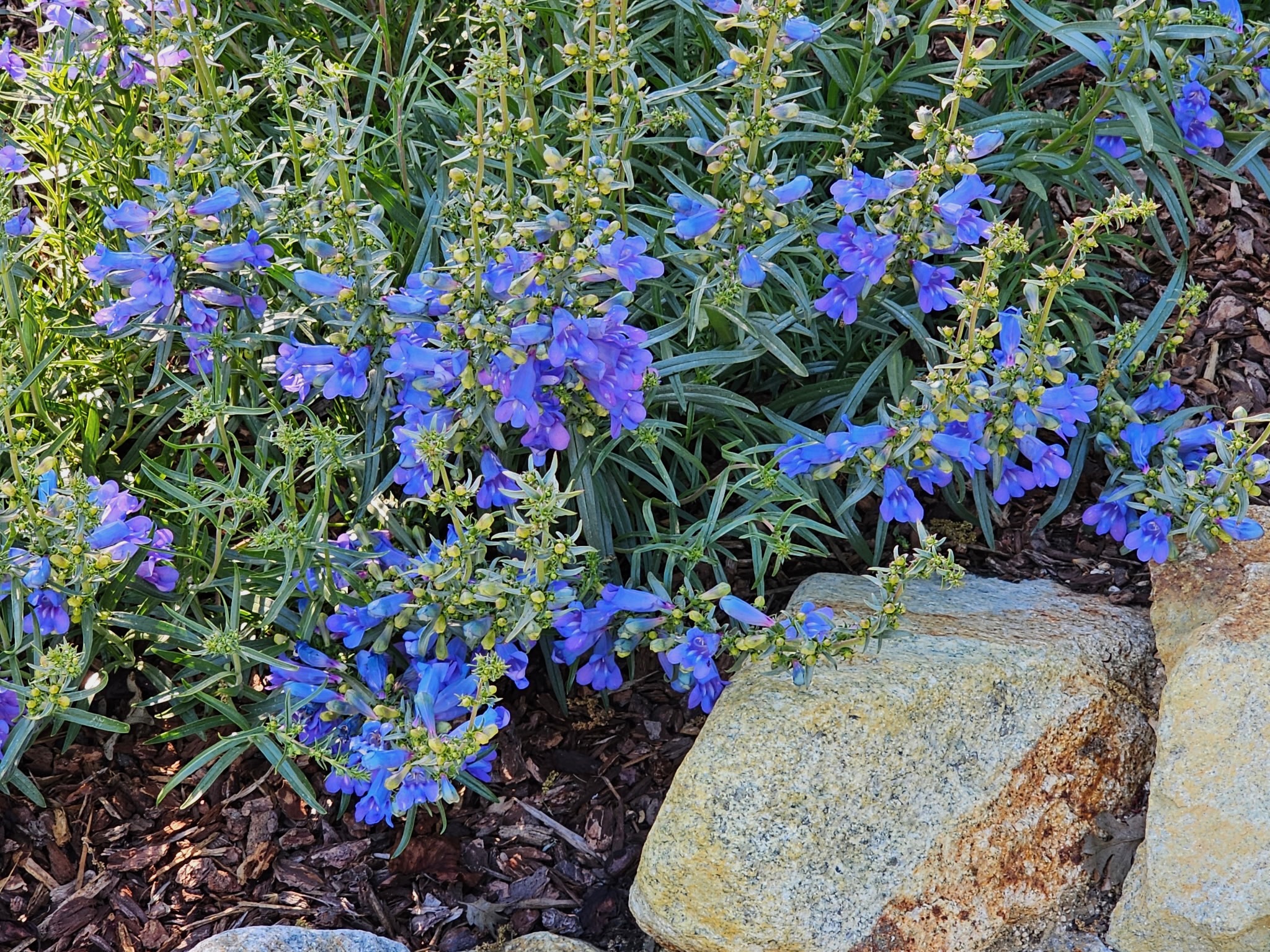
A potpourri of purple and lavender blossoms tie the garden together, including the sages ‘Winifred Gilman’ and ‘Dara’s Choice’, as well as wooly blue curls, coyote mint, foothill penstemon, blue-eyed grass, pitcher sage, and aster. These are highlighted by the yellows, oranges, and reds of the goldenrod, yarrows and fuchsias.
The large back garden has also had a make-over, with many recent plantings! To provide visual interest, as well as the drainage most natives need, the center garden beds were raised and bordered with attractive golden granite stone. A ‘Saint Helena’ manzanita, surrounded by a variety of buckwheats (Santa Cruz Island, rosy and sulphur), as well as penstemon and wooly blue curls, functions as an anchor.
Non-native shrubs that had lined the fence were removed and recently replaced with toyon, coffeeberry, ‘Refugio’ manzanita, redbud, elderberry and California lilac.
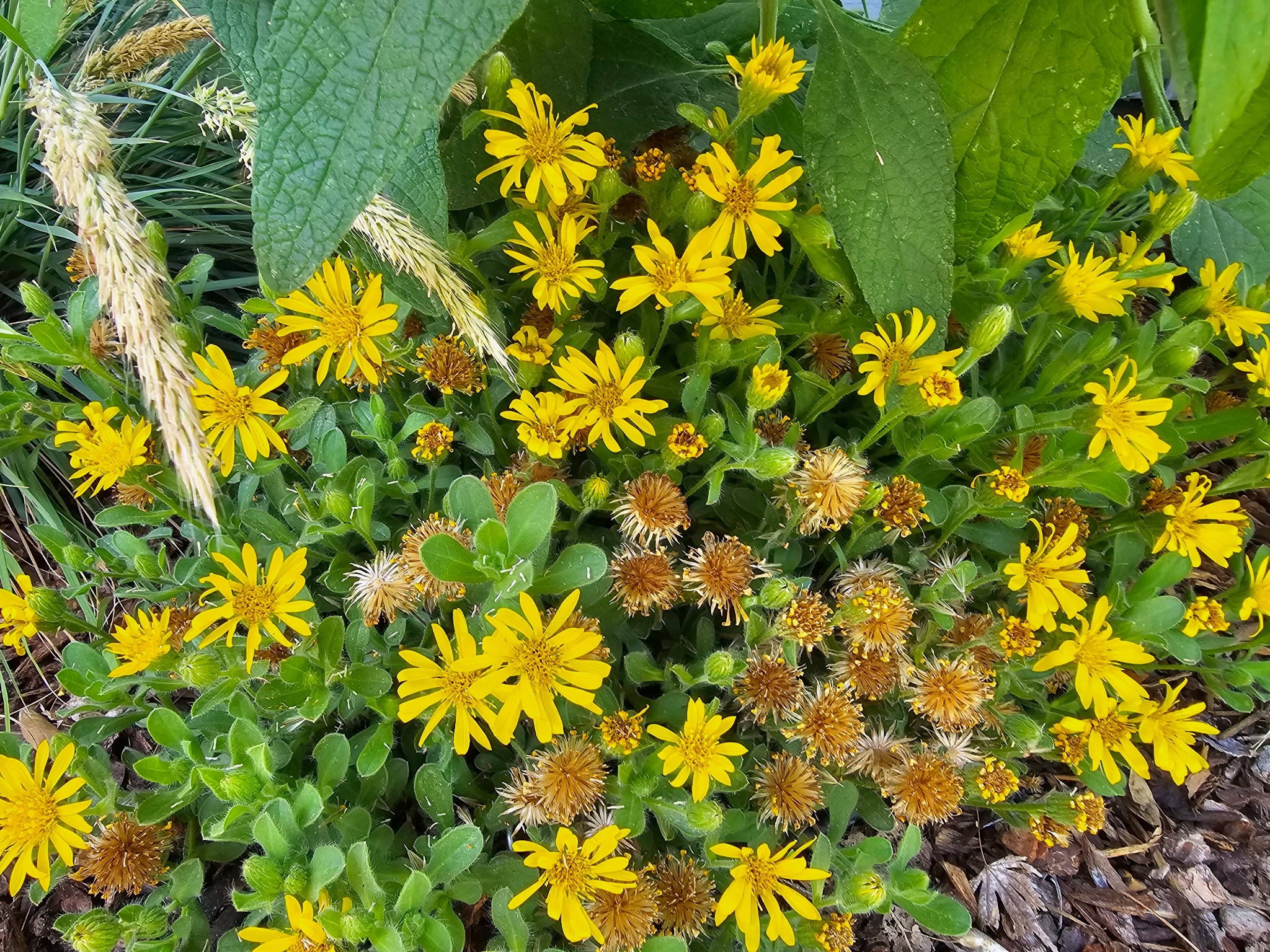
To keep the garden green longer, protect the local creek from scouring, and help replenish the aquifer, rainwater is retained on-site in the back garden. In the swales, sneezeweed with its yellow button sunflowers, mingles with reeds and sedges. Bordering the wetlands are red flame and Island pink yarrow, and Sierra salmon fuchsia.
 Other Garden Attractions
• A variety of stones and boulders create visual interest: Utah tumbled stones create a low step up to the raised seating area, and golden granite boulders surround it. Large flagstones and decomposed granite paths lead one through the garden.
Gardening for Wildlife
This garden was planted to attract birds, bees, and butterflies. Nuttal’s and downy woodpeckers, oak titmice, nuthatches, robins, bushtits, and more frequent the garden. Hawks soar overhead, keeping a watchful eye on the avian action below. Insects—which almost all birds need to feed their young, are found on the native plants, and in the soil. The mixture of groundcovers, shrubs, and trees provides cover and habitat. The boulders provide places on which lizards and lounge and newts can shelter under.
 Keystone species (watch this talk by Doug Tallamy!)—our own, local ecological powerhouse plants— in this garden include California lilac, manzanita, coyote brush, sages, coffeeberry, and penstemon.
Garden Talks
11:00 “Designing a California native garden with color from May to October” by Lois Simonds
3:00 “Texture interplay throughout the year” by Lois Simonds
Video
Lawn Conversion to a Sitting Area Surrounded by the Rich Tapestry of California Keystone Plants
At least partially wheelchair accessible? Yes
Photos
Click to see as a slideshow: