

Temescal Farm Gardens
Emeryville
Years gardened at this location: 1.5 years
Lot size: 1,000 square feet (0.02 acre)
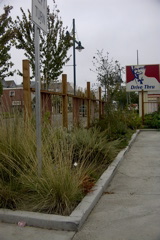
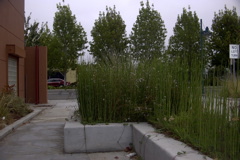
Showcase feature: The landscaping for this ‘green’ building is a demonstration garden of plants that are native to the Temescal Creek watershed. More than 50 species of plants that represent oak woodland, mixed evergreen forest, chaparral, creek corridor, and coastal prairie plant communities are included. This garden, which surrounds a commercial building parking lot, is a wonderful example of a business that is providing both habitat for wildlife and education for its customers. Josh Carmichael, of Carmichael Environmental, who designed and installed the garden, will be available throughout the day to answer questions.
Other garden attractions:
- This garden has great signage! Four posters describe the history of
the Temescal Creek watershed and this site in particular. Other signs
delineate plant communities and the plants within them. A “Plant Guide
Pamphlet” is also on hand to lead visitors through the garden - This environmentally sustainable building contains solar panels, high
efficiency fluorescent lighting, recycled wool carpets, non-toxic paints,
and a children’s interactive display of natural building techniques. - Attractive, friendly, open bamboo fence with a slightly undulating top
(reminiscent of the creek) protects the garden beds while allowing passersby
to enjoy the plants. - Water from the parking lot is kept on-site; it drains into the garden
beds, with the overflow leading to the street. A large cistern captures
run-off from the roof; that water is used to irrigate the garden. - Ask about Armstrong Paint’s new VOC-free lines of Temescal Creek interior
paints, and non-toxic finger-paints, which will both be made of natural,
plant-based ingredients.

Gardening for Wildlife: Flowers bloom year-round and plants that are allowed to go to seed before they are pruned provide habitat and food for wildlife. Wildflowers, ferns. bulbs, berries, vines, trees, and shrubs attract birds, butterflies, lady bugs, and insects.