Watch your step in this garden: the paths are narrow, and there are a couple of places where you will step down to a lower level. This garden is not for those with balance issues.
Showcase Feature
It’s hard to believe that until recently that this lush, full, and colorful native plant garden, with its extensive and eclectic collection of plants, was a sea of (highly flammable—watch this video!) juniper.
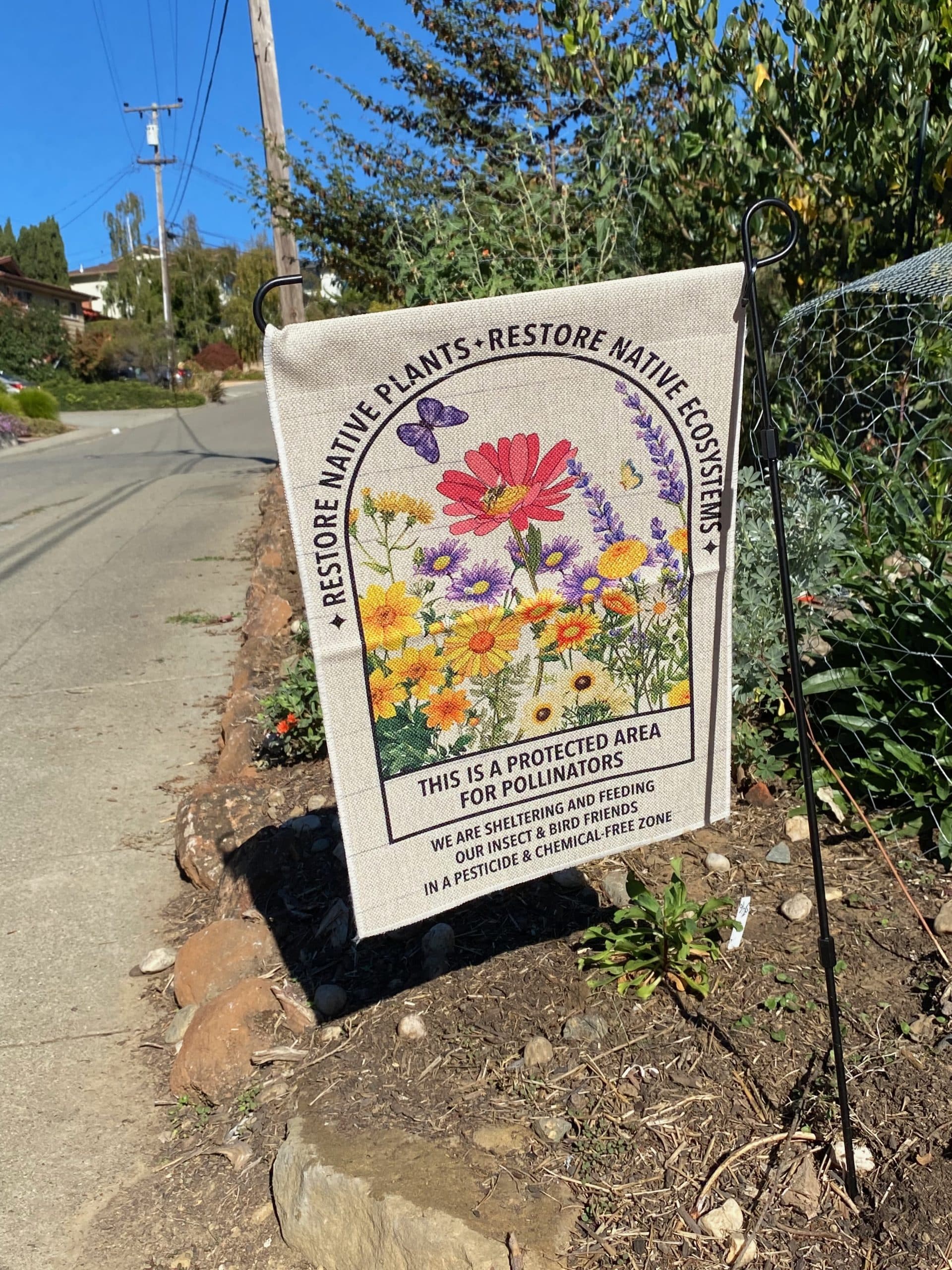
Inspired by the Tour, Steve, who designed and installed this vibrant garden, made major changes; his goal was to create an inviting home for insects, as they, in turn, help the birds, almost all of which must feed insects—especially caterpillars—to their chicks.
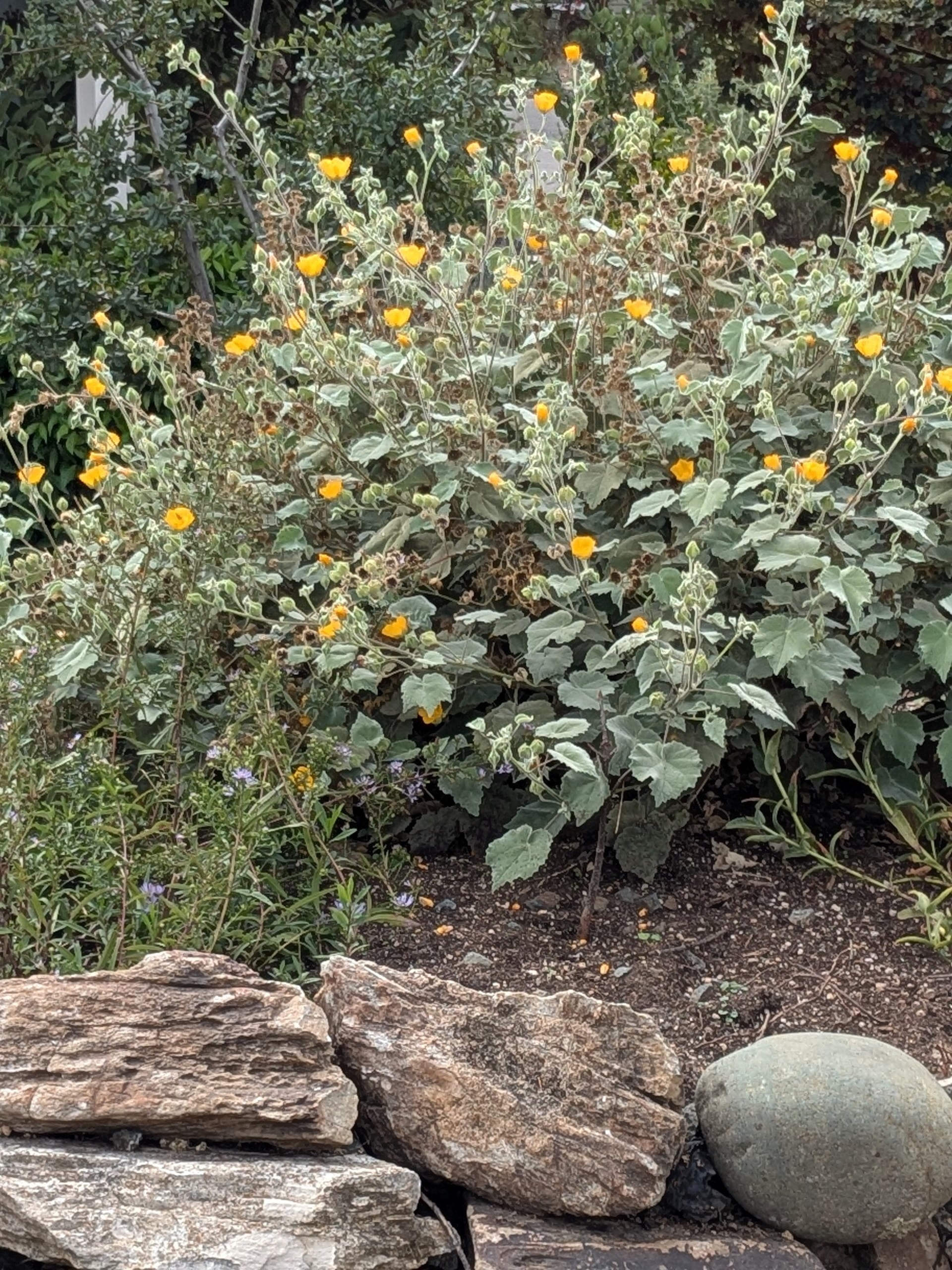
Today this large 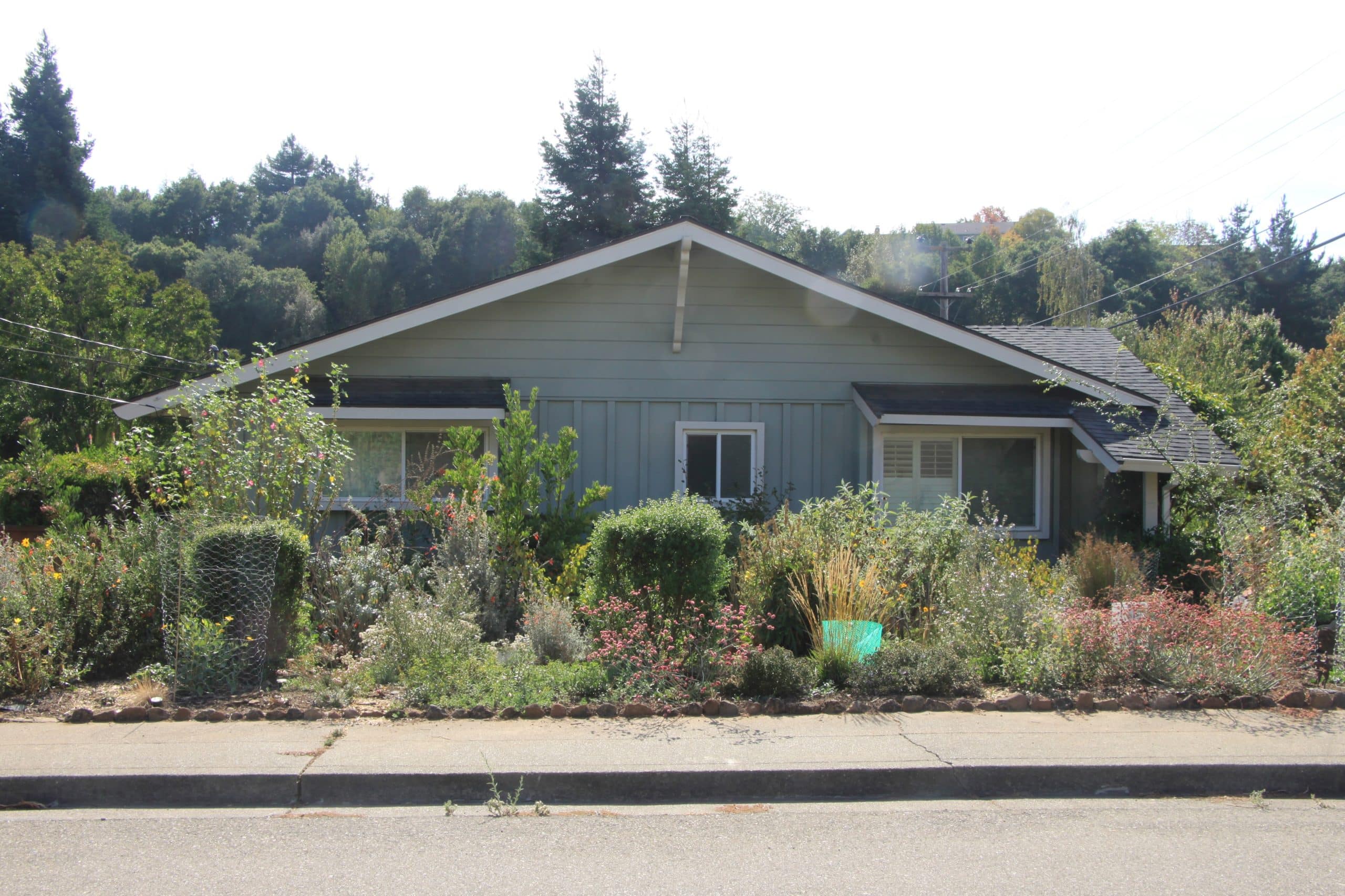 corner lot is home to an eclectic collection of native plants, some of which Steve propagated. A variety of trees and evergreen shrubs provide structure and stability throughout the year. These include oaks (canyon, coast live, leather, and black), holly leaf cherry, mountain mahogany, sages, coffeeberry, flannel bush, and silk tassel.
This garden has something in bloom almost year-round, and it looks especially good in fall!
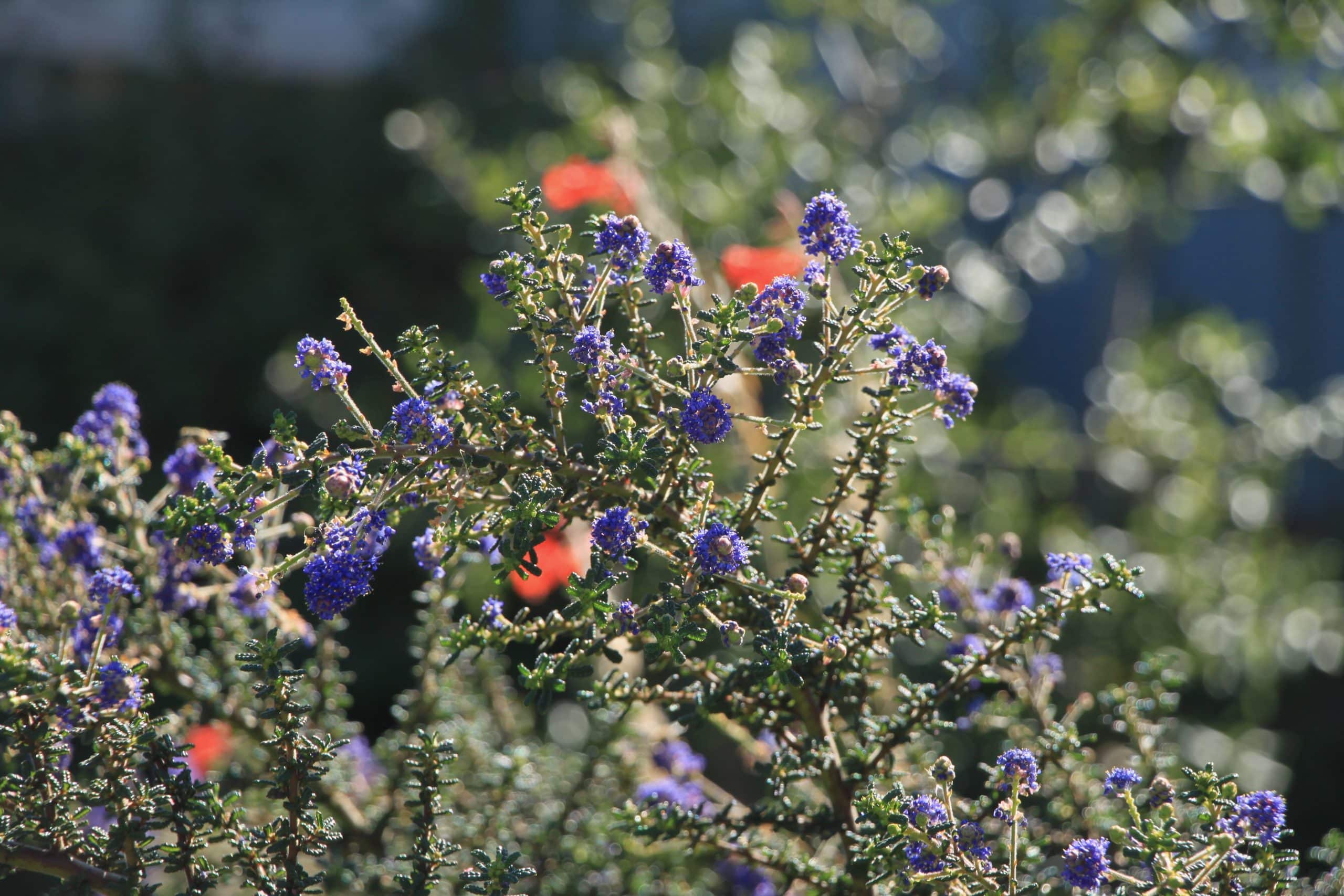
The color starts in January, when the delicate, pink-to-cream urn shaped flowers on the seven types of manzanita appear, delighting bees and hummingbirds. They are followed by purple-to-blue blossoms on the California lilac, along with a potpourri of wildflowers—blue-purple gilia, pink clarkias, orange poppies, and more.
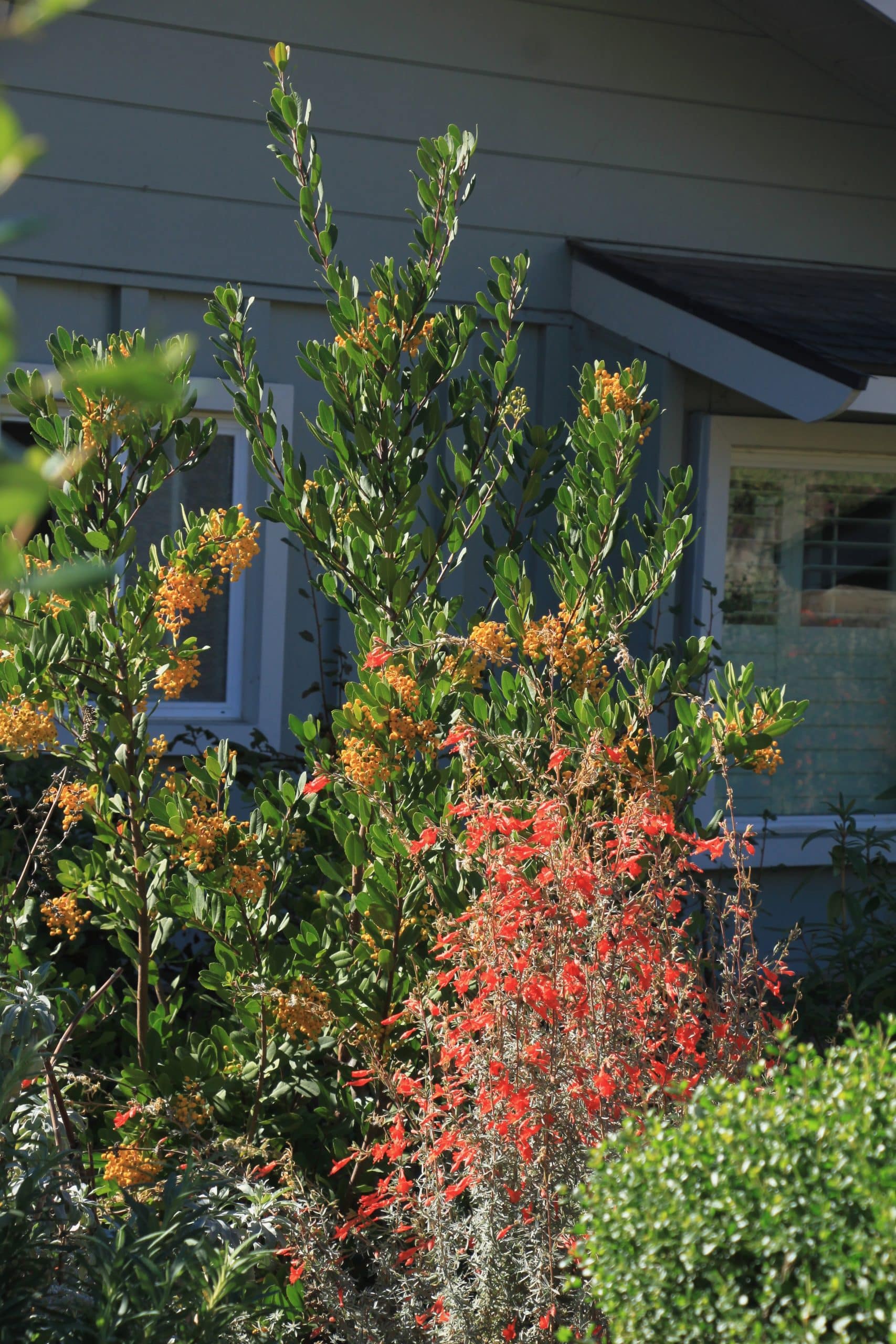
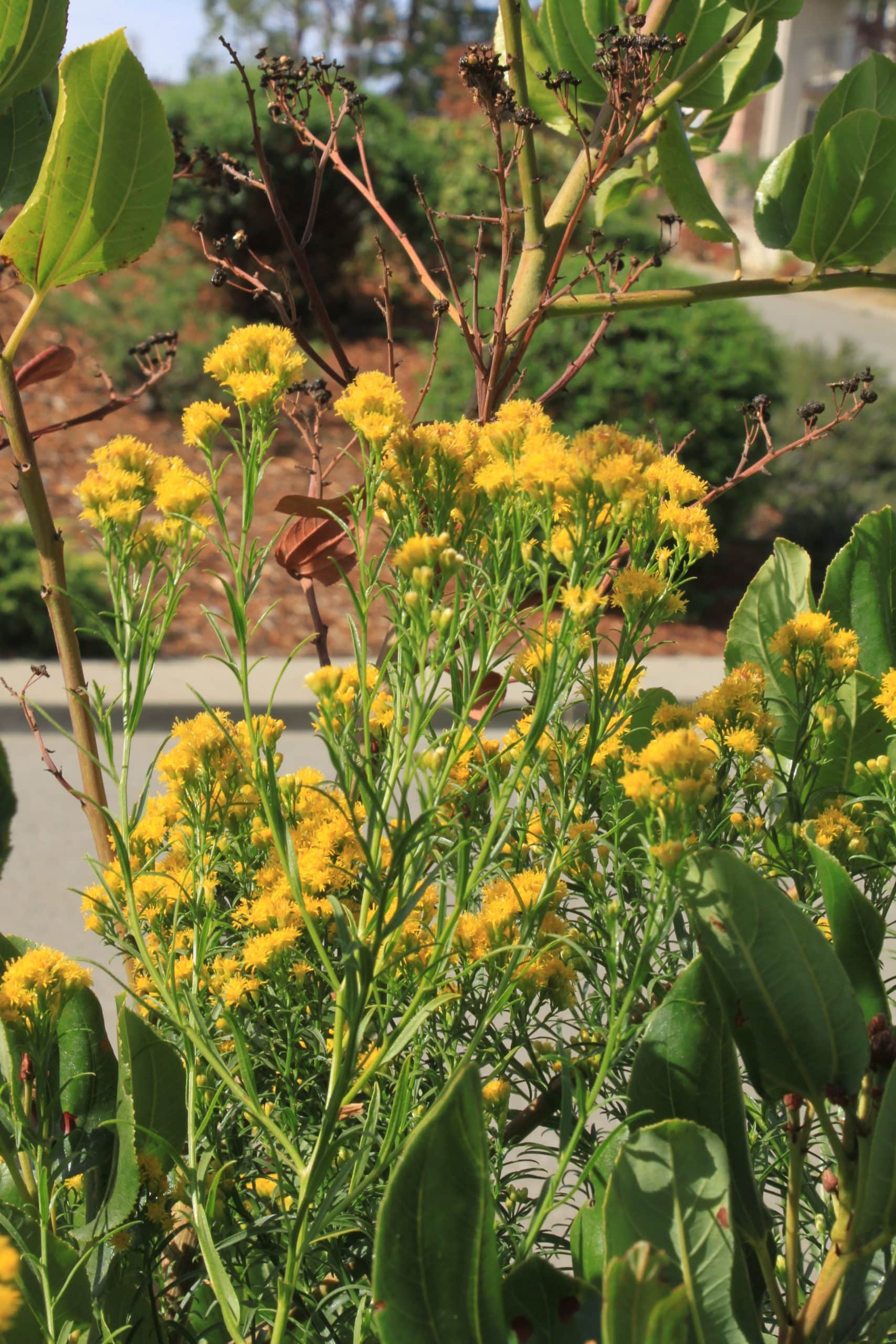
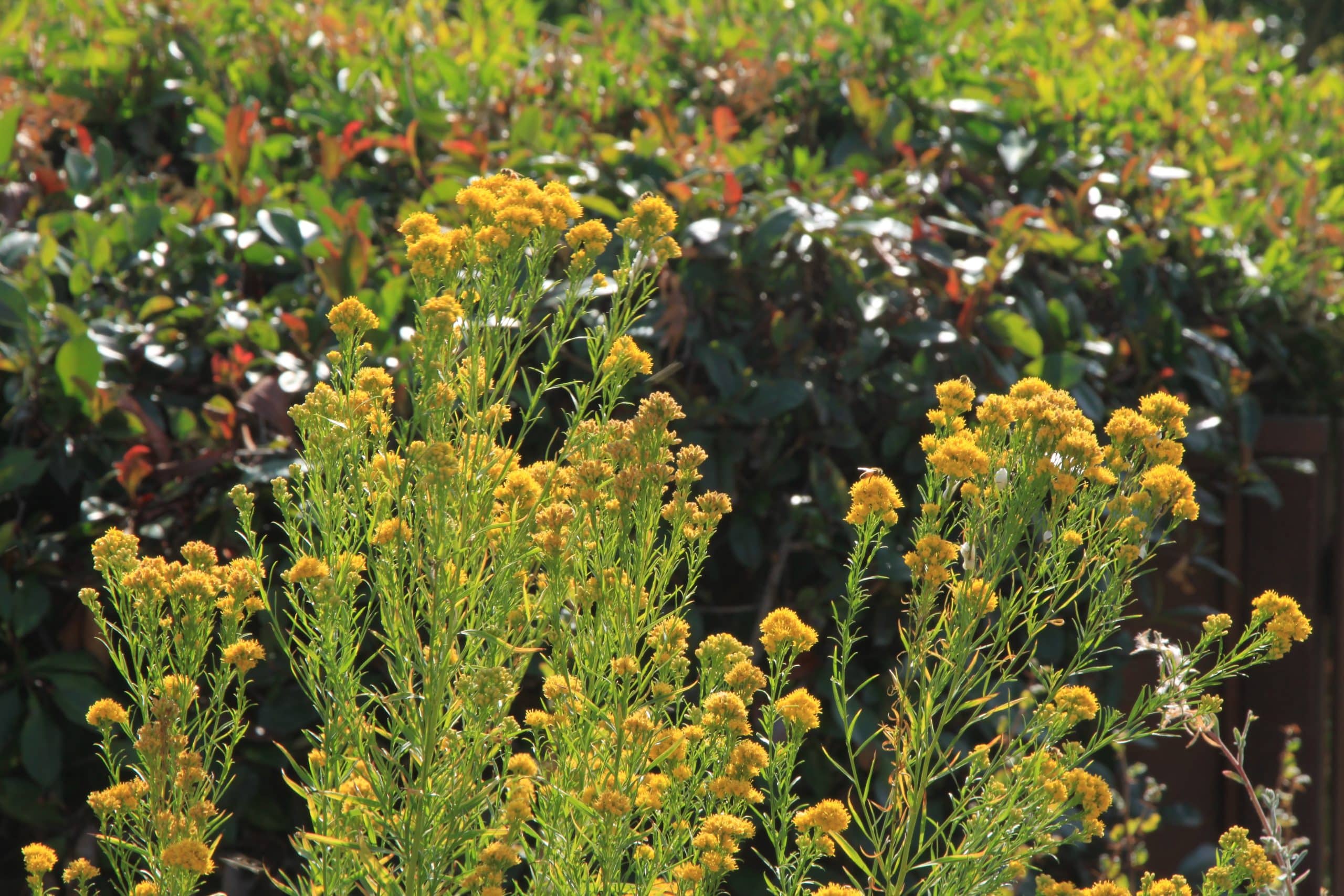
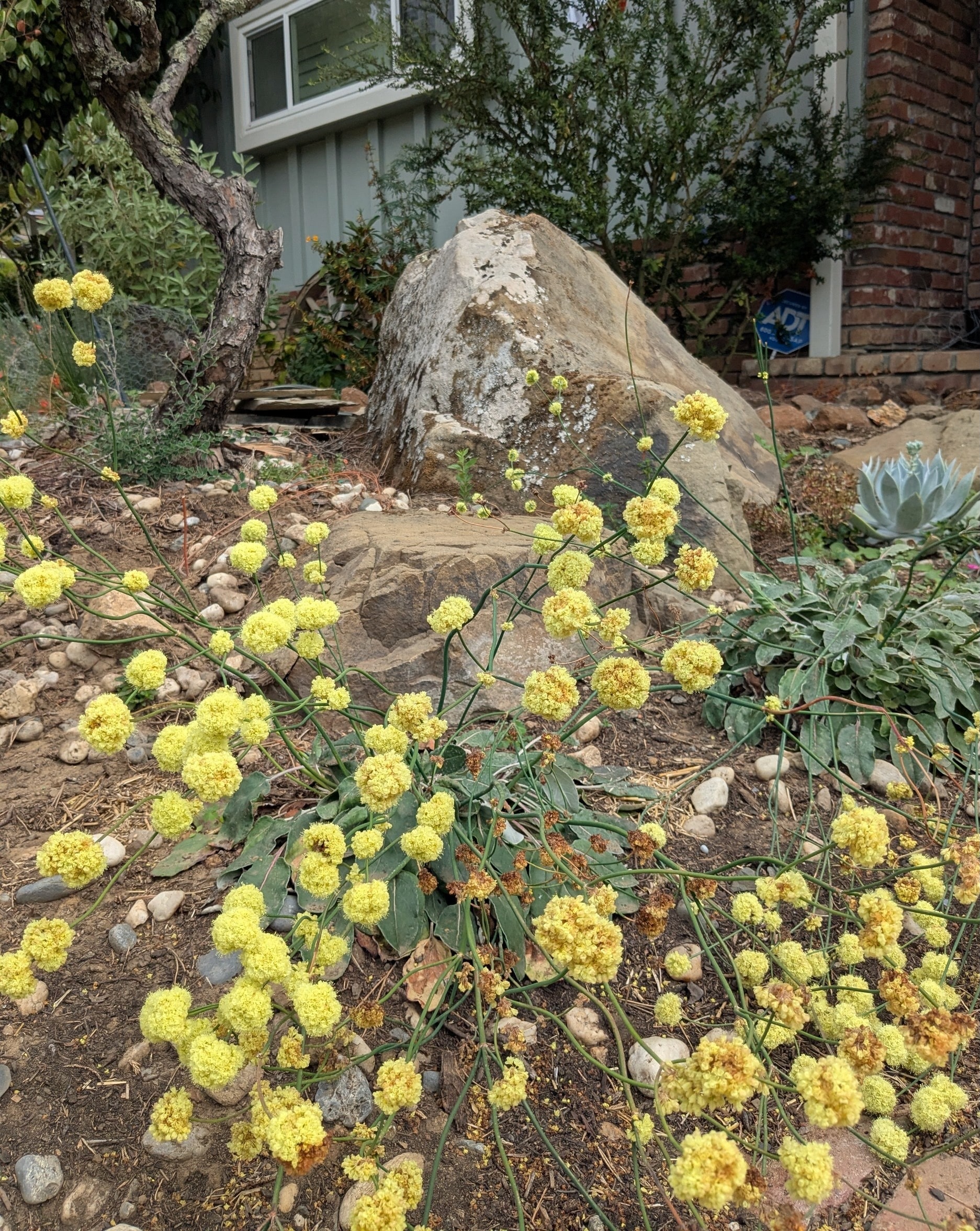
Creamy and pink and yellow buckwheats and fire-engine red fuchsia flower in the summer and fall. Als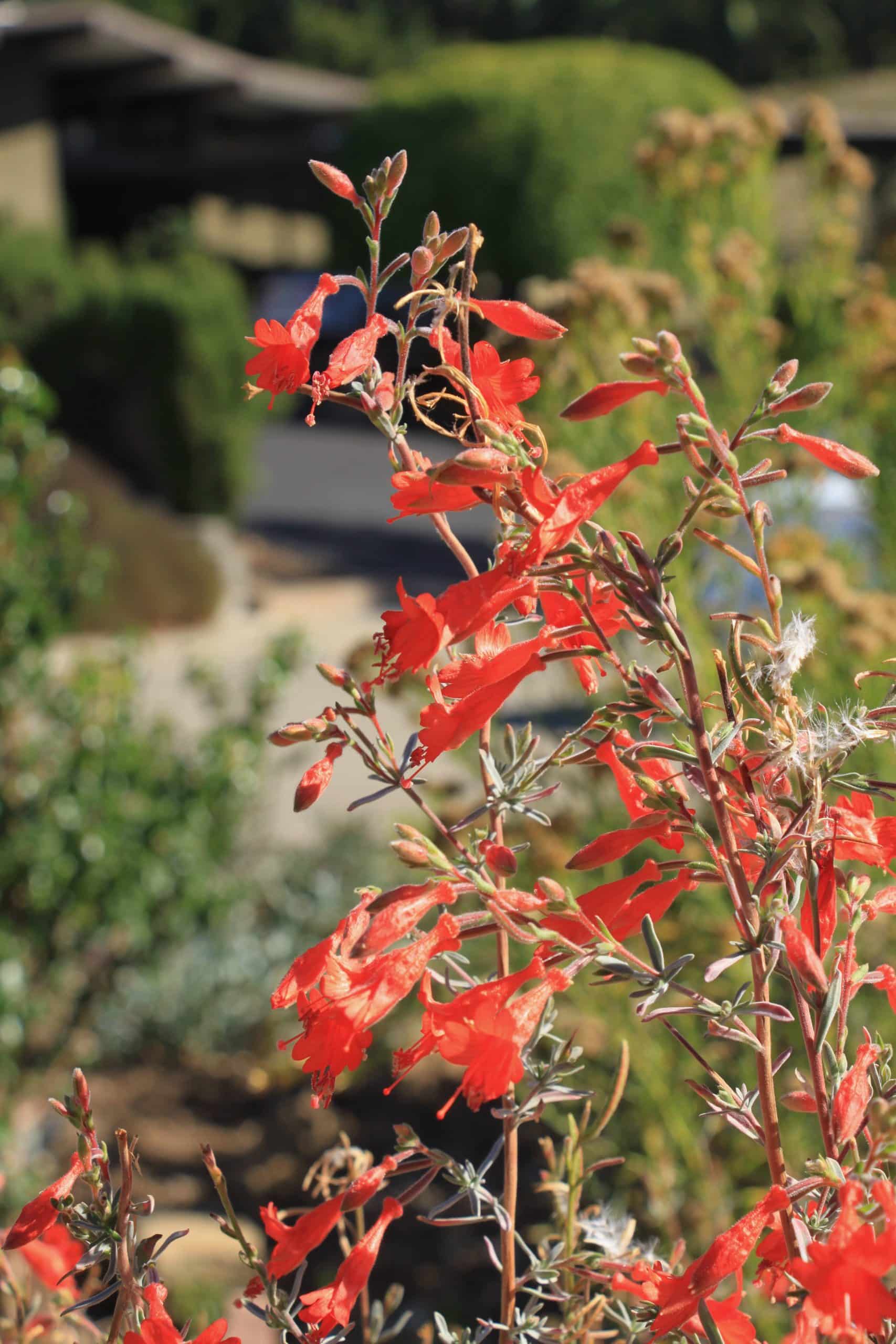 o blooming in fall are purple wooly blue curls and penstemon, yellow California bush sunflowers, goldenrod, and Island bush poppy. In the fall toyon bear bright red and yellow berries, adding additional zest to this already zesty landscape.
Other Garden Attractions
• This garden is open to grazing by deer.
• Check out the old wagon wheels, which came from a farm in the Central Valley.
Gardening for Wildlife
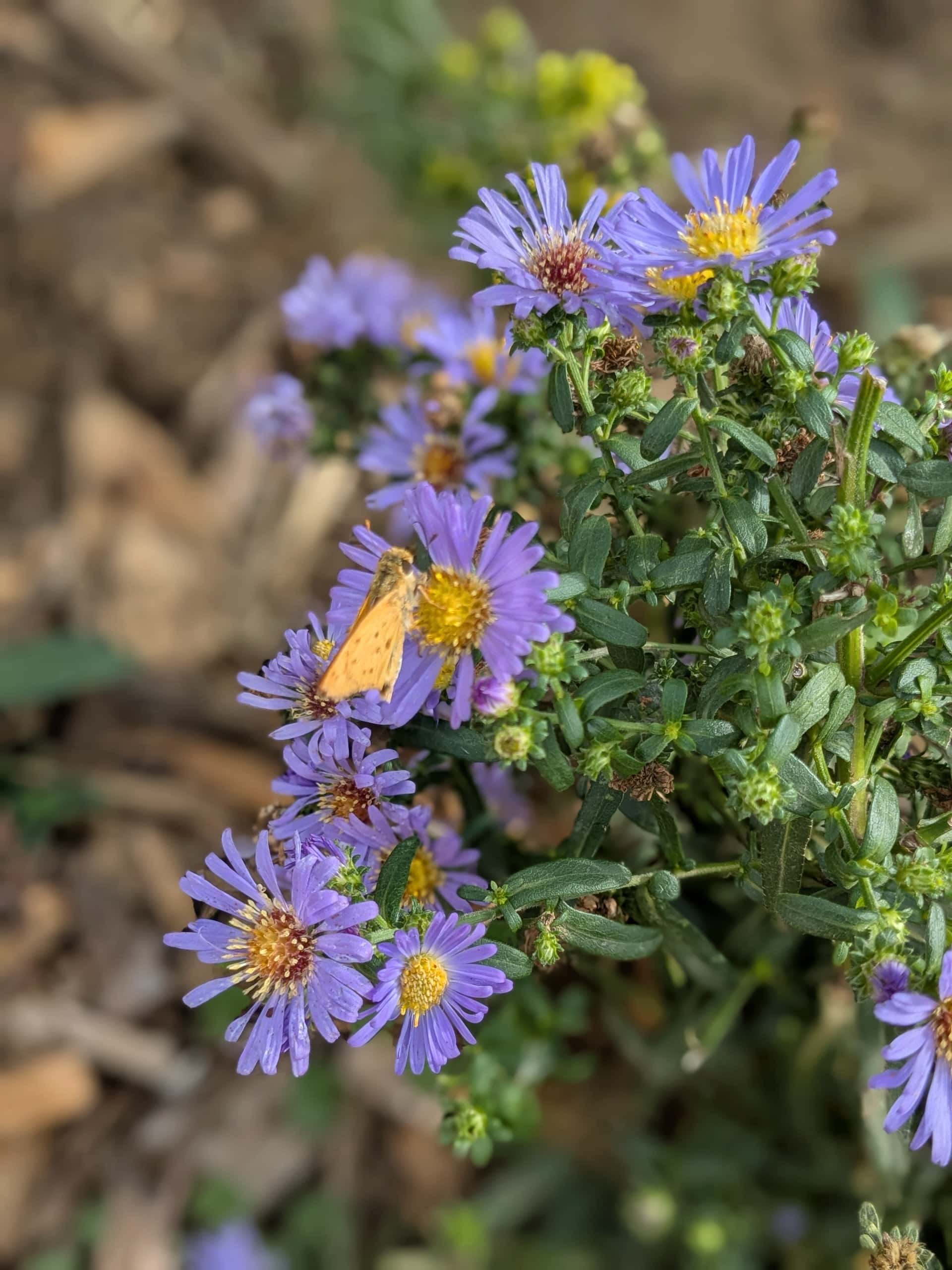
Goldfinches, oak titmice, acorn woodpeckers, nuthatches and more flit through the garden, searching for insects. Skippers sip nectar from the many colorful flowers, and lizards bask on the rocks in this wildlife-friendly garden.
Keystone species (watch this talk by Doug Tallamy!)
Keystone species—our own, local ecological powerhouse plants— in this garden include oaks, holly leaf cherry, sunflower, currants, gooseberry, California lilac, aster, goldenrod, sages, buckwheats, honeysuckle, mountain mahogany, coffeeberry, coyote brush, and penstemon.
At least partially wheelchair accessible? Yes
Photos
Click to see as a slideshow: