Beehive alert:
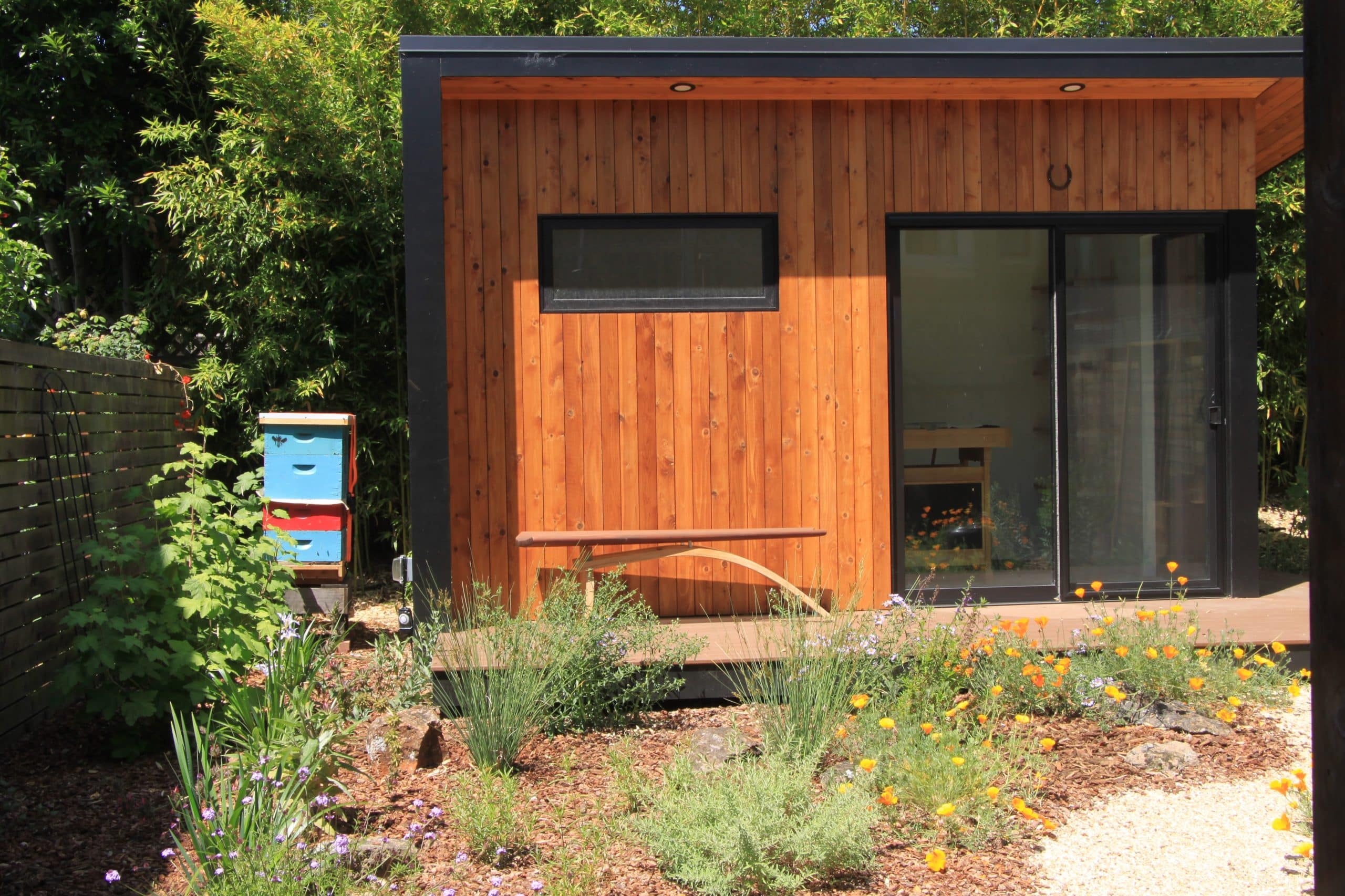
Lucinda keeps bees in the back yard. The hives are located on the south side of the ADU. If being near a beehive would pose a problem for you, please visit other gardens.
Showcase Feature
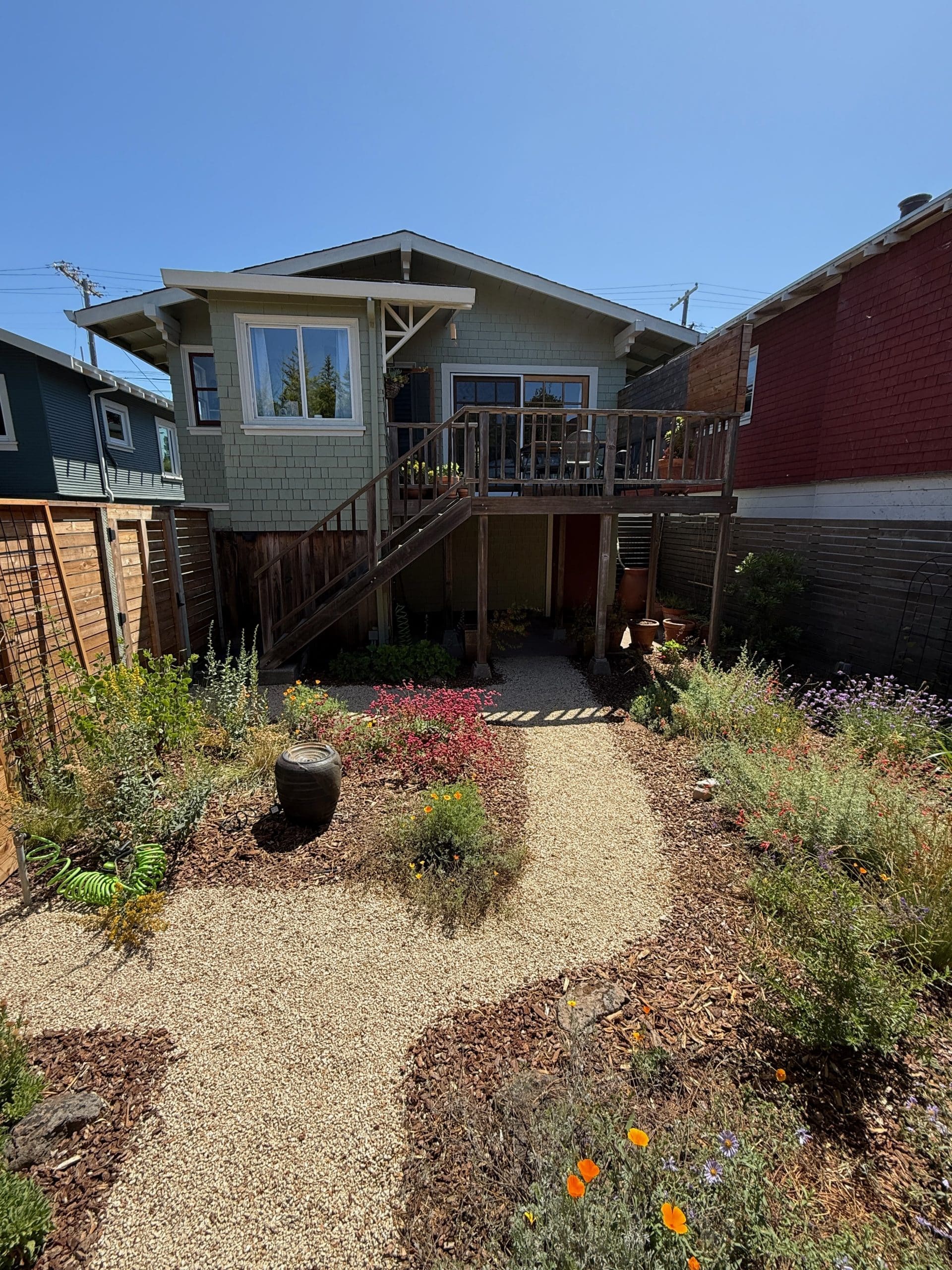
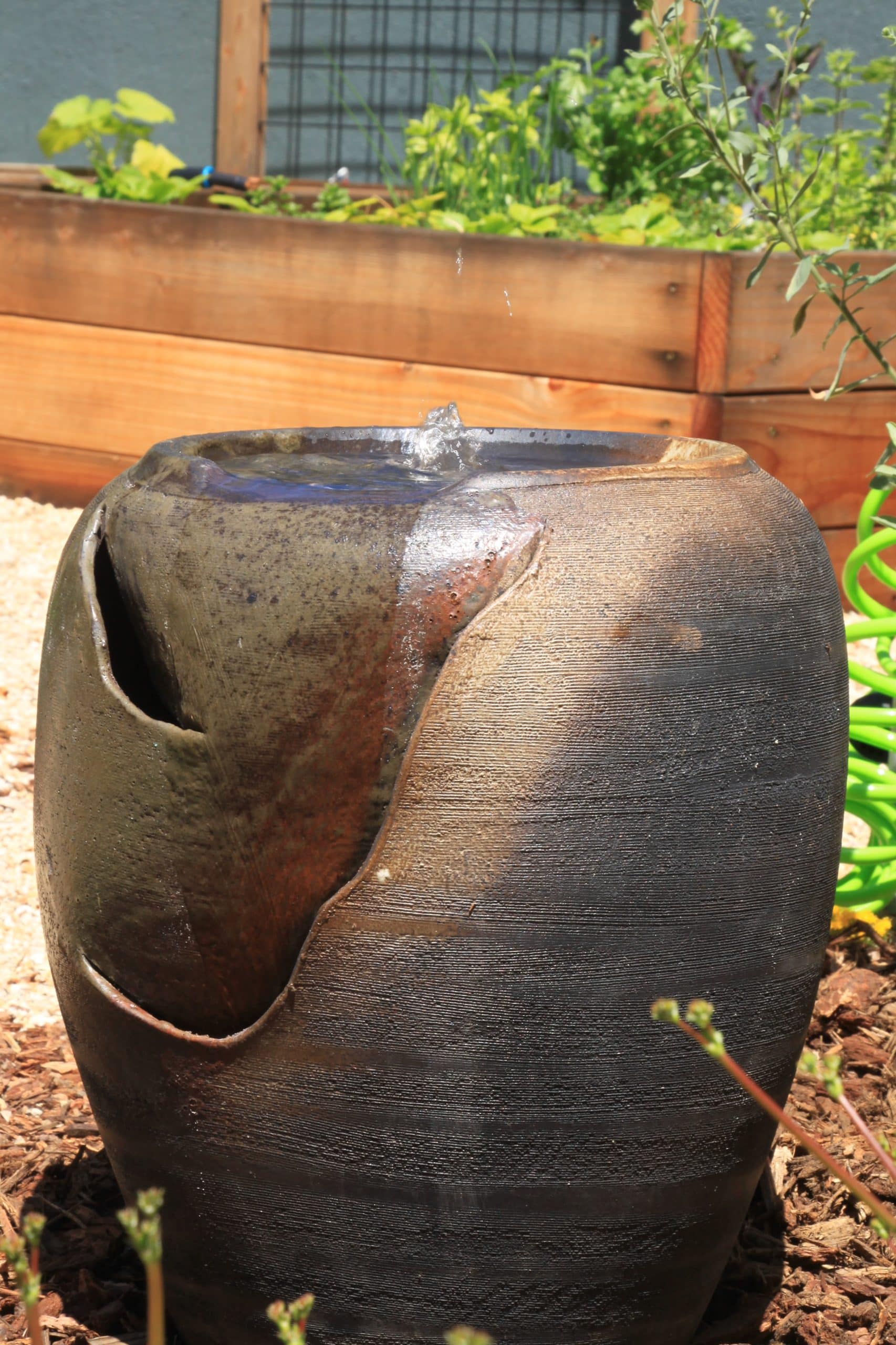
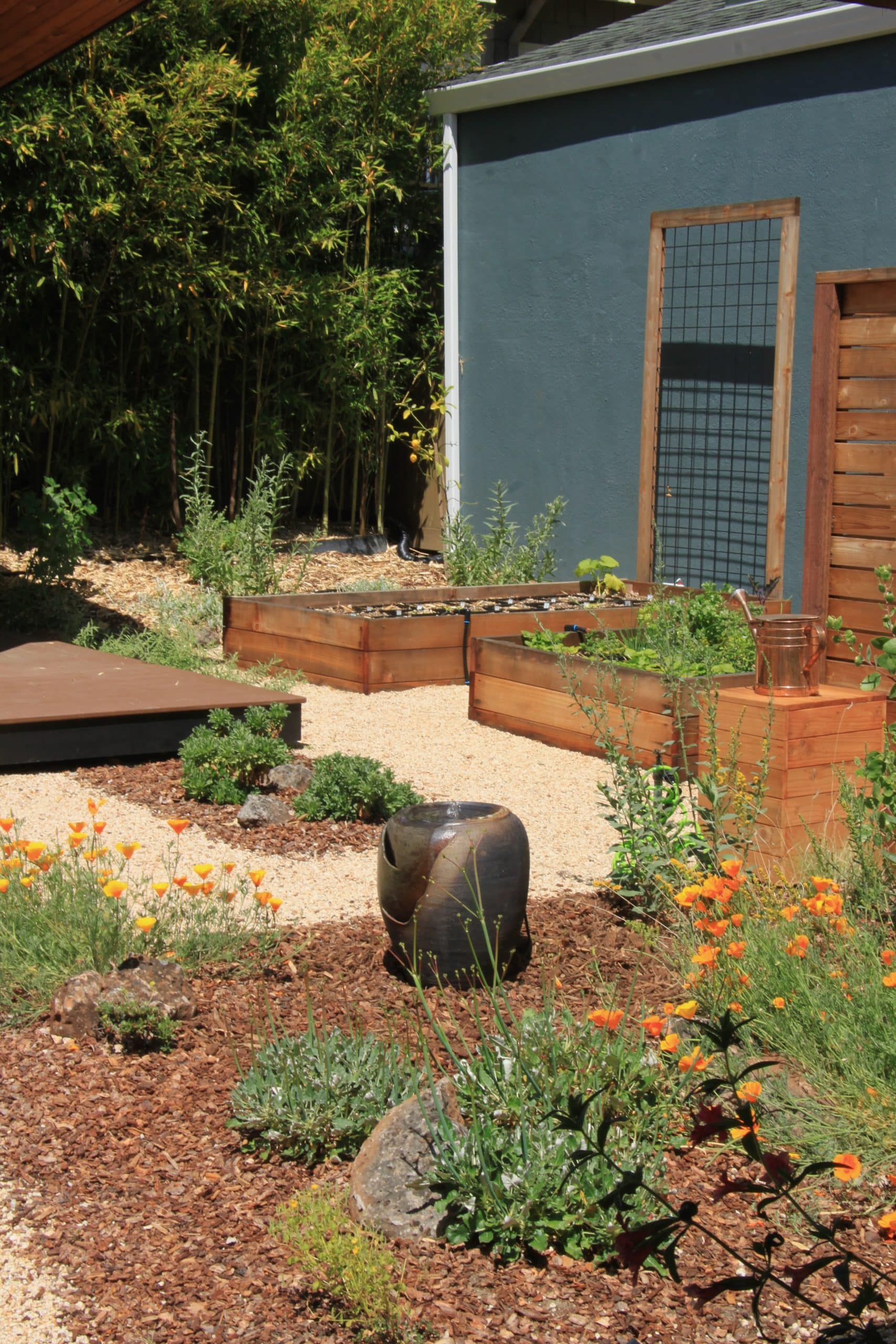
Lucinda, who has been attending the tour since its inception, was ready for a change in her brick-covered back garden. Sallie Bryan of 4B Garden Design designed this charming garden: its burbling fountain, colorful array of native plants punctuated with moss rock boulders, and productive raised veggie beds are the perfect complement to this 1907 Craftsman home.
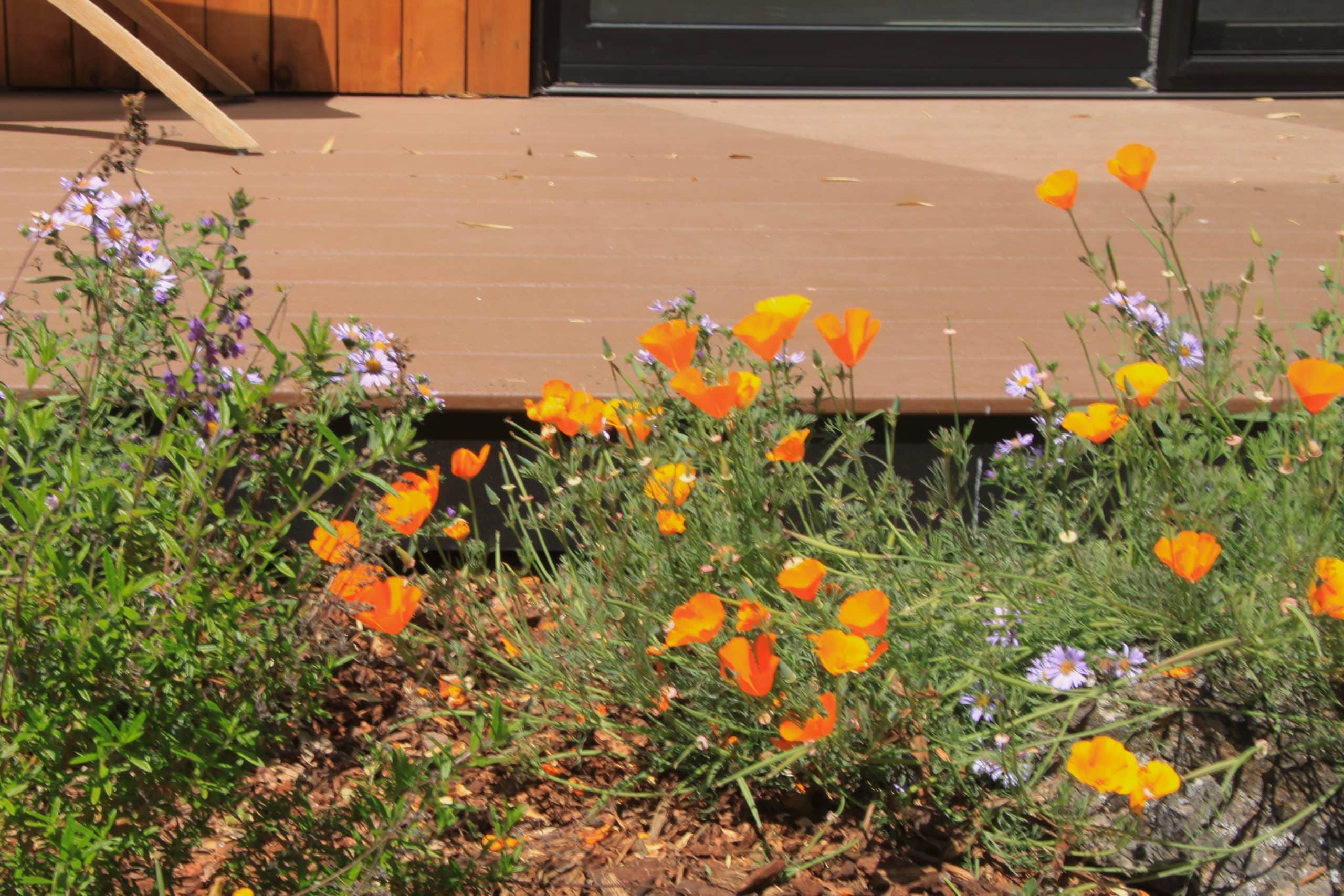
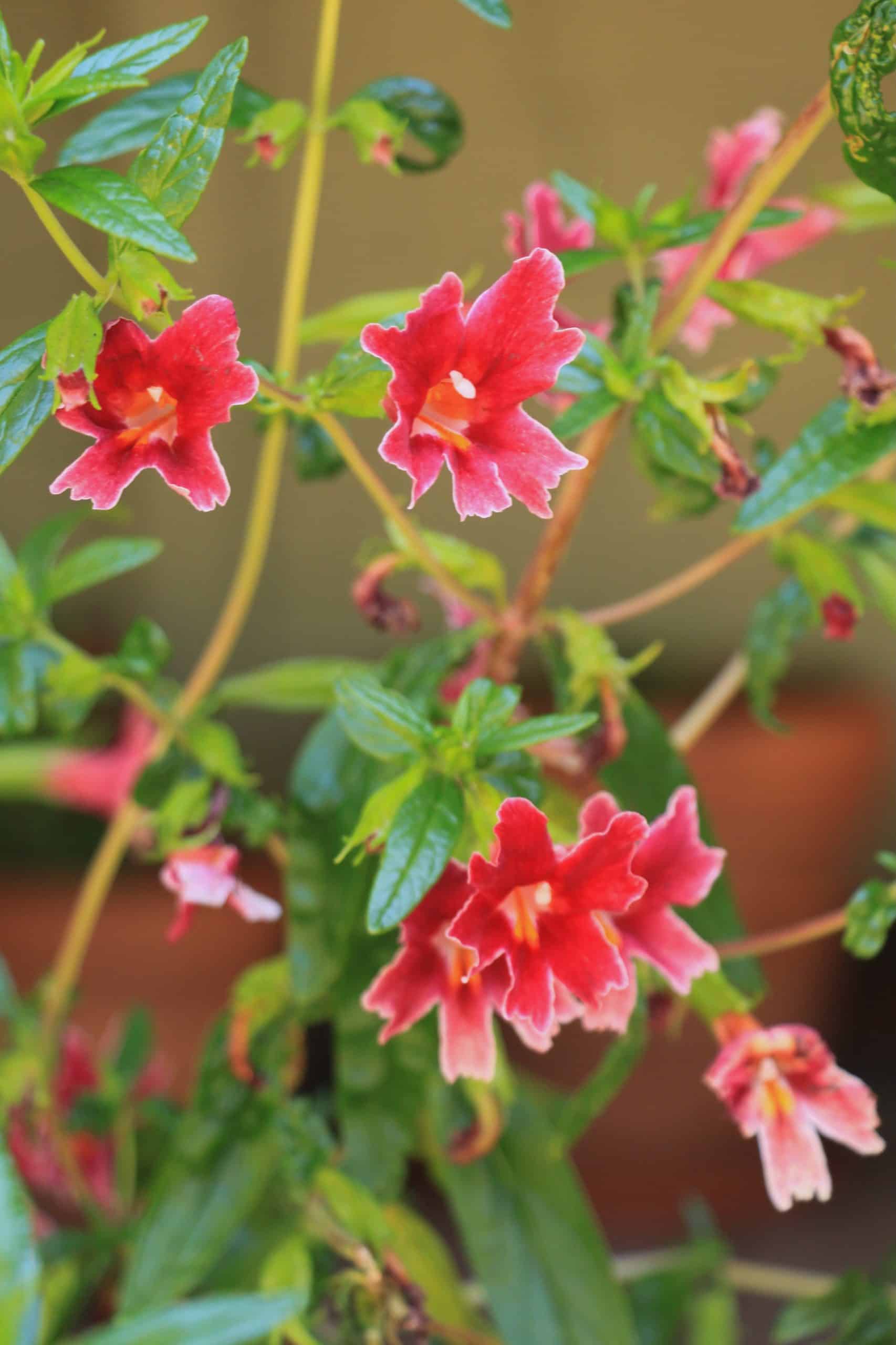
An attractive mix of orange poppies, red hummingbird sage and monkeyflower, yellow sulphur buckwheats, lavender verbena “De la Mina,” and purple Douglas iris brighten the garden in spring. Dutchman’s pipevine, the only plant the large, iridescent blue-black pipevine swallowtail butterfly can lay its eggs on, is growing up a trellis, as is virgin’s bower—making good use of every inch of space.
The City of Berkeley planted two Western redbuds in the parking strip; the use of yarrow as the understory plant creates a clean look.
 Other Garden Attractions
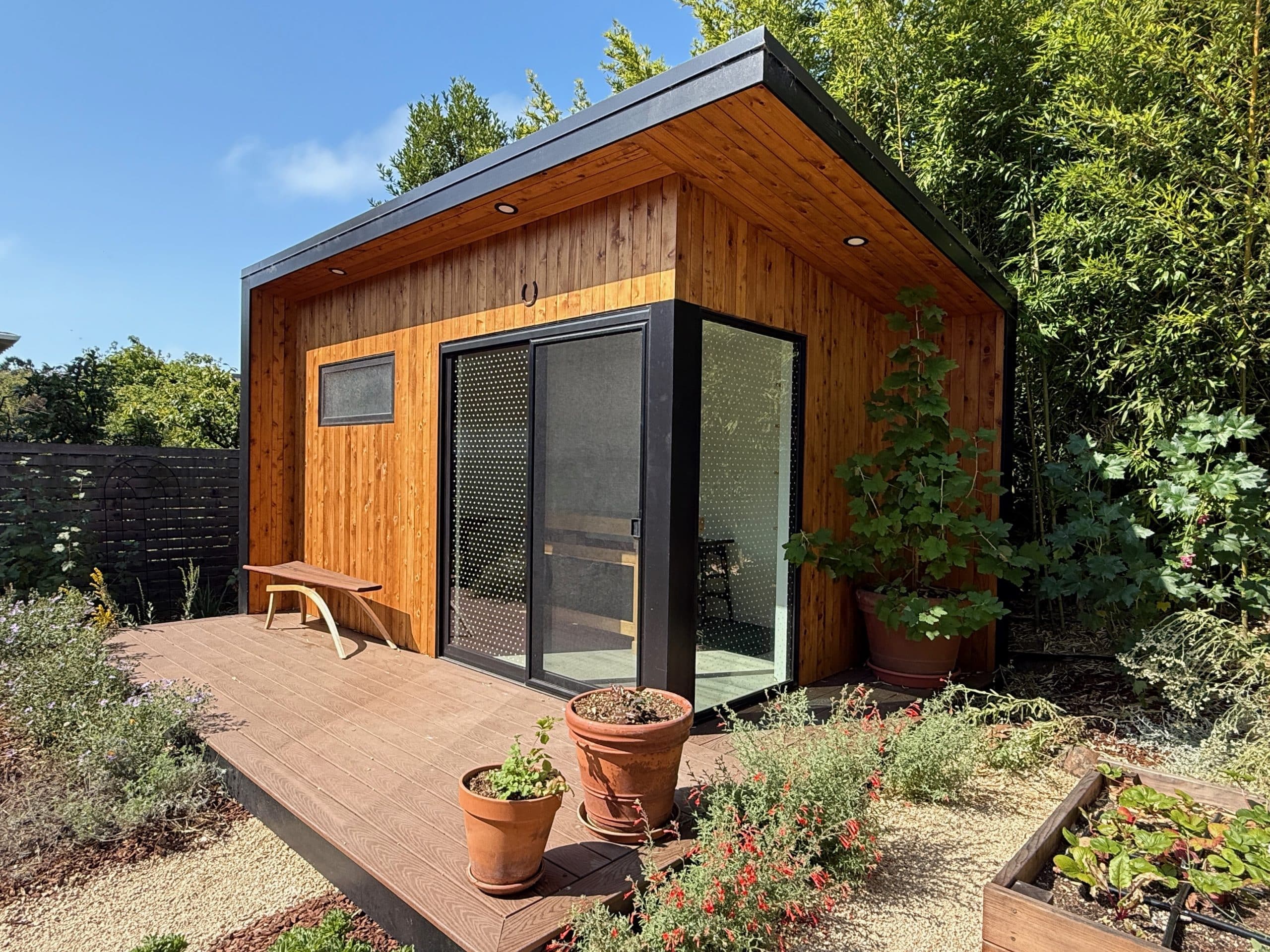
• Honeybee hives were placed next to the Wellmade shed in the back garden.
• Lucinda, who is a woodworker, built the bench near the shed and the wooden trellises.
• Water from the roof is collected in a rain barrel.
• The permeable driveway allows rainwater to sink into the soil, replenishing the aquafer and protecting the local creek from scouring.
Gardening for Wildlife
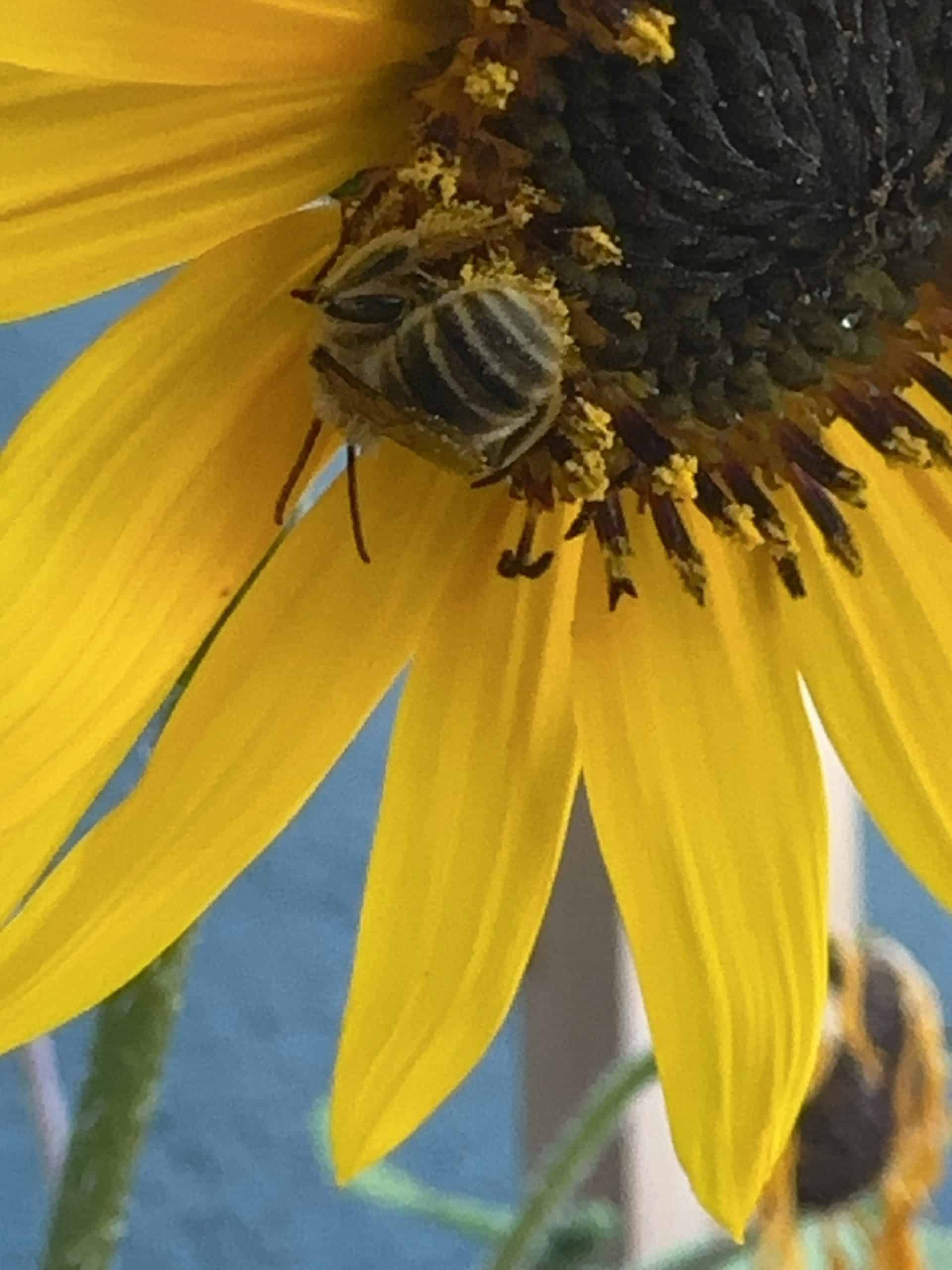
Carpenter, bumble and other native bees, plus skippers, butterflies, and hummingbirds frequent this garden, drawn in by the splashing sound of falling water, and the colorful native plants. Narrow leaf milkweed—the only plant the monarch butterfly can lay its eggs on, waits hopefully for visitors. (Monarch populations have declined by 95% in the last forty years. You can help this beautiful butterfly by not using pesticides, buying organic produce, and by planting narrow leaf milkweed for it to lay eggs on, and aster and goldenrod for the monarchs to sip nectar from.)
To protect migrating birds and moths, which are adversely impacted by artificial light, Lucinda keeps her exterior lights turned off at night, using motion sensor lights, which turn on when needed.
 In order to prevent bird / glass collisions, which kill a billion birds in North American every year, Lucinda installed Feather Friendly markers and a screen on the sliding glass doors of the ADU in her back yard. She chose Feather Friendly’s Pro DIY 6″ Melody Pattern Medium Format product, which is easier to install than the single row markers. (Consider splitting a roll of the Medium Format with a friend! And, note, if you have second story windows use Acopian Birdsaver Blinds, for easier installation when working from a ladder.) Installing markers might not seem relevant at first blush, but if you live in a building with windows – they are. Almost half of all bird-glass collisions occur on one-to-three story buildings – meaning… our homes – and these collisions are usually deadly to birds, even if they do initially fly away.
Keystone species (watch this talk by Doug Tallamy!)
Keystone species—our own, local ecological powerhouse plants— in this garden include manzanita, aster, goldenrod, buckwheat, and ocean spray.
Come on in this fully-electrified home!
Green Home Features
Lucinda’s home, which is now fully electrified, has:
• Solar panels
• A heat pump for heating water
• A heat pump for heating and cooling the house
• An induction stove top
• An electric dryer
• An EV charger, and, she has
• purchased a Chevy Bolt
• In addition, Lucinda has a bidet.
At least partially wheelchair accessible? Yes
Photos
Click to see as a slideshow: