Showcase Feature
Katie’s Dad is a conservation ecologist who worked on tall grass prairie projects in Texas; when Katie was growing up her Dad converted their lawn to prairie—twice—making them “the weirdest family on the block.” So, concluded Katie, “It was pretty much always going to happen that I would have a native plant garden.”
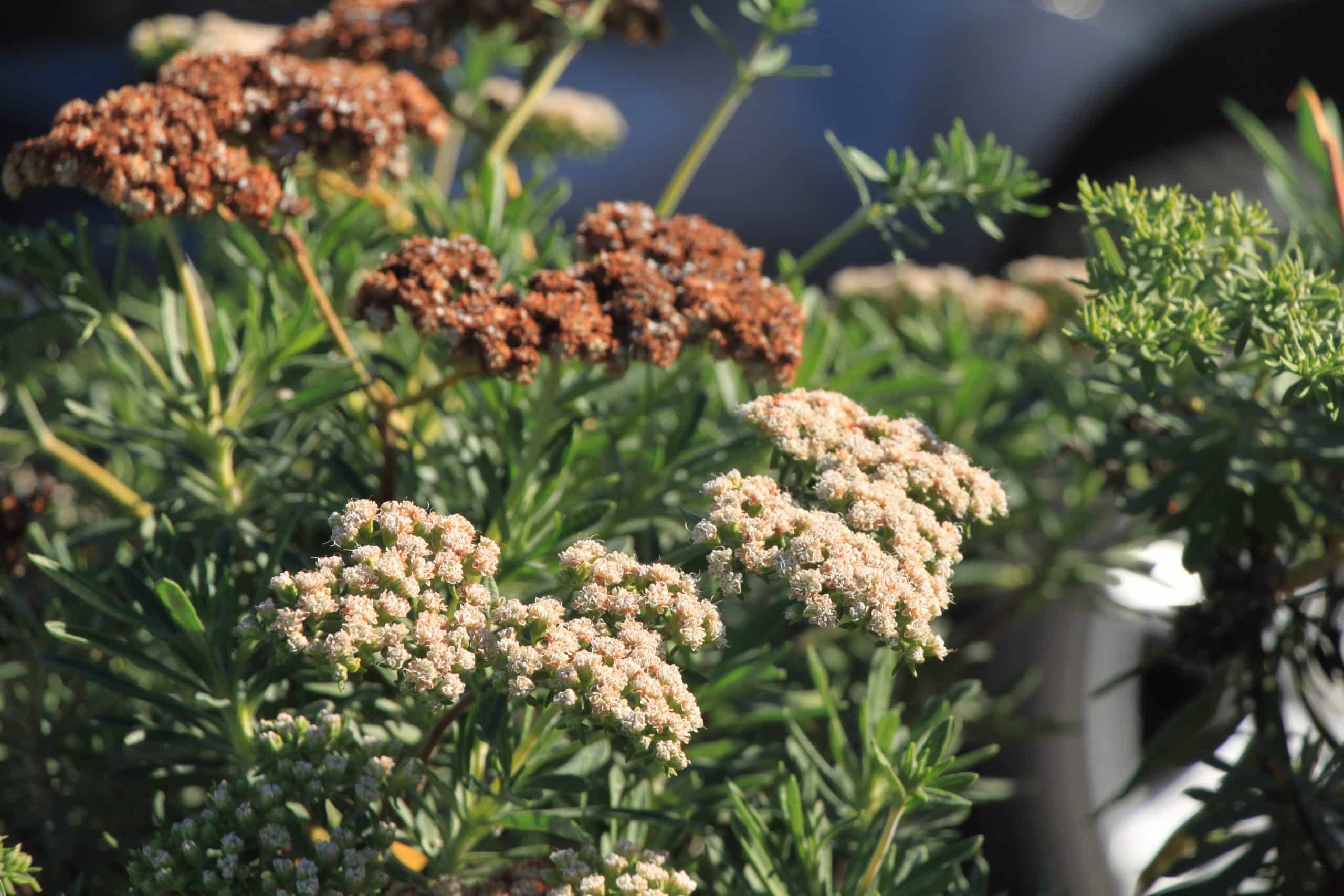
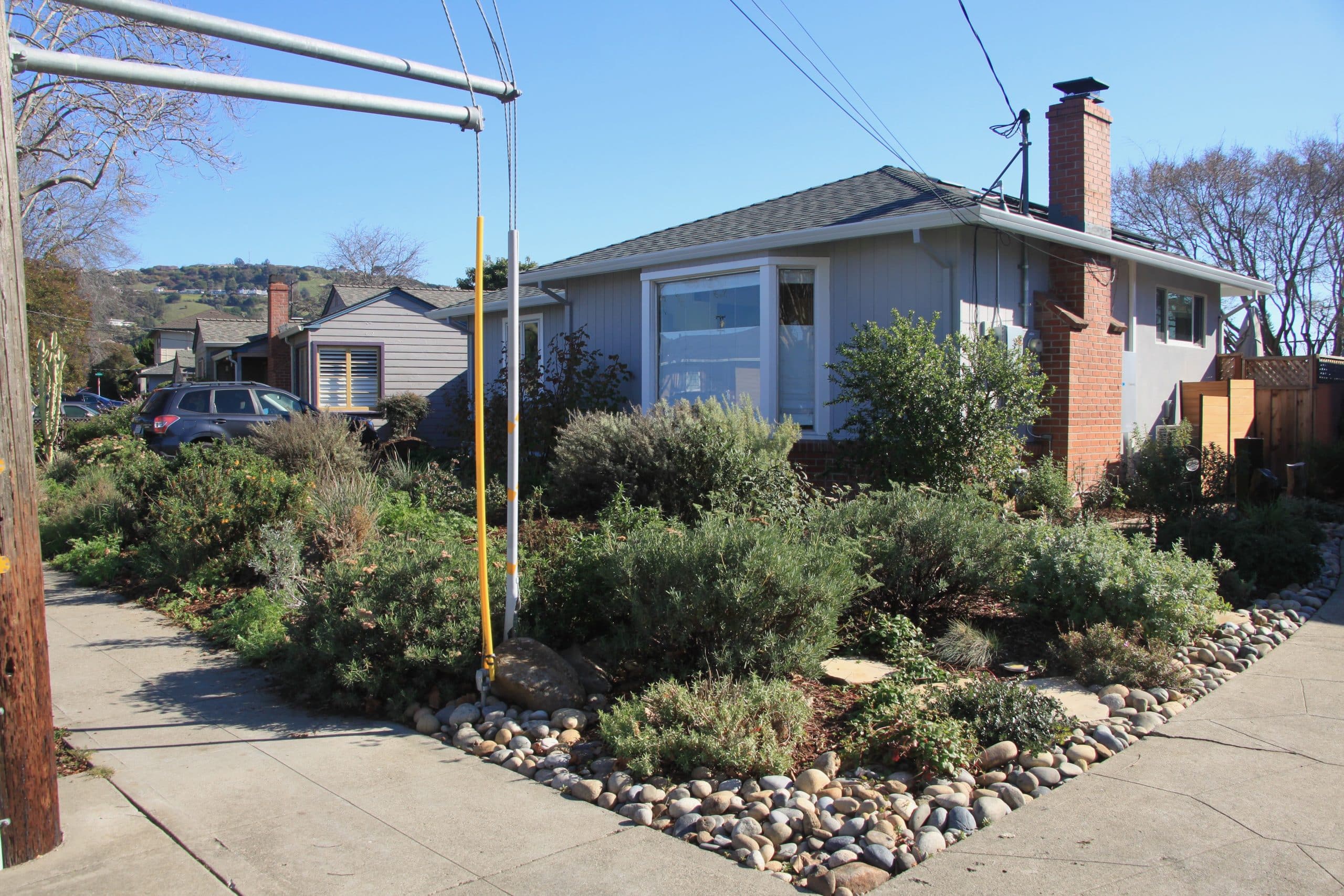
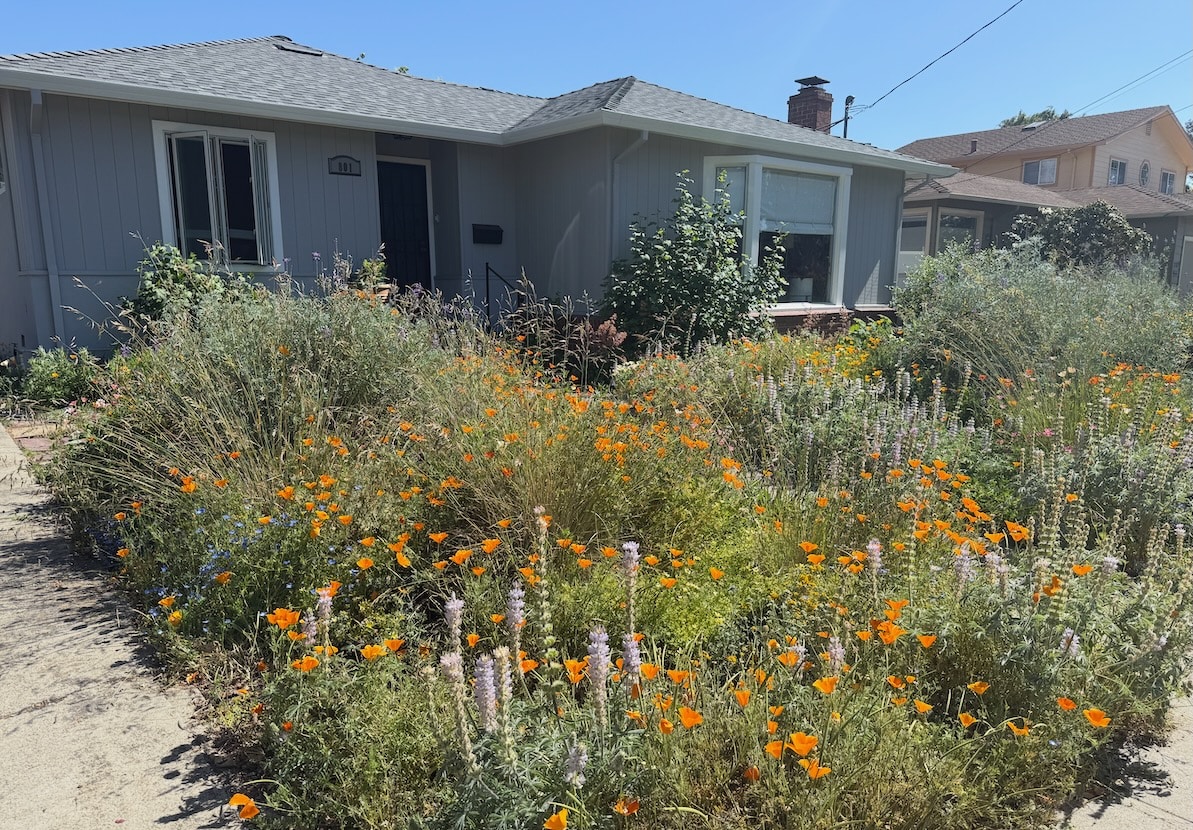
Shortly after purchasing the house, Katie and her husband, Nick, replaced the front lawn, hedges, and other non-native plants with berms, which add visual interest while providing the drainage most natives need. The attractive garden she designed was installed by Katie and a neighbor. It is made particularly inviting by the selection of low-growing plants around the borders (including blue-eyed grass, strawberry, fuchsia, manzanita, and penstemon), the repetition of plants through out the garden, and the repetition of plants within families. Note, for example, the three types of manzanitas (bearberry, Pajaro, and sandmat), three varieties of currant (flowering pink, chapparal, and buffalo), and four kinds of buckwheat (our local natives the naked and California, as well as Mount Diablo and Santa Cruz Island).
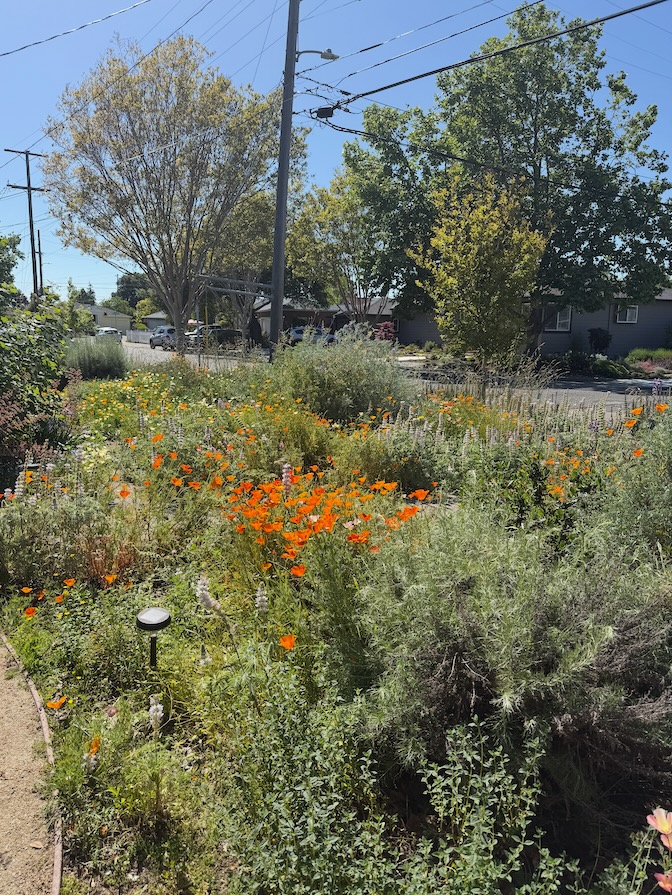
In spring an exuberant display of baby blue eyes, electric yellow buttercups, pink-to-lavender lupine and bright orange poppies brighten the front garden, attracting neighbors and pollinators alike.
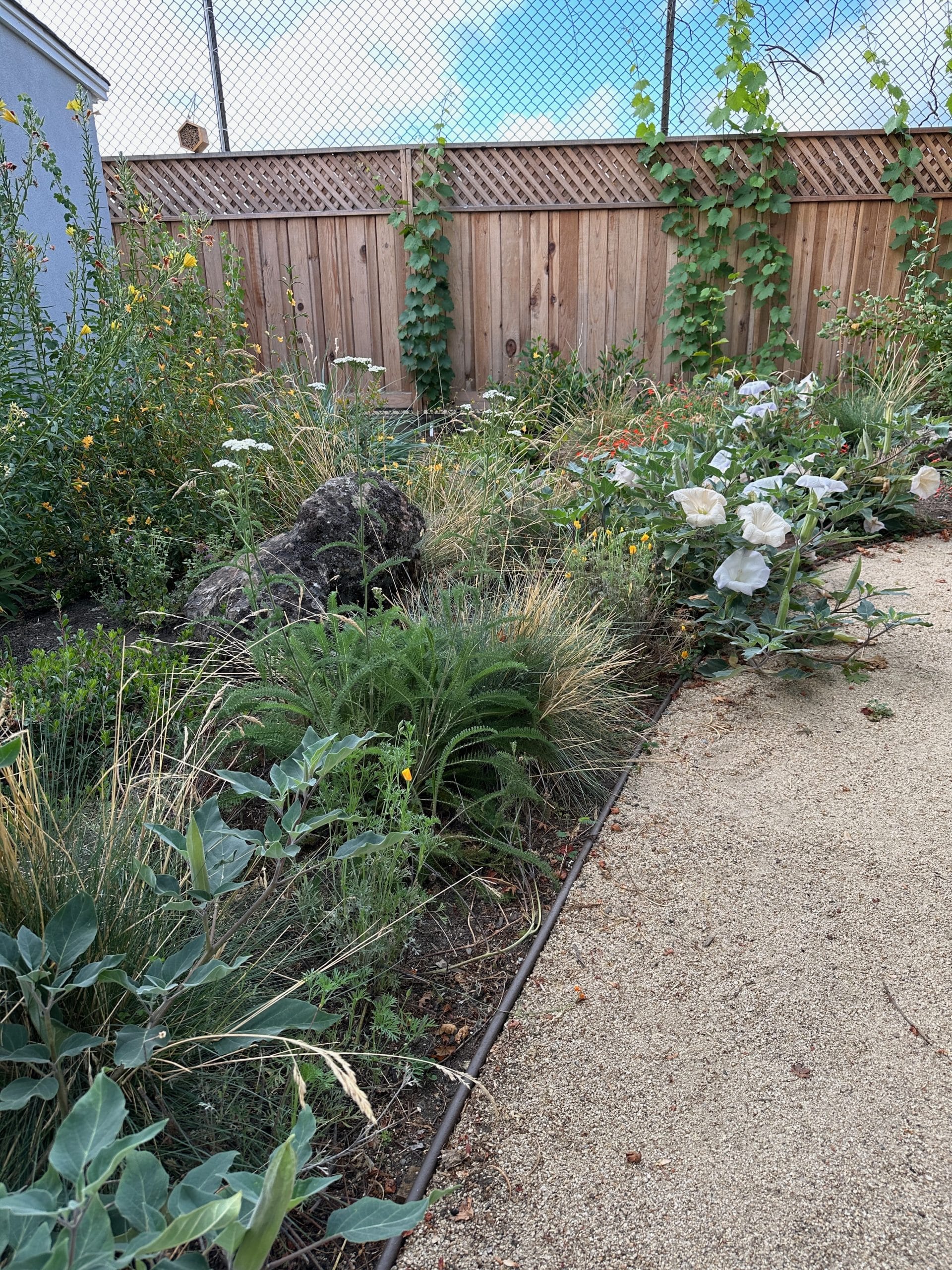
In the peaceful back yard wide, gently-mounded garden beds containing a rambunctious assortment of shade-tolerant plants wrap around a charming seating area. A heady blend of coral bells, columbine, currants, ferns, and Douglas iris rub shoulders with huckleberry, currant, ginger, and honeysuckle, tumbling over each other in wild abandon, and creating a natural look and feel.
Take a seat on the deck and enjoy the garden; you won’t want to leave!
Other Garden Attractions
Gardening for Wildlife

Screenshot
- Dense plantings and mulch keep weeds at bay, and reduce the need to water.
- Katie hand-pulls weeds, hand-waters the plants that need it, and propagates the plants she wishes she had more of.
- The aromatic scent of sage and the delicious fragrance yerba buena waft across the garden when they are brushed.
- The driveway in the back yard was removed and replaced with flagstone, which allows water to seep into the soil, keeps the garden green longer, replenishes the aquifer, and protects the local creek from scouring.
- Neighbors on either side of Katie’s garden, across the street, and down the block (did you see those gorgeous manzanitas?!) have removed their lawns and included natives in their gardens, creating a nice stretch of contiguous habitat!
For two years Anna’s hummingbirds nested in the eaves of their house, delighting Katie and her husband, who enjoyed watching the babies. Most birds—including hummingbirds—must feed their chicks insects, which is why it’s so important for us to welcome them insects in gardens. Beautiful black phoebes, with their sooty colored bodies and white bellies, perch on tall branches, keeping their eyes out for bees, wasps, beetles, and grasshoppers. Small, colorful warblers flit through the garden in search of caterpillars, spiders, ants and beetles. Towhees forage for insects in the leaf litter (remember to leave the leaves!), and goldfinches glean seeds from dried flower heads.

Katie leaves the leaves and stems, as leaves provide insulation from the cold for the many animals that hide within (or in the soil beneath), like the young of quite a few butterflies and moths. Many native bees nest within stems, flower heads, or pieces of wood—throwing out all of your leaves and other plant material isn’t just taking away options for shelter; there’s a good chance you’re tossing out many animals that have already settled in!
The neighbor’s columnar fountain provides much-needed water for birds.
Keystone species (watch this talk by Doug Tallamy!)
Keystone species—our own, local ecological powerhouse plants— in this garden include holly leaf cherry, currants, huckleberry, thimbleberry, California lilac, aster, manzanita, lupine, sage, buckwheat, native strawberry, coffeeberry, honeysuckle, and penstemon.
Green Home Features
- Solar panels and battery
- Heat pump for heating and cooling
At least partially wheelchair accessible? Yes
Photos
Click to see as a slideshow:
-

- Screenshot
-

- Screenshot