Showcase Feature
This garden is accessed via two steps. There is a handrail.
When John, a long-time birder, moved here from Florida, he knew he wanted to replace the thigh-high weeds in his garden with native plants that would attract birds. The charming back garden that Kelly Marshall, of Kelly Marshall Garden Design, designed and Peter Rohan, of Landspaces, installed, fits the bill completely—while also delighting people.
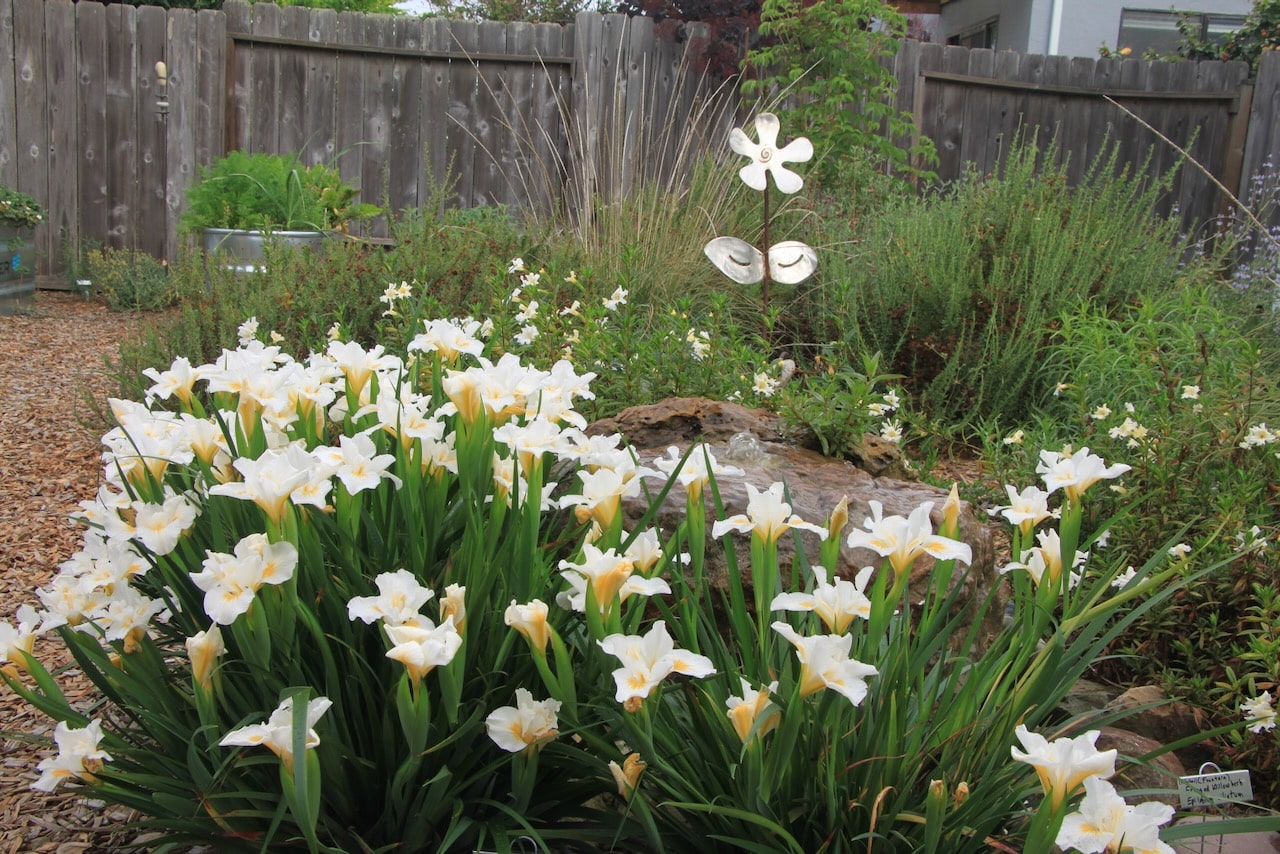
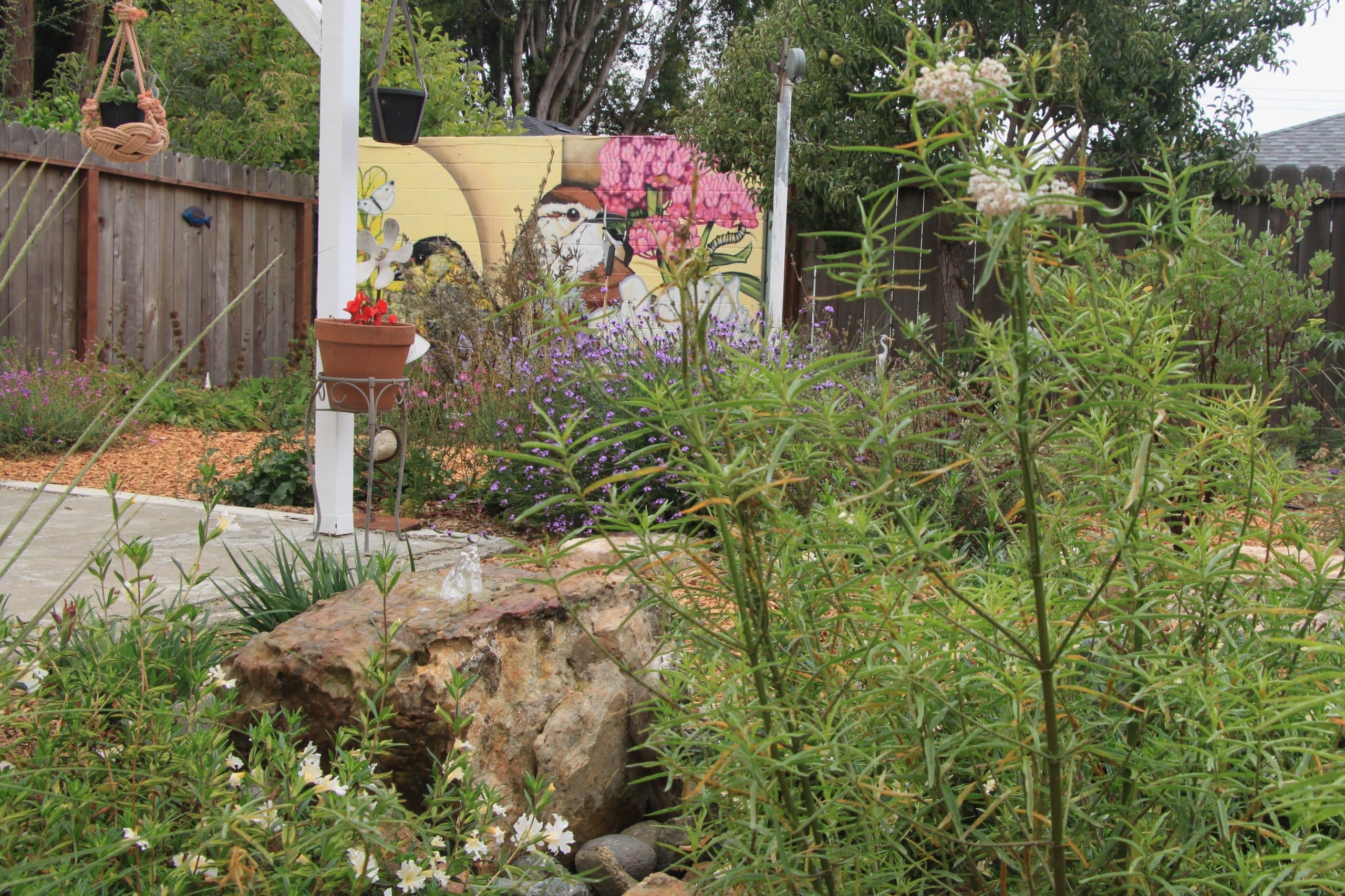
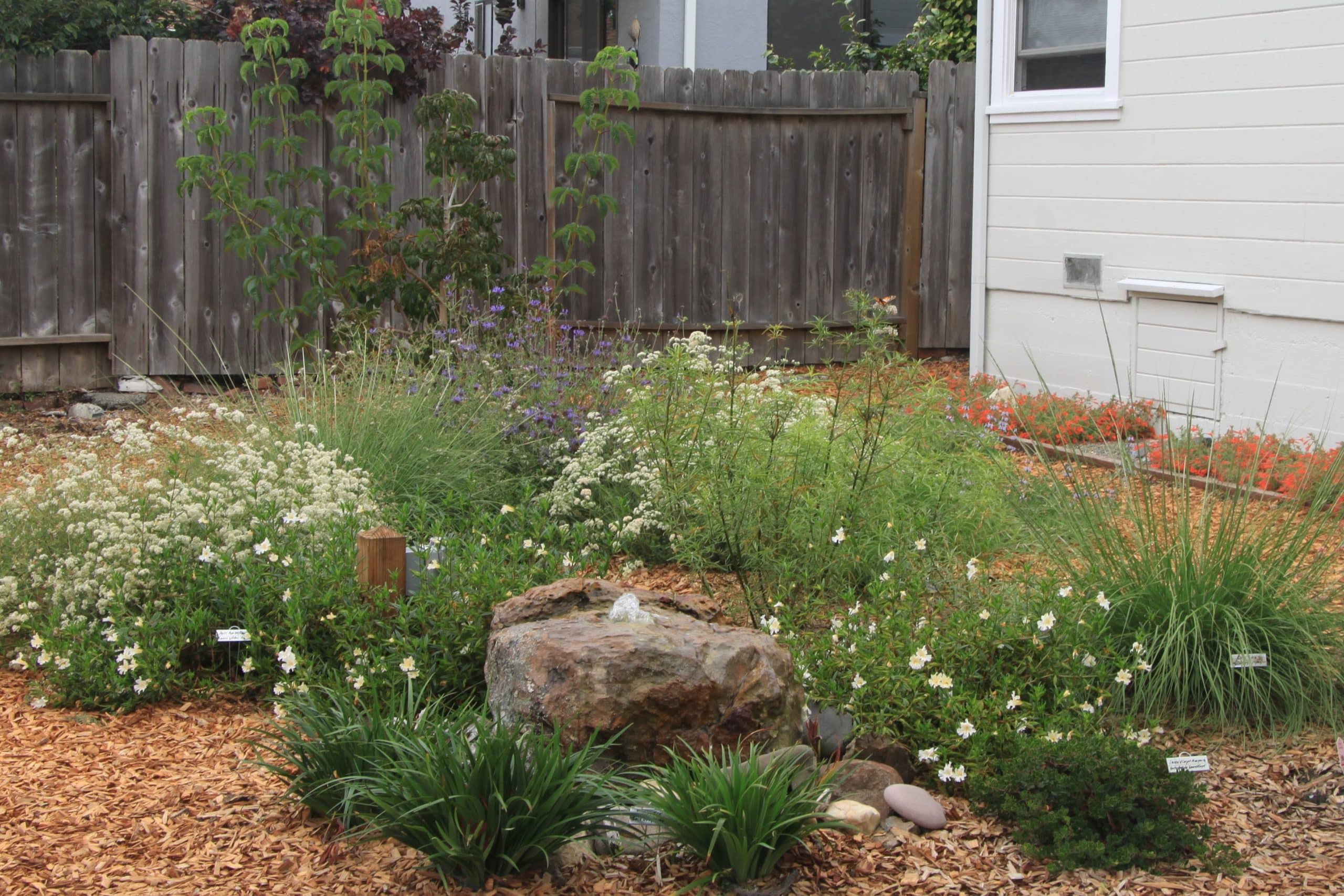
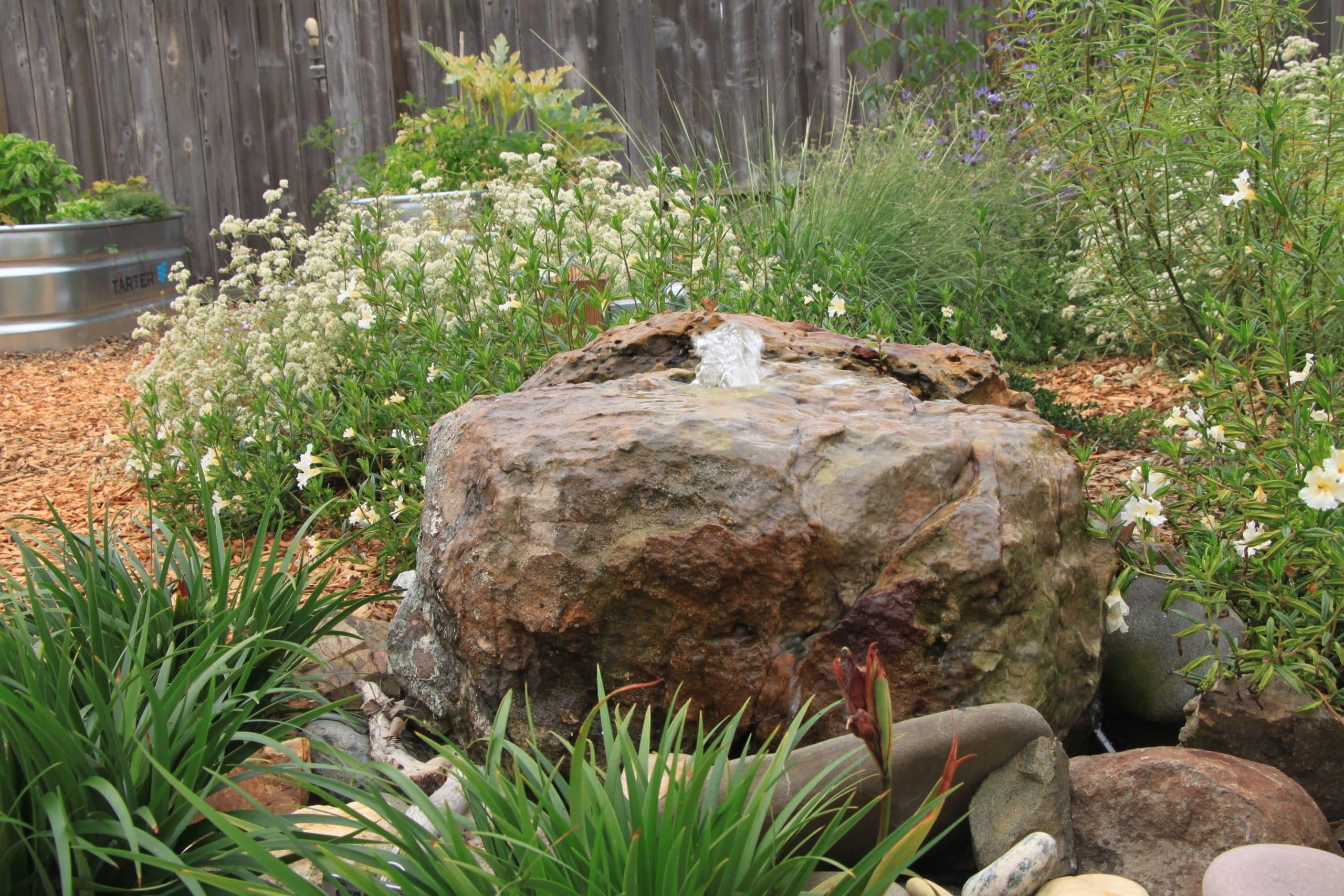 A pondless, drilled rock fountain splashes pleasantly near the seating area, providing drinking water and a bathing area for winged creatures, and a lowered heart rate for the people relaxing near it.
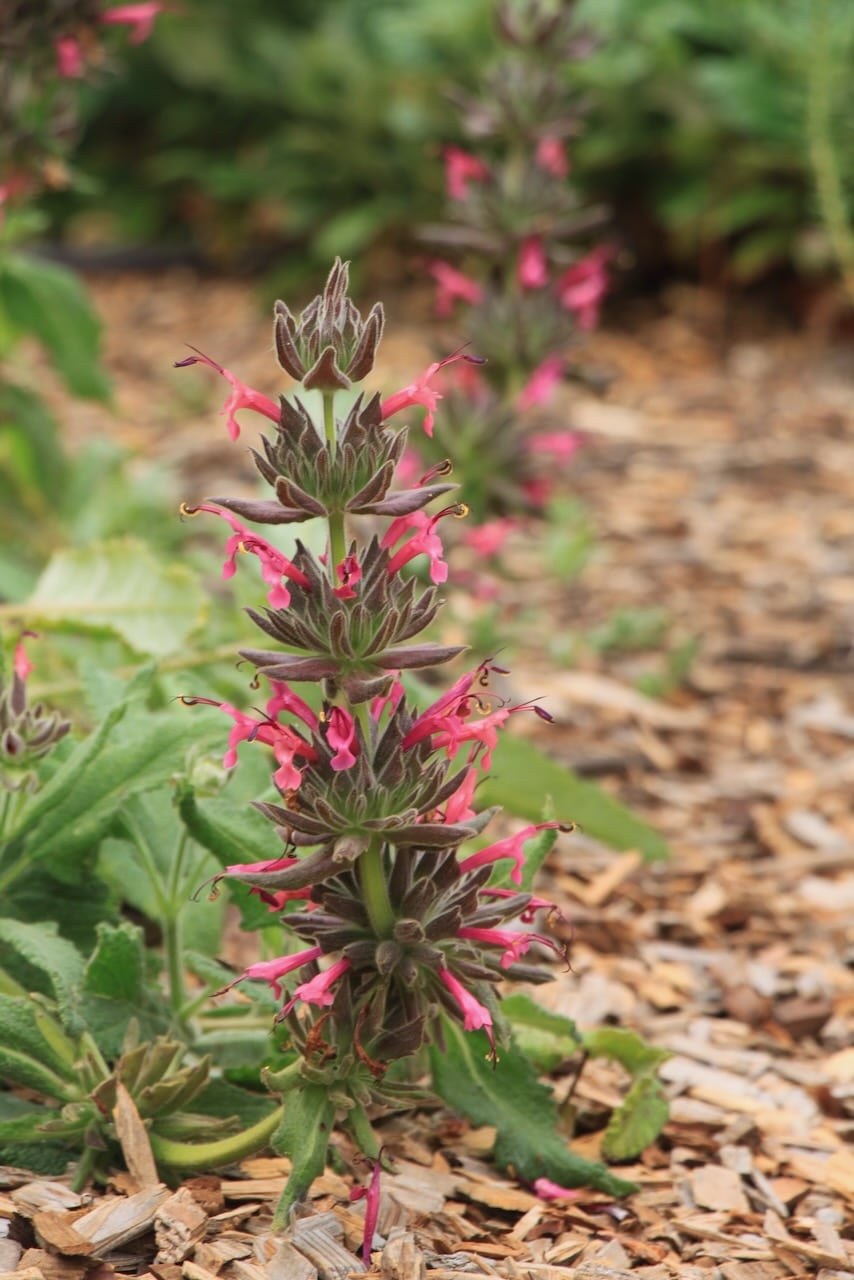
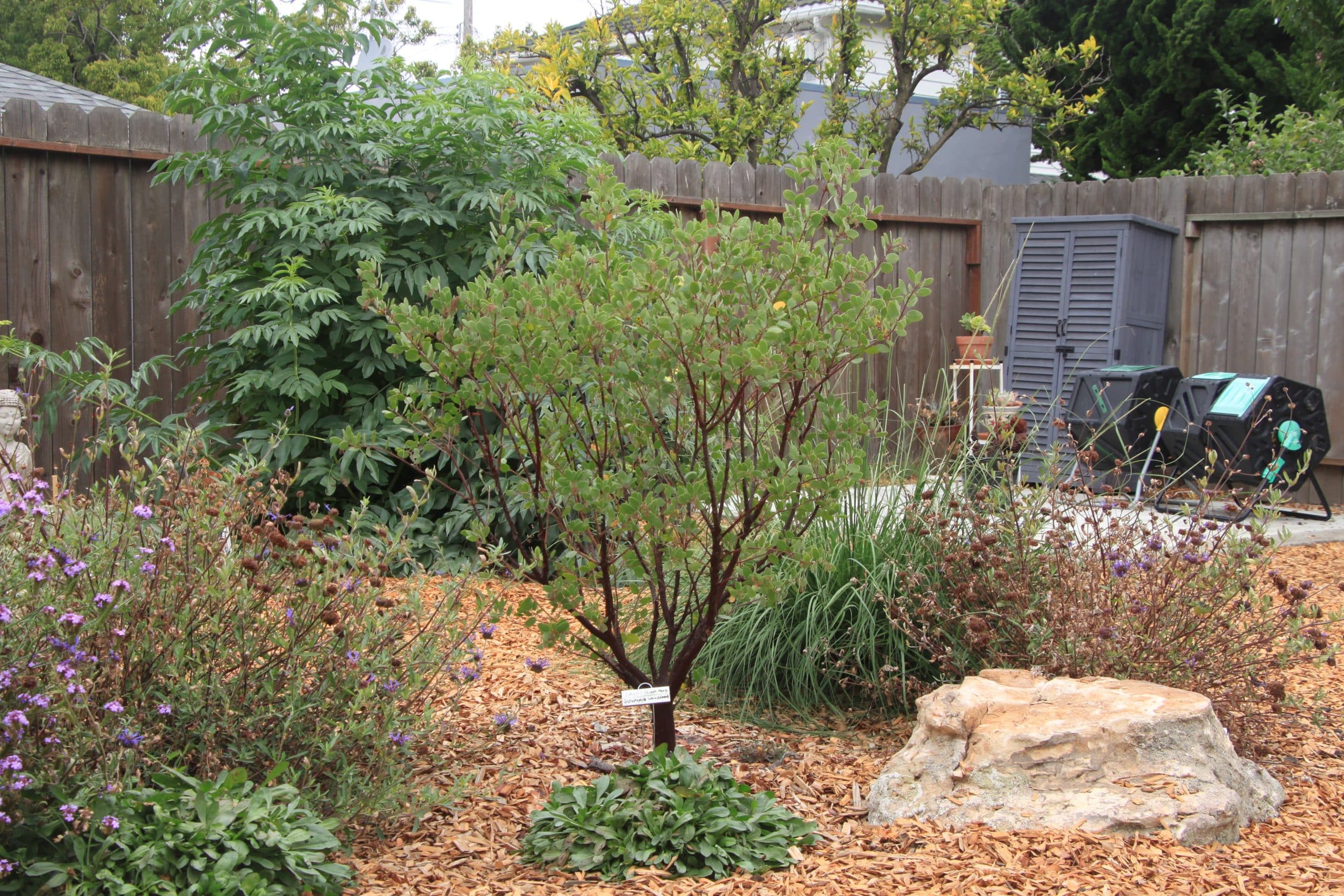
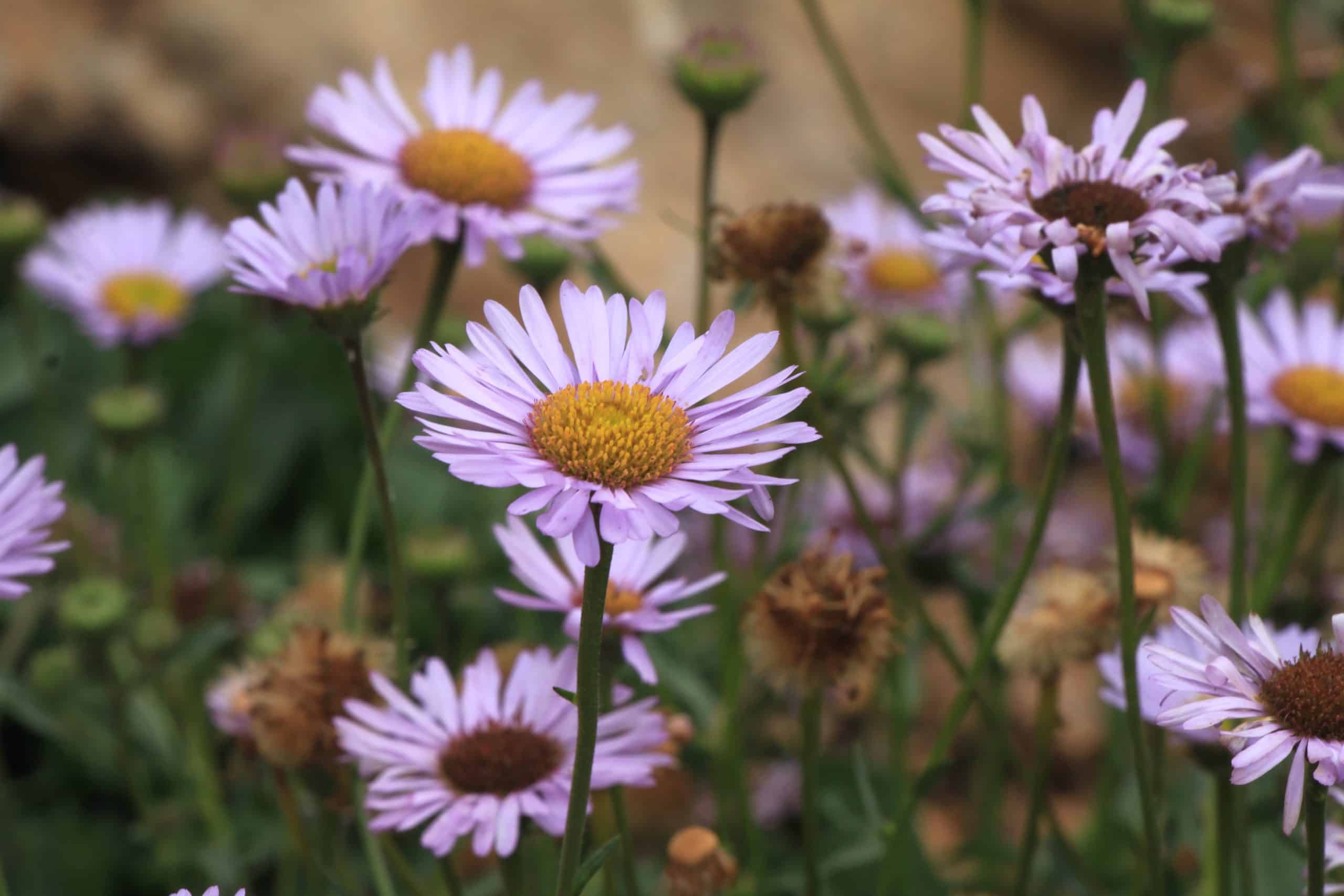
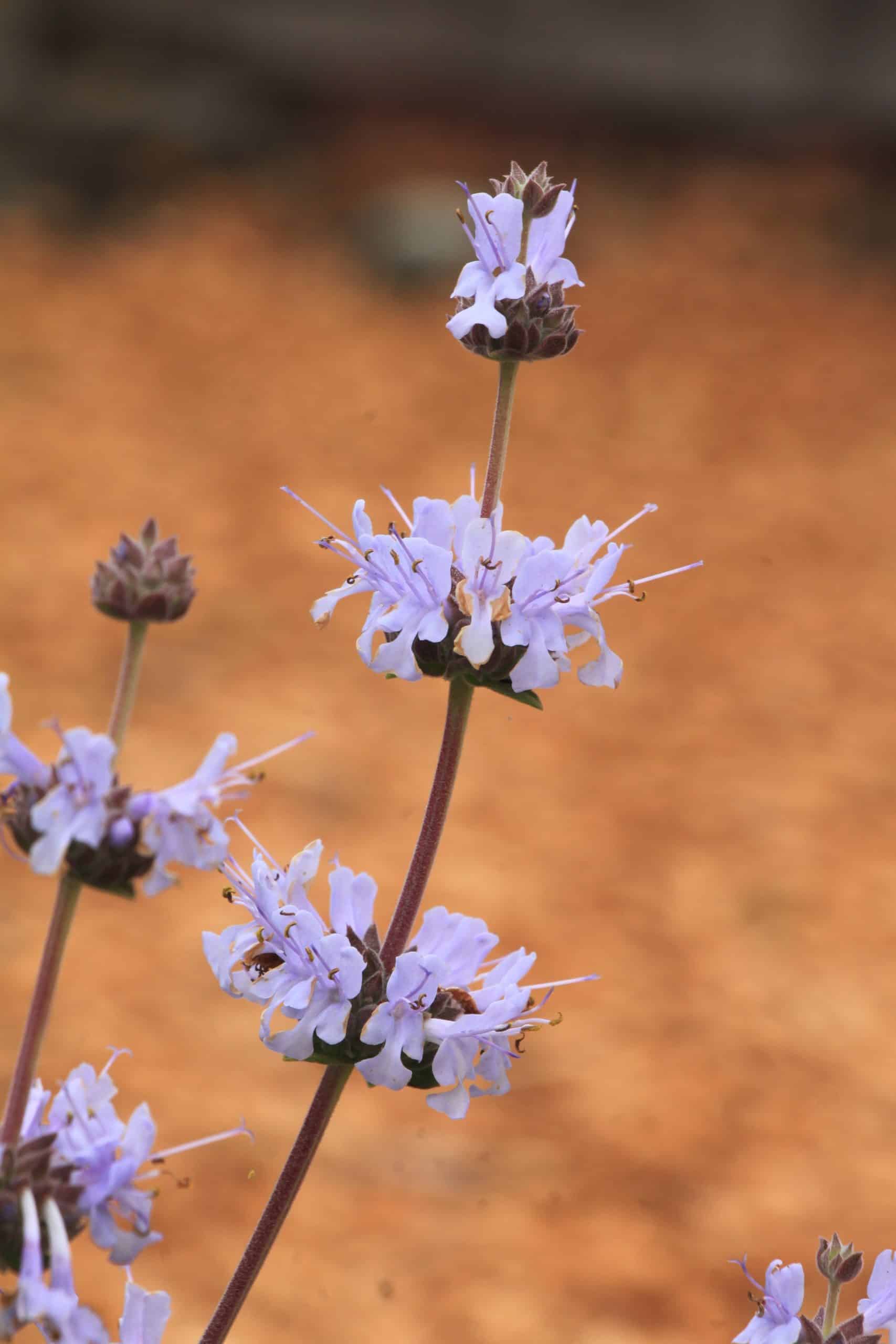
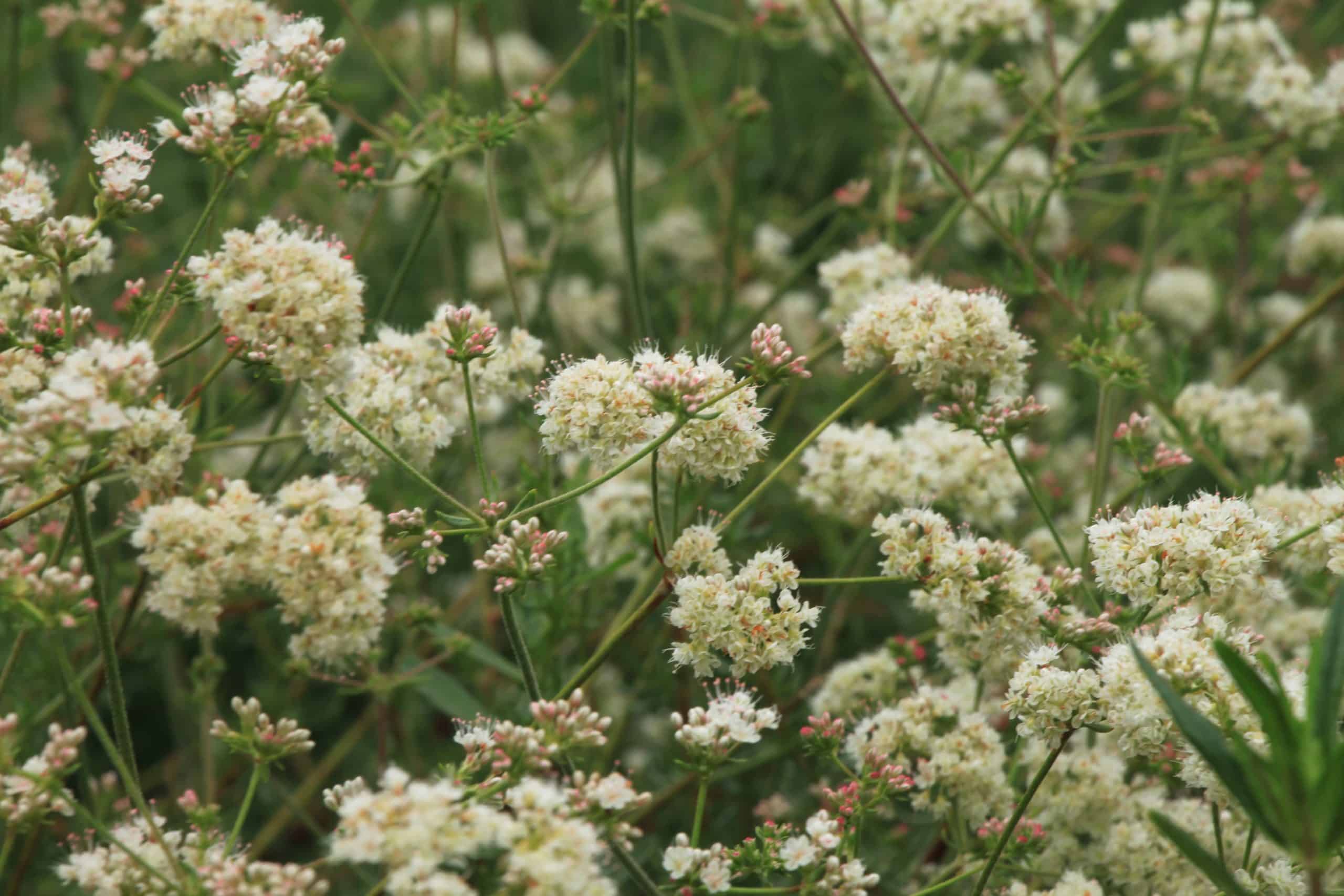
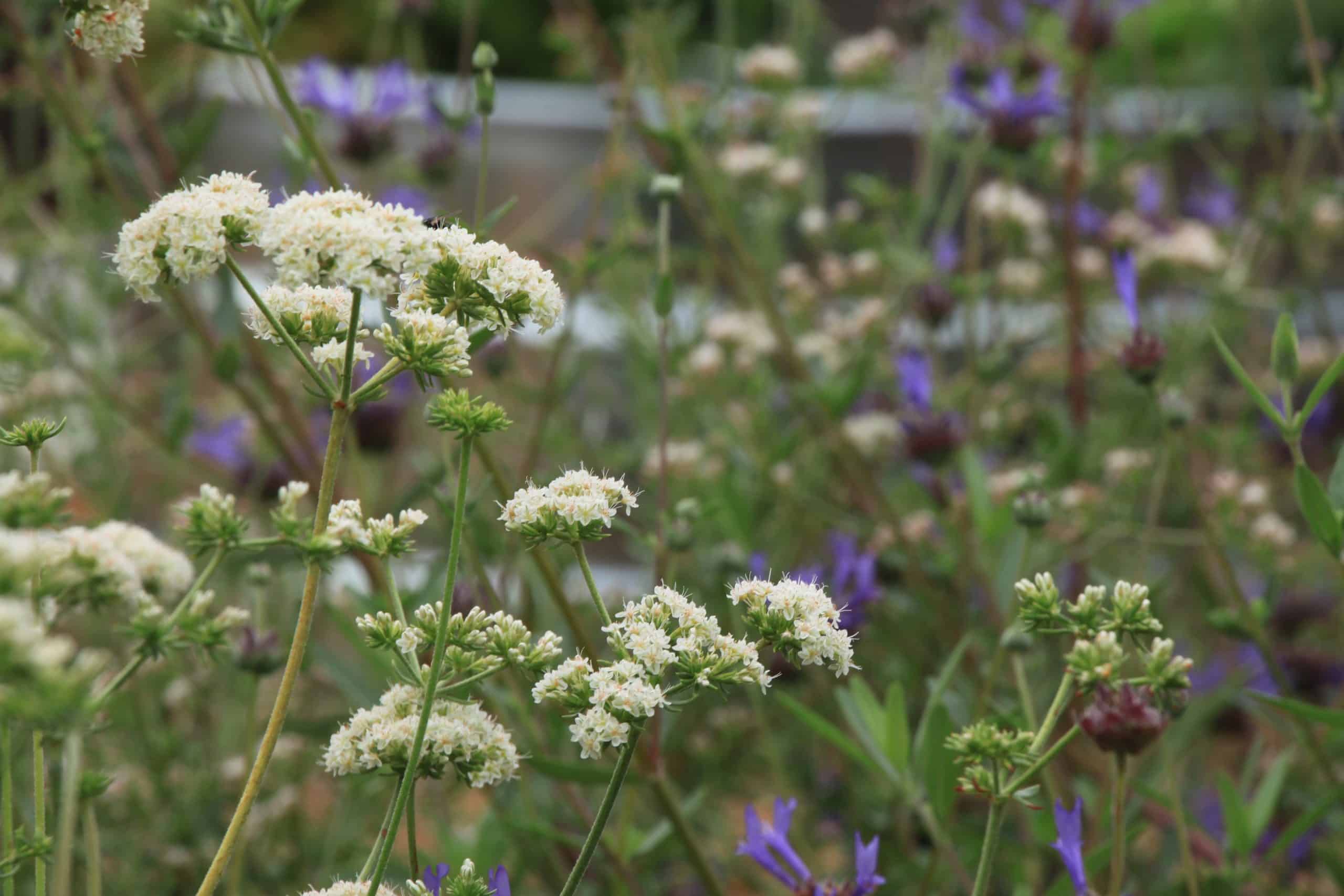
A variety of native trees and shrubs—including a scrub oak, toyon, elderberry, and a buckeye—offer nesting, perching, and insect-snacking areas for birds, and will function as privacy screens when mature. Inviting islands of buckwheats (‘Warriner Lytle’, rosy, and coast), sages (‘Terra Seca’ black and ‘Winnifred Gilman’), checkerbloom, and seaside daisy, among others, are separated by mulched pathways.
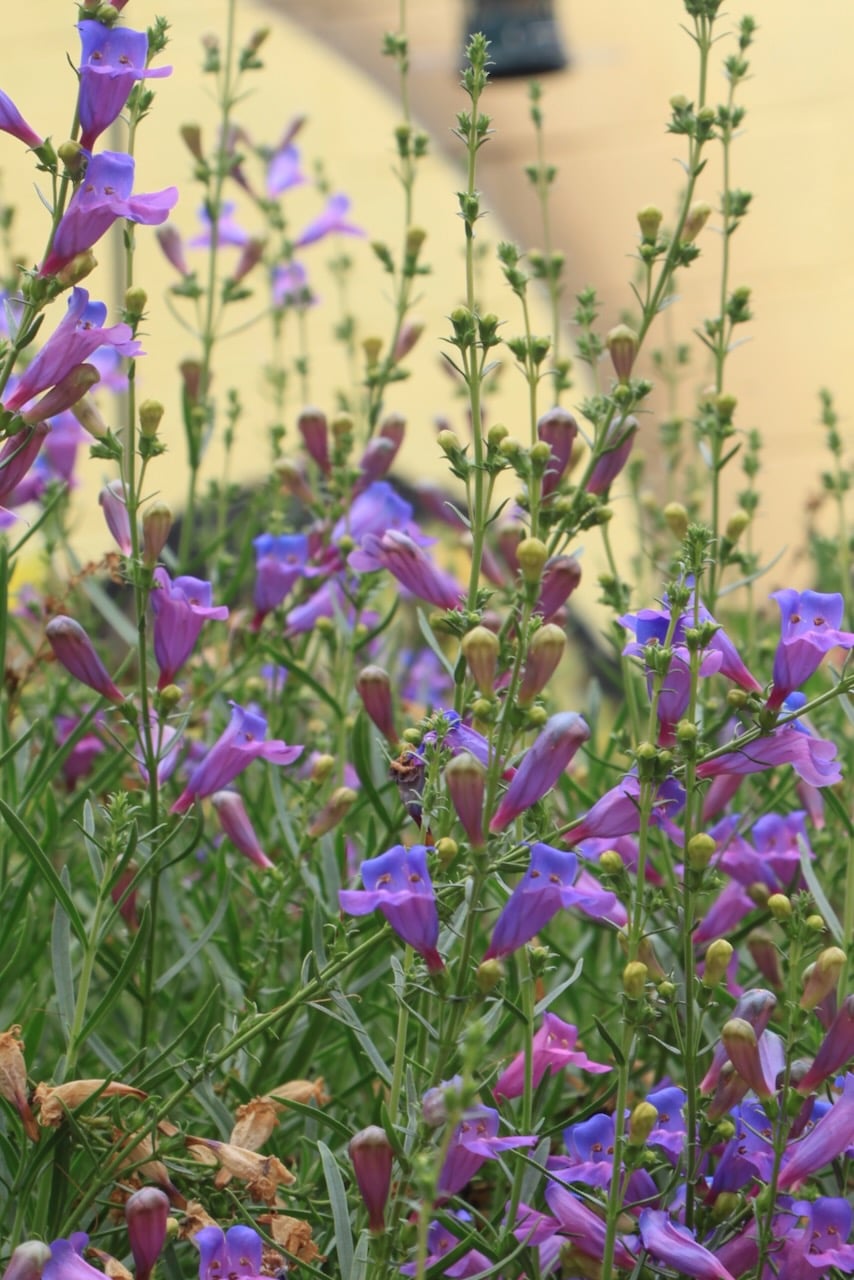
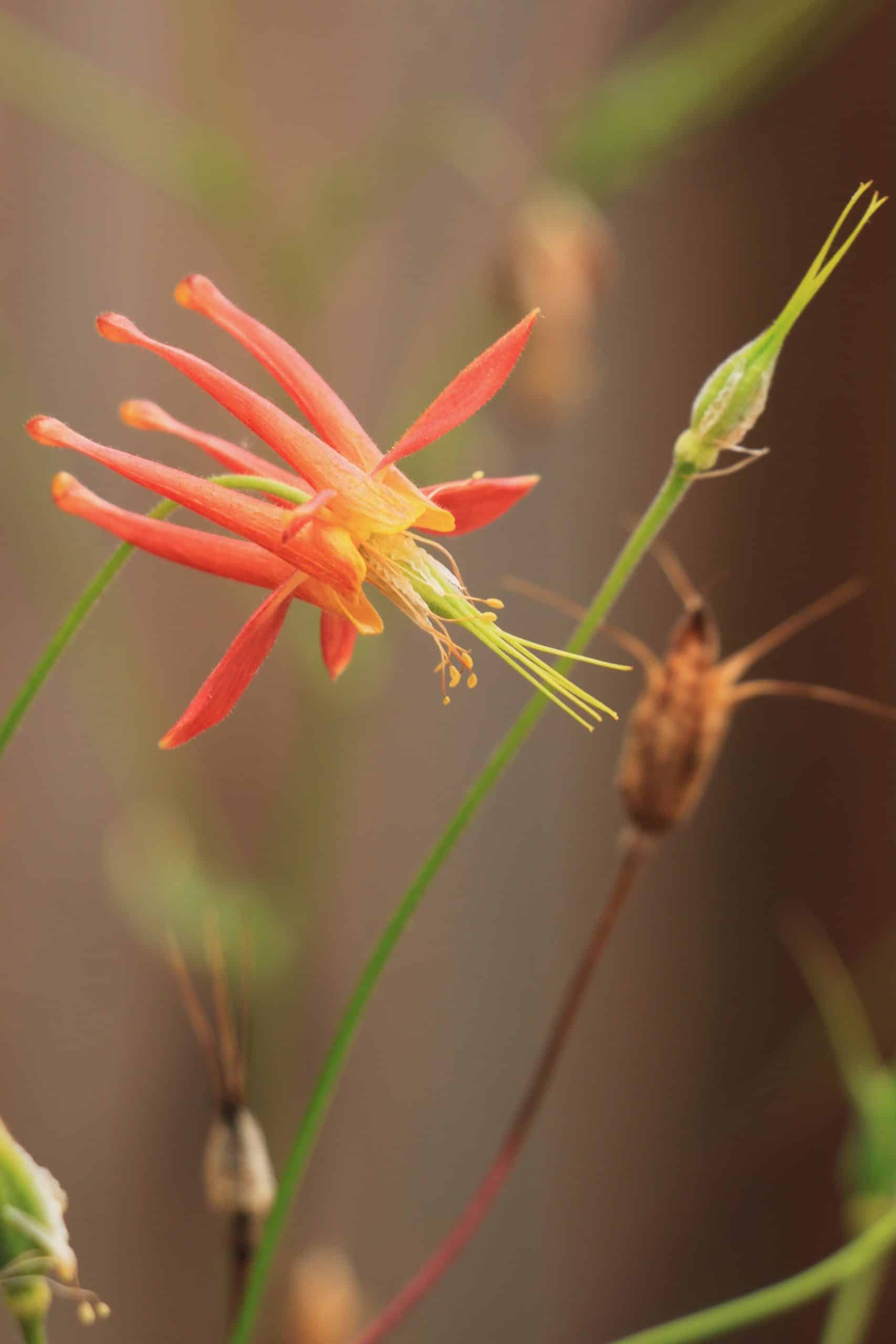
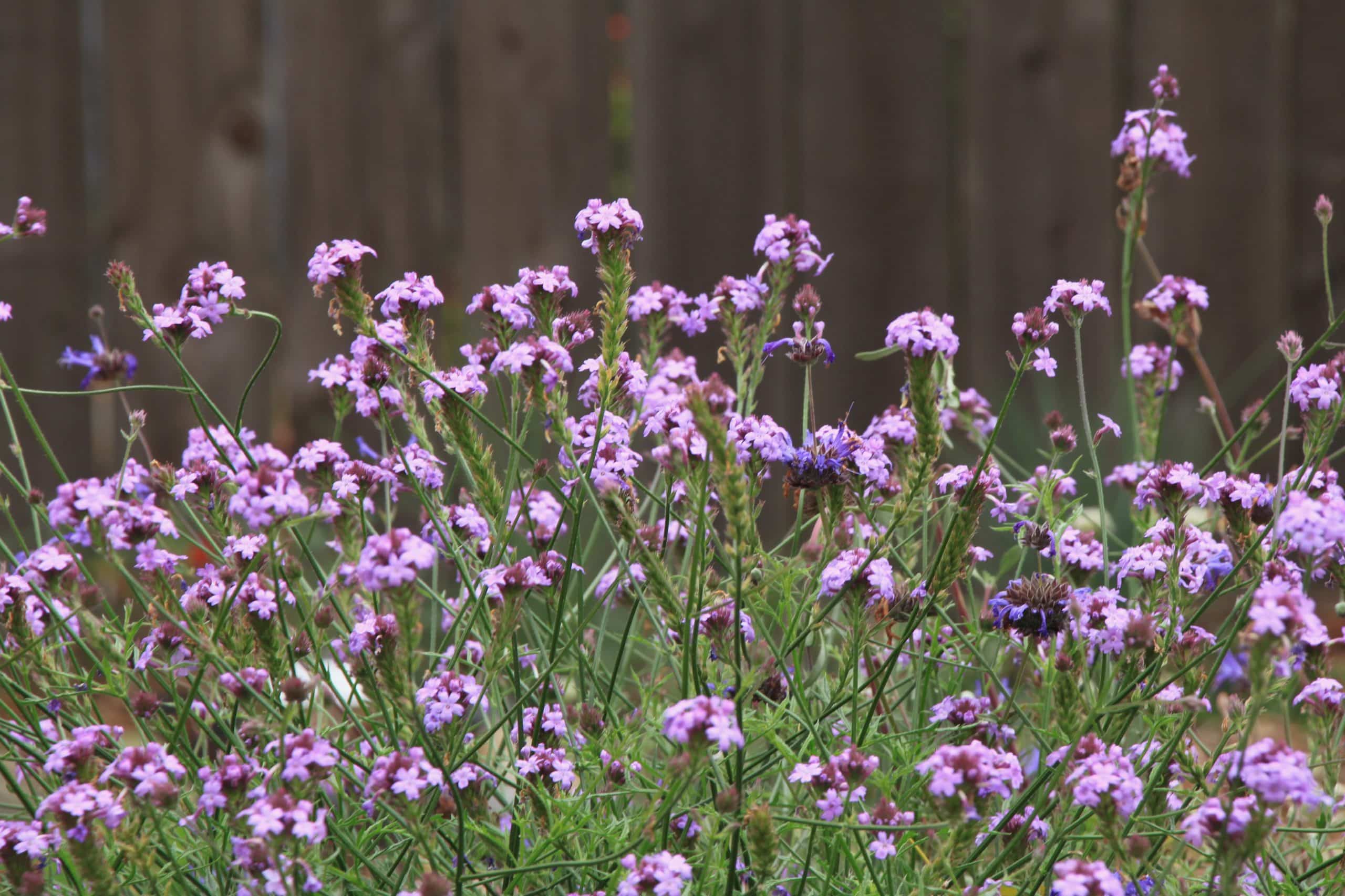
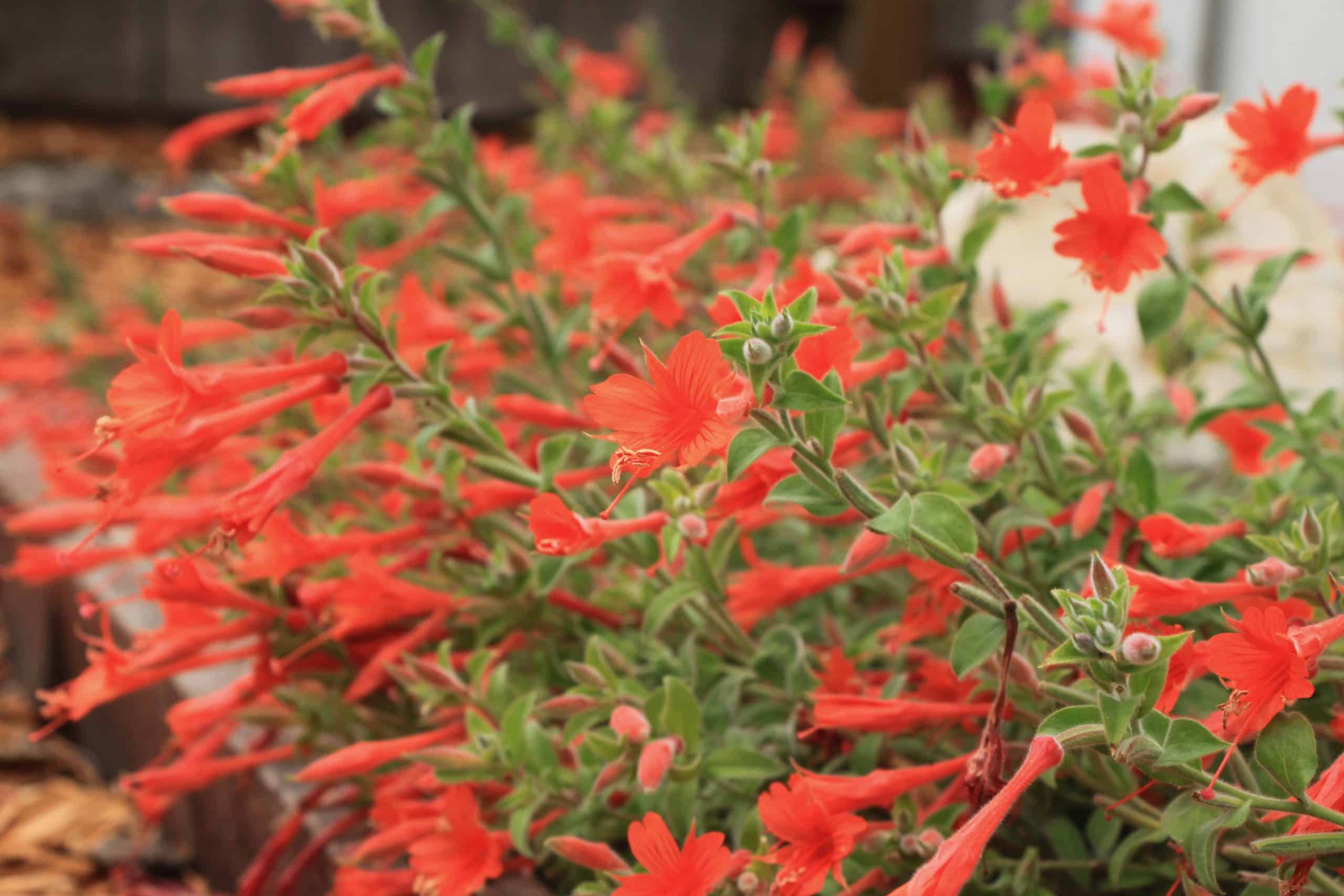
If you wonder how to keep a native plant garden looking beautiful throughout the summer and fall, check this garden out. Plants blooming in September include violet penstemon, creamy-white to pink buckwheats, red and yellow columbine, purple sages, pink checkerbloom, fire-engine red fuchsia, yellow elderberry, and lavender verbena ‘De La Mina.’
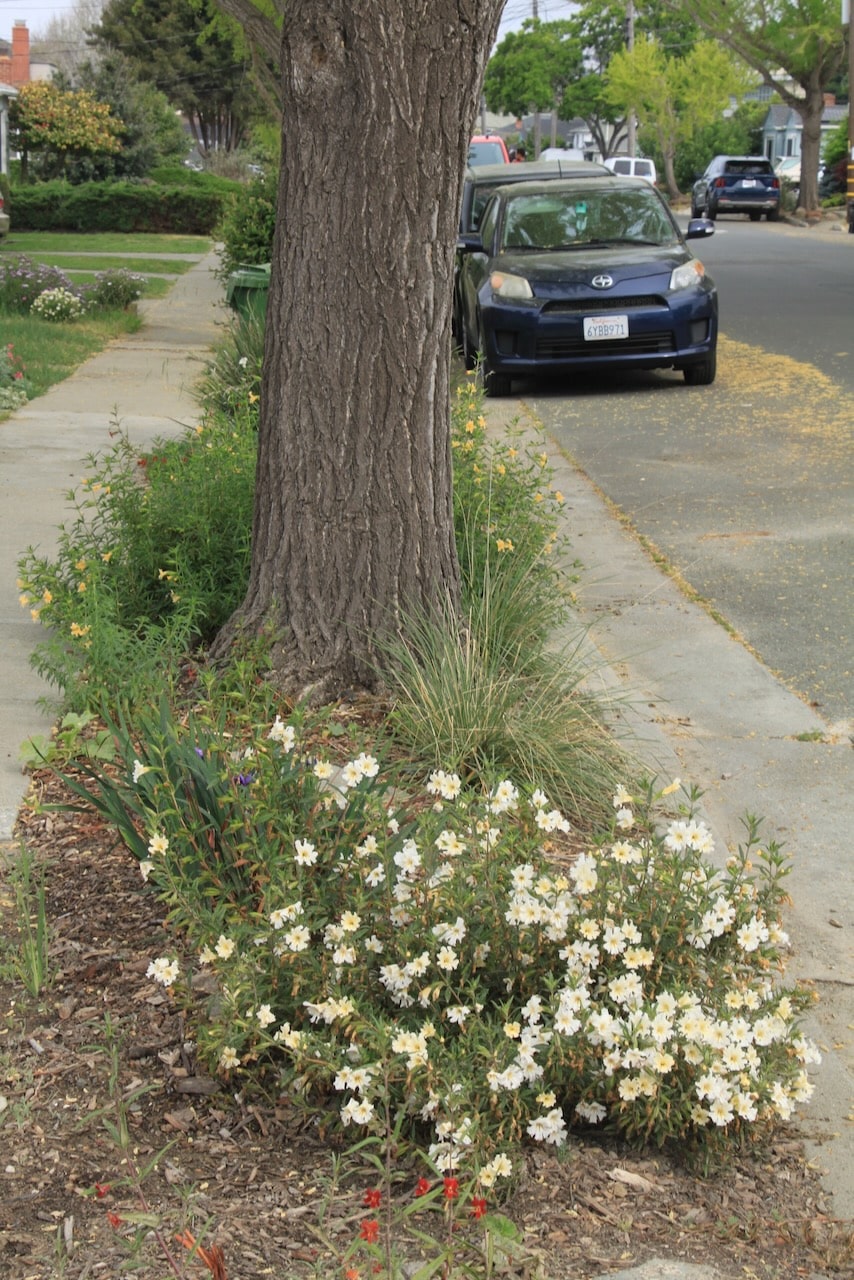
The parking strip has been planted with exuberantly-blooming monkey flowers, Douglas iris, and bunchgrasses.
Other Garden Attractions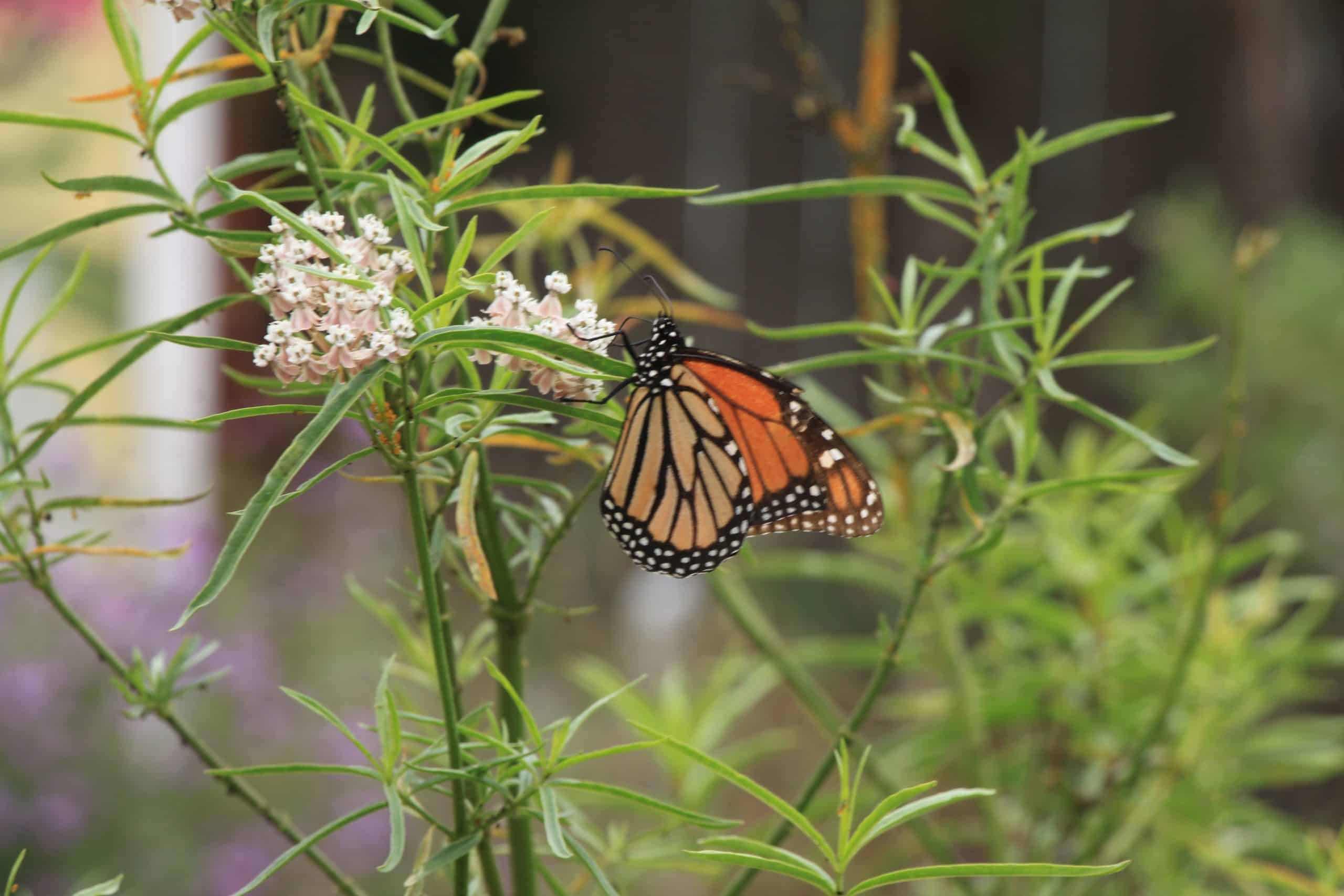
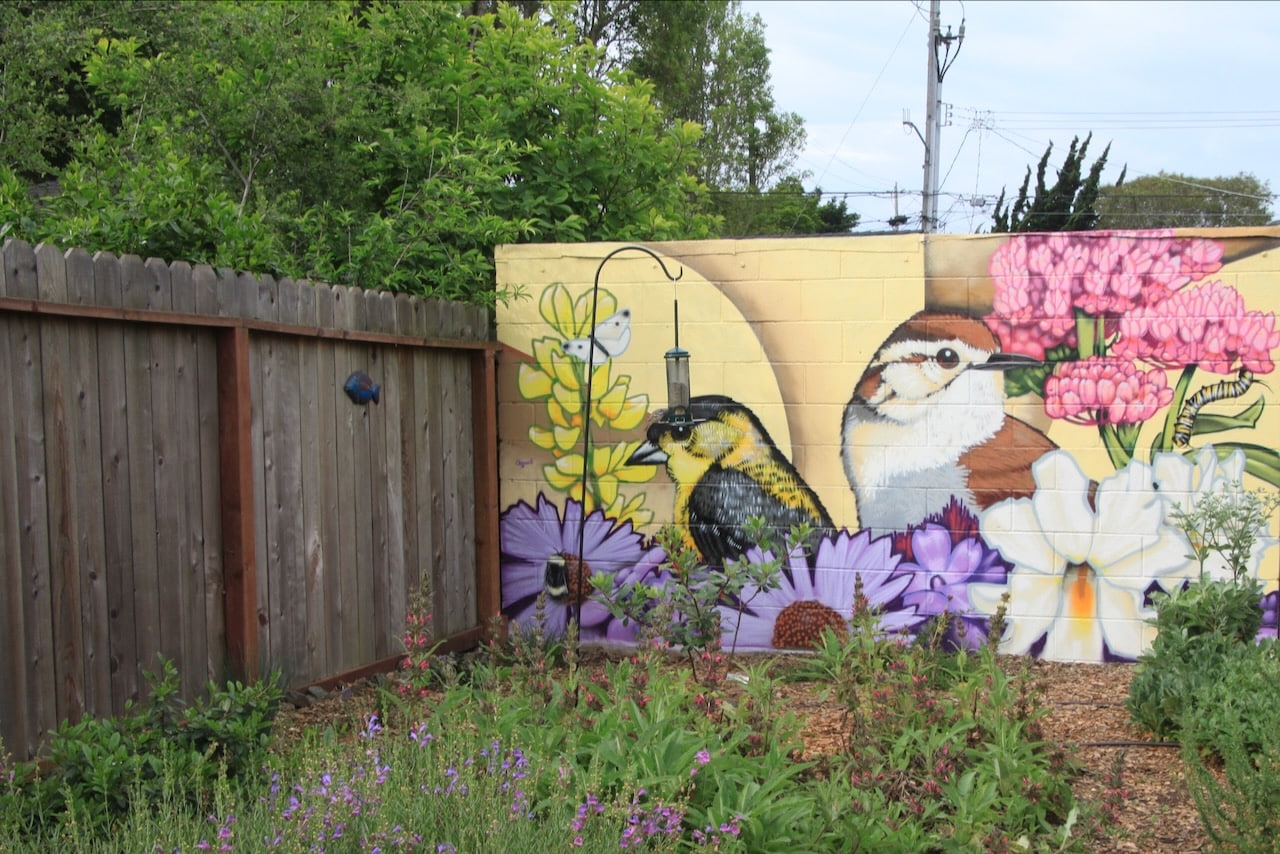
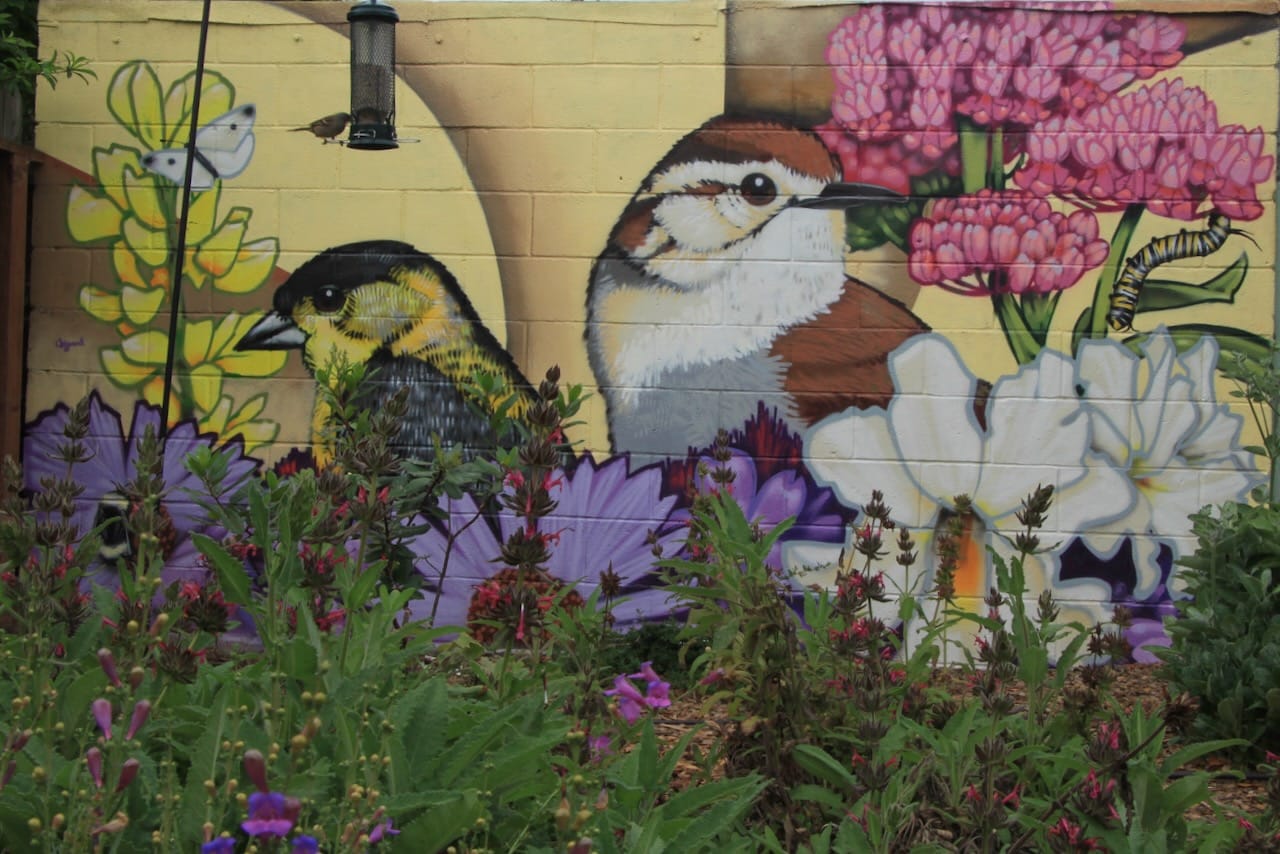
• The fabulous mural on the concrete block wall was spraypainted by John Osgood, of California Mural Art.
• Shady areas are home to a flourishing collection of snowberry, coffeeberry, hummingbird sage, Island alum root, columbine, huckleberry, and ferns.
• A ‘Louis Edmunds’ manzanita is a focal point.
• Manzanitas, California lilac, coffeeberry, and the buckwheats and sages provide greenery, structure, and stability throughout the year.
• Landscape designer Kelly Marshall will be at this garden from 10:00-1:00 to answer your questions.
Gardening for Wildlife
The provision of water, the diversity of native plants, the mixture of plant heights—from prostrate to taller plants, to trees—and the long blooming period are the perfect recipe for a wildlife garden.
Monarch butterflies are frequently seen fluttering about the garden, laying eggs on the narrowleaf milkweed, and sipping nectar from a variety of plants. 
Keystone species (watch this talk by Doug Tallamy!)
Keystone species—our own, local ecological powerhouse plants— in this garden include scrub oak, huckleberry, California lilac, snowberry, lupine, manzanitas, buckwheats, sages, honeysuckle, coffeeberry, and penstemon.
Garden Talks
10:00 “Ten easy-to-grow, beautiful natives for any garden” by Kelly Marshall, owner of Kelly Marshall Garden Design
At least partially wheelchair accessible? No
Photos
Click to see as a slideshow: