

Pollinator Post 9/6/26 (1)
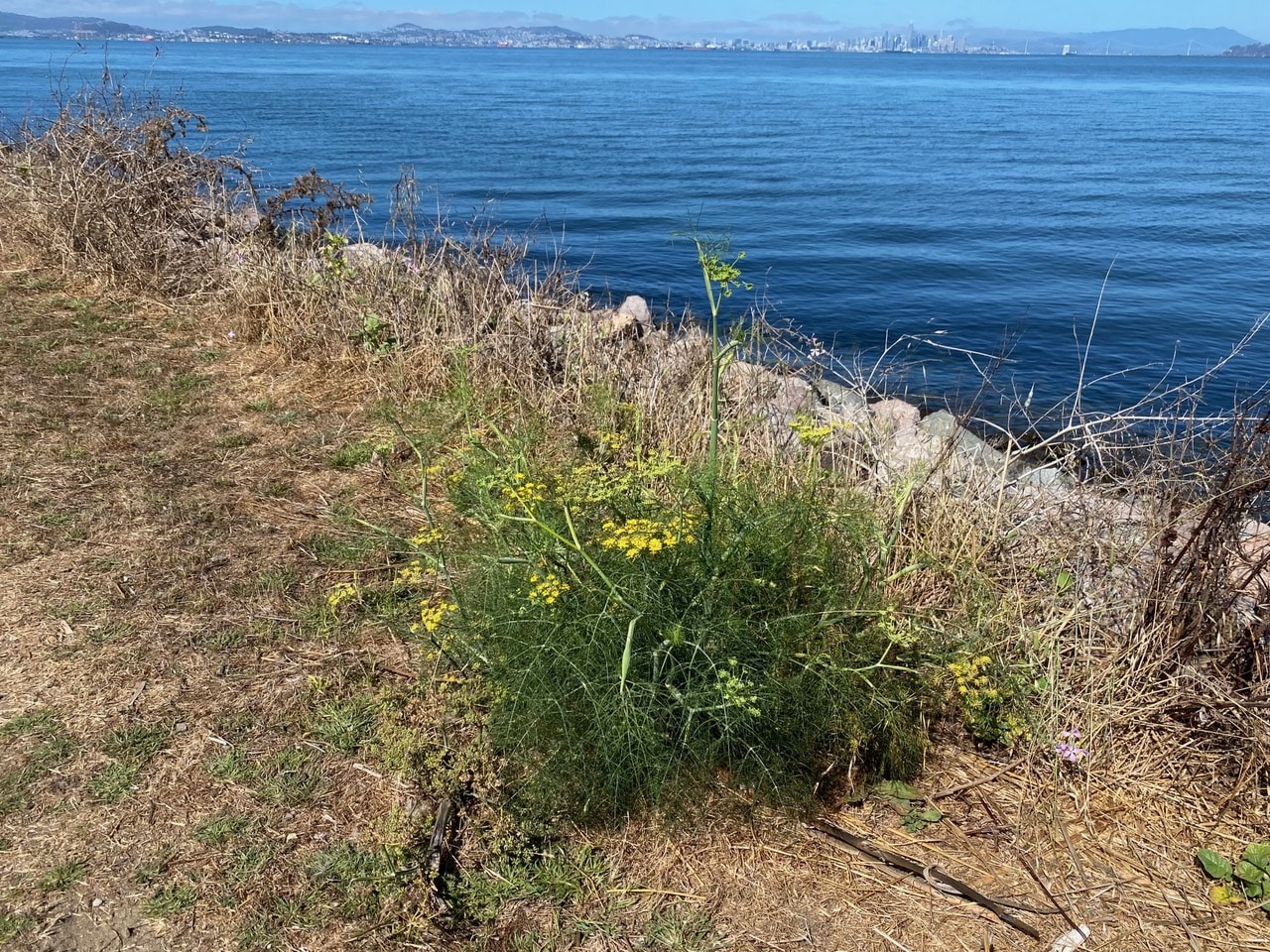
Fall is fast setting in – the weeds along the Bay Farm shoreline are drying up, or have been severely pruned back.
I stop at this lone Fennel to watch a hover fly on the flowers. The green foliage stands out against the stark, parched landscape.
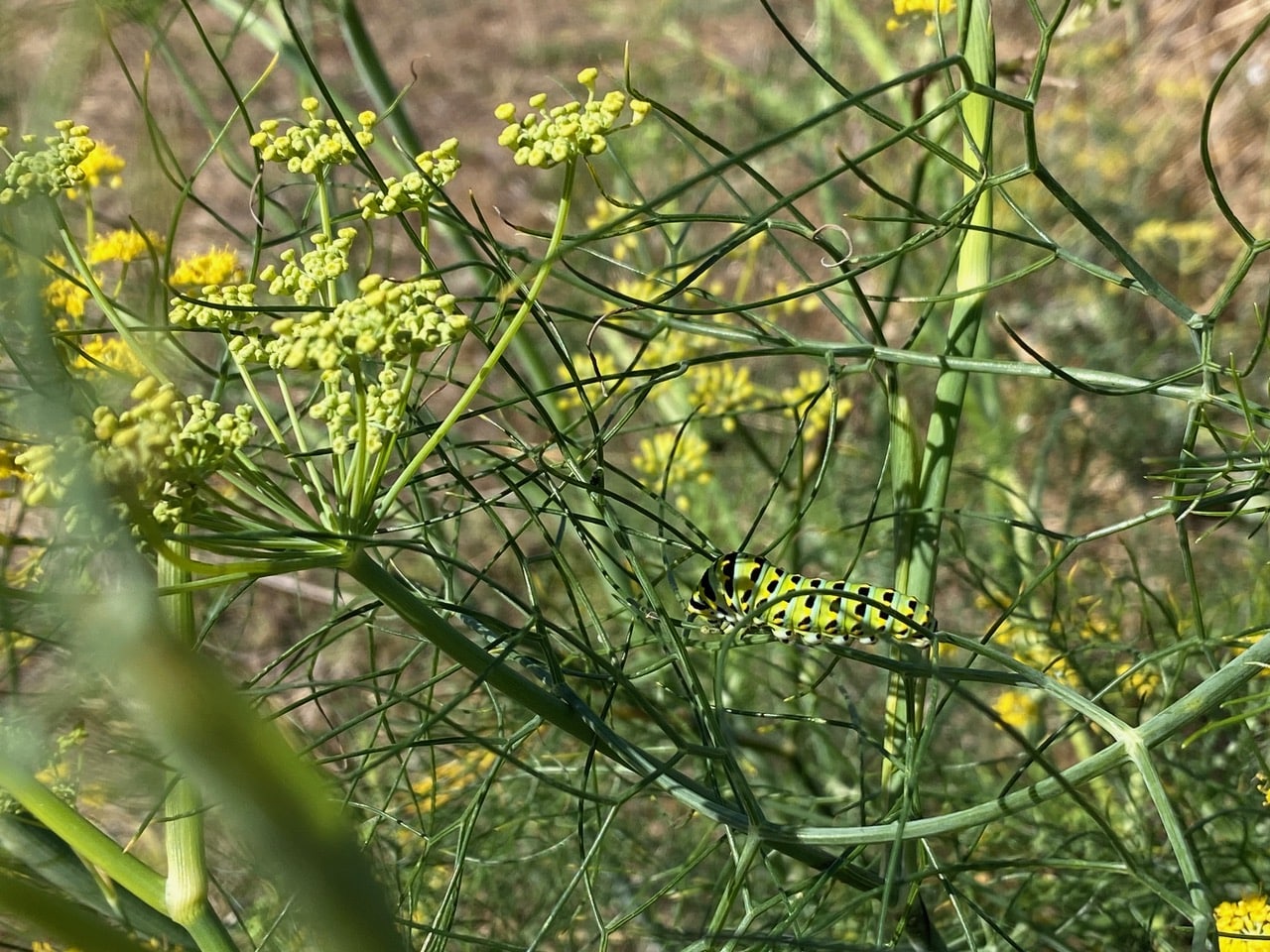
Hey, do you see that last-instar Anise Swallowtail caterpillar? Its pattern and coloration provide perfect camouflage on the plant. Rather amazing, as Fennel is not even a native host plant for the butterfly – the butterfly and the plant did not co-evolve in the same place.
Native to the Mediterranean, Fennel, Foeniculum vulgare belongs to the carrot family, Apiaceae which includes Anise Swallowtail’s original native host plants, such as Lomatium and Cow Parsnip. Since its introduction to North America, the plant has created a fascinating ecological shift. The butterfly has successfully adapted to using Fennel as a primary larval host plant. Because the invasive Fennel grows aggressively across disturbed areas, it provides a consistent, abundant food source that allows the butterflies to thrive in urban and suburban landscapes. While the plant supports multiple generations of butterflies from early spring through fall, land stewards and native plant conservationists still view Fennel as a threat to local biodiversity. In areas like the San Francisco Bay Area, native plants like Lomatium are crowded out by dense thickets of Fennel, which do not provide the proper habitat for other local insects.
The Anise Swallowtail, Papilio zelicaon (family Papilionidae), is a common swallowtail butterfly of western North America. It is found in fairly open country, most likely seen on bare hills or mountains, in fields or at the roadside. Adult females lay eggs singly on the underside of host plant leaves. In the first two instars, the caterpillar is a bird poop mimic – dark brown, almost black, with an irregular white band at its middle. After that it becomes more green at each successive molt until, in the fifth (last) instar, it is predominantly green, with markings in black, orange, and light blue. Its major food plants are members of the carrot family, Apiaceae (including Fennel), and also some members of the citrus family, Rutaceae.
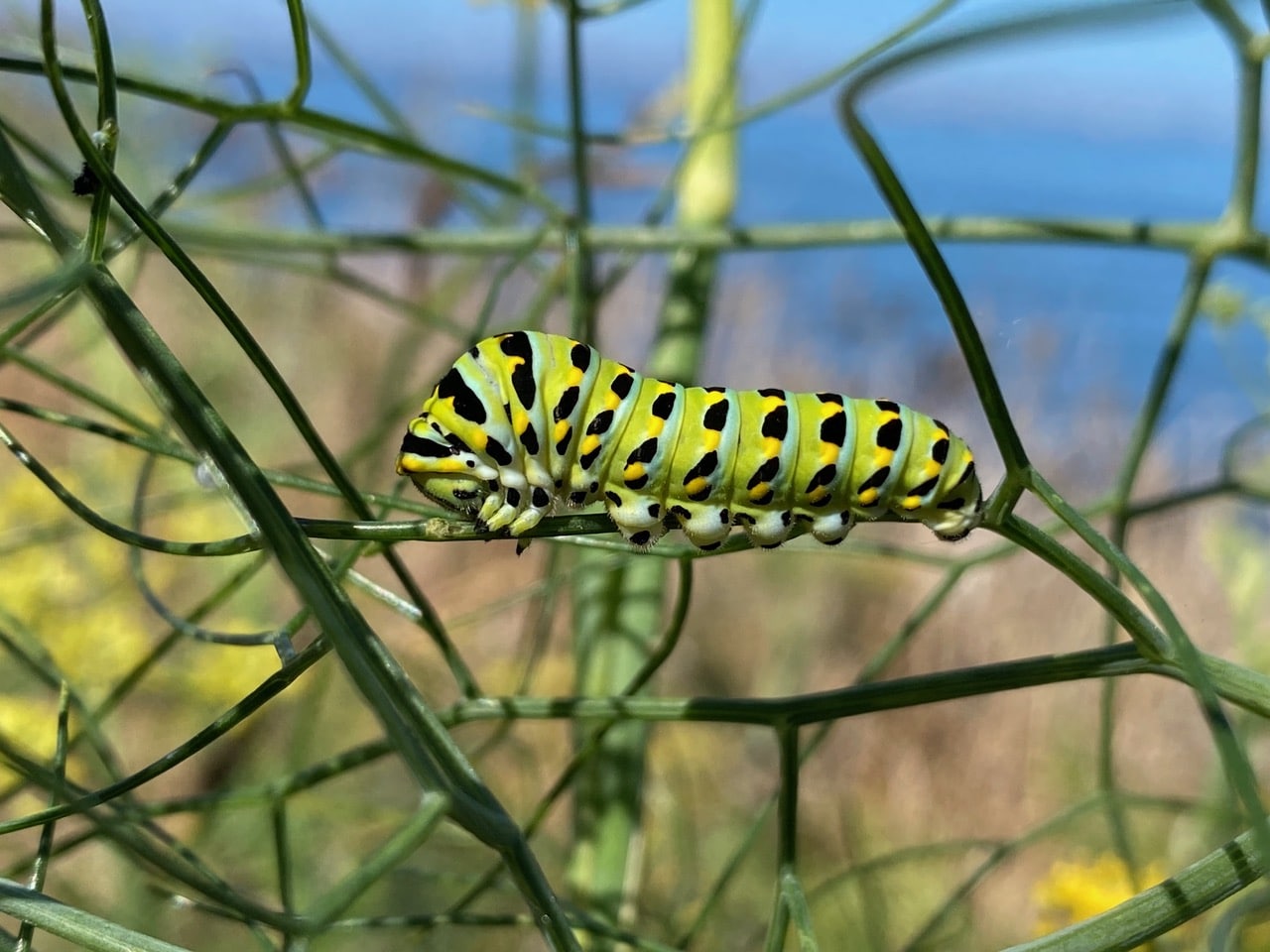
Here’s a close-up of the magnificent creature, all of one inch. The bulky end is the front of the caterpillar. Clustered close to its head, under the thoracic segments are three pairs of jointed thoracic legs with claws. Behind them under the abdominal segments are several fleshy nubbins, the prolegs. The thoracic legs will be retained in the adult butterfly after metamorphosis, while the prolegs will disappear. Unlike true legs, prolegs are soft extensions of the body wall and lack the rigid segments and joints. The bottom of each proleg features tiny hooks called crochets. These work like microscopic Velcro or grappling hooks to hold tightly onto leaves and stems. Most common caterpillars have up to five pairs of prolegs on their abdomen. These anchor the back and middle parts of the body securely, allowing caterpillars to hang upside down or climb smooth surfaces.

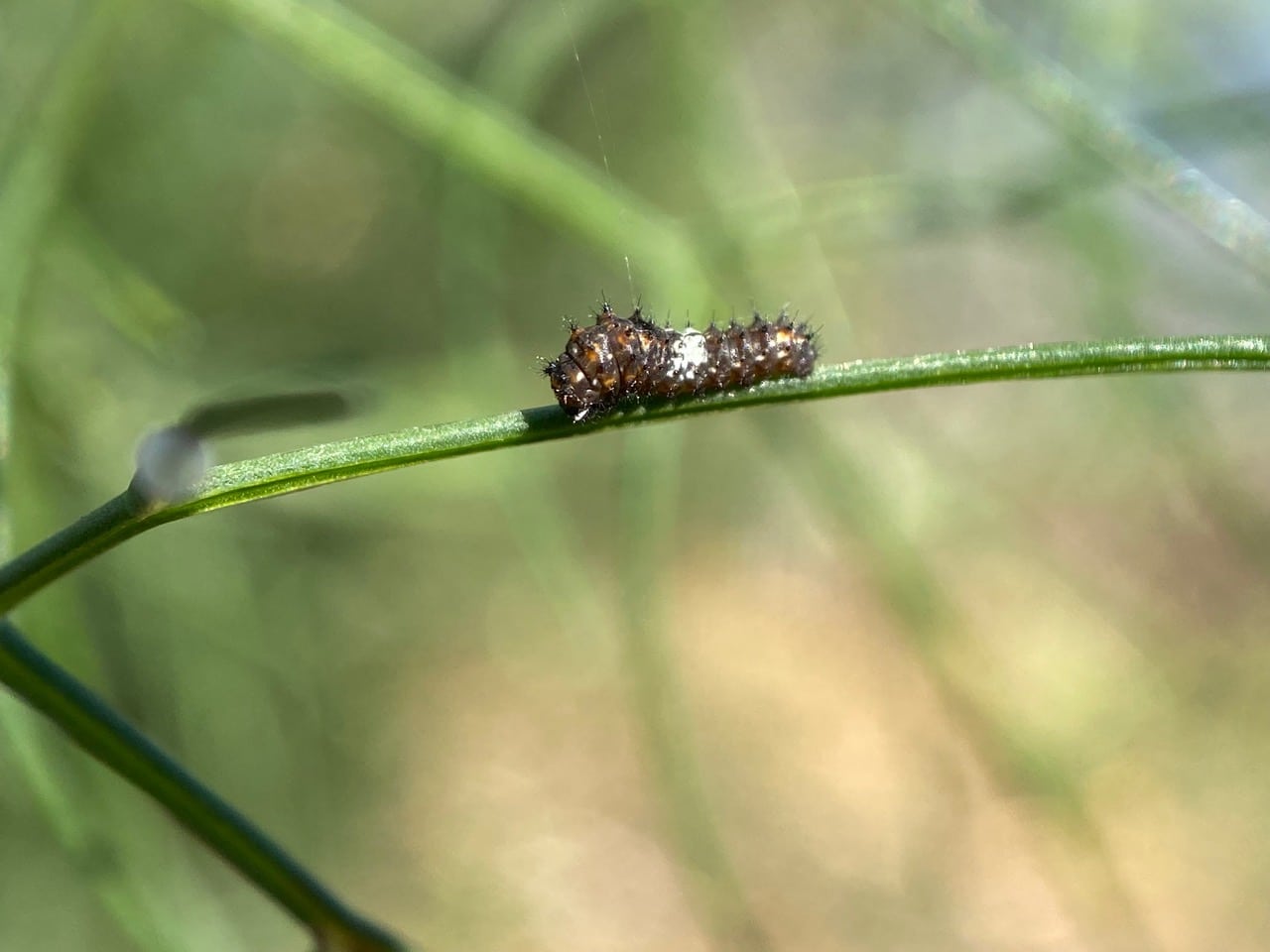
Checking the plant carefully, I find more Anise Swallowtail caterpillars. This one looks like a second or third instar, still a bird-poop mimic.
Instar is the term given to the developmental stage of an insect between molts. For example, after hatching from the egg an insect is said to be in its first instar. When the insect molts it is then a second instar and so on.

This tiny caterpillar has not been out of an egg for long. The irregular patch of white in the middle of the black caterpillar is thought to confer an illusion of bird poop to help the caterpillar avoid predation.
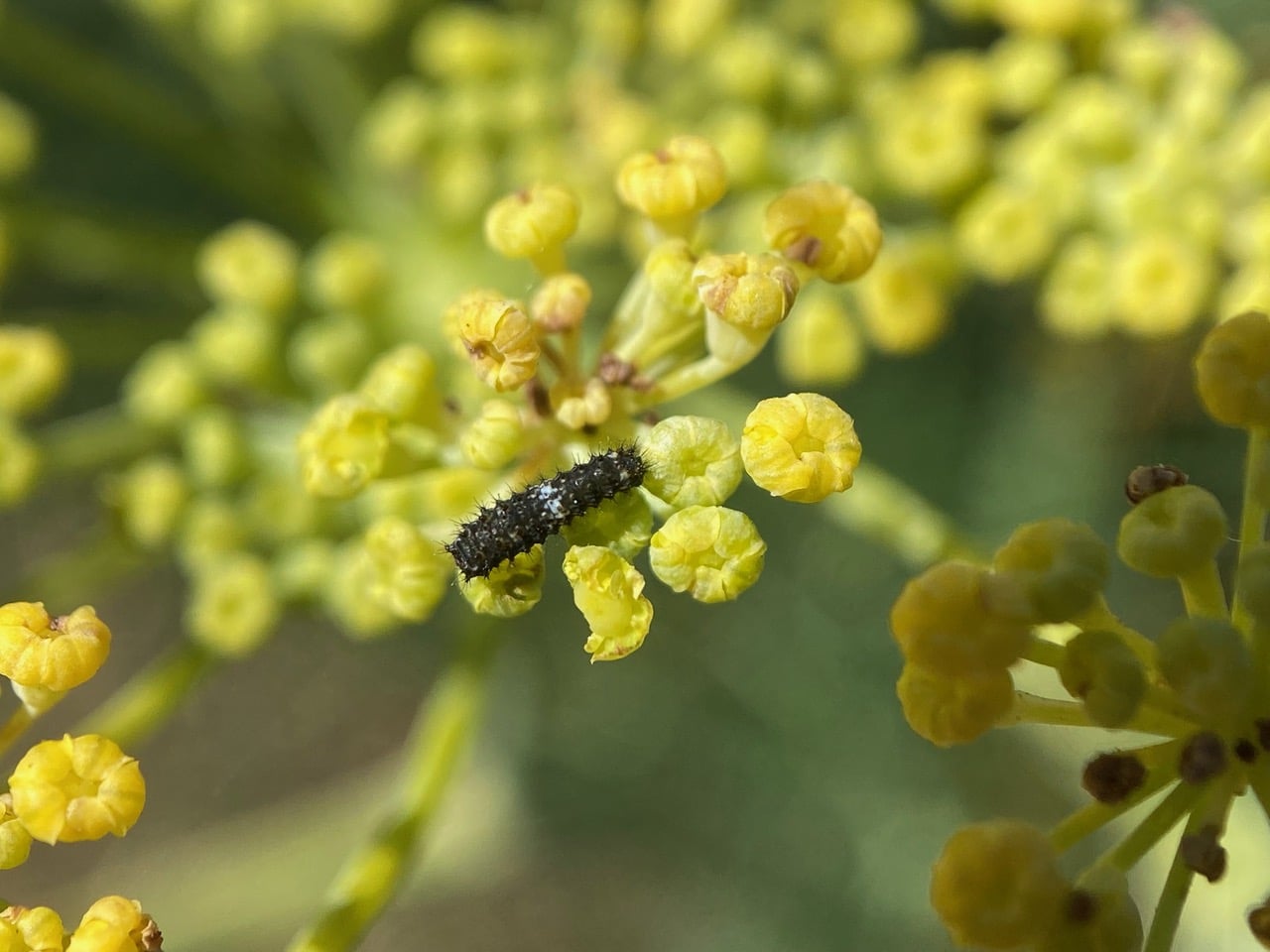
Another young caterpillar on a flower umbel.

I also find several Swallowtail eggs attached to the Fennel foliage. The whole life cycle of the Anise Swallowtail is on display on this single Fennel plant. The plant has received intense attention from the butterflies because there’s hardly anything else close by that can support their caterpillars right now. I am in awe of the resilience of both the plant and the butterfly.
Female Anise Swallowtail butterflies select plants using a mix of smell, sight, and physical taste. They use their eyes to seek out young, tender green foliage and horizontally-oriented leaves, which are easier to land on and provide the best food for young caterpillars. The females have highly sensitive receptors that allow them to smell the specific chemical compounds of plants in the carrot family, Apiaceae – such as fennel, dill, parsley – from a distance. When a female lands, she relies on specialized chemical receptors located at the tips of her legs. She “drums” her legs against the plant to release its juices, verifying that the host is perfectly suited for her larvae to eat. Once a plant passes this strict chemical test, she deposits a single, small, pale yellowish-green egg directly onto the foliage.