

Pollinator Post 9/4/24 (2)

I pause at this stretch of the trail that features vibrant plantings of Perez’s Sea Lavender.

A small Digger Bee, Anthophora (Micranthophora) sp. (family Apidae) is foraging on an inflorescence of Perez’s Sea Lavender.
The bee genus Anthophora is one of the largest in the family Apidae, with over 450 species worldwide in 14 different subgenera. They are most abundant and diverse in the Holarctic and African biogeographic regions. All species are solitary, though many nest in large aggregations. Nearly all species make nests in the soil, either in banks or in flat ground; the larvae develop in cells with waterproof linings and do not spin cocoons. Males commonly have white or yellow facial markings, and/or peculiarly modified leg armature and hairs.
Members of the subgenus Micranthophora are smaller than other New World Anthophora. Many but not all species are associated with xeric habitats.
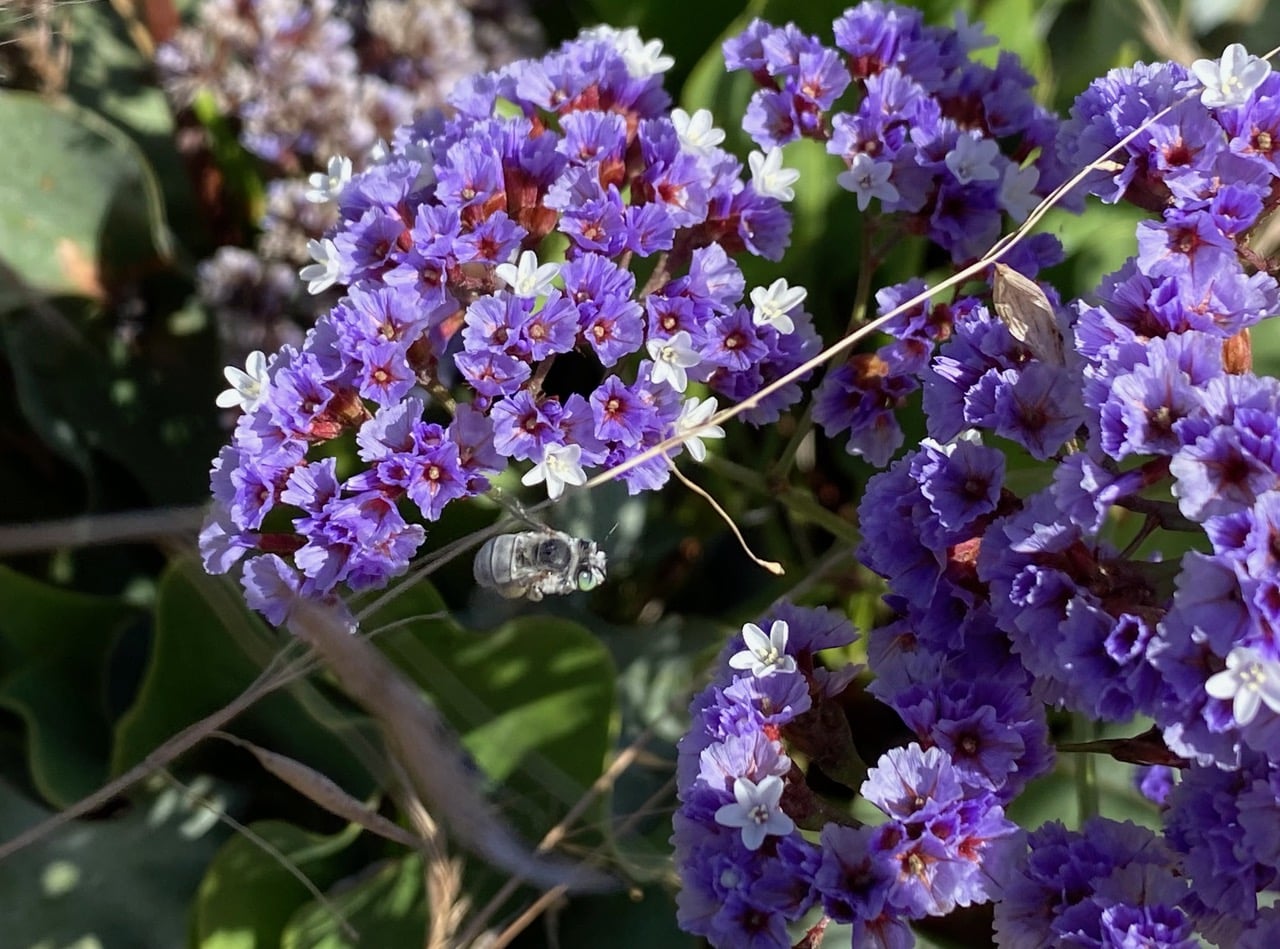
Several Micranthophora are zipping around the sea lavender, occasionally stopping briefly for nectar.
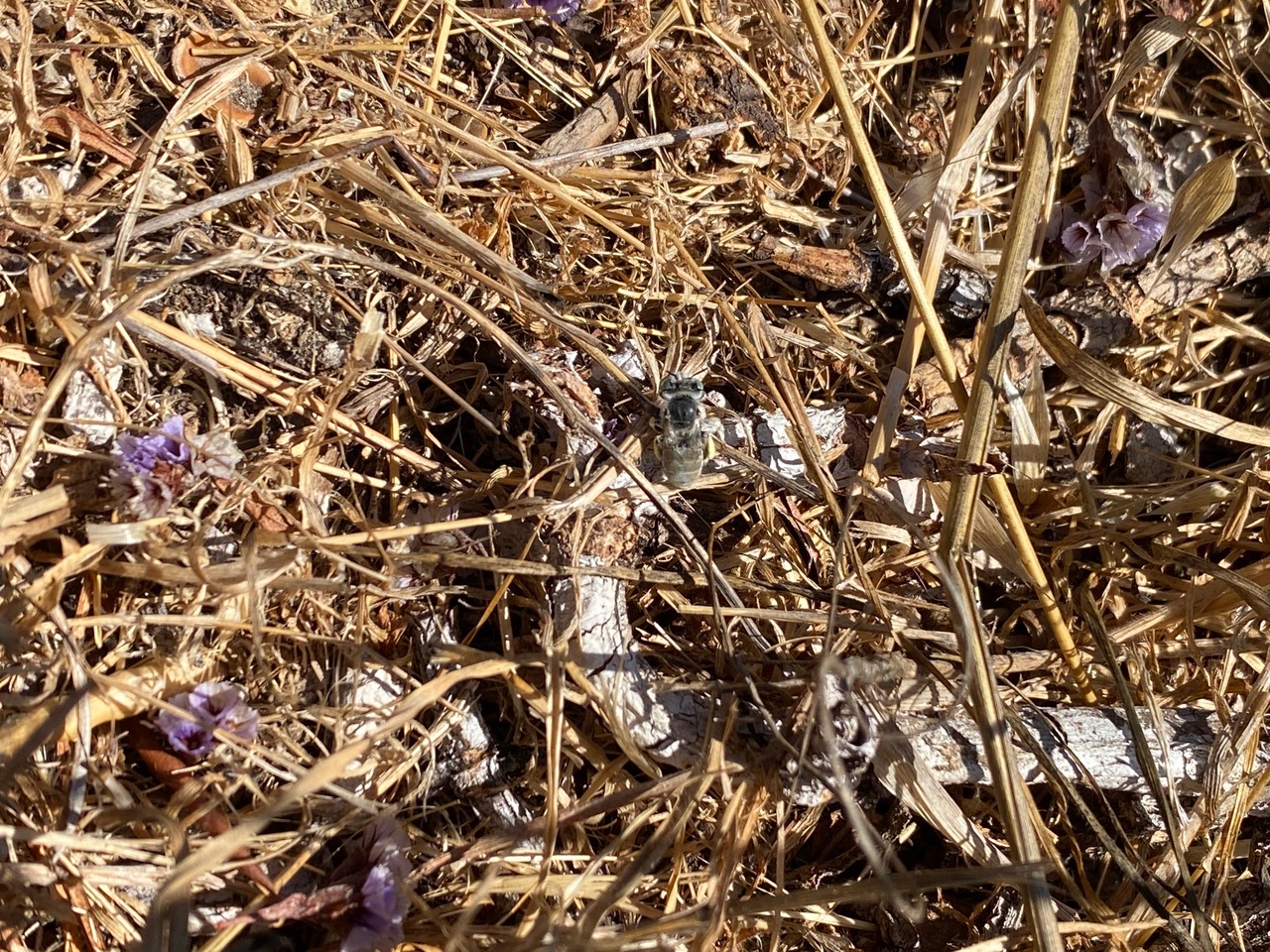
A Micranthophora lands on the ground and perches on a twig among the leaf litter in front of the sea lavender. Might it have a nest here?
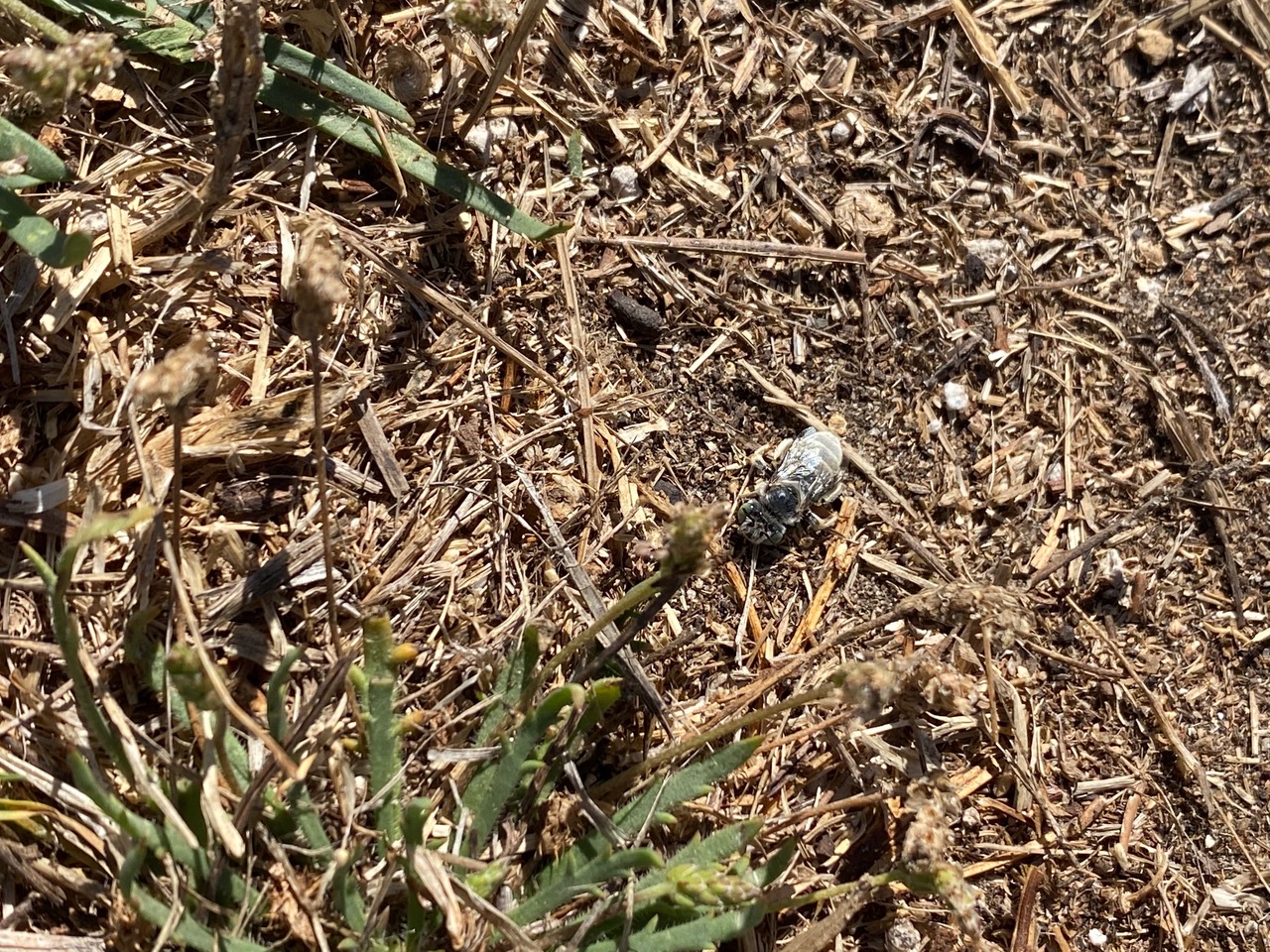
Another lands on the same patch.
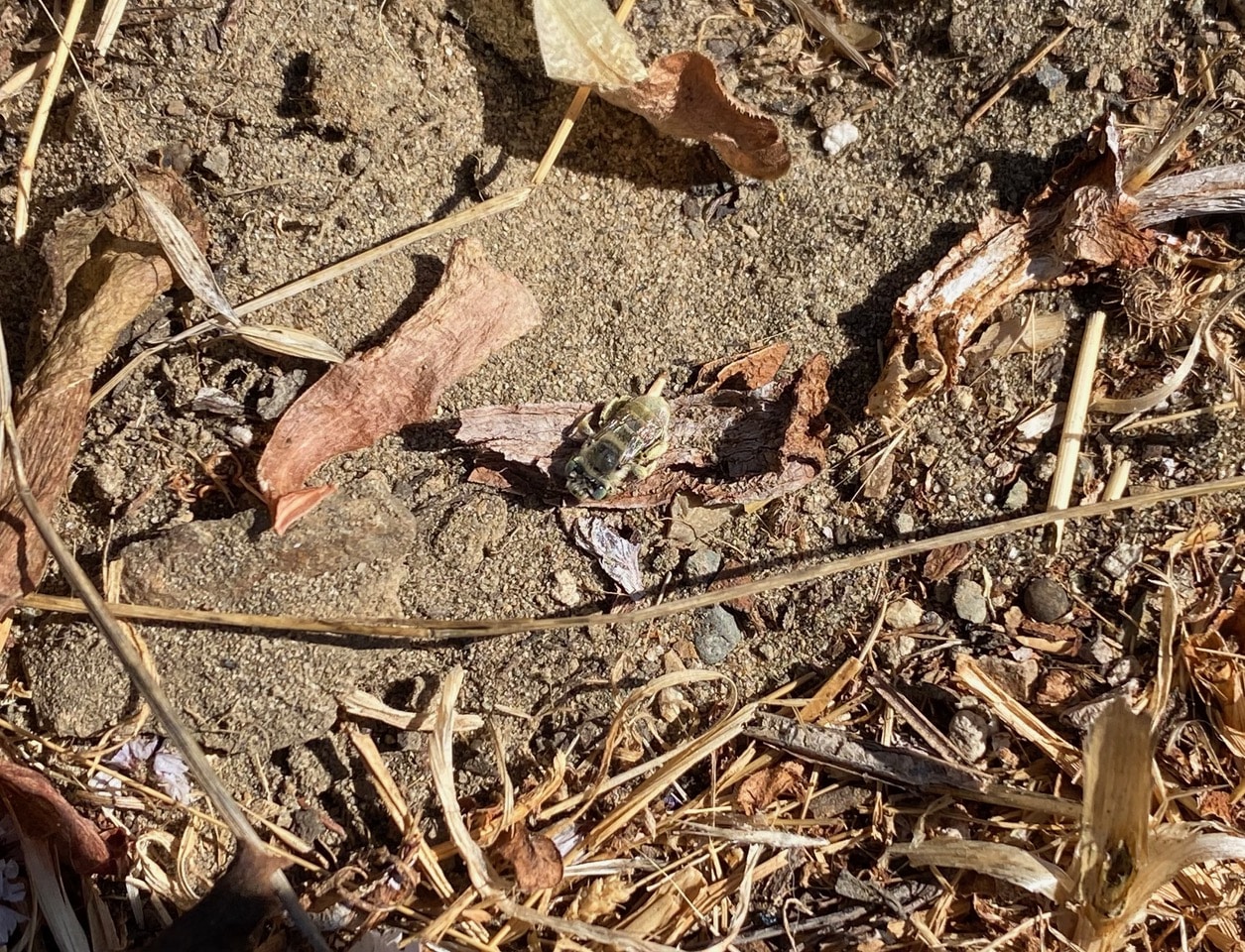
As I wait around, I see more Micanthophora land on the ground next to the sea lavender.
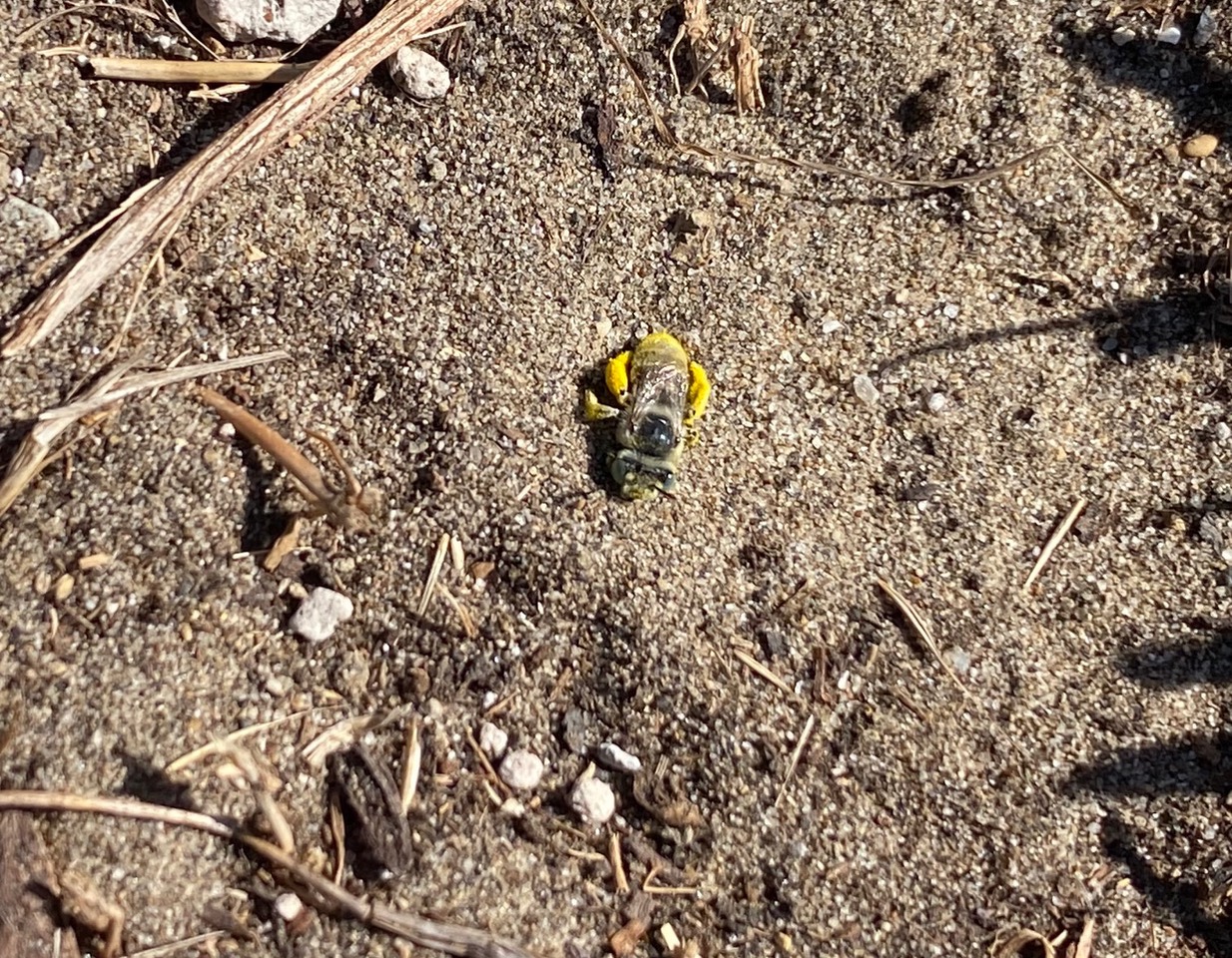
This female has yellow pollen on her scopae. Although I do not see any of the Small Digger Bees enter a burrow, I am almost sure that they nest here. No wonder I always see them buzz around the sea lavender!
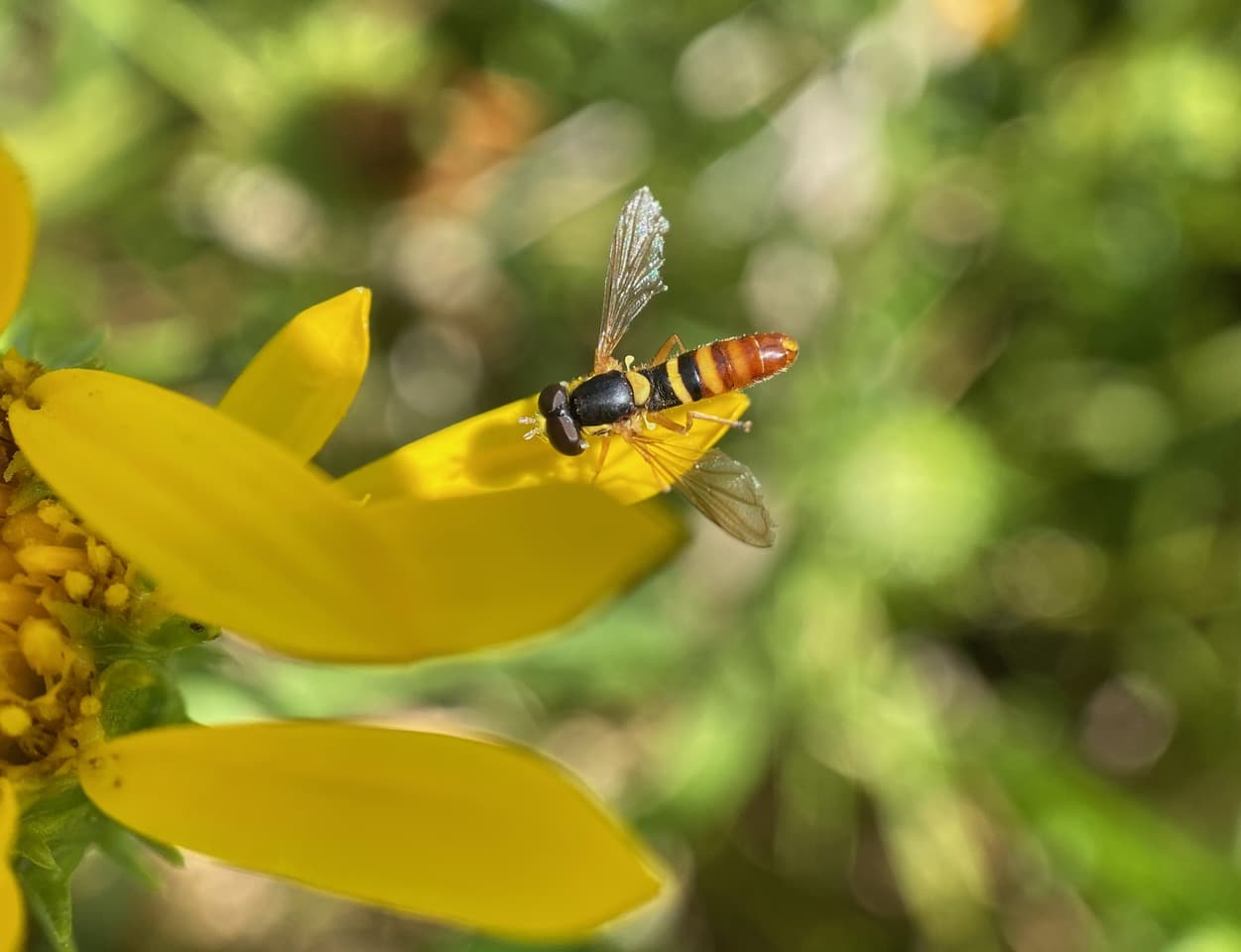
A male Forked Globetail, Sphaerophoria sulphuripes (family Syrphidae) lands on a ray petal of a Grindelia flowerhead.
The hover fly is native to western North America. There is marked sexual dimorphism in the Forked Globetail – the males have a narrow abdomen with a reddish, swollen tip. Adults visit flowers for nectar and pollen. The larvae of Sphaerophoria feed on aphids and other soft-bodied insects.
Forked Globetail (Sphaerophoria sulphuripes) · iNaturalist

As I pass a Spittlebug-infested Grindelia, I notice a European Paper Wasp on a foam mass. As I try to take a picture, the wasp flies away, and lands in the undergrowth. It remains there for a while, hunched over, either dispatching a prey it has captured, and/or cleaning its mouthparts. Are the wasps preying on the Spittlebugs that have emerged as adults?
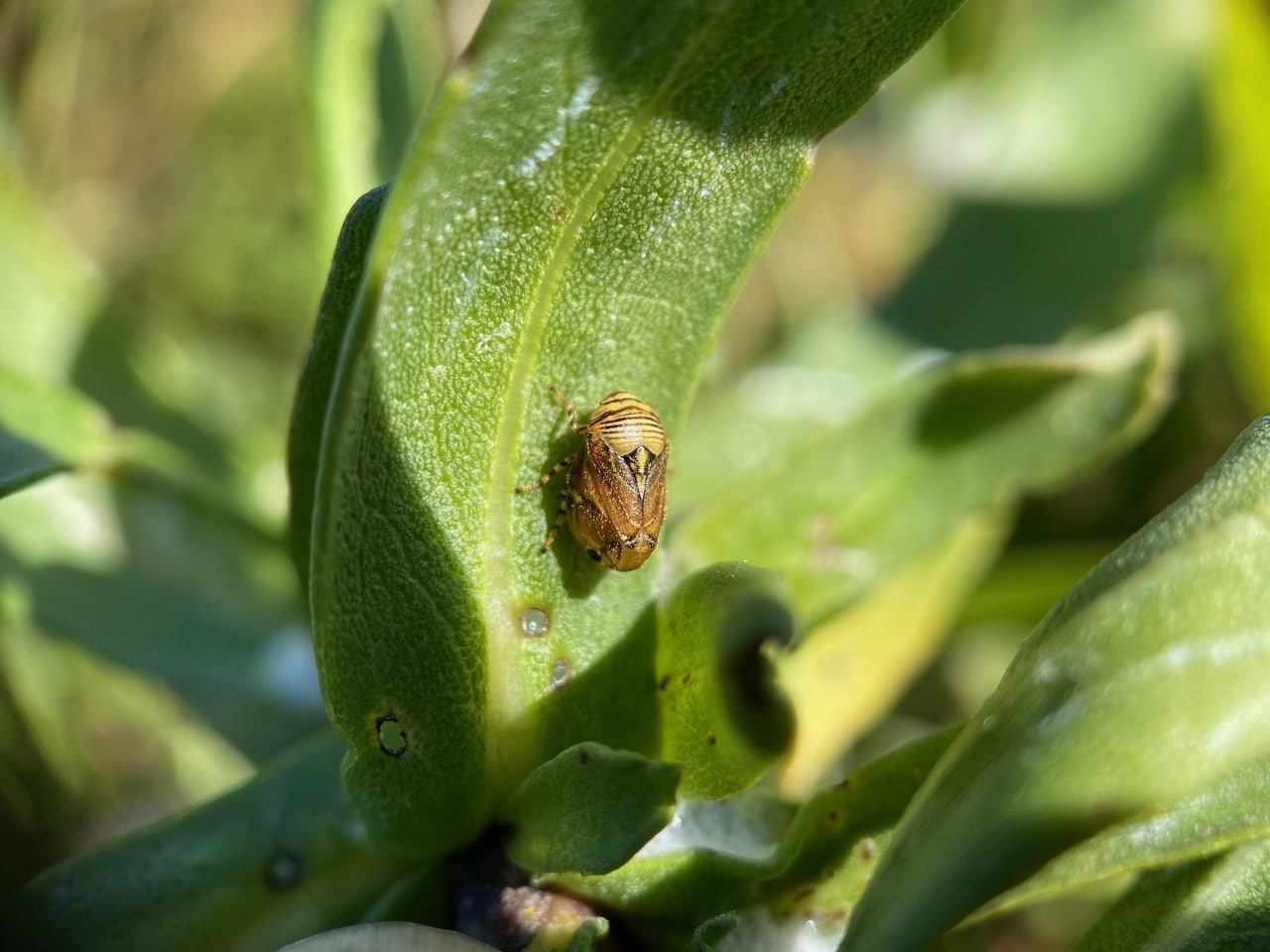
Hey, that’s an adult Spittlebug on the Grindelia leaf!
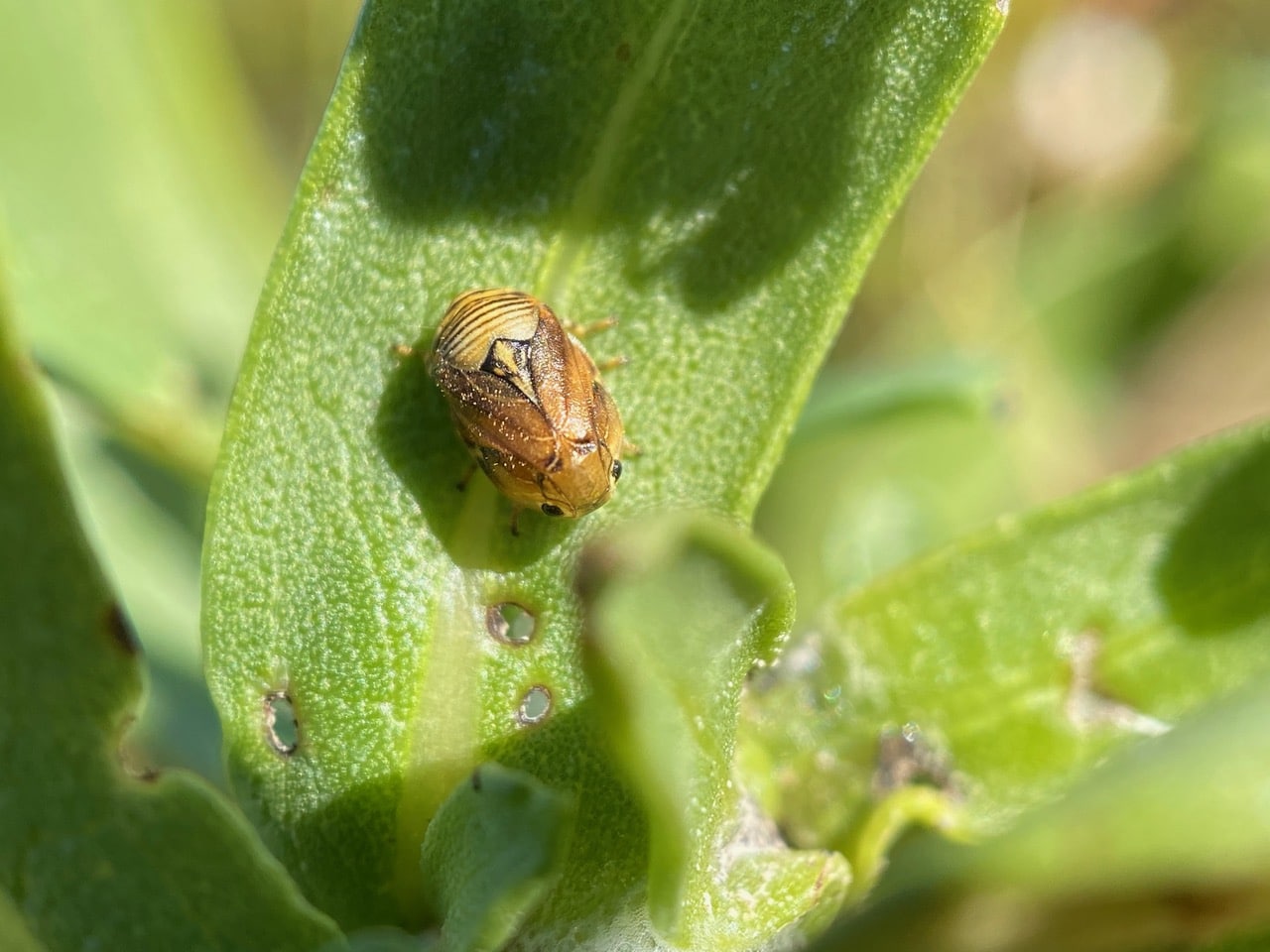
Believe it or not, the pair of black spots are not its eyes; the bug is facing up. Fake eyes on the butt – what a concept! I took several pictures before I realize that I am focusing on the wrong end of the insect! I am not sure if the fake eyes are on the wings. They appear to be raised, and even shine like eyes!

An exuvia (shed exoskeleton of an insect after molting) is still clinging to a Grindelia leaf. A mature Spittlebug nymph has crawled out of its foamy shelter to molt for the last time and transform into an adult.

Here’s a fresh adult Spittlebug just above its former foam shelter. Its eyes are a light olive-brown color. You can see the fake eye near the tip of its left wing. The black spot appears to be part of the hind wing. Is the “snout” a corrugated structure that houses the pump mechanism for generating suction for sucking plant sap? Below the snout is a sharp-tipped proboscis that is used to pierce plant tissues. Most spittlebug families share these features in their mouthparts.
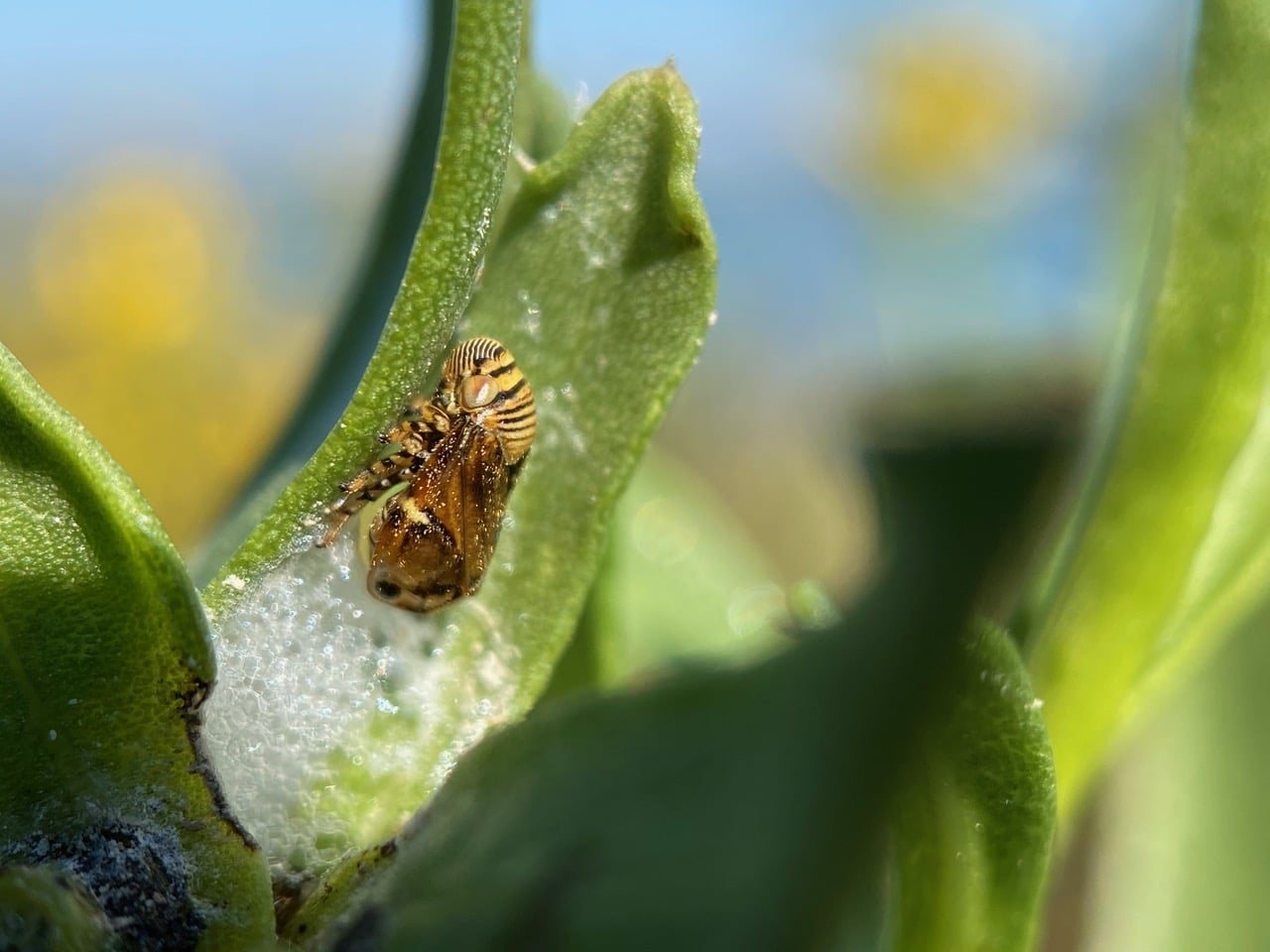
A closer view of the same Spittlebug. A bizarre beauty all of 4 mm long!

An Exotic Streaktail, Allograpta exotica (family Syrphidae) is foraging on an inflorescence of Arrowleaf Saltbush, Atriplex prostrata (family Chenopodiaceae).
Allograpta exotica is a hover fly in the family Syrphidae. Larvae are often predators of aphids. Their life cycle from egg to adults is around 15 days, with adults living for approximately 10 days.

The fly is a female – its large compound eyes are dichoptic, not touching each other on top of the head. Male hover flies (family Syrphidae) generally have holoptic eyes that meet on top of the head.
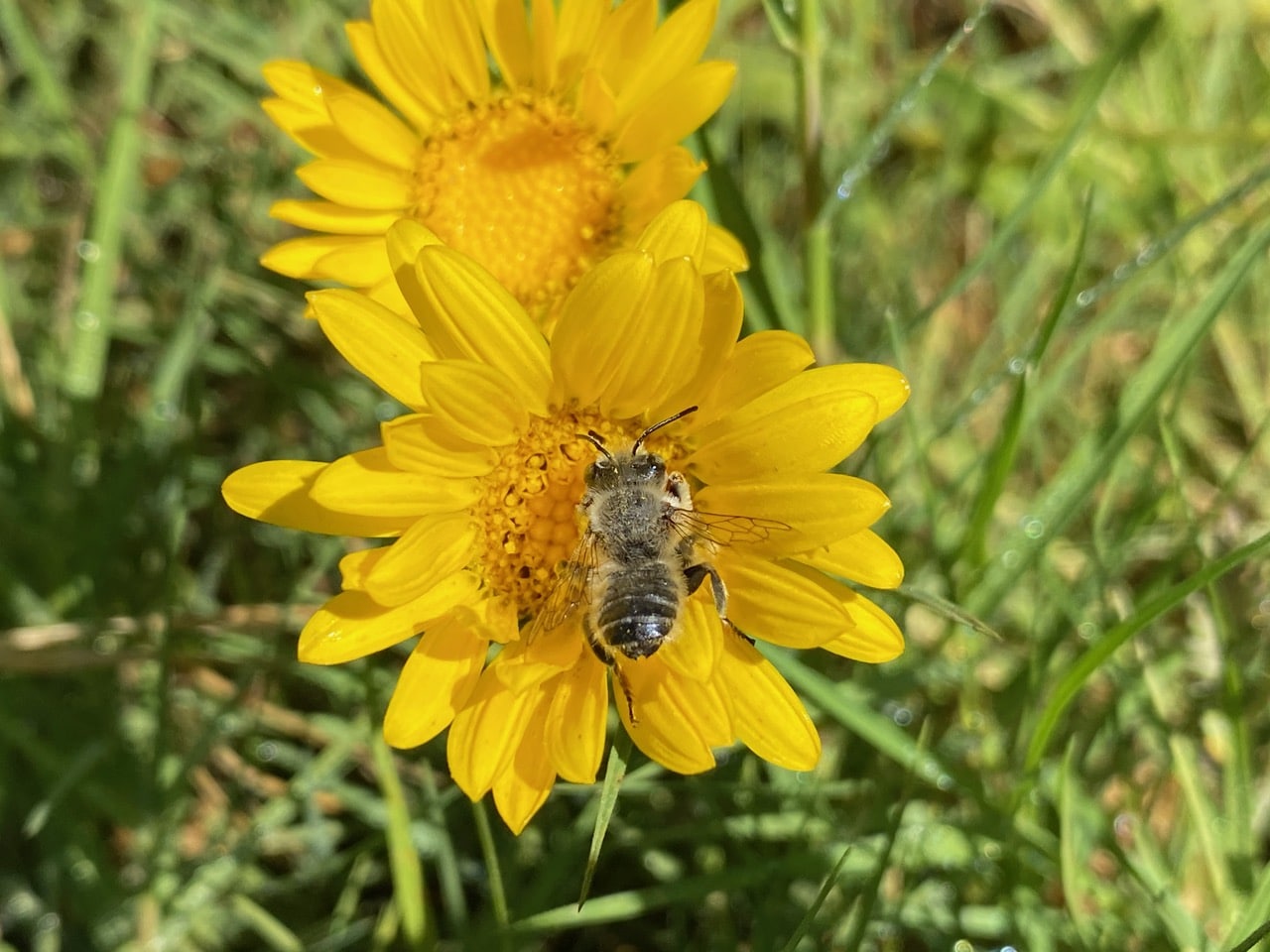
A male Western Leafcutter Bee, Megachile perihirta (family Megachilidae) visits a Grindelia flowerhead.
Leaf-cutter Bees, Megachile sp. (family Megachilidae) are stout-bodied, usually with pale hair on the thorax and stripes of white hairs on the abdomen. Females usually have a triangular abdomen with a pointed tip, and males’ faces are covered with dense, pale hair. Flight season is from May into September, with peak activity from June to August.
Solitary females construct nests in tubular cavities, including hollow stems, tree holes, and abandoned beetle burrows in wood. Many use holes drilled into wood, straws, or other manufactured tunnels. Females cut pieces from leaves or flower petals for use in the construction of brood cells. Most Megachile females are generalists when foraging for pollen. Pollen is transported in dense scopae on the underside of the abdomen.
Photos of Western Leafcutter Bee (Megachile perihirta) · iNaturalist