

Pollinator Post 9/4/24 (1)
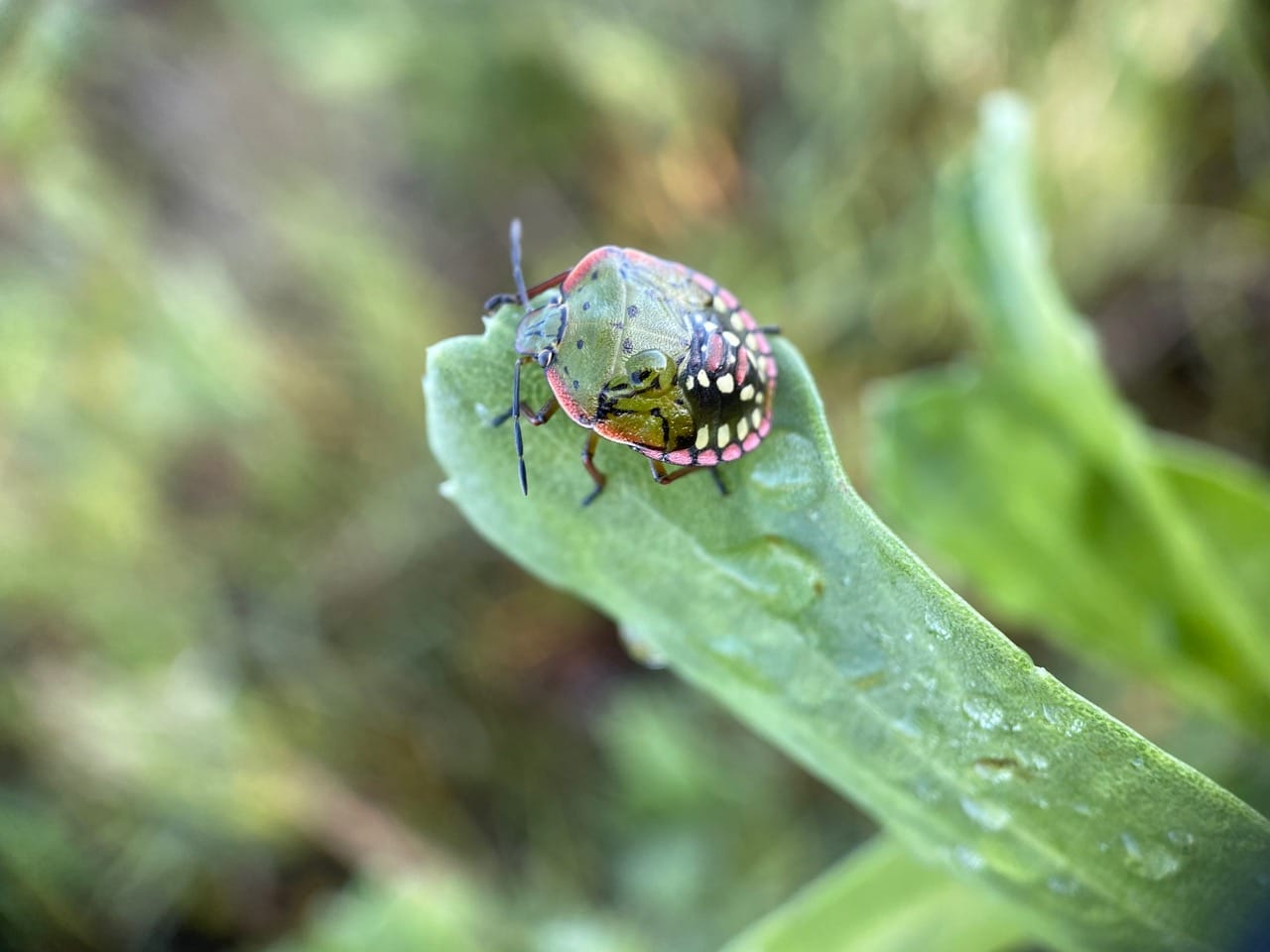
In anticipation of the forecast heat, I get to Bay Farm earlier than usual today. A dew drop still clings to a colorful nymph of the Southern Green Stink Bug. It is a later instar than the one I saw last month, the front part of its body having turned green. The adult is all green!
Pentatomidae is a family of insects belonging to the order Hemiptera or “true bugs”. As hemipterans, the pentatomids have piercing-sucking mouthparts, and most are phytophagous, including several species that are severe pests on agricultural crops. Stink Bugs feed on plant fluids by inserting their needlelike mouthparts into stems, leaves or seed pods. While feeding, they inject materials into the plant to aid in digestion and sap removal. Penetration by the mouthparts can cause physical damage, much like stabbing the plant with a fine needle.
All Pentatomids have 5-segmented antennae (hence their family name, Penta – five and tomos – section.) They generally have a large triangular scutellum in the center of the back. The adult is generally shield-shaped when viewed from above. The common name of Stink Bug refers to their ability to release a pungent defensive spray when threatened, disturbed, or crushed.
The Southern Green Stink Bug, Nezara viridula (family Pentatomidae) is a plant-feeding stink bug. Believed to have originated in Ethiopia, it can now be found across the world. Because of its preference for certain species of legumes, such as beans and soybeans, it is an economically important pest on such crops.

As few insects are flying, it is perfect time to look for the sedentary ones, like the Spittlebugs that produced those white foamy masses on the Grindelia.
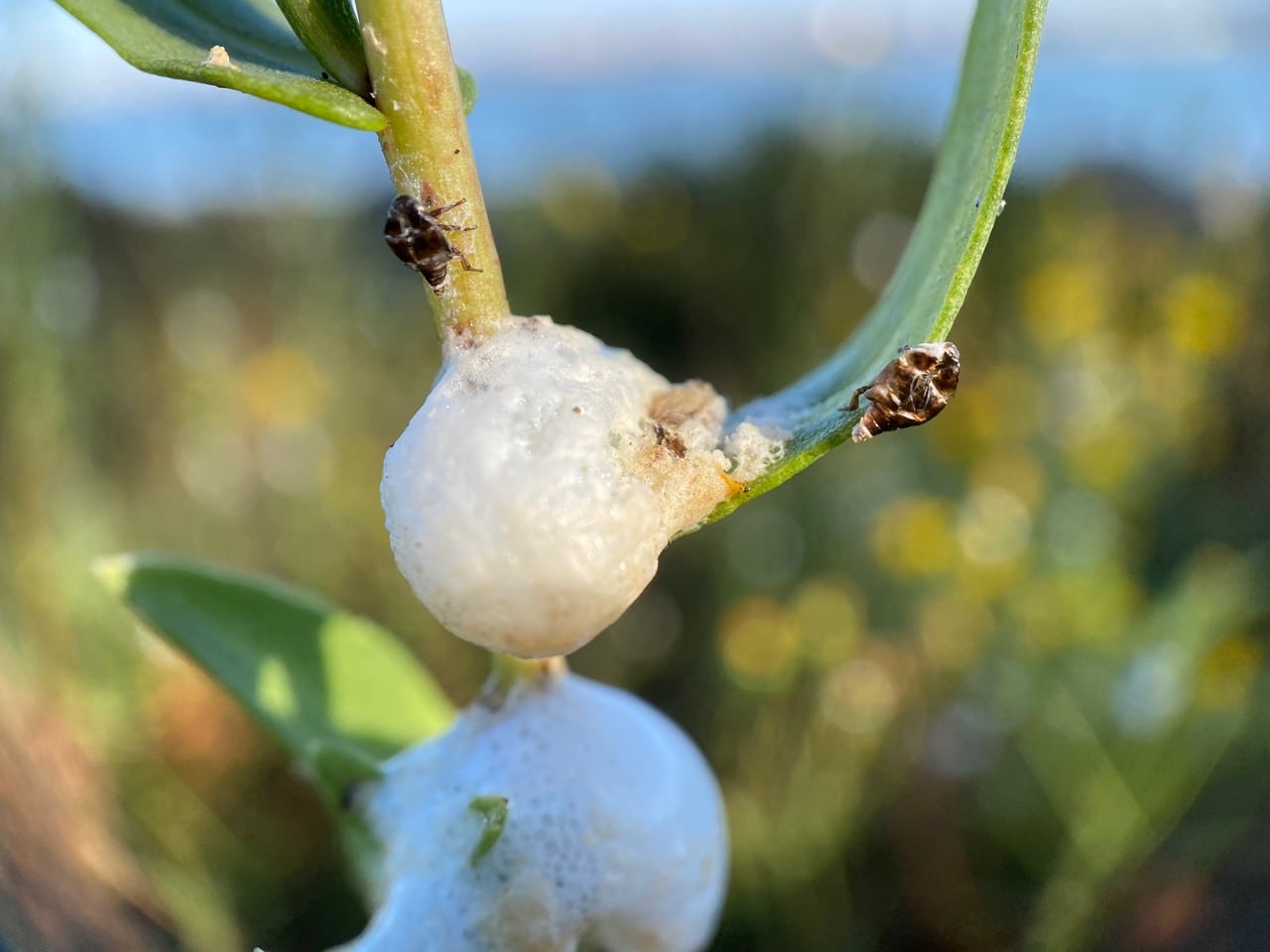
I find more Spittlebug exuvia outside the foam masses than I did two days ago. The transformation to adults is occurring in earnest!
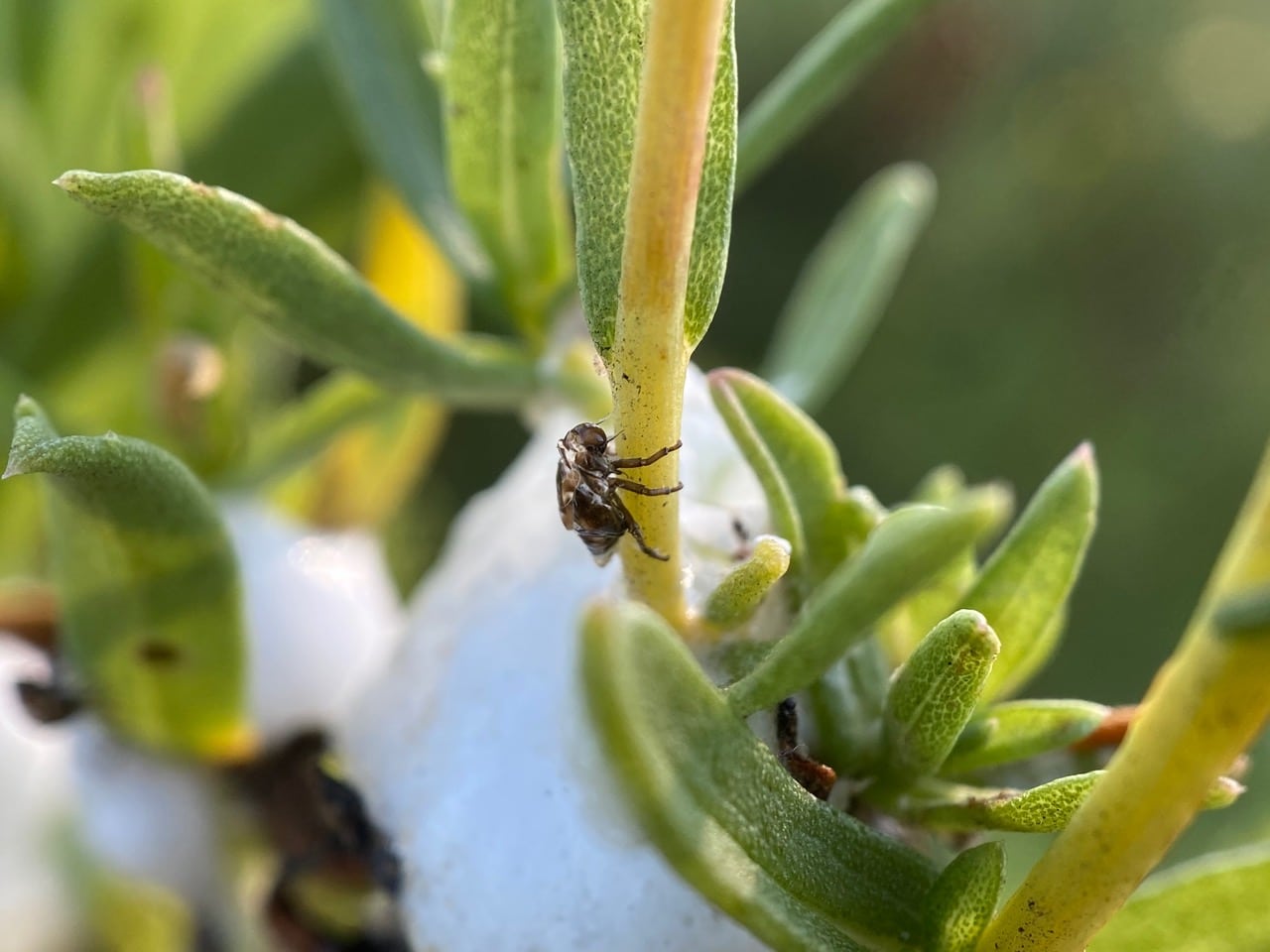

Ecdysis is the process of an insect (and other arthropods) molting its exoskeleton. Molting is necessary as the insect exoskeleton is inflexible and so, to grow larger, insects must molt. Molting is a critical but vulnerable time for insects. Their existing cuticle weakens at specific points and by taking in water or air, the insect splits its old exoskeleton. The insect then extracts itself from the old skin and inflates its new skin. The new exoskeleton is soft and the insect can’t move because its musculature is attached to this exoskeleton. Once the new exoskeleton has dried and hardened the insect can move again.
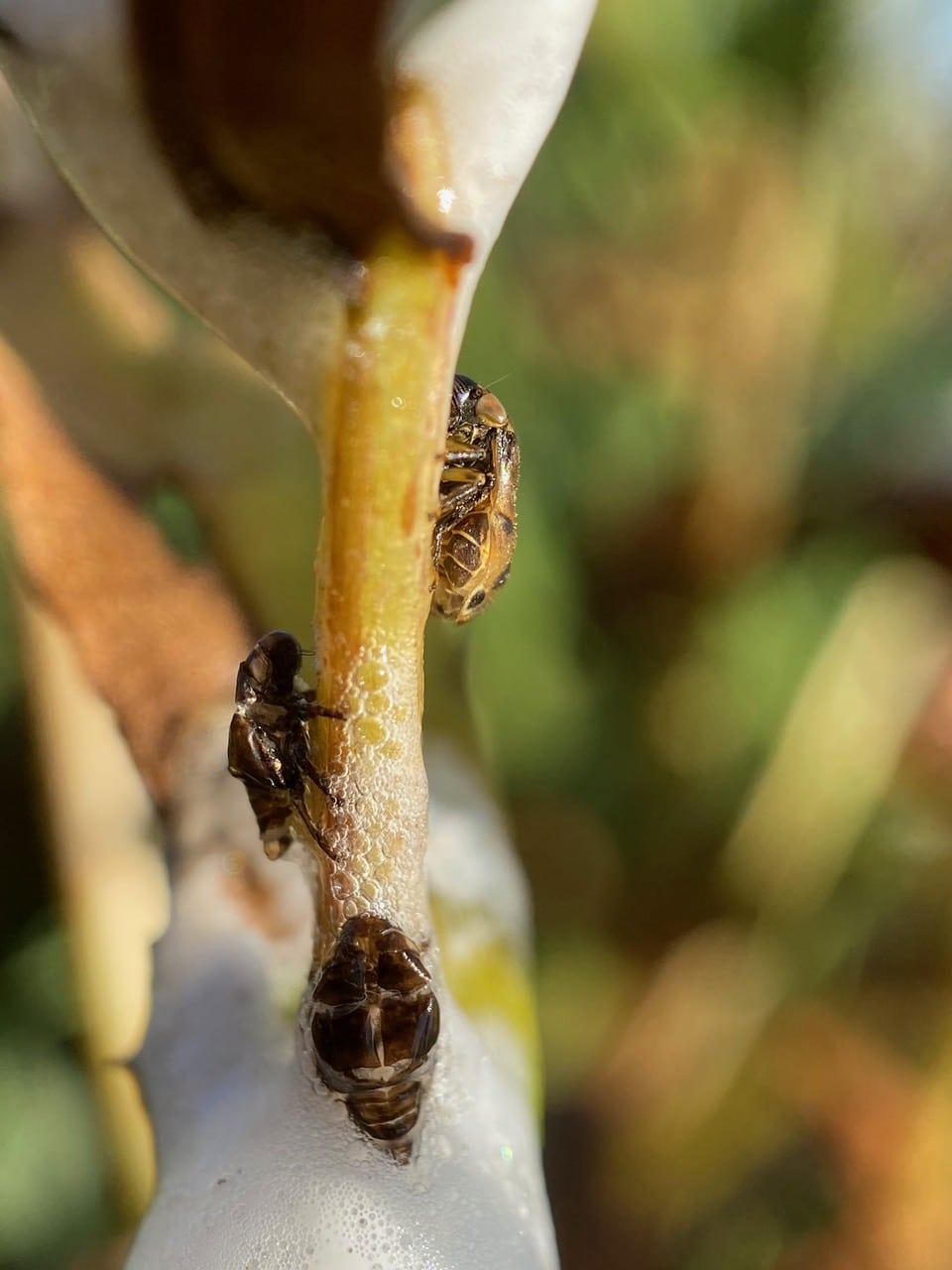
Hey, there’s an adult Spittlebug on the stem above the two exuvia!
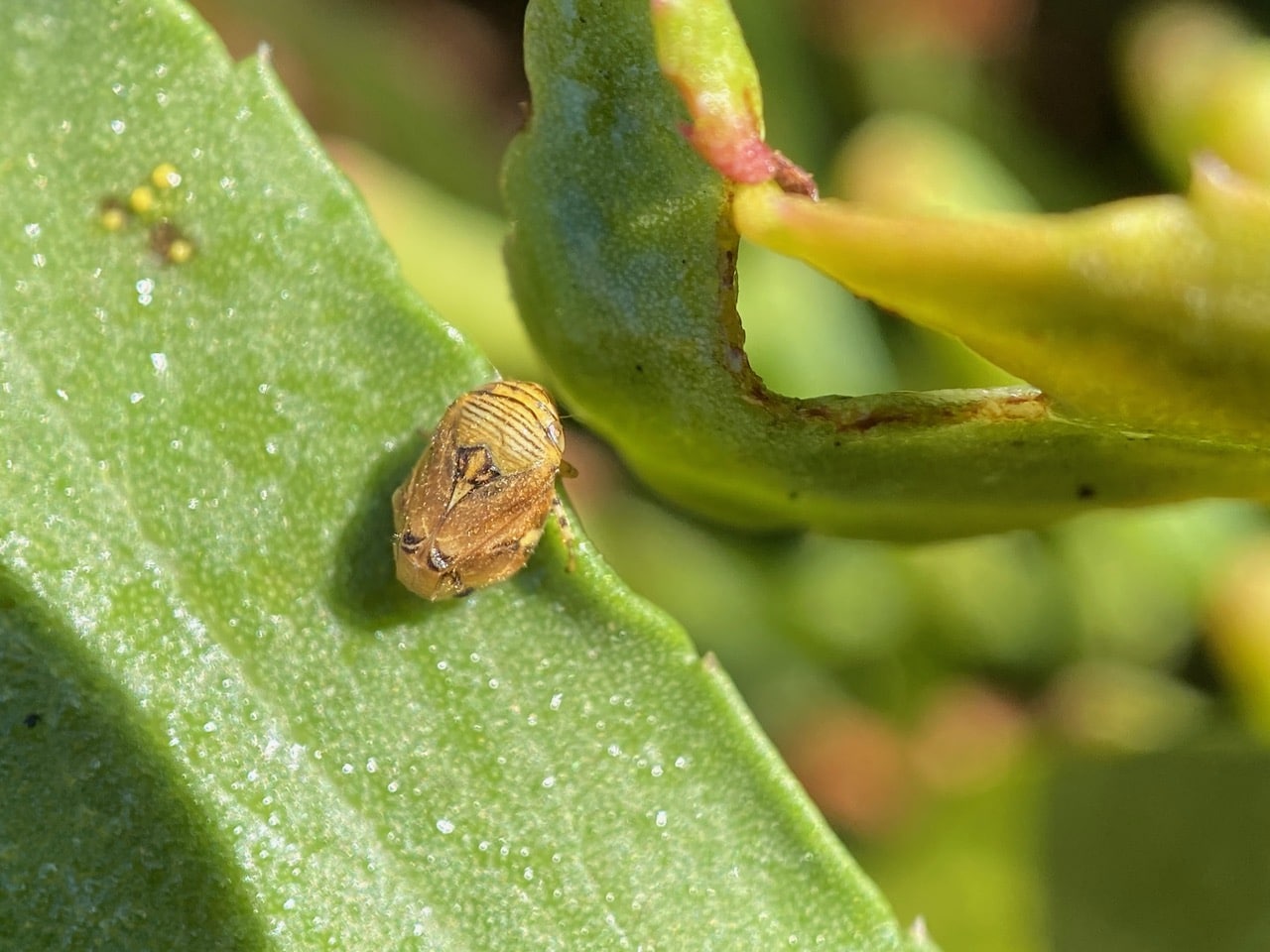
An adult Spittlebug is perched on a Grindelia leaf. The forewings with dark tips are narrow and do not fully cover the bug’s rotund abdomen. The hind wings appear to wrap around the sides of the abdomen.
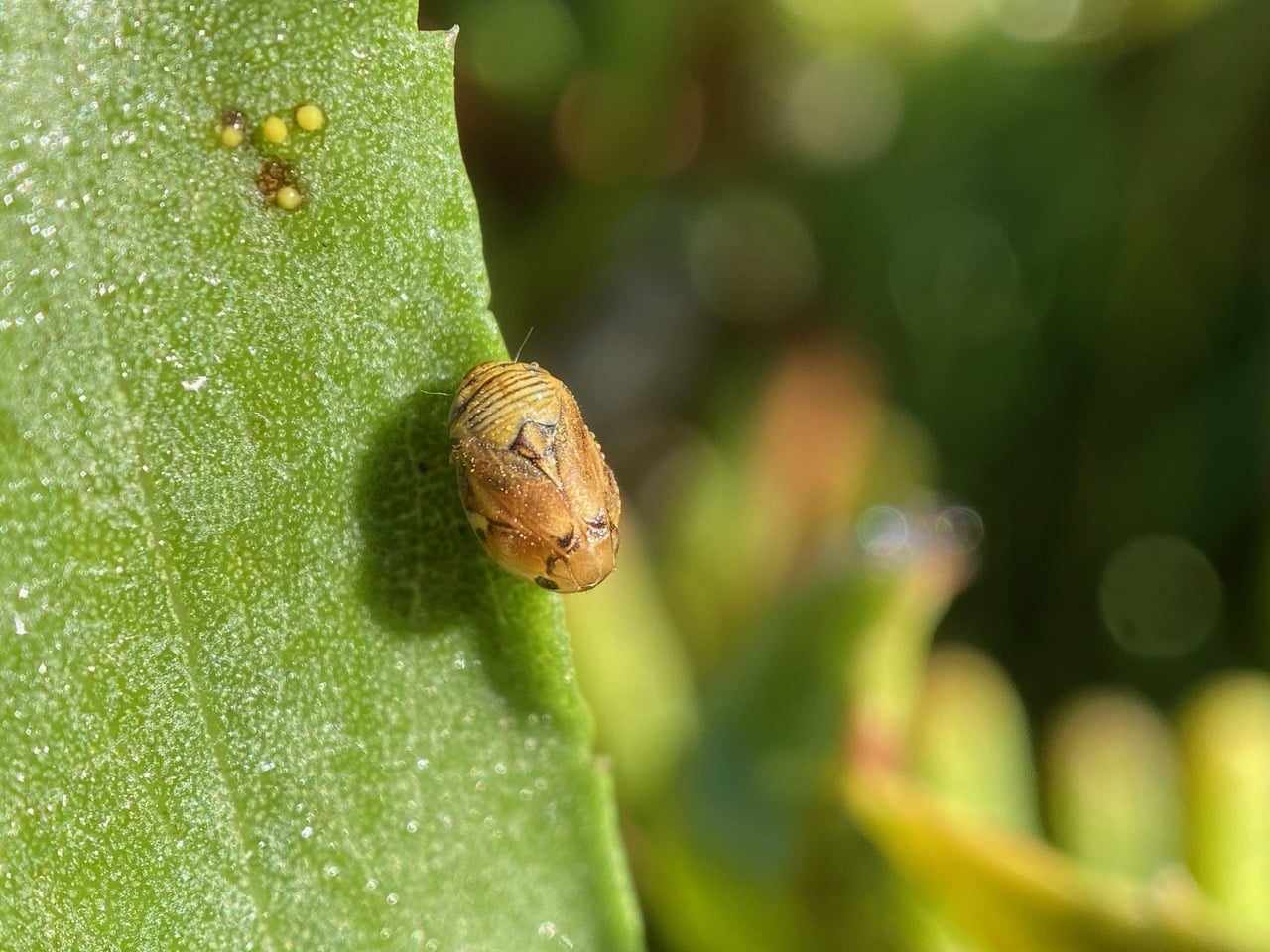
iNaturalist has identified the insect as the Spittlebug, Complex Clastoptera lineatocollis (family Clastopteridae). Complex Clastoptera lineatocollis · iNaturalist The species is found in western United States. The bugs feed mostly on Asteraceae, although other hosts have been reported. Females are brownish (3.3-3.8 mm), while the smaller males (3.0-3.2 mm) are mostly black.
The adult Spittlebug is sometimes called a Froghopper. The Froghopper is a “true bug” in the order Hemiptera. Froghoppers are champion jumpers among insects, out-performing even the fleas. The bug can leap the human equivalent of a skyscraper without a running start. It is the highest jumping insect proportional to body size. The muscles in its hind legs act like a “catapult” to release energy explosively.
Froghoppers have piercing-sucking mouthparts, and feed on plant sap as both nymphs and adults. A recent report claims, “Froghoppers are the super-suckers of the animal world. The tiny insects produce negative pressures equivalent to people sucking a 100-meter-long straw.” The sucking power is strong enough to suck the water out of a cup at the base of the Statue of Liberty while perched on its crown. To complement that, the Froghopper is also exceptional at urination, excreting the human equivalent of 2,500 gallons of urine a day.
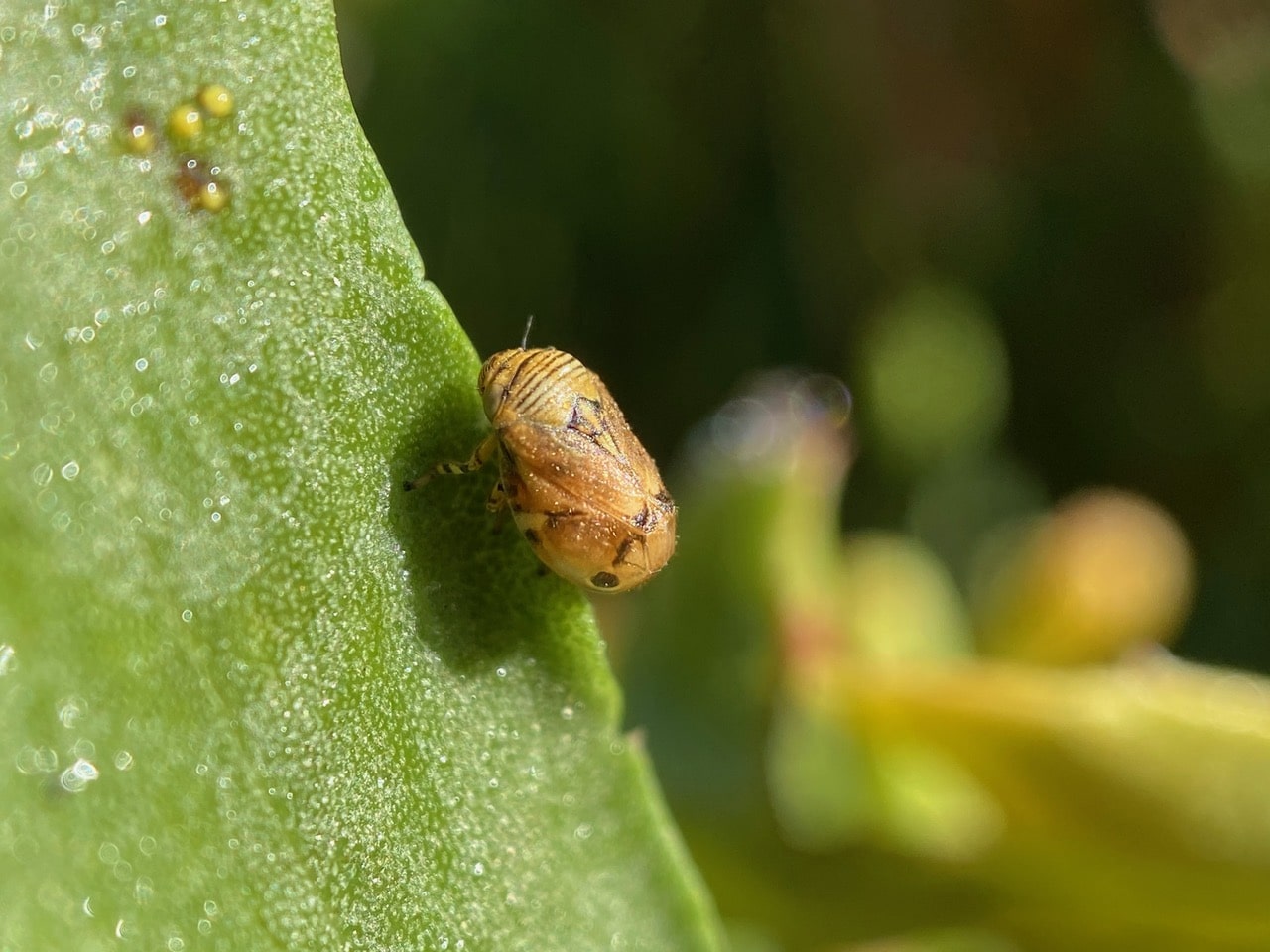
Is that big black spot on the hind wing, or the abdomen of the bug?
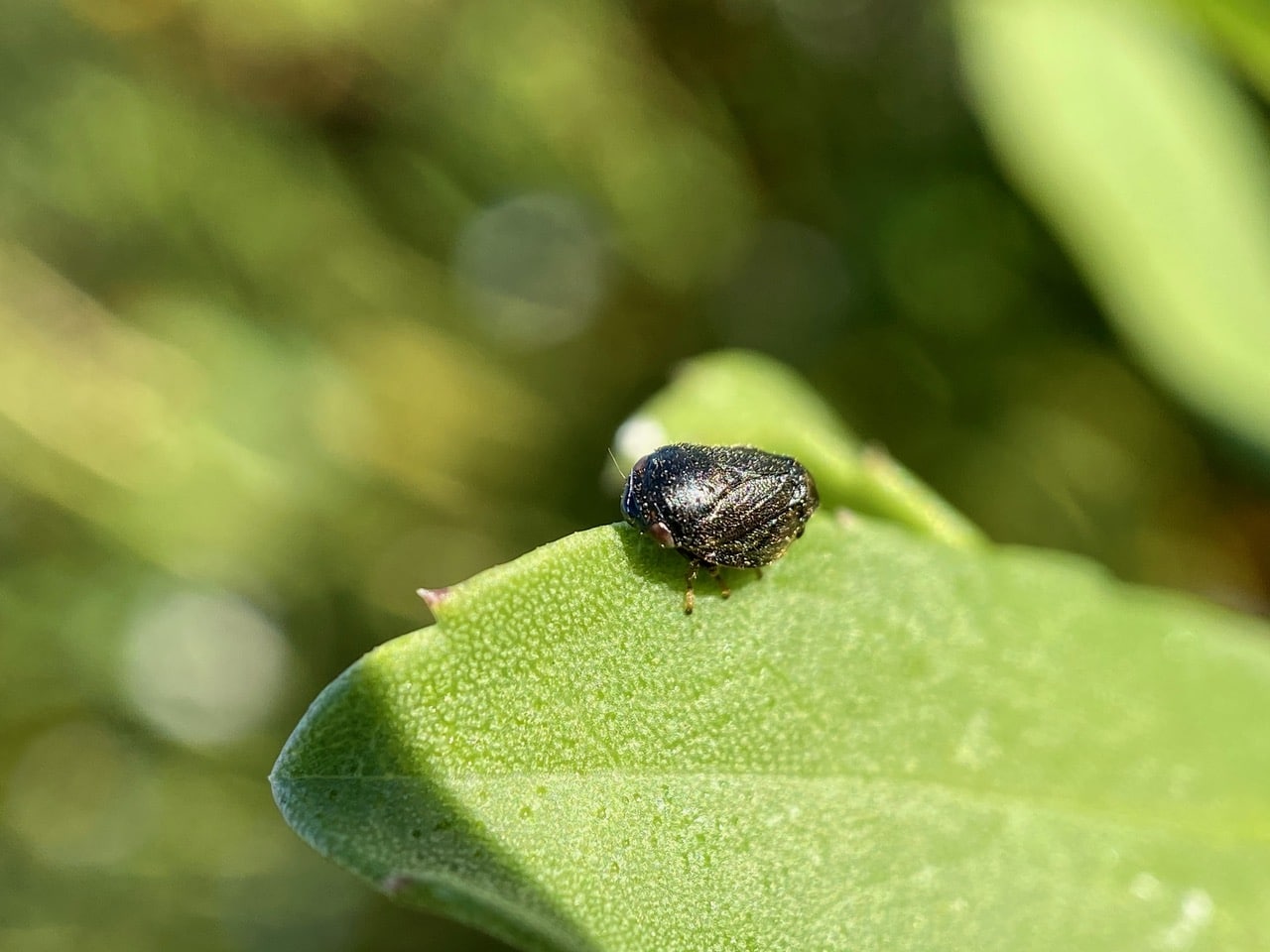
Who’s this tiny black bug on the Grindelia leaf? Is it another Spittlebug? It is quite a bit smaller than the brown ones I have been seeing. Is there sexual dimorphism in the species? Is this black bug the male of the same species?
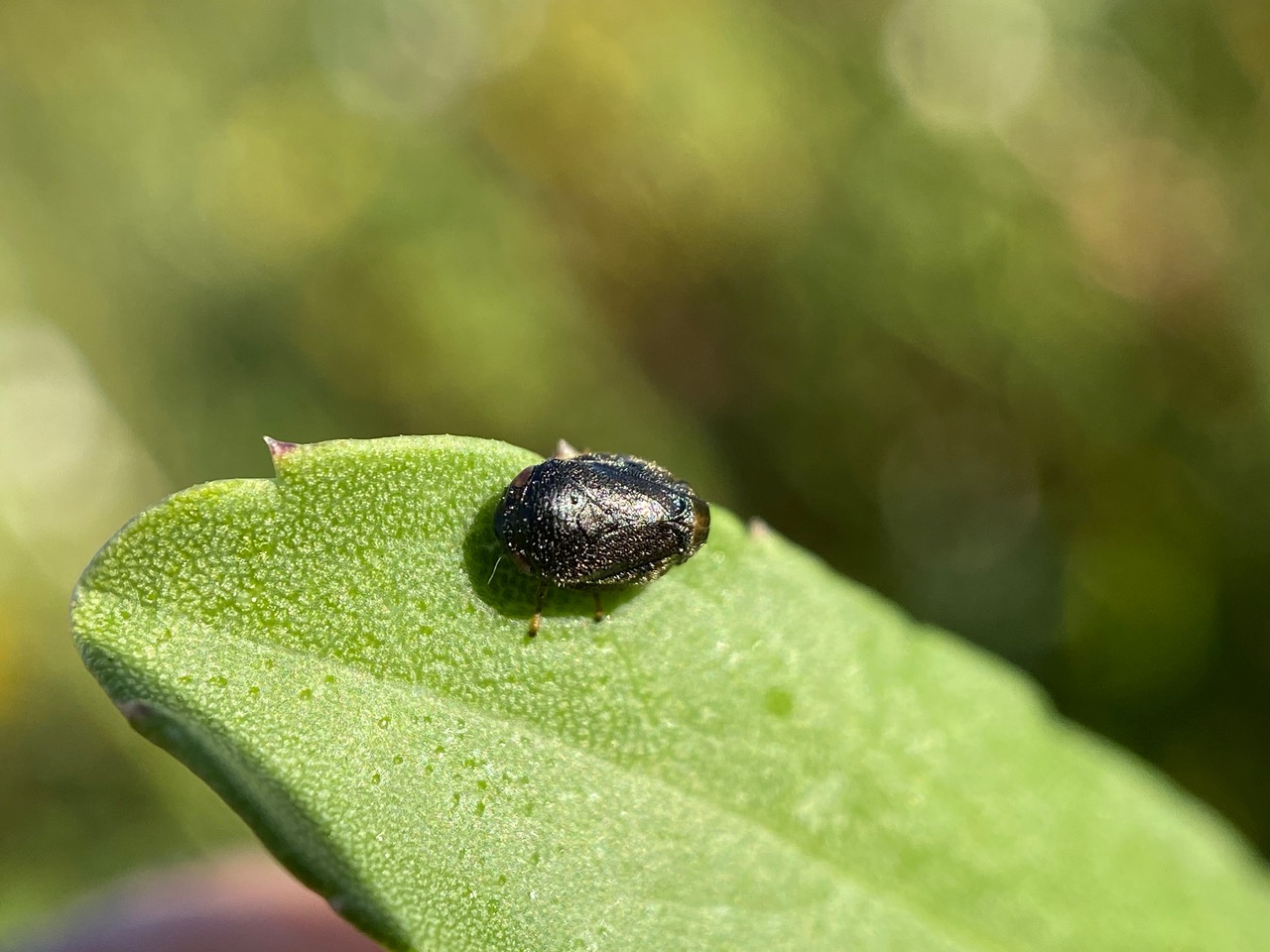
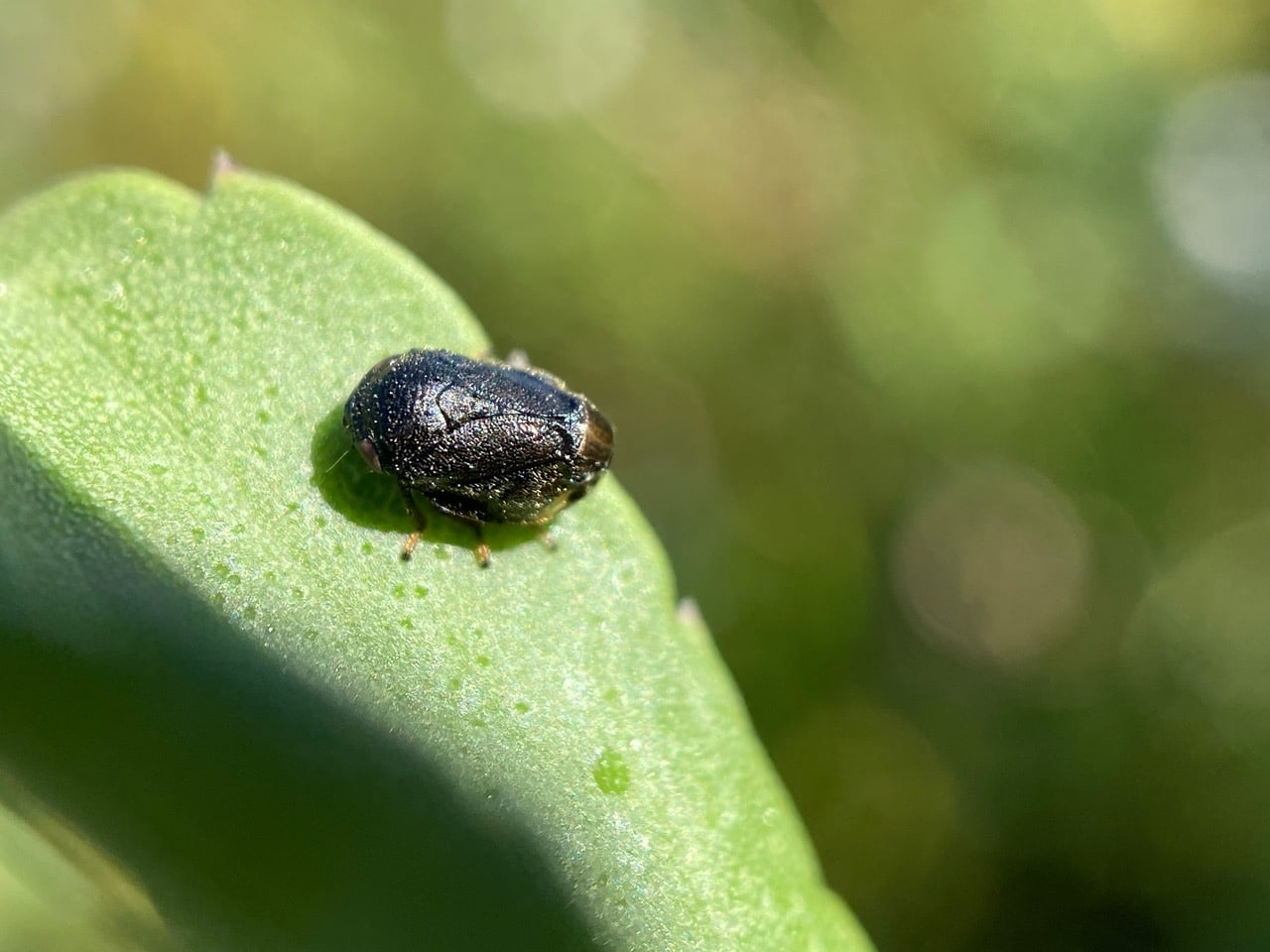
It’s so difficult to photograph an insect with so few visible features, so black and reflective!

Front view of the bug, showing its purplish eyes.
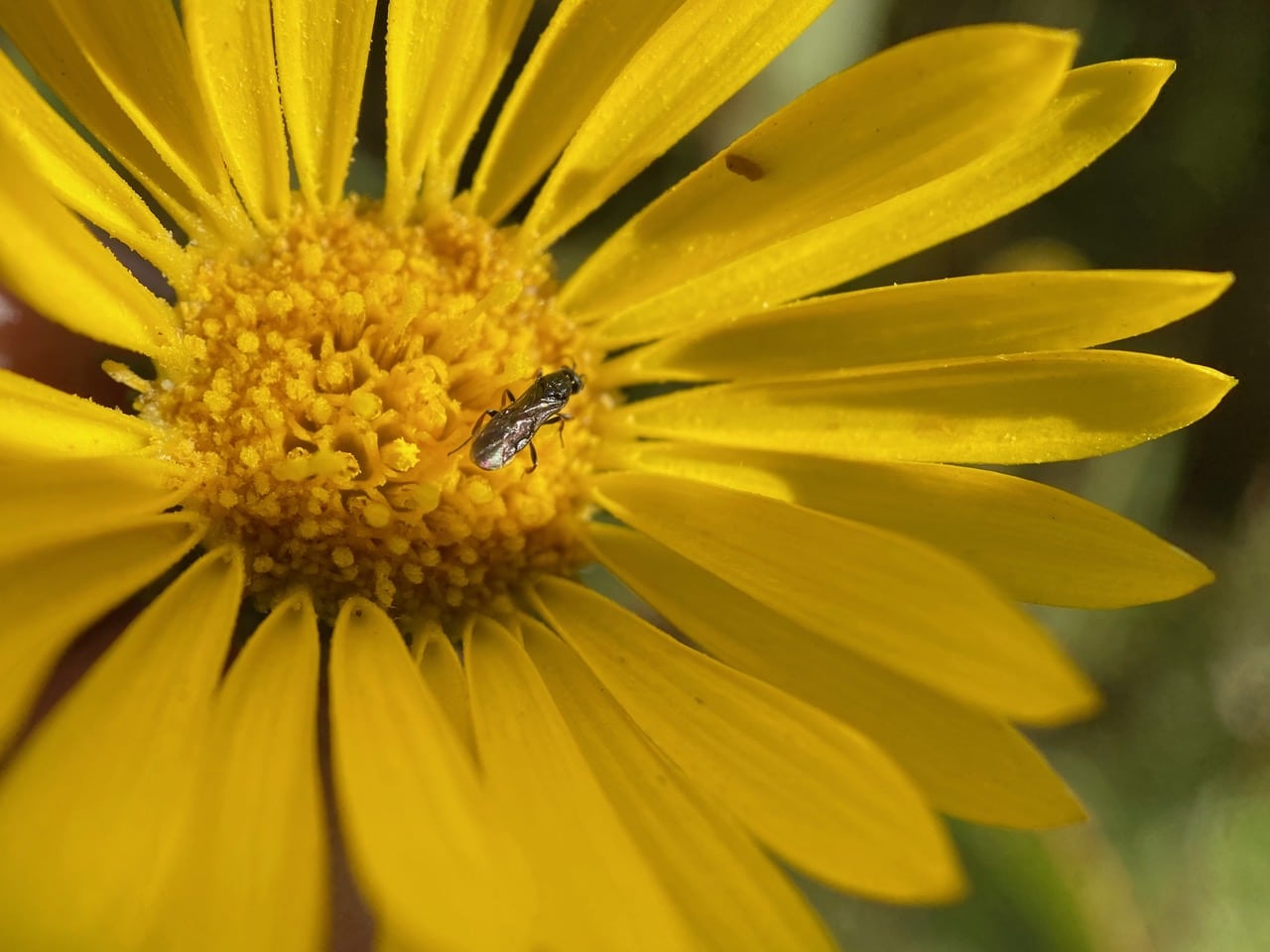
A tiny black wasp with long antennae is roaming a Grindelia flowerhead.
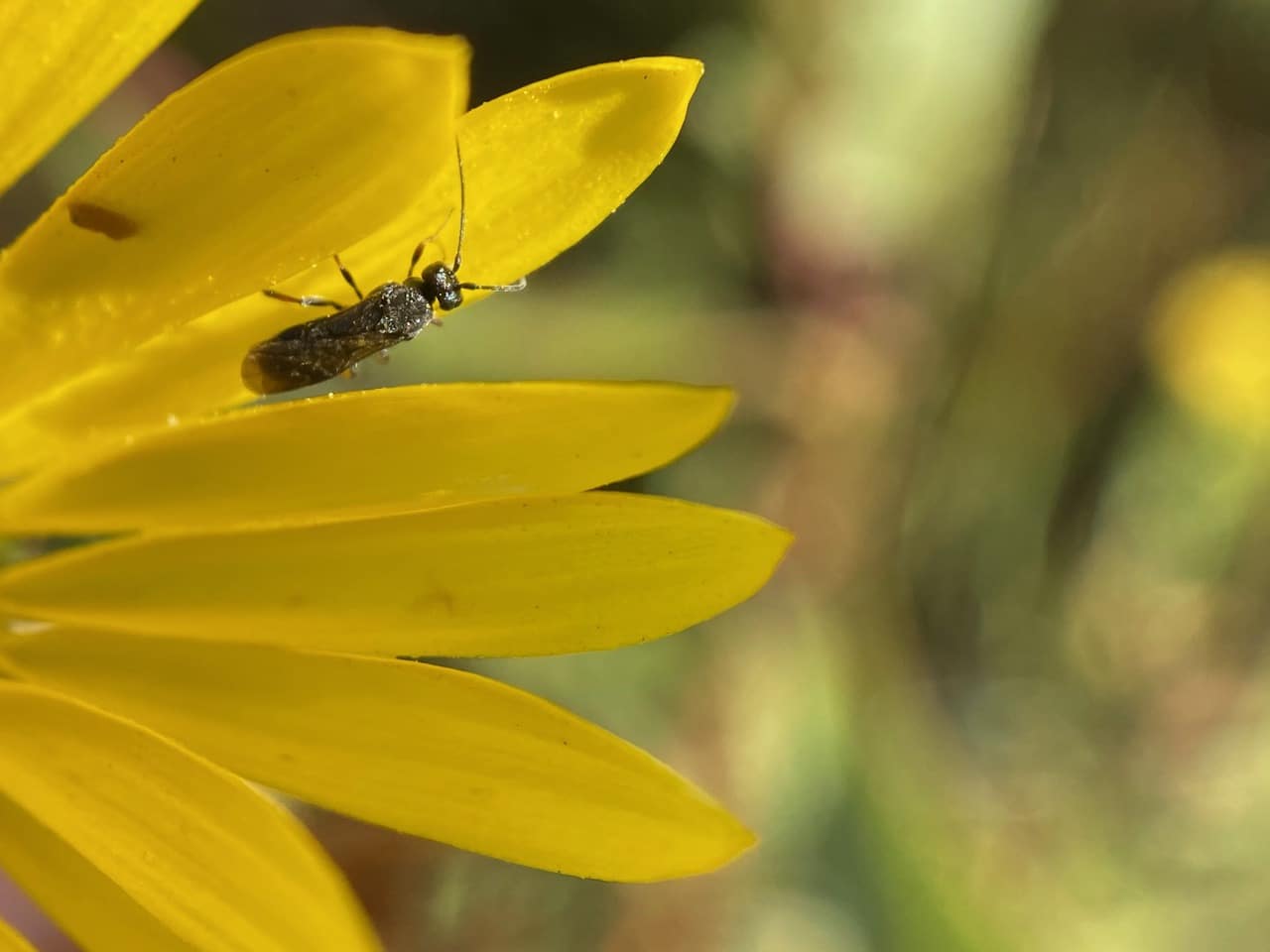
An expert on iNaturalist has identified the wasp as a Braconid wasp in the genus Chelonus. The larvae of Chelonus feed mainly on larvae of moths in the superfamilies Tortricoidea and Pyraloidea.
The Braconidae are a family of parasitoid wasps. After the closely related Ichneumonidae, braconids make up the second-largest family in the order Hymenoptera, with about 17,000 recognized species. Females often have long ovipositors to lay eggs on or in their hosts. The larvae of most braconids are internal primary parasitoids of other insects, especially the larval stages of Coleoptera, Diptera, and Lepidoptera. Generally, the braconid life cycle begins when the female wasp deposits her eggs in the host insect, and the braconid larvae develop in the host body, eating it from the inside out. When the wasp larvae are ready to pupate, they may do so in or on the host insect. The new generation of adult braconid wasps emerges from their cocoons and begins the life cycle again.
Braconid wasps use a remarkable weapon to disable the defenses of their host insects – a virus. These parasitic wasps coevolved with polydnaviruses (read poly-DNA-virus), which they carry and inject into the host insects along with their eggs. The virus attacks the host’s immune system and renders it unable to encapsulate the wasp egg; it also halts the host’s development, so it can’t pupate and transform into an adult. Amazingly, the “bracovirus” also changes the host’s metabolism so that it can survive longer without food or water – thus ensuring a nurturing environment for all the young wasps to come.
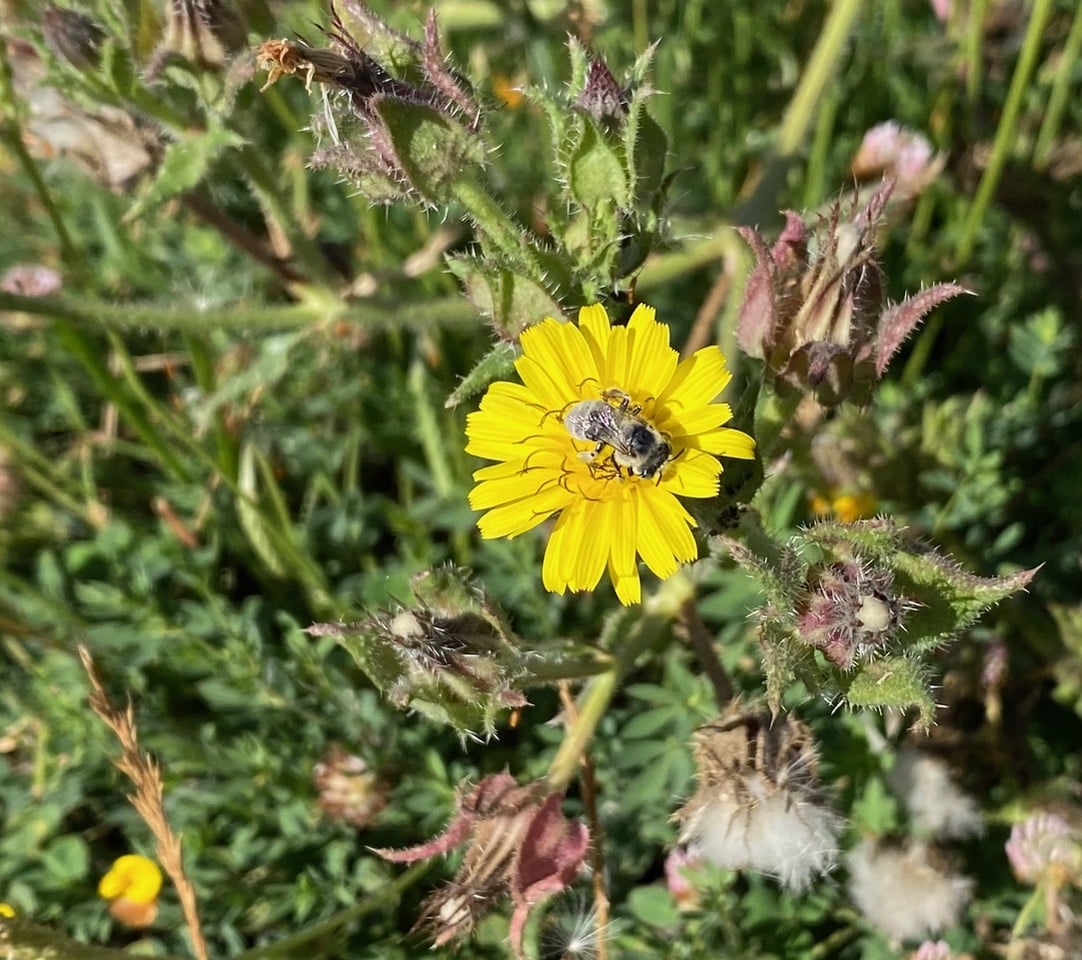
A small Digger Bee, Anthophora (Micranthophora) sp. (family Apidae) is foraging on a flowerhead of Bristly Oxtongue, Picris echioides.
The bee genus Anthophora is one of the largest in the family Apidae, with over 450 species worldwide in 14 different subgenera. They are most abundant and diverse in the Holarctic and African biogeographic regions. All species are solitary, though many nest in large aggregations. Nearly all species make nests in the soil, either in banks or in flat ground; the larvae develop in cells with waterproof linings and do not spin cocoons. Males commonly have white or yellow facial markings, and/or peculiarly modified leg armature and hairs.
Members of the subgenus Micranthophora are smaller than other New World Anthophora. Many but not all species are associated with xeric habitats.
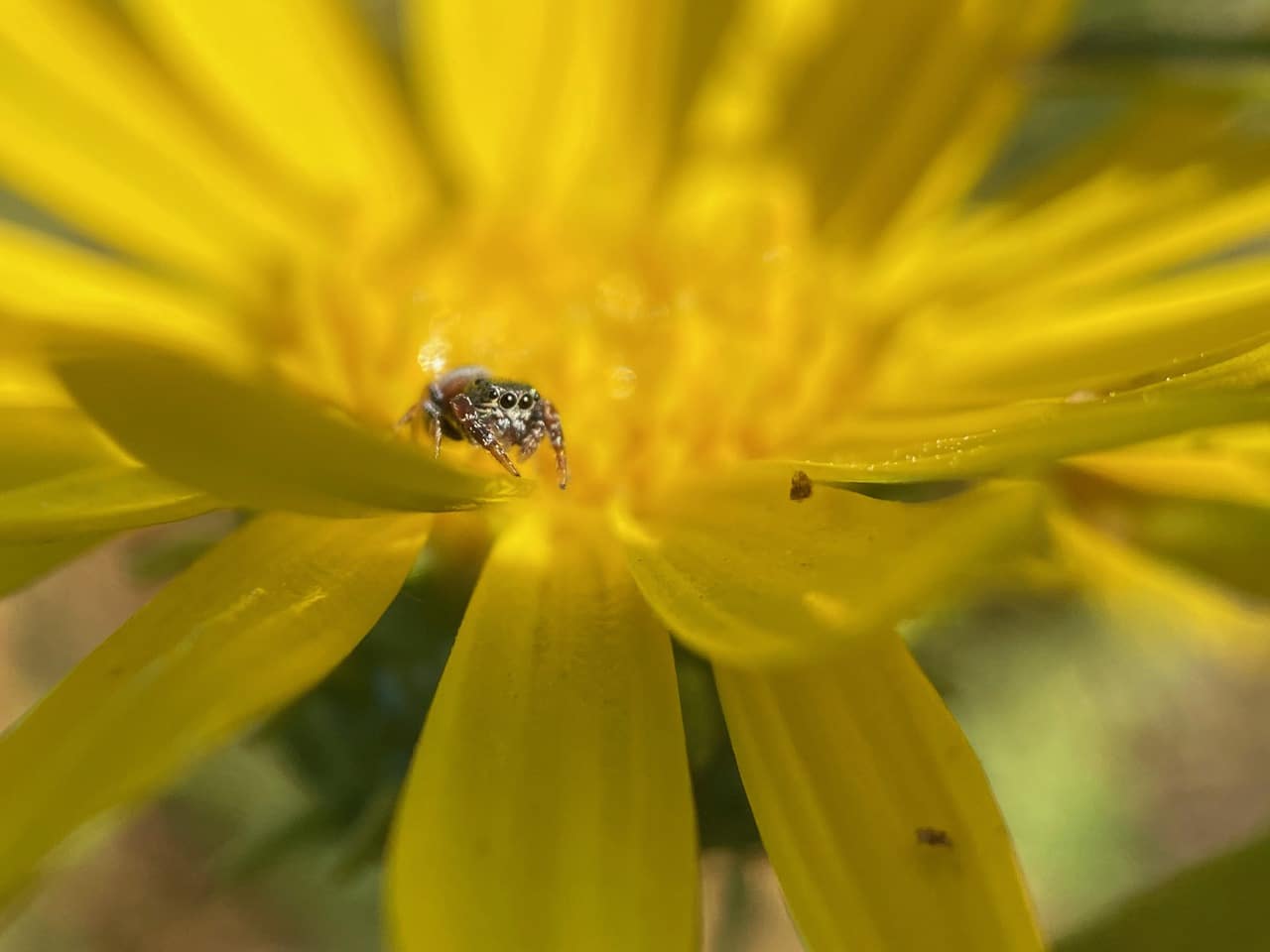
A tiny Jumping Spider (family Salticidae) is hunting on a Grindelia flowerhead.
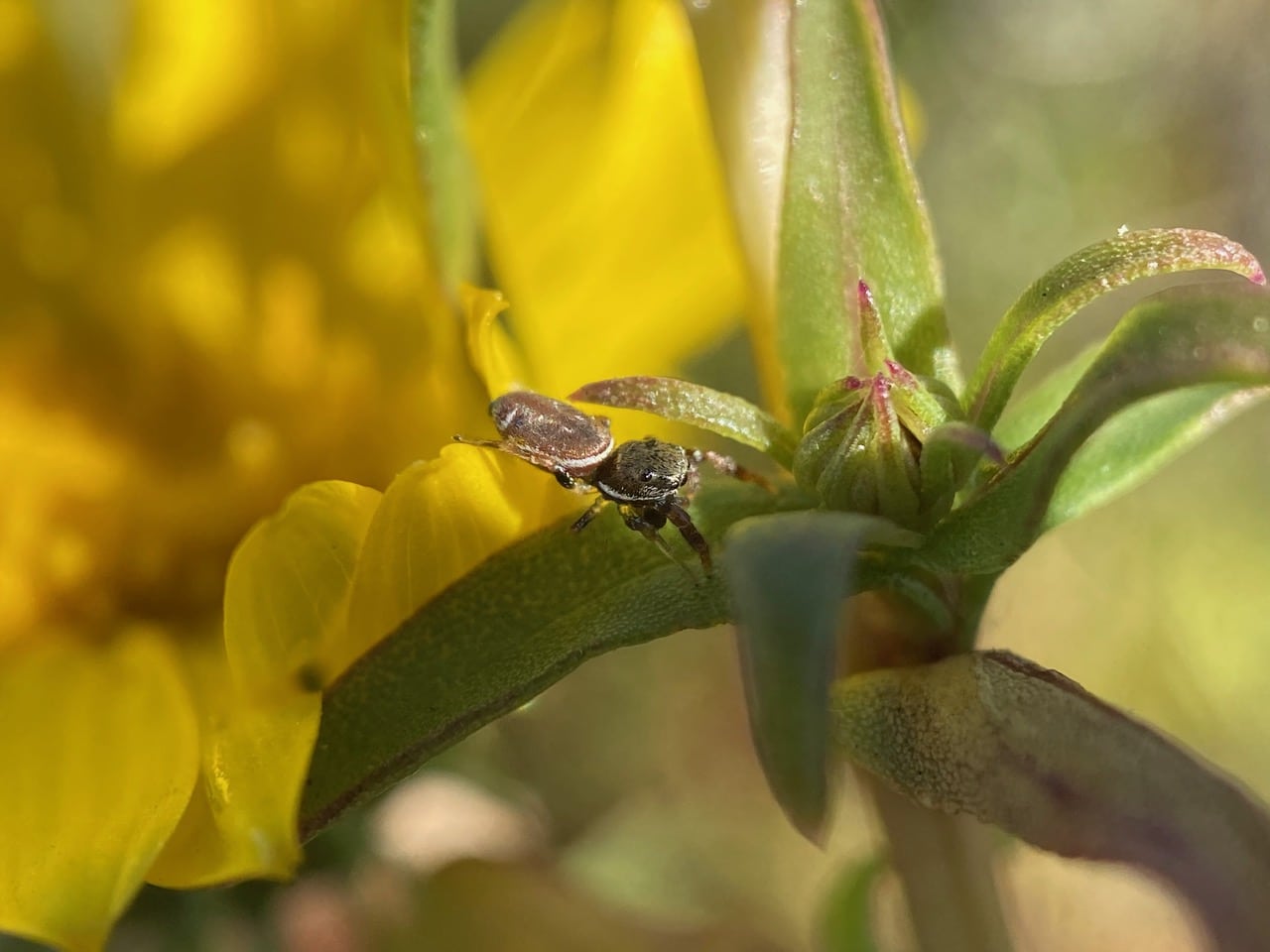
The spider leaps onto an adjacent branch, giving me a glimpse of its iridescent body. It is a female Sassacus vitis (family Salticidae).
The spider is native to North America, with a range spanning from Canada to Panama. It is a small jumping spider with iridescent gold abdomen and white ring around the anterior surface of abdomen. Body is covered with golden scales. Males are 3.5 mm long, females 4.5 mm. The name vitis is Latin for “grapevine”. The spider is commonly found on shrubs and vines and in fields. Best known as a common resident of vineyards.