

Pollinator Post 9/4/23 (2)
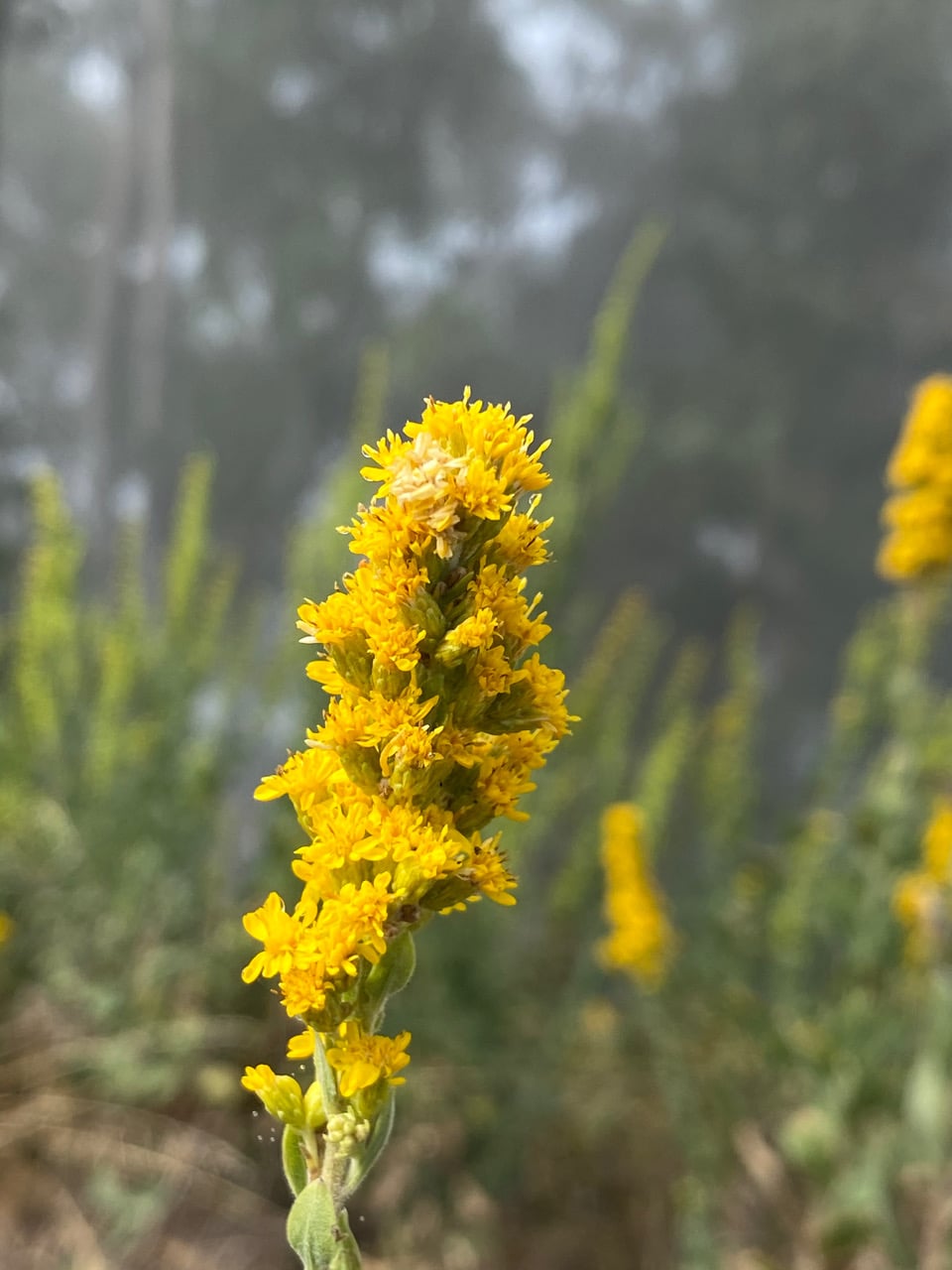
As I am photographing our first Camouflaged Looper, my eyes are attracted to another one on a neighboring inflorescence. See the pale patch near the tip? Could that be another caterpillar in disguise?
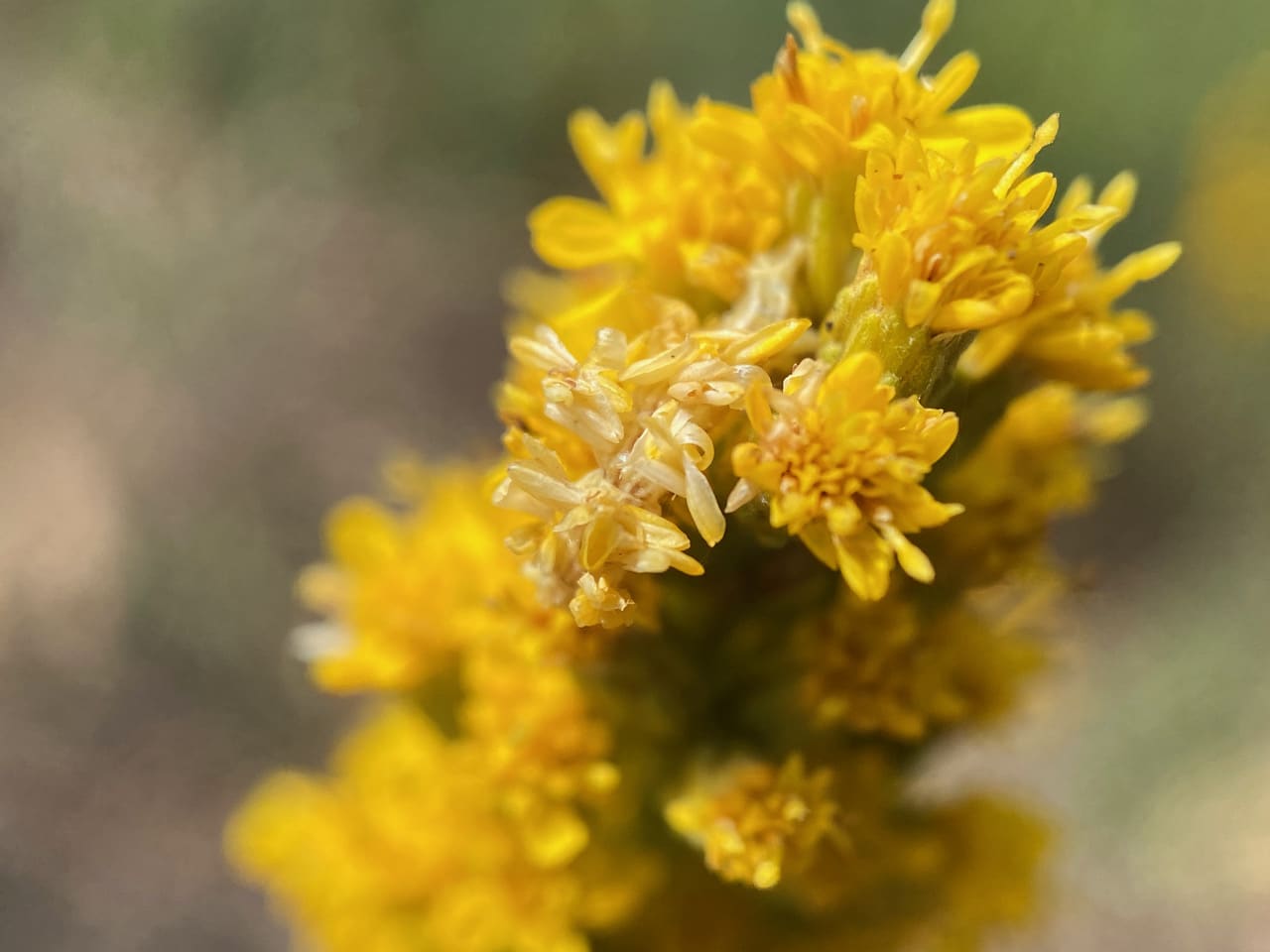
Yes, indeed, another Camouflaged Looper! Its camo is a little faded.
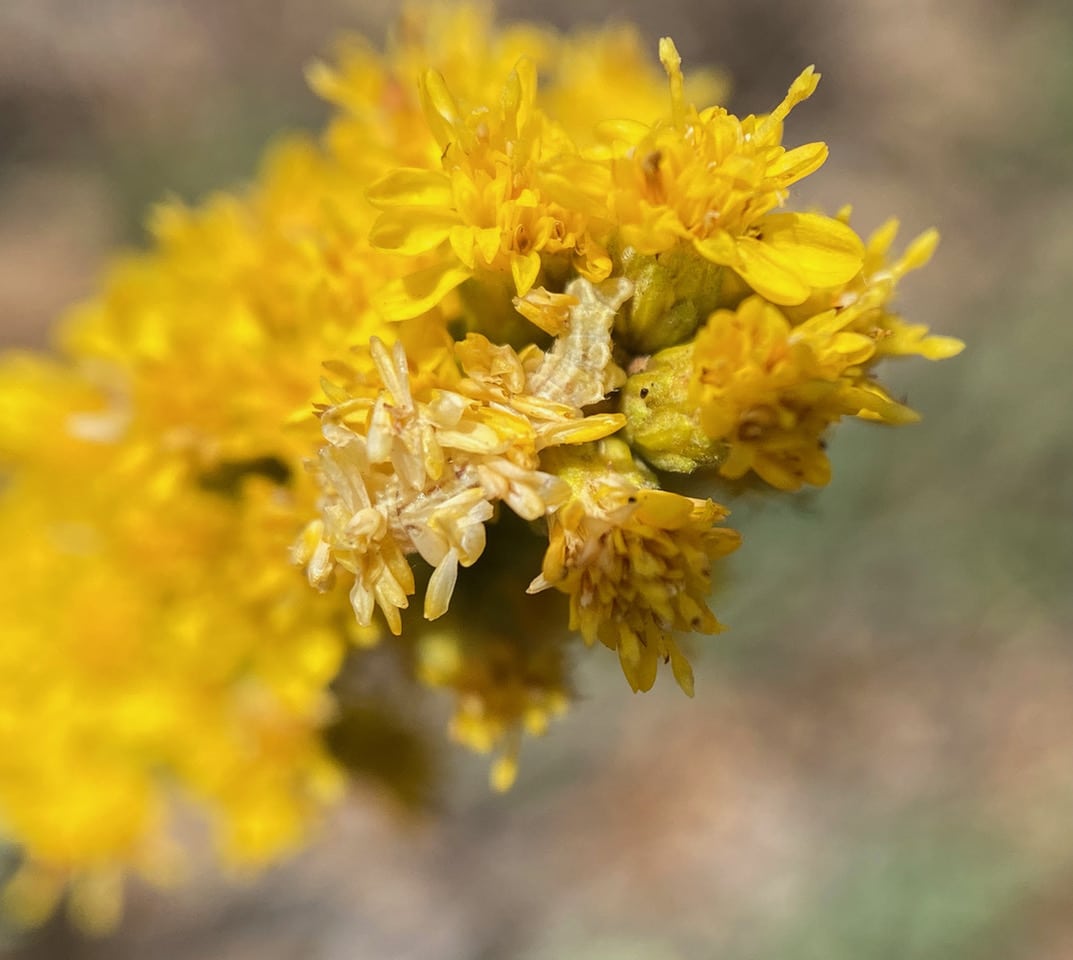
There, you can see its anal prolegs anchored on the base of a flowerhead. Again, that dark red midline along the back.
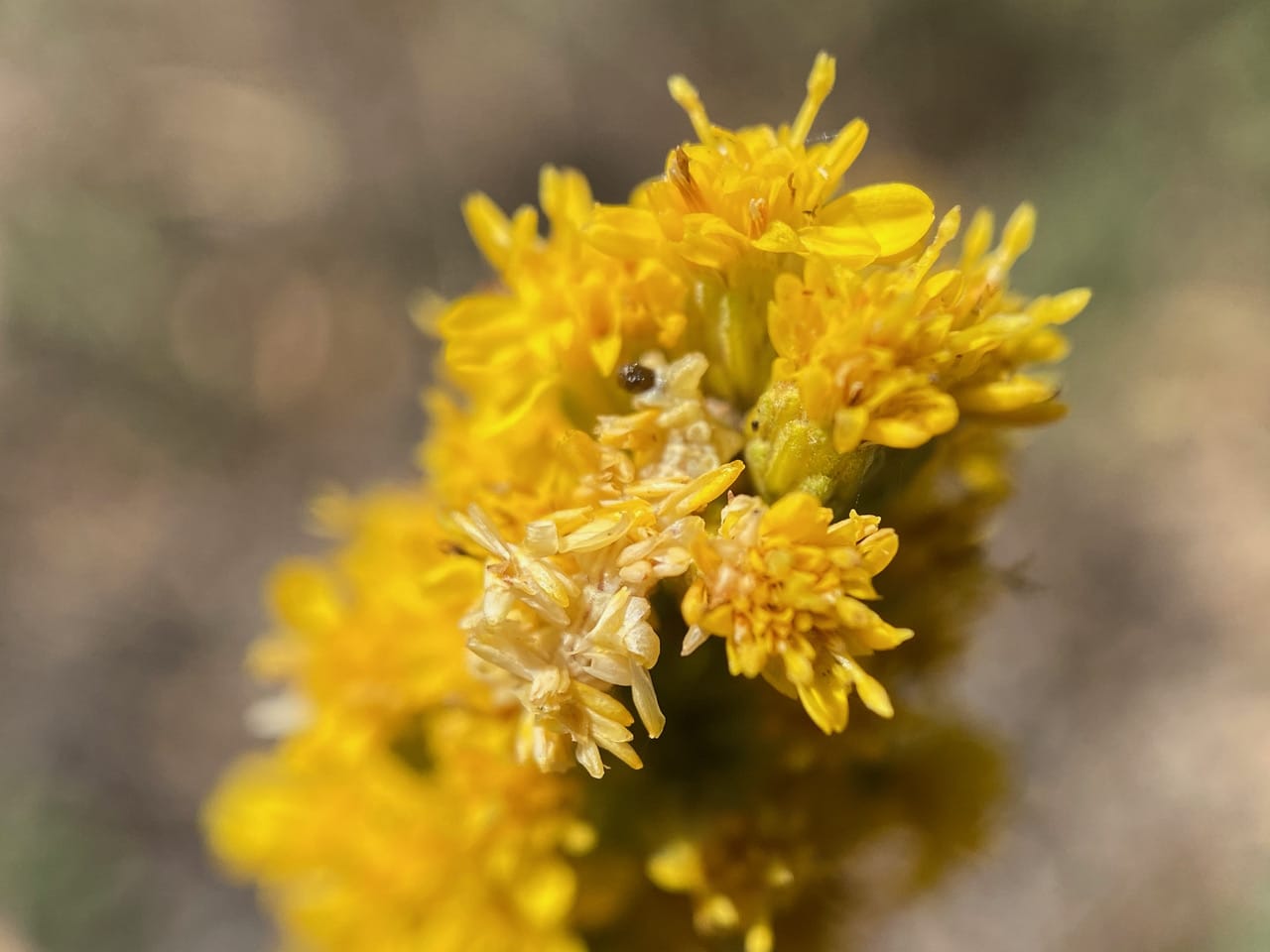
As I watch, Camo Looper #2 actually defecates! See the dark poop appearing from its anus? We are not hallucinating – it’s a living caterpillar alright!

Here’s another view of Camo Looper #2, its head extended to feed on the flowers.

Nice costume, Camo Looper #2!
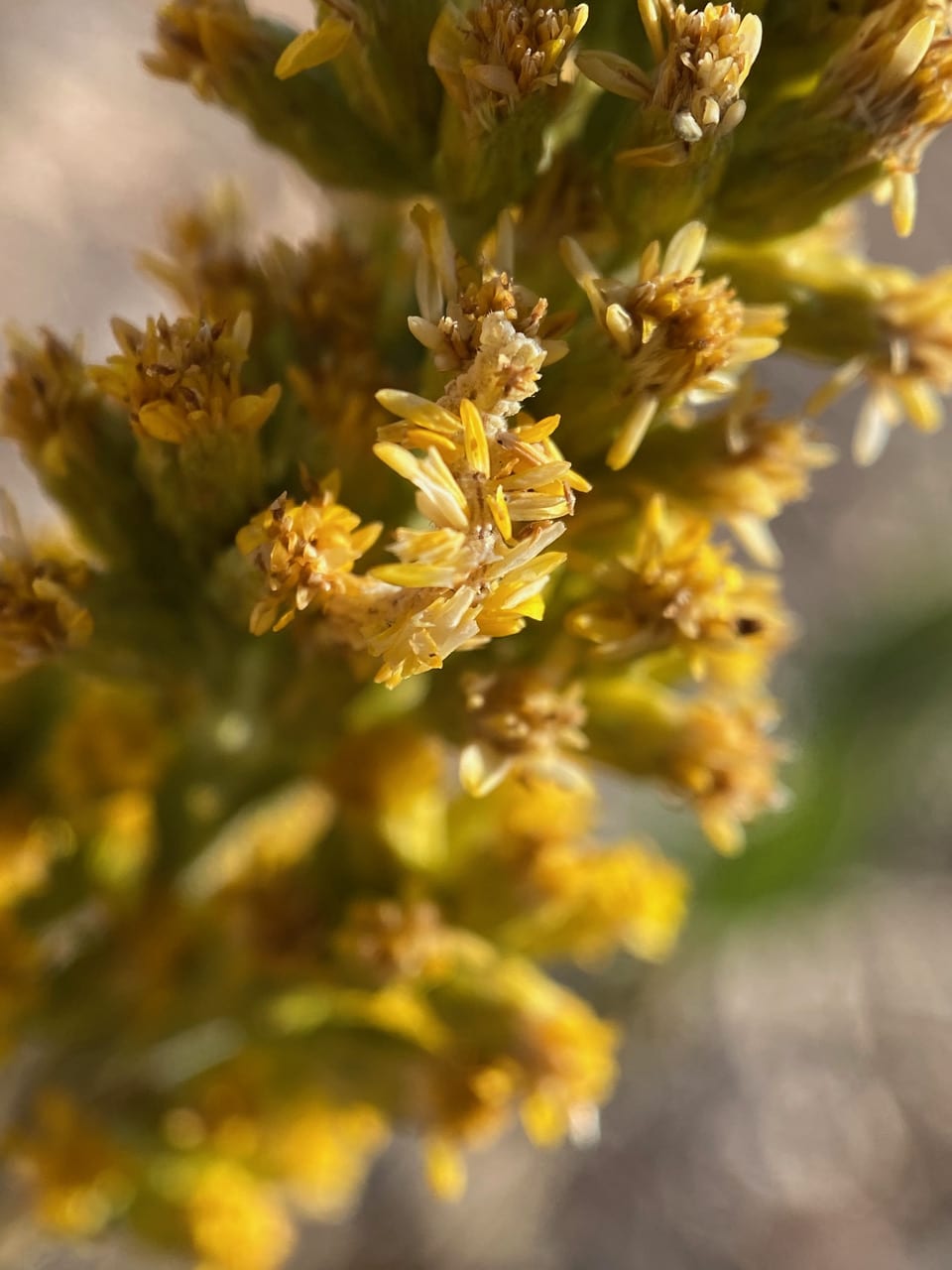
There’s actually a Camo Looper #3! Do you see it? Its rear end and part of the midline on its back are visible, if you care to look closely. It is easier for me to see the actual caterpillar live, relying on its movements.
The three loopers are on separate inflorescences, within a foot from each other. They seem to be the same age – probably siblings. Mama moth might have laid the eggs on the same day.
Wow, what fun! But it’s totally exhausting and all-consuming looking for these camouflaged critters! There might be a gazillion of them on these goldenrods, but I’m too exhausted to look for more! I am, however, infinitely grateful to have seen these amazing creatures!

Aah, something different and easy to see! It is a Bee Fly, Villa sp. (family Bombyliidae).
The Bee Flies belong to the family Bombyliidae. Adults generally visit flowers for nectar and pollen, some being important pollinators. Larvae generally are parasitoids of other insects. When at rest, many species of bee flies hold their wings at a characteristic “swept back” angle. The adult females usually deposit eggs in the vicinity of possible hosts, quite often in the burrows of beetles or ground-nesting bees/wasps. Bombyliidae parasitism is not host-specific, but rather opportunistic, using a variety of hosts. Adult females of the genus Villa lay eggs in mid-air and flick them towards the nest entrances of their hosts. They typically have an eversible pouch near the tip of their abdomen known as a sand chamber, which is filled with sand grains gathered before egg laying. These sand grains are used to coat each egg just before their aerial release, presumably to improve the female’s aim by adding weight.

A Honey Bee, Apis mellifera (family Apidae) is foraging on an inflorescence of California Goldenrod.
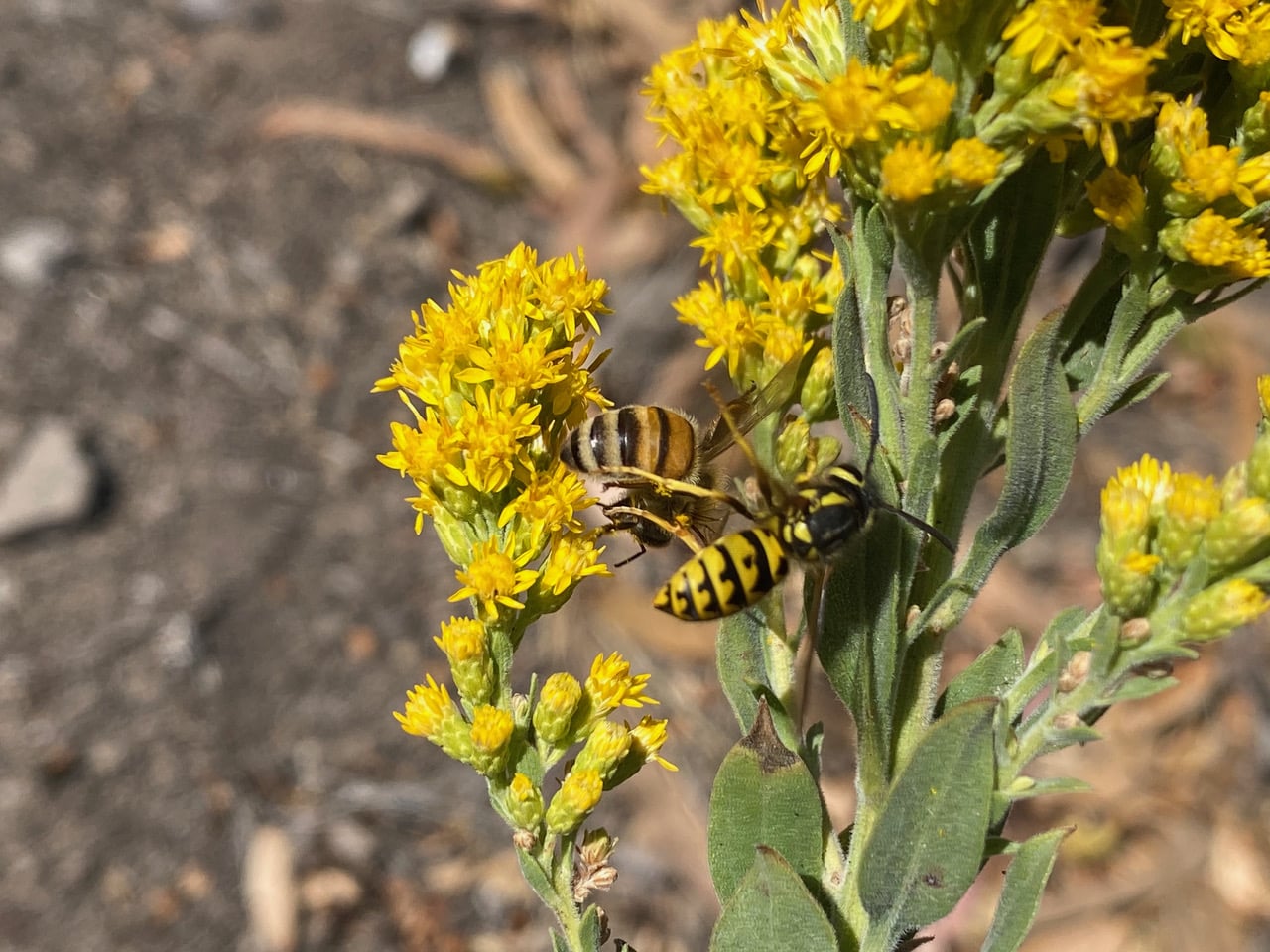
Out of nowhere, a Yellowjacket wasp whizzes in to bump the bee off its perch. Why does the wasp do this? The bee is not a prey item for the wasp. I have often seen this behavior, regularly on Yampah when it was in bloom, and now on the goldenrods.
Yellowjacket is the common name for predatory social wasps of the genera Vespula and Dolicovespula. Yellowjackets are social hunters living in colonies containing workers, queens, and males (drones). Colonies are annual with only inseminated queens overwintering. Queens emerge during the warm days of late spring or early summer, select a nest site, and build a small paper nest in which they lay eggs. They raise the first brood of workers single-handedly. Henceforth the workers take over caring for the larvae and queen, nest expansion, foraging for food, and colony defense. The queen remains in the nest, laying eggs. Later in the summer, males and queens are produced. They leave the parent colony to mate, after which the males quickly die, while fertilized queens seek protected places to overwinter. Parent colony workers dwindle, usually leaving the nest to die, as does the founding queen. In the spring, the cycle is repeated.
Yellowjackets have lance-like stingers with small barbs, and typically sting repeatedly. Their mouthparts are well-developed with strong mandibles for capturing and chewing insects, with probosces for sucking nectar, fruit, and other juices. The Western Yellowjackets typically build nests underground, often using abandoned rodent burrows. The nests are made from wood fiber that the wasps chew into a paper-like pulp. The nests are completely enclosed except for a small entrance at the bottom. The nests contain multiple, horizontal tiers of combs within. Larvae hang within the combs.
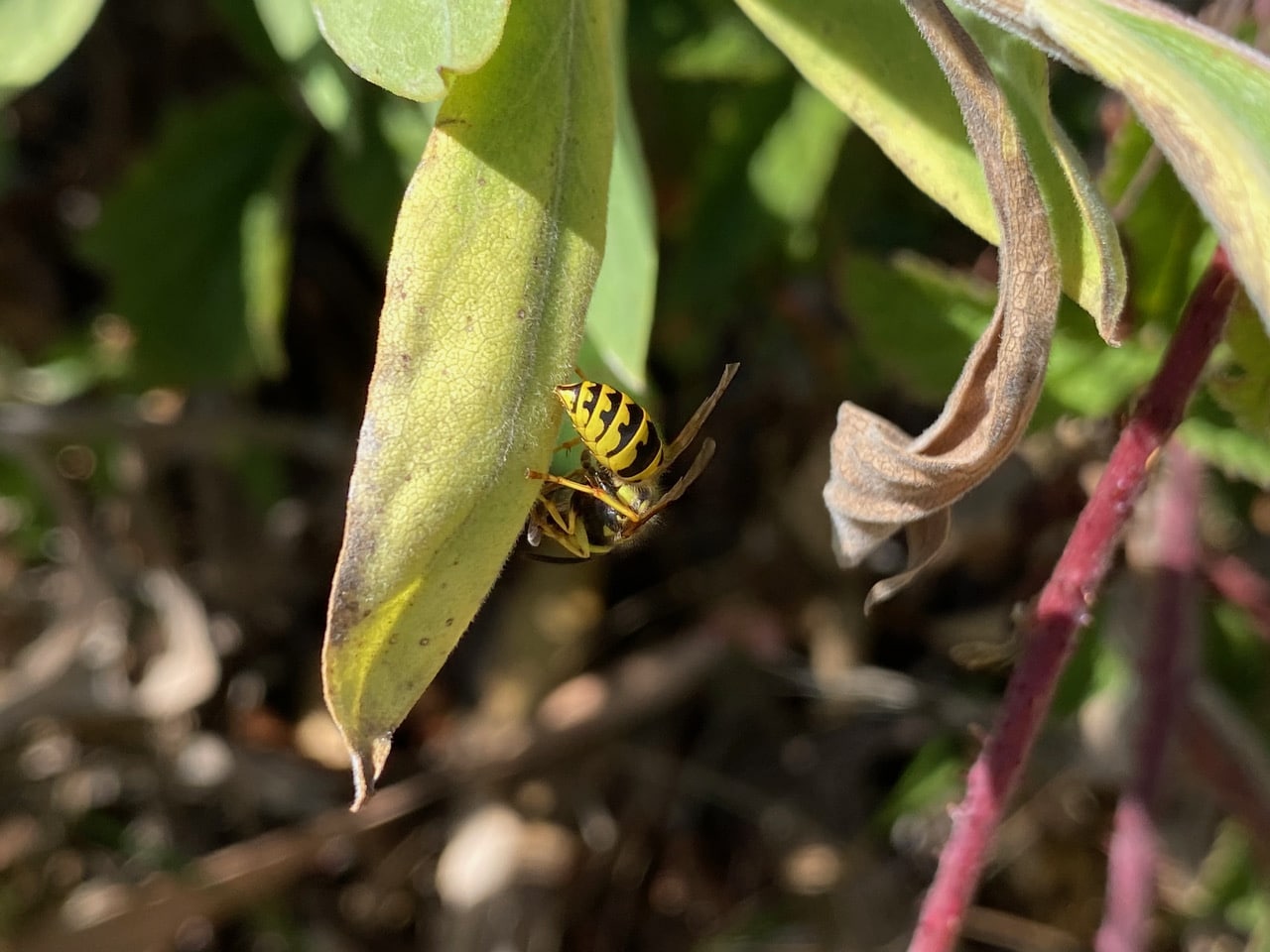 A Yellowjacket flies in unsteadily and lands on a leaf of California Goldenrod. It has a parcel in its front legs that it is now tackling. A struggling prey?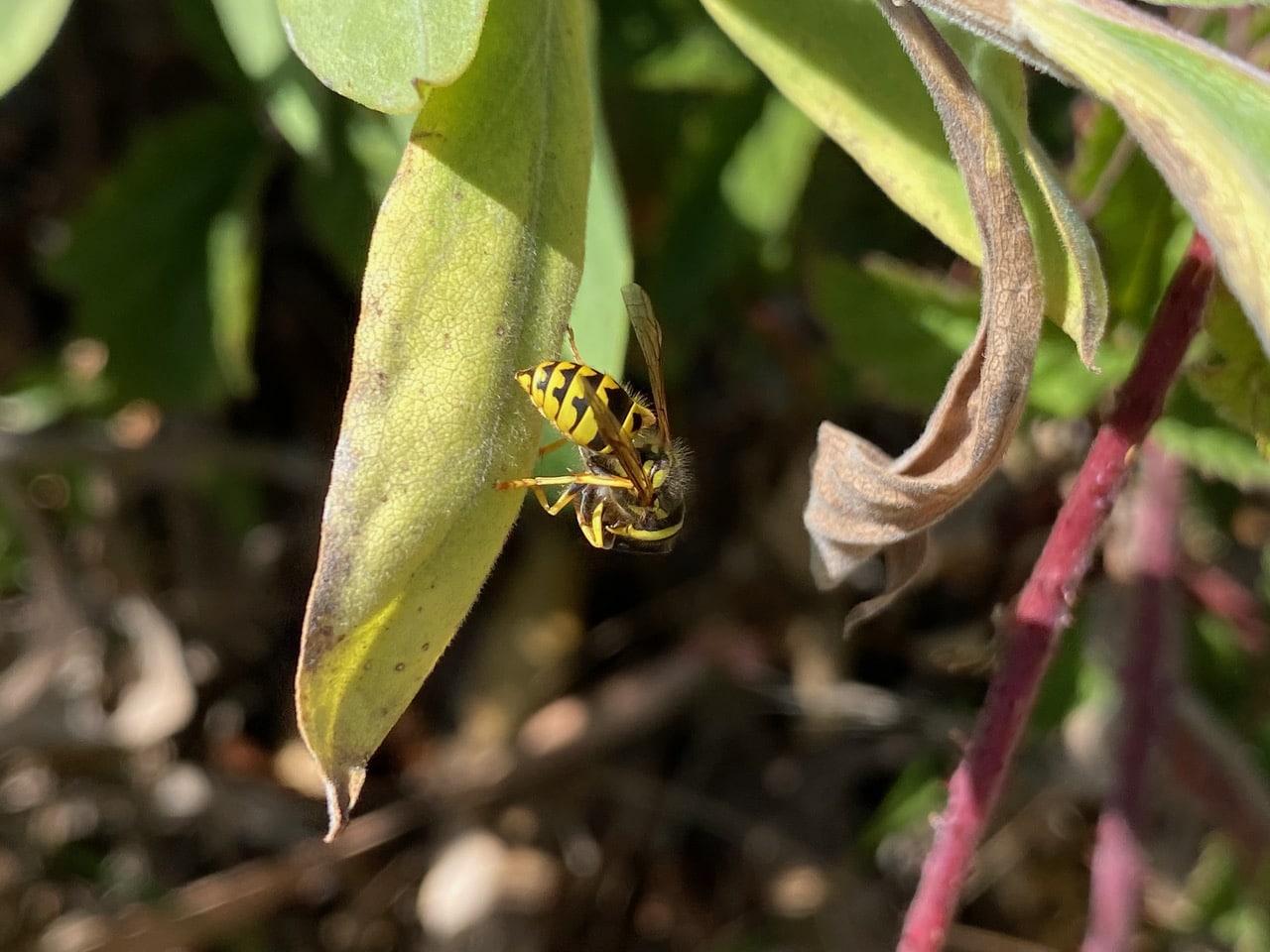
For 30 seconds, I watch as the wasp is hunched over, manipulating the prey in her front legs and jaws. She is probably killing it, whatever it is, before ferrying it to her nest.
The diet of adult yellowjackets consists primarily of items rich in sugars and carbohydrates, such as flower nectar, fruits, and tree sap. Larvae feed on proteins derived from insects, meats, and fish. Workers collect, chew, and condition such foods before feeding them to the larvae. Many of the insects collected by the workers are considered pest species, making the yellowjackets beneficial to agriculture. Larvae, in return, secrete a sugary substance for workers to eat; this exchange is a form of trophallaxis.
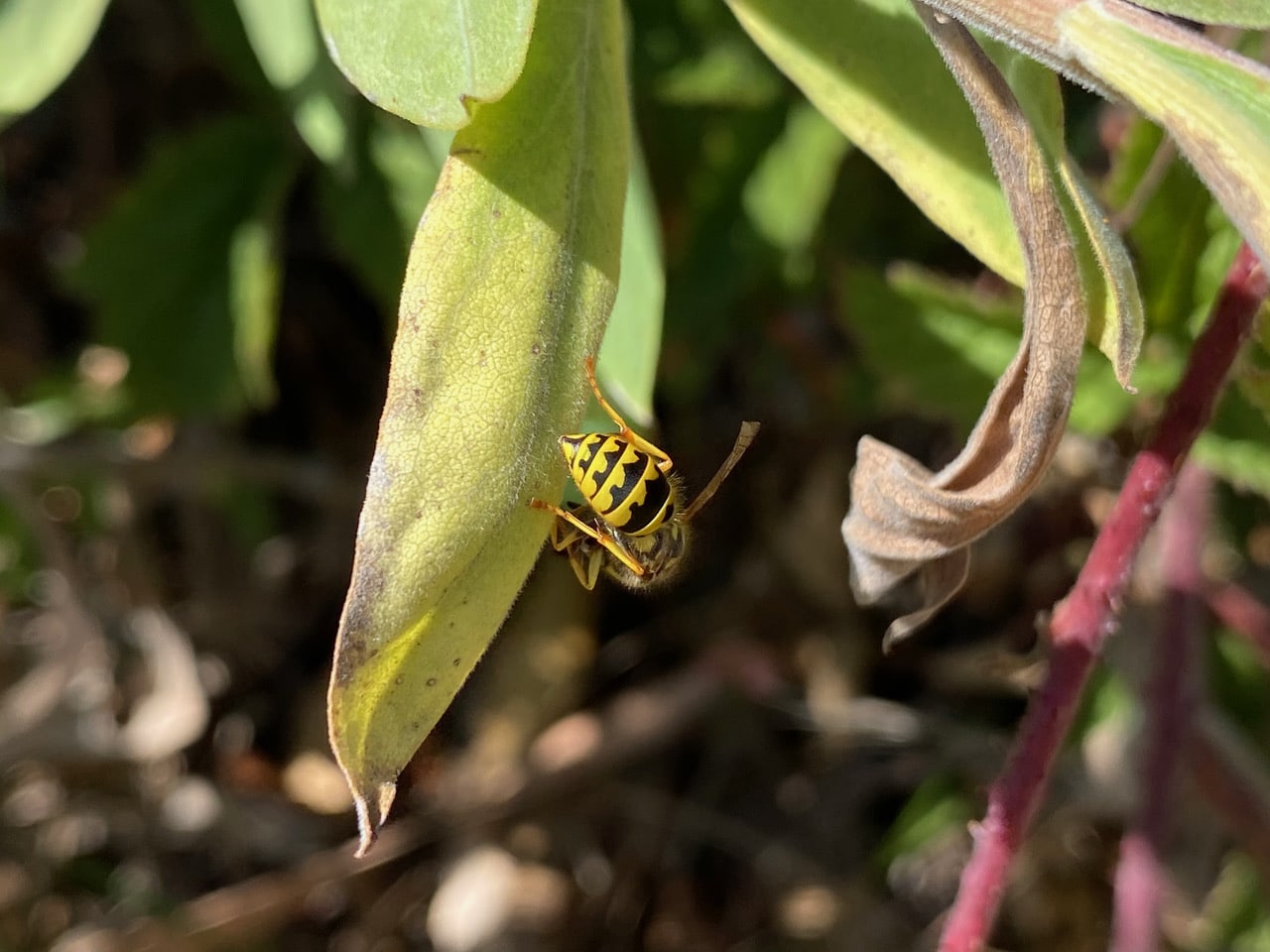

The struggle goes on for a while…
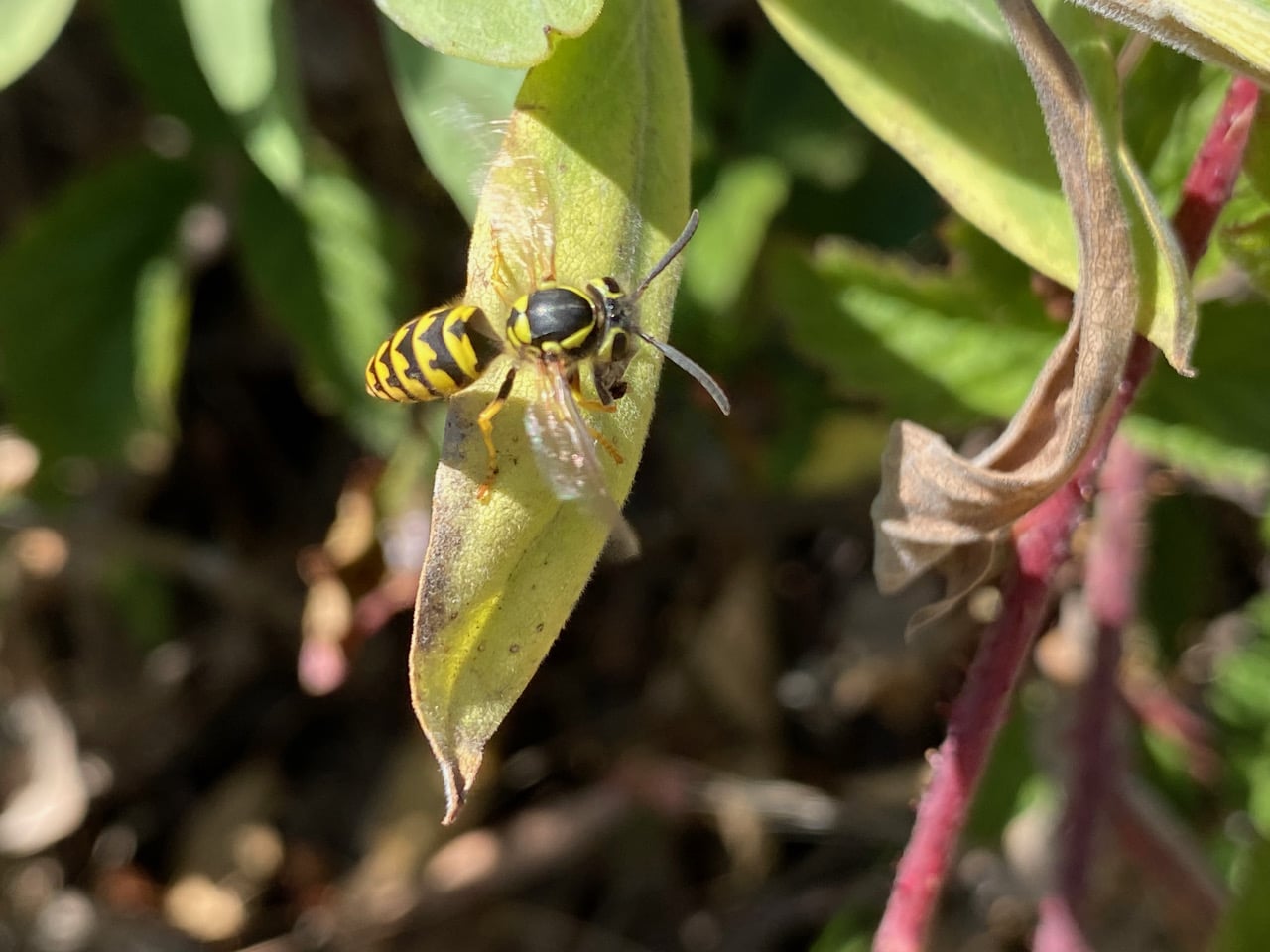
…before the wasp flies away with its prey, probably minced meat by now.