

Pollinator Post 9/30/26
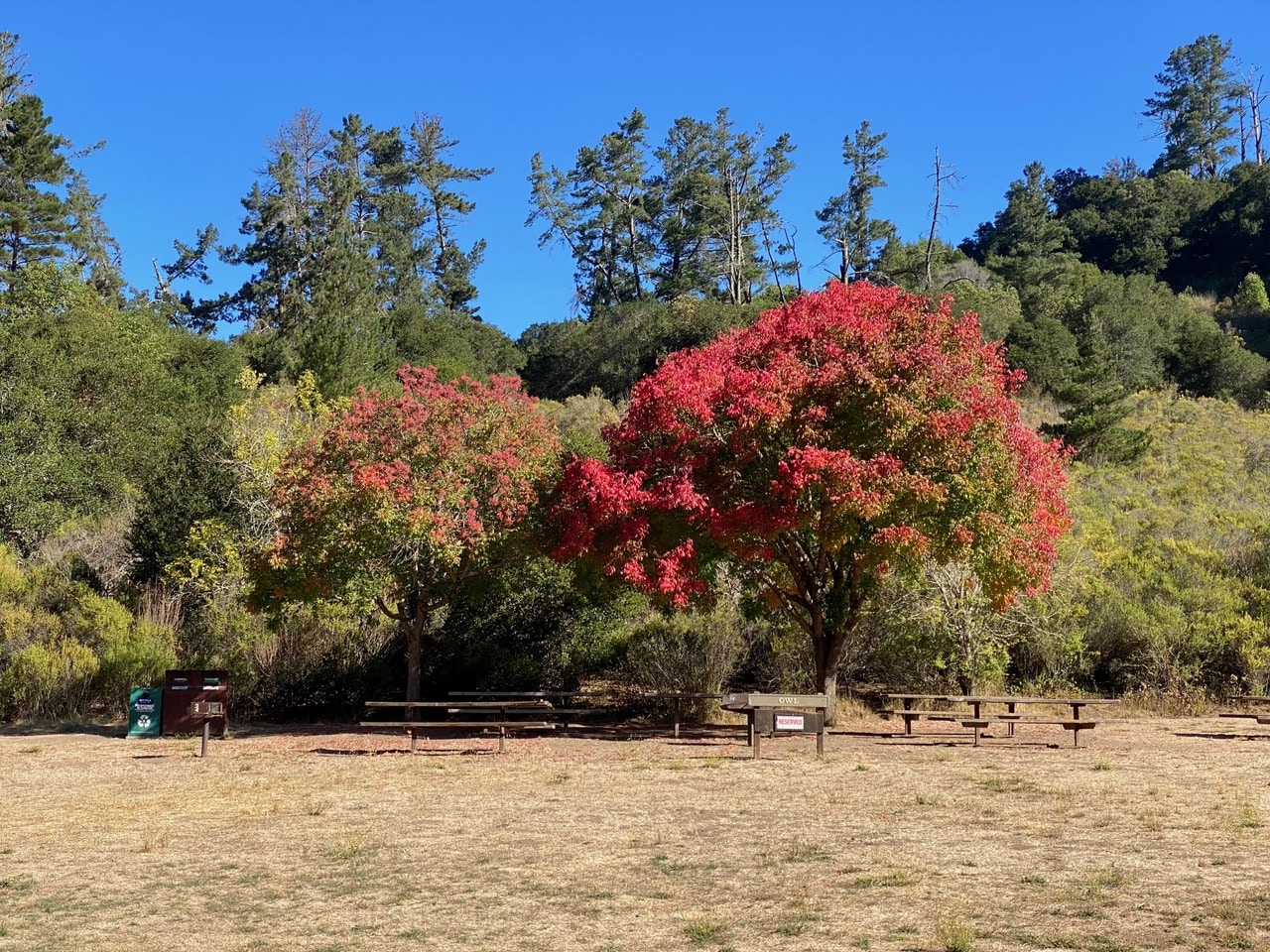
Expecting a hot day, I head for the Reinhardt Redwood Regional Park for my walk today. Parched lawns and flaming Japanese Pistachio trees greet me in the picnic area.

A handsome fly is perched on a leaf near the parking lot. iNaturalist has helped identify it as a Muscoid Fly (superfamily Muscoidea). Alas, this ID is one I dread to receive. It is so general and offers hardly any information about the ecological role of the insect.
Flies are exceptionally difficult to identify from photographs because distinguishing species often relies on microscopic anatomical features, such as exact bristle counts and wing-vein patterns, that do not show up in standard pictures. Flies (order Diptera) come in an overwhelming diversity, with over 150,000 described species, and many unrelated species look nearly identical at a glance. A singe photograph rarely captures all necessary diagnostic angles, such as a direct profile, a head-on view of the eyes and antennae, and a top-down view of the back.
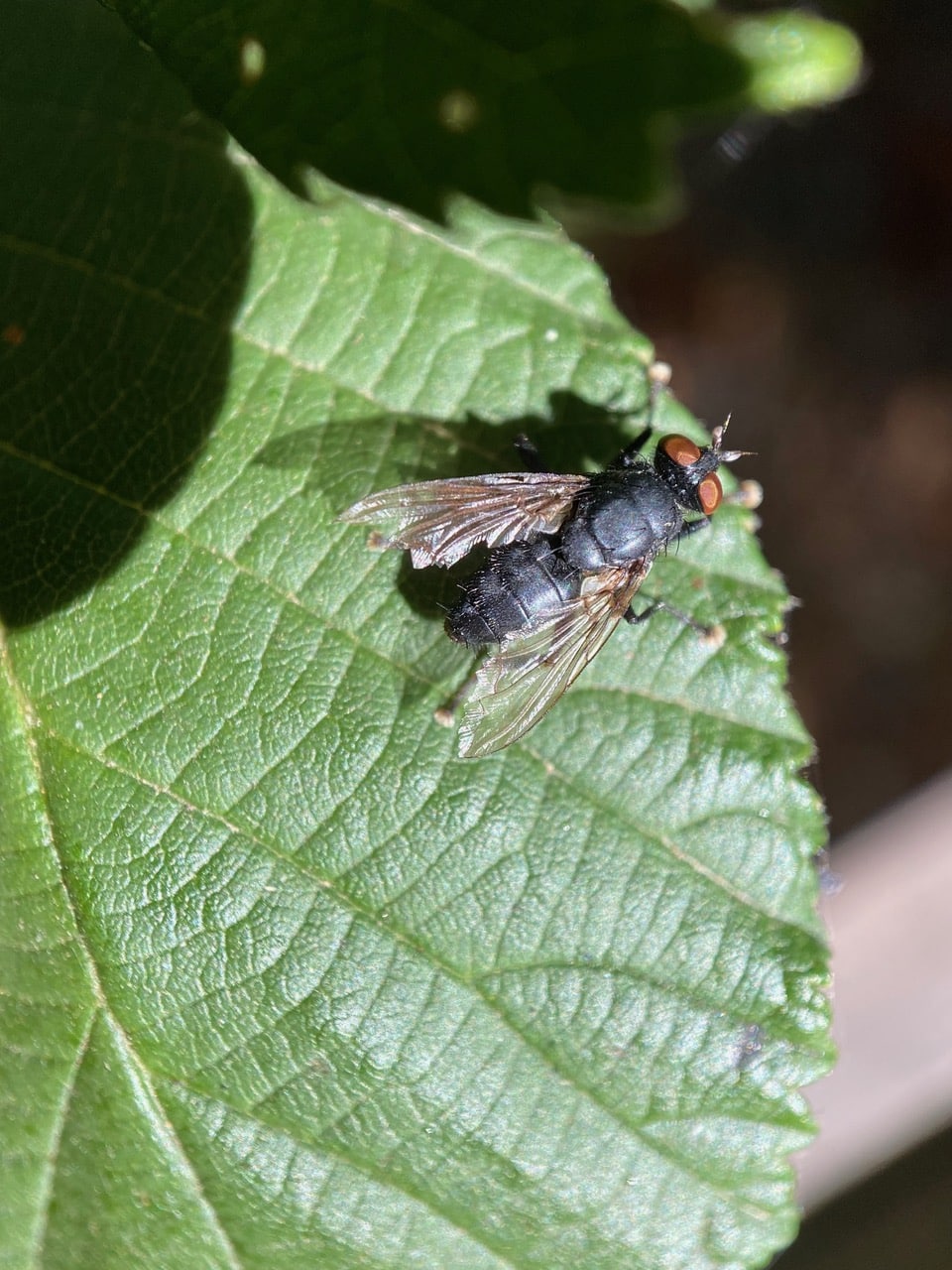
A shiny blue-black fly with tattered wings lands on a leaf. iNaturalist’s AI has identified it as a Bristle Fly in the genus Pales (family Tachinidae). Pointing out the bare eyes and very few bristles, an expert on iNaturalist suggested a Flesh Fly (family Sarcophagidae) instead. Here we go again, trying to identify a fly! The confusion can take the fun and motivation out of photographing flies!
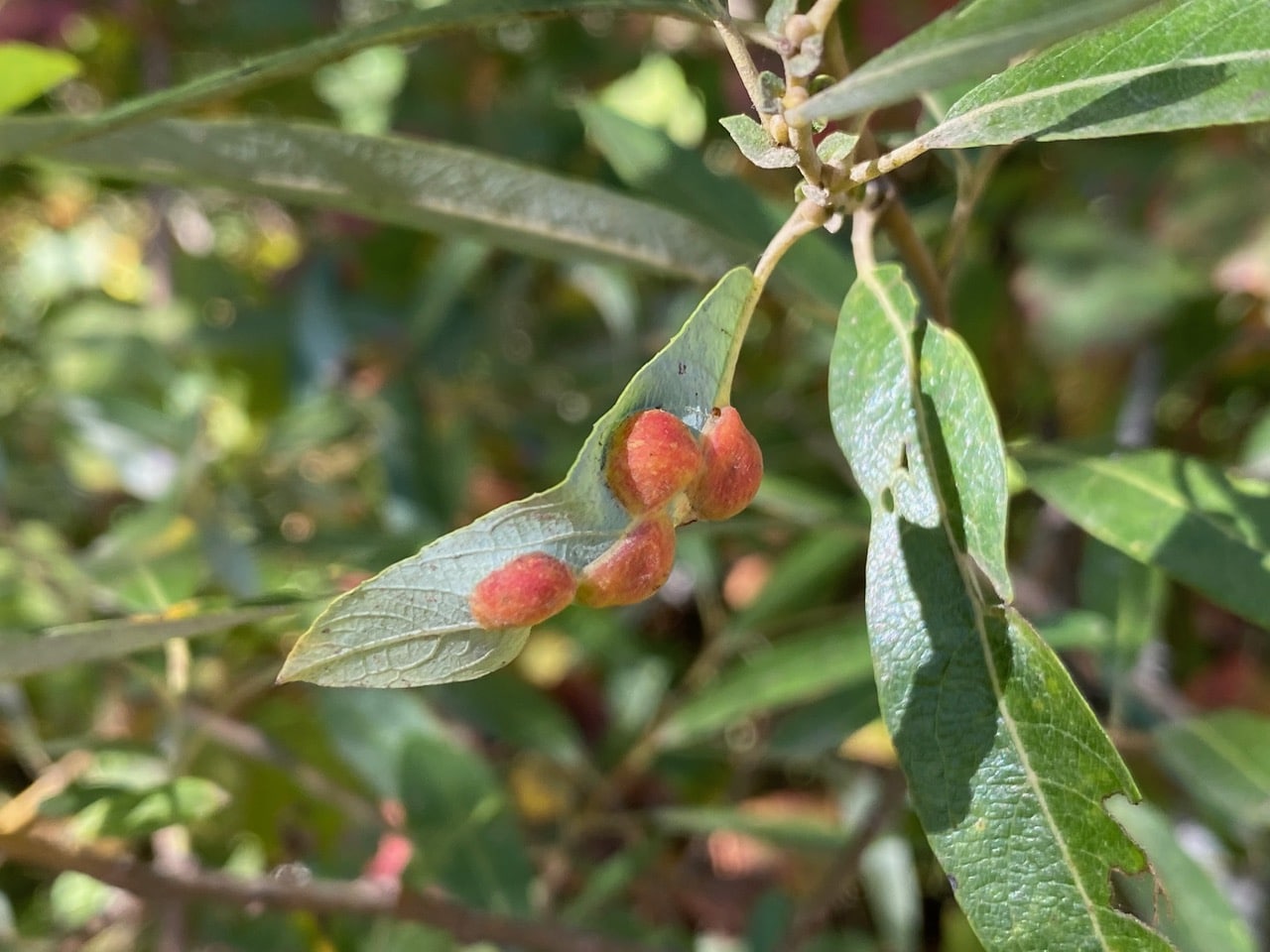
Red galls bulge from the underside of many leaves of Arroyo Willow, Salix lasiolepis.

This is what the galls look like on the upper surface of the leaf. iNaturalist has helped identify them as leaf galls induced by the Willow Apple Gall Sawfly, Euura californica (family Tenthredinidae).
Euura californica, commonly known as the Willow Apple Gall Sawfly, is a species of common sawfly in the family Tenthredinidae that induces round, fleshy, apple-like galls on willow leaves. They feed primarily on Arroyo Willow, Salix lasiolepis and related willow species. Females inject a chemical stimulant alongside their eggs into the leaf tissue. This forces the plant to form a smooth, globular, red-and-green “apple” gall even before the eggs hatch. The gall serves as a protective incubator and a rich food source for the single developing larva inside. Mature adults chew an exit hole through the gall wall to emerge. In warmer regions, this species can breed year-round and produce up to six generations annually. While the red, blister-like galls can look striking or alarming on a willow tree, the galls and larvae generally do not cause significant harm to the host tree.
The term “sawflies” can be misleading. Sawflies are a group of plant-feeding insects belonging to the order Hymenoptera, making them close relatives of wasps, bees, and ants rather than true flies. They get their name from the female’s specialized, saw-like ovipositor, which she uses to cut slits into plant tissue to deposit her eggs. Adult sawflies lack the traditional “pinched waist” seen in ants and true wasps; their abdomen is broadly attached to the thorax.
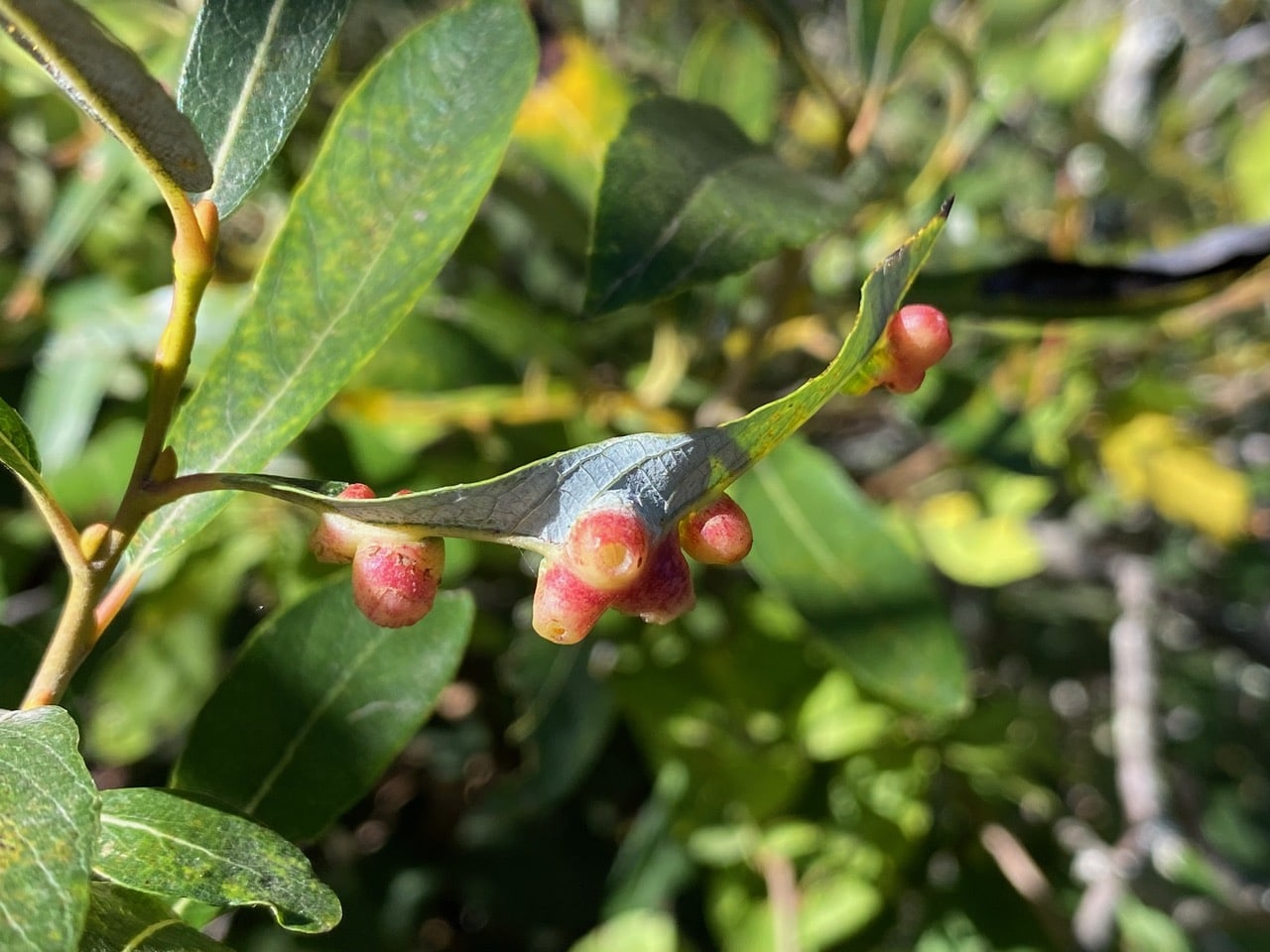
Hey, these galls on the willow leaf look similar to the Willow Apple Galls, but they are more tubular in shape and have apical holes at the tips. These are induced by the Willow Tube Gall Midge, Iteomyia sp. (family Cecidomyiidae).
Iteomyia is a genus of gall midges (family Cecidomyiidae) that induces specialized pouch or tube-like growths on the leaves of willow trees (Salix species). They are typically univoltine (one generation per year). Female midges lay eggs on host leaves, and the feeding larvae stimulate the plant tissue to form a protective gall. The larvae develop inside – starting white and turning orange or red as they mature. In autumn, mature larvae drop to the soil to overwinter and pupate in the spring. Like most leaf galls, Iteomyia midges cause cosmetic changes to the foliage but do not seriously threaten the overall health or longevity of the host willow tree.
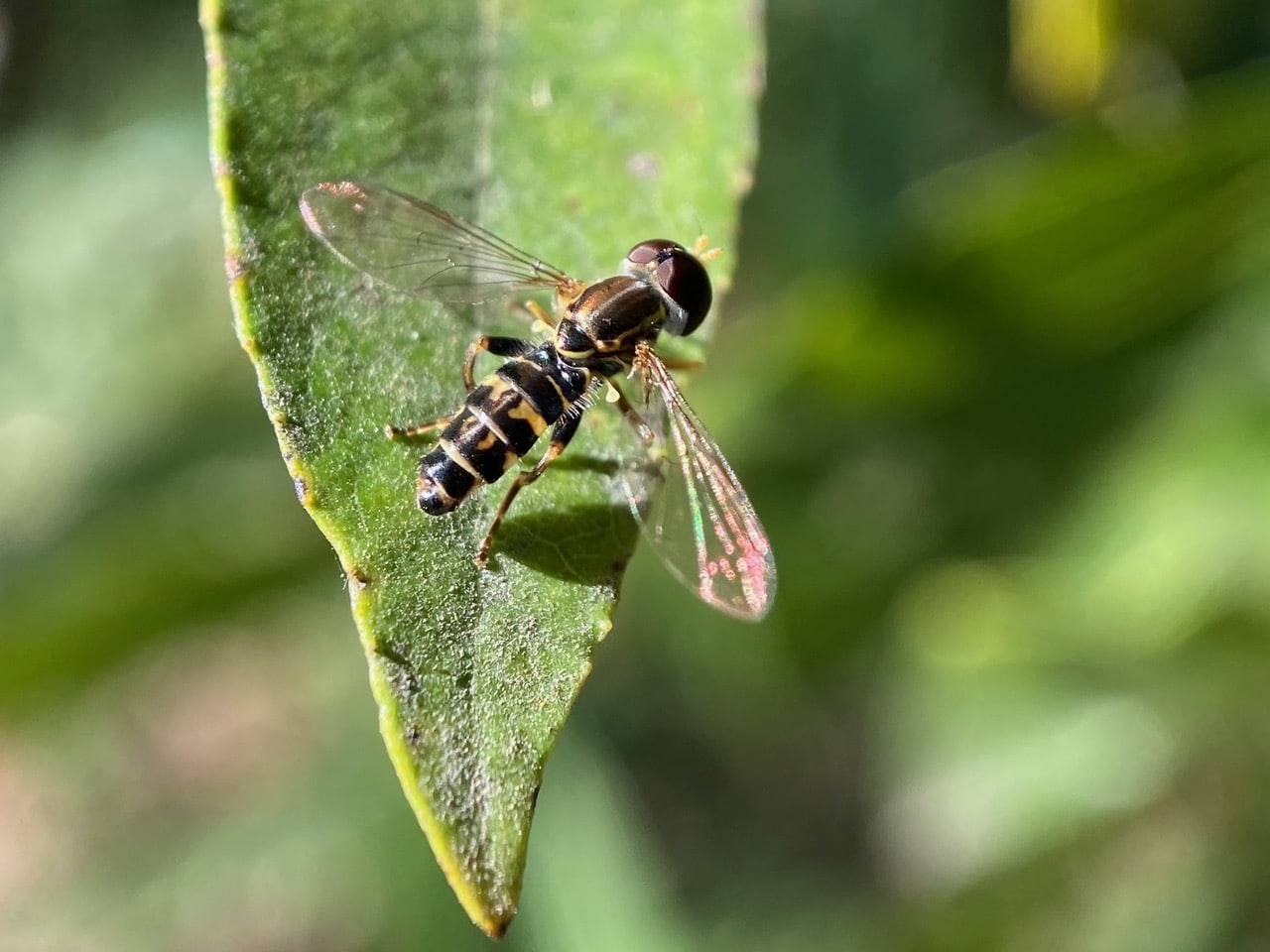
I see numerous Western Calligraphers, Toxomerus occidentalis (family Syrphidae) today, interestingly all males.
Toxomerus is a very large genus of hover flies found in North and South America. The majority of species are only 6-9 mm in length. They are notable for their mimicry of stinging Hymenoptera to avoid predators. Their unique abdominal patterns are diagnostic at the species level within the genus. There is marked sexual dimorphism – the females have a broader abdomen with lighter coloration and pattern. Most larvae feed on soft bodied insects, such as aphids; a few feed on pollen. Adults feed on the pollen of a wide range of flowers. A female can lay up to hundreds of eggs at a time and will place them where prey or pollen food sources are readily available. They can be found in a wide variety of habitats, often in dense ground cover.
The genus name Toxomerus comes from Greek toxon for ‘bow’ and meron for ’thigh’, referring to the bow-shaped hind femur. Colors vary with overall temperature during pupation: higher temperatures produce more yellow, while lower temperatures produce adults with darker markings.
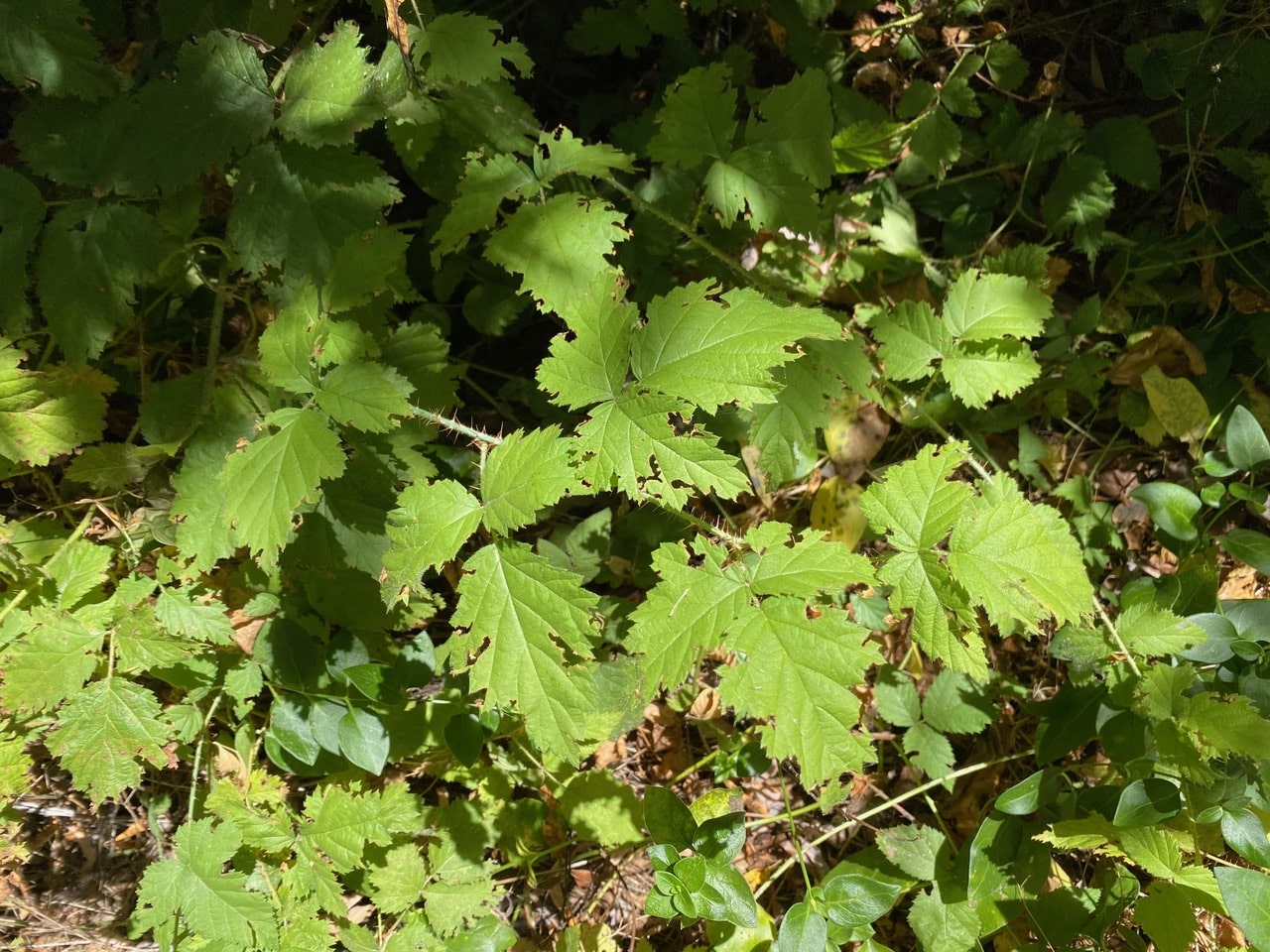
I often see Blackberry leaves with these jagged edges and wonder what insects have left such distinctive feeding scars. I never find the culprits and suspect nocturnal insects. I think I have narrowed down the candidates to weevils. Weevils are usually responsible for the jagged damage restricted to the outer edges of a leaf in a notch-like pattern. Apparently root weevils are nocturnal and can be easily spotted under the leaves with flashlight after dark.
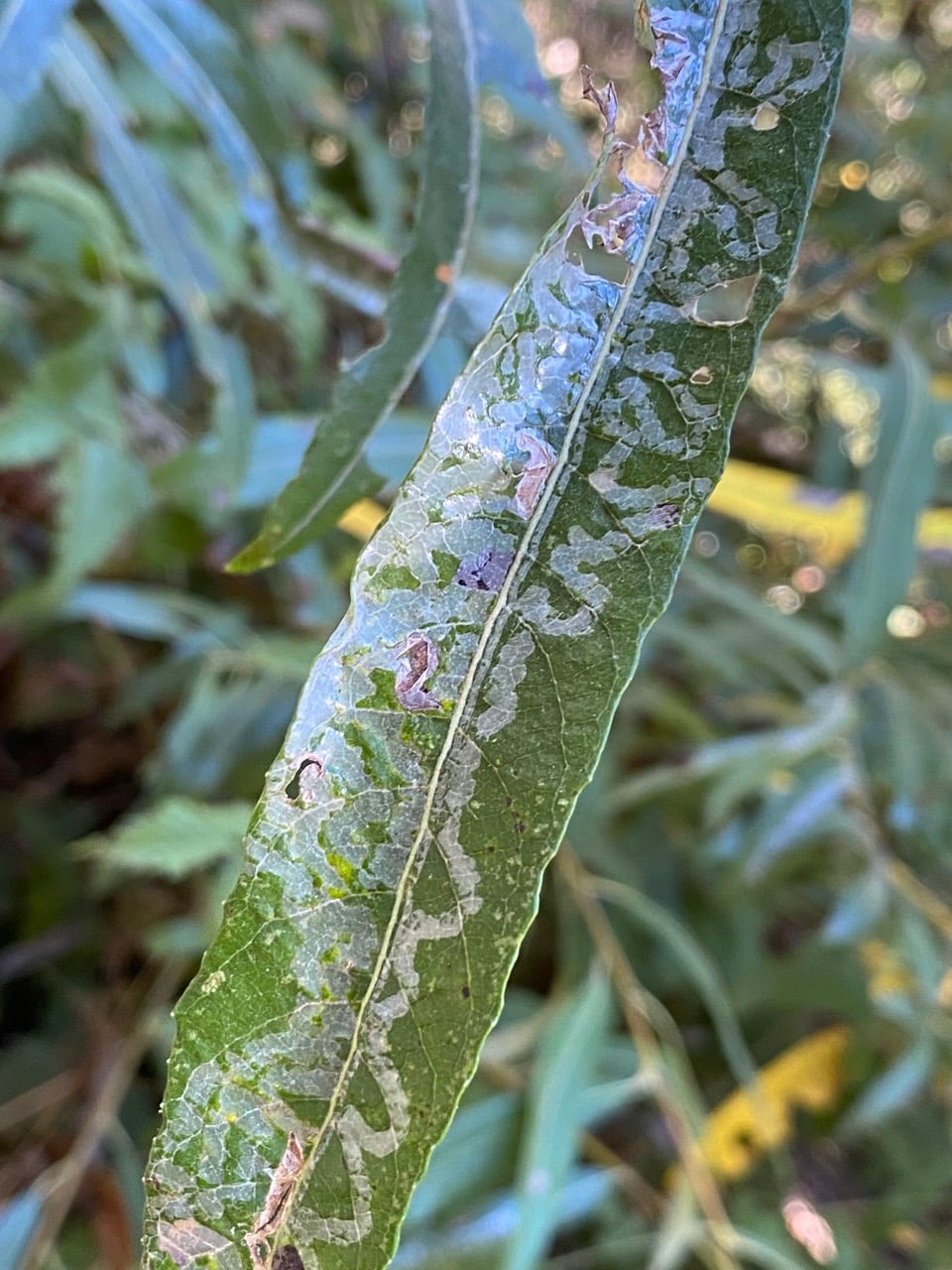
Year after year, I find these sinuous tunnels in the leaves of the same Arroyo Willow tree, Salix lasiolepis. I am a little late this year, and there are no longer any live larvae or pupae in the tunnels. In the past I have collected a couple of leaves to rear out the leaf-miners, all to no avail. So the jury is still out on who made these tunnels.
A leaf miner is any one of numerous species of insects in which the larval stage lives in, and eats, the leaf tissue of plants. The vast majority of leaf-mining insects are moths (Lepidoptera), sawflies (Symphyta), and flies (Diptera). Some beetles also exhibit this behavior. Leaf miners are protected from many predators and plant defenses by feeding within the tissues of the leaves, selectively eating only the layers that have the least amount of cellulose, and lowest levels of defensive chemicals.
Leaf Miner Fly Babies Scribble All Over Your Salad | Deep Look – YouTube

A large Cross Orbweaver, Araneus diadematus (family Araneidae) is resting under a Blackberry leaf at the edge of her orb web.
The Cross Orbweaver, Araneus diadematus, also known as the European Garden Spider, is an orb-weaving spider found in Europe, where it is native, and North America, where it was introduced. These are large spiders; adult females range in length from 6.5 to 20 mm, while males range from 5.5 to 13 mm. Individual colorings can range from extremely light yellow to very dark gray, but all A. diadematus spiders have mottled white markings across the dorsal abdomen, with four or more segments forming a cross. The markings are formed in cells filled with guanine, a byproduct of protein metabolism.
The legs of orb-weaver spiders are specialized for spinning orb webs. The webs are built by the larger females, which hang head down in the center of the web or remain hidden in nearby foliage, with one claw hooked to a signal line connected to the main orb, waiting for a disturbance to signal the arrival of prey. Prey is then quickly wrapped in silk and bitten, and the prey may be hung on the web to be stored for later consumption. The initial bite serves to paralyze the prey and minimize the danger of the spider herself being stung or bitten, and the enzymes thus injected serve to begin liquefaction of the prey’s internal structures. These spiders are also cannibalistic and prey on each other. Occasionally, the female eats the male directly after mating.
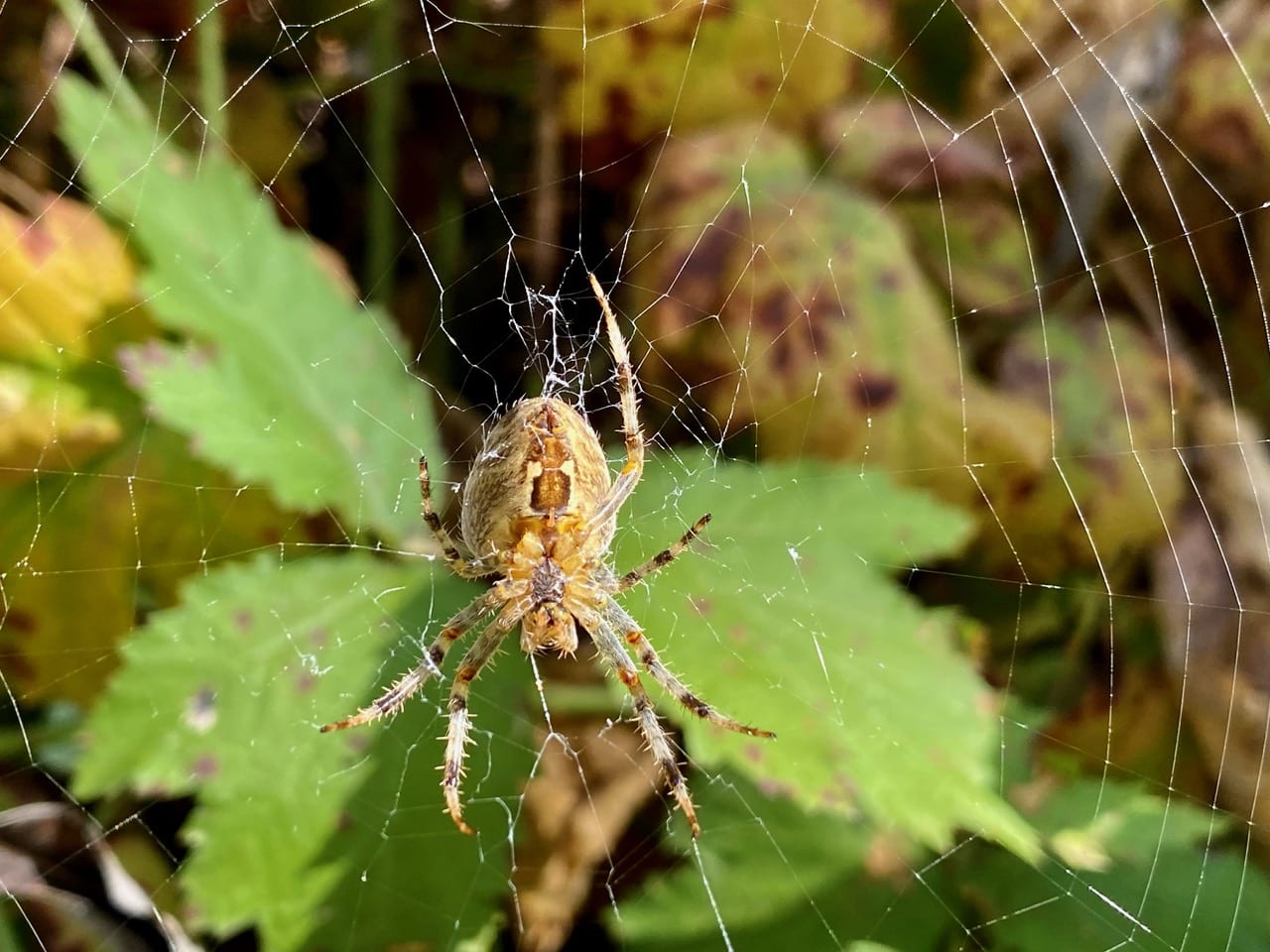
Not far away, another large Cross Orbweaver is resting in the center of her orb web, her underside facing me in bright sunlight. She seems to be missing her left hind leg. Since she is already an adult with no more molts to undergo, that leg will not be regenerated or replaced.
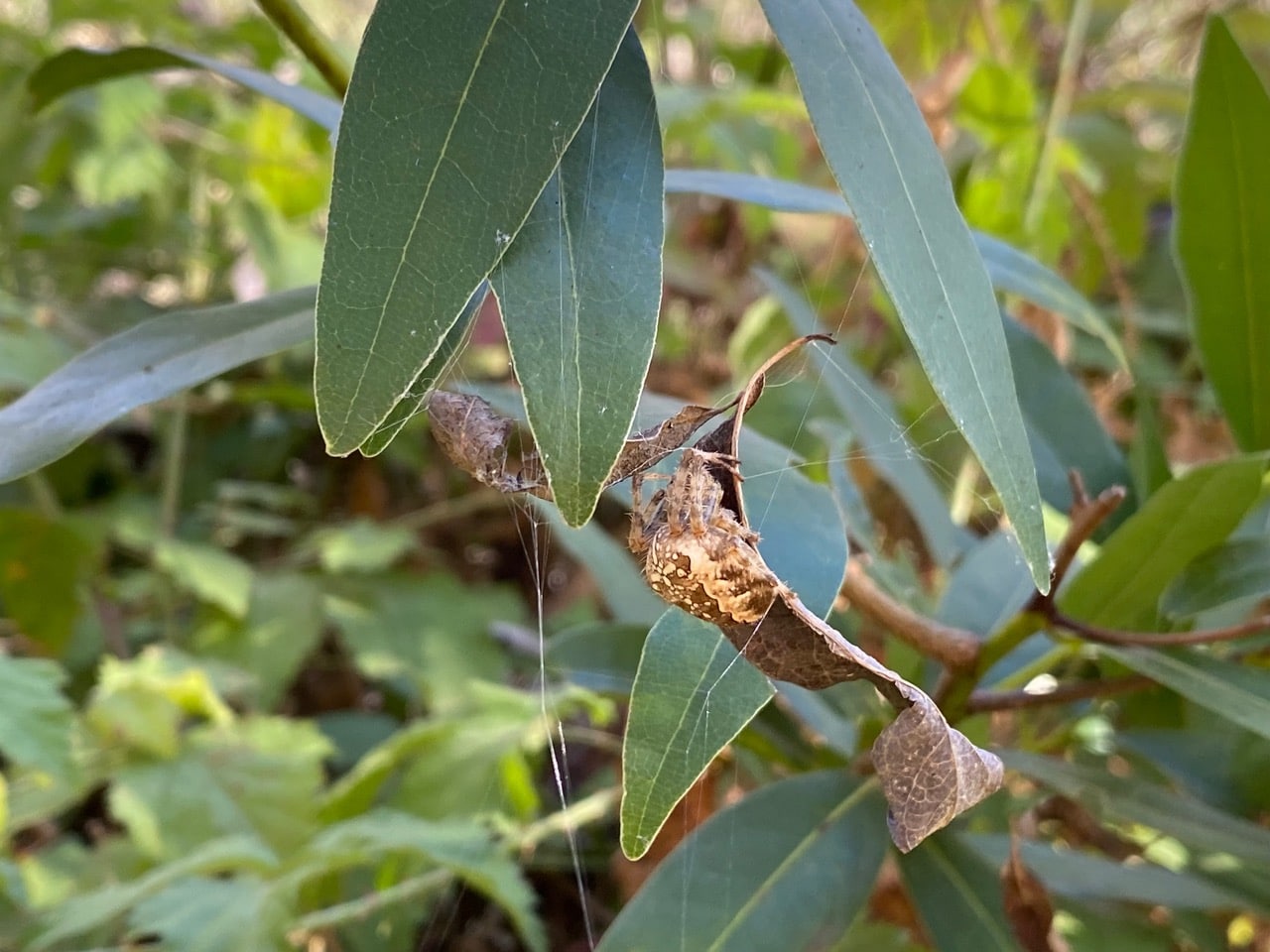
As I close in for a better view of her spinnerets, the spider bolts upwards on her web to the willow foliage above. She finally stops to hide on a brown leaf. How does the spider know that she is better camouflaged against a brown background? It is only when I review this photo at home that I realize that the brown leaf is not even part of the branch. Looking carefully at the silk threads attached to the dried leaf, it appears to be intentionally attached to the edge of the orb web by the spider, and not randomly blown in by the wind. Wow! These spiders actually attach plant debris to their web that they might use as a camouflaged retreat!
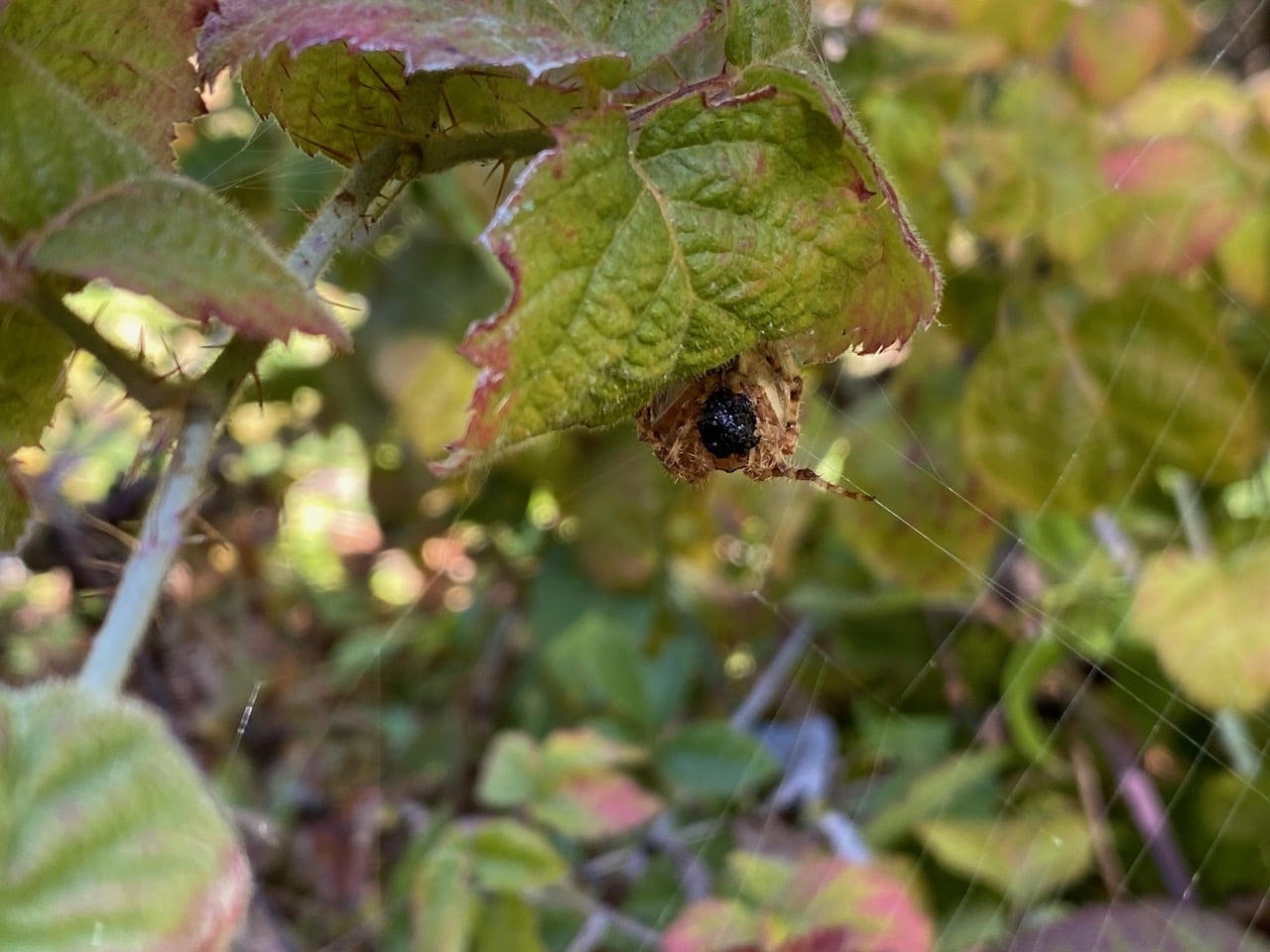
Another large Cross Orbweaver is feeding on something black on a blackberry leaf at the edge of her orb web. Closing in for a front view, I see that she has chewed a large prey into a wet, black glob. One of her front legs is still holding onto a drag line so she can stay in touch with what’s happening on her web.
Unlike spiders that only leave a hollow shell of a prey, large orbweaver spiders combine internal and external digestion when feeding. They repeatedly vomit digestive juices directly onto the captured prey, chewing it into a pulpy mass, and sucking the liquefied and chewed slurry back into their mouths. They discard only a tiny, dry ball of compressed inedible parts once finished.
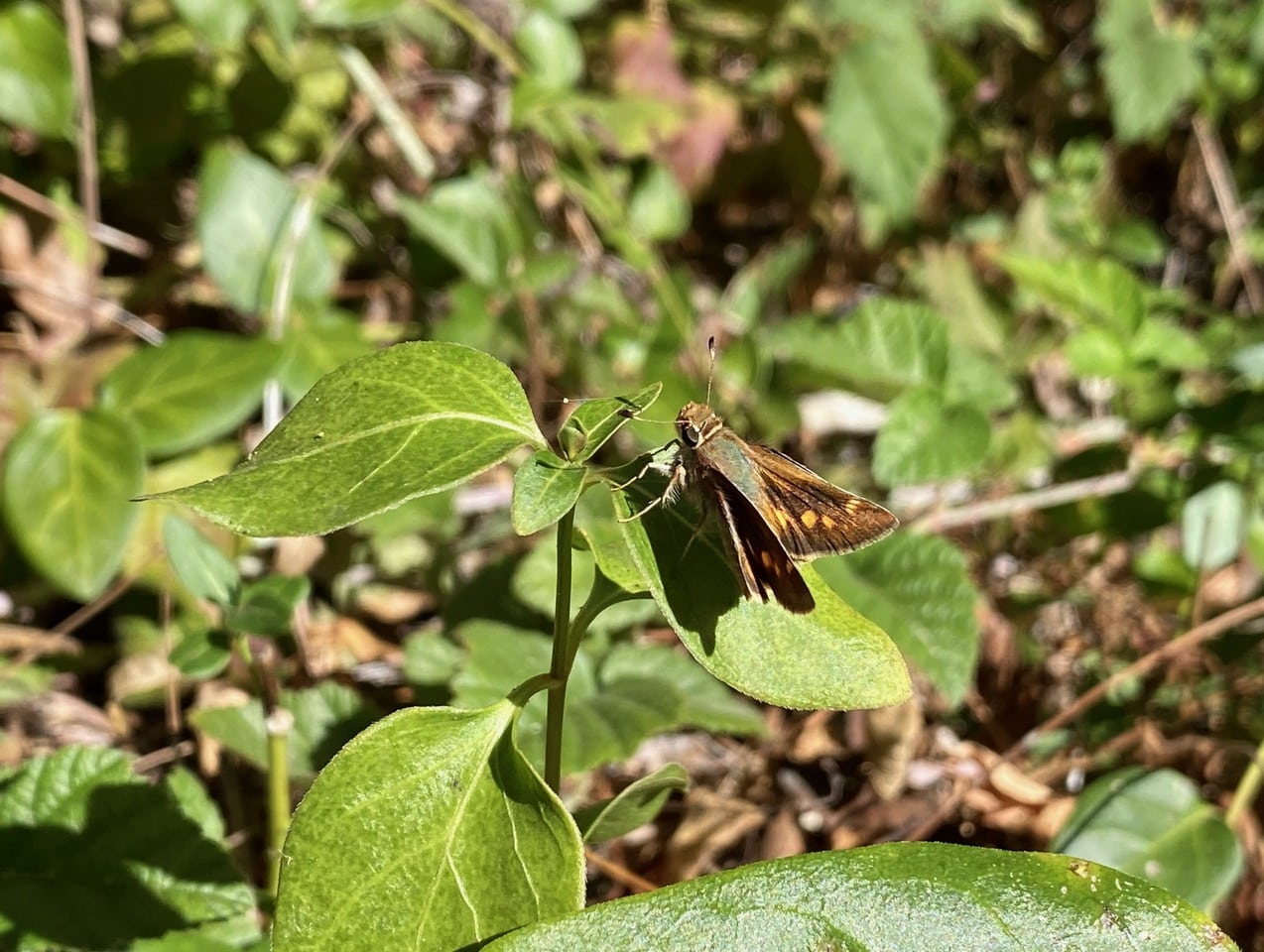
An Umber Skipper, Lon melane (family Hesperiidae) has landed on a Vinca leaf. Ah, fall is here, so are the Umber Skippers!
Skippers are a family, the Hesperiidae, of the order Lepidoptera (butterflies and moths). They are named for their quick, darting flight habits. Most have the antenna clubs hooked backwards like a crochet hook. They also have generally stockier bodies and larger compound eyes than the other butterflies. Their wings are usually small in proportion to their bodies. When at rest, skippers keep their wings usually angled upwards or spread out, and only rarely fold them up completely. Californian species are mostly brown or tan, with black, orange, or yellow markings.
Skipper caterpillars are usually green or brown, sometimes yellowish, never brightly colored. They have a distinctive “collar”, a narrow ring around the body right behind the head. Caterpillars are camouflaged and often hide during the day. Many species make nests of leaves and silk for additional protection. Most North American species feed on grasses, but some common species eat shrubs and trees, especially in the bean family. Most species are limited to a single group of food plants. Adult skippers are only active during the day, but Skipper caterpillars feed mainly when it is dark or partly light.
The Umber Skipper is found in the western United States, the highlands of Mexico and Central America. Umber refers to the red-brown color of the upper sides of the wings. Habitat consists of desert foothills, grassy areas, streamsides, roadsides, yards, parks and open oak woodland. There are two generations per year. Adults feed on flower nectar. Larvae feed on various grasses, and live in shelters made of rolled or tied leaves.
Just a little later, I come across a pair of Umber Skippers engaged in a curious behavior. Knowing that it’s impossible to capture the frantic activity in stills, I quickly turn on the video function of my camera.
This is what Sarab, my butterfly guru has to share:
“Yes, this is Umber Skipper courtship. Umber Skipper courtship is very easily seen all around our local area mid-September through October. When Umber Skipper numbers peak in the fall, it is common to see courting pairs. In courtship, the female sits vibrating her wings (that’s her way of signaling interest) while the male flies little figures around her. After a while, the male will sit and rest. Every time the male withdraws, the female stops vibrating her wings. Then either she starts vibrating her wings and he returns instantly, or he comes back and she resumes vibrating instantly. This goes on for a very long time!”
Why are these skippers mating this late in the season when most of the grasses, their larval food plant have dried up. Sarab explained that in urban areas the caterpillars are probably using lawn grasses in Sept/Oct/Nov. It’s possible they don’t breed this late in areas where lawn grass is not available.

Its long front legs held wide apart, a young Crab Spider, Mecaphesa sp. (family Thomisidae) is waiting in ambush on the edge of a Blackberry leaf.
Members of the family Thomisidae do not spin webs, and are ambush predators. The two front legs are usually long and more robust than the rest of the legs. Their common name derives from their ability to move sideways or backwards like crabs. Most Crab Spiders sit on or beside flowers, where they grab visiting insects. Some species are able to change color over a period of some days, to match the flower on which they are sitting.
Mecaphesa asperata, the Northern Crab Spider is found in North and Central America, and the Caribbean. The ambush predator generally lurks in similarly colored flowers for visitors such as bees and flies. It is similar in appearance to the better-known Goldenrod Spider, Misumena vatia. Mecaphesa can be distinguished in that the carapace, abdomen and legs are covered with numerous short stiff spines.
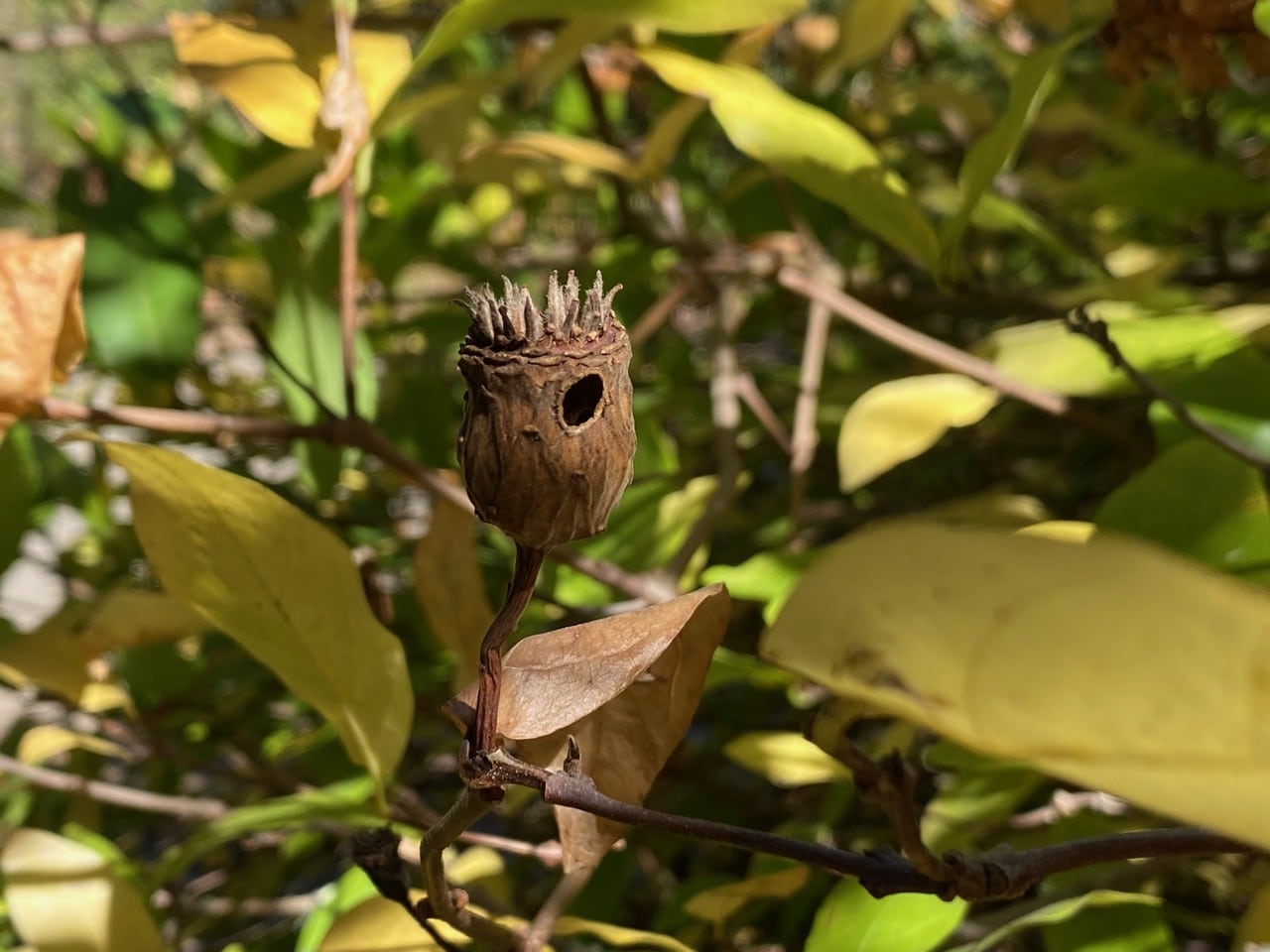
There are only a few dried seed pods left on the fading Spice Bush, Calycanthus occidentalis. This one caught my attention because of the big round hole on the side of the woody capsule. Who made that? I know that the seeds of Spice Bush are dispersed by Yellowjackets, but the wasps usually excavate from the top of the pod, not the side. Besides, the hole was probably made when the pod was still green; the wound has healed neatly around the edges.
The woody pod that is left behind after the flower of Spice Bush has senesced is technically not a fruit, but a receptacle. Inside the receptacle, numerous achenes are tightly packed. Achenes are a type of simple dry fruit that do not open at maturity. Each achene contains a single seed. The achenes of Spice Bush are flanged by a ‘marginal organ’, believed to be a nutritious food for insects.
In 2017, an interesting discovery came to light concerning the seed dispersal of the Spice Bush. Apparently, Yellowjacket wasps actively seek out the achenes hidden in the woody pods. They tenaciously excavate through the top and haul away the achenes one at a time. The achenes are actually heavier than the wasps themselves. Since wasps are carnivorous and do not usually seek plant foods, it is believed that the marginal organ is probably protein rich. It is unclear how the wasps find the pods. It is thought that they follow an olfactory cue, that is, the achenes probably emit a scent that is detectable by wasps but not by humans. At the wasps’ nest site, the achenes usually end up in the wasps’ trash pile after the marginal organs have been removed and eaten. These are capable of germinating into new plants.

A little fly is perched on a leaf of Western Poison Oak, Toxicodendron diversilobum with red wrinkled bumps all over it. It tickles me to think of a poison oak with rashes. Nature has a wicked sense of humor!

As I look around, I find more of the red growths on the nearby poison oak leaves.
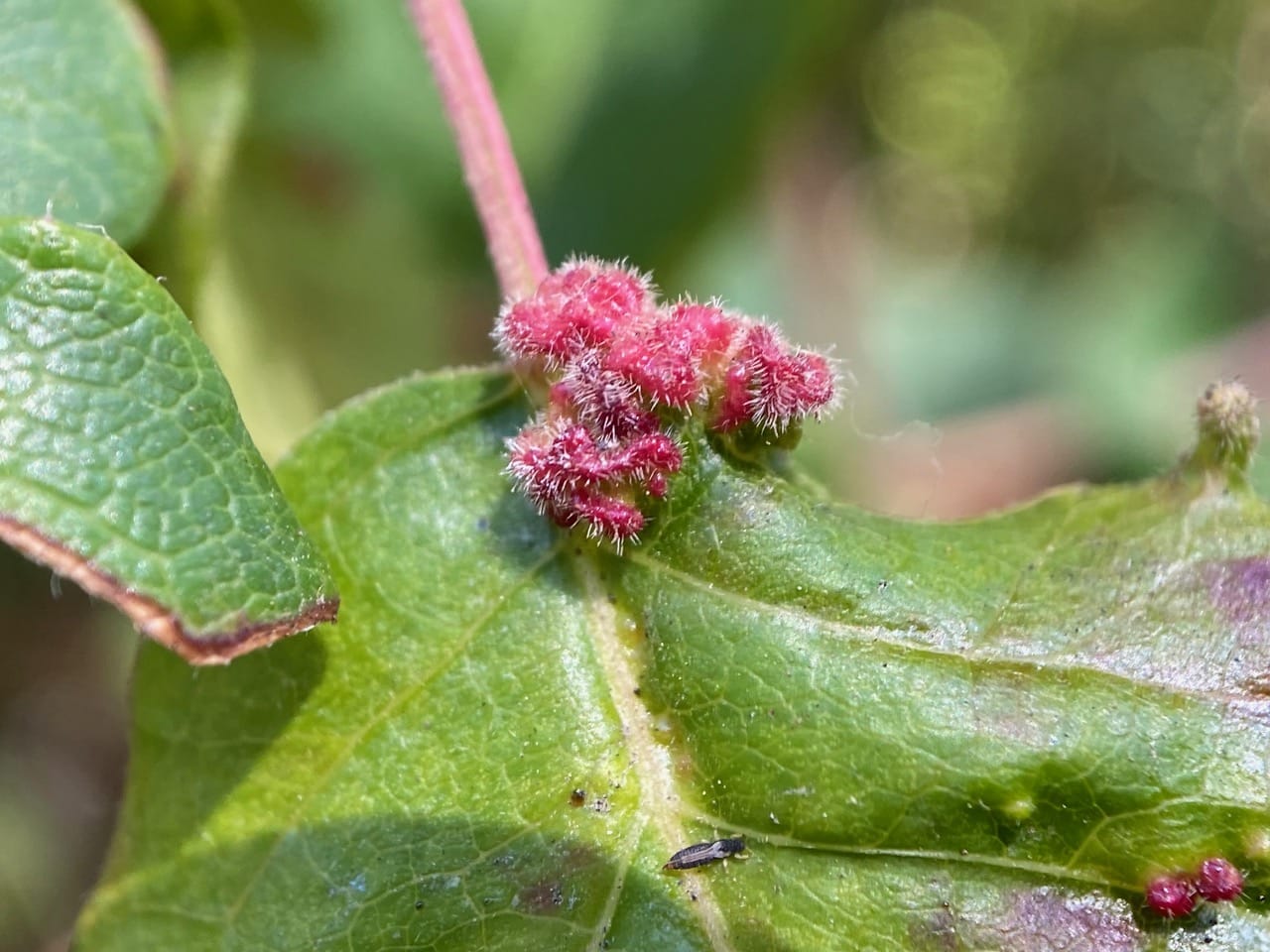
A closer inspection shows that the wrinkled red growths on the Poison Oak leaf are covered with short white hairs. These growths are leaf galls induced by Gall Mites in the family Eriophyidae.
Eriophyid Mites are microscopic mites that often go undetected. Unlike most adult mites that have four pairs of legs, eriophyid mites have only two pairs. They are slow-moving, usually white or yellow in color, and have a distinctive “carrot” shape. They are very host-specific. Most eriophyid mites make their home on the surface of leaves where their feeding can cause bronzing or reddening but some are also responsible for creating galls on leaves or witches’-broom on stems and flower buds. Adult females overwinter in cracks and crevices of twigs and bud scales. Females lay eggs in the spring. The young mites that hatch out resemble the adults. Numerous generations are produced each year. They are primarily spread by wind.

While photographing the galls at high magnification I spot a tiny, elongated insect. A Thrips? iNaturalist has helped to identify the insect as a Greenhouse Thrips, Heliothrips haemorrhoidalis (order Thysanoptera).
Thrips (family Thripidae, order Thysanoptera) are minute (mostly 1 mm long or less), slender insects with fringed wings and unique asymmetrical mouthparts. They feed mostly on plants by puncturing and sucking up the contents, although a few are predators. Some flower-feeding thrips pollinate the flowers they are feeding on, and some scientists believe that they may have been among the first insects to evolve a pollinating relationship with their host plants. A genus is notable for being the specialist pollinator of cycads. Thrips are likewise the primary pollinators of heathers in the family Ericaceae, and play a significant role in the pollination of pointleaf manzanita. Electron microscopy has shown thrips carrying pollen grains adhering to their backs, and their fringed wings are perfectly capable of allowing them to fly from plant to plant. BTW, there’s no such thing as a “thrip”. It’s always “thrips”, singular or plural!
Like other species in the family Thripidae, the Greenhouse Thrips, Heliothrips harmorrhoidalis have the typical flattened bodies with wings that are narrow and pointed, and their ovipositors resemble a saw. It is believed that the species originated in a tropical area and has been introduced to other areas of the world. These thrips typically inhabit and are pests in greenhouses. They are polyphagous, feeding on a wide range of different fruits and ornamental plants. The species is parthenogenetic with males rarely seen. A single female can produce up to seven generations in favorable temperate conditions. The females lay eggs underneath the surface of leaves or on fruits. Their feeding habits do not actually affect the quality of the fruits but rather the cosmetics of the fruit which in turn affects its commercial value.

Many of the leaves of Western Poison Oak are turning red with the advancing season, making it harder to see the red eriophyid galls on them.