

Pollinator Post 9/28/23

A crisp, cool morning at Skyline Gardens.
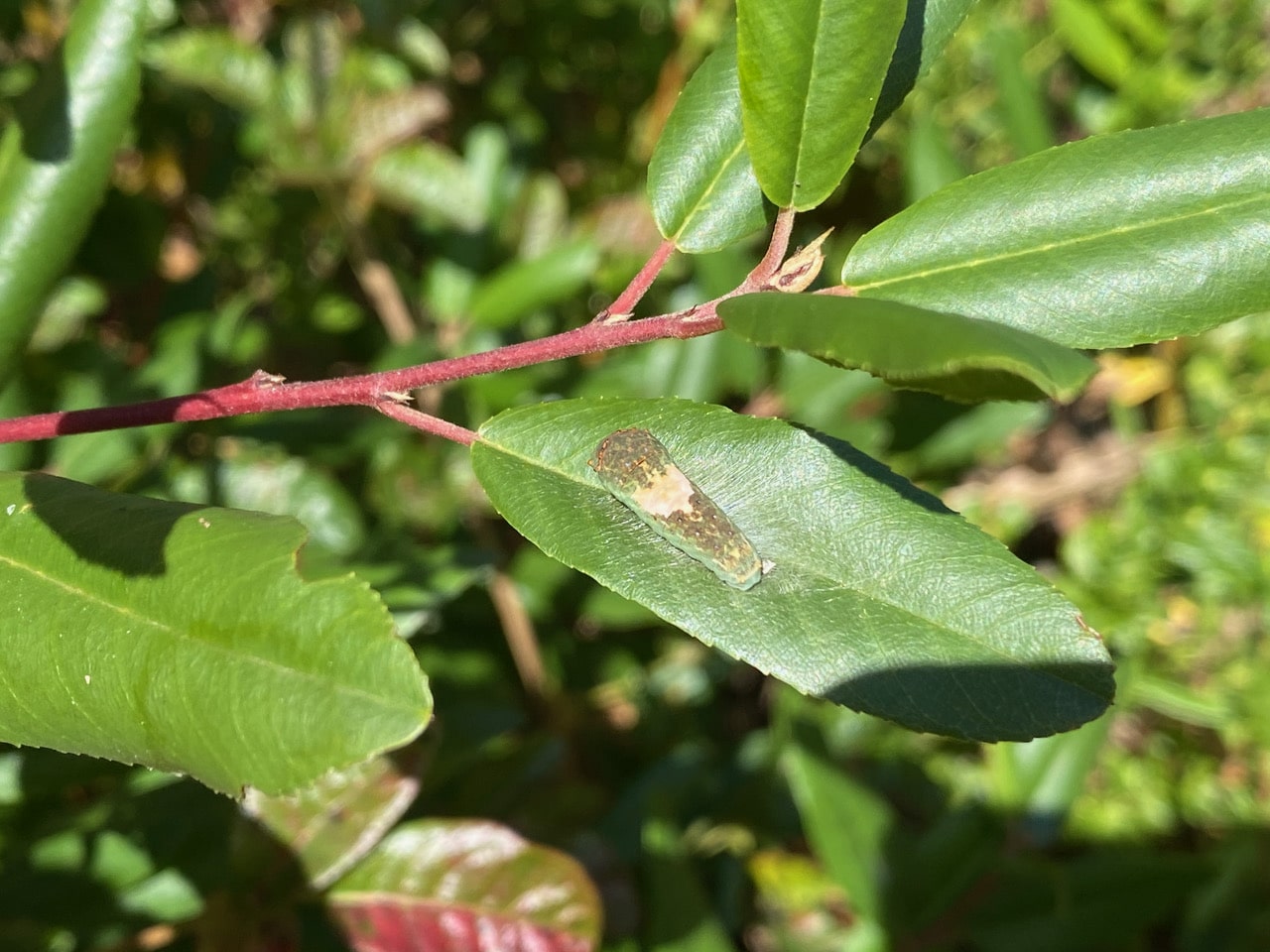
Our little Pale Swallowtail caterpillar B2 no longer resembles bird poop today. Its brown body has acquired a faint blue cast.
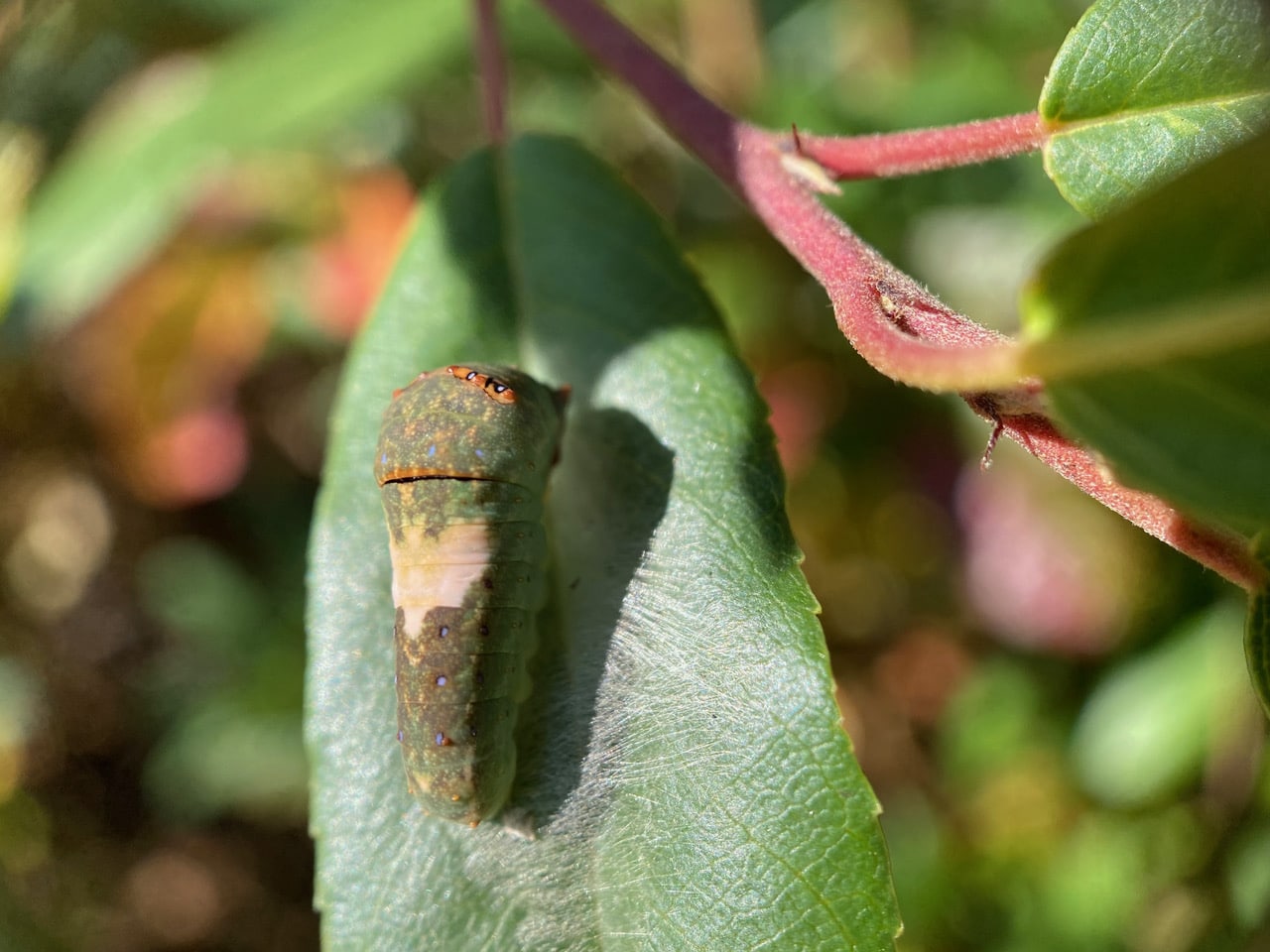
False eye-spots are beginning to show up on B2’s bulging thorax. According to Alan, the butterfly expert I have been consulting, B2 looks like it has recently molted to the fourth instar. It will become completely green over the next couple of days.

Near the ground right below B2’s home leaf, a Humped Trashline Orbweaver, Cyclosa turbinata (family Araneidae) has constructed a conspicuous orb web. She has decorated the top half of the web with a vertical row of oval lumps, but have left the lower half relatively bare of ornaments. The little spider is resting under the last lump, just above the hub of the web. This is a rather unusual arrangement. Most Trashline Orbweavers divide the ornaments more or less equally above and below the hub. Judging by the smoothness and uniformity of the lumps, these are probably the spider’s egg cases. I count ten of them – Wow, she has been a busy mama!
Cyclosa turbinata is native to the continental United States. It is a small species, about 4-7 mm in length. Their color is a mix of browns, blacks, and whites, and their abdomen tapers to a rounded point. C. turbinate is distinguished from the others in the genus by the presence of two anterior dorsal humps.
Trashline spiders are so-called for their web decoration. Cyclosa create orb-shaped webs using both the sticky and non-sticky threads, mostly during times of complete darkness. Across its spiral wheel-shaped web, Cyclosa fashions a vertical “trashline” made of various components such as prey’s carcasses, detritus, and at times, egg cases. The trashline helps the spider to camouflage exceptionally well from predators. The spider sits in the web hub to conduct its sit-and-wait hunting, ensnaring prey at nearly any time of day; it only leaves its spot to replace the web prior to sunrise.

Close-up of the spider. She has folded up her front legs to conceal her cephalothorax. Amazingly, she has fashioned the camouflaged egg cases to match her own size and shape.

The egg cases are connected by a webbing of fine silk.
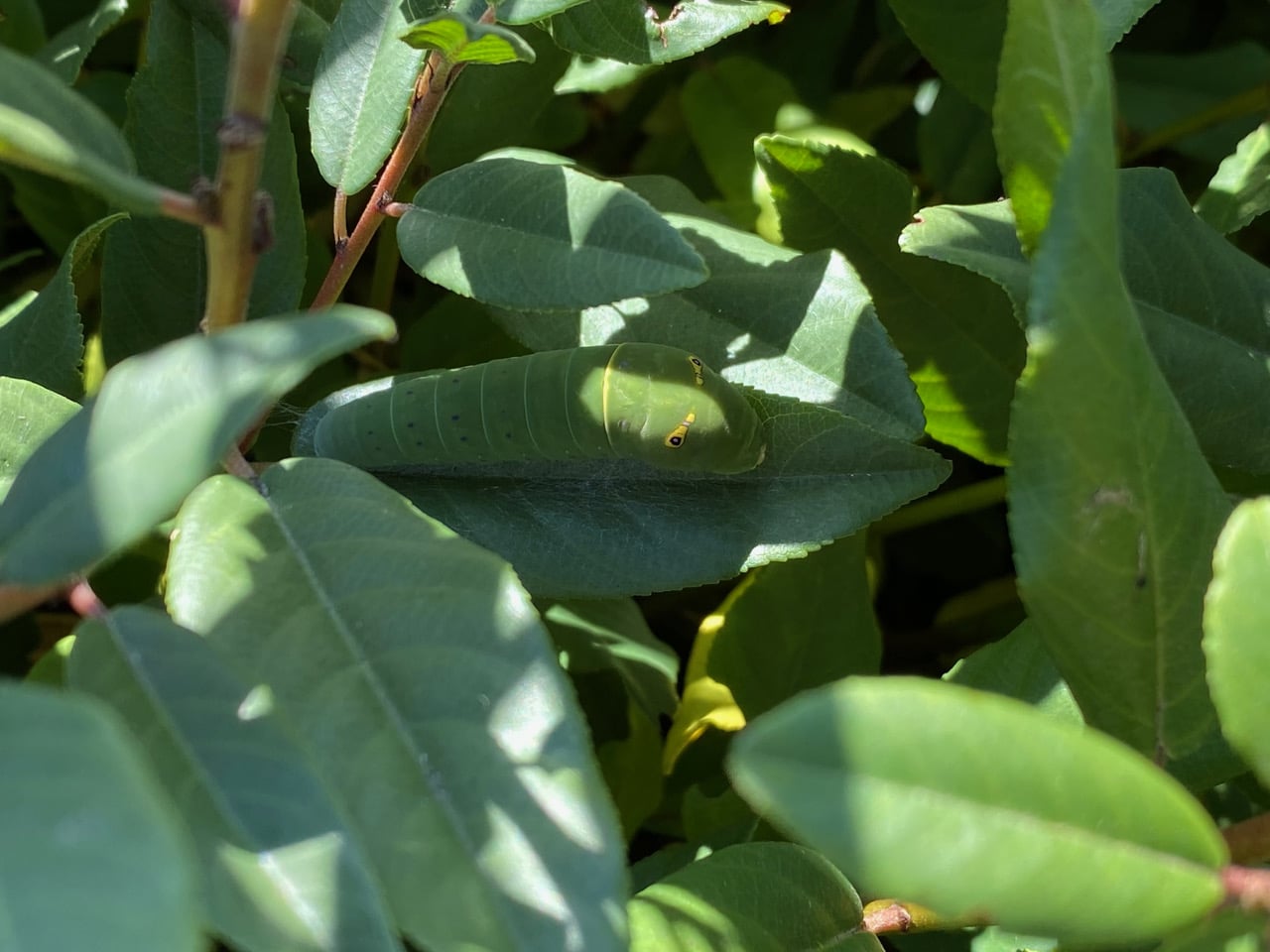
Today I have an easier time finding Blue-2, our other, more mature Pale Swallowtail caterpillar on a larger coffeeberry shrub. It is by dint of their fidelity to their home leaves that I am able to locate these well-camouflaged caterpillars, and to track their development in the wild.
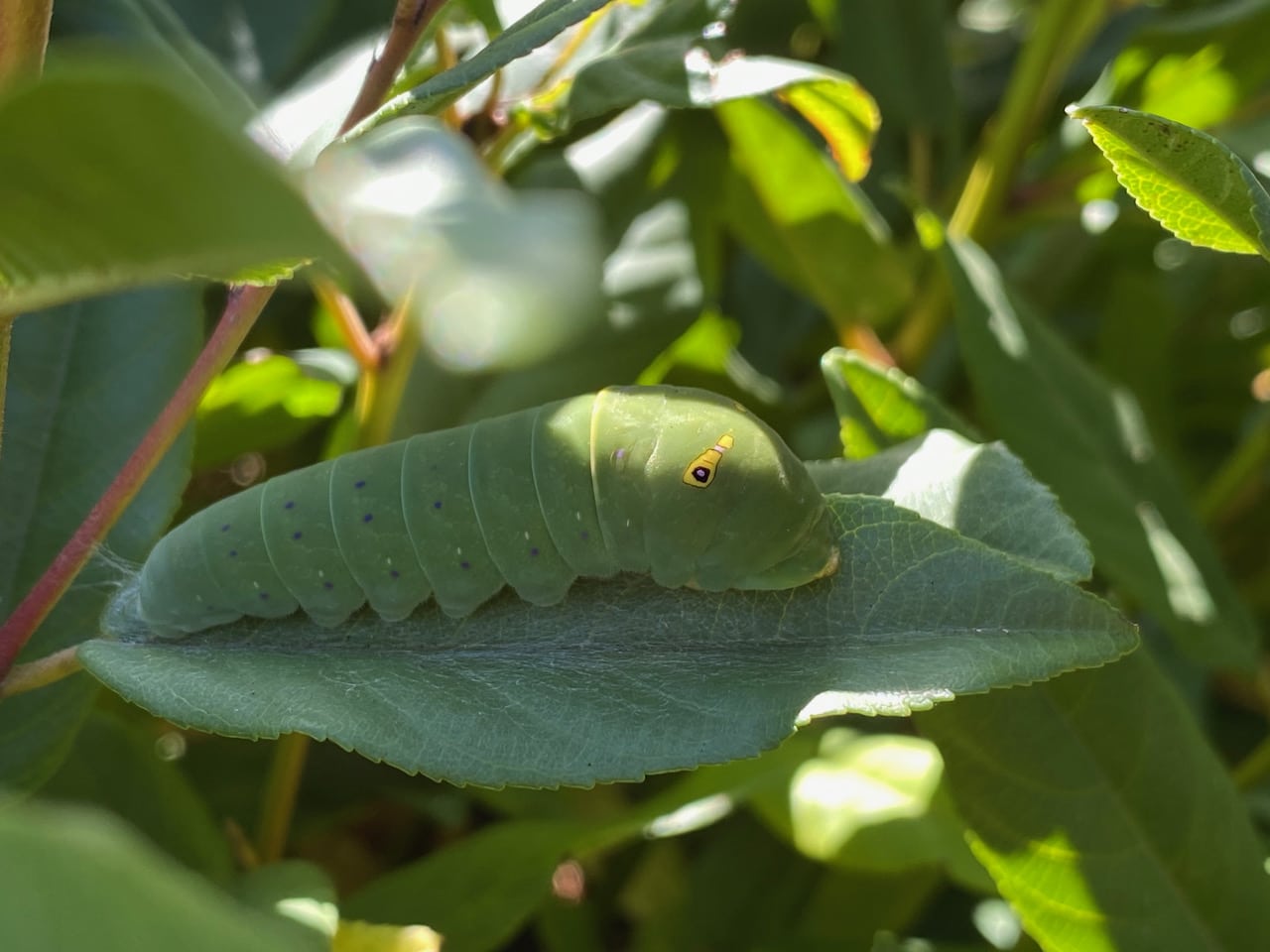
Alan thinks Blue-2 is a filth (last) instar, and a very large and full grown one at that. It will probably be a prepupa soon. My instinct tells me that Blue-2 will turn brown (as Pale Swallowtail prepupae do before pupation) this afternoon, and leave its home leaf in the night to find a place to pupate. Blue-2 will remain in its chrysalis through the winter, and emerge as a butterfly in the spring. I whisper goodbye to Blue-2 and wish it best of luck in all its transformations.