

Pollinator Post 9/26/23 (2)

Although the Elegant Tarweed, Madia elegans is still in bloom, few insects are visiting them. The only bees I see these days are the Honey Bees, Apis mellifera (family Apidae). And most of them are dark, almost black. I have been slogging through beekeeping literature, trying to figure out why these dark bees are usually seen late in the season. Most of the information out there are downright confusing, even ridiculous. But I recently learned a few things that might help answer the question….
First of all, how do Honey Bees survive the winter anyway, especially in regions where winters can be harsh?
Unlike other insects, Honey Bees do not go dormant in the winter. Instead, they stay awake all winter inside the hive, clustered together in a ball, eating stored honey, and shivering their flight muscles to generate heat. This is the job of the ‘winter bees’ – a special caste of bees, born in late fall, and responsible for keeping the colony alive until spring. The winter bees are physiologically distinct from their summer sisters and have a longer lifespan. The winter bees have an extra large ‘fat body’ – a special insect tissue located in the abdomen that regulates their metabolism and produces vitellogenin, an amazing substance that enhances the bees’ immune system and increases their lifespan – 6 months instead of 6 weeks of their summertime sisters.
I read, however, that the winter bees and summer bees look exactly the same on the outside. Only a dissection will show the difference inside. So, I guess winter bees are not any darker?

The other possible explanation lies in genetics.
Most beekeepers know that there’s color variations in Honey Bees. A queen honey bee only mates over a few days early in her life. During these mating flights, she mates with 12-20 drones or males. These drone fathers come from many different colonies within the flight region. The queen bee has a spermatheca to store sperm and an enormous warehouse of eggs. Naturally, this results in a colony of worker bees that may be different colors. All colony members have the same mother but there are many different fathers that contributed to the genetic pool. Italian honey bees tend to be lighter in color with brighter yellow markings. The darker Carniolans are characterized by being winter hardy, quick spring build up and superior disease resistance. Russian honey bees also tend to be darker. If you see many darker bees, they are likely related to Russians or Carniolans.
Honey Bees do not change color during their lifetime. The color changes in the hive members are due to workers being born with different fathers. Are the Carniolan and Russian genes being expressed preferentially in the fall to enhance winter survival? Does this mean that the queen bee can exert control over which sperm she uses to fertilize her eggs? Anyway, genetic diversity is a good thing, conferring strength, flexibility and resilience to the colony.
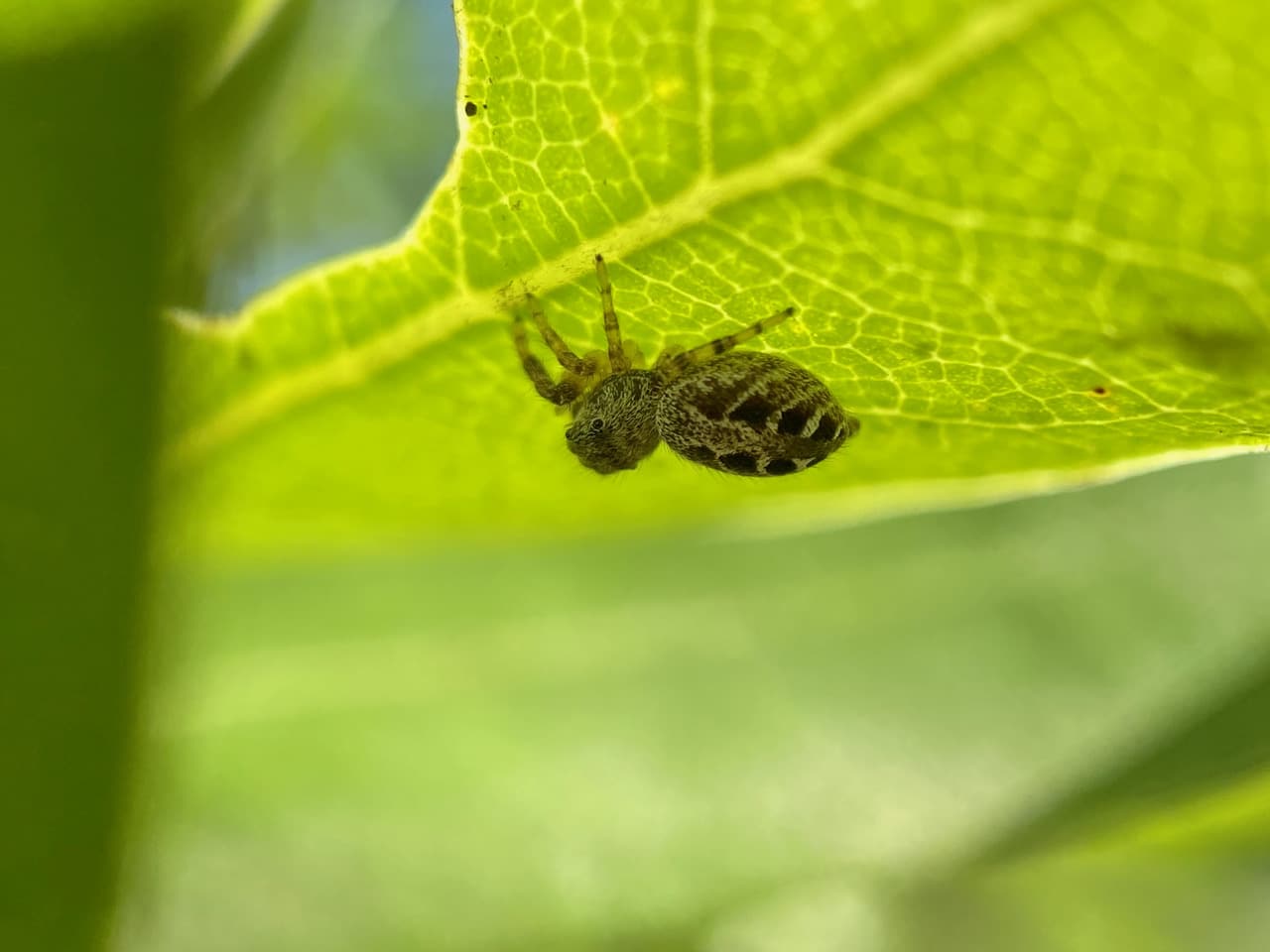
A little spider is moving on the underside of a California Bay leaf backlit by the sun. It is a female White-cheeked Jumping Spider, Pelegrina sp. (family Salticidae).
Salticids are free-roaming hunting spiders. They do not weave a web to catch prey. They stalk, then pounce on their prey. Just before jumping, the spider fastens a safety line to the substrate. It can leap 10-20 times their body length to capture prey. Their movement is achieved by rapid changes in hydraulic pressure of the blood. Muscular contractions force fluids into the hind legs, which cause them to extend extremely quickly.
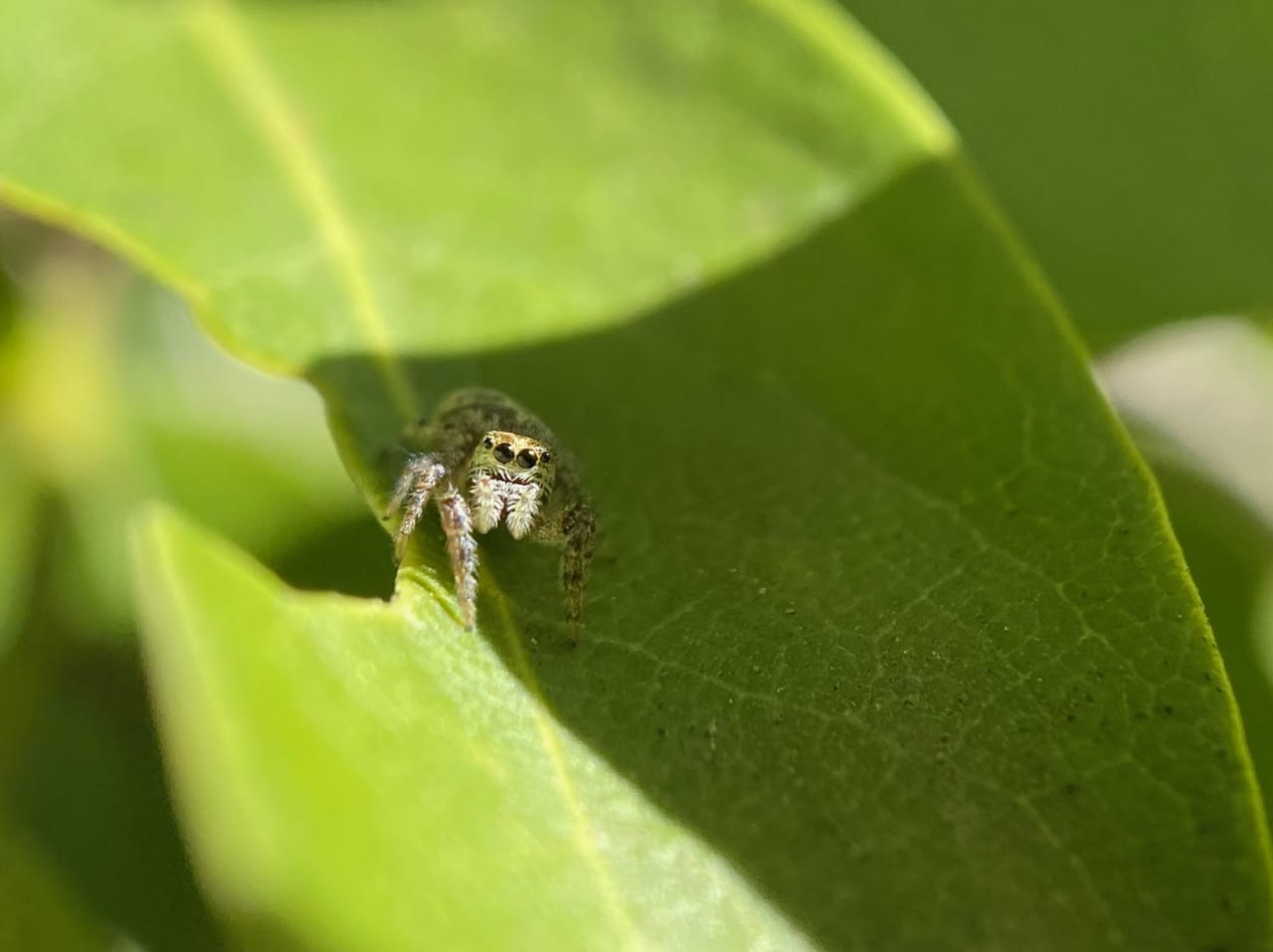
I get a good look of her when she moves to the upper surface. Check out those amazing eyes!
Jumping spiders have excellent vision, with among the highest acuities in invertebrates. The 8 eyes are grouped four on the face (the two big Anterior Median Eyes in the middle, and two smaller Anterior Lateral eyes to the side), and four on top of the carapace. The anterior median eyes provide high acuity but small field of view, while the other six eyes act like our peripheral vision, with lower resolution but broad field of view. Since all eight eyes are fixed in place and can’t pivot independently from the body like human eyes can, jumping spiders must turn to face whatever they want to see well. This includes moving their cephalothorax up and down, an endearing behavior.

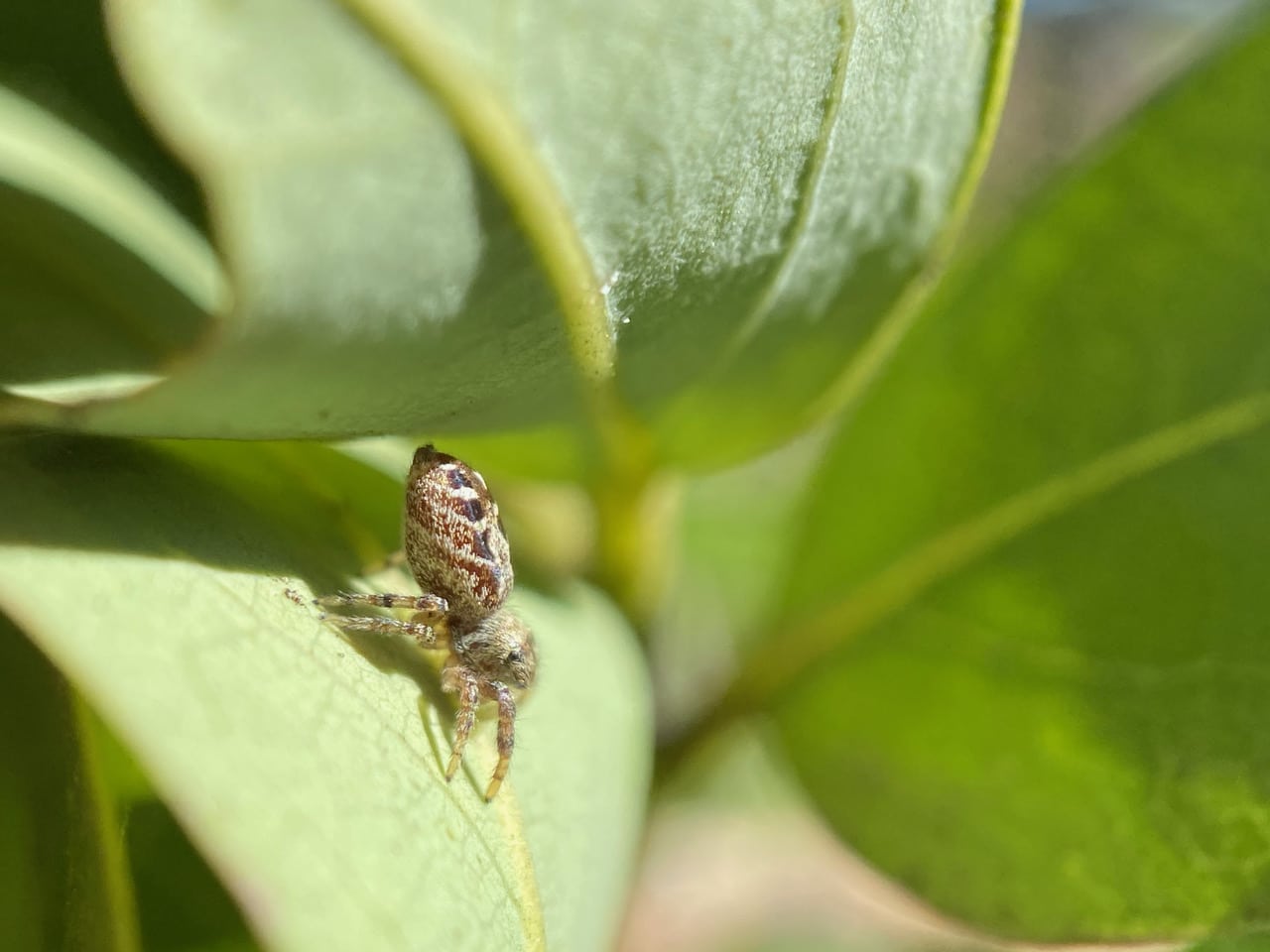
The spider’s abdomen is huge. It must be a gravid female.
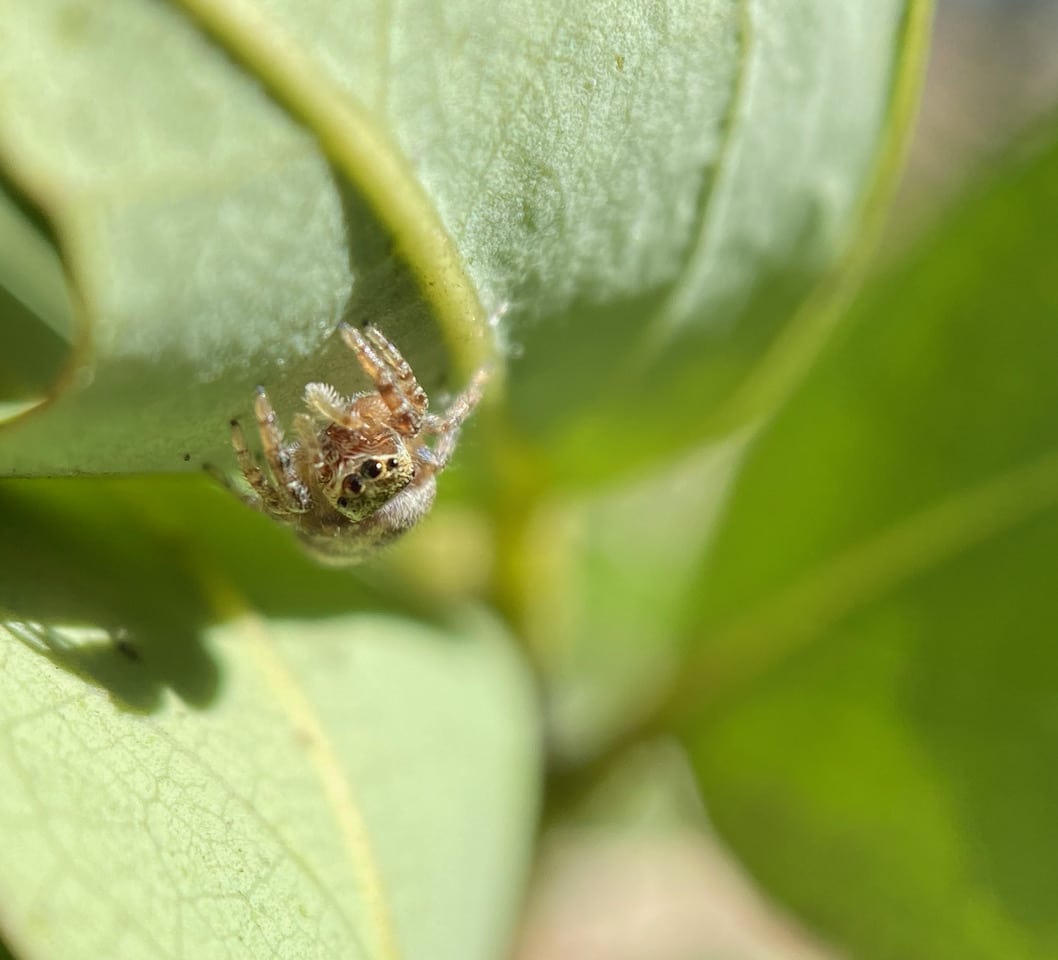

The spider climbs onto an adjacent leaf and disappears behind a narrow space between two leaves. Closing in I see that she has woven some silk to bind the leaves together. Is she preparing to lay her eggs in that sheltered spot? Fall is busy season for spider reproduction.
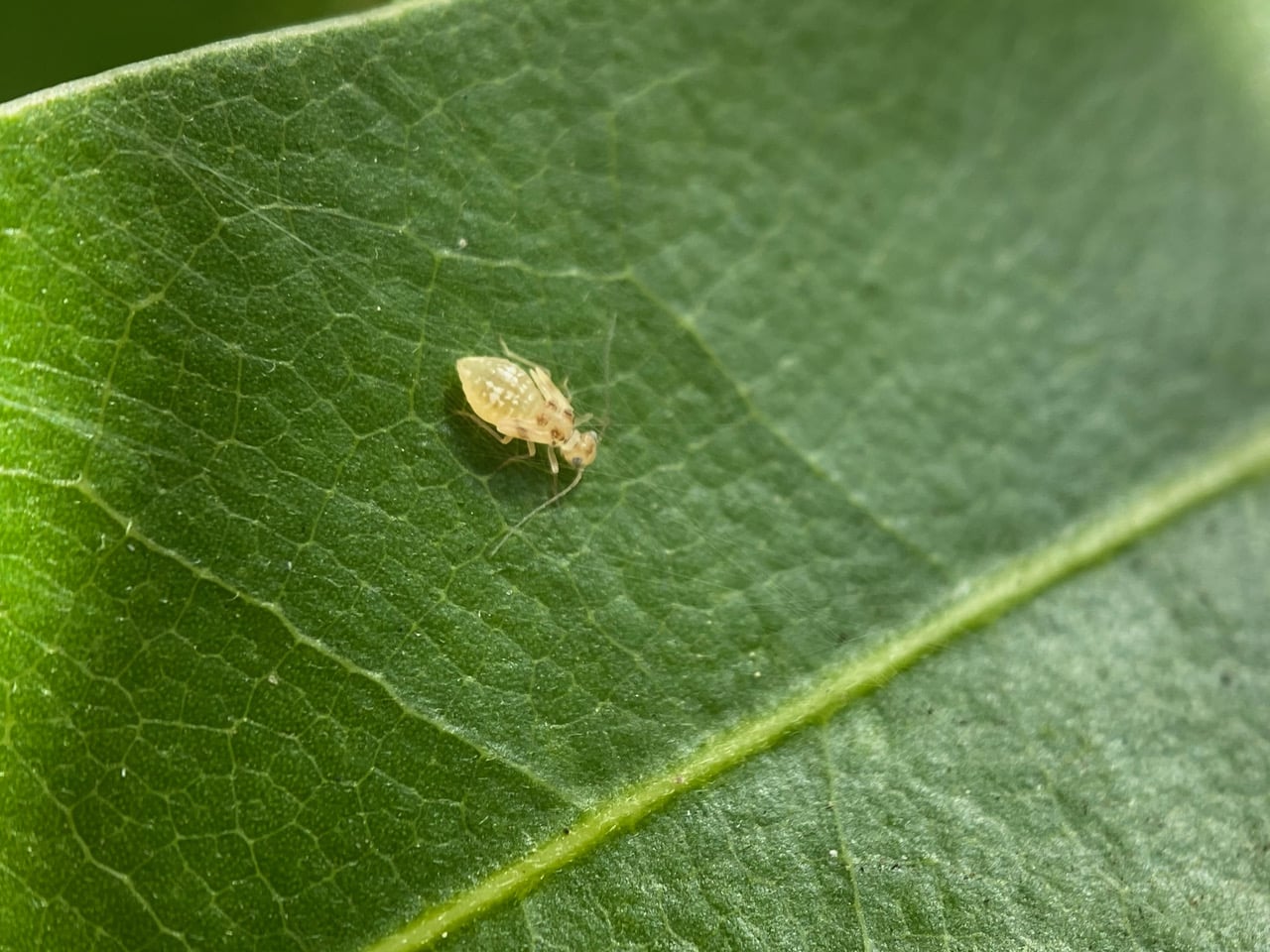
A Barklouse nymph is resting motionless on a California Bay leaf. This picture is actually taken through a very thin film of silk that is hardly visible.
Barklice belong to an ancient lineage of insects in the order Psocodea (formerly Psocoptera). The scientific name comes from the Greek psocus (to grind) referring to the psocodean jaws, which are shaped to grind food, rather like a pestle and mortar. These insects are conveniently discussed in two groups – barklice that live outdoors, and booklice that are found in human habitations.
Barklice are usually found in moist places, such as leaf litter, under stones, on vegetation or under tree bark. They have long antennae, broad heads and bulging eyes. They feed on algae, lichens, fungi and various plant matter, such as pollen. Barklice are usually less than 6 mm, and the adults are often winged. The wings are held roof-like over their bodies. Some species are gregarious, living in small colonies beneath a gossamer blanket spun with silk from labial glands in their mouth. Sometimes the colonies seem to move in coordinated fashion, rather like sheep.
Booklice are wingless and are much smaller (less than 2 mm). They are commonly found in human dwellings, feeding on stored grain, book bindings, wallpaper paste and other starchy products, and on the minute traces of mold found in old books.
Psocodea undergo incomplete metamorphosis. They are regarded as the most primitive amongst the hemipteroids (true bugs, the thrips and lice) because their mouthpart show the least modification from those of the earliest known fossils.

Here’s a Barklouse nymph on another leaf. The silk threads covering the leaf is visible due to the angle of incident light.
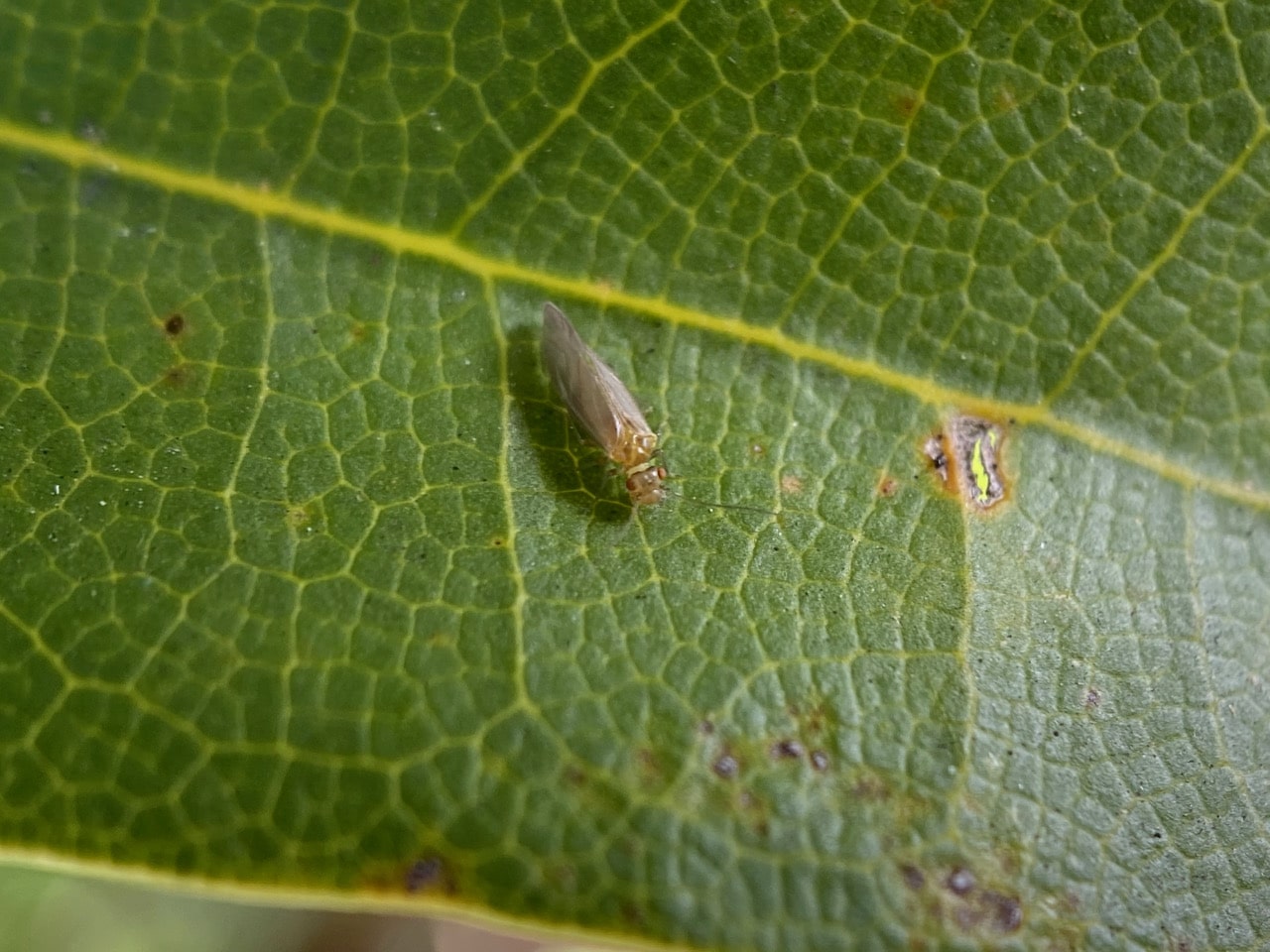
A Lizard Barklouse, Valenzuela sp. (family Caeciliusidae, order Psocodea) is lurking on a California Bay leaf.
I have asked a Psocodea expert why these insects are called “Lizard” Barklice. Graham replied that he didn’t know and couldn’t find a readily available answer. On average, the Lizard Barklice are a bit more elongate than other barklice. They spend most of their time on green vegetation, and scurry around rather than flying.

I first spot this male Western Tree Cricket, Oecanthus californicus (family Gryllidae) from the tip of his wings glinting in the sun behind a dried inflorescence of Naked Buckwheat, Eriogonum nudum.
Tree Crickets are so called because many species hang out in trees. They are in the order Orthoptera (crickets, katydids, grasshoppers, etc.) and in the “true cricket” family Gryllidae. The Common Tree Crickets are in the genus Oecanthus (the “O” is silent and the “E” is long). Tree Crickets inhabit trees, shrubs and tall weeds, feeding on plant parts, some insects (e.g., aphids, scales) and other materials (e.g., fungi, pollen).
More often heard than seen, tree crickets are active at dusk and at night. In late summer, males produce a high-pitched whine or “song”, a prelude to courtship and mating.
Tree Crickets have two sets of wings; a female’s forewings hug her body, and males’ forewings are flat and wide. Males produce sound by rubbing together rough areas (called the “rasp” and “file”) at the base of the forewings, a method of sound production called stridulation. During sound production, the males hold their wings straight up at right angle to the body. Each species of tree cricket has its signature calls, and the tempo of the call is affected by the temperature of the ambient air. Females do not call, but they do listen with auditory organs located on the forelegs. Females prefer males who sing bass (a lower call indicates a larger caller).
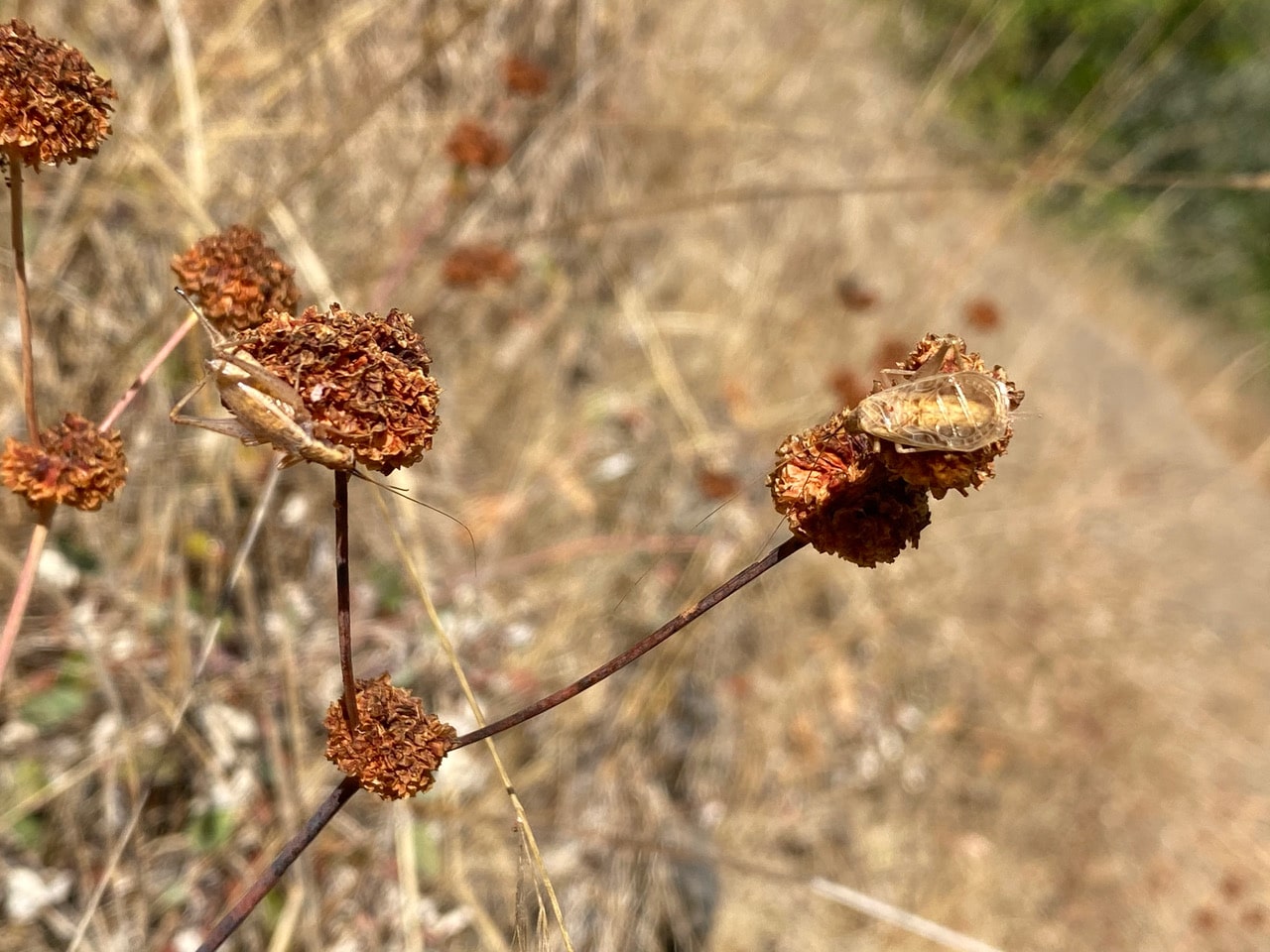
When I try to photograph him from the front, I realize that he is not alone. There’s a female on an adjacent inflorescence only inches away. Both are silent and motionless. Are they asleep? Dead? They are close enough to be touching antennae. I find the juxtaposition of the pair achingly sweet and somehow tragic. So close and yet so far. Did he serenade her last night? Did they mate?

Meet Romeo.

And here’s Juliet.
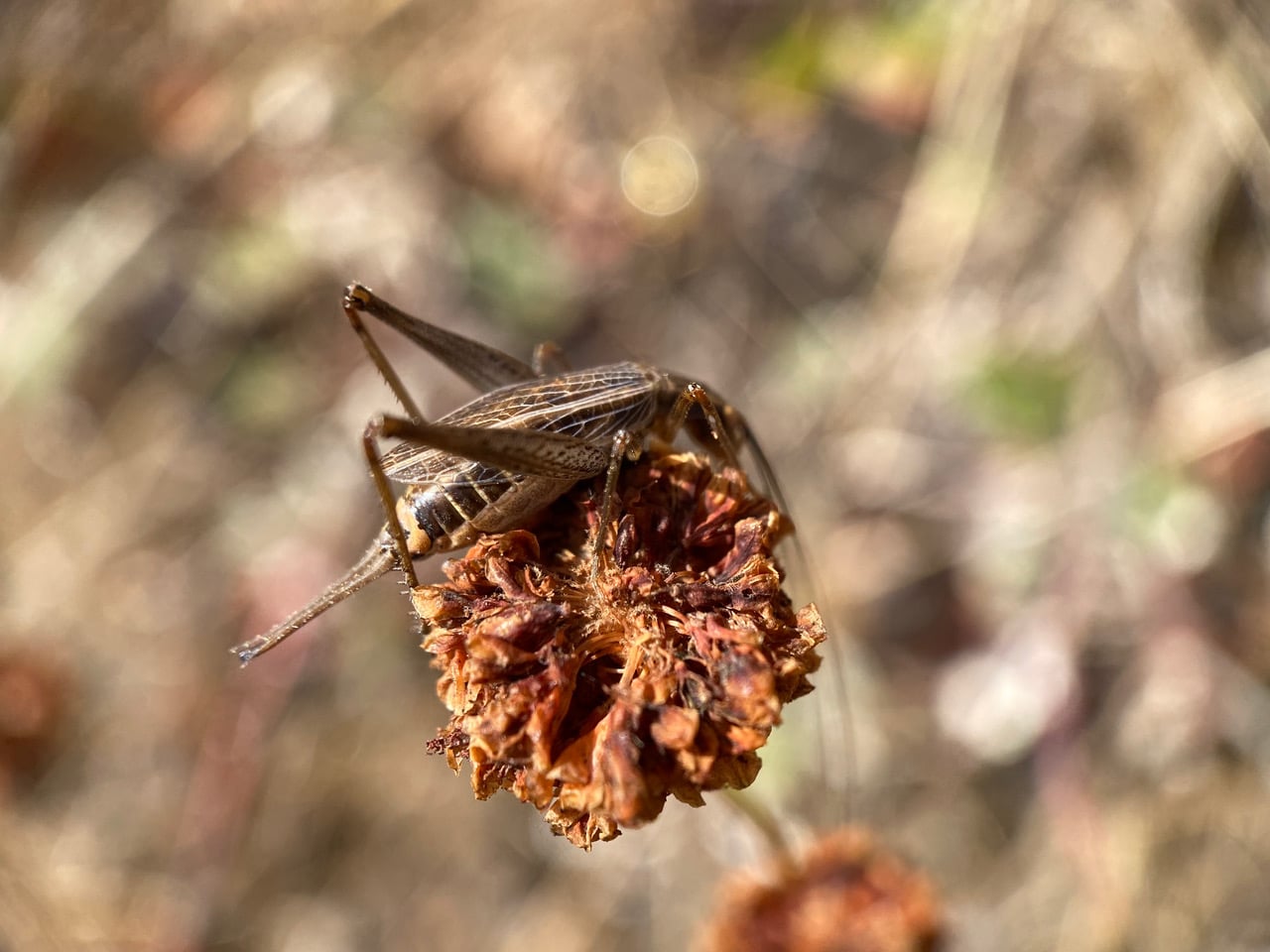
Just a couple of feet away, I find another, much darker female Tree Cricket, perched motionless on a dried inflorescence of Naked Buckwheat. iNaturalist has identified it as a Western Tree Cricket, just like the other two. Obviously, there’s quite a bit of color variation within the species. I also recall recently seeing these dark tree crickets not far from this spot, hidden in the foliage of morning glory and California Mugwort.