

Pollinator Post 9/26/23 (1)

The air has been scrubbed clean by the light rain early this morning. It’s exhilarating to see the garden refreshed after the long, parched summer.
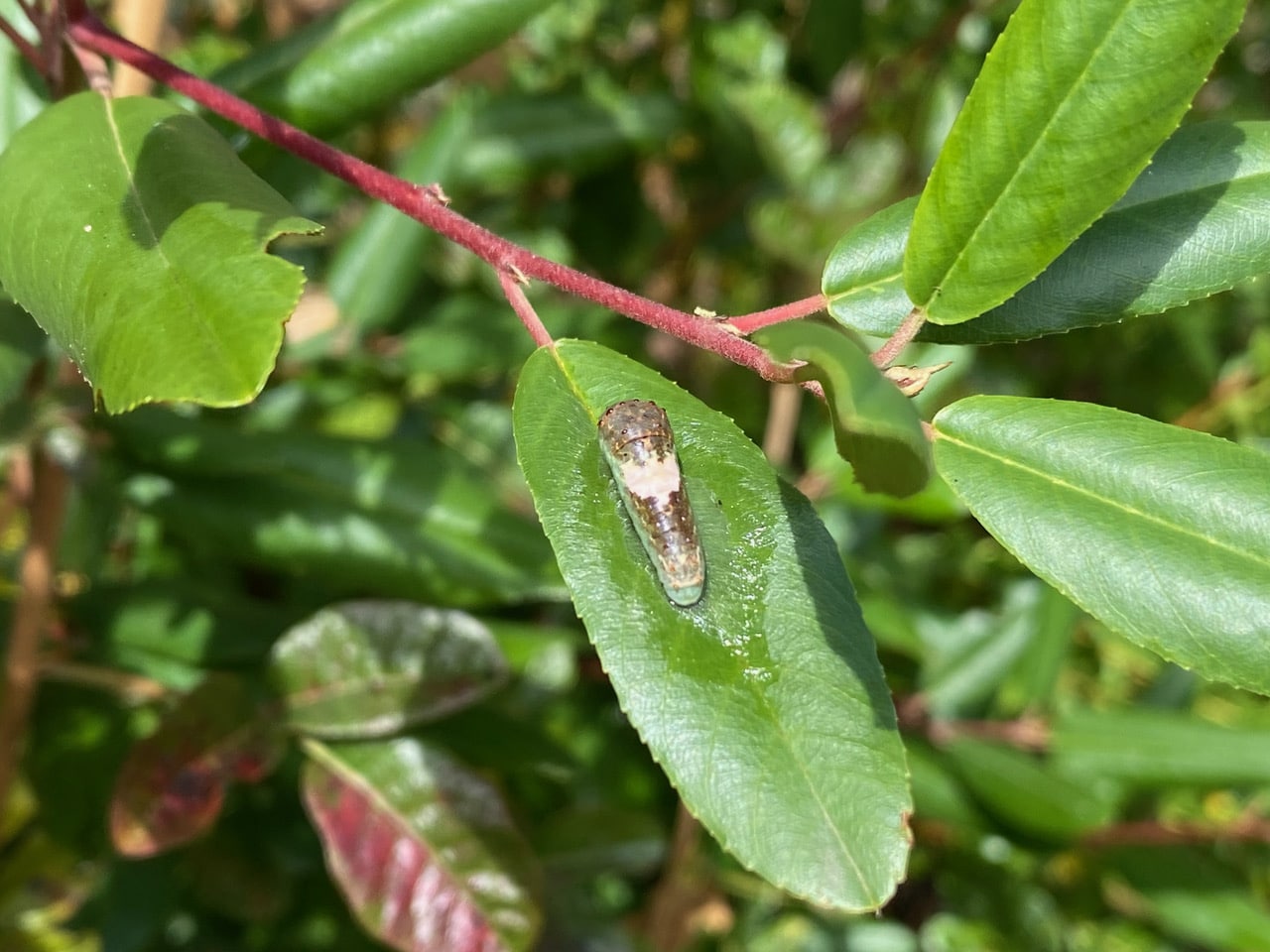



Arriving at the Coffeeberry shrub, Frangula californica, it’s a delight to find our Pale Swallowtail caterpillar B2 still on its home leaf, clinging onto its soaked silk pad. These caterpillars are tenacious creatures!
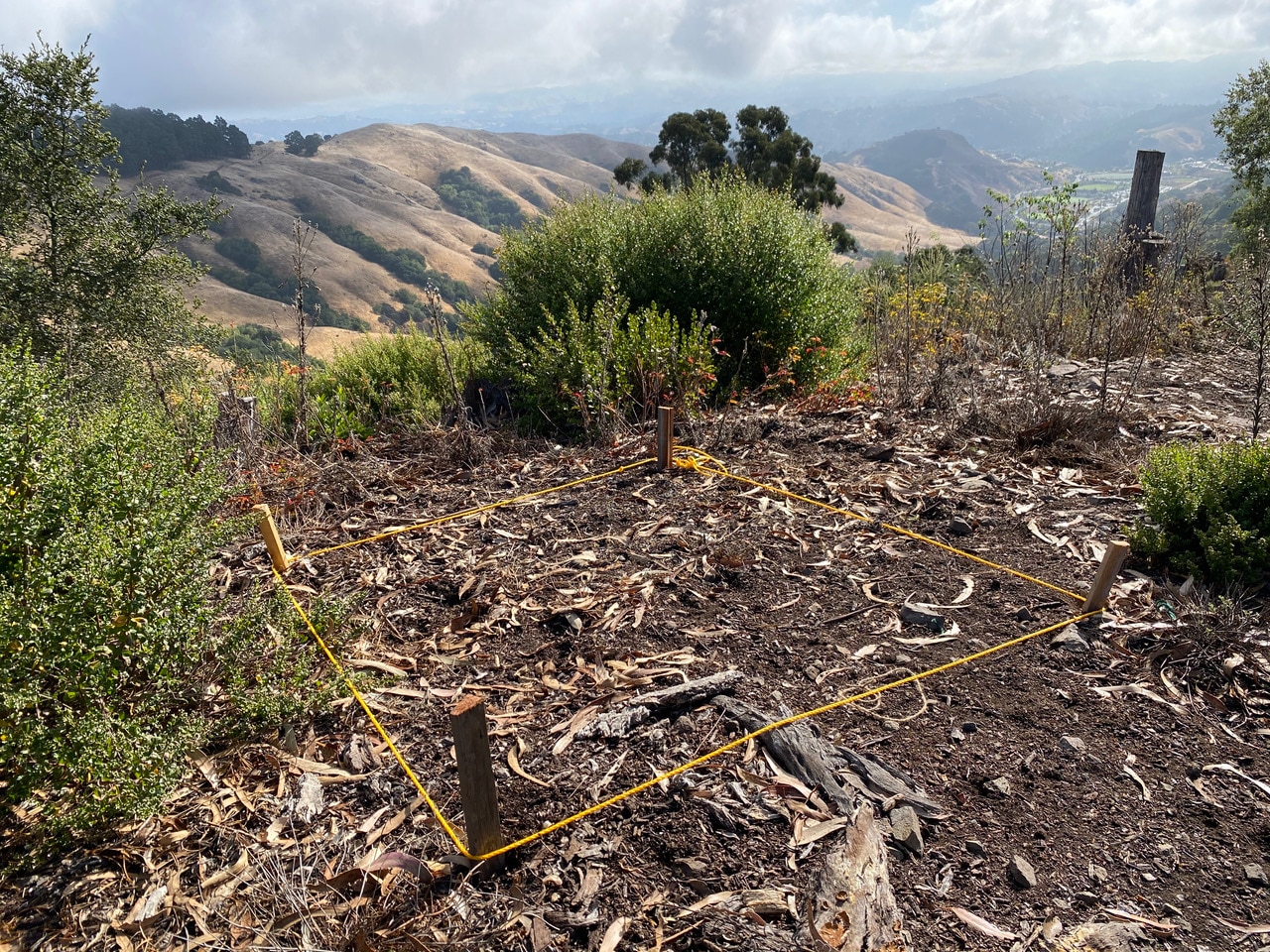
Along the paved road to the Water Tank, I find a dozen of these meter-square areas enclosed by yellow ropes.
On both sides of the road. I have been informed by Glen that this is a new project by the Skyline volunteers. These roped-off patches been recently seeded with a mix of native annuals from the area. The volunteers are seeding now in preparation for the “real” first rains (an inch or more) which typically comes around October 20. The seeds are sown now so that they would get a month of baking – warm days, cool nights – which will wake them up and get them ready to sprout.
I can’t wait for spring!
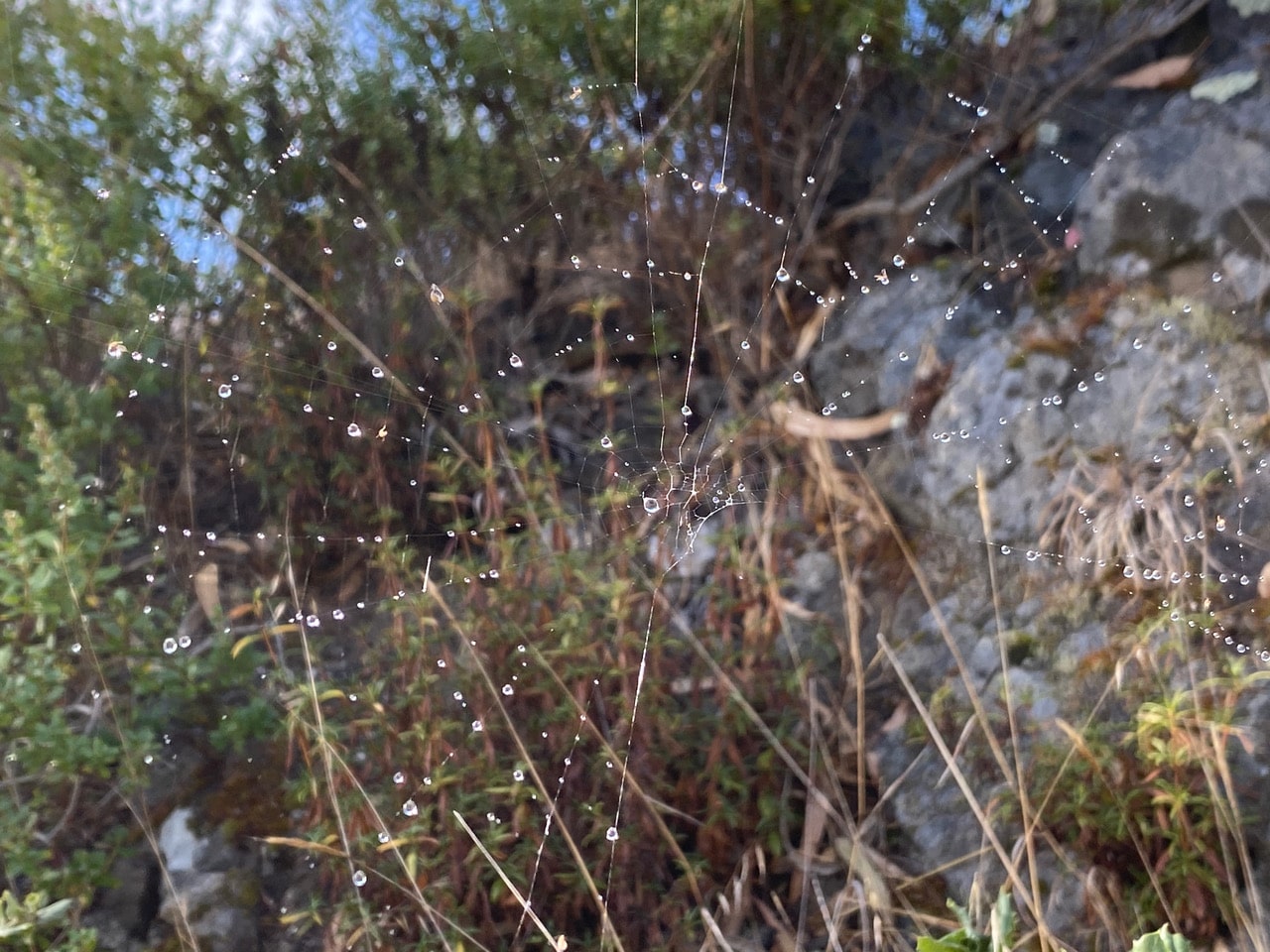
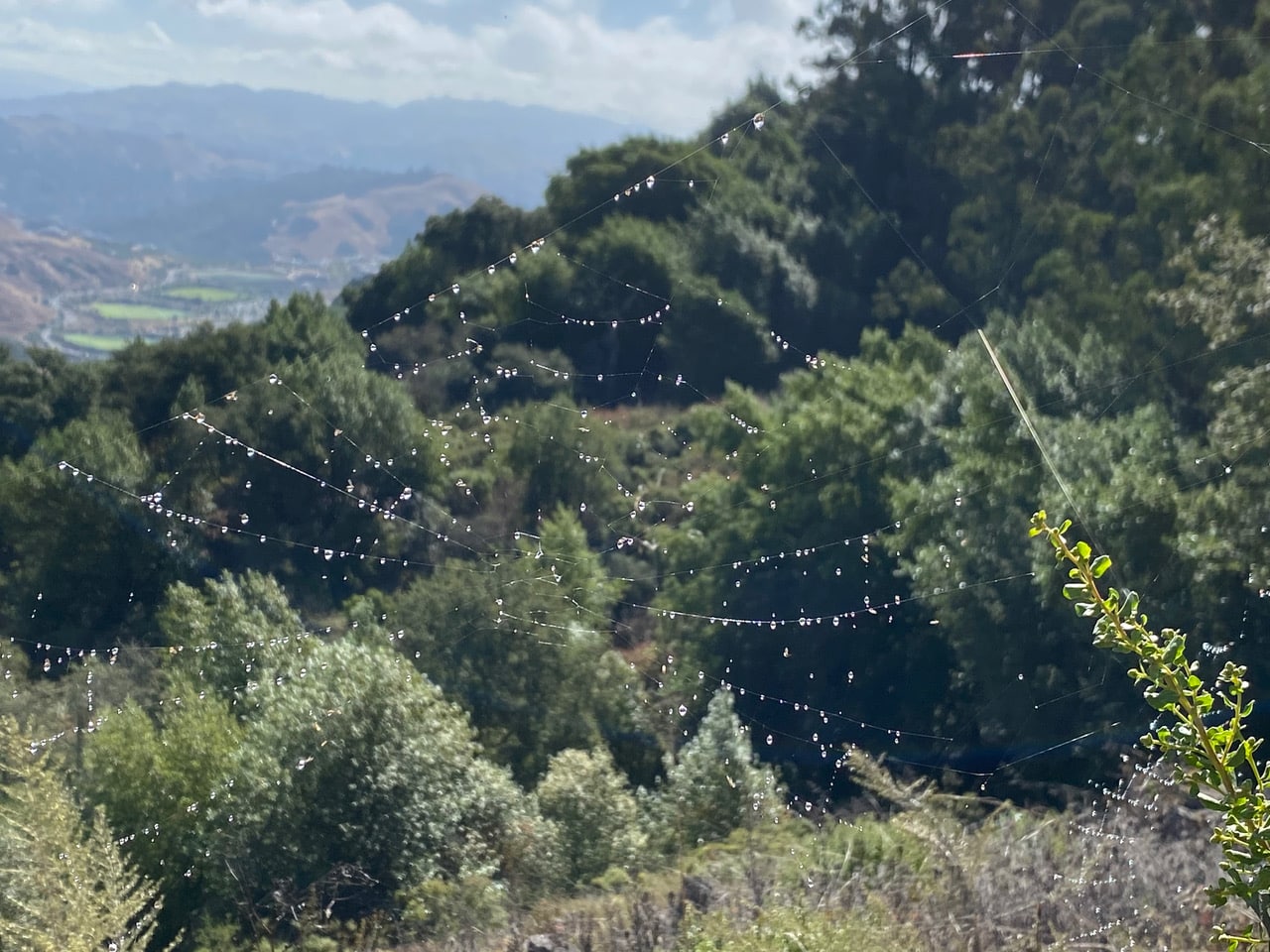
I spot a hint of an orb web next to a small oak tree, highlighted by the raindrops on the silk. The spider is not in the web, and the web is not completed. I see the auxiliary spiral, but not the more closely spaced sticky capture spiral. Maybe the light rain this morning has interrupted the spider’s construction work. Will she complete the web when the raindrops have evaporated?
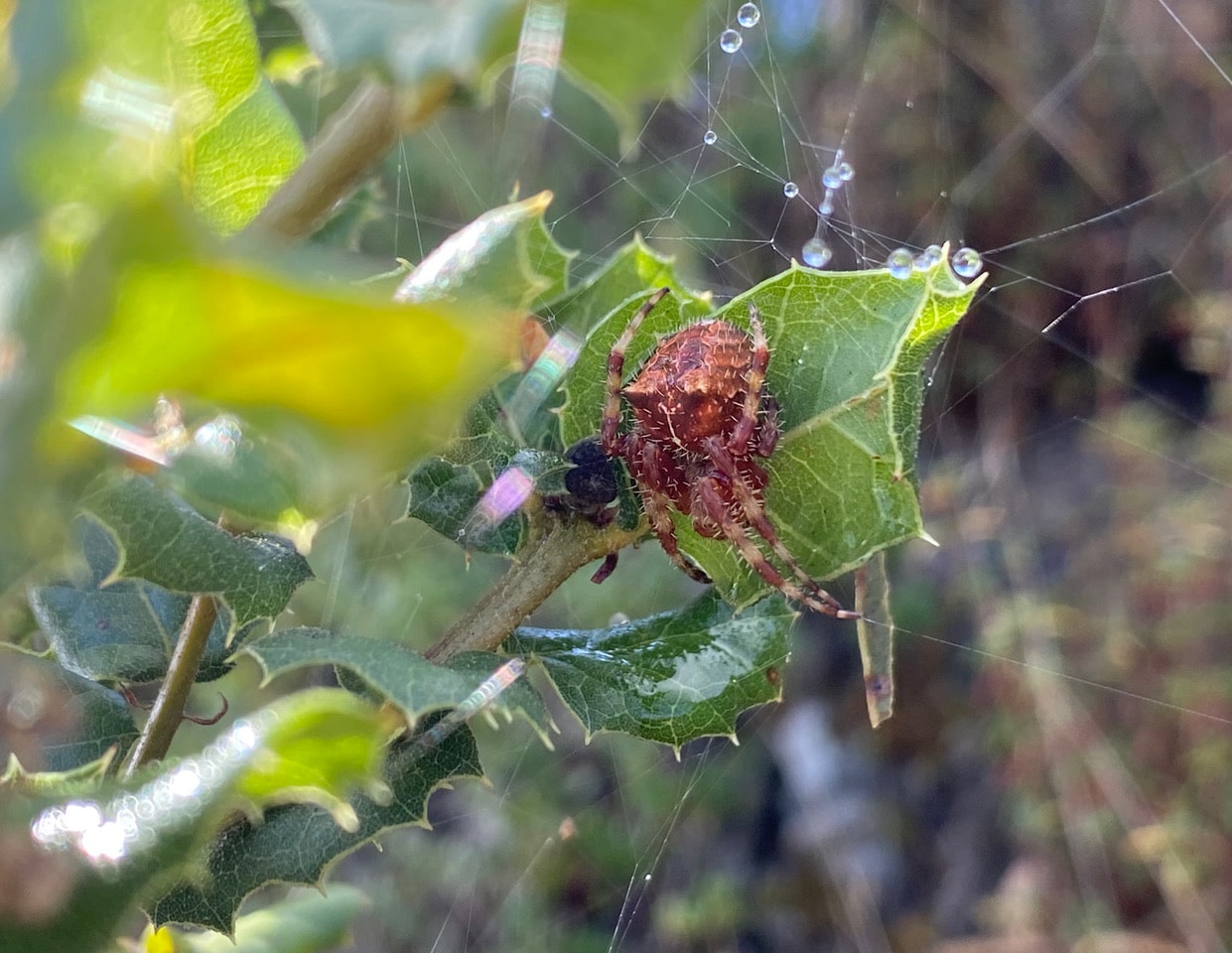
The owner of the orb web is easily located because of her conspicuous color. She is resting head down on the back of an oak leaf, holding onto the signal line connected to the hub of her orb web. She looks very much like the Two-tubercled Orbweaver that we have been observing along Skyline Trail, but she is larger and the two pointy protuberances on her abdomen are much smaller. iNaturalist has identify her as a Gem-shaped Orbweaver, Araneus gemma (family Araneidae).
Araneus gemma, commonly known as Gem-shaped Spider of Cat-faced Spider is a common outdoor orb-weaver spider found in the western North America. The species occurs in varying colors, but is easily identified by the two horn-shaped growths on its relatively large abdomen. Females have a larger abdomen and head. Males have much smaller abdomens and longer bodies. Orb-weaver spiders are well known for sexual cannibalism. Females often kill and consume the males just before, during, or just after mating. The females die within days of laying a single egg sac with hundreds of eggs. Egg sacs can survive over winter, and the emerging spiderlings eat their siblings. The babies ride strands of silk in warm air currents to locations miles away.
The legs of orb-weaver spiders are specialized for spinning orb webs. The webs are built by larger females, which hang head down in the center of the web or remain hidden in nearby foliage, with one claw hooked to a signal line connected to the main orb, waiting for a disturbance to signal the arrival of prey. Prey is then quickly wrapped in silk and bitten, and the prey may hang on the web to be stored for later consumption. The initial bite serves to paralyzed the prey and to prevent injury to the spider from struggling prey. The injected enzymes serve to begin liquefaction of the prey’s internal structures.
Spotting a Coffeeberry shrub, Frangula californica growing on the edge of a steep east-facing slope, I step off the road to check it out.
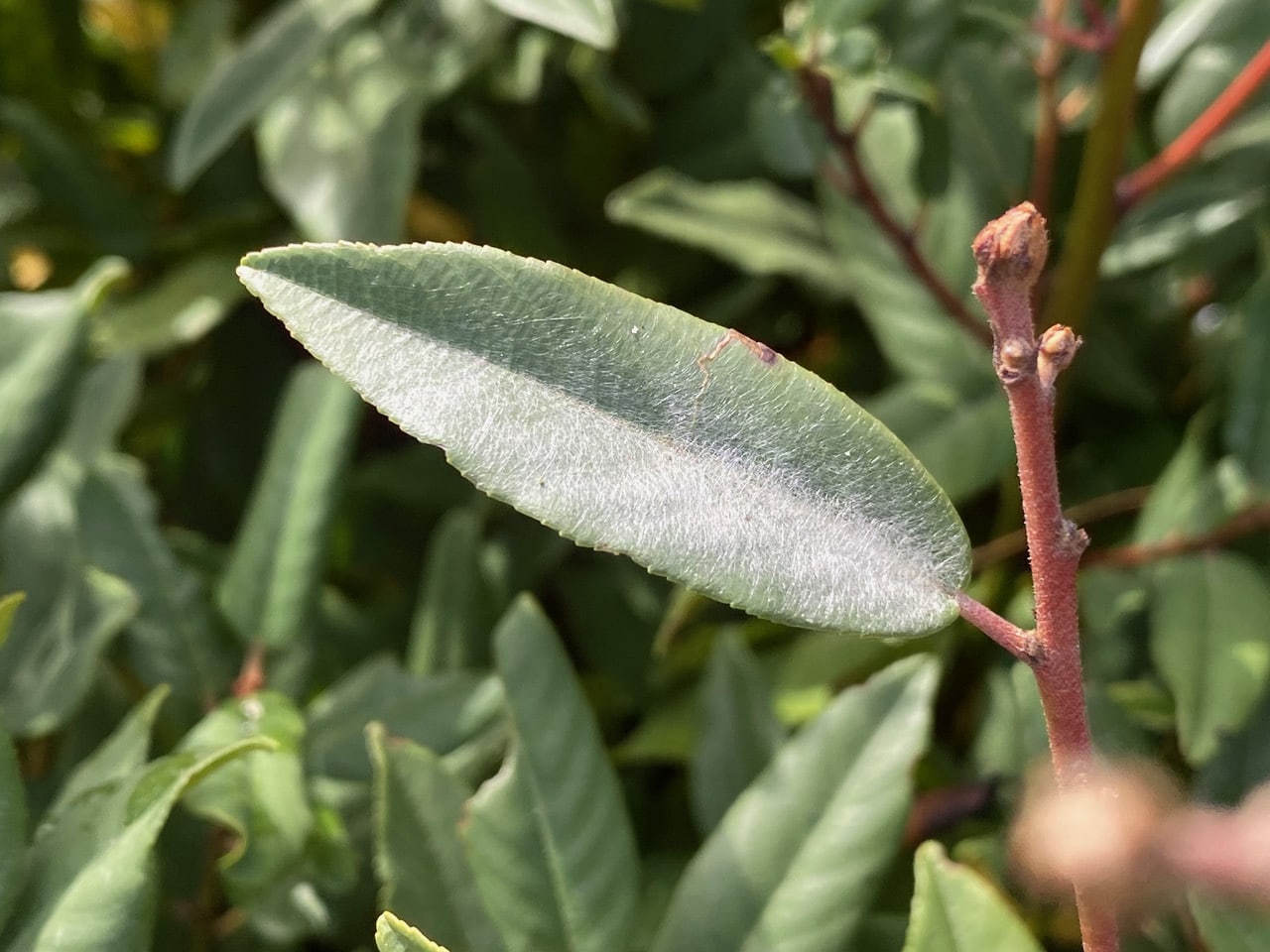
A top leaf in the middle of the shrub is reflecting white in the sun. I recognize it as a silk pad woven by a Pale Swallowtail caterpillar.
Pale Swallowtail caterpillars are sedentary creatures. When not feeding, they rest on a silk pad that they weave on the upper surface of a home leaf. Feeding apparently occurs mostly at night. During the day, they can almost always be found on their home leaf, which they never eat, and keep spotlessly clean. The caterpillars sink their crochets (hooks at the tips of their prolegs) into the silk pads to securely anchor themselves.
The branches below that leaf are bare. Did the caterpillar remove those leaves? Recalling how Blue has similarly cleared a path when it was ready to leave the host plant to pupate, I immediately scan the surrounding branches, knowing full well that it’s impossible to see a caterpillar on its walk-about in this dense shrub.
Then my eyes fall on this green 2-inch caterpillar, just like Blue when it was ready to pupate. It is resting motionless on a lower leaf of a different branch, its body still covered with raindrops! I am sure this caterpillar (I’ll call it Blue-2) is resting on its own silk pad, and is not the owner of the silk pad on the first leaf. They are likely siblings, their eggs laid by the same mama butterfly on the same day. Wow, Blue-2 looks like it is already in its last instar, close to pupation. I’ll have to check on it frequently! How exciting!
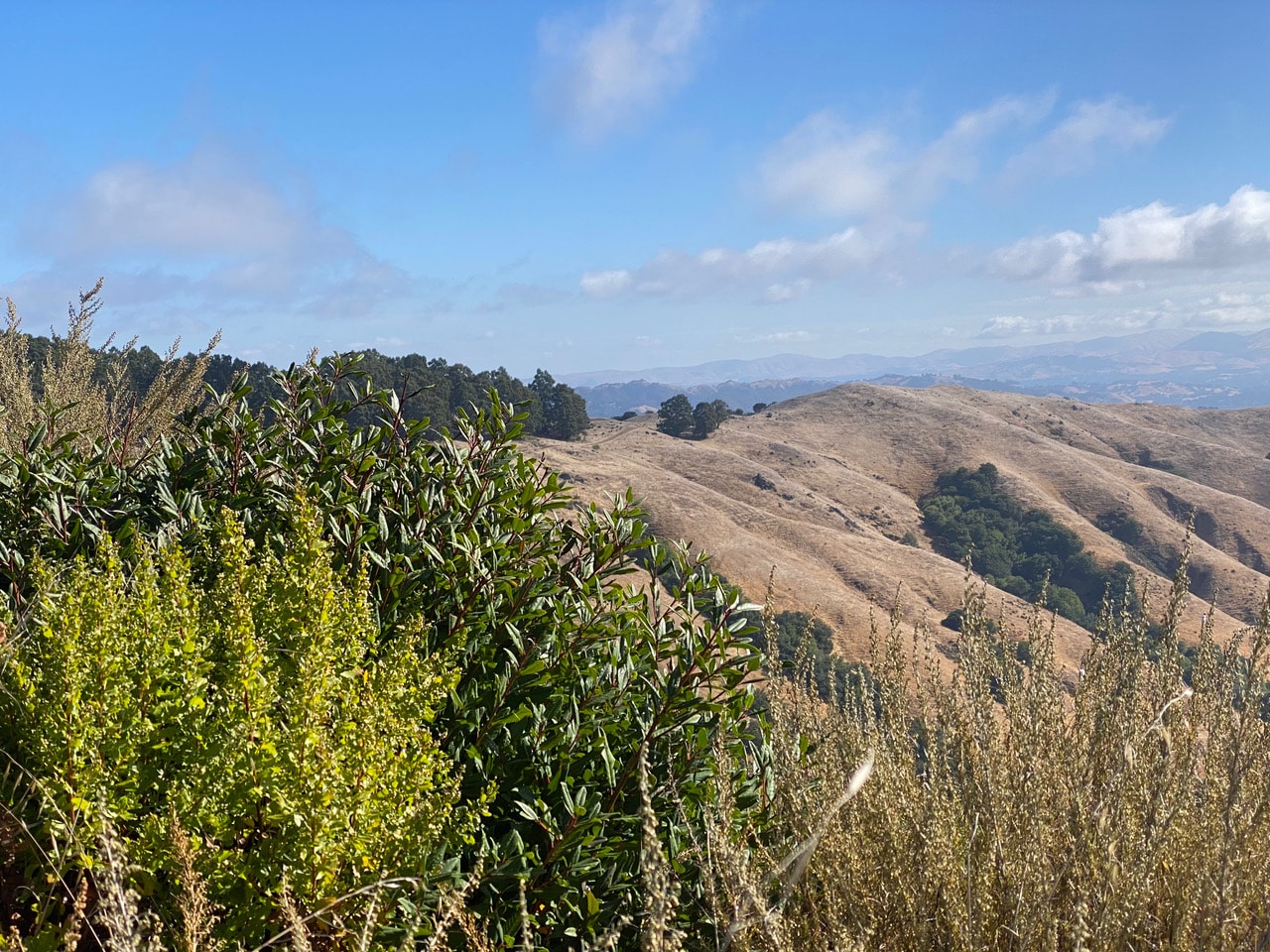
View from Blue-2’s home. How different this is from Blue’s home shrub! This one is on top of a ridge, fully exposed to the elements, while Blue’s Coffeeberry was in deep shade under a California Bay tree. Apparently the Pale Swallowtail caterpillars can survive in different environments, as long as they have their food plant (primarily Coffeeberry and other members of the Rhamnaceae family)!
Another incomplete orb web!