

Pollinator Post 9/24/24 (2)
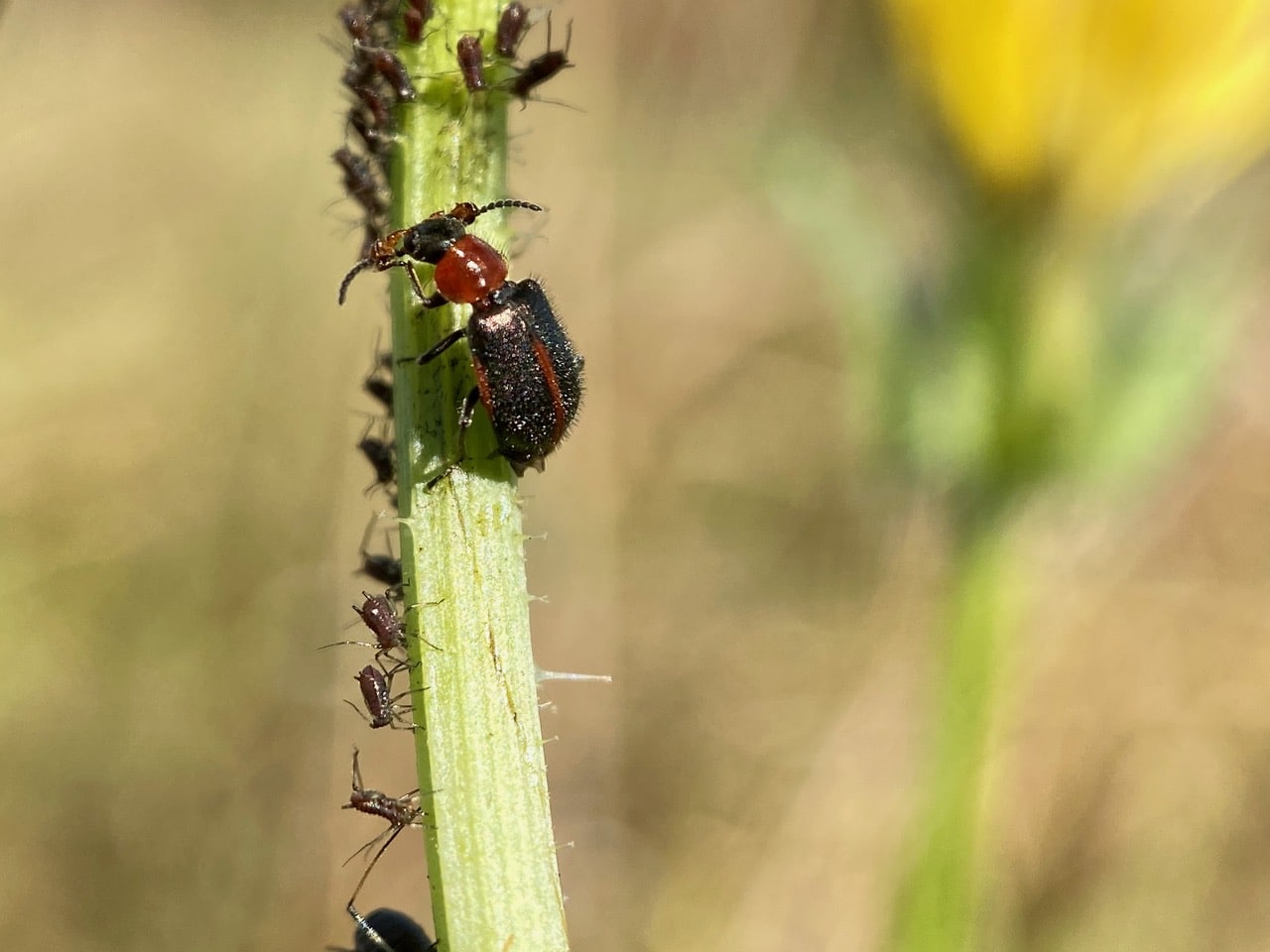
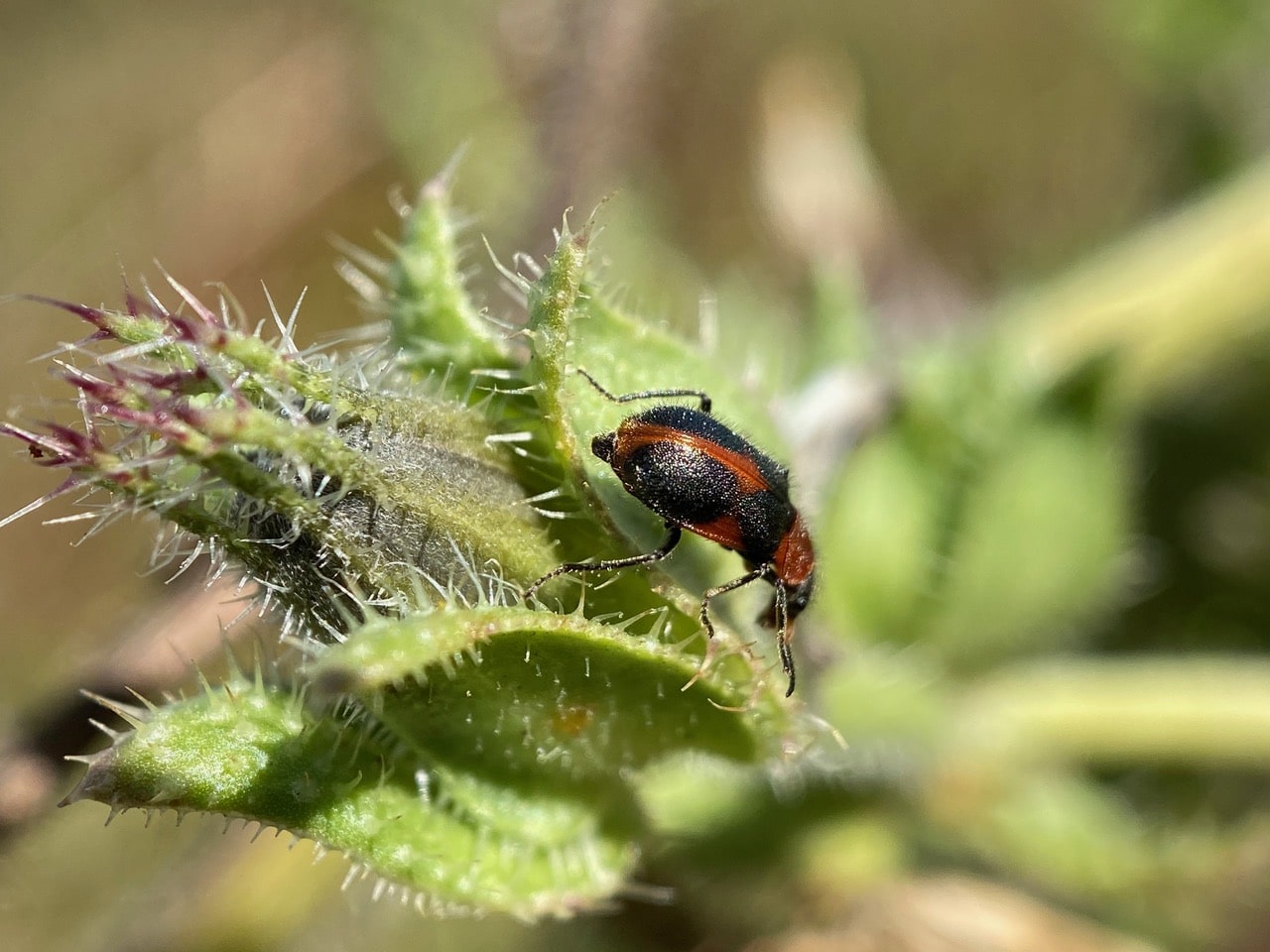
I am thrilled to find a Collops beetle on the stem of a Bristly Oxtongue that is infested with aphids. To my surprise, instead of feeding on the aphids, the male is actually fussing with his antennae.
The Four-spotted Collops, Collops quadrimaculatus, is a species of the Soft-winged Flower Beetle in the family Melyridae. The beetles are found in Central and North America. Members of the family Melyridae differ from most other beetles in that their bodies are not hard and shell-like. Collops are small beetles, 4-7 mm. They are important predators with a penchant for soft-bodied insects like whiteflies, small Lygus nymphs, aphids, mites, and lepidopteran eggs and caterpillars. Occasionally they graze on pollen and nectar resources too. Larvae are predaceous in the soil litter, but are rarely seen.

Male and female Collops can be distinguished by clearly visible knobby structures present on the base of the male’s antennae. We obviously have a male here. The function of the enlarged basal antenomeres are not clearly understood. But here’s a description by an observer:
“I have watched a male approach a female and present his vibrating antennae for her inspection, touching them to her antennae and sweeping the knobs across her head and pronotum. It looked as if he was maybe releasing pheromones towards the chemoreceptors on her antennae…. which would make her receptive to his advances.”

There are quite a few Collops on the plant. The males are easier to observe as they are not moving around much, being preoccupied with their antennae.
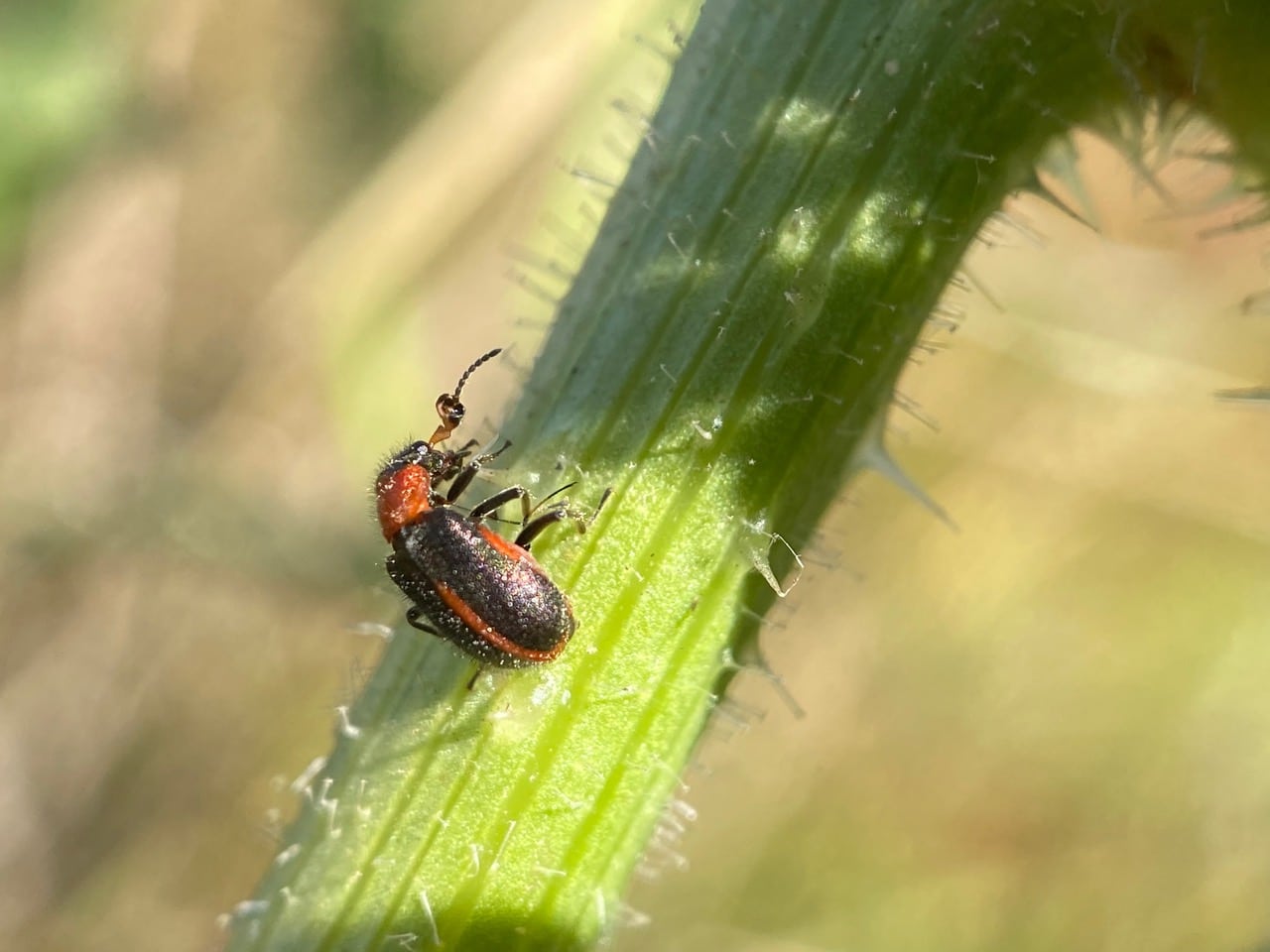
This male Collops beetle seems to be grooming his left antenna.

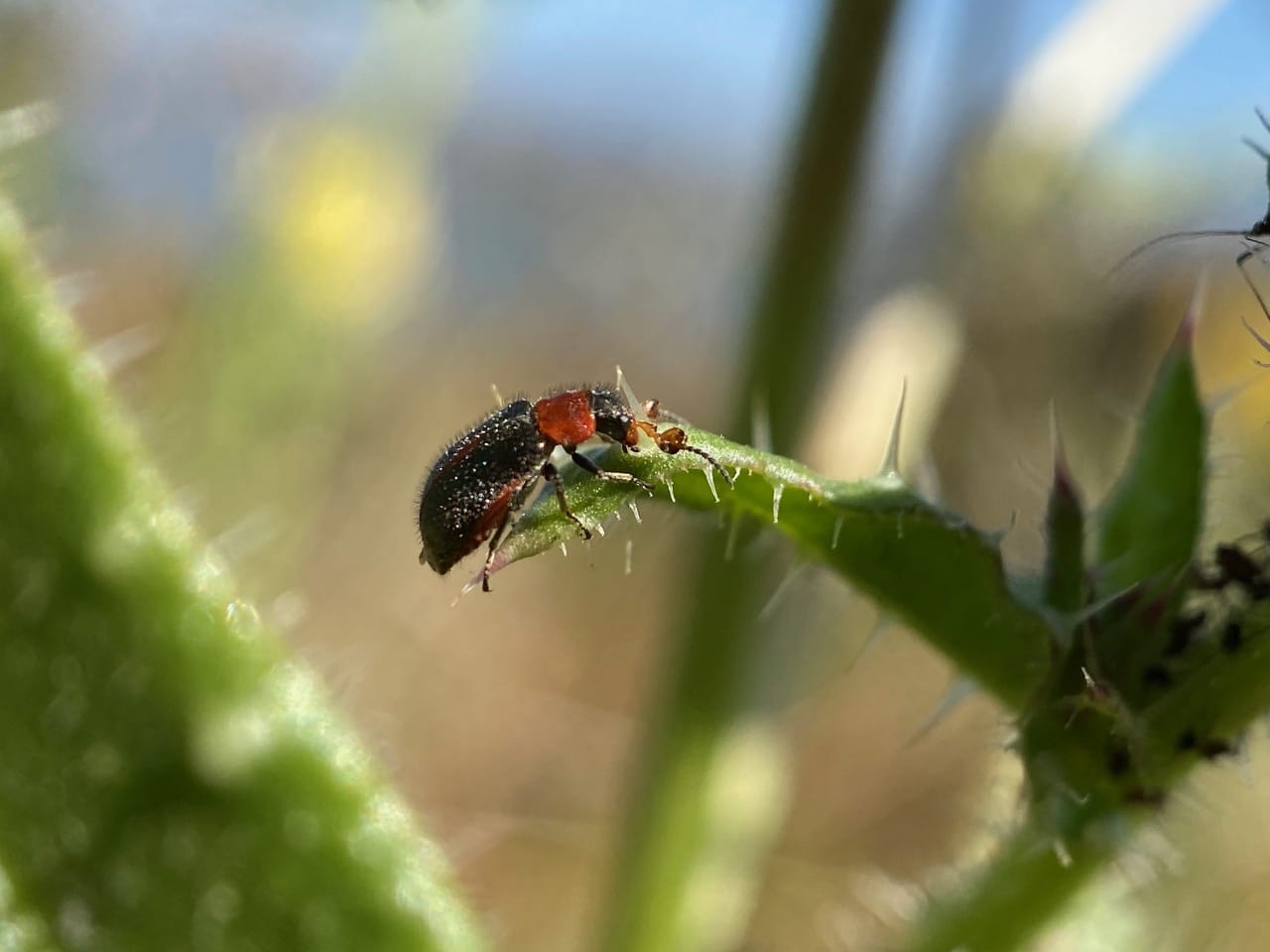
Another male Collops beetle is perched on the tip of a terminal leaf.
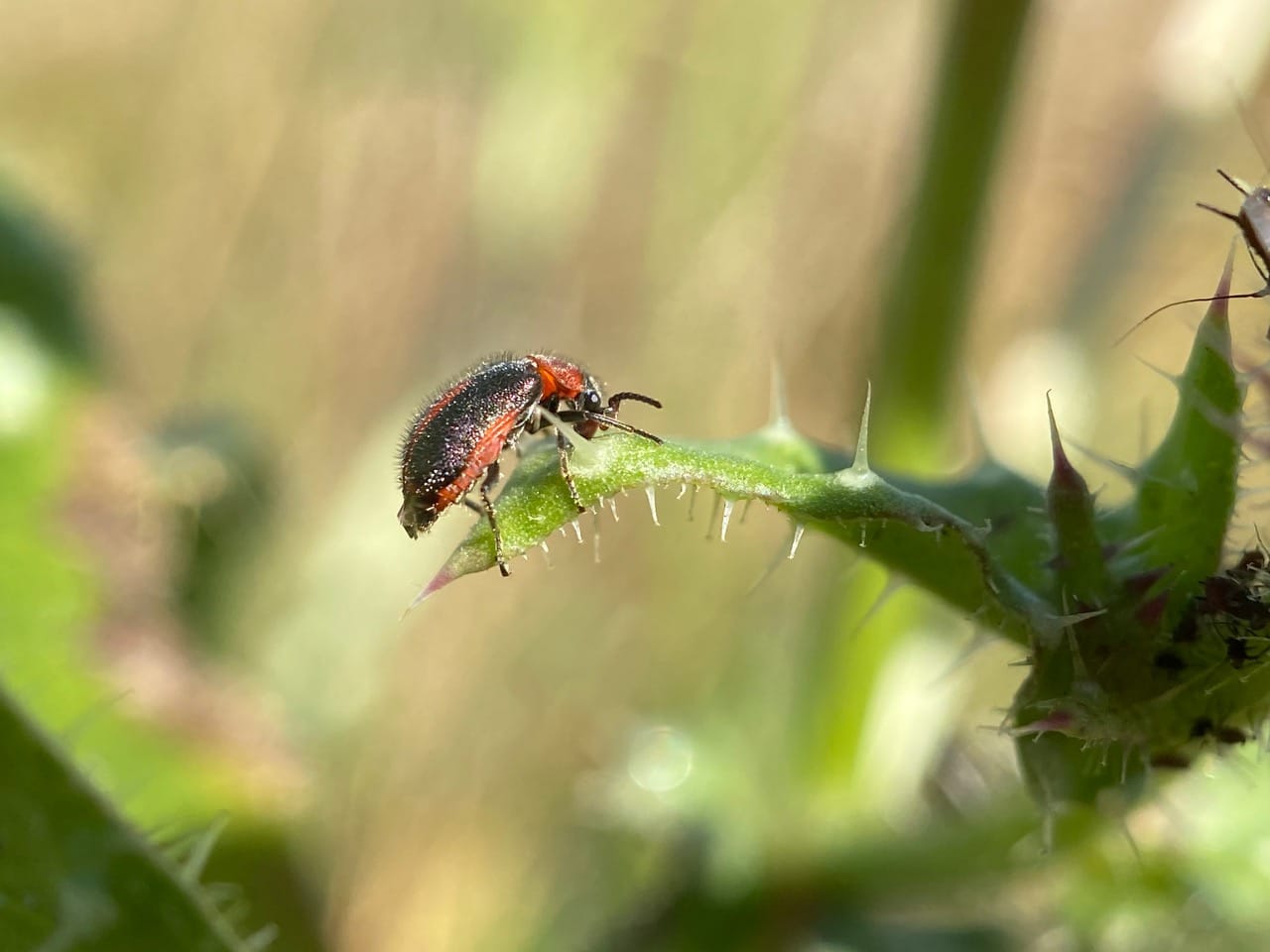
He is rubbing his antennae with his front legs.
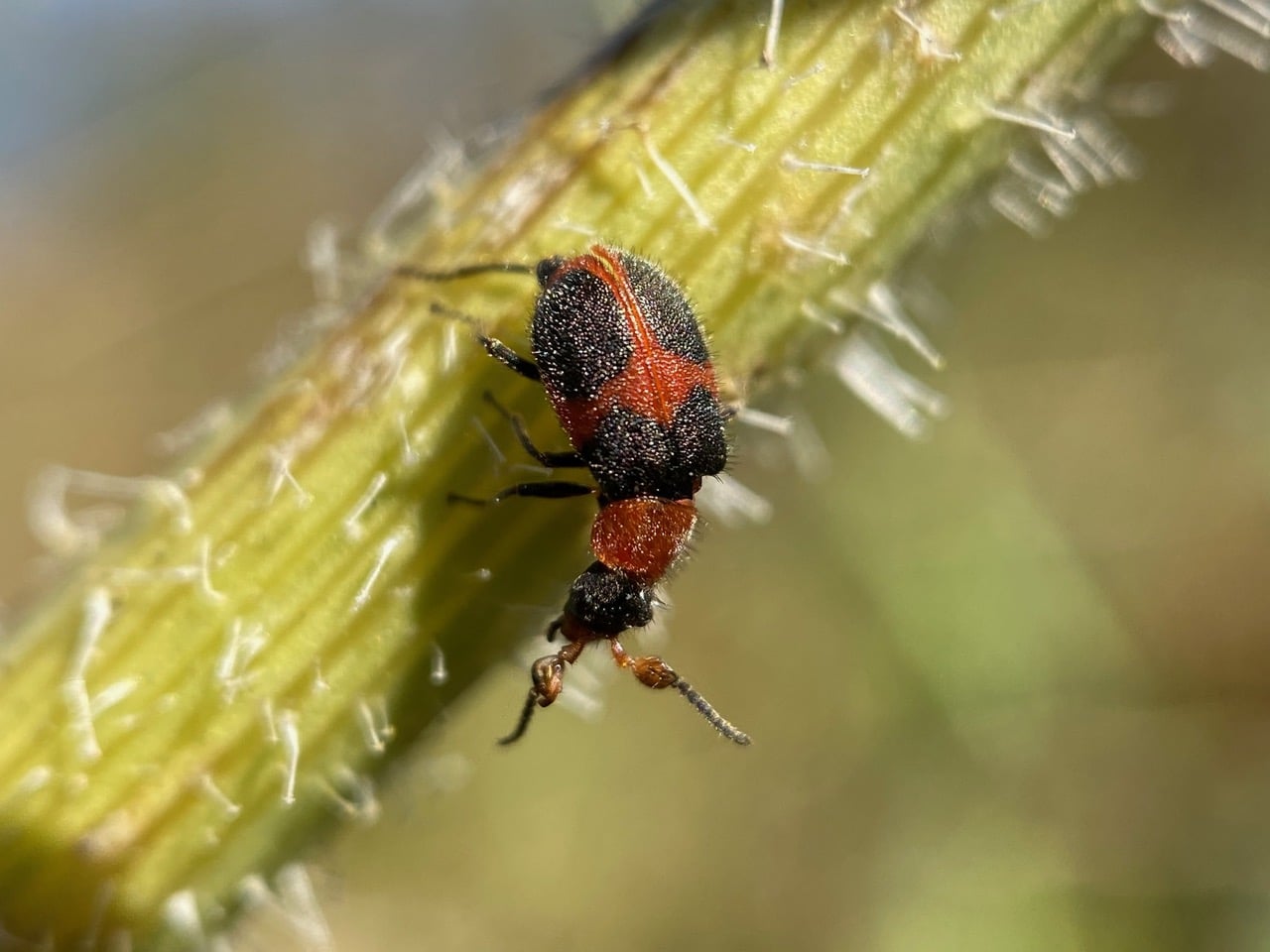
Yet another male is hunched over a stem, his antennae in constant vibration. This individual’s elytra are marked with four distinct black patches, from which the species gets its common name of Four-spotted Collops.
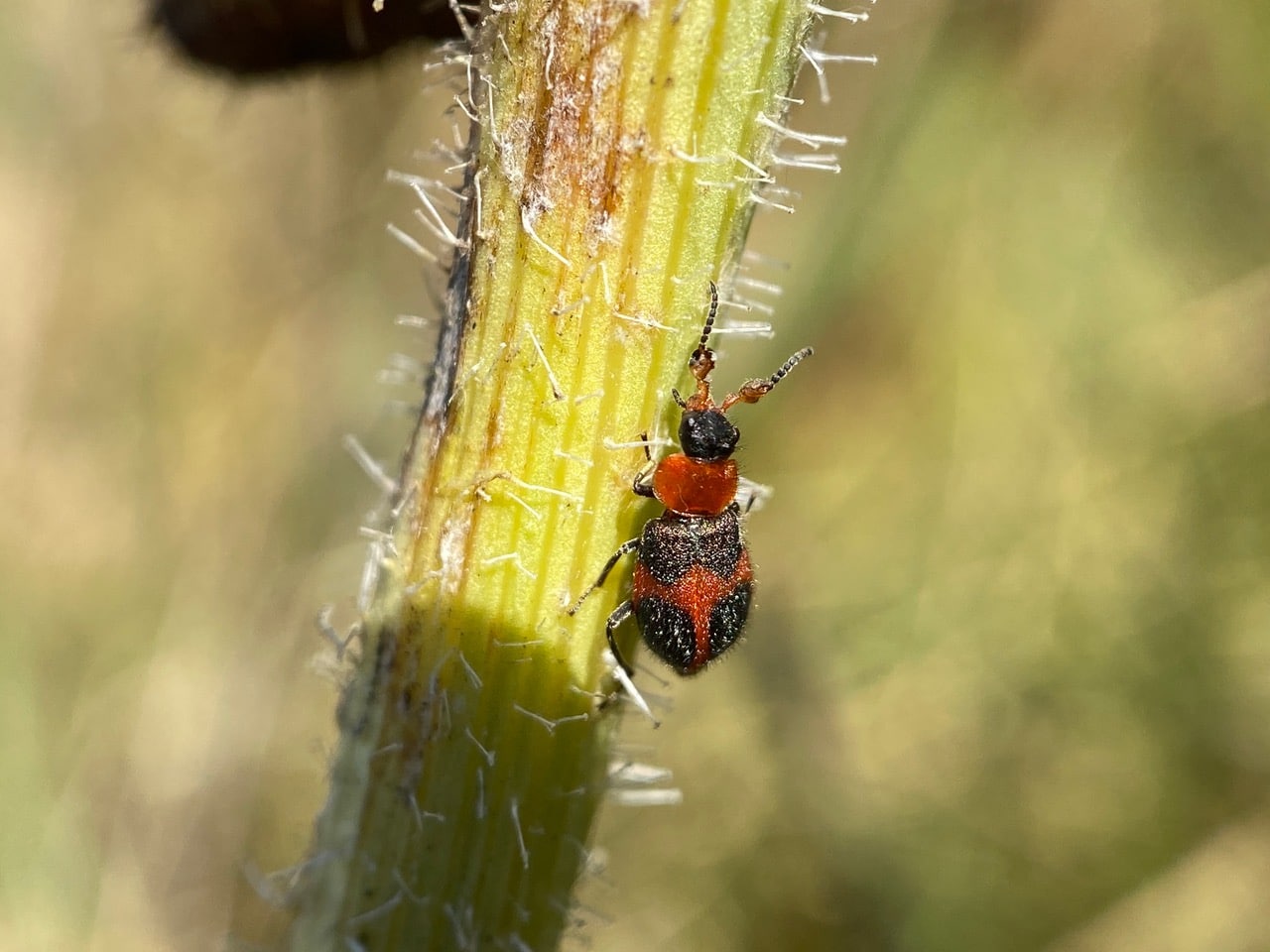
Wow, as I look around, I find more and more Collops on the same plant. Here’s another male.

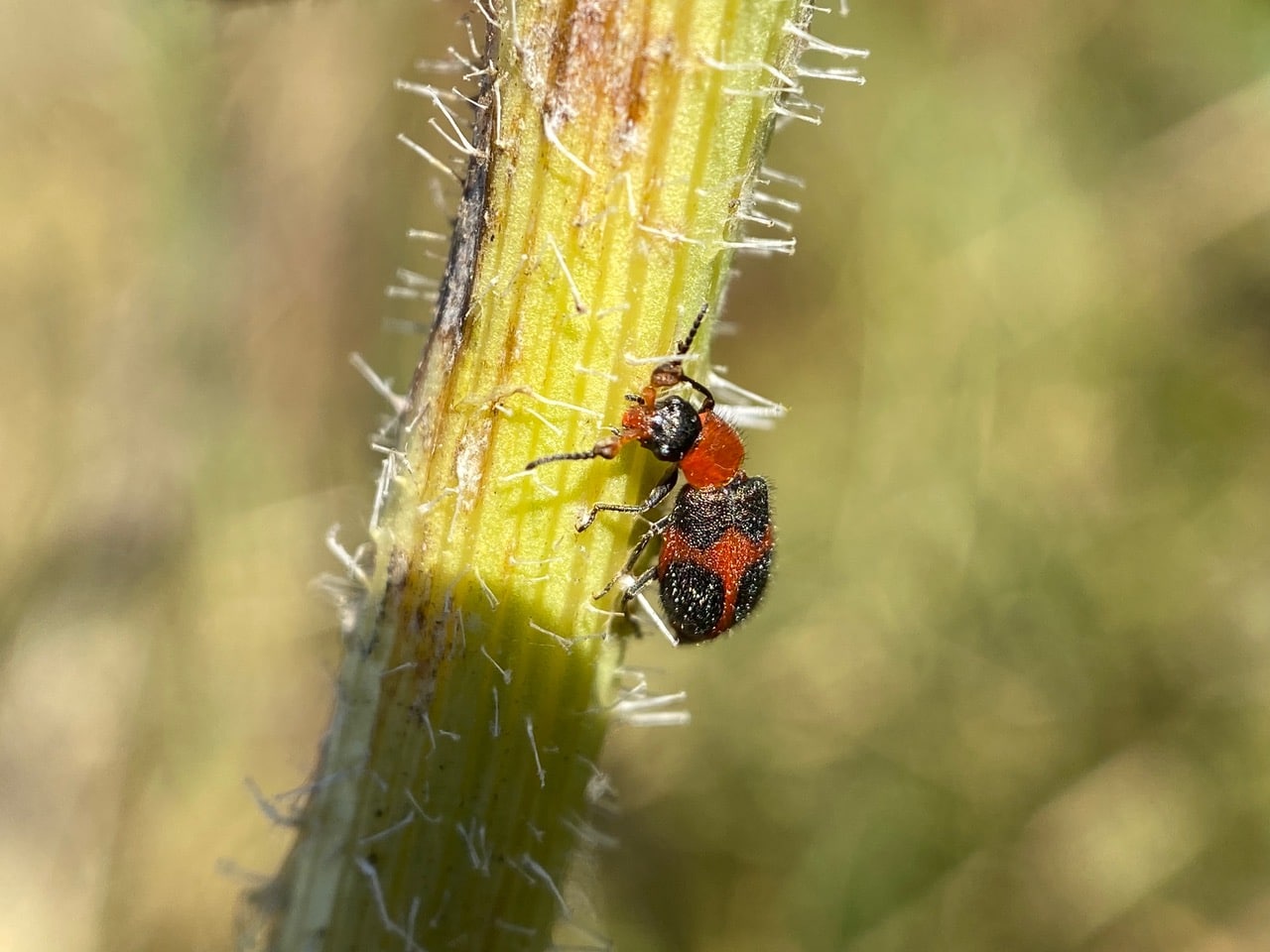

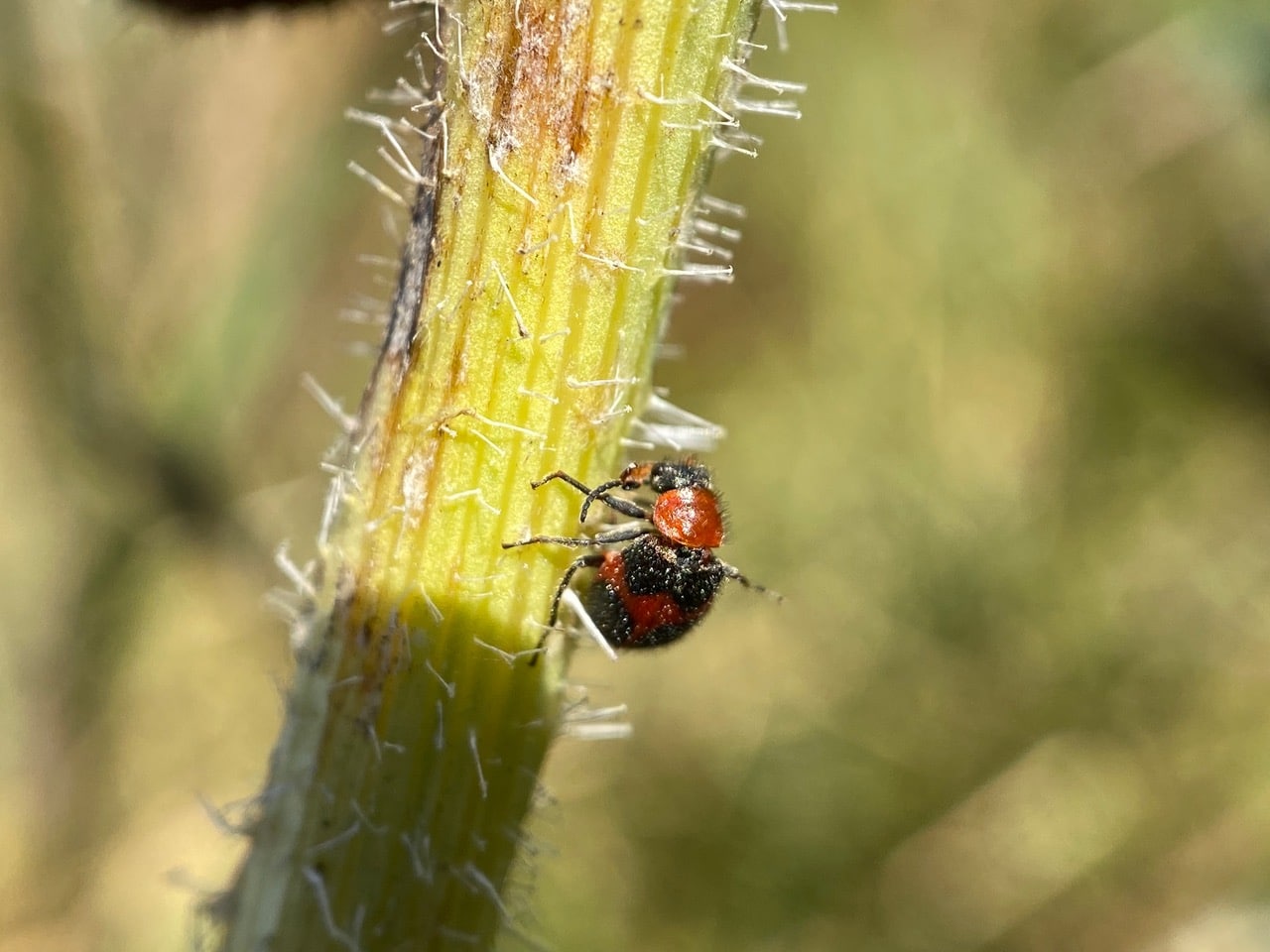
He lowers his head, apparently to groom his antennae.
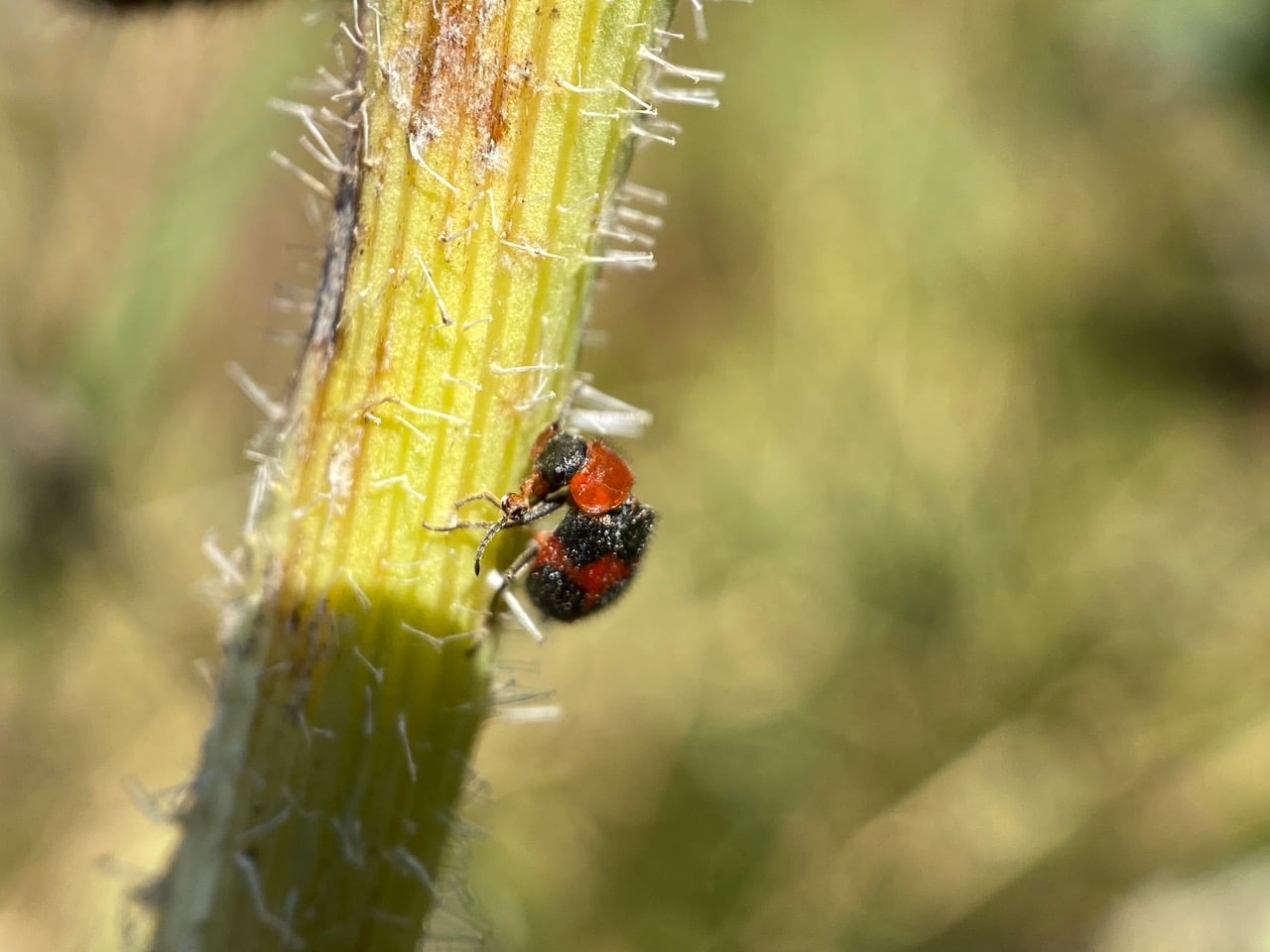

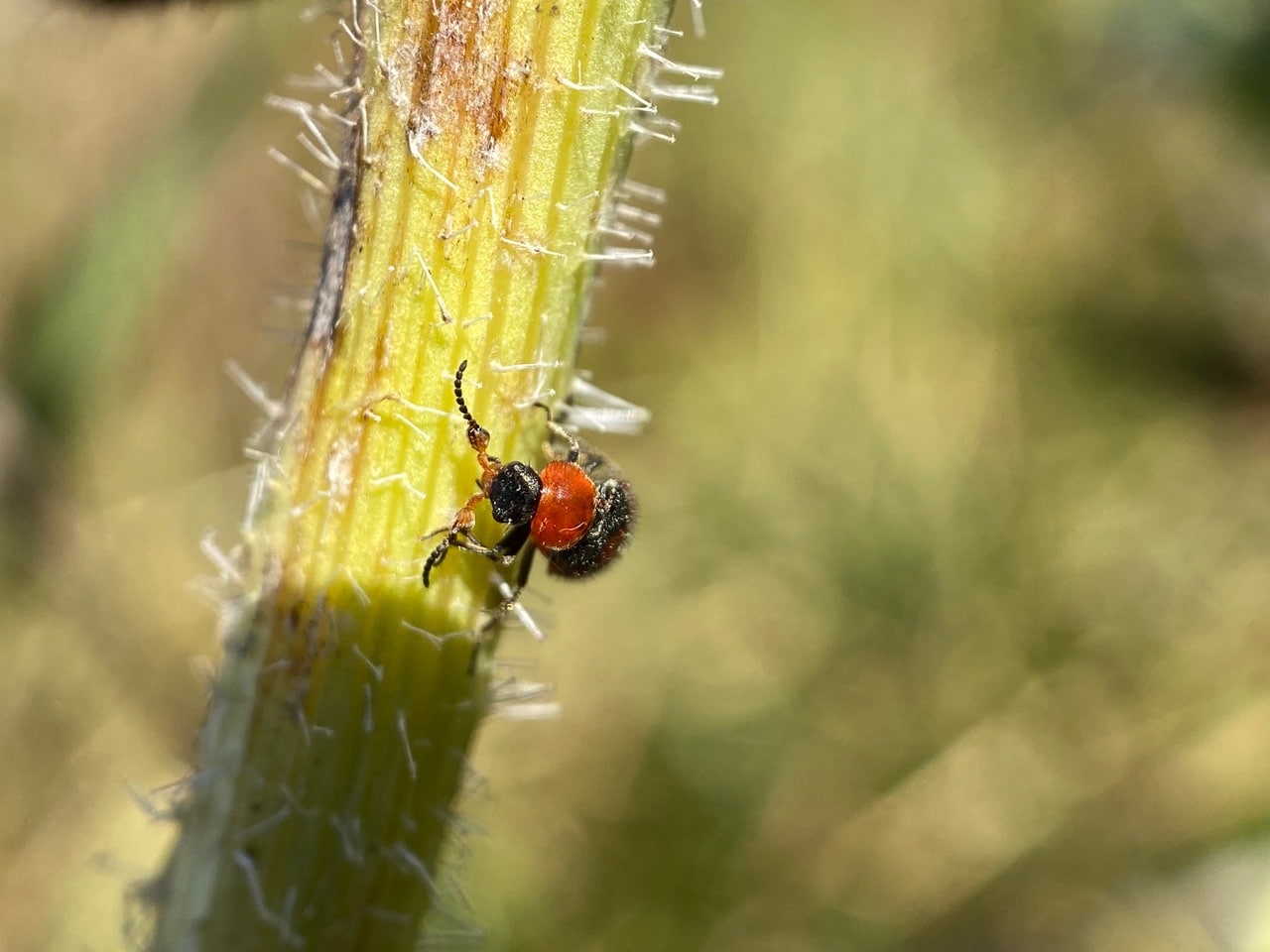
What is going on? Why are there so many Collops on the plant today? Are the males performing a courtship display? Are the males broadcasting their pheromones to attract females to the plant?
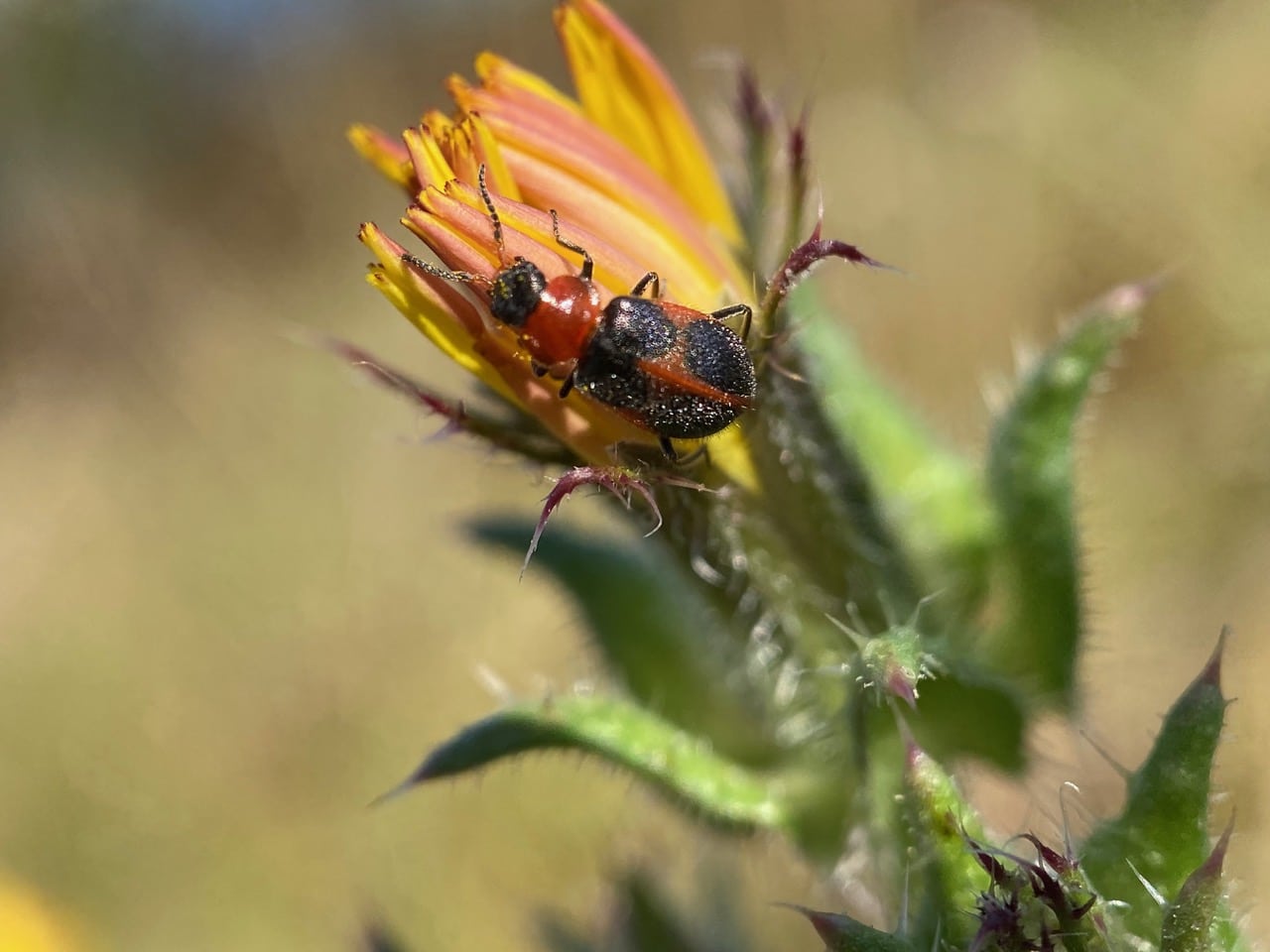
Wait, that’s a female! Note the absence of knobs at the base of her antennae. She is actively hunting for prey, searching every nook and cranny around a spent Bristly Oxtongue flowerhead.
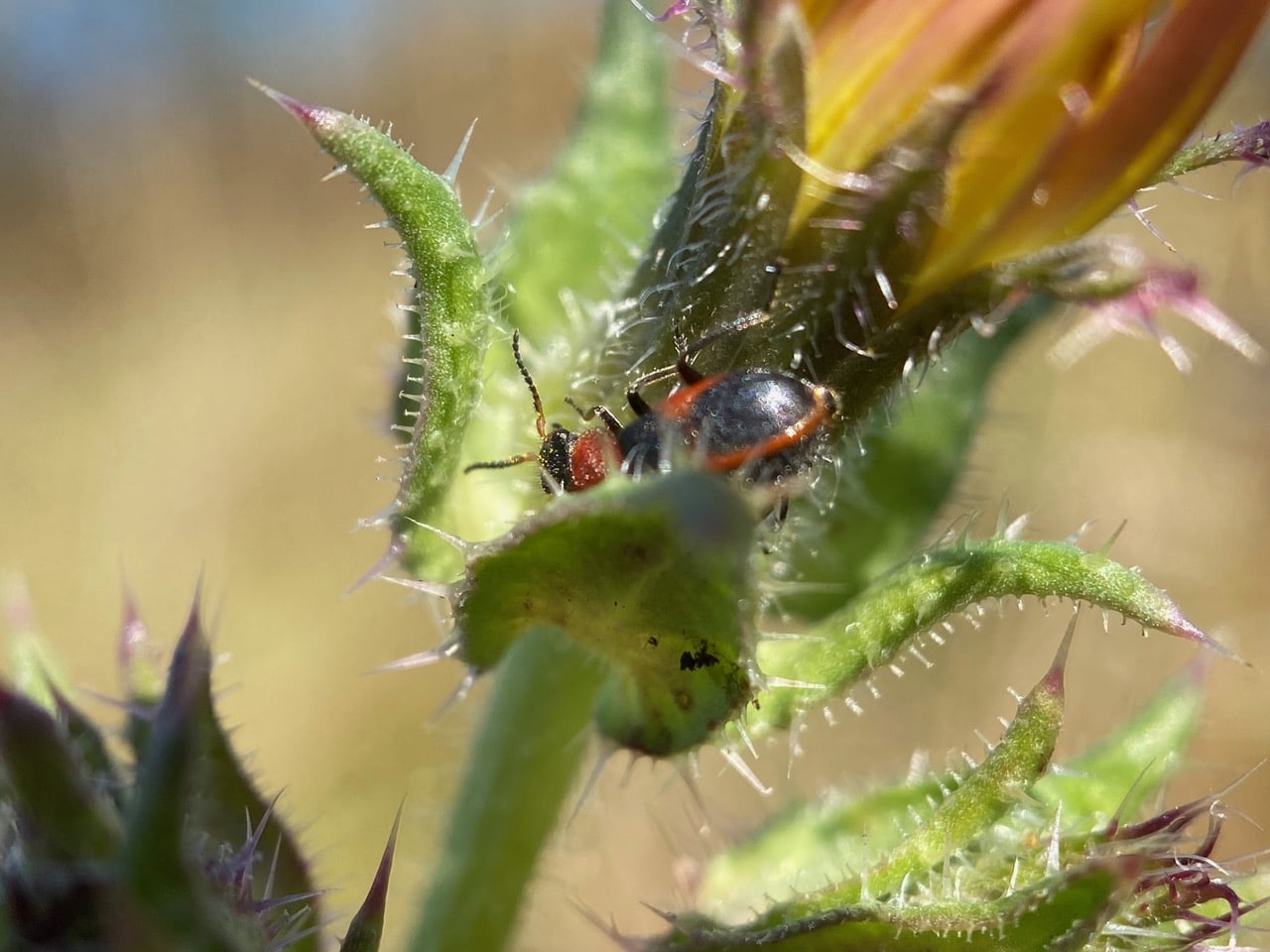
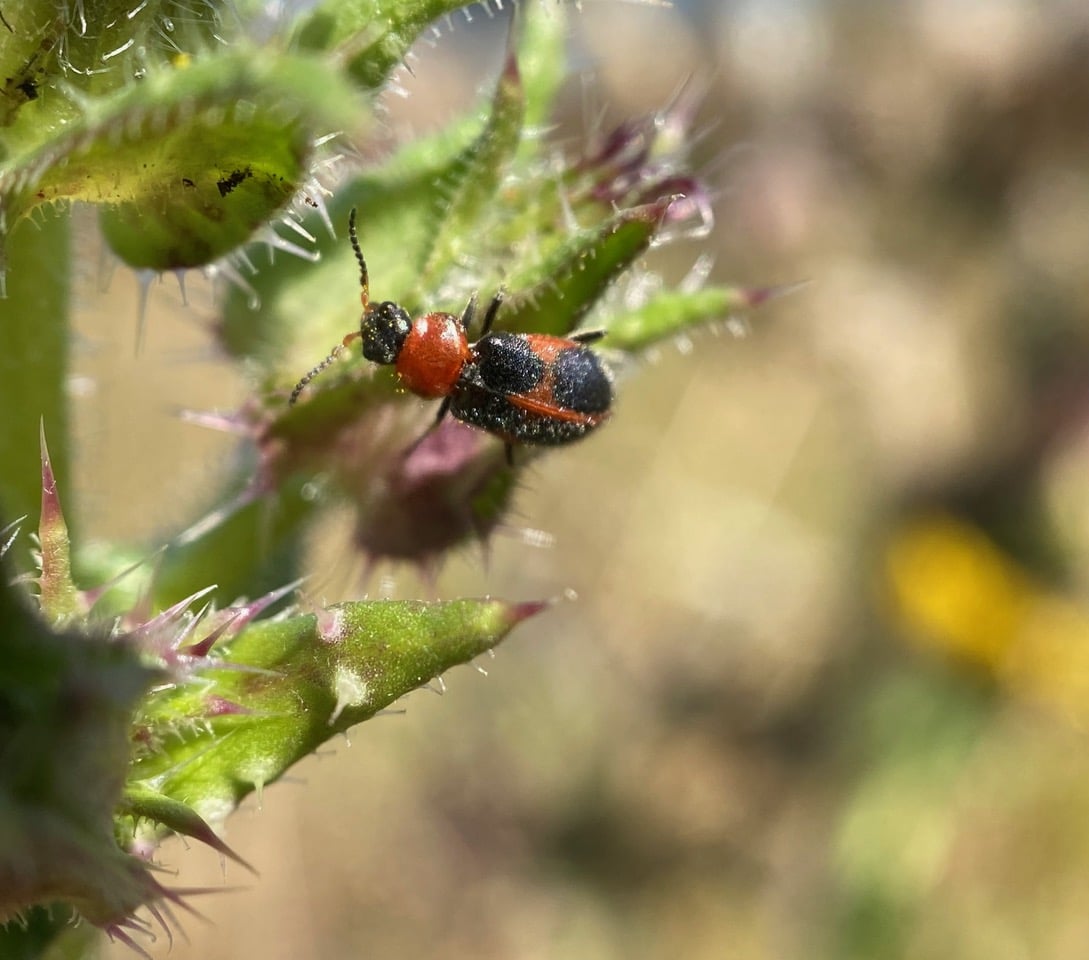

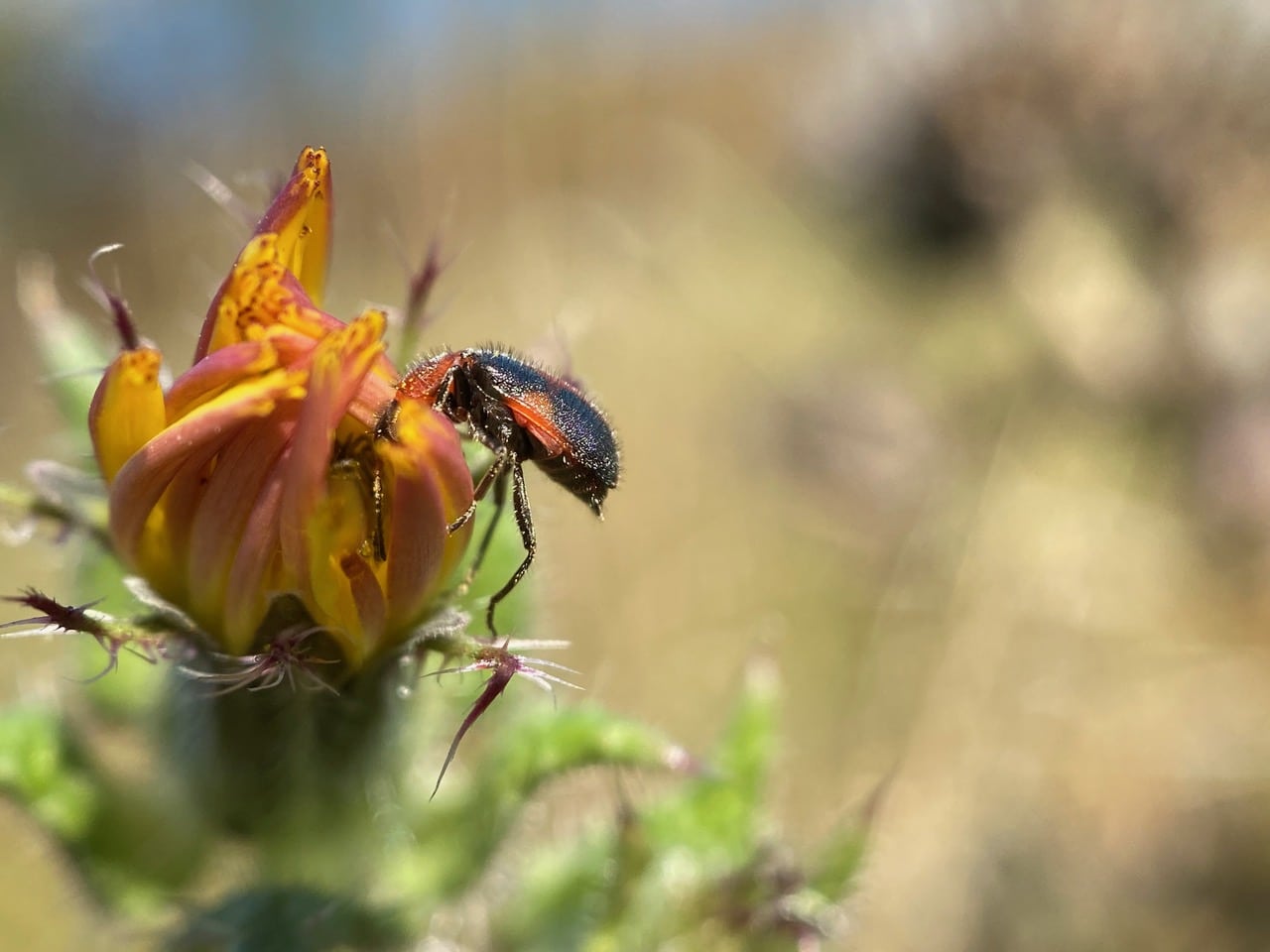
The female Collops is very thorough in her search.
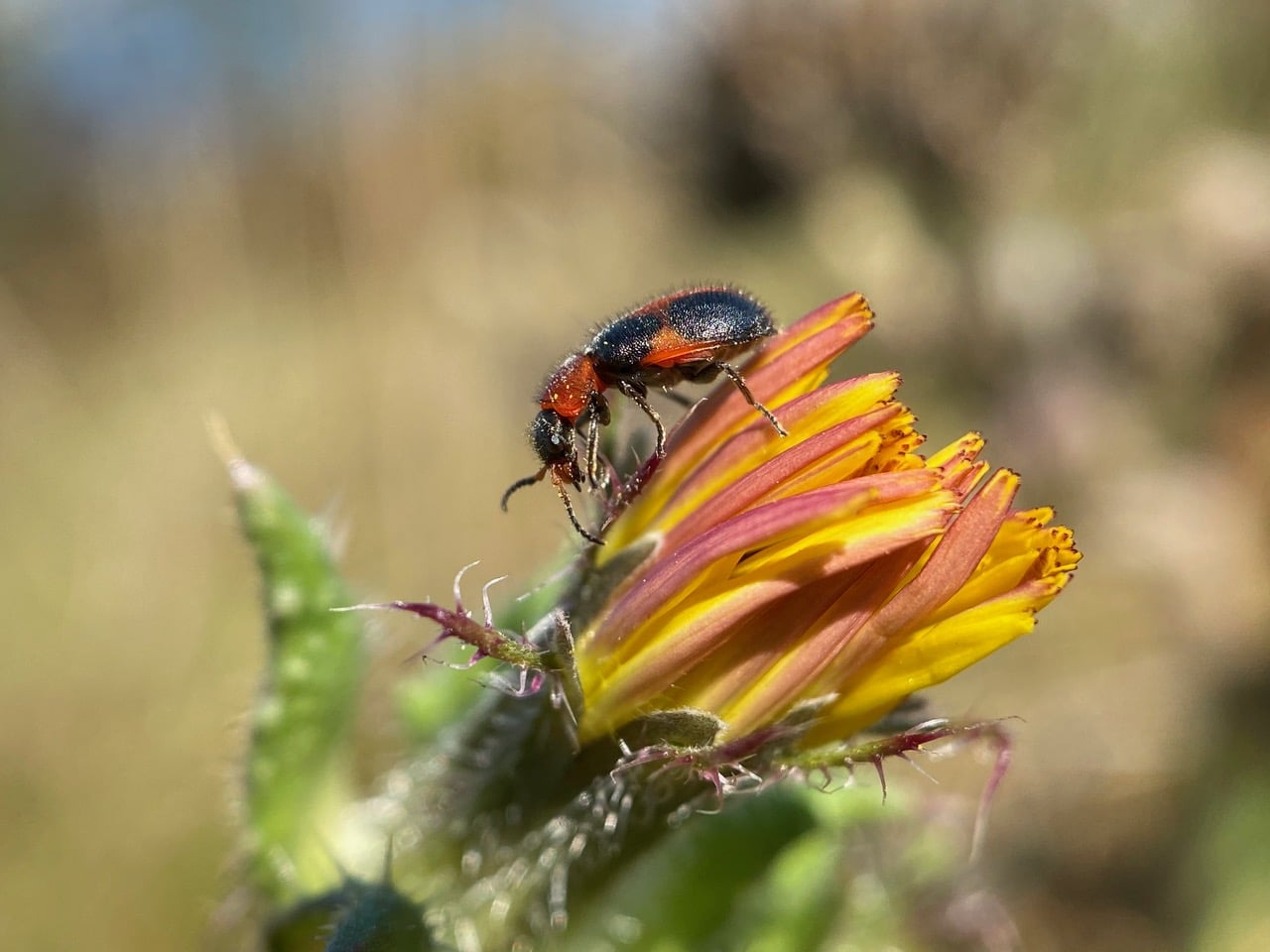

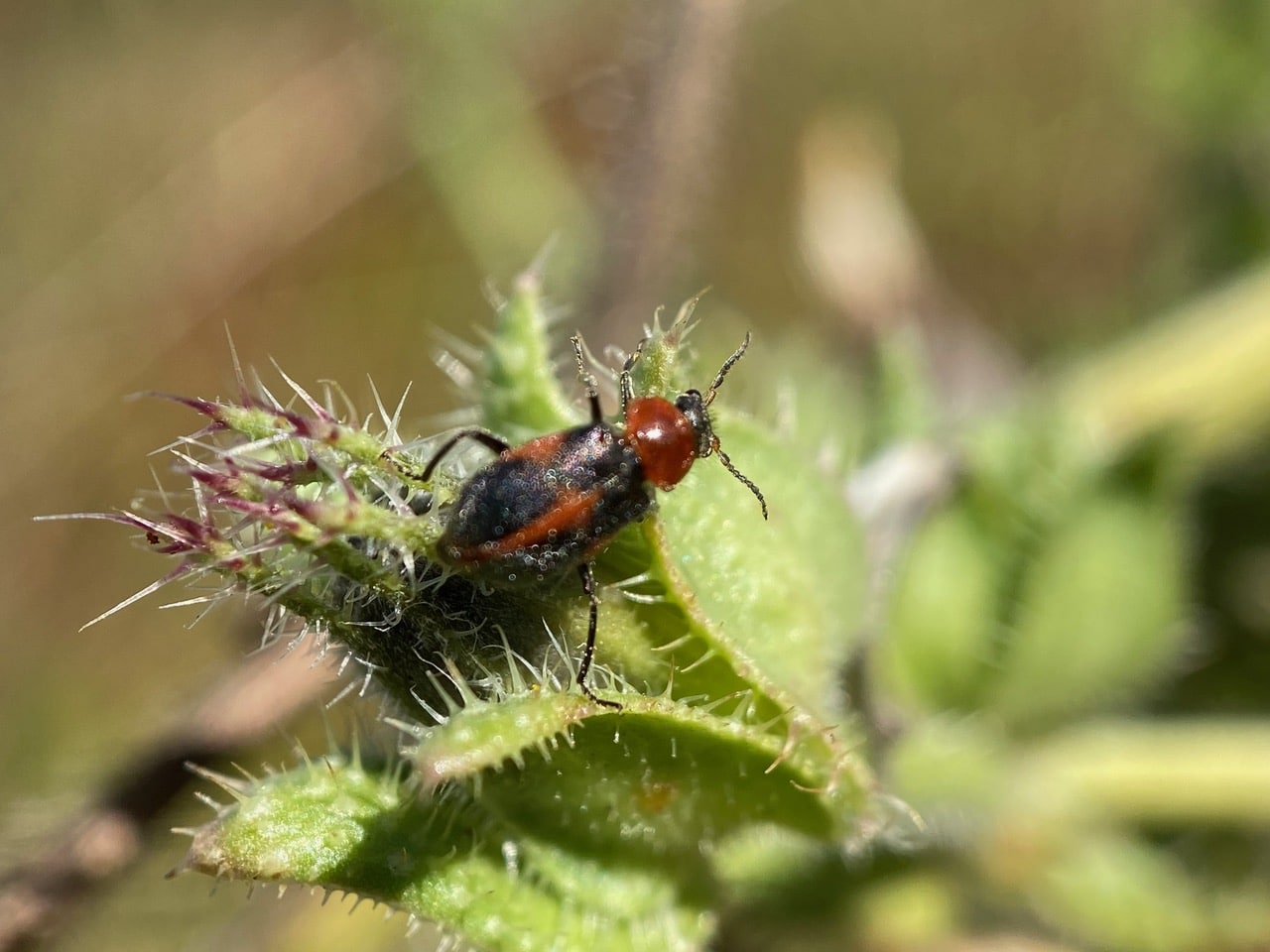
The female is more active than any of the males I have observed. She is crawling all over the young flowerheads. Maybe hunting for prey?
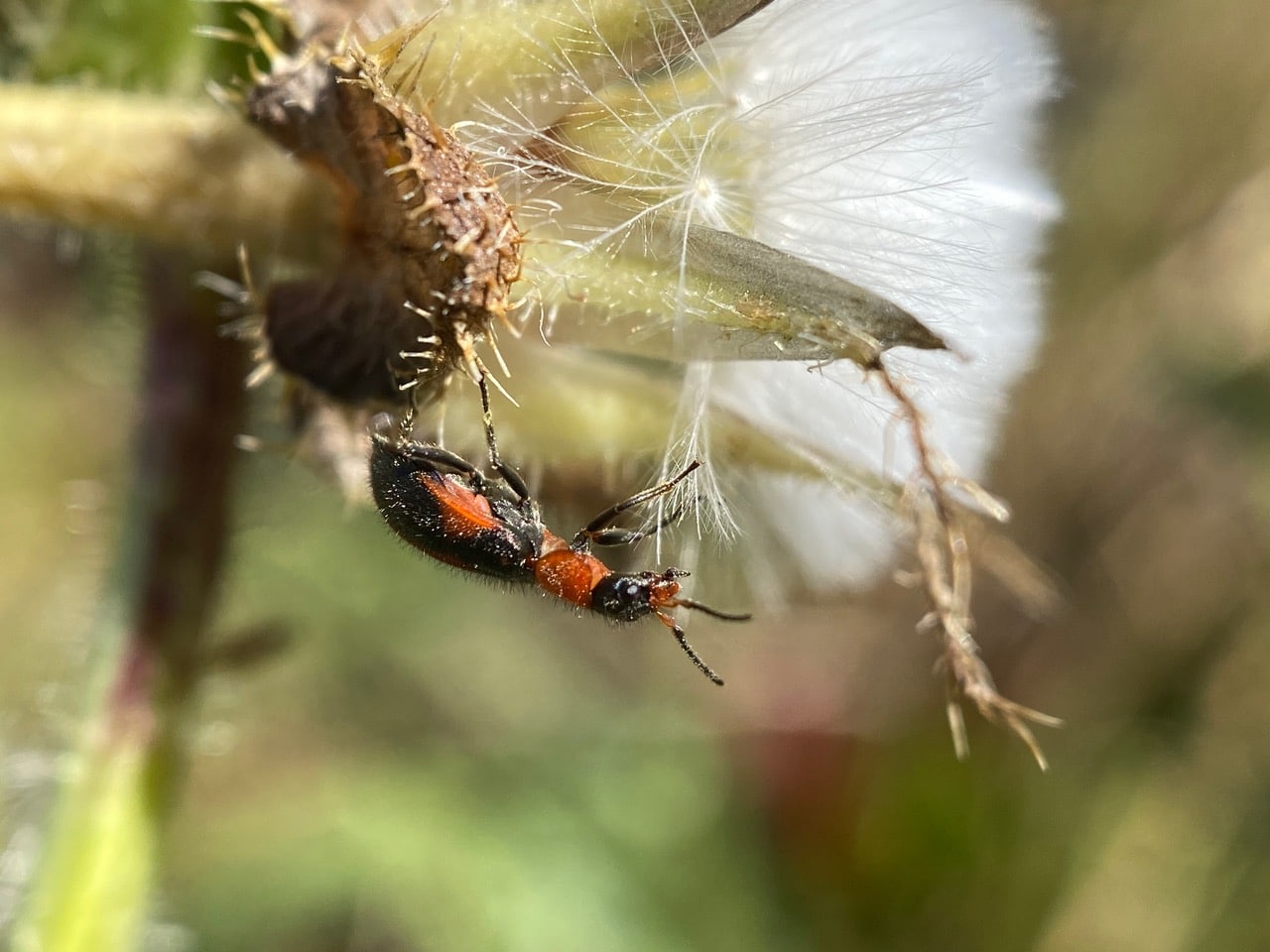
The female checks out a seed head …

… then a withered flowerhead.

Ooh, here’s another female Collops.
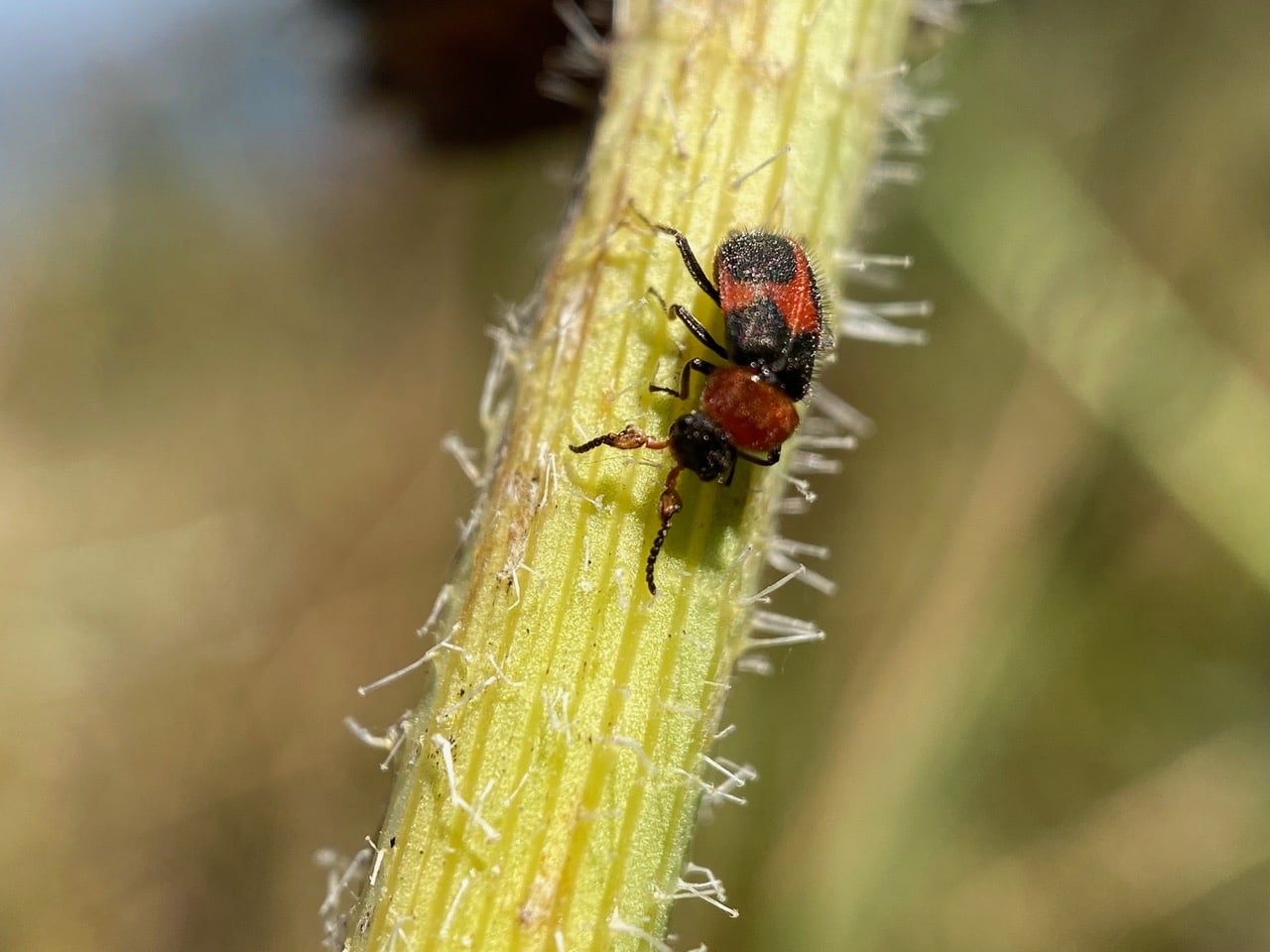
I finally decide to focus my attention on a male that is hunched over a stem, vibrating and waving his antennae. A video is far better for recording his behavior:
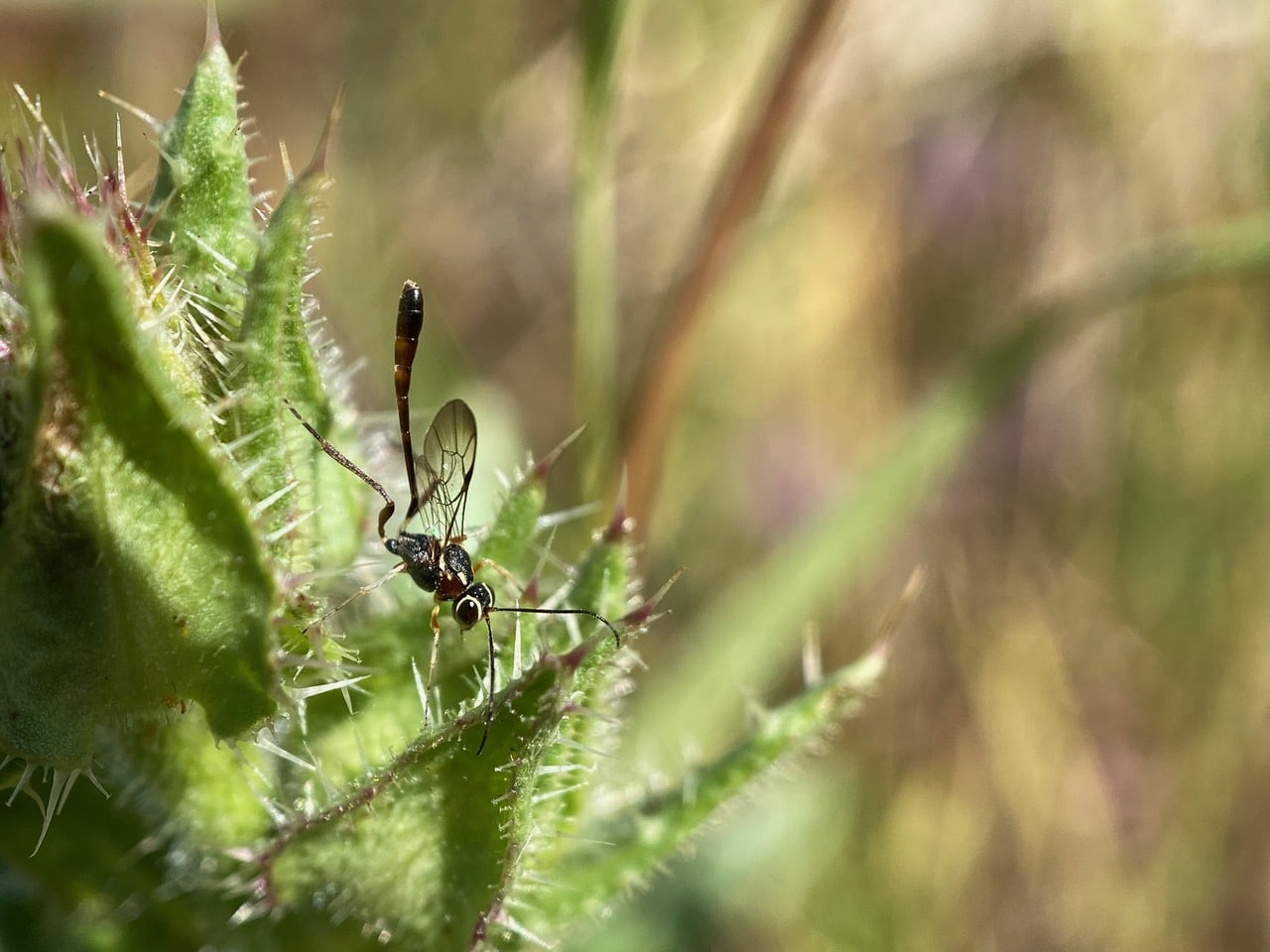
A few tiny, skinny wasps, no more than 1/4 inch long are hovering over the greener parts of the Bristly Oxtongue. Here one wasp has landed to investigate the phyllaries of an immature flowerhead. It is an Ichneumon Wasp, Anomalon sp. (family Ichneumonidae), easily recognizable from the long antennae, elongate and slender abdomen, and the well-defined pale ring around the eyes.
The Ichneumonidae, also known as the Ichneumon Wasps, or Ichneumonids, are a family of parasitoid wasps. They are one of the most diverse groups within the Hymenoptera (the order that includes the ants, wasps and bees) with about 25,000 species and counting. Ichneumon Wasps attack the immature stages of insects and spiders, eventually killing their hosts. They play an important role in the ecosystem as regulators of insect populations.
The Ichneumon Wasps have longer antennae than typical wasps, with 16 segments or more as opposed to 13 or fewer. Ichneumonid females have an unmodified ovipositor for laying eggs. They generally inject eggs either directly into their host’s body or onto its surface, and the process may require penetration of wood. After hatching, the Ichneumonid larva consumes its still living host. The most common hosts are larvae or pupae of Lepidoptera (butterflies and moths), Coleoptera (beetles) and Hymenoptera. Adult Ichneumonids feed on plant sap and nectar. Females spend much of their active time searching for hosts while the males are constantly on the look out for females. Many Ichneumonids are associated with specific prey, and Ichneumonids are considered effective biological controls of some pest species.
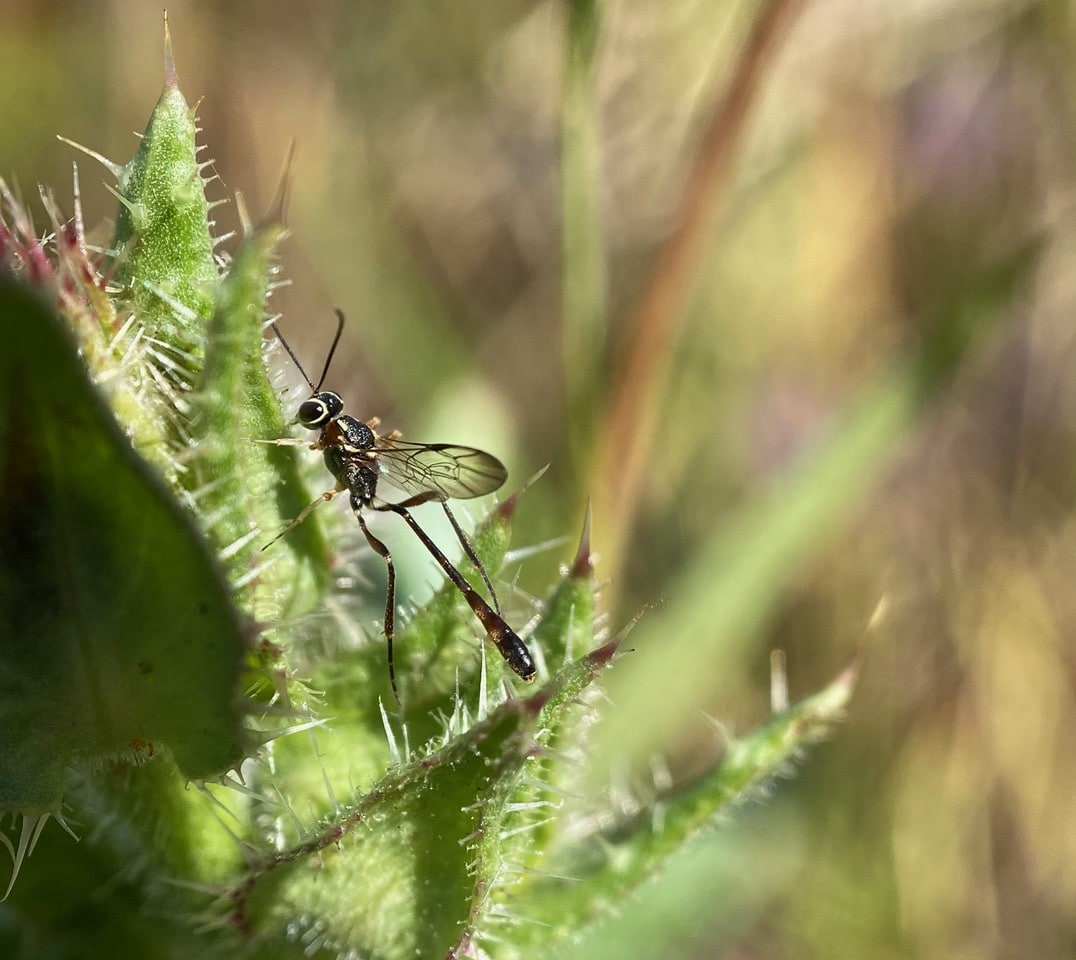
Anomalon is a large genus of parasitoid wasps in the family Ichneumonidae. The wasps are found worldwide, but most diverse in tropical regions. In the Americas they are mostly found in very wet rain forests. Recorded hosts include tenebrionid (darkling beetle) or elaterid (click beetle) larvae, and noctuid and tortricid moth larvae.