

Pollinator Post 9/20/24

When Fred and I arrive at Shoreline Park for our walk this afternoon, we discover that the place is experiencing extreme high tide. The stones along the shoreline are almost submerged, and waves are lapping at the Grindelia growing on the edge.







Feeling the chill from the strong winds, we zip up our jackets, even though the temperatures are in the high 60s. Surely there won’t be many insects out today?
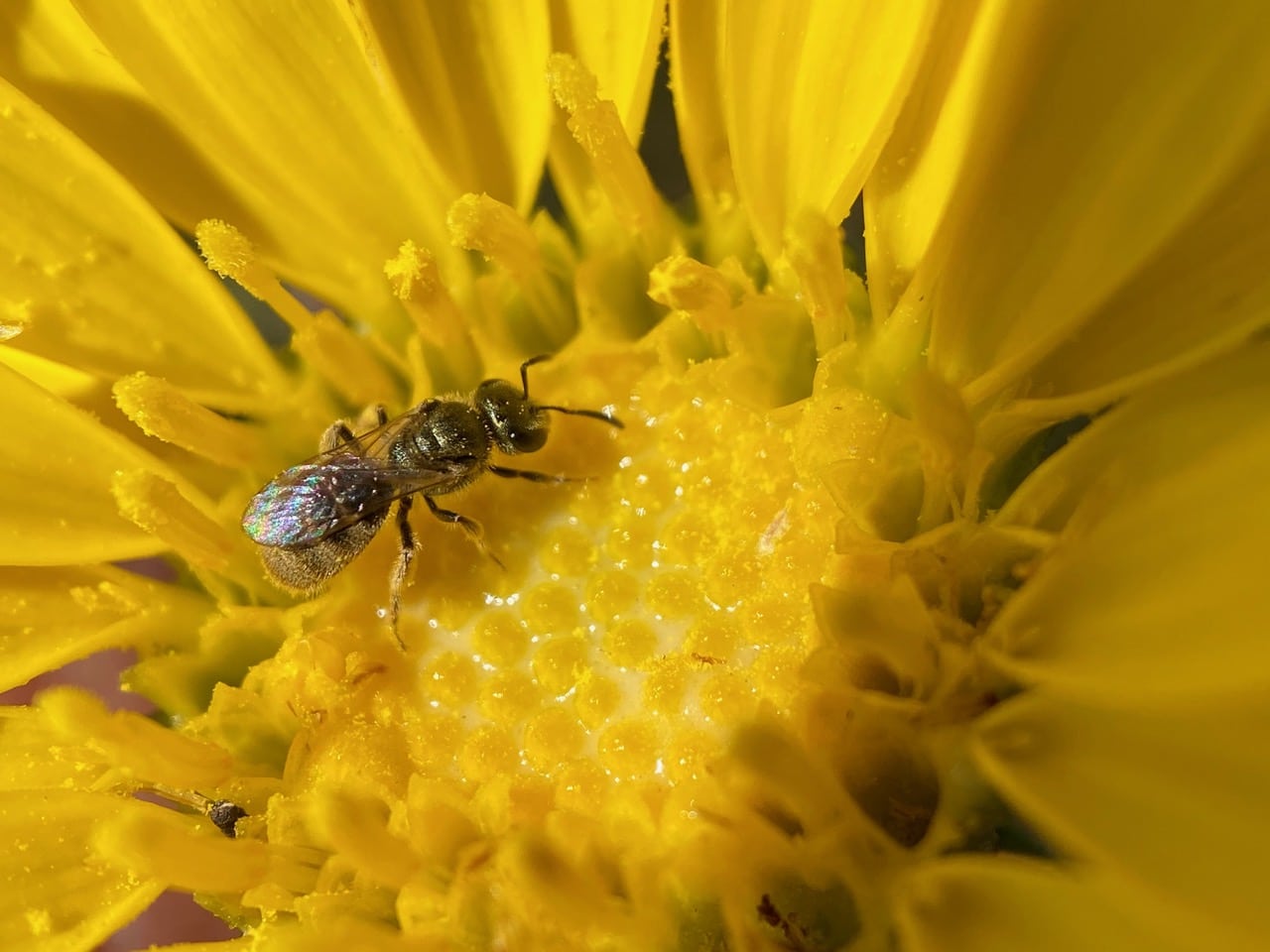
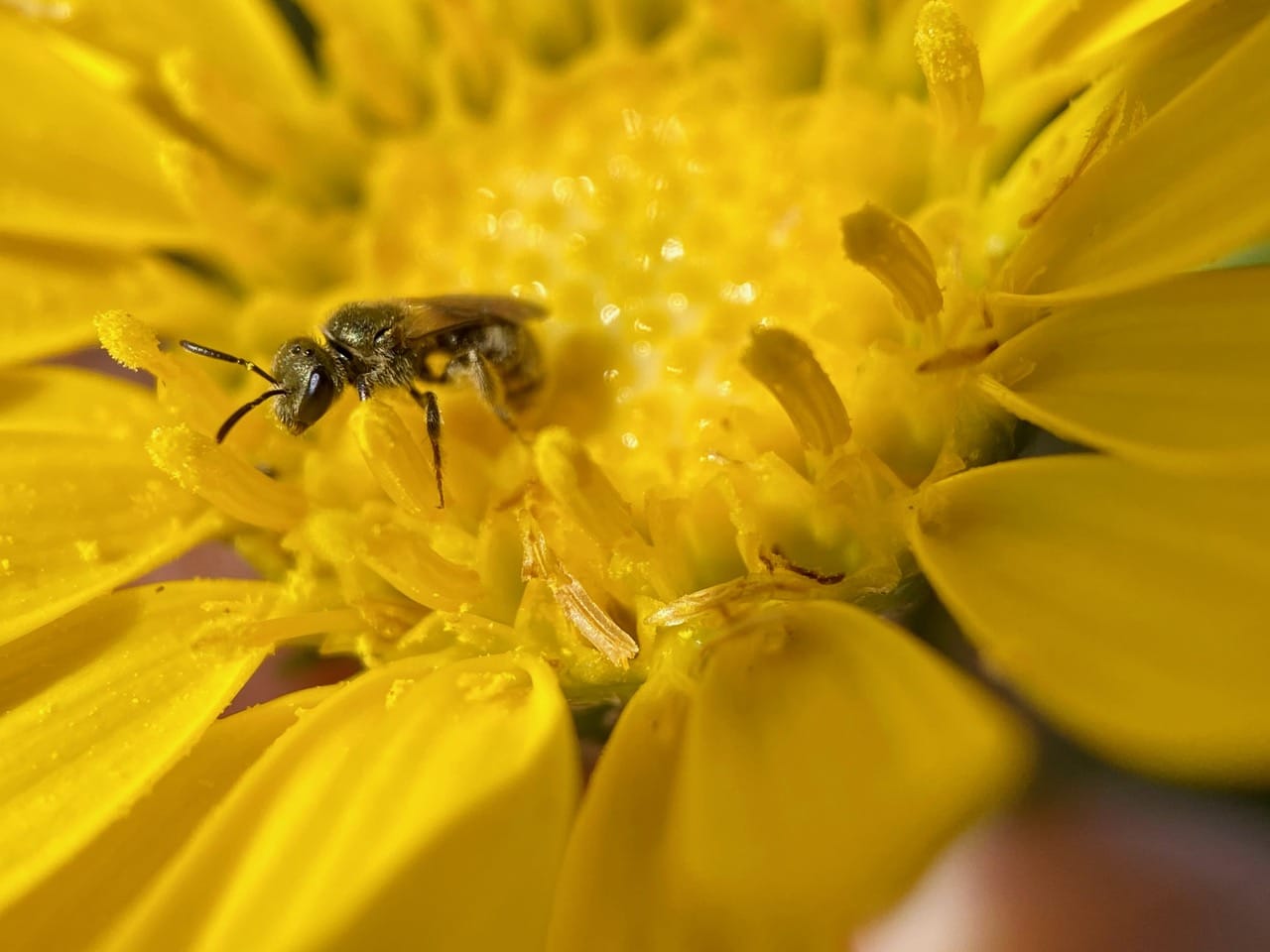
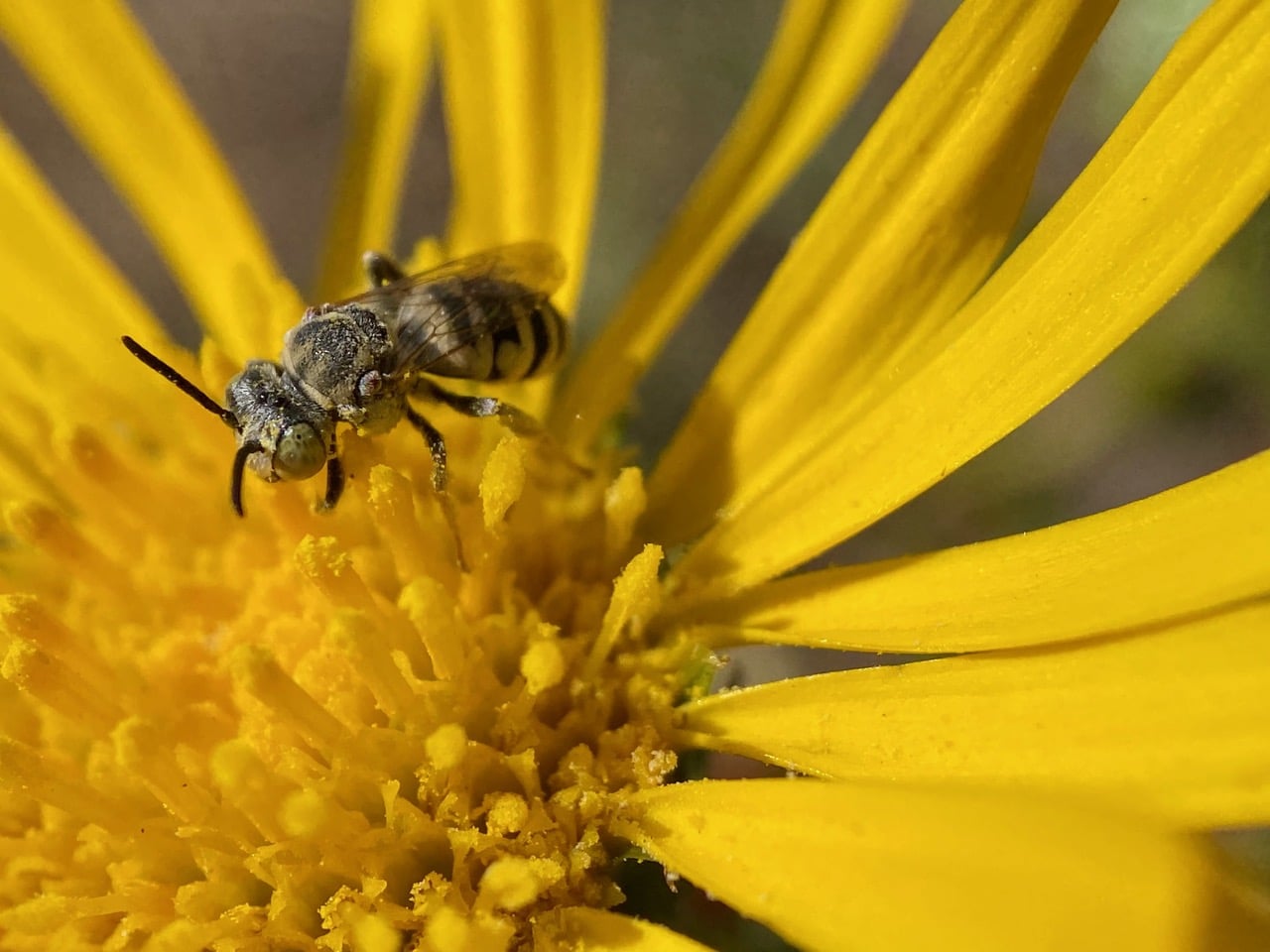
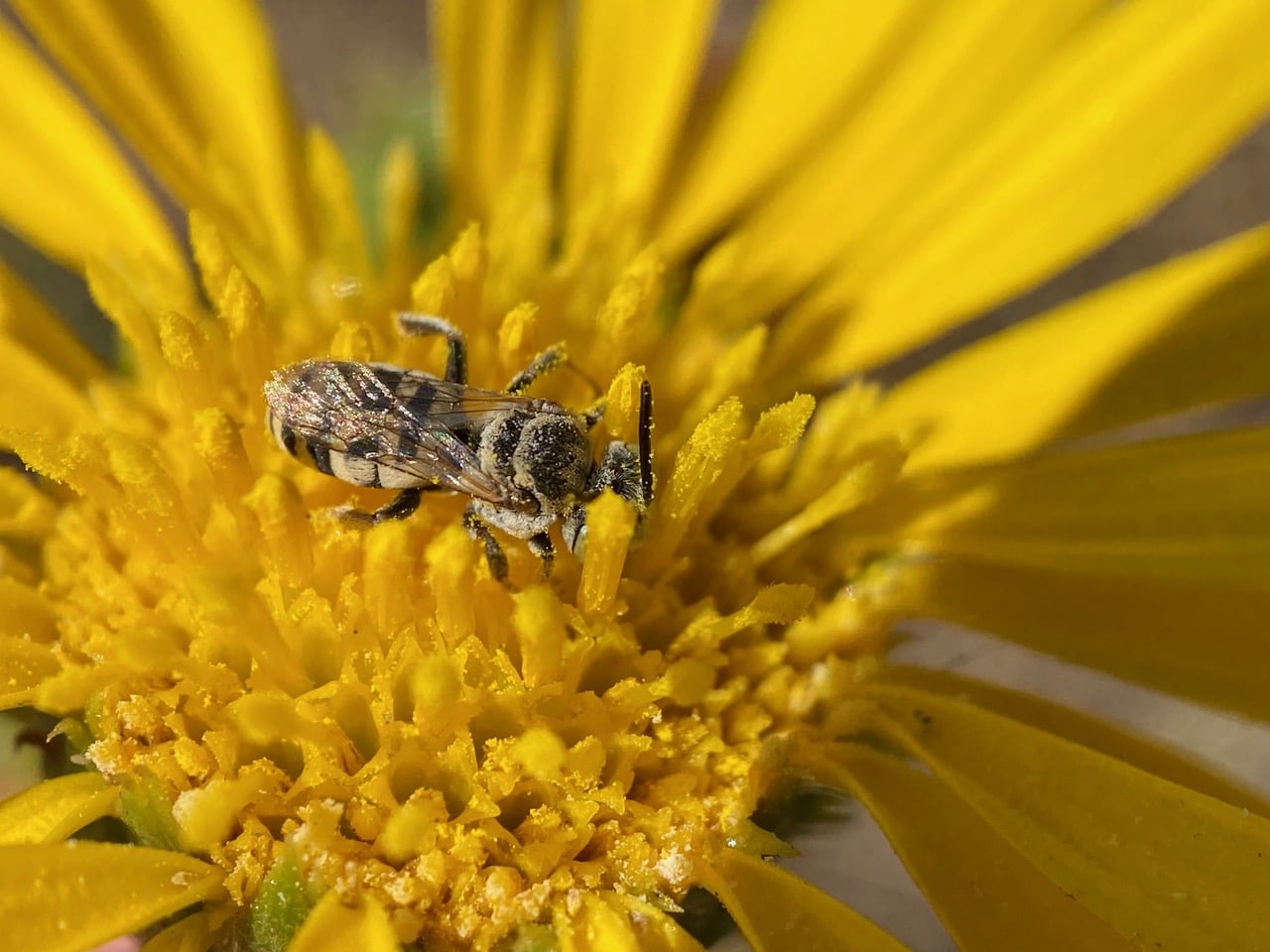
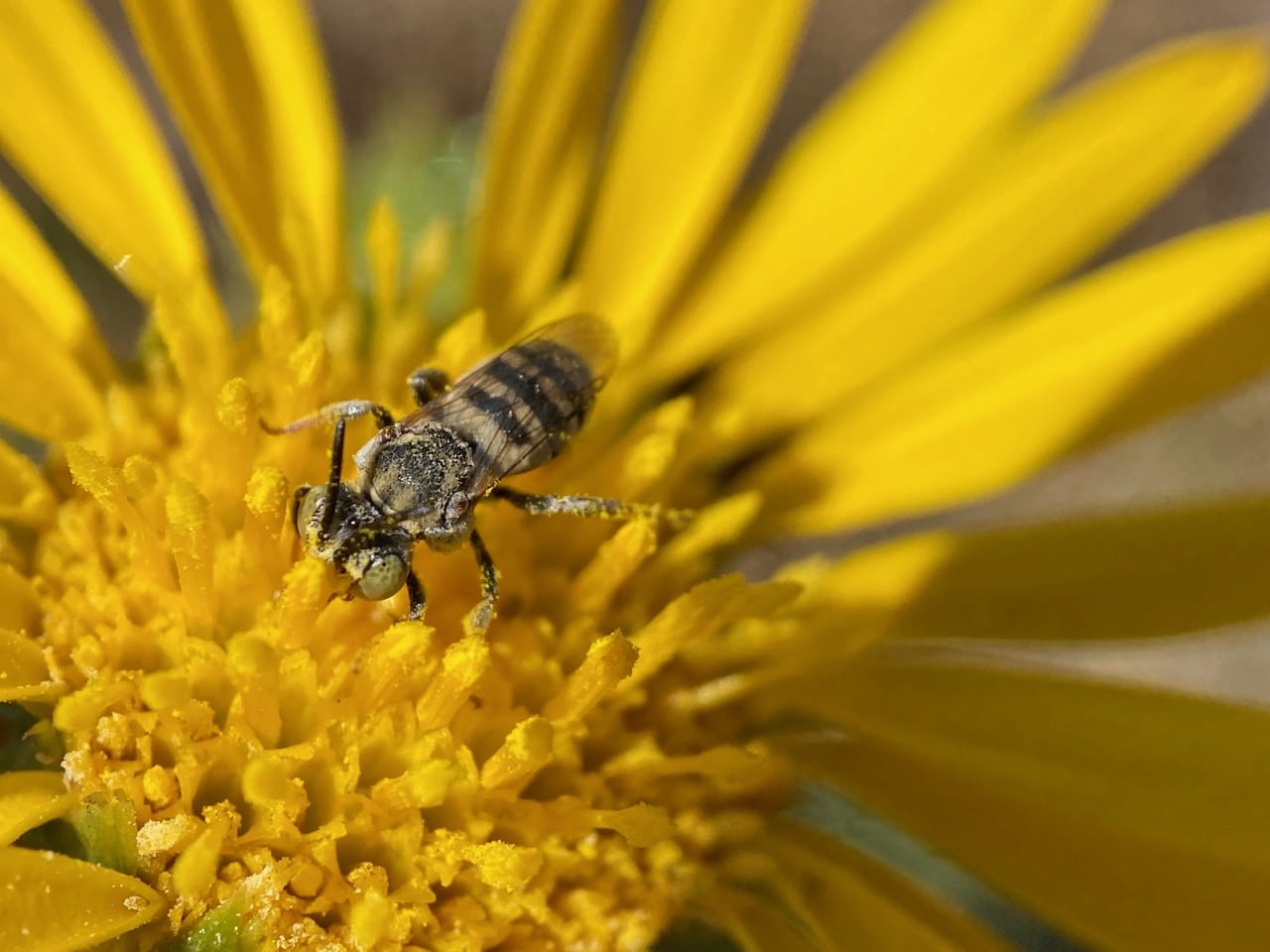
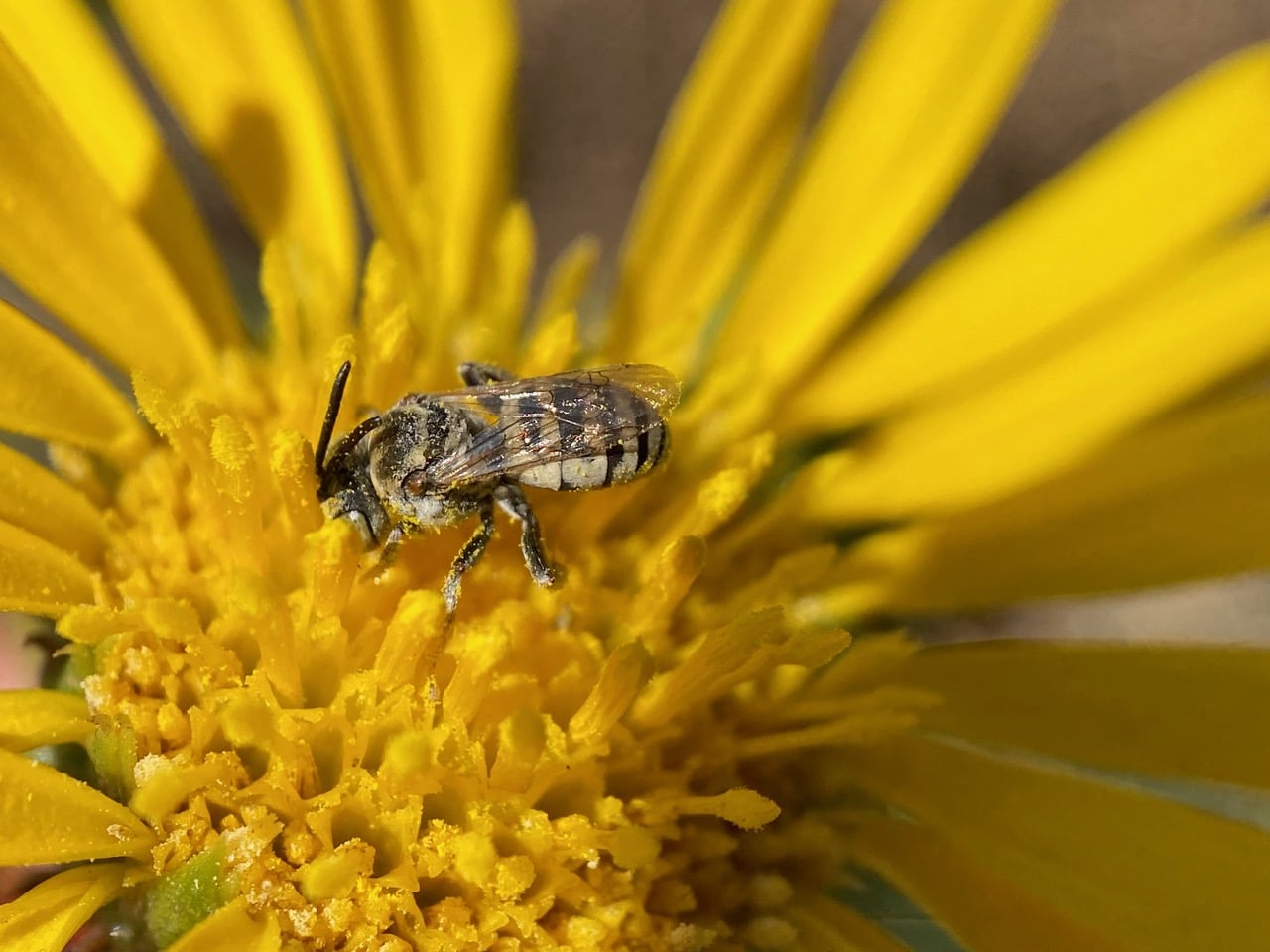
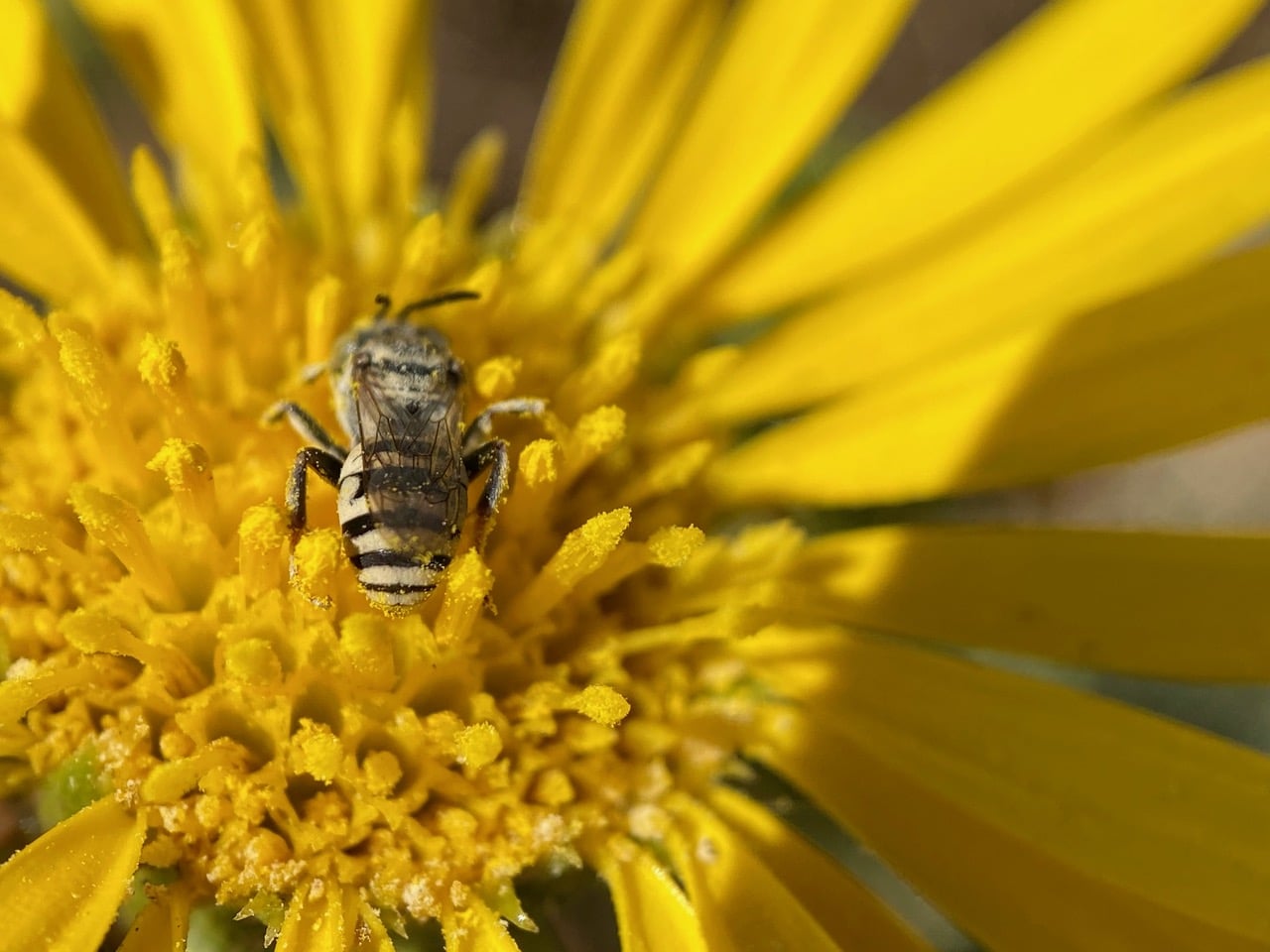
I have to reach for my camera when I spot this tiny, dark insect on a Grindelia flowerhead. It is a Metallic Sweat Bee, Lasioglossum (Dialictus) sp. (family Halictidae). How can the insect fly on a blustery day like this?
Lasioglossum species are found worldwide, and they constitute the largest bee genus. The subgenus Dialictus are the most likely to be seen in the U.S., with over 300 species of these tiny metallic bees. The majority of Lasioglossum are generalists. Because they are so abundant throughout the flowering season, the bees are often important pollinators. Their sheer numbers are enough to achieve excellent pollination of many wild flowers, especially of plants in the Asteraceae, which have shallow floral tubes that are easily accessed by these minute bees.
Lasioglossum are closely related to the genera Halictus and Agapostemon. These genera are commonly called “sweat bees” because of their attraction to human sweat, which they drink for its salt content. Lasioglossum are dusky black to brown slender bees with bands of hair on their abdomen. Female Sweat Bees (family Halictidae) carry pollen in the scopae on their entire hind legs and underside of their abdomen.
Dialictus is a subgenus of Sweat Bees belonging to the genus Lasioglossum. Most of the members of this subgenus have a subtly metallic appearance, and are small, about 3.4-8.1 mm in size. They are commonly found in Northern Hemisphere and are found in abundance in North America. As in the other members of the family Halictidae, the bees have very diverse forms of social structure, making them model organisms for studying the social behavior of bees.
Photos of Metallic Sweat Bees (Subgenus Dialictus) · iNaturalist
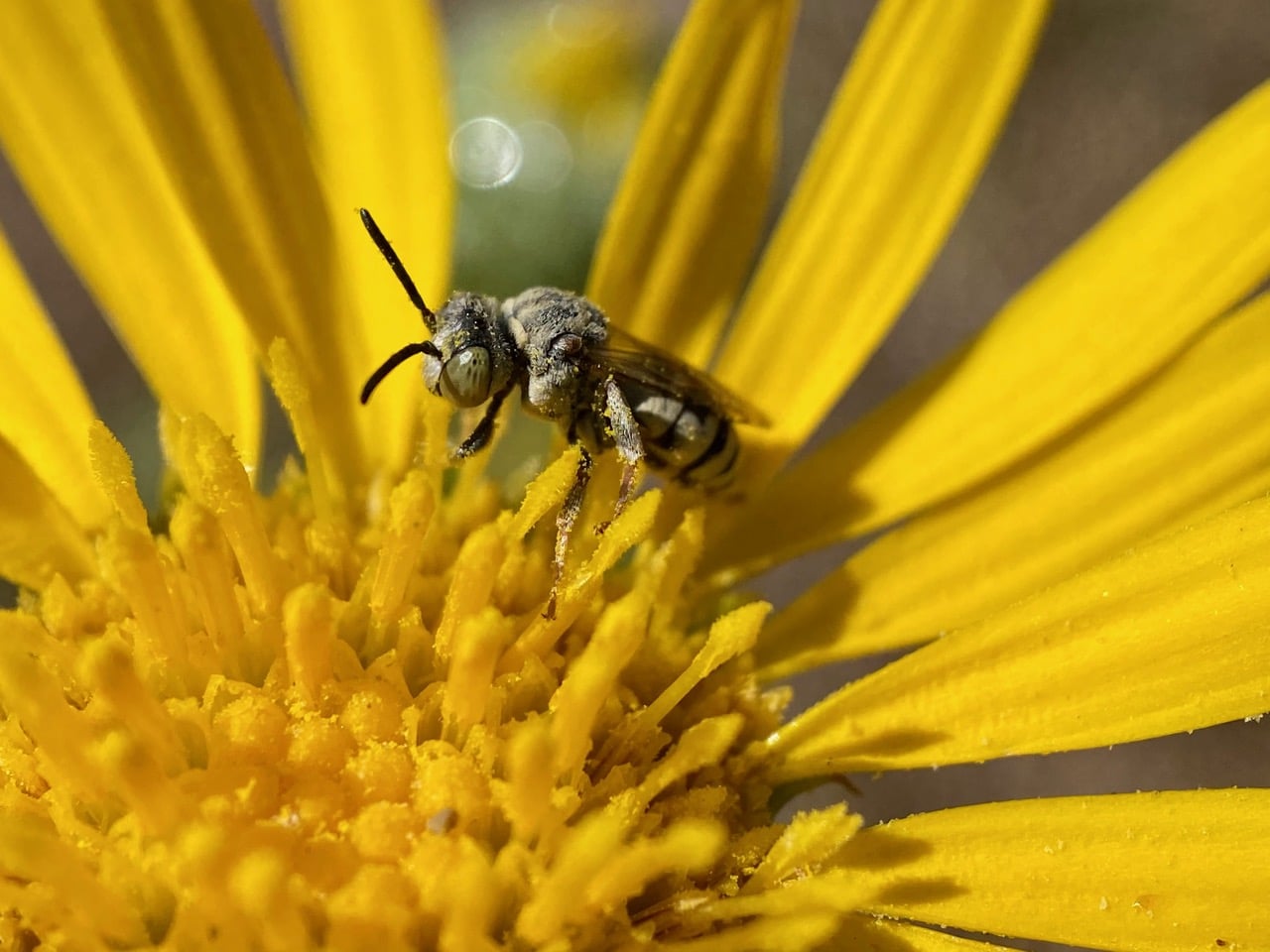
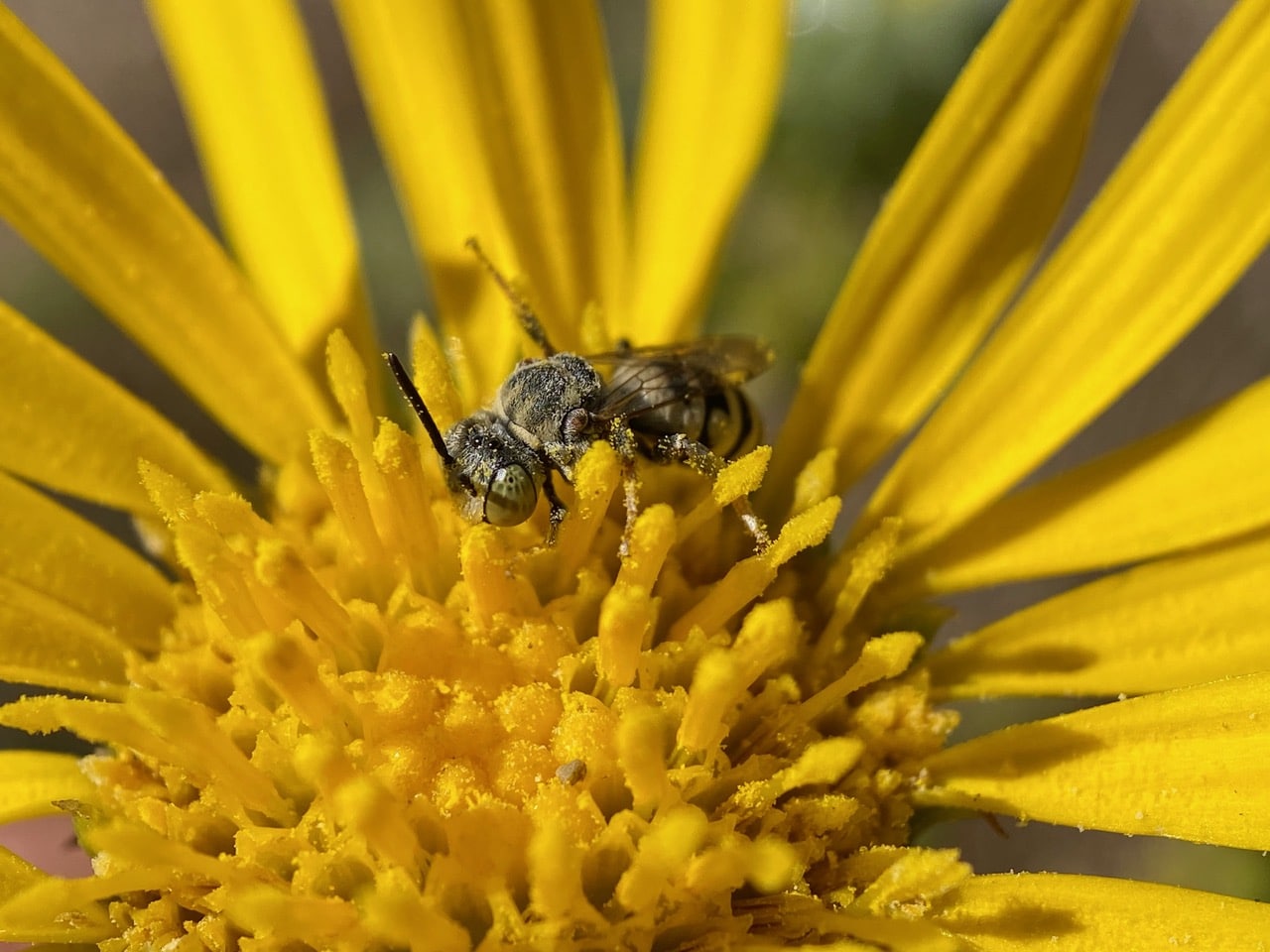
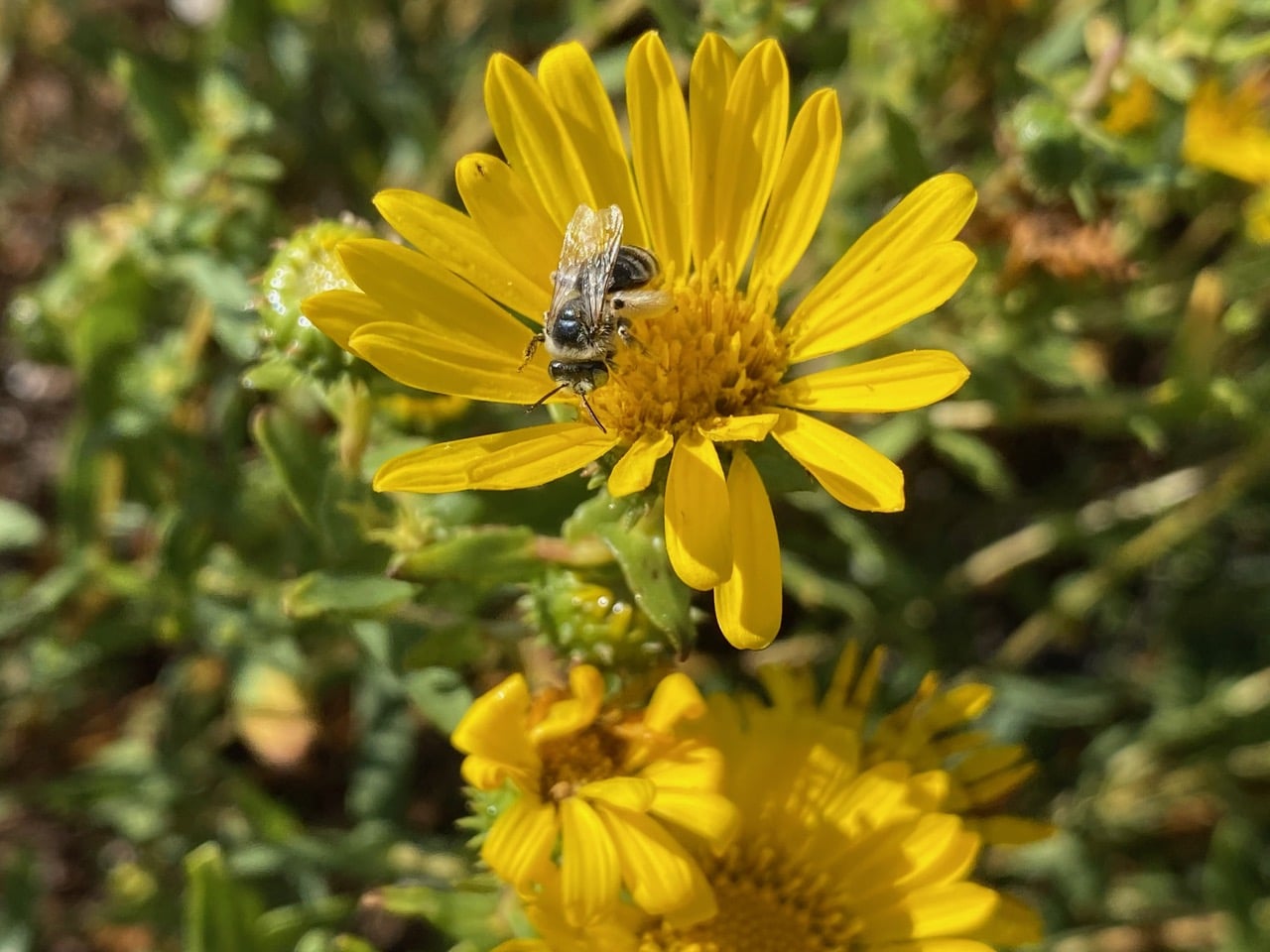
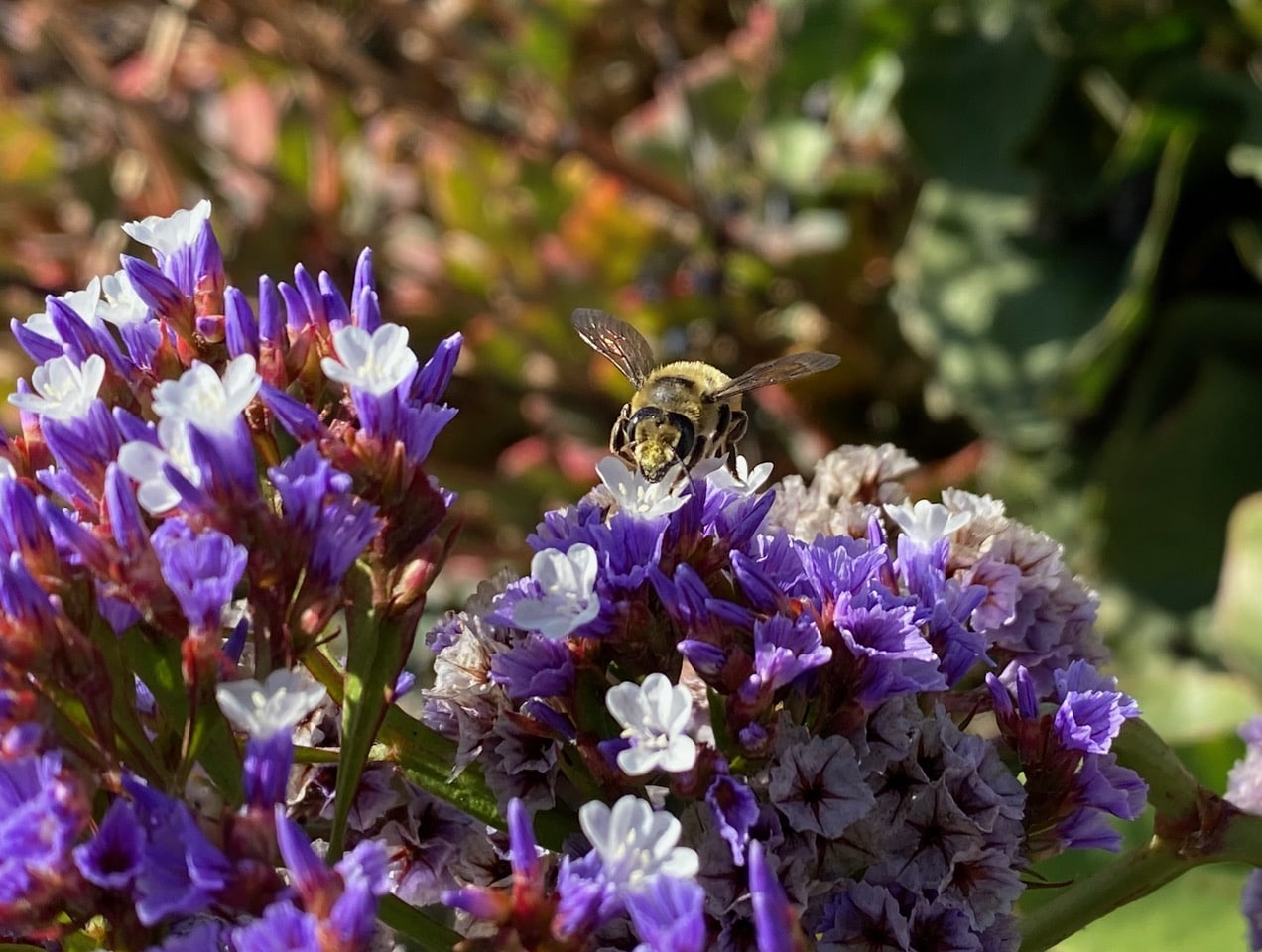
A small bee is in an adjacent flowerhead. My heart misses a beat when I see it through the macro lens. It is a Cellophane-Cuckoo Bee, Epeolus sp. (family Apidae).
The term cuckoo bee refers to a variety of different bee lineages which have evolved the kleptoparasitic behavior of laying their eggs in the nests of other bees, similar to the behavior of cuckoo birds. Female cuckoo bees lack pollen-collecting structures and do not construct their own nests. Cuckoo bees typically enter the nests of pollen-collecting species, and lay their eggs in cells provisioned by the host bee. When the cuckoo bee larva hatches, it consumes the provision in the nest, and kills the host larva. Many cuckoo bees are closely related to their hosts, and may bear similarities in appearance reflecting this relationship. Others parasitize bees in families different from their own.
Members of the genus Epeolus are medium-sized bees with bright patterns. They are most diverse in North America. All known species of Epeolus are kleptoparasites of Cellophane bees of the genus Colletes (family Colletidae). The female enters the nest of the female Colletes and lays an egg in an unsealed cell. The Epeolus larva consumes the egg of the host bee and then feeds on the pollen provisioned by the host for her own offspring. Colletes bees line their nesting cells with a cellophane-like covering which they secrete from the Dufour’s gland to protect the cell from moisture and fungal infections. Female Epeolus bees have spines on the end of their abdomen which they use to pierce U-shaped holes in this covering so that she can oviposit between its layers; she also secretes a small amount of glue so that the egg adheres to the cell.
Since the cuckoo bee does not collect pollen, she is visiting this flowerhead only for nectar. She is knee-deep among the flowers with her head buried in them most of the time.
Epeolus are often known as variegated cuckoo-bees. The bees have strong patterns of black and white on the thorax and abdomen. The patterns are made of tiny flat hairs lying flush with the integument or “skin” of the bee.
Unfortunately, the bee keeps its wings folded all the time, so I don’t have a clear view of its abdomen.
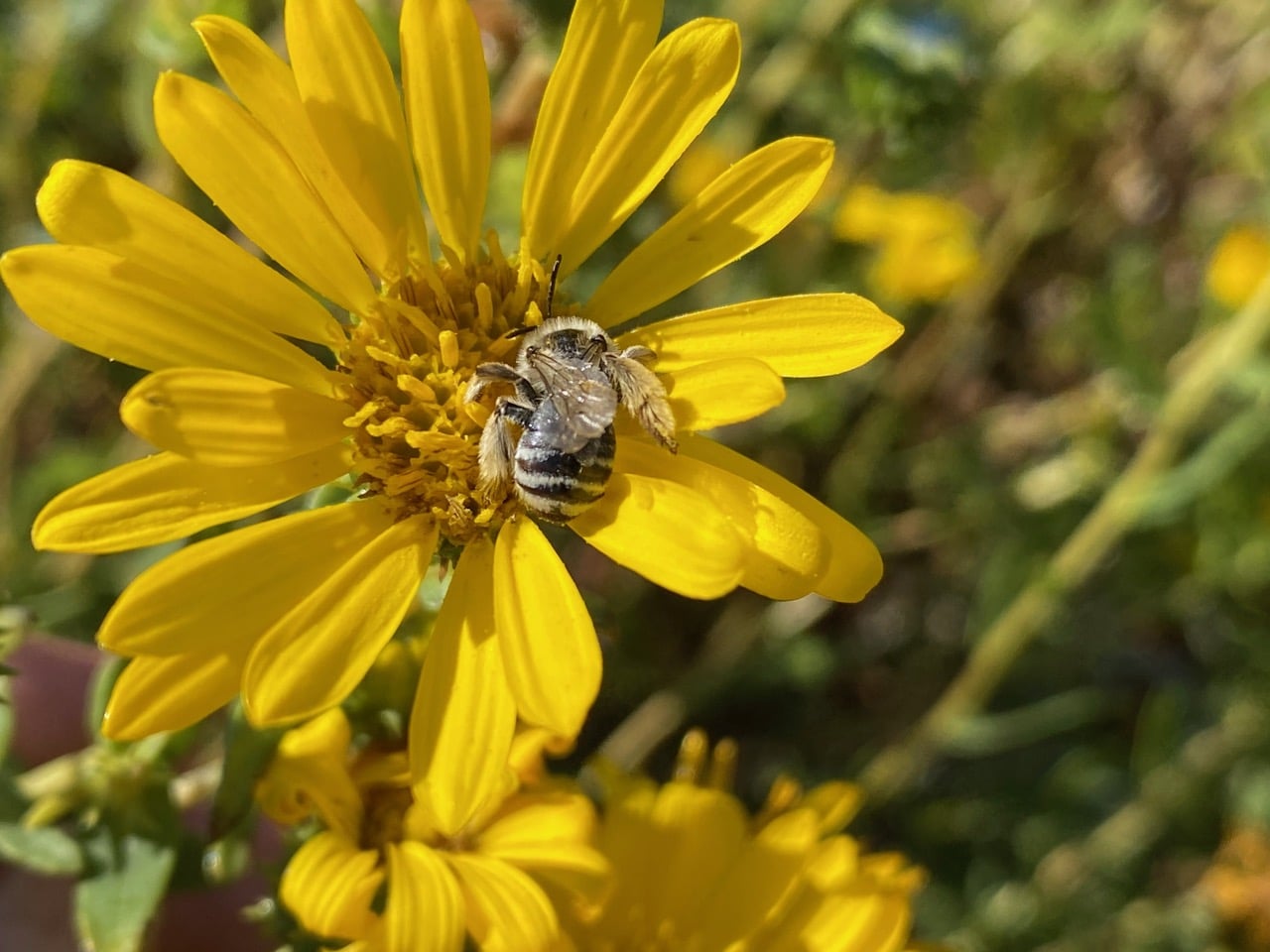
A female Summer Longhorn Bee, Melissodes sp. (family Apidae) is foraging on a Grindelia flowerhead that is waving around wildly in the wind.
I grab the flower stalk to steady the flowerhead. The female has yet to gather pollen – the shaggy scopae on her hind legs are still empty.
Another bee braving the winds to forage on the Grindelia flowers – a male Texas Striped Sweat Bee, Agapostemon texanus (family Halictidae).
The genus Agapostemon is widespread and abundant throughout North America. These ground nesters are most diverse and abundant in temperate regions and southwestern U.S. deserts. Agapostemon are commonly called “sweat bees” because they are closely related to, and resemble bees in the Halictus and Lasioglossum genera. Unlike those bees however, Agapostemon are not attracted to human sweat.
Agapostemon are brightly colored metallic green or blue bees measuring 7 to 14.5 mm long. Most species have a metallic green head and thorax, and black-and-yellow striped abdomen; some females are entirely bright green or blue. Females carry pollen on scopal hairs located on their hind legs. Agapostemon are generalists. Like other members of the family Halictidae, they are short-tongued and thus have difficulty extracting nectar from deep flowers. Males are often seen flying slowly around flowers looking for females. The bees favor flowers with high densities. They are active summer to fall.
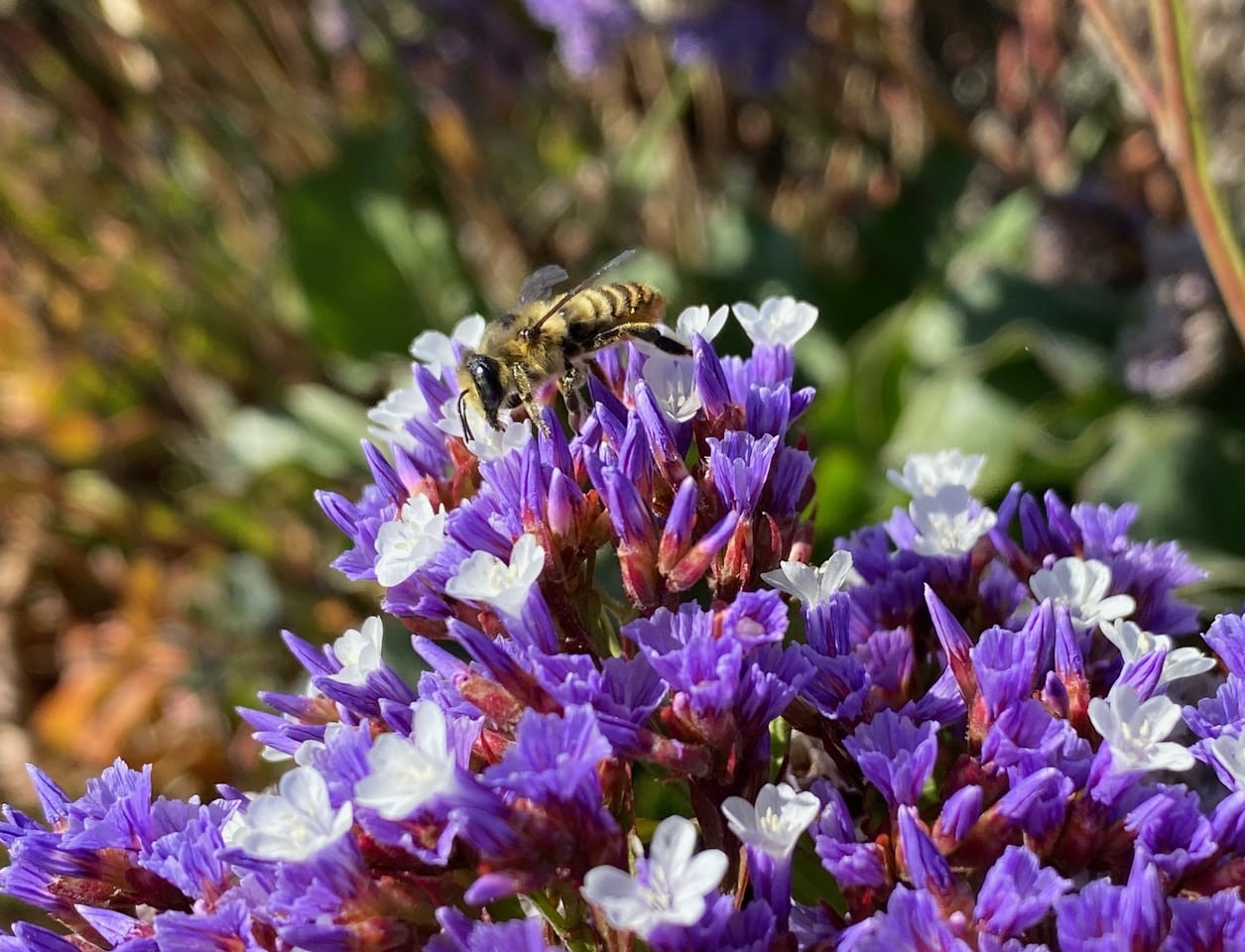
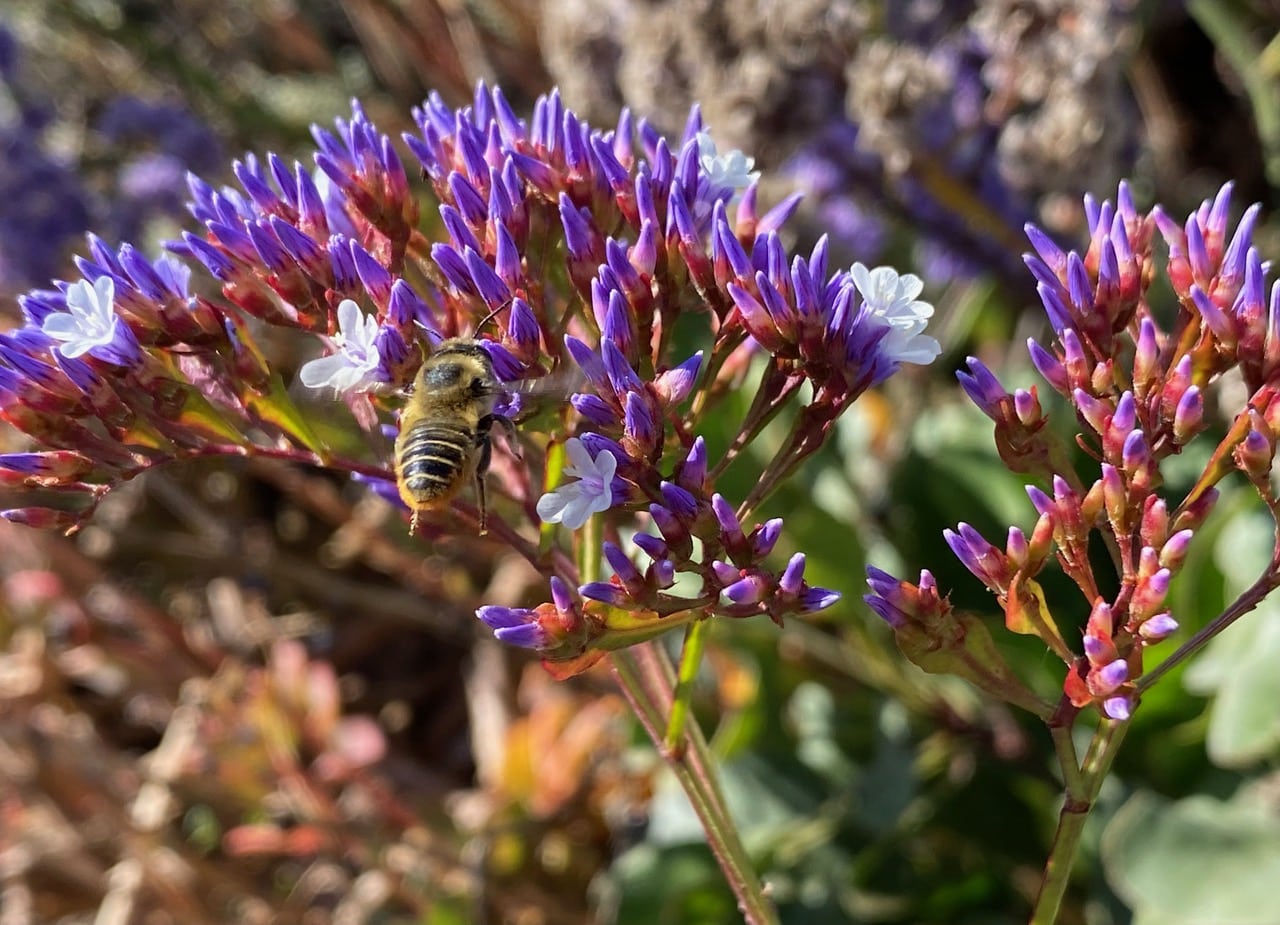
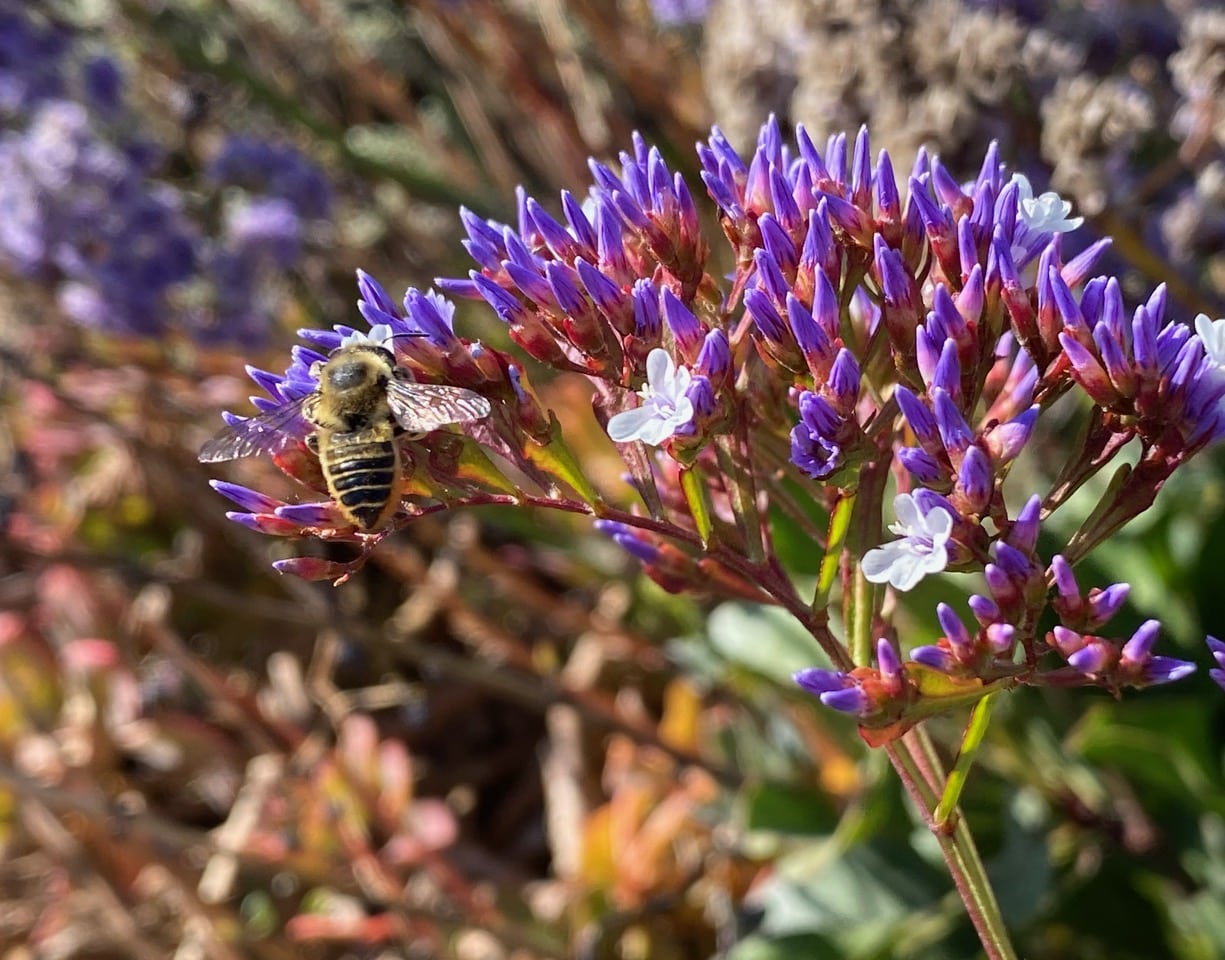
A female Western Leafcutter Bee, Megachile perihirta (family Megachilidae) is foraging on an inflorescence of the exotic Perez’s Sea Lavender, Limonium perezii. The flowers are white, subtended by the trumpet-shaped purple calyces. Unfailingly, the bee always goes for the white flowers. Note that the bee does not have scopa on her hind legs like many other female bees. Her scopa is visible on the underside of her abdomen, as those orange-colored shaggy hairs.
Leaf-cutter Bees, Megachile sp. (family Megachilidae) are stout-bodied, usually with pale hair on the thorax and stripes of white hairs on the abdomen. Females usually have a triangular abdomen with a pointed tip, and males’ faces are covered with dense, pale hair. Flight season is from May into September, with peak activity from June to August.
Solitary females construct nests in tubular cavities, including hollow stems, tree holes, and abandoned beetle burrows in wood. Many use holes drilled into wood, straws, or other manufactured tunnels. Females cut pieces from leaves or flower petals for use in the construction of brood cells. Most Megachile females are generalists when foraging for pollen. Pollen is transported in dense scopae on the underside of the abdomen.
The bee’s movements are fast and furious, especially on this windy day. I have to hold on to the inflorescence to take these pictures.
As the Leafcutter Bee lifts her head from the flower, we get a glimpse of her mandibles. Megachile means “big jaws”. Female Leafcutter Bees use their powerful mandibles to cut pieces of leaves and petals to line their nest cells.
The Leafcutter bee next visits a younger inflorescence of Sea Lavender.
As she lands vertically on a flower, we get a view of her triangular, pointed abdomen. The males have a much more rounded abdomen.
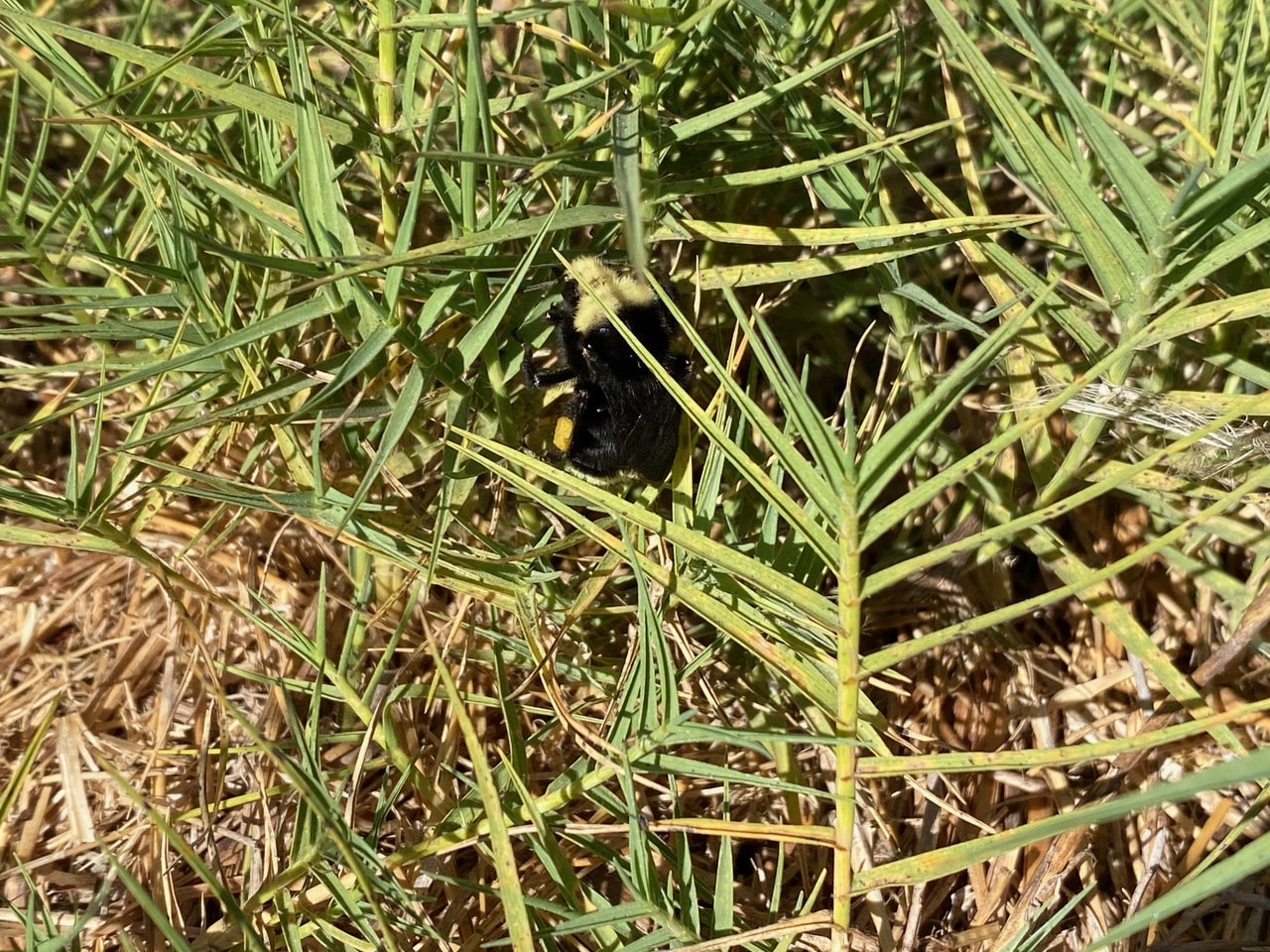
A large Yellow-faced Bumble Bee, Bombus vosnesenskii (family Apidae) lands on the low-growing Salt Grass by the path. She looks like a fresh queen. I am rather surprised that she has a small amount of pollen in her pollen baskets. I didn’t know that queens collect pollen at this time as they are not raising any young. She rests for a while, her abdomen pumping as if panting. Then she crawls down through the tangle of grasses and disappears from view. Ah, maybe she has found a safe place for winter hibernation somewhere in the ground! Lately I have been seeing huge bumble bee queens flying low over the ground in search of hibernation sites. After mating, the fresh queens produced this year are the only bees that will overwinter, while the rest of the colony, including the old queen dies. Emerging when the ground warms up next spring, each queen will establish her own colony.