

Pollinator Post 9/2/23 (3)
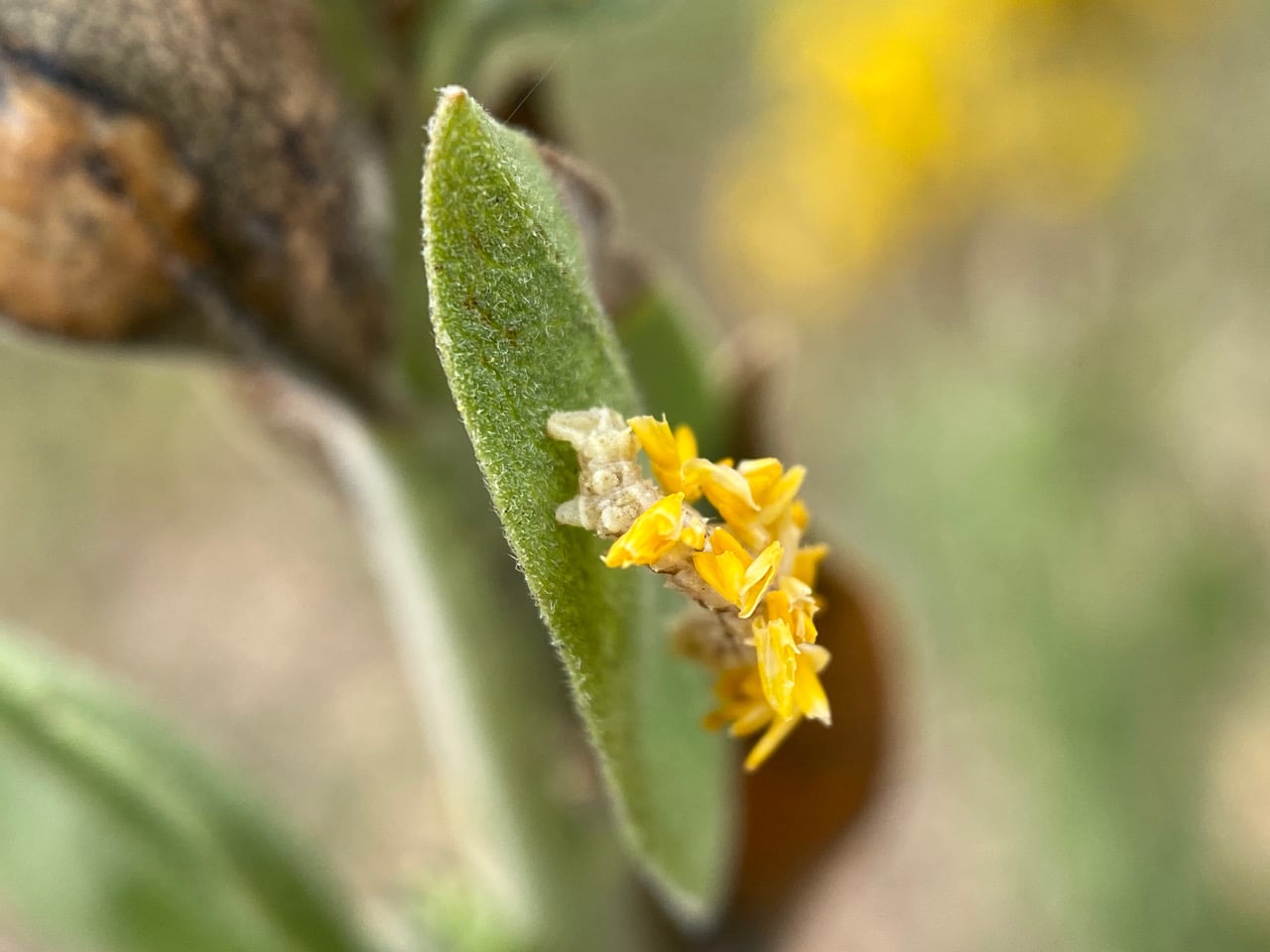
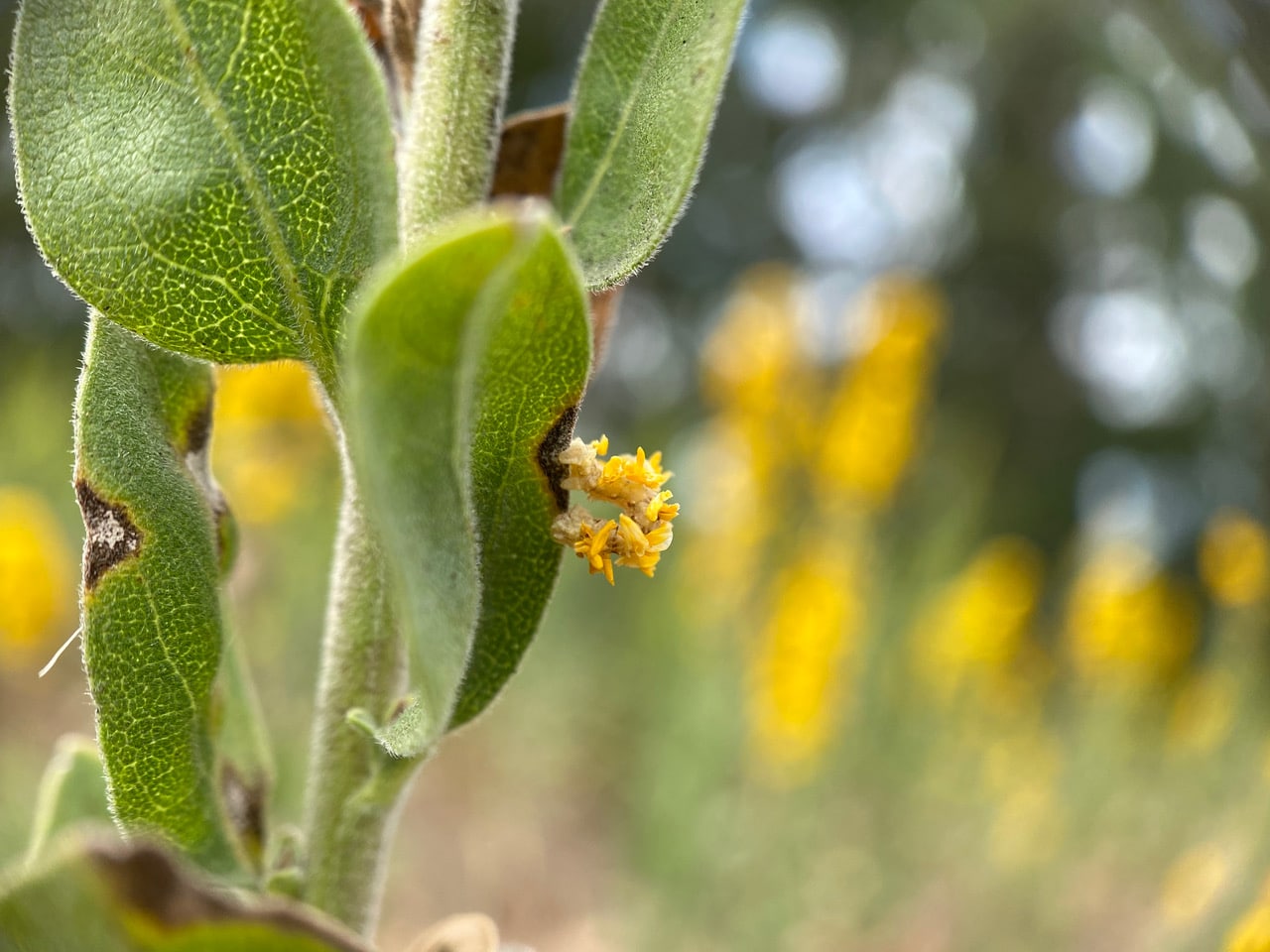
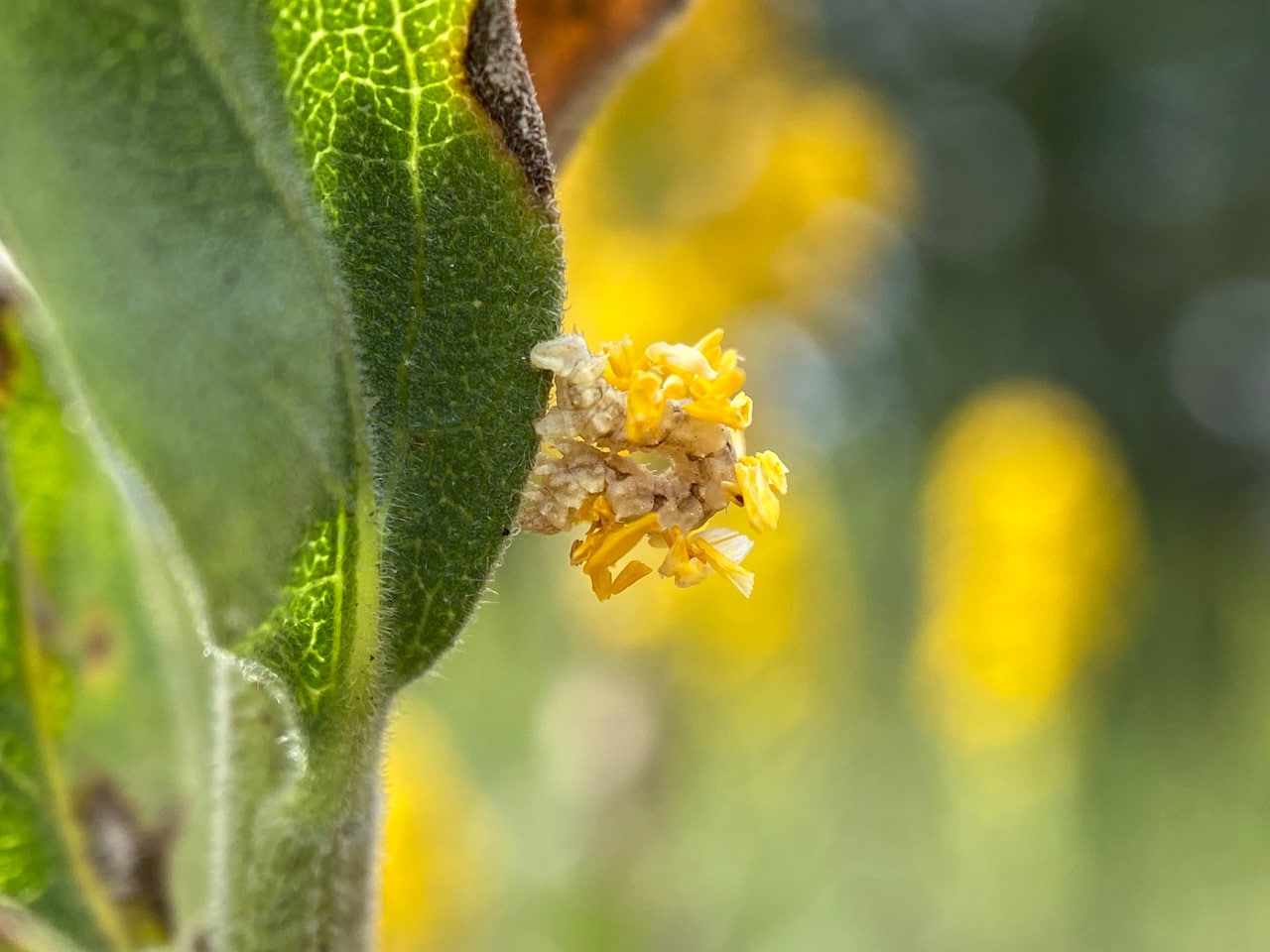
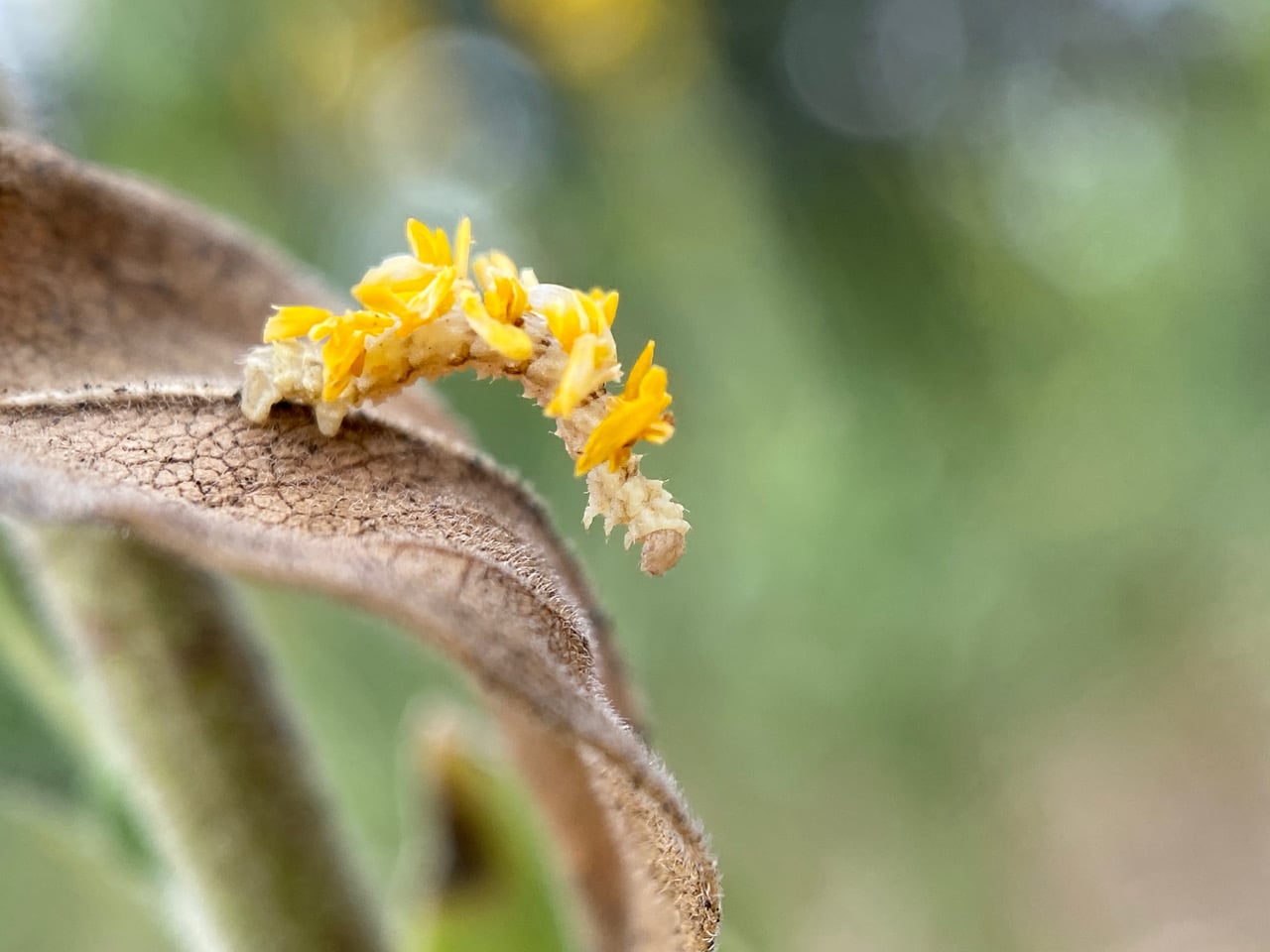
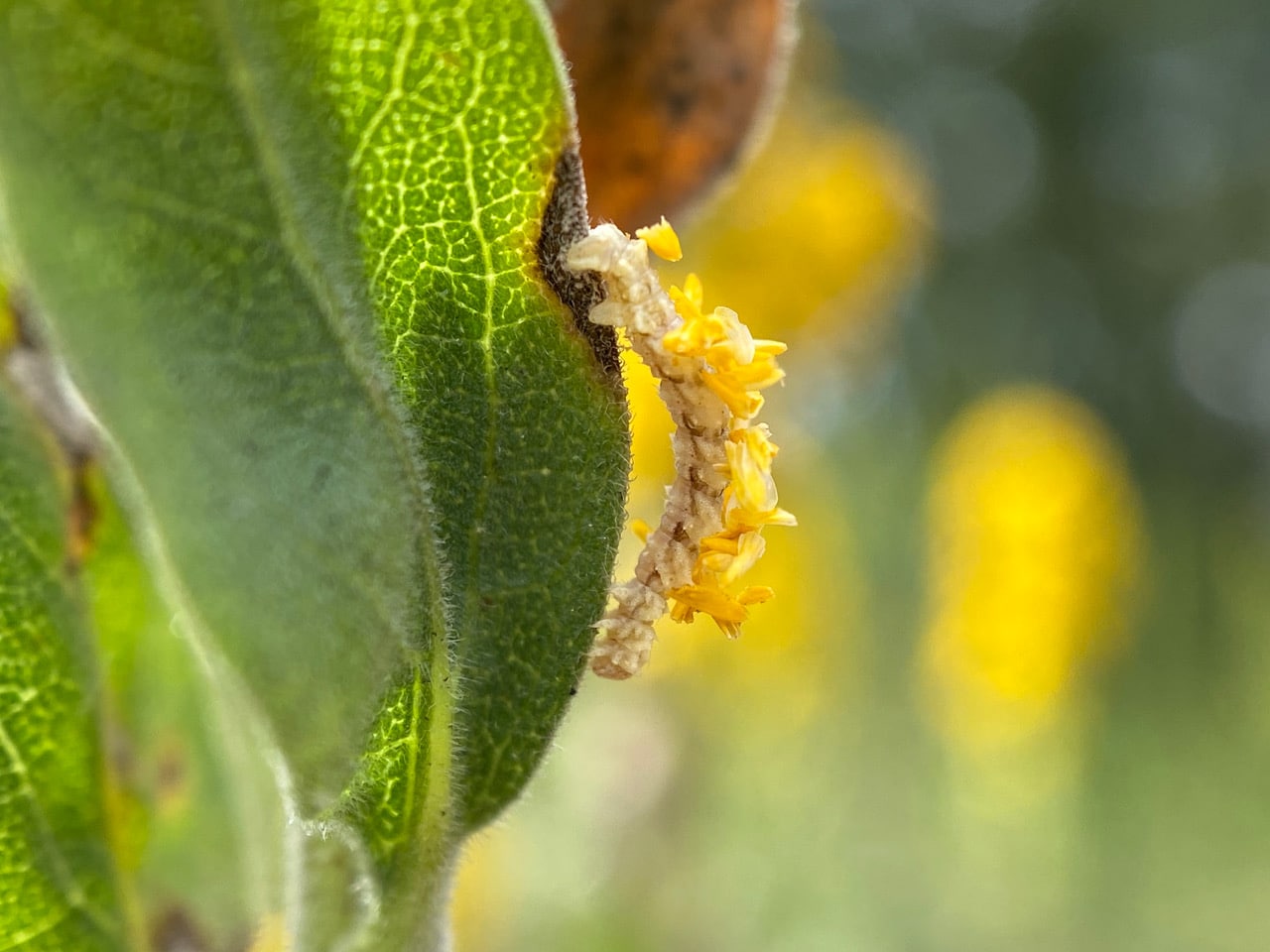
While photographing insects on the flowers of California Goldenrod, Solidago velutina ssp. californica I notice a small movement out of the corner of my eye. It looks like a small cluster of flower debris quivering in the breeze on a leaf. Putting on the macro lens, I discover a pale caterpillar underneath the pile of flower debris. A Camouflaged Looper!! I have read about these amazing caterpillars, but never dreamt that I would ever see one.






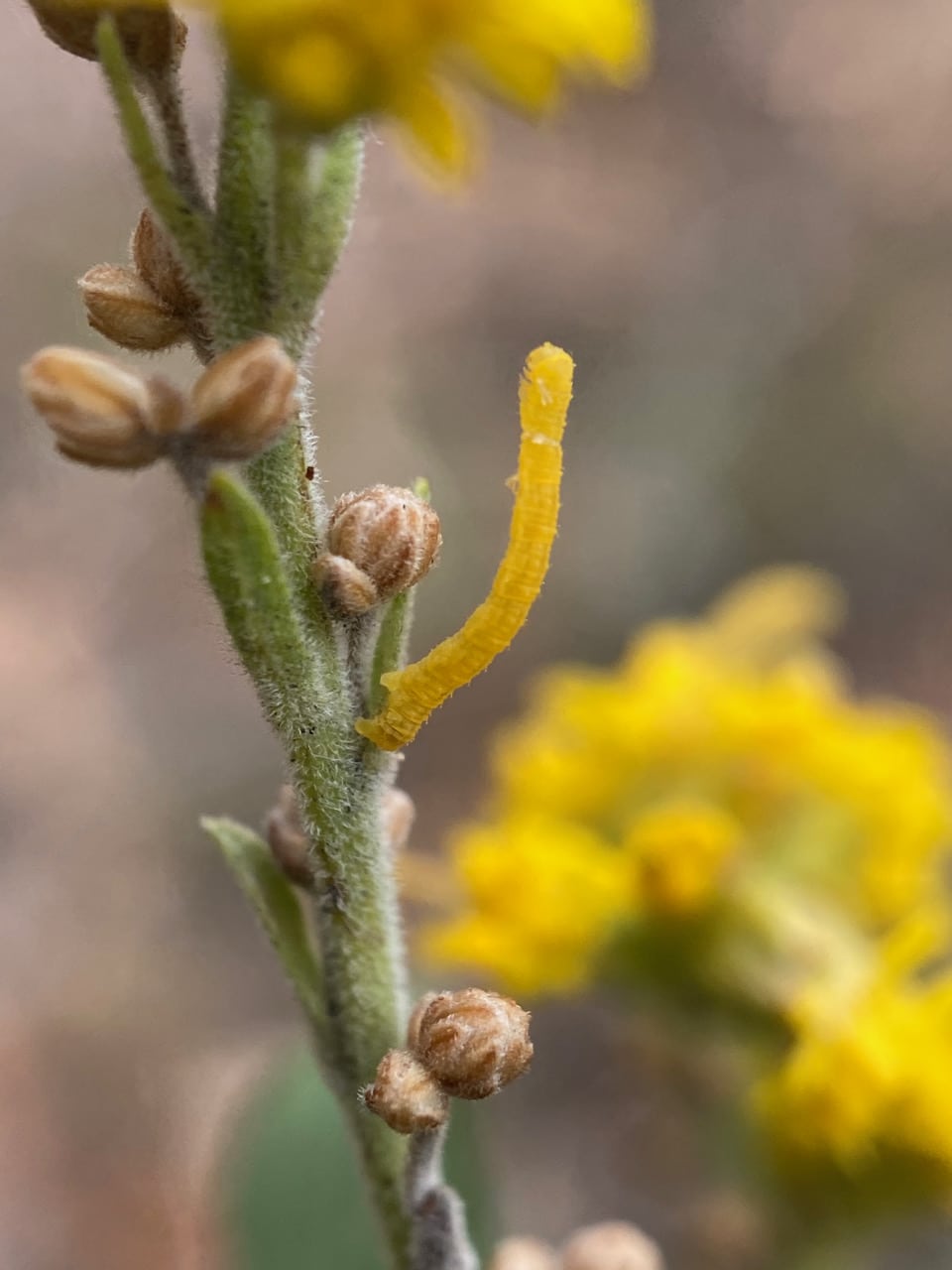
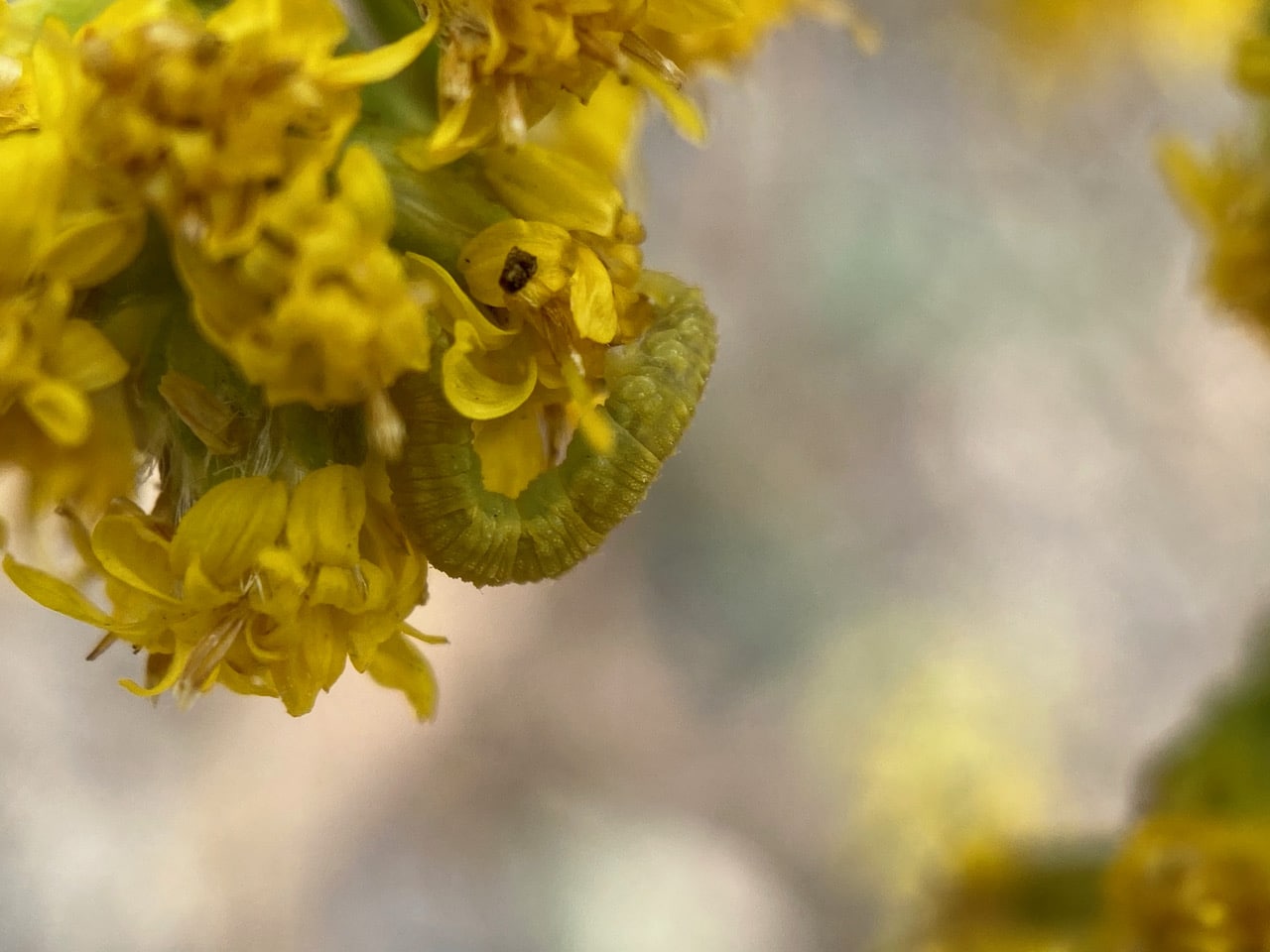
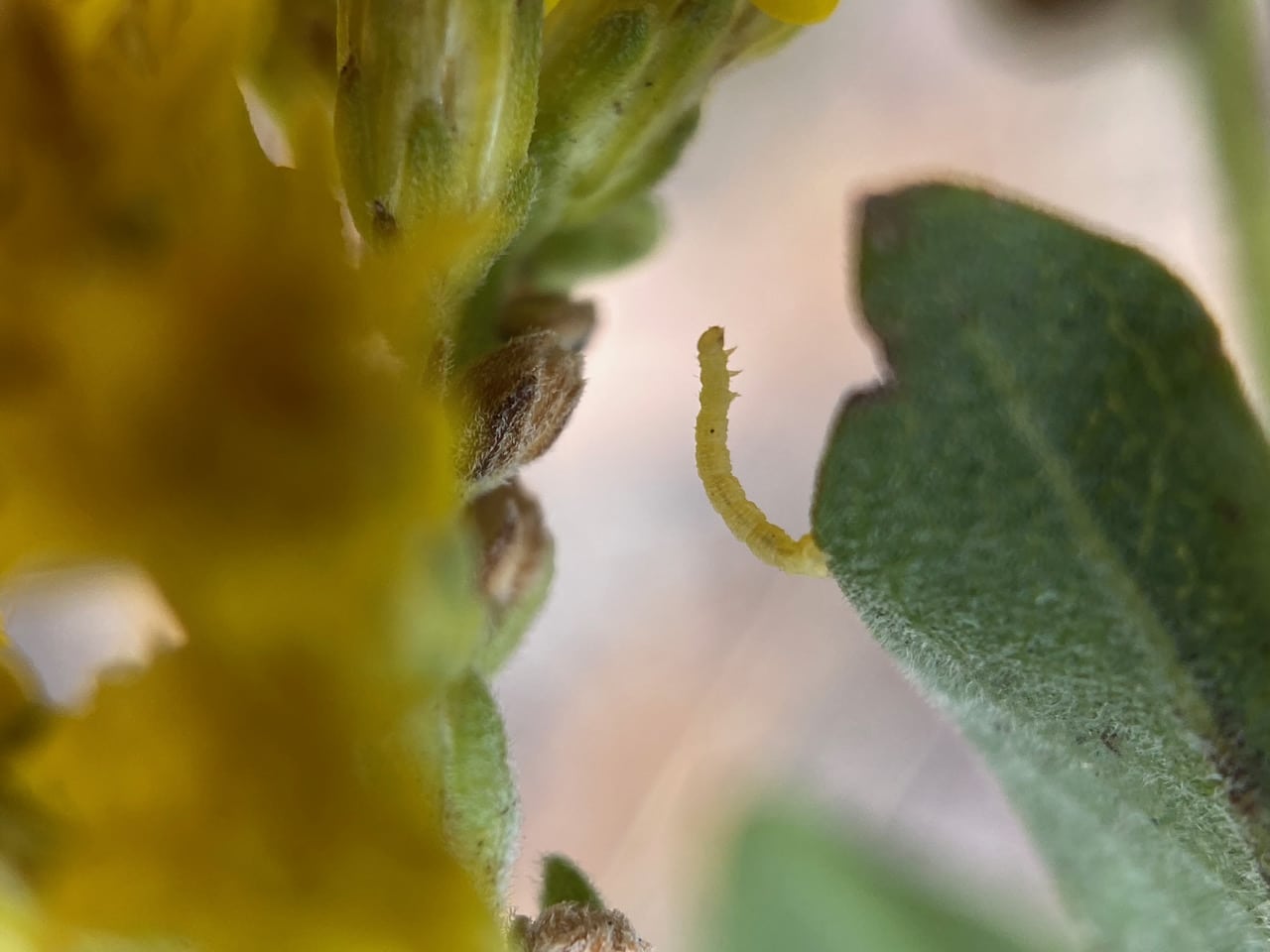 There are other caterpillars in the goldenrod inflorescences I checked. Most are tiny, and yellowish. All are inchworms (family Geometridae), but none use plant parts for camouflage.

Camouflaged Loopers belong to a group of moth species commonly referred to as inch worms because of the way they move, inching along, front legs reaching out, body stretched to its limit, grabbing ahead, pulling and looping the rest of the body forward. The caterpillar appears to be measuring the earth as it moves along, hence the name Geometridae for the family (Geo = earth, metron = measure).
The Camouflaged Looper is the larva of the Wavy-lined Emerald Moth, Synchlora aerata (family Geometridae), a species found throughout much of North America. The larvae feed on many plants in the family Asteraceae, as well as a variety of other flowering plants.
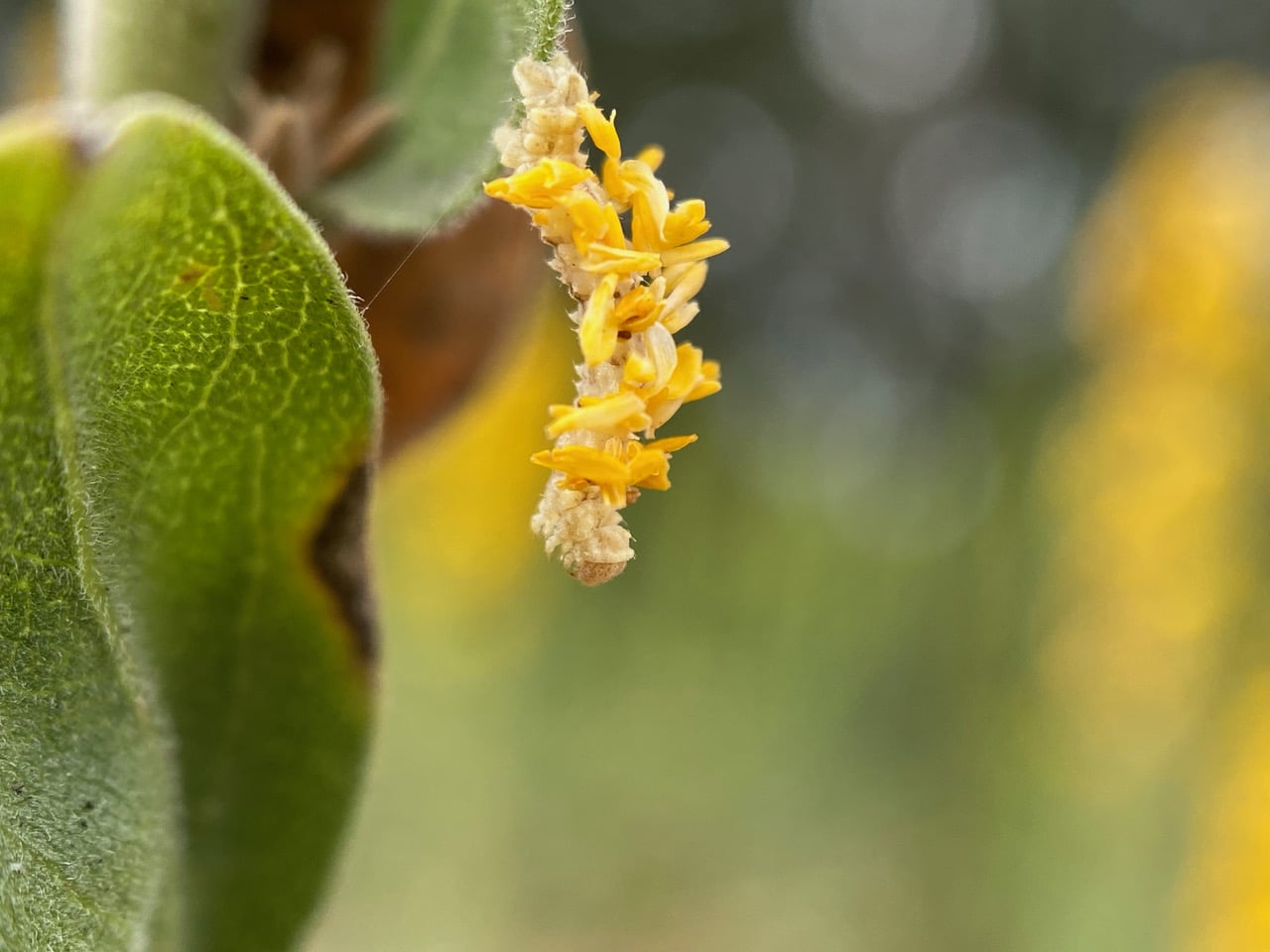
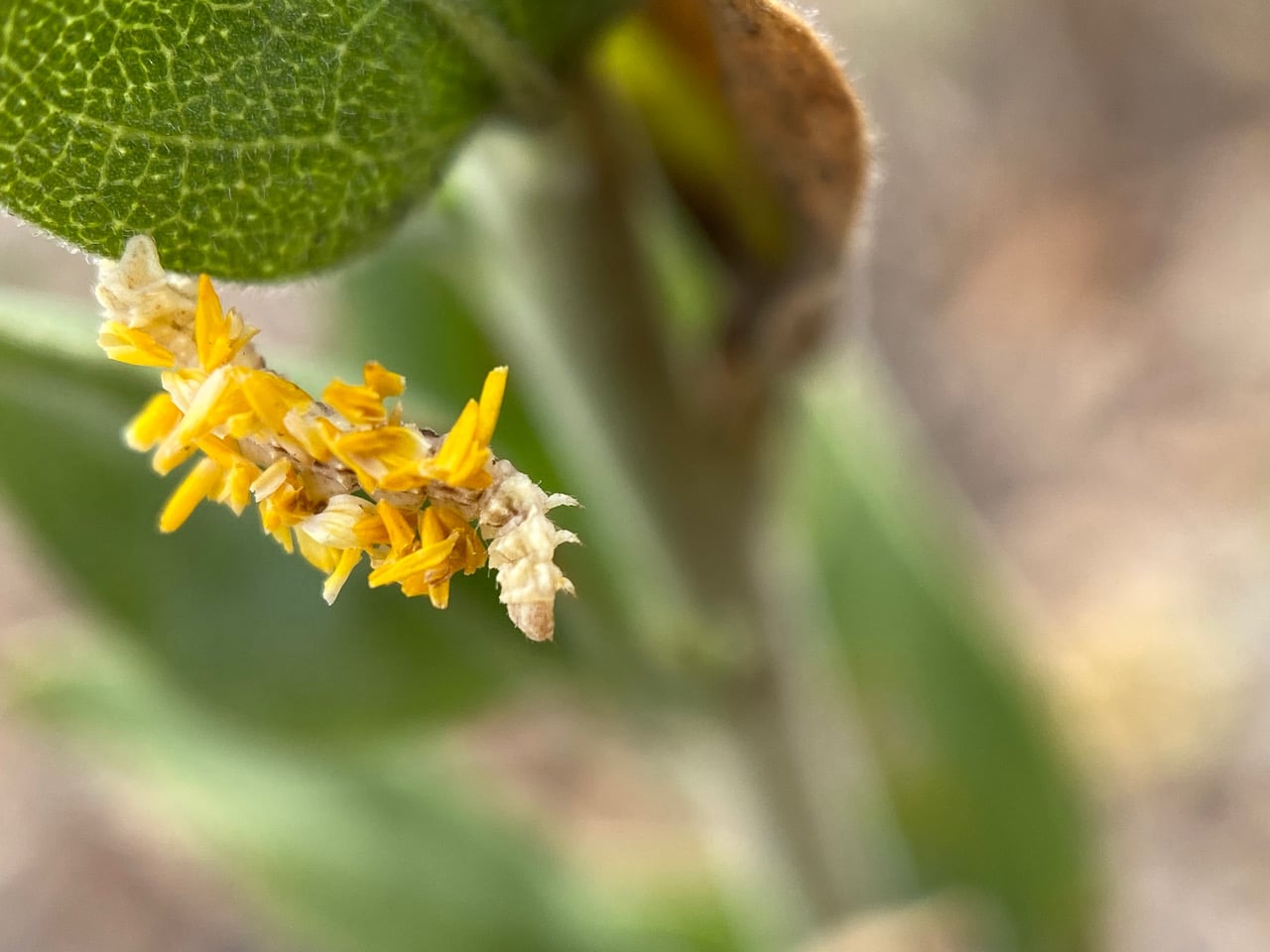
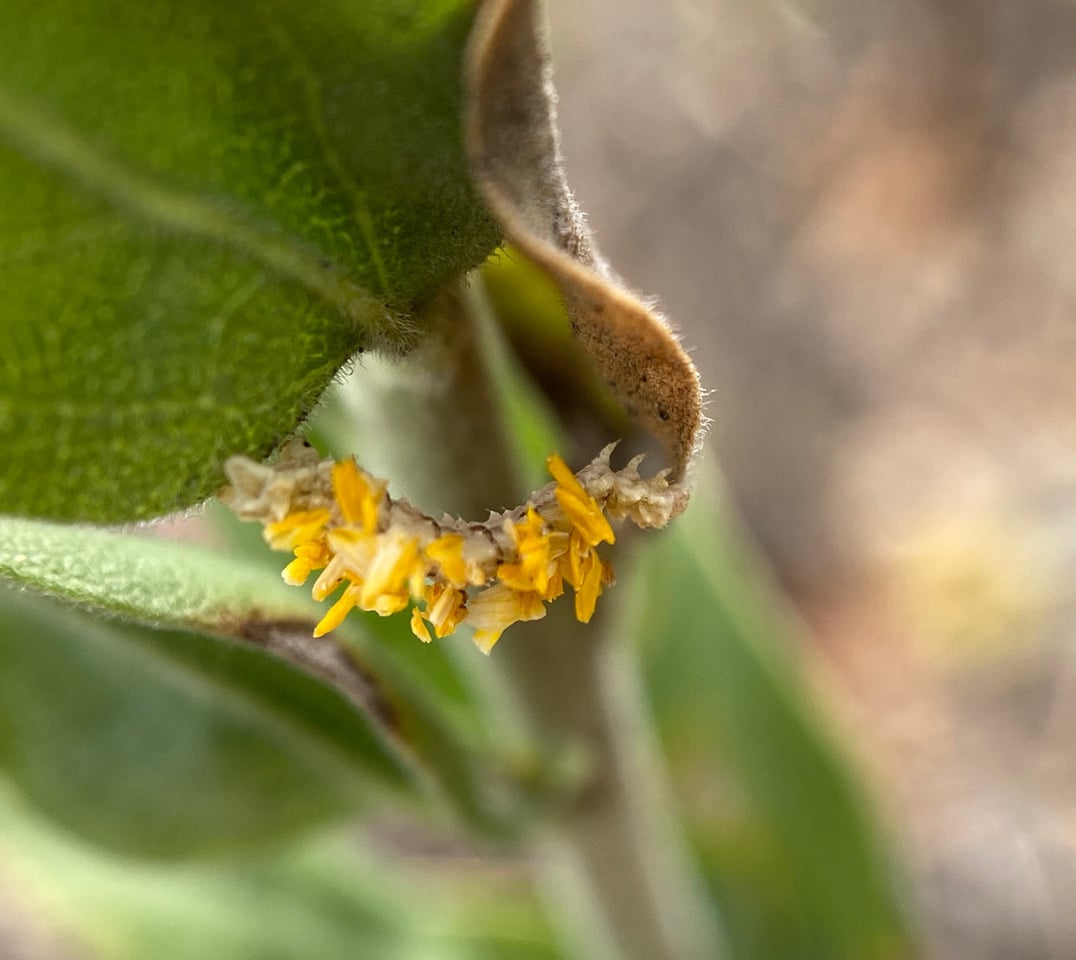
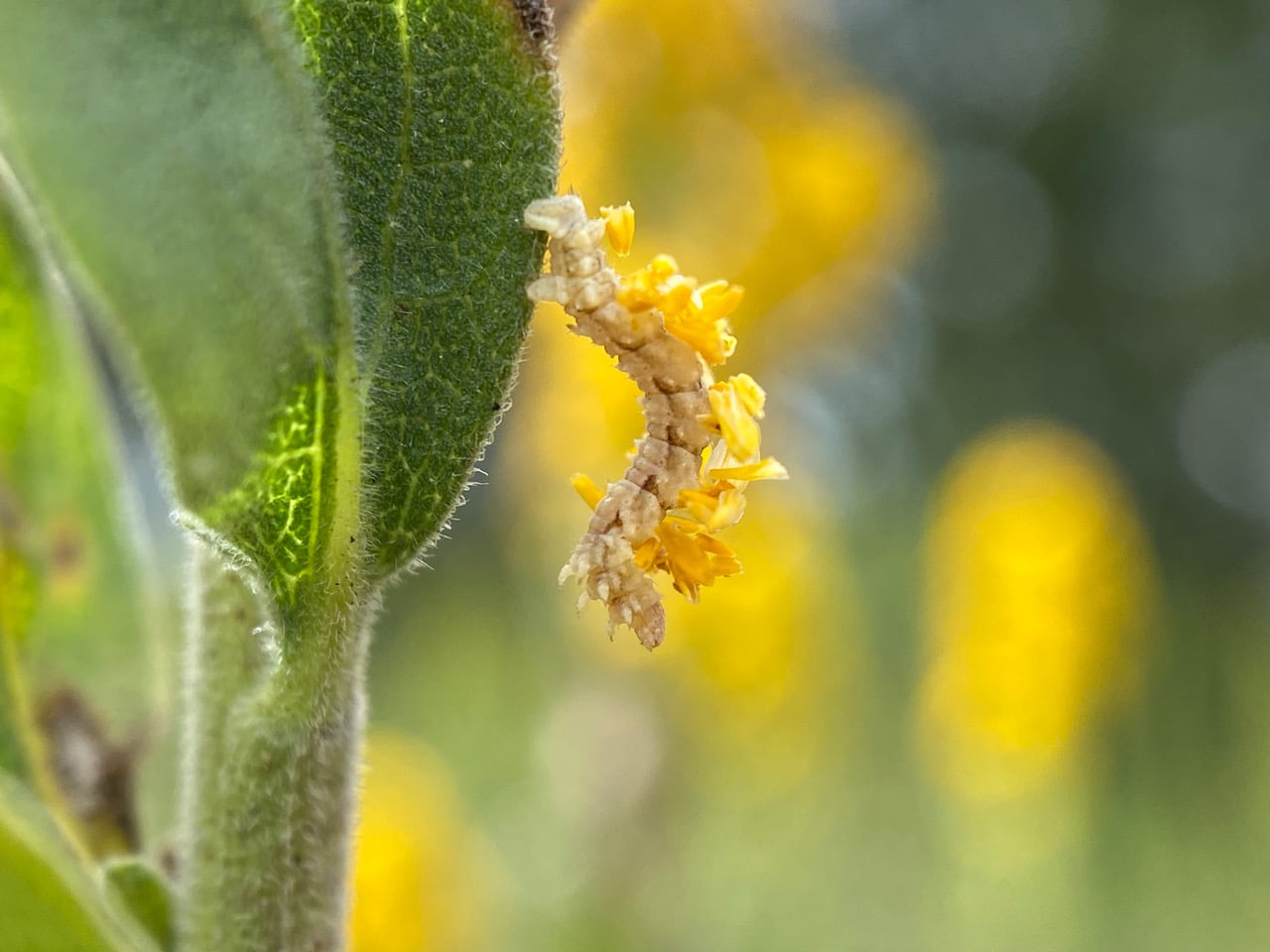
Our little caterpillar is heading downward. With its anal proleg anchored to a leaf, it stretches its body downward to seek the next perch.
See those true legs behind the caterpillar’s head? Each pair extends from a thoracic segment. All the thoracic segments are devoid of the camouflage. Apparently the caterpillar is not capable of attaching the plant debris onto its thorax.
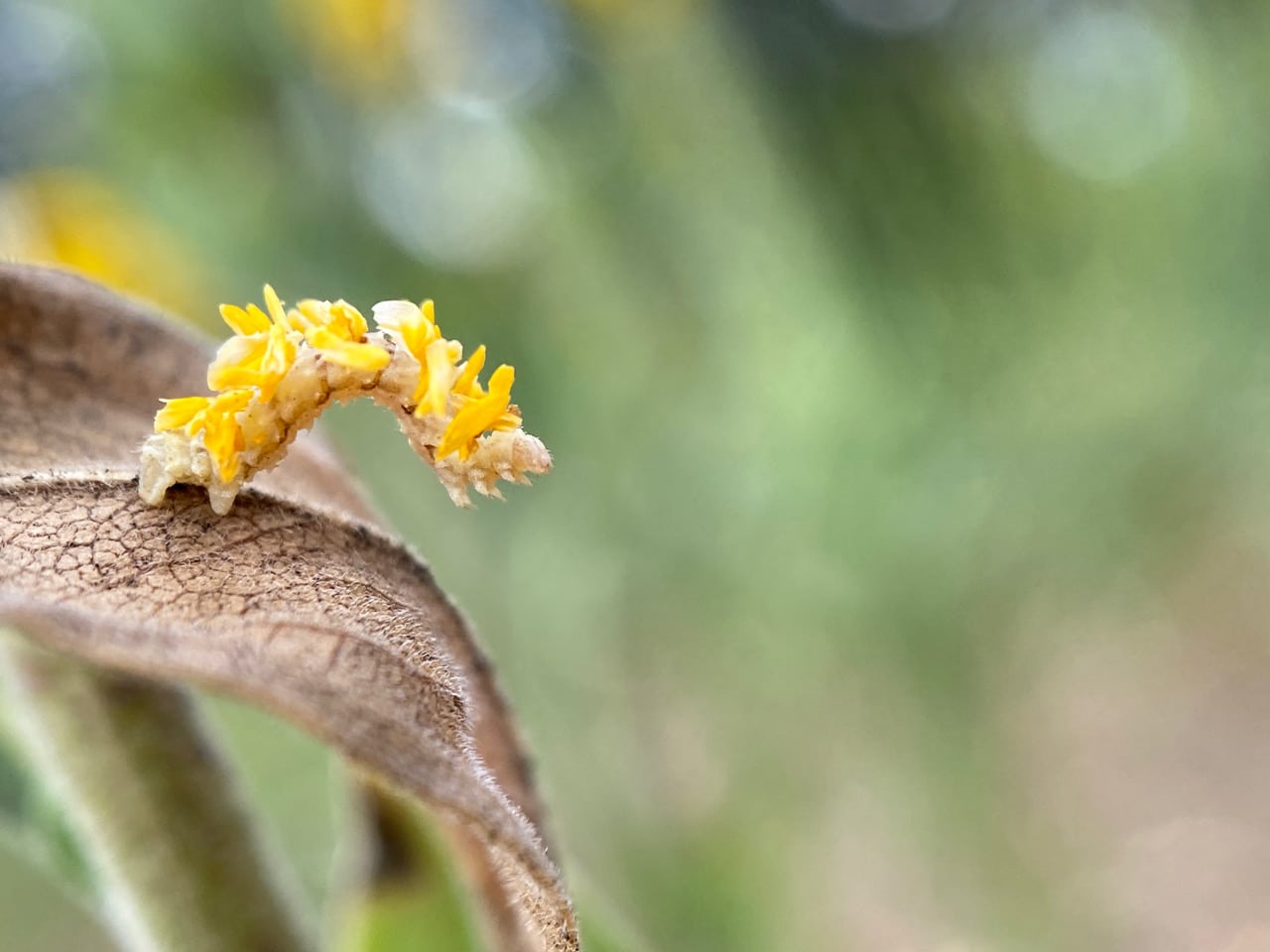
This view gives a perspective on the size of caterpillar on its host plant. The inchworm is about 1/2” – 5/8” long.
The Camouflaged Loopers are well known for covering themselves with the plant they feed on. The caterpillar chews off small pieces of flower petals, seed heads, leaves, whatever plant material is available, and attaches the pieces to its back with a little silk from the spinnerets beneath the caterpillar’s mouth. The caterpillar must do this several times during its life as a larva. Each time it molts the camo falls off with the old skin.
When the Camo Looper begins feeding on a different kind of flower, it discards the previous disguise and replaces it with pieces of the new flower. The disguise is probably most useful for hiding from hungry birds. Scientists posit that the Camouflaged Looper’s ability to change disguise allows it to have more varied diet than other caterpillars because it isn’t restricted to eating only those flowers or plant parts that it resembles in appearance.
The following pictures show the looping movement of the Camouflaged Looper downward. Why is the caterpillar heading down the plant, away from the flowers it has been feeding on? Is it ready to pupate? In the ground/leaf litter?
Fascinated, I watch the Camouflaged Looper for about half an hour as it makes its way down the plant. I then decide to look for more caterpillars in the goldenrods. When I come back 15 minutes later, the Camo Looper is nowhere to be found on the plant. Has it reached the ground, and is now in the leaf litter? Is that where it was heading? For pupation?
There is scant information on Camouflaged Looper pupation, although I did find some photos of cocoons:

The Caterpillar Lab states: “They build loose cocoons out of petals and silk and spend just a few weeks as a pupa (spring, summer), and overwinter (fall) if placed in the refrigerator.”
Another source mentions that the caterpillar will attach itself to the stem or underside of the leaf and weave silk and petal parts creating a perfectly camouflaged cocoon.
There are other caterpillars in the goldenrod inflorescences I checked. Most are tiny, and yellowish. All are inchworms (family Geometridae), but none use plant parts for camouflage. Are these different species of Geometrid caterpillars? Or do the Camouflaged Loopers only put on their costume at a later instar? Or maybe these are newly molted Camouflaged Loopers that have yet to put on their disguise?