

Pollinator Post 9/18/26 (3)

A small bee with black-and-white striped abdomen is perched on flower umbel of Fennel, Foeniculum vulgare.
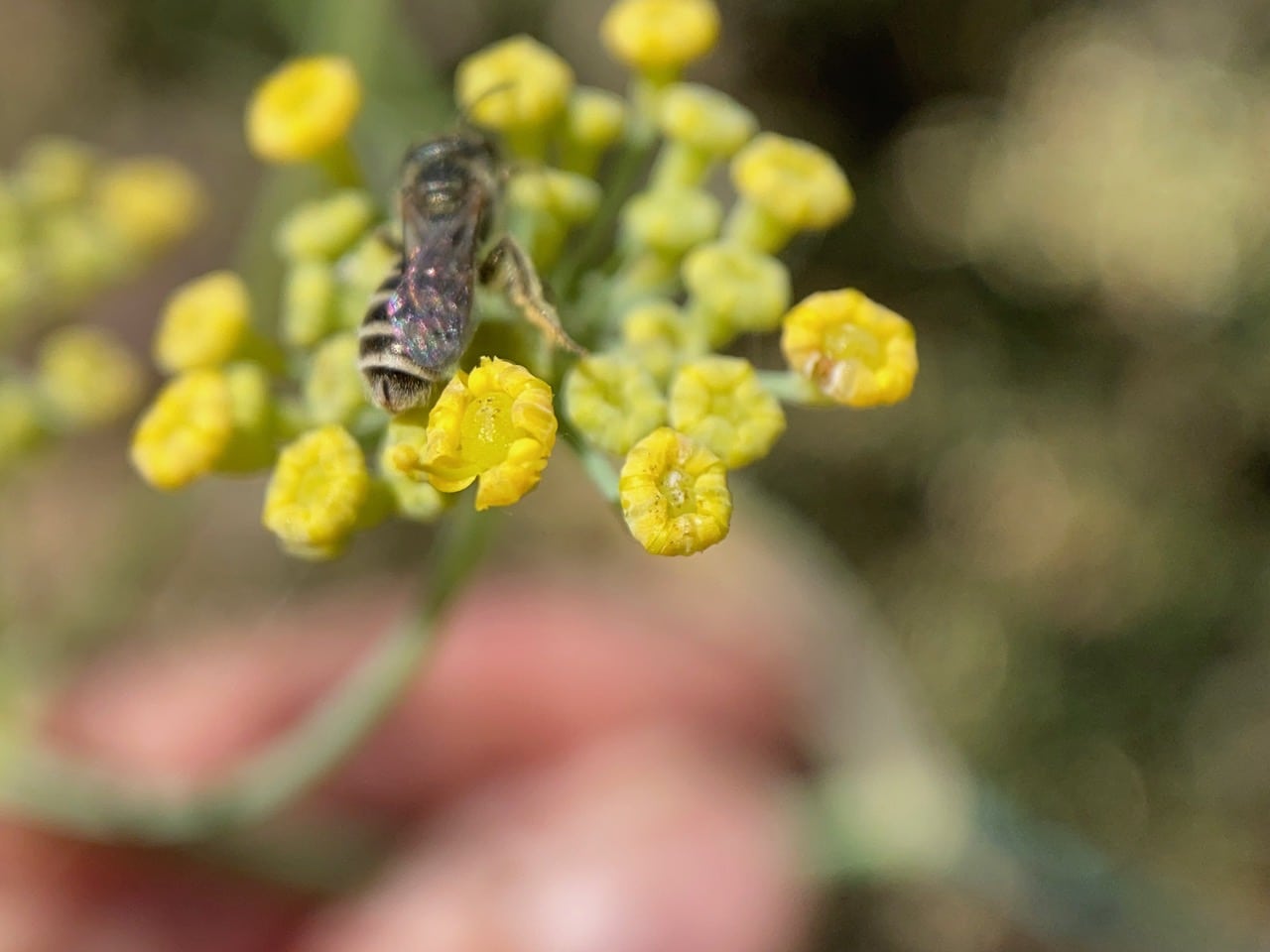
See the “furrow” at the tip of the bee’s abdomen? The bee is one of a few sweat bee species whose females have this anatomical feature, giving them the common name of “Furrow Bees”.
Furrow Bees are a group of ground-nesting, solitary, or primitively social bees. They get their name from a distinct longitudinal groove or “furrow” found on the abdomen of the females. They are also commonly known as Sweat Bees (family Halictidae) due to their habit of landing on humans to drink sweat for moisture and salts. These bees are generally small to medium (6 -14 mm long). They often have dark, metallic, or matte bodies with thin white or pale hair bands across the abdomen. The “furrow” on the female’s final abdominal segment is used for digging and nesting. While most furrow bees are solitary, each female digging her own tunnel in soil to lay her eggs, some species, such as the Tripartite Sweat Bee exhibit primitively social behavior. They form small colonies with a single queen and a few non-reproductive workers who forage for pollen. Their life cycle is akin to that of the bumble bees. Mated females spend the winter hibernating deep in the soil. In the spring they emerge, construct nests, and lay eggs in small chambers stocked with pollen. By the fall, the next generation of mated queens (gynes) prepare to overwinter, completing the annual cycle. These bees are crucial generalist pollinators that visit a wide variety of flowering plants and crops. Because they are short-tongued, they heavily favor easily accessible, open blooms like daisies, asters, and goldenrods.
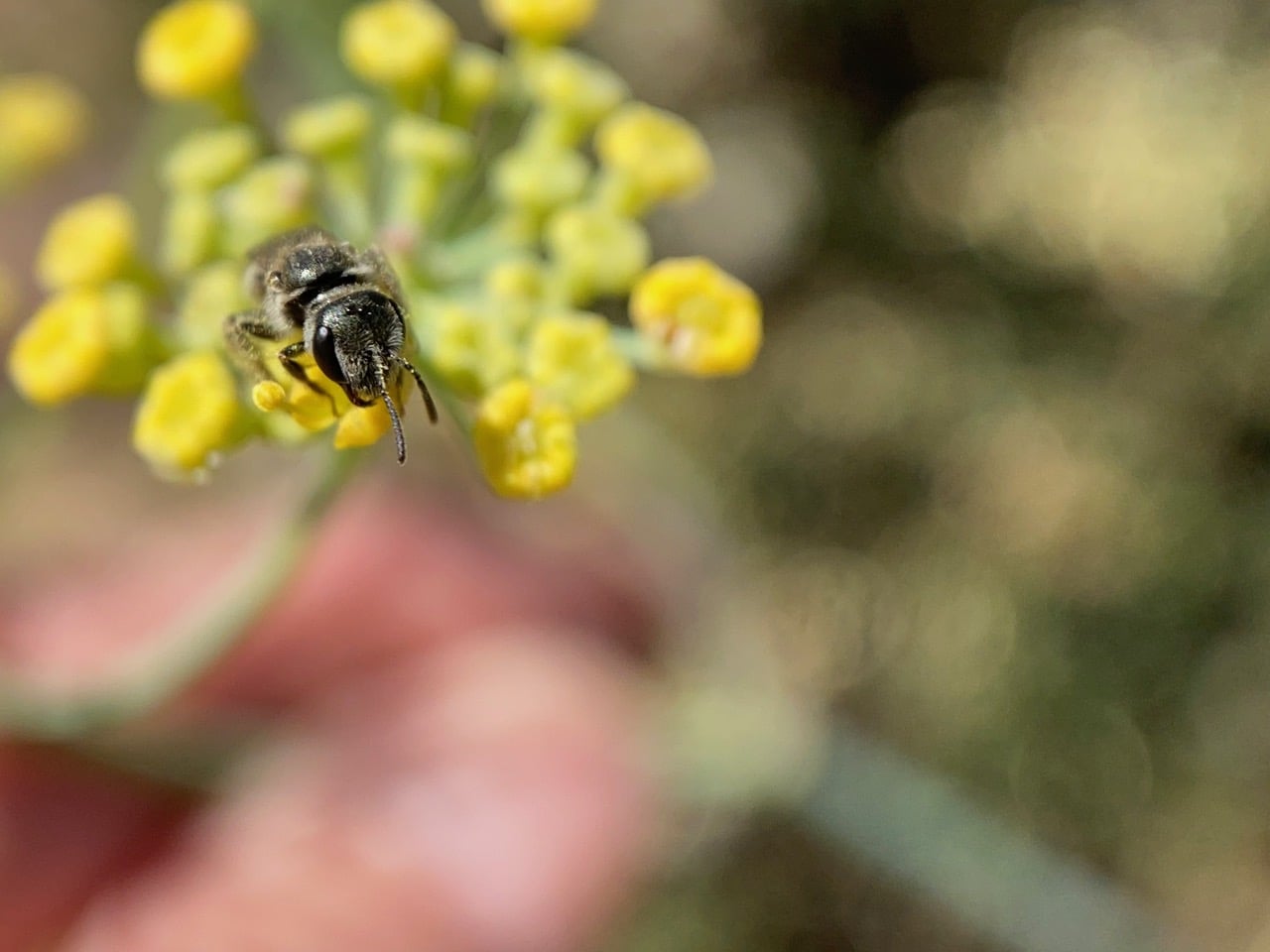
This Tripartite Sweat Bee, Halictus tripartitus (family Halictidae) is using her mandibles to extract pollen from a freshly opened Fennel flower.

This female Tripartite Sweat Bee is foraging for both nectar and pollen from the freshly opened Fennel flowers.
Halictus is found worldwide; they are most common in the Northern Hemisphere. All are generalists, foraging from a wide variety of flowering plants. Many species are social and produce several generations per year. This is not surprising as most blooming plants are season-specific; a bee that requires pollen and nectar across multiple seasons would not thrive as a specialist. All Halictus in North America nest in the ground, often in aggregations; and they may nest in the same area for decades.
Tripartite Sweat Bees, Halictus tripartitus are social, forming annual colonies in the soil where a queen lays eggs and daughter bees act as workers. They are considered a “primitively social” species, meaning they have a social organization with a queen and workers, but with simpler colonies compared to more complex eusocial insects such as honey bees.
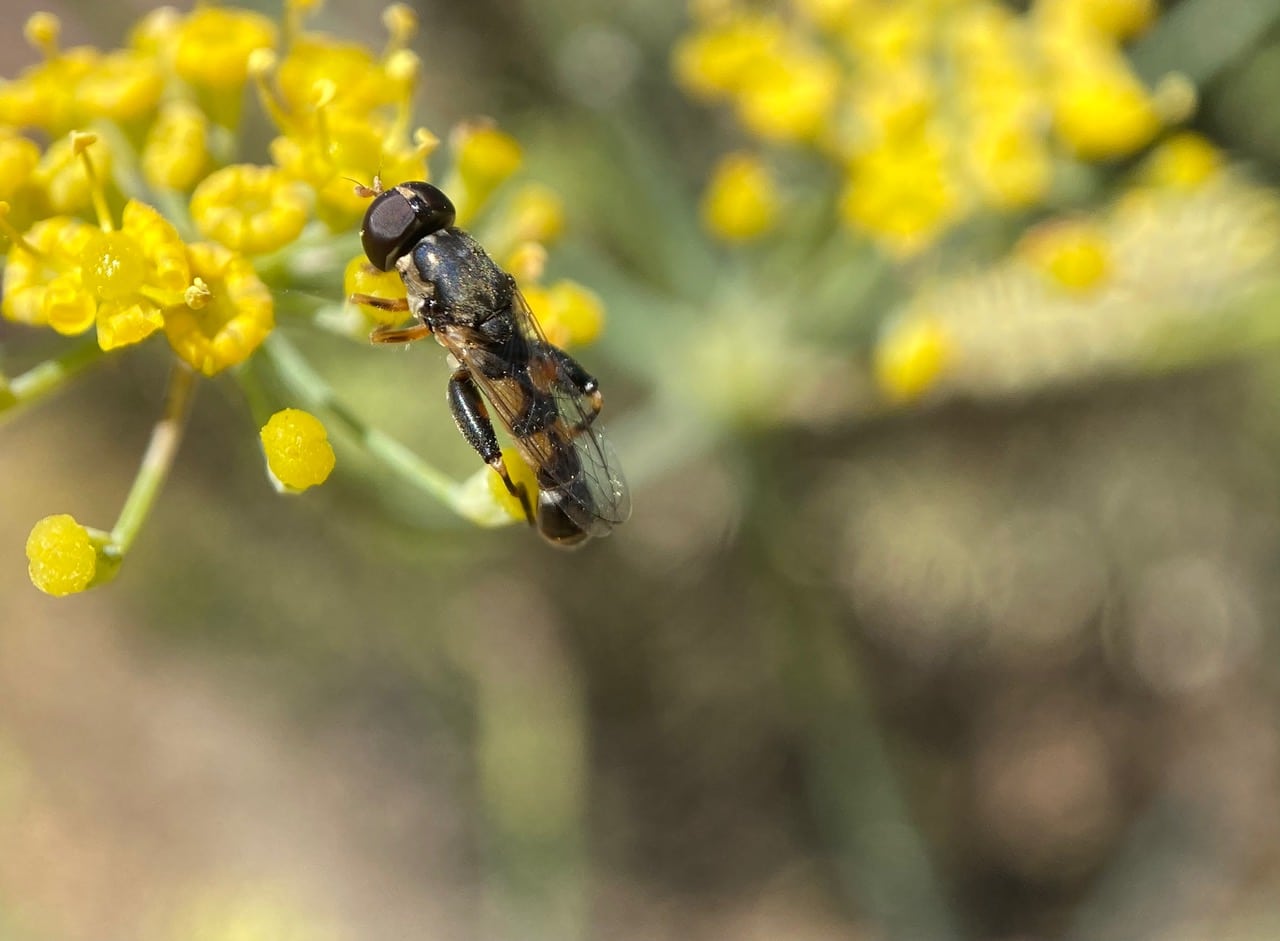
A Thick-legged Hover Fly, Syritta pipiens (family Syrphidae) has landed to forage on an umbel of Fennel flowers. Note its much enlarged hind femur.
Syritta pipiens originates from Europe and is currently distributed across Eurasia and North America. They are fast and nimble fliers. The fly has an elongate body about 6.5 – 9 mm long, and has distinctly enlarged hind femora which gives it its common name. The species flies at a very low height, rarely more than 1 m above the ground. Adults visit flowers – males primarily to feed on nectar, and females to feed on protein-rich pollen to produce eggs. The species is found wherever there are flowers. It is also anthropophilic, occurring in farmland, suburban gardens, and urban parks. Larvae are found in wetlands that are close to bodies of freshwater such as lakes, ponds, rivers, ditches. Larvae feed on decaying organic matter such as garden compost and manure. Males often track females in flight, ending with a sharp dart towards them after they have settled, aiming to attempt forced copulation. Syritta pipiens primarily overwinters in the larval stage, entering a dormancy state (diapause) as 3rd instar larvae, usually hidden in damp decaying plant matter, compost, or manure. The larvae complete their development and pupate in the spring, emerging as adults from March through November. While they do not migrate hundreds of miles, Syritta pipiens shows seasonal localized abundance, peaking in mid-summer. Adults continually disperse to find new, ephemeral breeding and feeding sites.
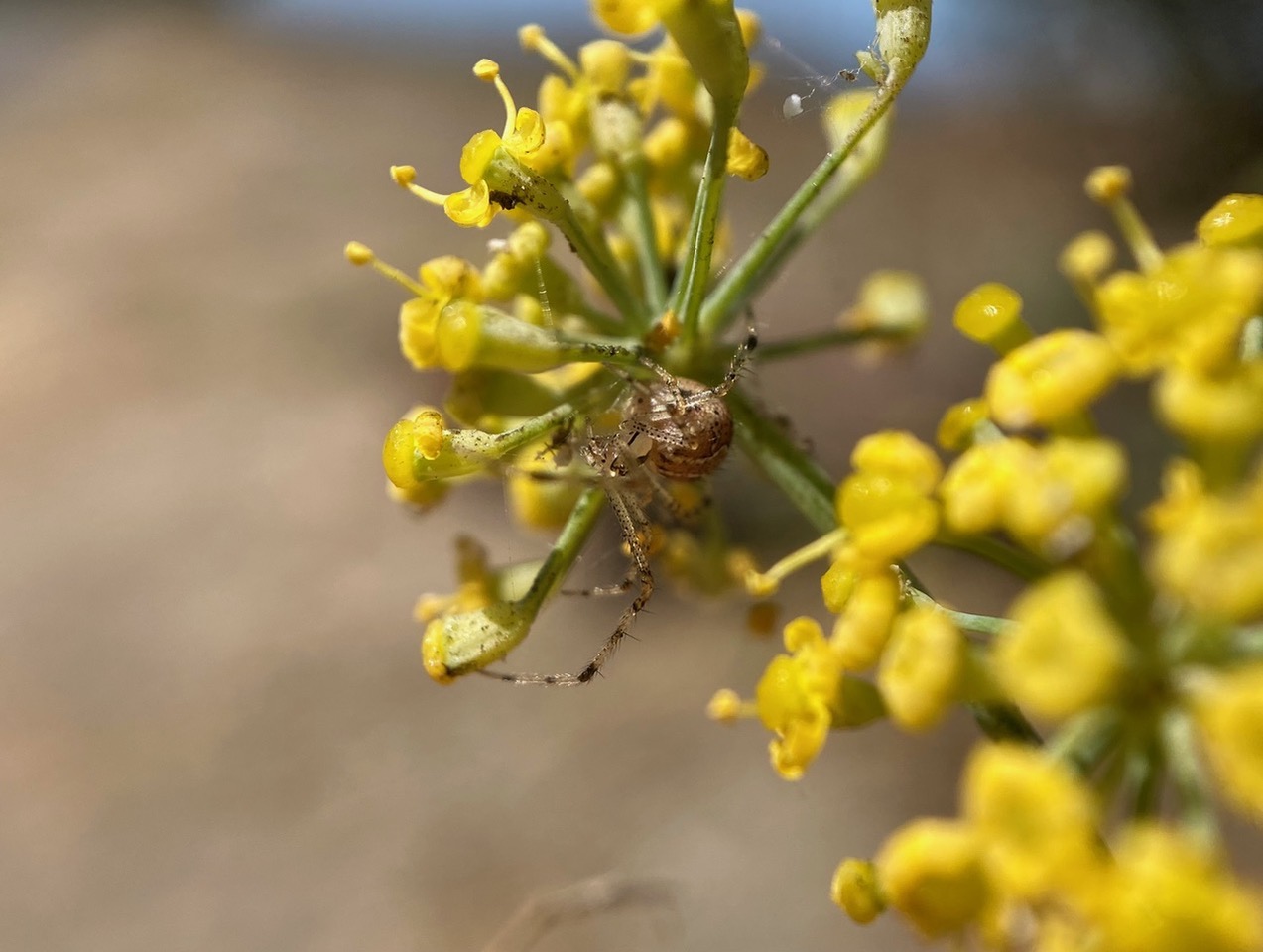
The insect visitors to the Fennel better beware – a Cobweb Spider (family Theridiidae) is hiding under an umbel of flowers.
Spiders in the family Teridiidae are called Cobweb Spiders. They make a messy, tangled scaffold with a central area consisting of a three-dimensional trellis of silk. From the web to the ground are vertical threads with sticky glue at the bottom. If an insect crawls against the thread it will break and the prey will hang in the air awaiting the attack of the spider. Although Cobweb Spiders are small, they are violent attackers that can take down prey much larger than themselves.
Members of the Theridiidae family are also called Comb-footed Spiders because they have a “comb” on their last pair of legs. The comb is a series of serrated spines which they use to comb out the silk from the spinnerets. Theridiids are cribellate spiders with a specialized organ called a cribellum, which makes silk with “mechanical stickiness” instead of the liquid glue of other spiders. Unlike a typical spinneret, the cribellum has thousands of tiny spigots, all producing extremely thin threads that the spider combs into a single, wooly fiber. Instead of glue, nanofibers from this silk seem to trap prey by fusing with a waxy coating on an insect’s body.

Note the dark spinnerets that converge at the pointed tip of the spider’s abdomen. I’m not sure what that milky droplet is – liquid silk?
Spider spinnerets are tiny, finger-like silk-spinning organs located on the underside of a spider’s abdomen. Most spiders have six spinnerets, but the number varies depending on the species. The spinnerets are segmented and can move independently or together to guide the placement of silk. Each spinneret contains many microscopic nozzles called spigots, which connect to internal silk glands.
Silk starts inside the spider as a liquid protein solution stored in specialized glands. As the liquid is pushed through long ducts and out through the spigots, valves and muscles regulate the flow speed and thread thickness. Drawing the silk out and exposing it to the air changes the protein’s molecular structure, instantly turning the liquid into a tough, solid thread.
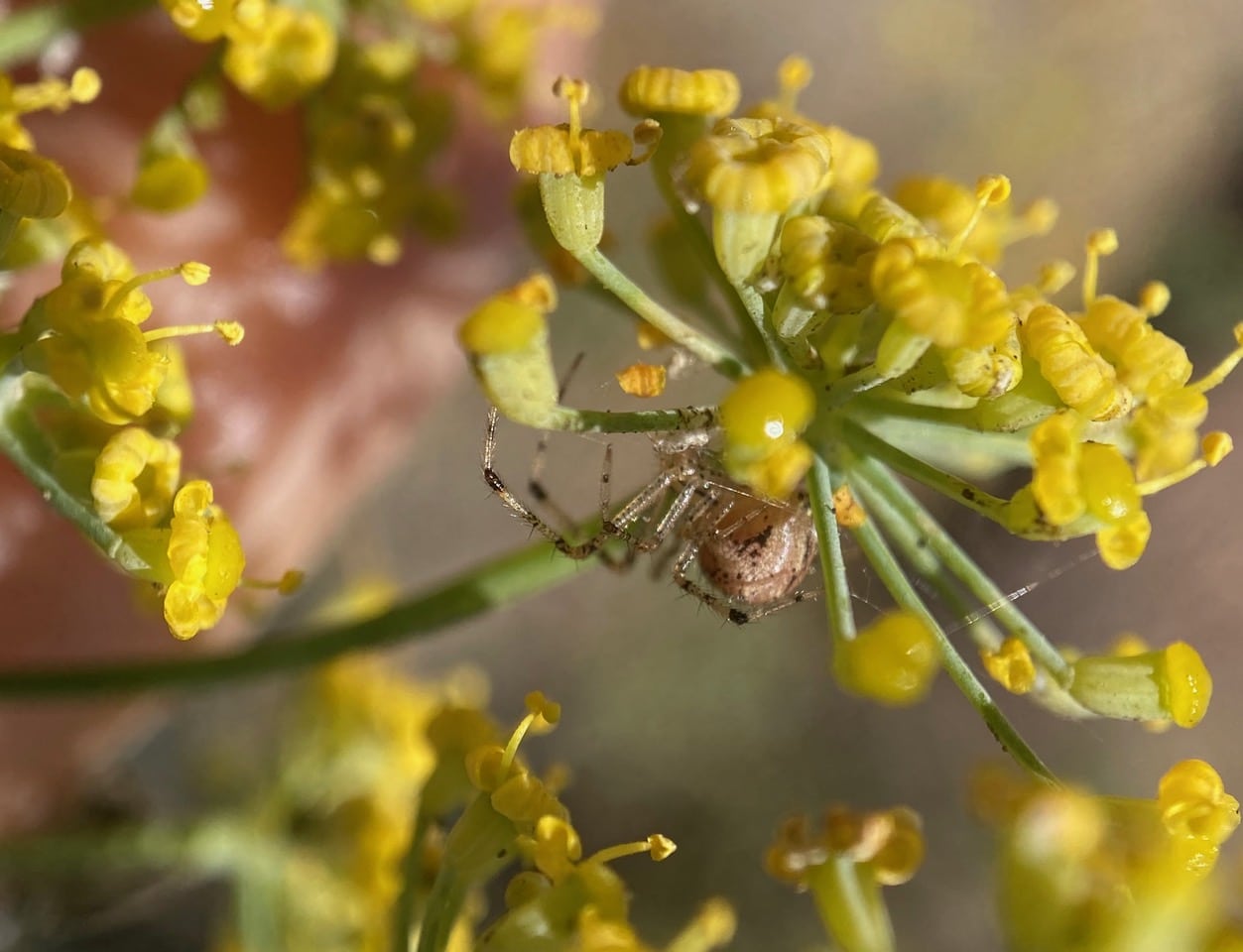
In this view, you can see some of the silk strands that the spider has attached to the flower umbel.

A parasitoid wasp, Anomalon sp. (family Ichneumonidae) is resting on an umbel of faded Fennel flowers.
The Ichneumonidae, also known as the Ichneumon Wasps, or Ichneumonids, are a family of parasitoid wasps. They are one of the most diverse groups within the Hymenoptera (the order that includes the ants, wasps and bees) with about 25,000 species and counting. Ichneumon Wasps attack the immature stages of insects and spiders, eventually killing their hosts. They play an important role in the ecosystem as regulators of insect populations.
The Ichneumon Wasps have longer antennae than typical wasps, with 16 segments or more as opposed to 13 or fewer. Ichneumonid females have an unmodified ovipositor for laying eggs. They generally inject eggs either directly into their host’s body or onto its surface, and the process may require penetration of wood. After hatching, the Ichneumonid larva consumes its still living host. The most common hosts are larvae or pupae of Lepidoptera (butterflies and moths), Coleoptera (beetles) and Hymenoptera. Adult Ichneumonids feed on plant sap and nectar. Females spend much of their active time searching for hosts while the males are constantly on the look out for females. Many Ichneumonids are associated with specific prey, and Ichneumonids are considered effective biological controls of some pest species.
Anomalon is a large genus of parasitoid wasps in the family Ichneumonidae. The wasps are present worldwide, but most diverse in tropical regions. In the Americas they are mostly found in very wet rain forests. Recorded hosts include tenebrionid (darkling beetle) or elaterid (click beetle) larvae, and noctuid and tortricid moth larvae. Anomalon adults usually measure between 10 to 14 mm in length. They have very slender, narrow waists and abdomens that flatten out on the sides near the back. They fly slowly with a unique posture, holding their slender rear body (metasoma) high up, antennae stretched forward, and legs trailing behind. Adults feed primarily on flower nectar, pollen, and plant sap.
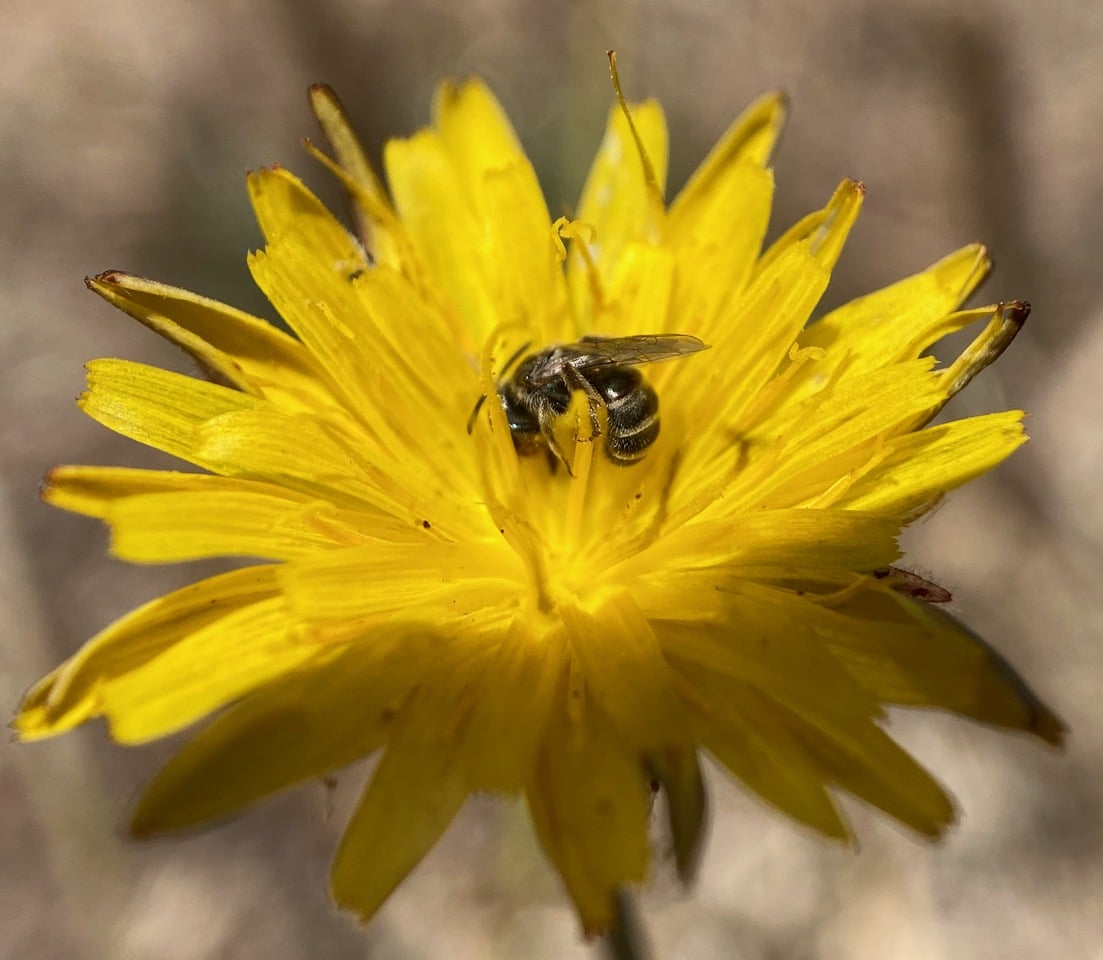
A small bee with black-and-white striped abdomen is bent over, foraging in a fading flowerhead of Catsear, Hypochaeris radicata. The bee is a Tripartite Sweat Bee, Halictus tripartitus (family Halictidae), one of the most commonly encountered Sweat Bees around here.
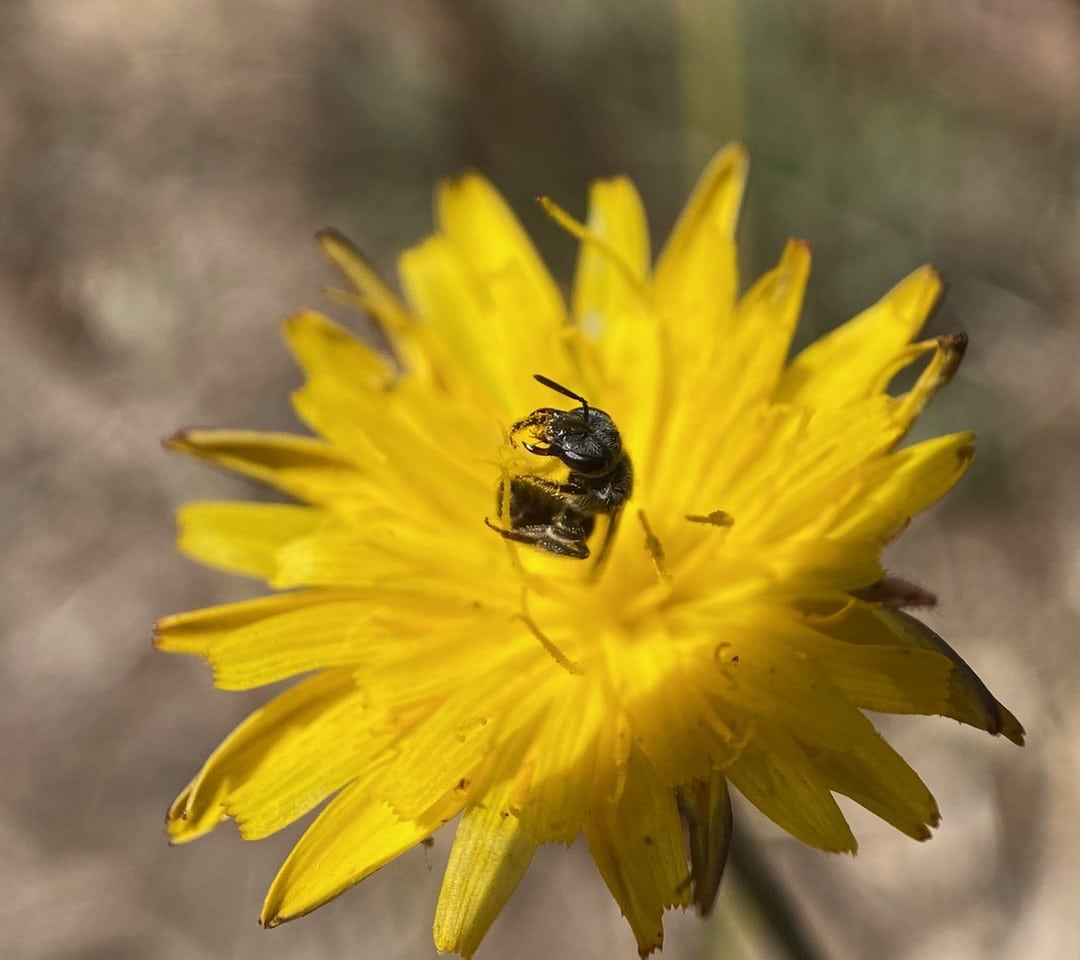
The bee is also using her mandibles to extract pollen from the stamens.
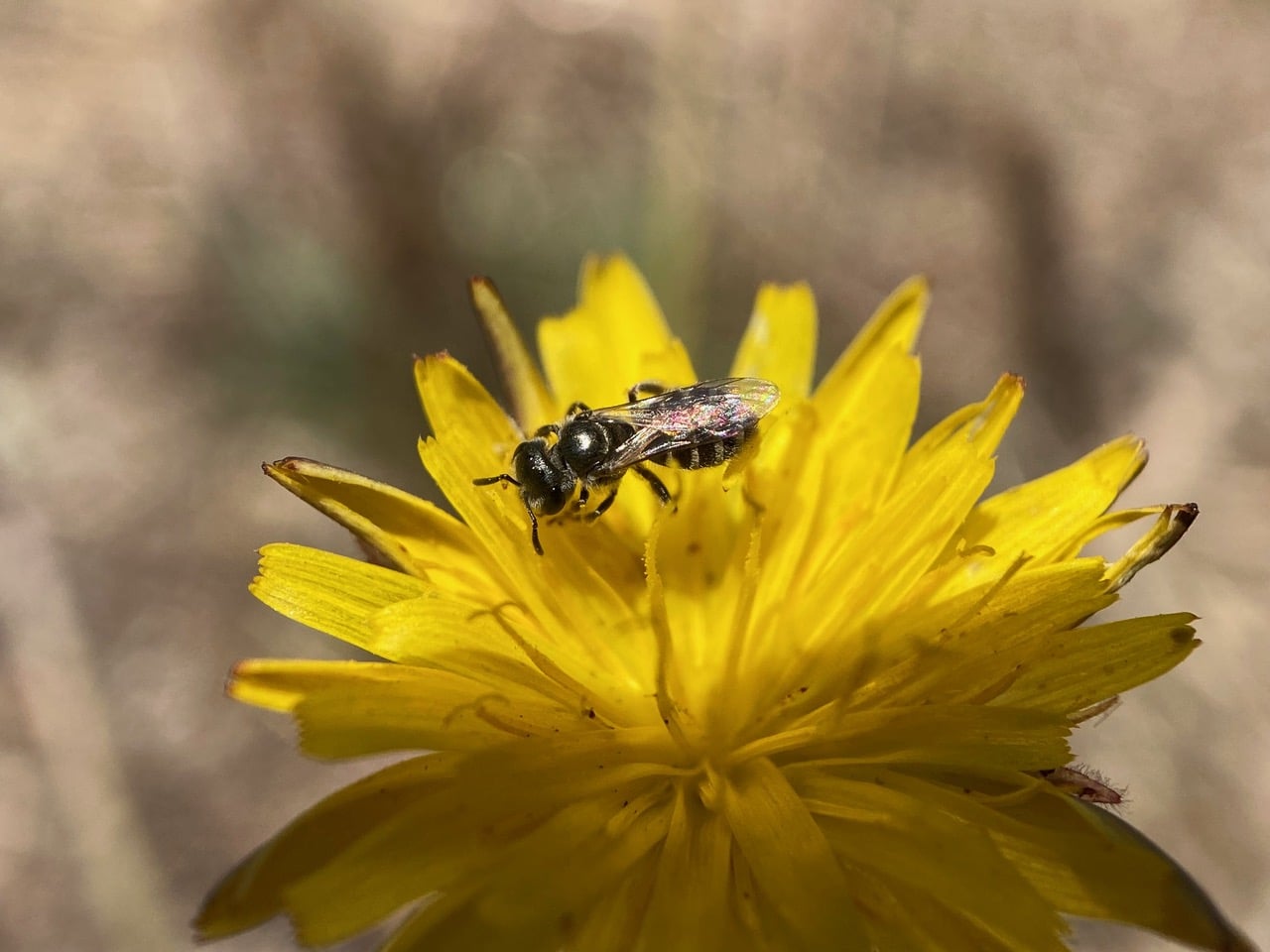
Halictus is found worldwide; they are most common in the Northern Hemisphere. All are generalists, foraging from a wide variety of flowering plants. Many species are social and produce several generations per year. This is not surprising as most blooming plants are season-specific; a bee that requires pollen and nectar across multiple seasons would not thrive as a specialist. All Halictus in North America nest in the ground, often in aggregations; and they may nest in the same area for decades.
Tripartite Sweat Bees, Halictus tripartitus are social, forming annual colonies in the soil where a queen lays eggs and daughter bees act as workers. They are considered a “primitively social” species, meaning they have a social organization with a queen and workers, but with simpler colonies compared to more complex eusocial insects such as honey bees.
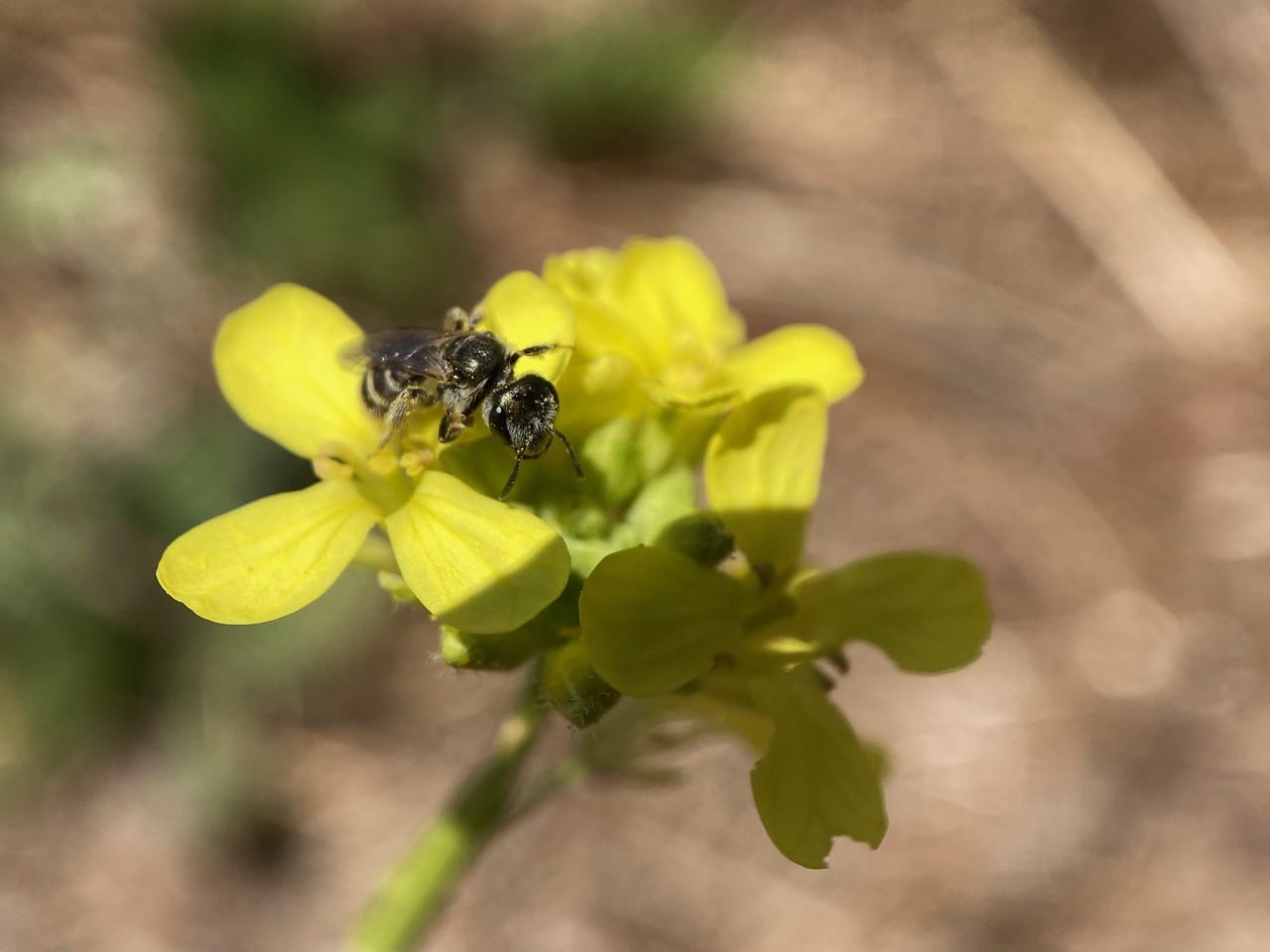
A Tripartite Sweat Bee, Halictus tripartitus (family Halictidae) is foraging on a inflorescence of Wild Mustard.

Thanks to their “primitively social” behavior in maintaining a colony through the seasons, their numbers are still robust while many other bees have disappeared for the year.

Note the “furrow” or rima at the tip (terminal abdominal segment) of the bee’s abdomen? It is found only on female Halictus and Lasioglossum bees.
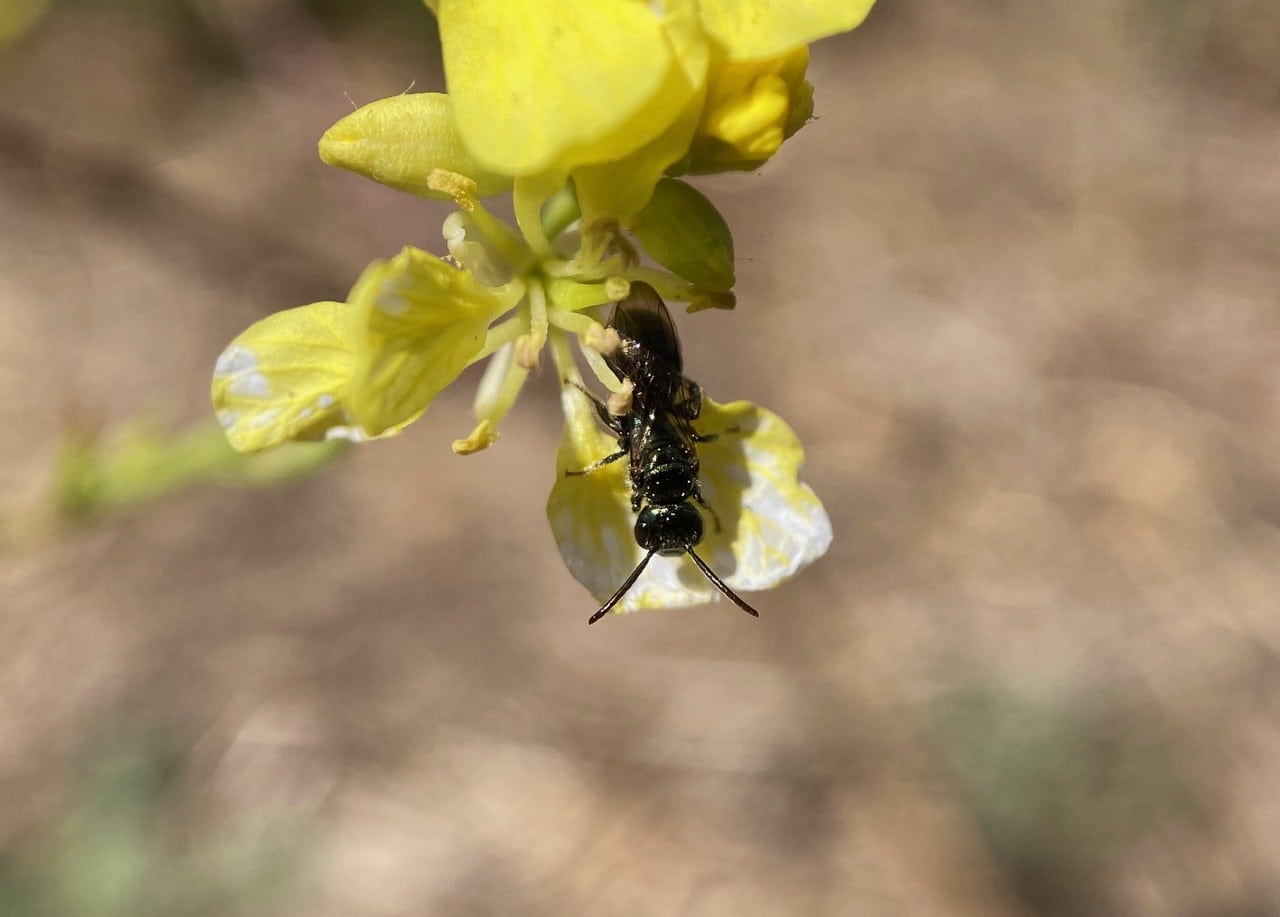
A small, glossy, jet-black bee is speckled with pollen as it exits an inflorescence of Wild Mustard. It is a Small Carpenter Bee, Ceratina sp. (family Apidae).
The Small Carpenter Bee genus Ceratina is closely related to the more familiar, and much larger Carpenter Bees (genus Xylocopa). Ceratina are typically dark, shiny, even metallic bees, with fairly sparse body hairs and a weak scopa on the hind leg. The shield-shaped abdomen comes to a point at the tip. Some species have yellow markings, often on the face.
Females excavate nests with their mandibles in the pith of broken or burned plant twigs and stems. While many species are solitary, a number are subsocial. Both male and female carpenter bees overwinter as adults within their old nest tunnels, emerging in the spring to mate. In the spring, this resting place (hibernaculum) is modified into a brood nest by further excavation. The female collects pollen and nectar, places this mixture (called bee bread) inside the cavity, lays an egg on the provision, and then caps off the cell with chewed plant material. Several cells are constructed end to end in each plant stem.

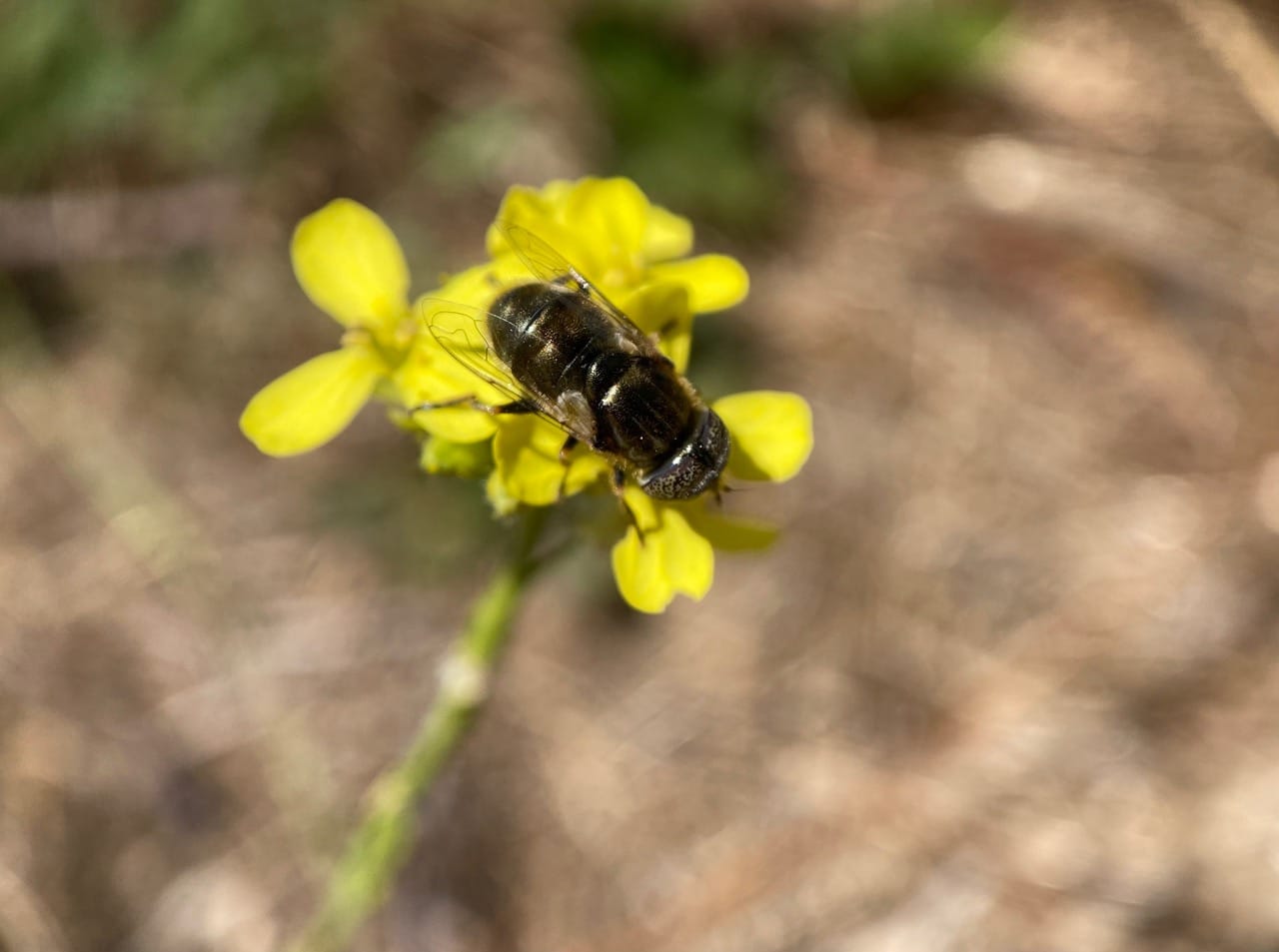
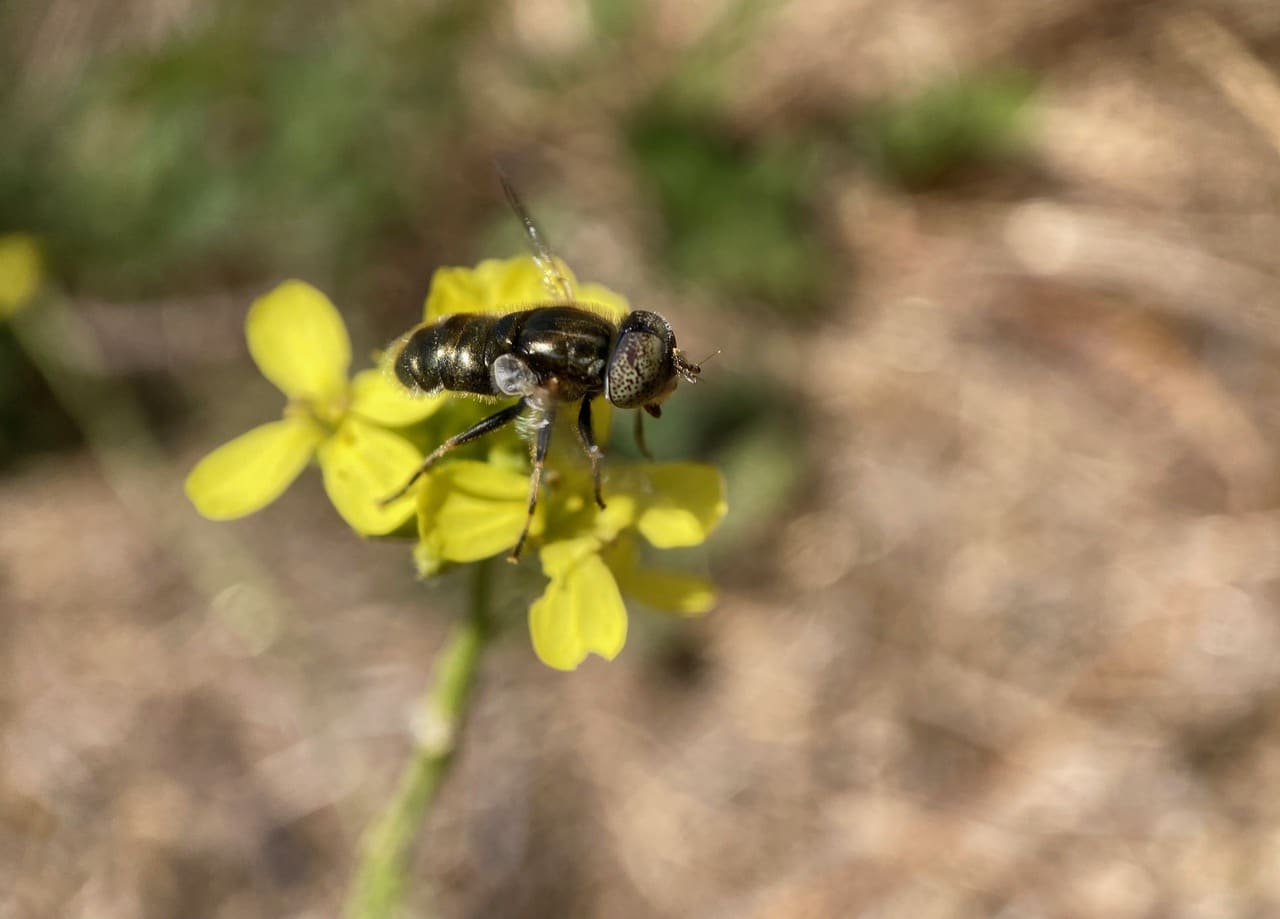
A large, metallic bronze fly has landed on an inflorescence of Wild Mustard.

Note the spotted eyes. Those clue me instantly to the identity of the fly – it’s a Lagoon Fly, Eristalinus aeneus (family Syrphidae).
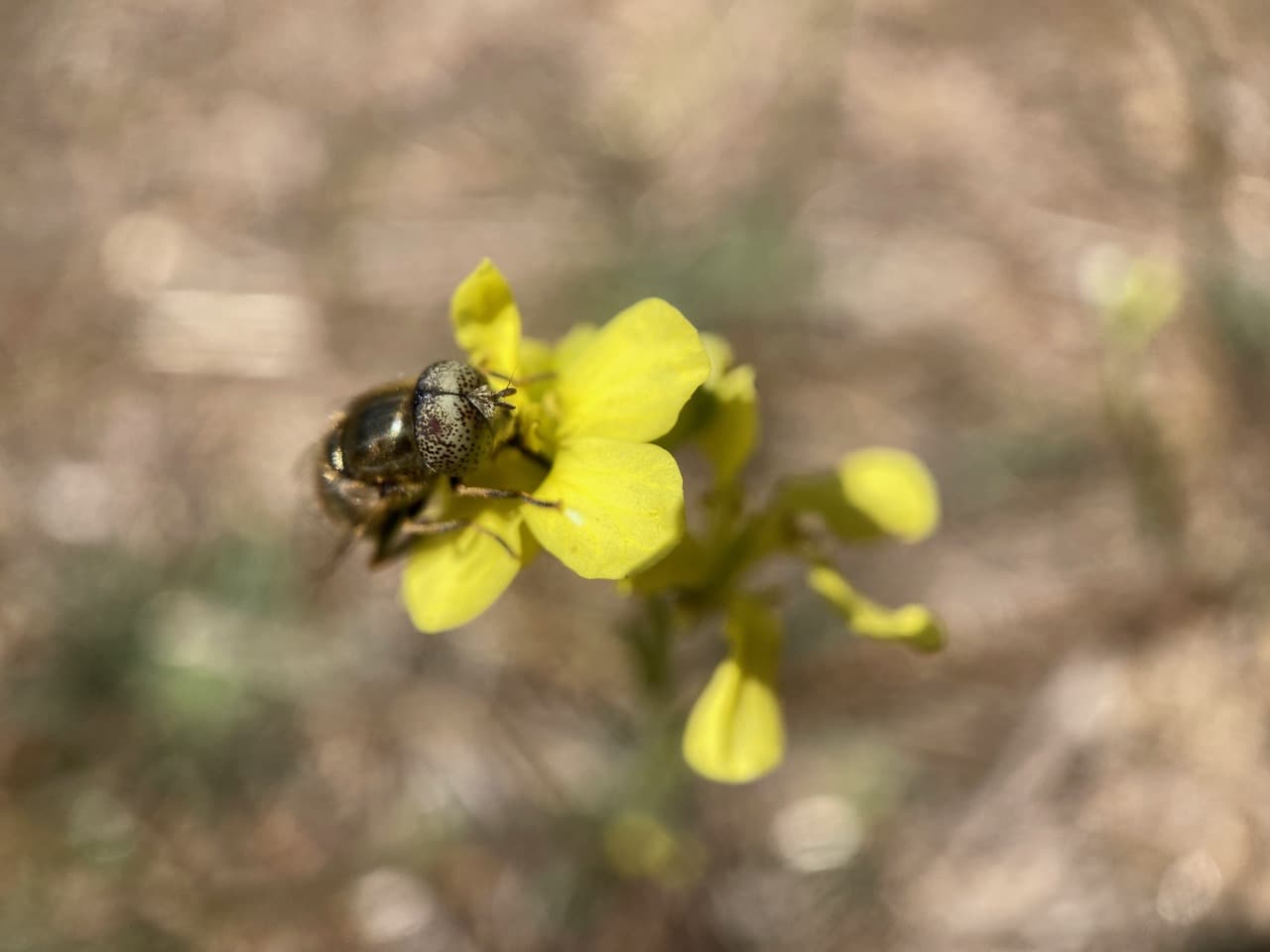
The Common Lagoon Fly, Eristalinus aeneus (family Syrphidae) is a widespread species, native to Europe and found throughout the United States. Its common name derives from its habitat, which includes lagoons, ponds, and slow-moving streams. Key features are the small, dark spots on its eyes, which tend to merge at the top. The adult flies are pollinators, feeding on nectar and pollen from flowers. The larvae are found in damp environments, often with decaying seaweed. They are also known as “rat-tailed maggots”, for the long siphon on their rear end that acts like a snorkel, helping them breathe under water. The larvae are saprophagous, feeding on bacteria in water rich in decomposing organic matter.
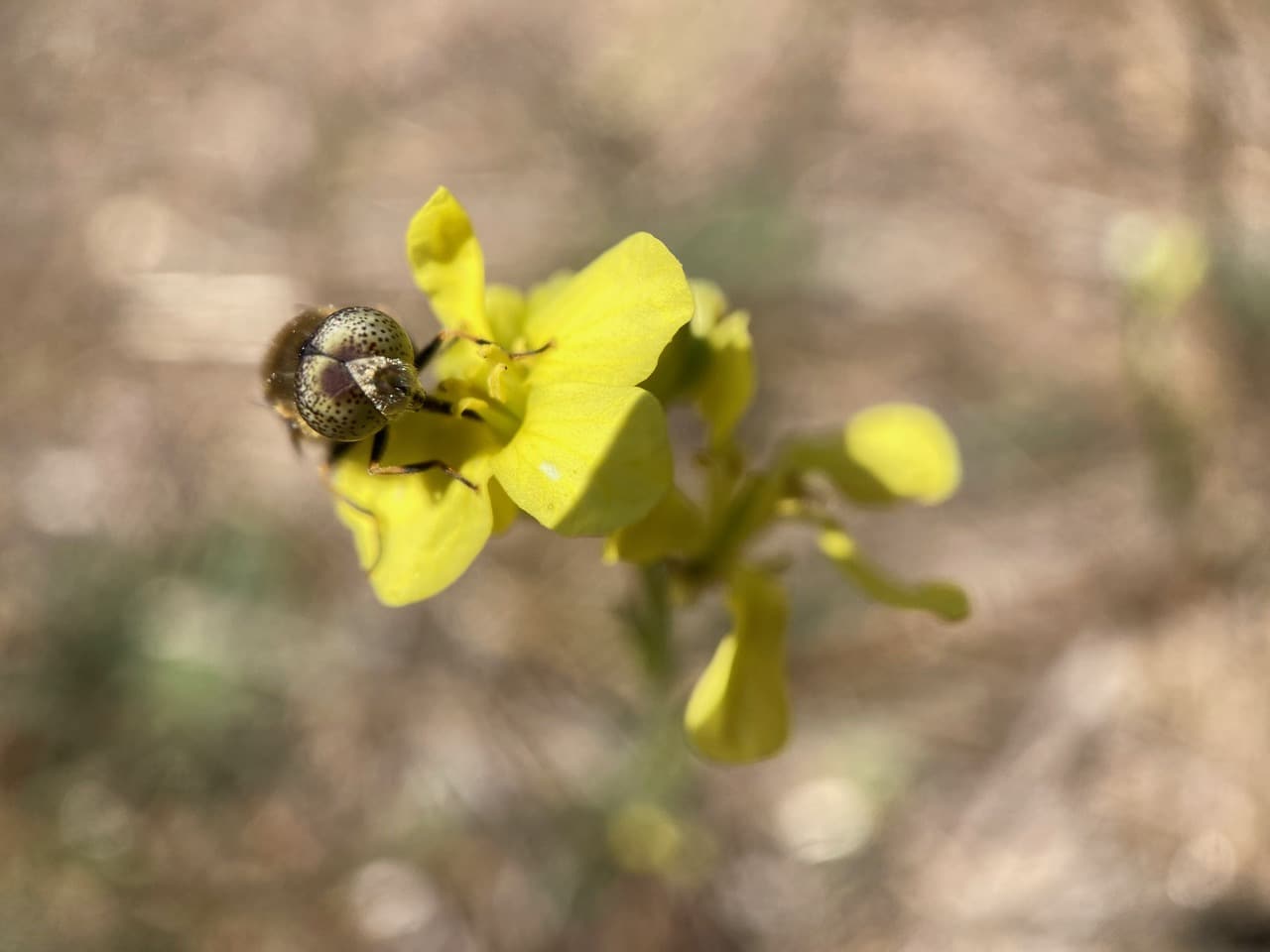

Why those spotted eyes?
This is the answer a Google search yields: The pigment spots and bands in the eyes of the Common Lagoon Fly and related hover flies create optical filtering across different parts of the compound eye’s ommatidia (lens units). The patterning aids in judging distances and tracking tiny shifts in light and shadow, which is vital for maintaining a near-motionless hover in mid-air. Sharp visual acuity allows the fly to target flowers accurately while competing with other pollinators.
The spots in the fly’s eyes remind me of the frits on car windshields. Might not the physics be the same? This is what I learned:
– the frits protect against UV radiation
– control heat absorption and dissipation across the surface, distributing the thermal load more evenly
– prevent optical distortions known as lensing effects, preventing localized overheating
– scatter the passage of sunlight, preventing the creation of of focal points that could lead to dangerous temperature spikes
For the Lagoon Flies that live in wide open sunny habitats close to water and its reflective glare, all the above properties of the frits can be beneficial.
Lift off!
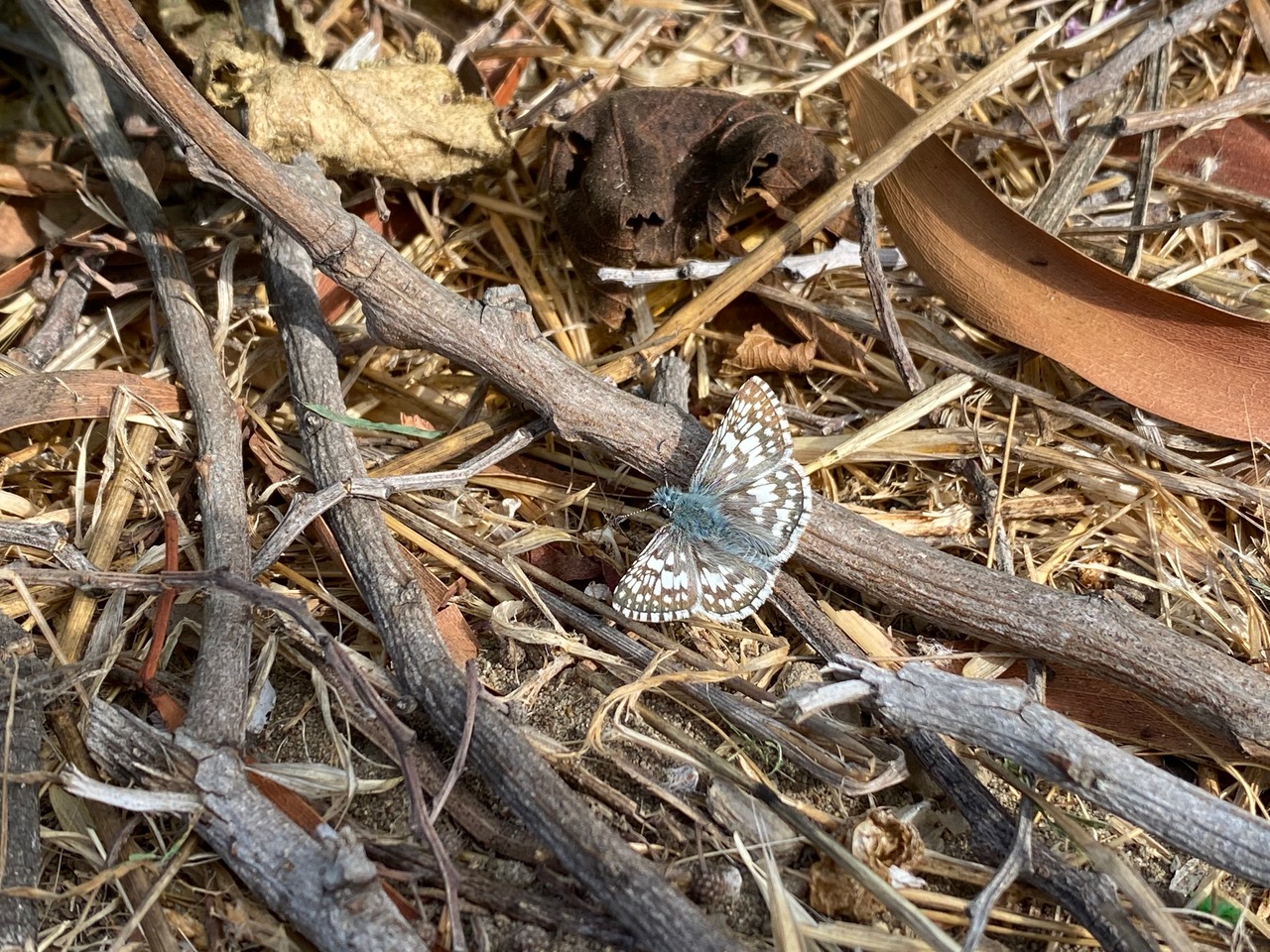
Photo of a Common Checkered Skipper, Burnsius communis (family Herperiidae) taken on 10/25/24.
I notice a Common Checkered Skipper on the ground, running excitedly round and round in a small circle, sometimes reversing direction. It takes me a few seconds to realize that it is actually running around another similar skipper which has its wings folded. Failing to take a still shot of the frenzied butterfly, I turn on the video instead to record the strange behavior. The butterfly appears to be targeting the rear end of the butterfly who is the object of his attention. In response, the other butterfly (female?) pivots to thwart his attempts at every turn. Is this courtship behavior? Is the female rejecting her aggressive, persistent suitor?
Because of its small size, bluish color, and spread-wing posture, the Checkered Skipper is often mistaken for one of the “Blues” in the family Lycaenidae. Skippers have the antennae clubs hooked backward like a crochet hook, while the typical butterflies have club-like tips to their antennae. Skippers also have generally stockier bodies and larger compound eyes.
Checkered Skippers belong to the subfamily Pyrginae, commonly known as spread-wing skippers, in the family Hesperiidae. Spread-wing skippers bask with their wings held wide open. The wings are held closed when they are at rest. Caterpillars make folded-leaf nests in which they live and feed on several plants in the mallow family, Malvaceae. Mature caterpillars often pupate in their leaf shelters, typically close to the ground, among low vegetation, or in leaf litter.