

Pollinator Post 9/18/23 (2)
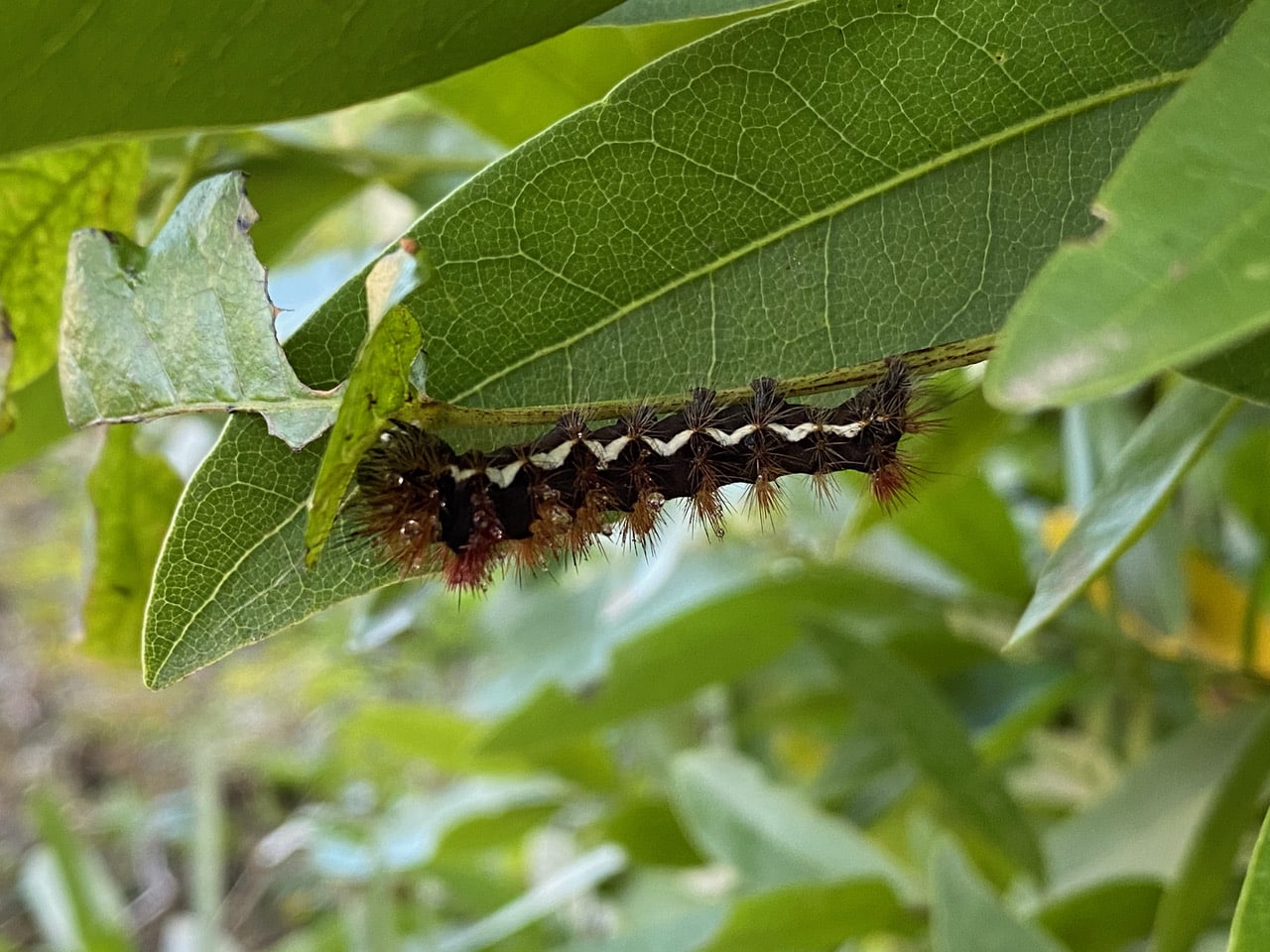
Whoa, that’s a large caterpillar, almost 2 in. long. It is feeding on a Poison Oak leaf among the foliage of a bay tree. Any animal that can feed on Poison Oak gets my attention. iNaturalist has helped identify it as a Dagger Moth, genus Acronicta (family Noctuidae).
Acronicta is a genus of noctuid moth distributed mainly in the temperate northern hemisphere. Caterpillars of most Acronicta species are distinguished by brightly colored hairy spikes, and often feed quite visibly on common foliate trees. The hairy spikes may contain poison, which cause itchy, painful, swollen rash in humans on contact. Acronicta species are generally known as Dagger Moths, as most have one or more black dagger-shaped markings on their upper forewings.
Photos of Dagger Moths (Genus Acronicta) · iNaturalist
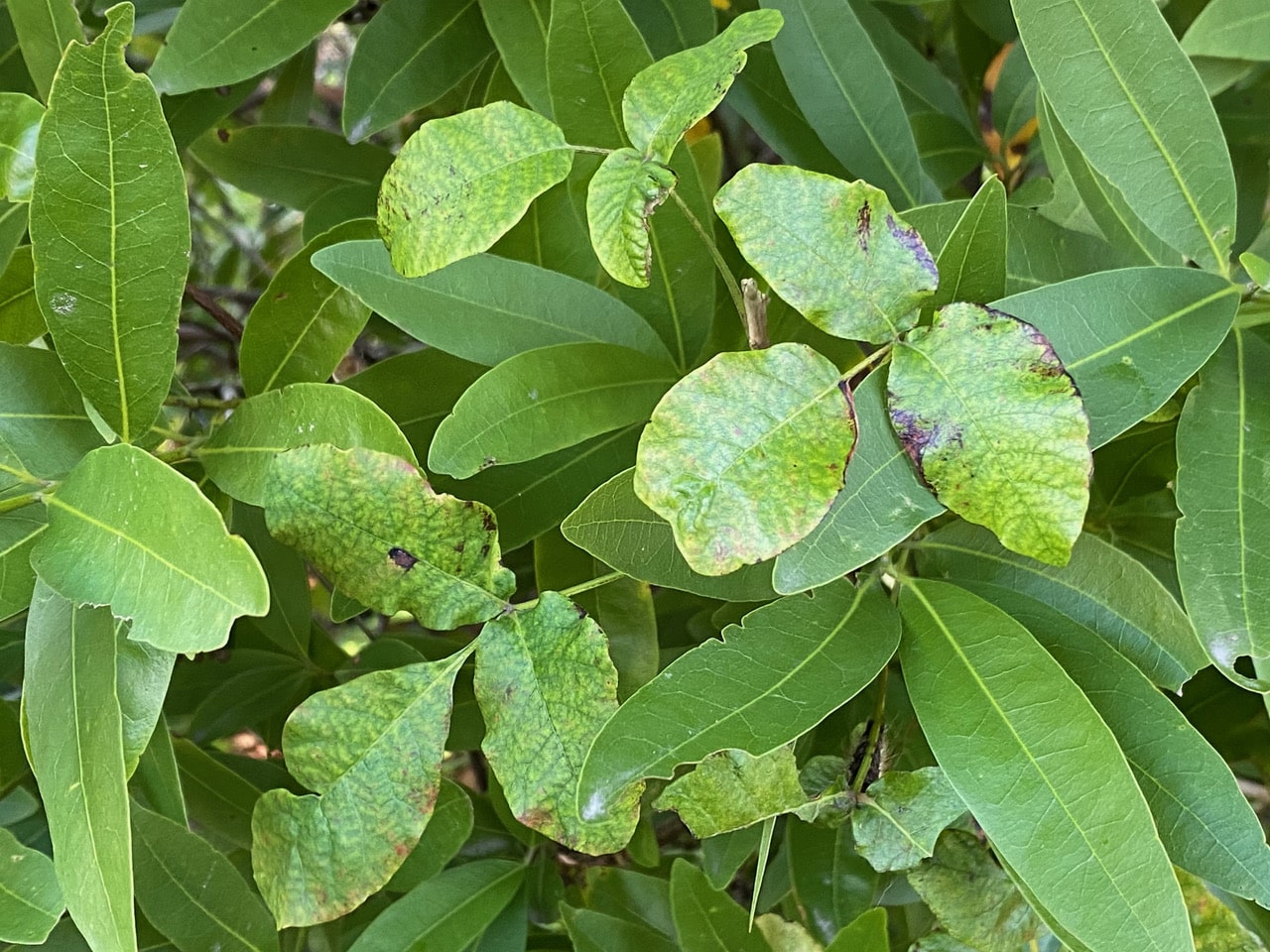




This is the Poison Oak that is growing among the lower foliage of a California Bay tree. The leaves are turning yellow and don’t look healthy. You can barely see the caterpillar on a base of a leaf on the lower right.
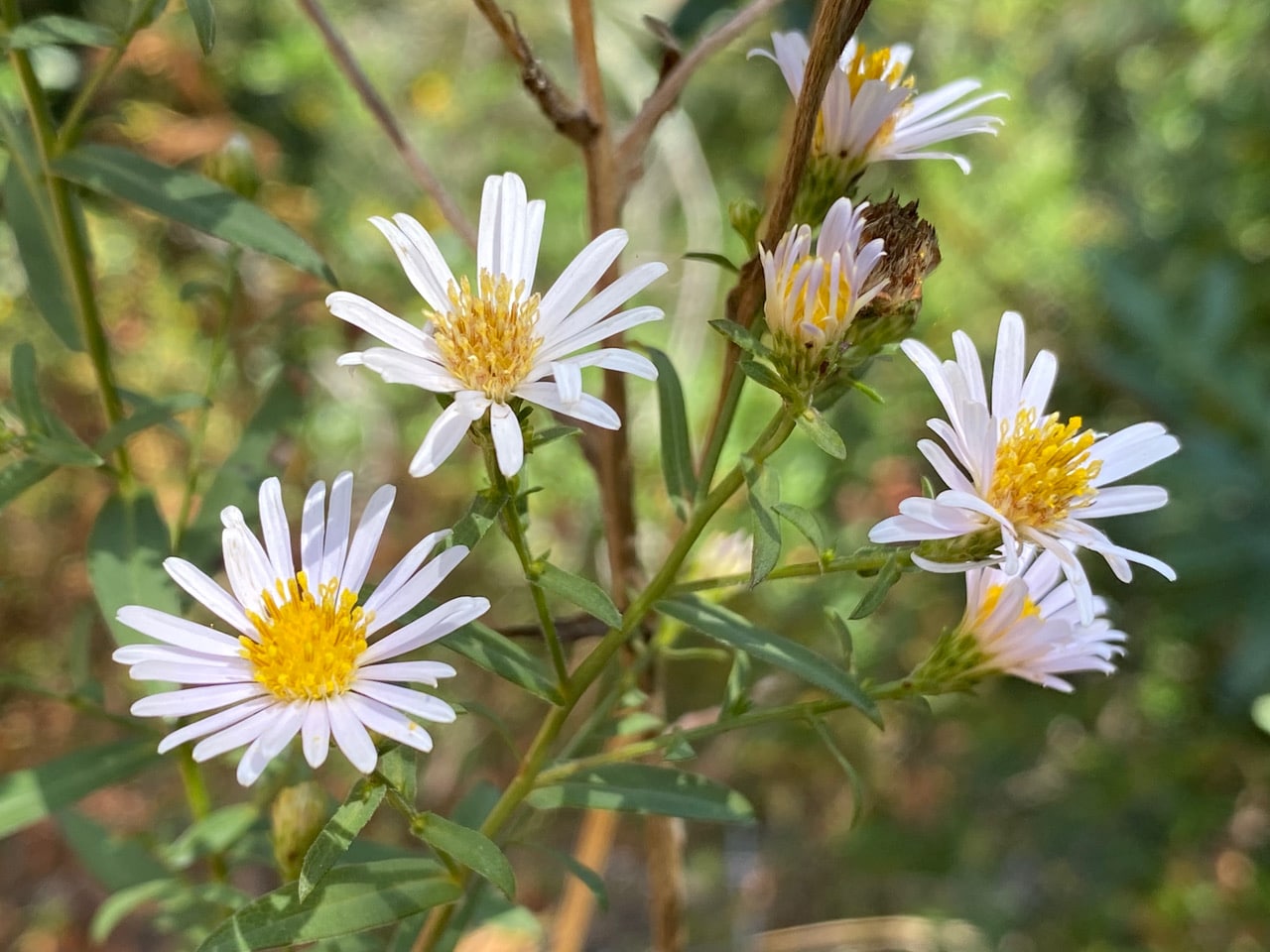
The Pacific Aster, Symphyotrichum chilense is blooming in small and scattered patches in the garden. I have not been paying them much attention as they don’t seem to attract many insects.
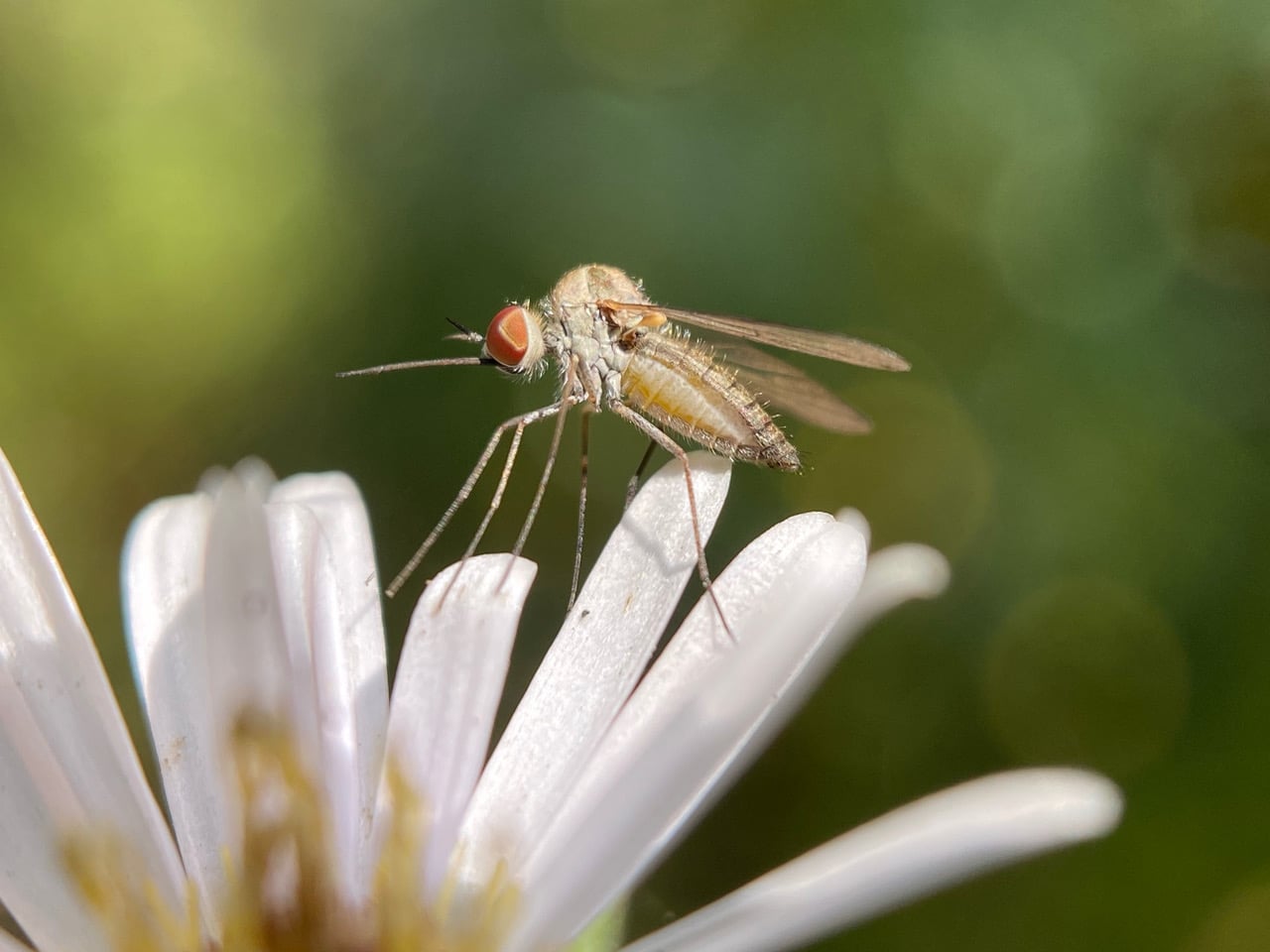
Look who’s visiting a Pacific Aster flowerhead today! It’s a Bee Fly, Geron sp. (family Bombyliidae).
“Geron” is Greek for “old man” (imagine a humpbacked man carrying a cane). The fly is easily recognizable from its humpbacked appearance, conical abdomen and shiny, golden pubescence. Like many bee flies, it flies around with a long proboscis that cannot be folded up. Larvae are parasitoids of the immature stages (caterpillars) of various moths in concealed situations. Some are also hyperparasitoids. Adults take nectar at flowers, preferring members of the sunflower family, Asteraceae. Unusual for bee flies, Geron often bobs up and down above an inflorescence before landing to nectar. Males often form loose swarms.
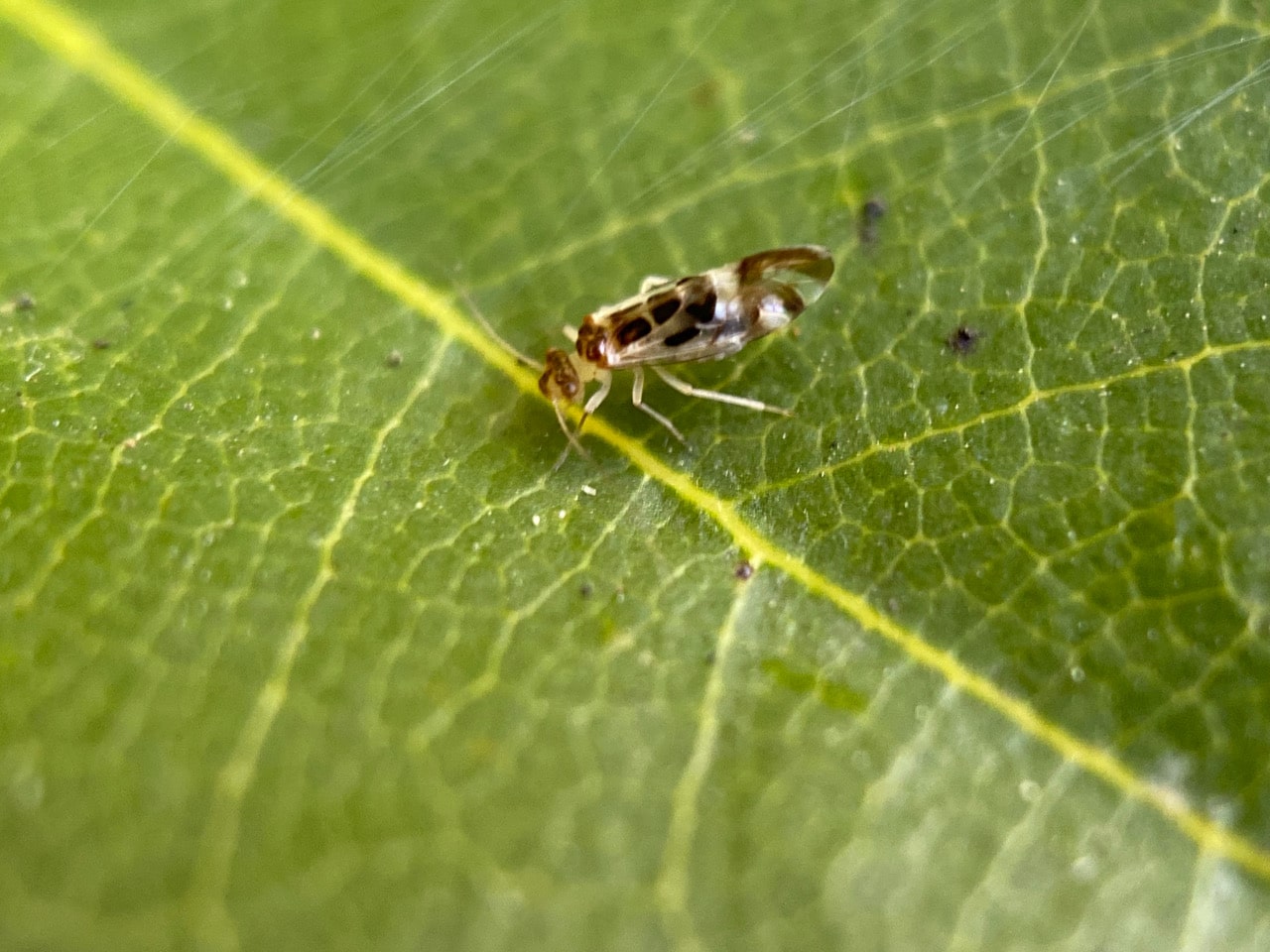
An F-winged Barklouse, is standing stock-still on a California Bay leaf. At certain angles of incident light, I can see strands of fine silk covering the leaf above the insect. Here the strands are visible in the top part of the photo.
The F-winged Barklouse, Graphopsocus cruciatus (family Stenopsocidae) belongs to an ancient lineage of insects in the order Psocodea (formerly Psocoptera). The scientific name comes from the Greek psocus (to grind) referring to the psocodean jaws, which are shaped to grind food, rather like a pestle and mortar. These insects are conveniently discussed in two groups – barklice that live outdoors, and booklice that are found in human habitations.
Barklice are usually found in moist places, such as leaf litter, under stones, on vegetation or under tree bark. They have long antennae, broad heads and bulging eyes. They feed on algae, lichens, fungi and various plant matter, such as pollen. Barklice are usually less than 6 mm, and the adults are often winged. The wings are held roof-like over their bodies. Some species are gregarious, living in small colonies beneath a gossamer blanket spun with silk from labial glands in their mouth. Sometimes the colonies seem to move in coordinated fashion, rather like sheep.
Booklice are wingless and are much smaller (less than 2 mm). They are commonly found in human dwellings, feeding on stored grain, book bindings, wallpaper paste and other starchy products, and on the minute traces of mold found in old books.
Psocodea undergo incomplete metamorphosis. They are regarded as the most primitive amongst the hemipteroids (true bugs, the thrips and lice) because their mouthpart show the least modification from those of the earliest known fossils.
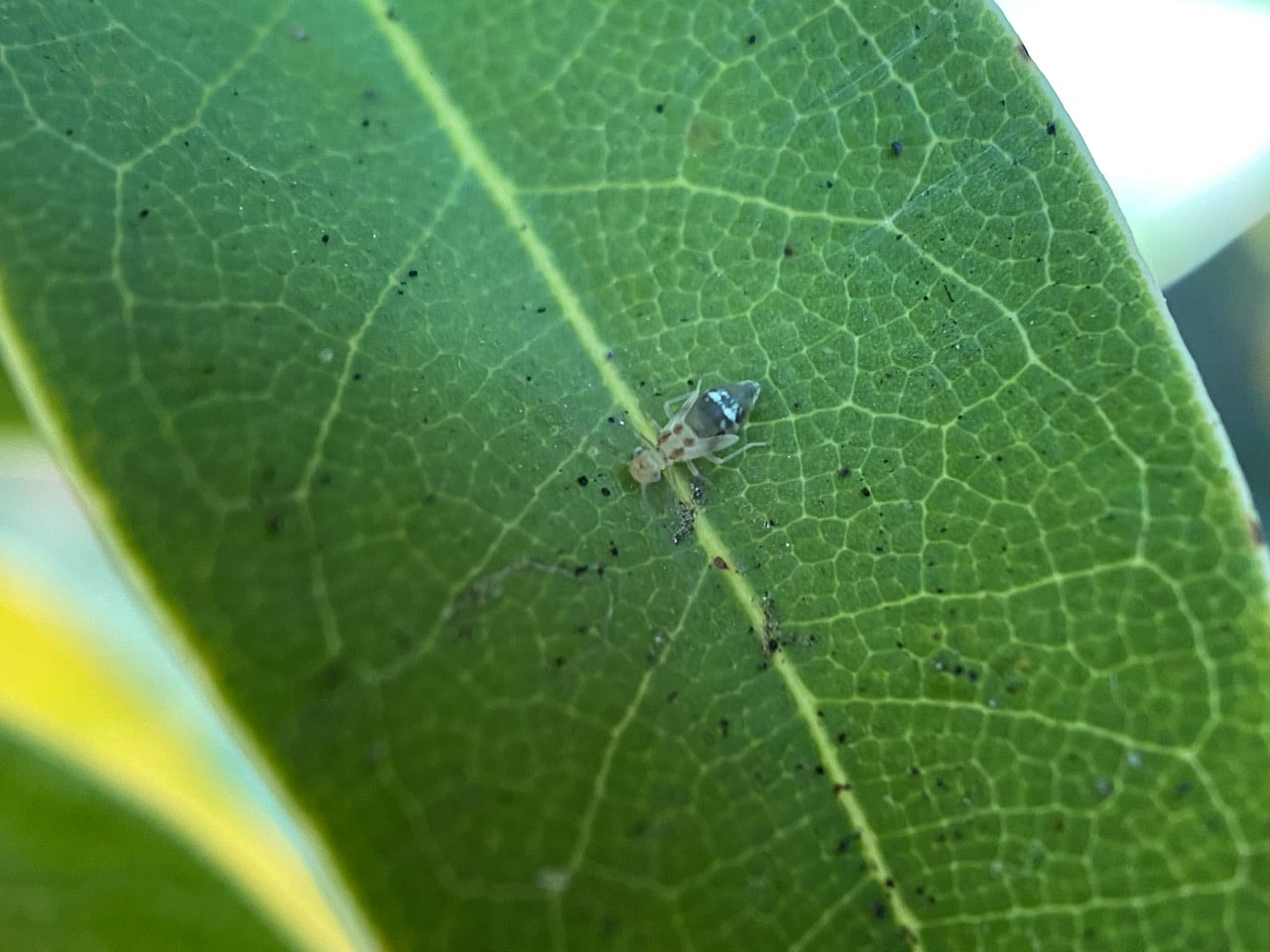
On a nearby leaf, a nymph can be seen faintly through a thin mesh of fine silk, but again only at certain angles of incident light.
No wonder it’s so hard to get a good picture of these barklice – the photos are taken through an invisible mesh of silk!
I am fascinated by the silk that the barklice produce. What is its function? I just come across this article – the mystery deepens!
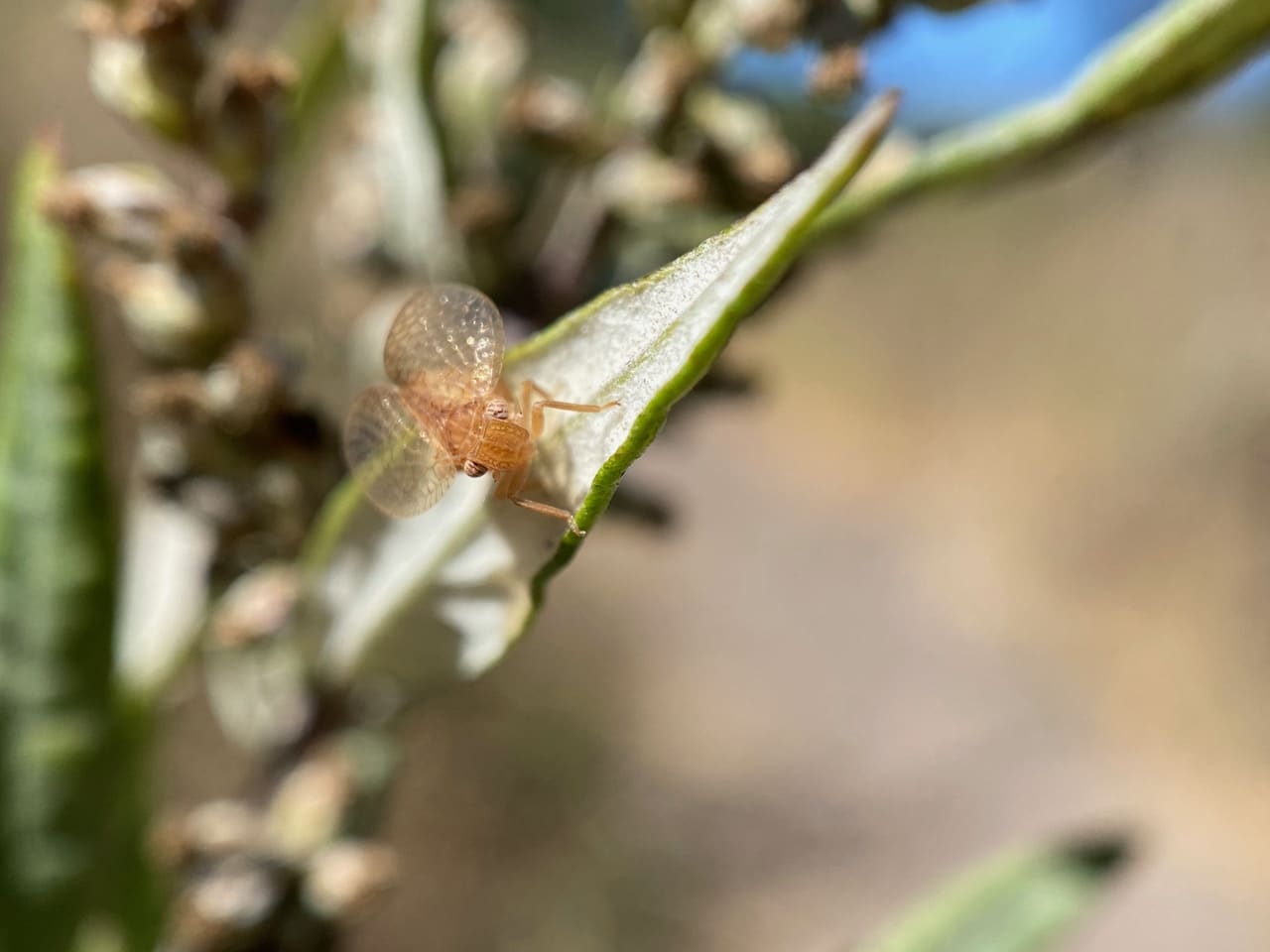
A Planthopper, Neaethus sp. (family Tropiduchidae) is staring at me with its strange googly eyes from a leaf of California Mugwort, Artemisia douglasiana.
Members of the genus Neaethus are distinguished by their broadly rounded transparent to translucent wings, with prominent veins. Most are associated with oak species. Neaethus has a limited distribution, and are mostly found in California and Arizona.
I have become quite fond of these mild-mannered bugs over the months. Most of them are found on the mugwort. I wonder if there’s an association with the plant?
The Planthoppers have the first mechanical gear system ever observed in nature. The tiny bug uses mechanical gears on its joints to precisely synchronize the kicks of its hind legs as it jumps forward.
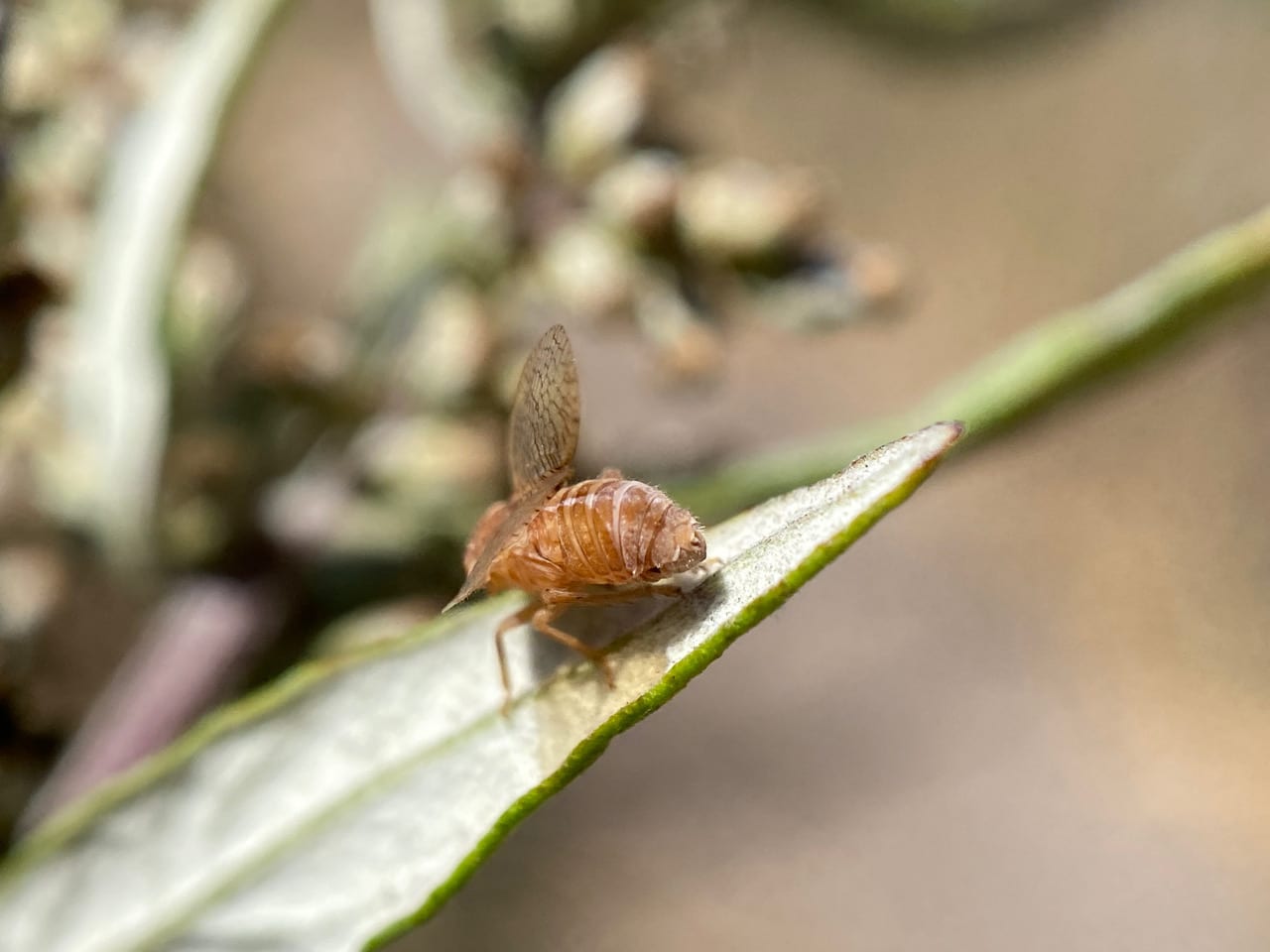
Why that bulbous, industrial-strength abdomen?
Planthoppers may be small, but they attract mates from afar by sending vibrational calls along plant stems and leaves using fast, rhythmic motions of their abdomen.
The Planthopper eventually perches on a dried inflorescence of the mugwort, where it becomes almost invisible.