

Pollinator Post 9/15/24 (2)
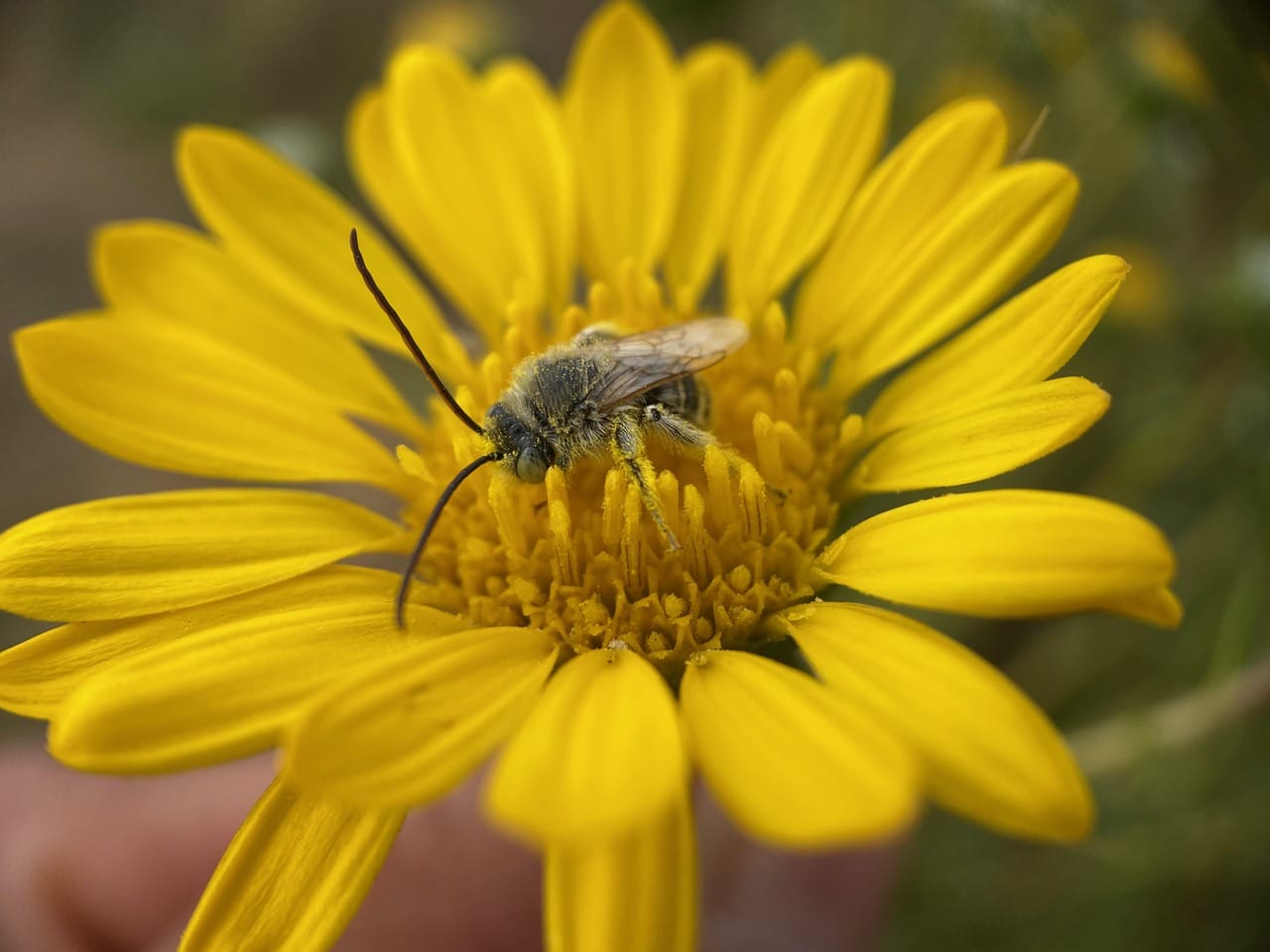
A male Summer Longhorn Bee, Melissodes sp. (family Apidae) is asleep on a Grindelia flowerhead. Although the sun has come out in the afternoon, it has been cloudy, cool, and windy most of the day. Maybe that’s why the bees are less active today.
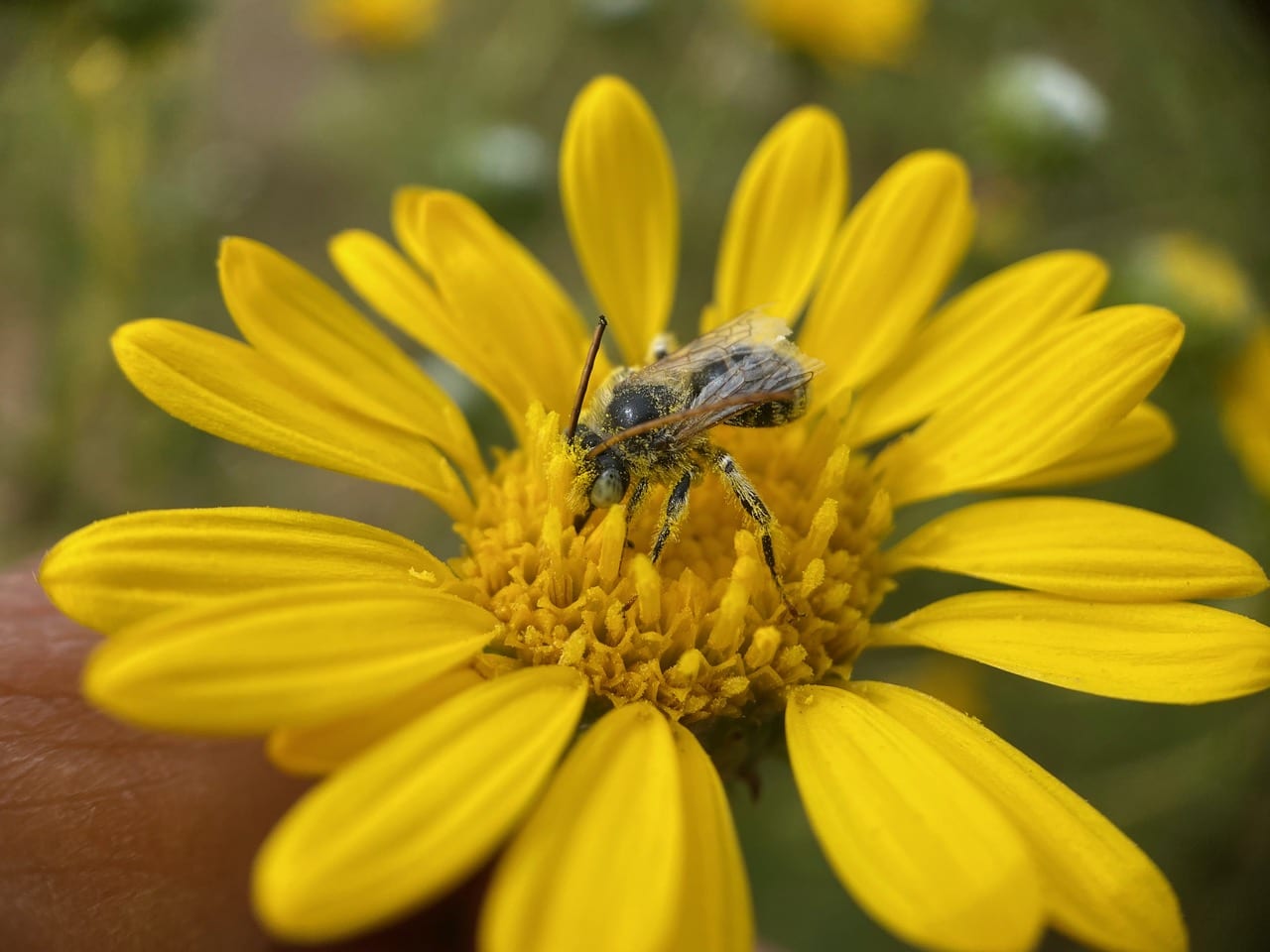
Another male Summer Longhorn Bee, Melissodes sp. (family Apidae) is foraging on a Grindelia flowerhead. He looks rather ragged, with tattered wings and missing hairs on his body. One can’t help but admire an old bee toughing it out on a windy day.
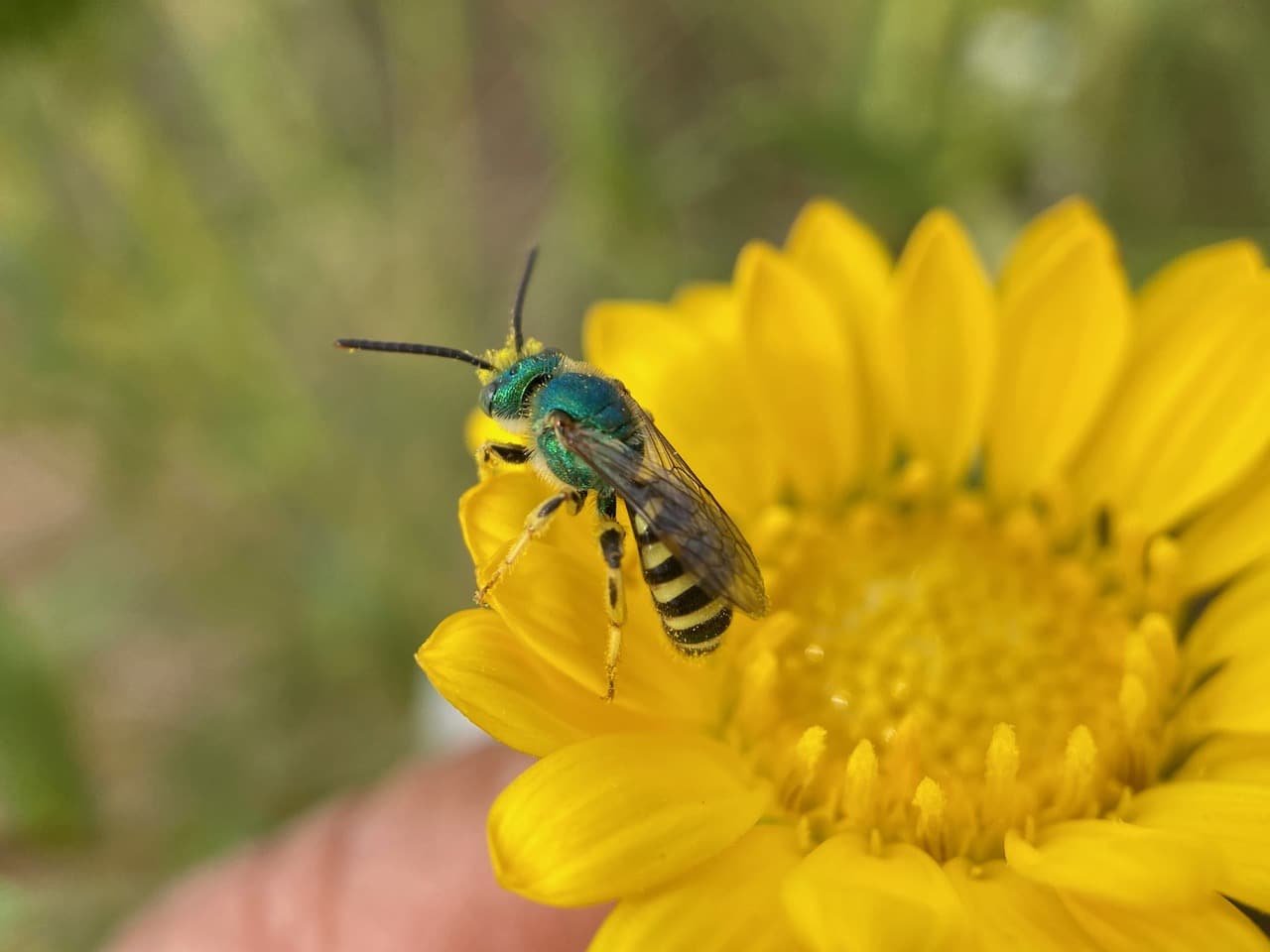 A male Texas Striped Sweat Bee, Agapostemon texanus (family Halictidae) is out foraging among the Grindelia while looking for females at the same time.
The genus Agapostemon is widespread and abundant throughout North America. These ground nesters are most diverse and abundant in temperate regions and southwestern U.S. deserts. Agapostemon are commonly called “sweat bees” because they are closely related to, and resemble bees in the Halictus and Lasioglossum genera. Unlike those bees however, Agapostemon are not attracted to human sweat.
Agapostemon are brightly colored metallic green or blue bees measuring 7 to 14.5 mm long. Most species have a metallic green head and thorax, and black-and-yellow striped abdomen; some females are entirely bright green or blue. Females carry pollen on scopal hairs located on their hind legs. Agapostemon are generalists. Like other members of the family Halictidae, they are short-tongued and thus have difficulty extracting nectar from deep flowers. Males are often seen flying slowly around flowers looking for females. The bees favor flowers with high densities. They are active summer to fall.

A small black wasp is hunting on the sandy ground along the dirt path.

Everything about the little wasp is black, including its wings. Its oversized, blockish head is almost comical. It is a Square-headed Wasp, Larropsis sp. (family Crabronidae).
The Crabronidae is one of our most diverse wasp families, with over 1,200 species in the U.S. and almost 9,000 species worldwide. Adult crabronid wasps visit flowers for nectar, and they are often seen in late summer on flowers such as milkweed and goldenrod. Most crabronid wasps are predatory. They paralyze prey insects such as aphids, leafhoppers, flies, beetles, crickets, cicadas, caterpillars and spiders, and fly them back to a nest in the ground, a plant stem or a rotten log. Many Square-headed Wasps are very specific about the kinds of insects they pursue. One of the most commonly seen crabronid wasp around here are the American Sand Wasps, Bembix americana.