

Pollinator Post 9/15/23 (1)
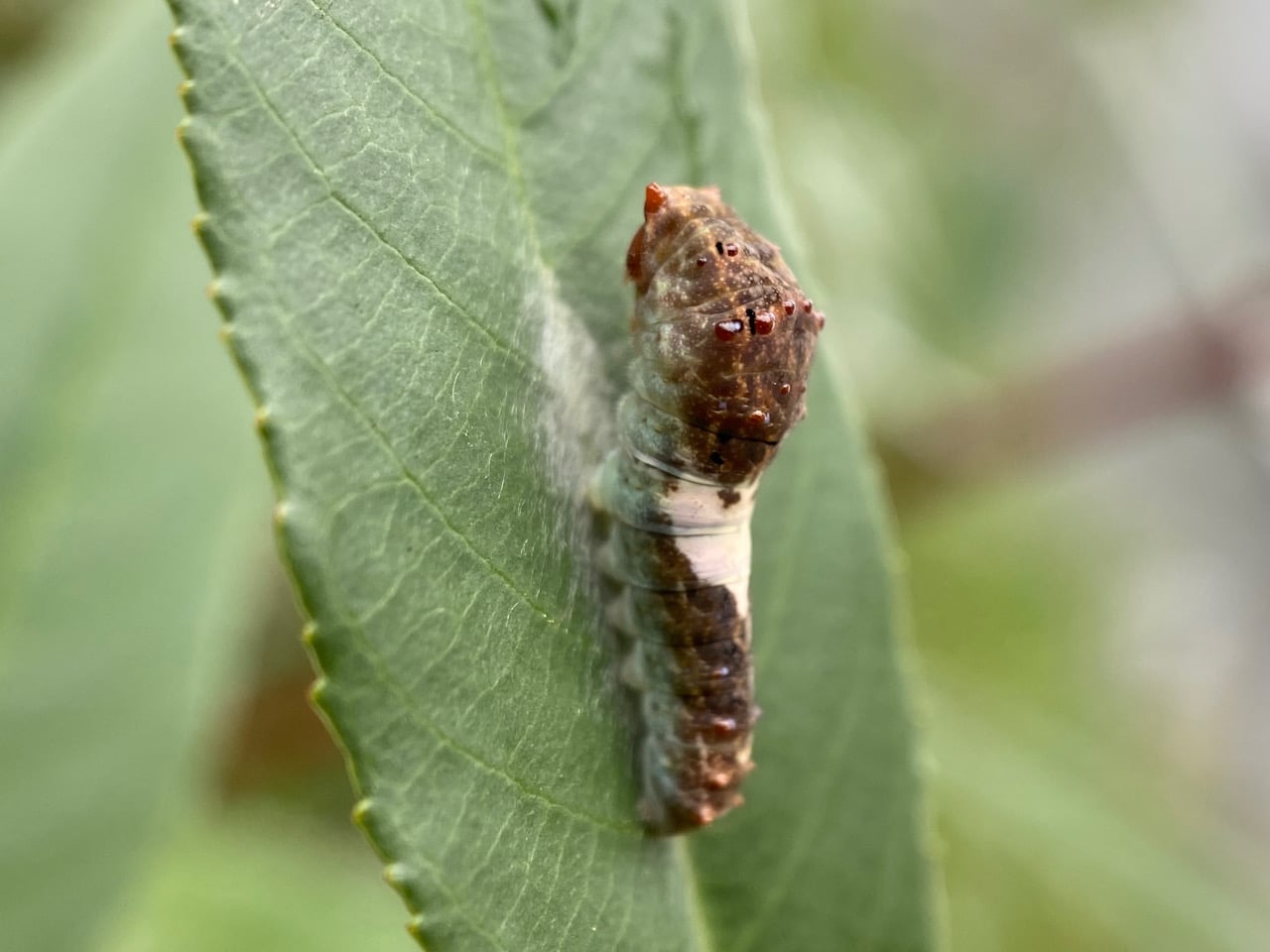
My first order of business today is to check on Bumps, our new found Pale Swallowtail caterpillar. Much to my delight, Bumps is still on its home leaf on the Coffeeberry shrub, Frangula californica. These caterpillars probably move around and feed at night, and return to their home leaves to rest on their silk pads during the day – rather predictable! They never feed on their home leaves that they keep immaculately clean, adding silk to the pads as the caterpillars grow bigger.
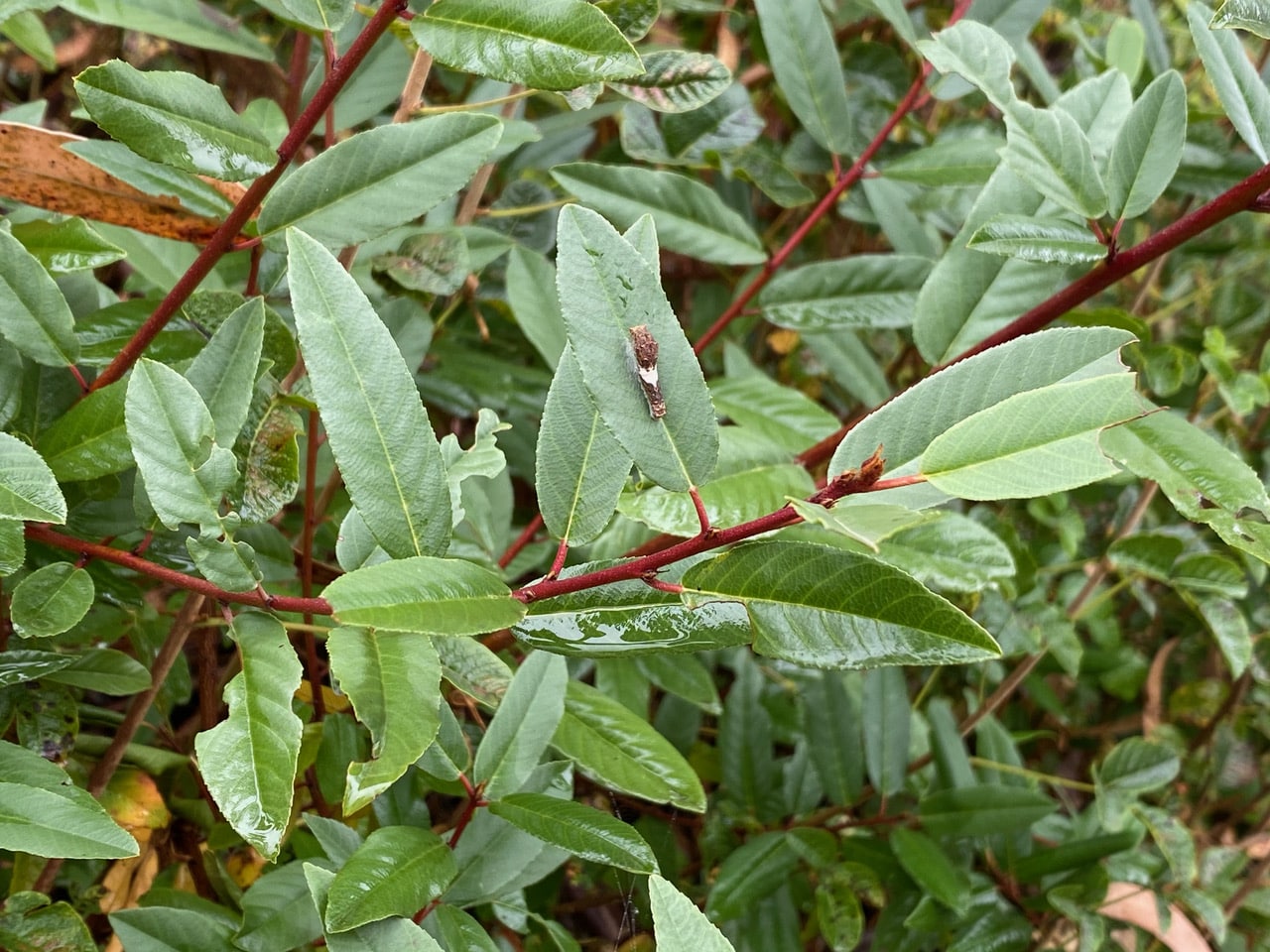
I check the leaves on the branch above and below Bumps’ home leaf. Quite a few are riddled with feeding scars!
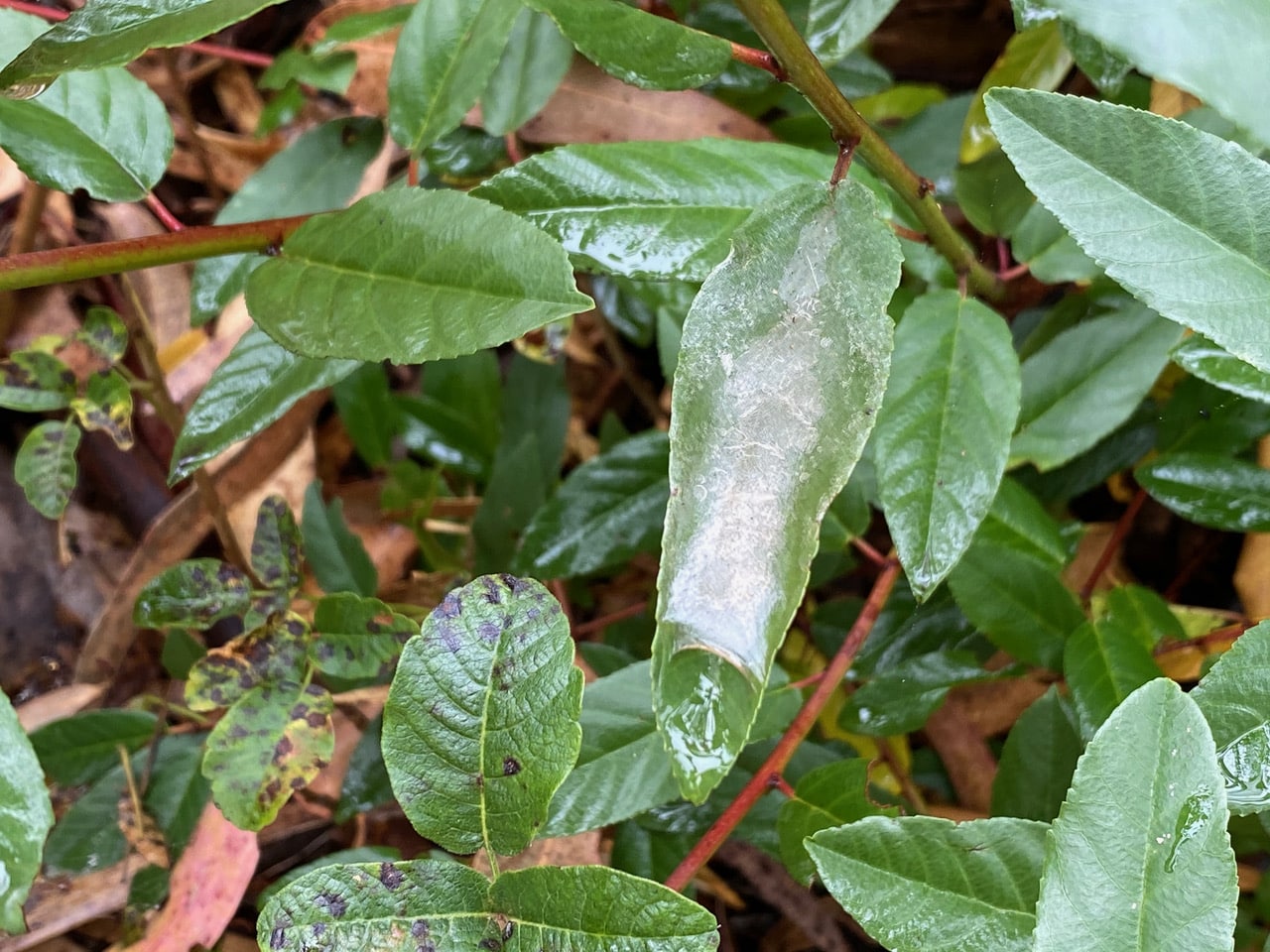
I look around the shrub but don’t find any other caterpillars. But on a lower branch, there’s a leaf covered with a thick silk pad (now wet with fog drip), similar to the one that Blue used to have towards the end of its tenure. Obviously this shrub has successfully hosted a Pale Swallowtail caterpillar before. How reassuring!
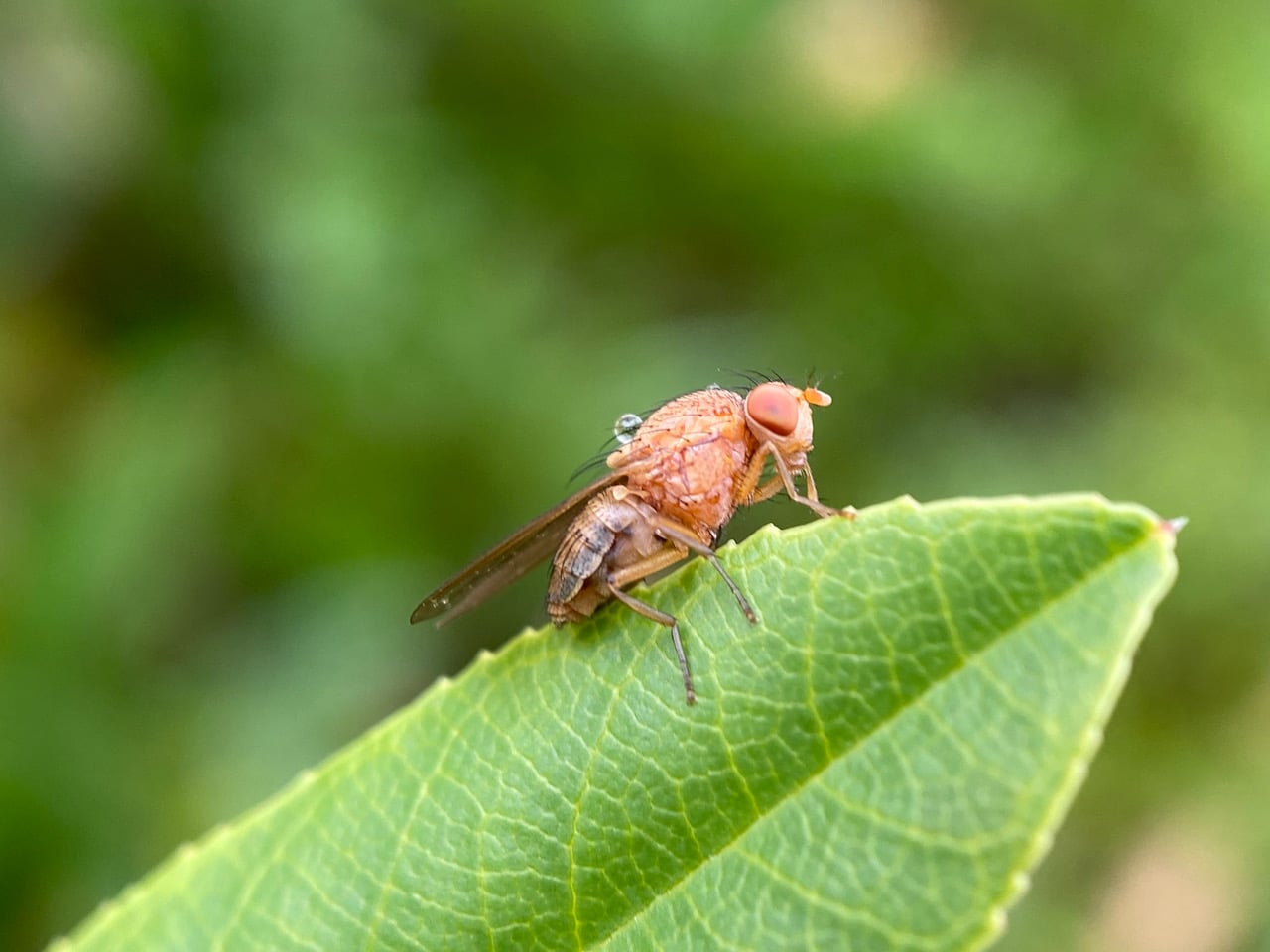
A Lauxaniid Fly is resting on the edge of a Coffeeberry leaf, a droplet of condensed fog on its thorax. These very common flies appear to be scavengers, gleaning organic debris on the surface of vegetation. The flies are small (2-7 mm long) and acalyptrate (do not possess calypters), and are characterized by strong, backward pointing bristles on the frons (top of the head right above the eyes). The larvae are mostly saprophages, feeding in leaf litter, soil, bird nests, etc. Larvae of some mine fallen leaves, others live in rotten wood.
 Who is this tiny creature, barely 2 mm long, moving around on a Coffeeberry leaf?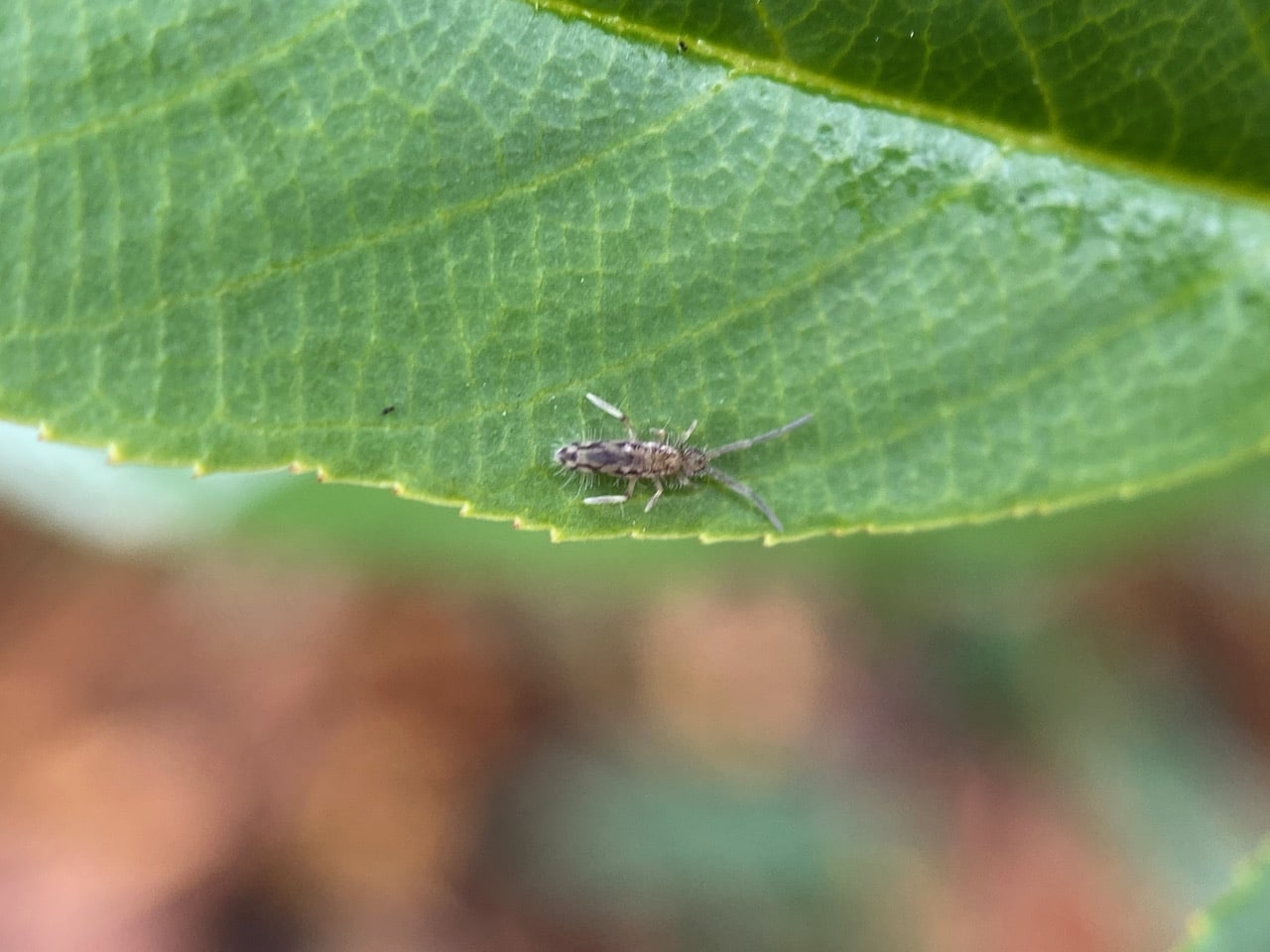
It has been identified by iNaturalist as a Slender Springtail, Entomobrya sp. (order Entomobryomorpha, subclass Collembola).
The name Collembola is derived from the Greek “coll” meaning glue and “emboli” meaning a wedge, referring to a peg-shaped structure, the collophore, on the underside of the first abdominal segment. Springtails are primitively wingless. They are no longer considered insects, as they have internal mouthparts.
The Springtails are among the most abundant of all soil-dwelling arthropods. They live in a variety of habitats where they feed as scavengers on decaying vegetation and soil fungi. Most species are small (less than 6 mm in length) and quite susceptible to desiccation unless they remain in a moist environment. A unique, tube-like structure, the collophore is located ventrally on the first abdominal segment of most species. The exact function of this organ is unknown, but it probably helps maintain water balance by absorbing moisture from the environment, and helps stabilize the animal.
Springtails are named for a forked jumping organ (the furcula) found on the fourth abdominal segment. The furcula is retracted against the ventral wall of the abdomen and held there, in cocked position, by a special catch (the tenaculum). Releasing the tenaculum causes the furcula to snap down against the substrate and flip the organism some distance through the air to escape predators.
Unlike other non-insect hexapods, Collembola continue to molt after they reach sexual maturity.

Our female Two-tubercled Orbweaver Spider is resting on her retreat, a dried oak leaf attached to a cluster of seed capsules of a Soap Plant. Her abdomen does not appear as deflated as before. Is she recovering from egg laying? How many clutches of eggs can she produce? Has she started to feed again? There seems to be a silk-wrapped package under her. Probably a prey she has captured and put away for later consumption.
Leggy, the small male is nowhere to be found. His oak leaf retreat has disappeared too. Has he been taken by a predator? Did the female send him packing? O dear, don’t tell me that the wrapped prey is Leggy?! My head reels with possible scenarios, all of which jarring to the nerves. Spiders are, after all, well known sexual cannibals! Sexual cannibalism is a special case of cannibalism in which a female organism kills and consumes a conspecific male before, during, or after copulation.
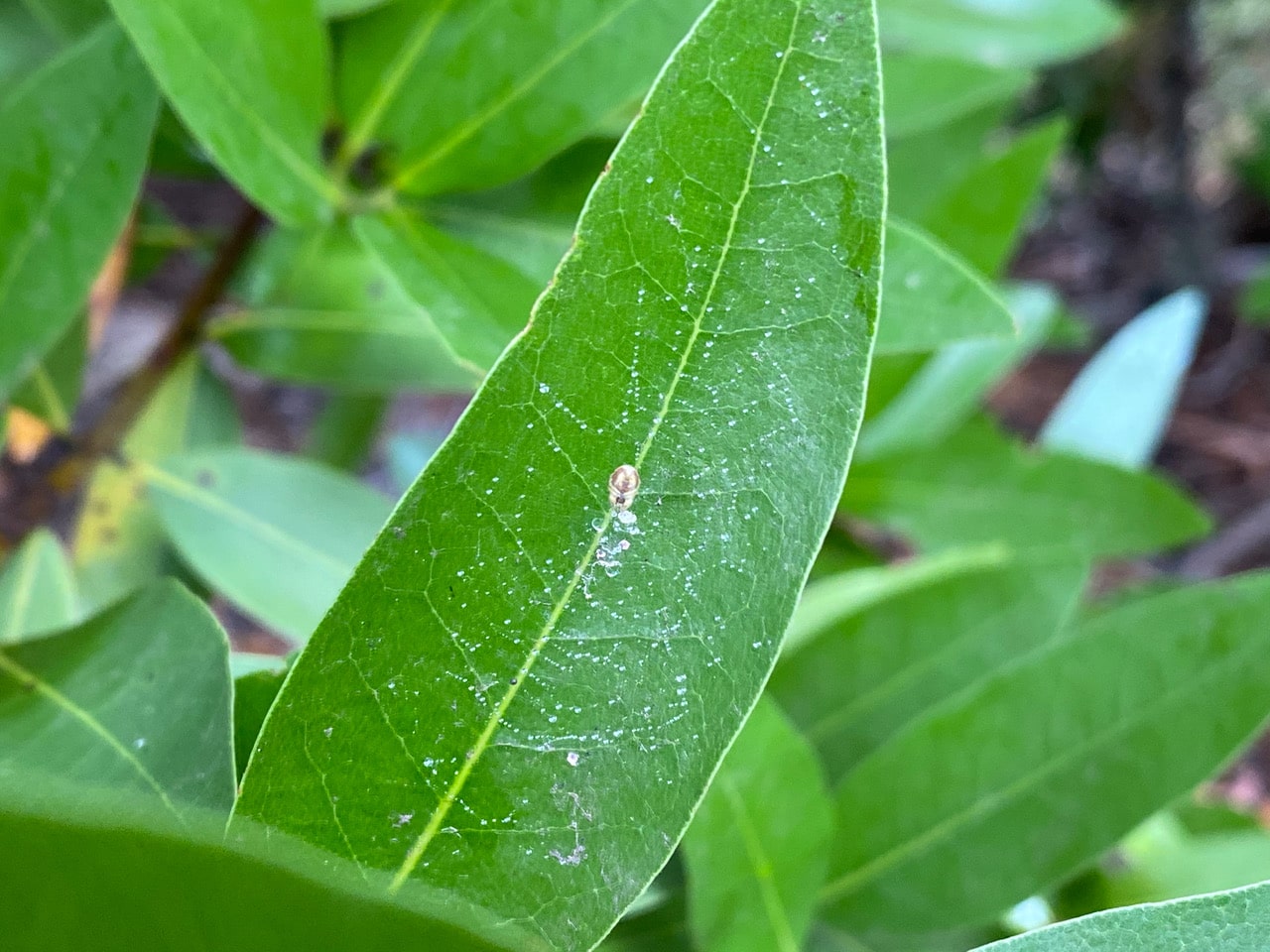
Condensed fog has highlighted a tiny orb web built across the width of a California Bay leaf. The spider is resting head-down in the center of its web.

Close-up of the tiny spider in its little world. We are looking at its underside.
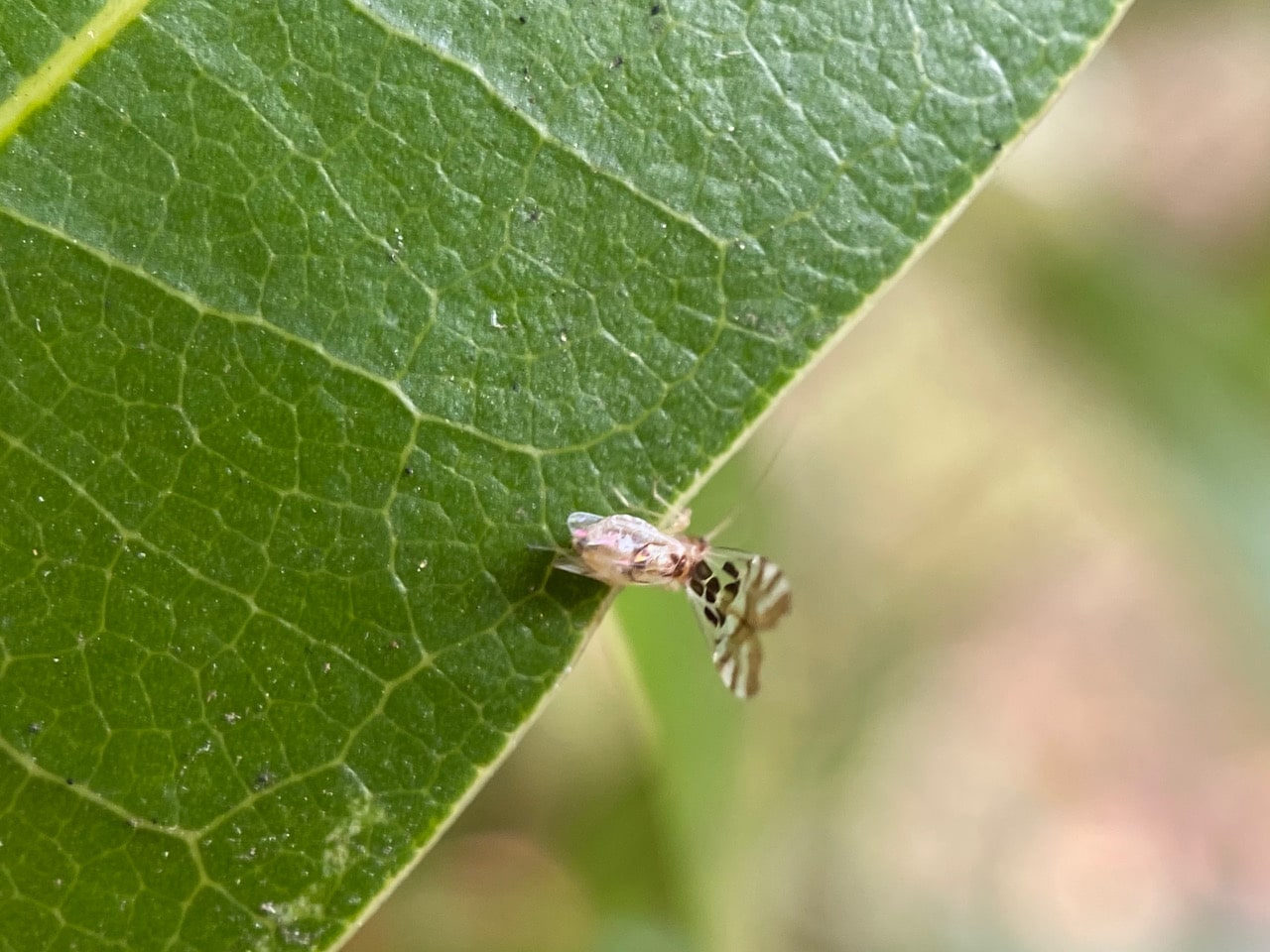
Hey, who’s that tiny creature running around with its forewings raised vertically over its body?
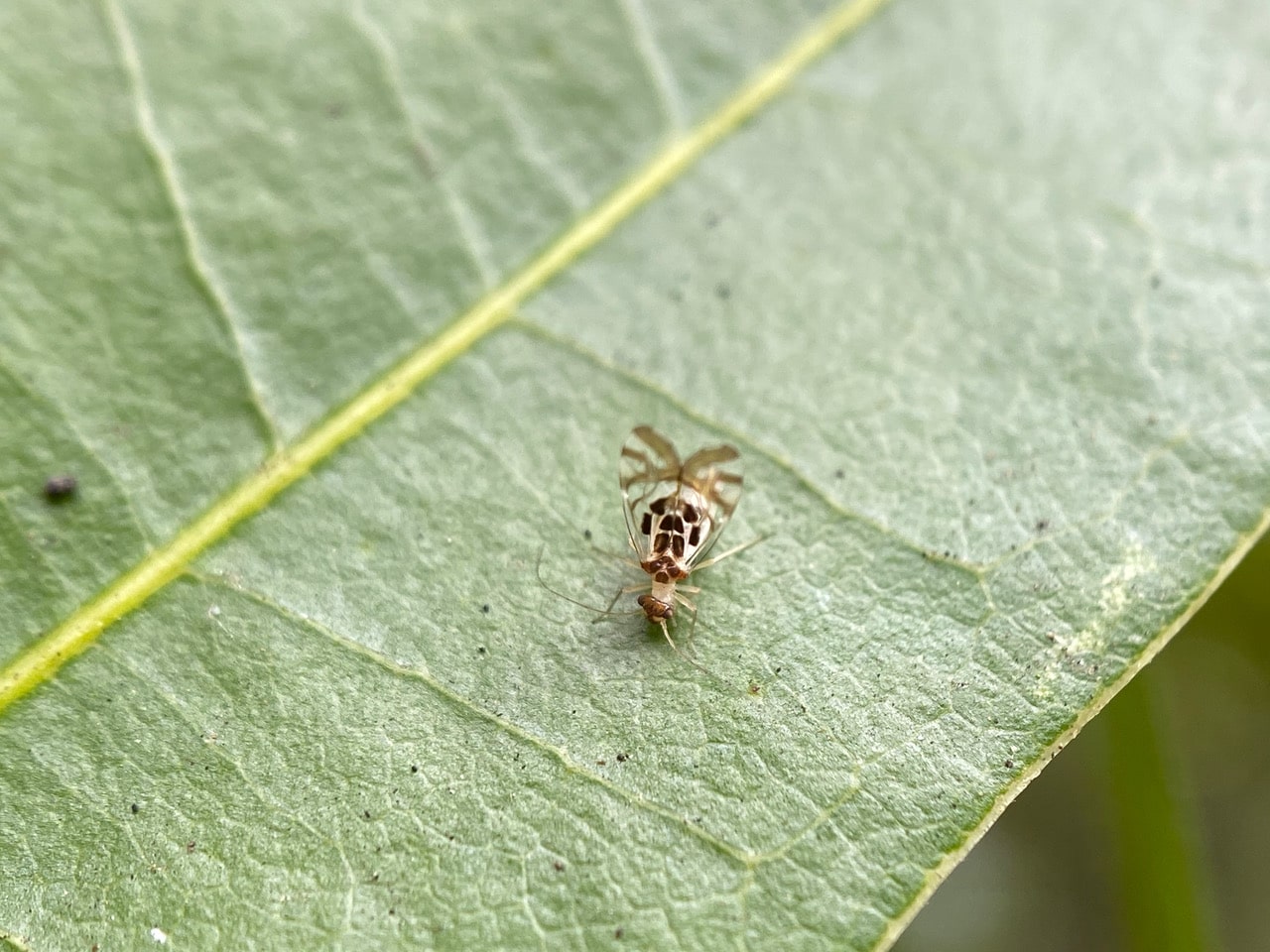
As it moves toward me, I recognize the unmistakable wing pattern of the F-winged Barklouse, Graphopsocus cruciatus (family Stenopsosidae, order Psocodea). But why does it have its forewings up? I don’t see any others around that the insect might be signaling or displaying to. Surely there must be a reason why the insect have such striking patterns on its wings?
The F-winged Barklouse, Graphopsocus cruciatus (family Stenopsocidae) belongs to an ancient lineage of insects in the order Psocodea (formerly Psocoptera). The scientific name comes from the Greek psocus (to grind) referring to the psocodean jaws, which are shaped to grind food, rather like a pestle and mortar. These insects are conveniently discussed in two groups – barklice that live outdoors, and booklice that are found in human habitations.
Barklice are usually found in moist places, such as leaf litter, under stones, on vegetation or under tree bark. They have long antennae, broad heads and bulging eyes. They feed on algae, lichens, fungi and various plant matter, such as pollen. Barklice are usually less than 6 mm, and the adults are often winged. The wings are held roof-like over their bodies. Some species are gregarious, living in small colonies beneath a gossamer blanket spun with silk from labial glands in their mouth. Sometimes the colonies seem to move in coordinated fashion, rather like sheep.
Booklice are wingless and are much smaller (less than 2 mm). They are commonly found in human dwellings, feeding on stored grain, book bindings, wallpaper paste and other starchy products, and on the minute traces of mold found in old books.
Psocodea undergo incomplete metamorphosis. They are regarded as the most primitive amongst the hemipteroids (true bugs, the thrips and lice) because their mouthpart show the least modification from those of the earliest known fossils.
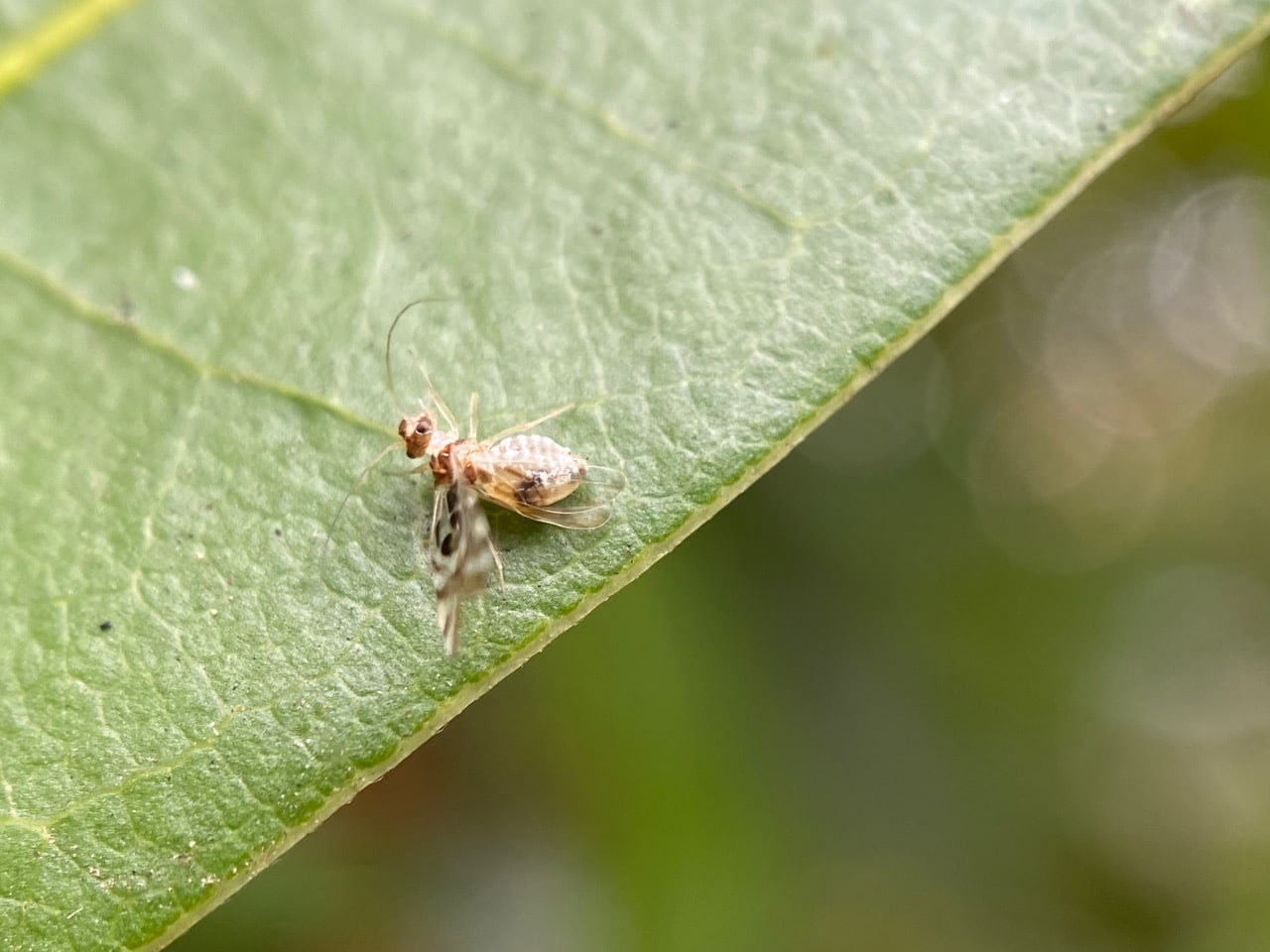
Then the Barklouse gets on its side and drags its flank along the leaf surface for an instant. It does this three times during the time I watch it. I wonder what that’s about? There seems to be something black on its back. Is the Barklouse trying to rub off an intruder?

This is what the Barklouse looks like from the side with its forewings raised vertically.

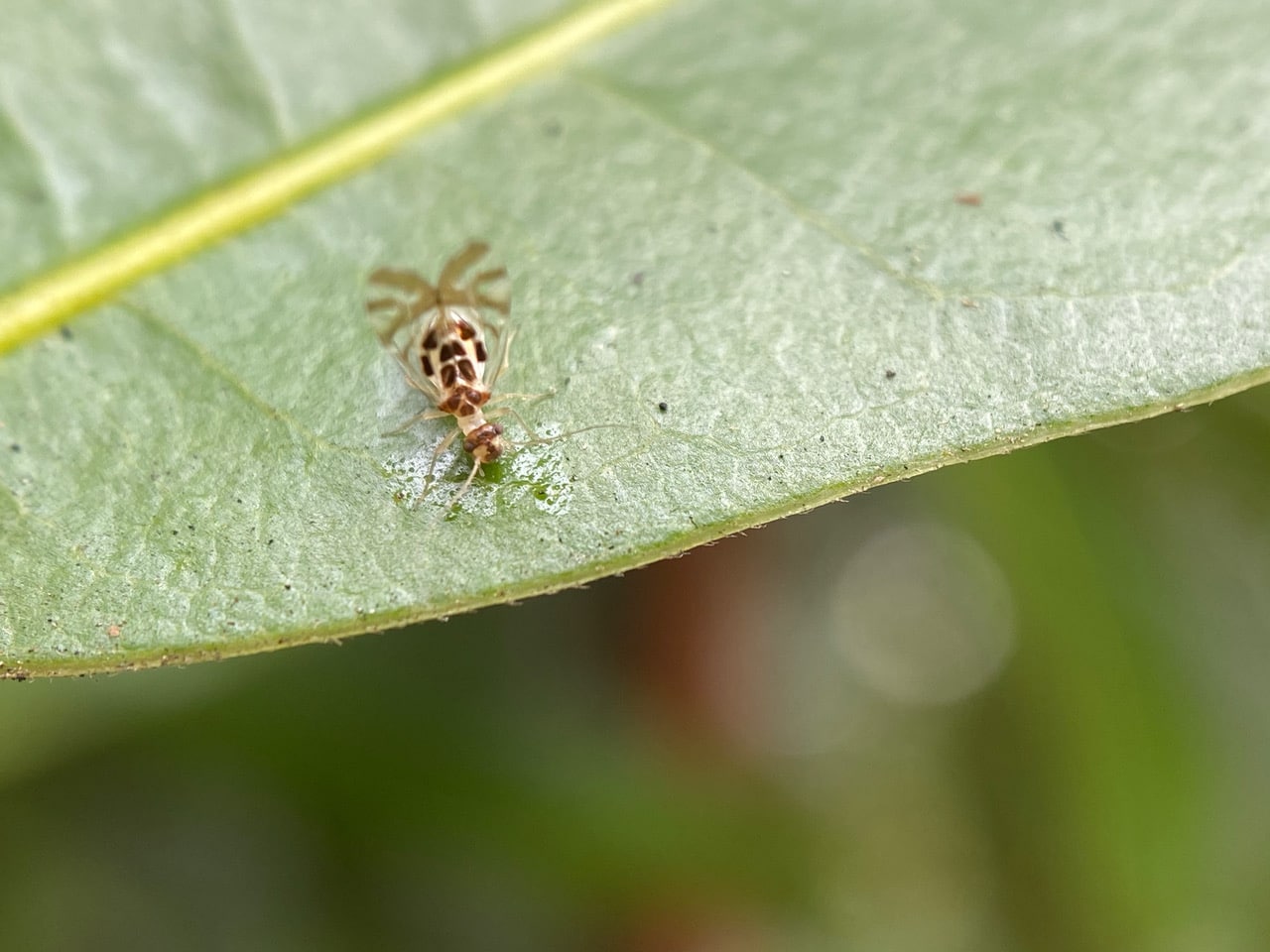
The bark louse stops to feed on something wet on the leaf.
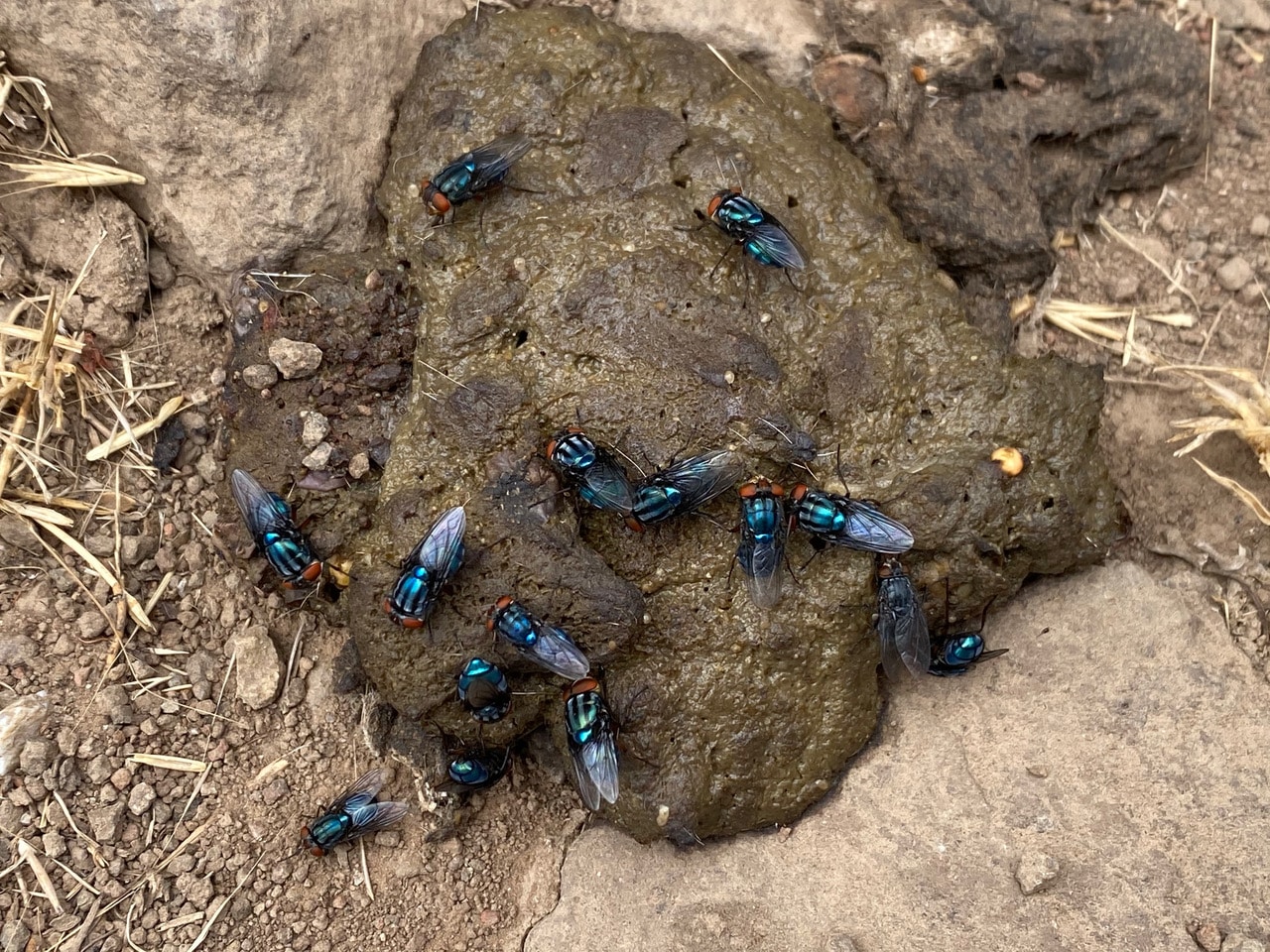 Someone’s diarrhea is someone else’s delight! A large number of Secondary Screwworm Flies have gathered on a wet scat in the middle of the trail.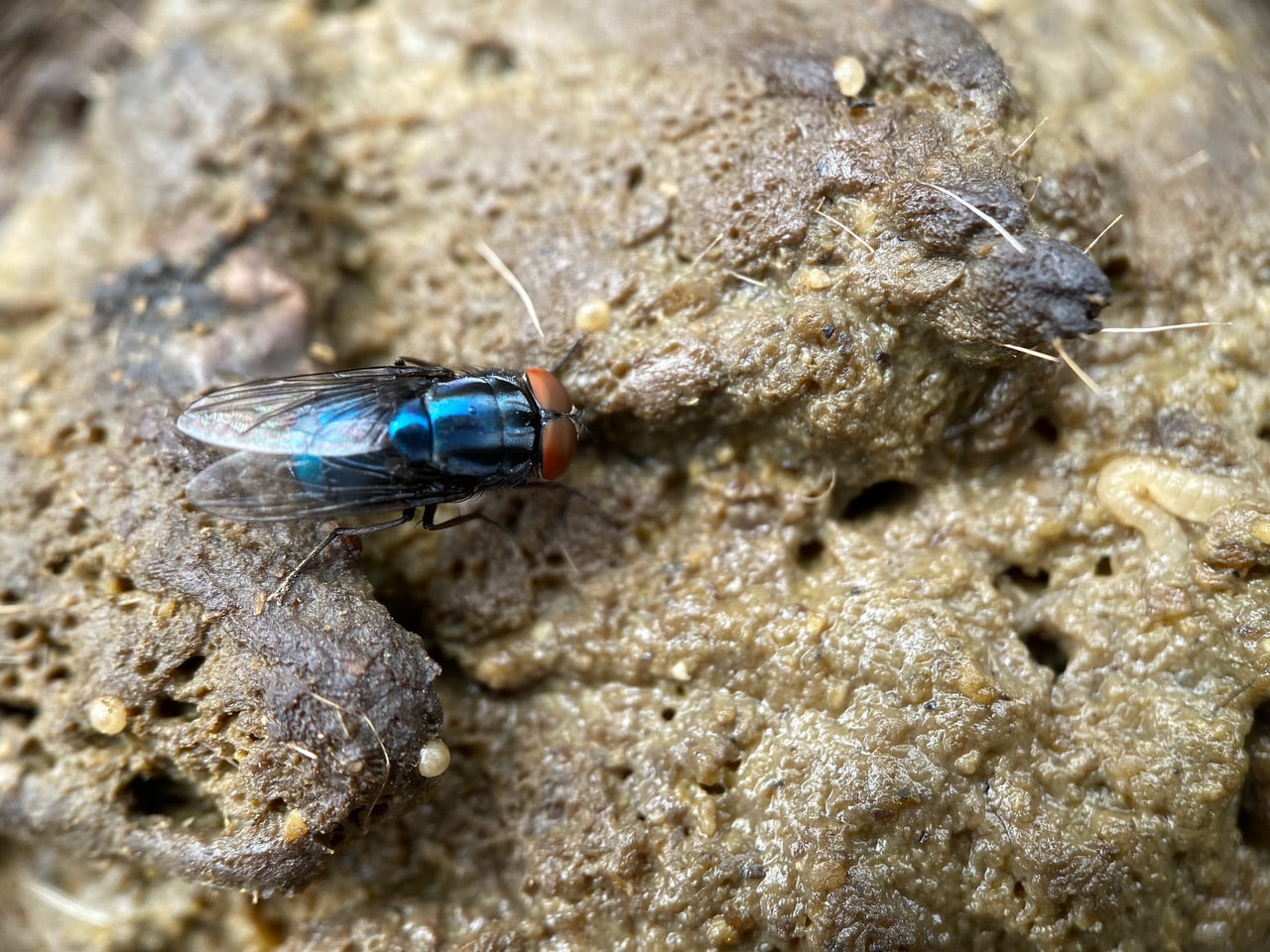
The Secondary Screwworm, Cochliomyia macellaria (family Calliphoridae, commonly known as blow flies) ranges throughout the United States and the American tropics. The body is metallic greenish-blue and characterized by three black longitudinal stripes on the dorsal thorax. Females are attracted to carrion where they lay their eggs. These screwworms are referred to as “secondary” because they typically infest wounds after invasion by primary myiasis-causing flies. While the flies carry various types of Salmonella and viruses, C. macellaria can also serve as important decomposers in the ecosystem. In a lifetime, a female may lay up to 1000 or more eggs. Females may also lay their eggs with other females, leading to an accumulation of thousands of eggs. The larval stage of C. macellaria is referred to by the common name of secondary screwworms; this is due to the presence of small spines on each body segment that resemble parts of a screw. The larvae feed on the decaying flesh of the animal that they have been laid on until they reach maturity. Eventually the larvae fall off the food source to pupate in the top layer of the soil. Adult females will continue to feed on tissues of animals; however, now they preferentially feed off of live tissues and tissue plasma. Adult males will no longer consume tissue, but instead will eat nearby vegetation and take nourishment from floral nectar.