

Pollinator Post 9/14/24 (2)
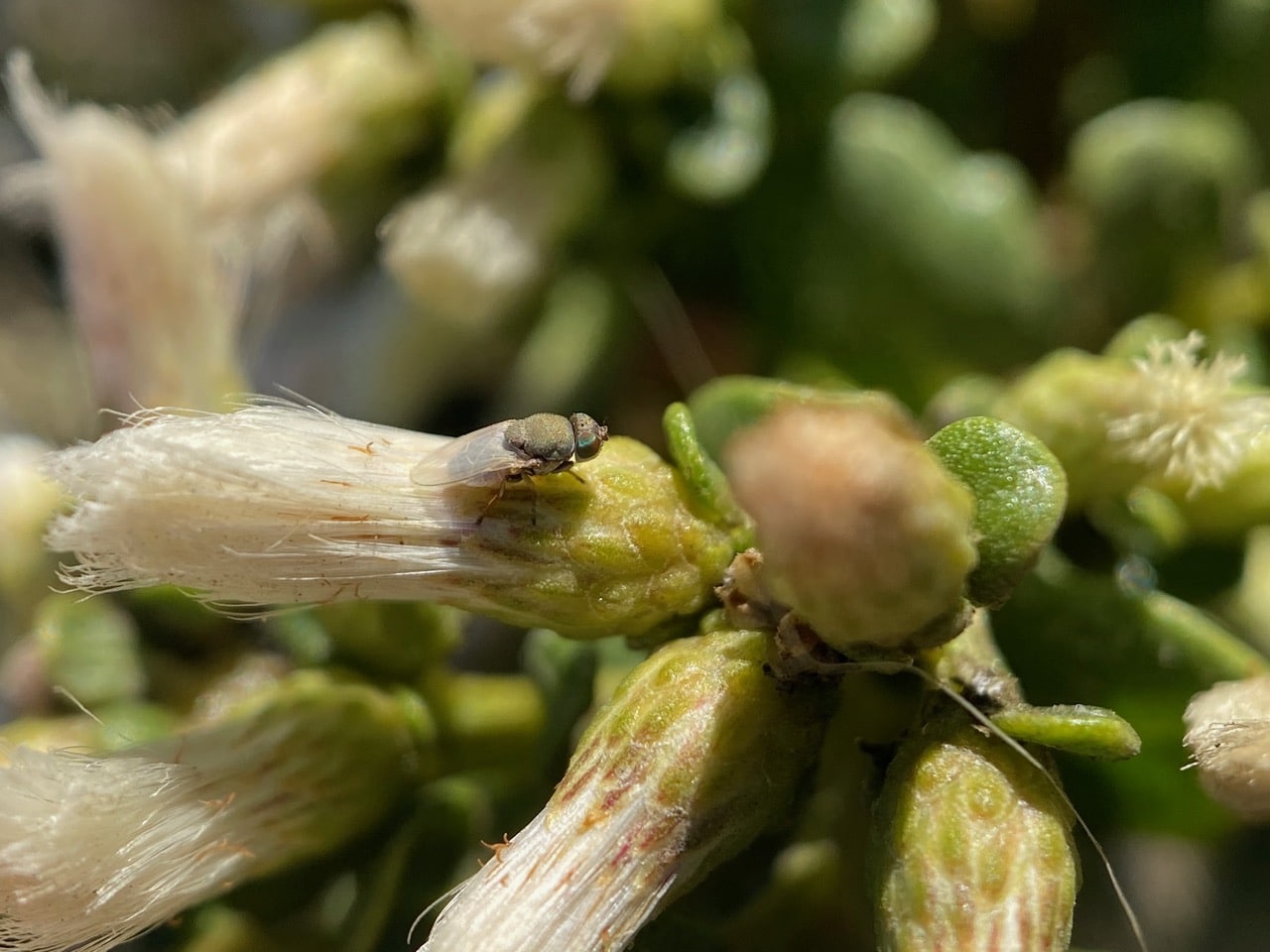
There are numerous Cellophane Bees dancing over the flowers of a female Coyote Brush. Since I have previously photographed these bees, I turn my attention elsewhere. Who are these minute flies perched on the plant? iNaturalist has identified them as Shore Flies, Hecamede sp. (family Ephydridae).
Photos of Genus Hecamede · iNaturalist
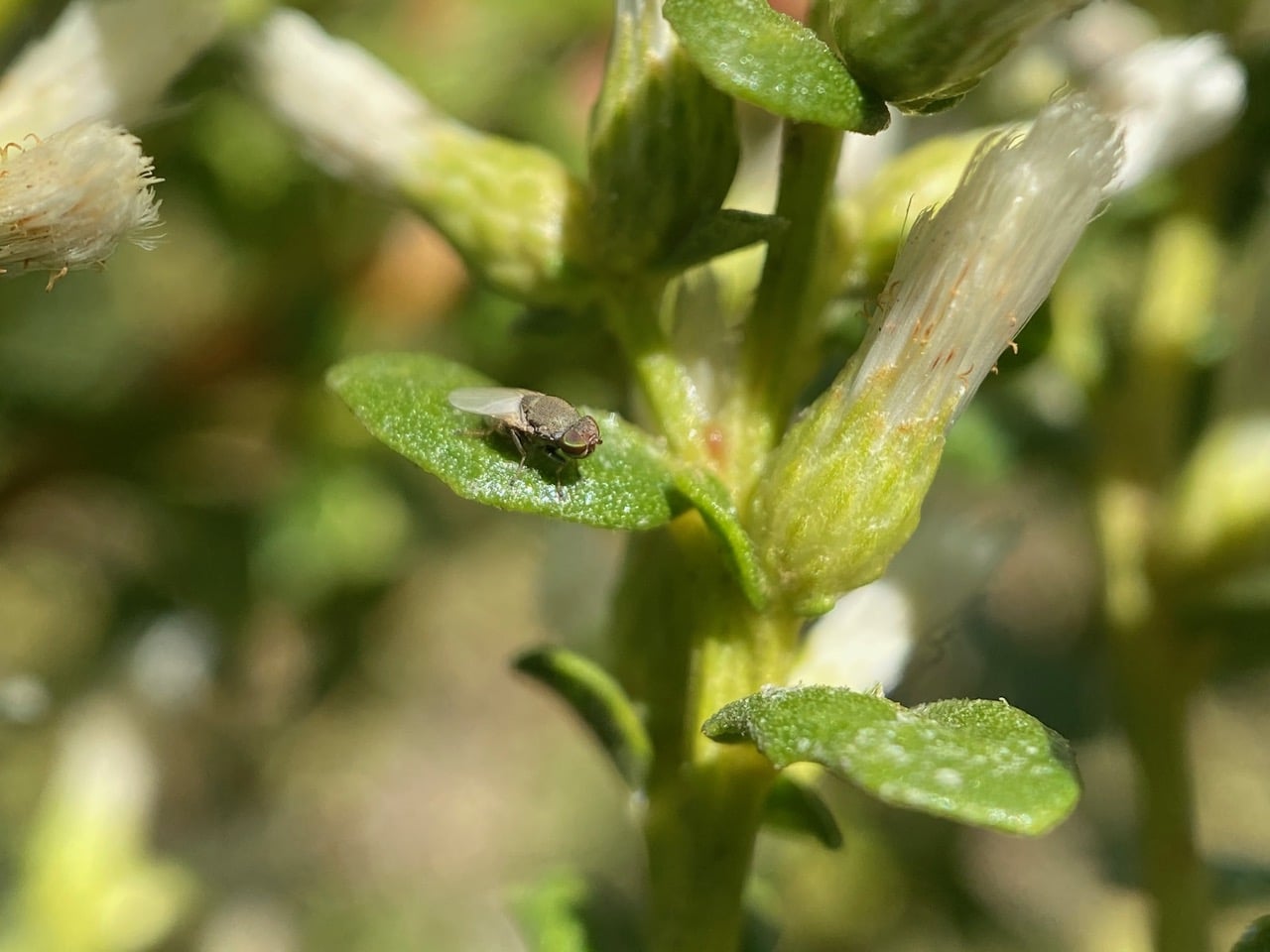


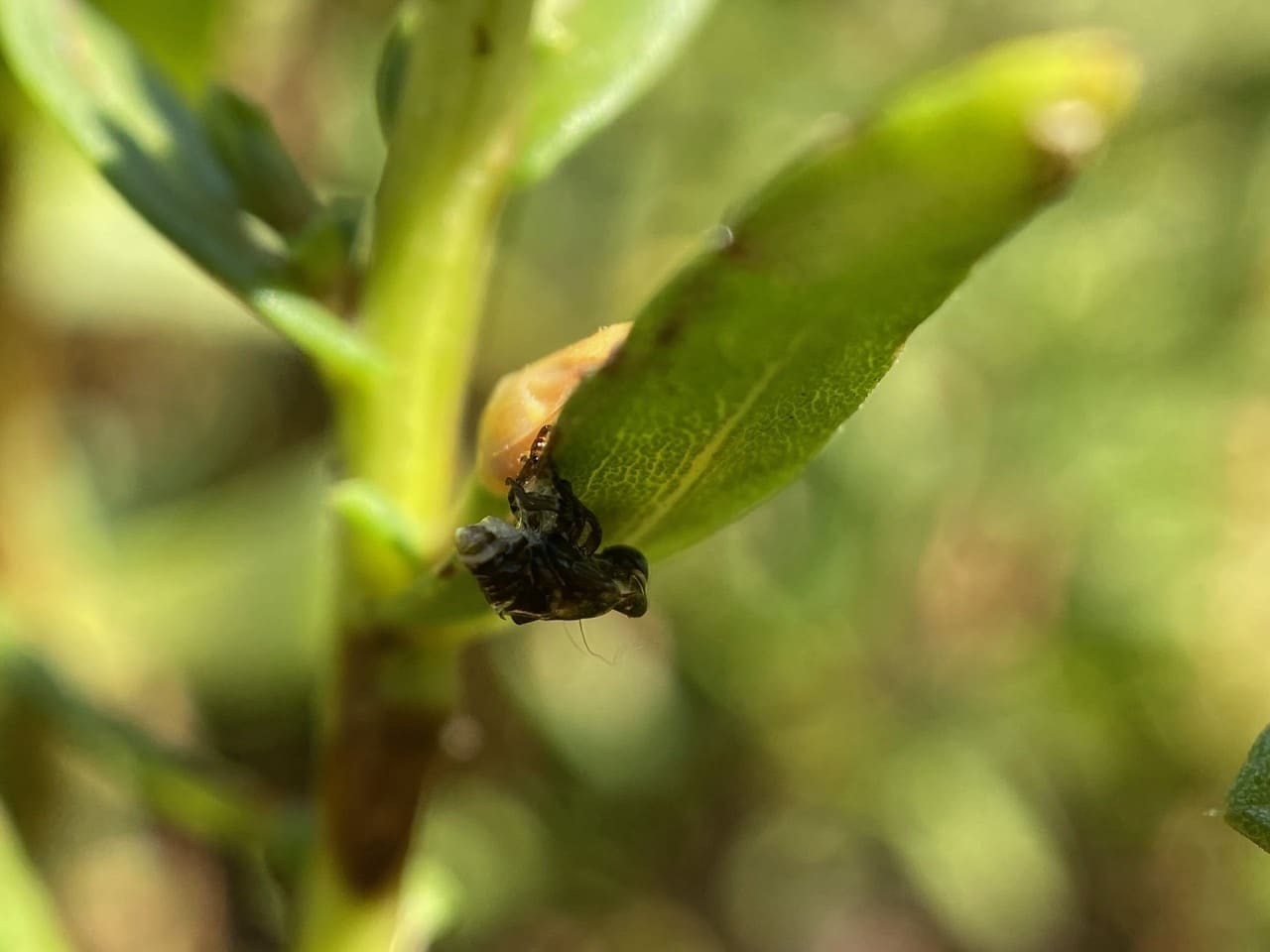
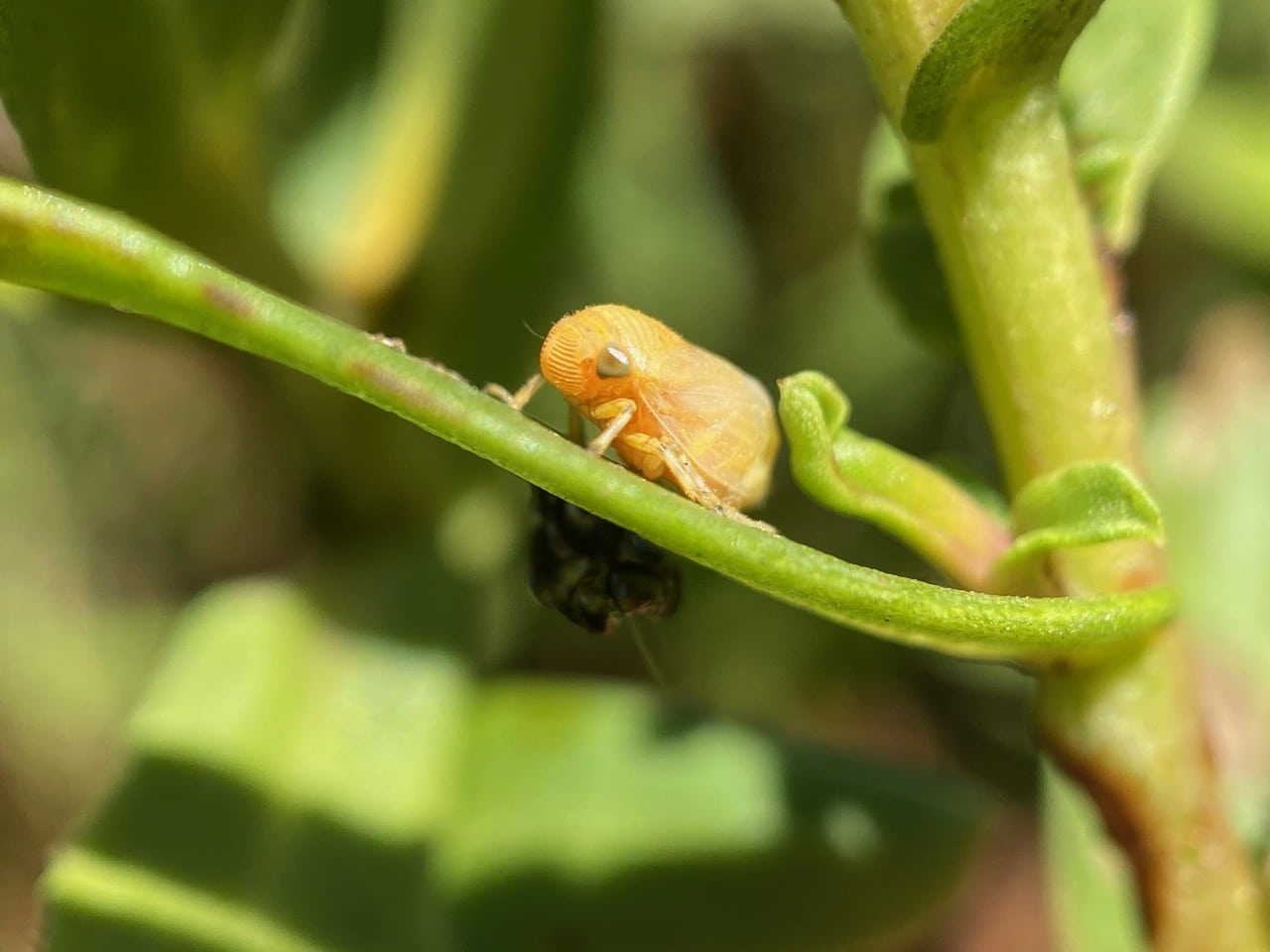
The Shore Flies (family Ephydridae) are minute to small (2.5-9 mm), dark colored flies that are found in aquatic/semiaquatic habitats such as salt marshes, tidal salt pools, and alkaline lakes of arid regions. Along the shores of large lakes, they may rise in clouds from the ground. Larvae of most species filter microorganisms (bacteria, unicellular algae, yeasts) from the surrounding semiliquid medium, although some prefer dead and decaying animal tissue, or excrement.
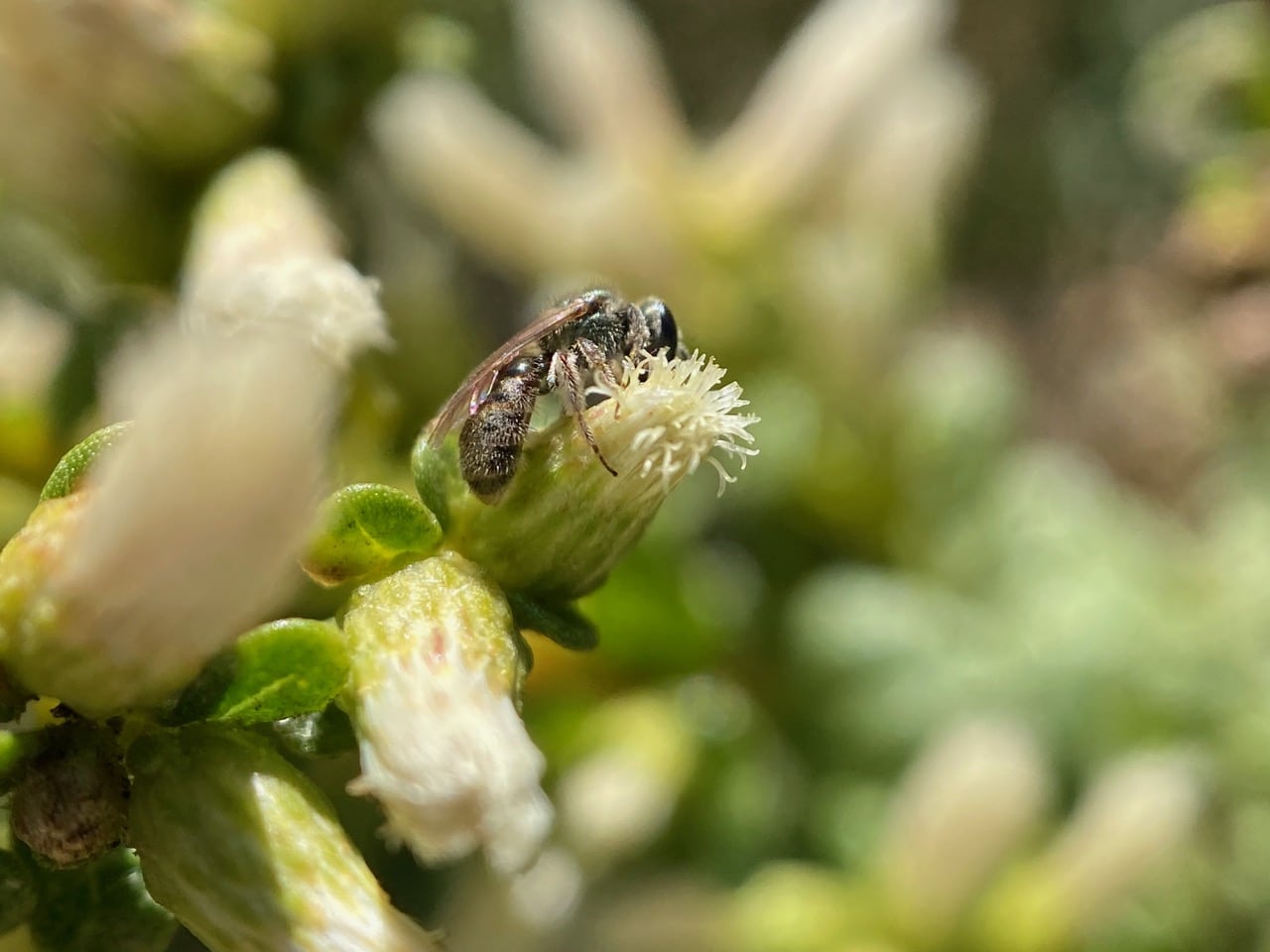
A Metallic Sweat Bee, Lasioglossum (Dialictus) sp. (family Halictidae) is seeking nectar from the freshly blooming female flowers of Coyote Brush.
Lasioglossum species are found worldwide, and they constitute the largest bee genus. The subgenus Dialictus are the most likely to be seen in the U.S., with over 300 species of these tiny metallic bees. The majority of Lasioglossum are generalists. Because they are so abundant throughout the flowering season, the bees are often important pollinators. Their sheer numbers are enough to achieve excellent pollination of many wild flowers, especially of plants in the Asteraceae, which have shallow floral tubes that are easily accessed by these minute bees.
Lasioglossum are closely related to the genera Halictus and Agapostemon. These genera are commonly called “sweat bees” because of their attraction to human sweat, which they drink for its salt content. Lasioglossum are dusky black to brown slender bees with bands of hair on their abdomen. Female Sweat Bees (family Halictidae) carry pollen in the scopae on their entire hind legs and underside of their abdomen.
Lasioglossum exhibit a range of social behaviors; the genus includes solitary, communal, semi social, primitively eusocial, and even parasitic species. Almost all Lasioglossum in the U.S. nest in the ground. Generally these nests are built in the spring by fertilized females (called foundresses) that spent the winter in hibernation. In social species, the foundresses behave much like the queen Bumble Bees – they lay the first batch of eggs that develop into the first generation of female workers. The nest grows with each additional generation of bees. Later broods may consist of both males and females. They mate, and at the end of the season the fertilized females hibernate til the following spring, repeating the life cycle of the colony.
Dialictus is a subgenus of Sweat Bees belonging to the genus Lasioglossum. Most of the members of this subgenus have a subtly metallic appearance, and are small, about 3.4-8.1 mm in size. They are commonly found in Northern Hemisphere and are found in abundance in North America. As in the other members of the family Halictidae, the bees have very diverse forms of social structure, making them model organisms for studying the social behavior of bees.
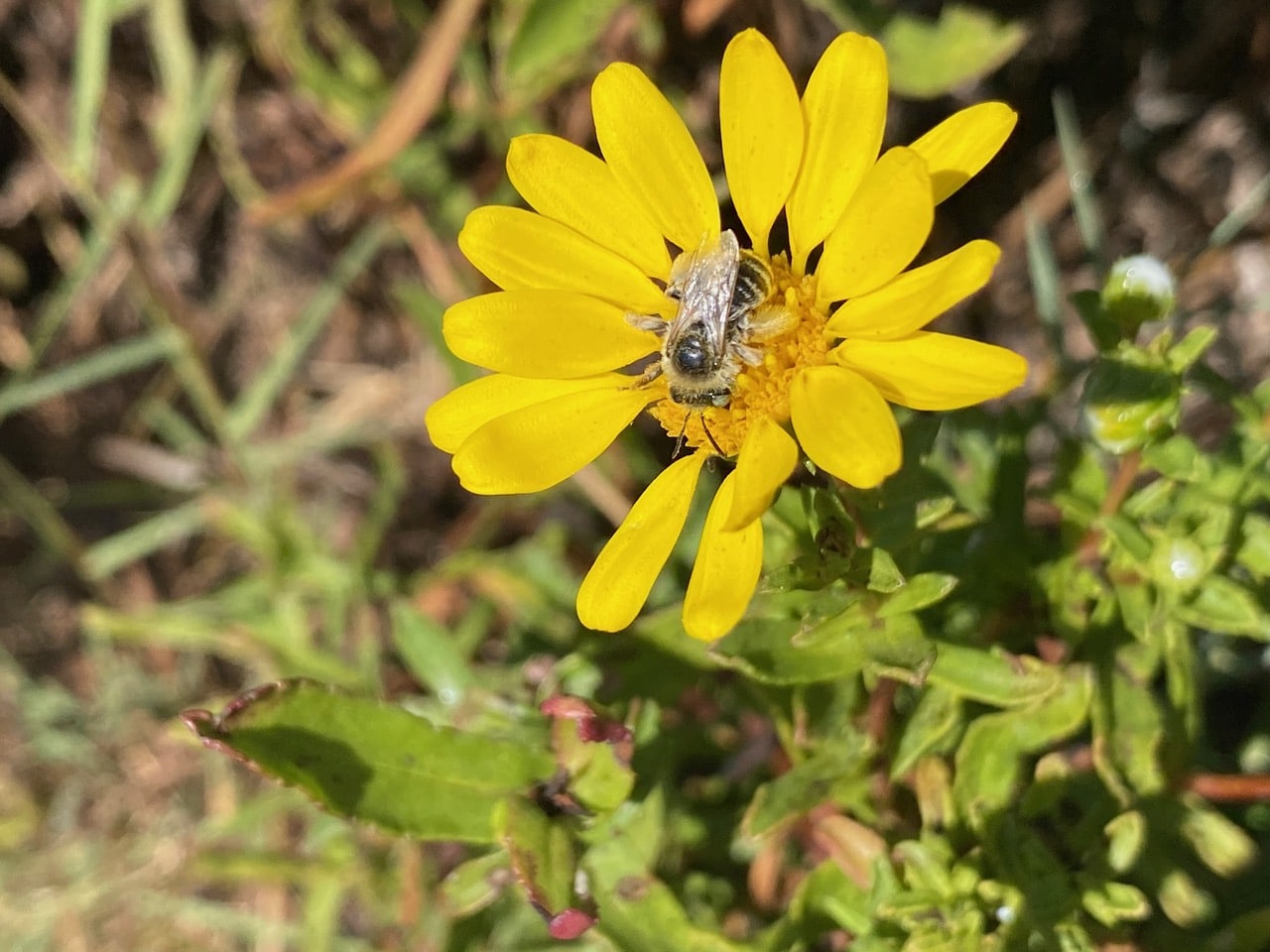
A male Summer Longhorn Bee, Melissodes sp. (family Apidae) is foraging on a Grindelia flowerhead.
The Summer Longhorn Bees, Melissodes sp. (family Apidae) are medium to large bees, stout-bodied, usually with gray hair on the thorax and pale hair bands on the abdomen. Males usually have yellow markings on their faces and have very long antennae from which their common name is derived. They are active May to September, with peak flight in late June to early August. The females prefer flat, bare ground for digging their solitary nests, though they sometimes nest in aggregations. Pollen is transported in scopae on the hind legs. Pollen loads are often copious and brightly colored and thus very distinguishable. Melissodes are specialists on Asteraceae – females gather pollen from flowers of Aster, Bidens, Coreopsis, Cosmos, Encelia, Gaillardia, Helianthus, and Rudbeckia ssp.
Hey, there’s another teneral Froghopper above its foam shelter, next to the exuvia from which it has emerged – third one this morning! Are the eclosures synchronized, triggered by some environmental factor such as time of day, temperature, etc.?
I wonder how long it will take for the teneral to acquire its final coloration?
A female Summer Longhorn Bee, Melissodes sp. (family Apidae) is foraging on a Grindelia flowerhead.
12:07:57 pm
When I return to the first teneral I have watched through its eclosure on the Grindelia, it is still clinging to its exuvia, and it hasn’t changed color. On the approach of my camera, the teneral crawls onto the upper surface of the leaf. It is now able to move!
Happy birthday, Froghopper! Thank you for a spectacular show.
What is an insect’s “birthday” anyway? Is it the day its egg is laid? The day it hatches from the egg? Or is it the day when the insect turns into an adult, as we have witnessed here? Life is miraculous and wonderful in all its forms and transformations.