

Pollinator Post 9/1/24

A small black wasp is flitting about on the sandy ground along the dirt path I walk at Bay Farm Island. Everything about it is black, including its wings. Its oversized, blockish head tells me that it is probably a Square-headed Wasp (family Crabronidae).
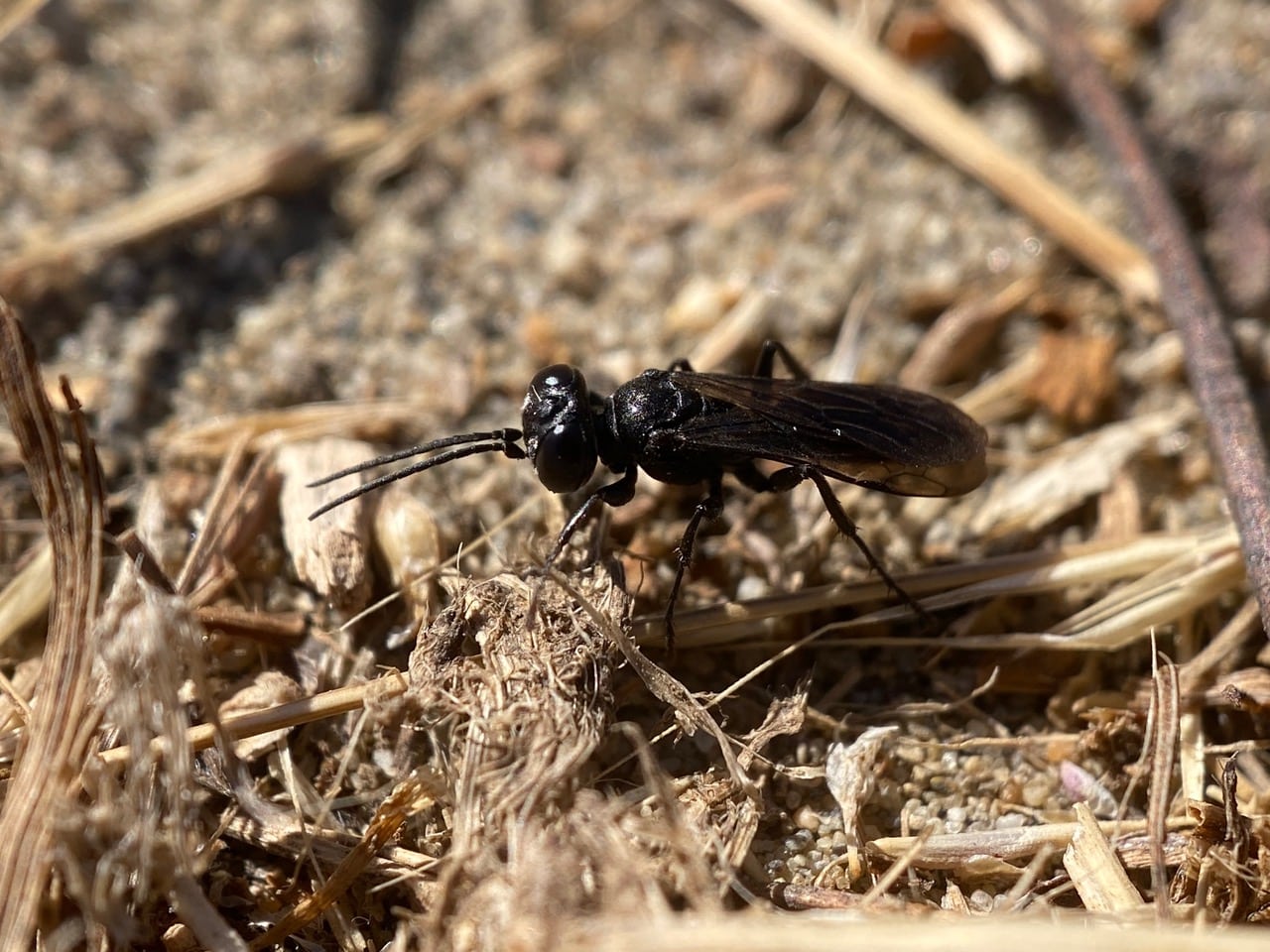
The Crabronidae is one of our most diverse wasp families, with over 1,200 species in the U.S. and almost 9,000 species worldwide. Adult crabronid wasps visit flowers for nectar, and they are often seen in late summer on flowers such as milkweed and goldenrod. Most crabronid wasps are predatory. They paralyze prey insects such as aphids, leafhoppers, flies, beetles, crickets, cicadas, caterpillars and spiders, and fly them back to a nest in the ground, a plant stem or a rotten log. Many Square-headed Wasps are very specific about the kinds of insects they pursue. One of the most commonly seen crabronid wasp around here are the American Sand Wasps, Bembix americana.
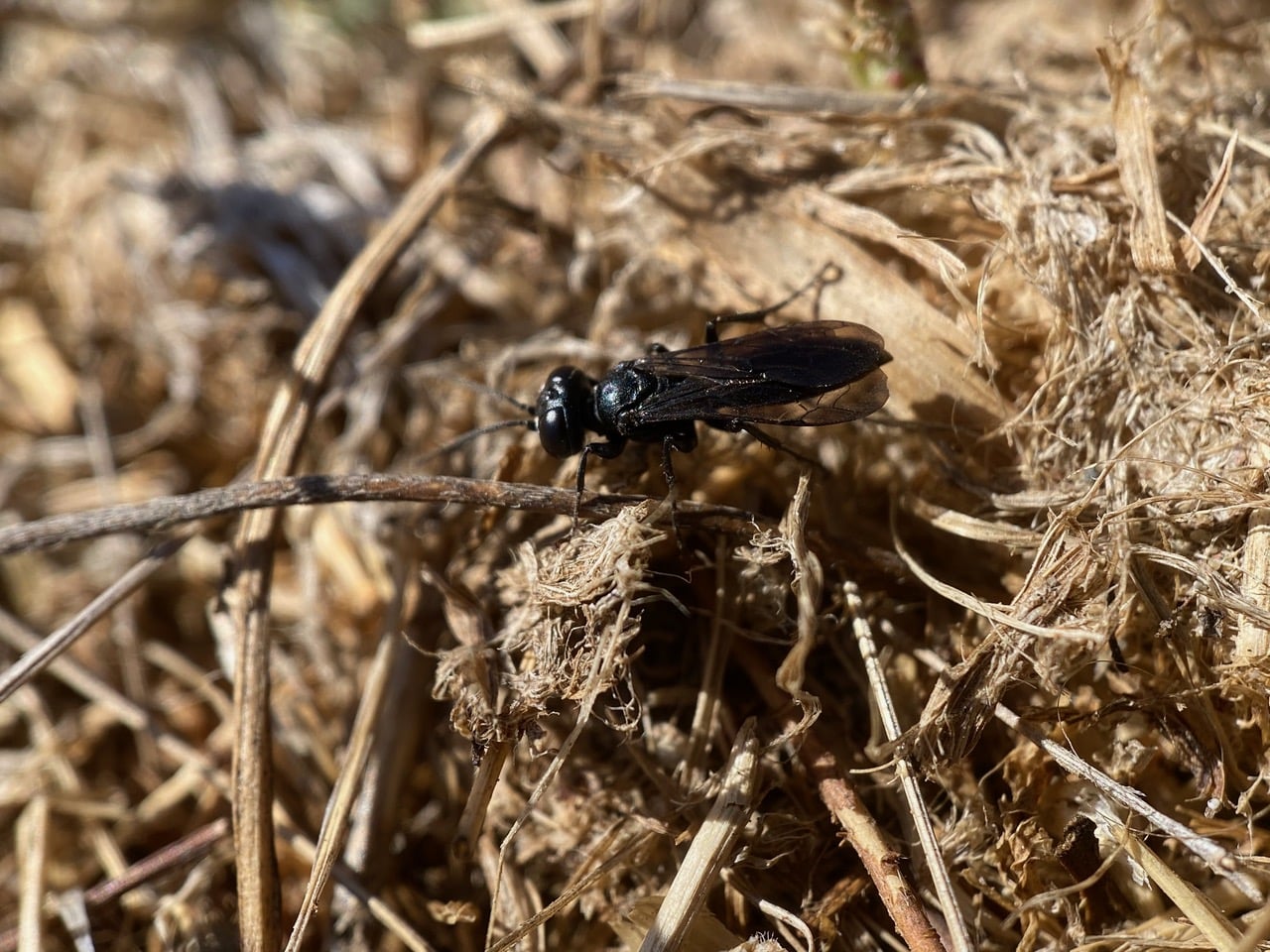
iNaturalist has identified our little black wasp as a member of the genus Larropsis (family Crabronidae).
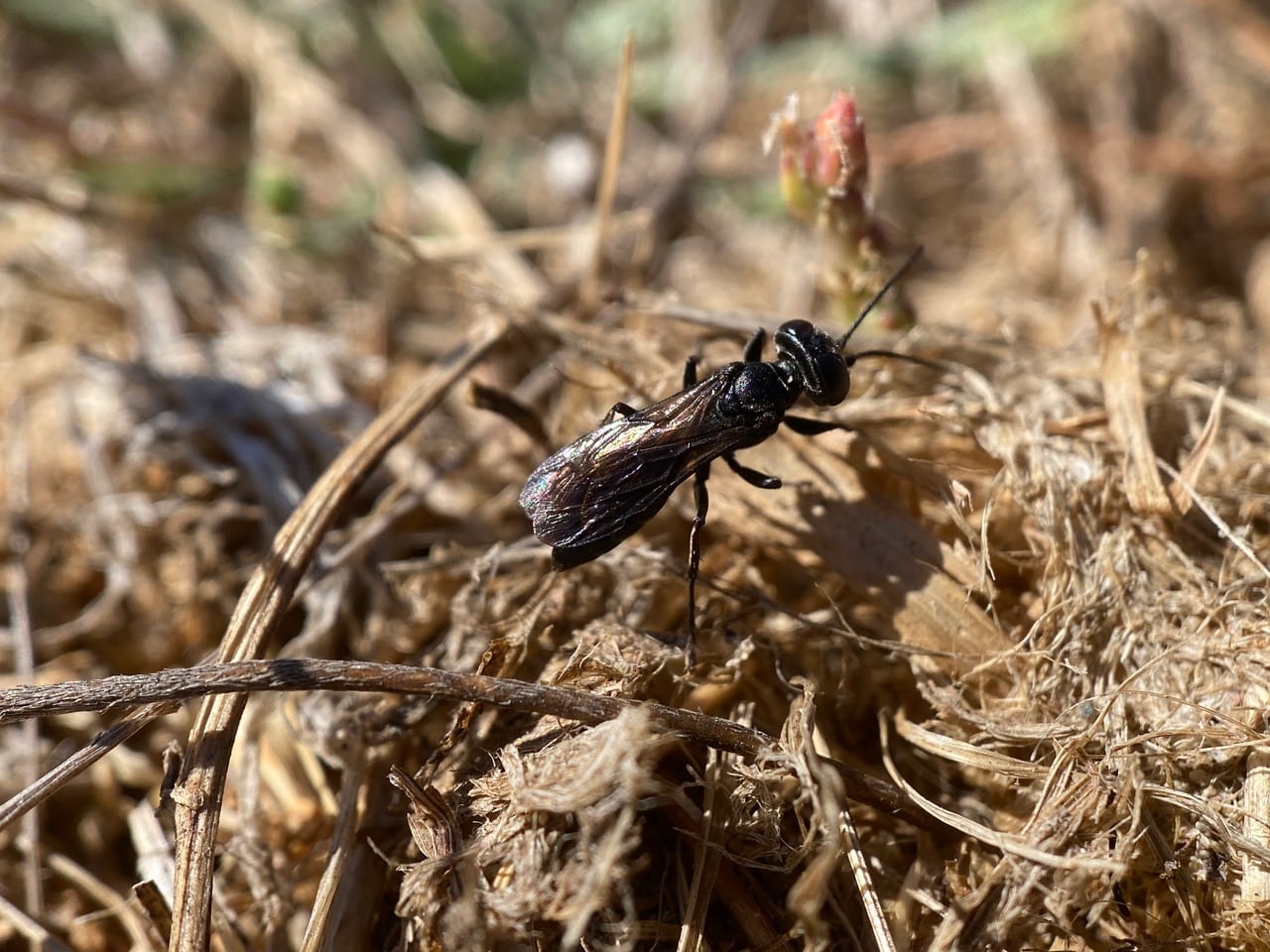
The wasp appears to be searching among the plant debris on the ground.

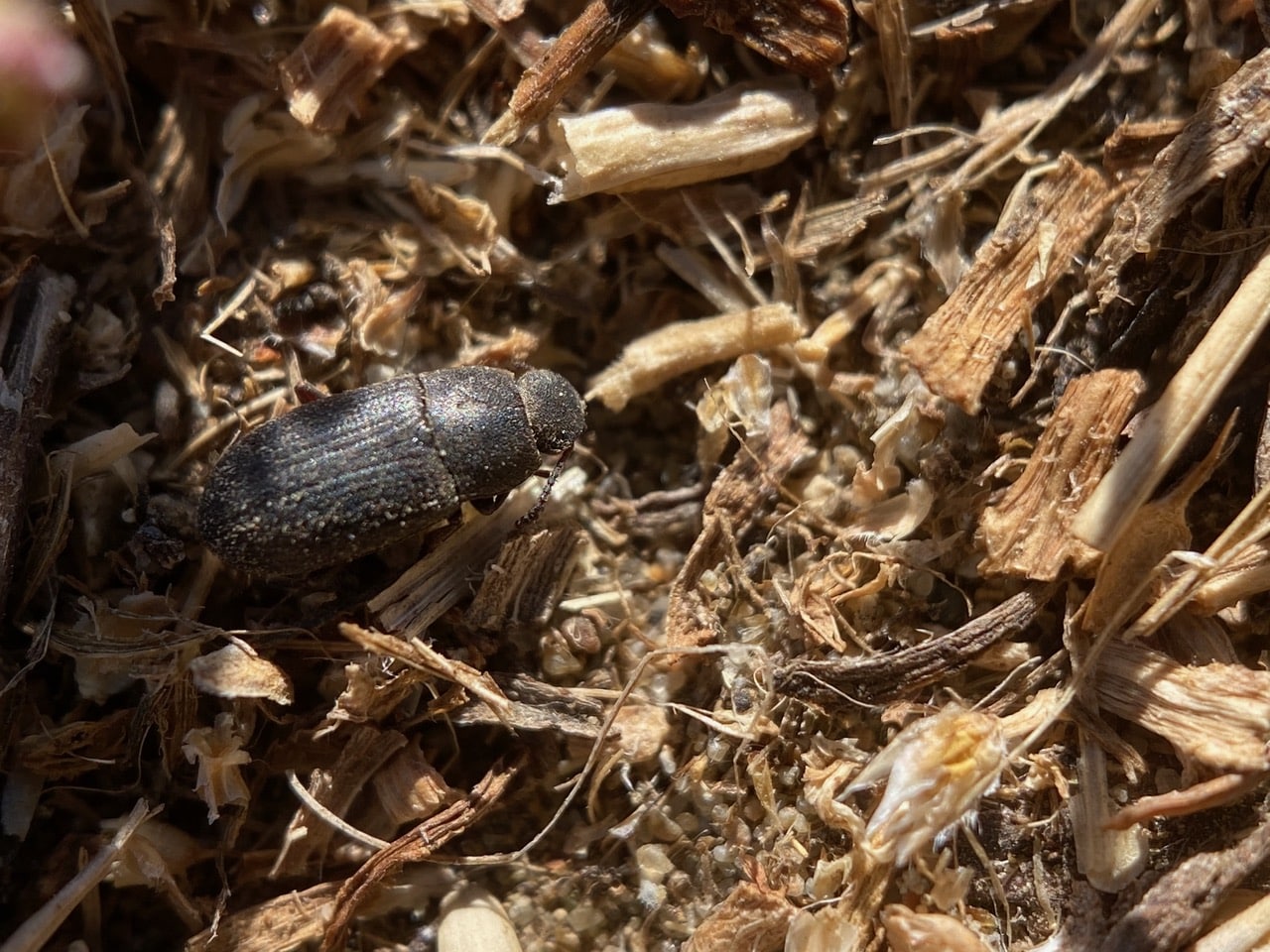
A small Darkling Beetle scurries over the plant debris. The beetle belongs to the family Tenebrionidae. The name Tenebrio in Latin means “lover of darkness”, referring to the tendency of many tenebrionids to inhabit dark places. Tenebrionid beetles occupy ecological niches in mainly deserts and forests as plant scavengers. Most species are generalist omnivores and feed on decaying leaves, rotting wood, fresh plant matter, dead insects, and fungi as larvae and adults. The larvae, known as mealworms usually live in the ground. They are an important food source for invertebrates and small mammals.

A large insect about an inch long is flying low along the dirt path in front of me, then plops down on the dry plant debris on the ground. This is the exact behavior of the Robber Fly I encountered a few days ago on this stretch of the path. It might even be the same exasperating individual that refuses to be photographed. Its MO is to fly low over the nesting sites of ground-nesting insects, grasping prey that is available.
Robber Flies (family Asilidae) have three simple eyes (ocelli) in a characteristic depression on the tops of their head between their two large compound eyes. This feature is clearly visible in the front view and is a morphological peculiarity of Asilidae. The face also has a characteristic dense bundle of mustache-like bristles, called a “mystax”. Apparently the mystax helps protect the head and face of the fly from its struggling prey bent on defense.
The name “robber flies” reflects their notoriously aggressive predatory habits; they feed mainly or exclusively on other insects and, as a rule, they wait in ambush and catch their prey in flight. Asilids have long, stout, spiny legs for capturing prey. The fly attacks its prey by stabbing it with its short, strong proboscis, injecting the victim with saliva containing neurotoxic and proteolytic enzymes which very rapidly paralyze the victim and digest the insides; the fly then sucks the liquefied material through the proboscis. In general, Asilids attack a very wide range of prey, including other flies, beetles, butterflies and moths, various bees, ants, wasps, dragonflies, damselflies, grasshoppers, and some spiders. Larvae of robberflies live in soil, rotting wood, leaf mold, and similar materials, some being predatory and others detritivorous.
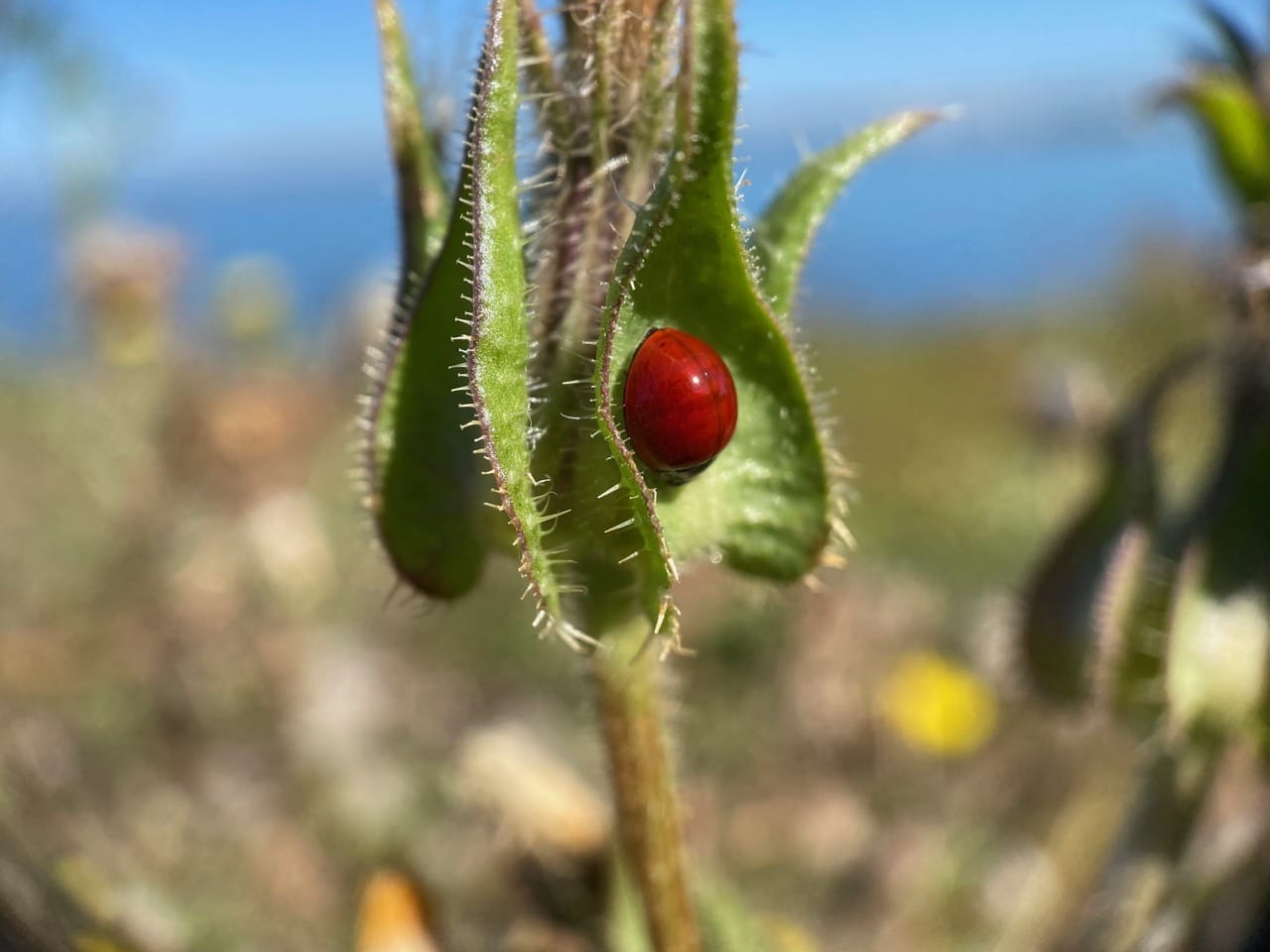 A spotless Lady Beetle (family Coccinellidae) is resting on a phyllary of a Bristly Oxtongue flowerhead. It is not possible to identify its species since I can’t see its head. Some lady beetle species are regularly spotless, while some individuals of spotted species may lack spots. Go figure!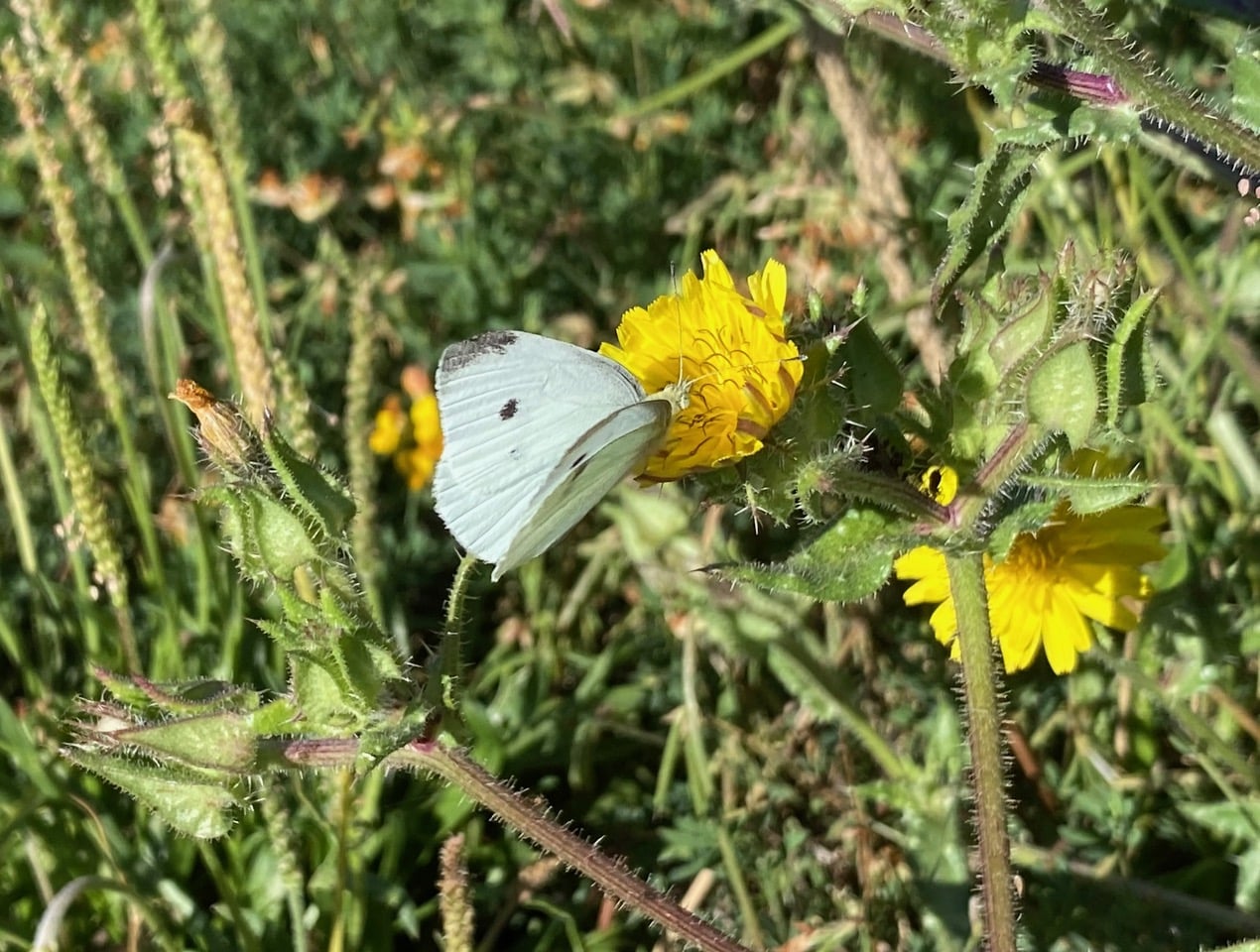
A male Small White or Cabbage White, Pieris rapae (family Pieridae) has landed to take nectar from a flowerhead of Bristly Oxtongue, Picris echioides. It is possible to distinguish the genders in this species. Both sexes have dark wingtips on the forewings. Females have two black spots in the center of the forewings; males have one. The underside is yellow-white. There is a black spot on the upper side of the hindwing that is not easily visible, as it is usually covered by the forewings.
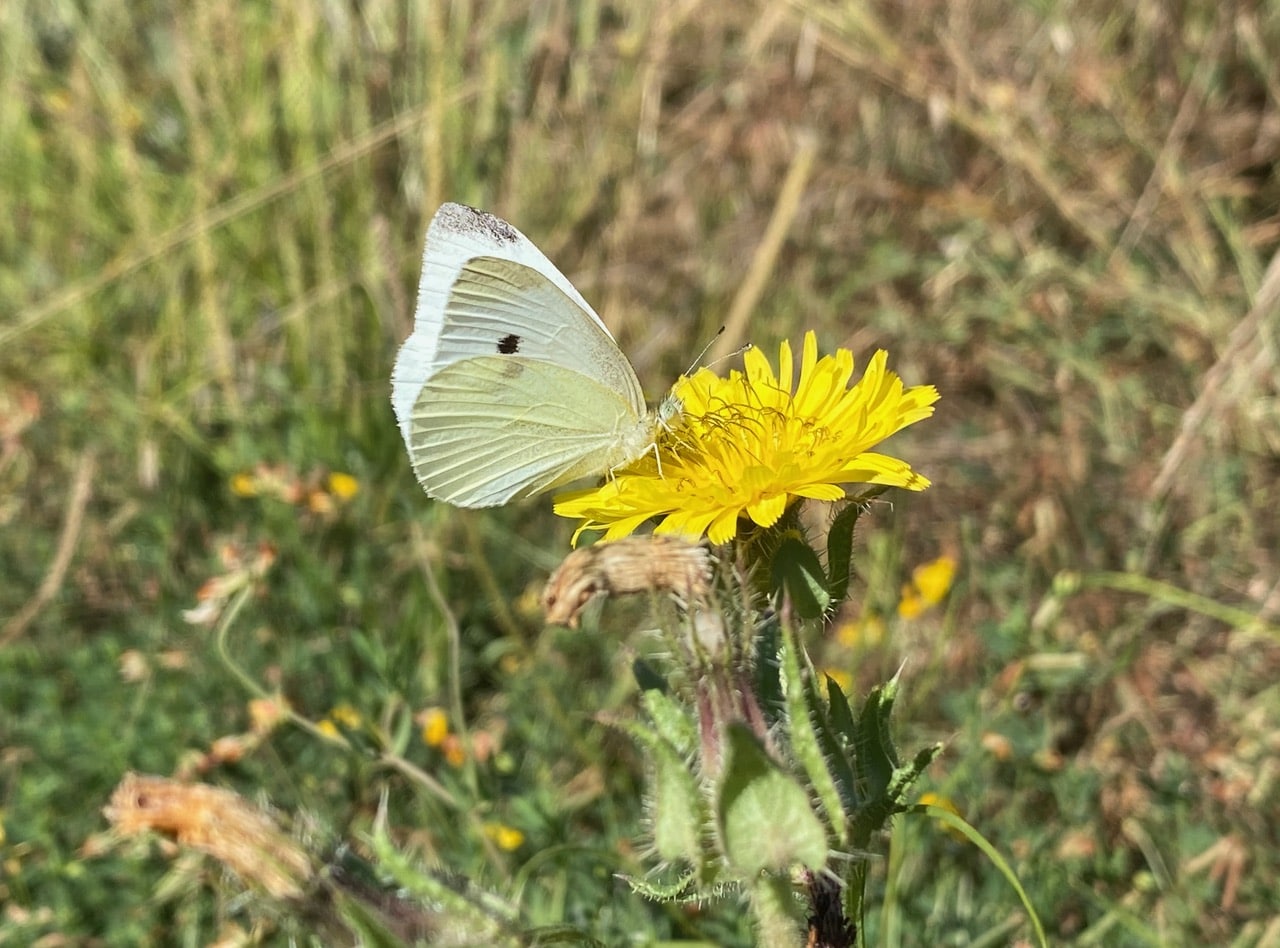
The Small White or Cabbage White, Pieris rapae (family Pieridae) was introduced to the US along with European cabbage imports in the 1860’5. The caterpillars feed on plants in the mustard or Brassicaceae family, and occasionally some in the caper family. The butterflies have a darkened, yellowish underside of the hind wings, which enables them to heat up quickly in the sun. The butterfly’s white wings reflect ultraviolet light, which we can’t see but the butterflies can. To our eyes the butterflies seem plain and drab, but to each other, females are a gentle lavender and males shine with a deep royal purple. Brighter males are more attractive to females and the color’s strength reflects the amount of protein the males consumed as caterpillars. During mating, male butterflies transfer nutrients to the females in the form of infertile sperm, a nuptial gift which will enhance the female’s life expectancy and fertility. A male with a higher quality diet can afford to be brighter and to produce bigger and more nutritious nuptial gifts.
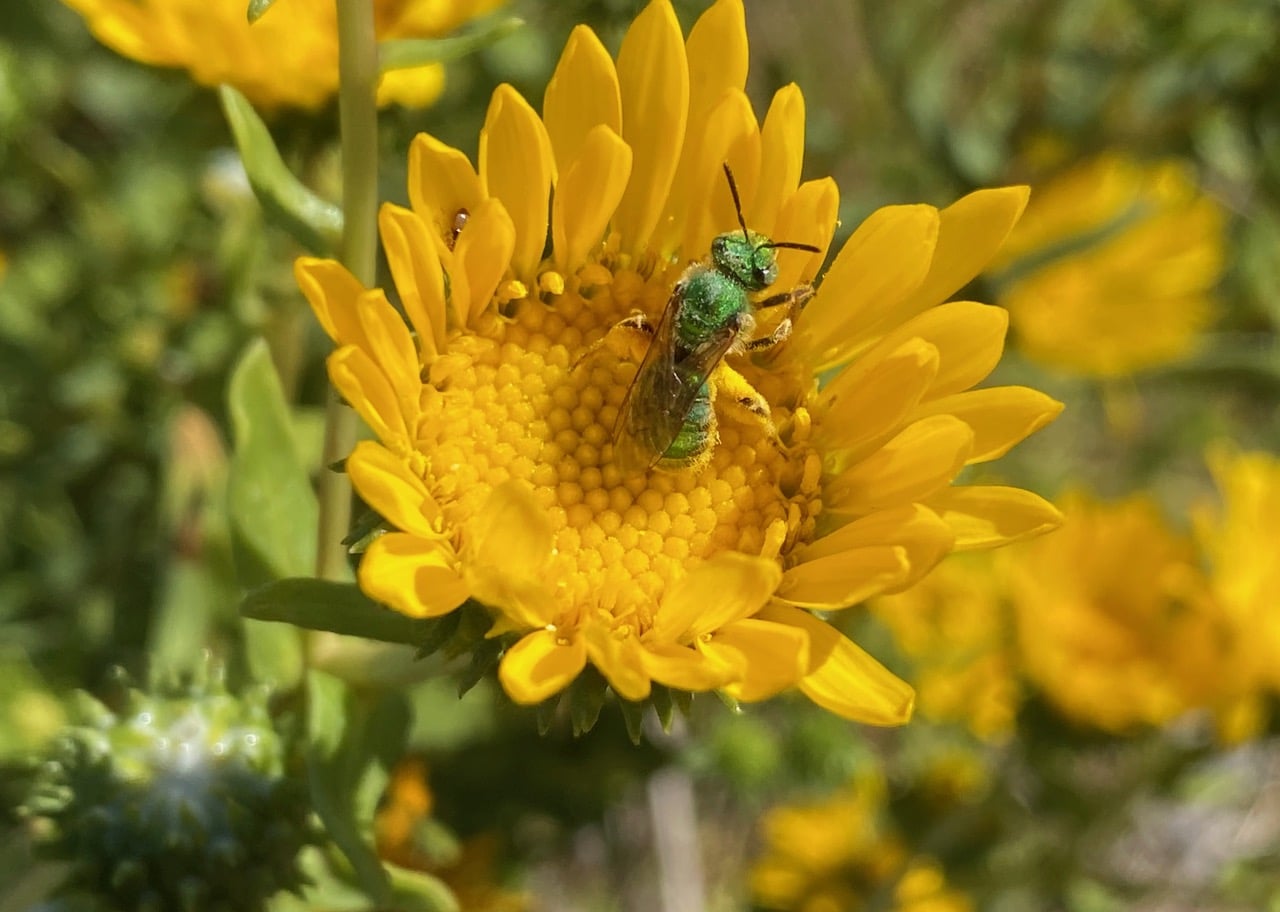
A female Texas Striped Sweat Bee, Agapostemon texanus (family Halictidae) is collecting pollen on a Grindelia flowerhead. Note that only the florets on the rim of the freshly opened flowerhead are offering pollen.
The genus Agapostemon is widespread and abundant throughout North America. They are most diverse and abundant in temperate regions and southwestern U.S. deserts. Agapostemon are commonly called “sweat bees” because they are closely related to, and resemble bees in the Halictus and Lasioglossum genera. Unlike those bees however, Agapostemon are not attracted to human sweat.
Agapostemon are brightly colored metallic green or blue bees measuring 7 to 14.5 mm long. Most species have a metallic green head and thorax, and black-and-yellow striped abdomen; some females are entirely bright green or blue. Females carry pollen on scopal hairs located on their hind legs. Agapostemon are generalists. Like other members of the family Halictidae, they are short-tongued and thus have difficulty extracting nectar from deep flowers. Males are often seen flying slowly around flowers looking for females. The bees favor flowers with high densities. The species is active summer to fall.
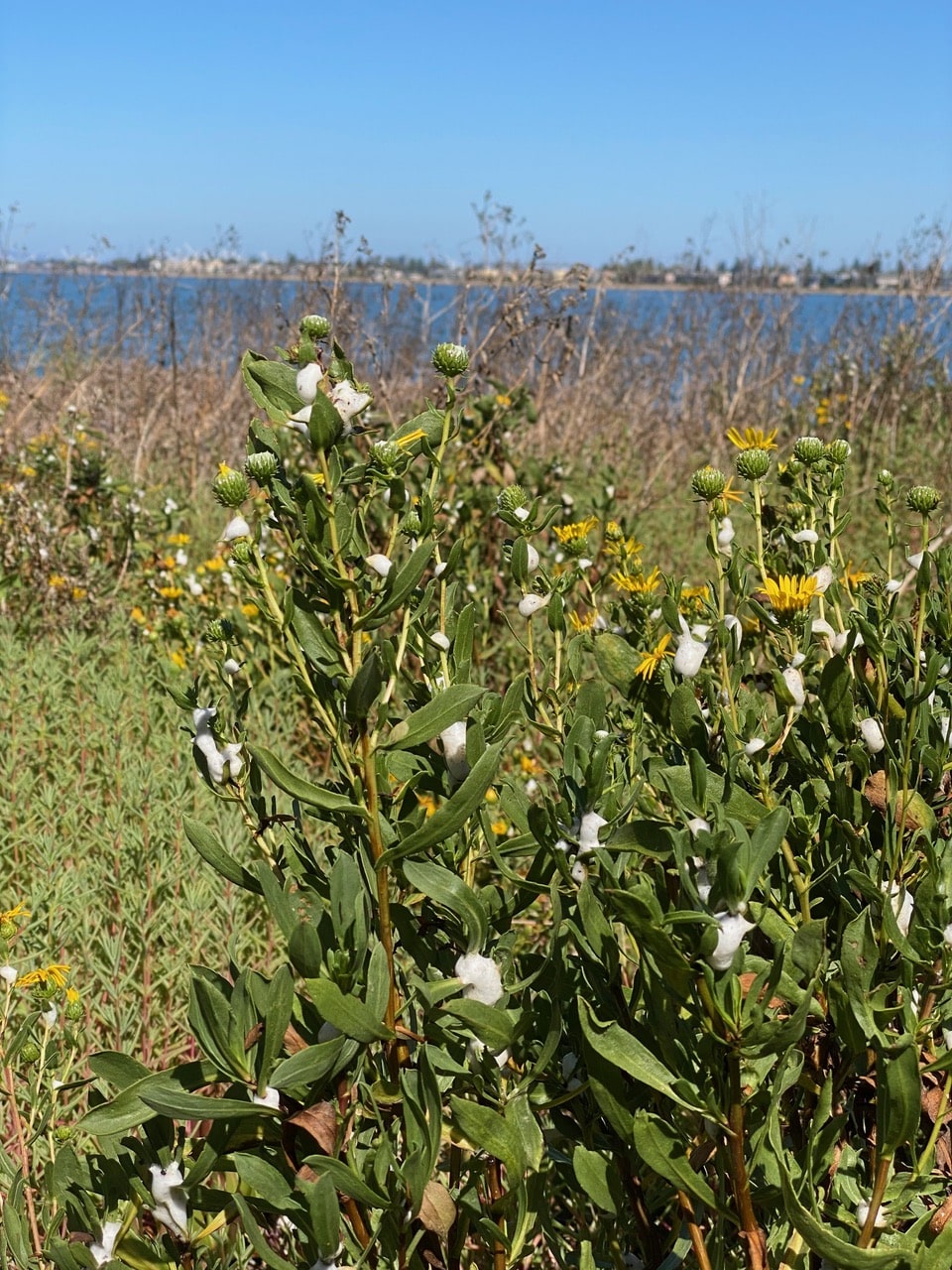
The foliage of the Grindelia is dotted with white, snow-like masses. Upon inspection, I realize that not all the white stuff on the plants are the milky, glue-like exudates of the immature flowerheads. These are the homes of Spittlebugs, thousands of them! I have never seen such heavy Spittlebug infestation on any plants before.

The foam masses are made by the nymphs of a bug called the Spittlebug (order Hemiptera). Like the adults, the nymphs use their piercing, sucking mouthparts to feed on plant juices. The nymph produces a cover of foamed-up plant sap reminiscent of saliva, hence the common name of spittlebug. Whereas most insects that feed on sap feed on the nutrient-rich fluid from the phloem, Spittlebugs tap into the much more dilute sap flowing upward via the xylem. The large amount of excess water that must be excreted and the evolution of special breathing tubes allow the young spittlebug nymphs to grow in the relatively protective environment of the spittle. Symbiotic bacteria in the insects’ digestive system provides them with the essential amino acids that their diet lacks. The foam serves a number of purposes. It hides the nymph from the view of predators and parasites, and it insulates against heat and cold, and protects the delicate nymphs from desiccation. Moreover, the foam has an acrid taste that deters predators.
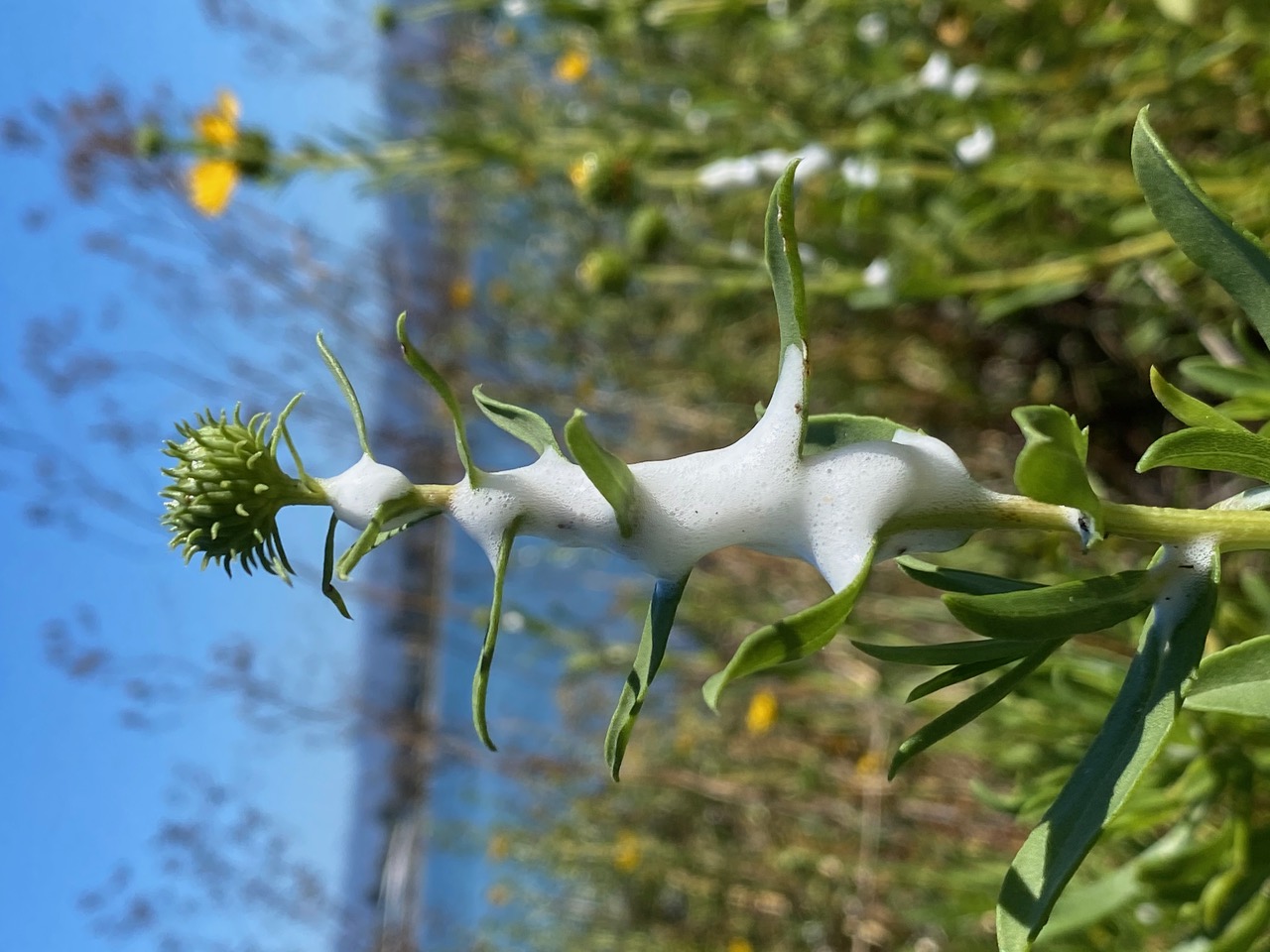
The foam masses on this stem look like melted ice cream, blending into one another. Maybe the nymphs have fused their individual domiciles into a condo?

What’s that dark, bug-like thing on the edge of the second foam mass from the top?
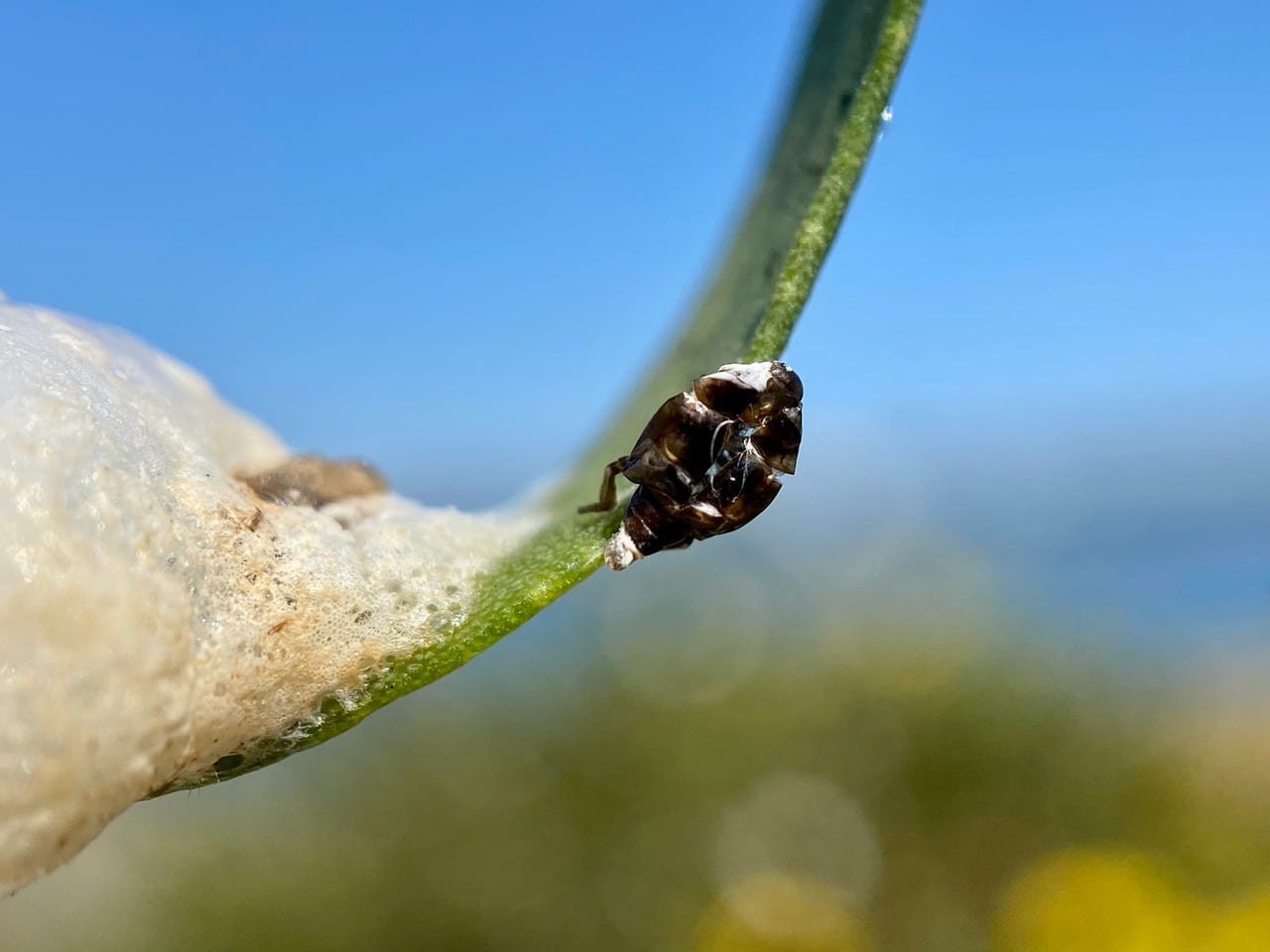
Closing in with the macro lens, I discover that it is an exuvia (old exoskeleton shed by an insect after a molt), complete with discarded strands of tracheal tubes. Wow, a Spittlebug nymph must have crawled out of its foam mass to molt for the last time into an adult!

On an adjacent branch of the same Grindelia plant, I spot something brown on a curled leaf near the leaf axil. Is it an adult bug or a mature nymph that is about to undergo ecdysis (molting)? The white flecks on the creature is probably traces of dried foam?
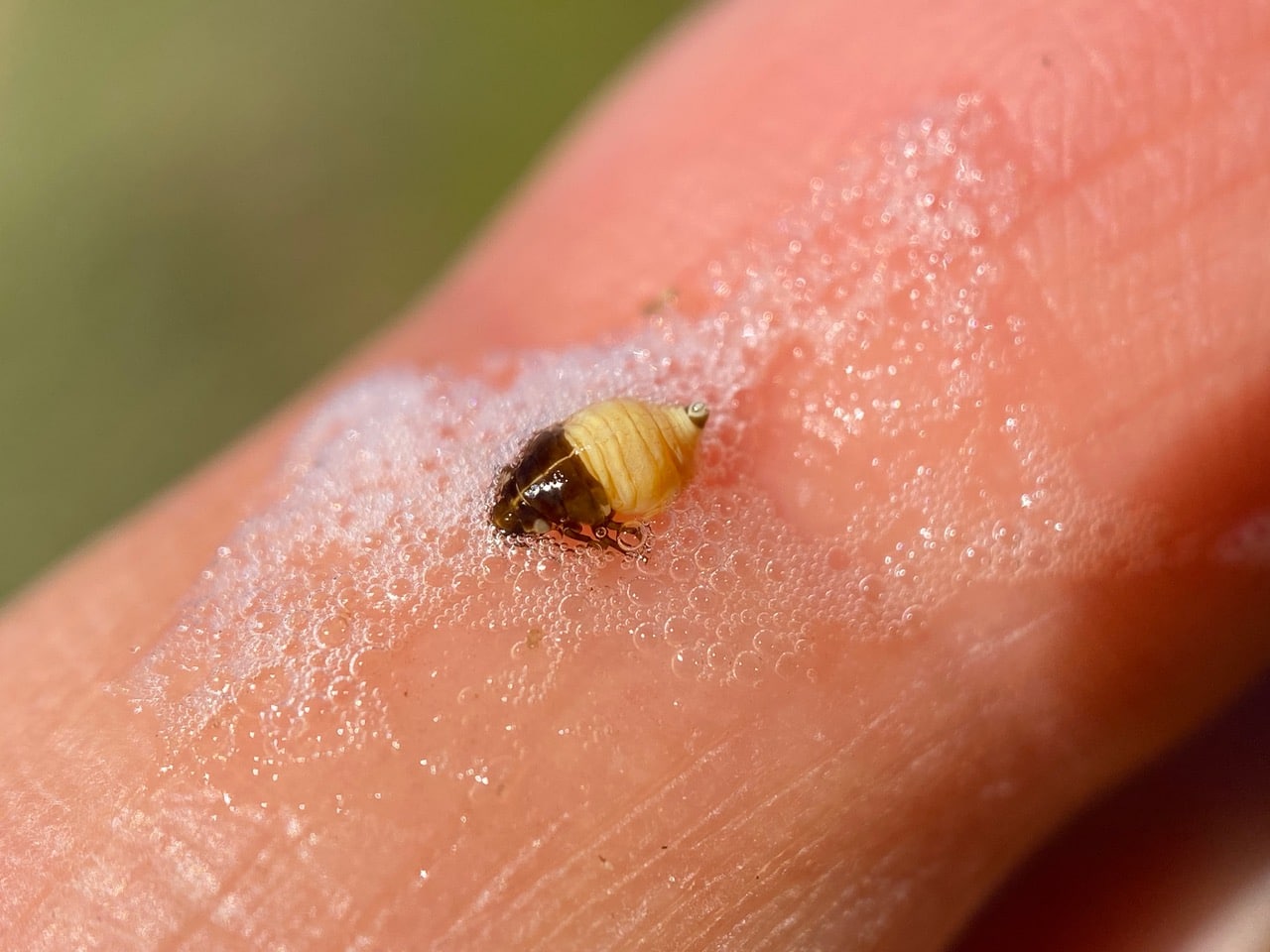
I reach into a small foam mass and spread it gently on my finger. A young Spittle Bug is revealed after some foam is discarded. The front part of the bug has turned brown, including its wing pads. The tip of its pointed abdomen shows a structure from which the foamy secretion was produced. I place the nymph back on the stem where I found it, and trust that it will have no difficulty building another foam mass around itself as it begins to feed again. Sorry for the intrusion, little bug!
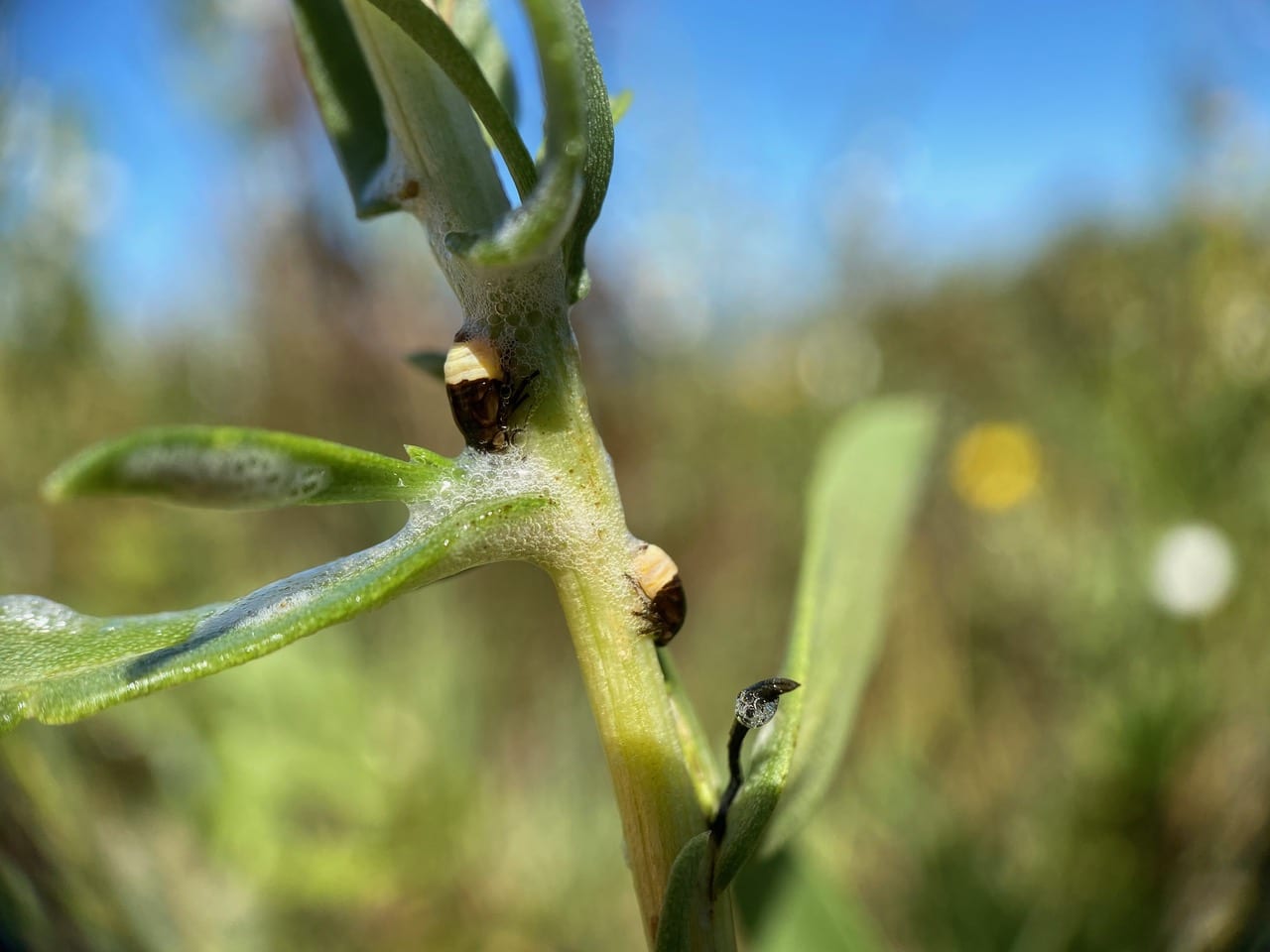
I remove a larger foam mass on a Grindelia stem, and uncover two slightly more mature nymphs. With the countless foam masses to investigate, I am sure we can find all the developmental stages and reconstruct the whole developmental process of the Spittlebug.