

Pollinator Post 9/1/23 (1)
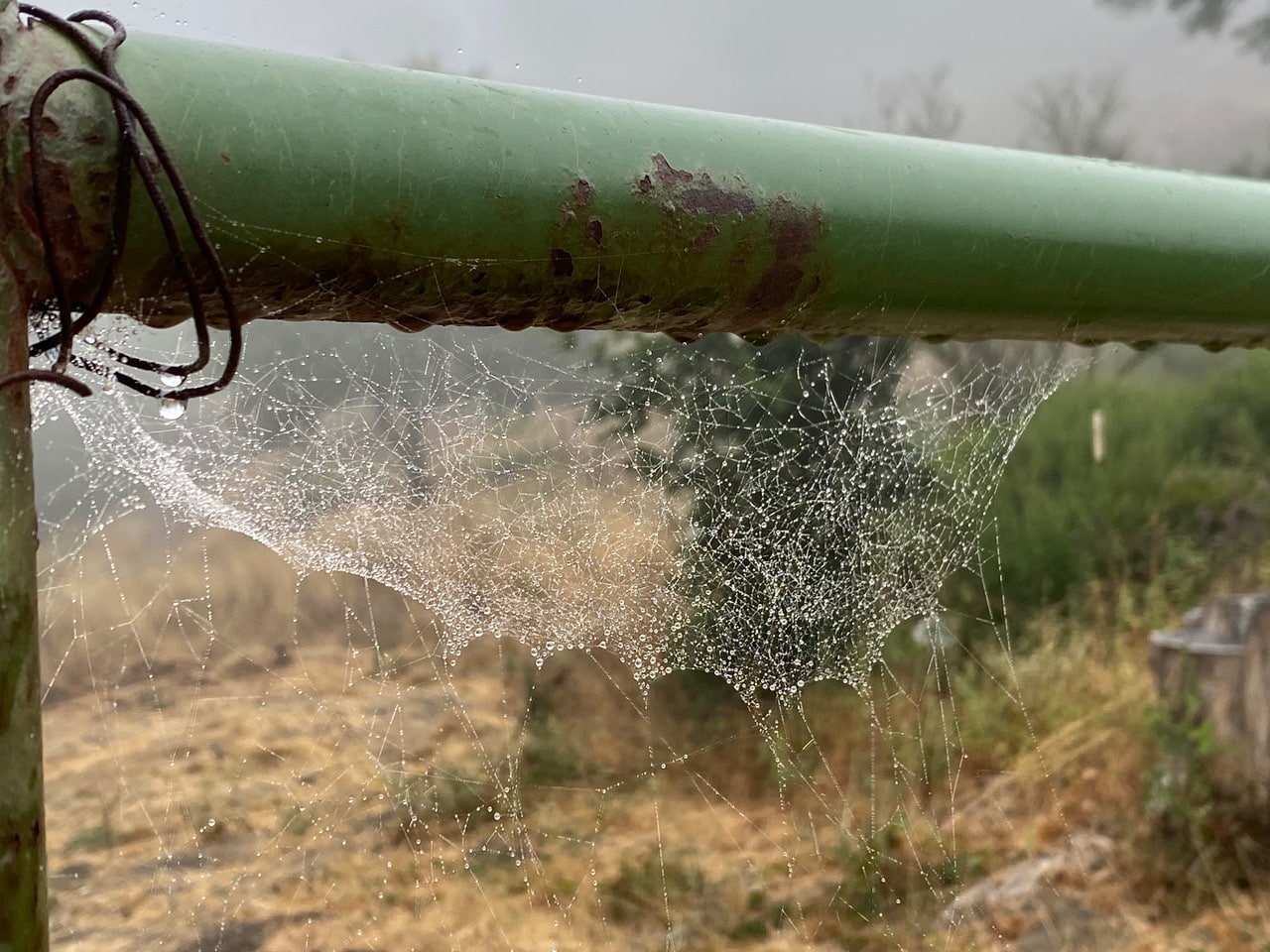
Thanks to the sudden return of our summer fog, we finally get a reprieve from the air pollution that has been lingering over the Bay Area for days. I am thrilled to find this elaborate web built by a Sheetweb Spider (family Linyphiidae) under the metal gate at Siesta Gate.
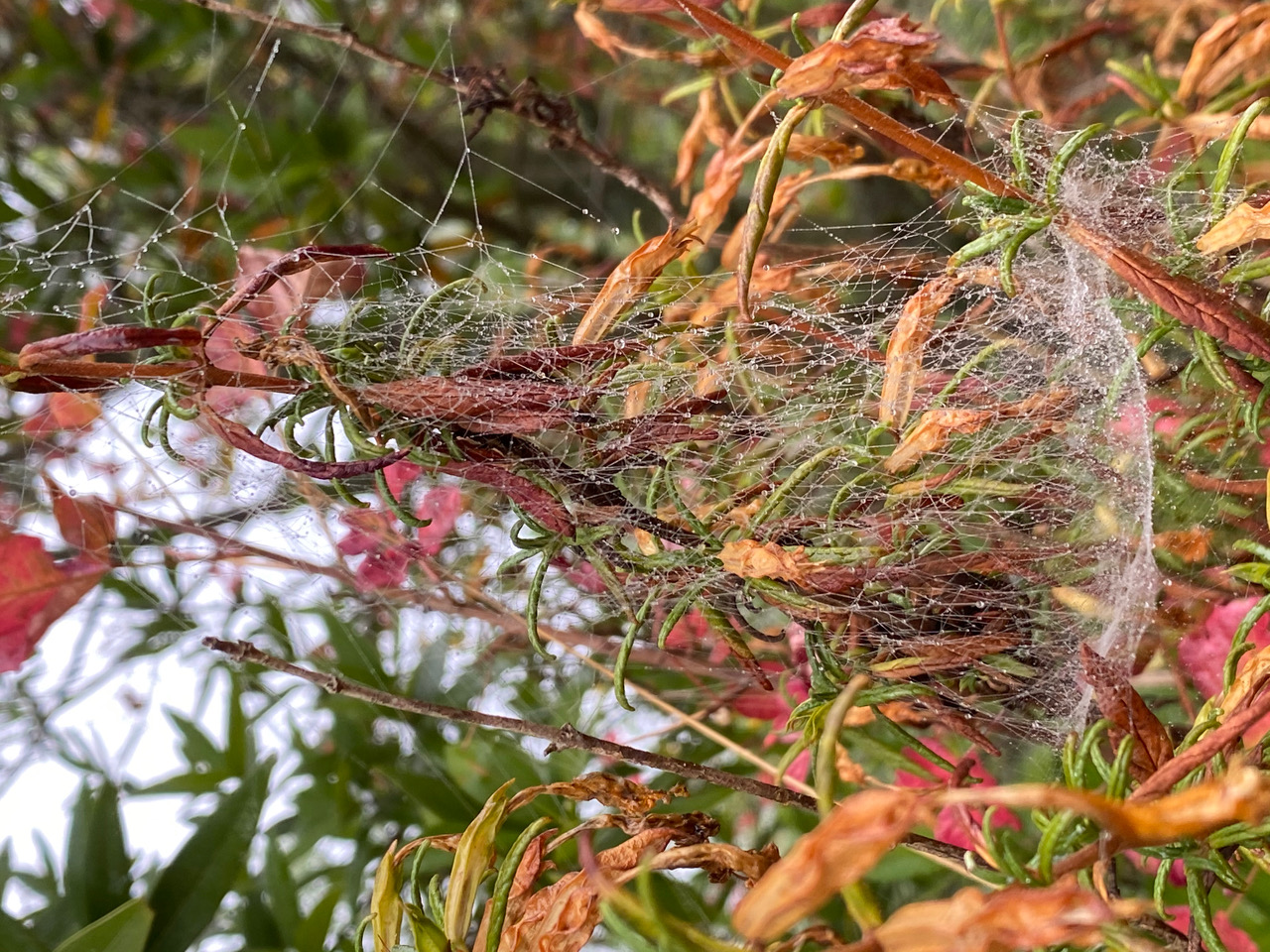

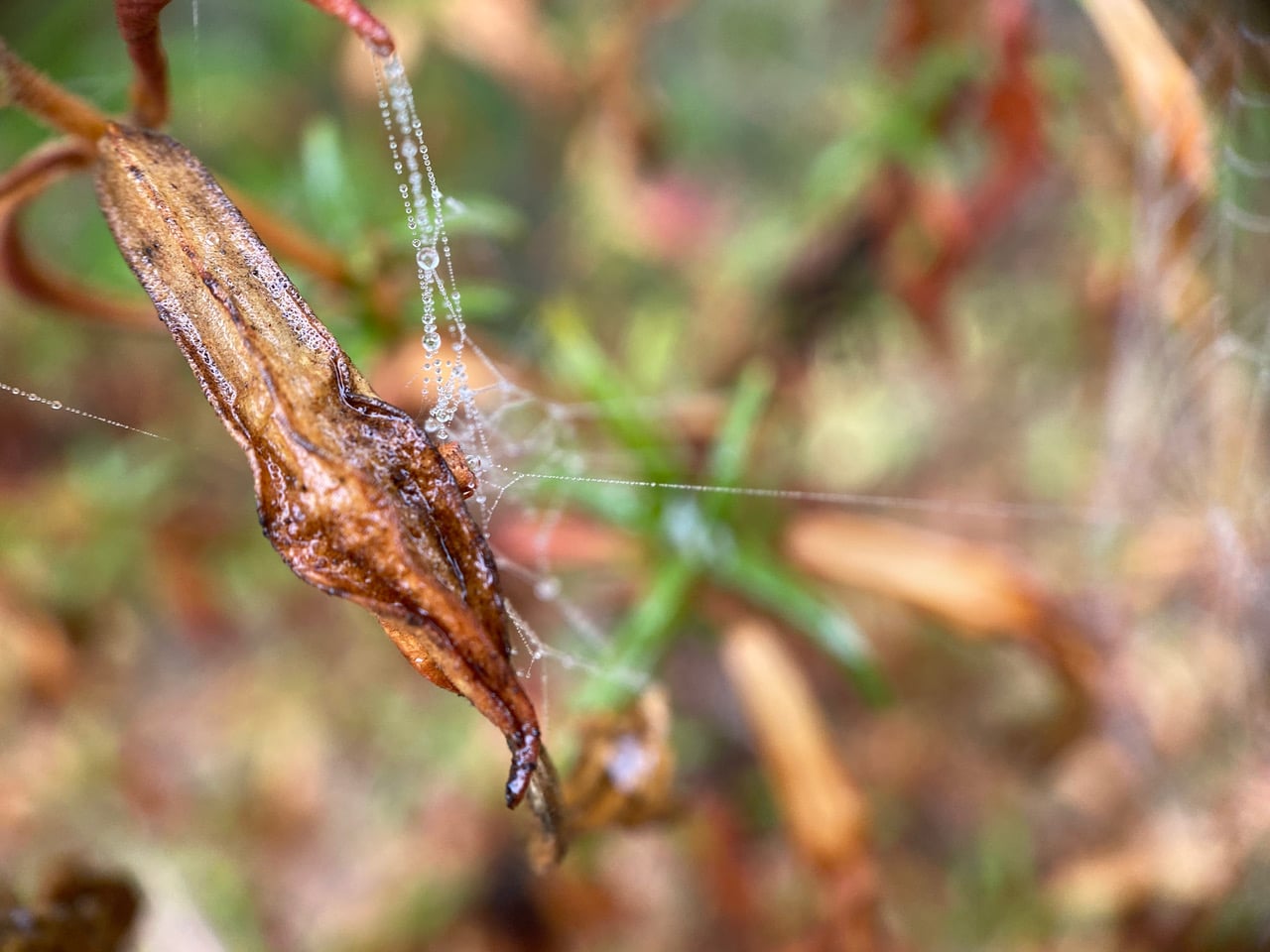
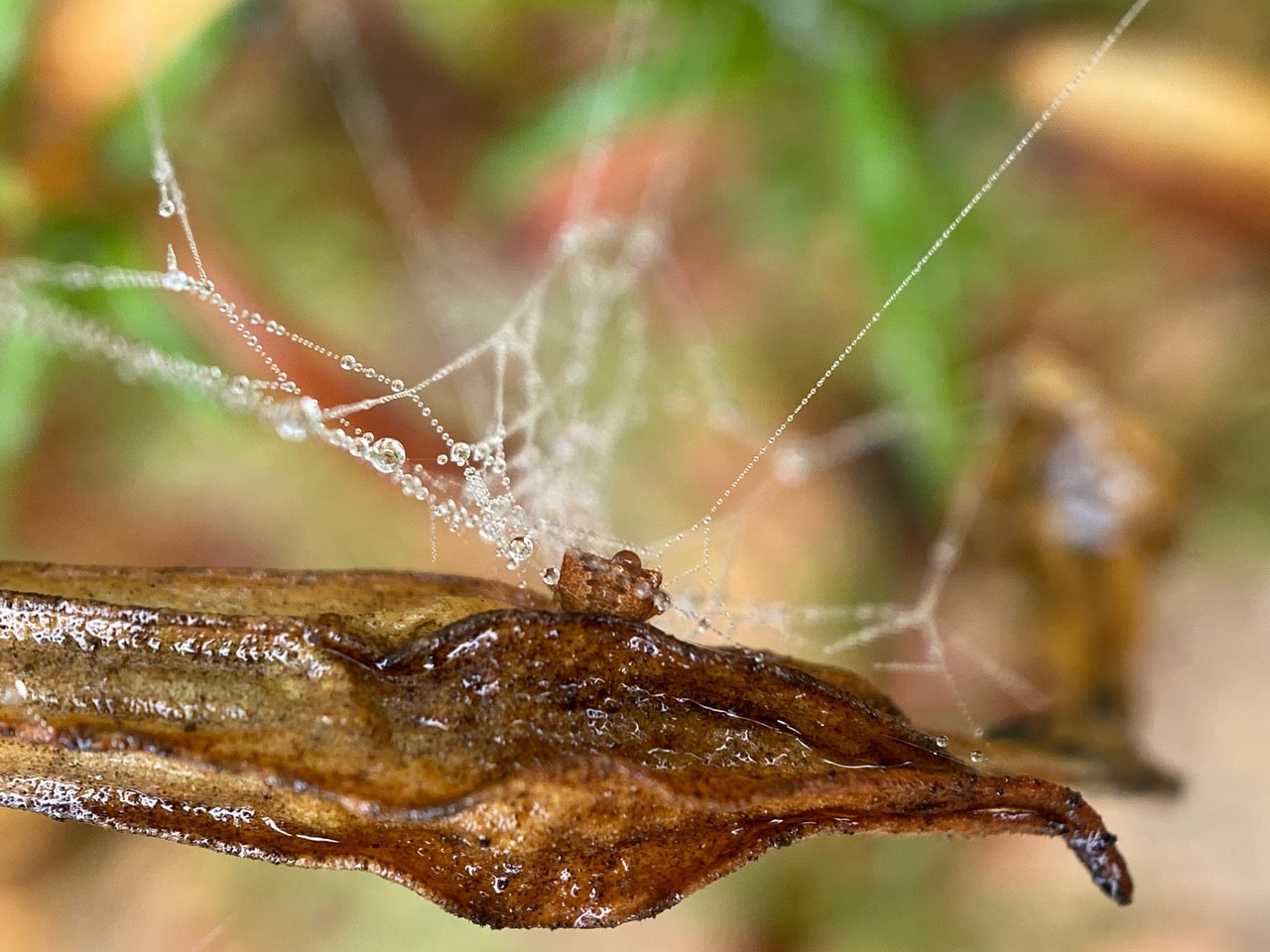
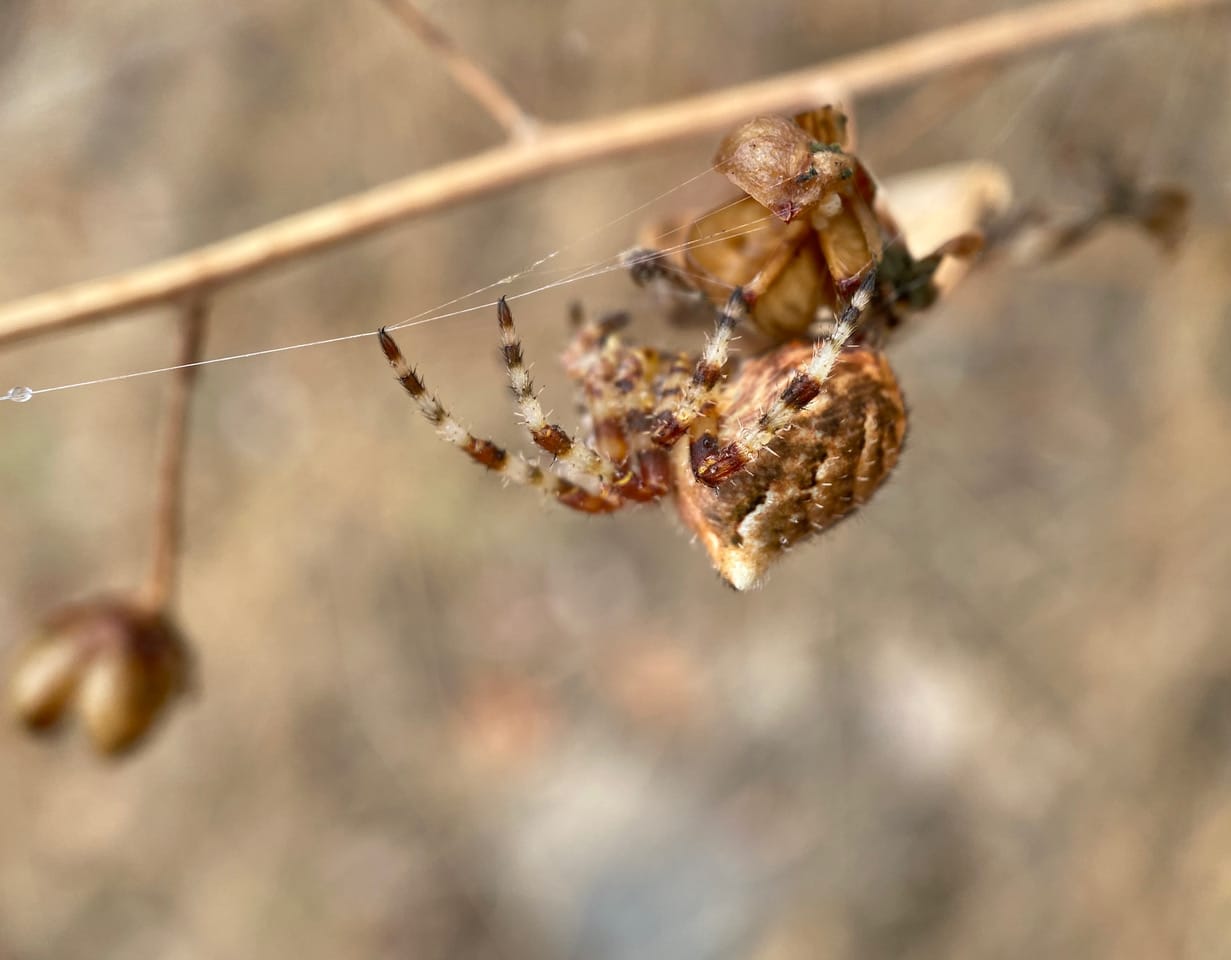
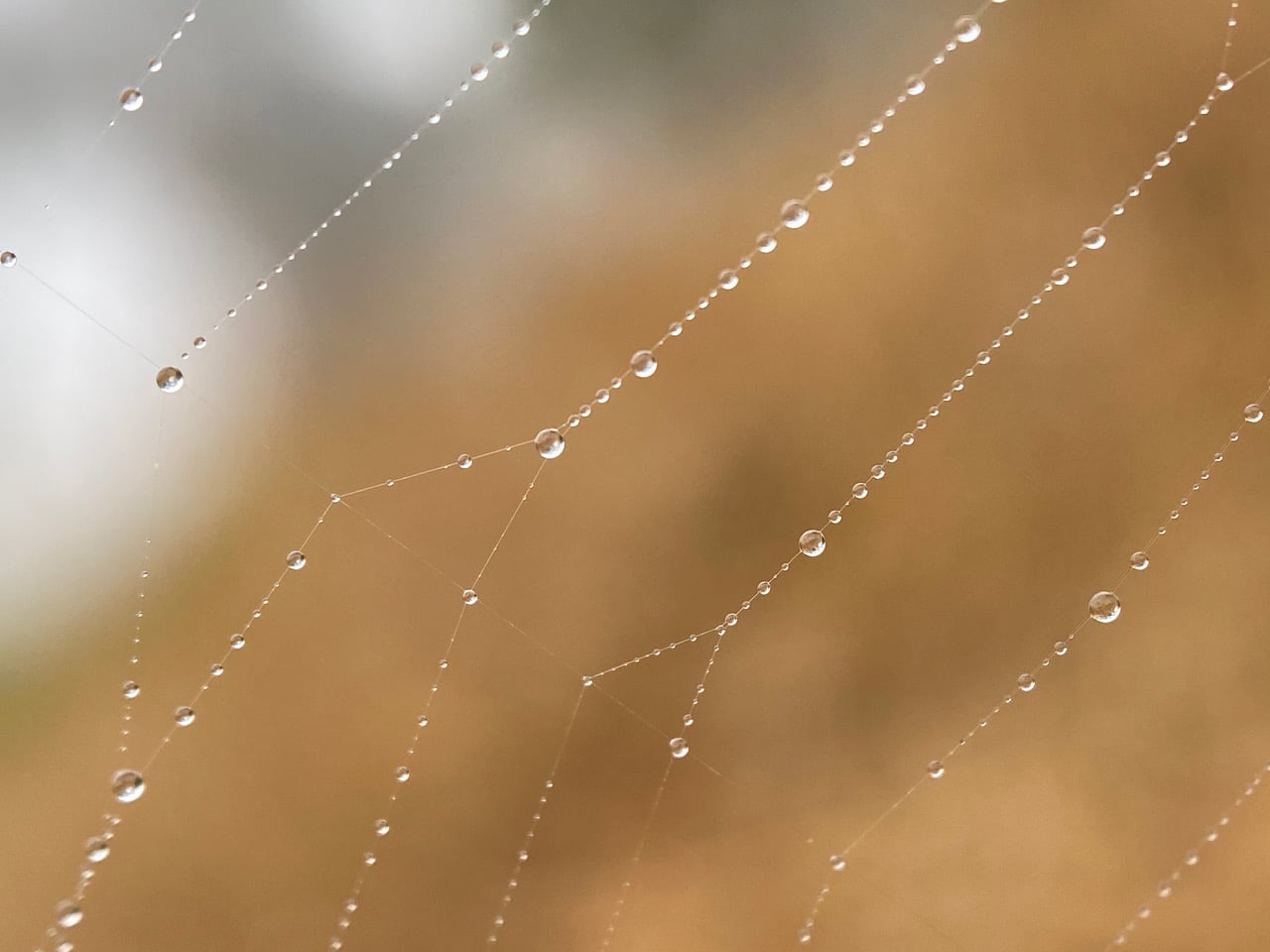




A sheetweb has been built on a senescing Sticky Monkeyflower, Diplacus aurantiacus.
The webs of Sheetweb Weavers (family Linyphiidae) form a flat or curved surface suspended from vegetation or over an opening on the ground. Above the actual “sheet” is an elaborate matrix of silk threads to confuse and disorient prey insects as they fly through. The spiders hang beneath the web and attack prey that wander or fall onto the web surface by biting directly through the silk webbing. Most species are tiny; some are among the smallest of spiders. A few of the common and larger species build distinctive webs for which they are named, such as the “bowl-and-doily” spider, the “filmy-dome” spider, and the “hammock” spider. Linyphiids are famous for dispersing by ballooning (flying by means of silk strands carried in a breeze), and these spiders are often responsible for the sheets of gossamer which sometimes coat fields and fences.
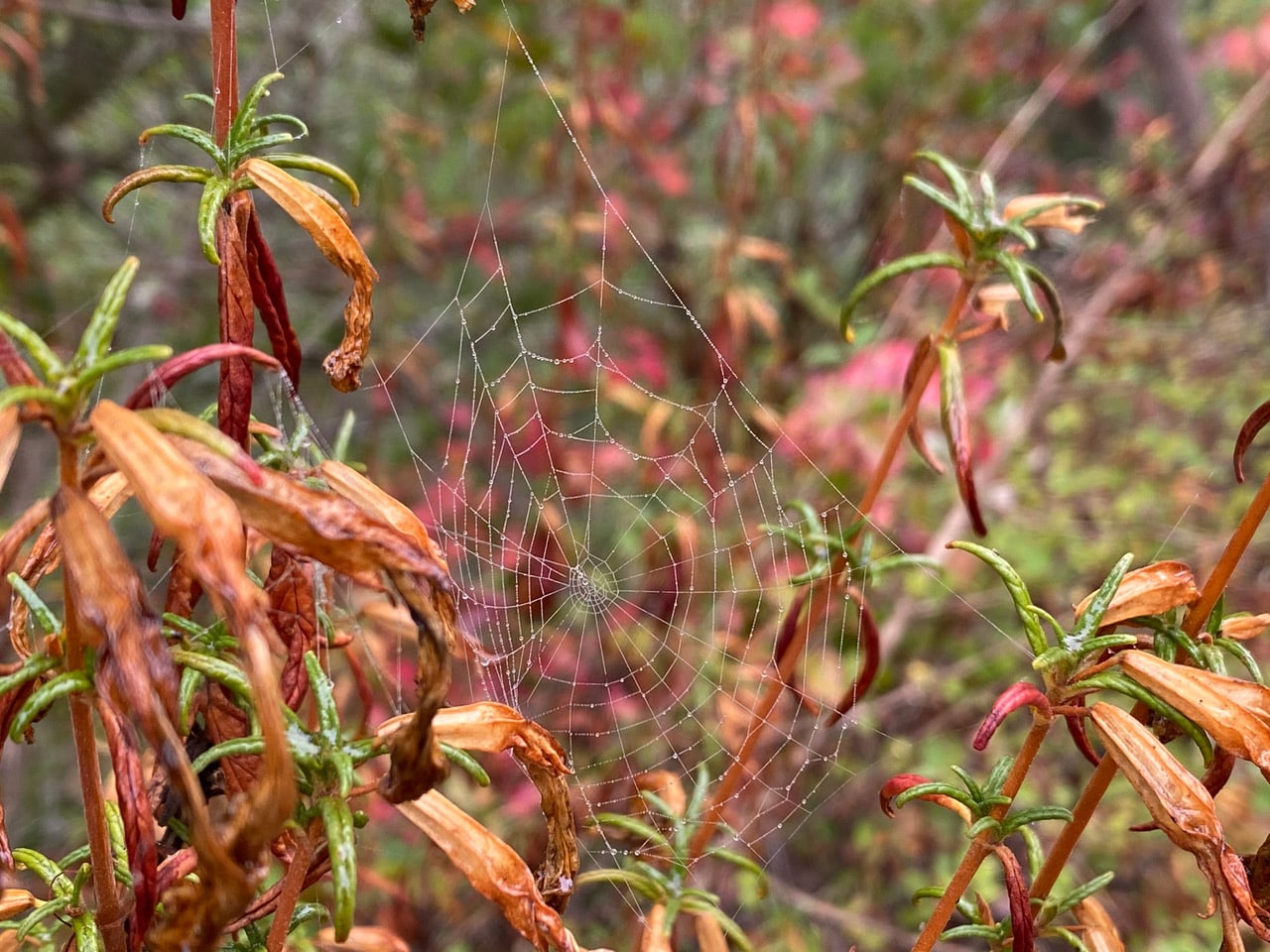
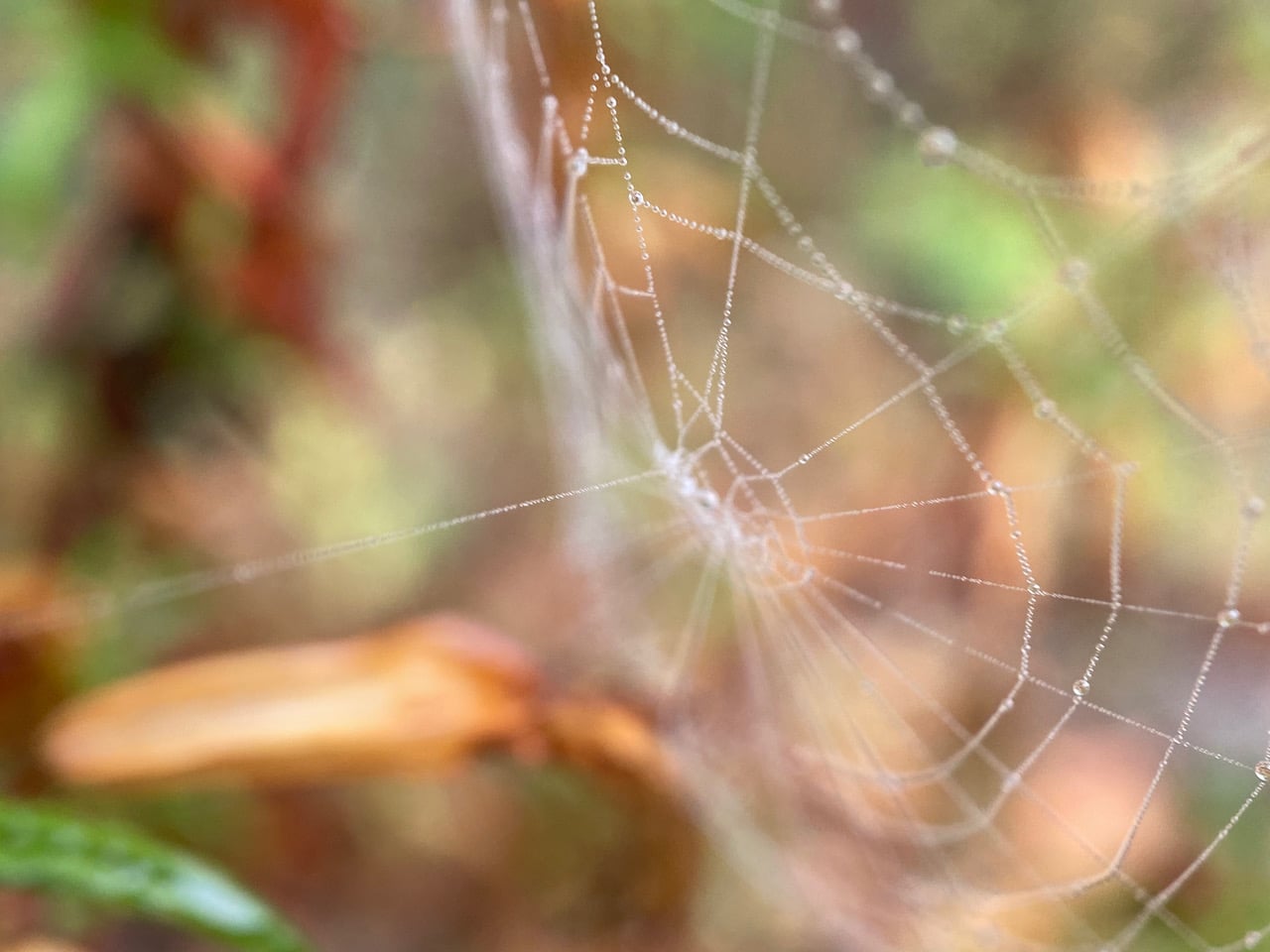
Tiny droplets of moisture highlight a small orb web that has been constructed by an Orb Weaver Spider (family Araneidae) between the branches of a Sticky Monkeyflower. The spider is absent on the web, but it won’t be hard to find it.
Just follow the “signal thread” connecting the hub of the orb web to the spider. See the tiny spider on a spent flower to the left?
See the signal thread coming off the hub of the orb web that has been pulled taut by the spider?
Here’s a view of the little spider sitting in its retreat away from its orb web. We are looking at the rear end of the spider.
A closer view of the spider holding on to the single signal thread that leads diagonally to its orb web to the right.
When we look at an orb web, one thing is often noticeably missing: the spider. It is probably lurking away from the web in a “retreat”, where it can monitor web vibrations through a proxy known as a signal thread. The signal thread is made of silk, the same material as the other radial threads in the web (a silk called spider dragline silk, known for its strength and toughness). The thickness of the signal thread is variable, consisting of a few to numerous silk fibers. The signal threads are multipurpose: they function not only to transmit vibrations from the web to the spider, but also as a tightrope for the spider to quickly run to the web to retrieve the trapped prey.
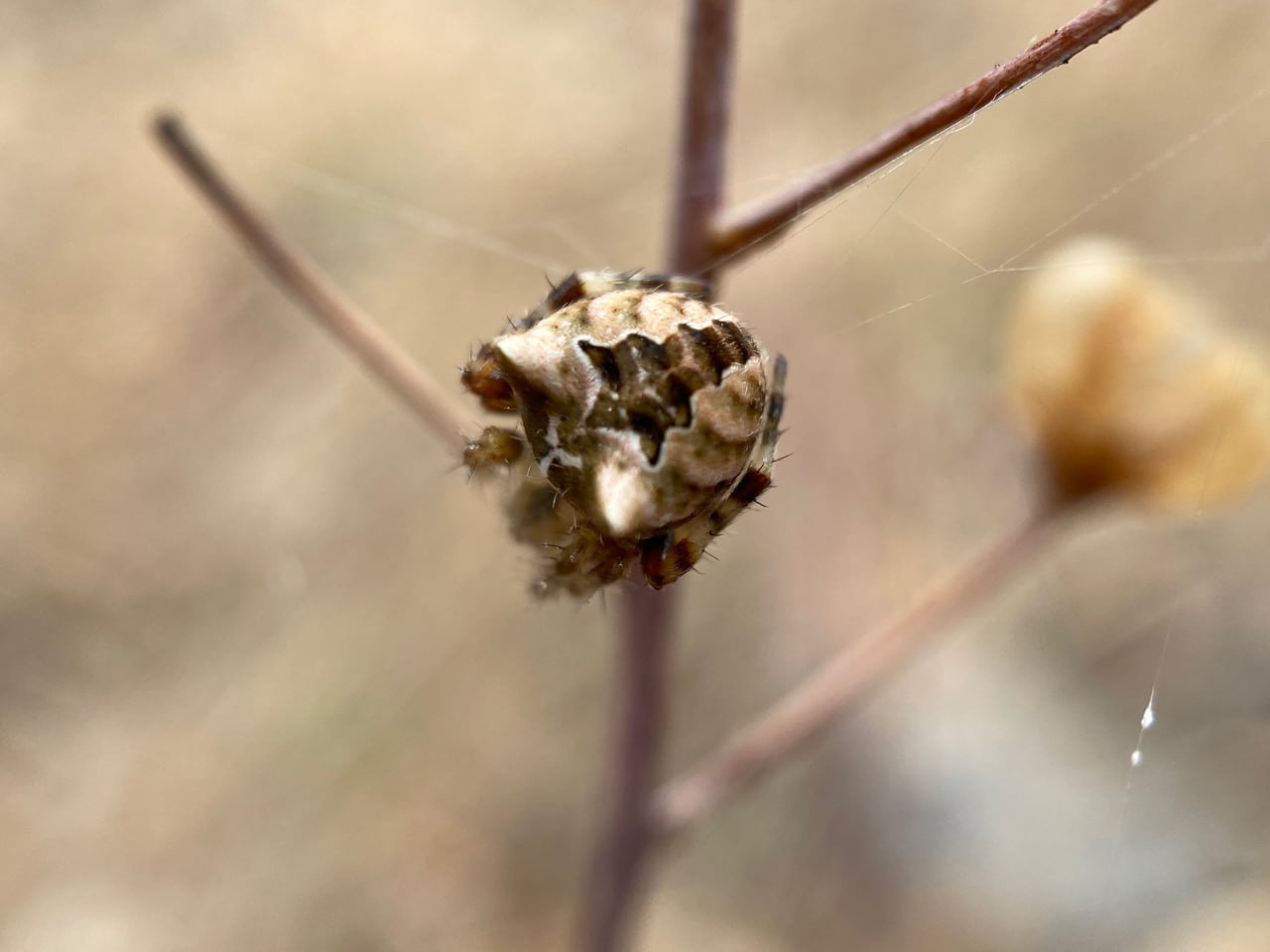
Here’s our old friend, the Two-tubercles Orb Weaver Spider on her usual perch, a spent seed capsule of a Soap Plant, Chlorogalum pomeridianum. She is an orb-weaver, and she is in contact with her orb web via her signal thread which she is holding in her front legs.
Thanks to the moisture trapped on her silk threads, I can see her orb web clearly today.
Here’s a view of the spider from a different angle, showing the beautiful patterns on her abdomen. She seems to have grown considerably since I last saw her. She’s now about 12 mm long.
The Two-tubercled Orbweaver, Gibbaranea bituberculata is a species of ‘orbweavers’ belonging to the family Araneidae. They are found in sunny habitats on shrubs, edges and low plants, where they can make their webs near the ground. Their basic color is very variable, but usually it is brownish, with whitish shades. The cephalothorax is covered with adpressed hairs.
Orb-weaver spiders are members of the spider family Araneidae. They are the most common group of builders of spiral wheel-shaped webs often found in gardens, fields, and forests. Generally, orb-weavers are three-clawed builders of flat webs with sticky spiral capture silk. The third claw is used to walk on the non-sticky part of the web. Typically, the prey insect that blunders into the sticky lines is stunned by a quick bite, and then wrapped in silk.
While photographing our spider’s web, I discover another Two-tuberculed Orbweaver Spider on a different branch of the same plant. It is only about 1/3 the size of the first one, and much darker in coloration. The Soap Plant is a great habitat for these small spiders, providing the scaffoldings for their webs, and the seed capsules provide perfect camouflage for the spiders that resemble them.
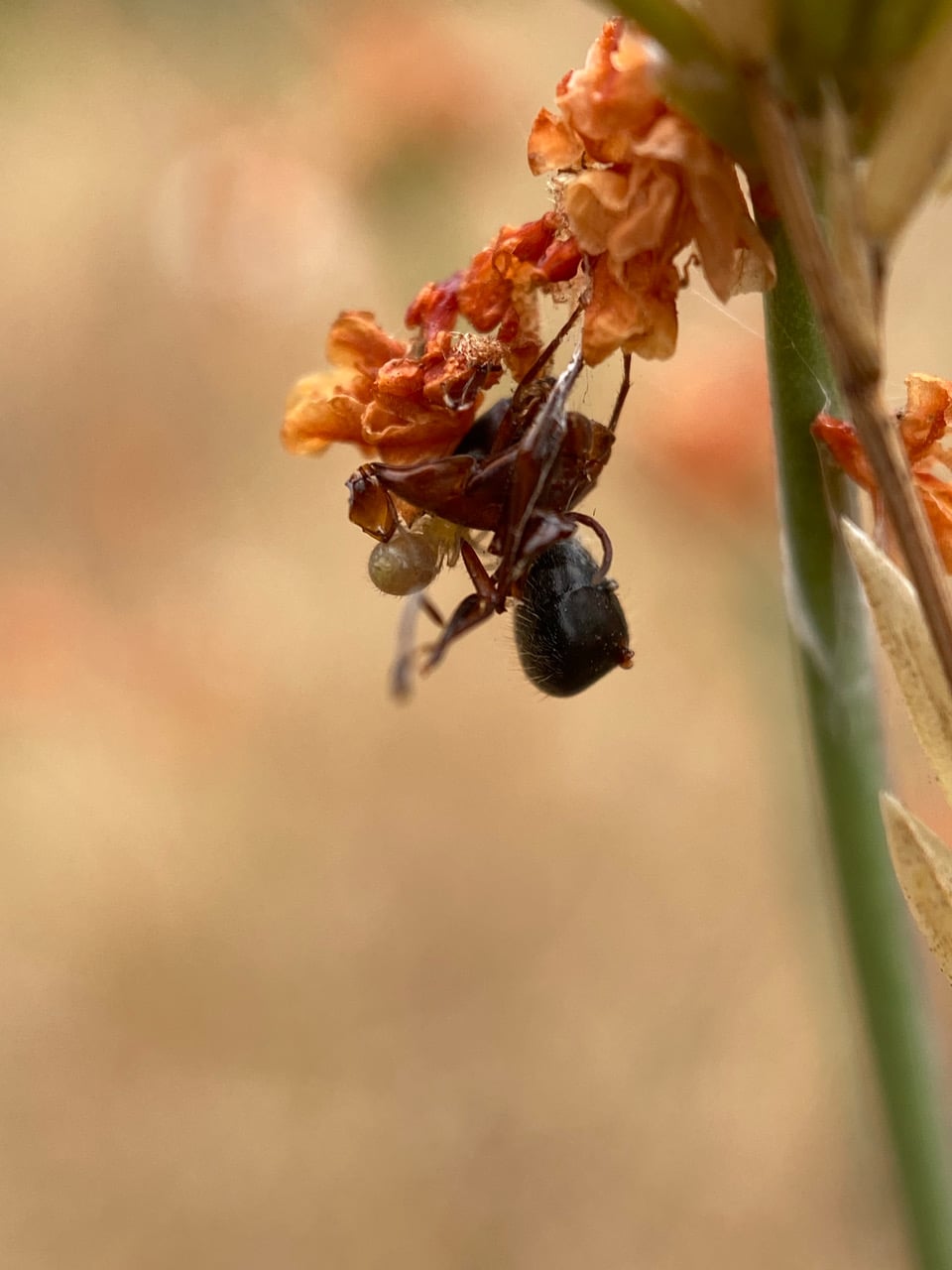
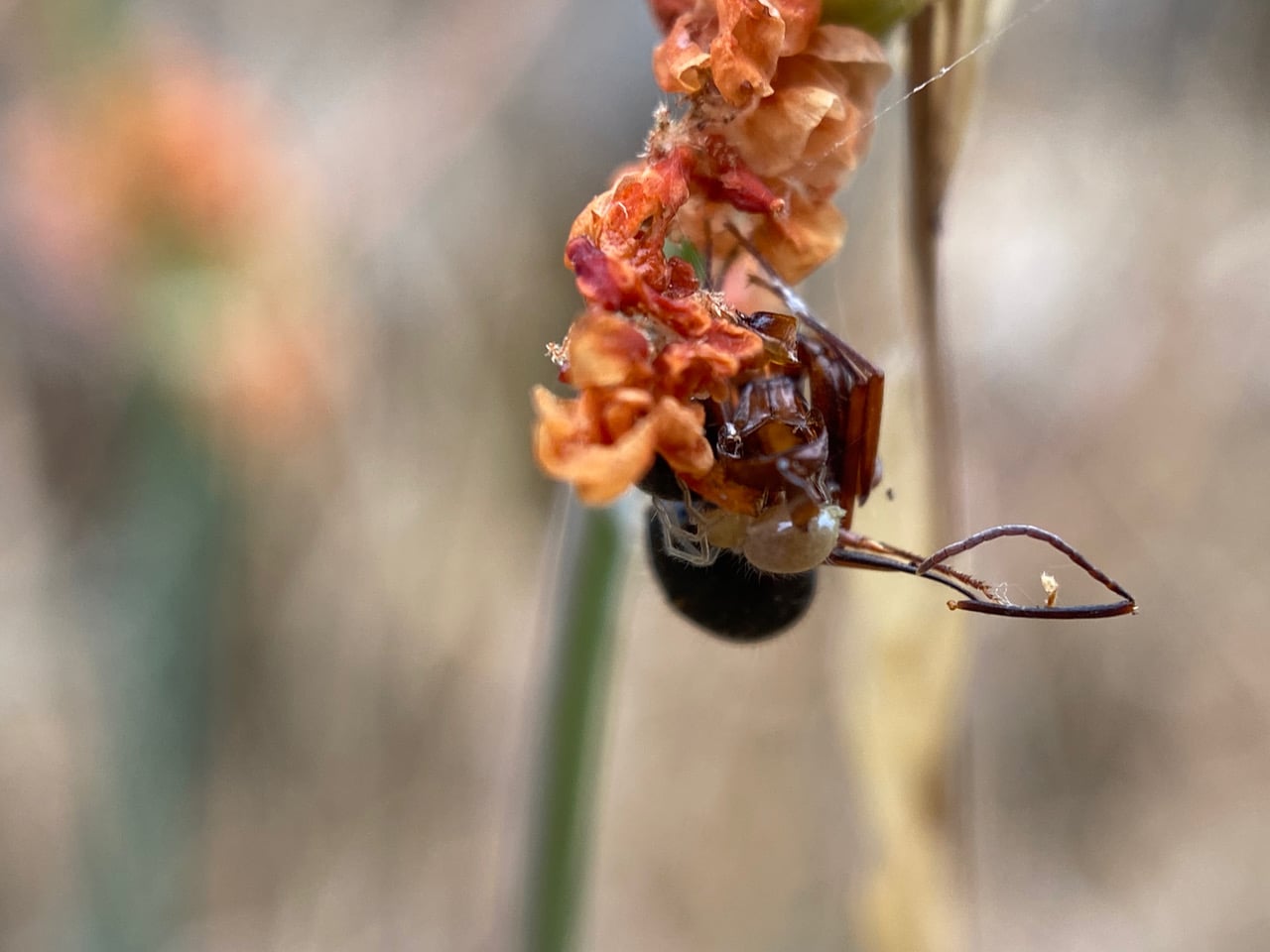
Something dark is hanging awkwardly below a spent inflorescence of Naked Buckwheat, Eriogonum nudum. I suspect spider activity and look closer.
Sure enough, a tiny, whitish pearl-colored spider is moving under the dark object which I figure is some kind of dead insect. The little spider appears to be a Cobweb Spider. It is feeding on one huge meal!
Cobweb Spiders (family Theridiidae) spin sticky capture silk, and they have a comb of serrated bristles (setae) on the tarsus of the fourth leg. They often build tangle space (3-D) webs, hence their other common name of Tangle-web Spiders. Theridiidae has a large diversity of spider web forms.
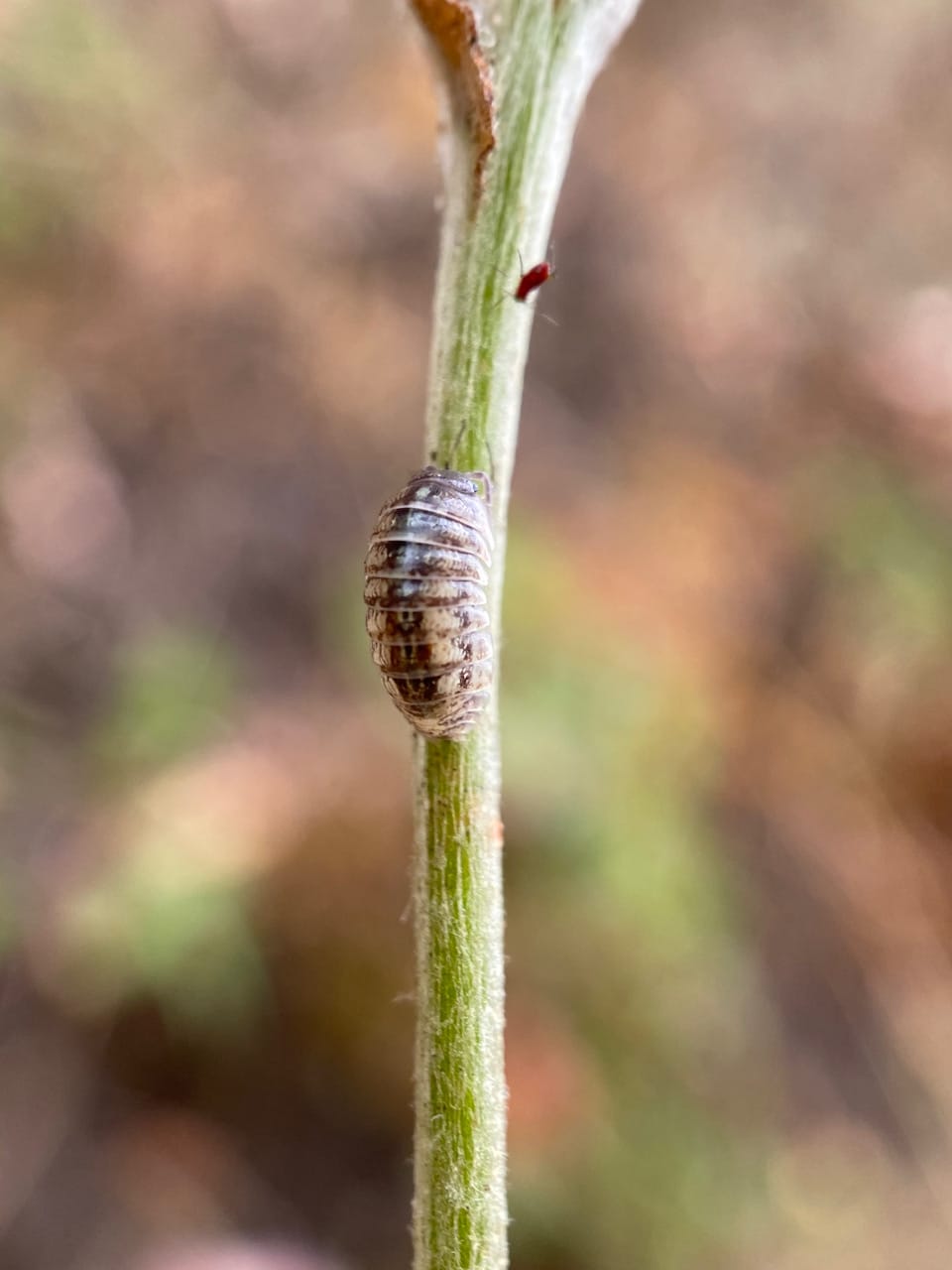
Checking on aphids on a senescing California Everlasting, Pseudognaphalium californicum, I find this Pill Bug on the stem. Is it up here to avoid the wet soil?
Most often seen on the ground, especially in leaf litter, pill bugs are usually thought of as scavengers and decomposers of organic matter. Actually pill bugs also eat living plants, especially in wet conditions, sometimes consuming leaves, stems, shoots, roots, tubers, and fruits. The crustaceans can be serious pests in certain agricultural systems, particularly in areas that are prone to heavy rains and flood conditions.
The Pillbug, Armadillidium vulgare, is an isopod, a type of non-insect arthropod also known as a terrestrial crustacean. It is sometimes called a roly-poly due to its ability to roll into a ball when disturbed. This defensive behavior makes it look like a pill, hence the name pillbug. Pillbugs are nocturnal, though they may be found during the day in the soil or under debris. Pillbug feed mainly on decaying plant leaves and other decomposing materials. They serve a vital function in the ecosystem as decomposers and recyclers.
Like crabs and other crustaceans, pillbugs tote their eggs around with them. Overlapping thoracic plates form a special pouch, called a marsupium, on the female’s underside. Upon hatching, the tiny juvenile pillbugs remain in the pouch for several days before leaving to explore the world on their own. When born, pillbug young have only six pairs of legs. They get the seventh pair following their first molt.
When I reach Yampah Bowl at 11 am, the place is still shrouded in fog. Most of the Yampah flowers have gone to seed, the umbels waving unattended in the breeze. I have not seen the plants so devoid of insect life.
The Bracken Ferns are dying back, turning yellow and brown.
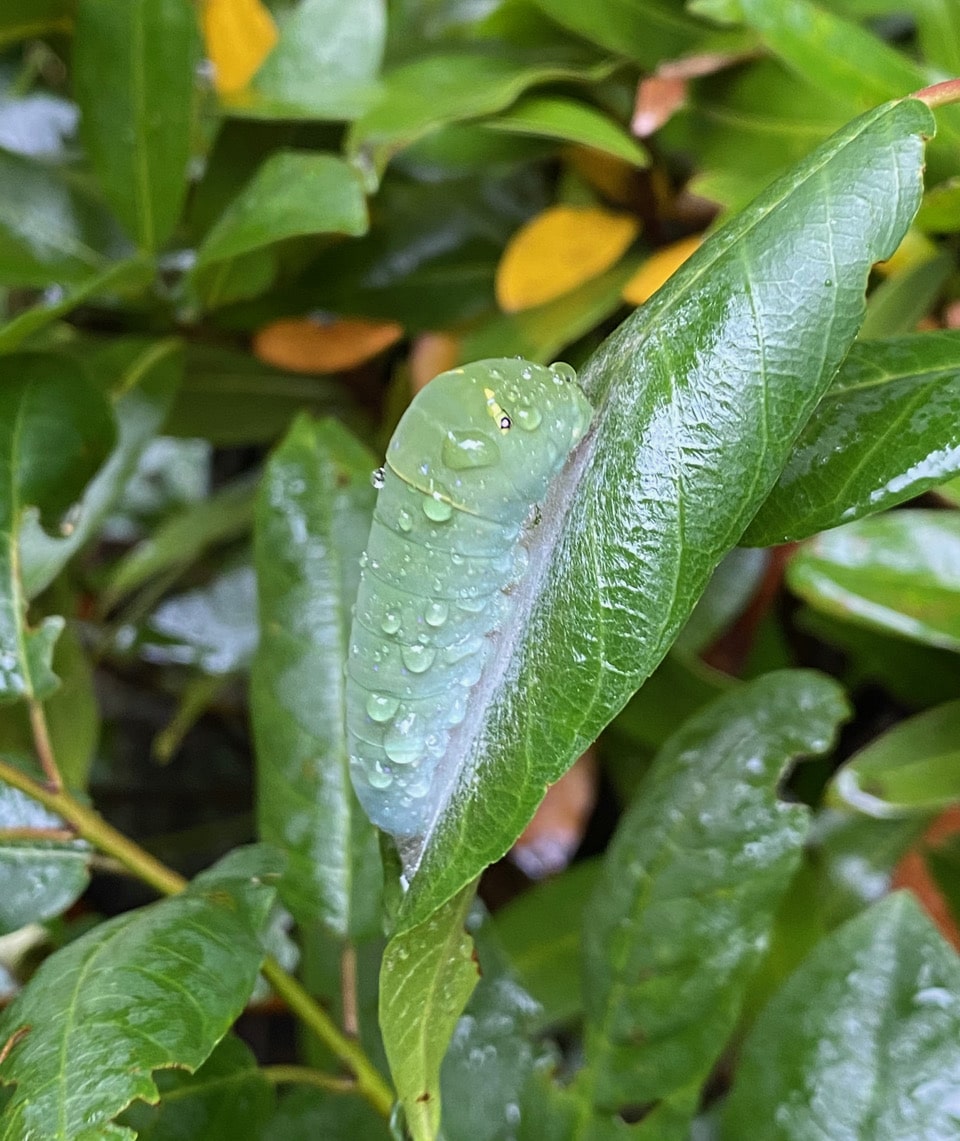
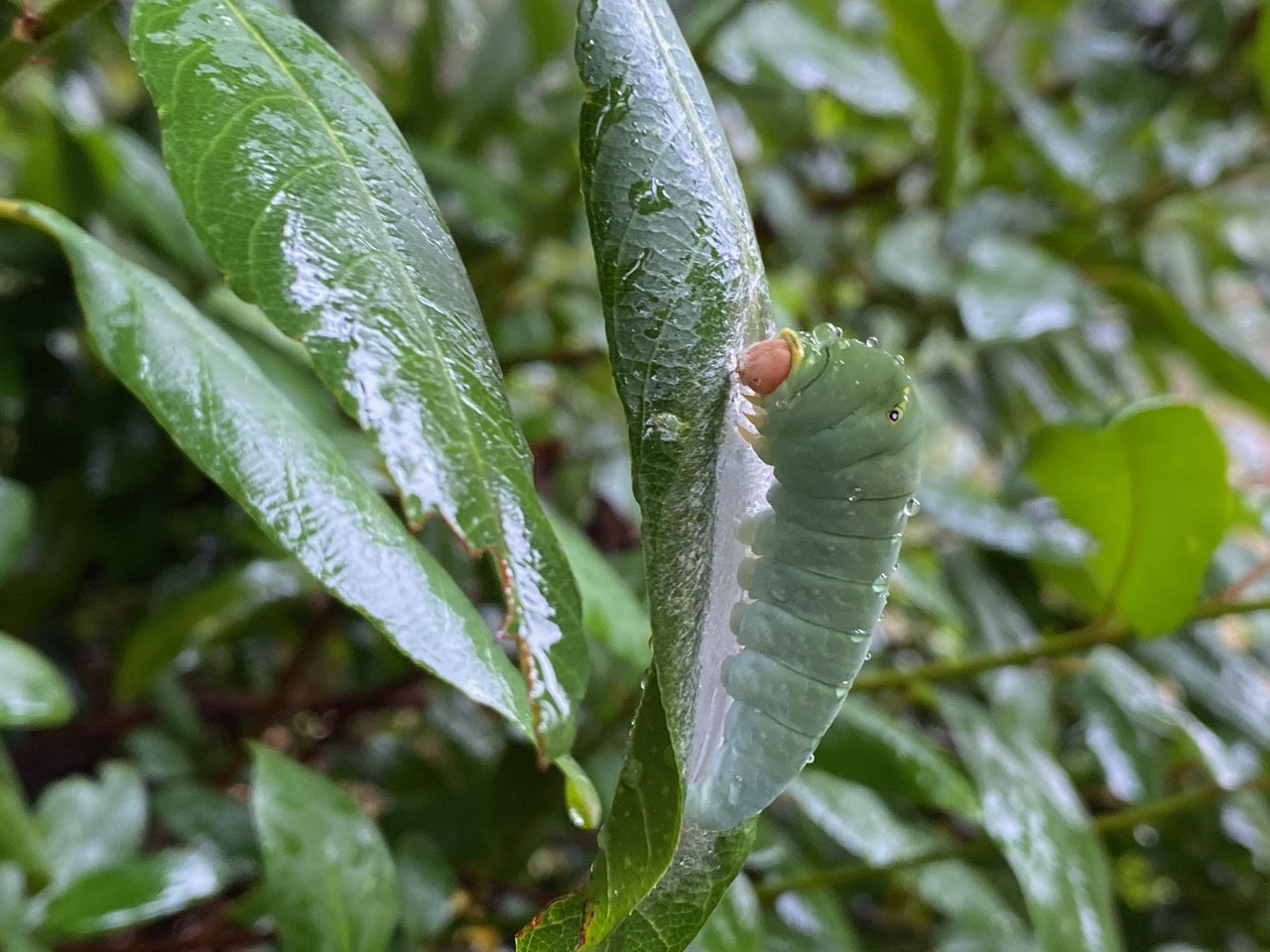
Blue, the Pale Swallowtail caterpillar has grown so much since I last saw it (8/27)! It is almost 2 in. long now, about half of the length of its home leaf on the Coffeeberry. It is hunkered down on its silk pad, covered with fog drip. Alan, the entomologist whom I consulted, thinks that Blue might already be in its last instar! Wow, on the next molt, it will become a chrysalis!? Will Blue turn brown immediately before pupation? Will its chrysalis be mottled brown or green? Apparently it can be either color, depending on the time of year and the structure to which it is attached. Brown chrysalids usually occur in the fall, and overwinter.
It is hard for me to maneuver around the vegetation to see Blue from different angles without disturbing it. This is the best view I can get of Blue’s enlarged thorax bearing the fake eyespots, typical of many Swallowtails in the genus Papilio.
Blue finally gives me a brief glimpse of its reddish head. Note the three true legs right behind the head on the underside of the thoracic segments. The rest of the legs – the stubby prolegs – extend from the abdominal segments.
.