

Pollinator Post 8/9/23 (2)

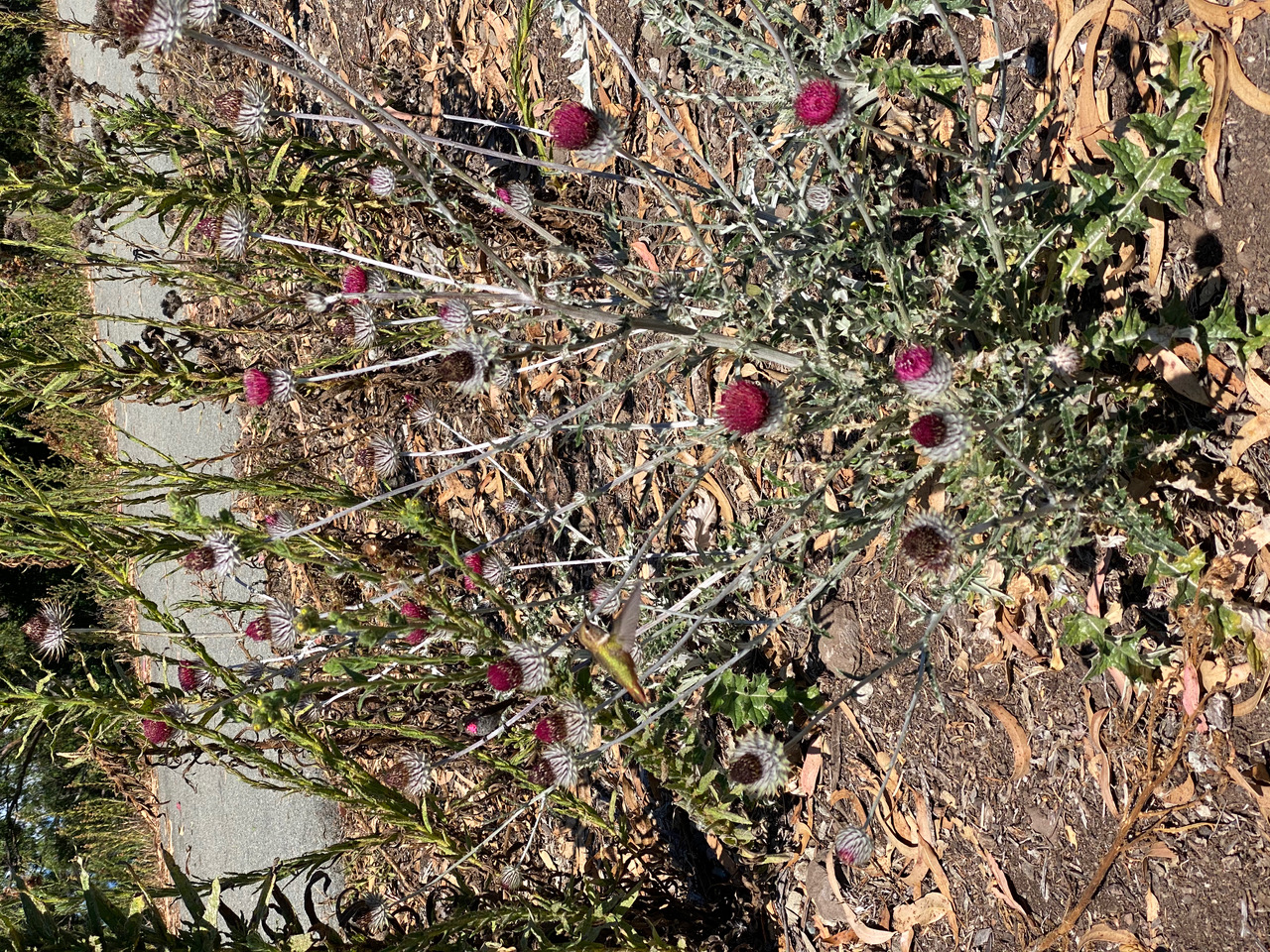
I arrive at the small patch along the road that has not been mowed down. Two young Cobweb Thistles, Cirsium occidentale are still blooming side-by-side.
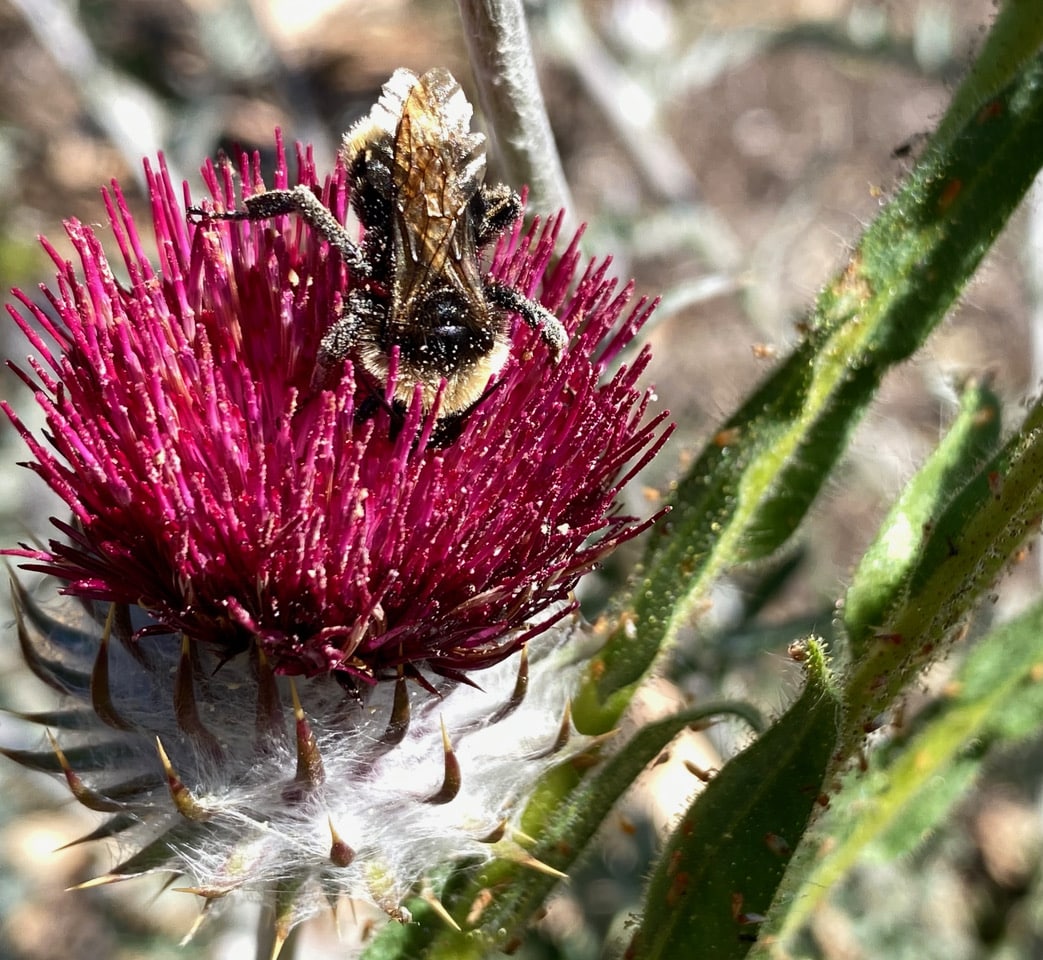





Covered with pollen, a worn Bumble Bee, with balding thorax and frayed wings is desperately seeking nectar from a flowerhead of Cobweb Thistle. I wait patiently for it to lift its head to tell which species it is.
The bee lifts its head momentarily to clean its face and antennae. Even then, I can’t be sure if it is a California Bumble Bee with a black head, or a Yellow-faced Bumble Bee, Bombus vosnesenskii that has lost the yellow hairs on its head. It doesn’t really matter. I am just glad that the young thistles are feeding the late season bees when little else is available.
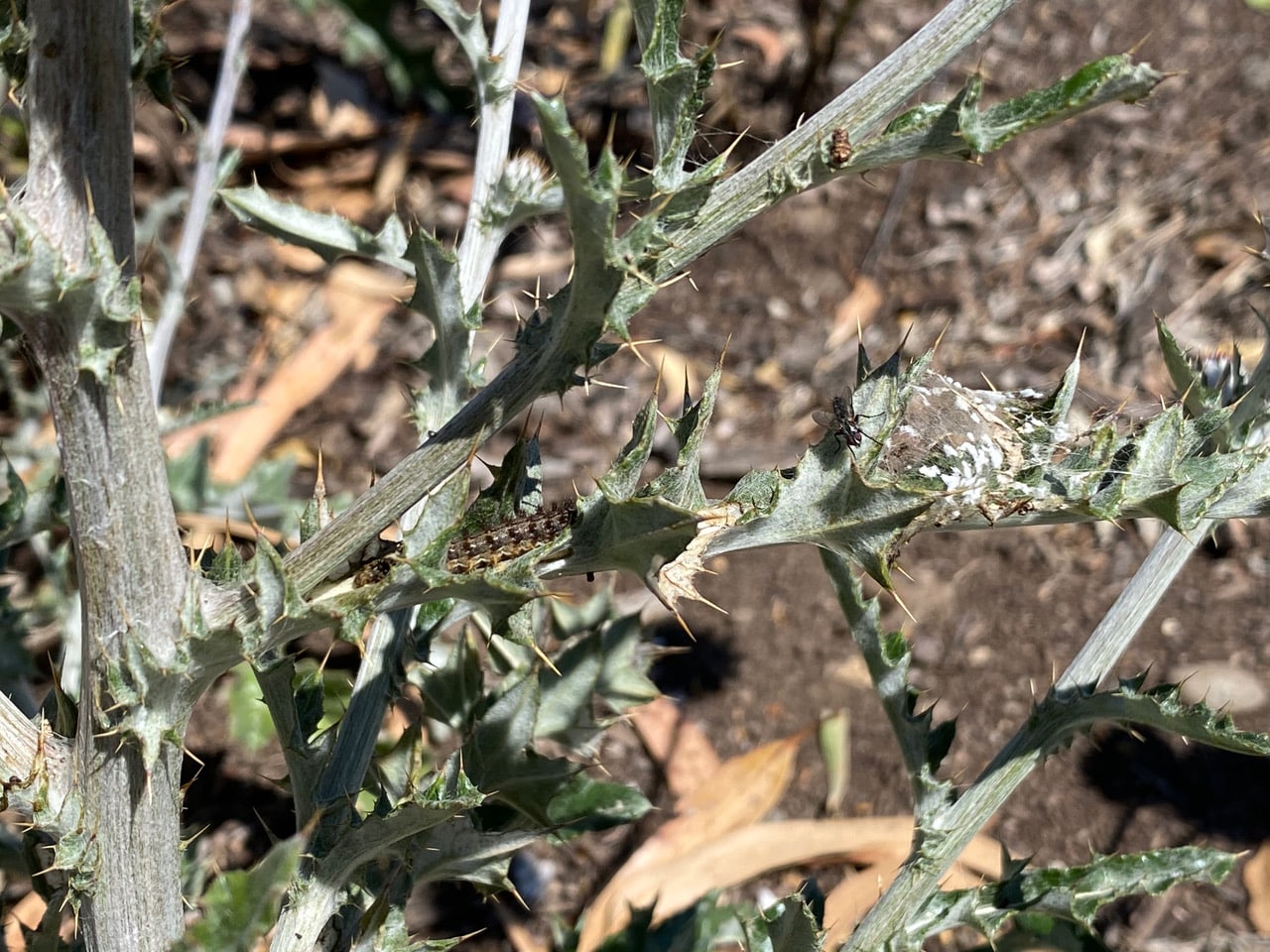
Looking down at the foliage, I spot a young Painted Lady caterpillar resting on the mid fold of a thistle leaf, not far from its nest.
Here’s a closer look at the caterpillar.
A fly is investigating the caterpillar’s silken nest. The diaphanous shelter is decorated with little clumps of plant fuzz that the caterpillar has scraped off the leaf. Young caterpillars tend to feed within their shelters, protected from predators and parasites.
The Painted Lady, Vanessa cardui (family Nymphalidae) is the most widespread of all butterflies. They are found on every continent except Antarctica and Australia. The butterfly also goes by the name thistle butterfly; its scientific name Vanessa cardui means “butterfly of thistle”. Although more than 100 host plants have been recorded for the species, the caterpillars’ favorites include thistles (Asteraceae), hollyhock and mallow (Malvaceae), and various legumes (Fabaceae).
Female Painted Lady butterflies lay eggs singly on the upper side of host plant leaves, sometimes on the thistle flowerheads. When small the caterpillars live for most of the time within a tent of leaves loosely spun together with silk. Only when larger are the larvae more likely to be found feeding outside a leaf tent on the food plant.
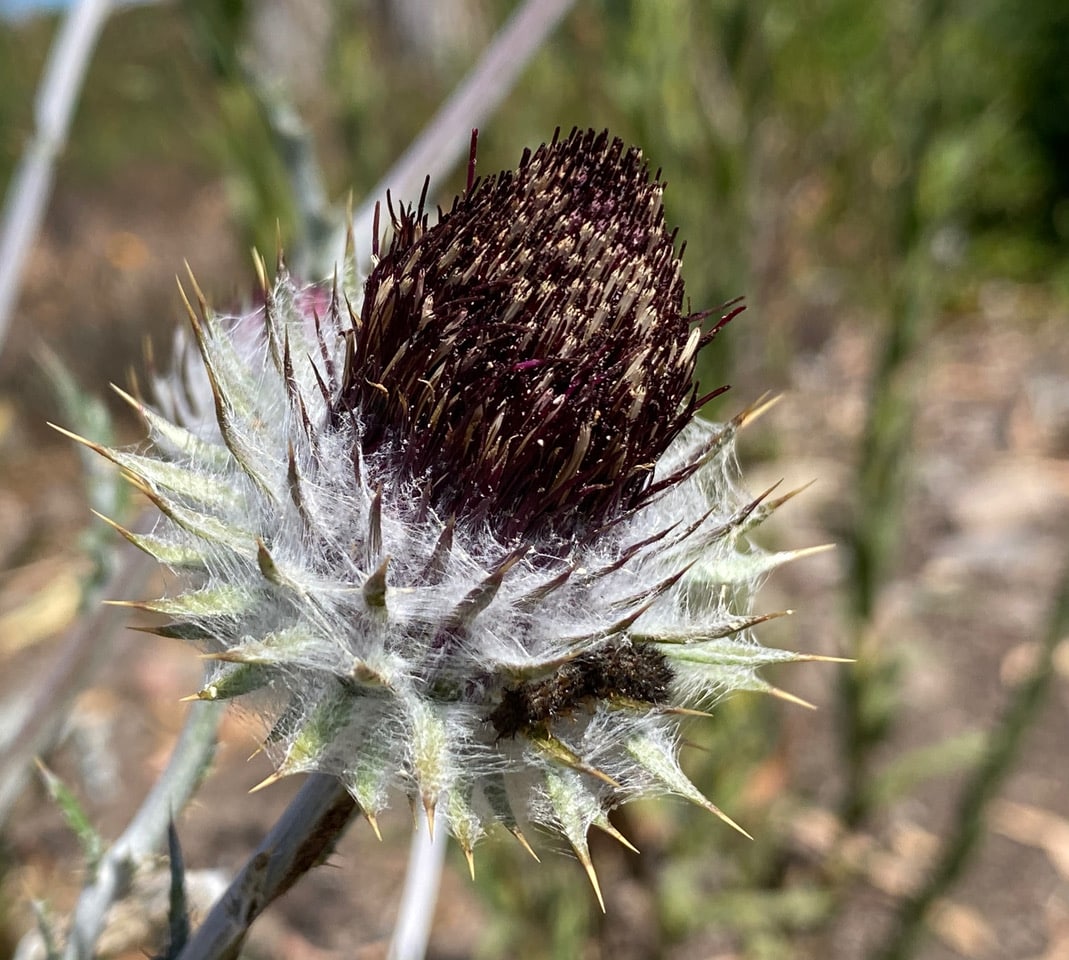
Hey, there’s another Painted Lady caterpillar hidden among the webby and spiky phyllaries of a withered thistle flowerhead. The caterpillar is tiny, dark and fuzzy.
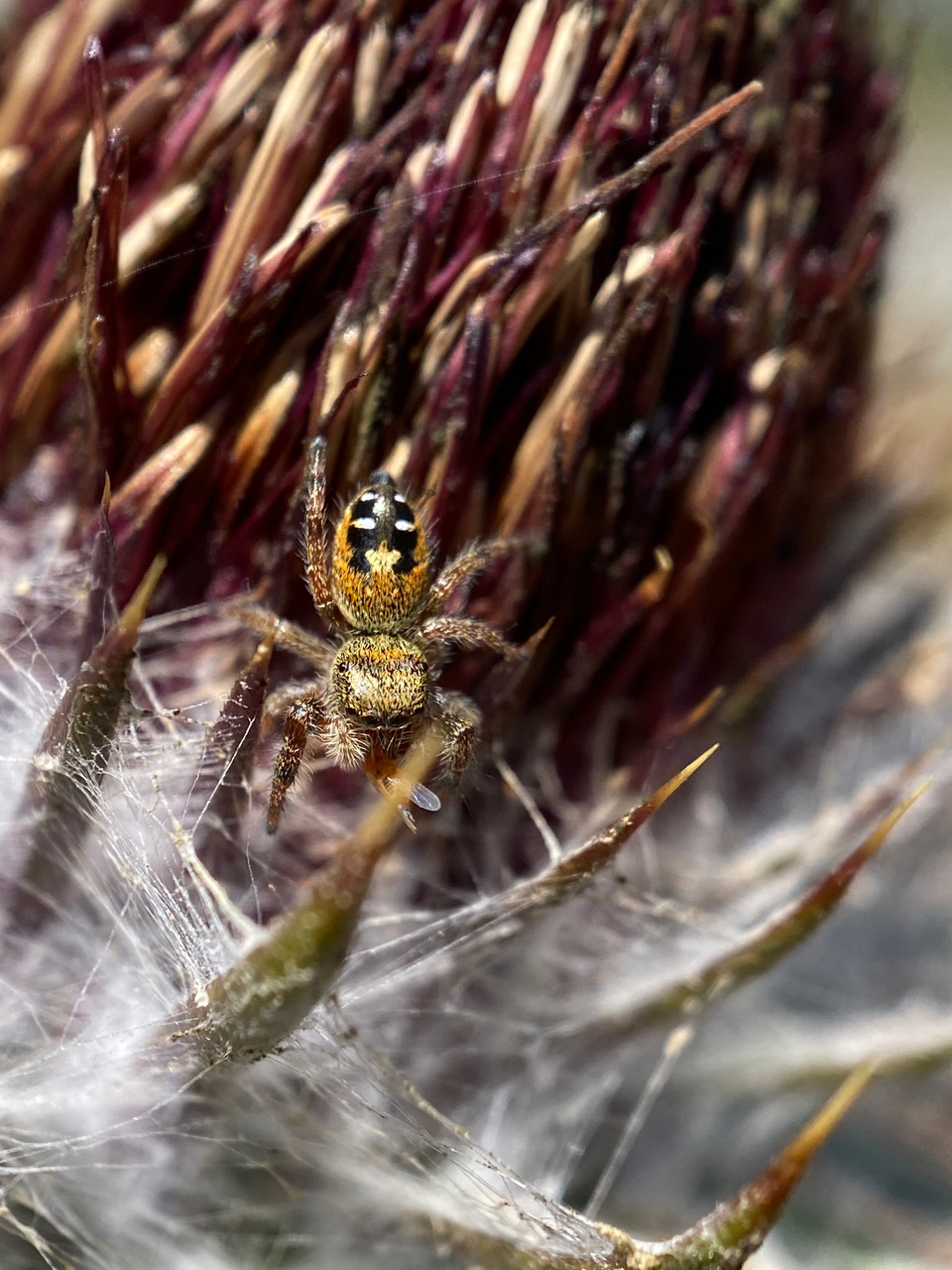
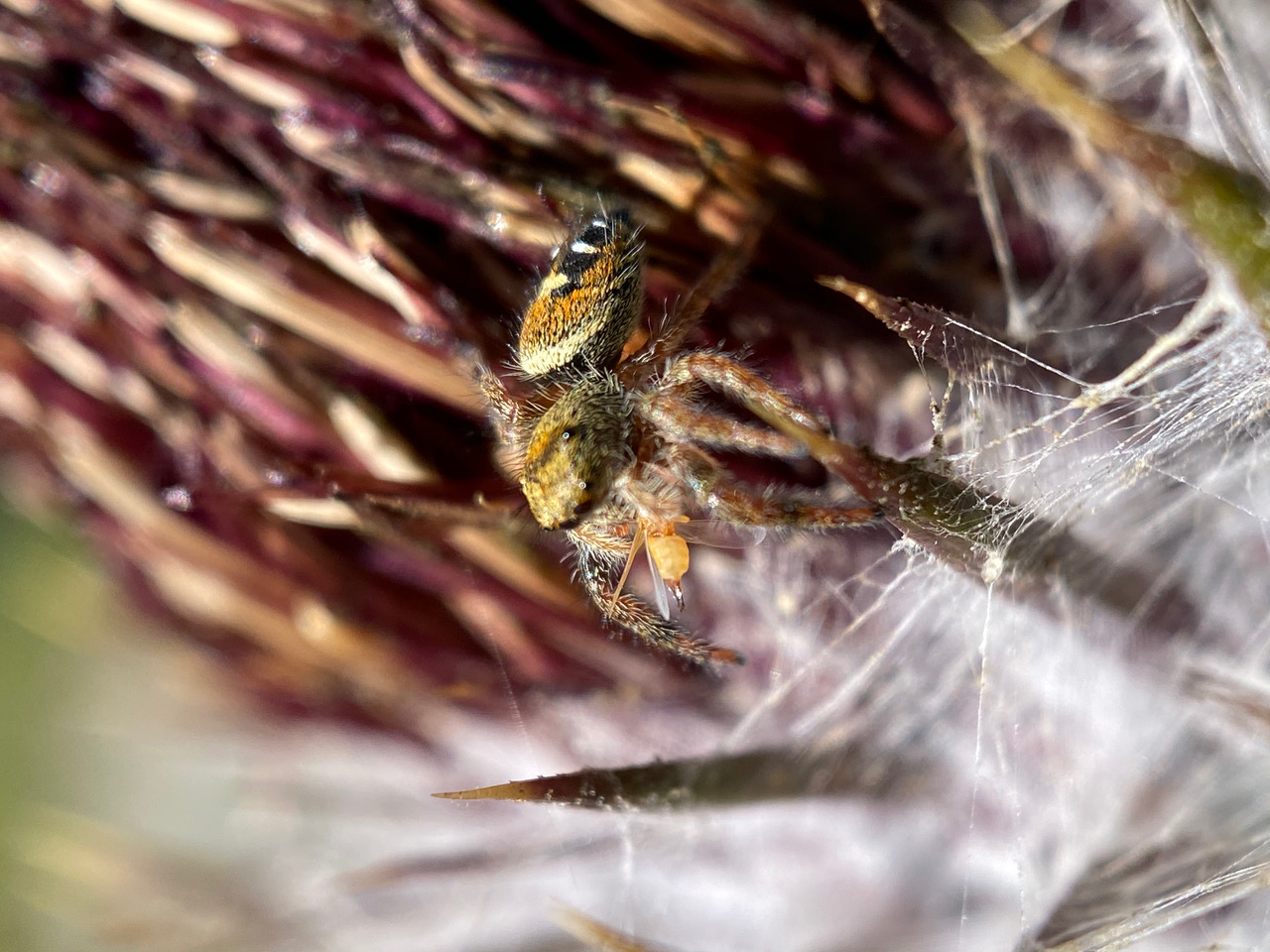
Just then I notice a movement on the spent flowerhead. A little Jumping Spider, Phidippus sp. (family Salticidae) has just jumped forward and seized a small insect in its jaws. Wow, what a beautiful spider!
The genus Phidippus is distributed almost exclusively in North America, and includes some of the largest jumping spiders. Salticids are free-roaming hunting spiders. They do not weave a web to catch prey. They stalk, then pounce on their prey. Just before jumping, the spider fastens a safety line to the substrate. It can leap 10-20 times their body length to capture prey. Their movement is achieved by rapid changes in hydraulic pressure of the blood. Muscular contractions force fluids into the hind legs, which cause them to extend extremely quickly.
Complex terrain not withstanding, the nimble spider runs with its prey securely held in its jaws.
It’s a thrill to be looking at a jumping spider face-to-face. For a brief moment the spider’s four front eyes stare at me unblinkingly.
Jumping spiders have excellent vision, with among the highest acuities in invertebrates. The 8 eyes are grouped four on the face (the two big Anterior Median Eyes in the middle, and two smaller Anterior Lateral eyes to the side), and four on top of the carapace. The anterior median eyes provide high acuity but small field of view, while the other six eyes act like our peripheral vision, with lower resolution but broad field of view. Since all eight eyes are fixed in place and can’t pivot independently from the body like human eyes can, jumping spiders must turn to face whatever they want to see well. This includes moving their cephalothorax up and down, an endearing behavior.

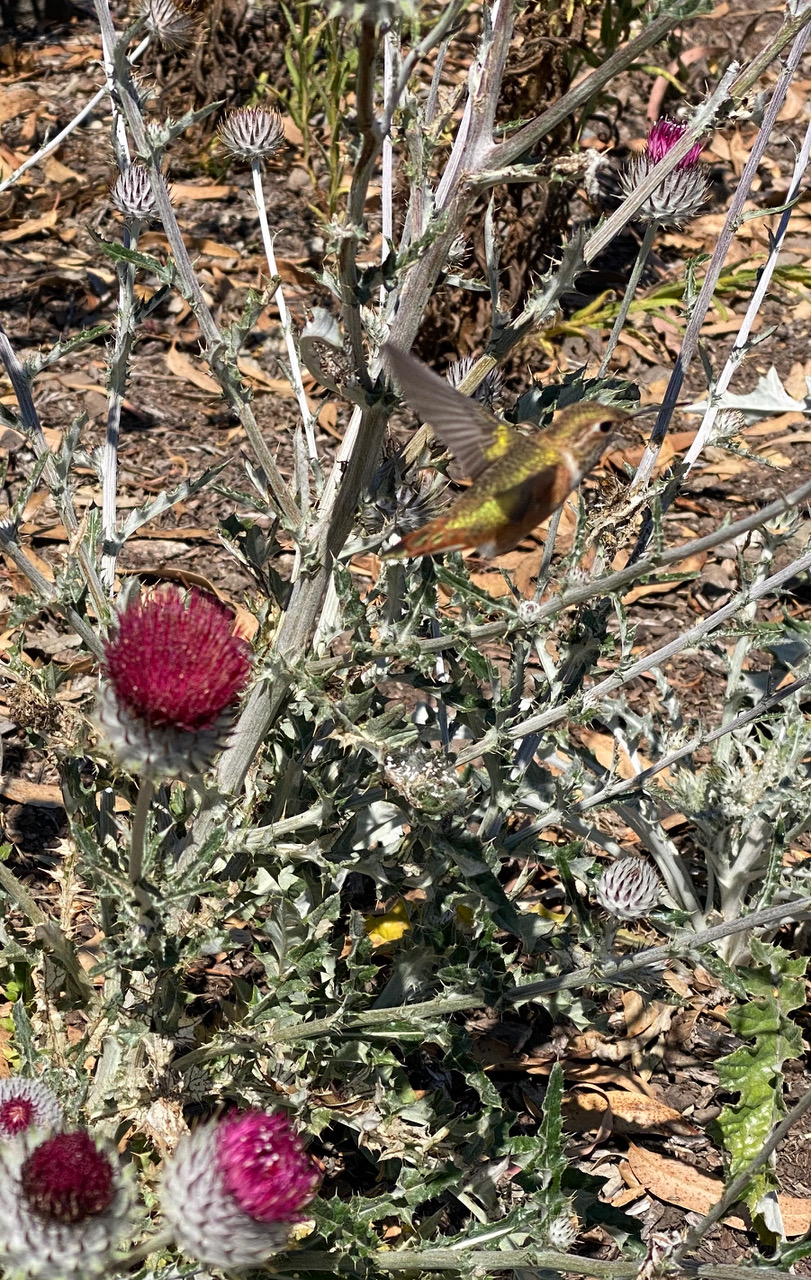
A whir of wingbeats whizzes past my ears. A Rufous Hummingbird has come to take nectar from a Cobweb Thistle flowerhead, its greenish-coppery body gleaming in the sunlight!
I often see Anna’s Hummingbirds feeding at the thistles, but this is the first time I see this species. What a treat! The remaining thistles are a refuge for vertebrates and invertebrates alike, providing precious food and shelter while resources are fast dwindling this time of year.