

Pollinator Post 8/9/23 (1)
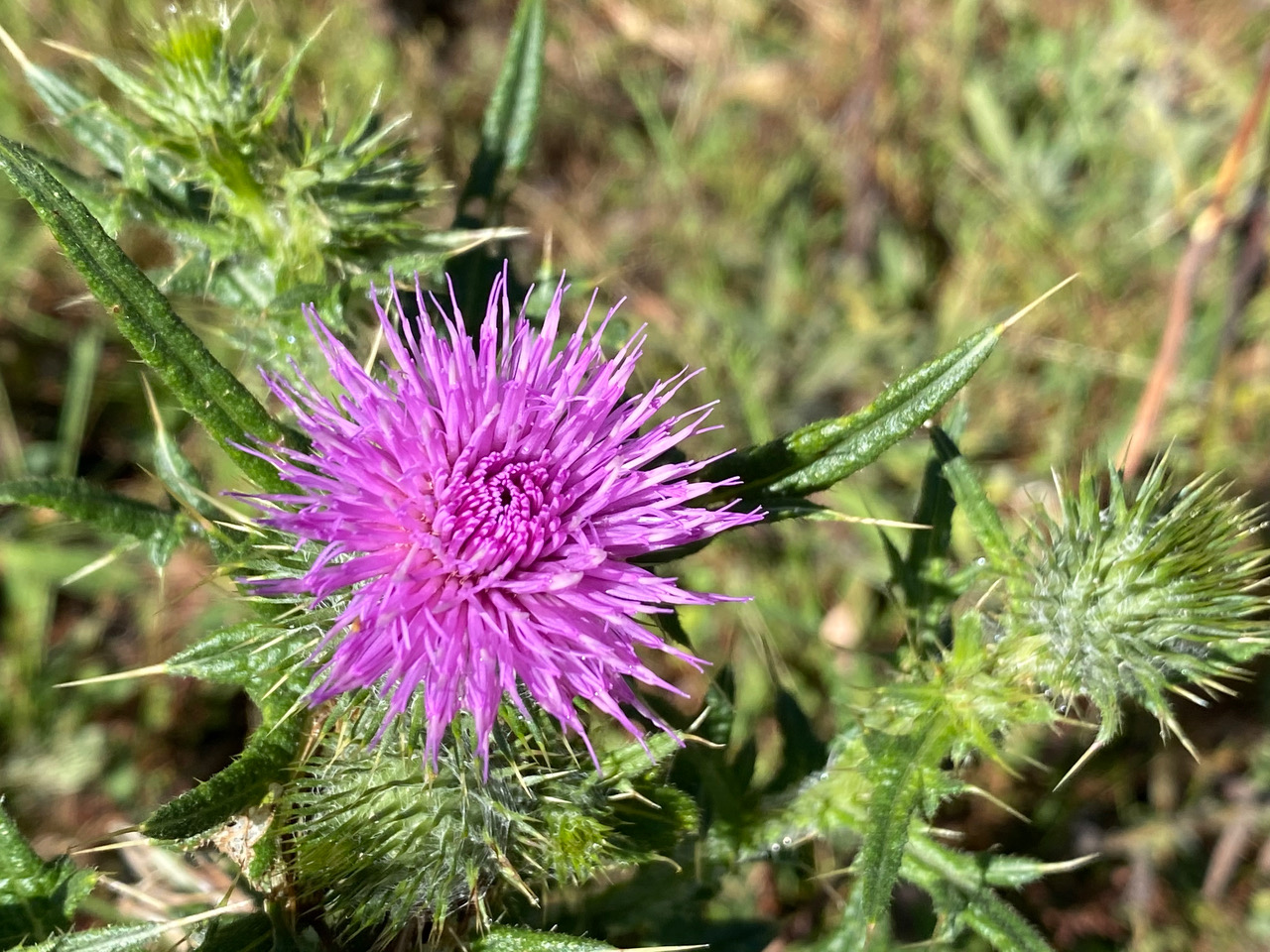
On the way to the Radio Tower, the weedy patch on the little hill on the west side of the road beckons to me. While everything seems to have dried up, these Bull Thistles, Cirsium vulgare are blooming gloriously.
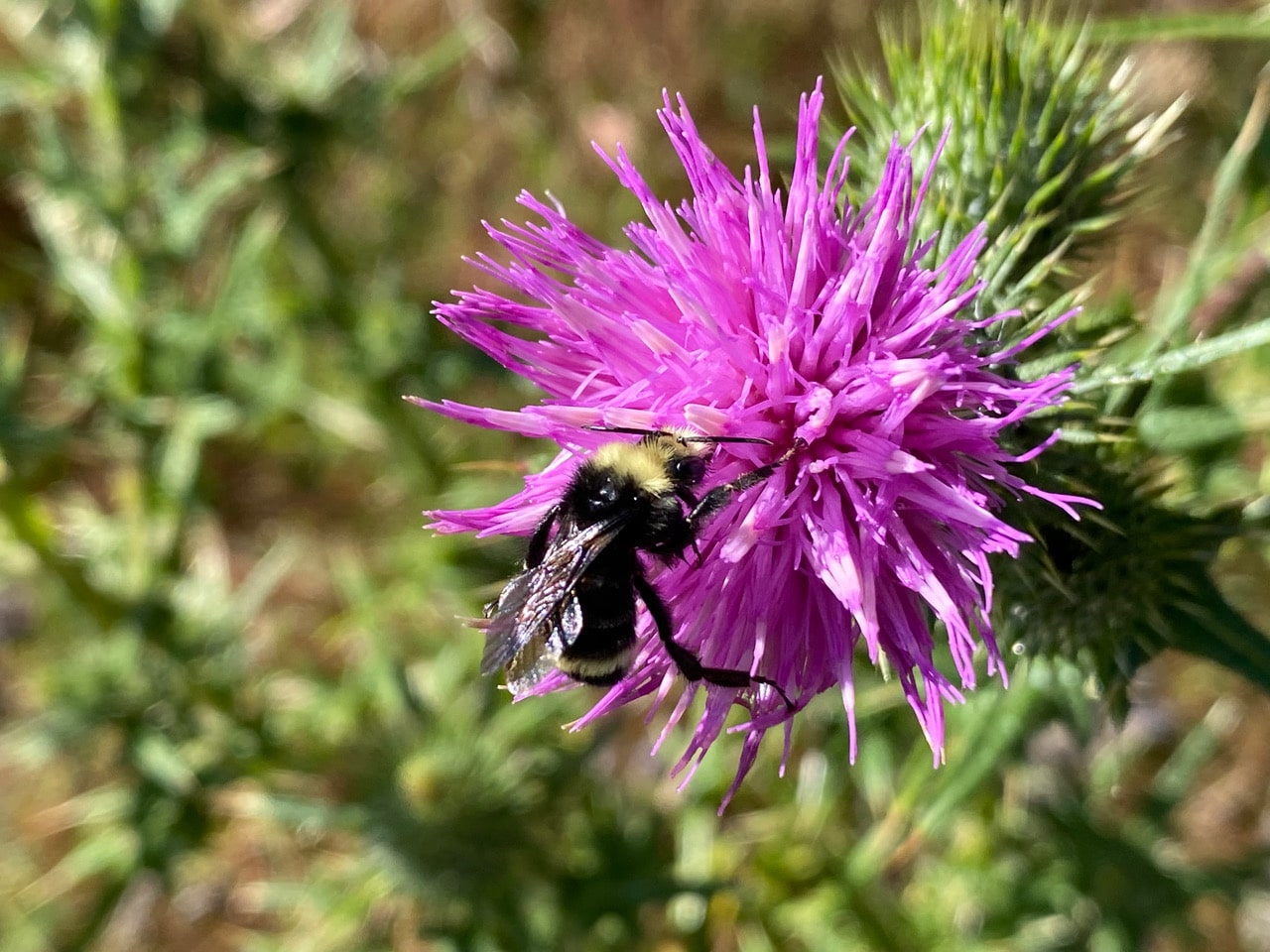
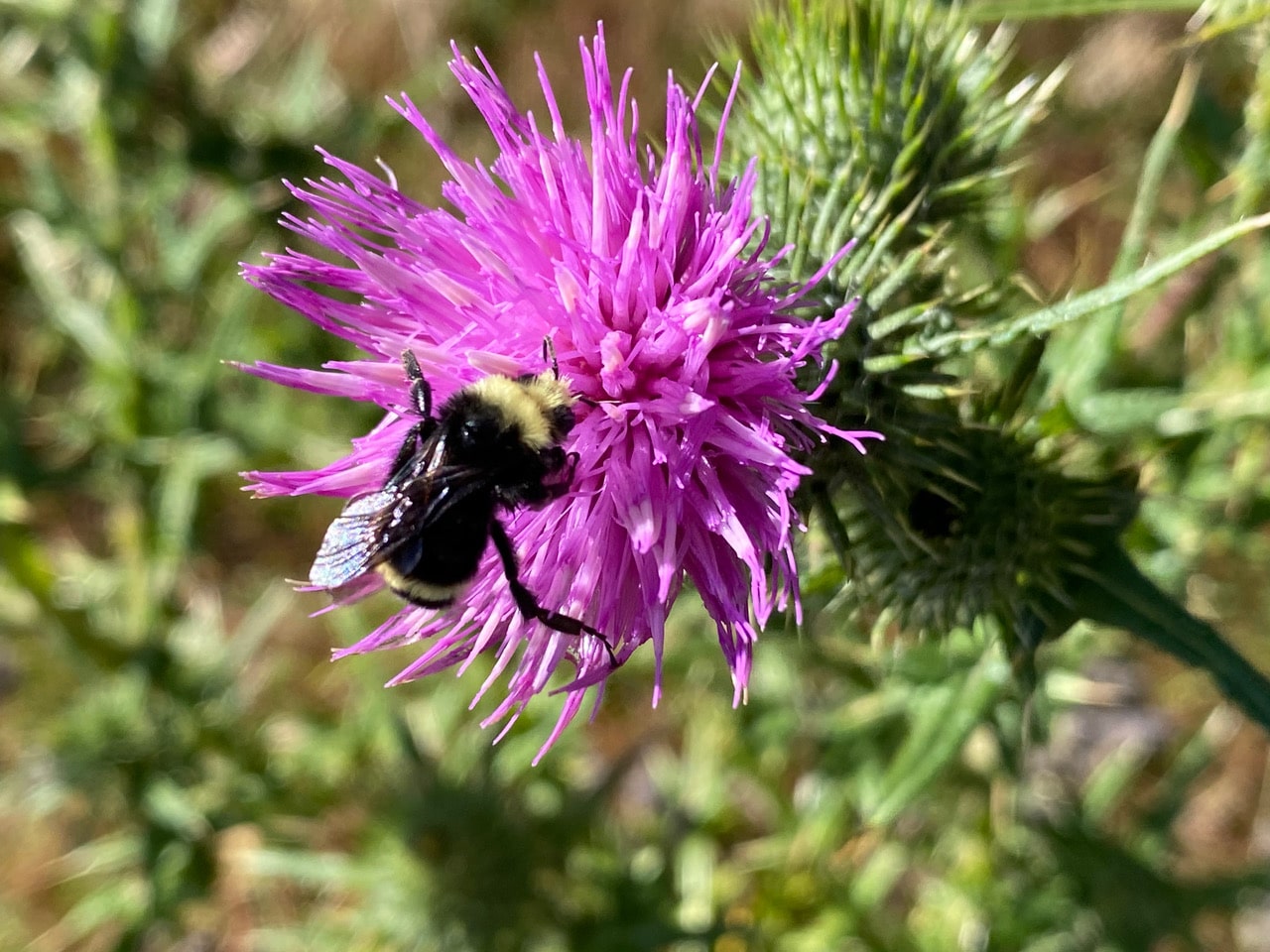

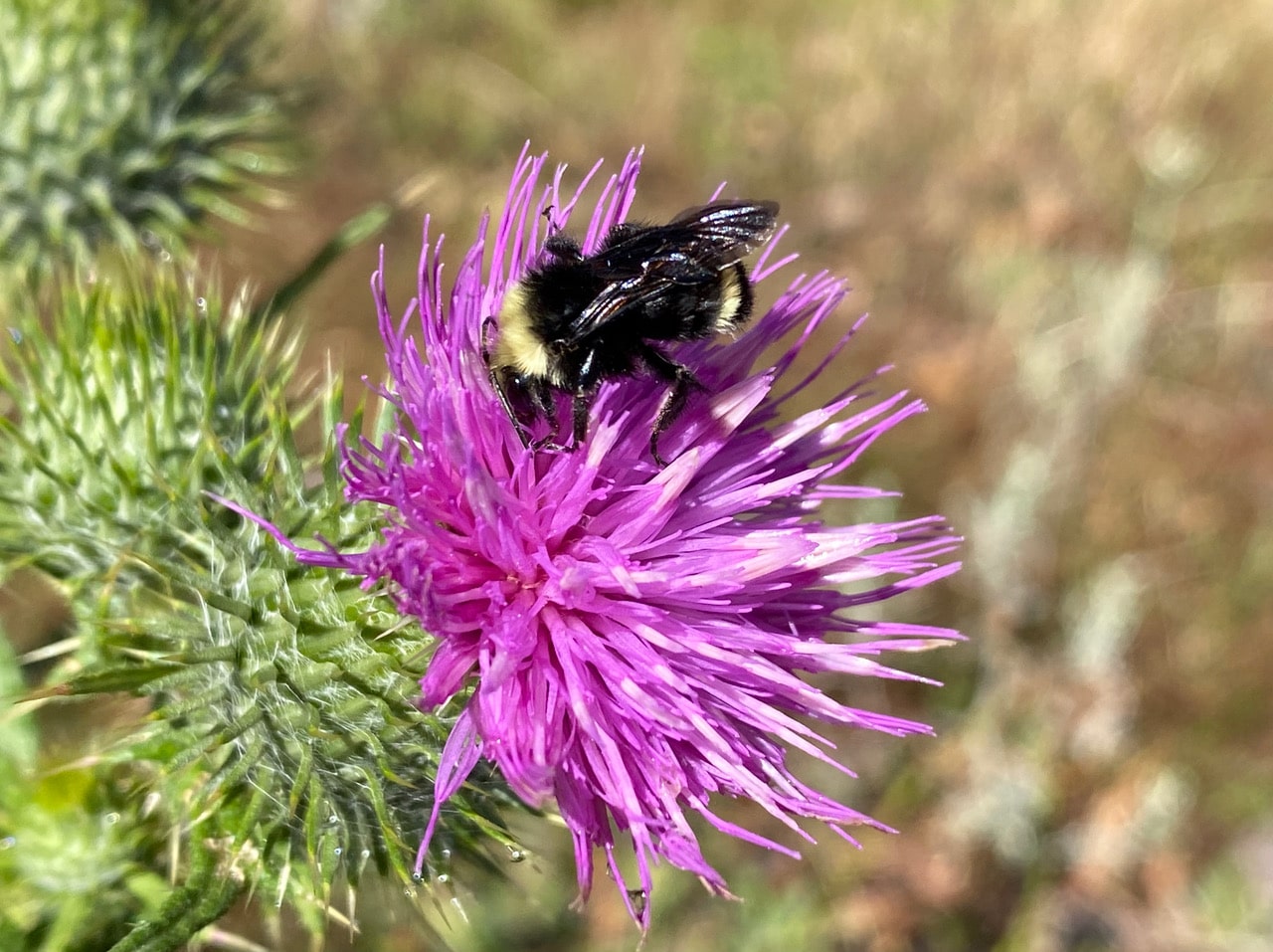


I am no big fan of the exotic thistle, but at such dire times I appreciate its value to the local wildlife. This Yellow-faced Bumble Bee, Bombus vosnesenskii is not discriminating against the non-native – it is just glad to have a good sip of nectar!
The Bull Thistle, Cirsium vulgare is native throughout most of Europe, western Asia and northwestern Africa. It is naturalized in North America and other parts of the world. It is a tall biennial or short-lived monocarpic thistle, often a ruder species, colonizing bare disturbed ground. The flowers are a rich nectar source used by numerous pollinating insects, including bees and butterflies. The plant serves as a host plant for the Painted Lady butterfly. The seeds are eaten by goldfinches. The downy plumes of the seed pods are used by birds for nesting material. The support for pollinators and pest-eating birds could outweigh its drawbacks.
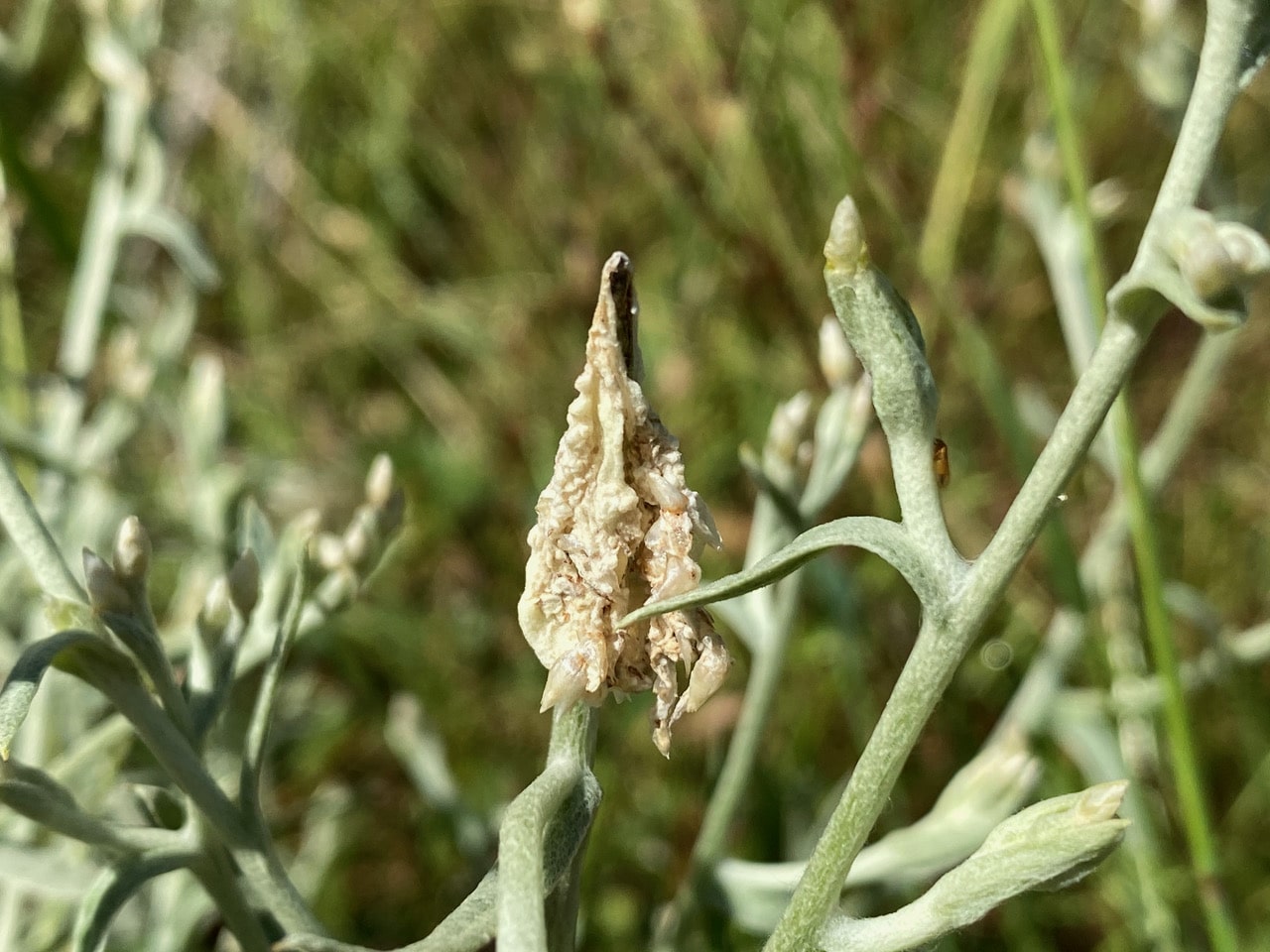
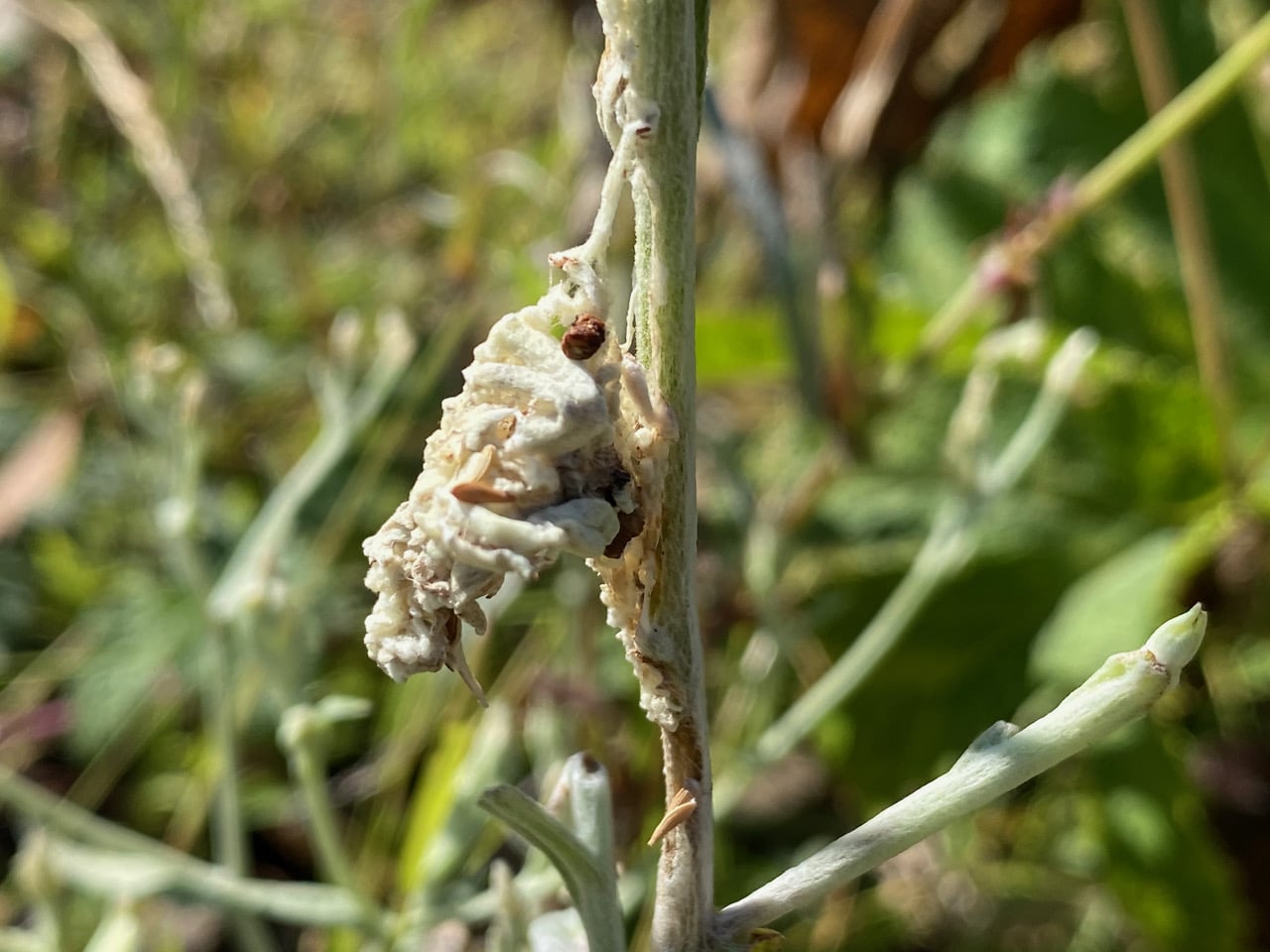
On the hillock is a thriving population of the Fragrant Everlasting, Pseudognaphalium beneolens. The flowers are still in early buds. Here’s an American Lady caterpillar nest in the making! The young caterpillar has webbed together parts of the flower buds to construct a shelter in which it can feed in safety.
Here’s yet another caterpillar nest! Now that most of the California Everlasting, Pseudognaphalium californicum further up the hill has been mowed down, I am glad that the Fragrant Everlasting is taking over to provide for the butterflies.
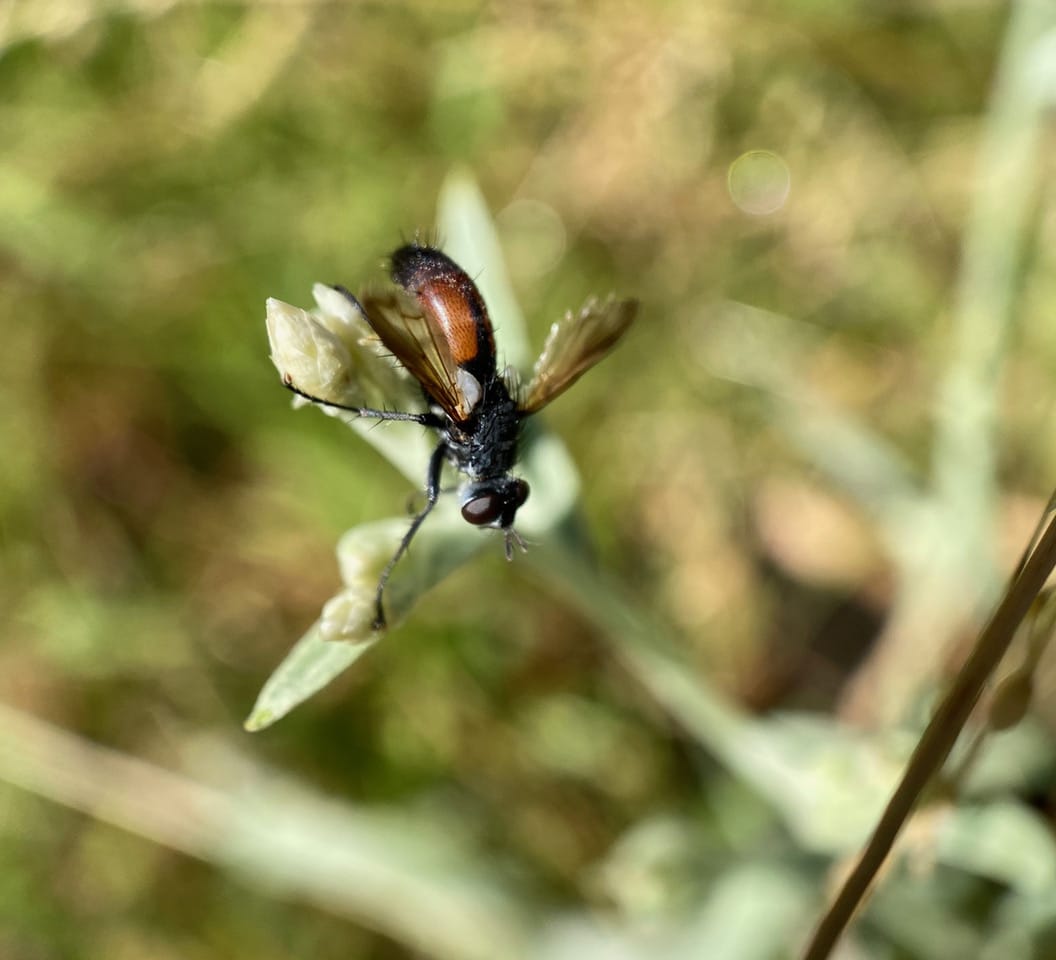
Ooh, that’s an atypical Bristle Fly not previously recorded for Skyline Gardens! Cylindromyia intermedia (family Tachinidae) has an elongate, cylindrical black abdomen with red on the sides. Unlike most Bristle Flies, Cylindromyia is not particularly bristly. The genus is found worldwide; more diverse in western North America. Cylindromyia mimics wasps in color, shape and posture. The fly tends to hold its abdomen tipped up. Adults are common flower visitors in open weedy areas in the summer. The larvae are parasitoids of Stink Bugs.
The larvae of all Tachinids are parasitoids. Most tachinidae are endoparasitoids, feeding within their hosts, and most are generalist, with a range of species they prey on. Parasitoids feed on the non-essential organs of its host first, and then the vital organs, timing the death of the host to correspond with the end of its larval stage.
Tachinid flies use a variety of strategies to plant its egg on its host. A common method is to lay an egg in a hard-to-reach spot on the outside of the host’s body, or to inject it directly into the host’s body. The egg hatches, and the larva burrows into the host. Plan B is ovoviviparity – the female deposits freshly hatched larvae instead of eggs onto the host. Plan C – Mama Tachinidae deposits eggs on vegetation frequented by host. A host may eat the egg while feeding, or the larvae may hatch out and go hunting on their own.
A pale Lygus Bug (family Miridae) is resting on a flowerhead of California Everlasting, Pseudognaphalium Californicum.
The term lygus bug is used for any member of the genus Lygus, in the family of plant bugs, Miridae. Adult lygus are approximately 3 mm wide and 6 mm long, colored from pale green to reddish brown or black. They have a distinctive triangle or V-shape on their backs. Lygus bugs are known for their destructive feeding habits – they puncture plant tissues with their piercing mouthparts, and feed by sucking sap. Both the physical injury and the plant’s own reaction to the bug’s saliva cause damage to the plant. Many lygus bugs are well-known agricultural pests.
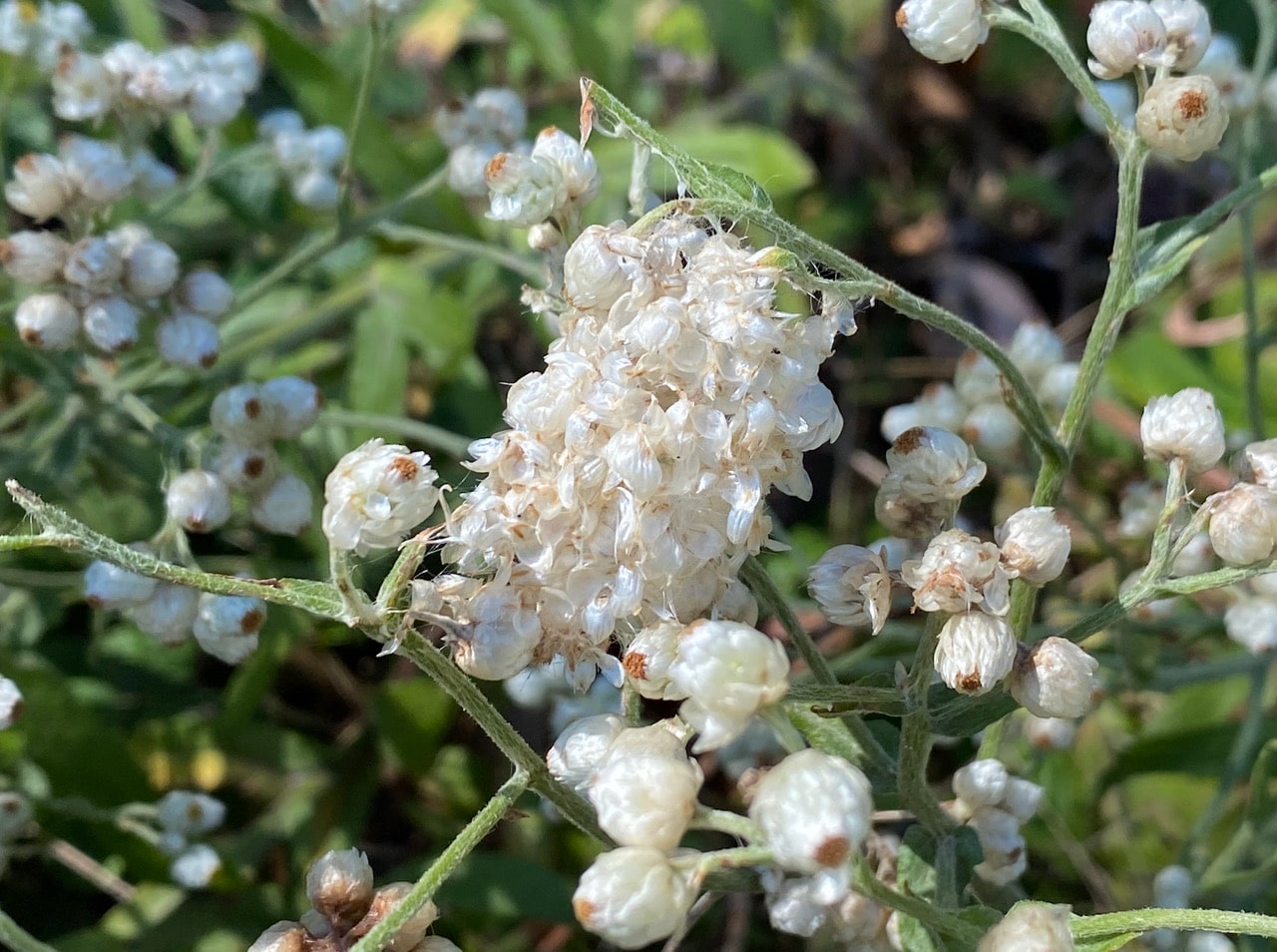
Ooh, a nest of an American Lady caterpillar on one of the few California Everlasting that has been spared! The caterpillar has webbed two adjacent clusters of flowerheads together with silk. It feeds inside this shelter, attaching the phyllaries that come apart to the silken matrix to cover and camouflage the nest. A clever ploy! A caterpillar may make several of these nests throughout its development, feeding and constructing larger nest as it grows.
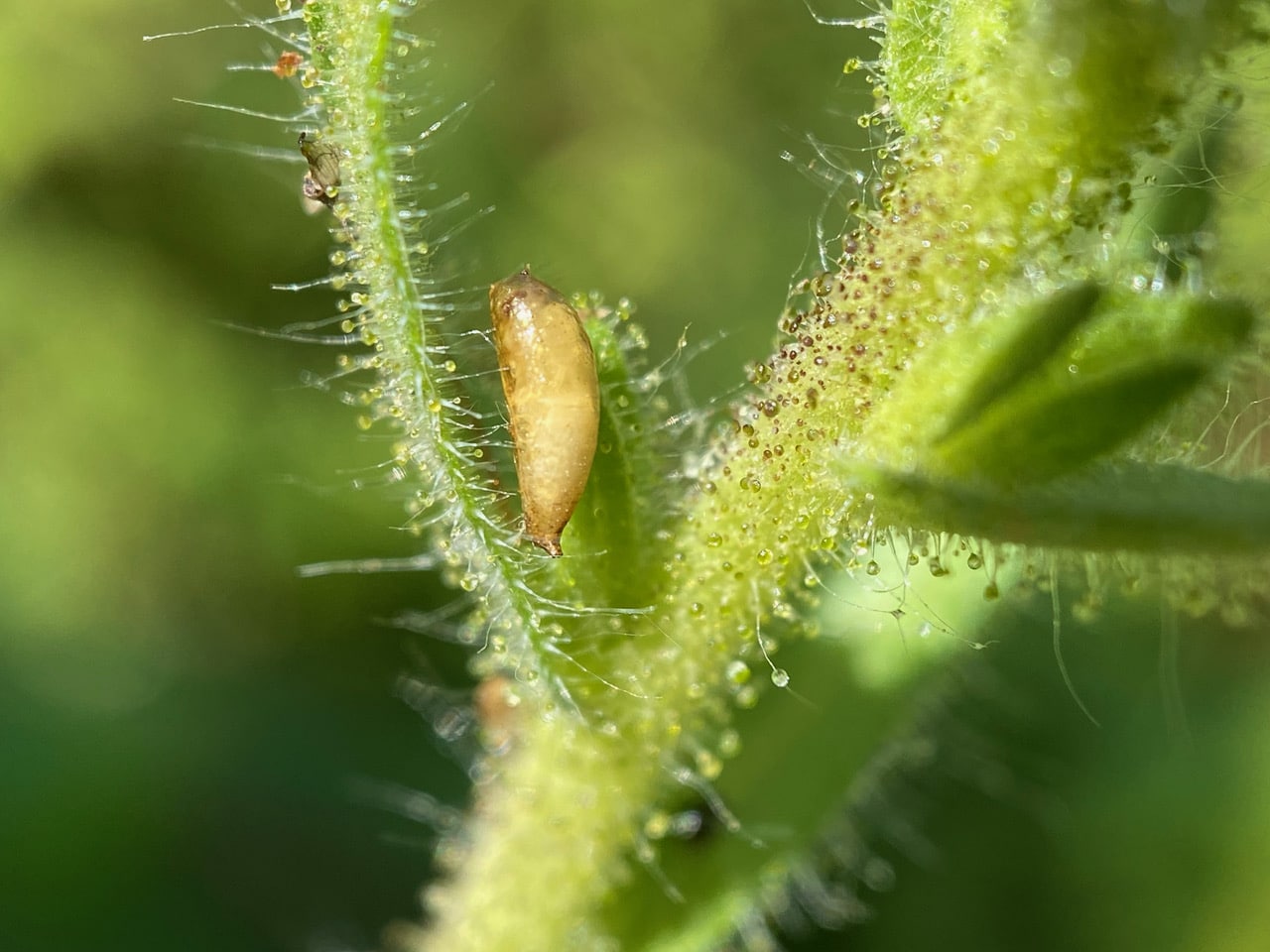
A hover fly pupa (family Syrphidae) at a leaf axil of a Coast Tarweed, Madia sativa. As the pupae turn brown, they are easier to spot on the vegetation than the elusive green larvae. The adult fly will emerge from the broad end of the pupa.
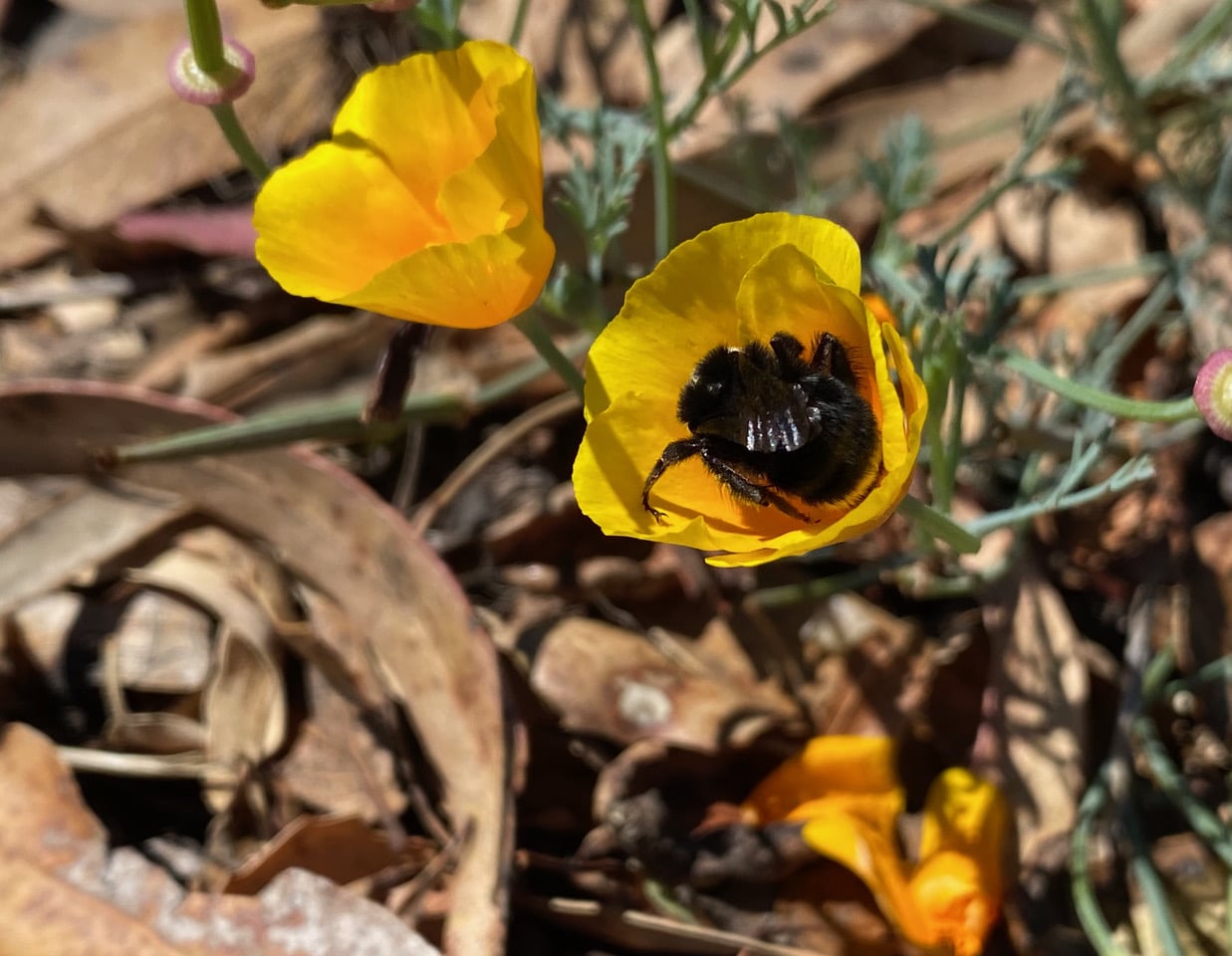
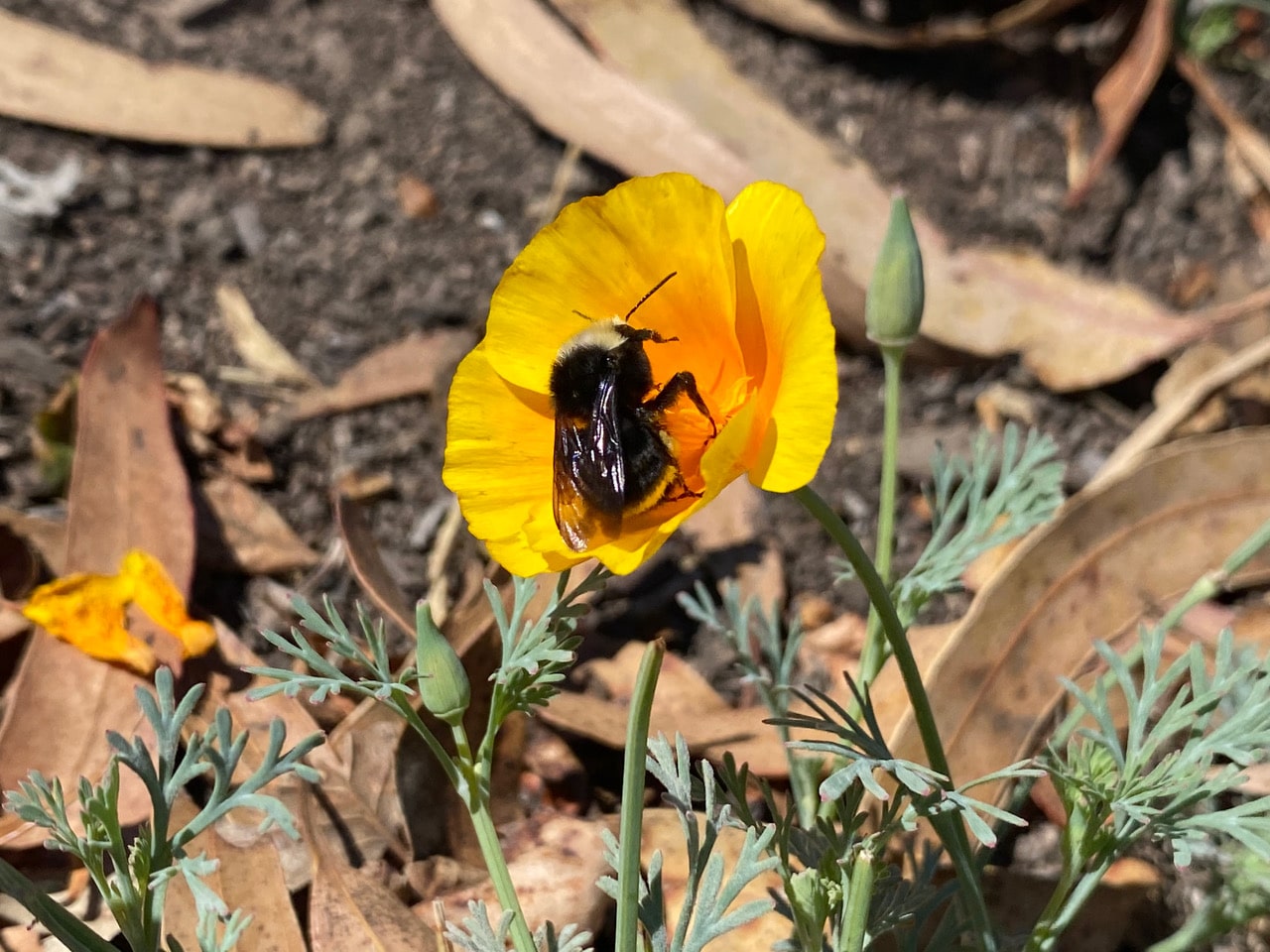
Most of the California Poppies have disappeared with the mowing up here. There are only three plants left standing, and a Yellow-faced Bumble Bee, Bombus vosnesenskii is frantically foraging on the remaining handful of flowers.
She looks like she might be a fresh queen. Will she find enough sustenance to support her through her winter hibernation?