

Pollinator Post 8/4/23 (2)
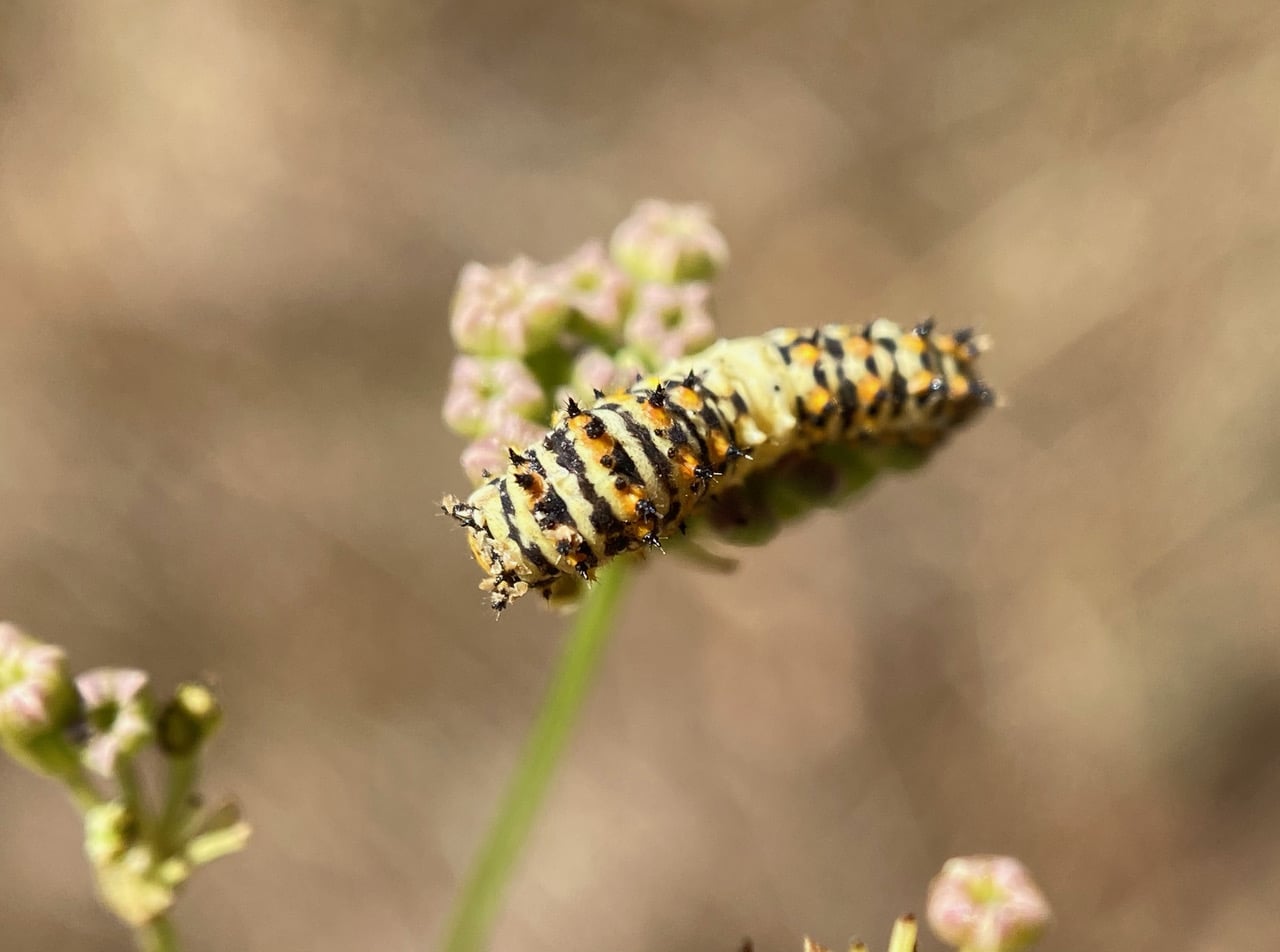
The Anise Swallowtail caterpillar is still on its California Yampah, Perideridia californica. It is draped on an umbel of flower buds, appearing more yellow than ever. I wonder if it has molted?
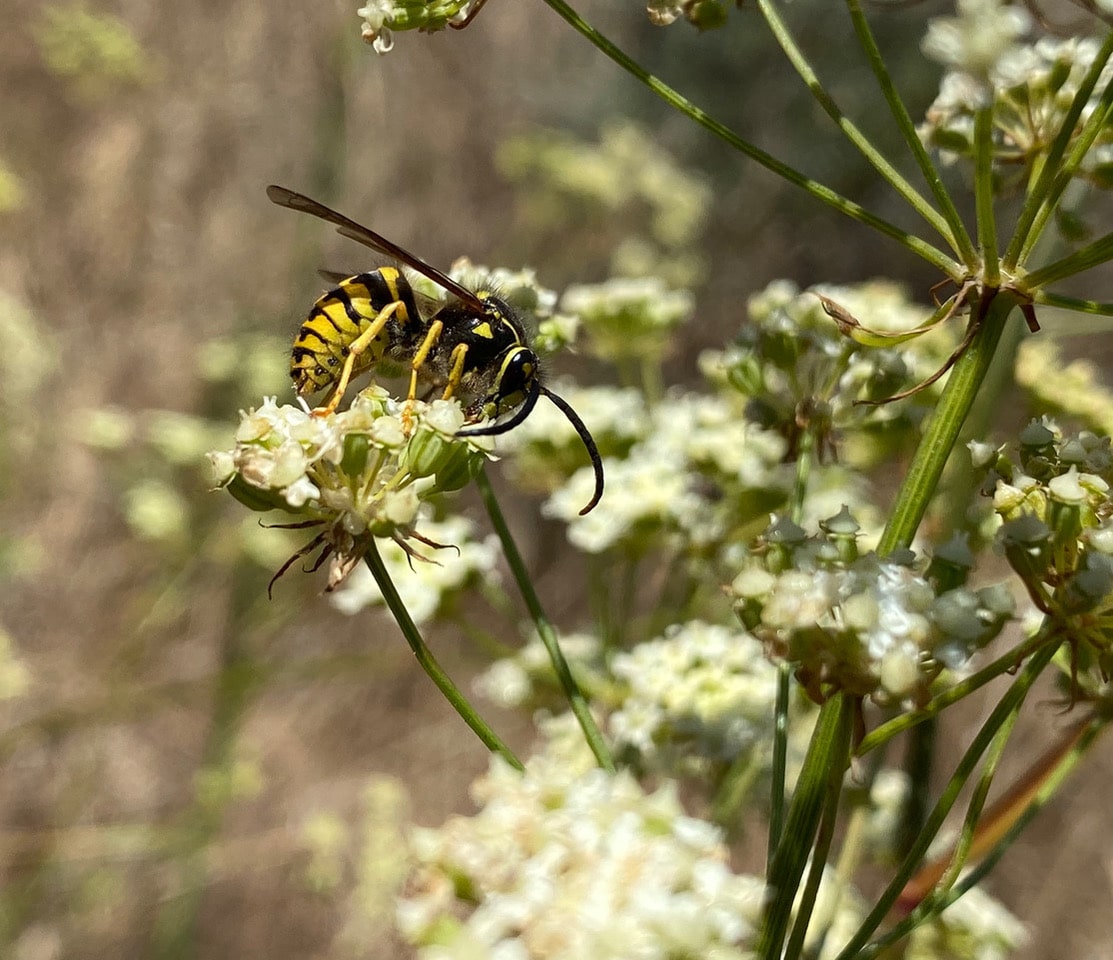



Nearby, a Yellowjacket wasp is foraging on another Yampah. The wasps are notorious caterpillar hunters. Again, I have to remind myself that I can’t worry for the safety of the caterpillar, that I am here as an unbiased observer.
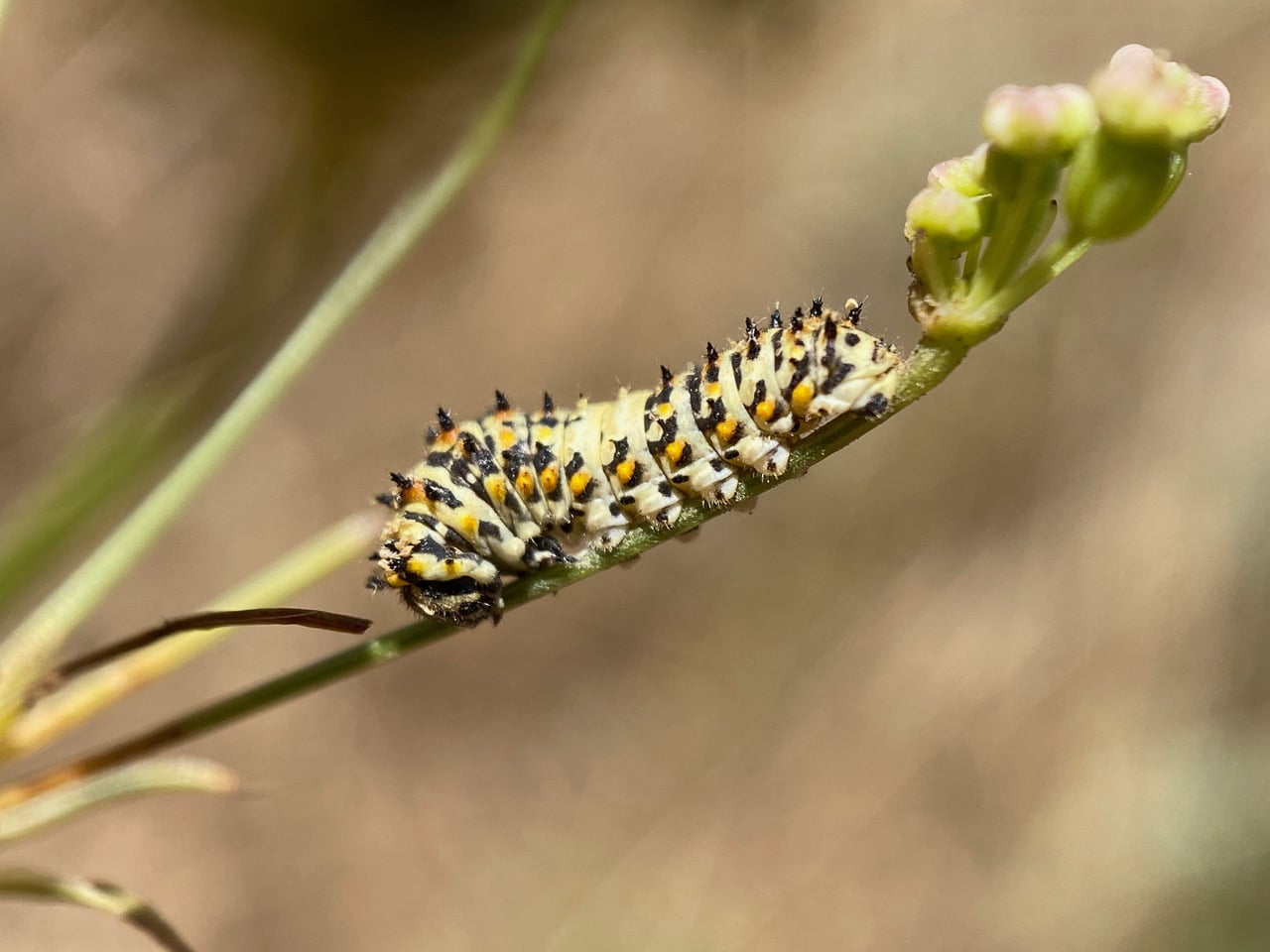
Half an hour later when I pass Yampah Bowl, the Anise Swallowtail caterpillar has descended the flower umbel it was feeding on. Will there be enough food for the caterpillar on this plant? Will it go searching for another plant – it seems a herculean task for a little caterpillar to crawl such long distances through the dense undergrowth.
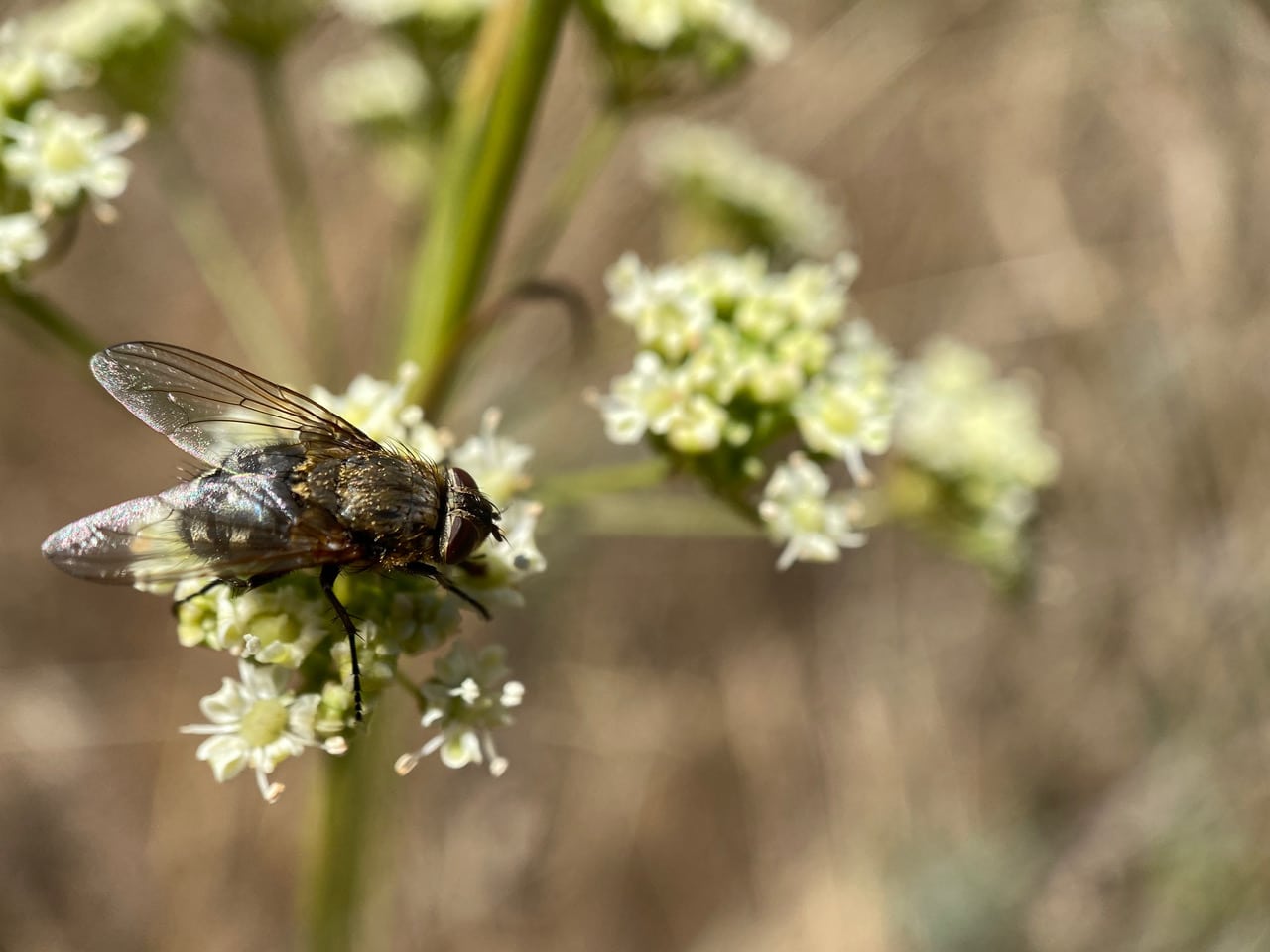
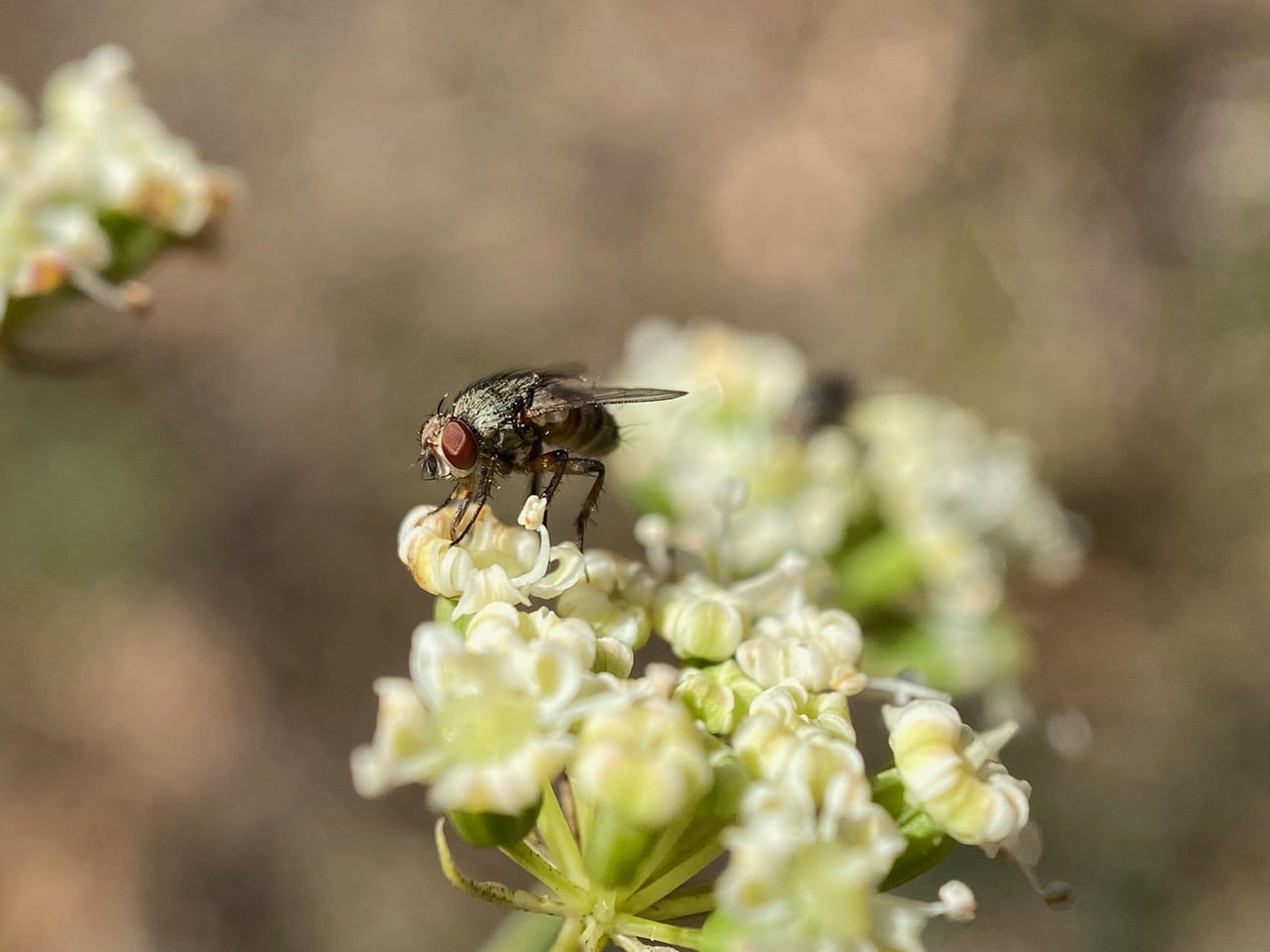
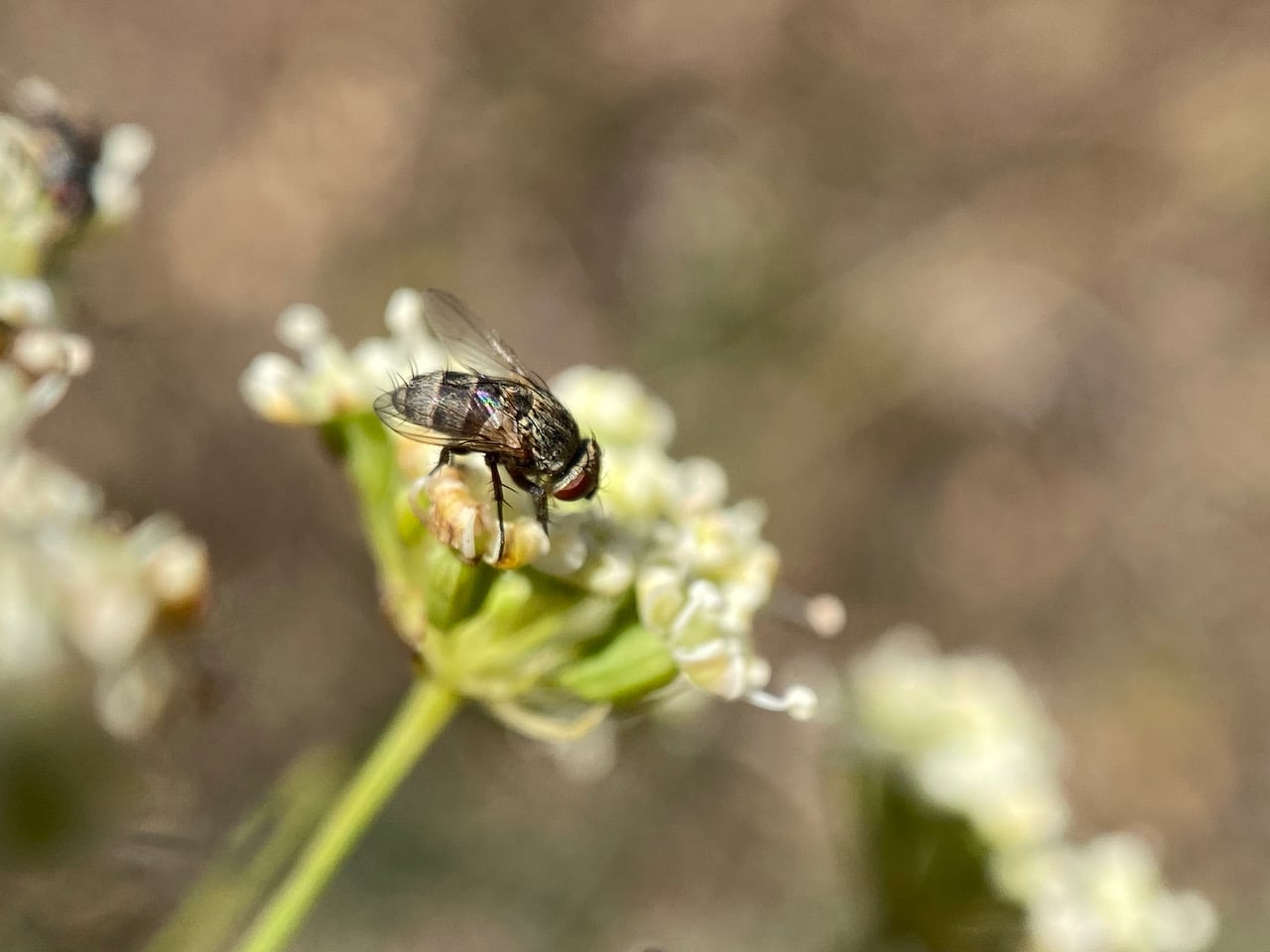
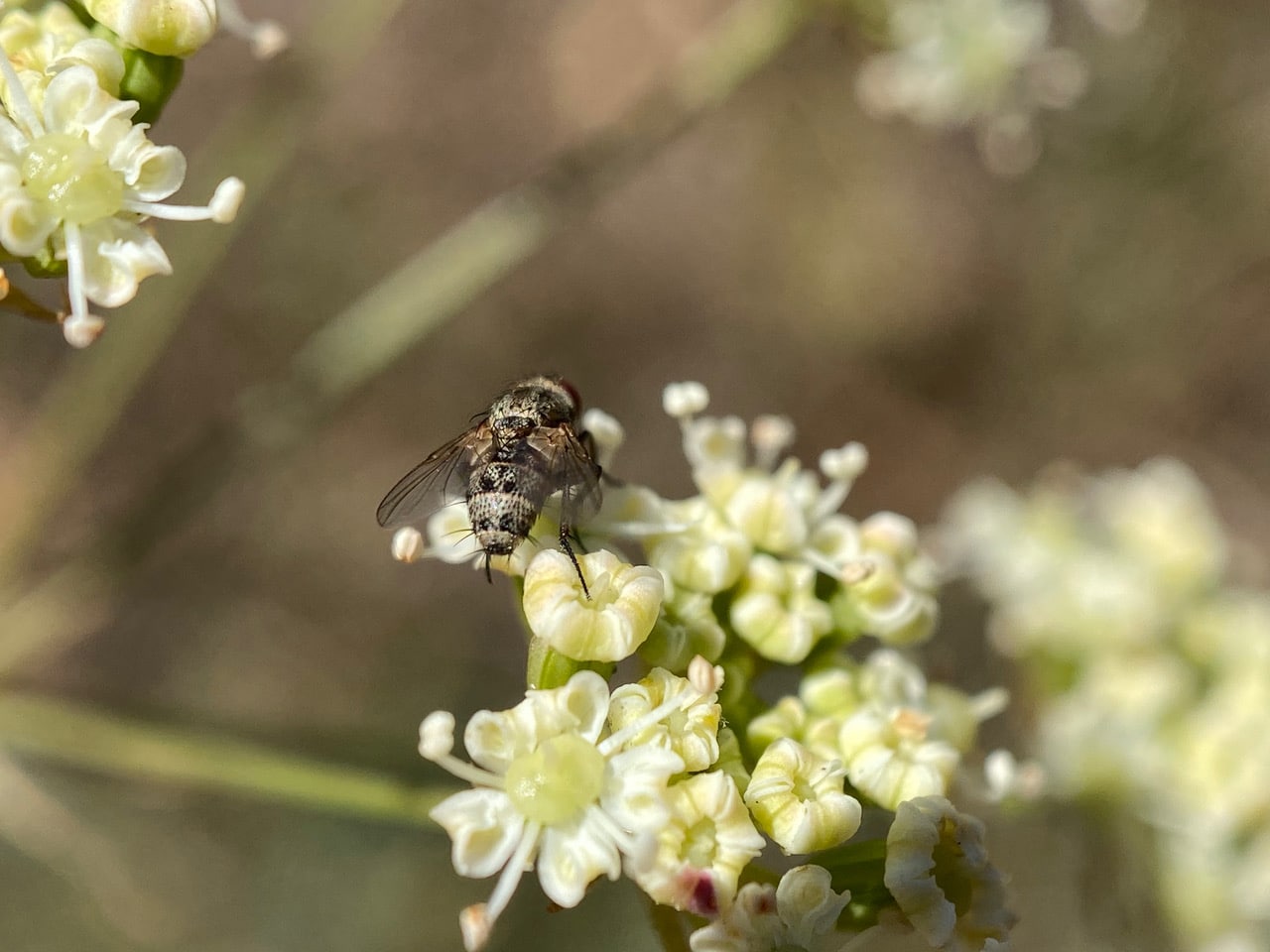
A Common Cluster Fly is foraging on the flowers of California Yampah, Perideridia californica.
Called the Common Cluster Fly, Pollenia rudis (family Polleniidae) is slightly larger than house flies. It is dull gray with checkered black and silvery-black abdomens. A newly emerged fly has many golden hairs on its thorax which may be lost throughout the life of the fly. The common name comes from the tendency of the flies to aggregate near windows when they are trapped in human dwellings. The immature stages – eggs and larvae – are seldom seen because they are deposited on the soil where they burrow into earthworms which they parasitize. The Cluster Fly is a European species. They may have found their way to America in the ballast of ships containing soil, probably along with introduced earthworms.
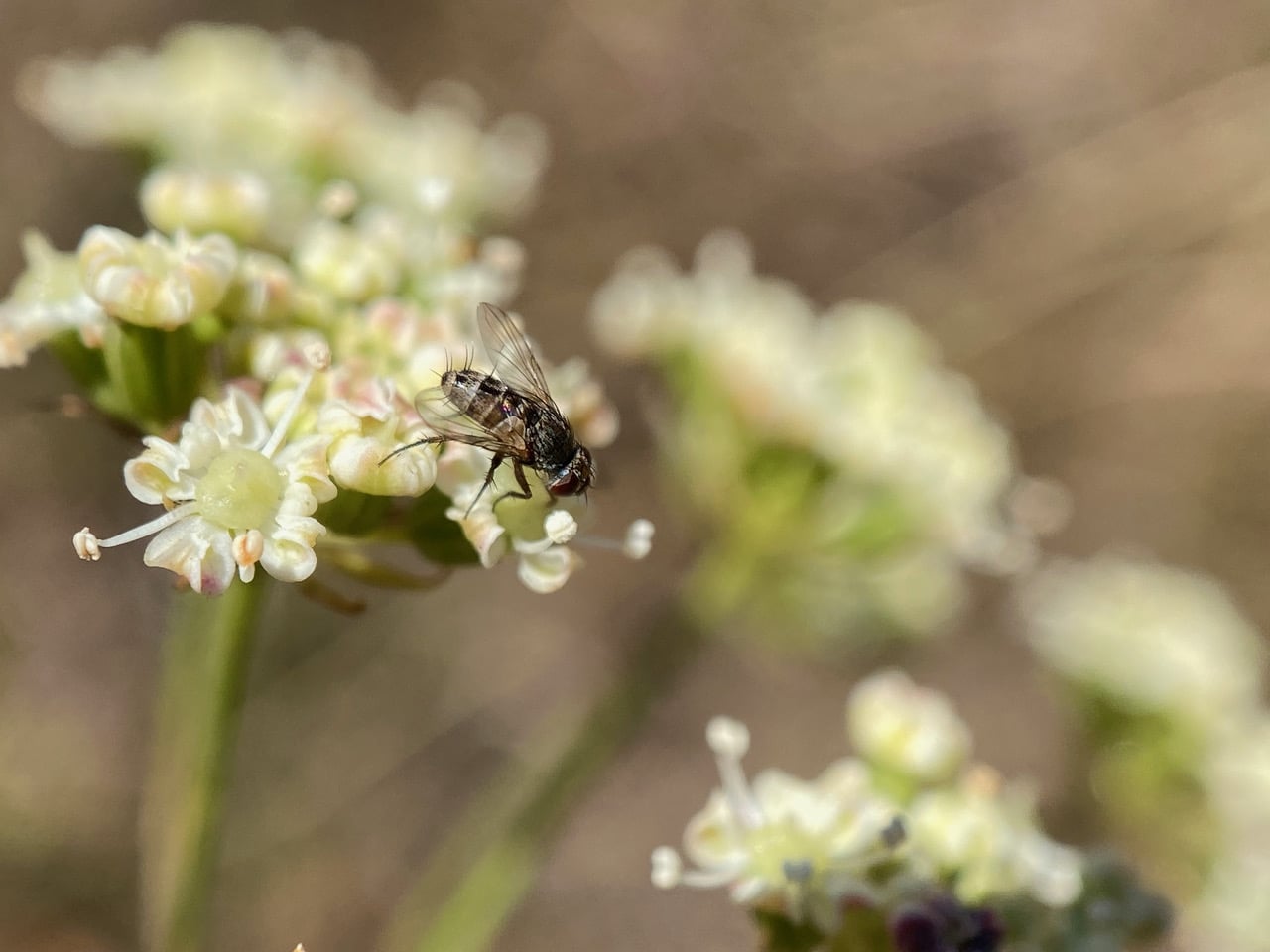
A small fly is flitting between the unbels of Yampah flowers. It is probably a Bristle Fly, Siphona sp. (family Tachinidae).
Siphona is the only commonly encountered genus of Tachinidae with a long, thin, jointed proboscis. A few other genera have a straight or curved rigid proboscis. Larvae are parasitoids of Lepidoptera (butterflies and moths) – another probable threat to the Anise Swallowtail caterpillar!
The family Tachinidae is by far the largest and most important group of parasitoid flies, with over 1,300 species in North America. All species are parasitic in the larval stage. The appearance of Tachinid Flies varies considerably, but most have distinct abdominal bristles. Adults feed on liquids such as nectar and the honeydew of aphids and scale insects. They can be found resting on foliage, feeding at flowers or searching for hosts.
Most tachinids attack caterpillars, adult and larval beetles, true bugs, grasshoppers, and other insects. Egg laying varies considerably. In some species, eggs are deposited on foliage near the host insect. After the eggs hatch, the maggots are ingested during feeding by the host, and then develop within the host. In other species, the adult fly glues her eggs to the body of the host. After the eggs hatch, the maggots penetrate into the host body. Some adult female tachinids possess a piercing ovipositor that she uses to inject the eggs into the host body. Tachinid larvae live as internal parasites, consuming their hosts’ less essential tissues first and not finishing off the vital organs until they are ready to pupate. The larvae leave the host and pupate on the ground. Tachinids are very important in natural control of many pests, and many have been used in biological control programs.
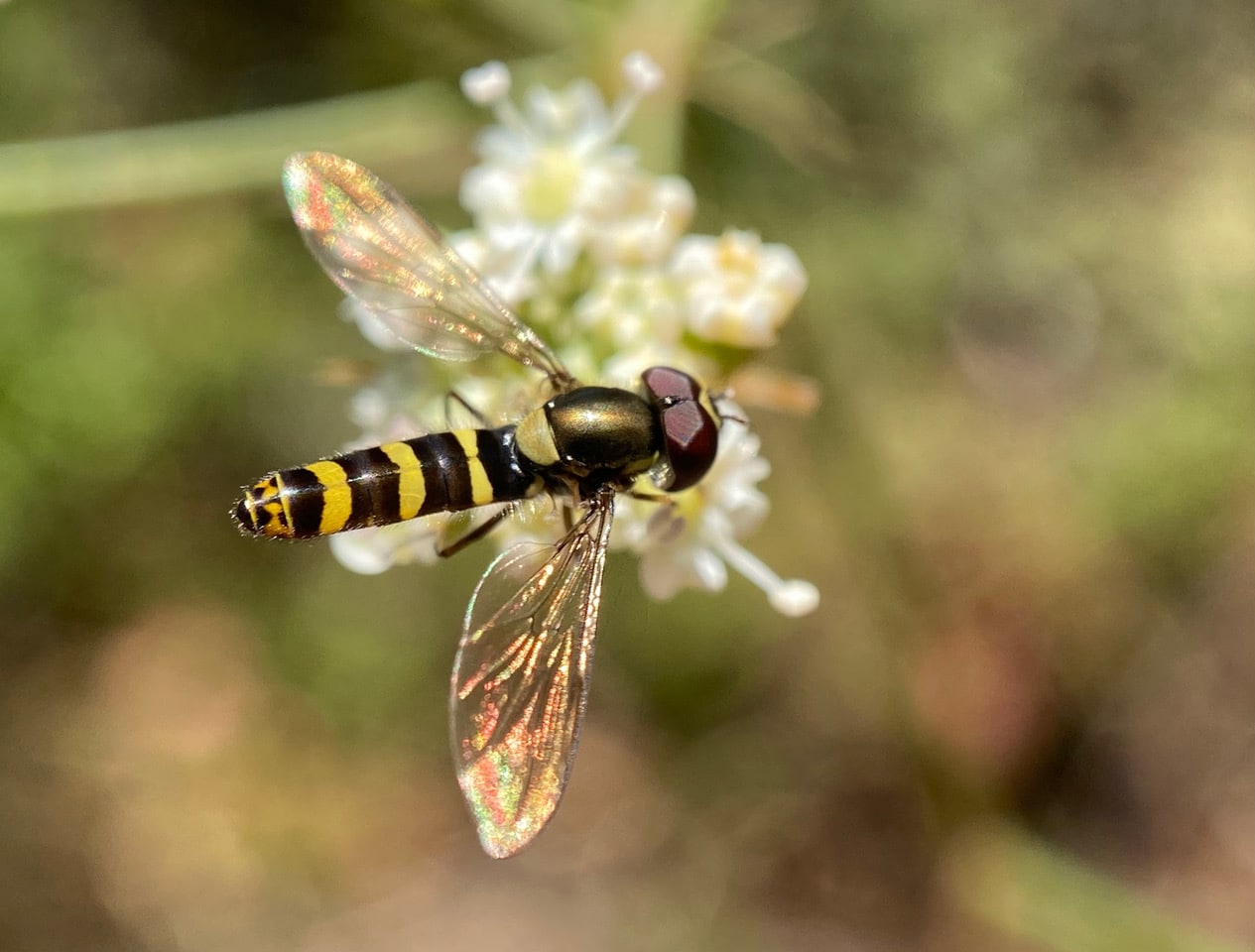
A Diamond Spottail hoverfly, Fazia micrura (family Syrphidae) stops to refuel on a flower umbel of California Yampah. There are four diamond-shaped yellow markings near the tip of the abdomen. It is a male with holoptic eyes that meet along a central line on top of the head.
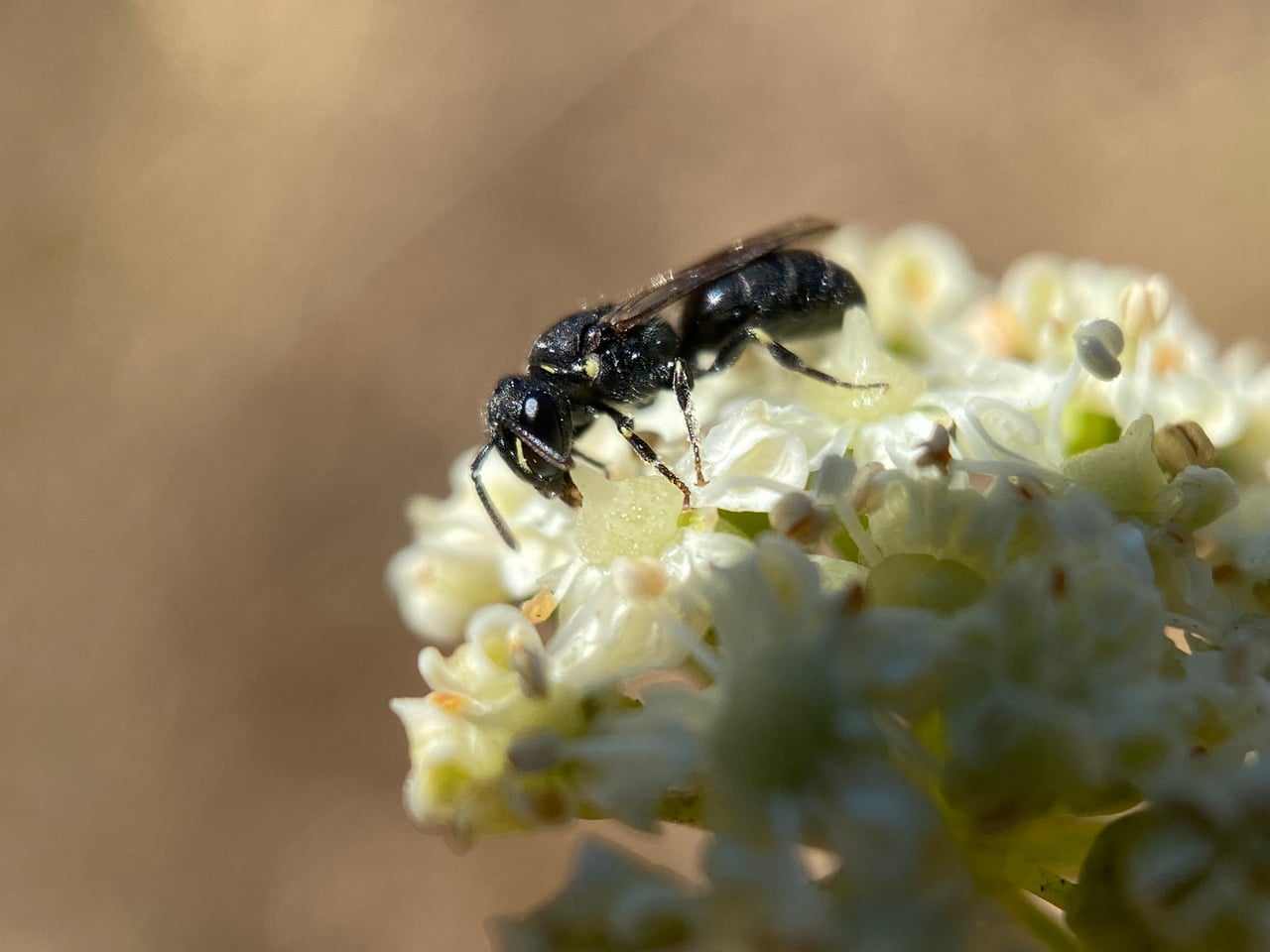
A female Masked Bee, Hylaeus sp. (family Colletidae) is foraging on the Yampah flowers. The small shallow flowers suit her well, as she can access the nectar easily with her short tongue. Although she is a female bee, we don’t see scopae on any part of her body. Hylaeus females transport the nectar and pollen they have gathered in their crops (part of their gut), and regurgitate them back at their nest. Their short tongue serves another vital function – it is used to spread a water-proofing, cellophane-like material on the walls of their nest cells.
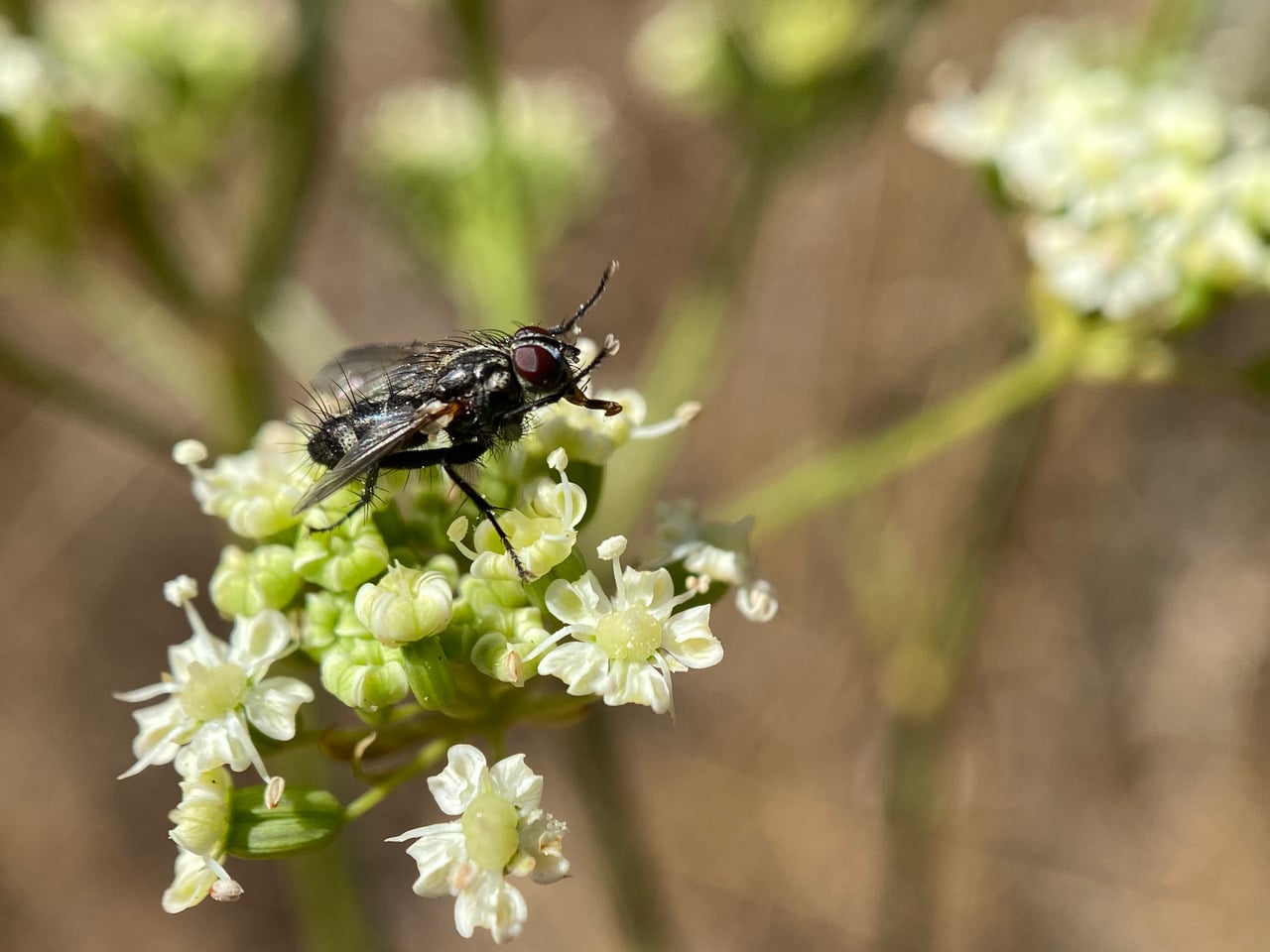
A Woodlouse Fly, Stevenia deceptoria (family Rhinophoridae) is cleaning its proboscis after feeding on the Yampah flowers. Rhinophoridae seem to be the most common flies found on the plant.
These small, slender, black, bristly flies are somewhat related to the Tachinidae. The larvae are mostly parasitoids of woodlice (pill bugs), beetles, spiders and other arthropods, and occasionally snails.
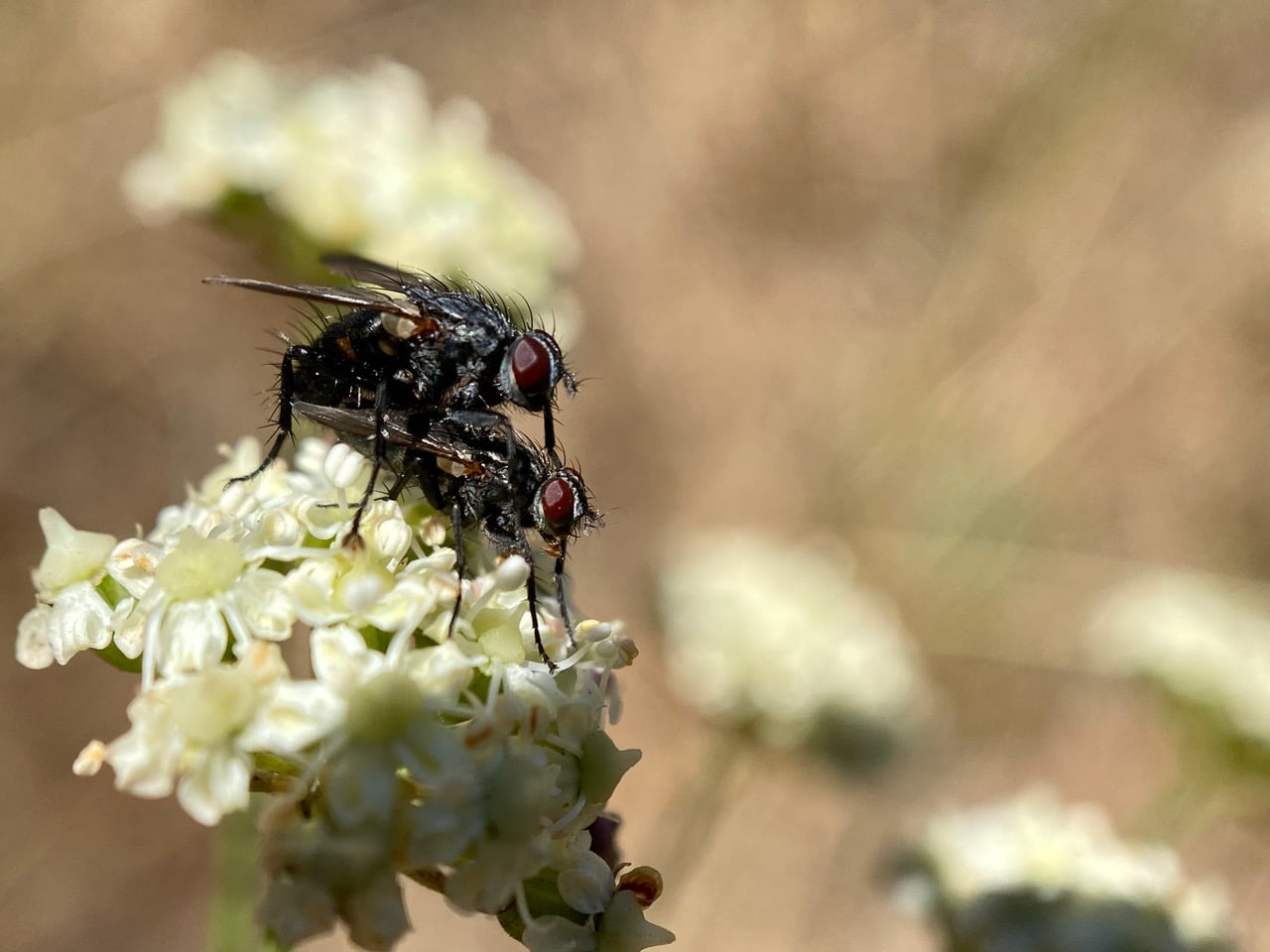
Native to Europe, Stevenia deceptoria is now widespread in the US. The flies are parasitoids of terrestrial woodlice (roly polies) of the order Isopoda (Oniscoidea).

A pair of the Woodlouse Flies, Stevenia deceptoria (family Rhinophoridae) is mating on an umbel of Yampah flowers.
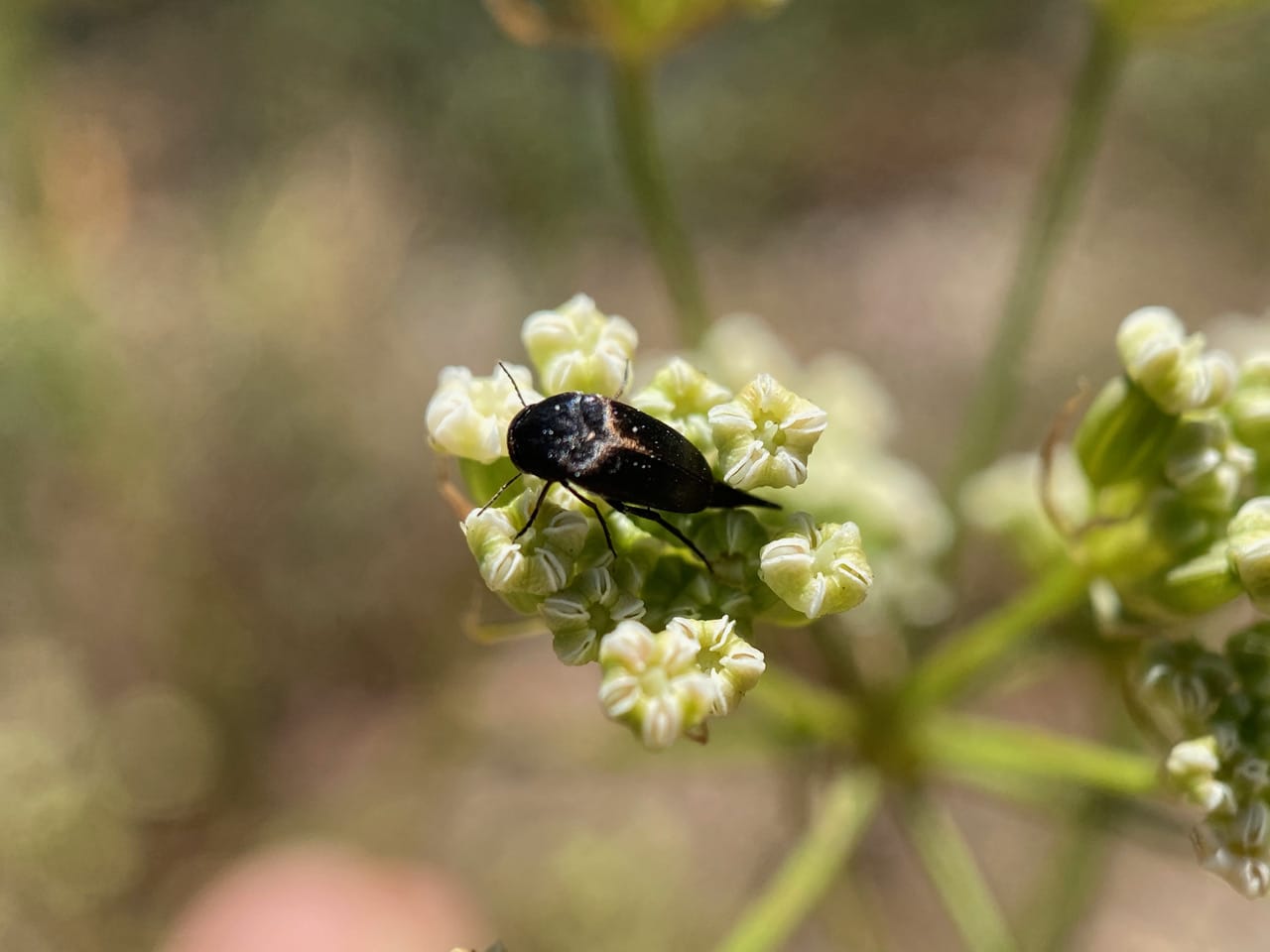
A Tumbling Flower Beetle (family Mordellidae) is feeding on a floral umbel of California Yampah.
The Tumbling Flower Beetles (family Mordellidae) are named for the characteristic irregular movements they make when escaping predators. They are also sometimes called Pintail Beetles for their abdominal tip which aids them in performing these tumbling movements. Mordellids are small, wedge-shaped, hump-backed beetles with head bent downward. The body is densely covered with fine silky hairs, usually black, but often very prettily spotted or banded with silvery hues. The adults feed on pollen, occurring on flowers or on dead trees, flying or running with rapidity. The larvae live in old wood or in the pith of plants, and those of some species are said to be carnivorous, feeding on the young of Lepidopterans and Diptera which they find in the plant stems.
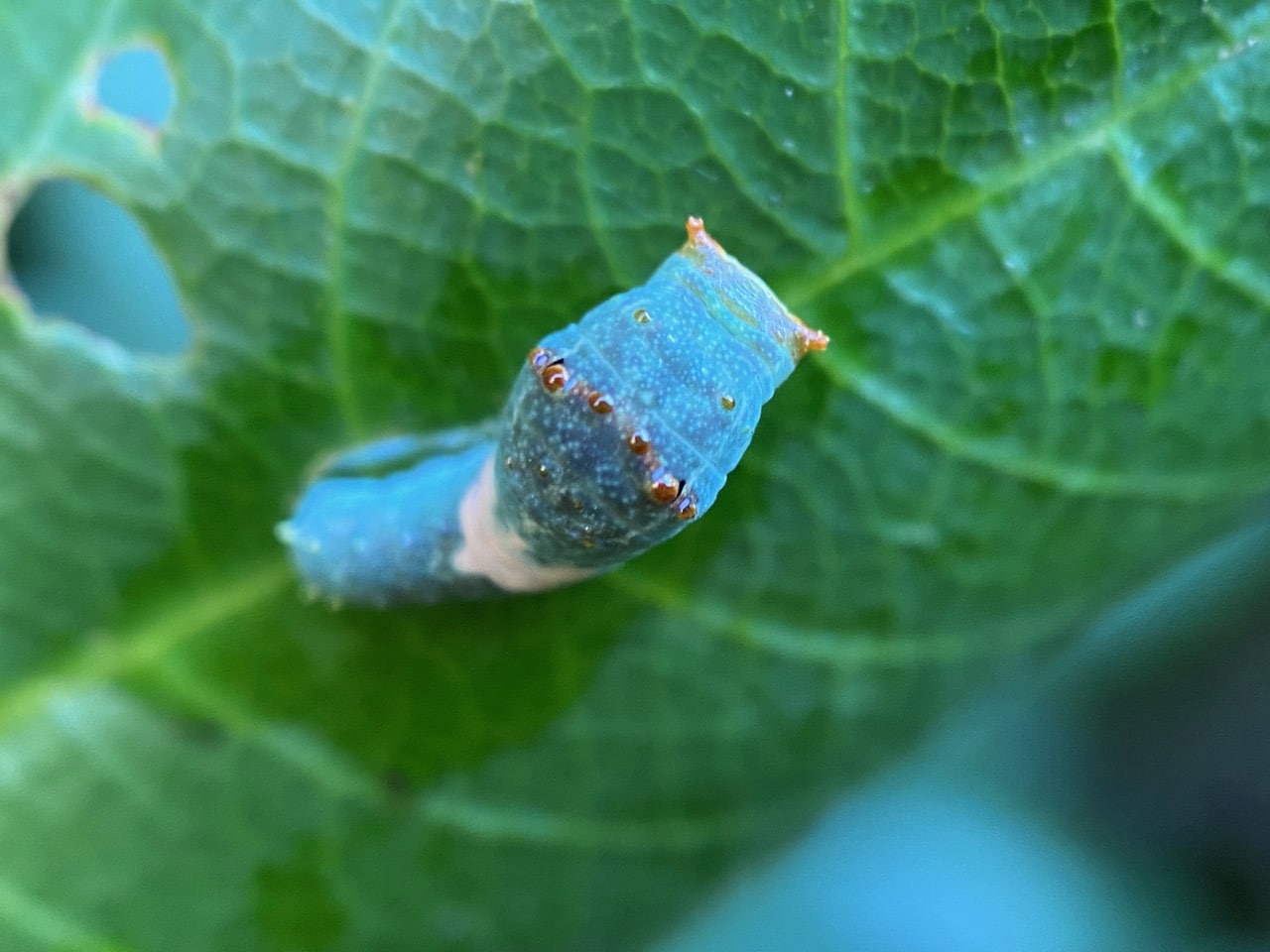
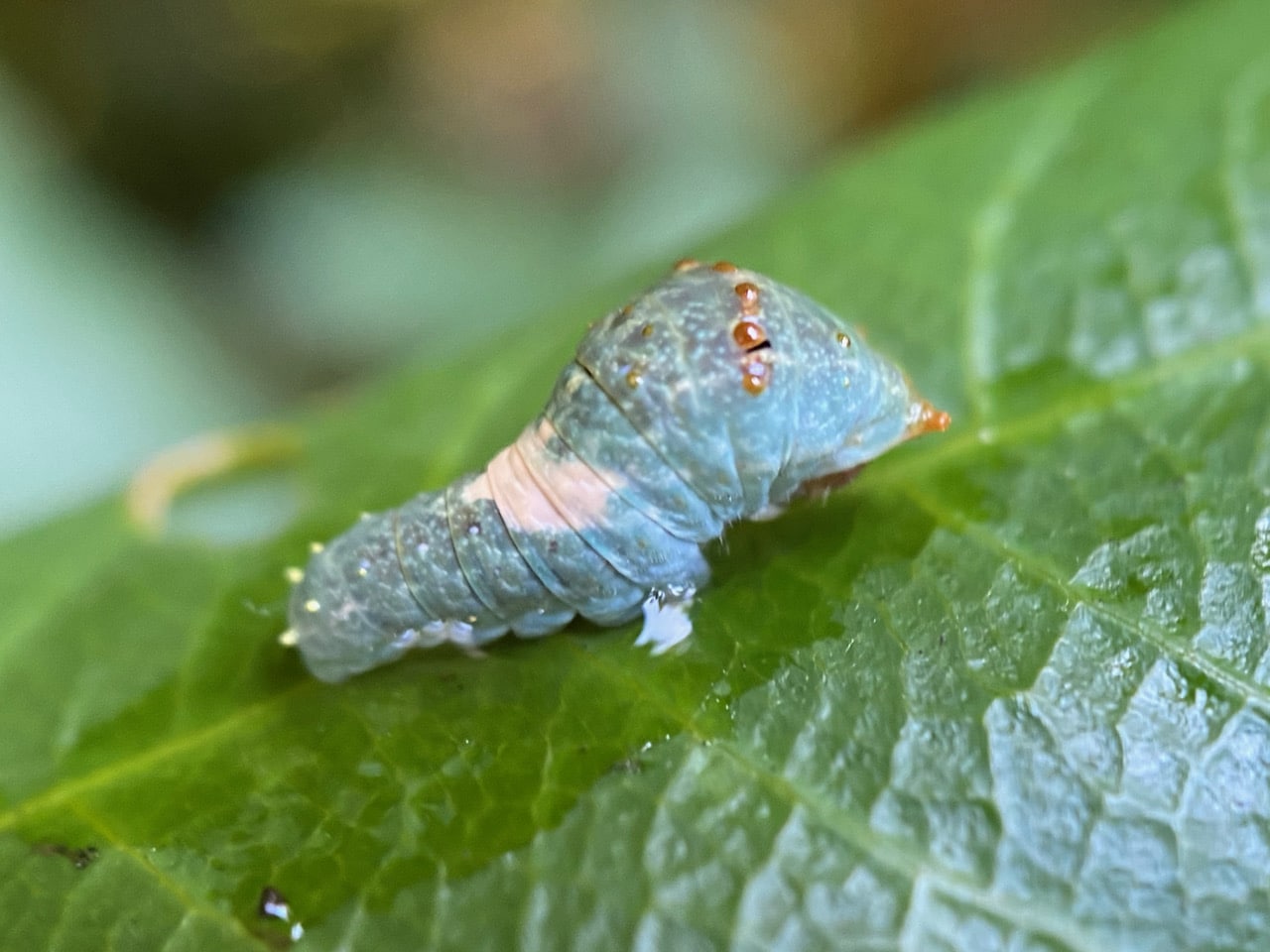
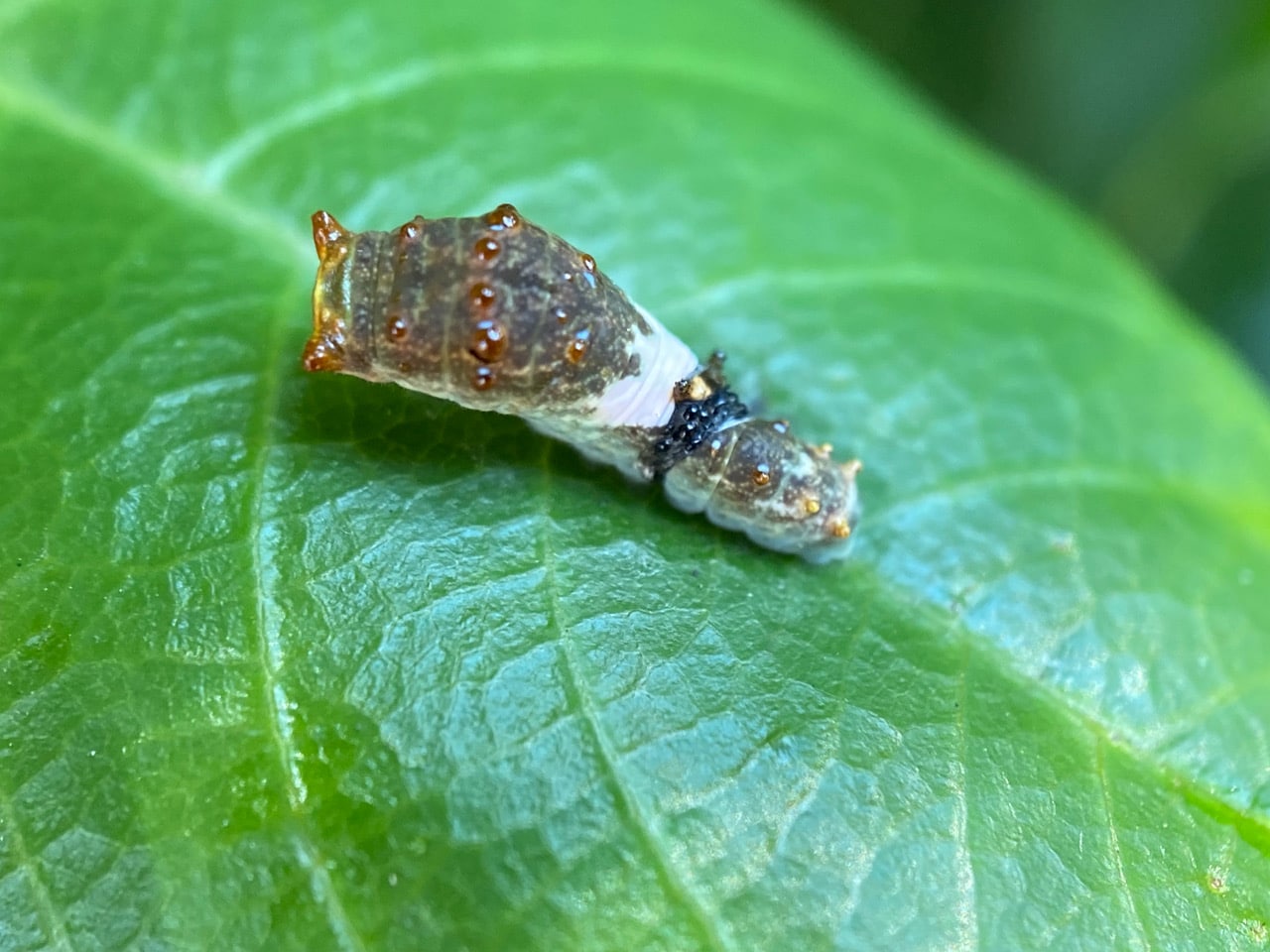
The Pale Swallowtail caterpillars are still on their respective Coffeeberry leaves. The early instars are sedentary homebodies that always return to their home base after feeding on other leaves. I am glad that I can find them so predictably (at least for now).
Swallowtail caterpillars tend to have grossly enlarged thorax. The head is hidden under the thorax and only seen when the caterpillar is active.
The brown caterpillar appears constricted by the dark band of old skin that failed to shed on its previous molt. I wonder how the problem is going to be resolved.
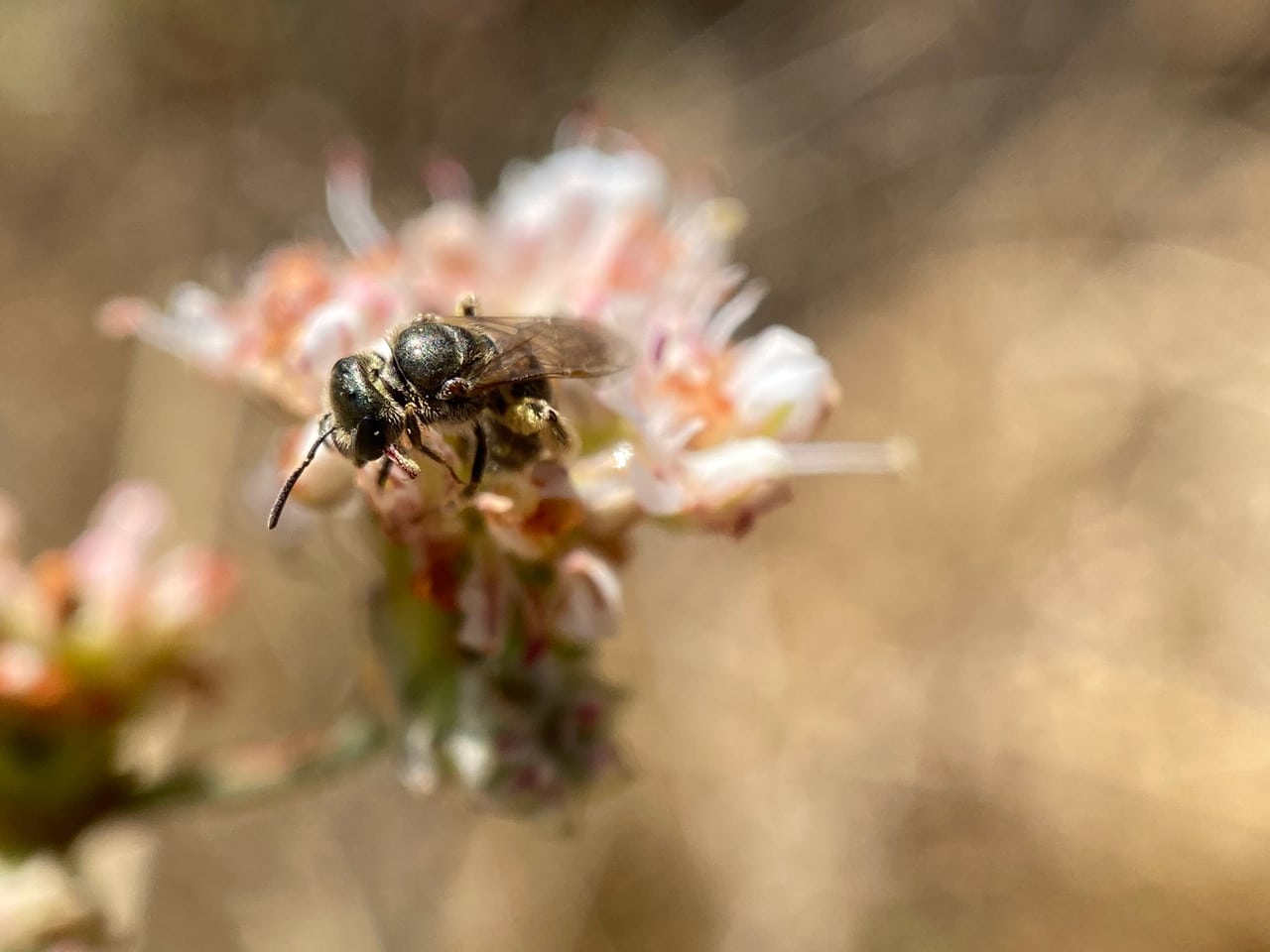
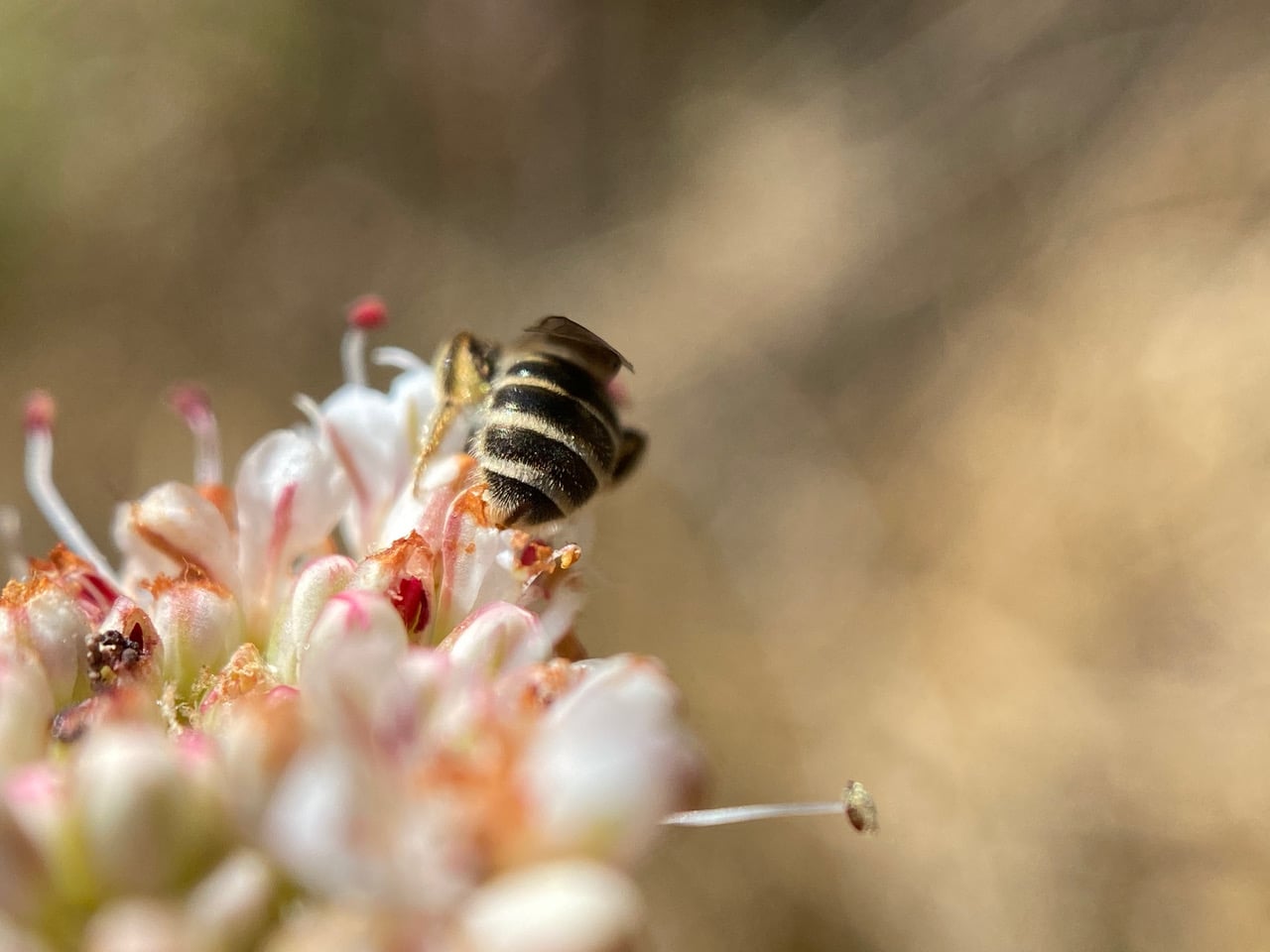
A small bee is foraging on an inflorescence of Naked Buckwheat, Eriogonum nudum.
The bee is easily identified as soon as its abdomen is visible. The “furrow” on the last abdominal segment tells us that it is a female Furrow Bee, Sweat Bee in the genus Halictus (family Halictidae).
Halictus is found worldwide; they are most common in the Northern Hemisphere. All are generalists, foraging from a wide variety of flowering plants. Many species are social and produce several generations per year. This is not surprising as most blooming plants are season-specific; a bee that requires pollen and nectar across multiple seasons would not thrive as a specialist. All Halictus in North America nest in the ground, often in aggregations; and they may nest in the same area for decades.
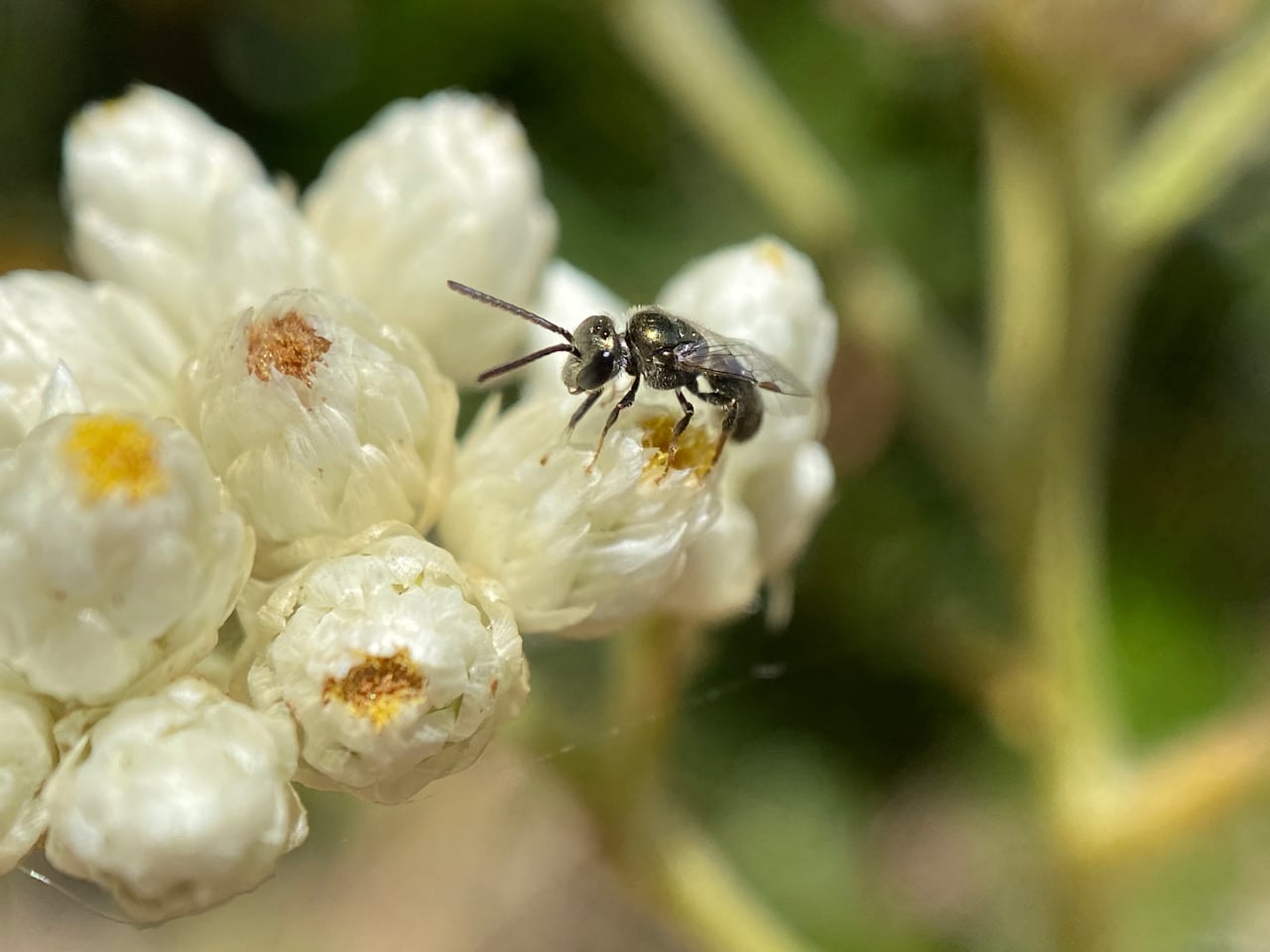
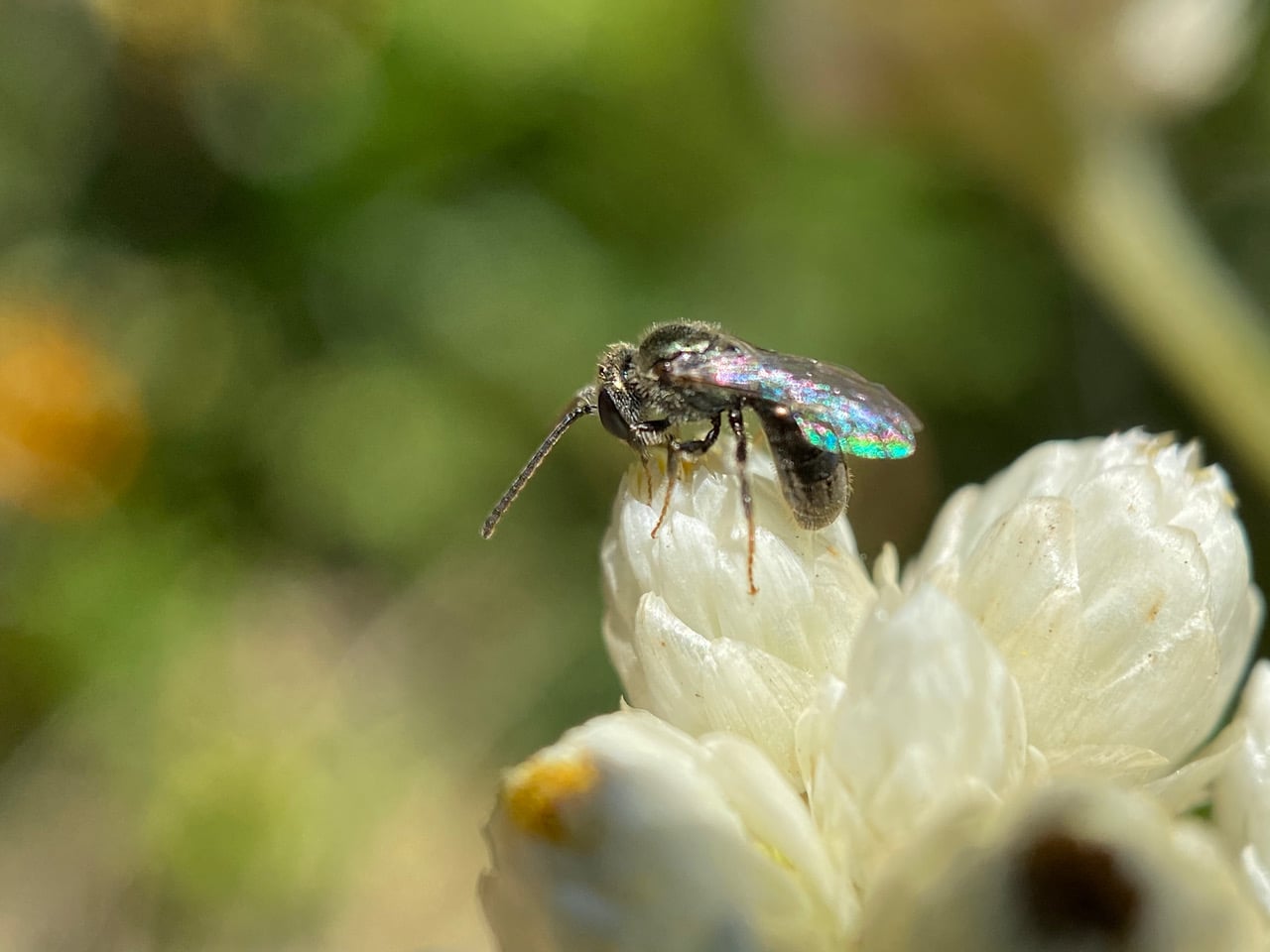
Ooh, a male bee with long antennae! It is tiny and shiny – a Metallic Sweat Bee, Lasioglossum (Dialictus) sp. (family Halictidae).
Lasioglossum species are found worldwide, and they constitute the largest bee genus. The subgenus Dialictus are the most likely to be seen in the U.S., with over 300 species of these tiny metallic bees. The majority of Lasioglossum are generalists. Because they are so abundant throughout the flowering season, the bees are often important pollinators. Their sheer numbers are enough to achieve excellent pollination of many wild flowers, especially of plants in the Asteraceae, which have shallow floral tubes that are easily accessed by these minute bees.
The flowers of the California Everlasting are just the perfect size for the tiny bee.
Lasioglossum exhibit a range of social behaviors; the genus includes solitary, communal, semi social, primitively eusocial, and even parasitic species. Almost all Lasioglossum in the U.S. nest in the ground. Generally these nests are built in the spring by fertilized females (called foundresses) that spent the winter in hibernation. In social species, the foundresses behave much like the queen Bumble Bees – they lay the first batch of eggs that develop into the first generation of female workers. The nest grows with each additional generation of bees. Later broods may consist of both males and females. They mate, and at the end of the season the fertilized females hibernate til the following spring, repeating the life cycle of the colony.
With over 300 species, and a diversity of life histories, Lasioglossum (Dialictus) warrants further study.
Enjoy them while they’re out and about. They’re easy to recognize – minute and shiny! Look for them in the Asteraceae now blooming abundantly everywhere.