

Pollinator Post 8/3/23
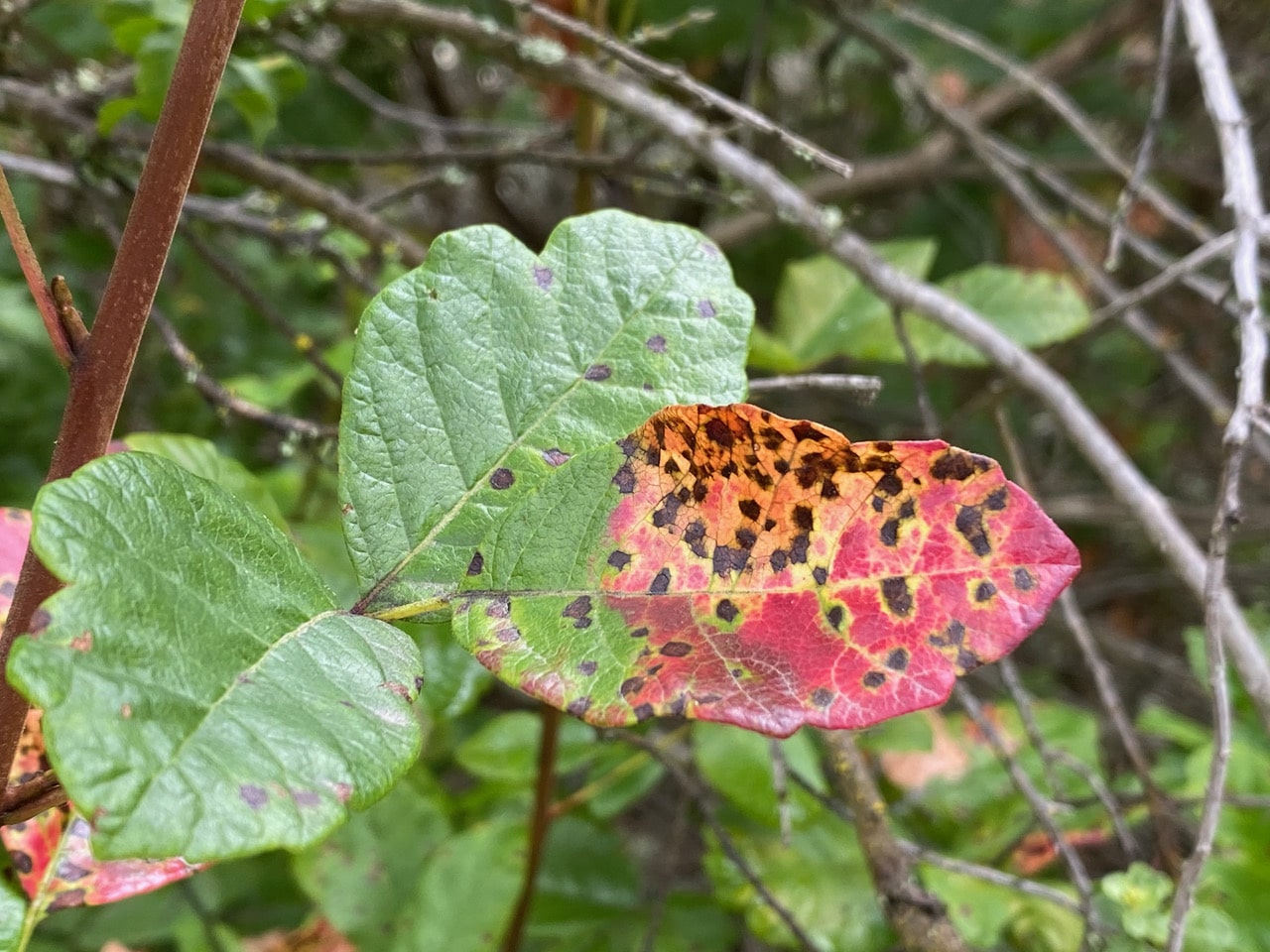
Many of the Poison Oak along Skyline Trail near the Steam Train entrance have leaves spotted with punctate feeding scars. I wonder what bug is capable of feeding on poison oak?
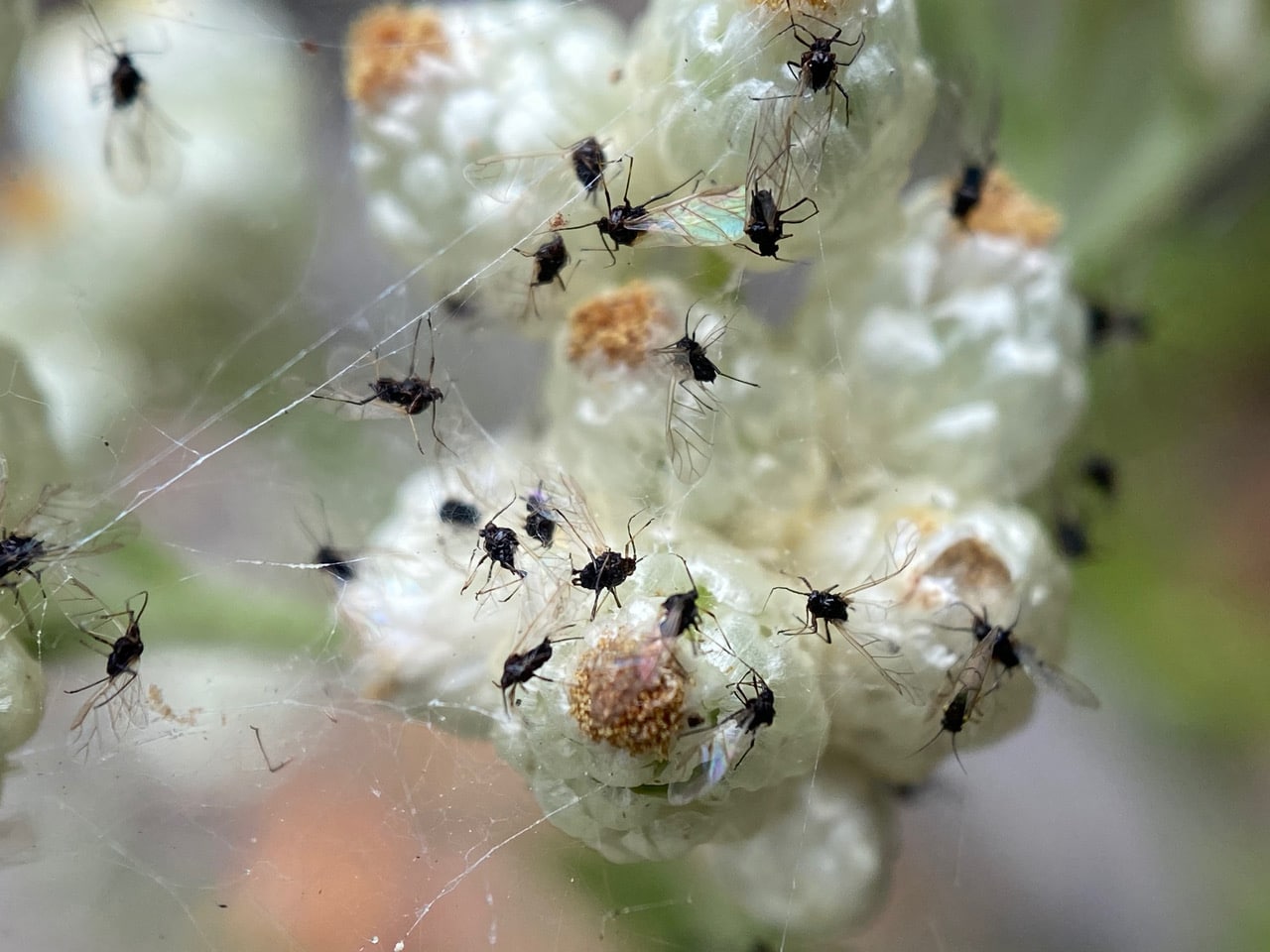


Small black dots cover the vegetation along the trail. On close inspection, they are winged aphids trapped on spider webs. Wow, there must’ve been a mass movement of aphid alates recently! Where did they originate? What host plant?
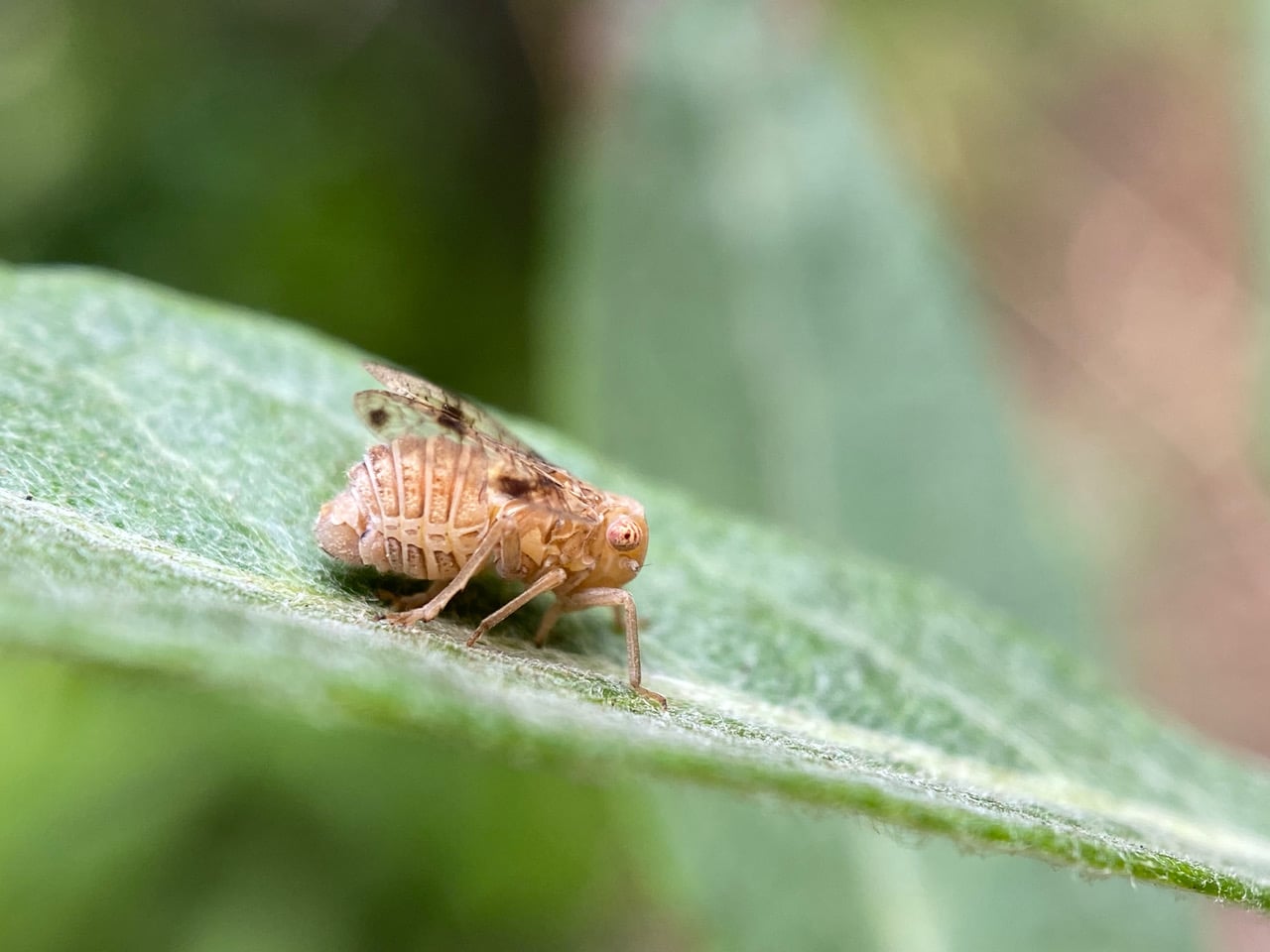
Ooh, a Planthopper, Neaethus sp. (family Tropiduchidae) on a leaf of California Mugwort, Artemisia douglasiana. Unlike all the other Neaethus I have found, this one has black blotches on its wings. A different species? It is interesting that most of the planthoppers, even different genera I have found in the garden are on California Mugwort. What is their attraction to mugwort? Considering Artemisia is used for medicinal purposes in many cultures, one would think that the plant is well defended chemically. The leaves have a deeply calming effect on me – these bugs must be chill!
Members of the genus Neaethus are distinguished by their broadly rounded transparent to translucent wings, with prominent veins. Most are associated with oak species. Neaethus has a limited distribution, and are mostly found in California and Arizona.
The Planthoppers have the first mechanical gear system ever observed in nature. The tiny bug uses mechanical gears on its joints to precisely synchronize the kicks of its hind legs as it jumps forward.
Planthoppers may be small, but they attract mates from afar by sending vibrational calls along plant stems and leaves using fast, rhythmic motions of their abdomen.
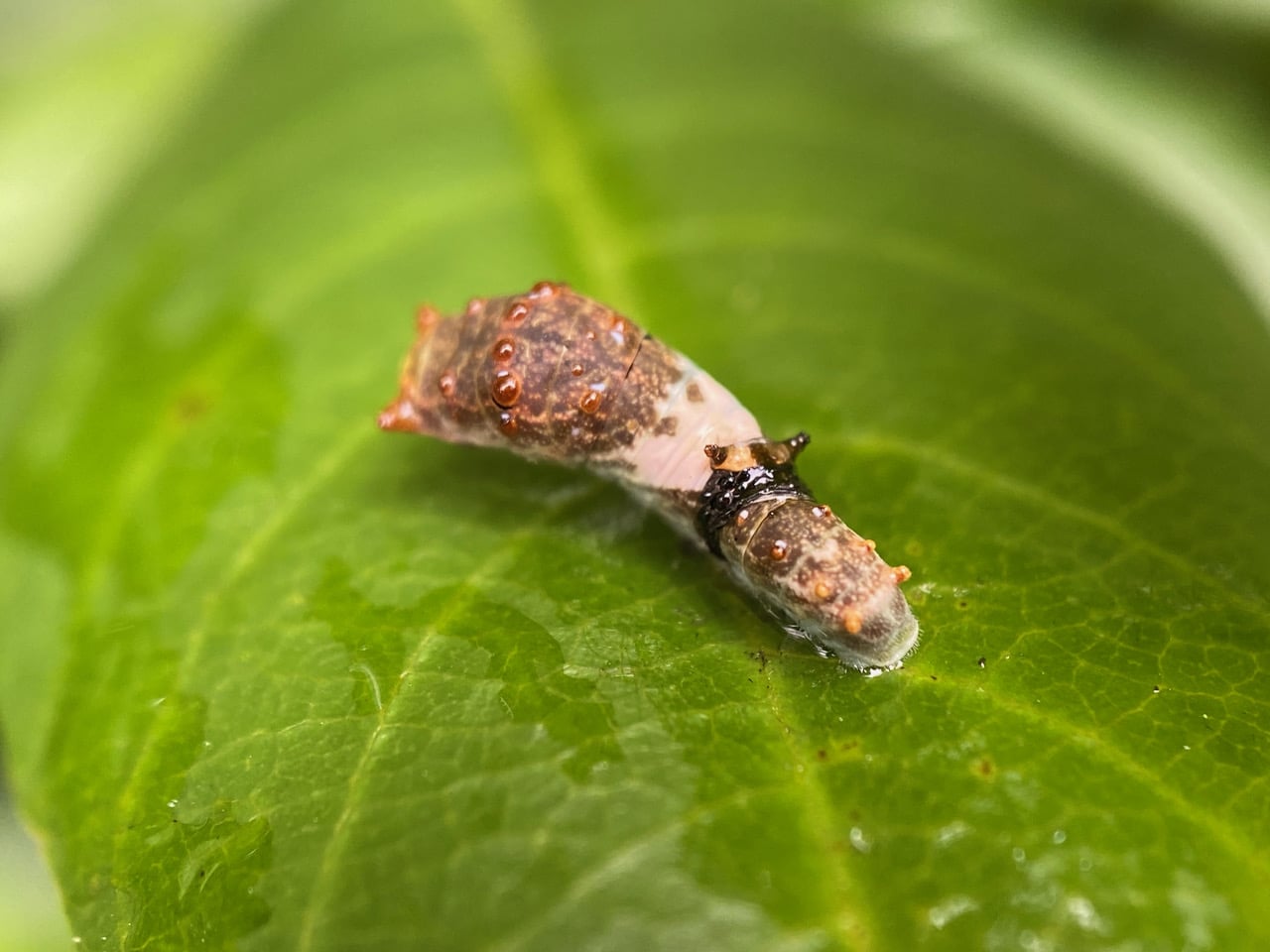
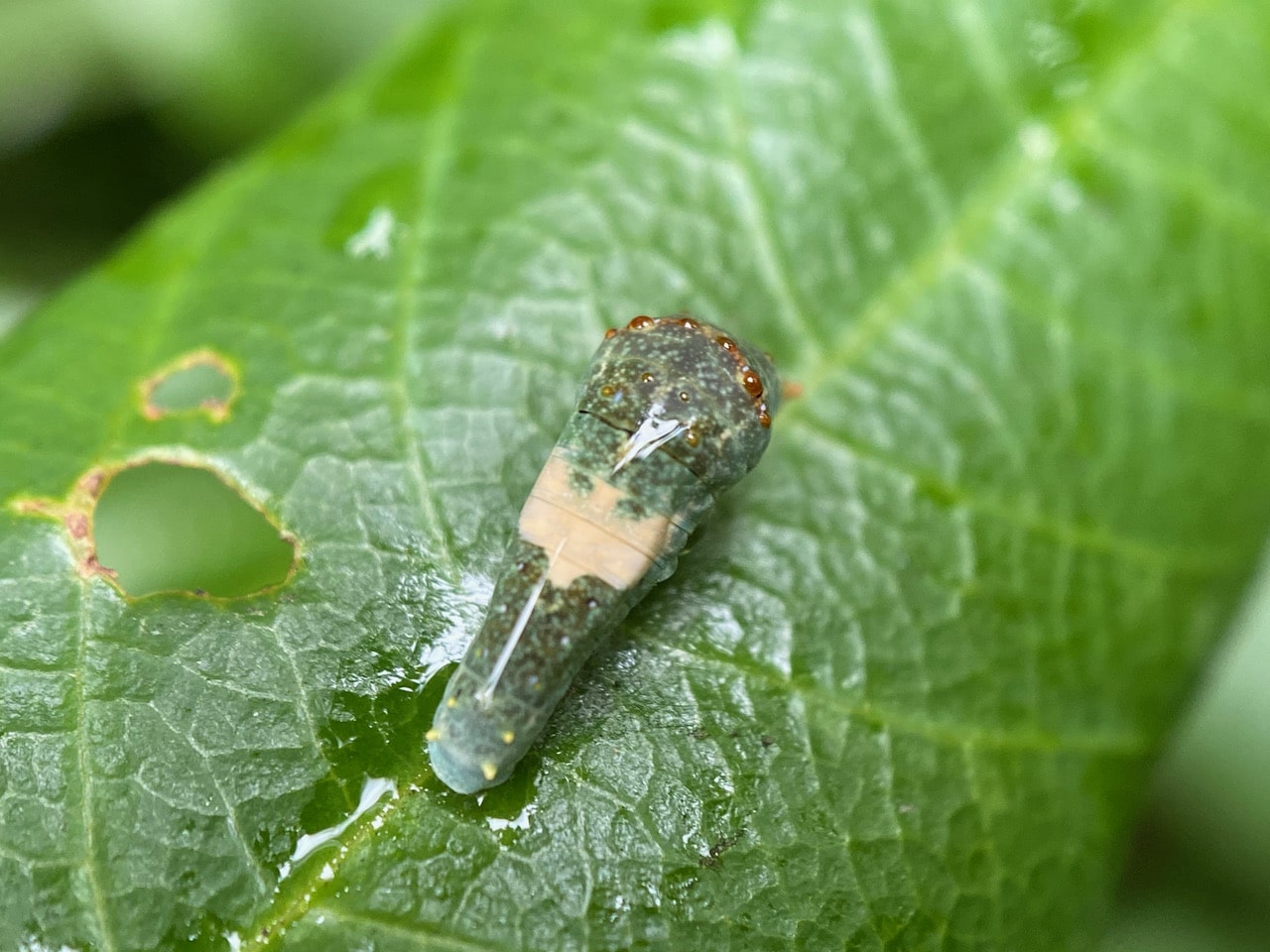
Arriving at the Coffeeberry bush, Frangula californica under the Bay Tree, I am happy to find the two small Pale Swallowtail caterpillars still on their respective leaves. The brown one seems to have molted, but the ring of dark tissue near its rear end is cause for concern. It appears to be the old skin that has not been shed successfully. Would it hamper the caterpillar’s future growth and development?
A drop of fog drip must’ve fallen on the blue caterpillar. It is looking bright and shiny.
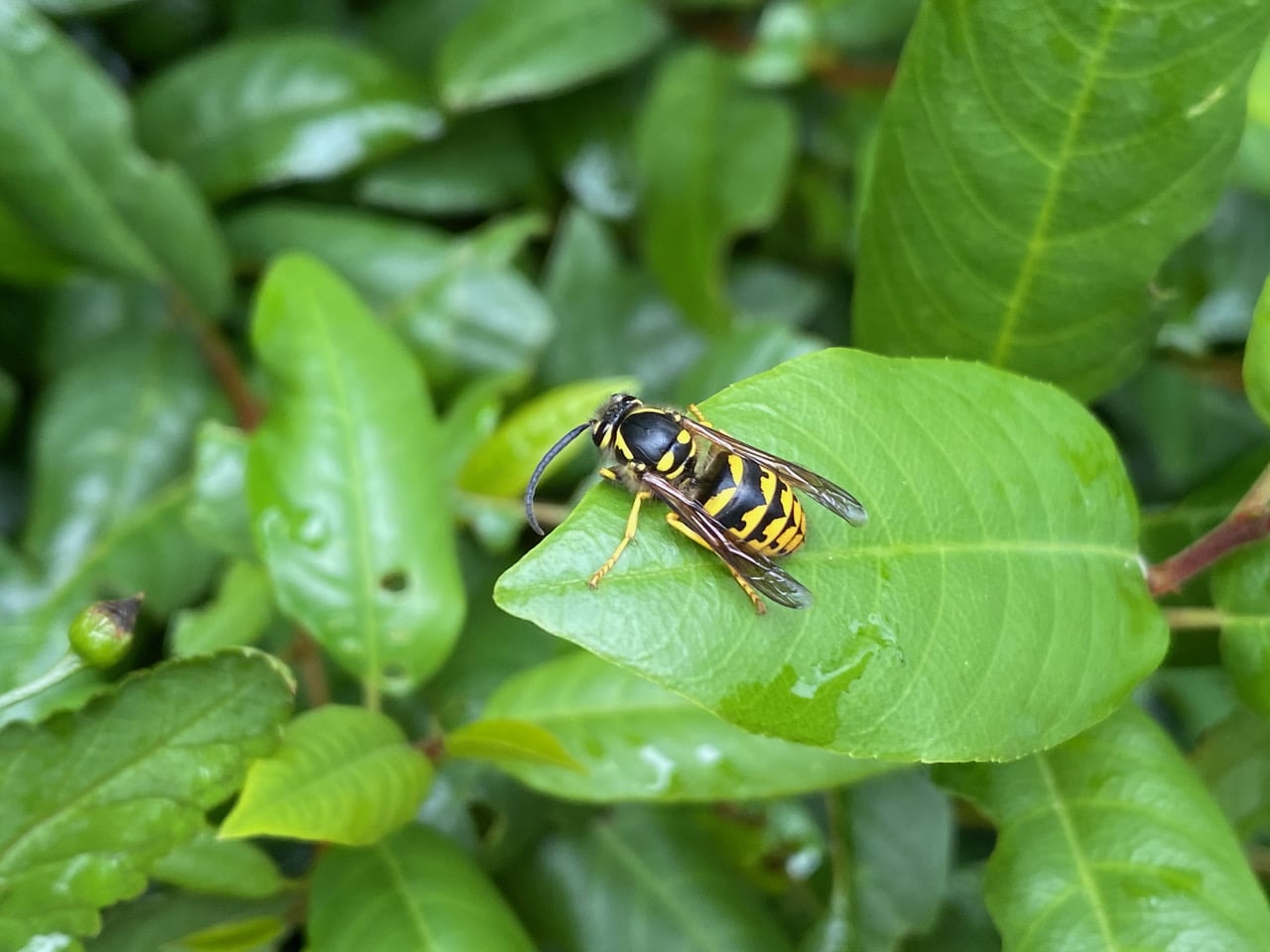
Uh oh, a Yellowjacket wasp is perched on the next Coffeeberry plant! These wasps are notorious caterpillar hunters.
The diet of adult yellowjackets consists primarily of items rich in sugars and carbohydrates, such as flower nectar, fruits, and tree sap. Larvae feed on proteins derived from insects, meats, and fish. Workers collect, chew, and condition such foods before feeding them to the larvae. Larvae, in return, secrete a sugary substance for workers to eat; this exchange is a form of trophallaxis. Many of the insects hunted by the adult wasps are considered pest species, making the yellowjackets beneficial to agriculture.
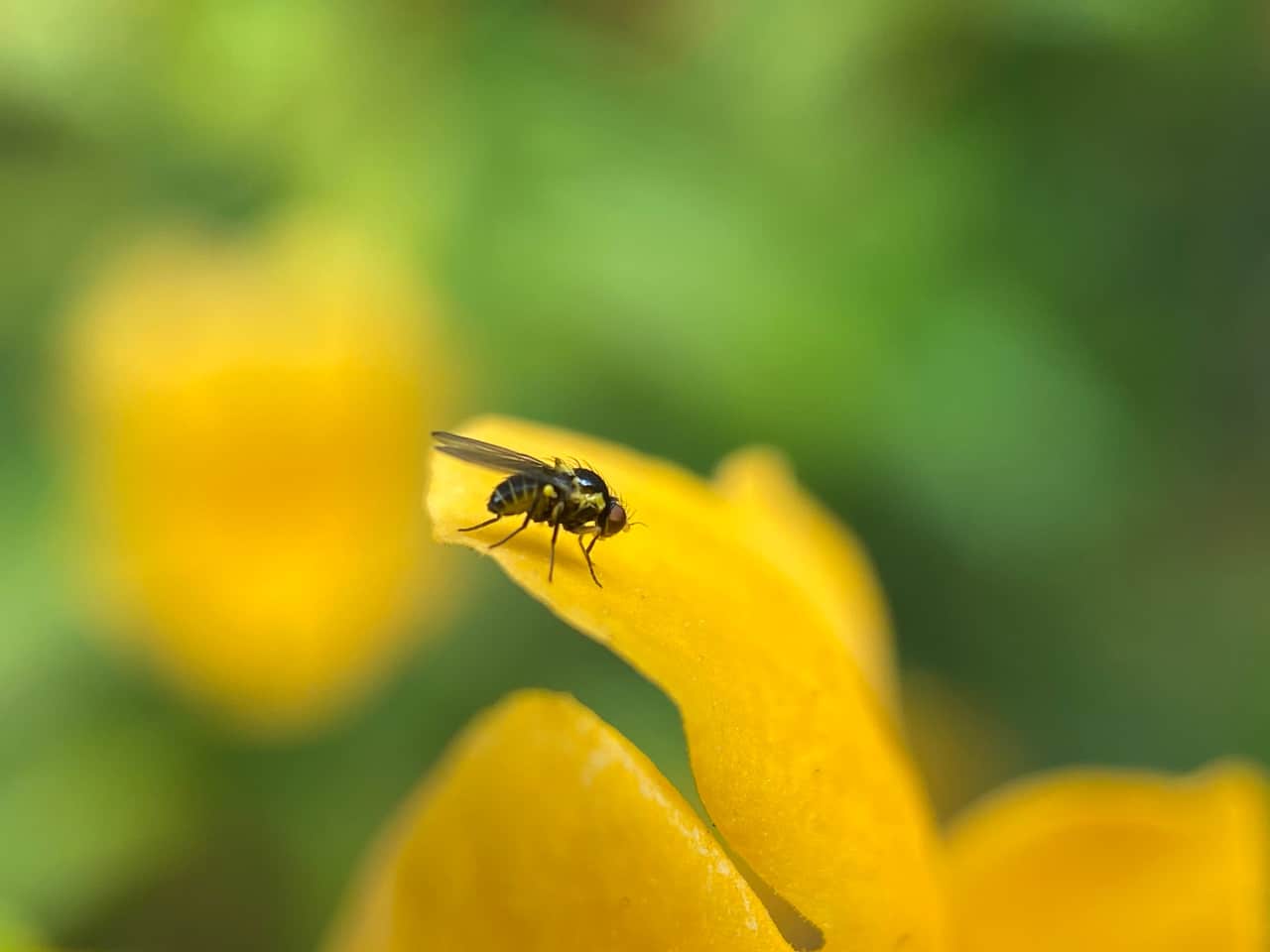
A tiny fly, barely a dot to the naked eye (1-2 mm) , is perched on the upper petal of a Sticky Monkeyflower. Under the macro lens, I recognized it to be a Leaf-miner Fly (family Agromyzidae).
The Agromyzidae are a family commonly referred to as the Leaf-miner Flies, for the feeding habits of their larvae, most of which are leaf miners on various plants. They are small flies, most species in the range of 2-3 mm. Agromyzidae larvae are phytophagous, feeding as leaf miners, less frequently as stem miners or stem borers. A few live on developing seeds, or produce galls. There is a high degree of host specificity. A number of species attack plants of agricultural or ornamental value, so are considered pests. The shape of the mine is often characteristic of the species and therefore useful for identification. Adults occur in a variety of habitats, depending on the larval host plants.
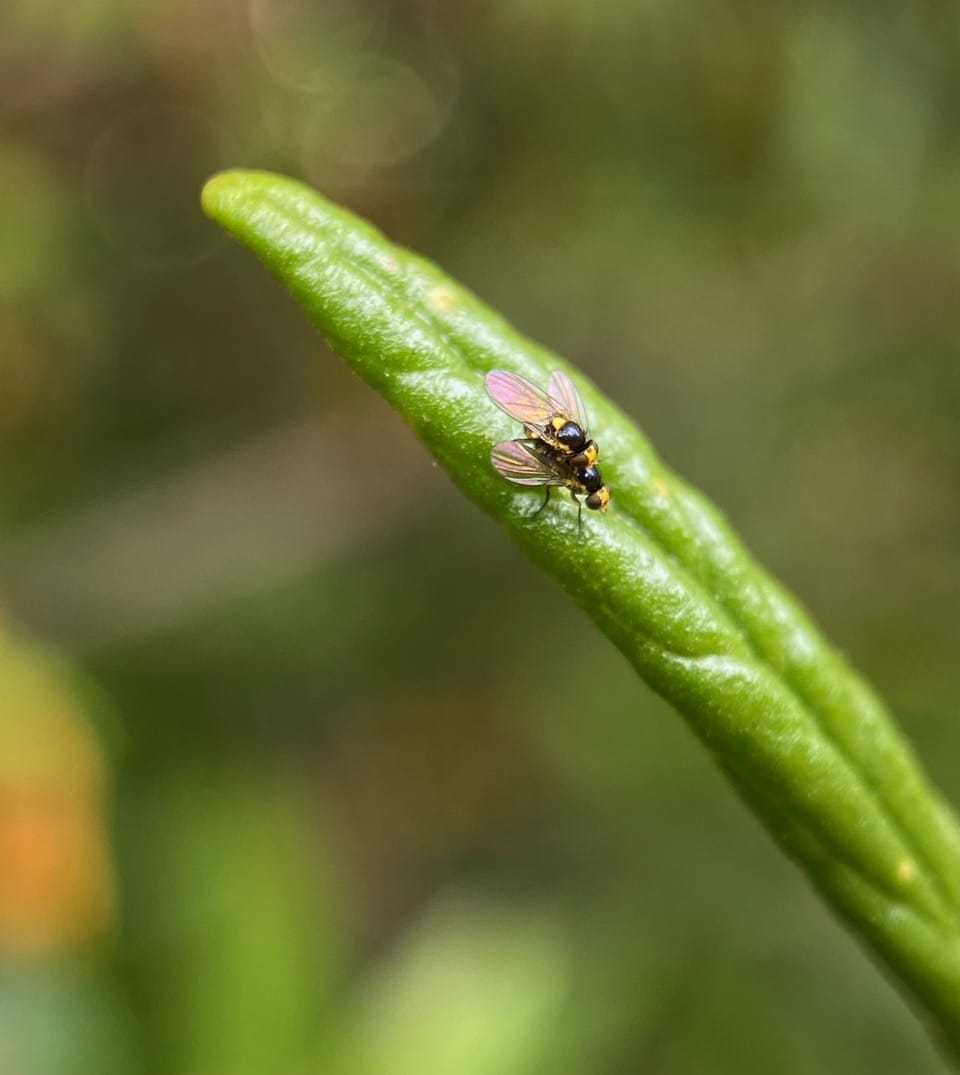
Hey, here’s a pair of the Leaf-miner flies mating on a leaf of Sticky Monkeyflower!
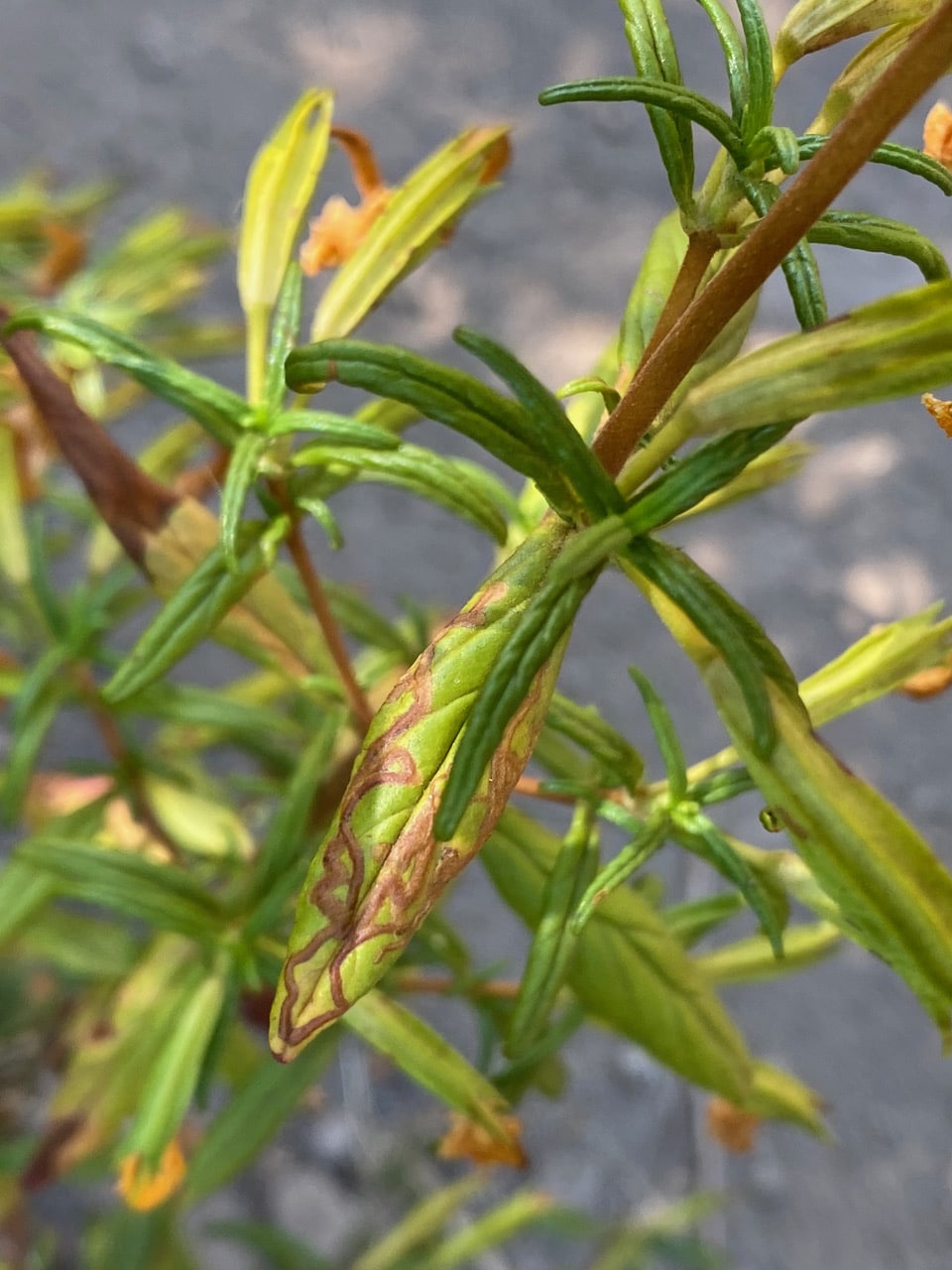
Is that sinuous leaf mine on the Sticky Monkeyflower made by the Agromyzidae I just photographed?
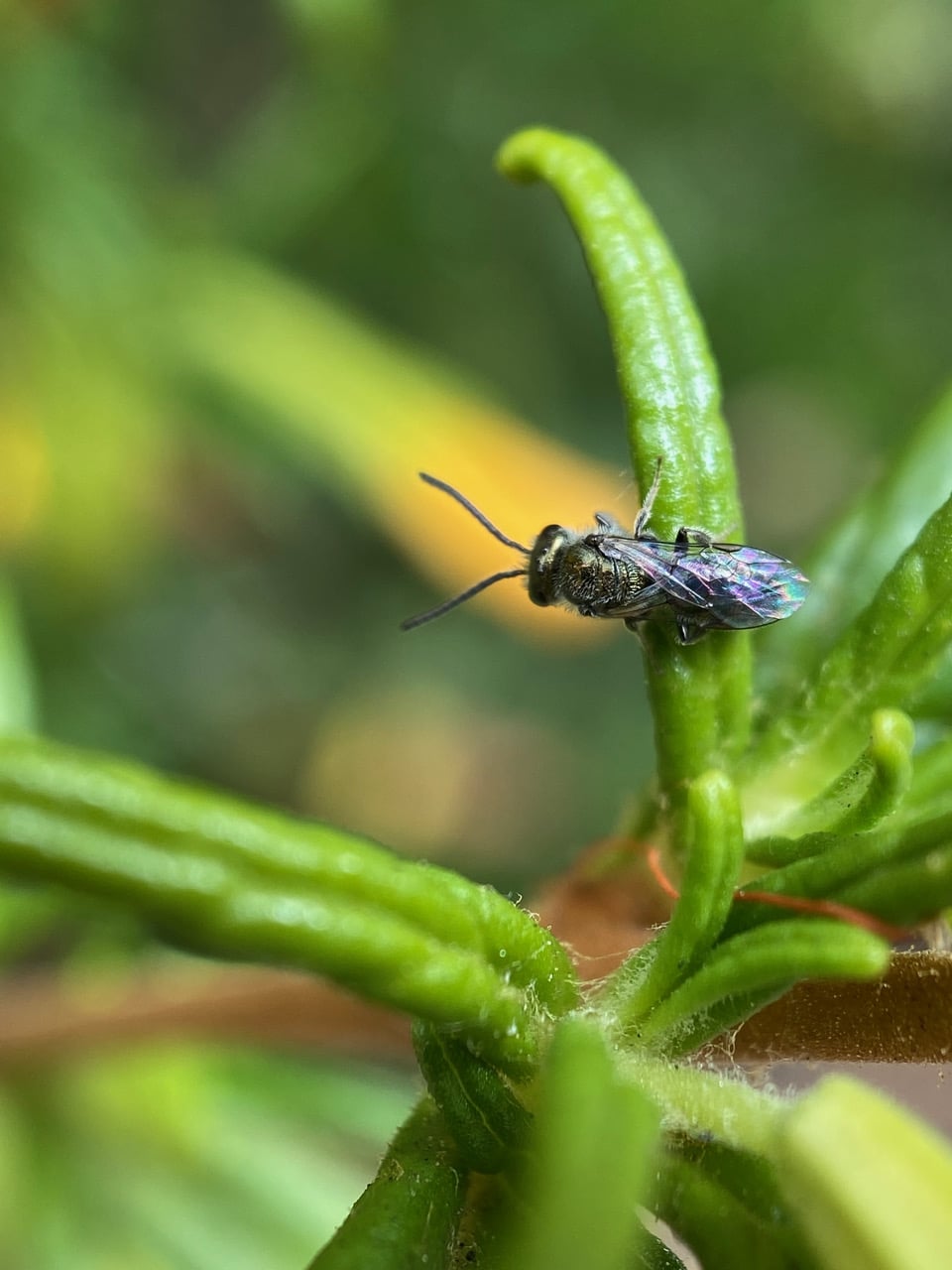
A small dark bee with long antennae is perched on the top leaf of a Sticky Monkeyflower. The greenish metallic sheen of its exoskeleton makes me think it is a Metallic Sweat Bee, Lasioglossum (Dialictus) sp. (family Halictidae). The extra long antennae and absence of scopae on its hind legs suggest that it is a male. Male bees do not collect pollen and lack the equipment for the job.
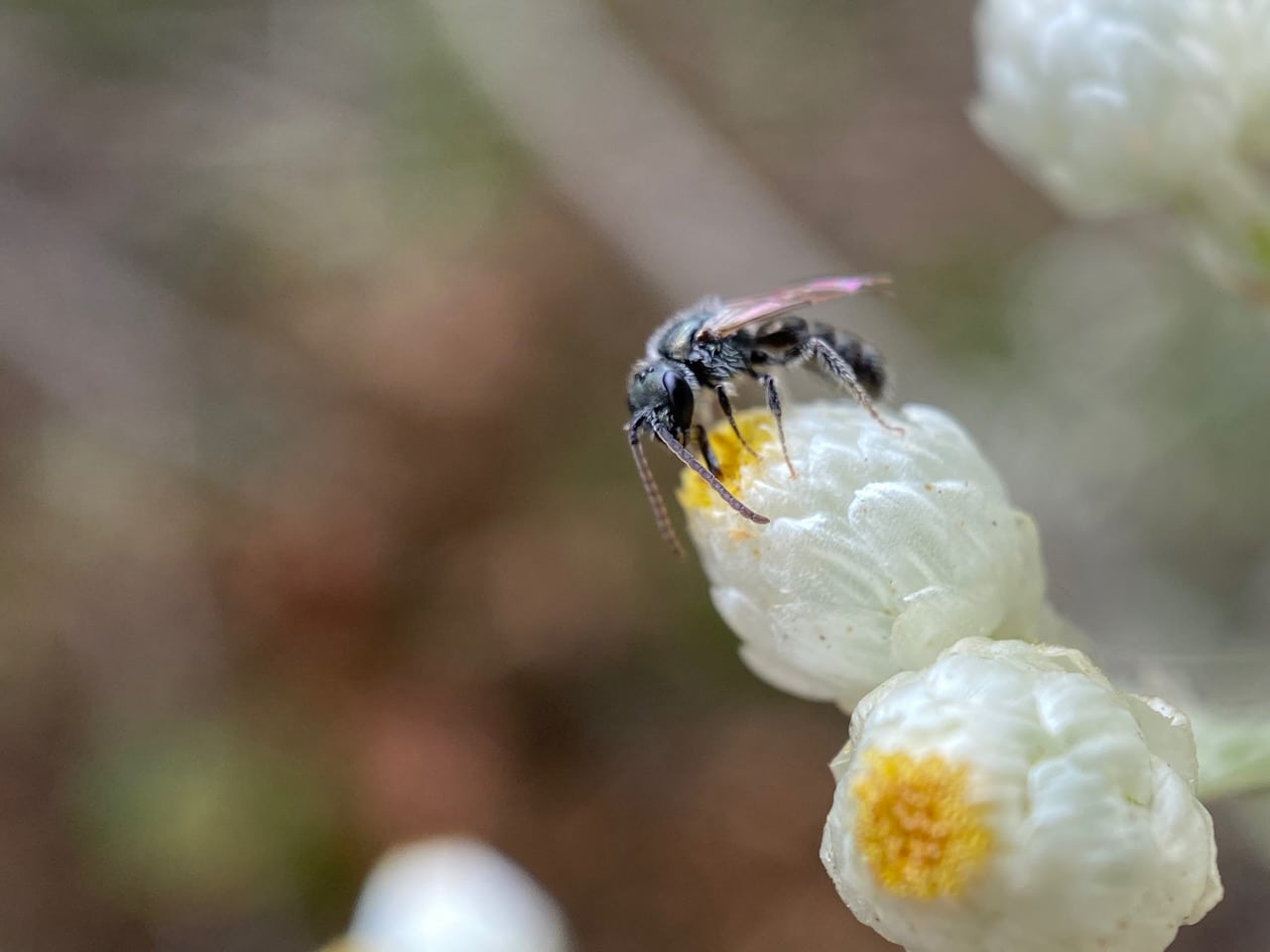
A similar bee is feeding on an opened flowerhead of California Everlasting, Pseudognaphalium californicum. A male Sweat Bee, Lasioglossum sp.?
Near the Steam Train entrance, a black-and-white cocoon hangs from the back of a leaf of Coast Tarweed, with a dead caterpillar draped over it.
Hyposoter is a large cosmopolitan genus of parasitoid wasps belonging to the family Ichneumonidae. Obvious evidence that Hyposoter is present is its black-and-white pupal cocoon. These commonly occur on foliage attached to the shriveled skin of the caterpillar in which the parasitoid fed during its larval stage.
Hyposoter undergoes complete metamorphosis. The adult wasp lays its egg in the caterpillar. After hatching, the larva feeds inside on the caterpillar’s hemolymph (blood) while developing through three, increasingly larger instars. The wasp larva then feeds on the caterpillar’s tissues consuming the entire body except for the skin and head capsule. The host caterpillar shrinks and becomes a hard and brittle, shriveled skin. The parasitoid emerges from the host skin as a mature third instar (prepupa). The wasp then spins a silken cocoon commonly attached to the dead caterpillar’s skin. The cocoon is about 1/4 in. long, oblong with dense white silk and blackish patches. Parasite development time from oviposition until adult emergence is about one month. There may be several generations per year. Hyposoter is used in the biological control of caterpillars in many crops.