

Pollinator Post 8/29/23 (2)

A Cluster Fly (family Polleniidae) lands on a leaf of Coyote Brush, its exoskeleton shining like a medieval armor. The large fly is still recognizable by its size and rounded abdomen, even though it has lost all the golden hairs on its thorax.
Called the Common Cluster Fly, Pollenia rudis (family Polleniidae) is slightly larger than house flies. It is dull gray with checkered black and silvery-black abdomens. A newly emerged fly has many golden hairs on its thorax which may be lost throughout the life of the fly. The common name comes from the tendency of the flies to aggregate near windows when they are trapped in human dwellings. The immature stages – eggs and larvae – are seldom seen because they are deposited on the soil where they burrow into earthworms which they parasitize. The Cluster Fly is a European species. They may have found their way to America in the ballast of ships containing soil, probably along with introduced earthworms.

Many of the Coast Tarweeds, Madia sativa along this section of Skyline Trail are covered with dead black winged insects stuck on the sticky exudate. They look like aphid alates, but I can’t be sure.
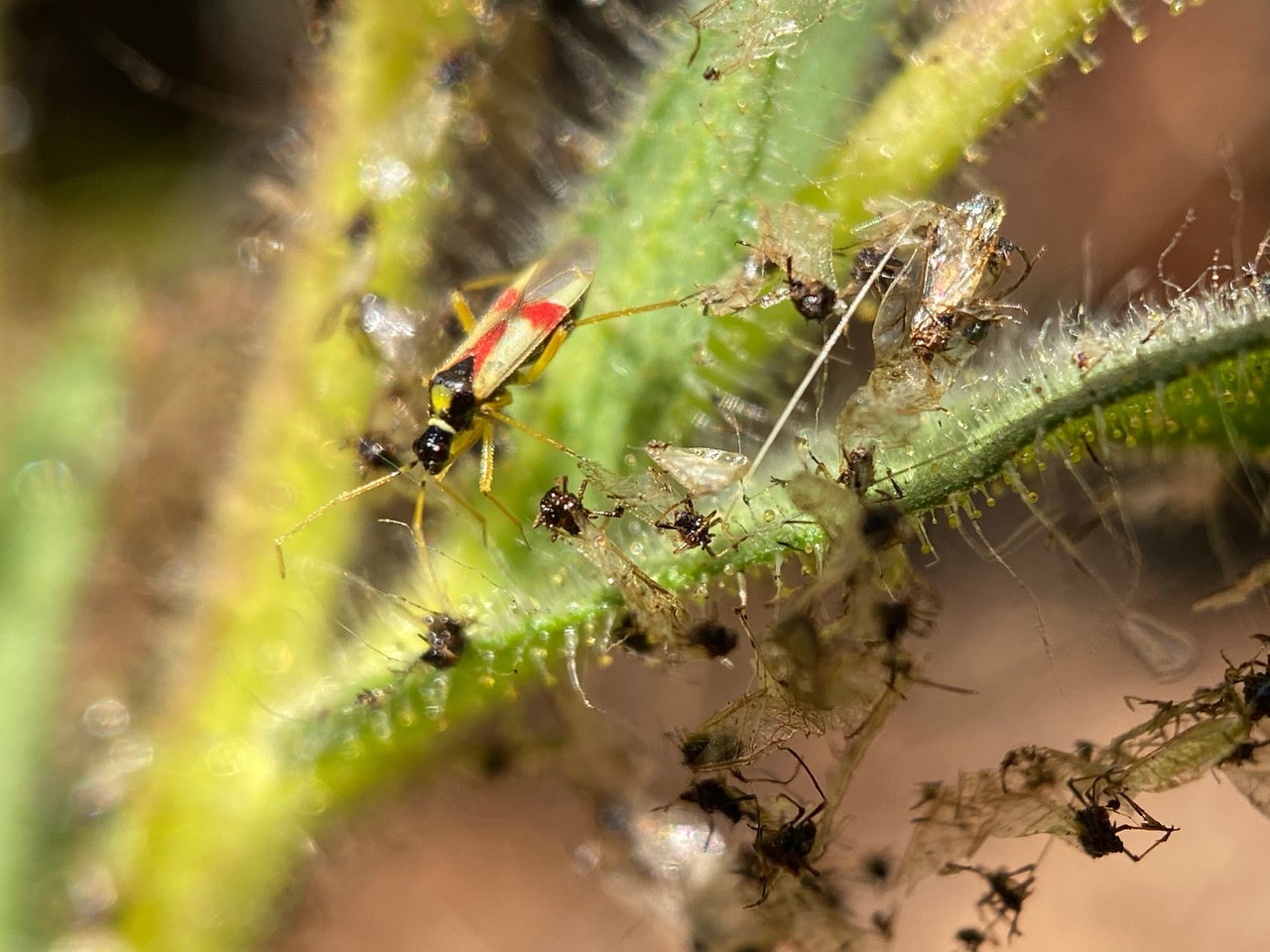
A Phacelia Plant Bug, Tupiocoris californicus (family Miridae) is walking among the dead insects. Is the bug a scavenger?
Mirid bugs are also referred to as plant bugs or leaf bugs. Miridae is one of the largest family of true bugs in the order Hemiptera. Like other Hemipterans, Mirids have piercing, sucking mouthparts to extract plant sap. Some species are predatory. One useful feature in identifying members of the family is the presence of a cuneus; it is the triangular tip of the corium, the firm, horny part of the forewing, the hemielytron. The cuneus is visible in nearly all Miridae.


Most of the Coast Tarweeds have gone to seed. A Scentless Plant Bug, Arhyssus sp. (family Rhopalidae) is perched among the seed heads.

These bugs seem to have darkened over time, to match the maturing tarweed seed heads. Note the whitish exuviae (shed insect exoskeleton) at the bottom. These seed-eating bugs seem to spend their whole life on the tarweed, never far away from the flowerheads or seed heads.
The Rhopalidae are distinguished by many veins on the membranous portion of the forewings. They differ from coreids and other hemipterans in lacking functional scent glands. All are plant-feeders, usually on ripe seeds.

Here’s a close-up look at a well-camouflaged Scentless Plant Bug, Arhyssus sp. (family Rhopalidae).
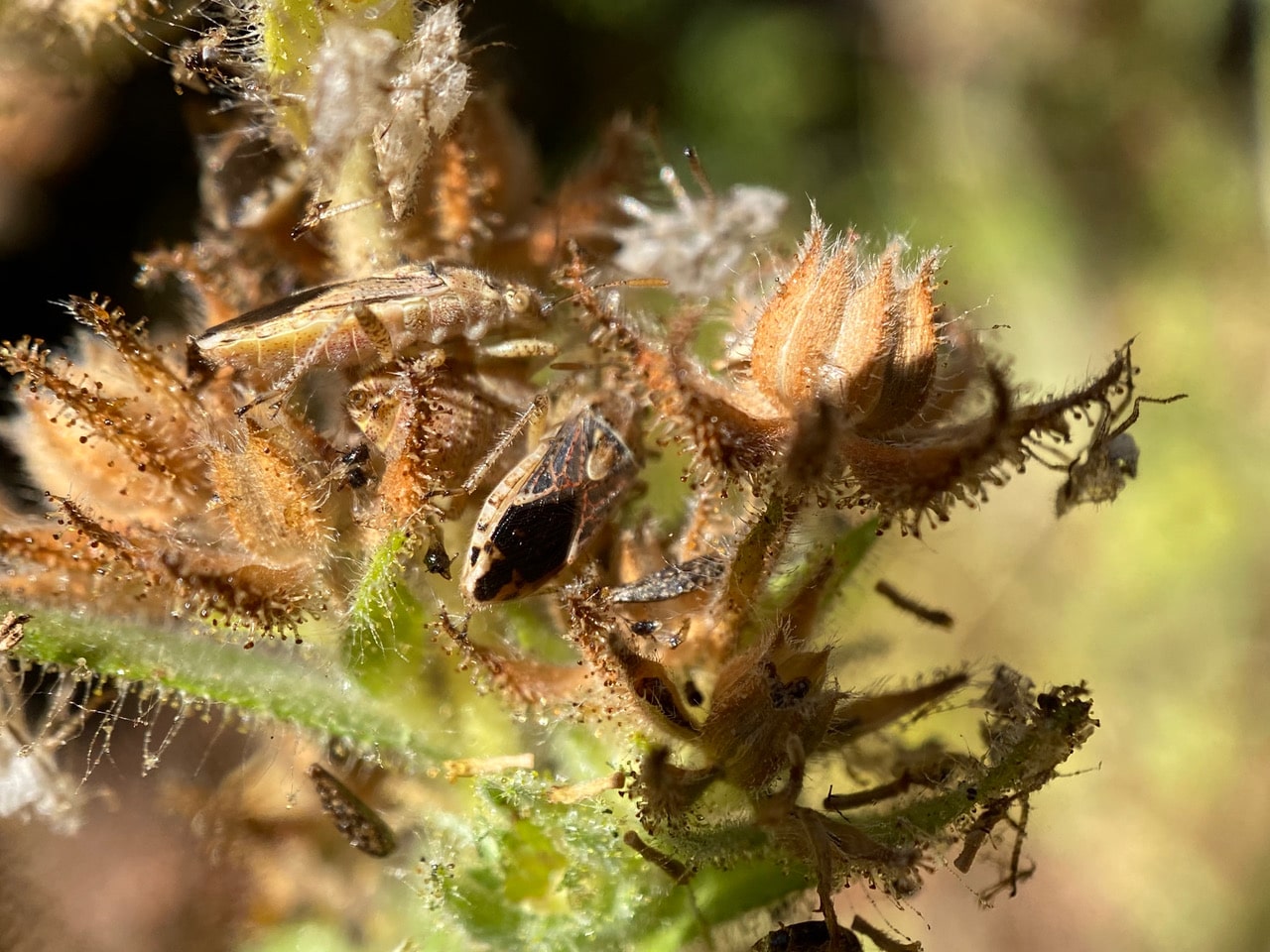
There are two more Scentless Plant Bugs below. Happy time for seed eaters!
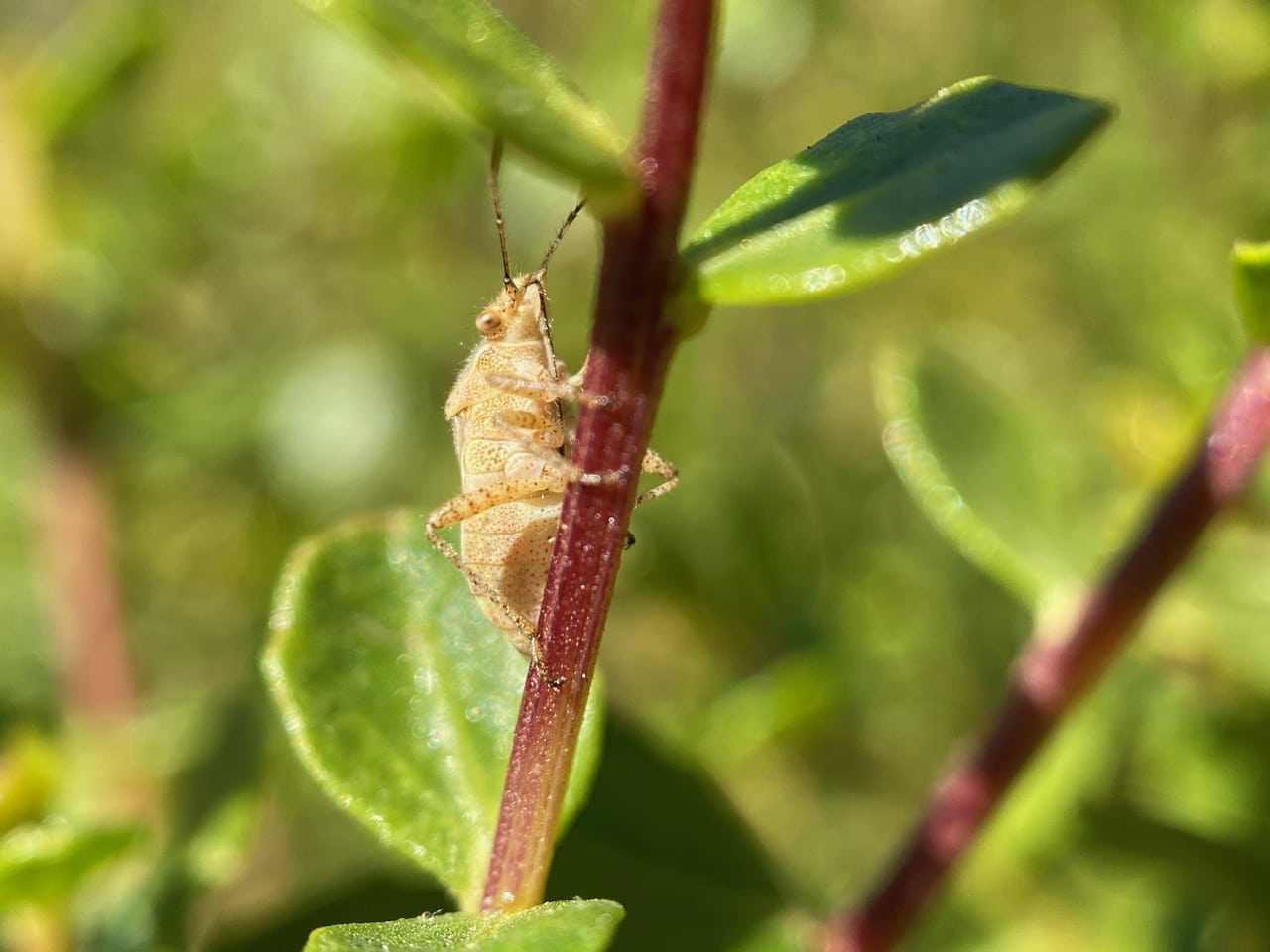
A Scentless Plant Bug, Arhyssus sp. (family Rhopalidae) is perched on a stem of Coyote Brush, showing its pale underside as well as its needle-like rostrum (piercing-sucking mouthparts) that is folded under its body.
The defining feature of Hemipterans or “true bugs” is their “beak” or rostrum in which the modified mandibles and maxillae form a “stylet” which is sheathed within a modified labium. The stylet is capable of piercing tissues and sucking liquids, while the labium supports it. The stylet contains a channel for outward movement of saliva and digestive enzymes, and another channel for the inward movement of pre-digested liquid food. The rostrum is usually folded under the body when not in use. Seed bugs are able to feed on seeds by injecting digestive juices into the seeds and sucking up the digested contents as a liquid.

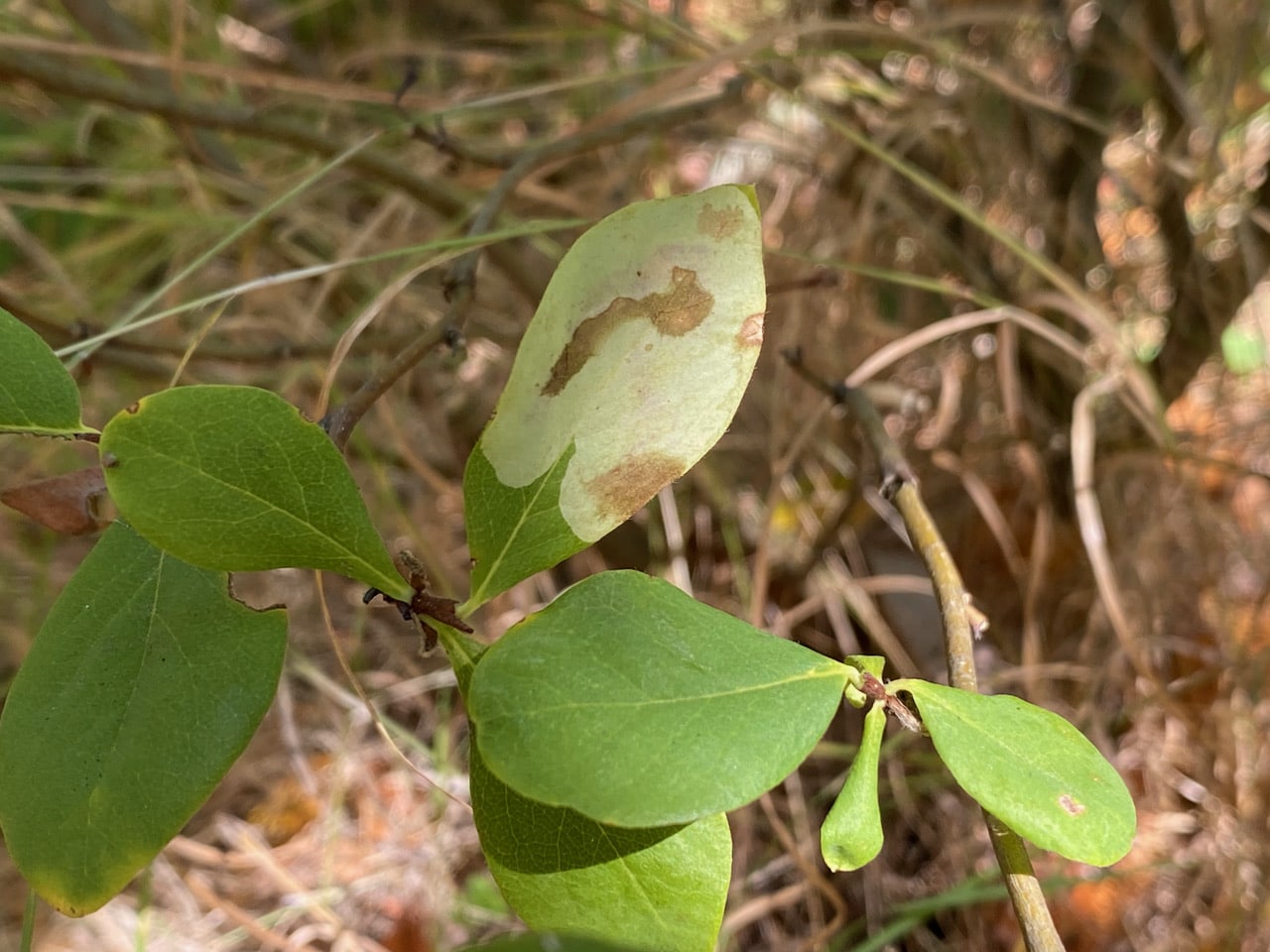
In the dappled shade, I spot a leaf of the Western Leatherwood with a large blotch mine. The mine maker is not visible, so I turn over the leaf to look for possible exit hole on the underside.

What a surprise to find this creature! It does not look like a mining insect – neither a moth nor a fly…

In fact it does not look familiar to me at all. I can’t even place it in a taxonomic order!
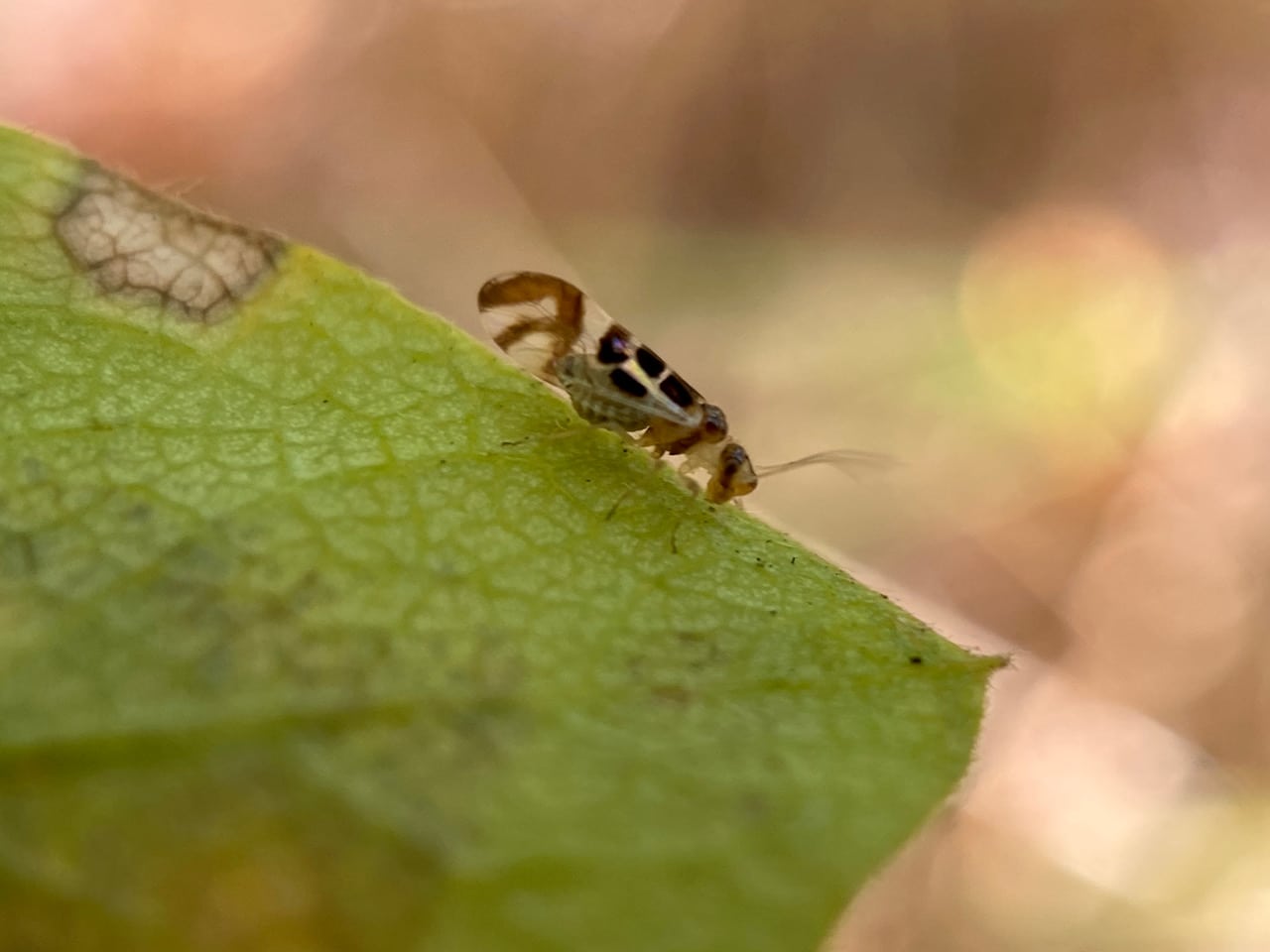
I desperately need good light for a picture of this insect!

The insect tries to run away from my camera, but stops for a while on a brown blemish on the leaf, blending in perfectly with the background. Is the charade intentional? Sketchy as these photos are, iNaturalist’s Computer Vision (AI) was able to identify the insect to the species – the F-winged Barklouse, Graphopsocus cruciatus (order Psocoptera, family Stenopsocidae).
The scientific name comes from the Greek psocus (to grind) and pteron (wing) and refers to the psocopteran jaws, which are shaped to grind food, rather like a pestle and mortar. These insects are conveniently discussed in two groups – barklice that live outdoors, and booklice that are found in human habitations.
Barklice are usually found in moist places, such as leaf litter, under stones, on vegetation or under tree bark. They have long antennae, broad heads and bulging eyes. They feed on algae, lichens, fungi and various plant matter, such as pollen. Barklice are usually less than 6 mm, and the adults are often winged. The wings are held roof-like over their bodies. Some species are gregarious, living in small colonies beneath a gossamer blanket spun with silk from labial glands in their mouth. Sometimes the colonies seem to move in coordinated fashion, rather like sheep.
Booklice are wingless and are much smaller (less than 2 mm). They are commonly found in human dwellings, feeding on stored grain, book bindings, wallpaper paste and other starchy products, and on the minute traces of mold found in old books.
Psocoptera undergo incomplete metamorphosis. They are regarded as the most primitive amongst the hemipteroids (true bugs, the thrips and lice) because their mouthpart show the least modification from those of the earliest known fossils.

A pale green insect is perched head-down on the stem of a Coast Tarweed, its long antennae swept back over its body. It is a Common Tree Cricket, Oecanthus sp. (family Gryllidae). Judging by the short wing pads, it is a nymph (juvenile).
Common Tree Crickets, Oecanthus sp. are delicate whitish or pale green insects with slender bodies, long antennae and transparent forewings. They are in the order Orthoptera (crickets, katydids, grasshoppers, etc.) and in the “true cricket” family Gryllidae. The tree crickets undergo a paurometabolous development (gradual metamorphosis). Nymphs resemble small adults and gradually develop external wing buds. They live in the same habitat as adults, and typically take the same food. Tree Crickets inhabit trees, shrubs and tall weeds, feeding on plant parts, some insects (e.g., aphids, scales) and other materials (e.g., fungi, pollen). Egg laying activities can affect plant health by injuring growth on twigs and branches or introducing plant pathogens.
More often heard than seen, tree crickets are active at dusk and at night. In late summer, males produce a high-pitched whine or “song”, a prelude to courtship and mating. Sound is produced by stridulation; the basal edge of one forewing (scraper) is rubbed along a filelike ridge (file) on the ventral side of the other forewing.
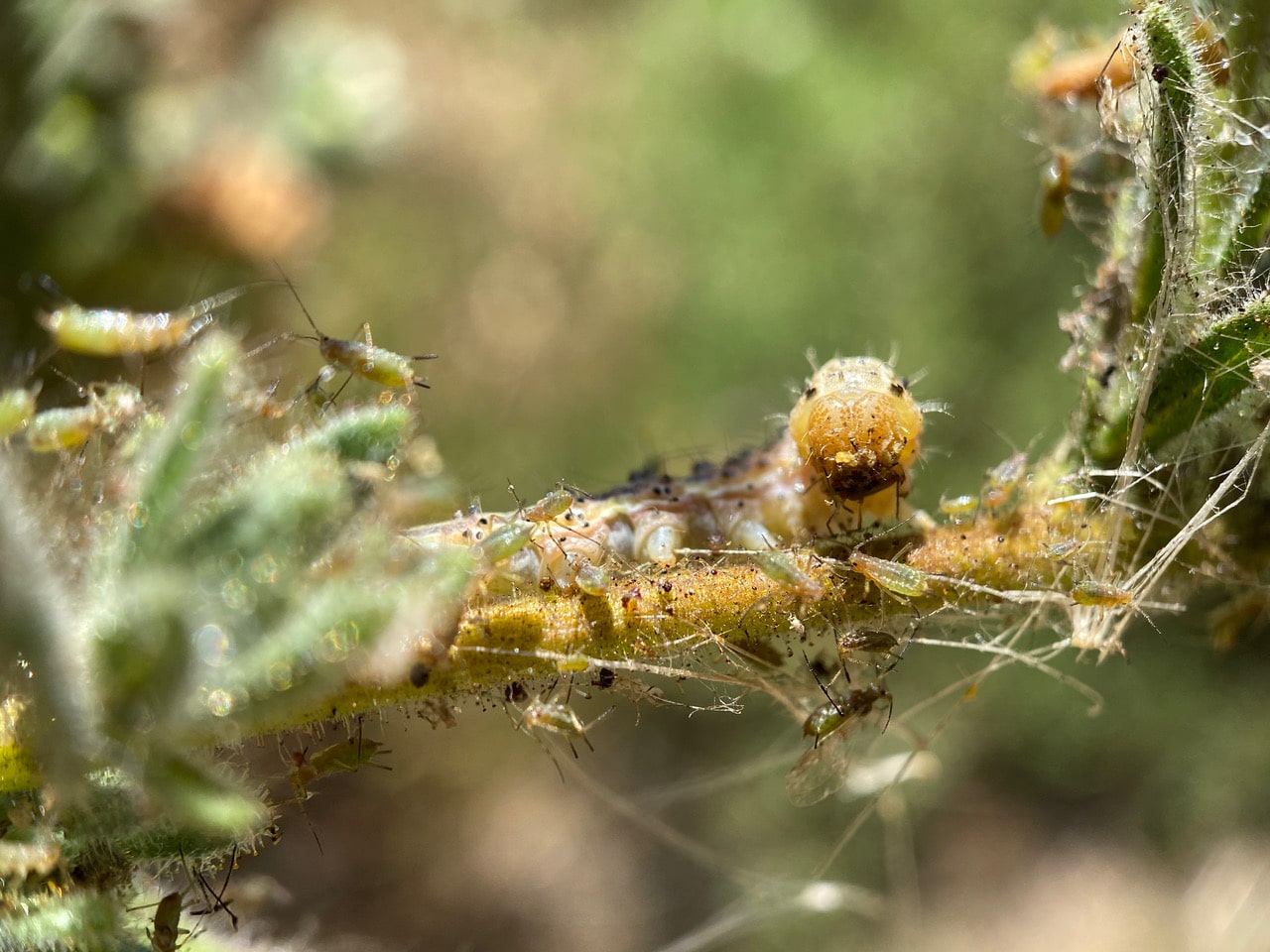
A pale brown caterpillar is crawling along the stem of an aphid-infested Coast Tarweed. I think it is a variation of the green caterpillars of the Straw Moths, Heliothis sp. (family Noctuidae). Here we are looking at the caterpillar head-on. Why does it have a mouthful of aphids?

The caterpillar is thrashing its head left and right, seemingly agitated.
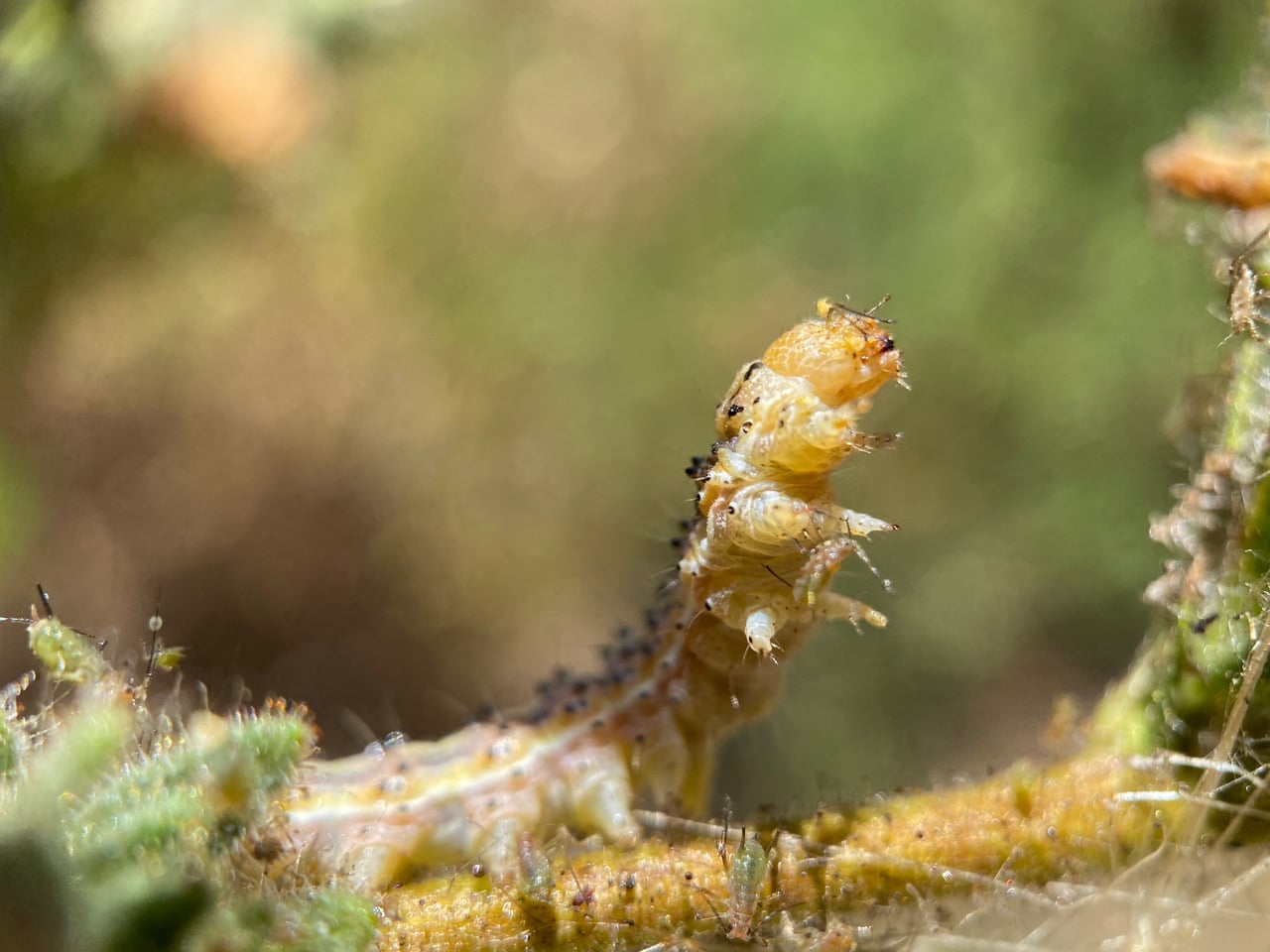
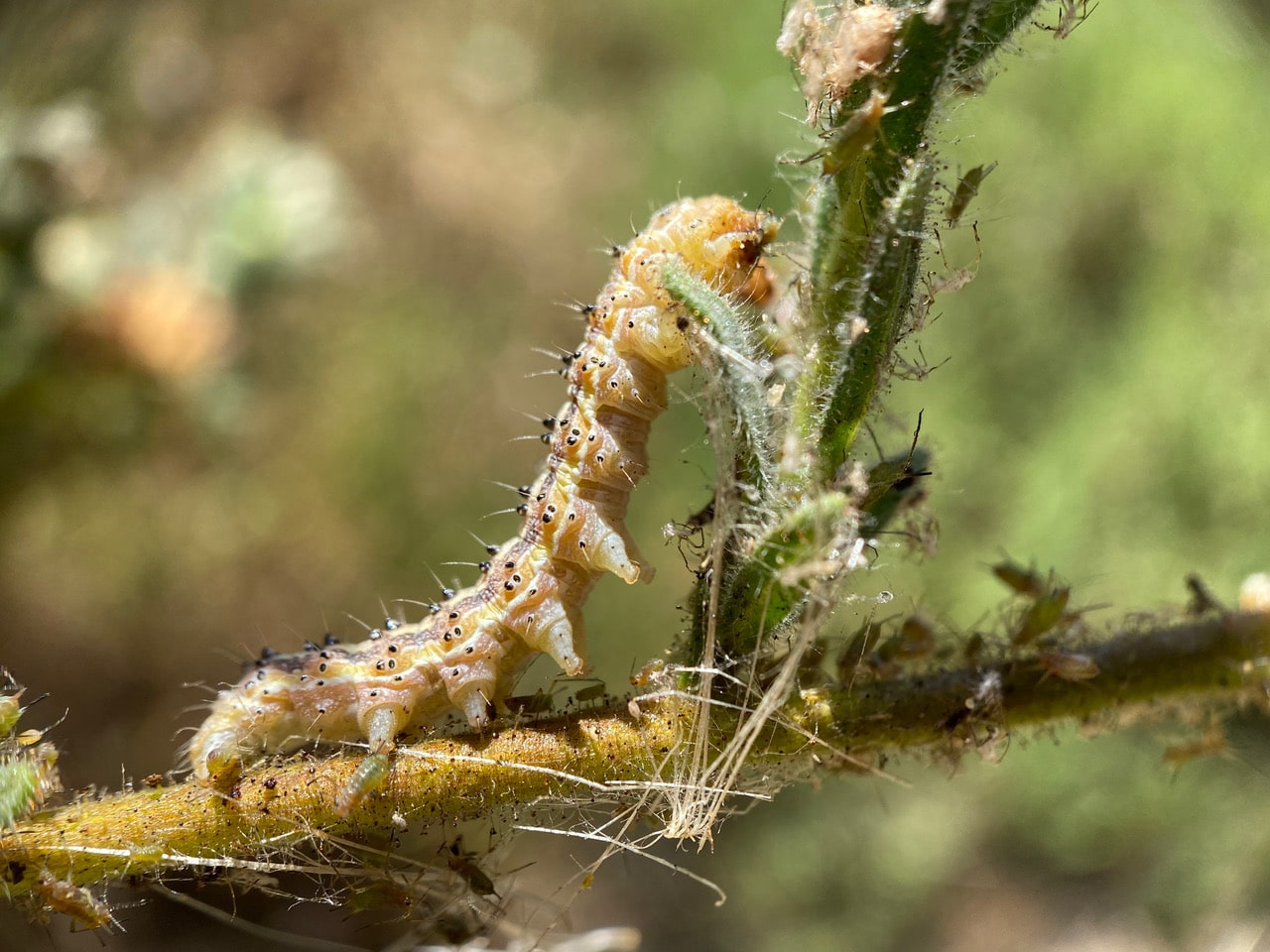
On reviewing these pictures, I realize that the caterpillar is probably trying to clear a path for itself, ridding the aphids on its way to the cluster of flowerheads.

Exhausted, the caterpillar has finally reached its destination – the cluster of flowerheads on which it can now feed in peace.