

Pollinator Post 8/27/24
Given the unhealthy air quality and a forecast of high temperatures, I am bound for the hills again this morning. Maybe this will give me another opportunity to check out the Yellowjacket activity on the Western Spice Bush at the Regional Parks Botanic Gardens?
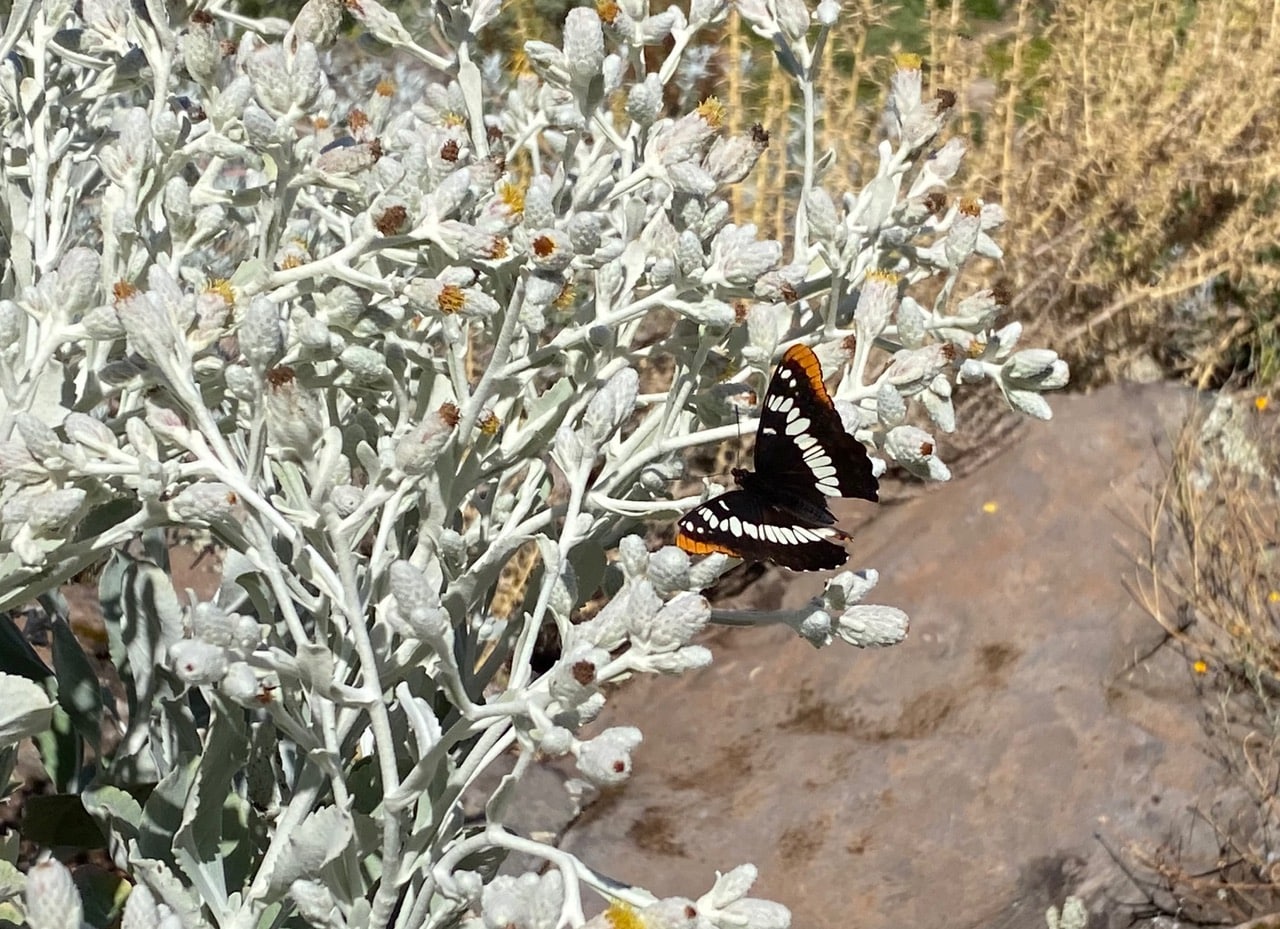
As I am looking at a Lorquin’s Admiral taking nectar from a flowerhead of the silvery-gray bush on the side of the visitor center, a staff gardener walks towards me. From Liz I learn that the strange plant is the Island Hazardia, Hazardia detonsa. It is a rare species of shrub in the family Asteraceae, endemic to the Channel Islands of California. The bushy shrub is densely woolly and hairy all over. The centimeter long flowerhead has several rows of white woolly phyllaries. The flowerhead opens to reveal disc florets and longer protruding ray floret around the rim.
Photos of Island hazardia (Hazardia detonsa) · iNaturalist
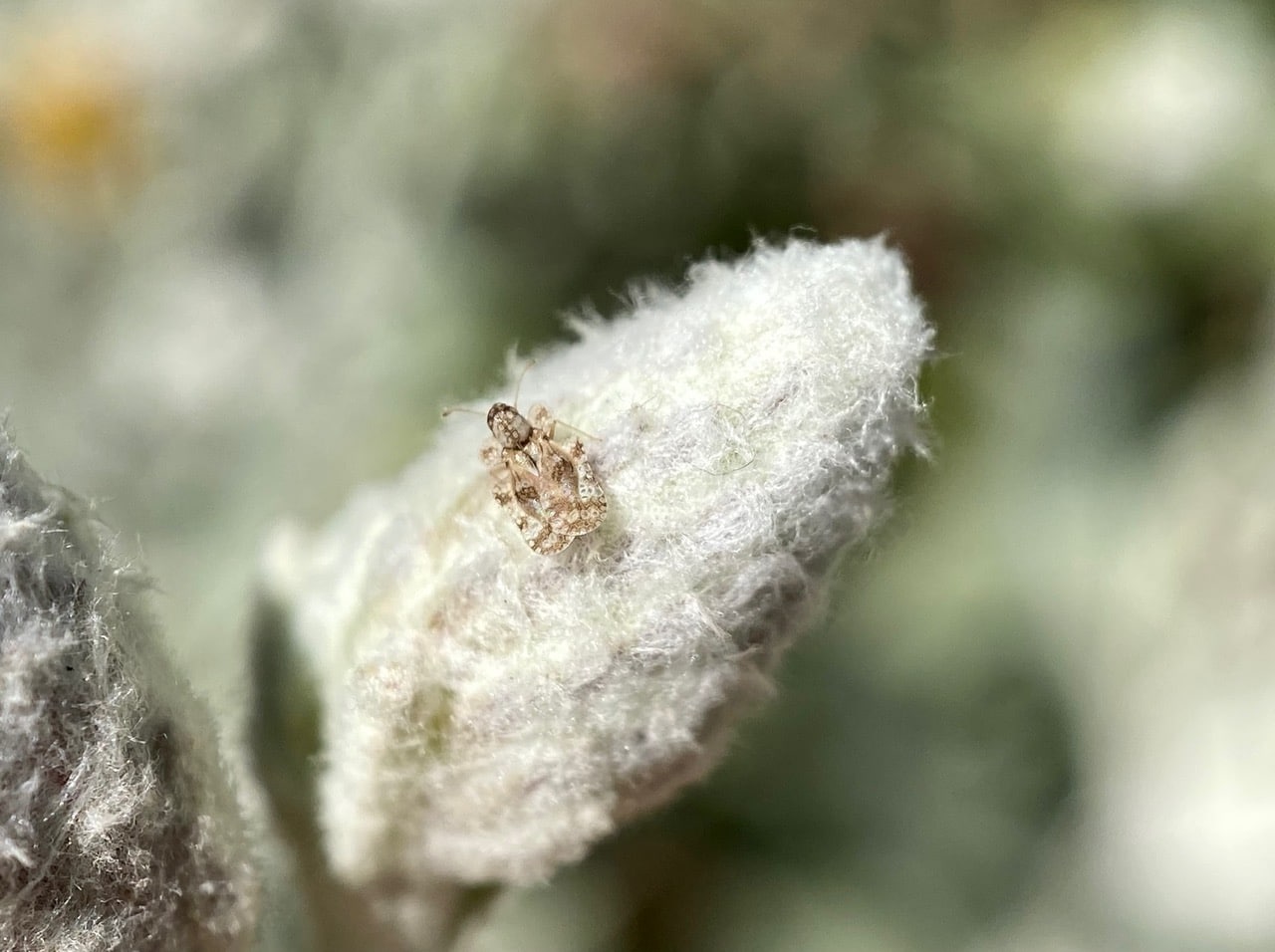
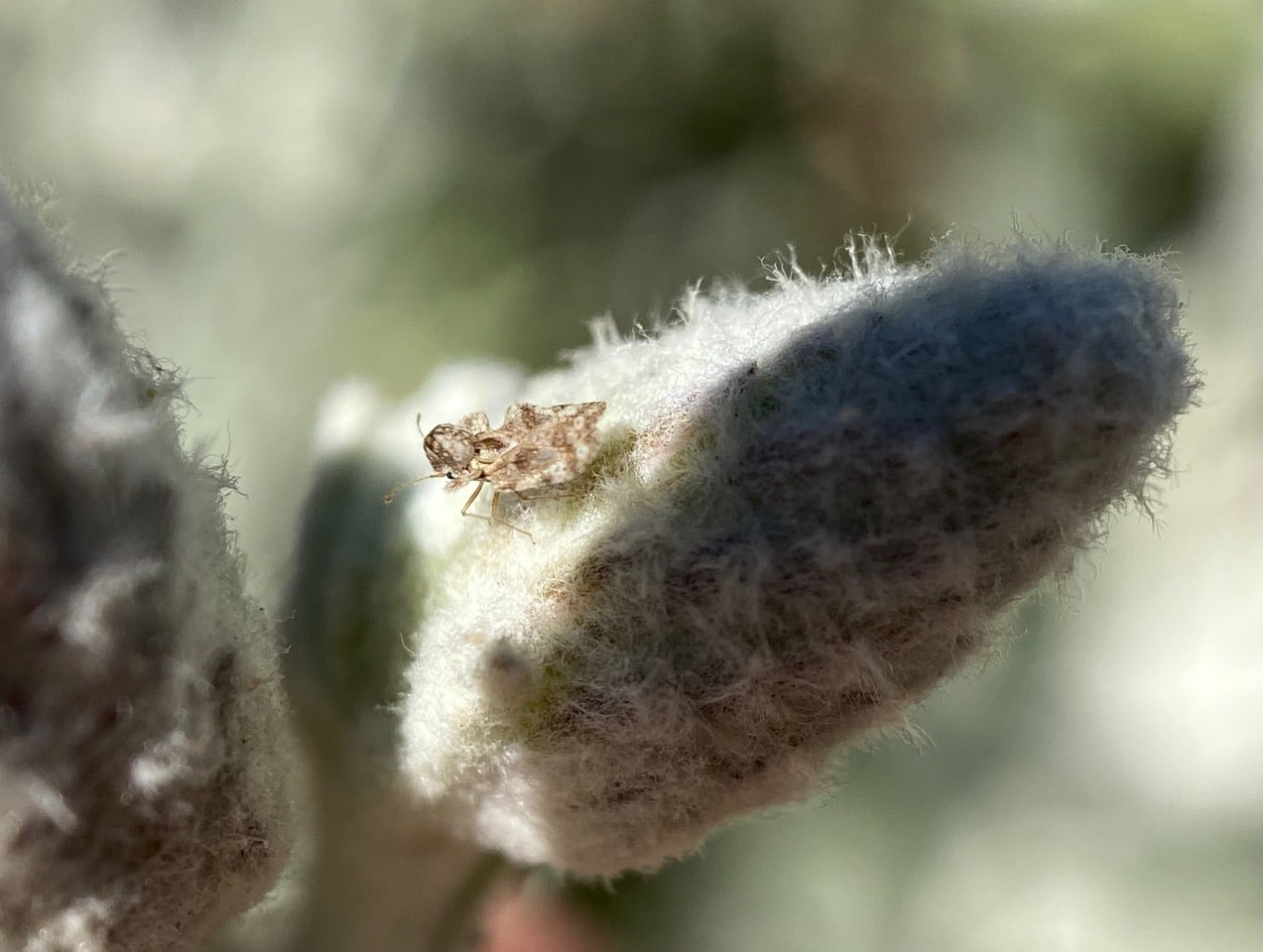
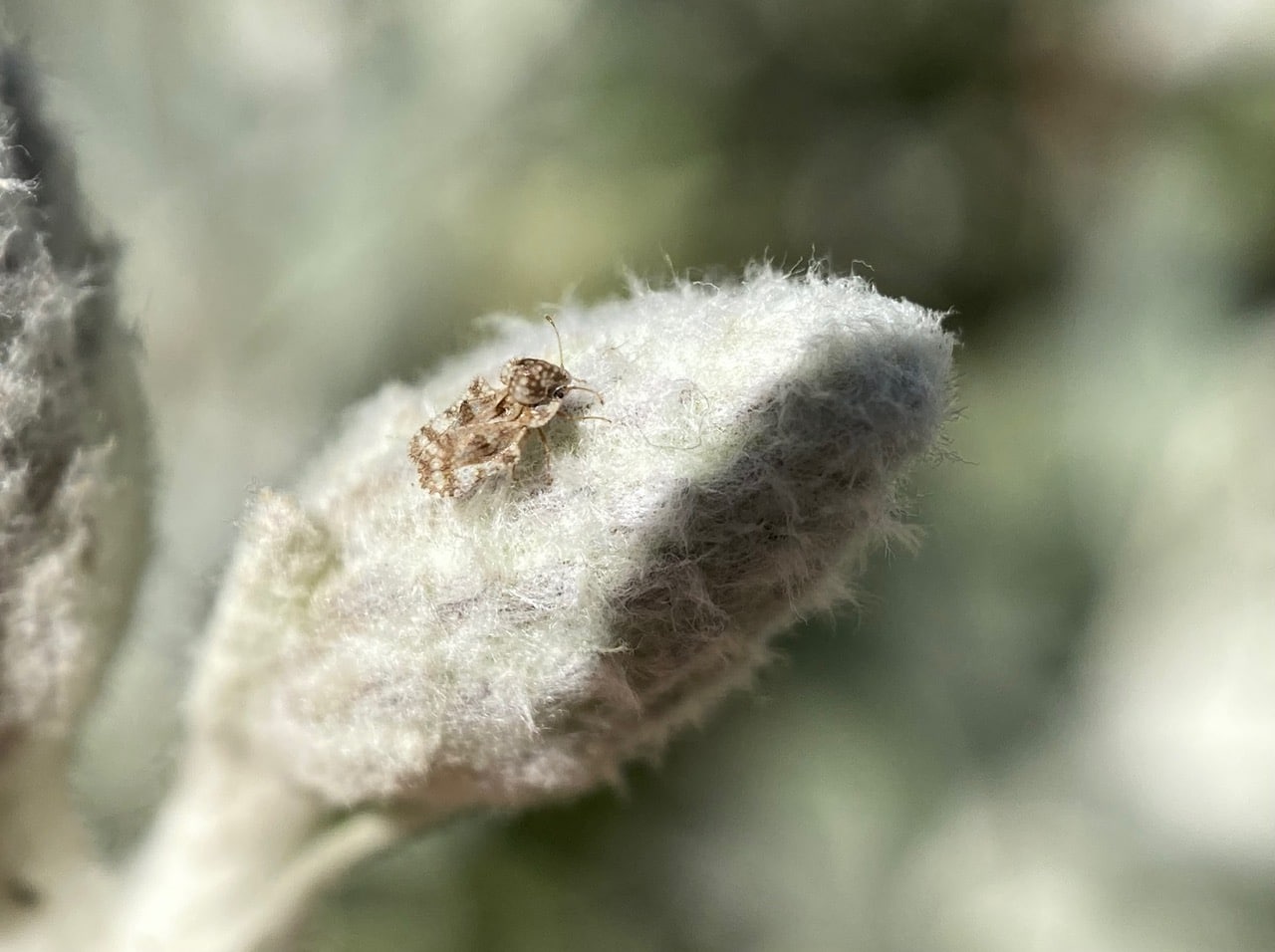 As Liz and I are talking, I notice something pale and tiny bouncing up and down on an immature flowerhead of Island Hazardia. Closing in with the macro lens, I discover that it is a Lace Bug (family Tingidae).






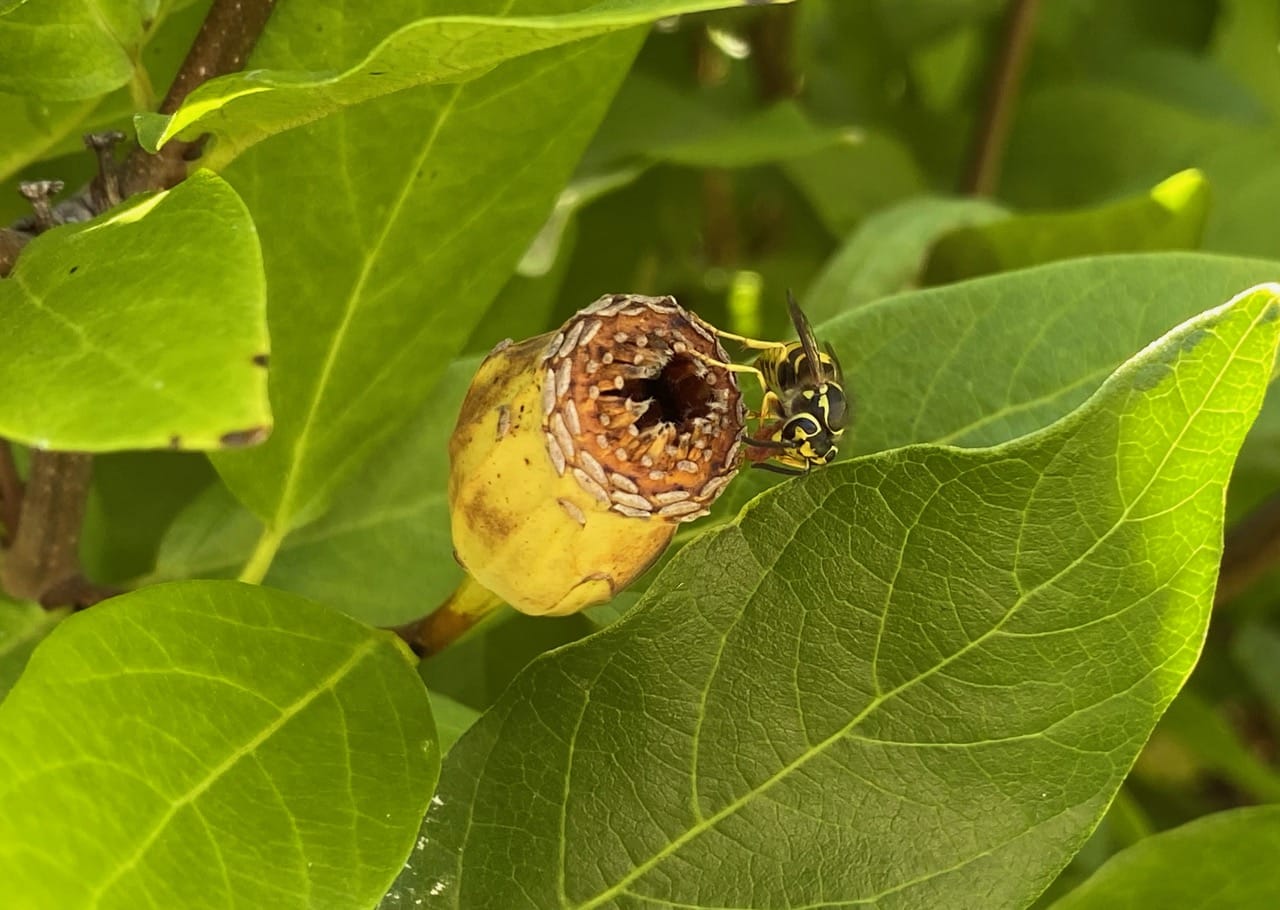
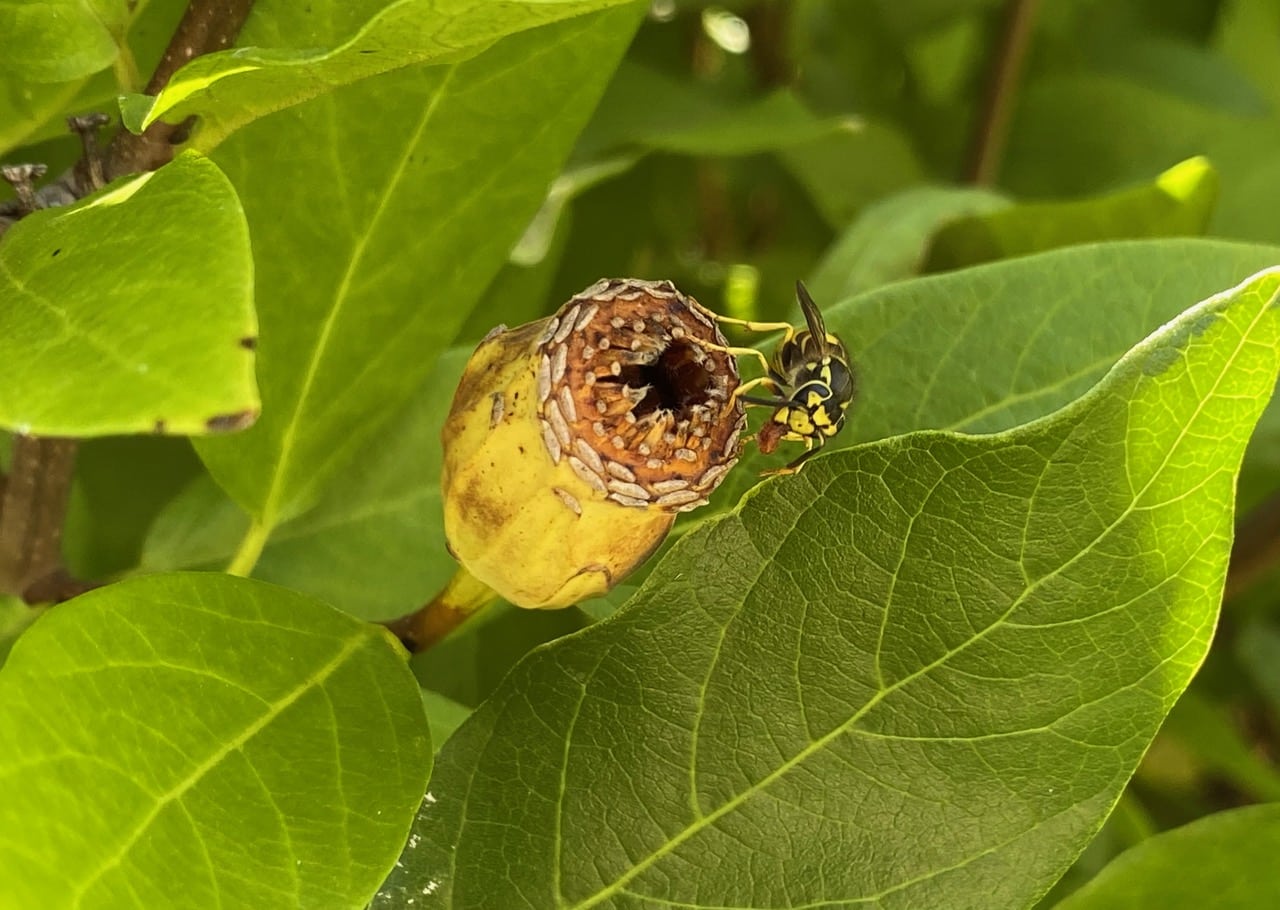 Ah yes, that brown thing looks like it might be an achene (a dry, single-seeded fruit), or perhaps the nutritious elaiosome (marginal bodies) gathered from the achenes?
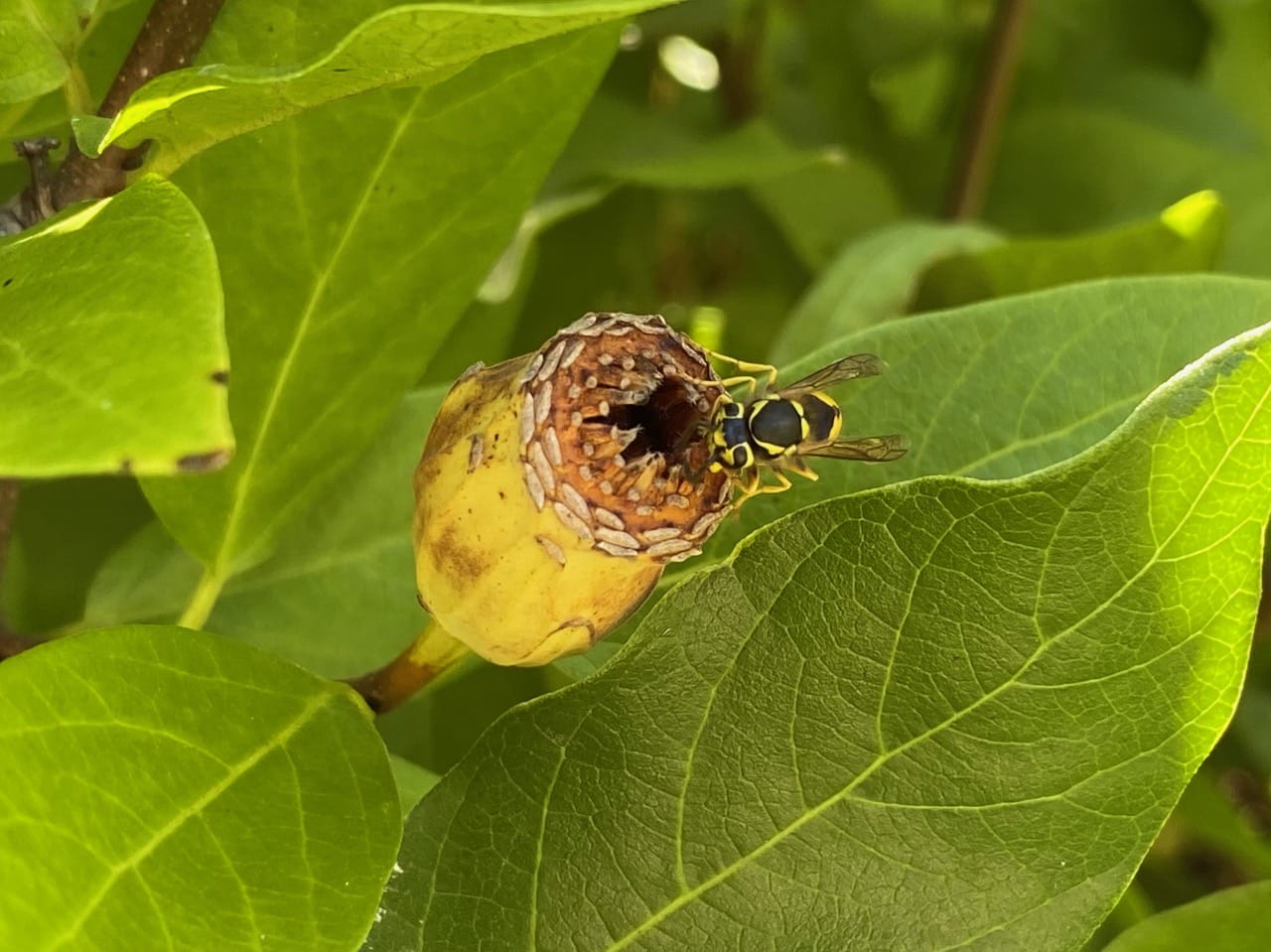
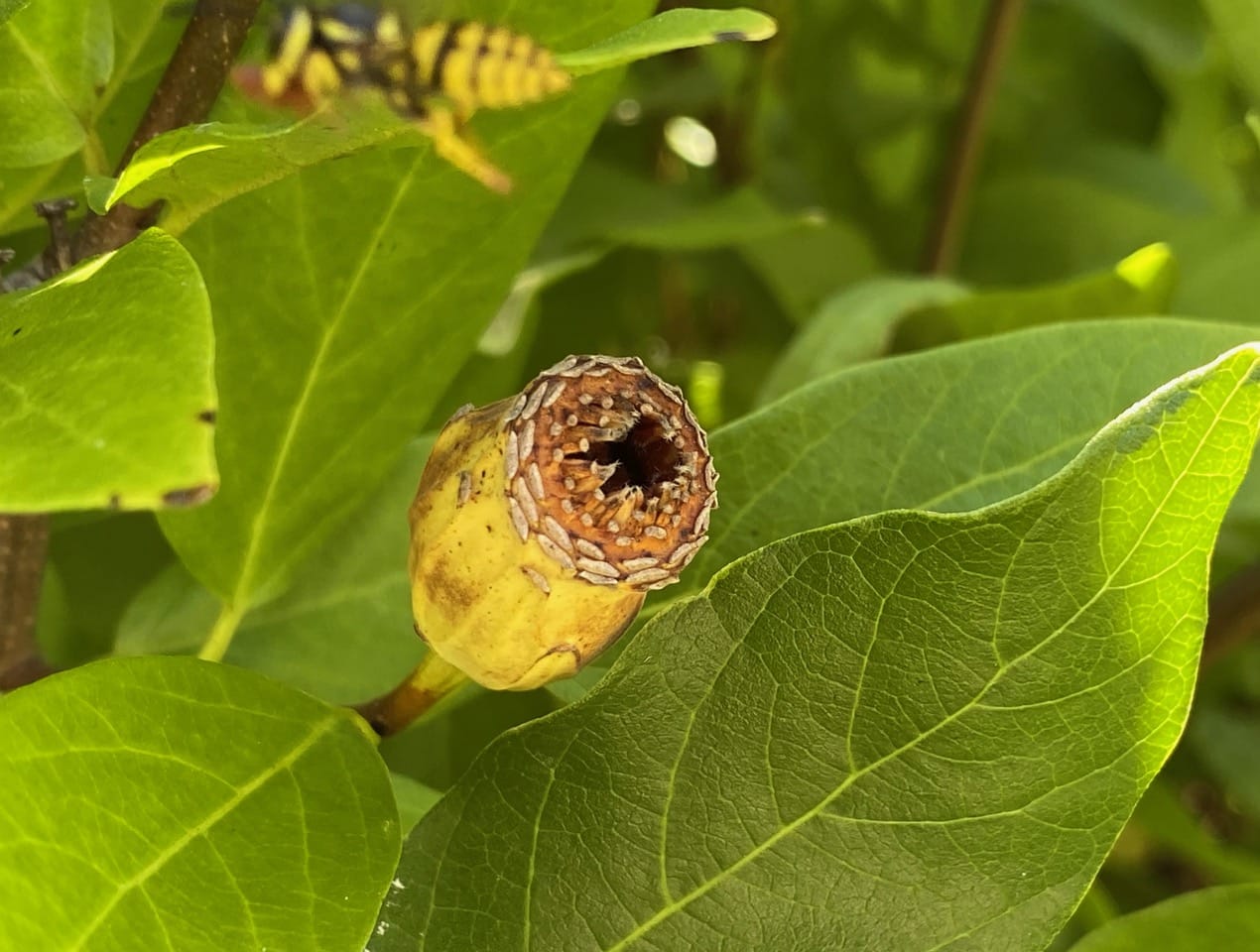
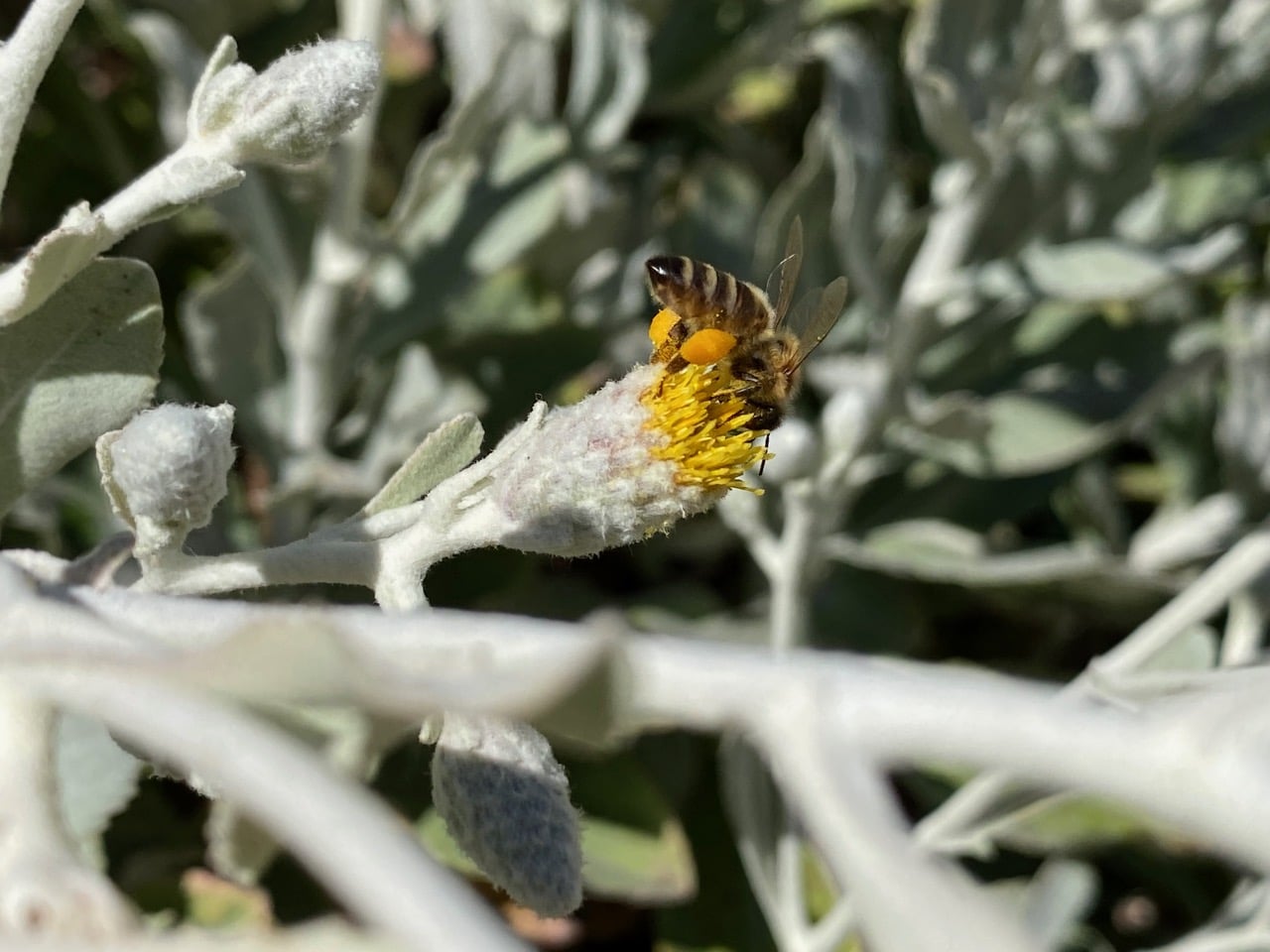
Pollen baskets bulging with pollen, a dark Honey Bee, Apis mellifera (family Apidae) is foraging on a flowerhead of Island Hazardia.
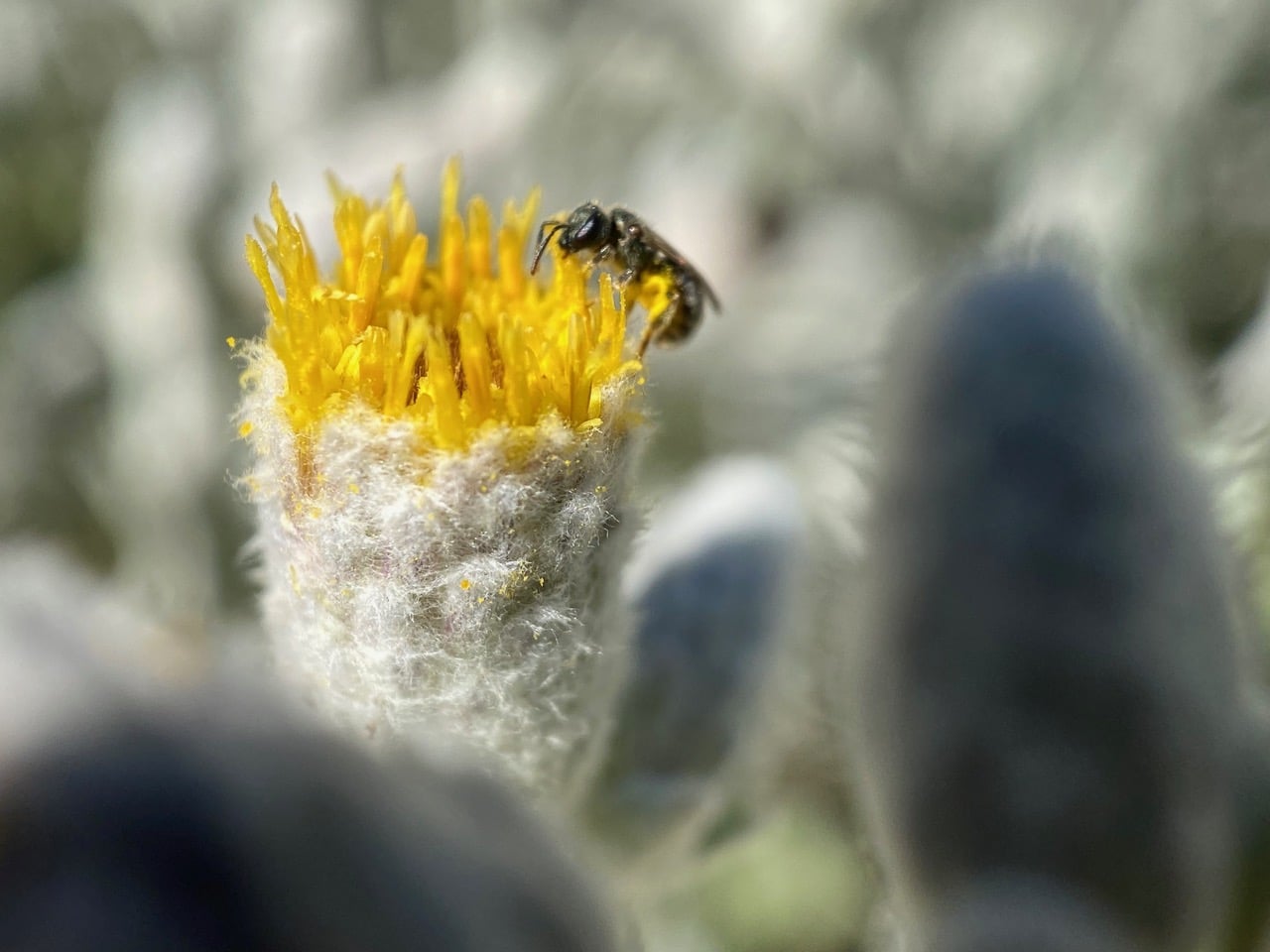
A tiny Metallic Sweat Bee, Lasioglossum (Dialictus) sp. (family Halictidae) is foraging on the ray florets of an Island Hazardia flowerhead.
Lasioglossum species are found worldwide, and they constitute the largest bee genus. The subgenus Dialictus are the most likely to be seen in the U.S., with over 300 species of these tiny metallic bees. The majority of Lasioglossum are generalists. Because they are so abundant throughout the flowering season, the bees are often important pollinators. Their sheer numbers are enough to achieve excellent pollination of many wild flowers, especially of plants in the Asteraceae, which have shallow floral tubes that are easily accessed by these minute bees.
Lasioglossum are closely related to the genera Halictus and Agapostemon. These genera are commonly called “sweat bees” because of their attraction to human sweat, which they drink for its salt content. Lasioglossum are dusky black to brown slender bees with bands of hair on their abdomen. Female Sweat Bees (family Halictidae) carry pollen in the scopae on their entire hind legs and underside of their abdomen.
Lasioglossum exhibit a range of social behaviors; the genus includes solitary, communal, semi social, primitively eusocial, and even parasitic species. Almost all Lasioglossum in the U.S. nest in the ground. Generally these nests are built in the spring by fertilized females (called foundresses) that spent the winter in hibernation. In social species, the foundresses behave much like the queen Bumble Bees – they lay the first batch of eggs that develop into the first generation of female workers. The nest grows with each additional generation of bees. Later broods may consist of both males and females. They mate, and at the end of the season the fertilized females hibernate til the following spring, repeating the life cycle of the colony.
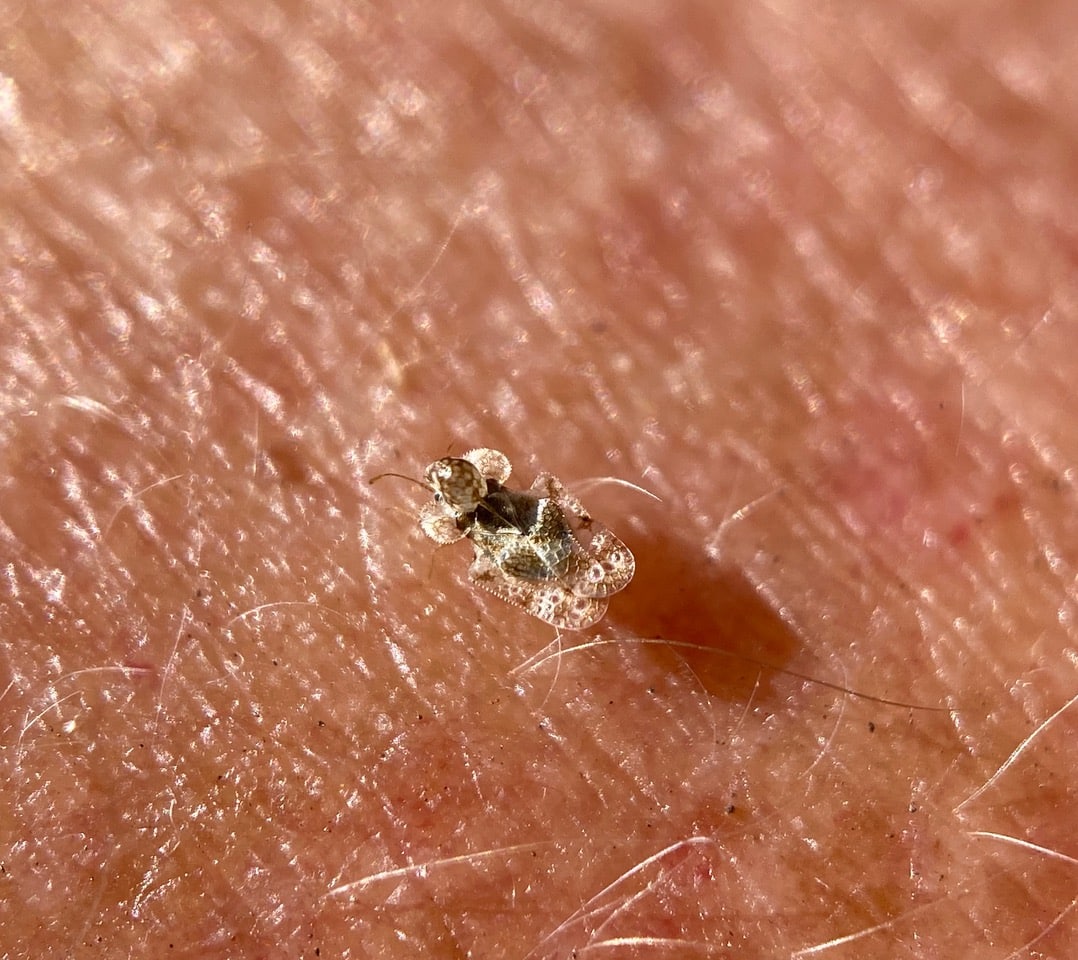
As Liz and I are talking, I notice something pale and tiny bouncing up and down on an immature flowerhead of Island Hazardia. Closing in with the macro lens, I discover that it is a Lace Bug (family Tingidae).The Tingidae are a family of very small (2-10 mm) insects in the order Hemiptera that are commonly referred to as lace bugs. They are called lace bugs because the pronotum and fore wings of the adult have a delicate and intricate network of divided areas that resemble lace. Their body is flattened dorsoventrally, and the head is often concealed under the hood-like pronotum. Tingids are usually host-specific and can be very destructive to plants. Most feed on the underside of leaves by piercing the epidermis and sucking the sap. The resulting empty cells give the leaves a bronzed or silvery appearance. Each individual usually completes its entire lifecycle on the same plant, if not the same part of the plant.
The genus Corythucha is primarily distributed in the northern hemisphere, including Europe, North America and eastern Asia.
Liz suddenly feels a similar Lace Bug crawling on her arm. We now have a chance to manipulate the strange beauty into better light for a photo.
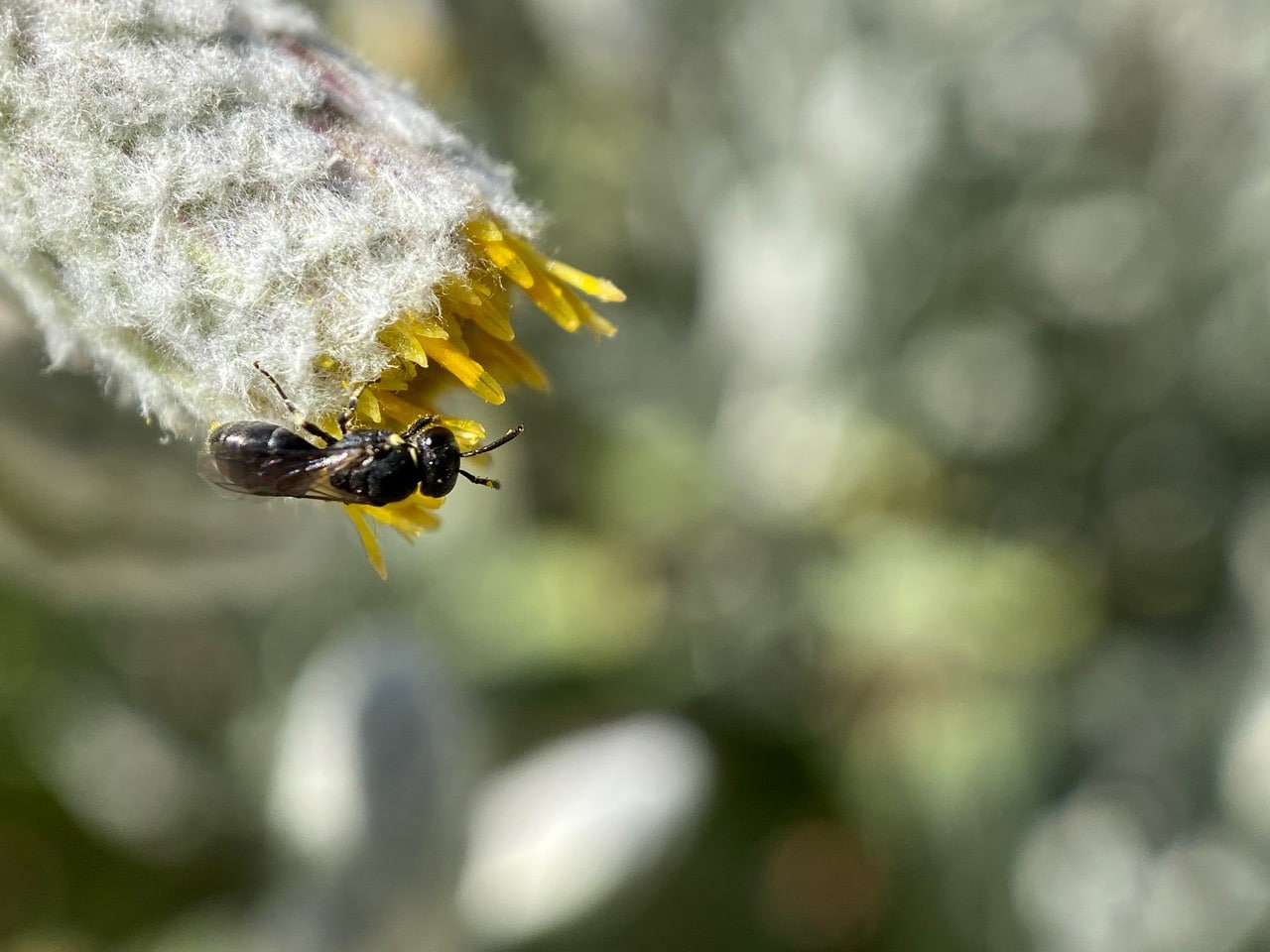
Holding on to the woolly phyllaries, a Masked Bee, Hylaeus sp. (family Colletidae) is gathering pollen from the stamens of the ray florets on the rim of the Island Hazardia flowerhead.
It is a female, as evidenced by the slivers of yellow marking on the inner margins of her compound eyes.
Hylaeus (family Colletidae) are shiny, slender, hairless, and superficially wasp-like bees. They are small, 5 to 7 mm long, usually black with bright yellow or white markings on their face and legs. These markings are more pronounced on the males. Hylaeus do not carry pollen and nectar externally, they instead store their food in the crop and regurgitate it upon returning to their nests. They are primarily generalist foragers. Hylaeus are short-tongued, but their small body size enables them to access deep flowers. Hylaeus nest in stems and twigs, lining their brood cells with self-secreted cellophane-like material. They lack strong mandibles and other adaptations for digging, using instead pre-existing cavities made by other insects.
Most of the Snowberries are bearing fruits now. The few late blooming flowers are garnering a lot of attention from thirsty insects, including bees, flies and this strange looking wasp. Although I can’t get close enough for a good picture, I can tell from the strangely shaped “waist” that it is a Potter Wasp (subfamily Eumeninae, family Vespidae).
From my terrible photos, iNaturalist’s AI is surprisingly able to identify the wasp to the species – Cross Potter Wasp, Eumenes crucifera. it is a North American species found in Canada, the United States, and Mexico.
Female Potter Wasps build earthenware nests attached to twigs, leaves and walls. The wasps get their common name from the brood chamber or “pot” they build. Adults visit flowers for nectar. Mature females construct earthen homes for their young and provision them with food. The female potter wasp gathers clay and soil particles in moist areas and transports them back to the construction site. Layer by layer she carefully molds the mud into a tiny hollow vessel. This requires many trips to the mud puddle. When the pot is nearly finished, she provisions the pot with enough food to support the growth and development of her young that will grow inside the pot. Most hunt for small caterpillars, other species fill their pots with beetles or spiders. Upon finding a caterpillar the potter wasp delivers a paralyzing but non-lethal sting, and then carries the victim back to be placed in the pot. When the pot is fully stocked with fresh meat, the potter lays an egg on the victims. Then she gathers more mud and seals the chamber completely. After a few days the egg hatches into a small legless larva which feeds on the caterpillars. When it is fully developed, the larva molts into a pupa, and eventually transforms into a wasp. With powerful jaws the wasp breaks open its earthen nursery, frees itself and emerges to find a mate.
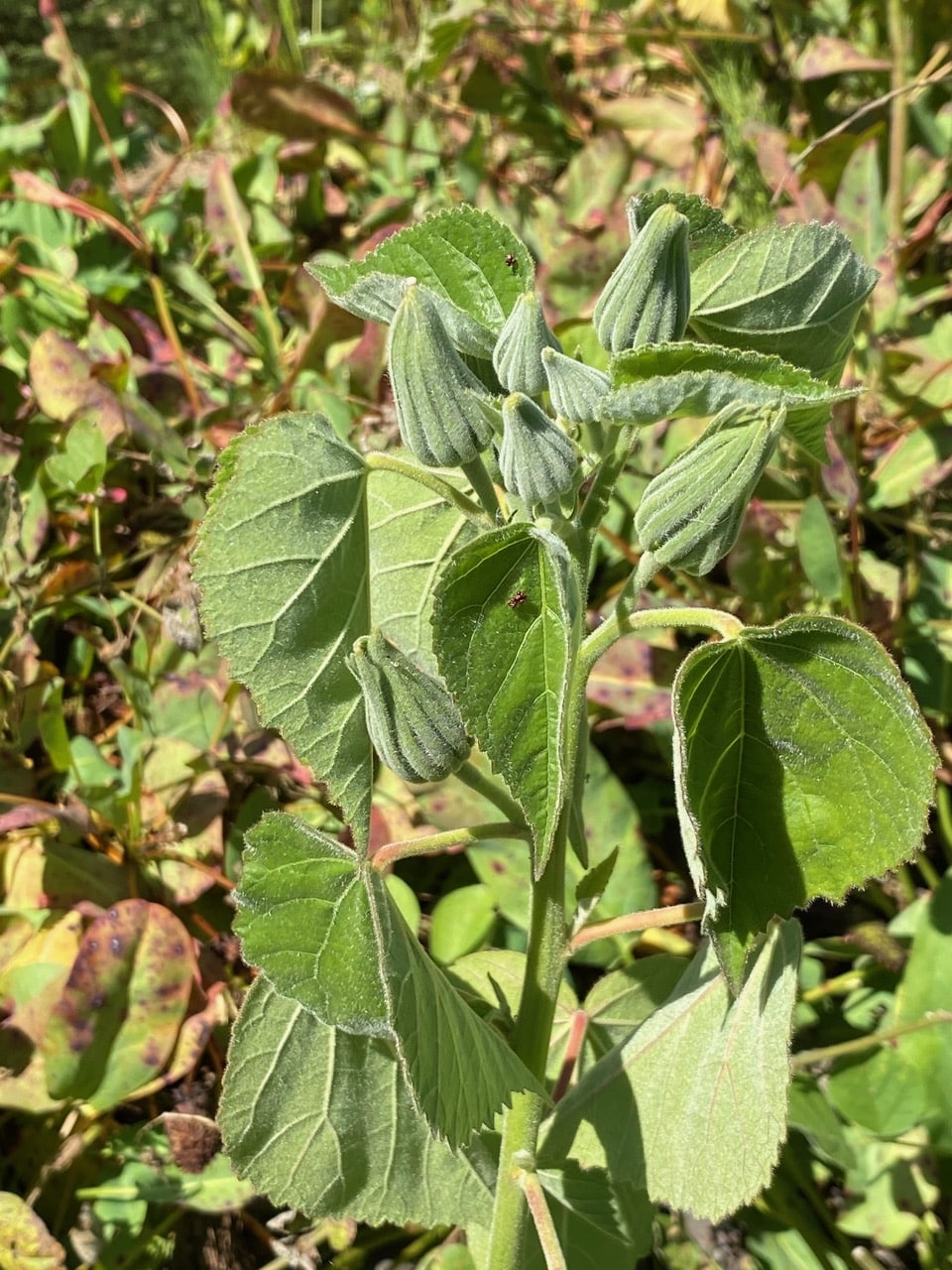
By the pond, the rare and endangered Rose Mallow, Hibiscus lasiocarpus is bearing many big flower buds.
I find seven clusters of these insect eggs on the upper surface of the leaves of two adjacent Rose Mallow plants. It would be interesting to see what will hatch out of them. Some Hemiptera (“true bugs”)?
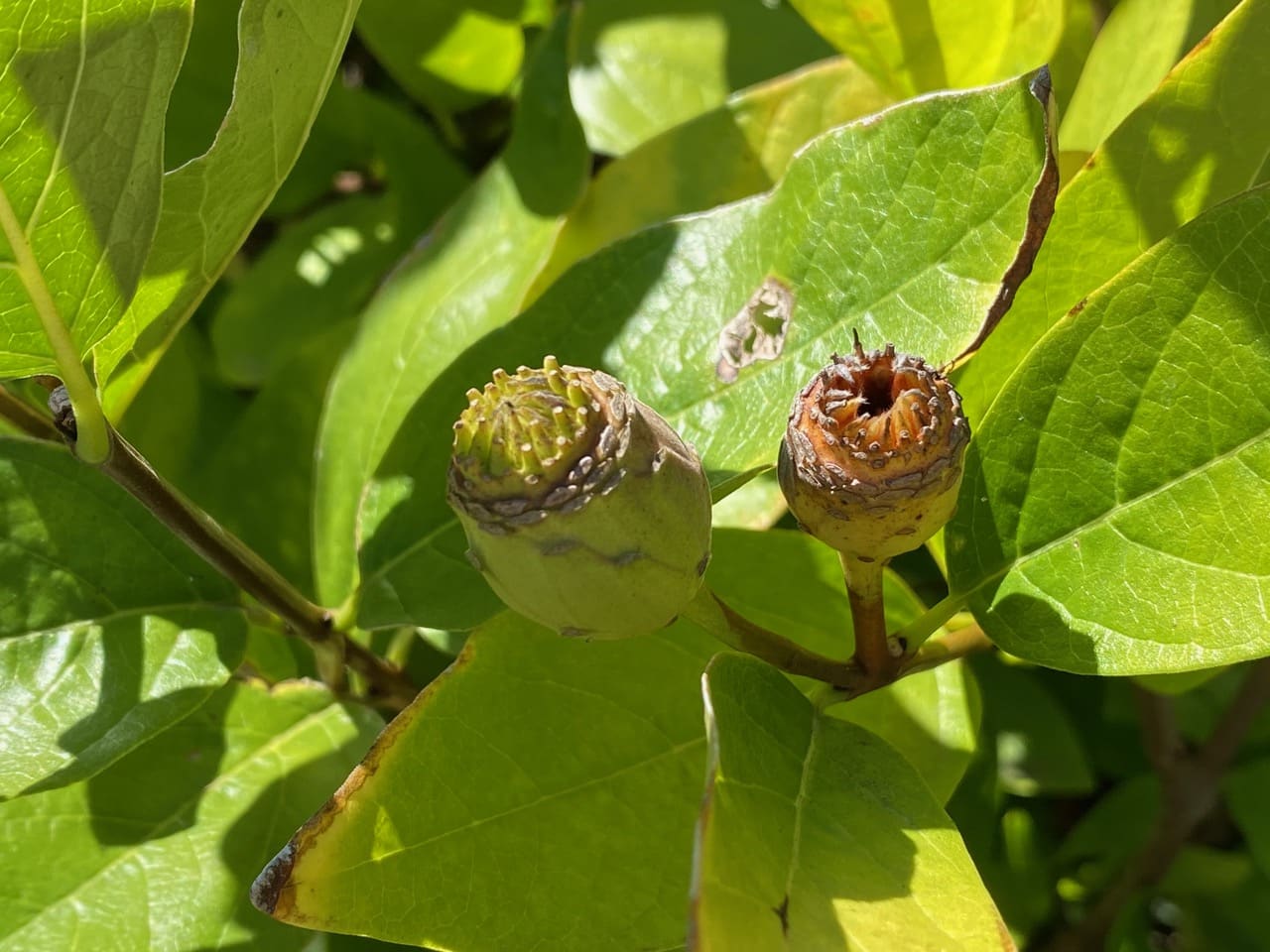
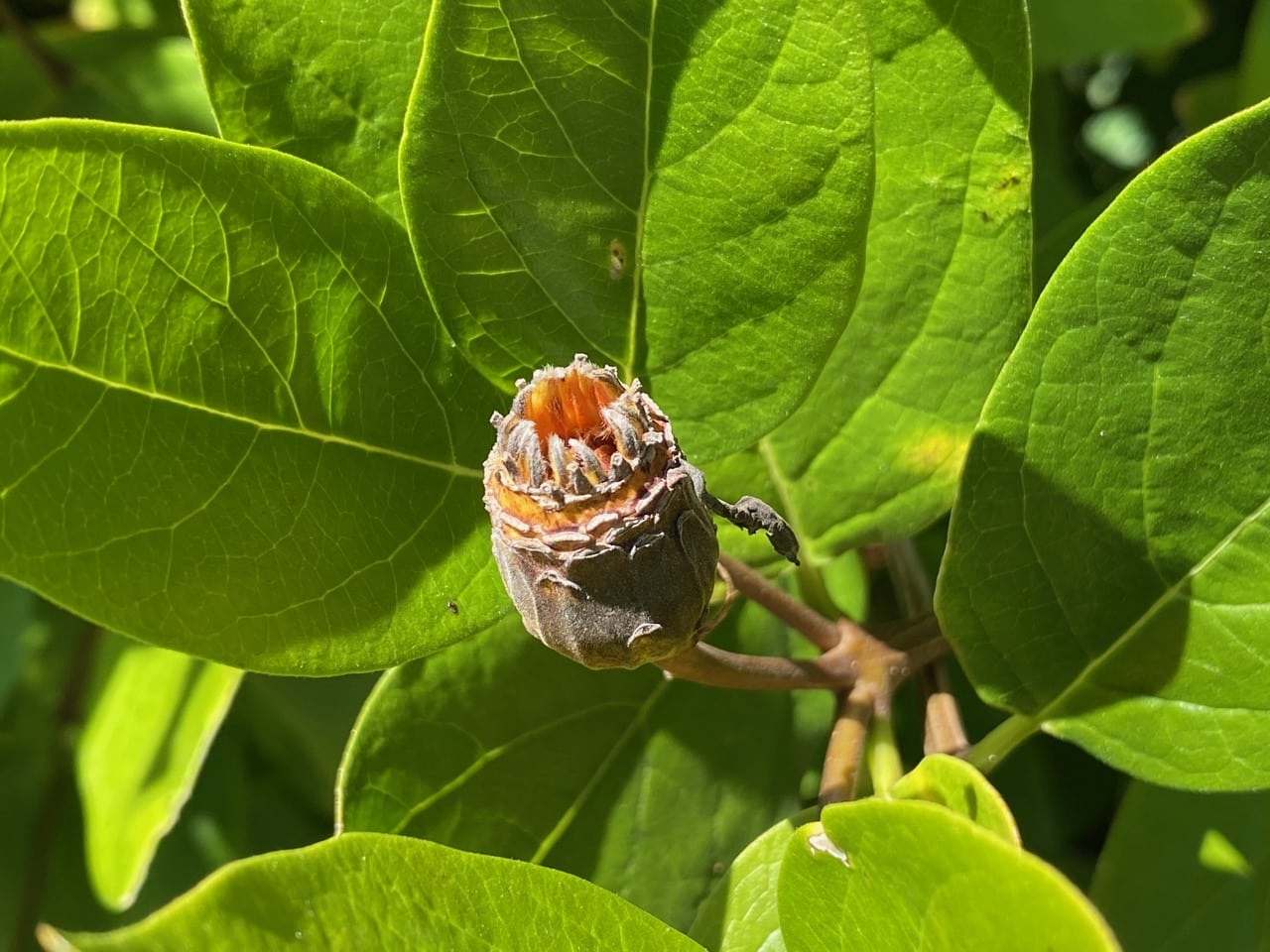
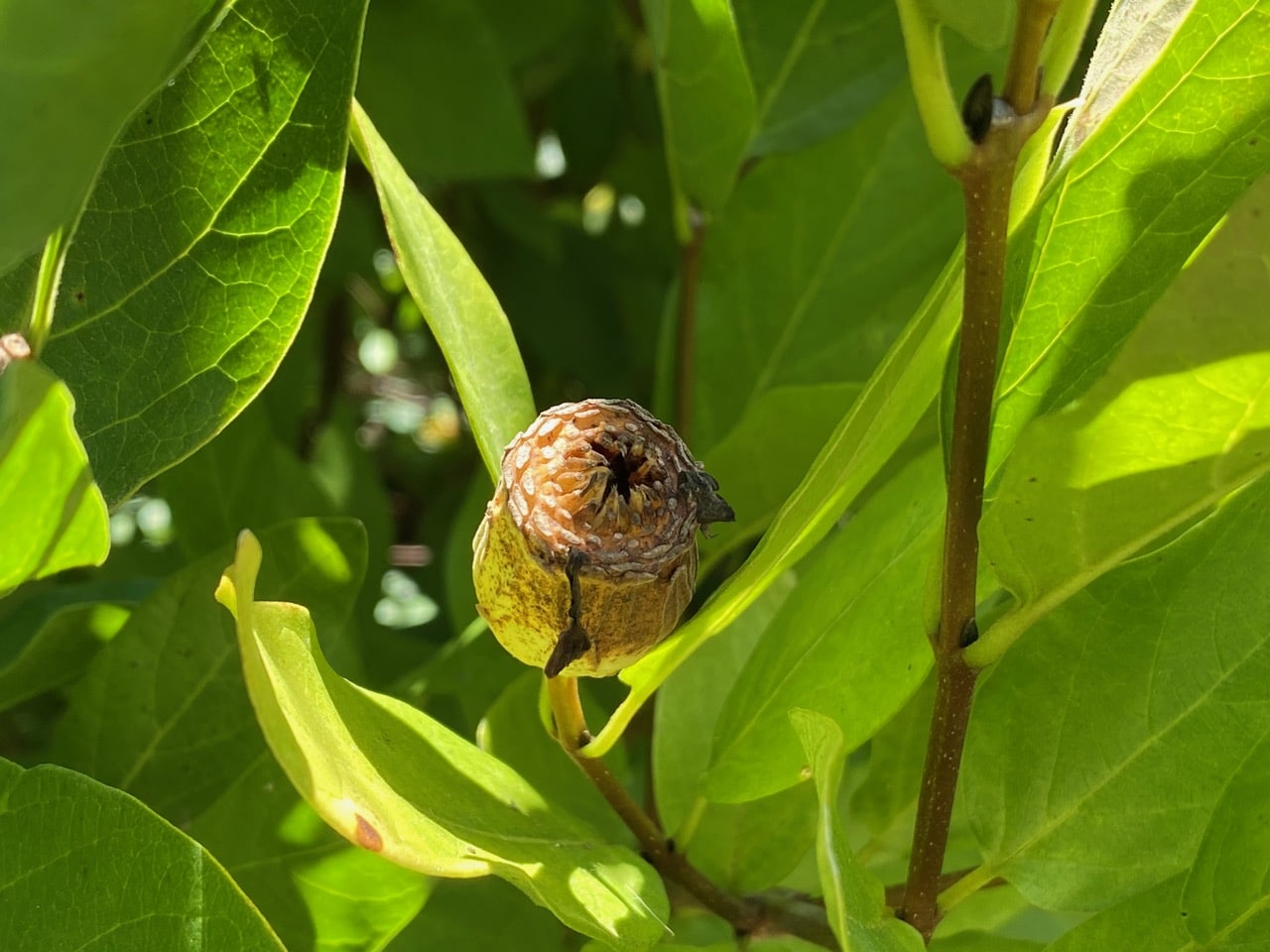
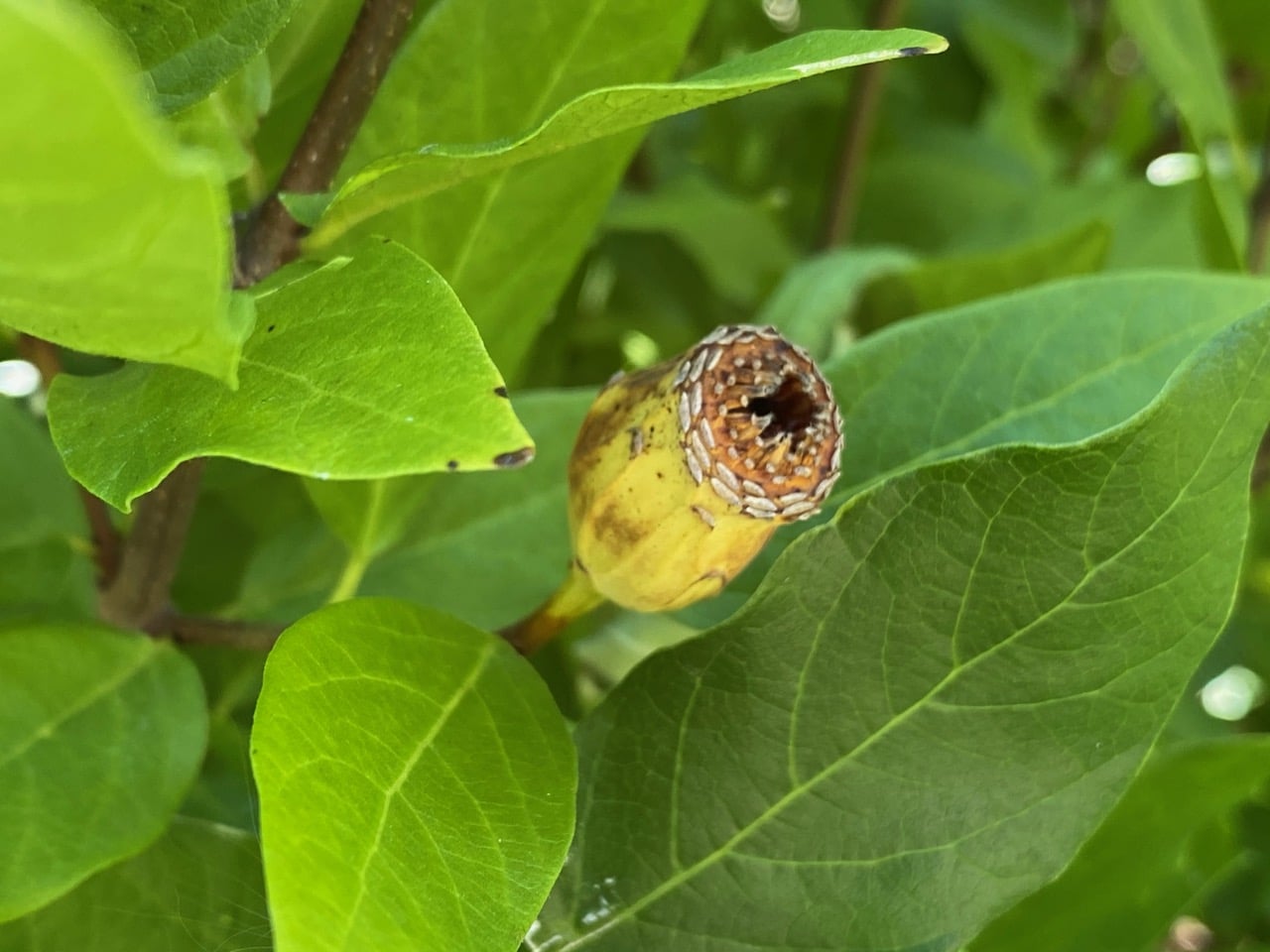
I waste little time getting to my destination – the large Western Spice Bush, Calycanthus occidentalis where I have seen a Yellowjacket excavate a receptacle pod yesterday. The pod appears to have sustained more disturbance since. I peer inside and find that it has been emptied of all contents. I also noticed that the receptacle has turned completely brown. What difference a day makes!
I look around the same plant and find more opened pods that I didn’t see yesterday…
The Yellowjackets have obviously been busy! I see a few of them fly around the developing pods, as if scouting for ripe ones. Most of them are above my head, and difficult to see in the noonday sun.
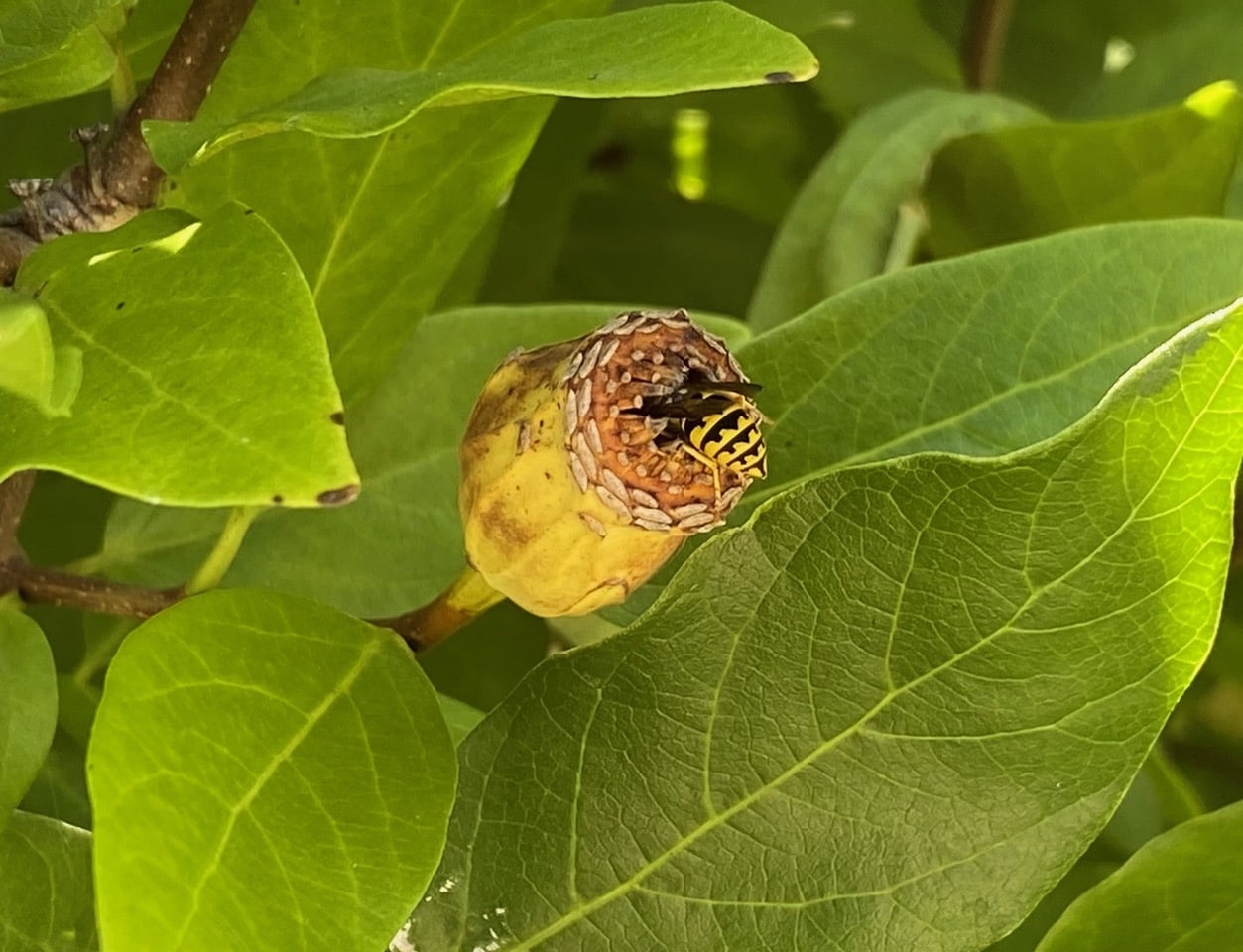
Look, a Yellowjacket atop a receptacle pod! It remains in this position for a while, twisting and turning its body.
The wasp is finally backing out…
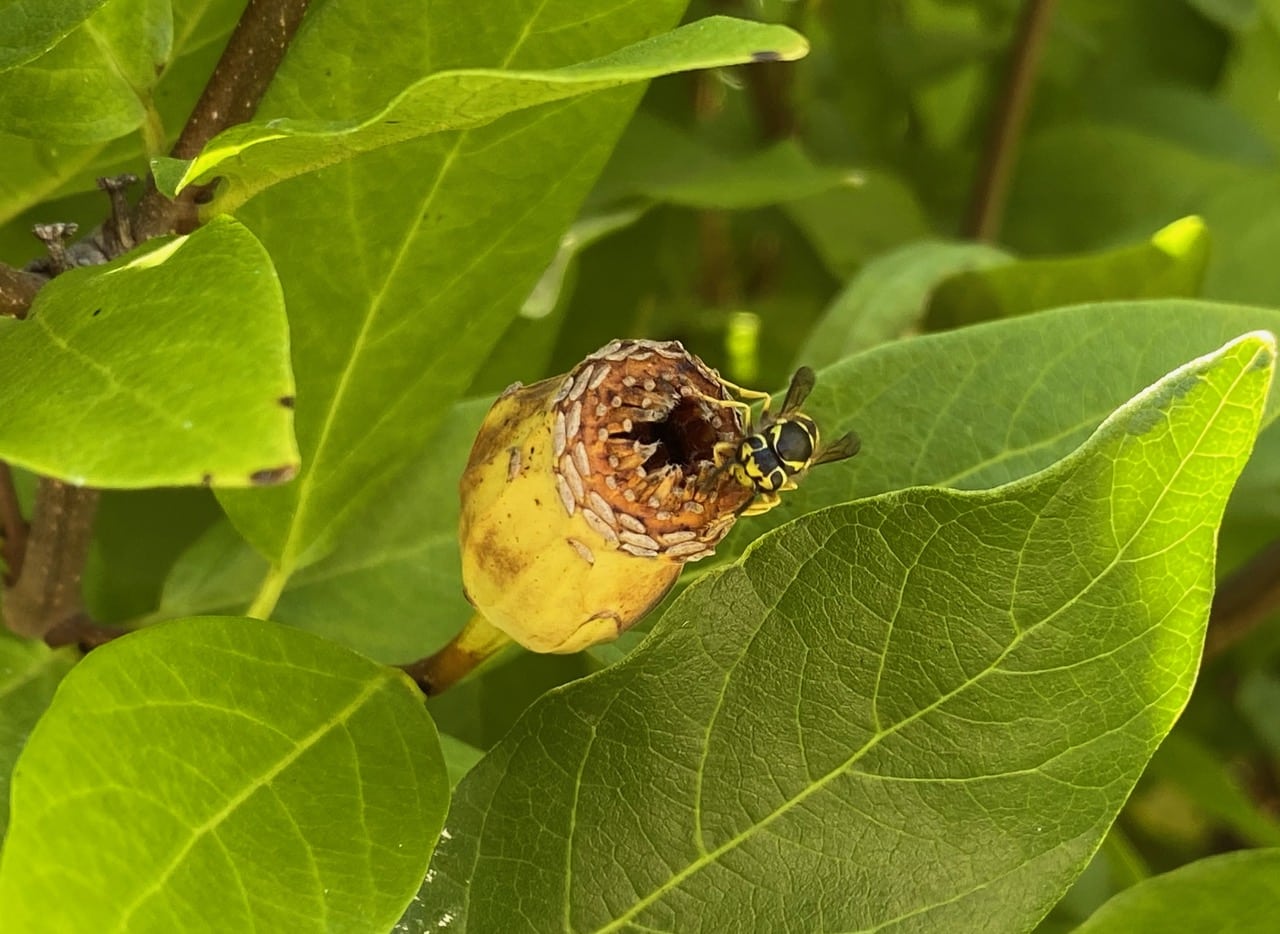
Does the wasp have something brown in its mandibles?
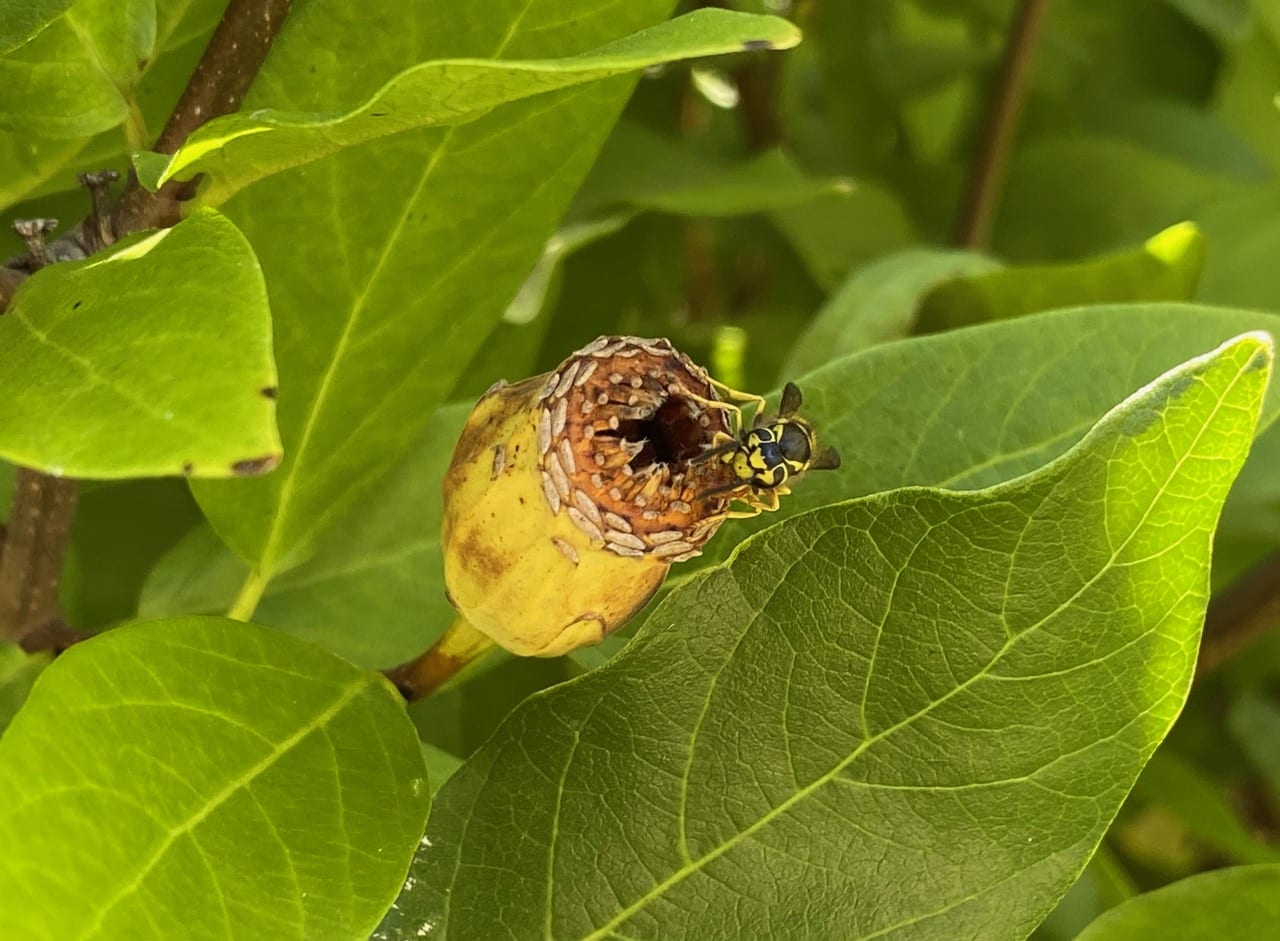
The wasp seems to be adjusting something in its jaws with its front legs.
Ah yes, that brown thing looks like it might be an achene (a dry, single-seeded fruit), or perhaps the nutritious elaiosome (marginal bodies) gathered from the achenes? One last adjustment..
… and the Yellowjacket flies off with the precious cargo held in its jaws. I have been telling the story of Spice Bush seed dispersal by Yellowjackets in my classes – it is gratifying to witness the processs for myself! Here’s the story again, in case you have missed it:
The woody pod that is left behind after the flower has senesced is technically not a fruit, but a receptacle. Inside the receptacle, numerous achenes are tightly packed. Achenes are a type of simple dry fruit that do not open at maturity. Each achene contains a single seed. The achenes of Spice Bush are flanged by a ‘marginal organ’, believed to be a nutritious food for insects.
In 2017, an interesting discovery came to light concerning the seed dispersal of the Spice Bush. Apparently, Yellowjacket wasps actively seek out the achenes hidden in the woody pods. They tenaciously excavate through the top and haul away the achenes one at a time. The achenes are actually heavier than the wasps themselves. Since wasps are carnivorous and do not usually seek plant foods, it is believed that the marginal organ is probably protein rich. It is unclear how the wasps find the pods. It is thought that they follow an olfactory cue, that is, the achenes probably emit a scent that is detectable by wasps but not by humans. At the wasps’ nest site, the achenes usually end up in the wasps’ trash pile after the marginal organs have been removed and eaten. These are capable of germinating into new plants.
The dispersal of seeds by wasps in the Vespidae family is called vespicochery.
Yellowjackets are also responsible for helping disperse the seeds of the California Pipevine, Aristolochia californica. We can look forward to seeing similar seed collecting activity on the ripening pipevine fruits in the garden.