

Pollinator Post 8/26/24
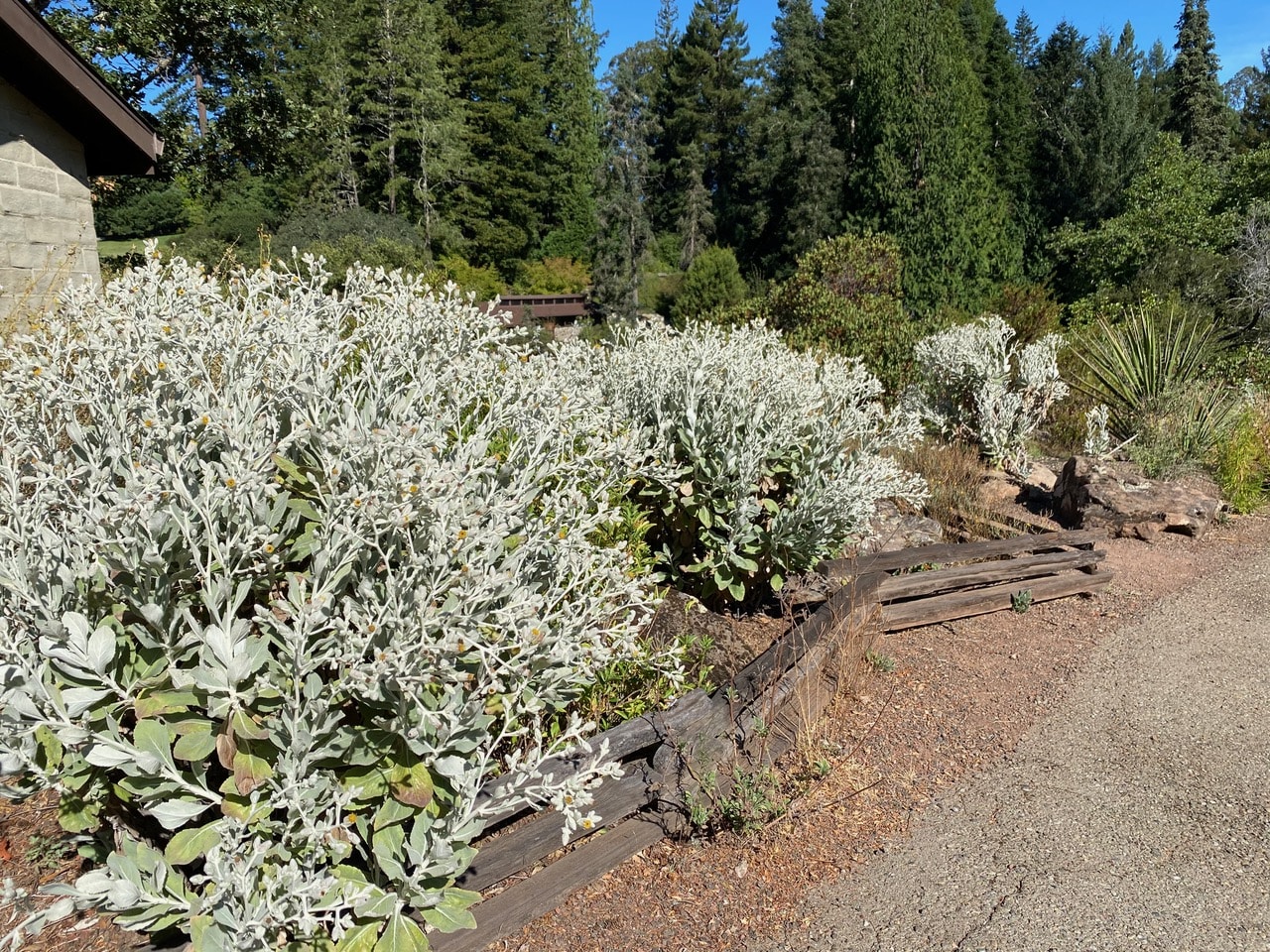
I head up the Berkeley hills for the cooler temperatures and cleaner air this morning. What better place to see insects this time of year than the Regional Parks Botanic Gardens? The garden is well irrigated, and some plants are still in bloom here.
Although these silvery-gray plants by the visitor center do not appear to be in bloom, insects are swarming over them. On closer inspection, the plants are actually blooming profusely. They appear to be in the Sunflower family, Asteraceae, with small, compact flowerheads reminiscent of the Everlastings. Unfortunately there are no labels to identify the plants.
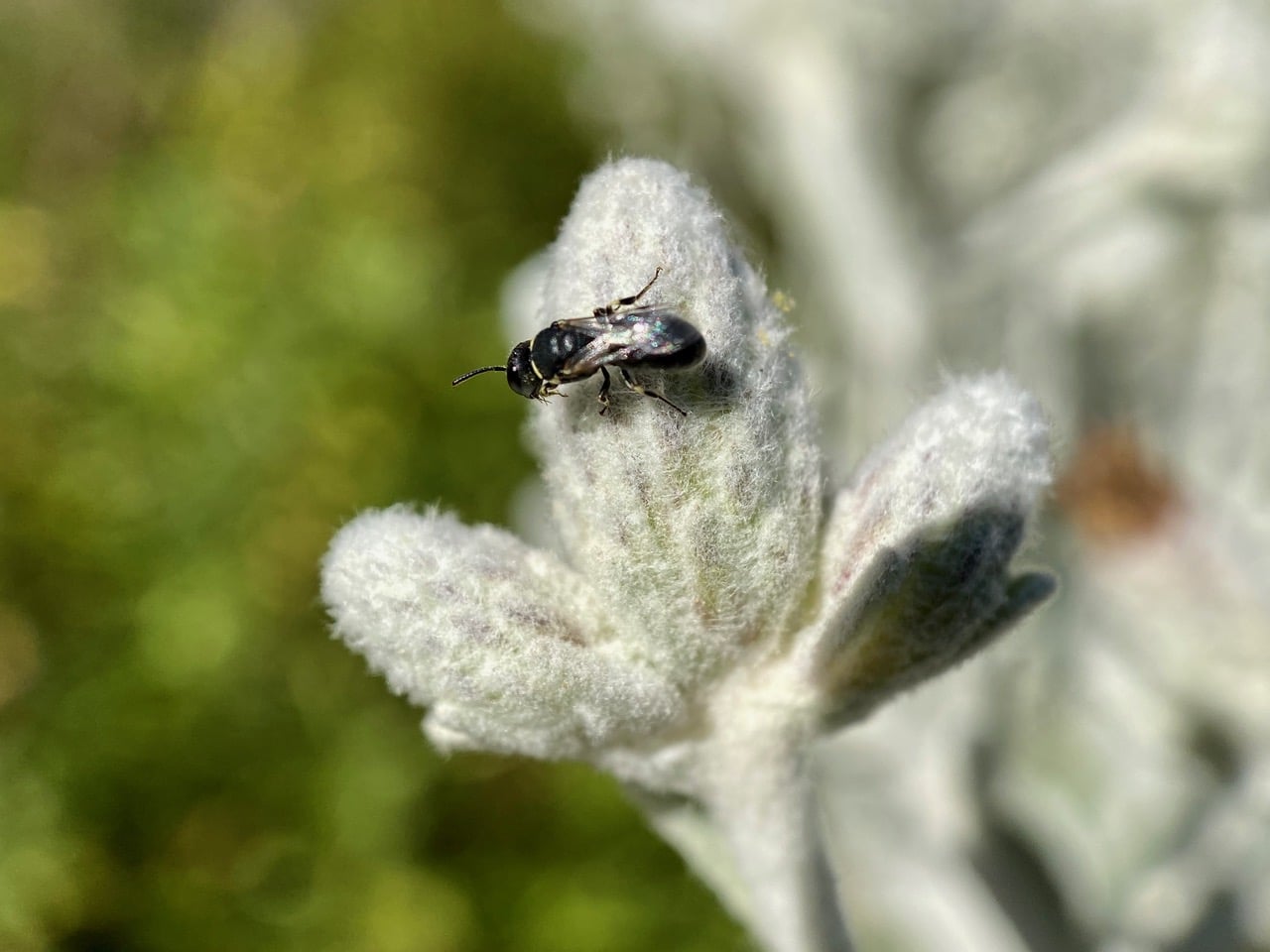
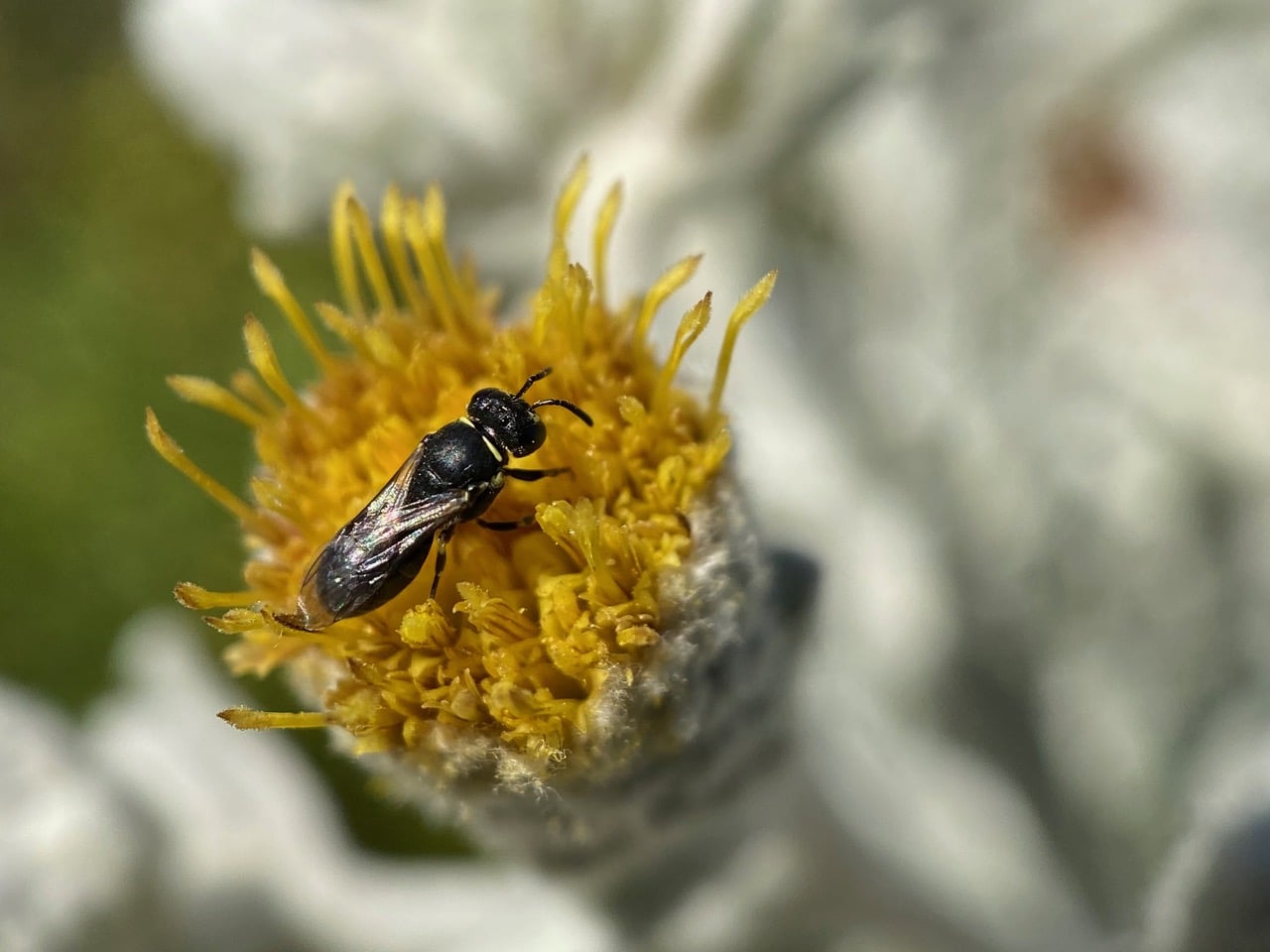
A Masked Bee, Hylaeus sp. (family Colletidae) is grooming itself on the fuzzy immature flowerhead of the overall hairy, felty plant.
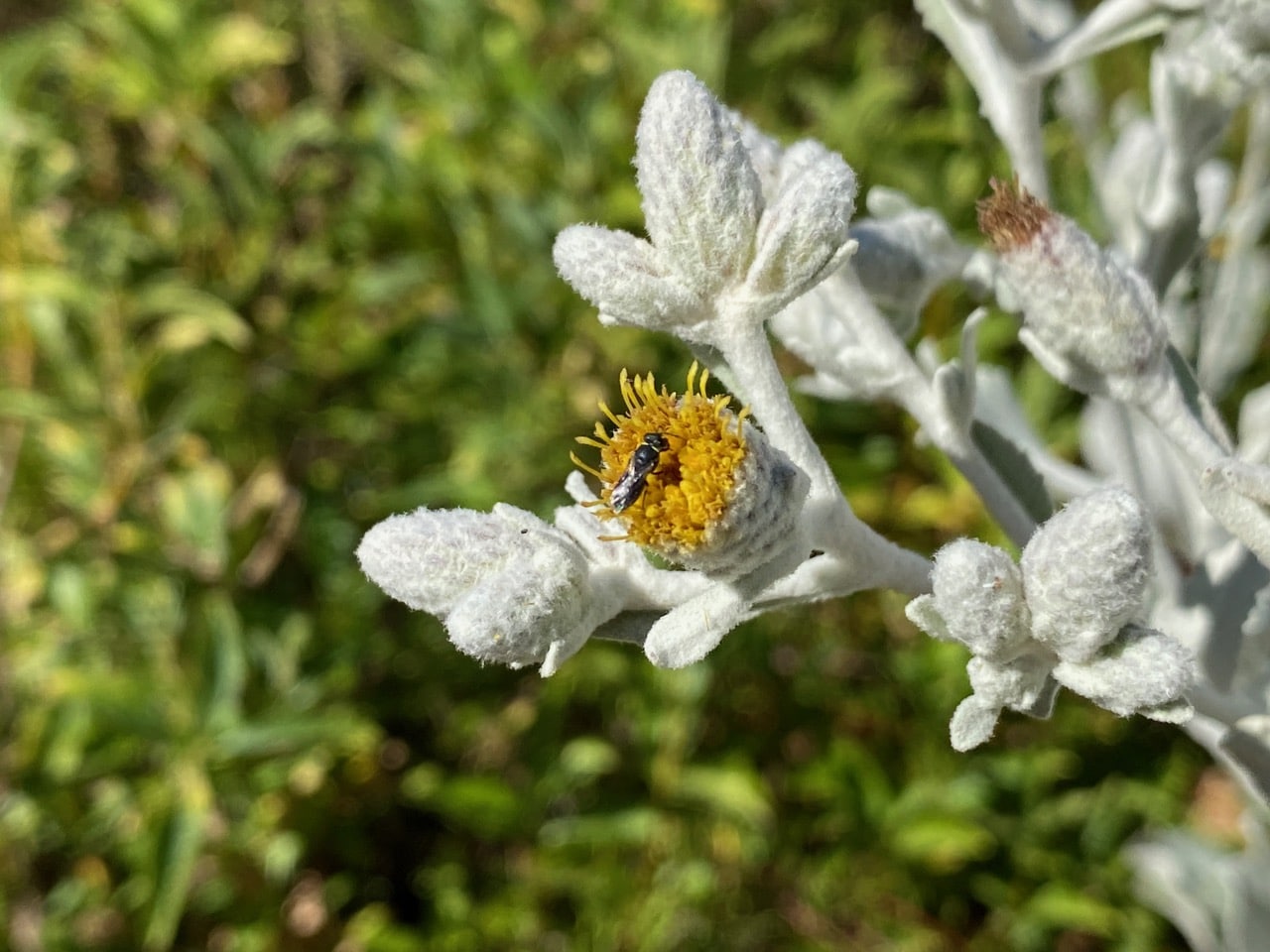
This Masked Bee is foraging on an opened flowerhead.
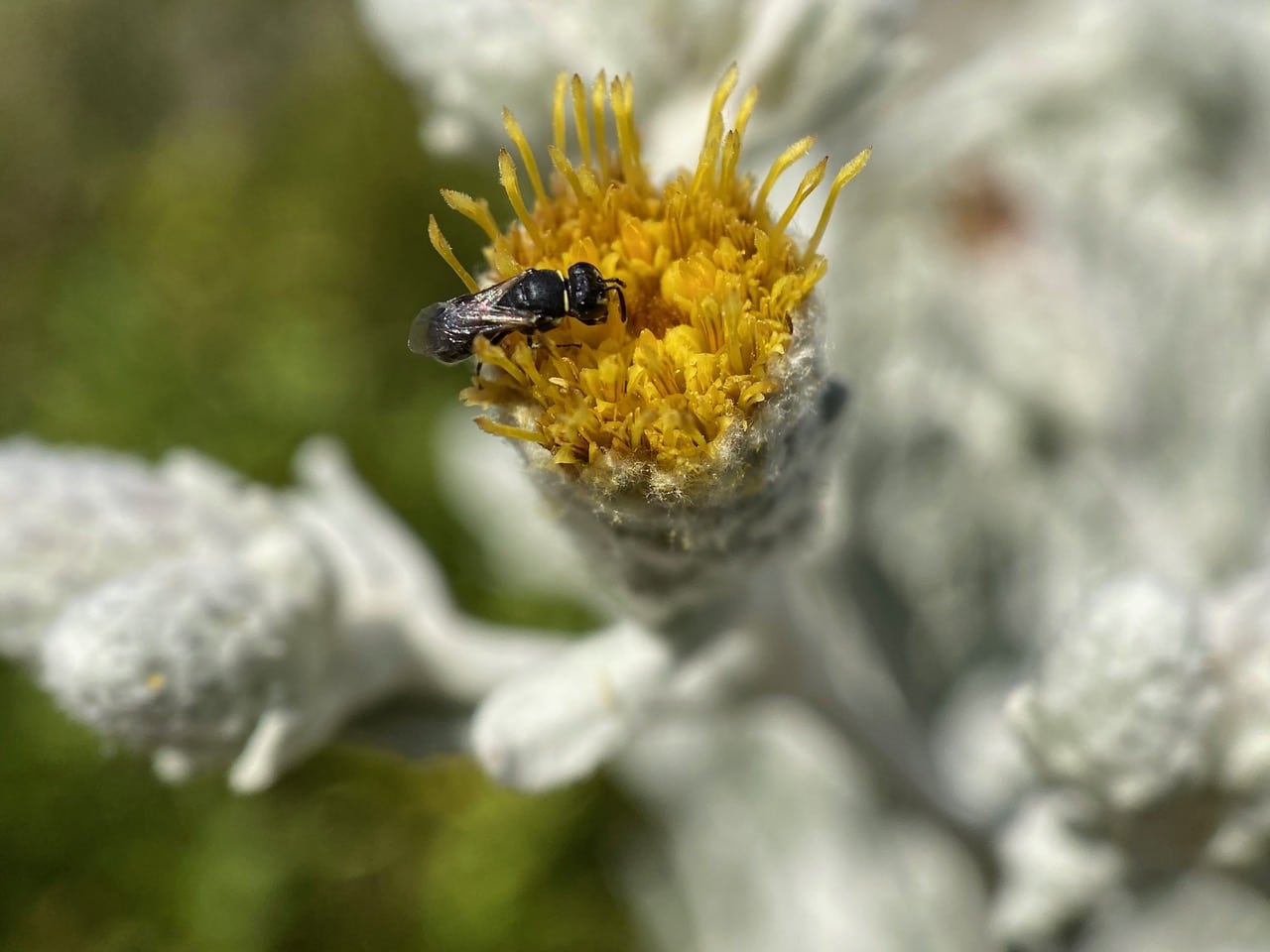
Hylaeus (family Colletidae) are shiny, slender, hairless, and superficially wasp-like bees. They are small, 5 to 7 mm long, usually black with bright yellow or white markings on their face and legs. These markings are more pronounced on the males. Hylaeus do not carry pollen and nectar externally, they instead store their food in the crop and regurgitate it upon returning to their nests. They are primarily generalist foragers. Hylaeus are short-tongued, but their small body size enables them to access deep flowers. Hylaeus nest in stems and twigs, lining their brood cells with self-secreted cellophane-like material. They lack strong mandibles and other adaptations for digging, using instead pre-existing cavities made by other insects.
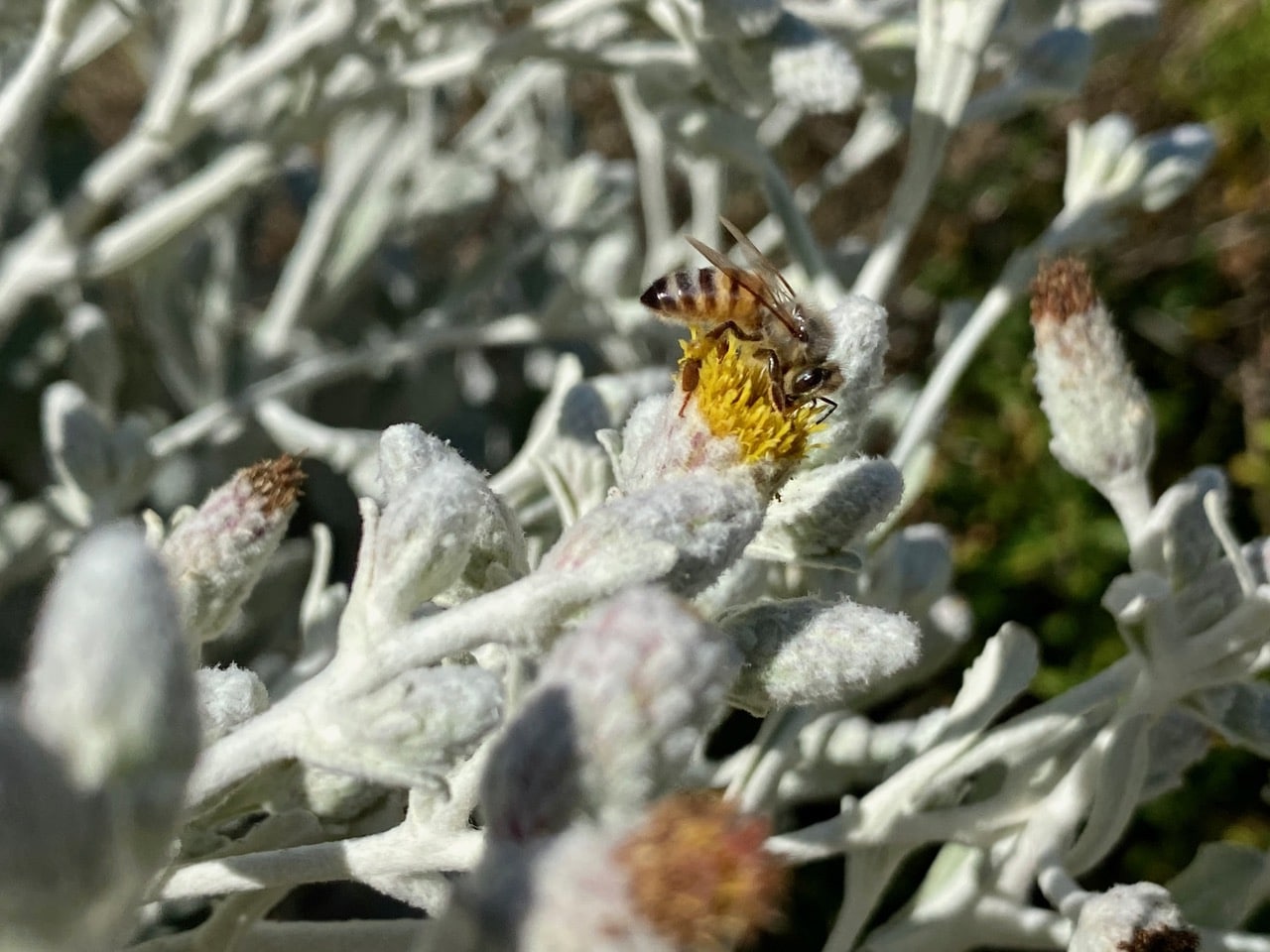
It is a hot, thirsty time of year. Every insect is looking for liquid sustenance which is in short supply. A Honey Bee, Apis mellifera (family Apidae) is taking full advantage of the compact flowers.

A small, dark and glossy fly lands on a flowerhead to take nectar. It is a Woodlouse Fly, Stevenia deceptoria (family Rhinophoridae). These small, black, bristly flies are somewhat related to the Tachinidae. The larvae are mostly parasitoids of woodlice (pill bugs), beetles, spiders and other arthropods, and occasionally snails.

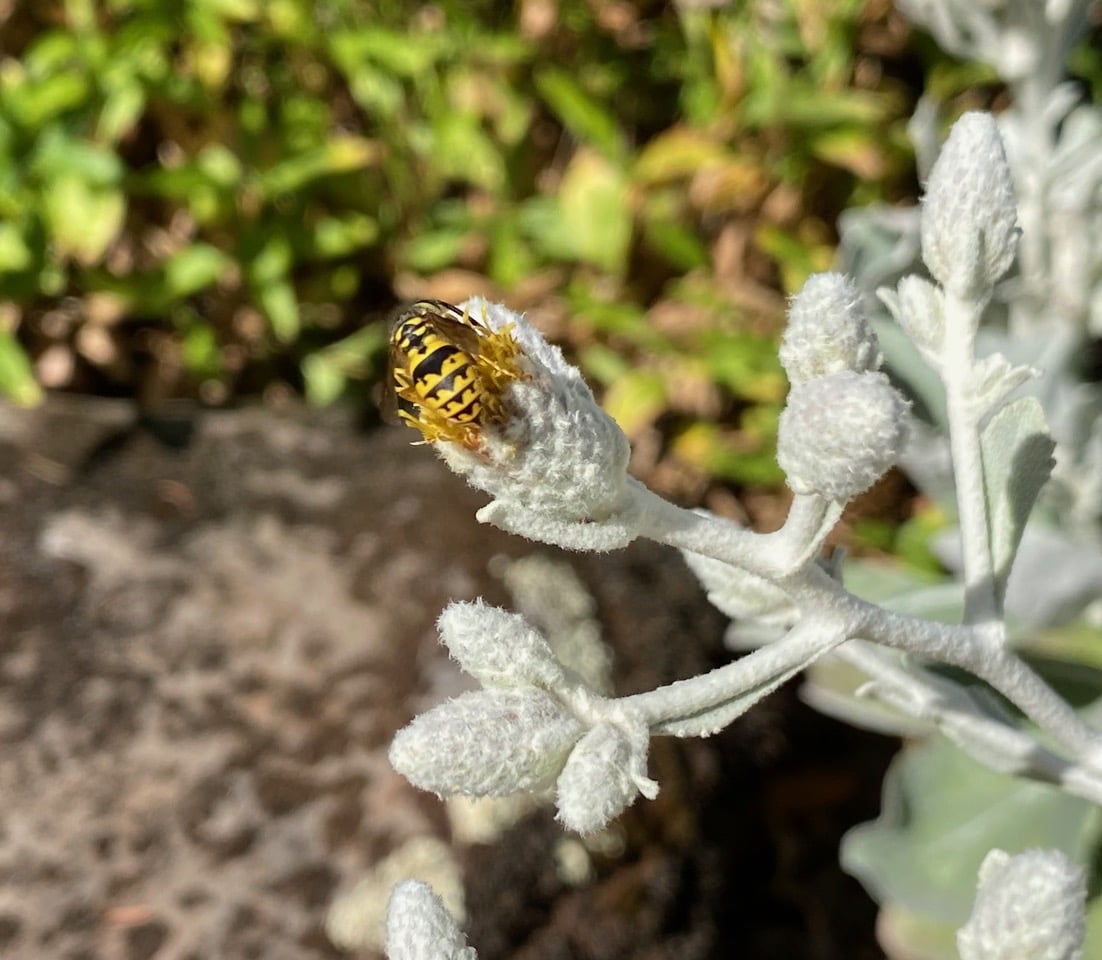
That looks like the back end of a Yellowjacket.
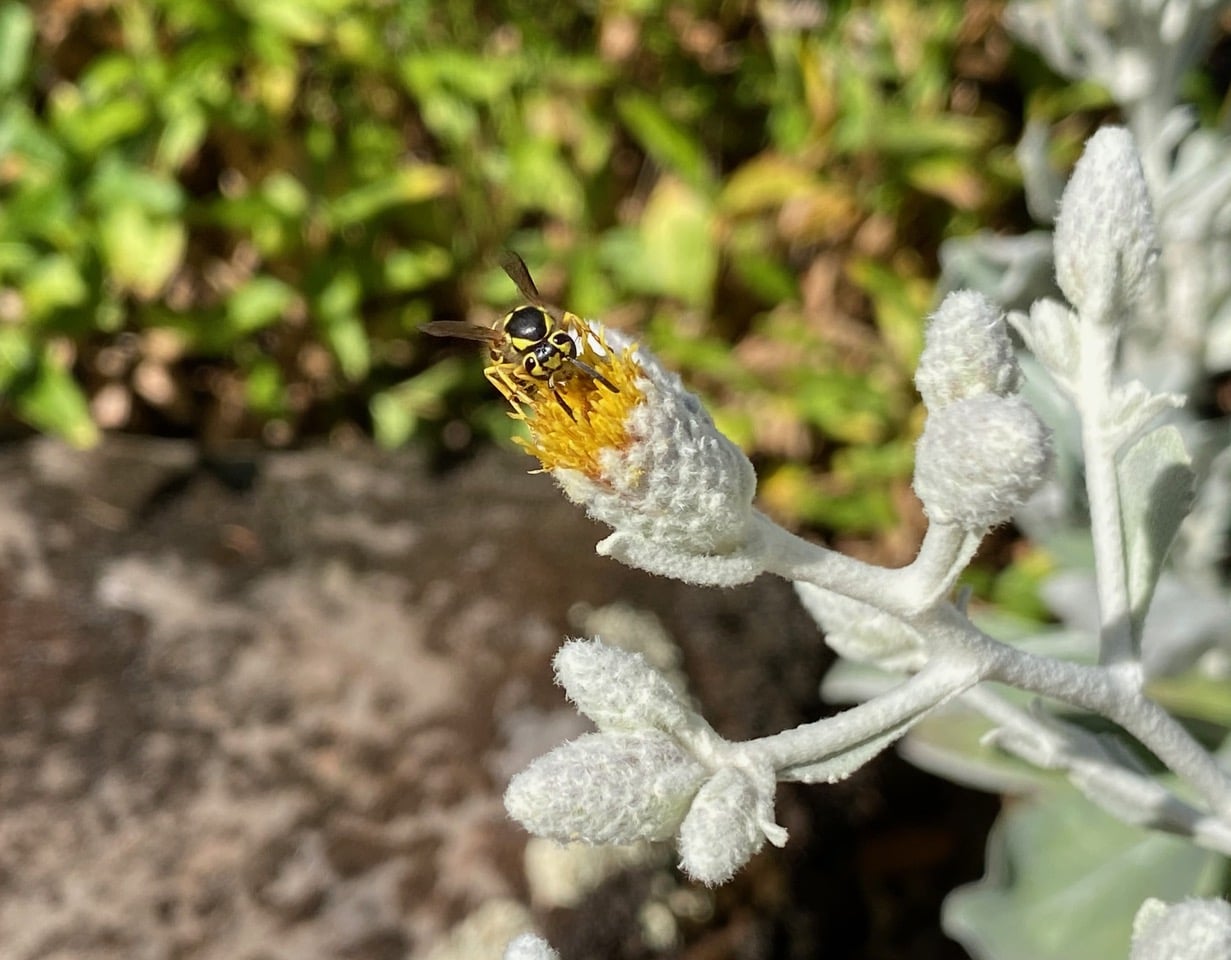
Front end of the same Yellowjacket.
Yellowjacket is the common name for predatory social wasps of the genera Vespula and Dolicovespula (family Vespidae). Yellowjackets are social hunters living in colonies containing workers, queens, and males (drones). Colonies are annual with only inseminated queens overwintering. Queens emerge during the warm days of late spring or early summer, select a nest site, and build a small paper nest in which they lay eggs. They raise the first brood of workers single-handedly. Henceforth the workers take over caring for the larvae and queen, nest expansion, foraging for food, and colony defense. The queen remains in the nest, laying eggs. Later in the summer, males and queens are produced. They leave the parent colony to mate, after which the males quickly die, while fertilized queens seek protected places to overwinter. Parent colony workers dwindle, usually leaving the nest to die, as does the founding queen. In the spring, the cycle is repeated.
Yellowjackets have lance-like stingers with small barbs, and typically sting repeatedly. Their mouthparts are well-developed with strong mandibles for capturing and chewing insects, with probosces for sucking nectar, fruit, and other juices. Yellowjacket adults feed on foods rich in sugars and carbohydrates such as plant nectar and fruit. They also search for foods high in protein such as insects and fish. These are chewed and conditioned in preparation for larval consumption. The larvae secrete a sugary substance that is eaten by the adults.
The Western Yellowjackets typically build nests underground, often using abandoned rodent burrows. The nests are made from wood fiber that the wasps chew into a paper-like pulp. The nests are completely enclosed except for a small entrance at the bottom. The nests contain multiple, horizontal tiers of combs within. Larvae hang within the combs.
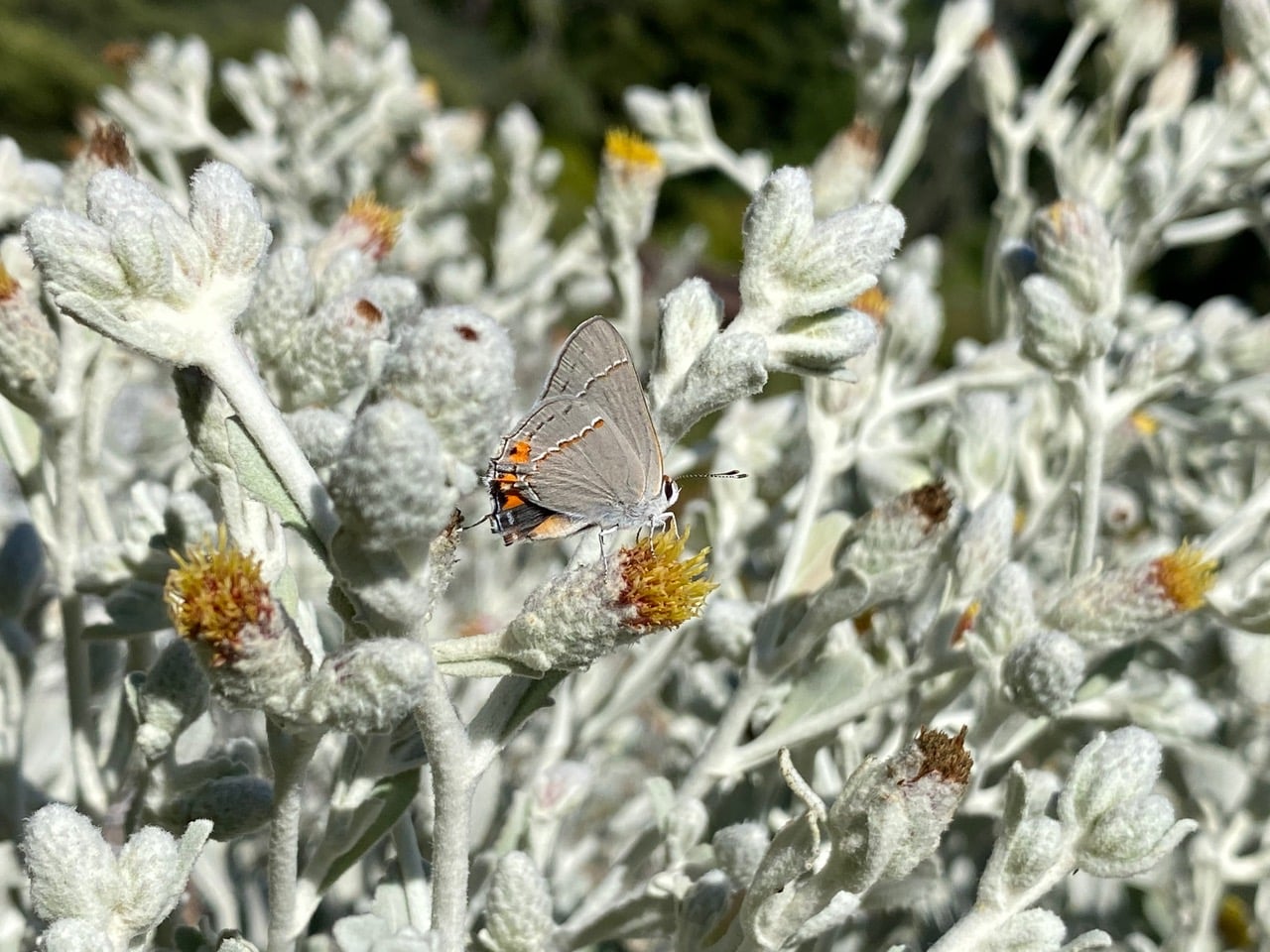
Amidst the riot of silvery gray flower buds, a Gray Hairstreak, Strymon melinus (family Lycaenidae) is hardly visible. The little butterfly is rubbing its hind wings together as it takes nectar from a flowerhead.
Why the name “hairstreak”? These small butterflies have a slim, hair-like tail on the lower corner of each hindwing. Gray Hairstreak also has colorful false eyespots near the base of each tail. The eyespots and antenna-like tails are believed to fool predators into mistaking its tail for its head. Hairstreaks even add a behavioral component – a nectaring hairstreak often rubs its wings up and down, simulating the movement of twitchy antennae. This may fool birds, lizards, and spiders into attacking the wrong end, sparing the life of the butterfly.

Female Gray Hairstreaks lay eggs singly on the flowers, flower buds, young fruits and nearby leaves of a host plant. Host plants include a wide variety of plants, notably from the pea (Fabaceae) and mallow (Malvaceae) families. The caterpillars are greenish at the start, but older individuals range in color from gray to pink. As in many species of Lycaenidae, Gray Hairstreak larvae are myrmecophiles (ant-lovers) – often tended by ants. Ants harvest a sweet liquid from the caterpillar’s dorsal nectary organ (“honey gland”) and in exchange may protect them from predators. Larvae of many Lycaenidae species also communicate with ants via ant-like sounds (clicks and hums) or by sending vibrations through the substrate.
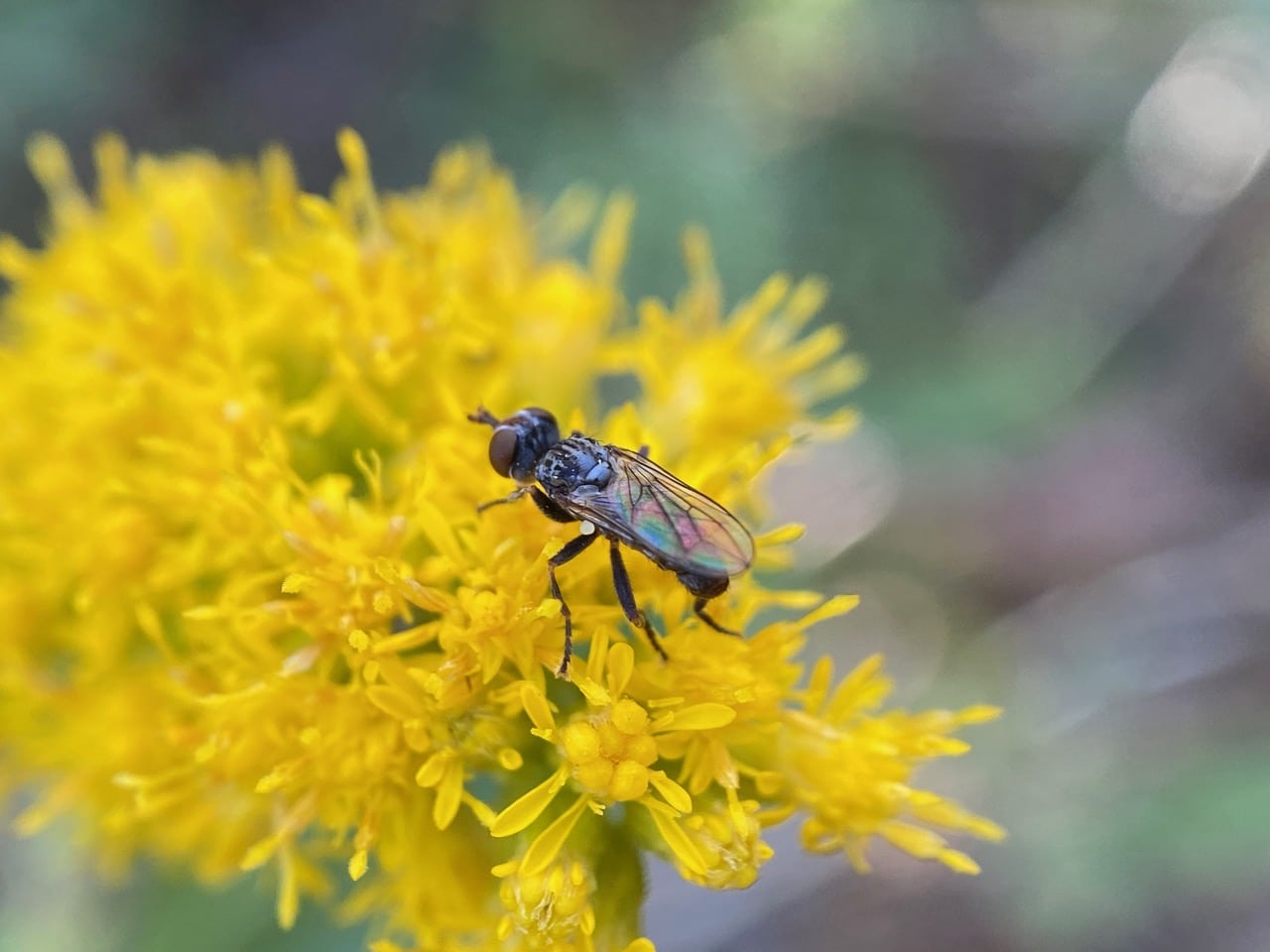
A Thick-headed Fly, Zodion sp. (family Conopidae) is foraging on an inflorescence of California Goldenrod, Solidago velutina ssp. californica. This is the same patch of goldenrods where I found a mating pair of the flies just 10 days ago!
The small and little-known family of Conopidae, commonly called the Thick-headed Flies, are distributed worldwide. Remarkable mimics of wasps and bees, the flies are frequently found at flowers, feeding on nectar with their long probosces. The head is broad; the oral opening is large and the proboscis is long, slender and often geniculate (elbowed). The larvae of all Conopids are internal parasitoids, mostly of aculeate (stinging) Hymenoptera (wasps, bees). Adult females aggressively intercept their hosts in flight to deposit eggs. Vulnerable foraging bees are likely the most susceptible to parasitism by Conopids. The female’s abdomen is modified to form what amounts to a “can opener” to pry open the segments of the host abdomen as the egg is inserted. The fly larva feeds on the host from the inside out. The vast majority of parasitized bumble bees bury themselves by burrowing into the ground right before they die. This behavior does not matter to the bees – they are doomed. But it is critical for the flies – if the host dies underground, the fly is sheltered from the elements, predators and parasites.
Zodion species are parasitic on bumble bee workers, honey bees, Andrena, and Striped Sweat Bees (Agapostemon sp.)

A Bee Fly, Geron sp. (family Bombyliidae) is foraging on the flowers of California Goldenrod.
“Geron” is Greek for “old man” (imagine a humpbacked man carrying a cane). The fly is easily recognizable from its humpbacked appearance, conical abdomen and shiny, golden pubescence. Like many bee flies, it flies around with a long proboscis that cannot be folded up. Larvae are parasitoids of the immature stages (caterpillars) of various moths in concealed situations. Some are also hyperparasitoids. Adults take nectar at flowers, preferring members of the sunflower family, Asteraceae. Unusual for bee flies, Geron often bobs up and down above an inflorescence before landing to nectar. Males often form loose swarms.

A Sunflower Seed Maggot Fly, Neotephritis finalis (family Tephritidae) is perched on the withered flowers of California Goldenrod.
Commonly called Fruit Flies, Tephritids are small to medium-sized flies that are often colorful, and usually with picture wings. The larvae of almost all Tephritidae are phytophagous. Females deposit eggs in living, healthy plant tissues using their telescopic ovipositors. Here the larvae find their food upon emerging. The larvae develop in leaves, stems, flowers, seeds, fruits, and roots of the host plant, depending on the species. Adults are often found on the host plant and feeding on pollen, nectar, rotting plant debris, or honeydew. Tephritid flies are of major economic importance as they can cause damage to fruit and other plant crops. On the other hand, some Tephritids are used as agents of biological control of noxious weeds.
The Sunflower Seed Maggot is a sunflower specialist, found on over 20 species of Asteraceae. Larvae feed on immature seeds and pupate in flowerheads.
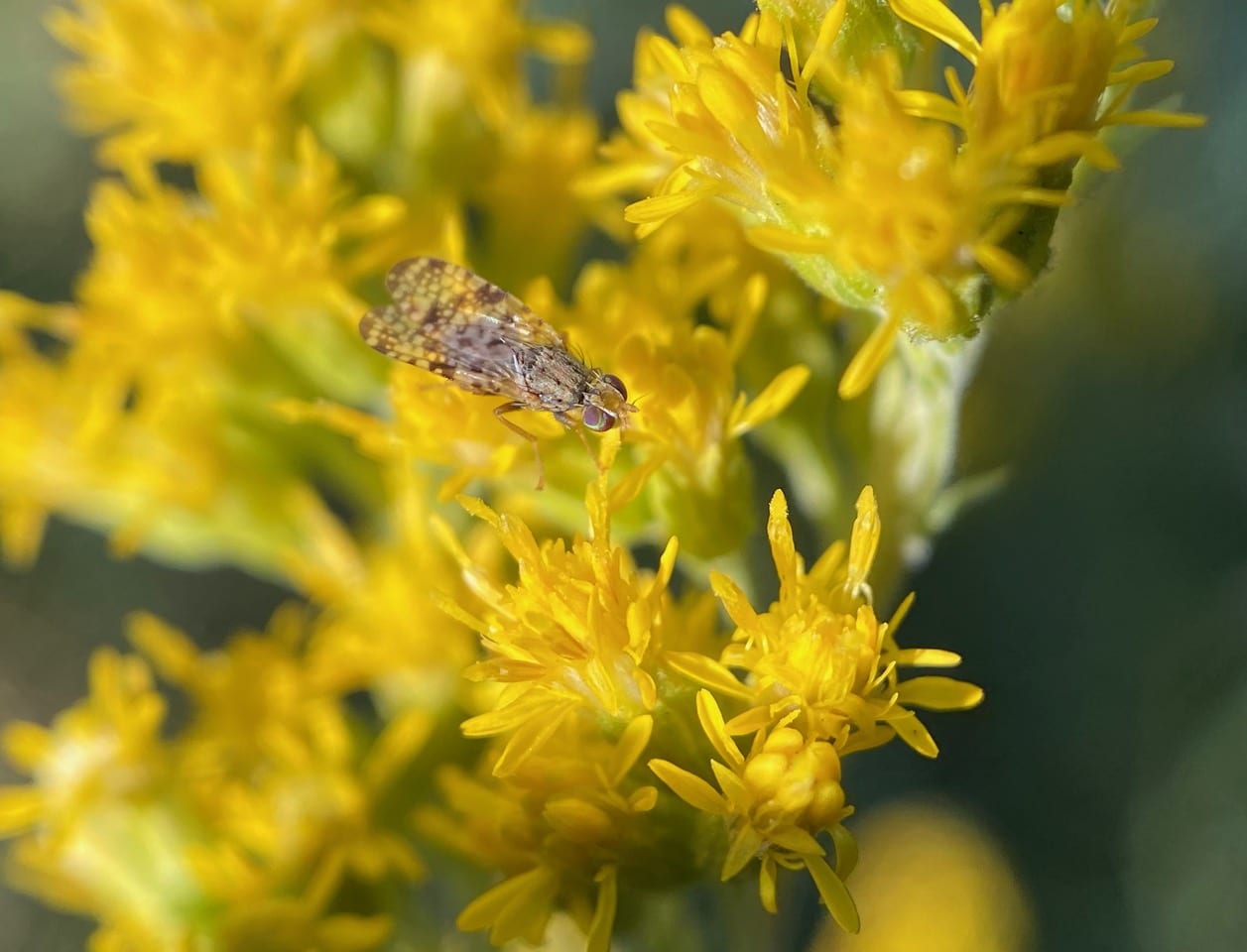
The fly descends to forage among the fresh flowers.
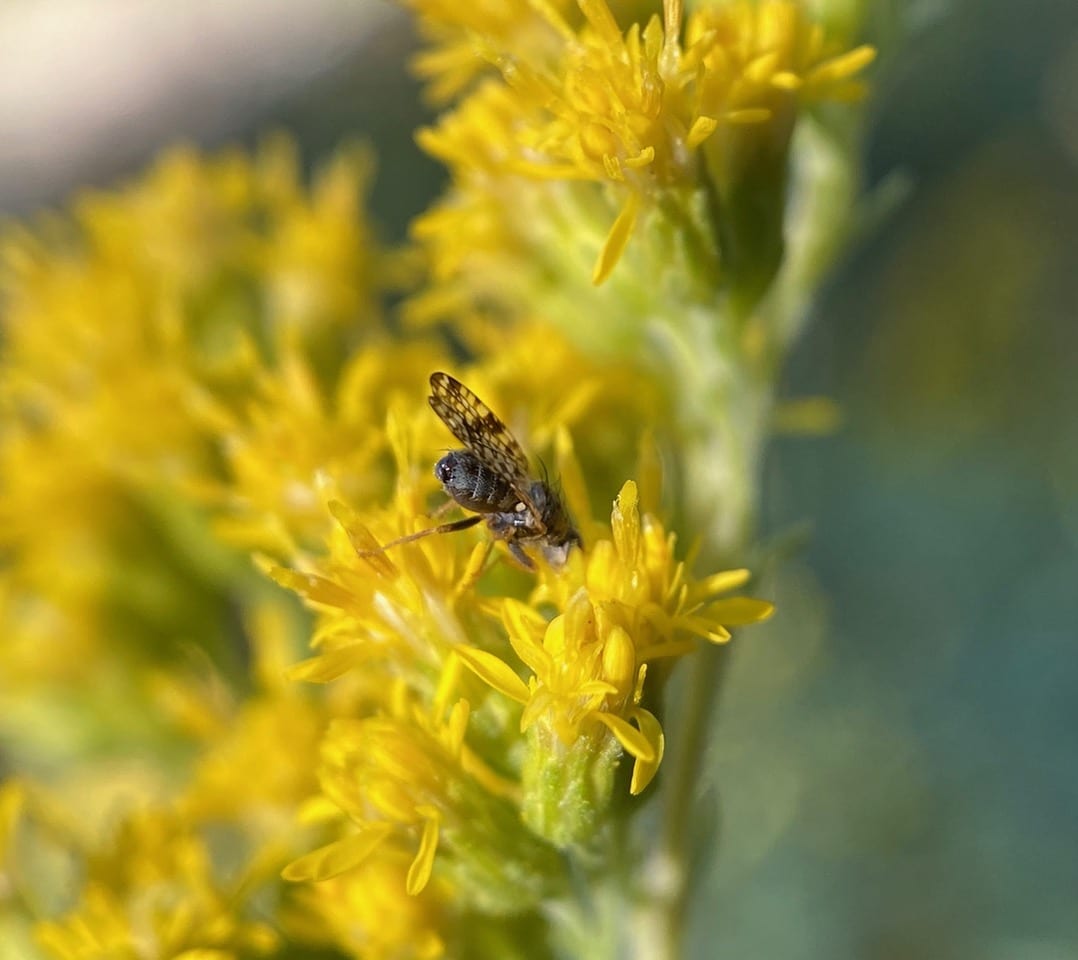
The Fruit Fly appears to be a male. Females of the species have a prominent pointed oviscape on the tip of their abdomen.
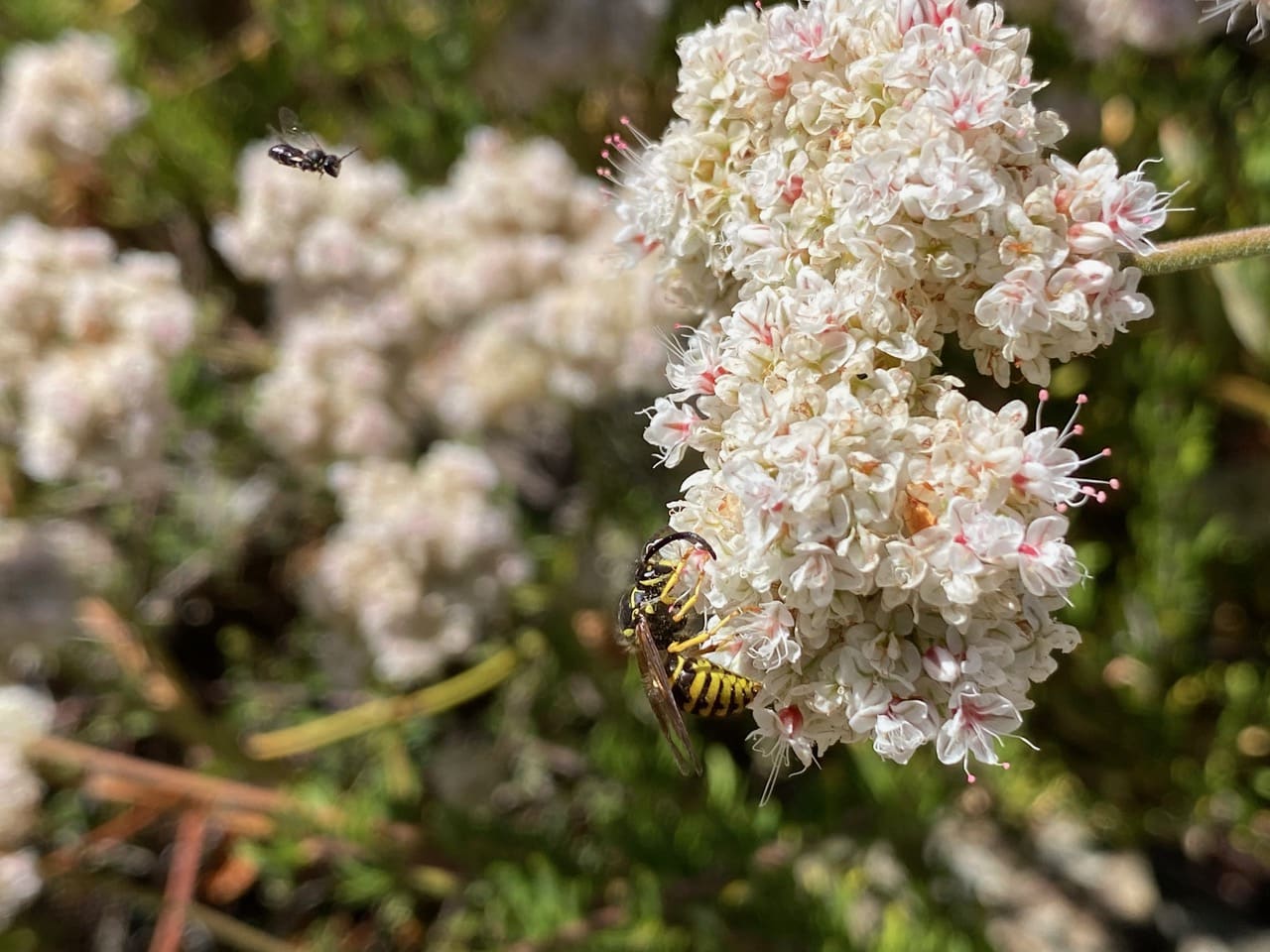
The blooming California Buckwheat, Eriogonum fasciculatum near the front gate is abuzz with insect activity. A tiny Masked Bee, Hylaeus sp. (Family Colletidae) is coming in for landing while a Yellowjacket wasp is taking nectar from an inflorescence.
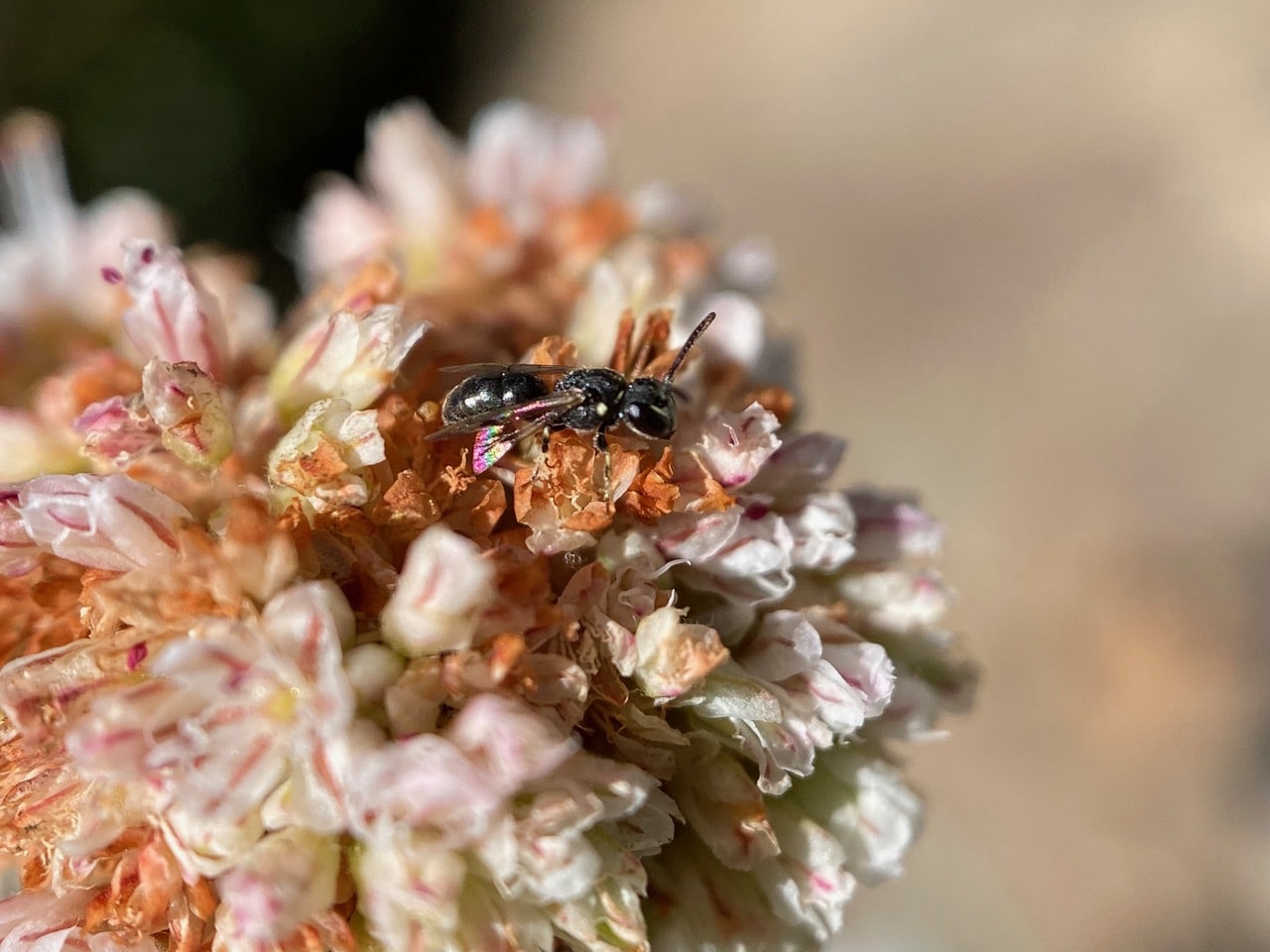
A Masked Bee, Hylaeus sp. (family Colletidae) has landed on a cluster of flowers of California Buckwheat.
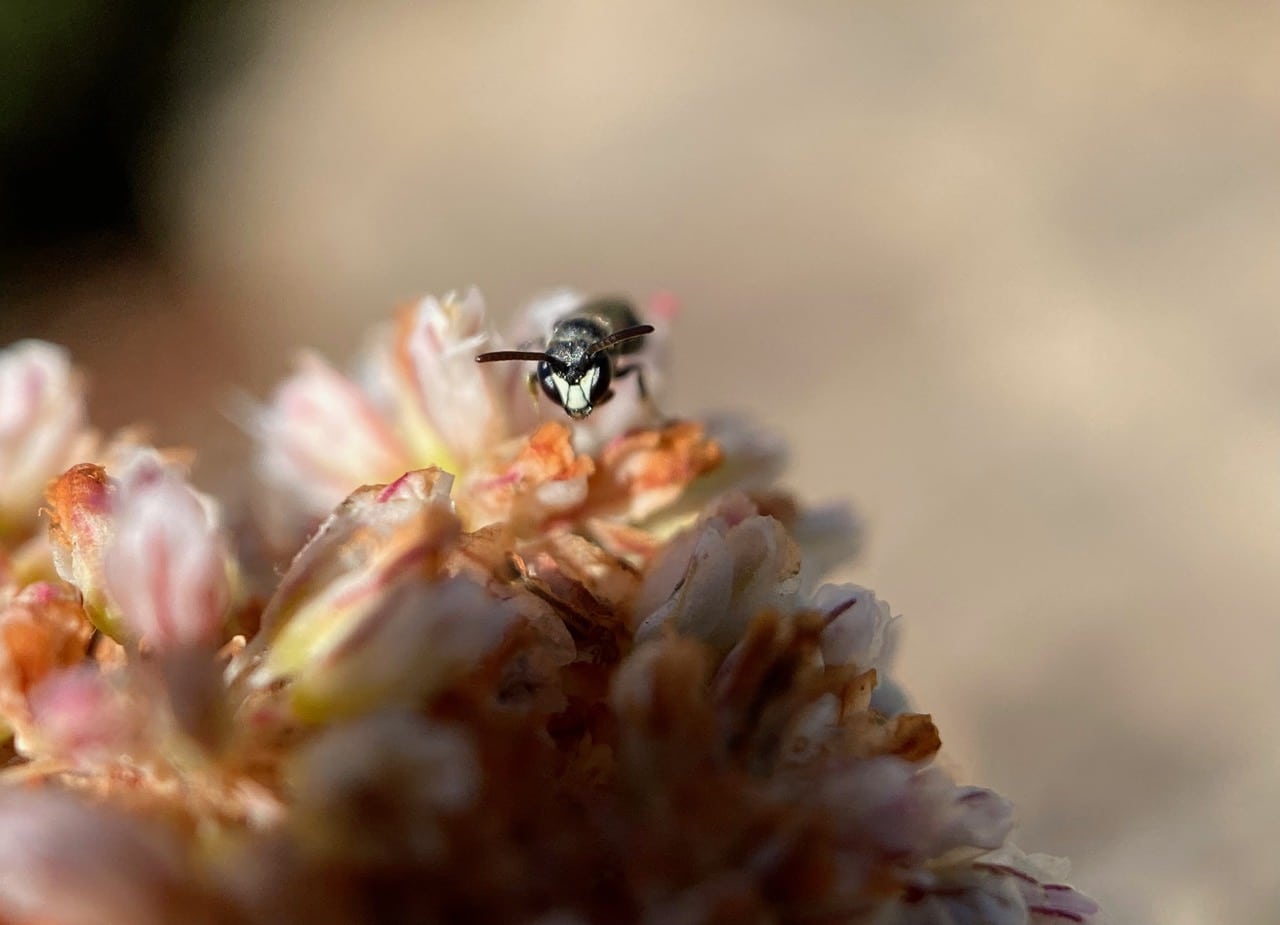
It is a male, with a large patch of yellow markings on his face. There appears to be numerous males this time of year.
Hylaeus (family Colletidae) are shiny, slender, hairless, and superficially wasp-like bees. They are small, 5 to 7 mm long, usually black with bright yellow or white markings on their face and legs. These markings are more pronounced on the males. Hylaeus do not carry pollen and nectar externally, they instead store their food in the crop and regurgitate it upon returning to their nests. They are primarily generalist foragers. Hylaeus are short-tongued, but their small body size enables them to access deep flowers. Hylaeus nest in stems and twigs, lining their brood cells with self-secreted cellophane-like material. They lack strong mandibles and other adaptations for digging, using instead pre-existing cavities made by other insects.
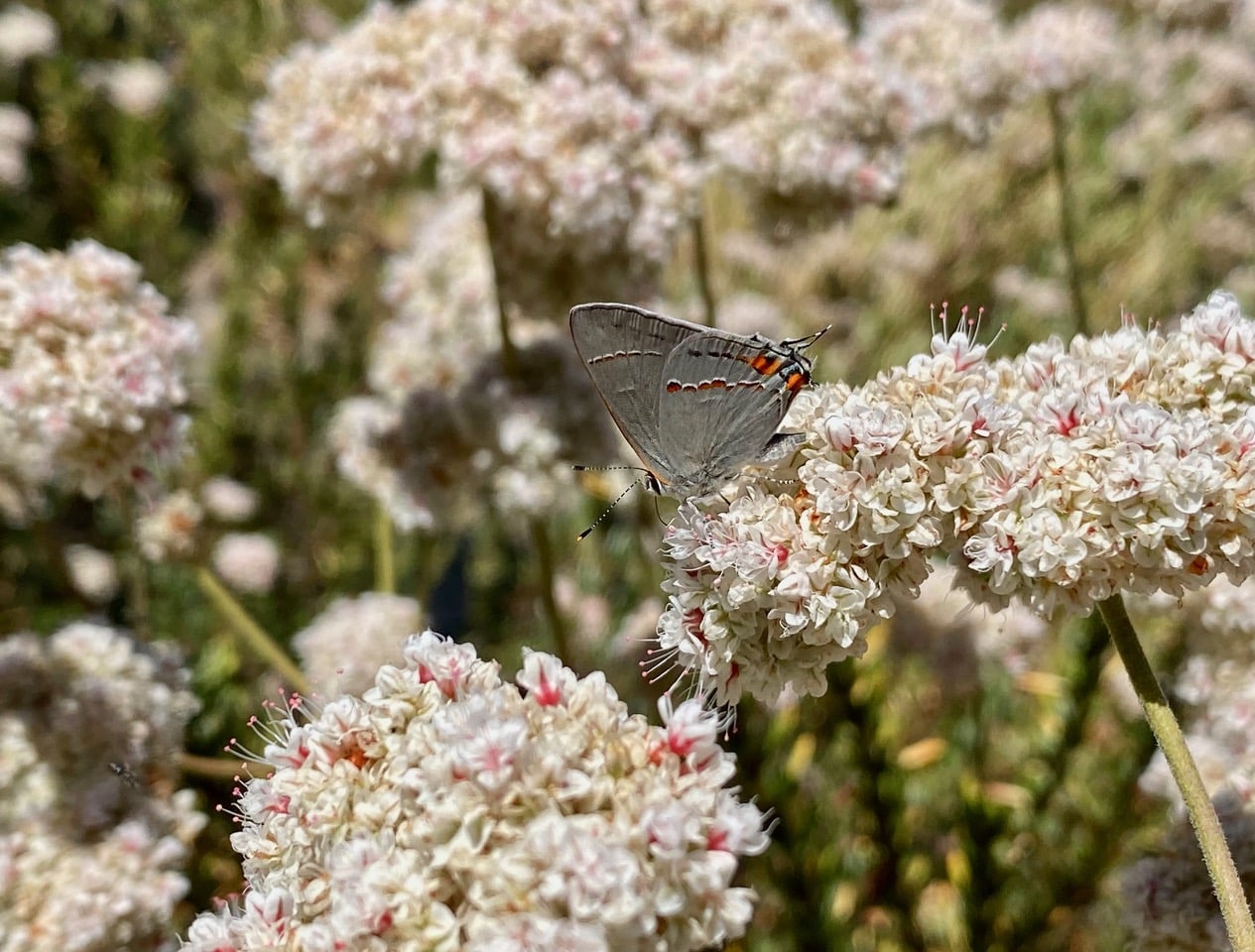
Amidst of the pandemonium of Masked Bee activities, a Gray Hairstreak, Strymon melinus (family Lycaenidae) is calmly sipping nectar from the buckwheat flowers, and rubbing its hind wings together.
Gray Hairstreak Strymon melinus (Hübner, 1818) | Butterflies and Moths of North America
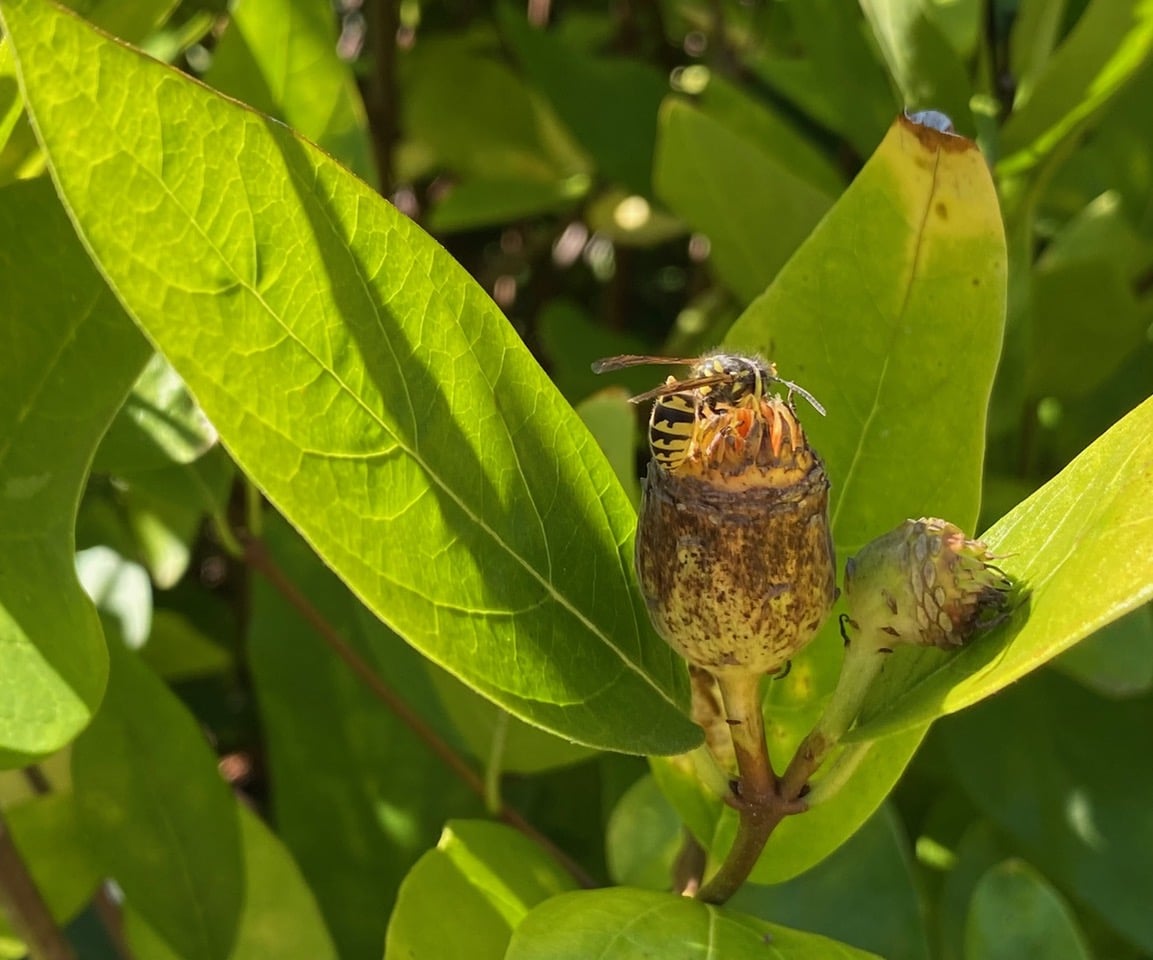


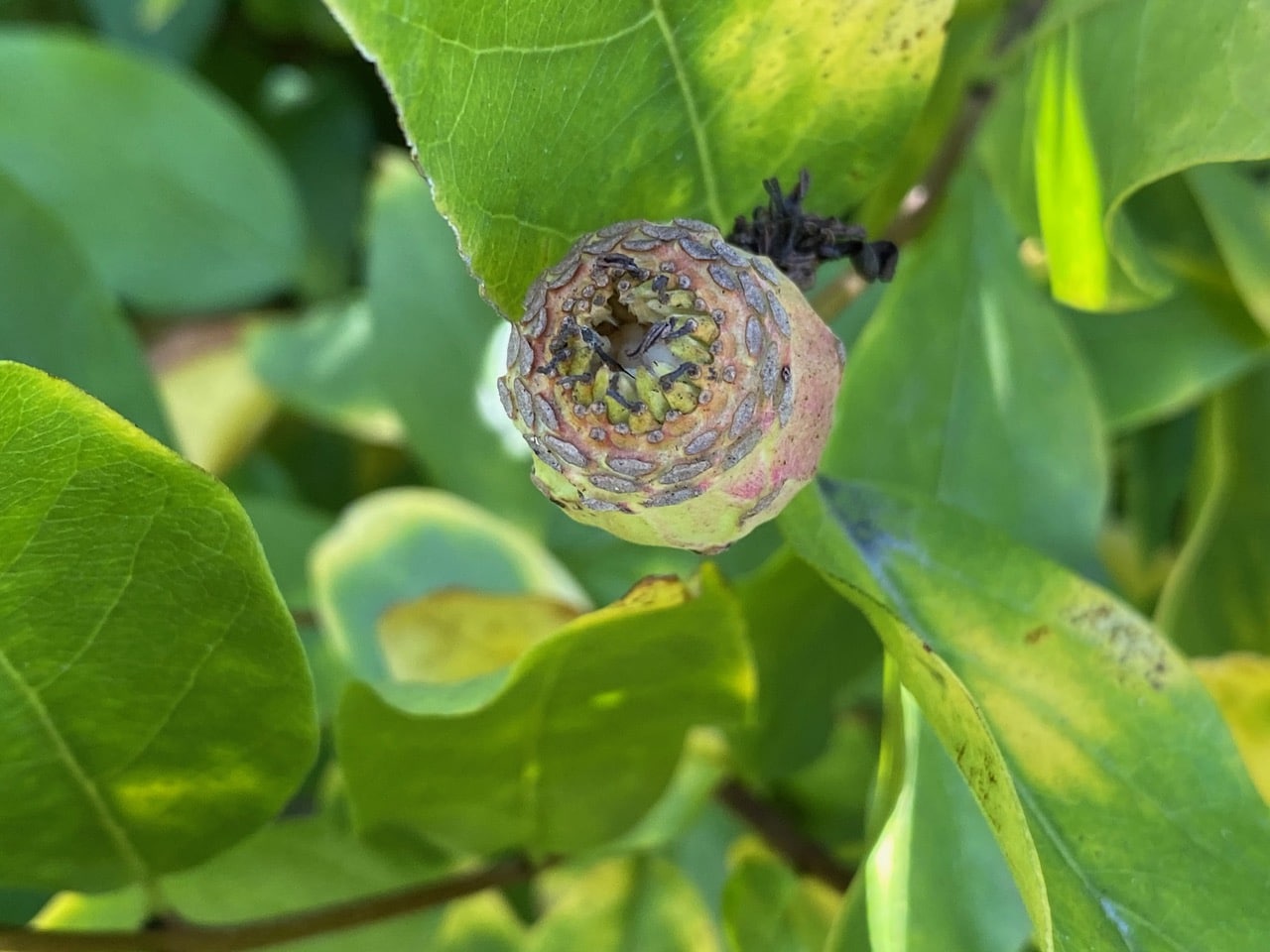

As I approach a Western Spice Bush, Calycanthus occidentalis, my eyes are drawn to a seed pod highlighted by the sunlight. A Yellowjacket is busy digging into the top of the browning pod.
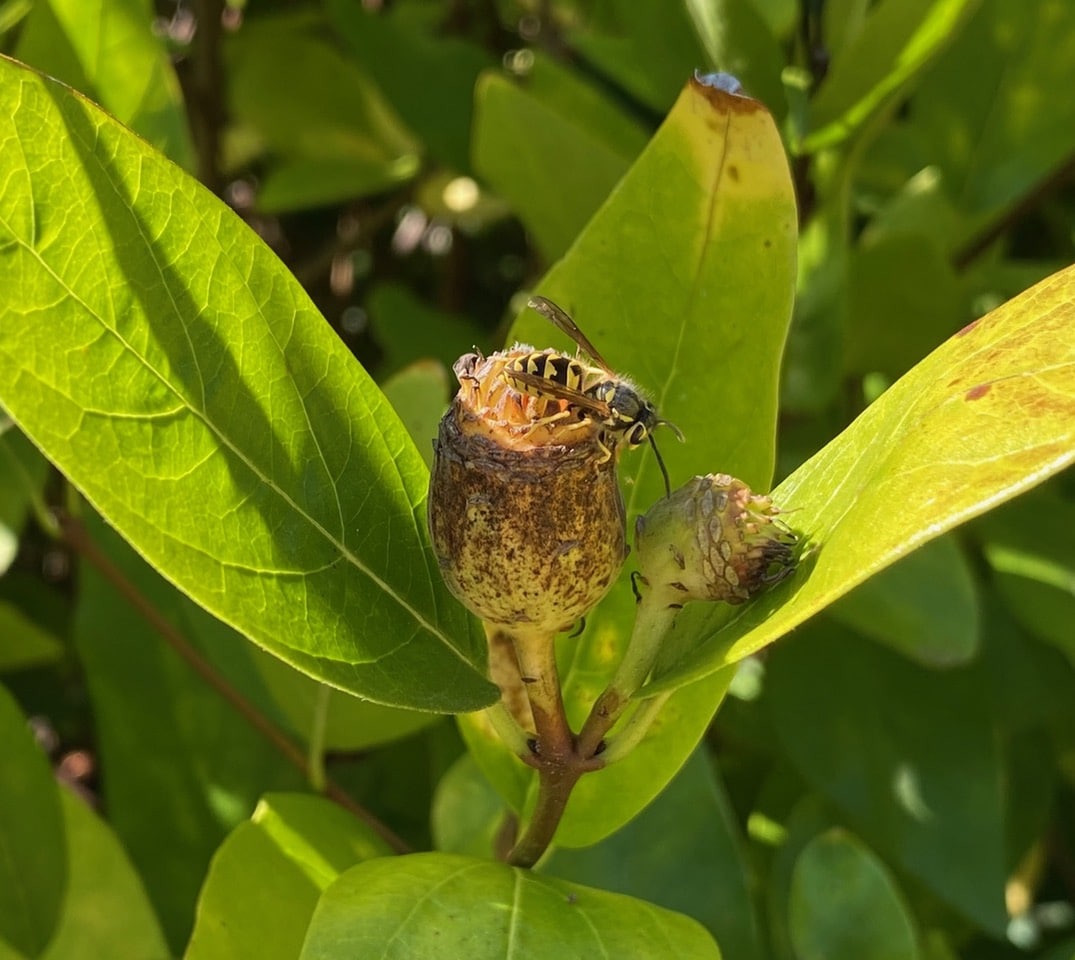
The wasp leaves in a hurry, and I am not sure if she is carrying an achene under her.
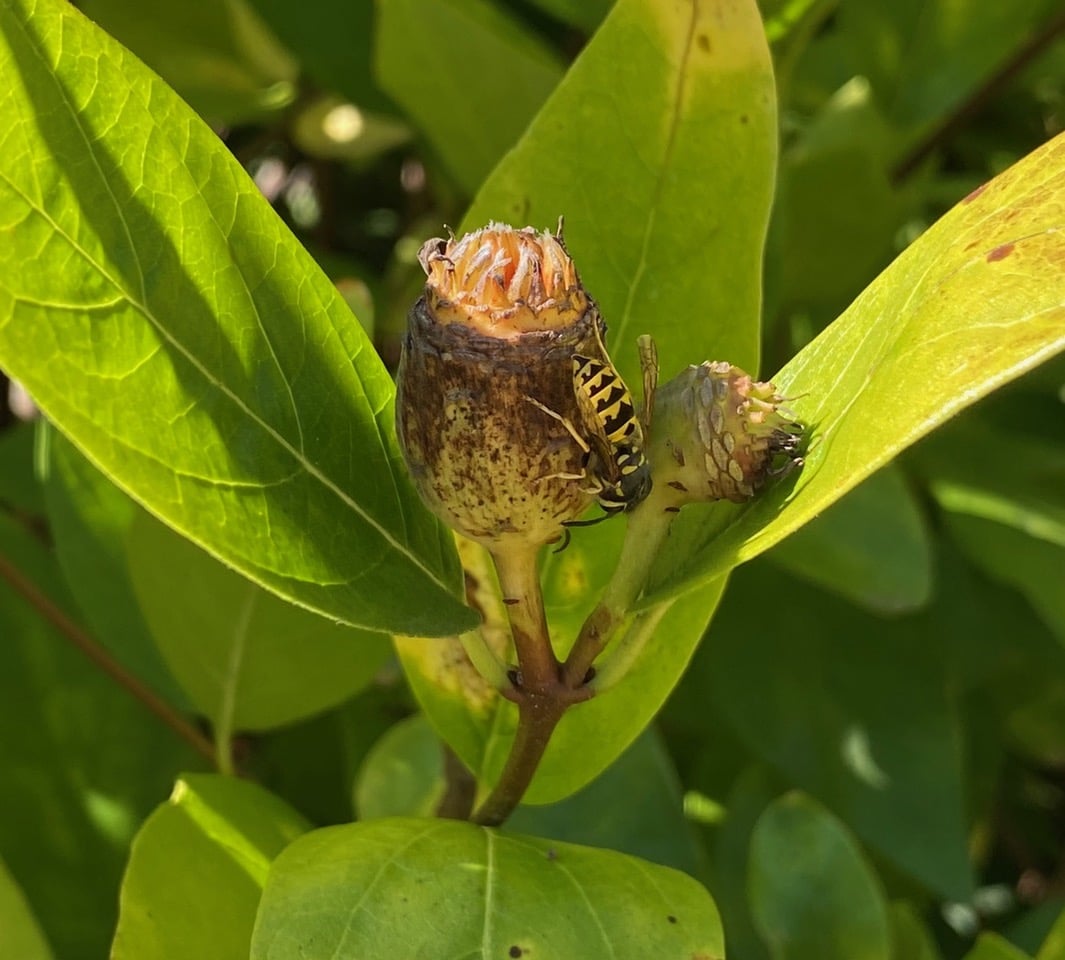
The open pod left by the Yellowjacket.
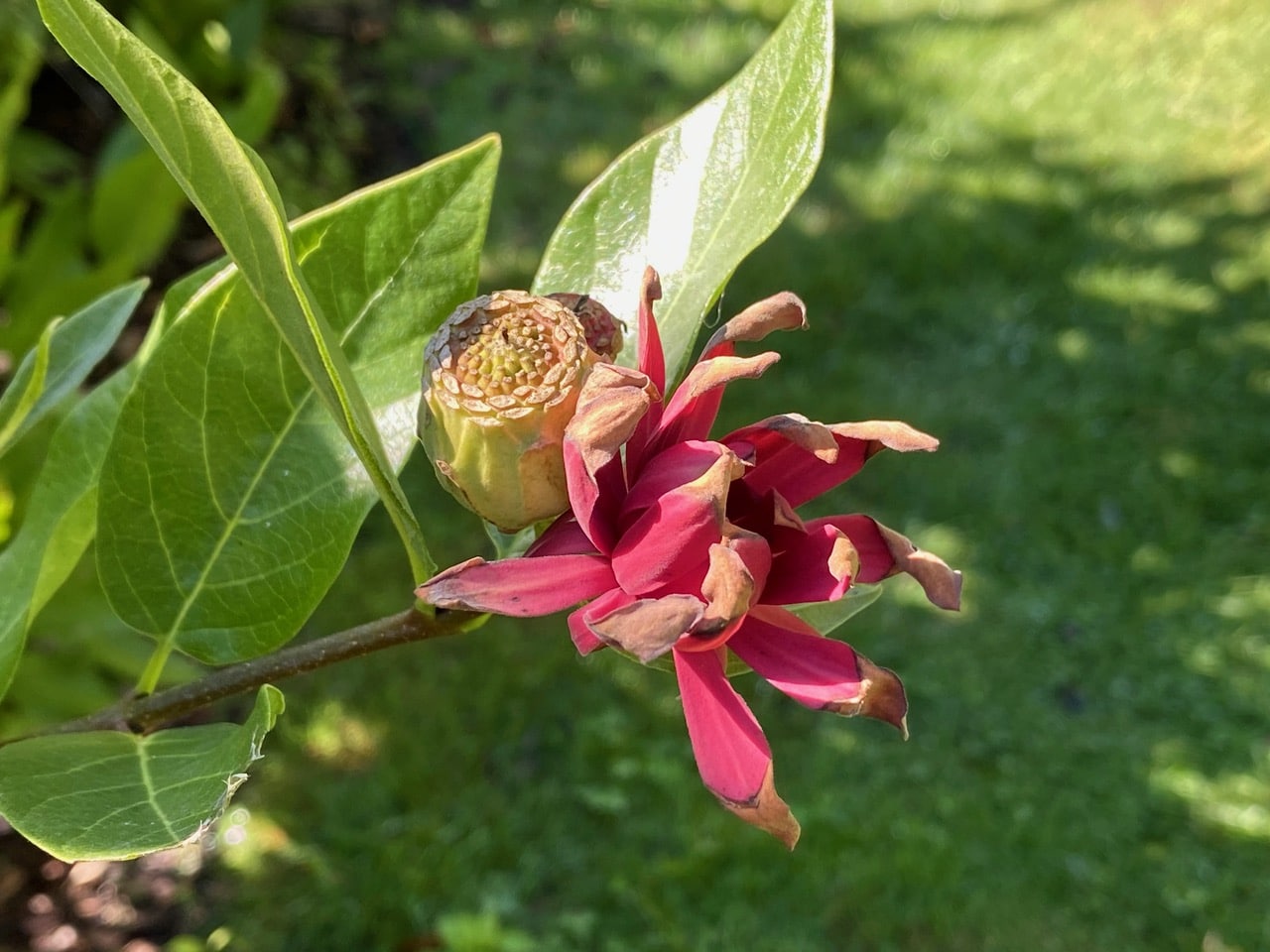
A developing seed pod next to a fading flower of Western Spice Bush.
The pod on the right has withered petals still attached to the receptacle, while the pod on the left has shed all its petals.
A seed pod (receptacle) that has been opened up.
The woody pod that is left behind after the flower has senesced is technically not a fruit, but a receptacle. Inside the receptacle, numerous achenes are tightly packed. Achenes are a type of simple dry fruit that do not open at maturity. Each achene contains a single seed. The achenes of Spice Bush are flanged by a ‘marginal organ’, believed to be a nutritious food for insects.
In 2017, an interesting discovery came to light concerning the seed dispersal of the Spice Bush. Apparently, Yellowjacket wasps actively seek out the achenes hidden in the woody pods. They tenaciously excavate through the top and haul away the achenes one at a time. The achenes are actually heavier than the wasps themselves. Since wasps are carnivorous and do not usually seek plant foods, it is believed that the marginal organ is probably protein rich. It is unclear how the wasps find the pods. It is thought that they follow an olfactory cue, that is, the achenes probably emit a scent that is detectable by wasps but not by humans. At the wasps’ nest site, the achenes usually end up in the wasps’ trash pile after the marginal organs have been removed and eaten. These are capable of germinating into new plants.
Many more ripening seed pods await the Yellowjackets.