

Pollinator Post 8/23/23 (1)
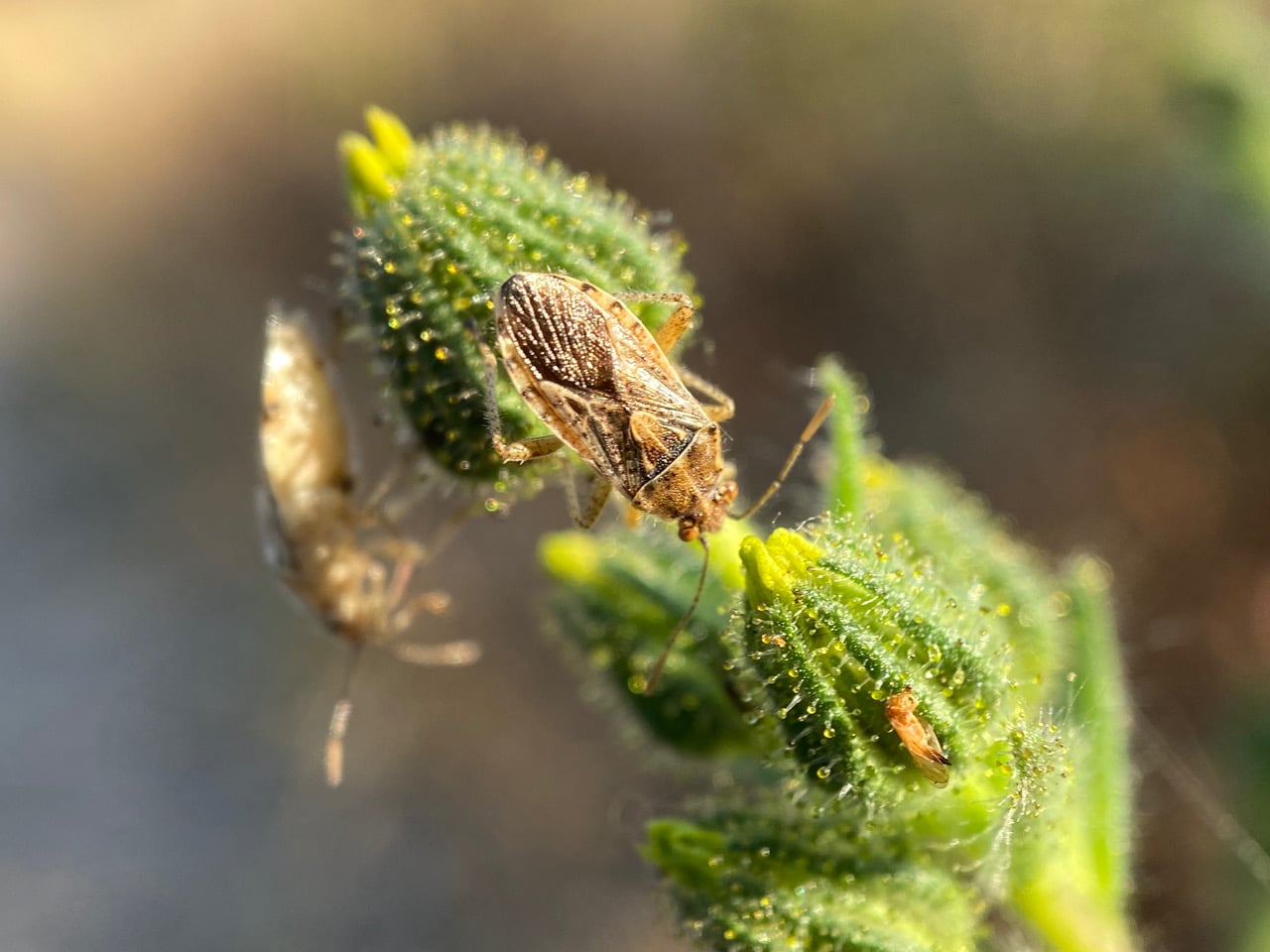
The few young Coast Tarweed, Madia sativa growing along the short path linking Siesta Gate to Skyline Trail have gathered quite a menagerie of insects, similar to the ones in the more mature stands at Skyline Gardens. It is interesting how the tarweeds tend to acquire the same sets of insects. Among the prominent insects on the tarweeds are the Scentless Plant Bugs, Arhyssus sp. (family Rhopalidae). These usually hang around the immature flowerheads, mating. They still have to wait some time to feed on the seeds.
The Rhopalidae are distinguished by many veins on the membranous portion of the forewings. They differ from coreids and other hemipterans in lacking functional scent glands. All are plant-feeders, usually on ripe seeds.

The Phacelia Plant Bugs, Tupiocoris californicus (family Miridae) are usually skittish, fast to run from the camera. This individual is hunched over feeding on something not visible to me on an immature flowerhead of Coast Tarweed. Minute as these bugs are, they are skilled at navigating the sticky terrain of the plant.
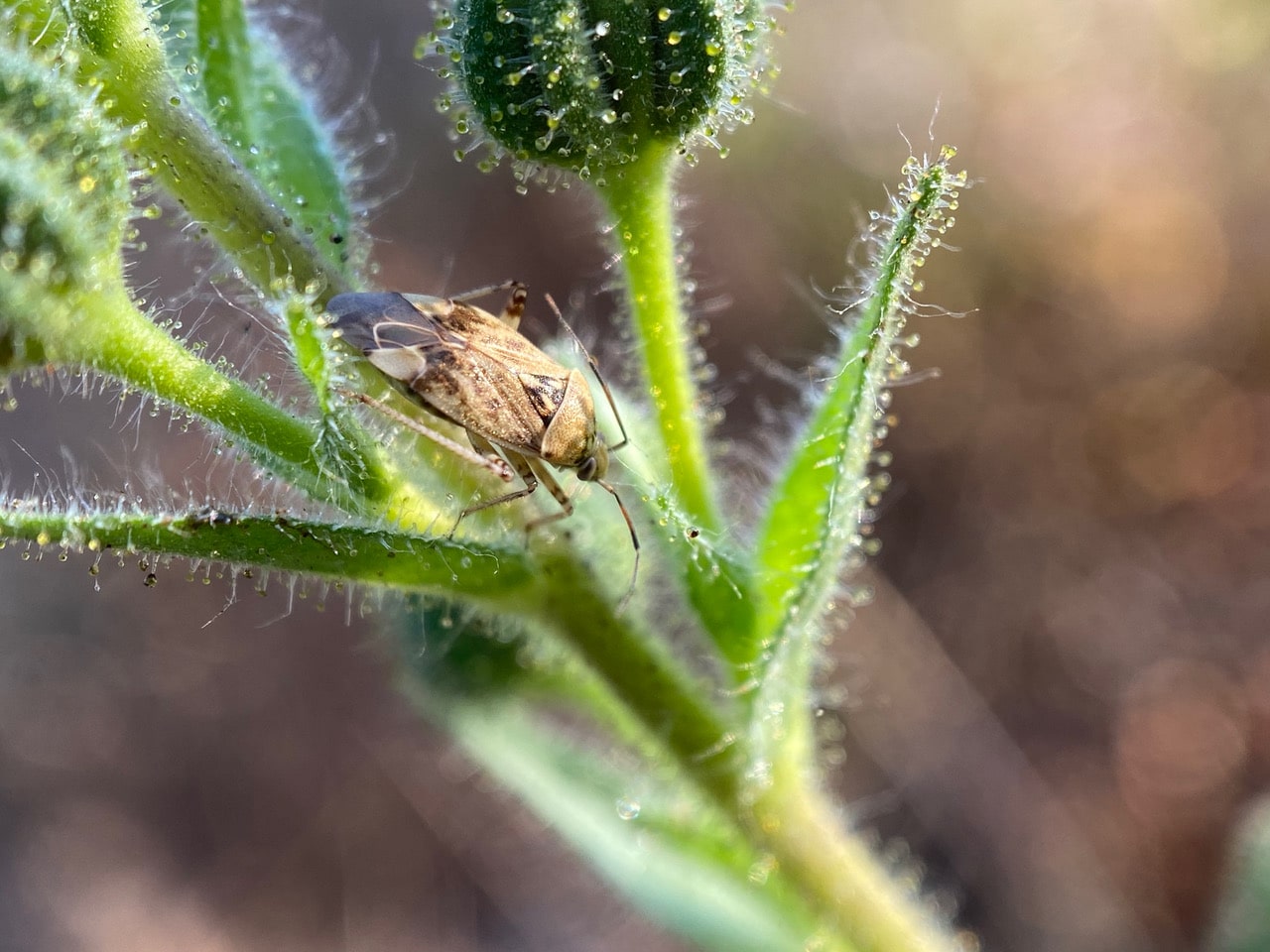
Another regular denizen of the tarweeds is the Lygus Bug, Lygus sp. (family Miridae).
The term lygus bug is used for any member of the genus Lygus, in the family of plant bugs, Miridae. Adult lygus are approximately 3 mm wide and 6 mm long, colored from pale green to reddish brown or black. They have a distinctive triangle or V-shape on their backs. Lygus bugs are known for their destructive feeding habits – they puncture plant tissues with their piercing mouthparts, and feed by sucking sap. Both the physical injury and the plant’s own reaction to the bug’s saliva cause damage to the plant. Many lygus bugs are well-known agricultural pests.
The Miridae are a family in the order Hemiptera (true bugs). Hemiptera means “half-wing”, referring to the unique front pair of wings, which are leathery near their base and membranous towards the tips. Most species hold their wings flat over their backs with the two membranous portions overlapping. This combined with a triangular structure called a scutellum (located between the attachment sites of the two front wings) creates an X-shaped pattern on the back of many species of Hemiptera.
One useful feature in identifying members of the family Miridae or plant bugs is the presence of a cuneus; it is the triangular tip of the corium, the firm, horny part of the forewing, the hemielytron. The cuneus is visible in nearly all Miridae.

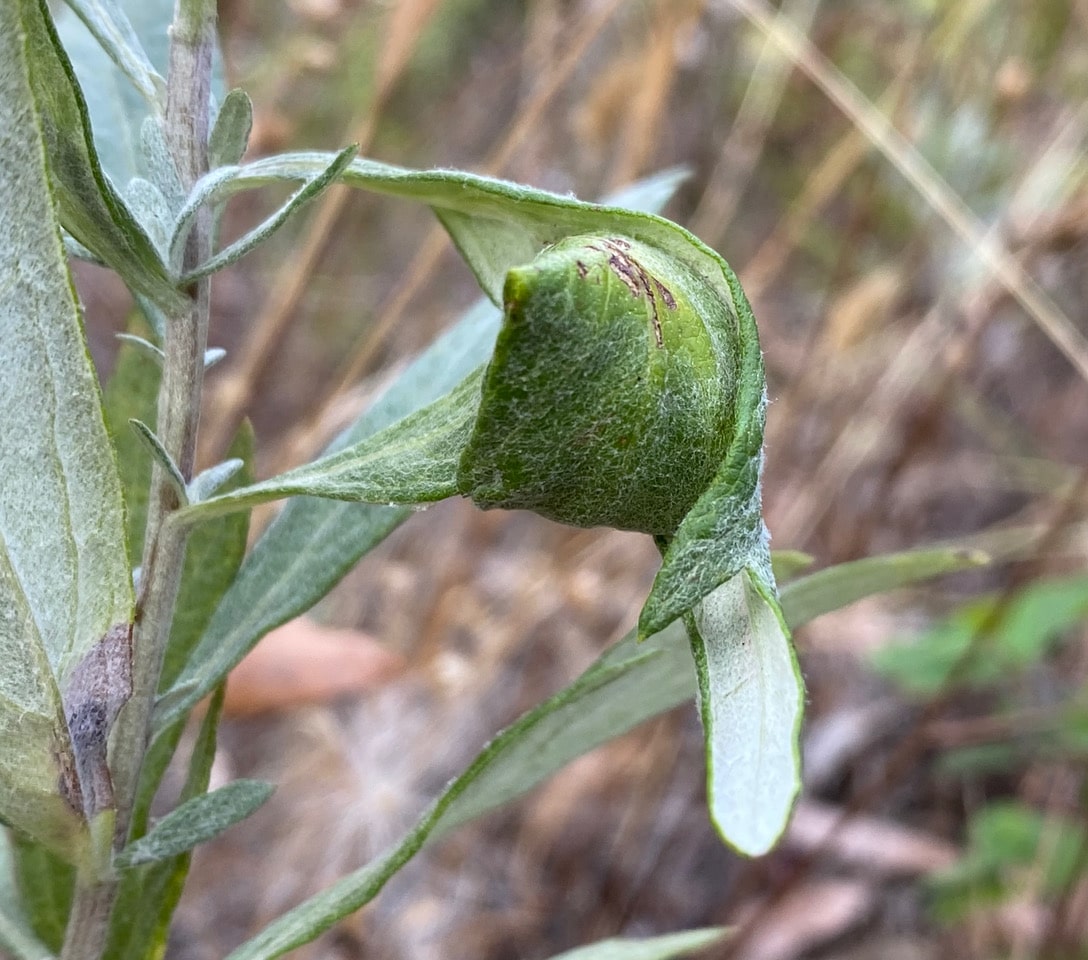
Remember these webbed leaves of California Mugwort, Artemisia douglasiana from yesterday?
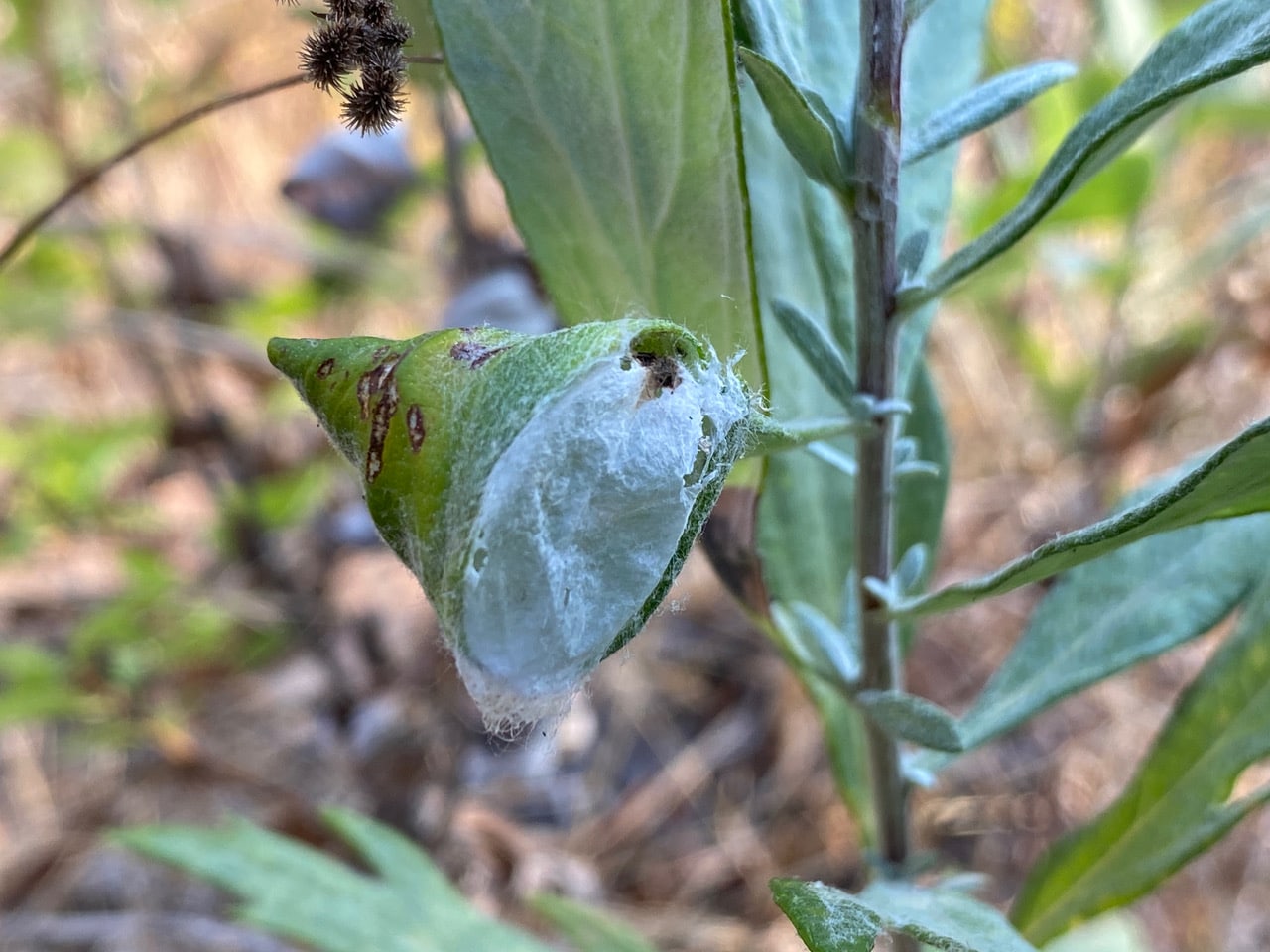
I gently pull off the leaf covering the other that has been shaped into a cone-shaped structure. The flat leaf comes off easily, revealing a chamber sealed with very fine meshed silk. Looks like the work of a spider!
 I remove the leaf from the plant, and manipulate it in my hand to get a sense of how the shelter was constructed.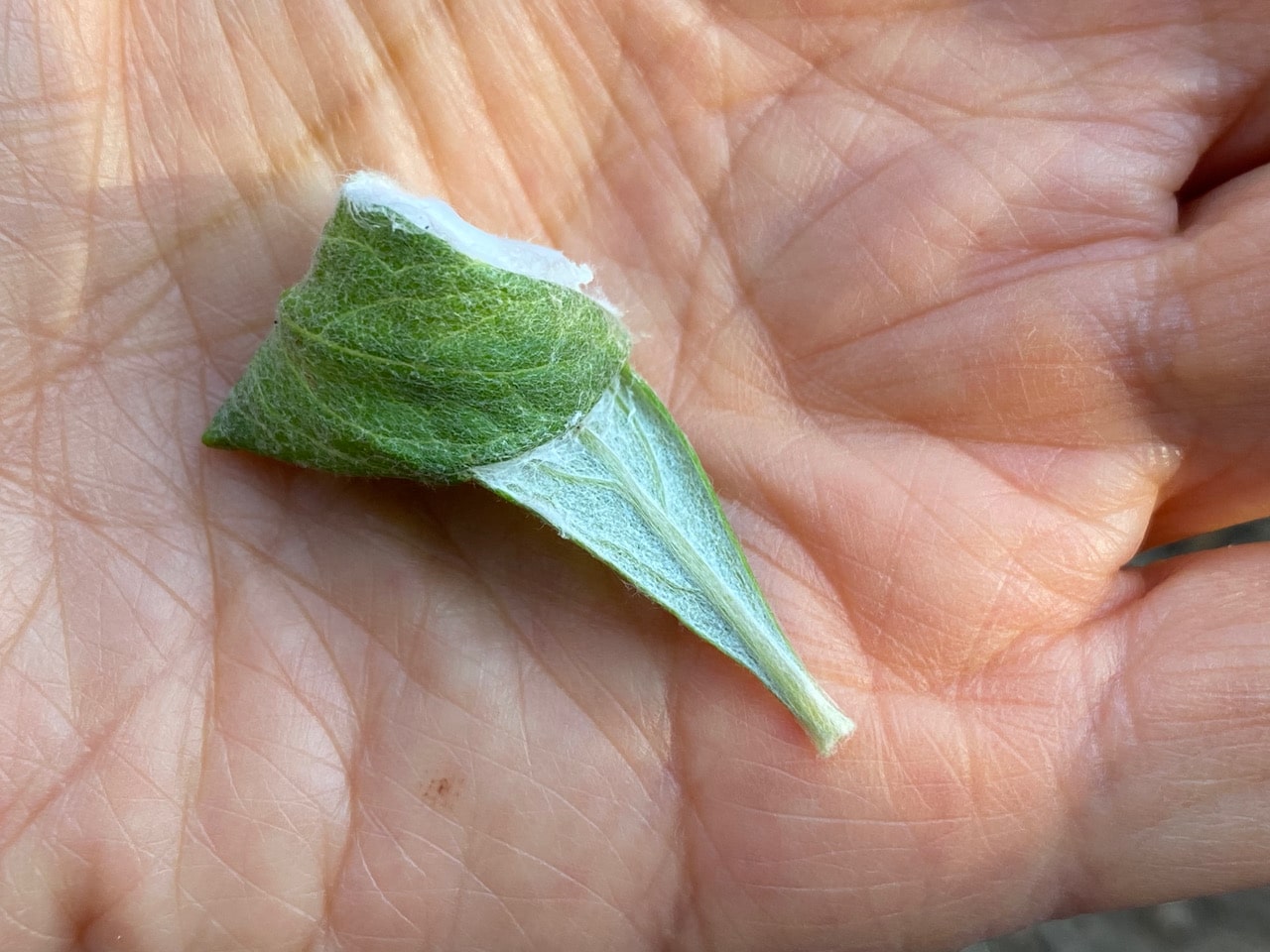
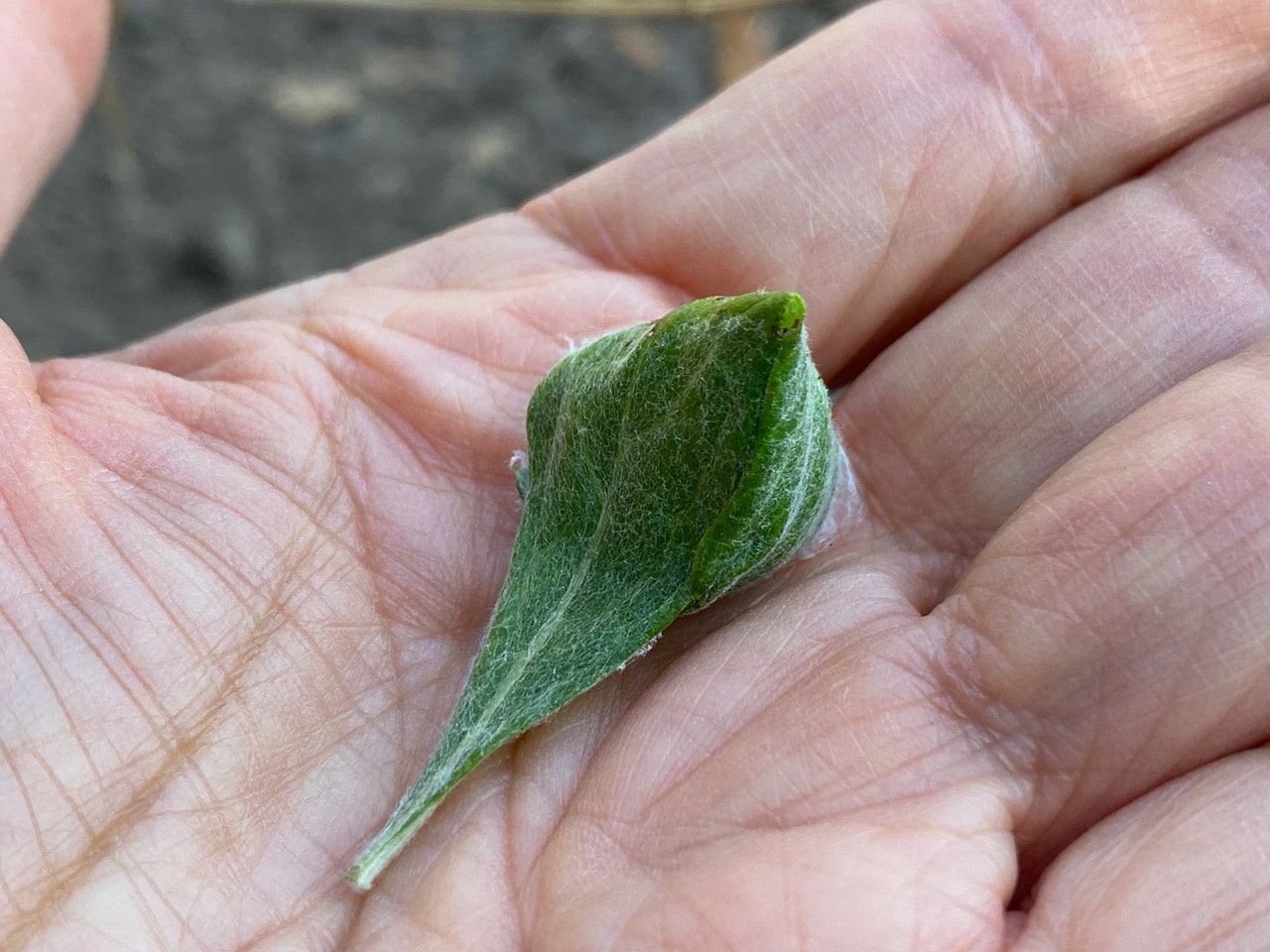
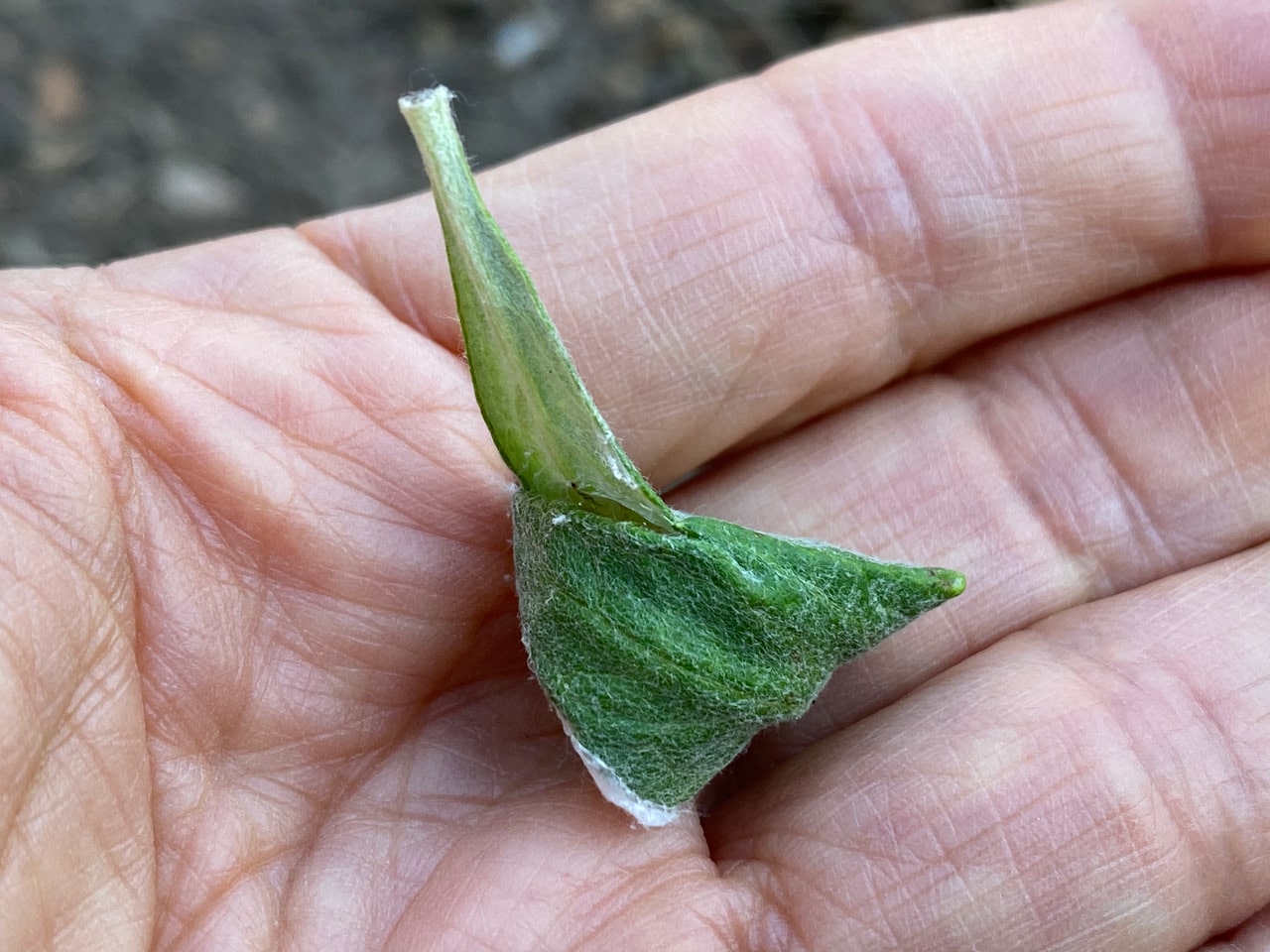
There is a break in the seal on one edge of the three-dimensional structure.
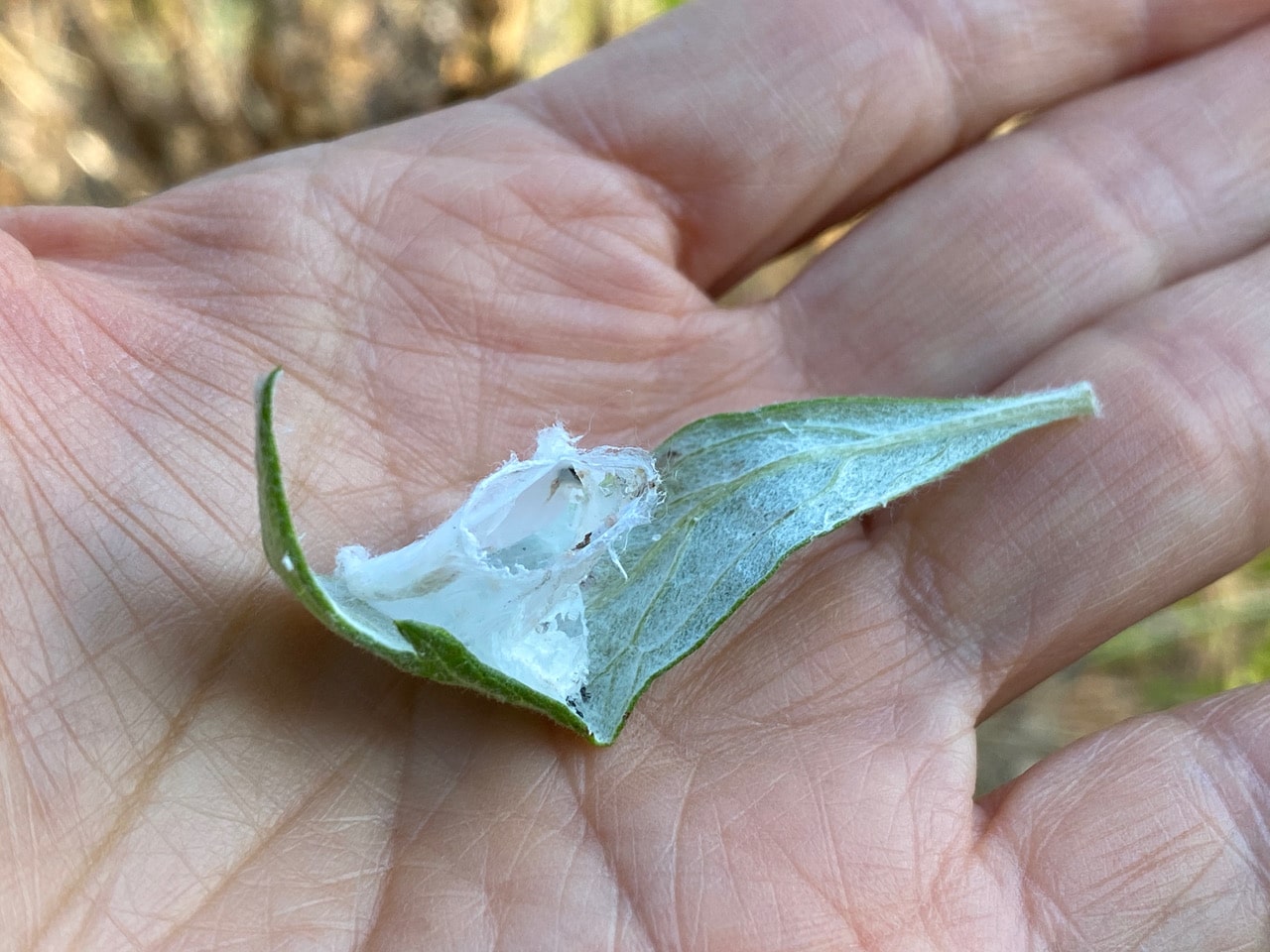
I open up the cone-shaped structure to reveal a silken sac inside.
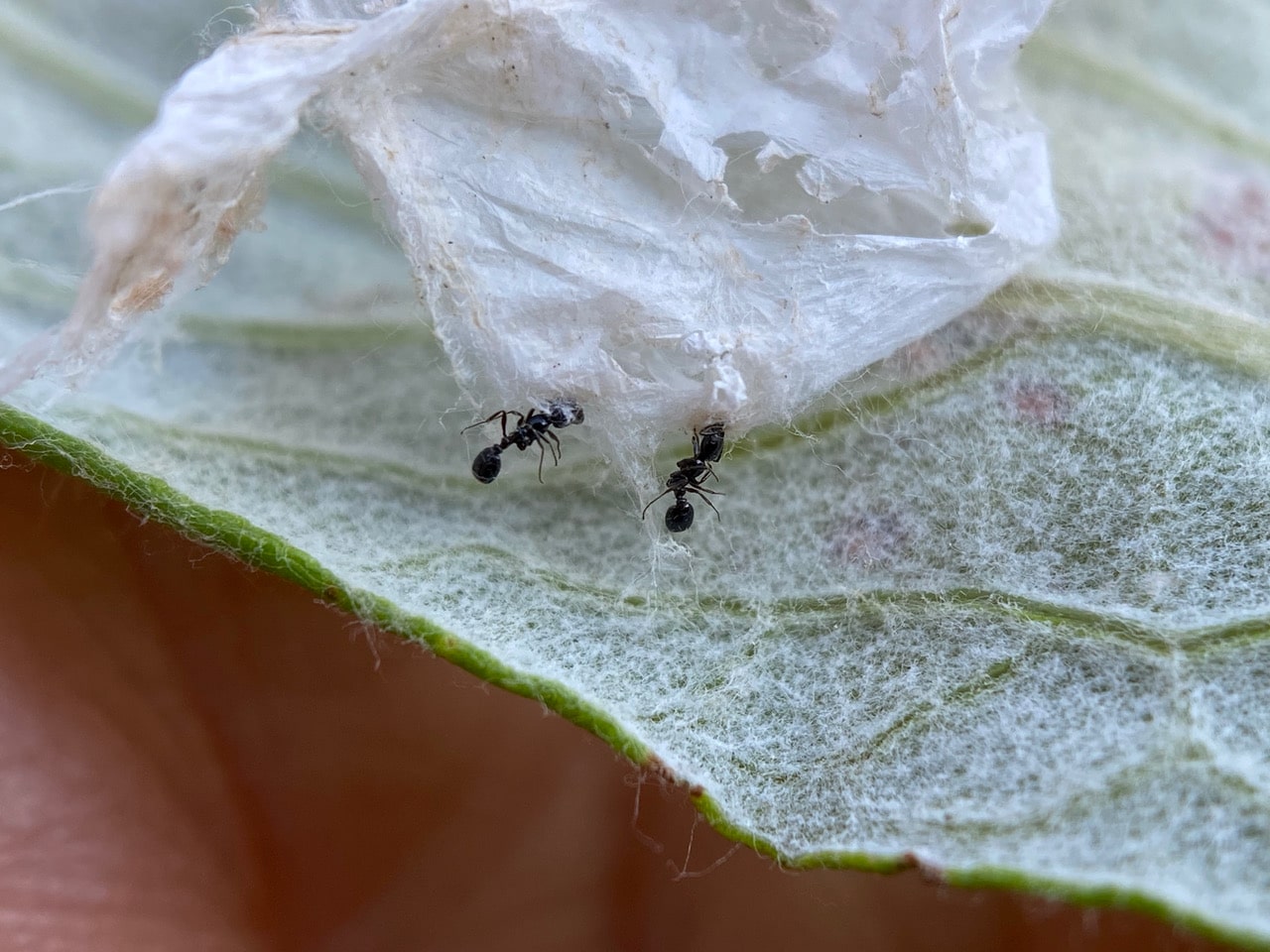
Two black ants have apparently managed to enter, but have died before getting into the silken sac inside. Does the silk contain anti-ant chemicals, or were the ants simply trapped on the silk?
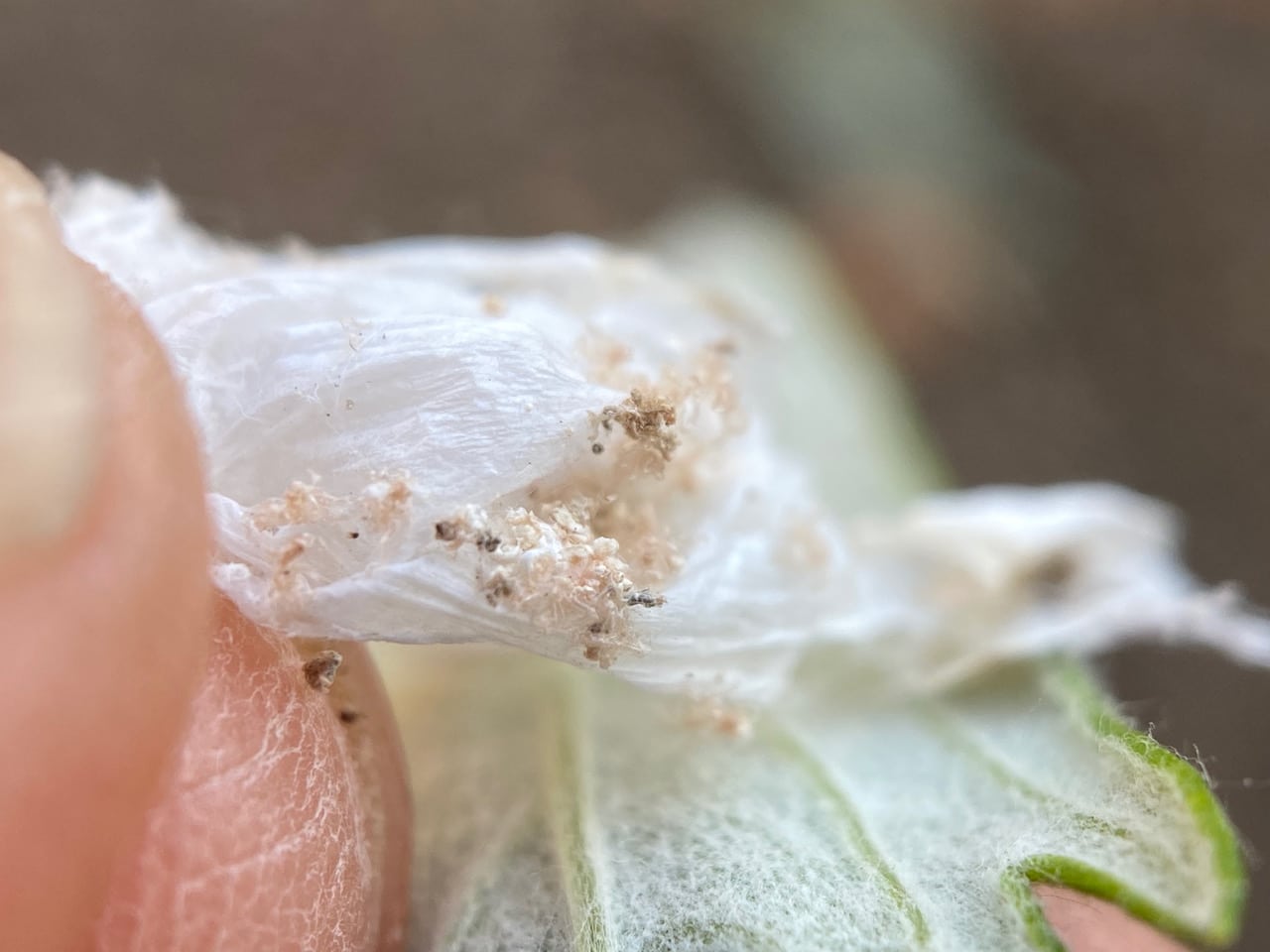
The sac looks empty. But when I turn it inside-out, I find some debris that look like old spider eggs and shed spiderling exoskeletons. The sac is apparently an old spider egg sac. The eggs have hatched, and the spiderlings have exit the sac and the leaf shelter. Ingenious! I wonder what spider made this?
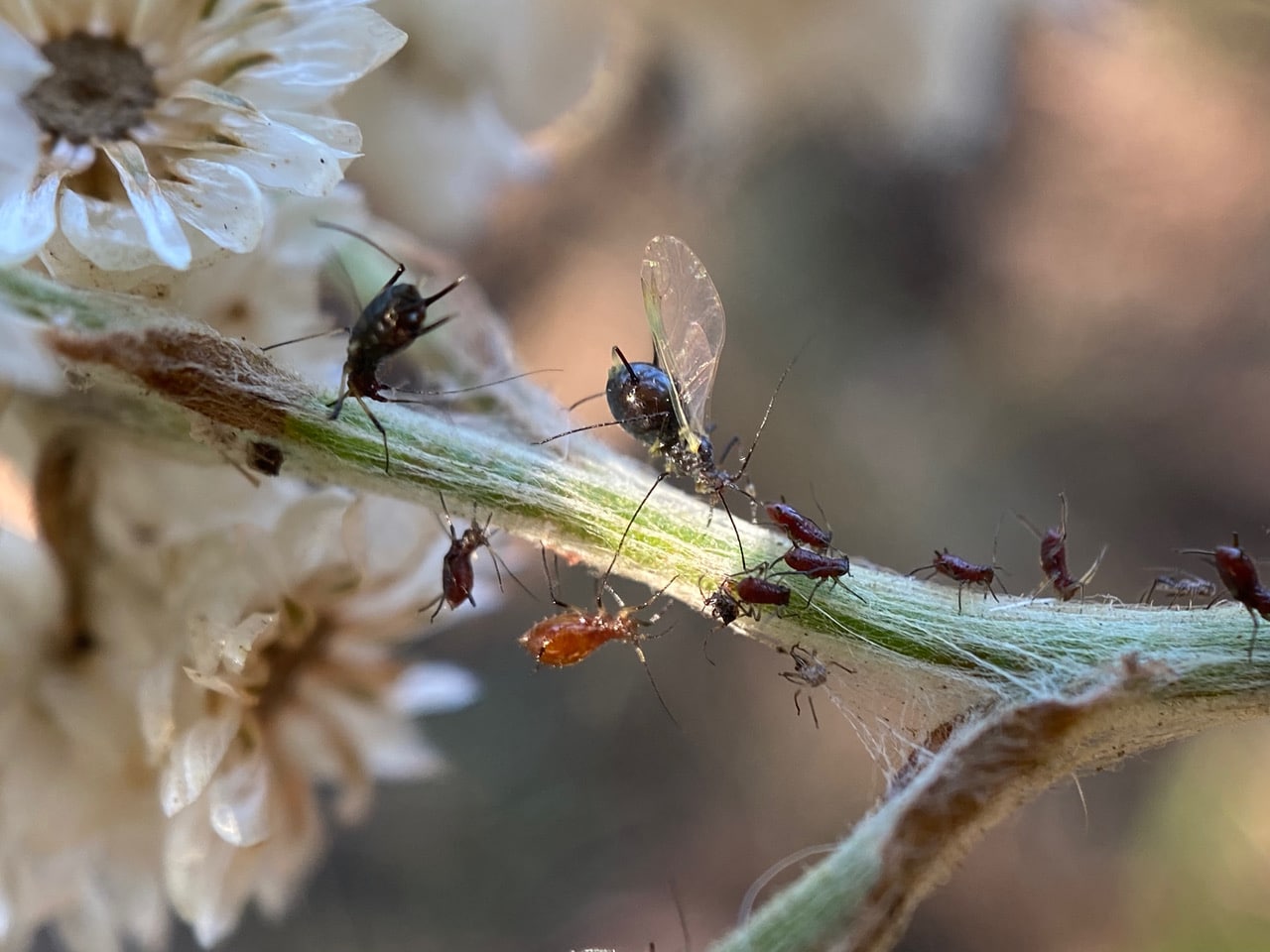
This morning I get a little better light on the small colony of aphids on the senescing California Everlasting. These are in the genus Uroleucon (family Aphididae). There’s already a mature alate, a winged reproductive that will disperse to establish a new colony elsewhere.
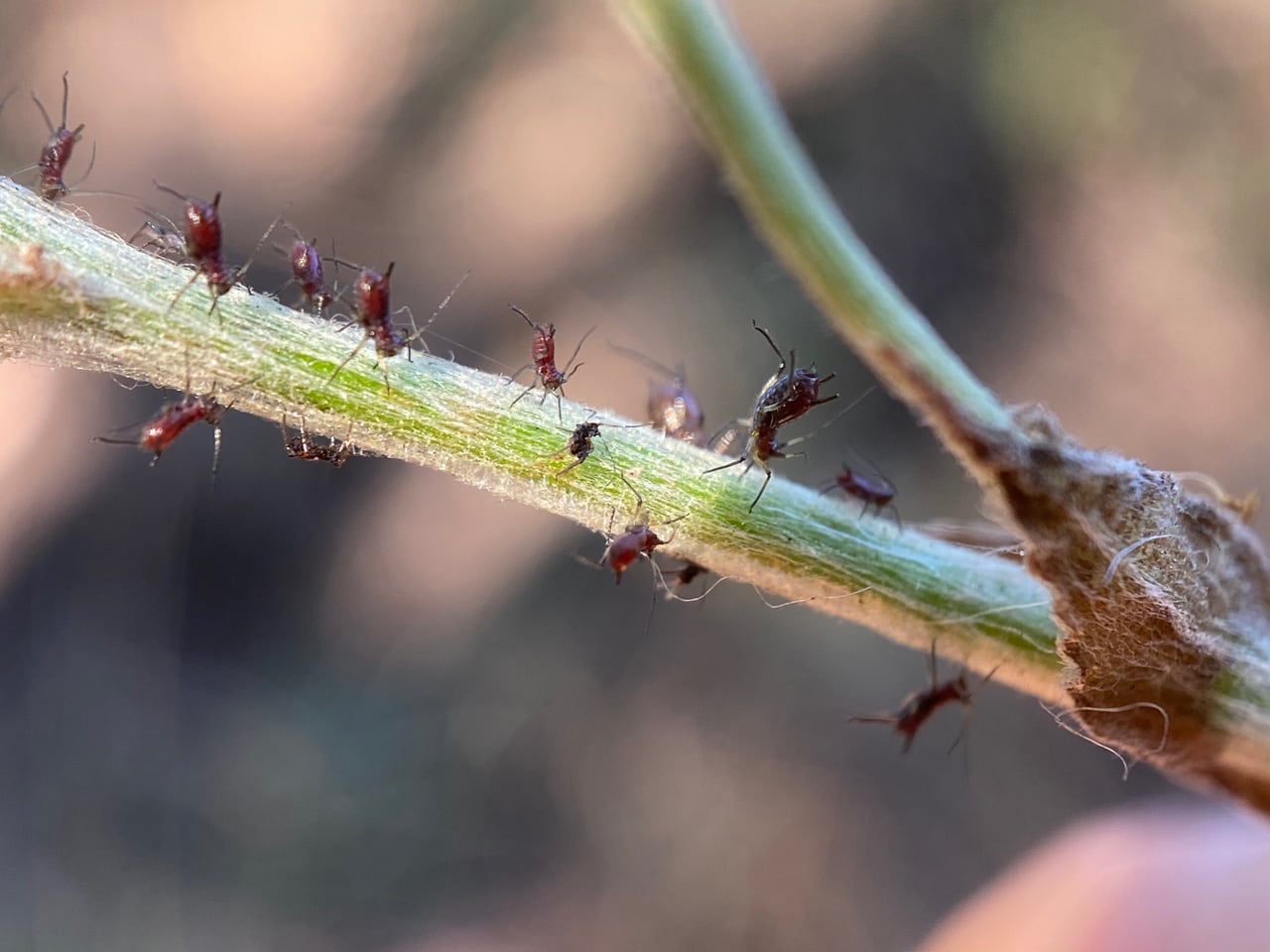
It tickles me to see these aphids in their characteristic posture on the plant. They seem to be doing head stands, with their rostrums firmly planted in the stem to extract plant sap.

More evidence of predation on the developing seeds within the calyces of Sticky Monkeyflower, Diplacus aurantiacus. Note that the two predated calyces have never borne any flower. They were probably galled early before the flower buds had a chance to develop. The predators are probably after the gall insects, or the inquilines, or the parasitoid/hyperparasitoids within the calyces.
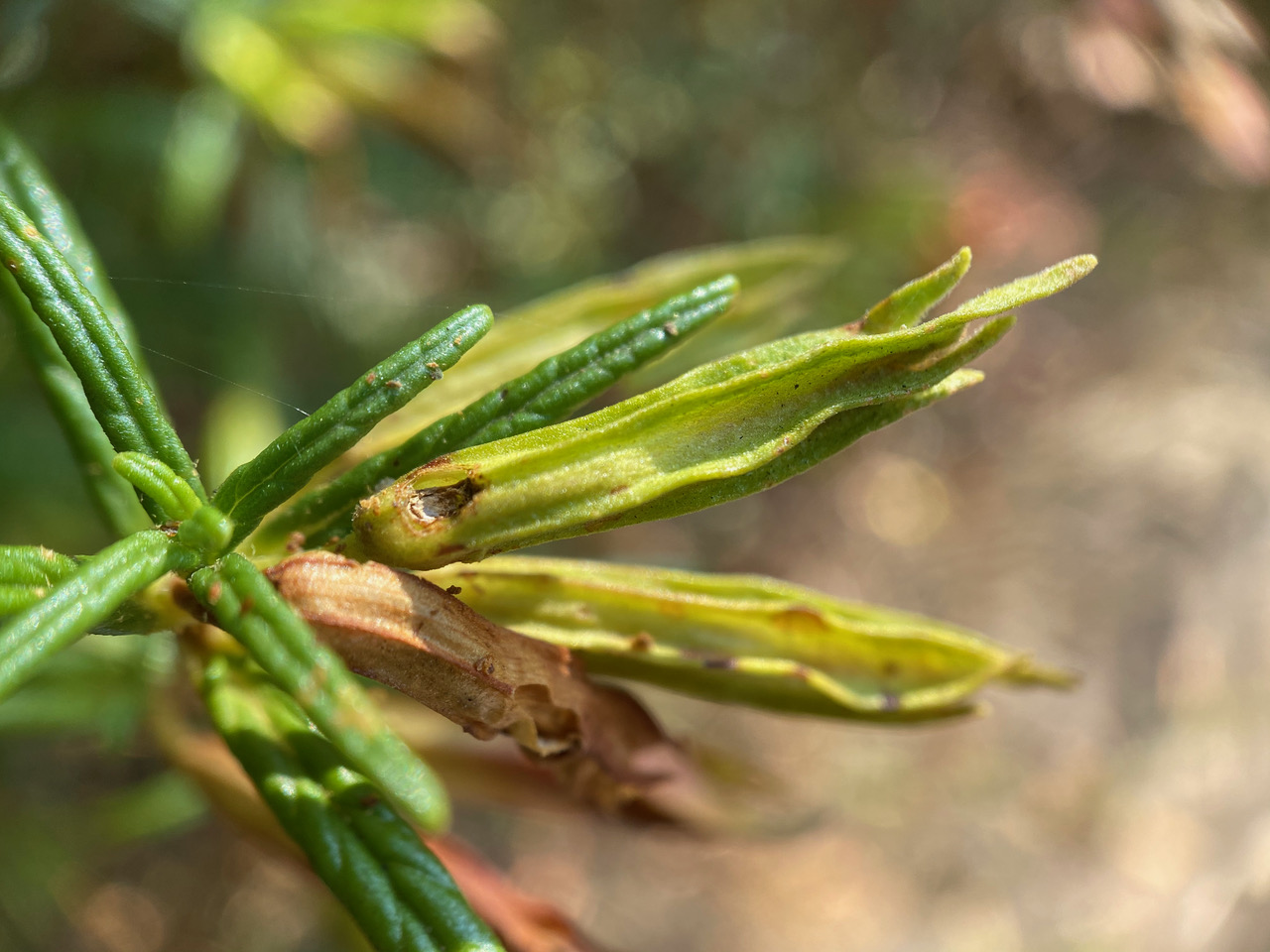
Another predated calyx that has previously hosted gall insects and no flower.
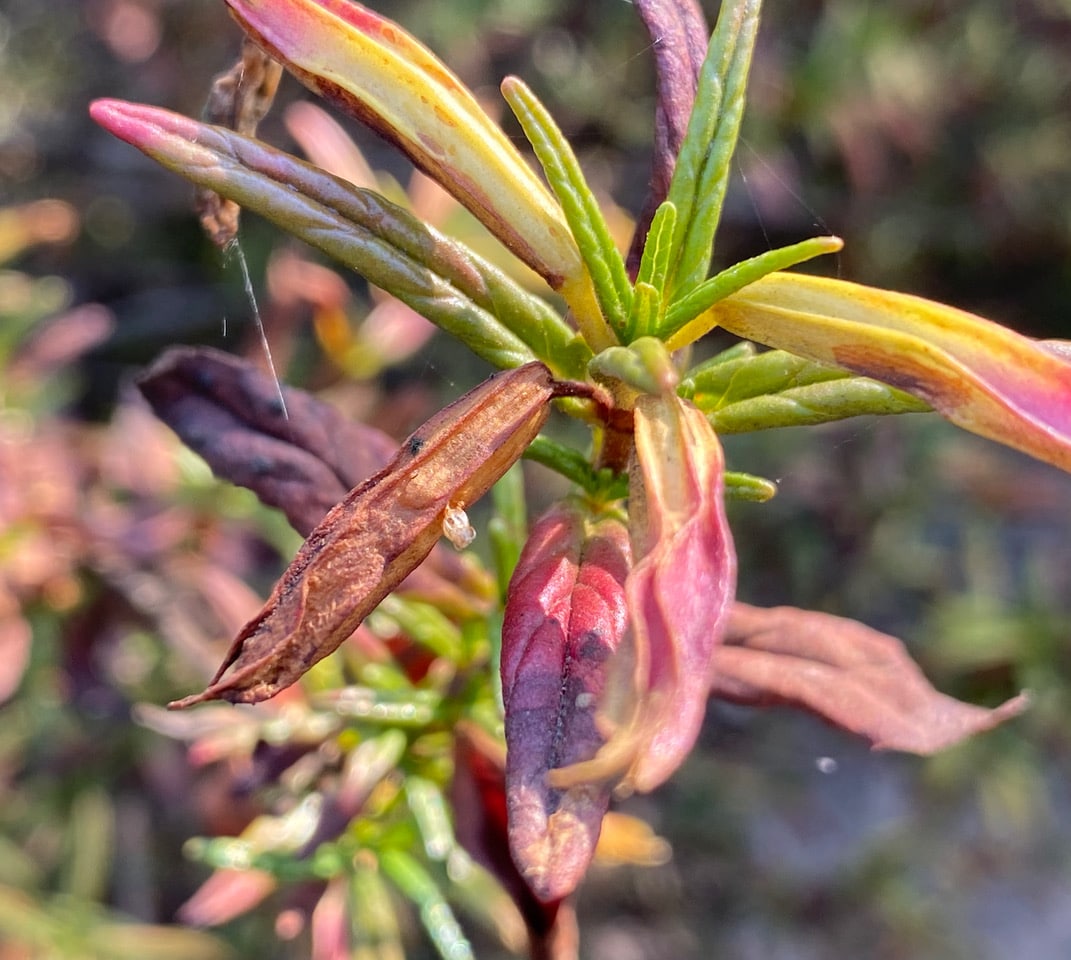
Something is protruding from this brown calyx.
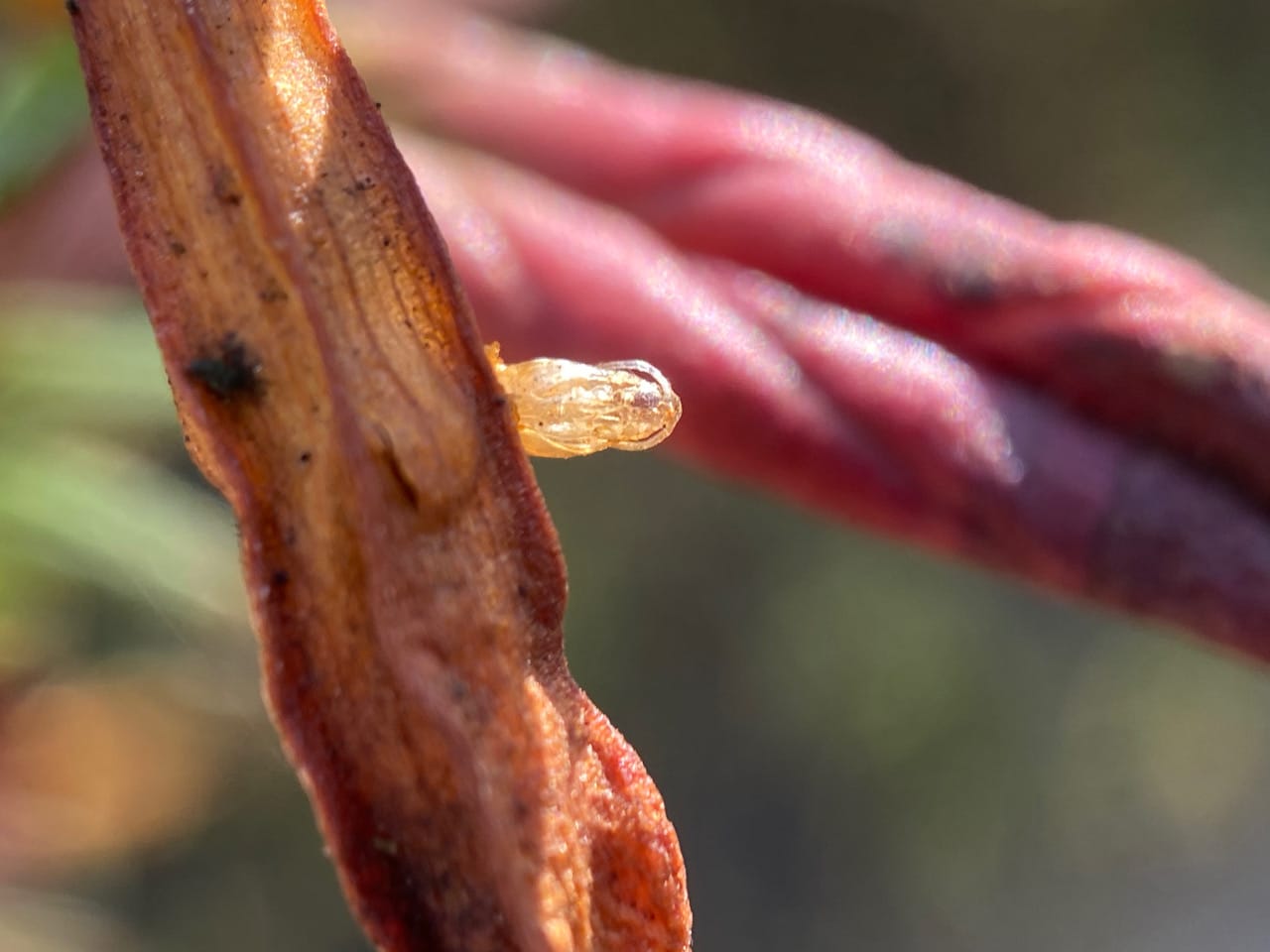
It is the pupal case of a Gall Fly (family Cecidomyiidae). Like those that induce the familiar bud galls on Coyote Brush, Baccharis pilularis, the larvae of this species develop inside the calyx of the Sticky Monkeyflower, and burrow to the surface where they develop as partially protruding pupae. The curved filaments are the casings that protect the developing antennae. Adult flies have been reared out of these galled calyces last year. They are apparently a Cecidomyiid species new to science, still awaiting official description and taxonomic identification.

A Red-shouldered Stink Bug, Thyanta custator (family Pentatomidae) is sucking from a spent calyx of Sticky Monkeyflower. It is probably feeding on the immature seeds inside.
Pentatomidae is a family of insects belonging to the order Hemiptera or “true bugs”. As hemipterans, the pentatomids have piercing-sucking mouthparts, and most are phytophagous, including several species that are severe pests on agricultural crops.
All Pentatomids have 5-segmented antennae, and they generally have a large triangular scutellum in the center of the back. The body shape of adults is generally shield-shaped when viewed from above. The common name of Stink Bug refers to their ability to release a pungent defensive spray when threatened, disturbed, or crushed.
The Red-shouldered Stink Bug is a generalist feeder and is reported to be a minor pest on a variety of crops including beans, corn, peaches, and wheat.
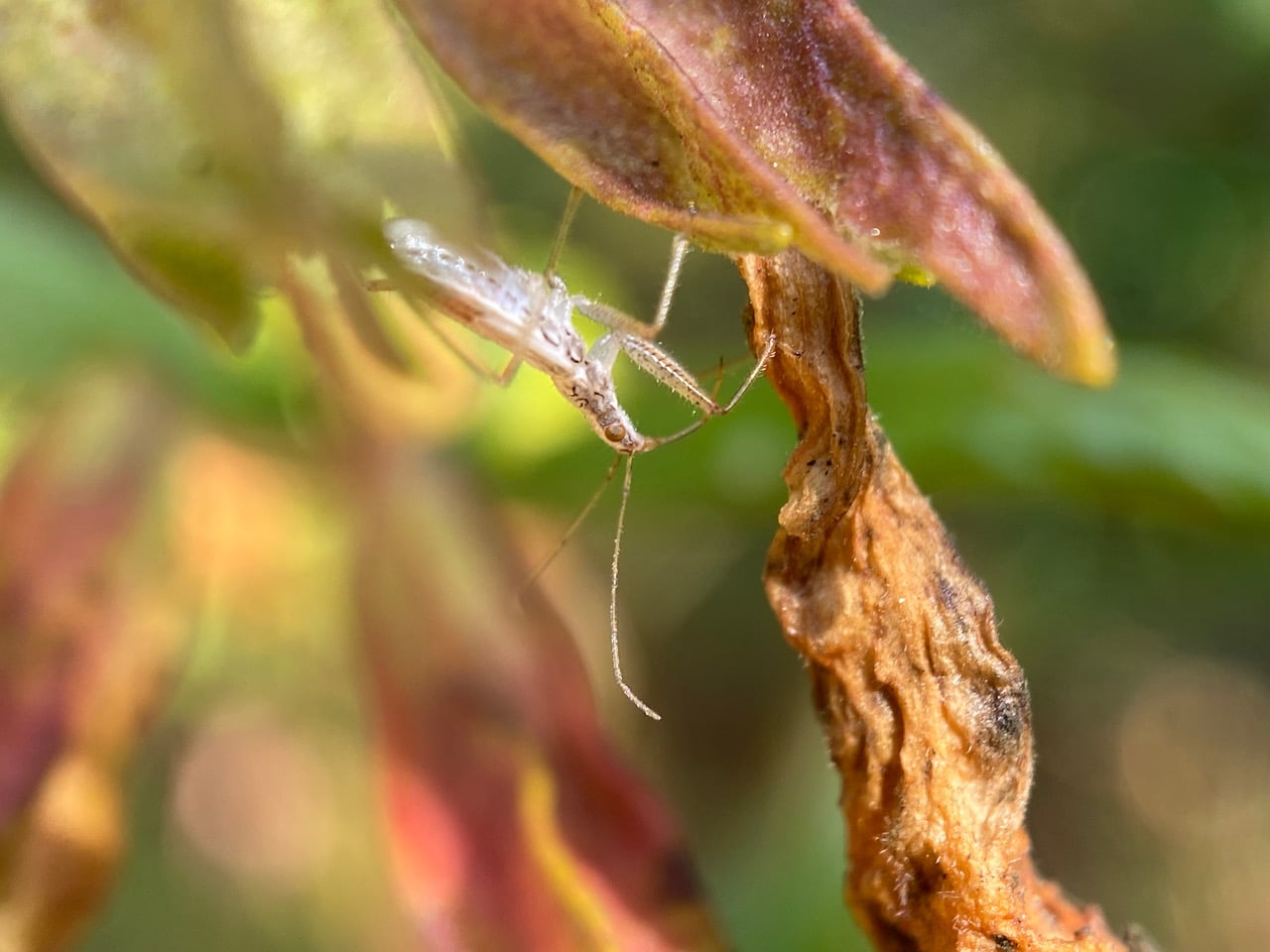
Here’s another “true bug”. It is roaming the spent calyces of Sticky Monkeyflower. Note the long, curved rostrum and the enlarged raptorial front legs. It is immediately recognizable as a Damsel Bug (family Nabidae).
Damsel Bugs are slender, tan-colored, soft-bodied, elongate, winged predators. They generally have large, round eyes and long legs. They are generalist predators, catching almost any insect smaller than themselves, and cannibalizing each other when no other food is available. They use their thickened raptorial front legs that are lined with spines to catch and hold prey, then suck out the body contents with their piercing mouthparts. Females deposit their tiny eggs in plant stems or other tissue, and immatures (nymphs) go through five instars before becoming adults.
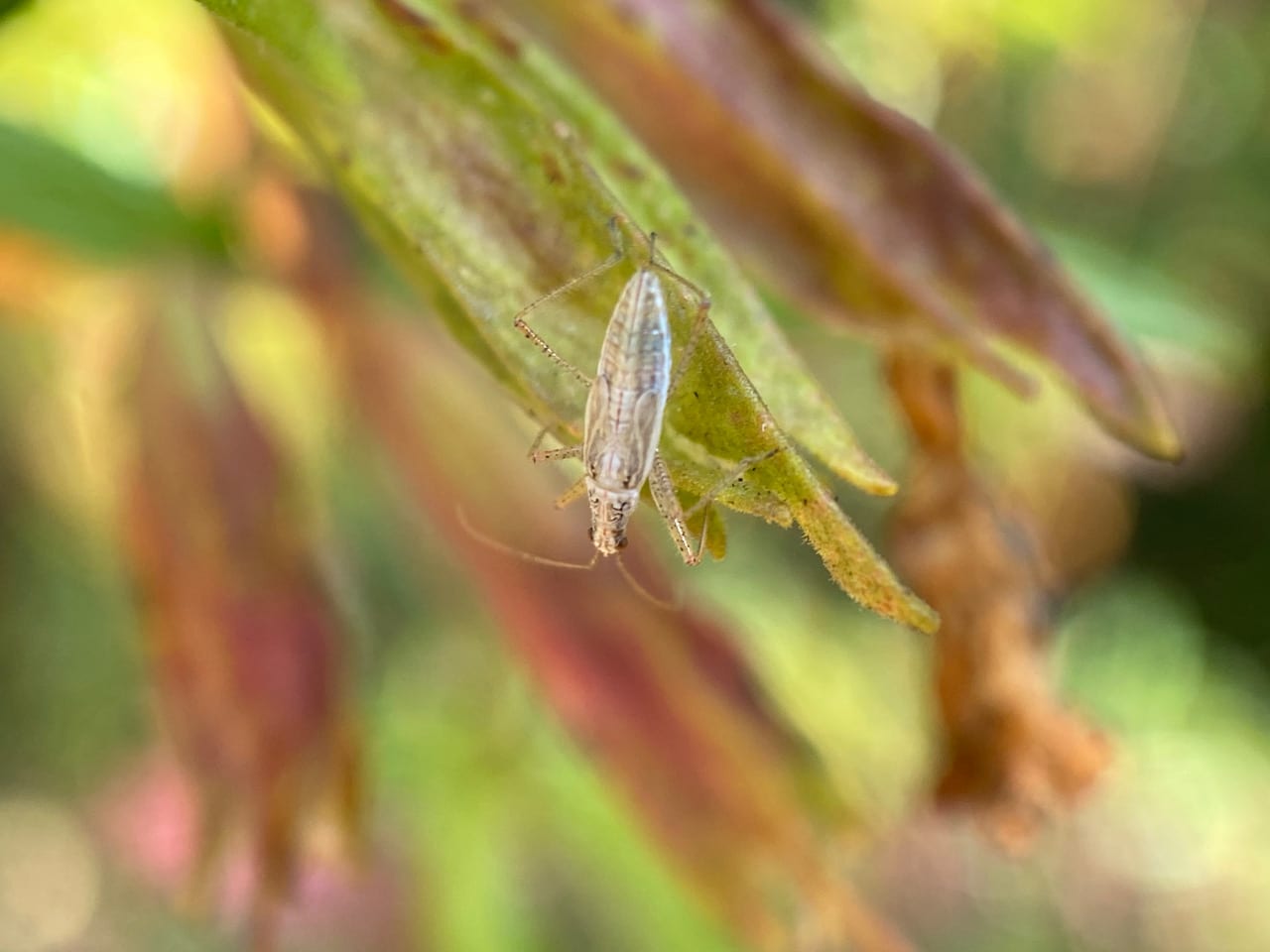
A top view of the bug shows that it is a nymph, an immature bug. See those short wing pads?
“True bugs” in the order Hemiptera undergo incomplete metamorphosis without a pupal stage. The nymphs, which look like adults, develop through a series of molts, each time getting bigger after shedding their old exoskeleton. At the last molt, they transform into adults with functional wings and reproductive parts.

This view of the Damsel Bug nymph shows that its rostrum is jointed.
The defining feature of Hemipterans or “true bugs” is their “beak” or rostrum in which the modified mandibles and maxillae form a “stylet” which is sheathed within a modified labium. The stylet is capable of piercing tissues and sucking liquids, while the labium supports it. The stylet contains a channel for outward movement of saliva and digestive enzymes, and another channel for the inward movement of pre-digested liquid food. The rostrum is usually folded under the body when not in use.


An unidentified fly commonly found on the Sticky Monkeyflowers.
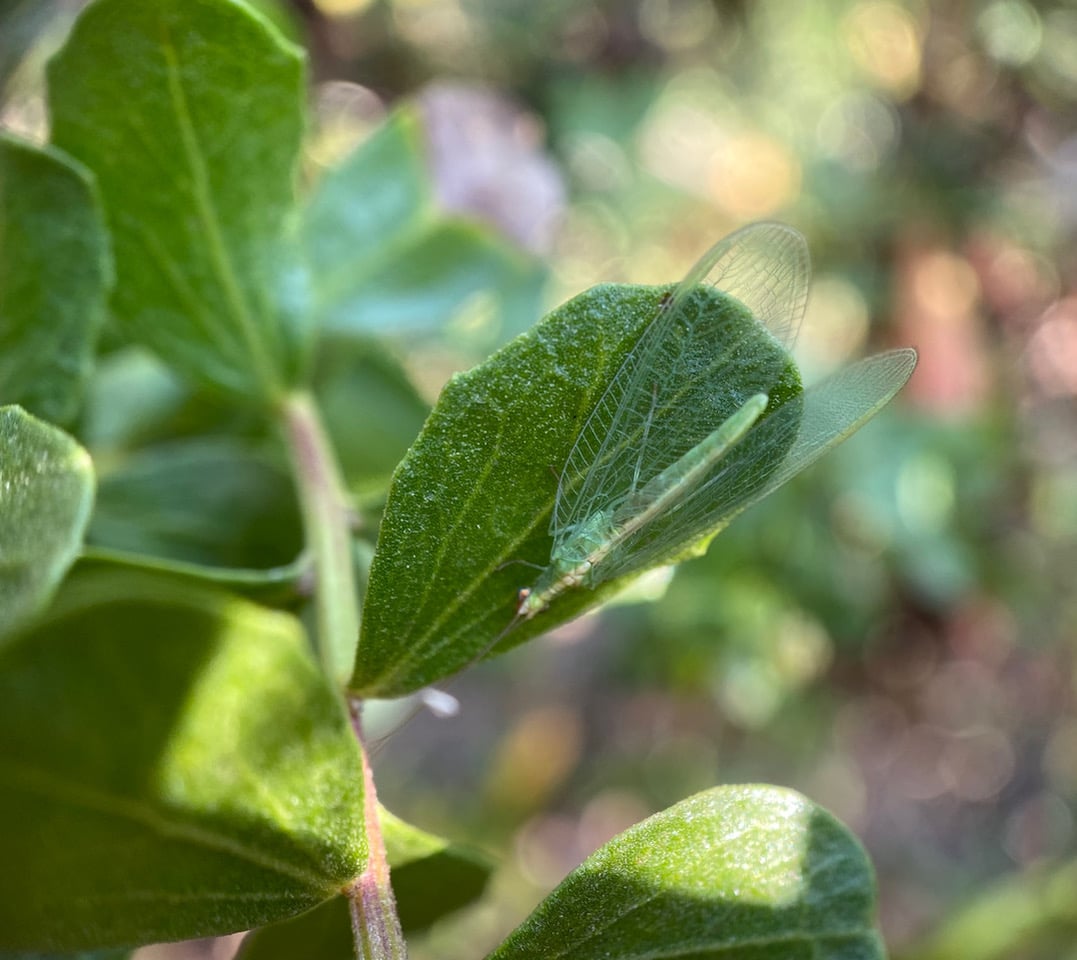
A Green Lacewing alights on a leaf of Coyote Brush, Baccharis pilularis.
Lacewings are insects in the large family Chrysopidae of the order Neuroptera. Adults are crepuscular or nocturnal. They feed on pollen, nectar and honeydew supplemented with mites, aphids and other small arthropods. Eggs are deposited at night, hung on a slender stalk of silk usually on the underside of a leaf. Immediately after hatching, the larvae molt, then descend the egg stalk to feed. They are voracious predators, attacking most insects of suitable size, especially soft-bodied ones (aphids, caterpillars and other insect larvae, insect eggs). Their maxillae are hollow, allowing a digestive secretion to be injected in the prey. Lacewing larvae are commonly known as “aphid lions” or “aphid wolves”. In some countries, Lacewings are reared for sale as biological control agents of insect and mite pests in agriculture and gardens.