

Pollinator Post 8/19/23 (2)
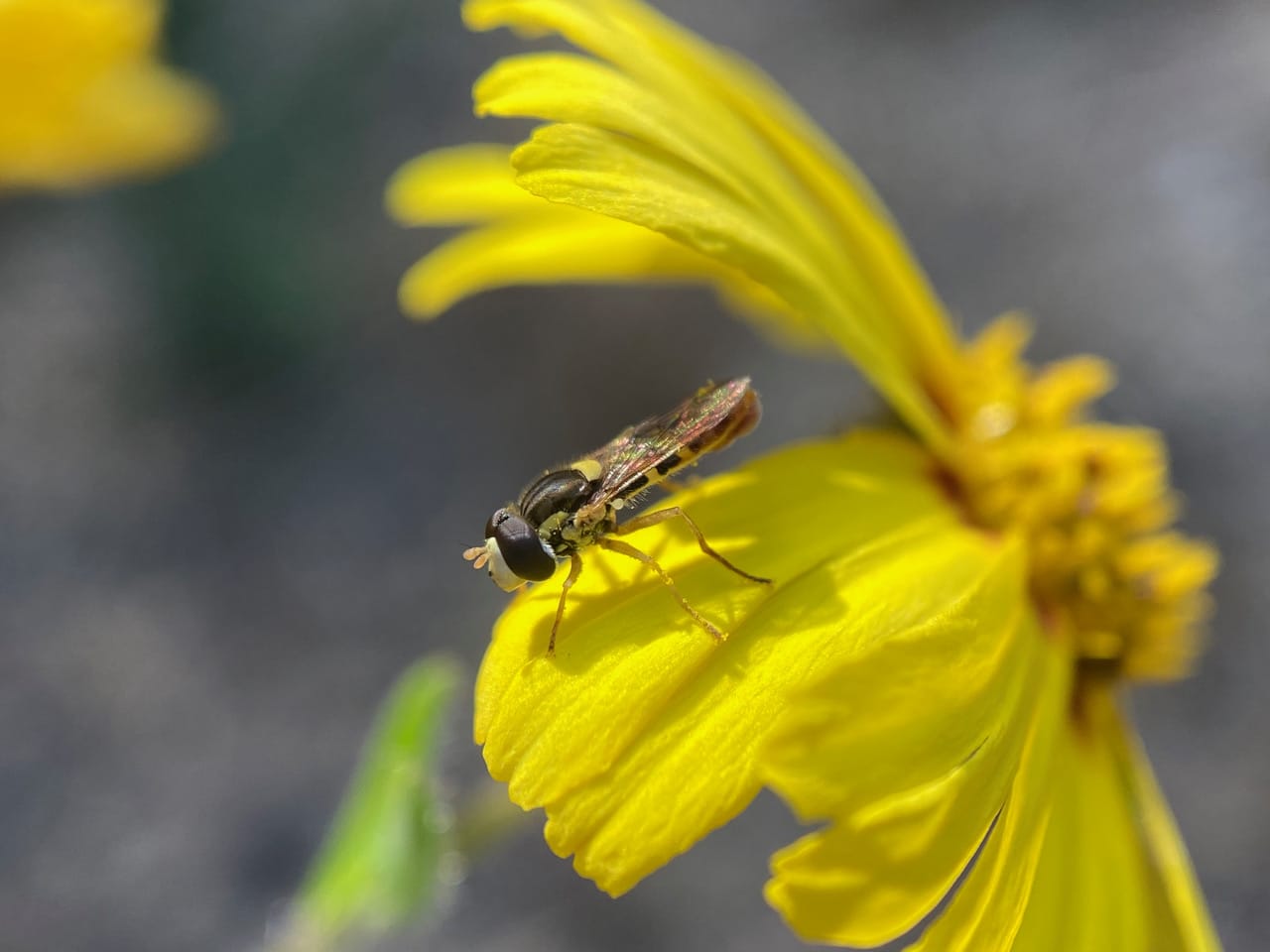
A male Forked Globetail, Sphaerophoria sulphuripes (family Syrphidae) lands on a ray petal of a flowerhead of Elegant Tarweed, Madia elegans. The hover fly is easily recognizable from its long, cylindrical abdomen with a red tip.

It proceeds to groom its wings and abdomen with its hind legs.

Next, it’s time to clean the head with its front legs.
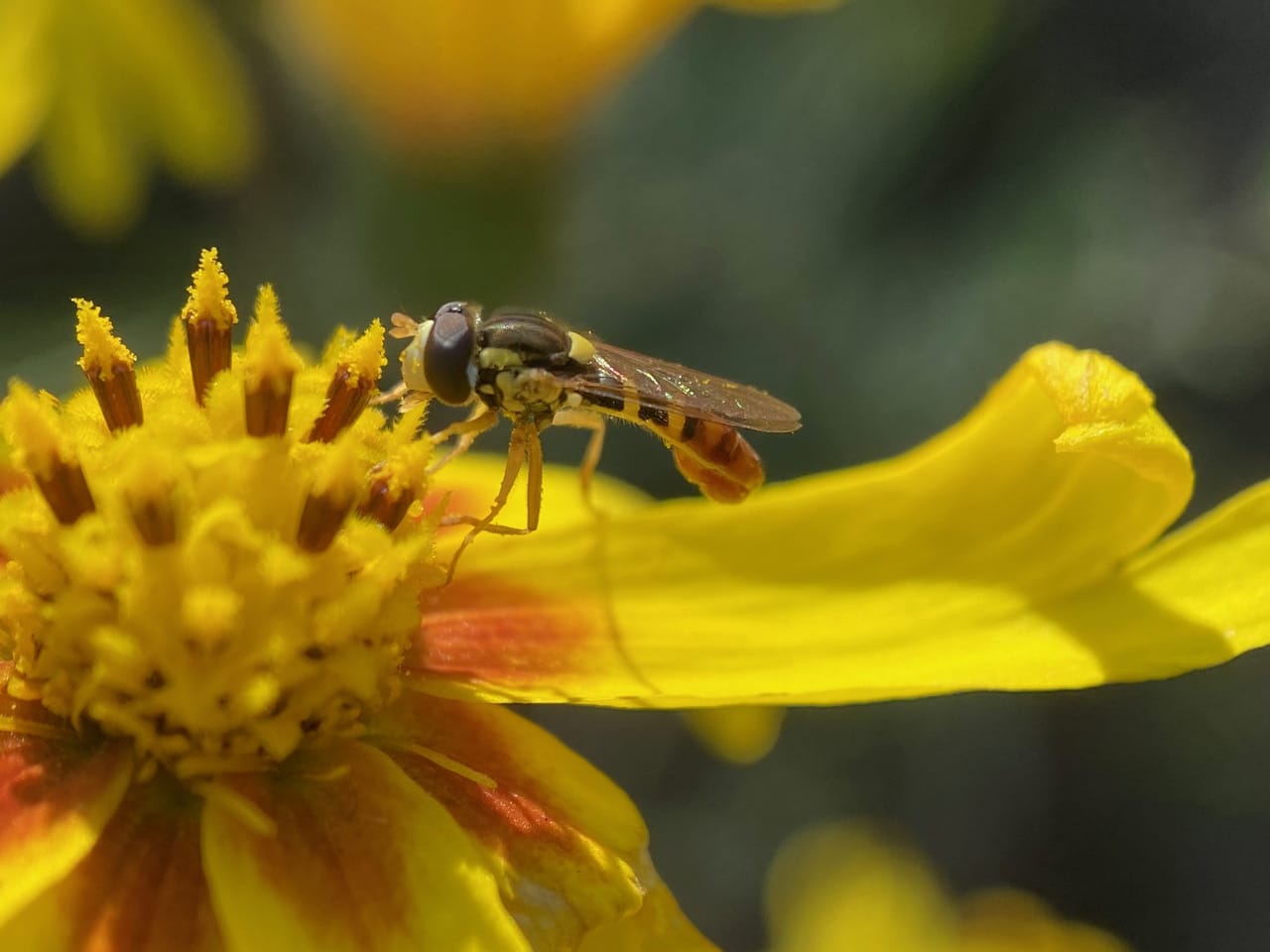
Note that the male Forked Globetail has its red genitalia curled under the abdomen, creating a bulbous tip that gives the fly the common name of “globetail”. The species exhibits sexual dimorphism – the females are quite distinct, rounder in the abdomen and without any red coloration.
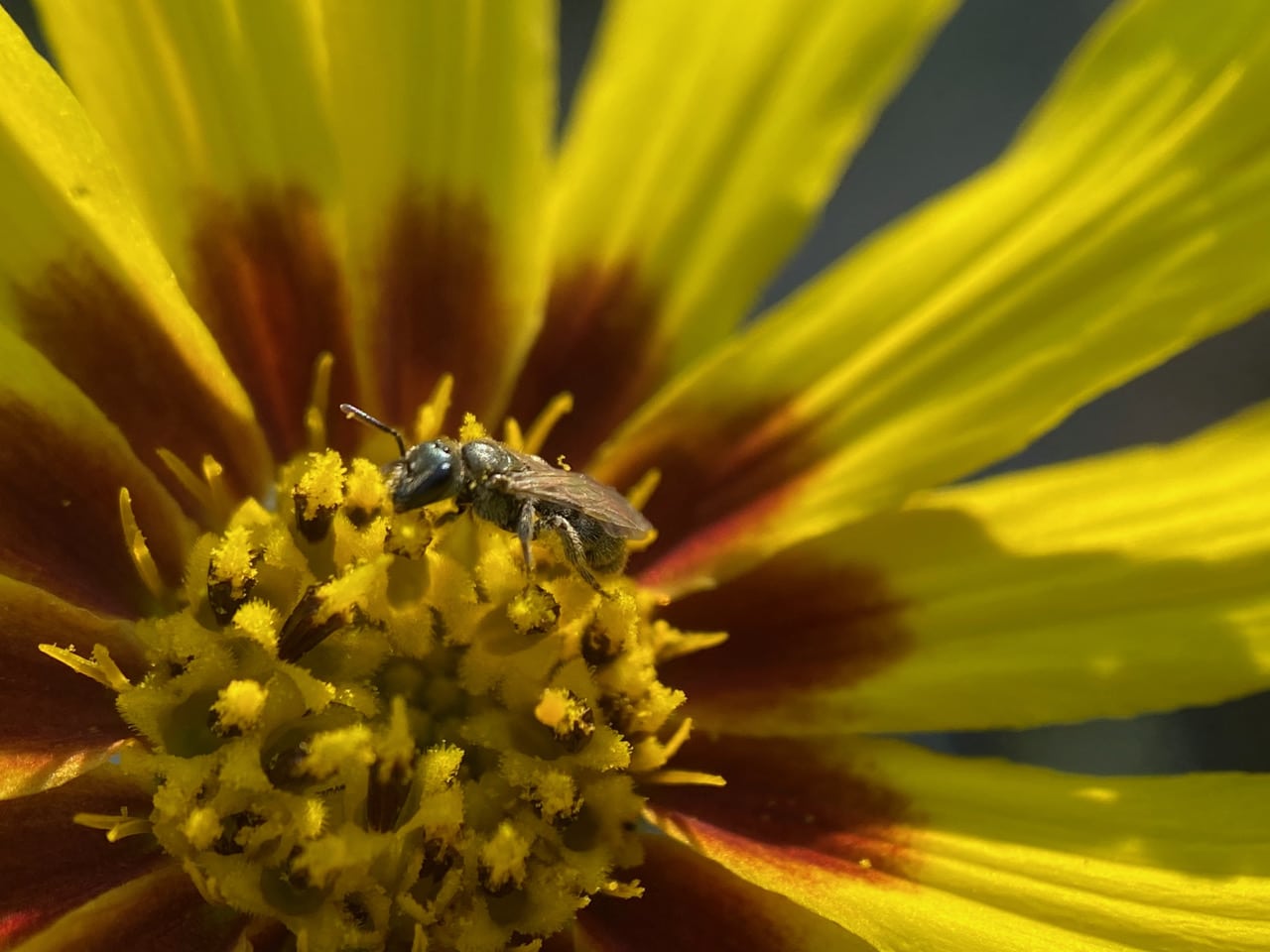
A Metallic Sweat Bee, Lasioglossum (Dialictus) sp. (family Halictidae) visits a flowerhead of Elegant Tarweed. I think it is a male, given the lack of scopae on the hind legs, and the long antennae.
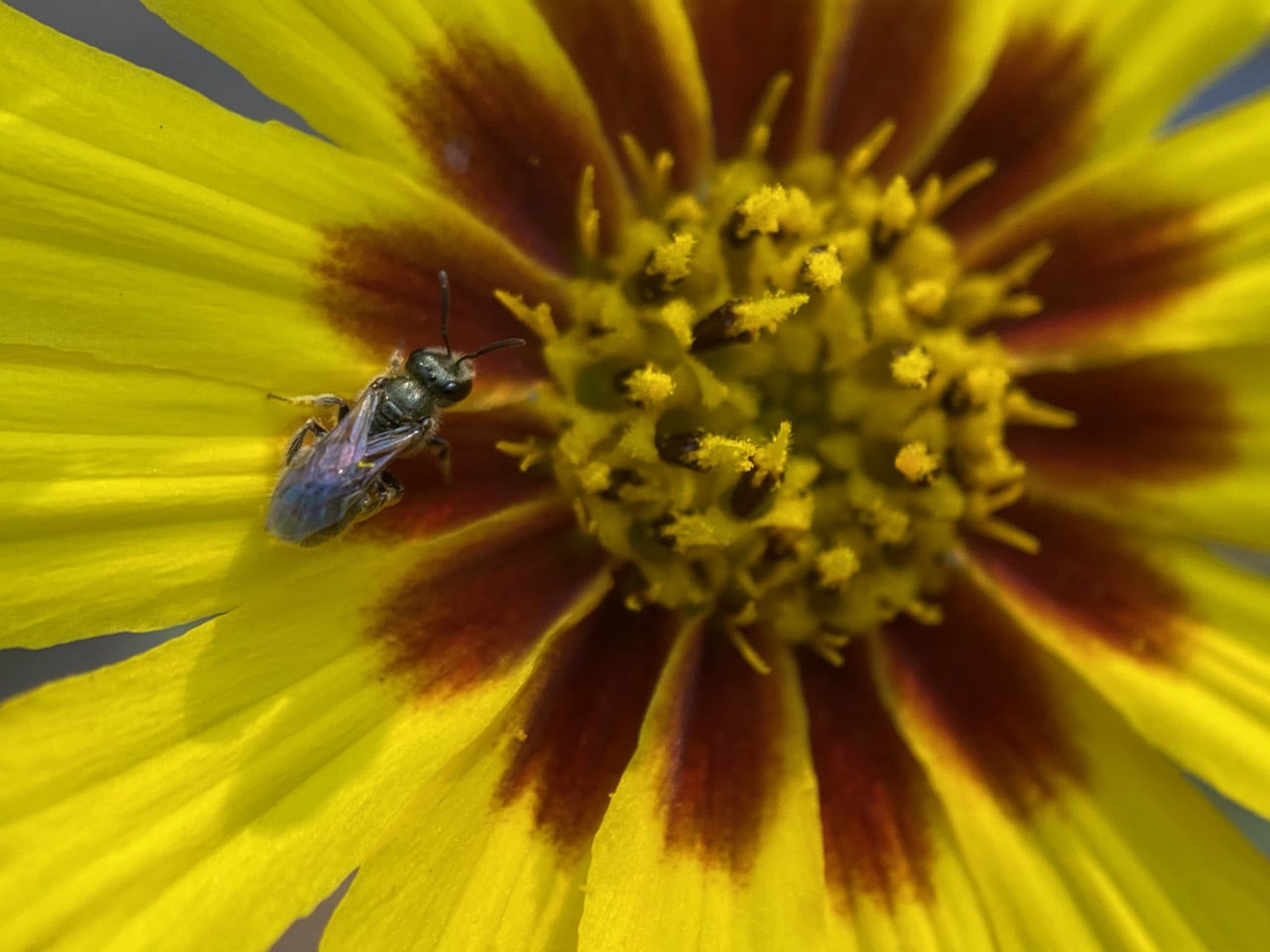
Lasioglossum are closely related to the genera Halictus and Agapostemon. These genera are commonly called “sweat bees” because of their attraction to human sweat, which they drink for its salt content. Lasioglossum are dusky black to brown slender bees with bands of hair on their abdomen.
Lasioglossum species are found worldwide, and they constitute the largest bee genus. The subgenus Dialictus are the most likely to be seen in the U.S., with over 300 species of these tiny metallic bees. The majority of Lasioglossum are generalists. Because they are so abundant throughout the flowering season, the bees are often important pollinators. Their sheer numbers are enough to achieve excellent pollination of many wild flowers, especially of plants in the Asteraceae, which have shallow floral tubes that are easily accessed by these minute bees.
Dialictus is a subgenus of Sweat Bees belonging to the genus Lasioglossum. Most of the members of this subgenus have a subtly metallic appearance, and are small, about 3.4-8.1 mm in size. They are commonly found in Northern Hemisphere and are found in abundance in North America. As in the other members of the family Halictidae, the bees have very diverse forms of social structure, making them model organisms for studying the social behavior of bees.
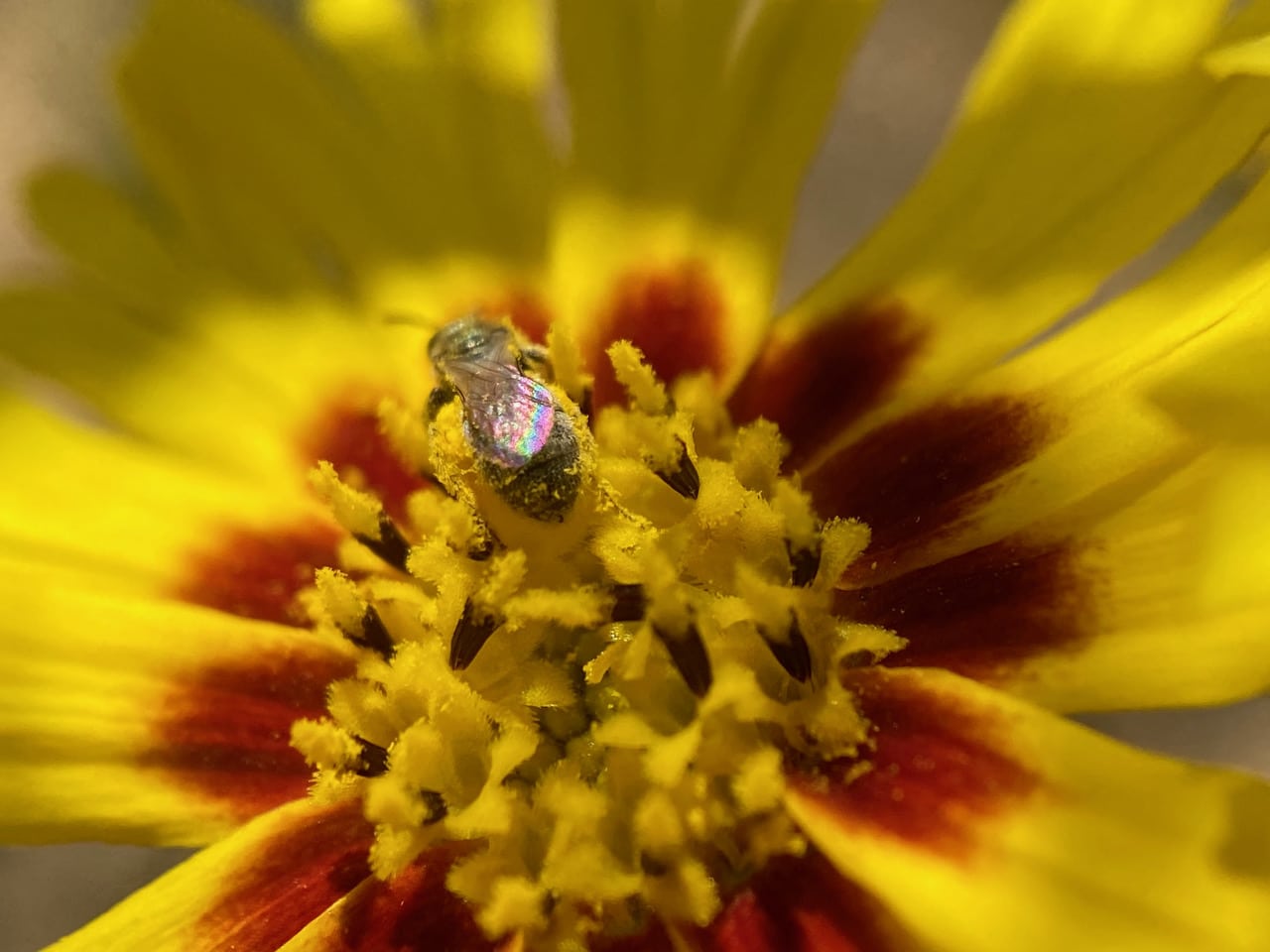
Here’s a female Metallic Sweat Bee, Lasioglossum (Dialictus) sp. (family Halictidae). The scopae on her hind legs are fully covered with the sticky pollen of Madia elegans. The fact that the bee is collecting pollen is enough evidence that it is female. Male bees do not collect pollen to provision the nest.
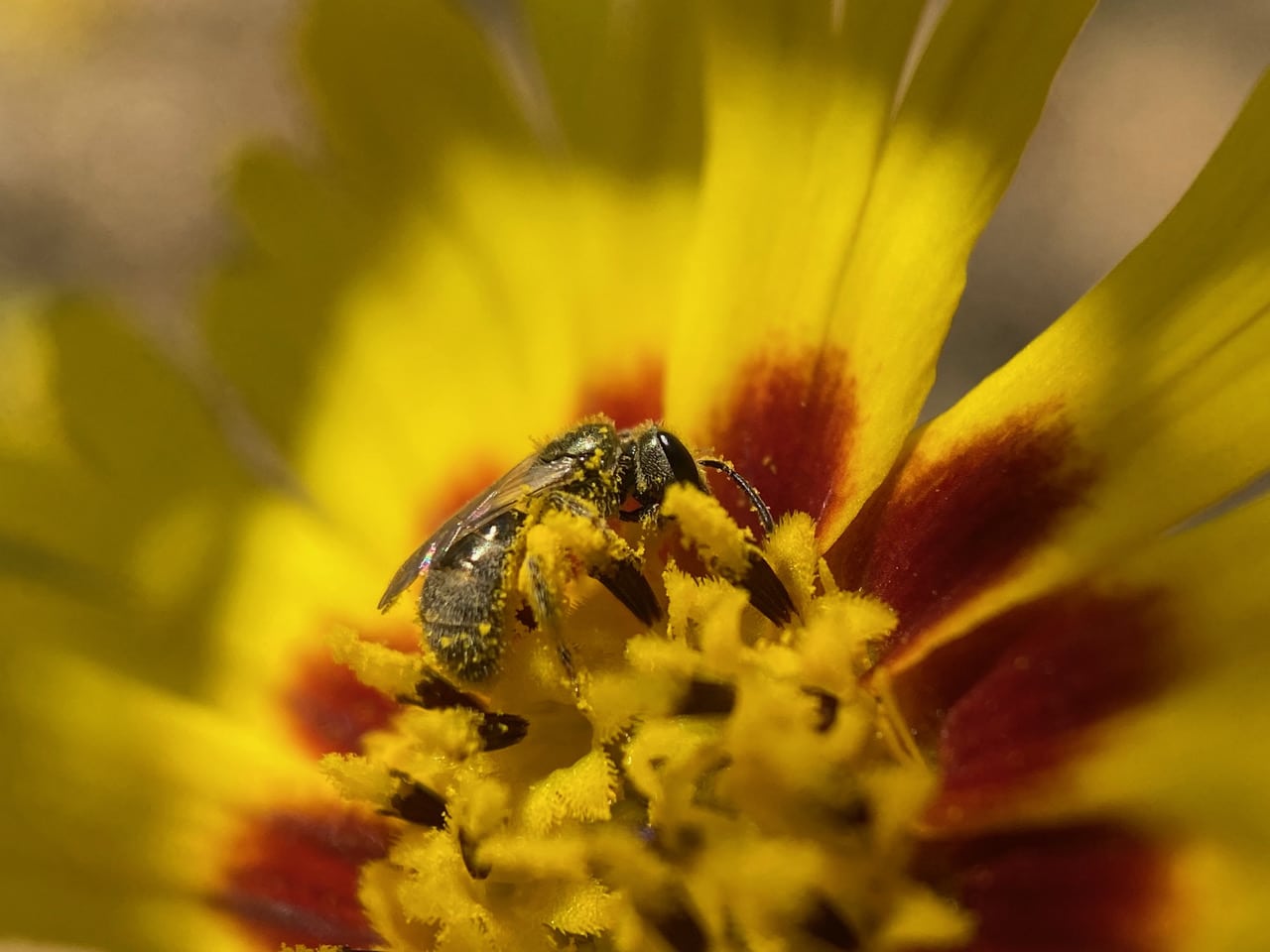
Side view of the female Lasioglossum.

Look, there’s big caterpillar frass on the leaves of Coast Tarweed, Madia sativa!

Looking above the frass, I find a well-camouflaged caterpillar of the Darker-spotted Straw Moth, Heliothis phloxiphaga (family Noctuidae). The catepillar has its head buried in an immature flowerhead, feeding on the flowers.
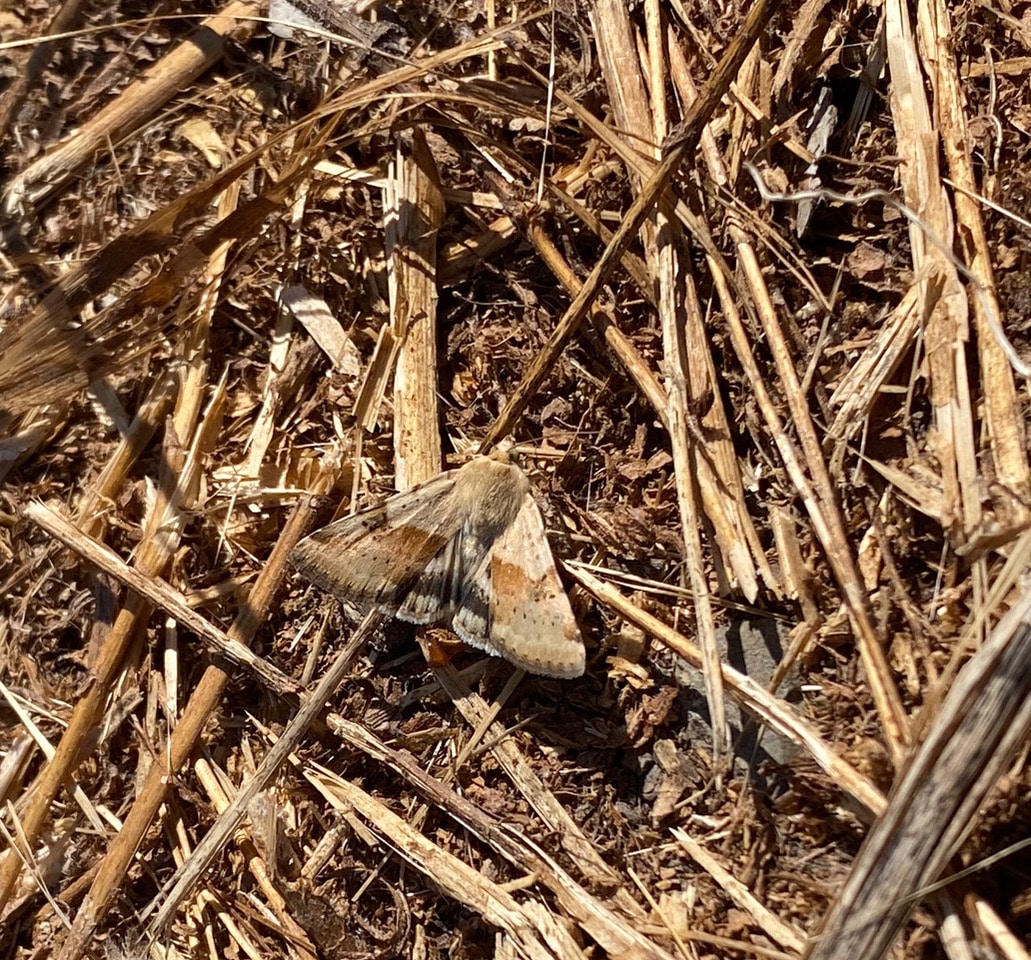
A Darker-spotted Straw Moth, Heliothis phloxiphaga (family Noctuidae) lands on the ground, blending imperceptibly into the leaf/straw litter of pruned Coast Tarweed.
The Darker-spotted Straw Moth is a medium-sized tan moth with darker markings. The species is found across the US and southern Canada. They frequent wooded edges, meadows, and other open areas. They are active from March through October. Adults are both nocturnal and diurnal in activity, and are often found feeding and ovipositing during the day. Like other Heliothis species, the larvae feed on the flowering parts and seeds of the host plant.

It’s been only a few days since I visited this spot, but the population of aphids on the young Coast Tarweeds has increased markedly.
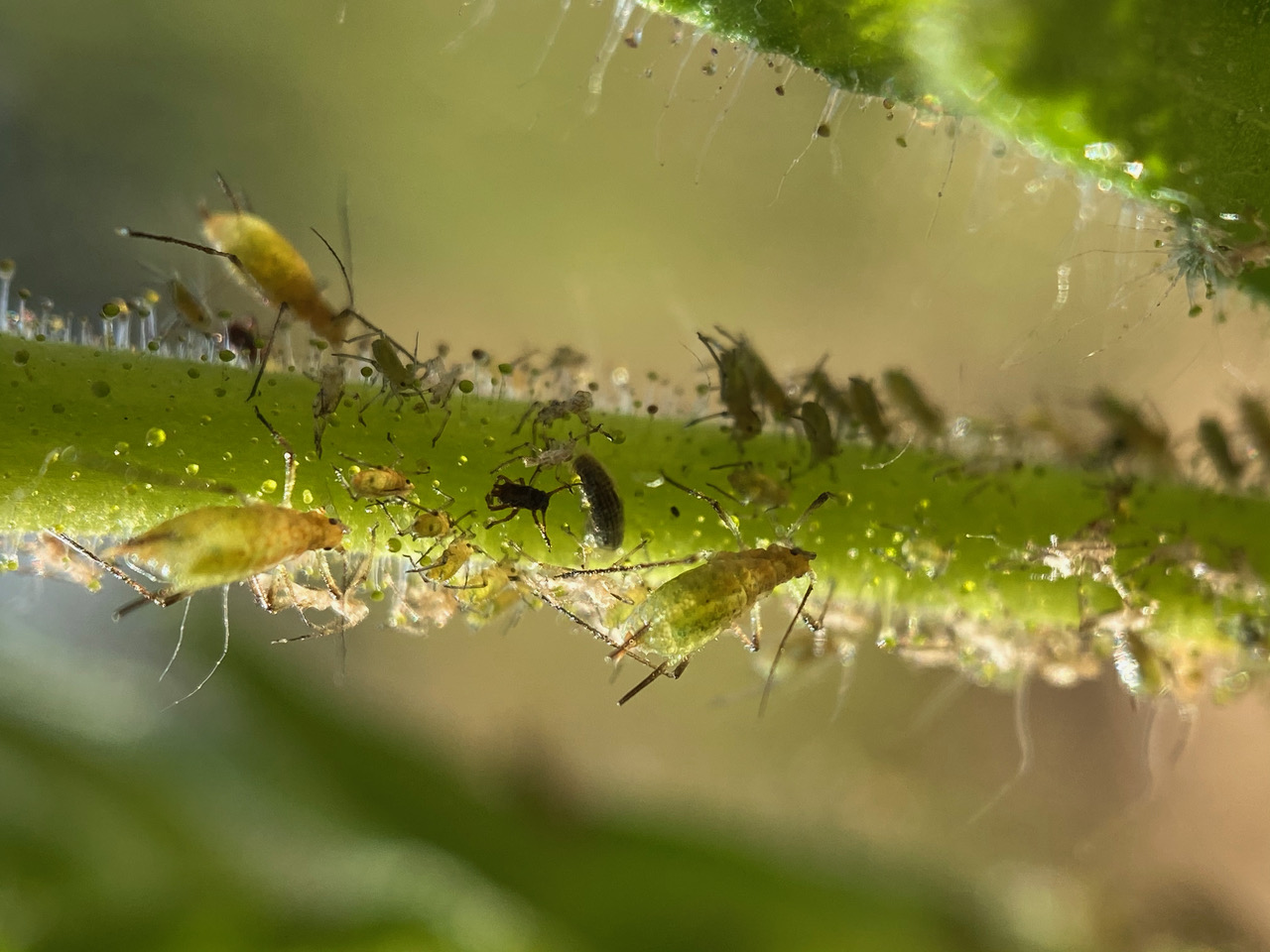
Aphids of various sizes and ages are sucking on the stem of Coast Tarweed.
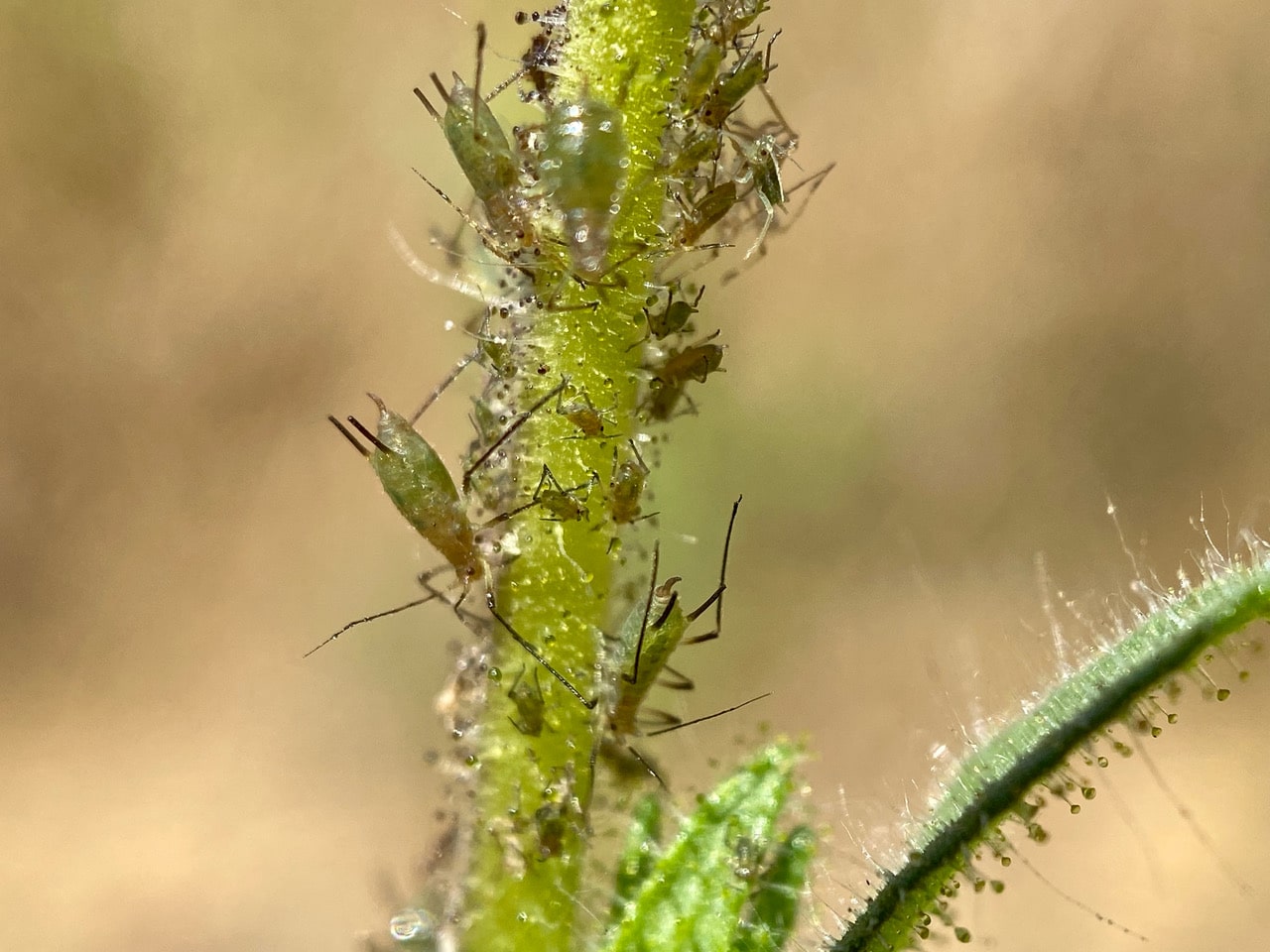
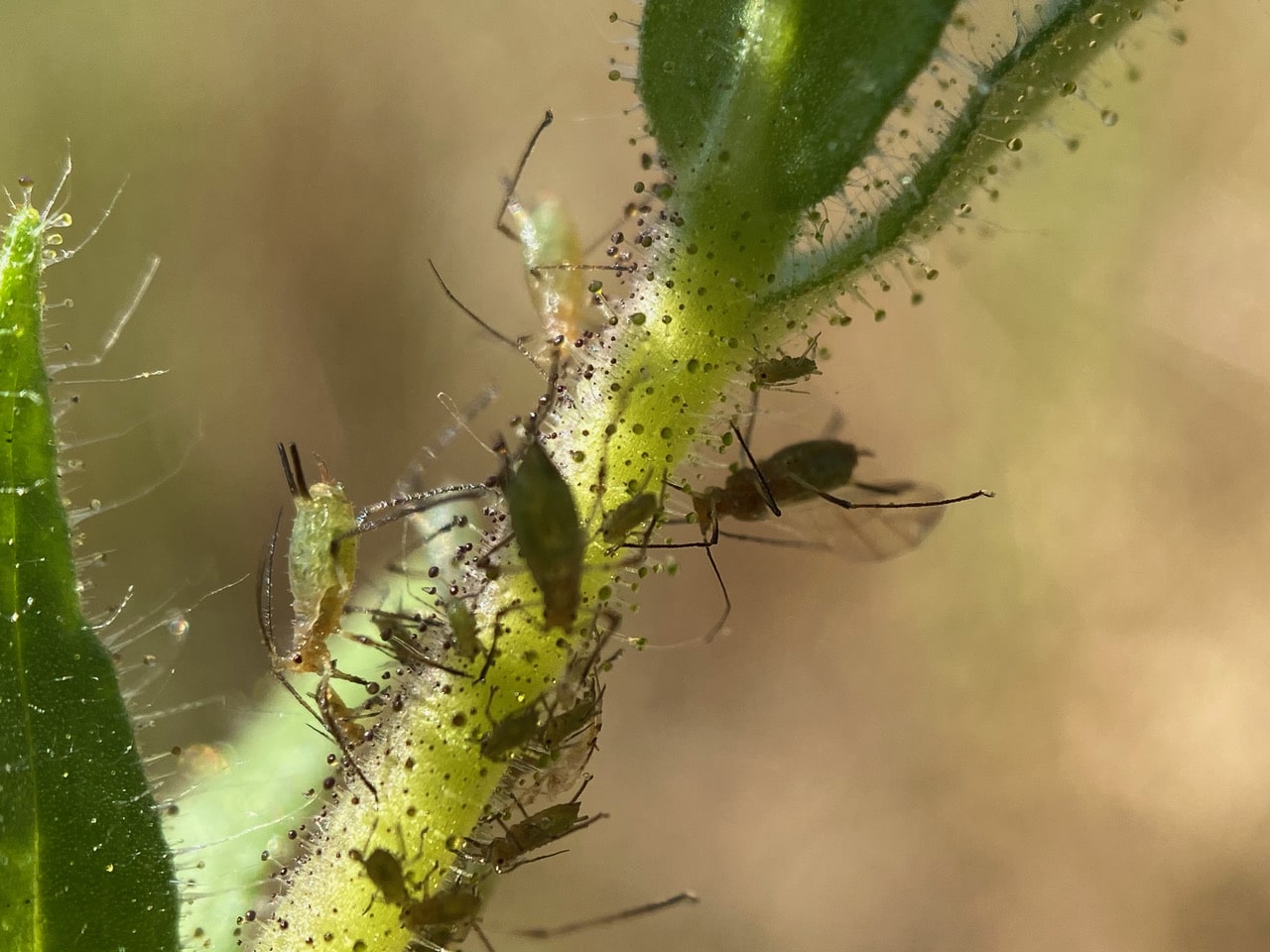
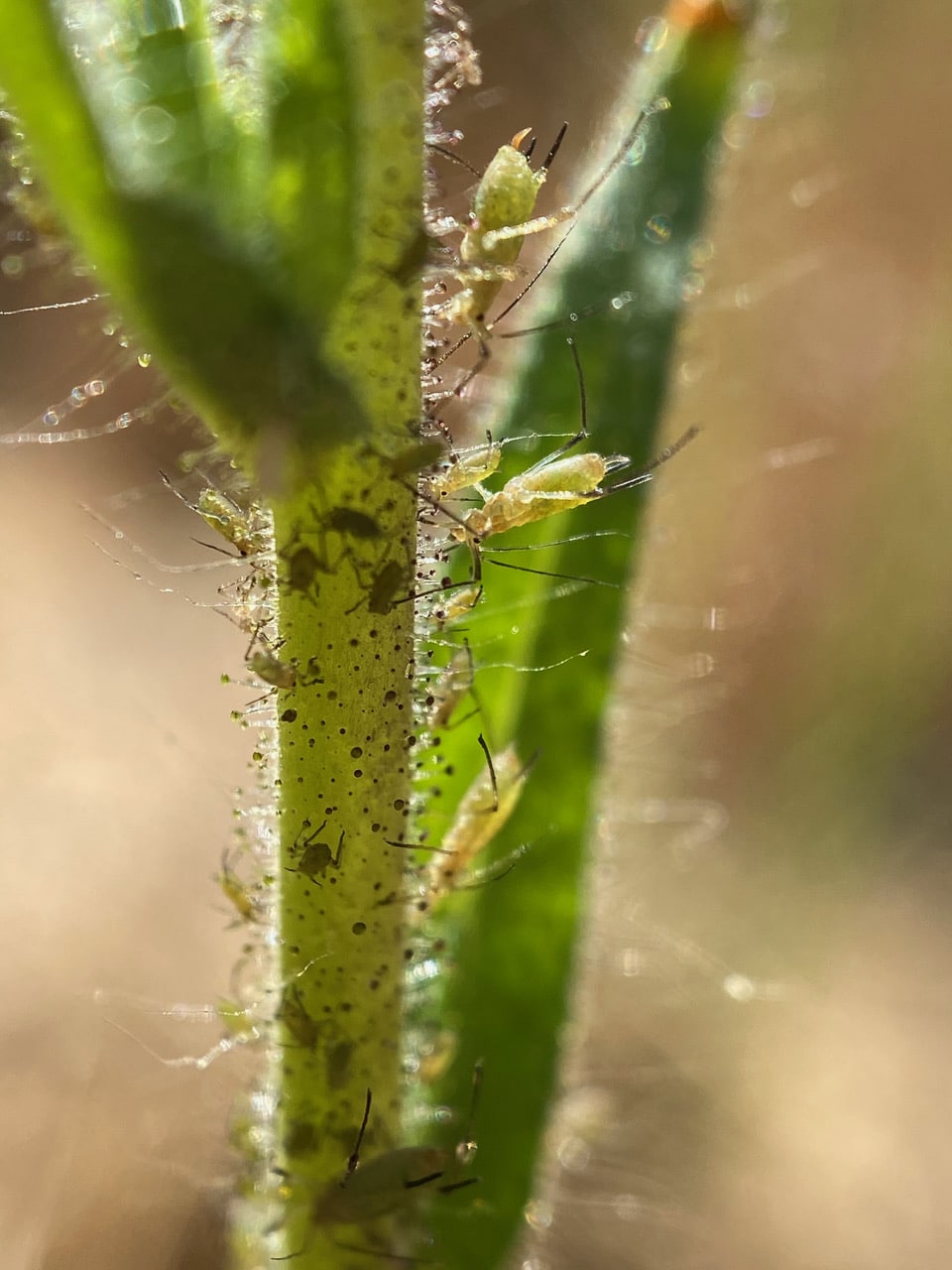
An expert on iNaturalist has helped identify these aphids as members of the genus Uroleucon (family Aphididae). Most species feed on Asteraceae.
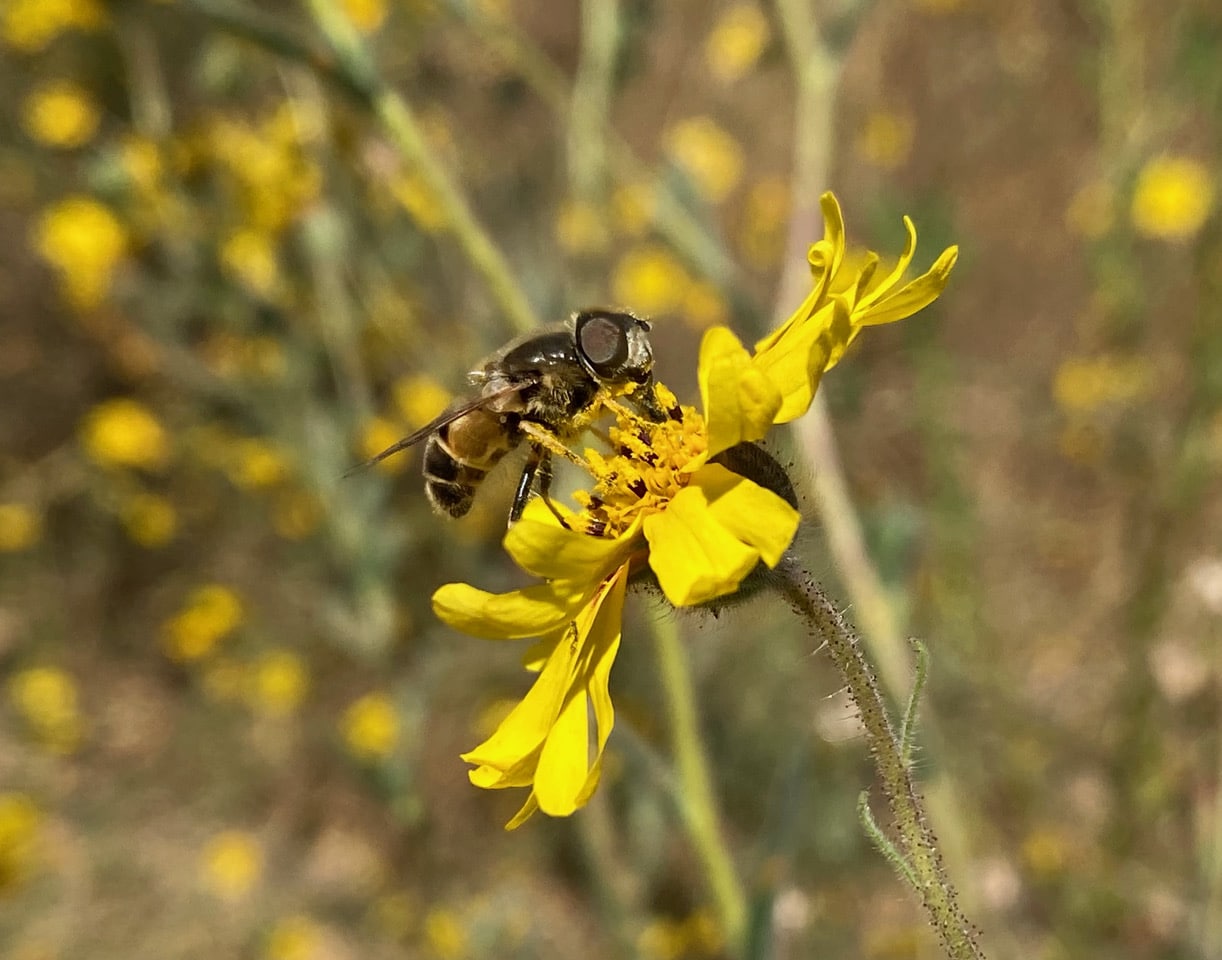 A Black-footed Drone Fly, Eristalis hirta (family Syrphidae) is foraging on a flowerhead of Elegant Tarweed, Madia elegans.
The Black-footed Drone Fly, Eristalis hirta (family Syrphidae) is a common Western North American species of hoverfly. The adults visit flowers for nectar and pollen. Larvae are aquatic filter-feeders of the rat-tailed type.
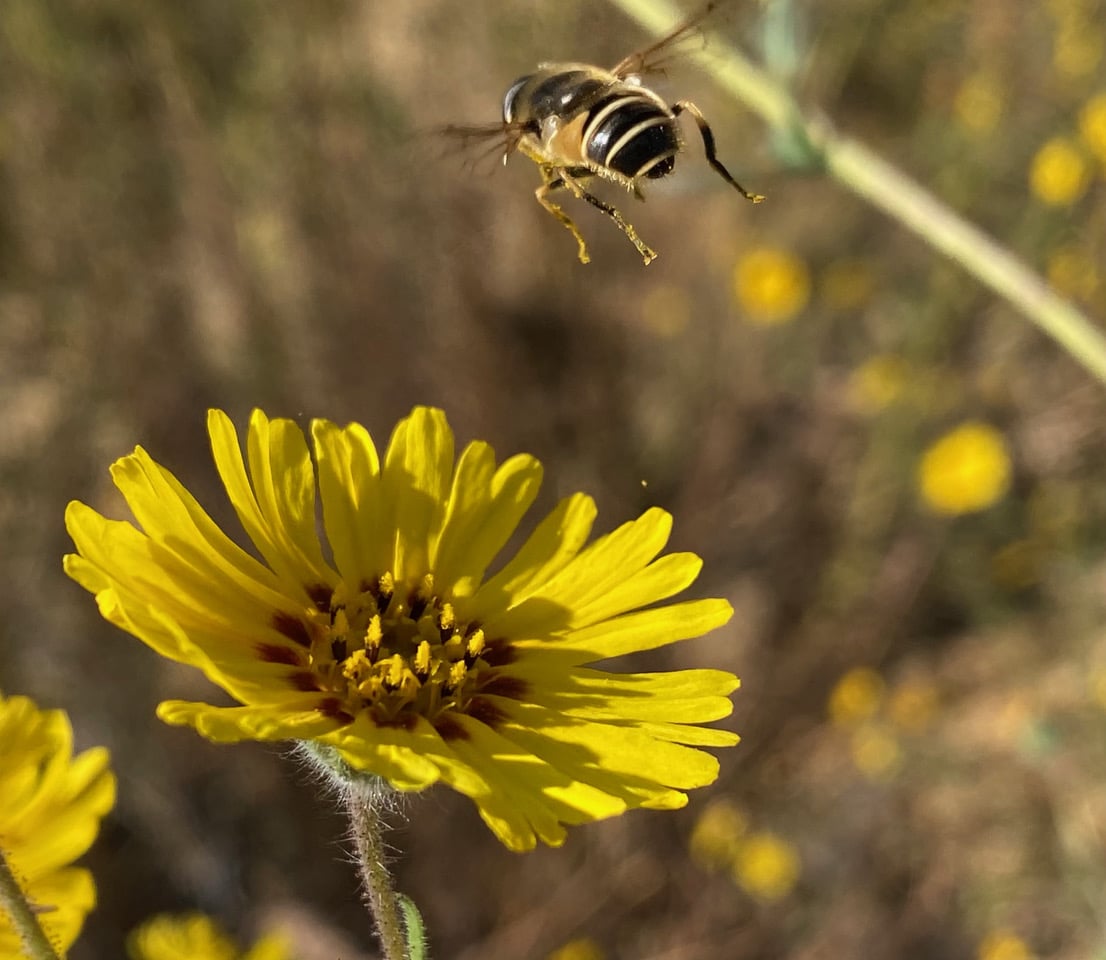
Off to the next flower!