

Pollinator Post 8/16/26 (1)

It’s high tide at Bay Farm when I arrive in the early afternoon. The little patch of beach I usually frequent is nearly inundated.

A black-and-white male Leafcutter Bee, Megachile sp. (family Megachilidae) has landed to take nectar on a flowerhead of Oregon Gumweed, Grindelia stricta. It has black eyes, so I know it is not a Western Leafcutter Bee, M. perihirta. Since the bee is not familiar, I try to take as many pictures of it from different angles in the hope that someone might be able to help identify it. Taken in quick succession (10 seconds in total to be exact), the next few frames show a tiny wasp hounding the bee. Of course I was barely aware of it while focused on photographing the bee. However, reviewing the photos at home reveals some interesting dynamics.
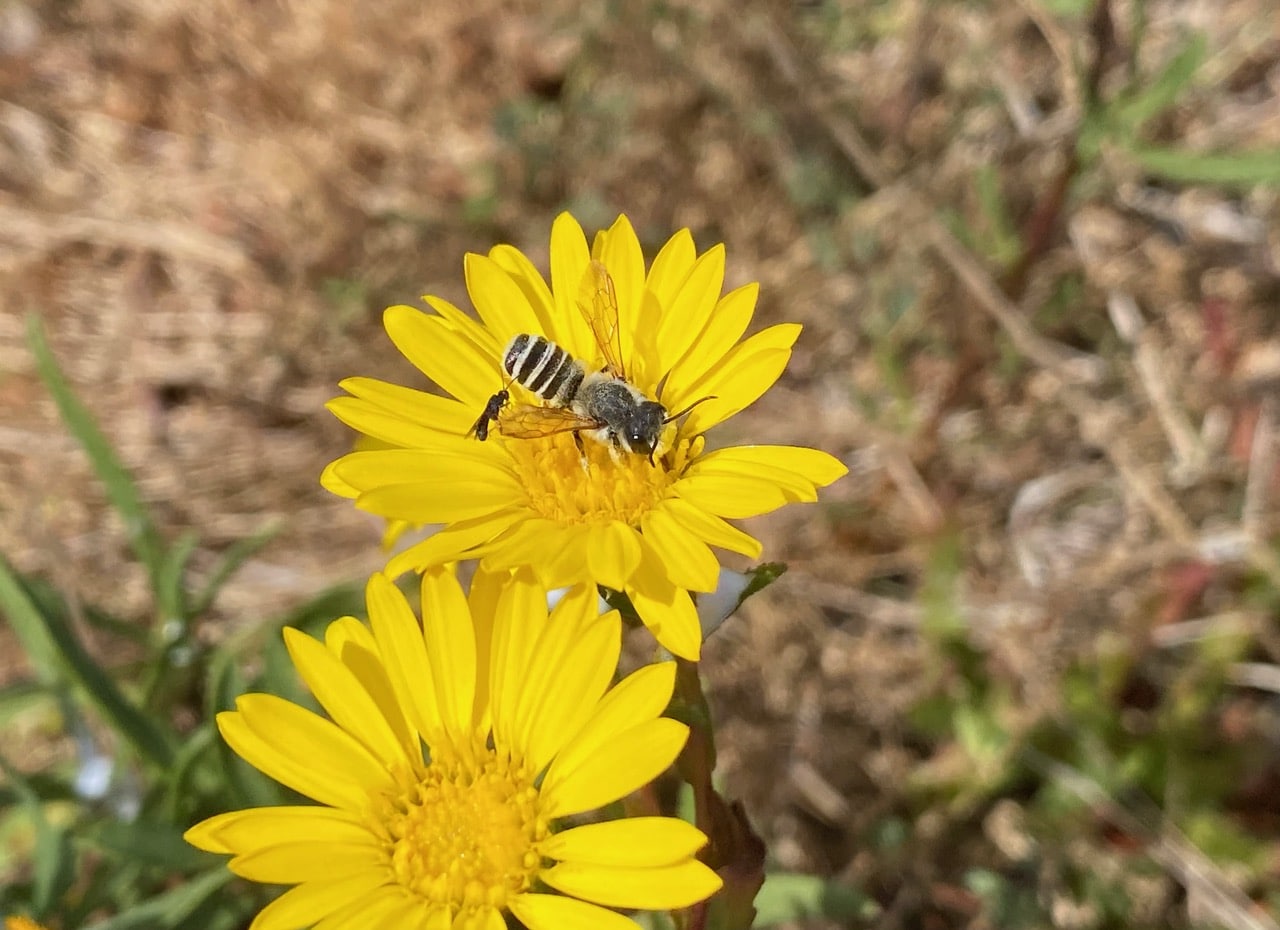
A little wasp has landed on the bee’s wing.

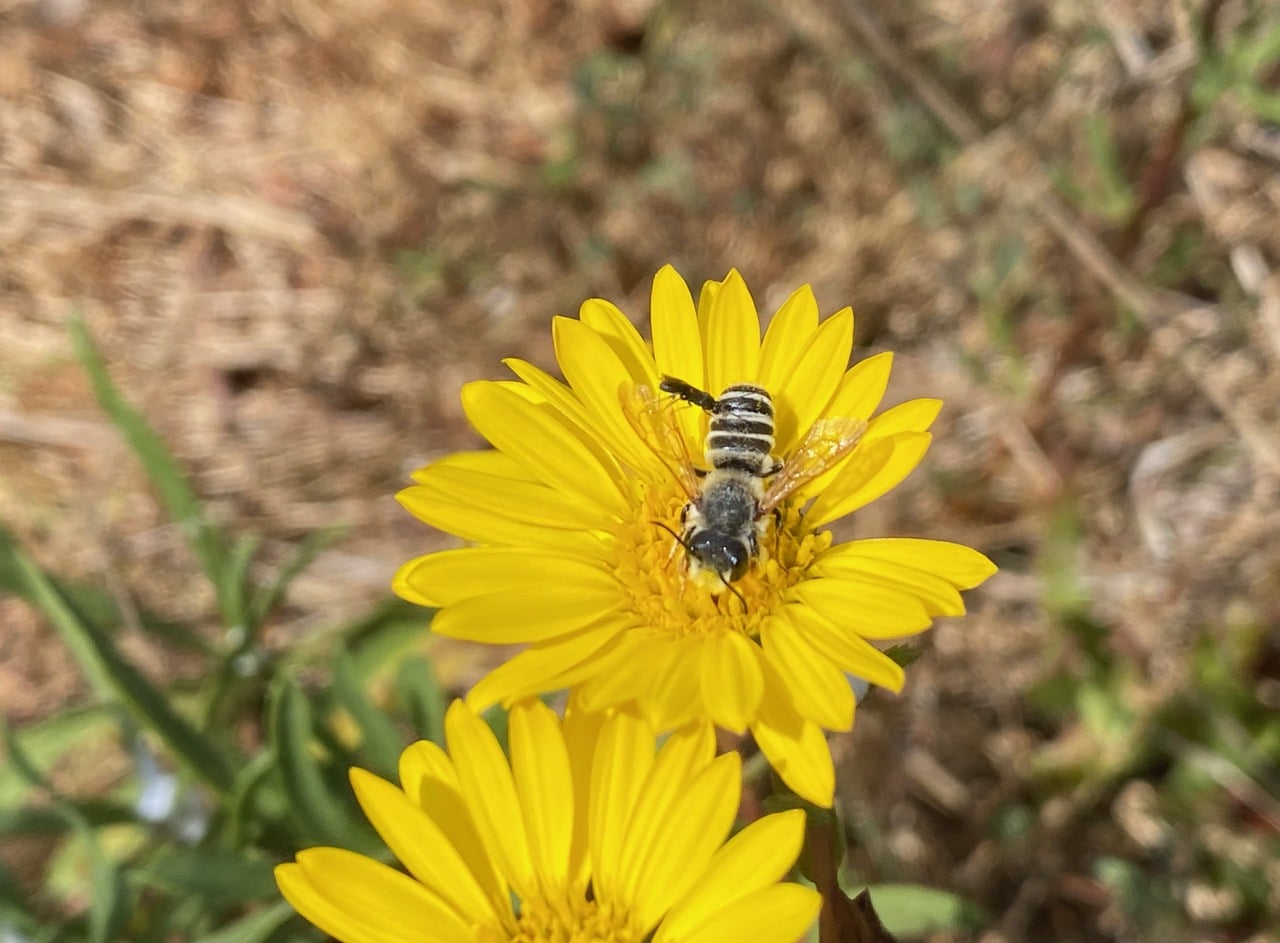
The wasp is moving over to the abdomen of the bee.
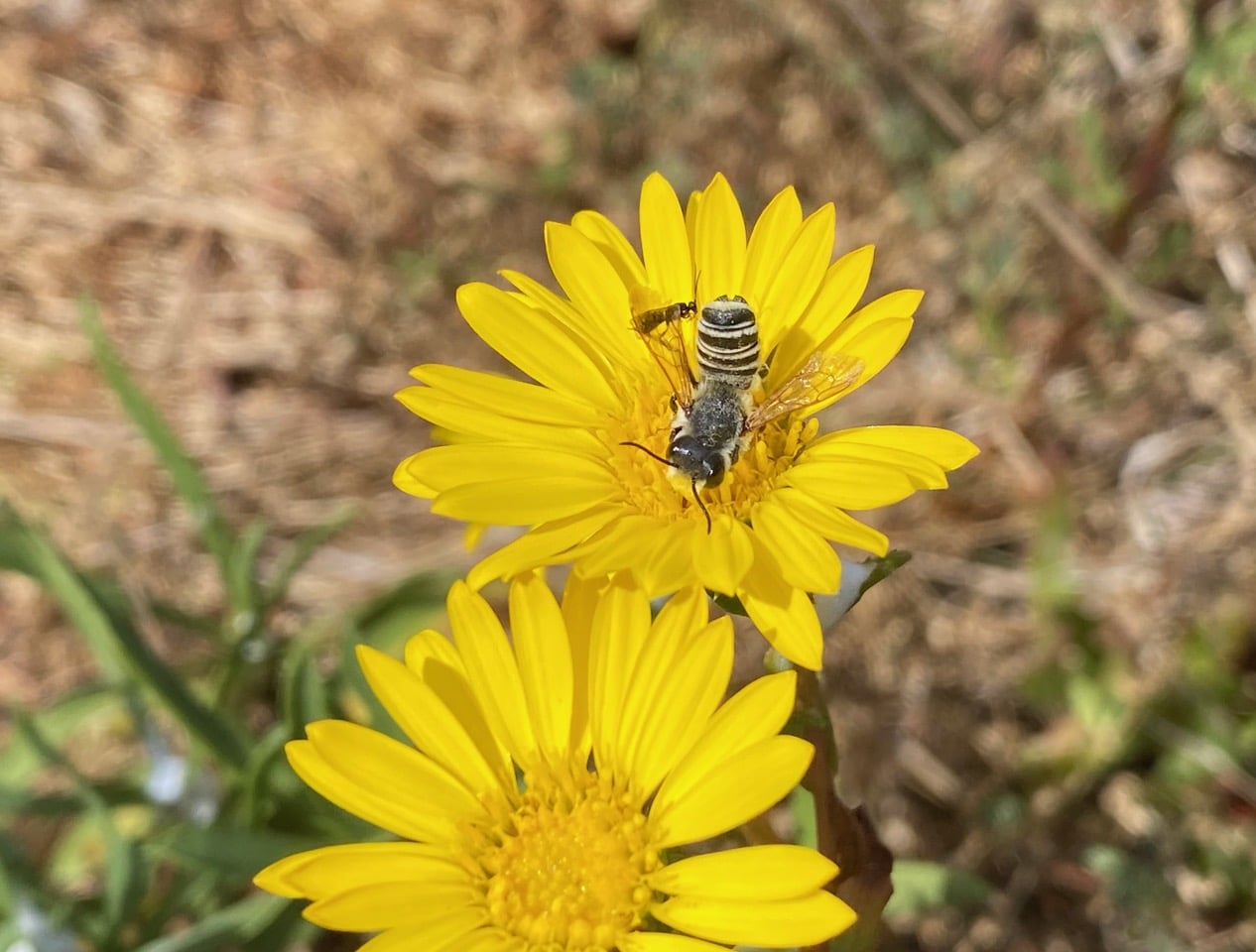
The wasp appears to be on the bee’s right rear leg now.
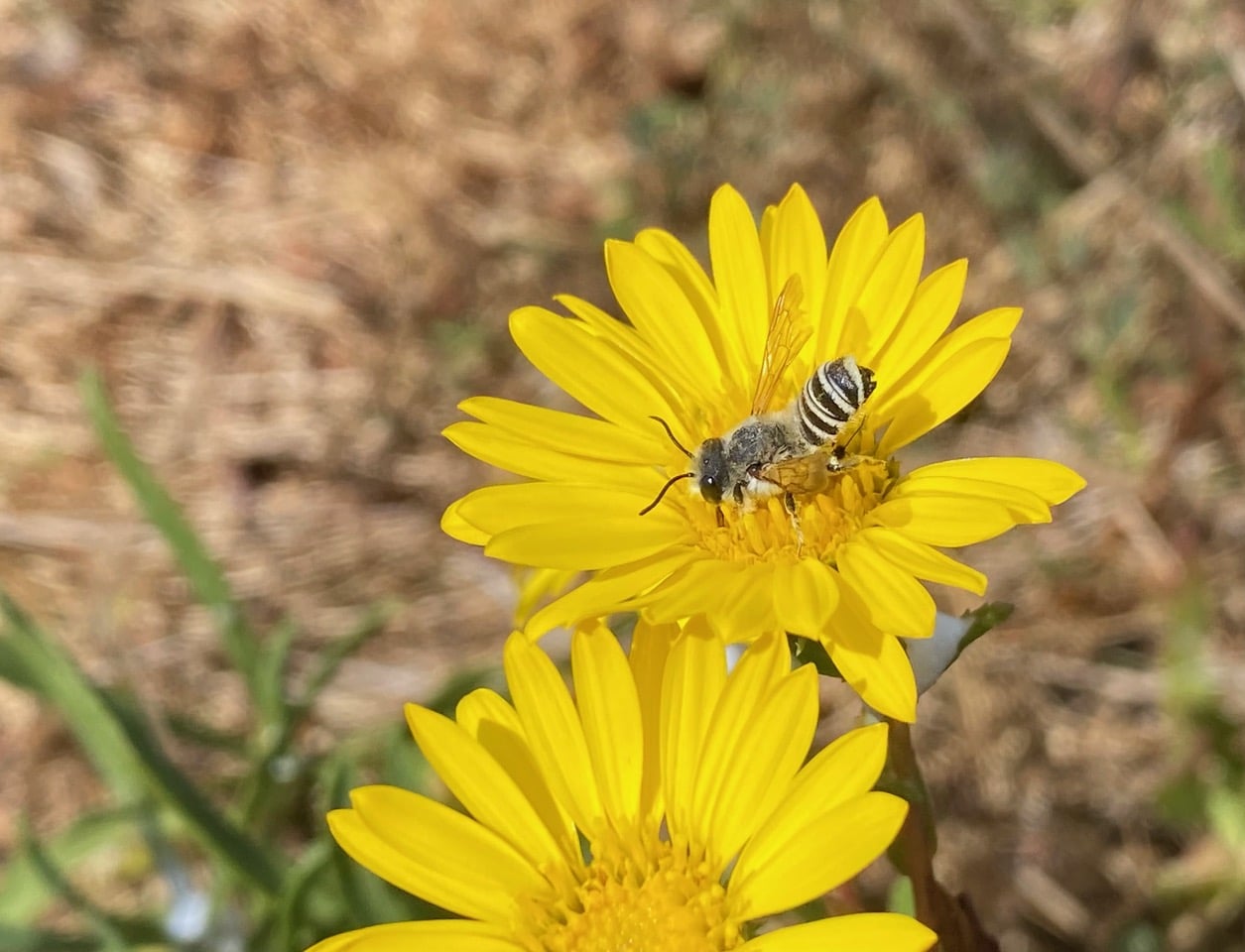
The wasp is on the bee’s leg.

One of the wasp’s antennae can be seen under the bee’s abdomen. What is it doing down there?
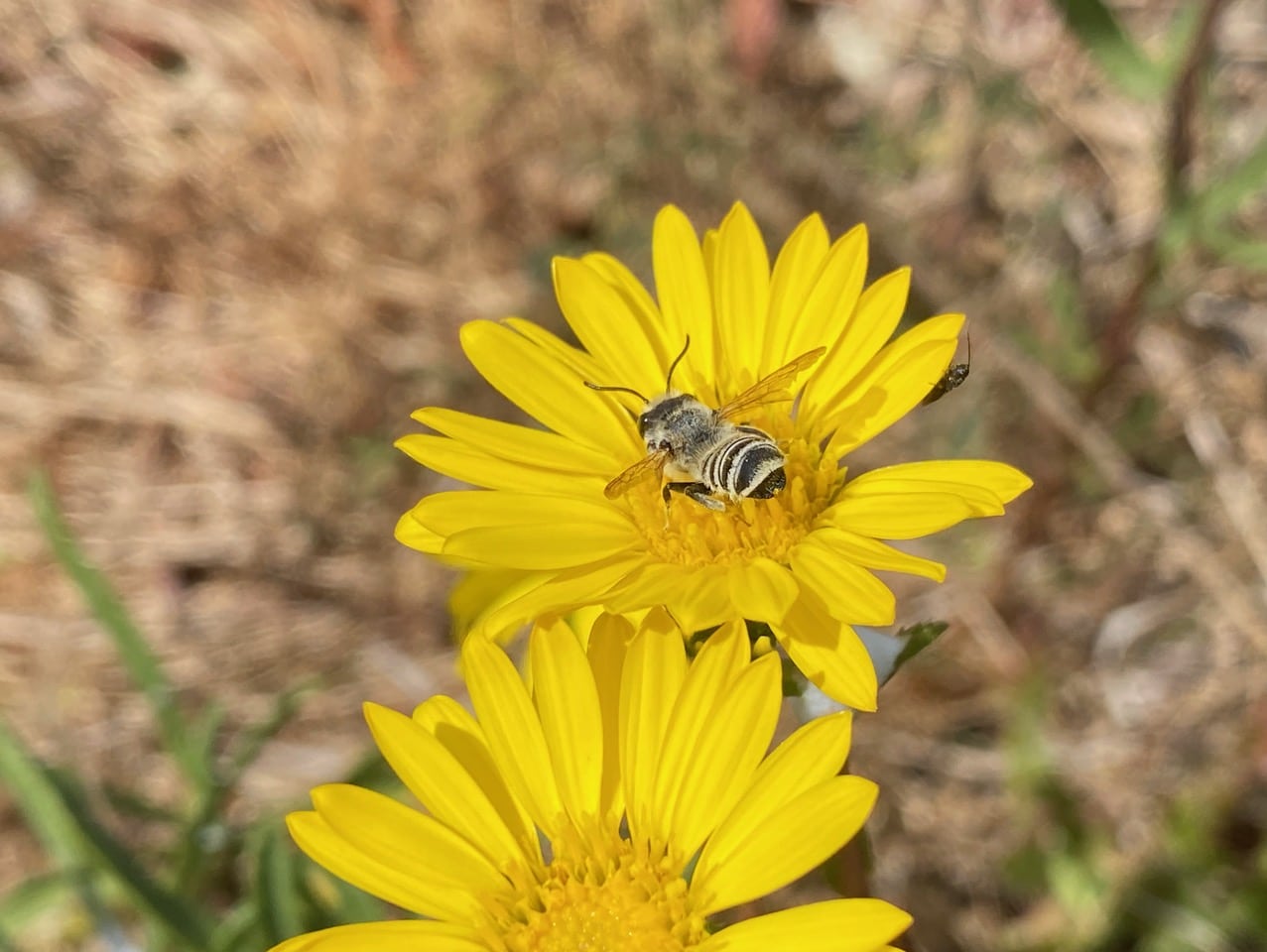
The wasp is now perched on a ray petal to the right, still watching the bee.
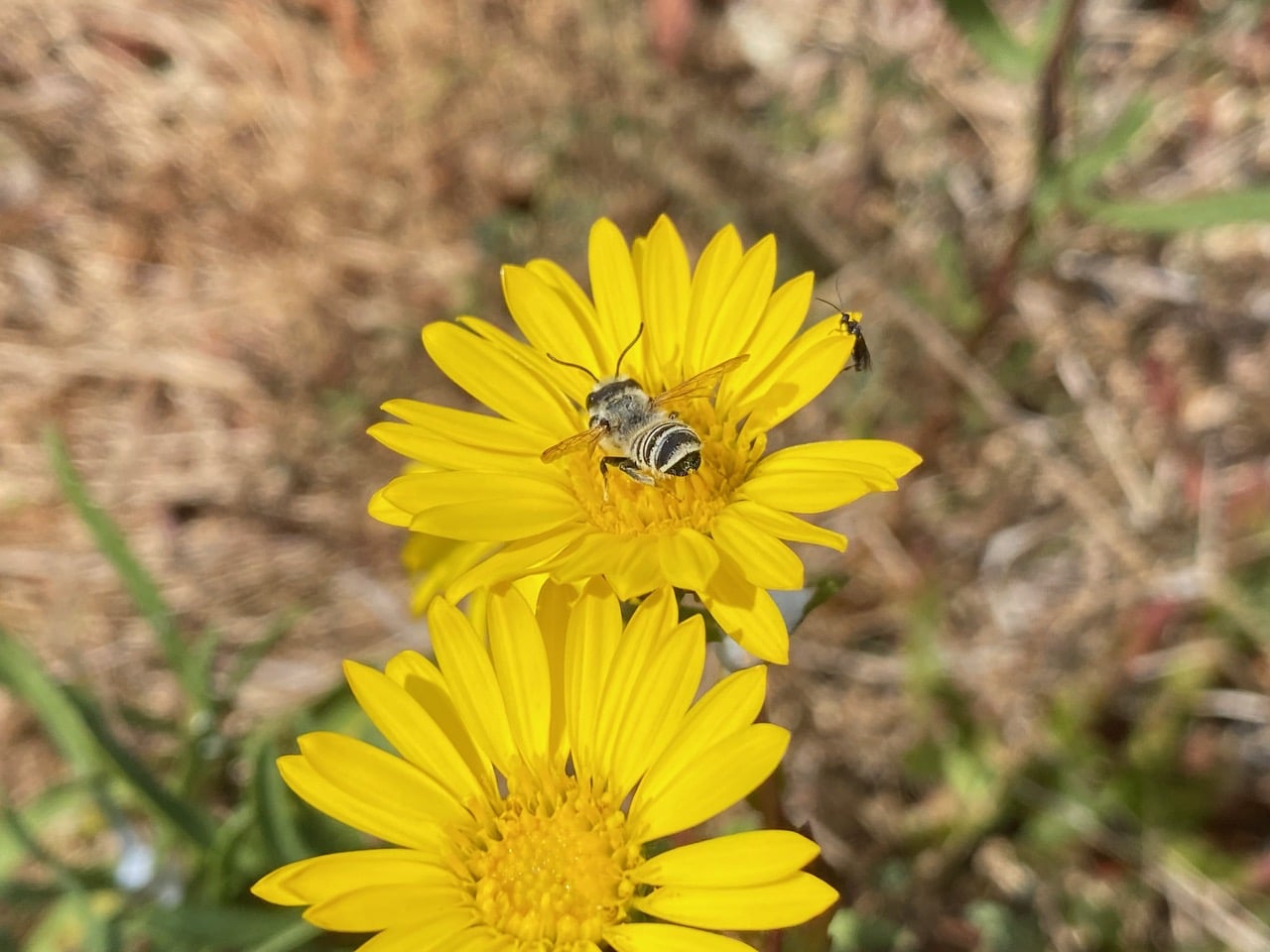

This is the last I saw of the bee and its little companion. I am totally flummoxed by the behavior of the wasp. Given the long antennae, it is likely a member of the superfamily Ichneumonoidea, which comprises parasitoids that lay eggs in the their hosts. However, Ichneumonoid wasps generally target the larvae or pupae of insects, not active adults. I hope someone could come up with an explanation.
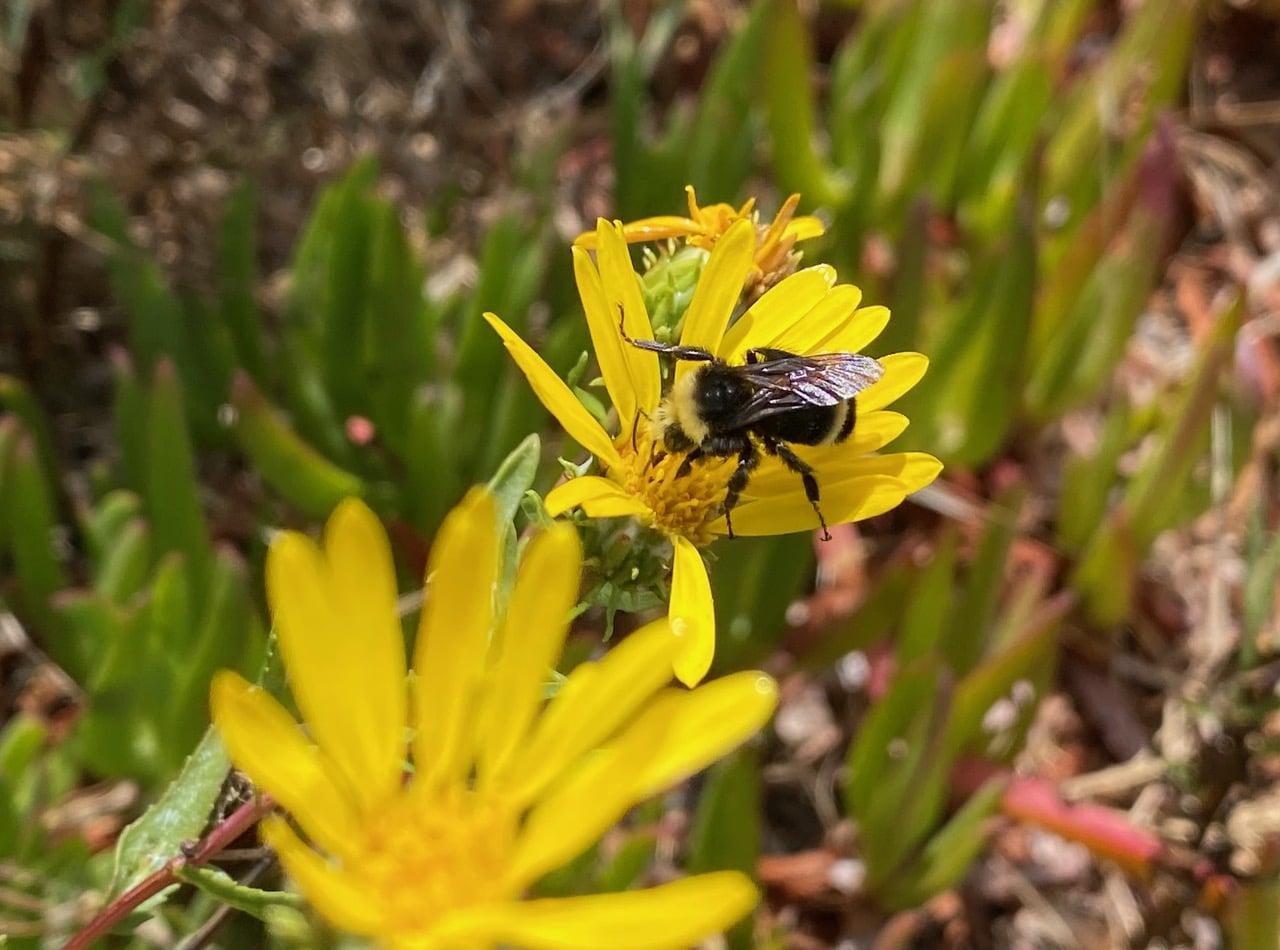
A Yellow-faced Bumble Bee, subgenus Pyrobombus (genus Bombus, family Apidae) is taking nectar on a Grindelia flowerhead. There seem to be fewer bumble bees out foraging these days. Perhaps their season is coming to an end ?
Bumble bees are social and live in colonial hives. Many of the large individuals seen in early spring are queens. They are the only members of their colony to survive the winter, hibernating until the days begin to warm and their host plants are in bloom. These queens have mated before they went into hibernation. Their first order of business out of hibernation is to each find a nesting site (usually an abandoned rodent burrow), lay eggs, brood and nurture the first batch of workers. Thereafter, the queens stay behind in the hive to concentrate on laying eggs while the workers take on hive duties and foraging. At the end of the season, usually in late summer, the colony produces gynes and drones (males). These mate with others from neighboring colonies. The mated queens go off to find a safe place to hibernate through the winter, while the rest of the colony, including the old queen dies. And so the cycle is repeated.

This patch of Grindelia is dotted with the white foamy masses created by Spittlebugs.

Many of the foam masses look like melted ice cream now, melding together adjacent Spittlebug homes. Still I don’t find any adults yet as I go from plant to plant. A watched pot never boils!
Spittlebugs, also known as Froghoppers belong to the superfamily Cercopoidea within the order Hemiptera (true bugs). While sometimes generally referred to as the family Cercopidae, they are scientifically divided into several families, primarily Aphrophoridae (common spittlebugs), Cercopidae (froghopper), and Clastopteridae.
Why the common name of “spittlebug”? The nymphs (immatures) of these bugs create foam masses on plants in which they live and feed. Like the adults, the nymphs use their piercing, sucking mouthparts to feed on plant juices. The nymph produces a cover of foamed-up plant sap reminiscent of saliva, hence the common name of spittlebug. Whereas most insects that feed on sap feed on the nutrient-rich fluid from the phloem, Spittlebugs tap into the much more dilute sap flowing upward via the xylem. The large amount of excess water that must be excreted and the evolution of special breathing tubes allow the young spittlebug nymphs to grow in the relatively protective environment of the spittle. Symbiotic bacteria in the insects’ digestive system provides them with the essential amino acids that their diet lacks. The foam serves a number of purposes. It hides the nymph from the view of predators and parasites, and it insulates against heat and cold, and protects the delicate nymphs from desiccation. Moreover, the foam has an acrid taste that deters predators.
Unlike their young, adult spittlebugs (also known as Froghoppers) are efficient flyers and hoppers, feeding on diverse plant species. They pierce plant stems to feed on xylem. To get enough nutrients, they consume massive quantities of sap, drinking up to 280 times their body weight daily, resulting in high waste excretion. Froghoppers can cause damage by distorting plant leaves and causing shoot tips to die back.

Ooh, that’s a beautiful Yellow-legged Mud Dauber on an umbel of Fennel flowers. I will never have a better view of this wasp again! Check out its long, skinny “waist”!
The narrow “waist” of a wasp is called the petiole. It is a slender stem-like structure formed by the constriction between the first and second segments of the actual abdomen. While most apocritan insects (which includes all wasps, ants, and bees) have a noticeable petiole, some species such as the thread-waisted wasps (family Sphecidae) take this trait to an extreme with a dramatically elongated, wire-thin stem. The petiole acts as a flexible hinge. The extreme mobility allows wasps to curl their abdomens forward with pinpoint accuracy, helping to maneuver their stinger for defense or direct their ovipositor to deposit eggs precisely inside hosts or tight crevices.
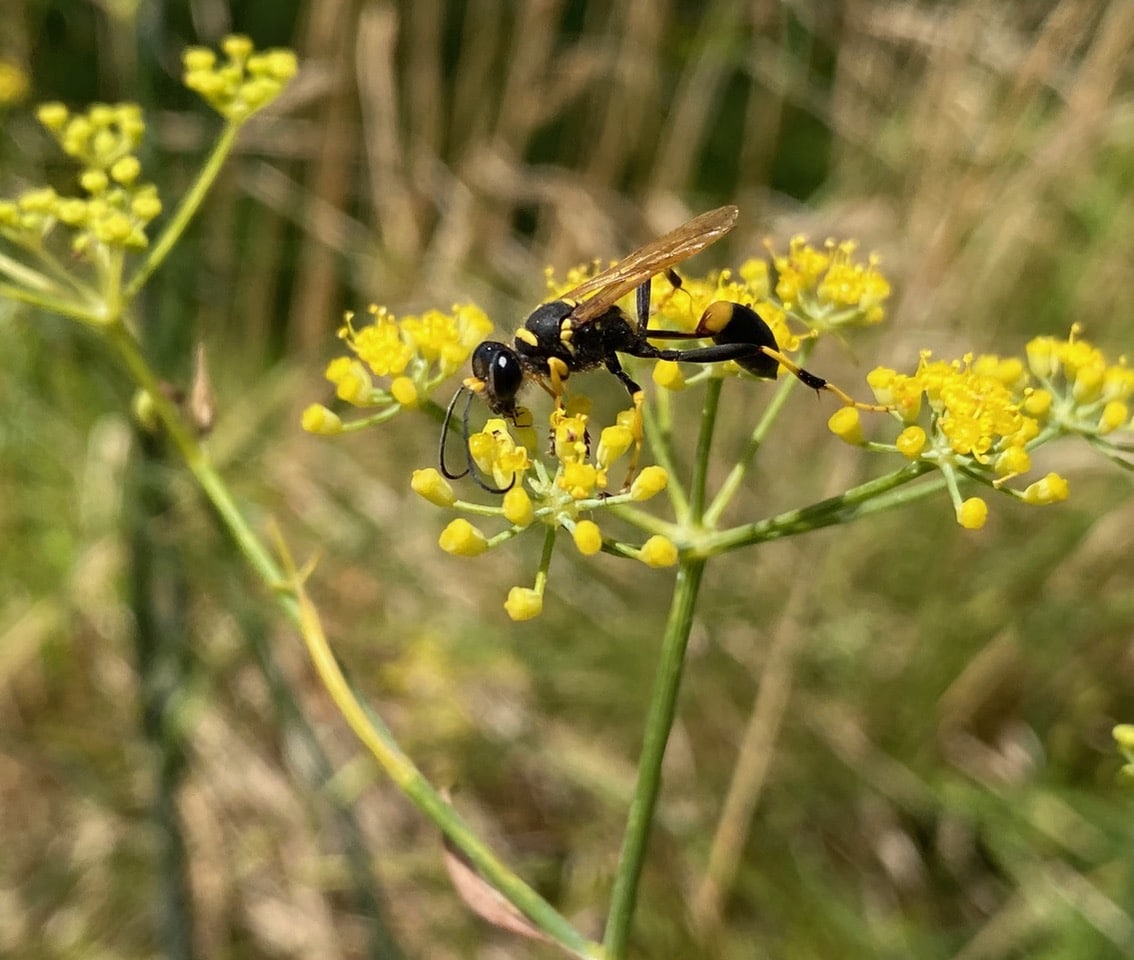
The Yellow-legged Mud-dauber, Sceliphron caementarium (family Sphecidae) is widespread in the Americas. The species is found in a wide variety of habitats, such as rock ledges, man-made structures, puddles and other water edges. The wasp can reach a length of 24-28 mm. They are generally black with yellow markings, with impossibly long and skinny “waist”. They are solitary parasitoid wasps that build nests out of mud. Females collect mud balls at puddles and pool edges for constructing nests. The nests comprise up to 25 vertically arranged, individual cylindrical cells. Eventually the cells are covered over as a cluster by more mud, forming a smooth structure the size of a human fist. Nest constructed, the female wasp goes hunting for spiders. The prey are stung and paralyzed and placed in the cell, usually 6-15 per cell. A single egg is laid on the prey within each cell. The wasp then seals the cell with a thick mud plug. The larva that hatches out feeds on the spiders, pupates in the cell and emerges as an adult, breaking out of its mud nursery. Adult wasps can be seen in mid-summer feeding on nectar at flowers.
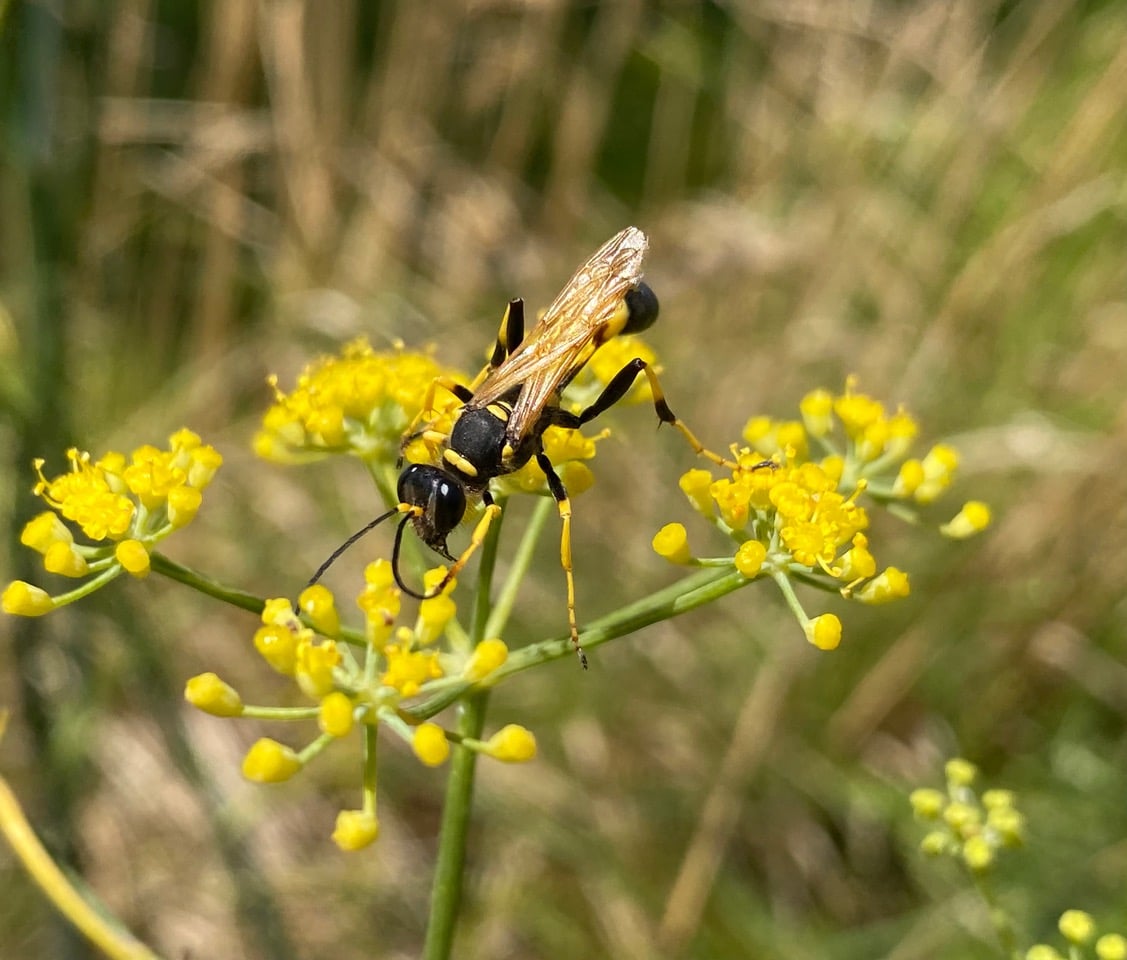
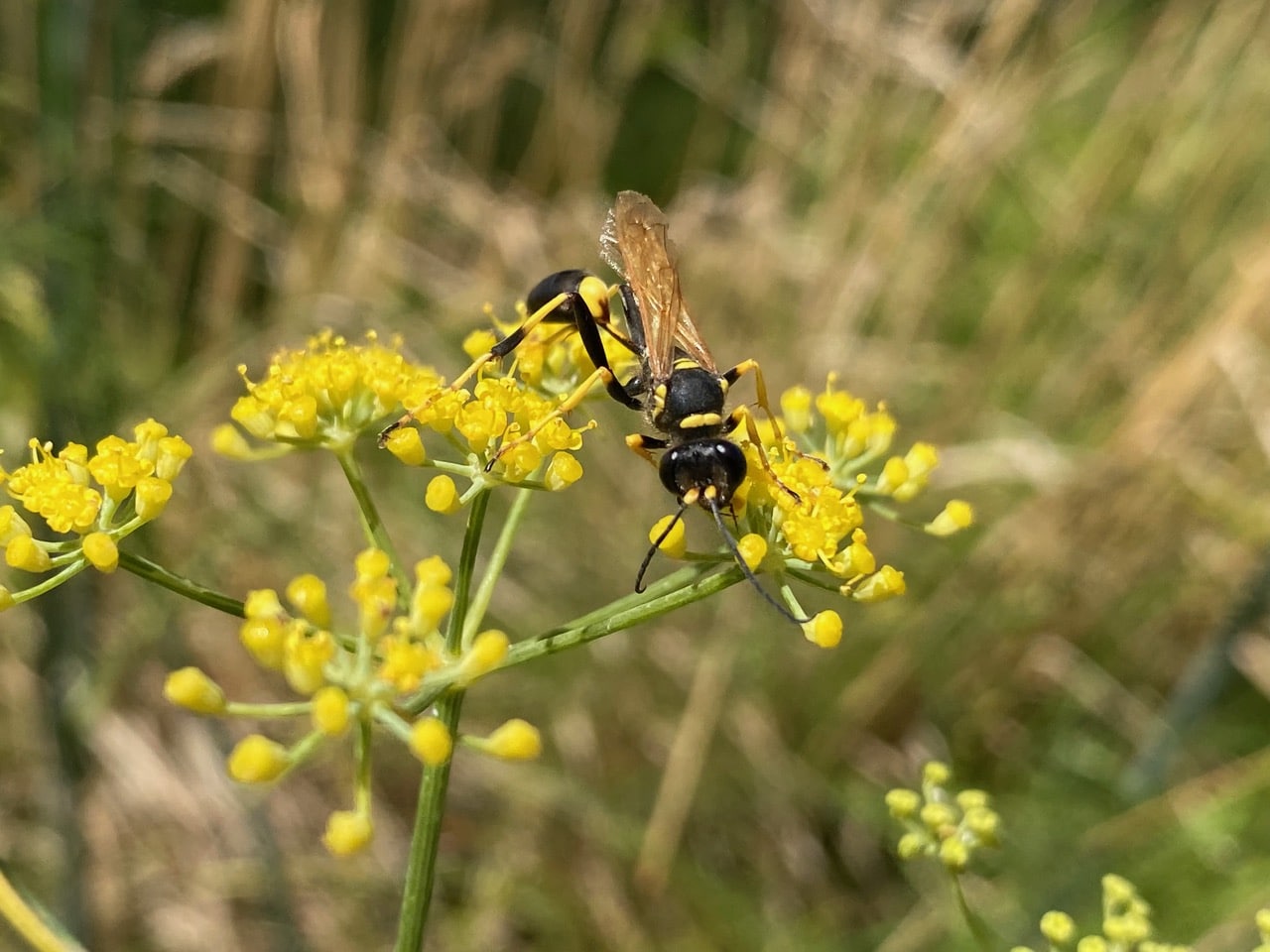
I have never had such a close, eye-level view of a Yellow-legged Mud Dauber!
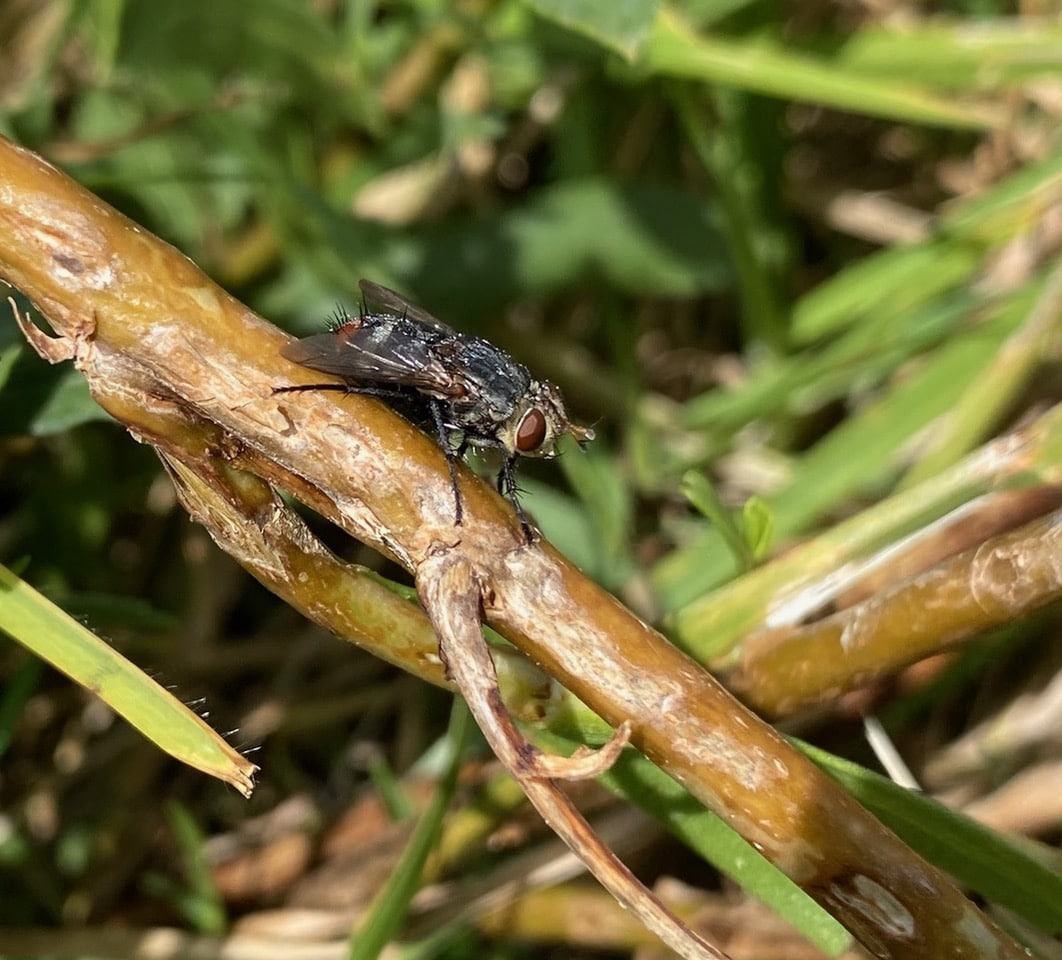
A Bristle Fly, Archytas marmoratus (family Tachinidae) has landed on a collapsed stem near the ground.
The family Tachinidae is by far the largest and most important group of parasitoid flies. All species are parasitic in the larval stage. Most adults have distinct abdominal bristles, hence the common name. Adults feed on liquids such as nectar and honeydew. They can be found resting on foliage, feeding at flowers or searching for hosts.
Most Tachinids attack caterpillars, adult and larval beetles, true bugs, grasshoppers, and other insects. Females lay eggs in or on the host. Tachinid larvae live as internal parasites, consuming their hosts’ less essential tissues first and not finishing off the vital organs until they are ready to pupate. The larvae leave the host and pupate on the ground. Tachinids are very important in natural control of many pests, and many have been used in biological control programs.
Archytas marmoratus is a species of Bristle Fly in the family Tachinidae. The flies feature a distinct “marbled” pattern on their abdomen. The species is found primarily in the Americas. Females lay microscopic maggots (planidia) on or near the larvae of moths, particularly the fall army worm (Spodoptera frugiperda) and Corn Earworm (Helicoverpa zea). The maggots penetrate the host, develop internally, and eventually emerge from the host’s pupa as adult flies. As a natural parasitoid, it is frequently used in biological control of target agricultural pests.
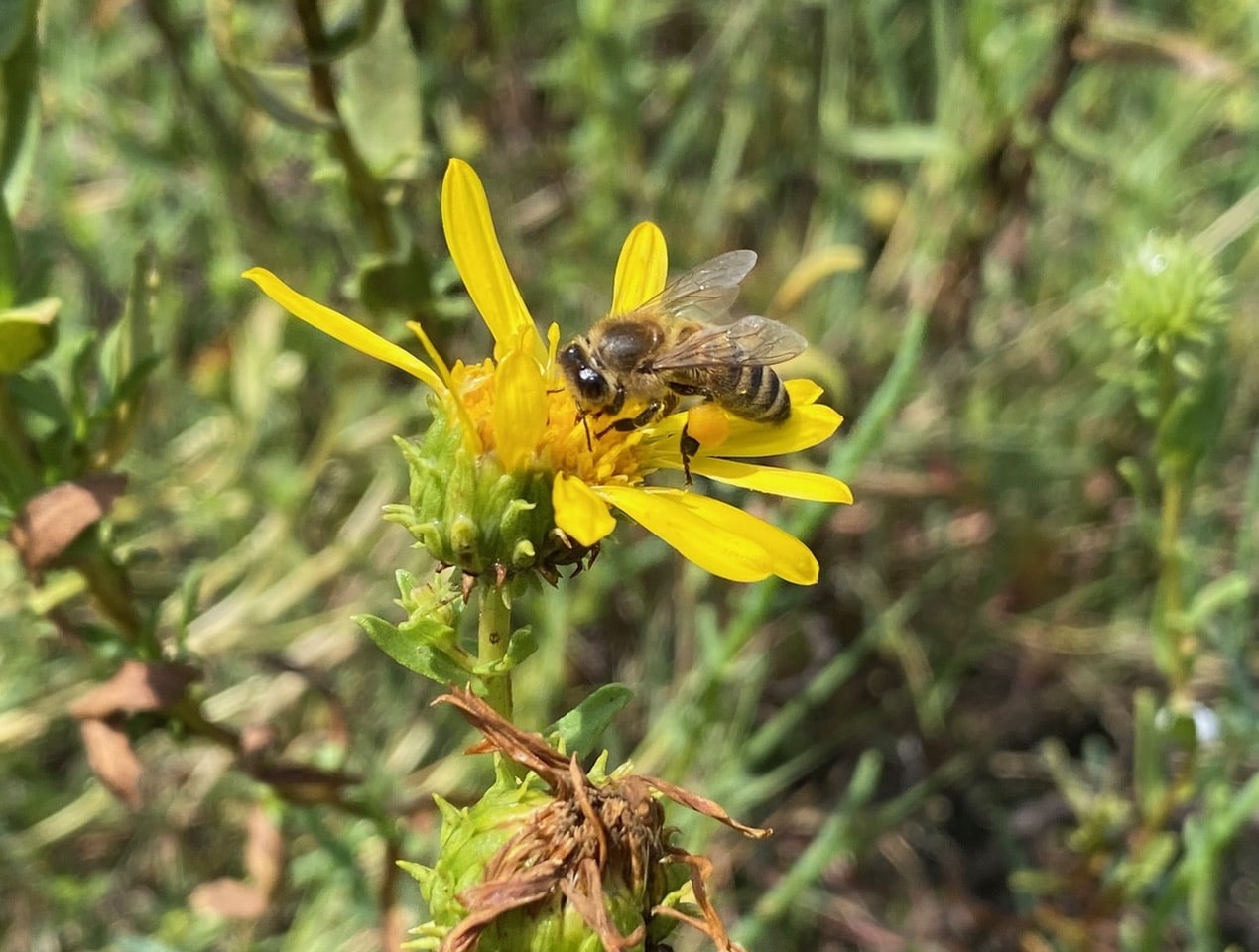
A Honey Bee, Apis mellifera (family Apidae) is foraging on a Grindelia flowerhead. Note the large pollen load in her pollen basket.
The pollen collecting apparatus in Apidae bees, which include honey bees and bumble bees, is commonly called a “pollen basket” or corbicula. This region is located on the tibia of the hind legs and consists of hairs surrounding a concave region. After the bee visits a flower, she begins to groom herself and brushes the pollen down toward her hind legs and packs the pollen into her pollen basket. A little nectar mixed with the pollen keeps it all together like putty, and the stiff hairs surrounding the pollen basket hold it in place. Remarkably bees are able to fly while carrying up to a third of their body weight in pollen.

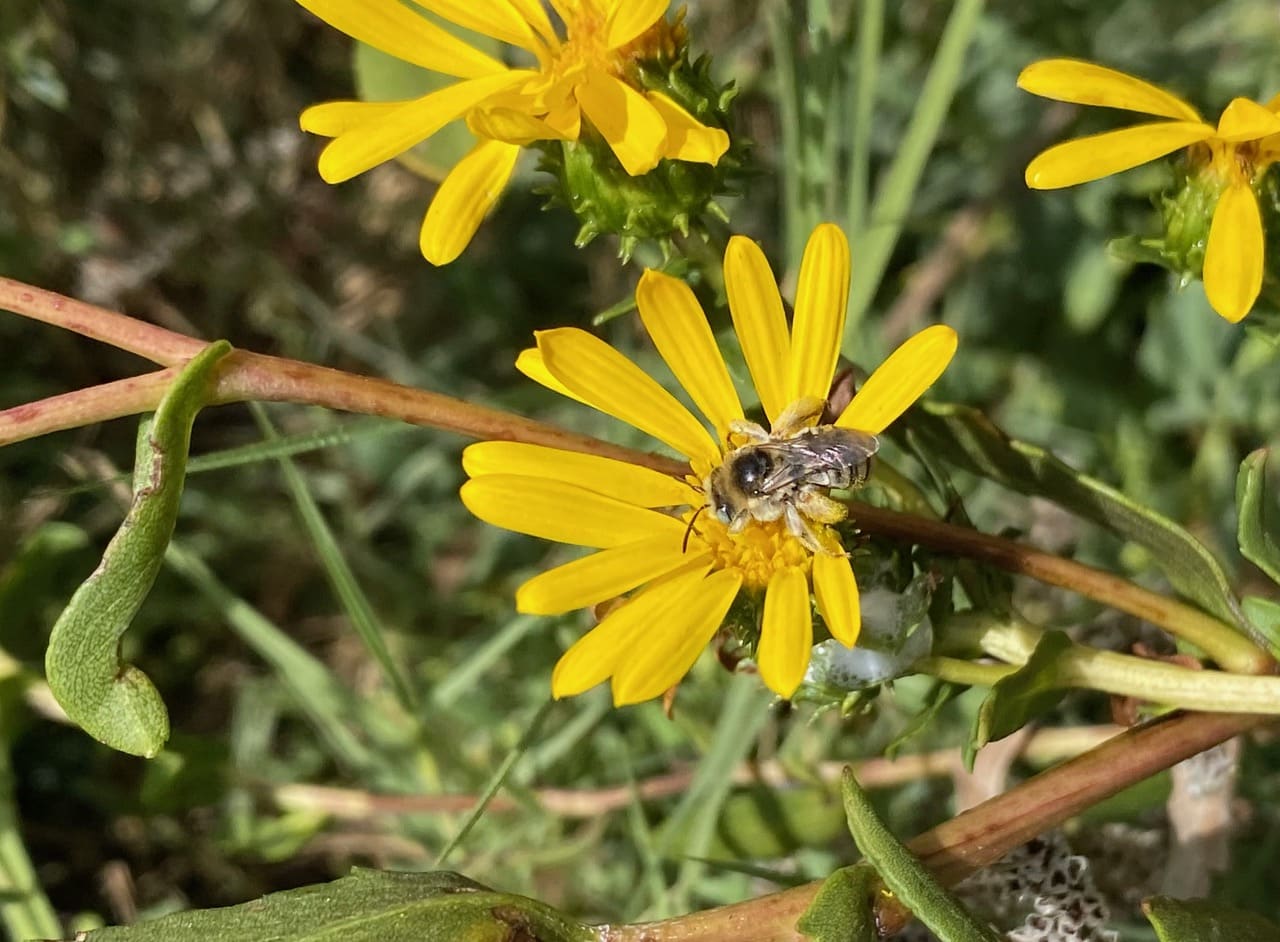
A female Summer Longhorn Bee, Melissodes sp. (family Apidae) is foraging on a Grindelia flowerhead. She is easily recognizable by the large scopae on her hind legs. I have been seeing many more males lately.
The Summer Longhorn Bees, Melissodes sp. (family Apidae) are medium to large bees, stout-bodied, usually with gray hair on the thorax and pale hair bands on the abdomen. Males usually have yellow markings on their faces and have very long antennae from which their common name is derived. They are active May to September, with peak flight in late June to early August. The females prefer flat, bare ground for digging their solitary nests, though they sometimes nest in aggregations. Pollen is transported in scopae on the hind legs. Pollen loads are often copious and brightly colored and thus very distinguishable. Melissodes are specialists on Asteraceae – females gather pollen from flowers of Aster, Bidens, Coreopsis, Cosmos, Encelia, Gaillardia, Helianthus, and Rudbeckia ssp.
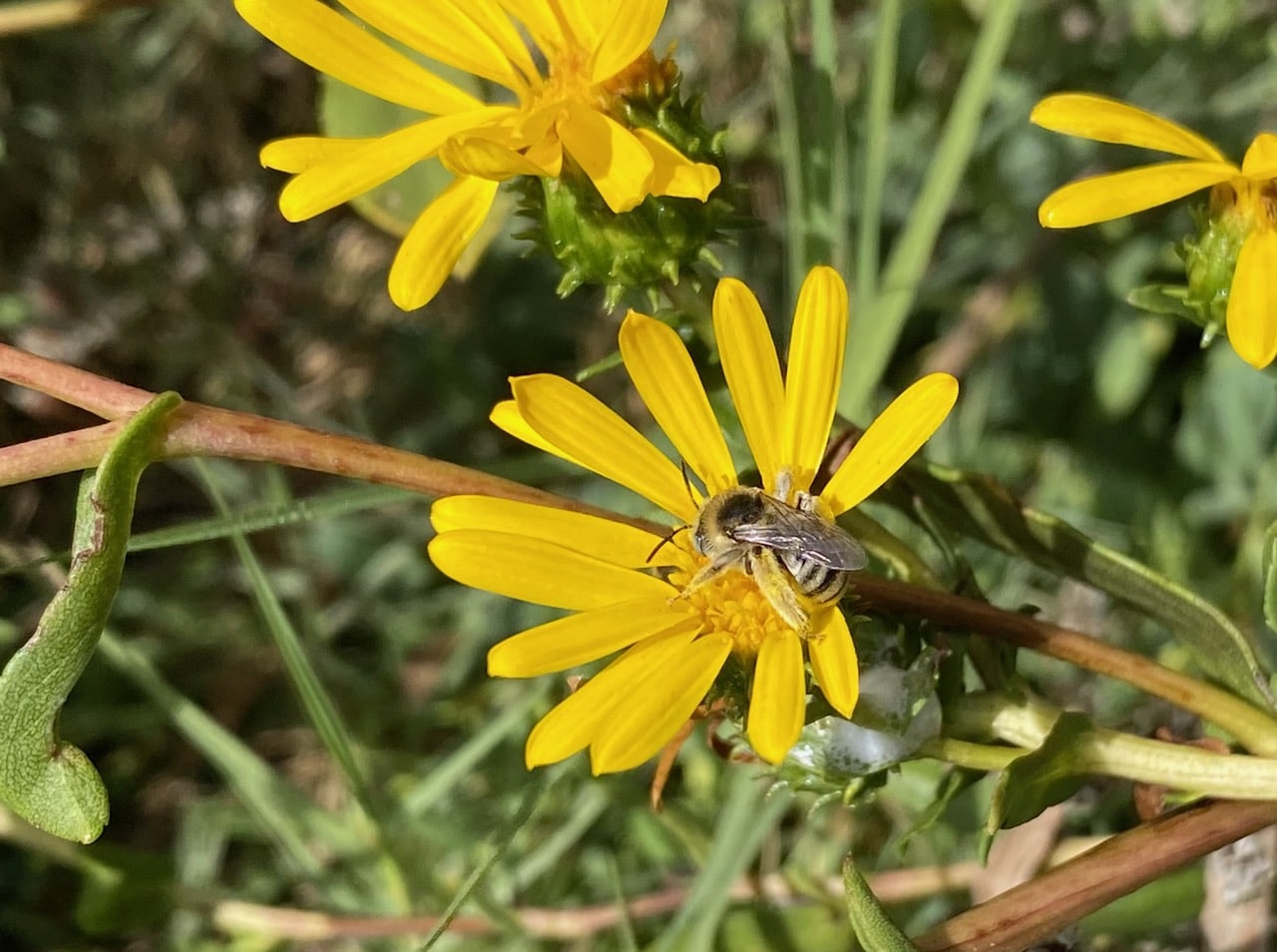
The bee has yet to fill her scopae with pollen.
A scopa is a dense brush of specialized, branched hairs on a female bee’s body used to carry loose pollen. Unlike honey bees and bumble bees that pack wet pollen into smooth leg baskets (corbiculae), bees with scopae trap dry pollen grains within these hairy brushes on their hind legs or the underside of their abdomen, depending on the species of bees. The pollen grains are held loosely by electrostatic attraction; a flying bee builds a positive static charge that pulls negatively charged pollen grains toward its body like a magnet. As the bee moves on a flower, it brushes against anthers and uses its legs to sweep the loose grains into the scopae.
Different groups of bees have distinct ways of collecting and transporting pollen. Here are some of the ways:
– Pollen Baskets (corbiculae): Bees in four tribes of the family Apidae, including honey bees and bumble bees, have corbiculae. These are smooth, concave areas on their hind legs surrounded by a fringe of hairs, where they pack pollen that has been moistened with nectar.
– Scopa: Many bees have scopae, which are dense masses of branched hairs where pollen is loosely held by electrostatic attraction. These can be located in different areas:
– Hind legs: Most solitary female bees have pollen brushes or scopae on their hind legs. Mining bees (family Andrenidae), for example, have scopa covering most of the hind legs and sides of the female.
– Abdomen: Bees in the Megachilidae family, such as Leafcutter and Mason Bees, carry pollen on scopal hairs on the underside of their abdomen. This is a unique trait that helps in their identification.
– Internal Transport: Some bees, such as the Masked Bees lack external pollen-carrying features. They transport pollen internally in a specialized organ called a crop.
– Incidental Transport: Male bees lack specialized pollen-collecting hairs but can still inadvertently transport pollen. While seeking nectar, pollen may cling to their electrostatically charged body hairs. This can lead to successful pollination as the males go from flower to flower.
– No Pollen Collection: Some bees, known as Cuckoo Bees, do not collect pollen at all. They are parasitic and lay their eggs in the nests of other bees where their young consume the host bee’s pollen stores.

Here’s a male Summer Longhorn Bee, Melissodes sp. (family Apidae). Note that he has extra long antennae, and he lacks scopae on his hind legs. Male bees do not collect pollen intentionally to provision the nest, neither do they have the equipment for the job.

Ooh, I think that wasp-like insect is actually a Cuckoo Bee, Nomada sp. (family Apidae).
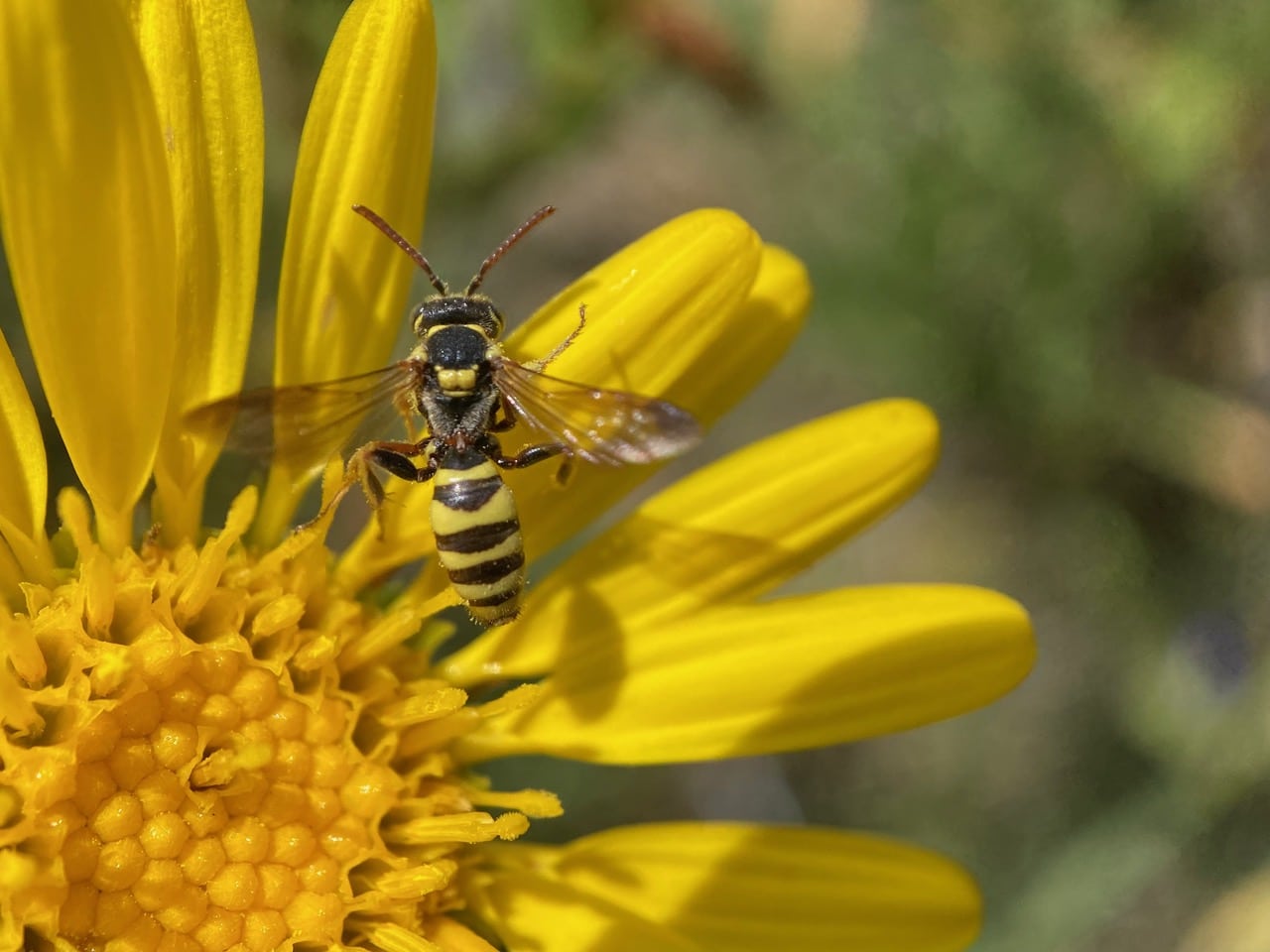
Nomad bees are a group of wasp-like bees that survive by exploiting the hard work of other solitary bees. They are wasp-like in appearance, do not collect pollen and are virtually hairless. Their name “Nomada” is derived from the Greek word meaning “wandering”. All Nomad Bees are kleptoparasites or “cuckoo bees” that lay eggs in the nest of other bees, especially Mining Bees (genus Andrena).
Female Nomad Bees detect a host nest by scent and visual cues, and wait until the nest is unoccupied. She then enters the nest burrow and lays an egg in an unsealed nest cell. When it hatches, the larva kills the host egg or larva, and proceeds to feed on the pollen/nectar food store of the host. In the following year, the Nomad Bee will emerge as an adult and the process repeats.
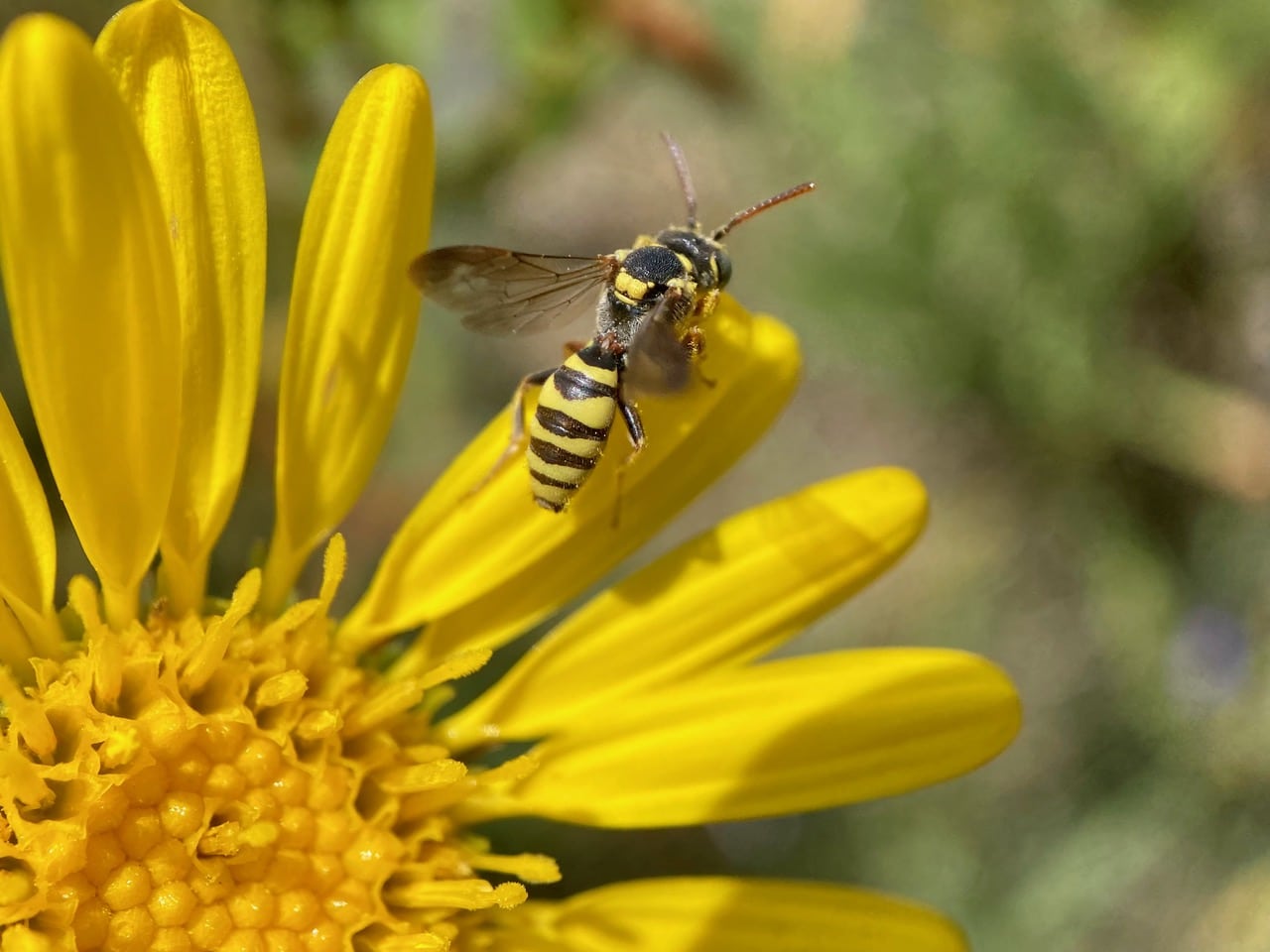
While we might take offense at the cuckoo bees’ unsavory behavior, we really have nothing to worry about. The presence of cuckoo bees is a clear indication of a thriving population of their host bees. By parasitizing specific species, cuckoo bees prevent dominant host bees from pushing out less competitive, rarer bee species, allowing for greater biodiversity. The arms race between cuckoo bees and their hosts drives genetic diversity and adaptation. Hosts evolve defenses against parasites, which naturally strengthens the resilience of the bee community. What’s more, although they do not intentionally collect pollen, cuckoo bees must visit flowers to forage for nectar, which sometimes leads to incidental pollen transfer.