

Pollinator Post 8/16/23
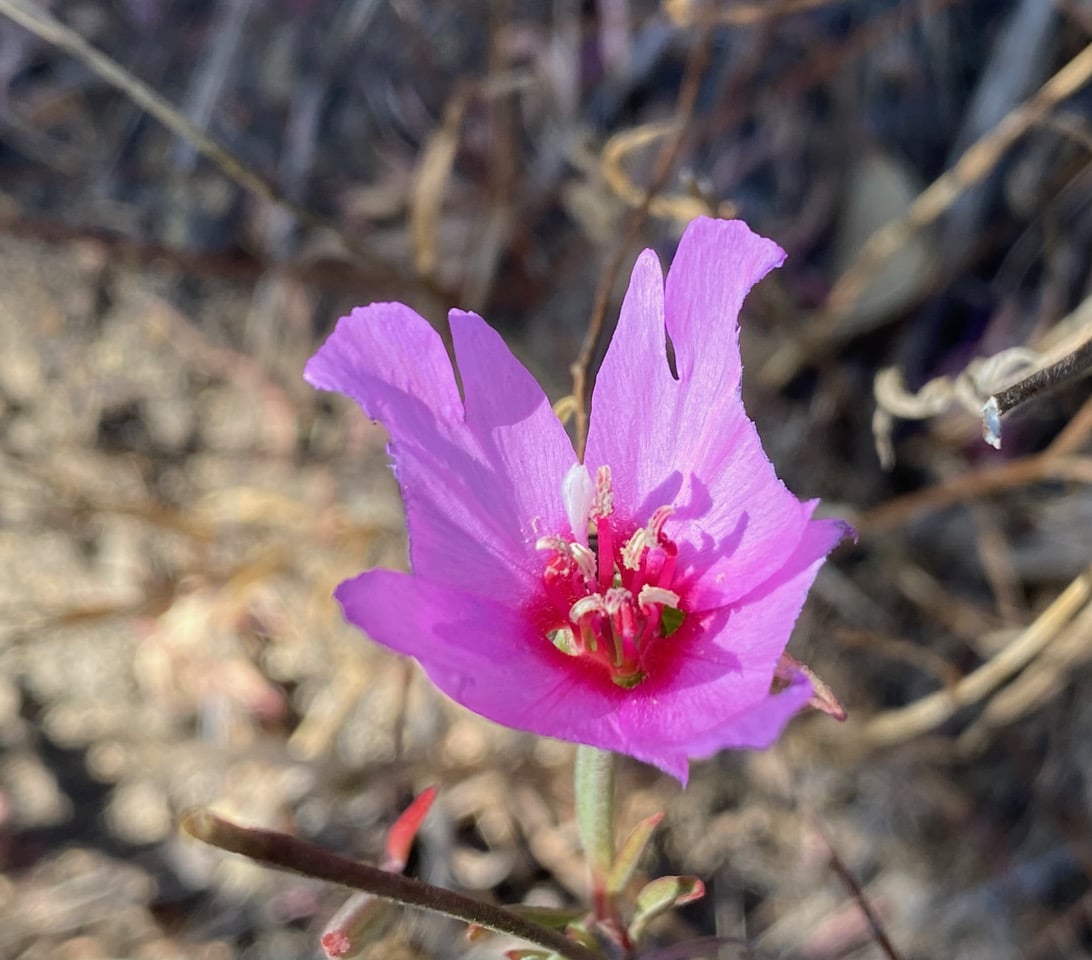

There seems to be a new burst of Leafcutter Bee activities on the flowers of Farewell-to-spring, Clarkia rubicunda near Siesta Gate. Most of the flowers in this patch of Clarkia have had their petals cut by the female bees who use the pieces to line their brood cells. For some reason they favor Clarkia petals. Probably because they are large and soft, and don’t contain noxious chemicals?
Another cut Clarkia flower. There are apparently aborted cutting attempts on two of the petals.

Yet another cut Clarkia…
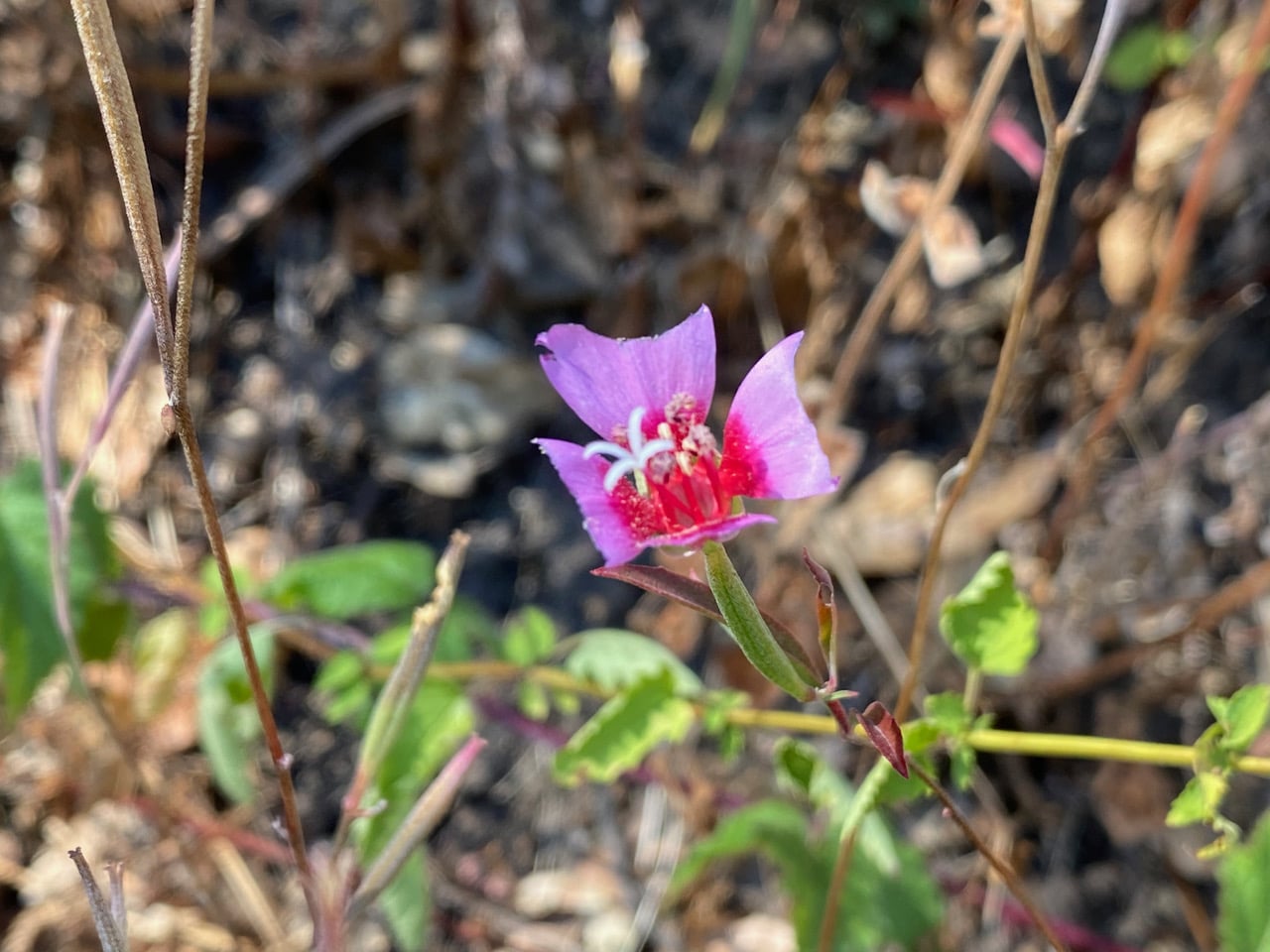
The only parts left on this cut Clarkia flower are its reproductive parts! It seems the Leafcutter Bees are getting desperate as summer progresses and there are fewer supple leaves and decreasing number of Clarkia flowers for them to cut. Does the petal cutting activity affect the pollen and nectar production of the flowers and the availability to the bees that depend on them?
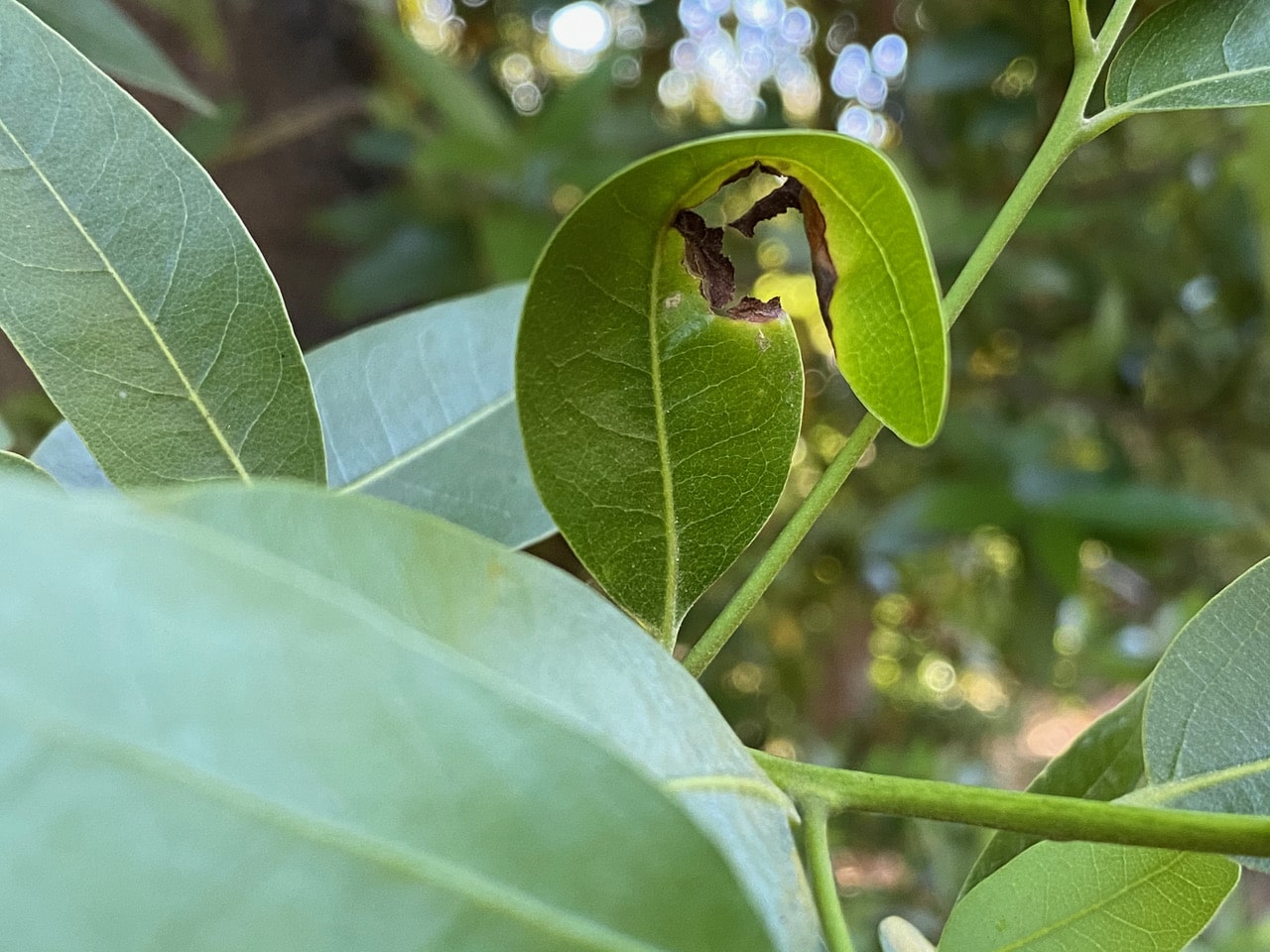
That leaf on the Bay Tree, Umbellularia californica looks like it might have been previously folded by a caterpillar that constructs those boxy, triangular shelters. Are the blackening parts where the caterpillar has been feeding? What happened to the caterpillar? Has it dropped off to pupate in the ground? Or has it been taken by a predator, such as a wasp?




Four terminal leaves of this Bay Tree have been webbed together vertically. I pull one of the leaves down, revealing a dark Orb-weaver Spider (family Araneidae) resting inside. Is it about to molt? Many spiders construct a retreat or shelter so they can molt in safety. Sorry to have disturbed you, Spider!
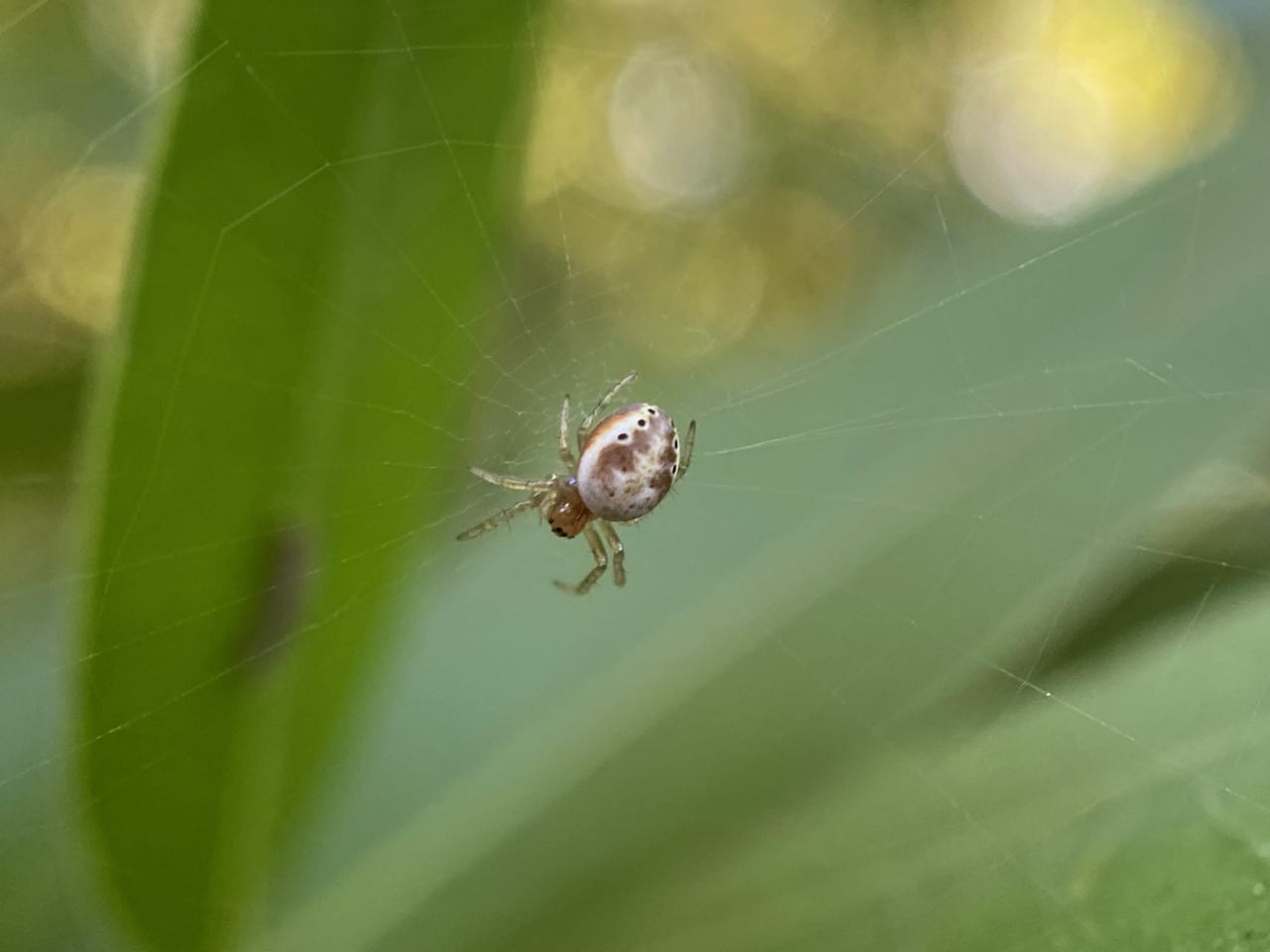
Close by, a tiny Orb-weaver Spider (family Araneidae) is sitting in the center of its circular web that it has constructed between the leaves of the Bay Tree.
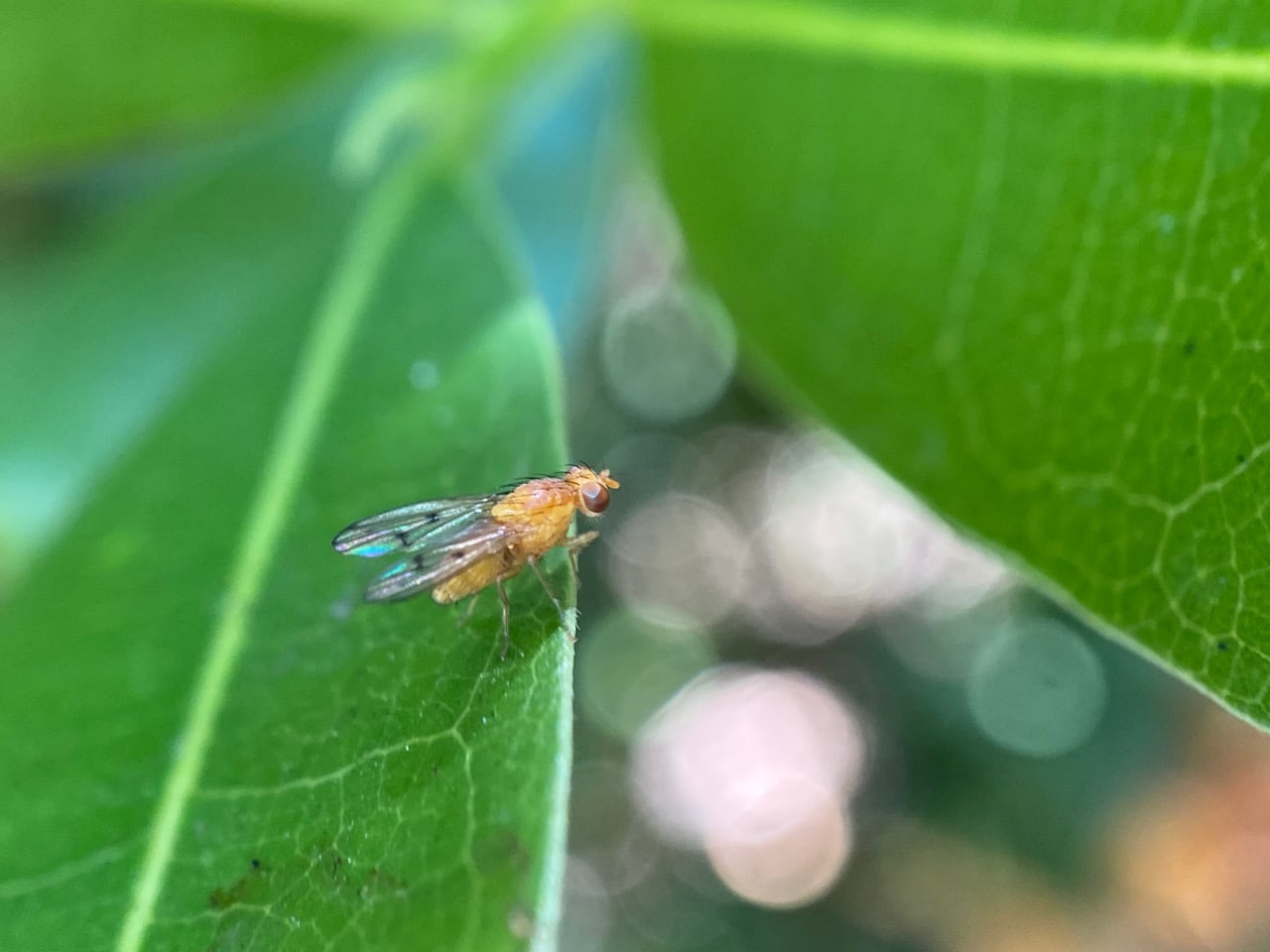
A small pale-colored fly, Homoneura sp. (family Lauxaniidae) is moving around on a Bay leaf, sometimes with its proboscis extended as if feeding on something invisible on the leaf surface. Honeydew?
Lauxaniidae are small flies (2-7 mm in length). They are often rather plump and dull, the body color varying from yellow-brown to black, or with a combination of these colors. They are characterized by strong, backward pointing bristles on the front (top of the head right above the eyes). The larvae are mostly saprophages, feeding in leaf litter, soil, bird nests, etc. Larvae of some mine fallen leaves, others live in rotten wood.
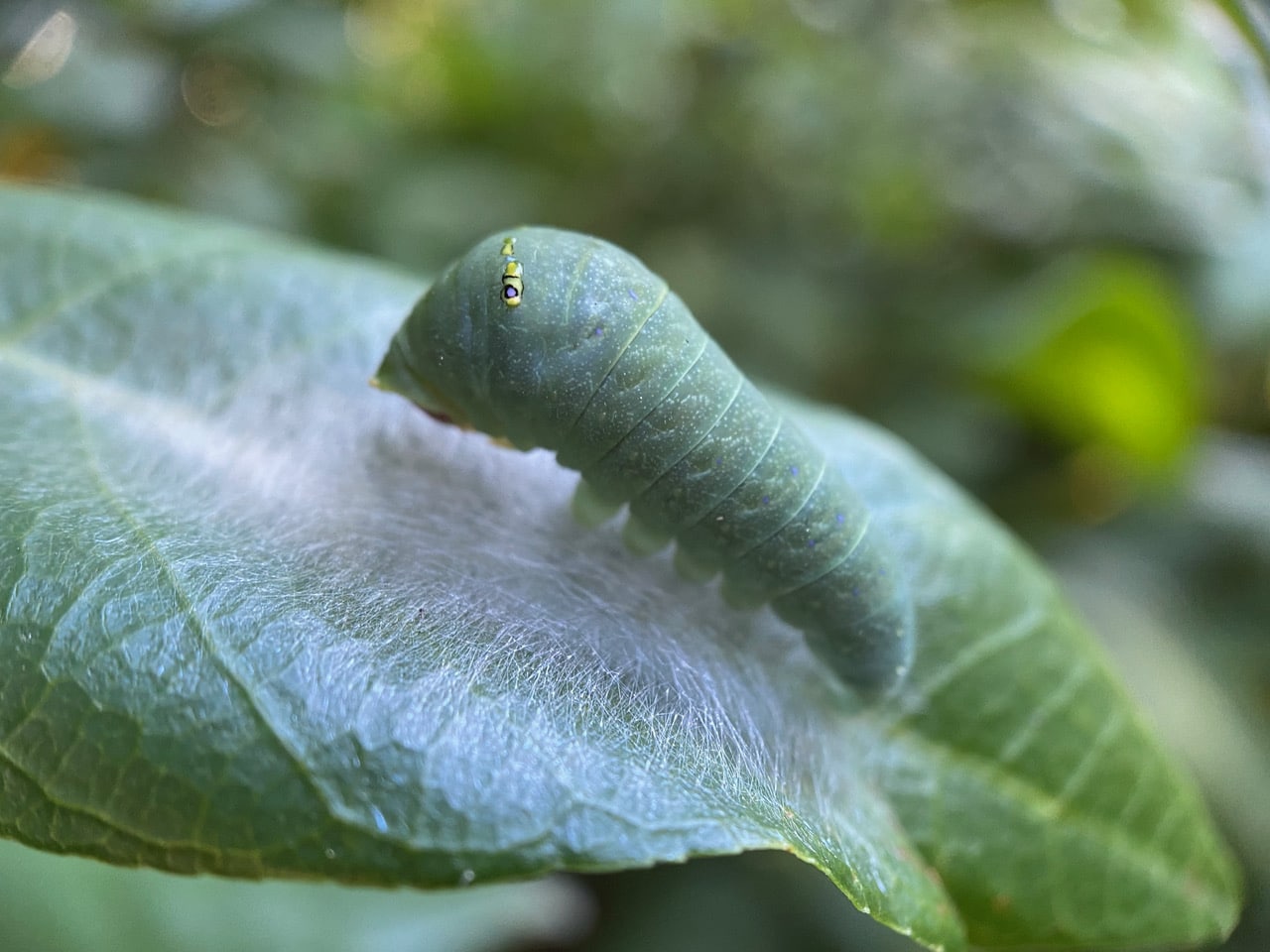
Nothing much has changed with Blue, the Pale Swallowtail caterpillar resting motionless on its Coffeeberry home leaf. While still small, the pair of false eyespots on its thorax are more well-defined now.
Swallowtail caterpillars (family Papilionidae) sport some of the biggest and most convincing fake eyes of any butterfly species in the world. Blue’s fake eyespots will undoubtedly grow more prominent as it matures. These are adaptations that have evolved to give the caterpillar the appearance of being more threatening than it really is. Any bird, mouse or lizard looking for a quick meal will think twice before attacking the creature – it looks enough like a snake to scare off a predator.
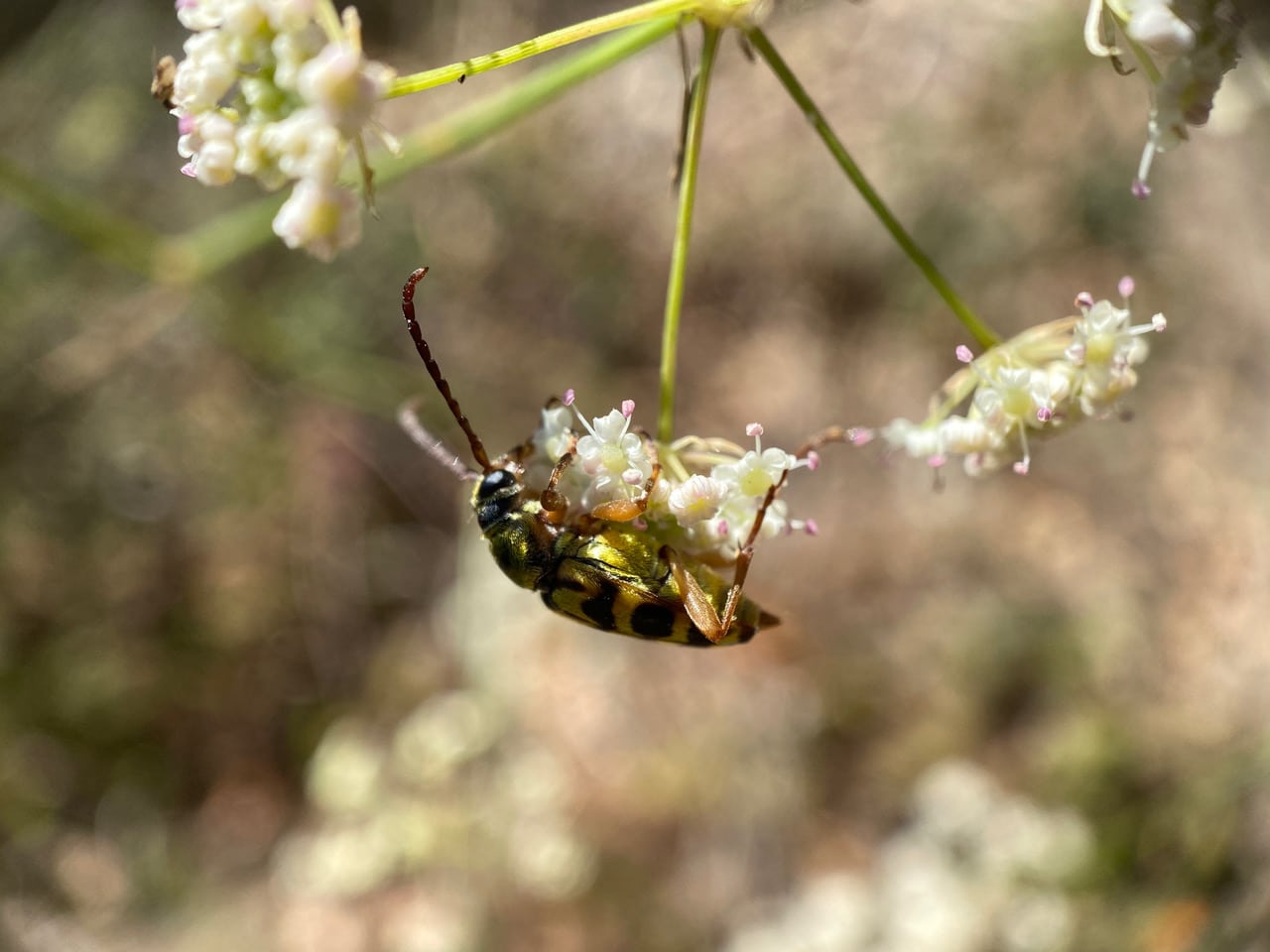
Hey, there’s a newcomer on the Kellogg’s Yampah flowers, Perideridia kelloggii. A Longhorn Beetle (family Cerambycidae)?
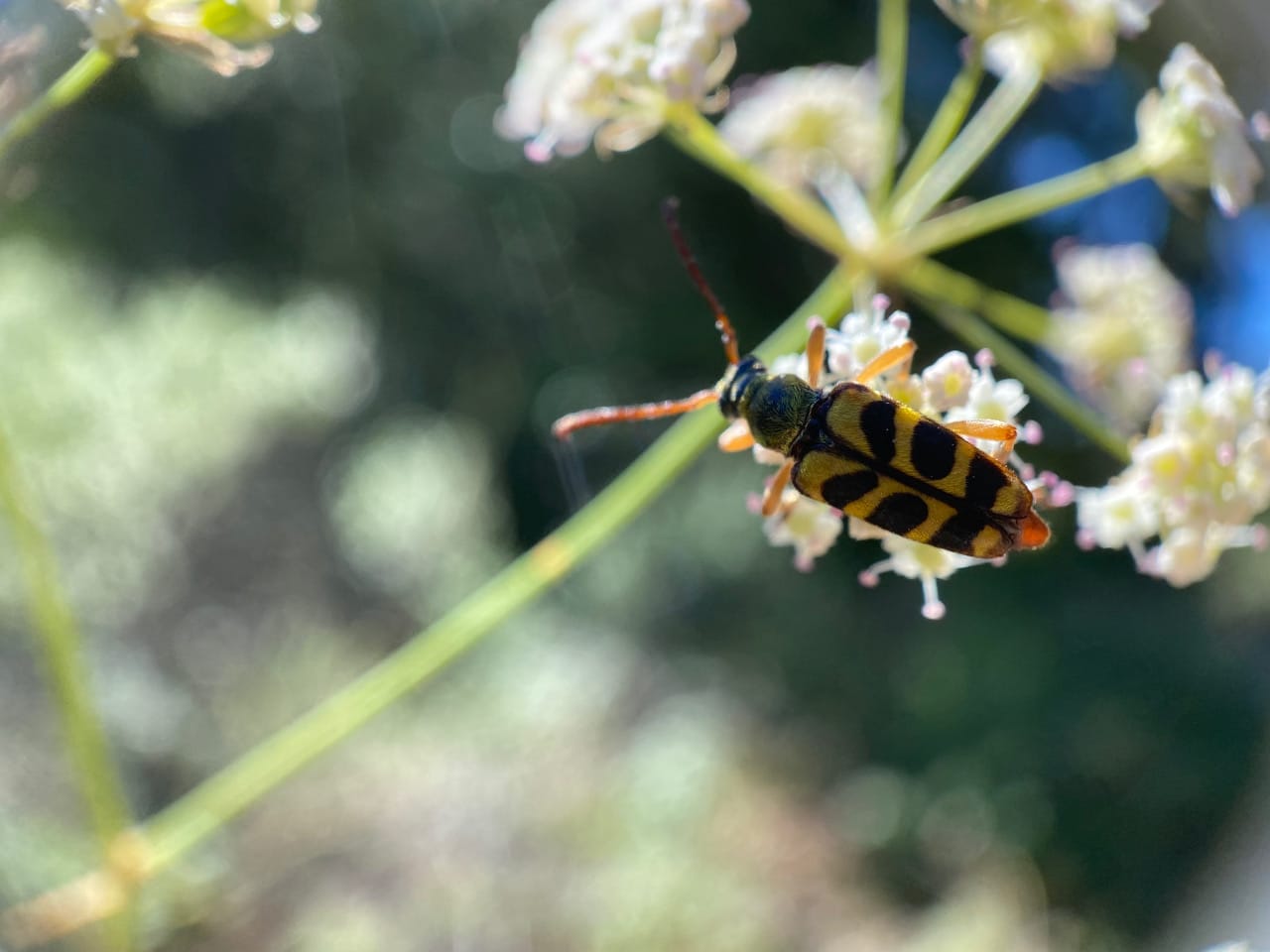
The light is terrible in this angle, but I can make out the black-and-yellow tiger stripes on the elytra. It is a Flower Longhorn Beetle, Strophiona tigrina (family Cerambycidae, subfamily Lepturinae).
These beetles are usually found on flowers where they feed on pollen and nectar, and are considered pollinators. They have a particular affinity for the umbel flowers of the carrot family, Apiaceae. Most species of Flower Longhorn Beetles have a narrow body and very long legs. They also share the family trait with other Cerambycids of having very long antennae. The beetles spend their larval days as borers, just like other Cerambycids. However they are not considered pests, as they select trees that are stressed, dying, or dead.
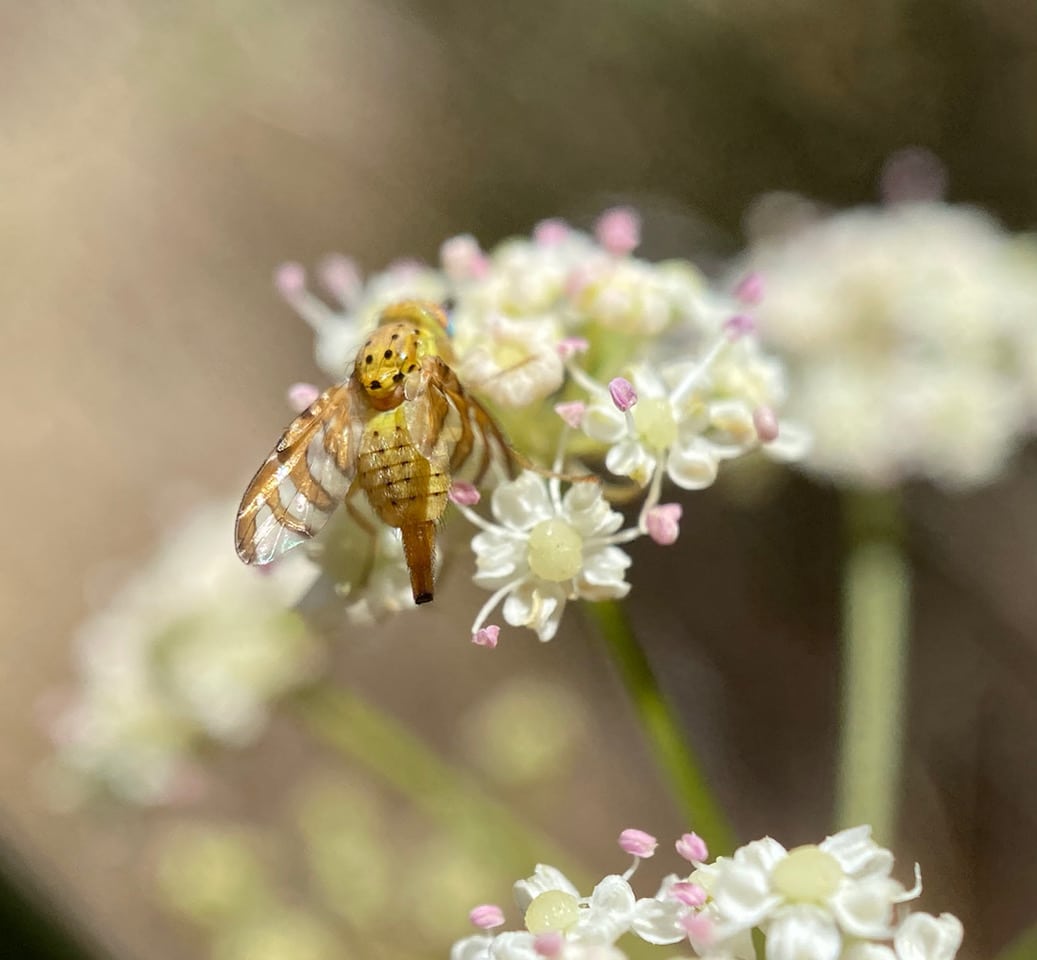
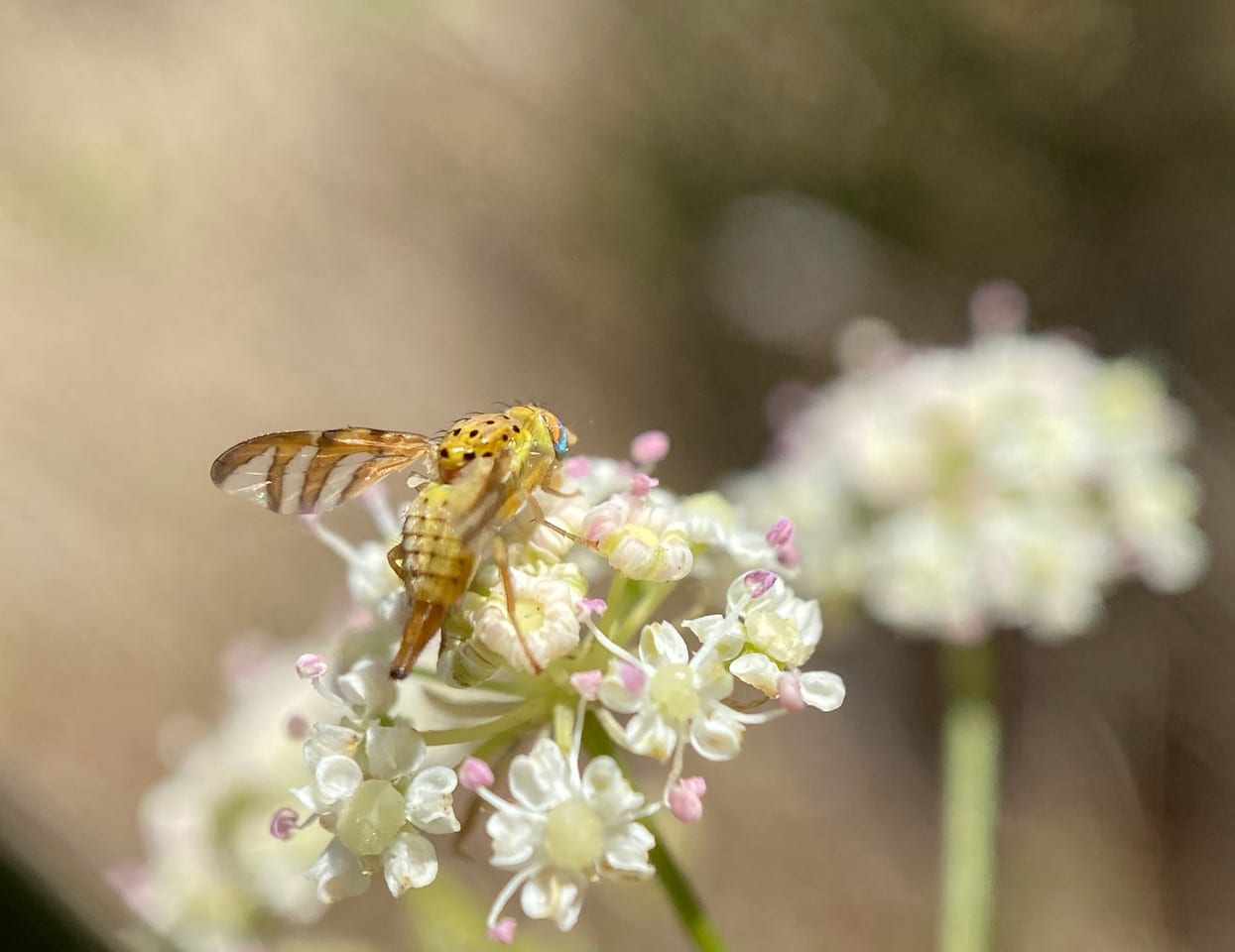
Hey, there’s a small, pale insect with beautiful picture wings on the Yampah flowers! It is a Fruit Fly, Chaetorellia sp.(family Tephritidae). From the oviscape on the tip of its abdomen, we can tell that it is a female. The oviscape is the basal part of the ovipositor of some insects, typically the non-retractile sclerotized sheath that remains exposed when the telescopic ovipositor is withdrawn and not in action.
We have encountered a male of this species before, on the flowers of Cow Parsnip on 5/7/23.
Tephritids are small to medium-sized flies that are often colorful, and usually with picture wings. Many species of Tephritidae perform an elaborate courtship display using their picture wings. The larvae of almost all Tephritidae are phytophagous. Females deposit eggs in living, healthy plant tissues using their telescopic ovipositors. Here the larvae find their food upon emerging. The larvae develop in leaves, stems, flowers, seeds, fruits, and roots of the host plant, depending on the species. Adults are often found on the host plant and feeding on pollen, nectar, rotting plant debris, or honeydew. Tephritid flies are of major economic importance as they can cause damage to fruit and other plant crops. On the other hand, some Tephritids are used as agents of biological control of noxious weeds.
The fly stays in this position for quite a while, with wings spread and slightly lifted. Is she performing a courtship display to attract potential mates?
Native to Eurasia, Chaetorellia has been introduced in North America to control non-native weeds.
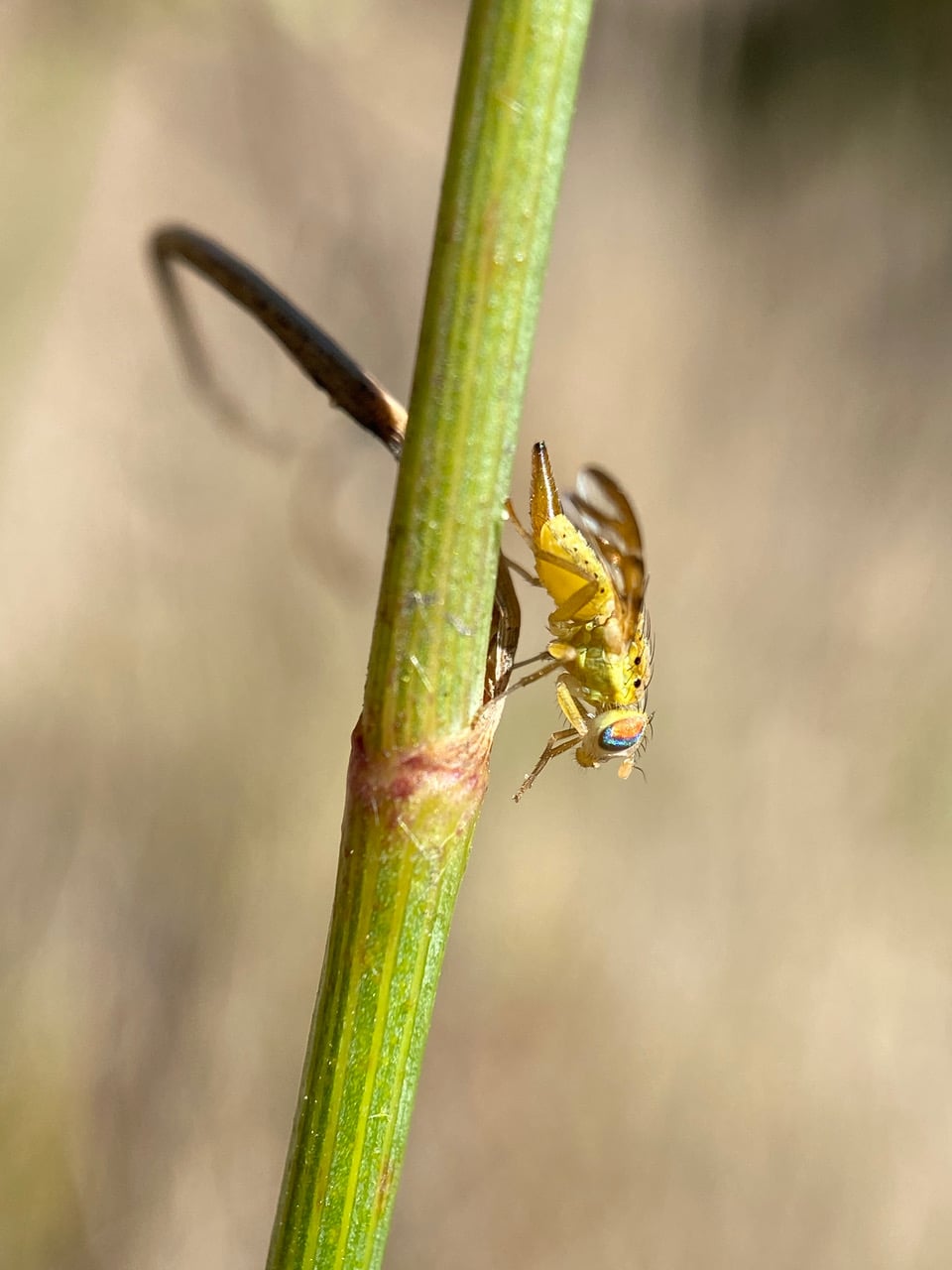
The Fruit Fly, Chaetorellia sp.(family Tephritidae) runs up and down the stem of Yampah, giving me a good view of her iridescent blue eyes.