

Pollinator Post 8/12/23 (2)
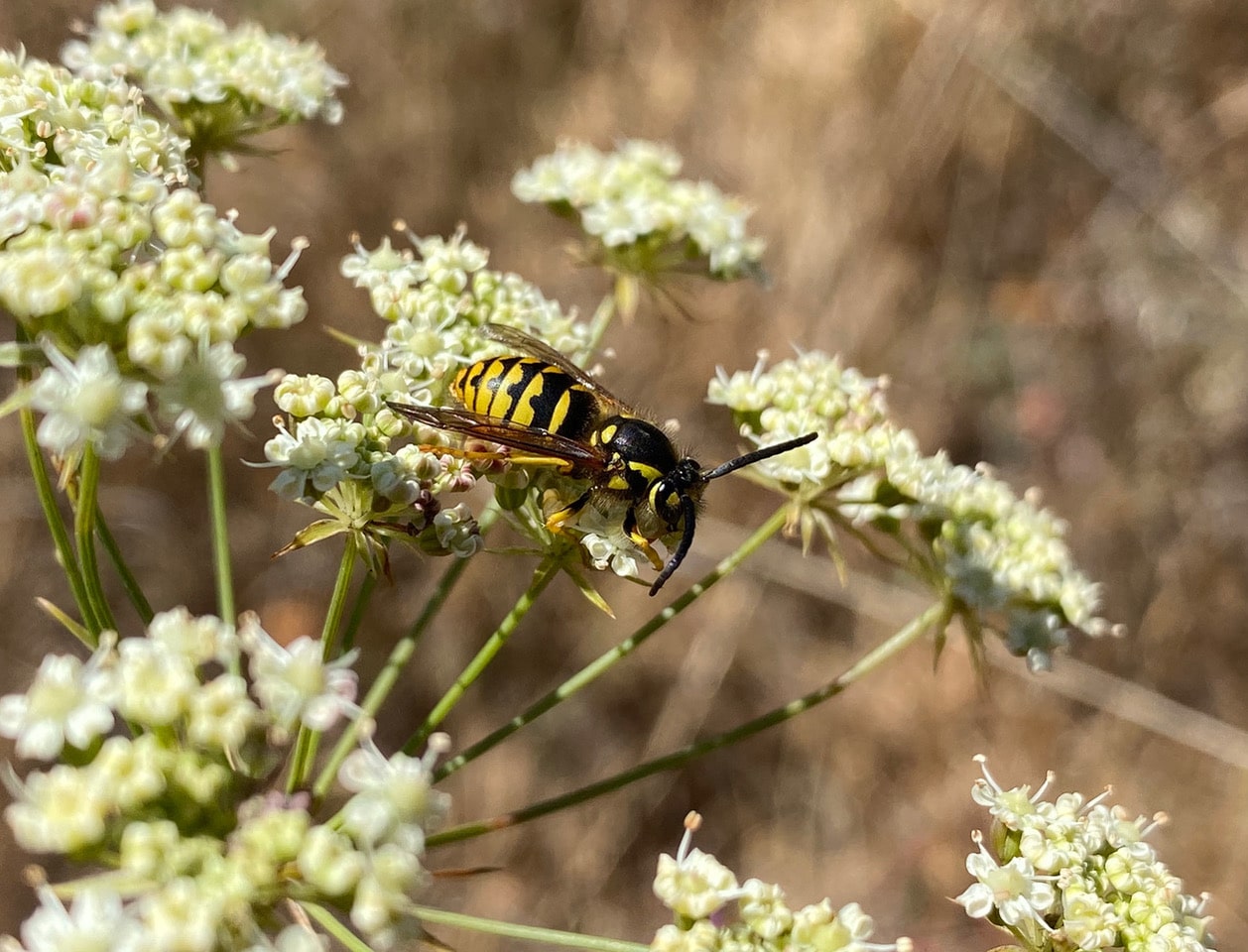
The small patch of Kellogg’s Yampah, Perideridia kellogii at Yampah Bowl is frequently visited by Yellowjackets (family Vespidae). The wasps are taking nectar from the small flowers, while also hunting for caterpillars.
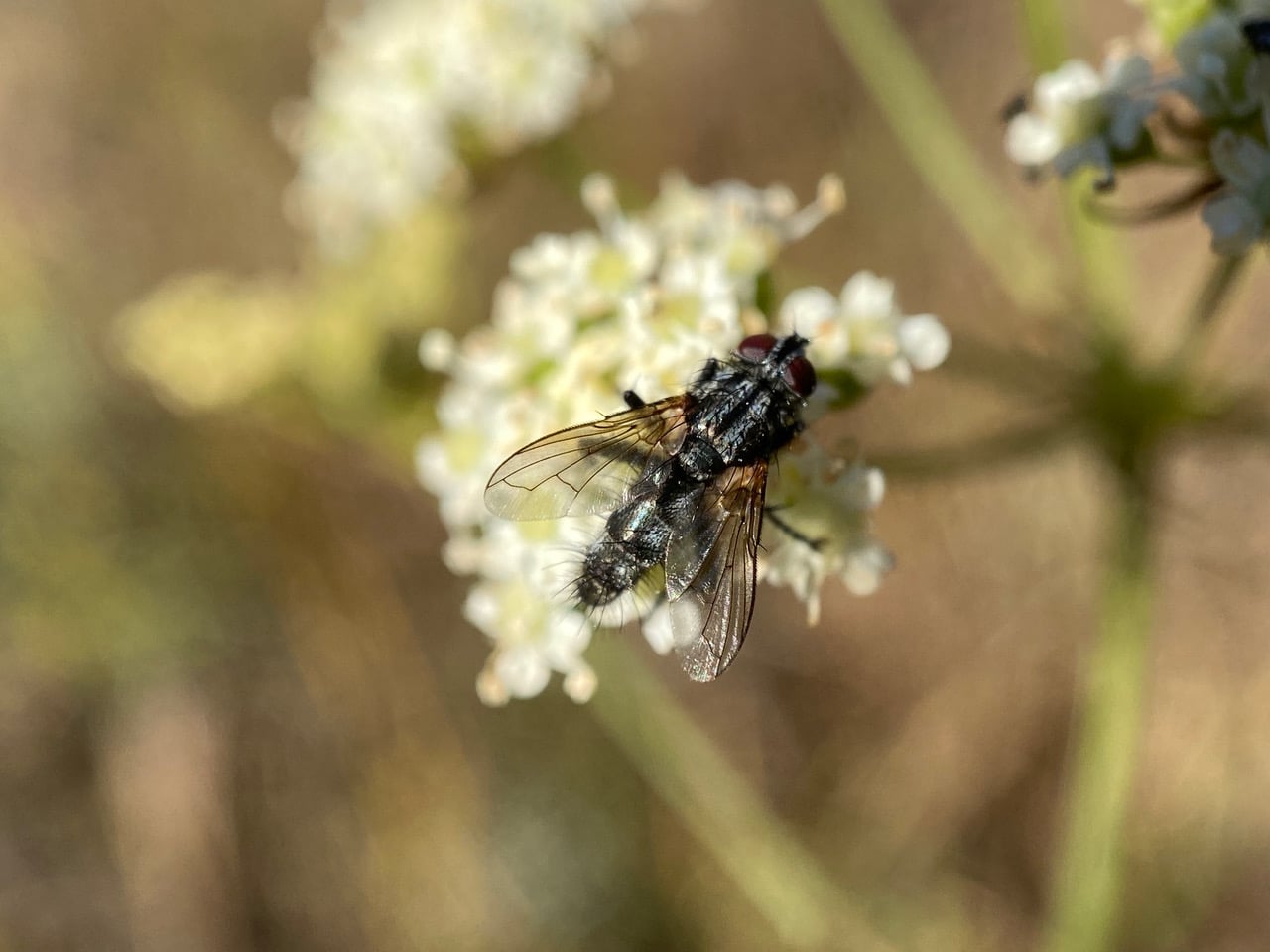
Another frequent visitor to the Yampah flowers is the Woodlouse Fly, Stevenia deceptoria (family Rhinophoridae).
These small, slender, black, bristly flies are somewhat related to the Tachinidae. The larvae are mostly parasitoids of woodlice (pill bugs), beetles, spiders and other arthropods, and occasionally snails. Native to Europe, Stevenia deceptoria is now widespread in the US. The flies are parasitoids of terrestrial woodlice (roly polies) of the order Isopoda (Oniscoidea).

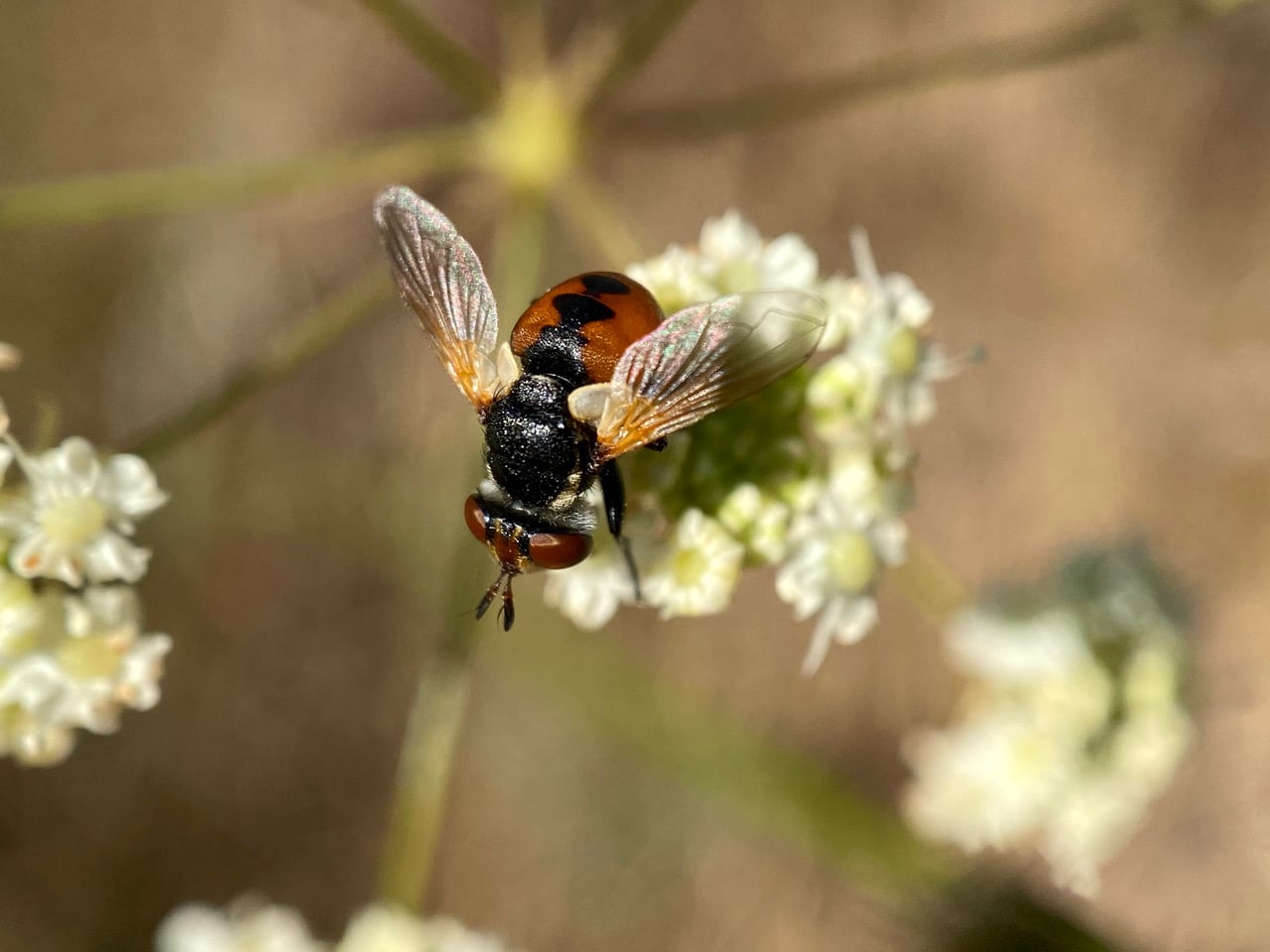
Of all the Bristle Flies (family Tachinidae) that you’ll ever meet, this one is most likely to put a smile on your face. It is the Ladybird Fly, Gymnosoma sp.
With no visible bristles on its abdomen, Gymnosoma is not a typical Bristle Fly in the family Tachinidae. The name “Gymnosoma” literally translates as “naked body”, and refers to the fact that the fly is less bristly than most Tachinids. In fact, with its rounded appearance, and orange-red abdomen decorated with black spots, the parasitoid fly is reminiscent of a Ladybird beetle, hence the common name.
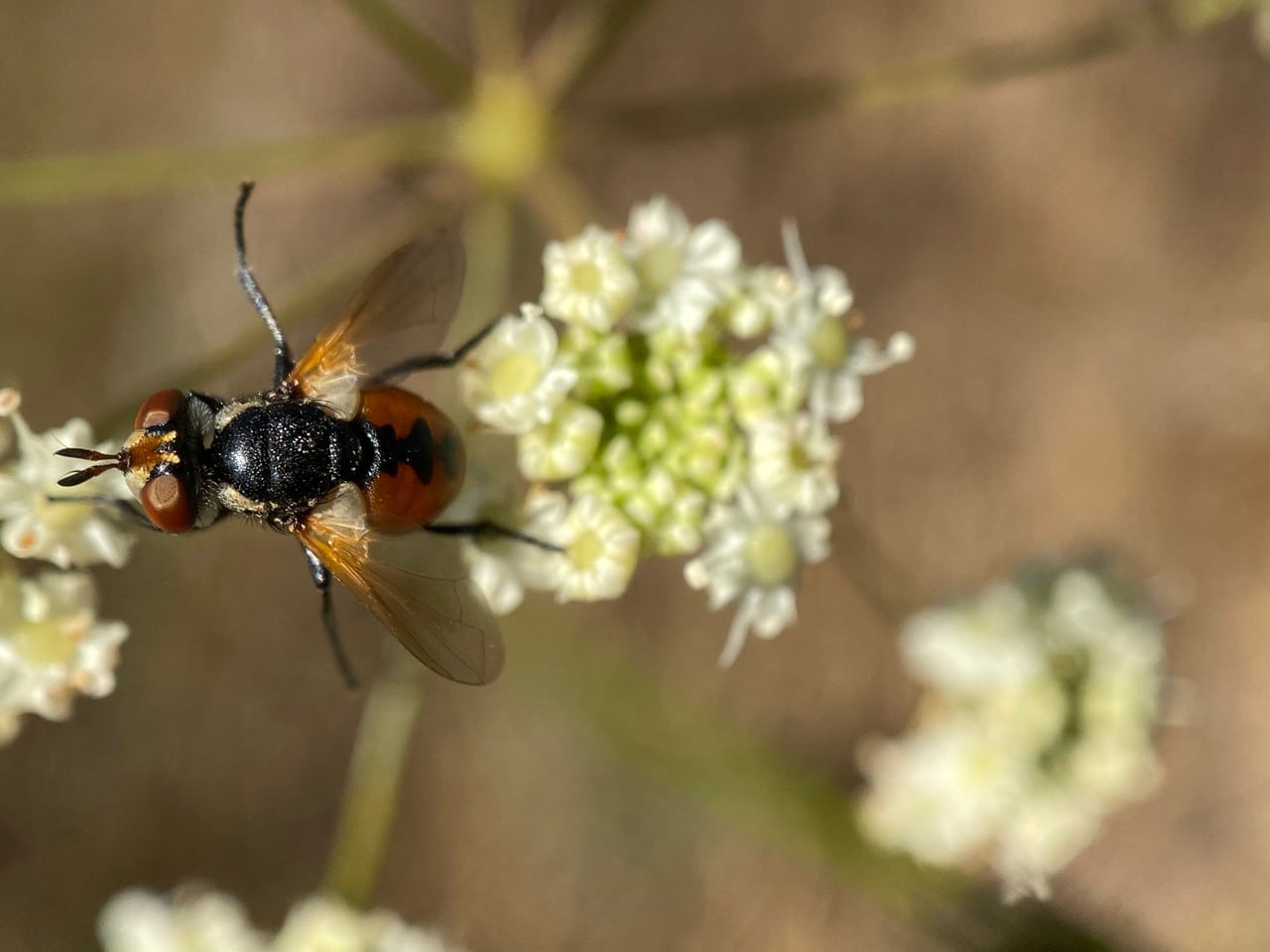
Gymnosoma is a small fly, about 5-6 mm in length. It has a dark thorax, golden in males, and a globular orange-red abdomen decorated with dark round markings along the midline. In some individuals (such as this one), the black spots are linked along the midline. The base of the wings are yellow-brown.
Despite the whimsical appearance of the adults, Gymnosoma larvae grow as parasitoids of stink bugs in the family Pentatomidae. Females glue their eggs to the exoskeleton of their host. After the eggs hatch, the maggots penetrate into the host body in which they feed. Adult Gymnosoma visit a range of open shallow flowers such as Yampah, buckwheats, milkweeds, etc.
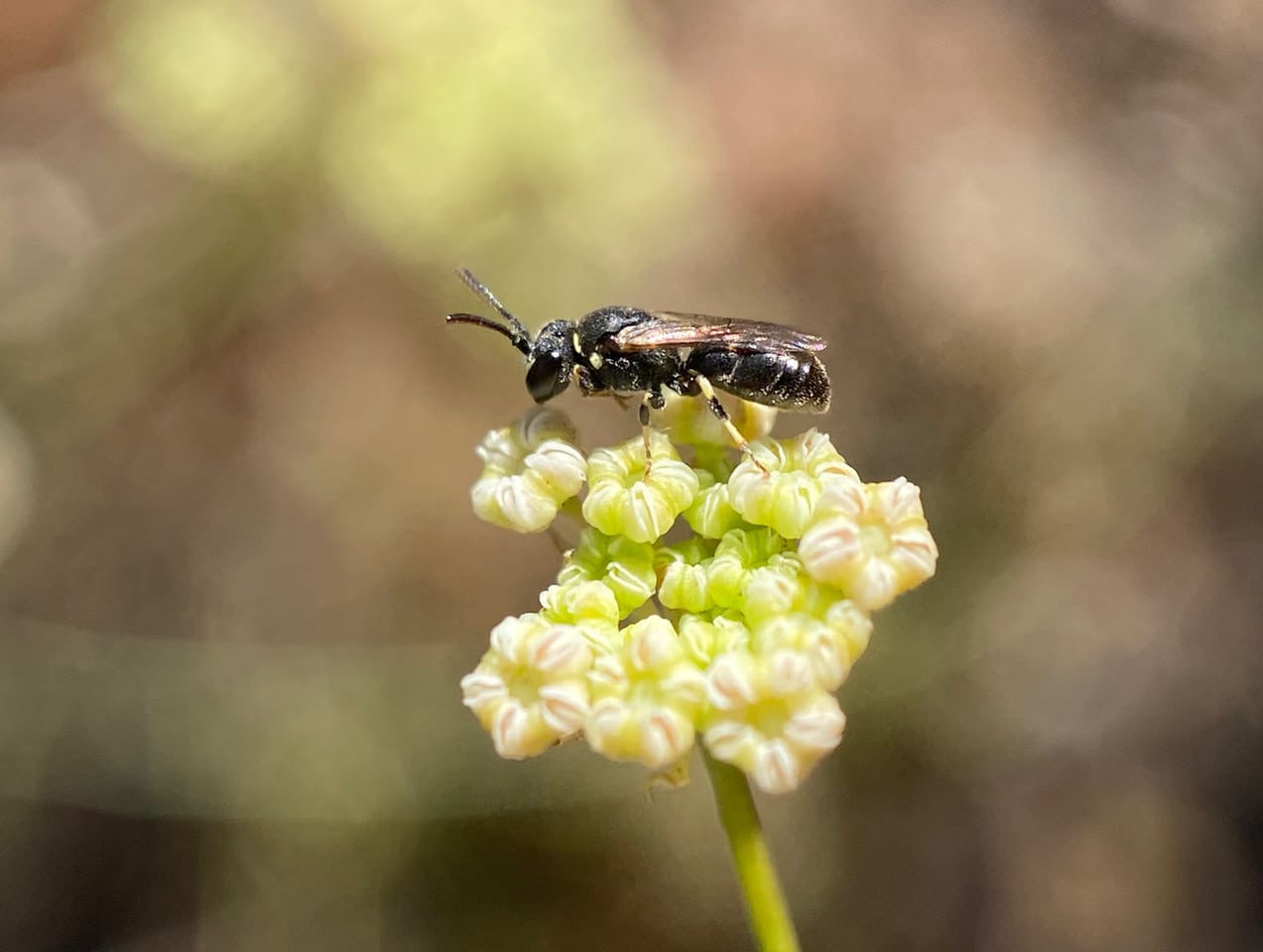
A Masked Bee, Hylaeus sp. (family Colletidae) is foraging on a cluster of Yampah flowers. Since the flowers are not fully opened to expose their anthers, the bee is sticking her tongue out to sample the nectar.
Hylaeus (family Colletidae) are shiny, slender, hairless, and superficially wasp-like bees. They are small, 5 to 7 mm long, usually black with bright yellow or white markings on their face and legs. These markings are more pronounced on the males. Hylaeus do not carry pollen and nectar externally, they instead store their food in the crop and regurgitate it upon returning to their nests. They are primarily generalist foragers. Hylaeus are short-tongued, but their small body size enables them to access deep flowers. Hylaeus nest in stems and twigs, lining their brood cells with self-secreted cellophane-like material. They lack strong mandibles and other adaptations for digging, using instead pre-existing cavities made by other insects.
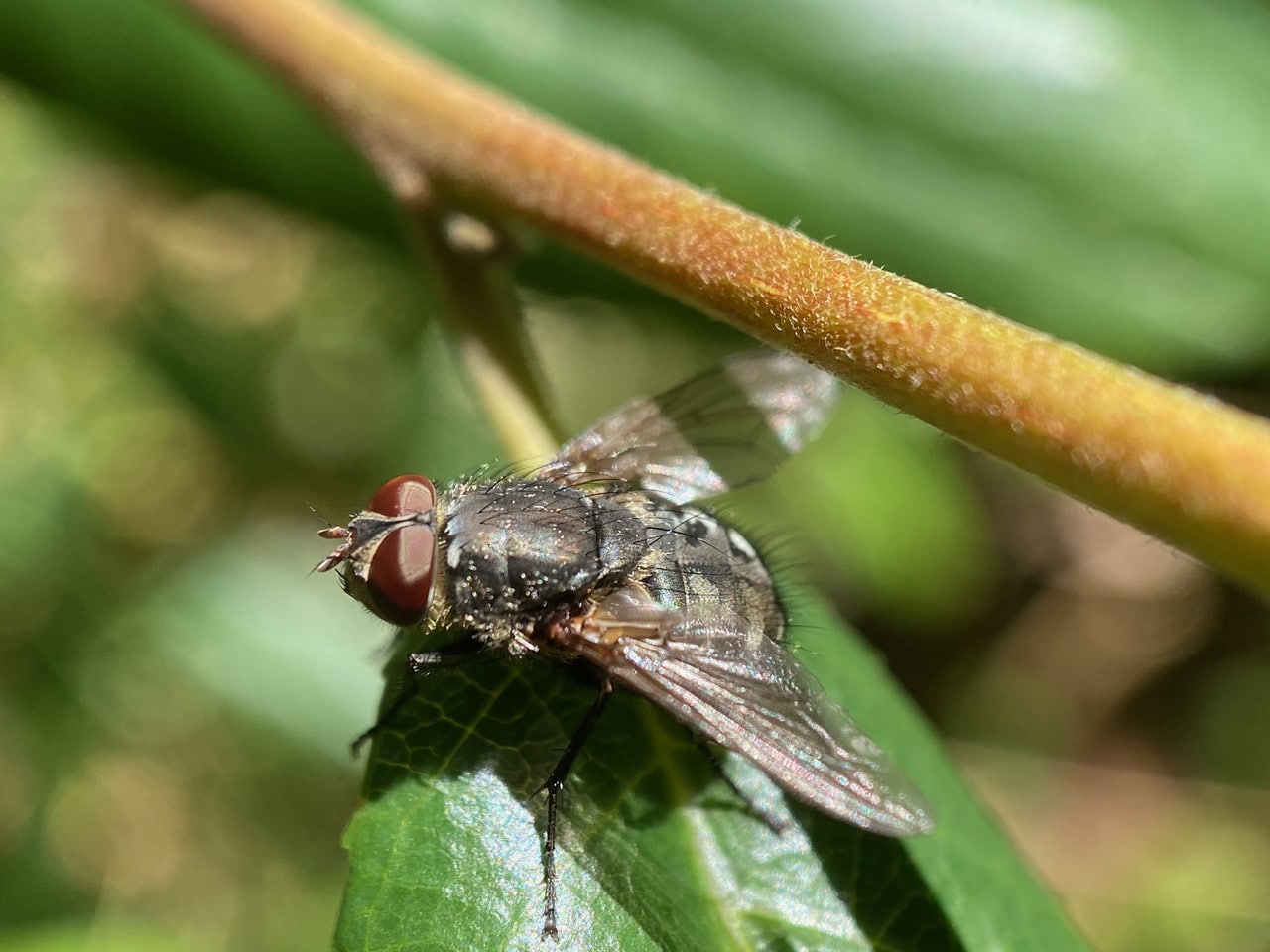
I often encounter Cluster Flies (family Polleniidae) as I enter the shady sections of Skyline Trails under the canopy of Bay and Eucalyptus trees. This one is perched on a Coffeeberry leaf.
Called the Common Cluster Fly, Pollenia rudis (family Polleniidae) is slightly larger than house flies. It is dull gray with checkered black and silvery-black abdomens. A newly emerged fly has many golden hairs on its thorax which may be lost throughout the life of the fly. The common name comes from the tendency of the flies to aggregate near windows when they are trapped in human dwellings. The immature stages – eggs and larvae – are seldom seen because they are deposited on the soil where they burrow into earthworms which they parasitize. The Cluster Fly is a European species. They may have found their way to America in the ballast of ships containing soil, probably along with introduced earthworms.
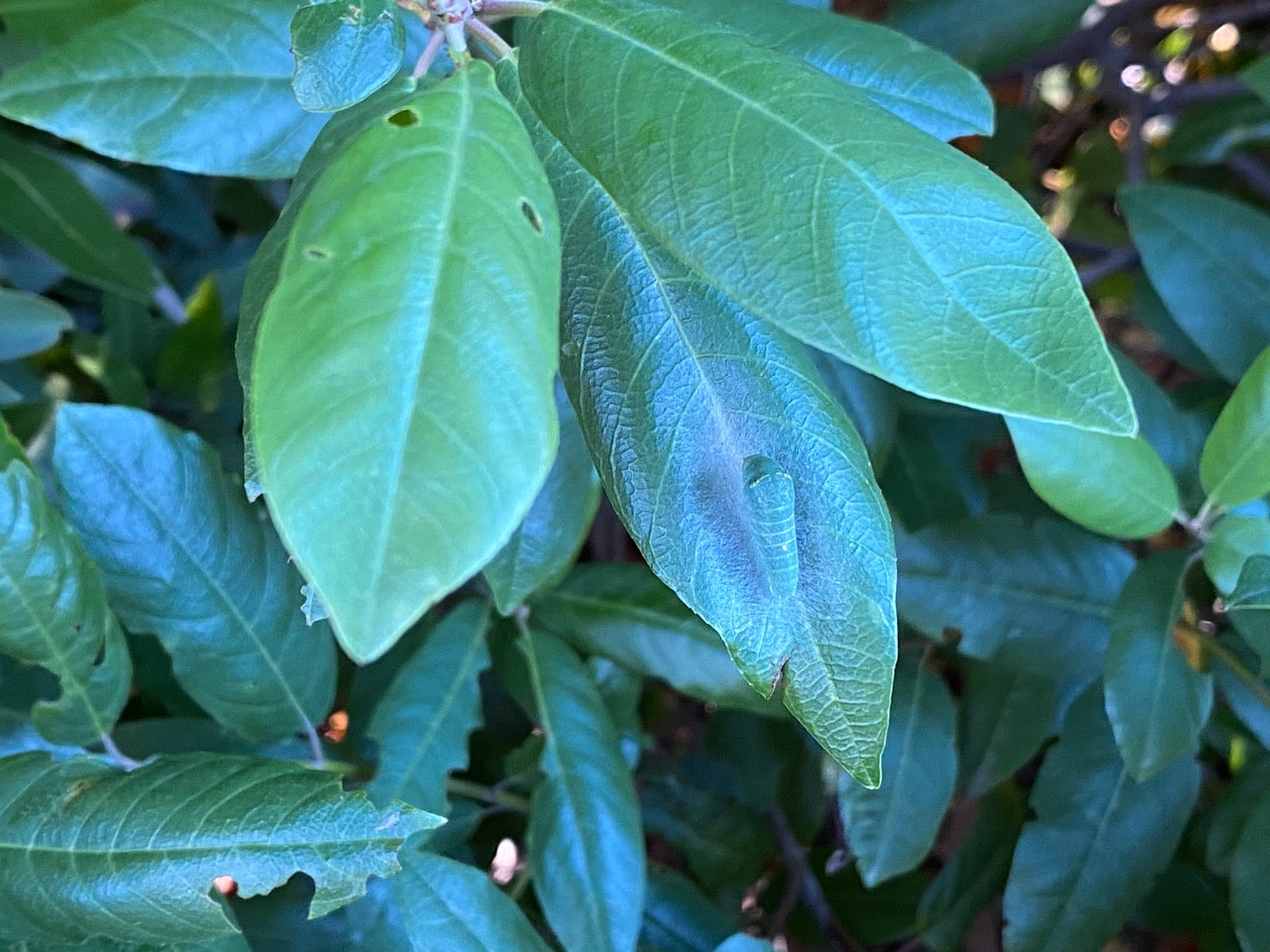 Even though I know exactly where Blue, the Pale Swallowtail caterpillar lives, it still takes a bit of searching to find the well-camouflaged critter. The Coffeeberry leaves can take on different hues from green to blue-green, depending on incident light, but Blue’s color always matches the leaves perfectly.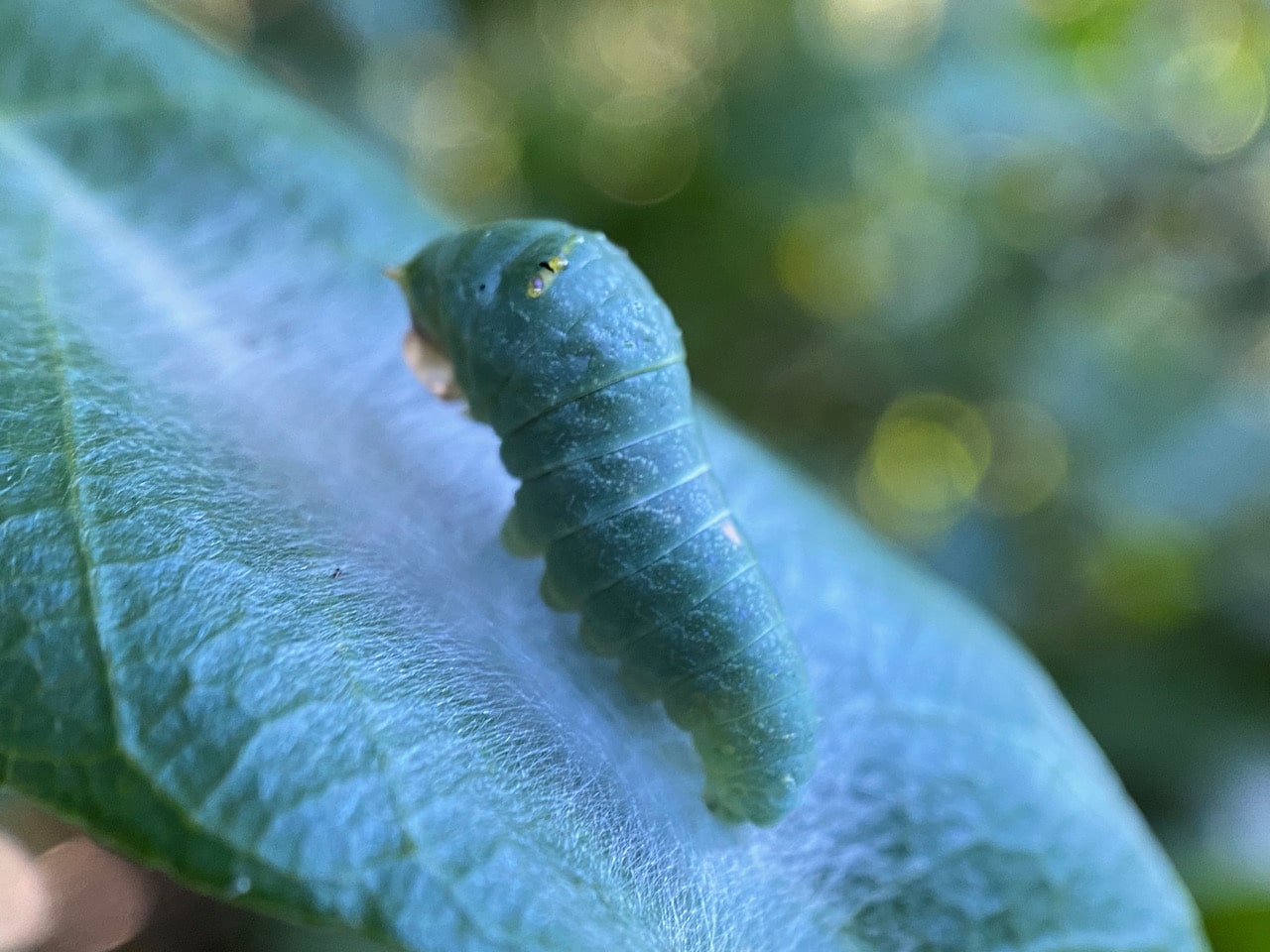
Blue is resting on its silk pad, looking plump and healthy.
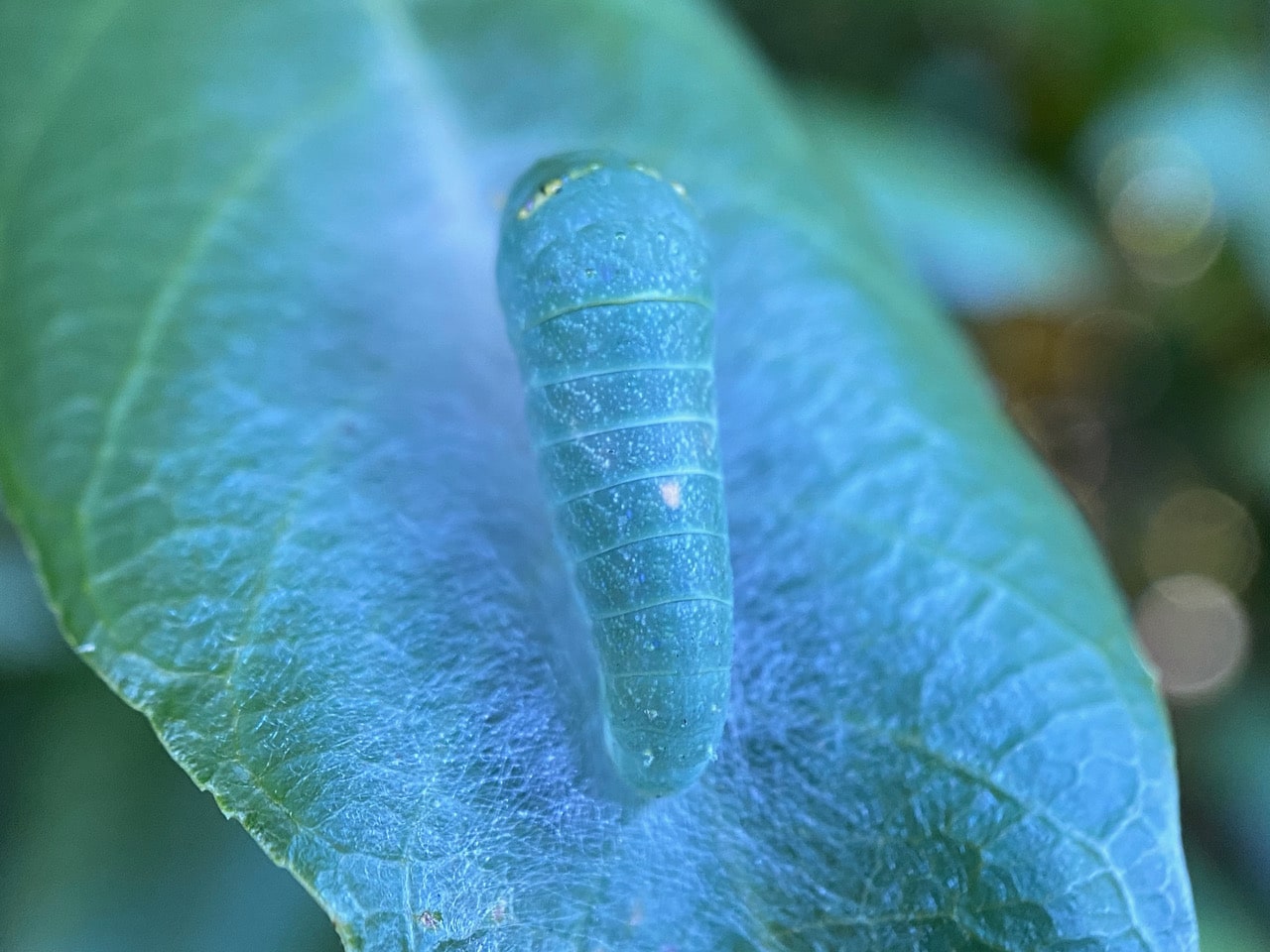
The previously extensive white marking on Blue’s body segments have faded to a tiny spot.
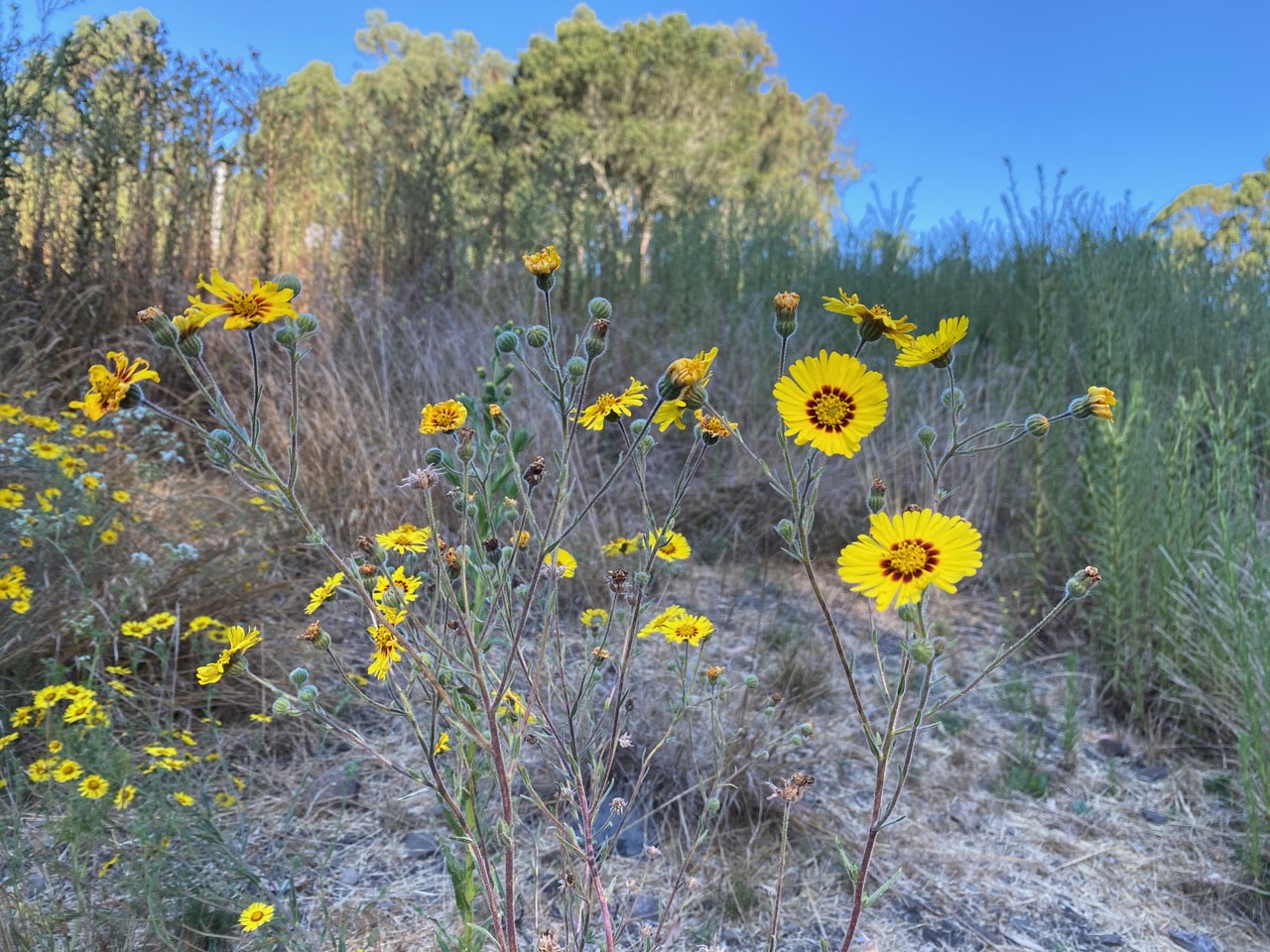
I arrive at the tarweed patch below the Water Tank at 9:30 am before sunlight hits the spot. It’s great to see most of the flowerheads fully open, but would there be enough light for photography?
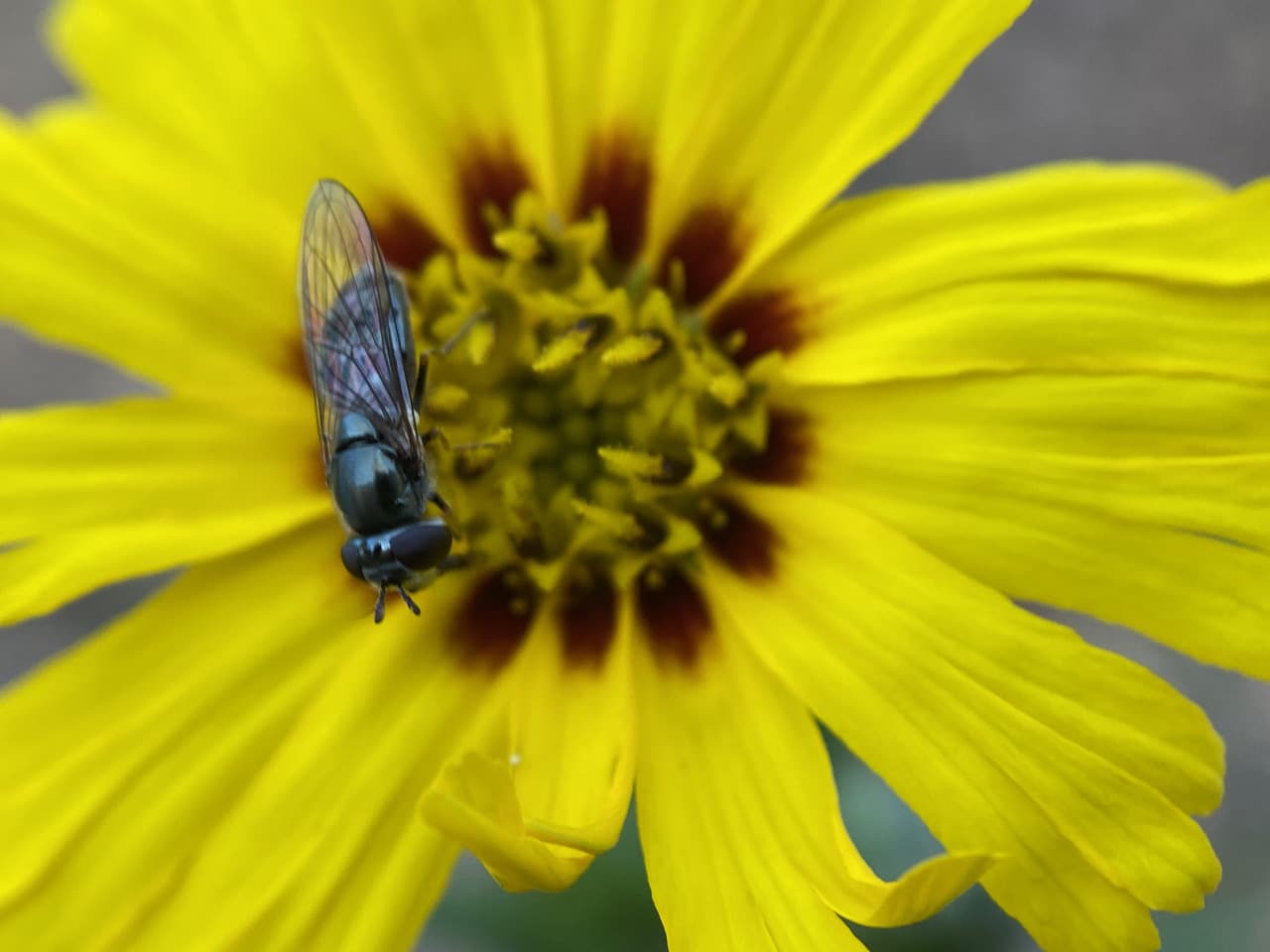
There seem to be quite a few Sedgesitters, Platycheirus sp. (family Syrphidae) foraging on the flowers of Elegant Tarweed, Madia elegans at this hour, their metallic body dark and dull, not illuminated by the sun.
Platycheirus is found in grass and herb vegetation. Adults of many species feed on pollen of wind-pollinated plants, such as Salix, Plantago, Poaceae, Cyperaceae, but they visit other flowers also. Many stay active during cold and rainy weather. Larvae feed on aphids.
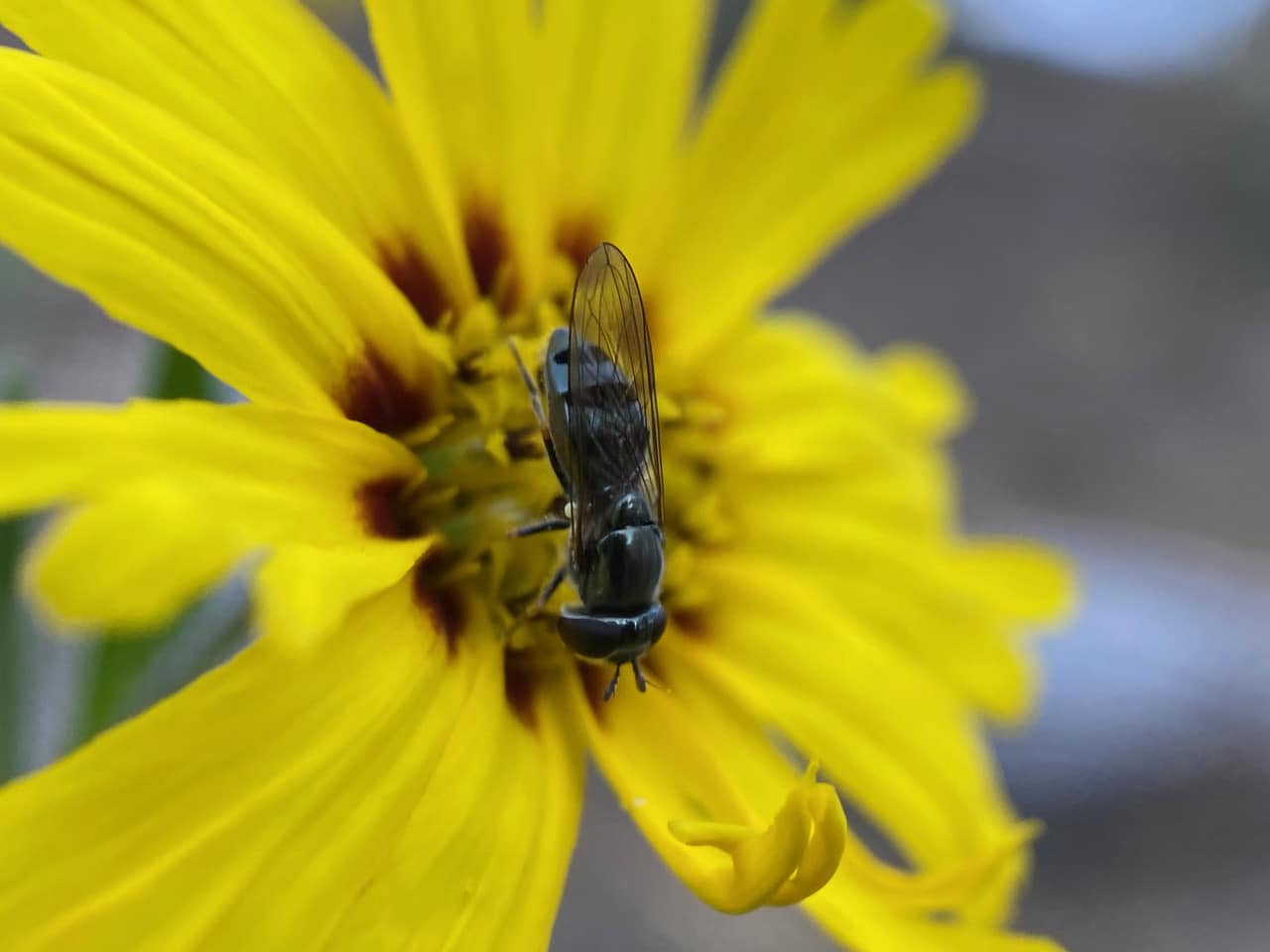
A female Sedgesitter visits an Elegant Tarweed flowerhead on a cloudy morning.

Side view of the Sedgesitter, Platycheirus sp. in low light.

Front view of a Sedgesitter showing its metallic “snout”.

Close-up of the metallic “snout” of the Sedgesitter. Note the position of its tongue. As the fly feeds, its tongue can move back and forth up to the tip of the snout.

Everything looks flat in this low light, including a male Forked Globetail, Spherophoria sulphuripes (family Syrphidae) that is feeding on an Elegant Tarweed flowerhead.
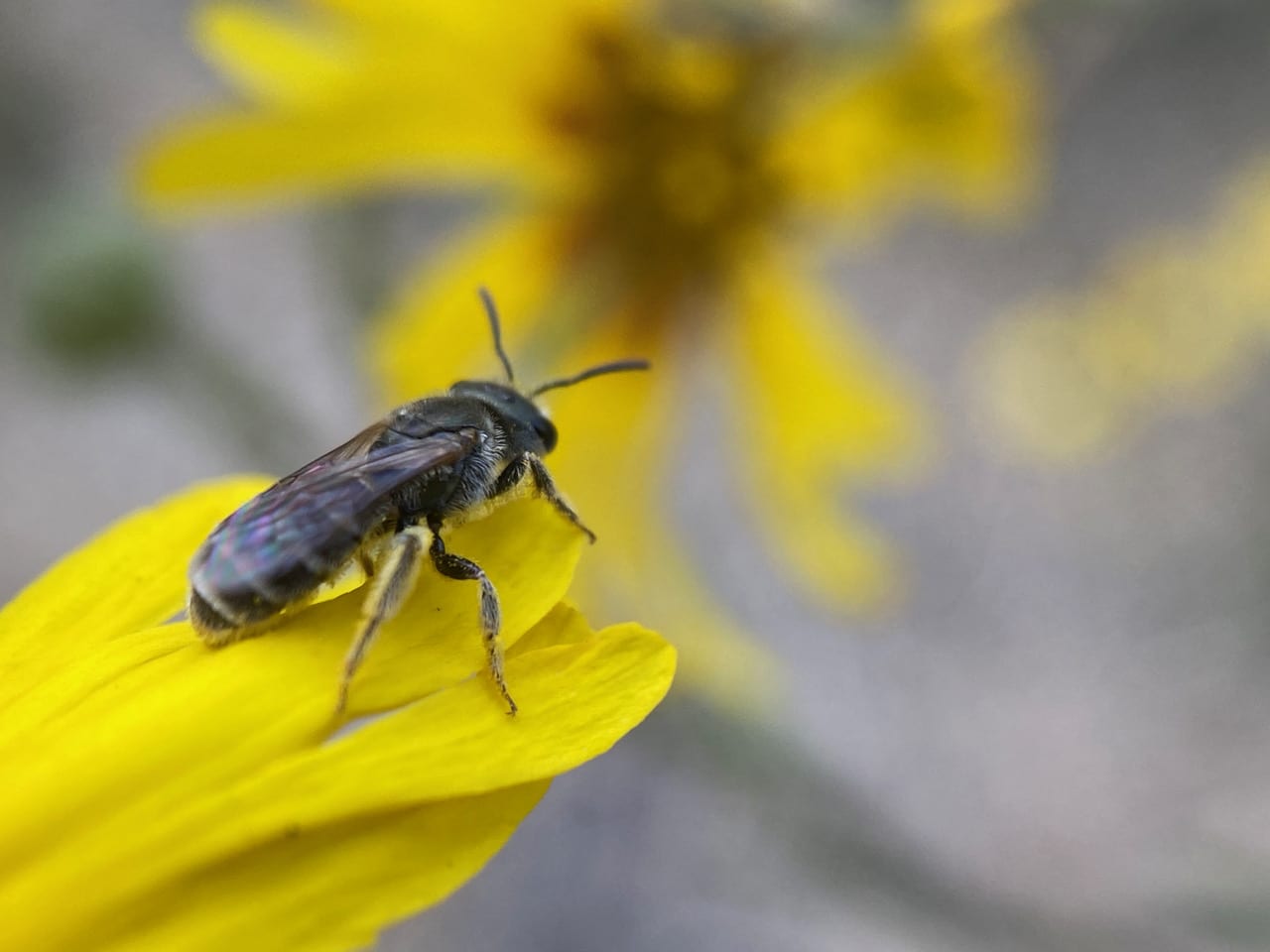
A little bee sits in repose on the ray flower of Elegant Tarweed.
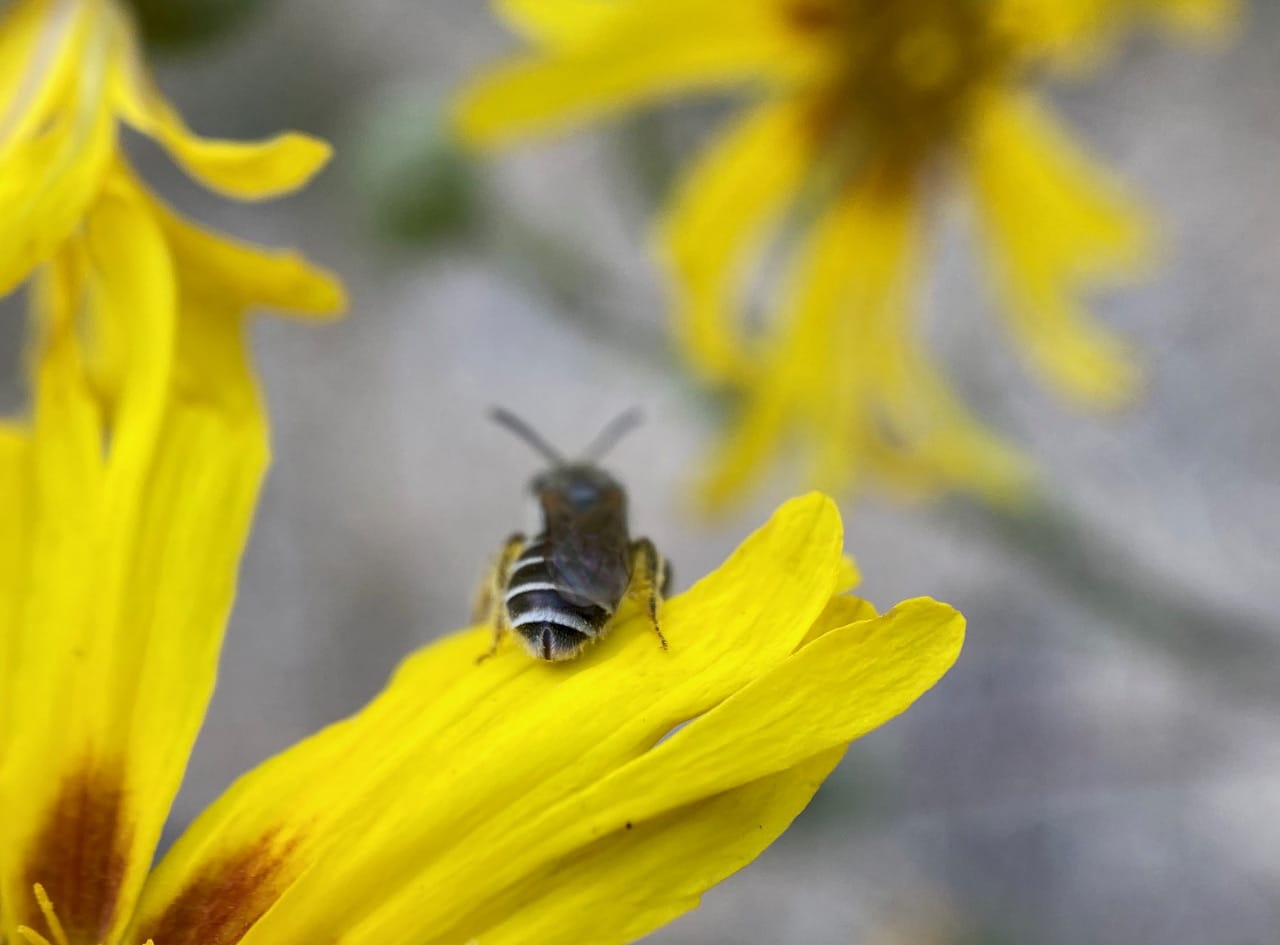
Shifting my position to get a view of its abdomen, I find that it is a female Sweat Bee, Halictus sp. (family Halictidae). The “furrow” on her last abdominal tergite (segment) is useful for the identification. Only the females of this genus has this morphological feature, the function of which is unclear.
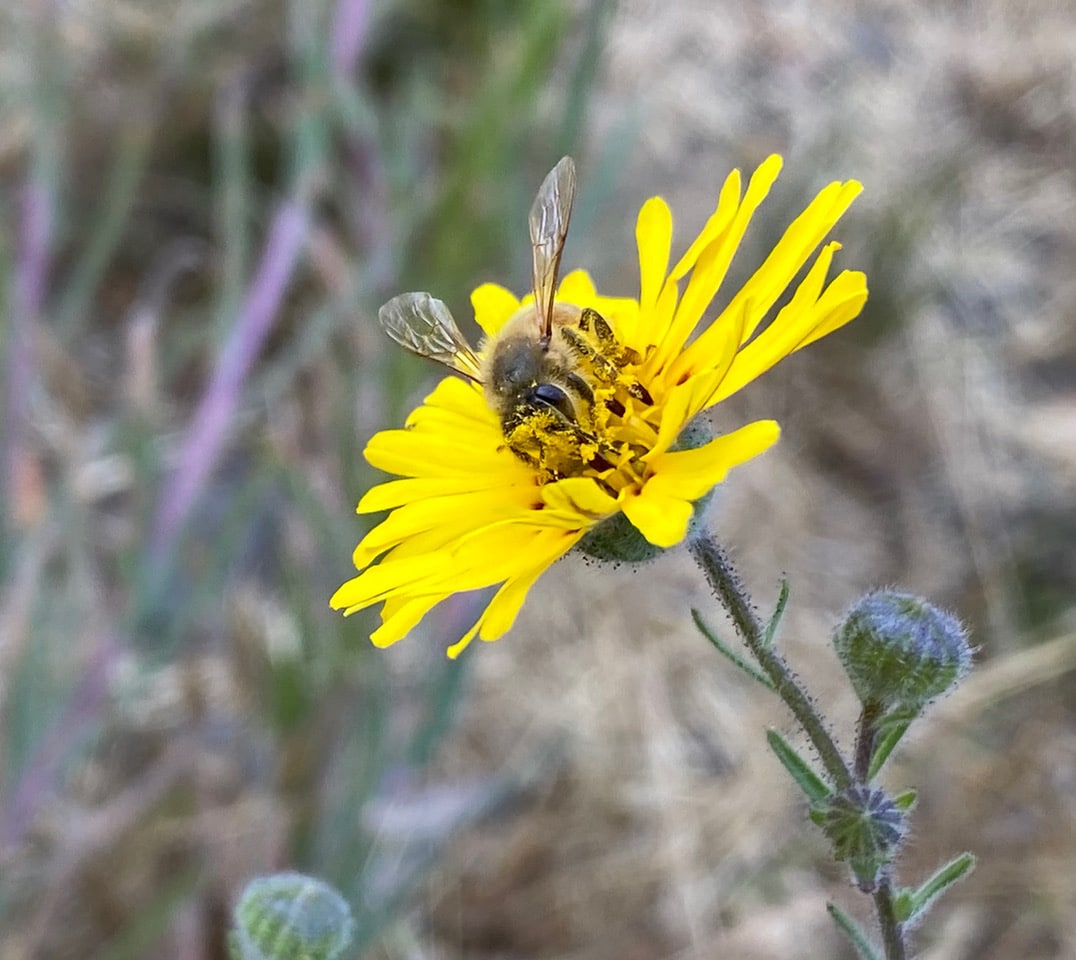
Her head and legs covered with sticky pollen, a European Honey Bee, Apis mellifera (family Apidae) is foraging on a flowerhead of Elegant Tarweed.
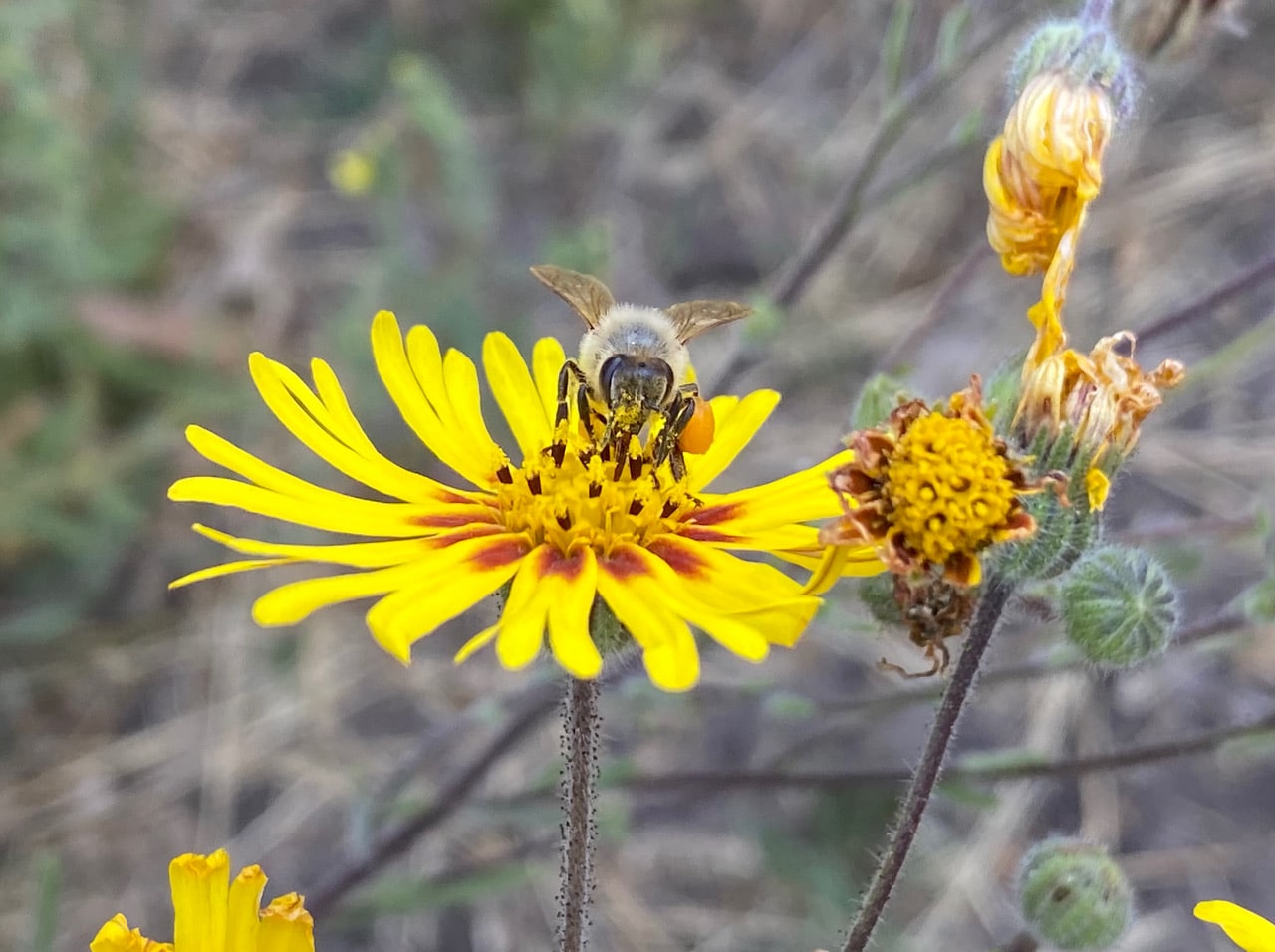
Check out the pollen load on this Honey Bee’s pollen baskets! Tongue extended, she’s taking a sip of nectar from the Madia elegans flower.
The pollen collecting apparatus in Apidae bees, which include honey bees and bumble bees, is commonly called a “pollen basket” or corbicula. This region is located on the tibia of the hind legs and consists of hairs surrounding a concave region. After the bee visits a flower, she begins to groom herself and brushes the pollen down toward her hind legs and packs the pollen into her pollen basket. A little nectar mixed with the pollen keeps it all together like putty, and the stiff hairs surrounding the pollen basket hold it in place.
.jpg)
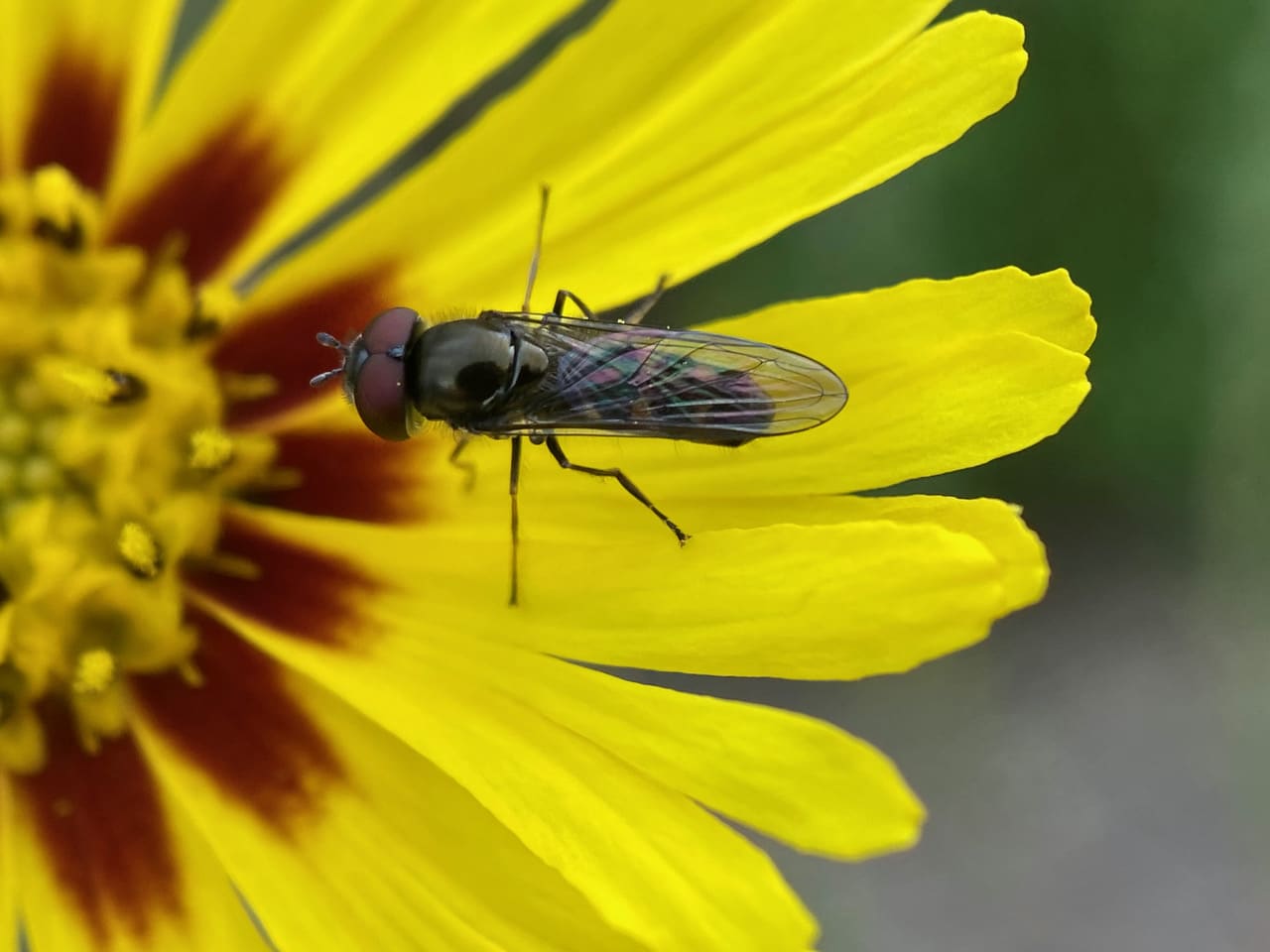
Ooh, another dark metallic Hover Fly! It is probably a Variable Duskyface Fly, Melanostoma mellinum (family Syrphidae). It has a proportionately longer abdomen than Platycheirus, with a distinct abdominal pattern.
Melanostoma mellinum is a very common species of hover fly found in many parts of Europe including the Mediterranean basin and North Africa, the East Palearctic, and North America. A small species, their wingspan between 4.7 and 7.0 mm. Very similar to Platycheirus, but can be distinguished by fine details. In M. mellinum, the normally pale halteres turn bright blueish-green in females about to lay eggs.
The species’ preferred habitat include grasslands and moorlands, including those in hilly and mountainous regions. Adults can be found feeding on pollen of grasses and other wind-pollinated plants. Little is known of their biology, but the larvae are suspected to be a general predator of small insects in the leaf litter.
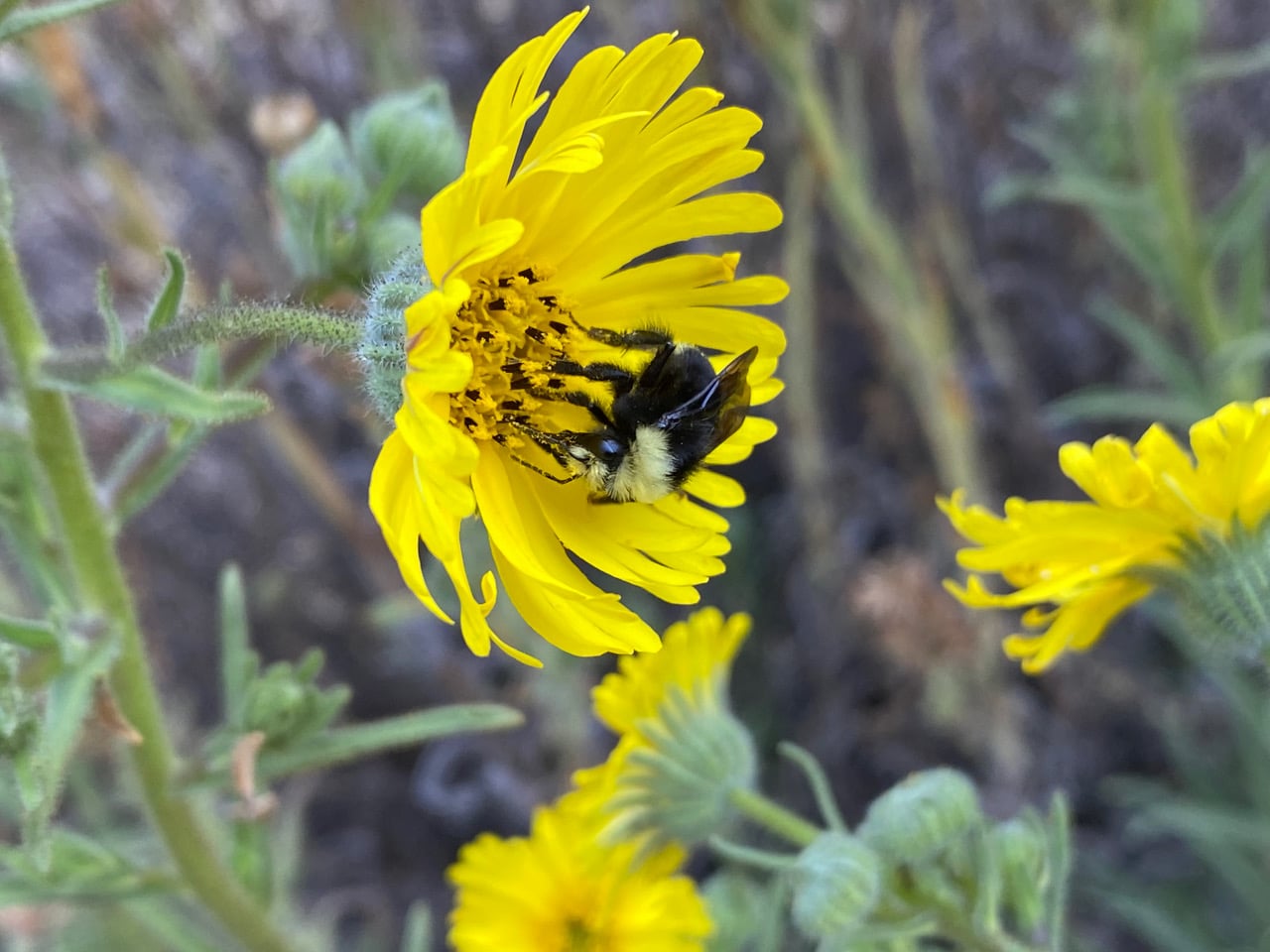
This Yellow-faced Bumble Bee, Bombus vosnesenskii does not seem to be collecting pollen, but only taking nectar.
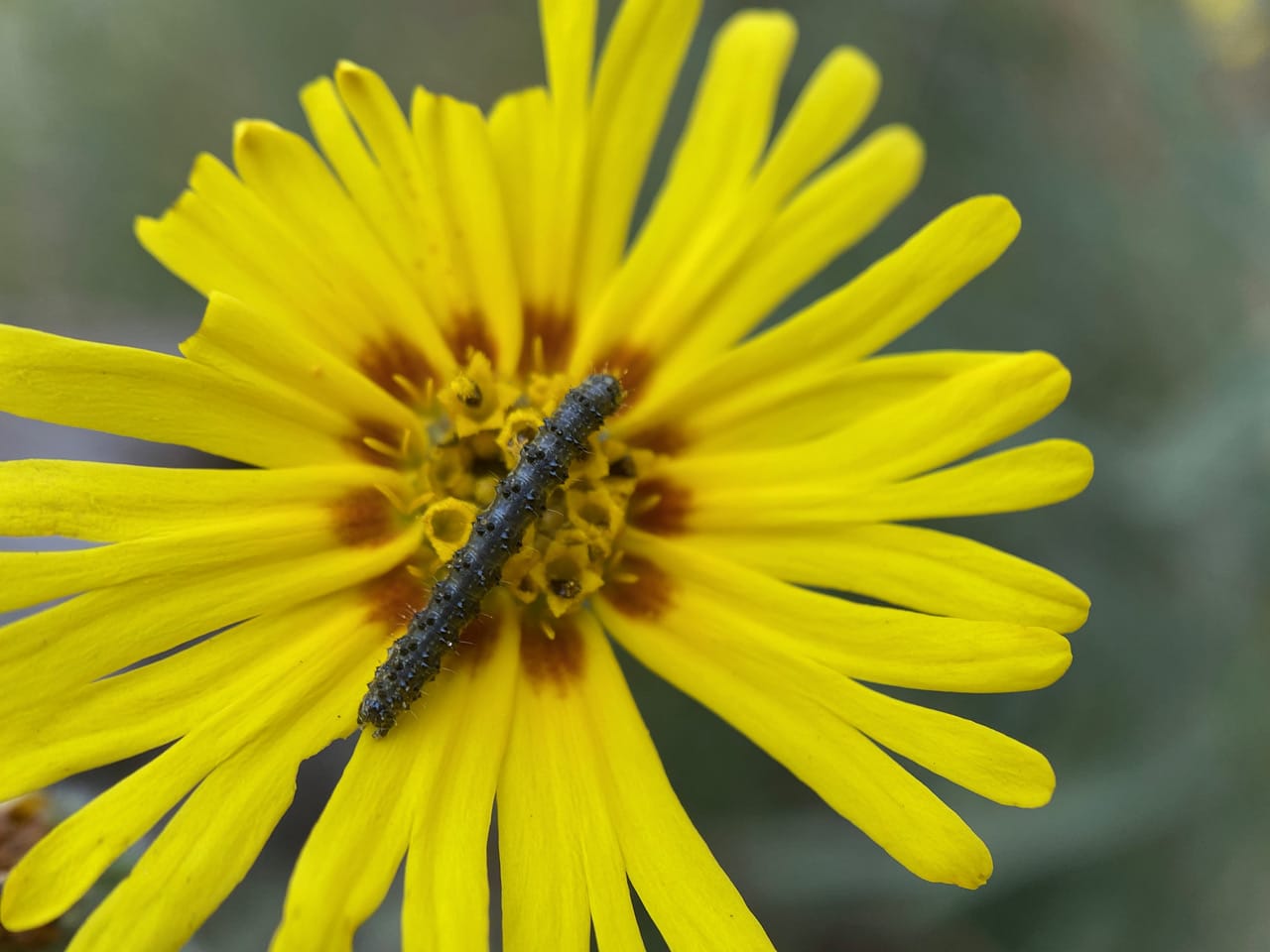
A small, dark caterpillar is feeding on the flowers of Elegant Tarweed. A very dark version of the Small Owlet Moth caterpillar, Heliothodes diminutiva (family Noctuidae)? These caterpillars specialize in feeding on the flower parts of Asteraceae. Note the disc florets on this flowerhead that have been emptied of their stamens.