Pollinator Post 8/12/23 (1)

Young Coast Tarweed, Madia sativa have popped up along the short path linking Siesta Gate to Skyline Trail. I am rather surprised to find that a host of insects have gathered on these. Here’s a Scentless Plant Bug, Arhyssus sp. (family Rhopalidae) on the immature flowerheads.
The Rhopalidae are distinguished by many veins on the membranous portion of the forewings. They differ from coreids and other hemipterans in lacking functional scent glands. All are plant-feeders, usually on ripe seeds.
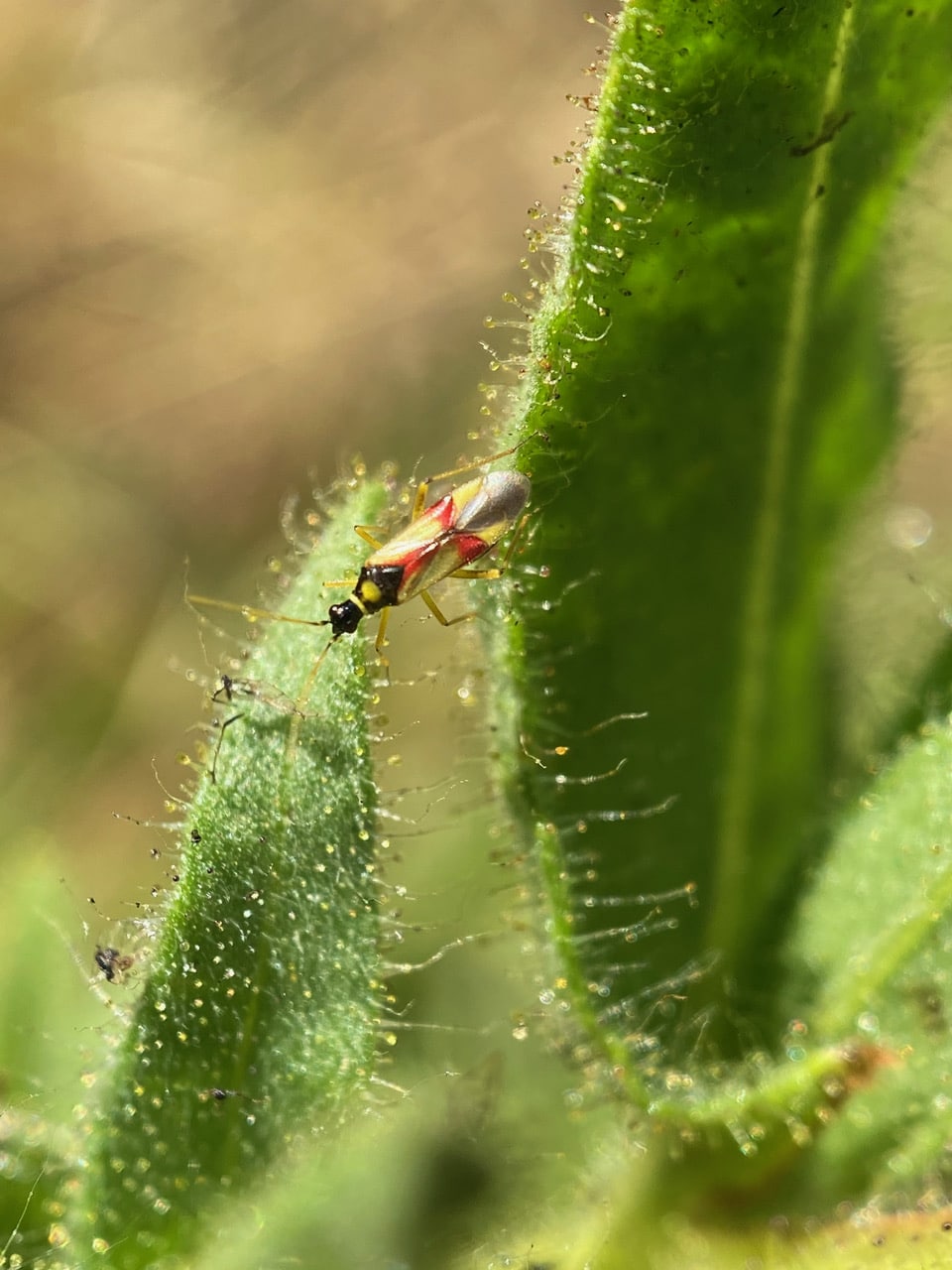
A Phacelia Plant Bug, Tupiocoris californicus (family Miridae) is walking on the leaves of Coast Tarweed, Madia sativa.
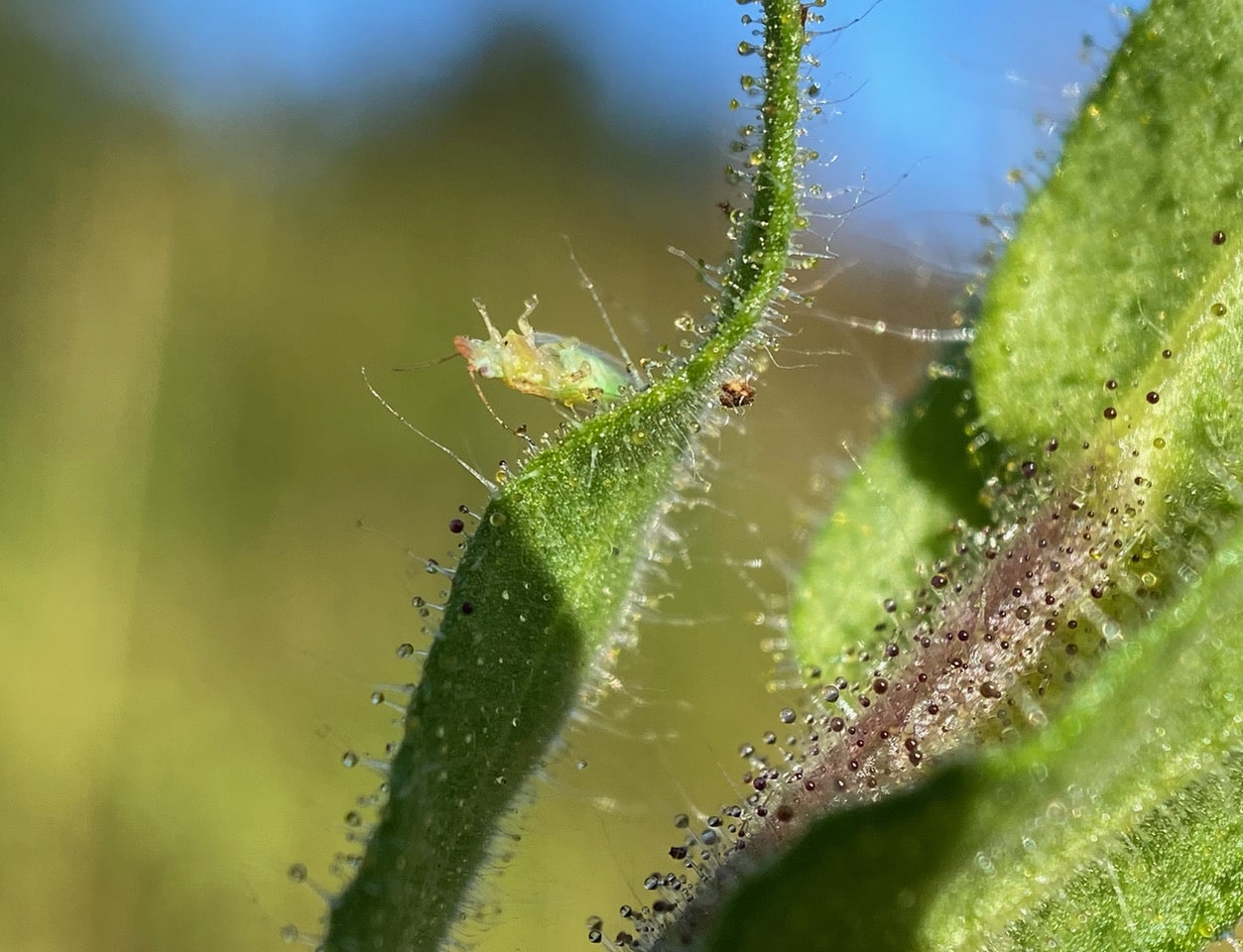
A Eucalyptus Redgum Lerp Psyllid, Glycaspis brimblecombei (family Aphalaridae, formerly in Psyllidae) is stuck on a sticky leaf of Coast Tarweed. The presence of the Psyllids on Madia may be purely accidental, since Eucalyptus trees abound in the surrounding area, and the tiny insects could have been dispersed by the wind.
Native to Australia, the aphid-like insect was unintentionally introduced to California and is now widespread on Eucalyptus throughout the state. The tiny bug sucks phloem sap and excretes large amounts of sticky honeydew. The nymphs form a cover called a “lerp”, which is a small white, hemispherical cap composed of solidified honeydew and wax. The yellow or brownish nymphs resemble a wingless aphid, and spend most of their time covered beneath a lerp. Free-living adults are about 1/8 inch long, slender, and light green to brownish. They have relatively long forward projections (called genal cones) on each side of their head below their eyes. Psyllid nymphs and adults feed by sucking plant phloem sap through their straw-like mouthparts. Honeydew is a sticky waste product excreted by the Psyllids after digesting sugar-rich phloem. Copious honeydew can cause premature leaf drop. Extensive defoliation weakens trees, and can contribute to premature death of some highly susceptible species. Red Gum Lerp Psyllid infests a wide variety of Eucalyptus species, with a clear preference for the red gum.
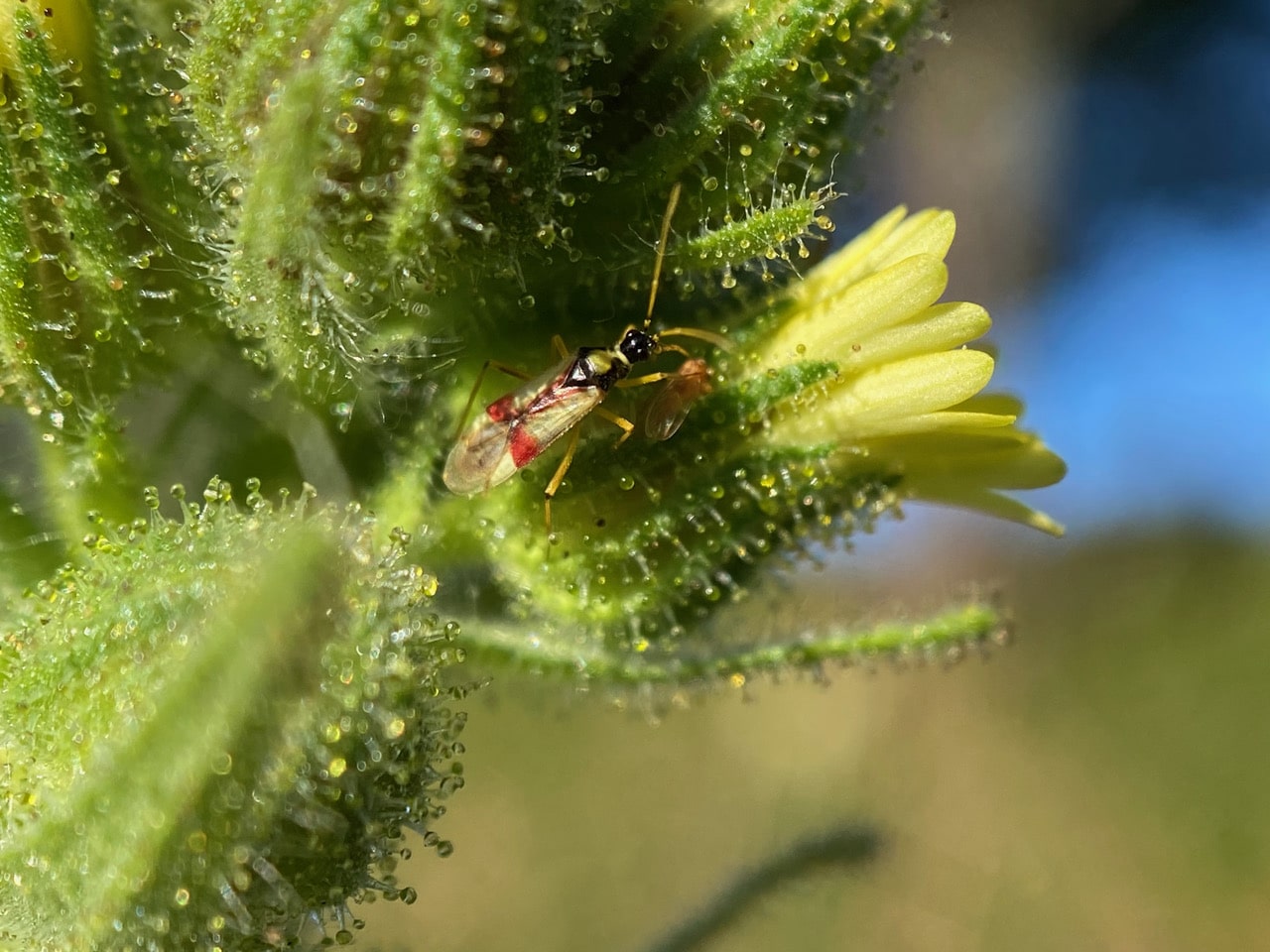
A Phacelia Plant Bug appears to be feeding on a Psyllid on a flowerhead of Coast Tarweed. I have come across similar scenario last year, and have wondered if the Plant Bug wasn’t purely herbivorous, but a predator or opportunistic scavenger as well.

View from Diablo Bend at 9 am.
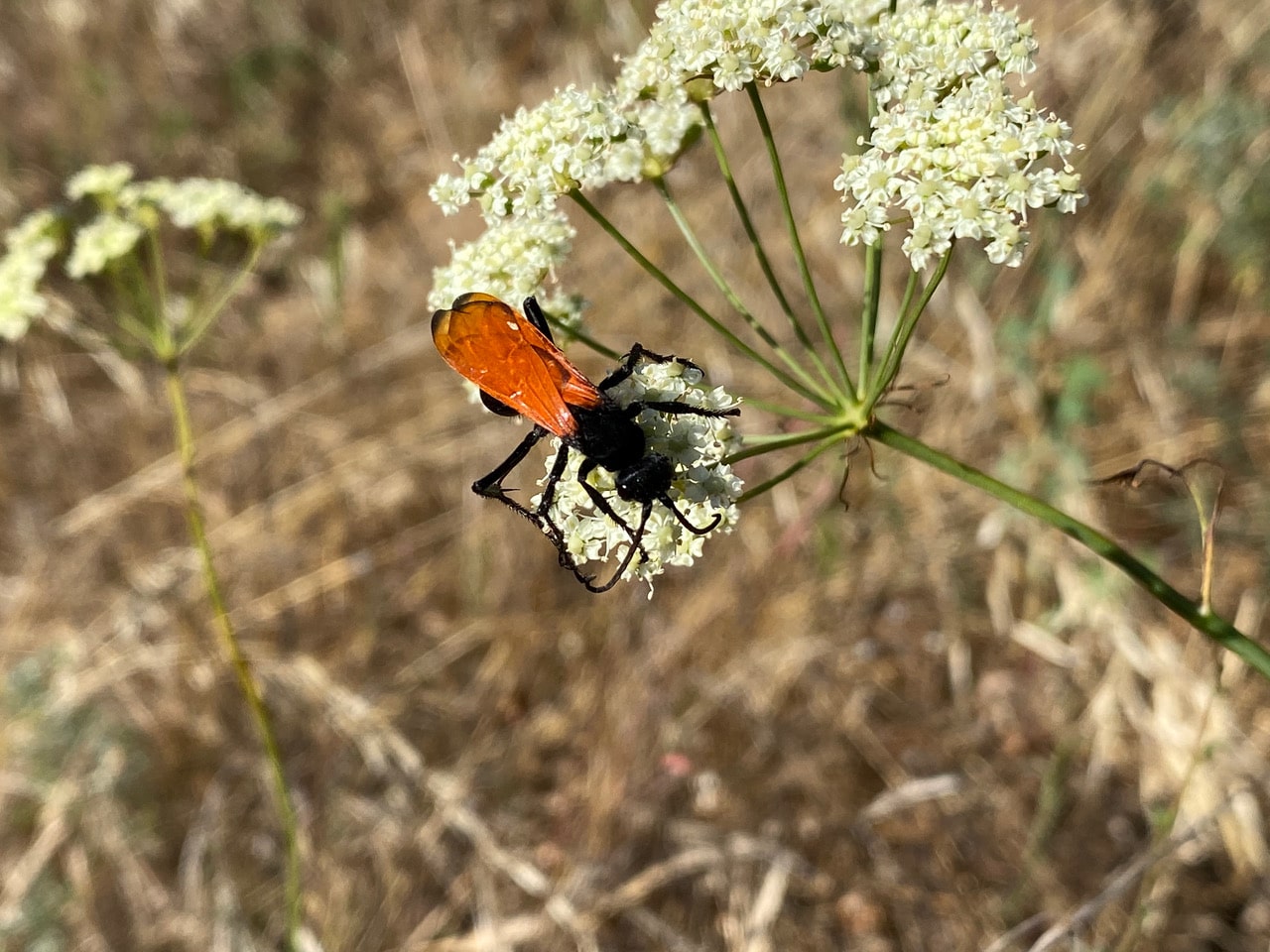
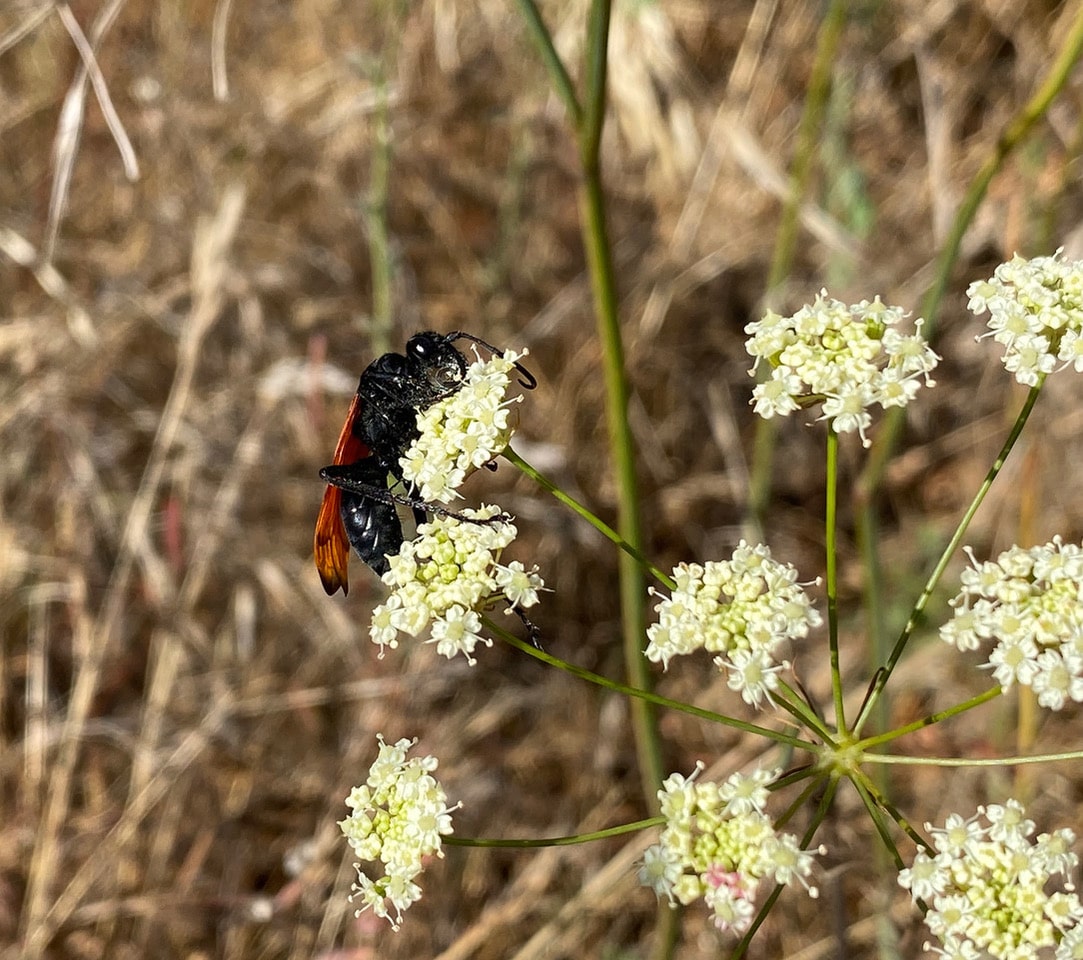
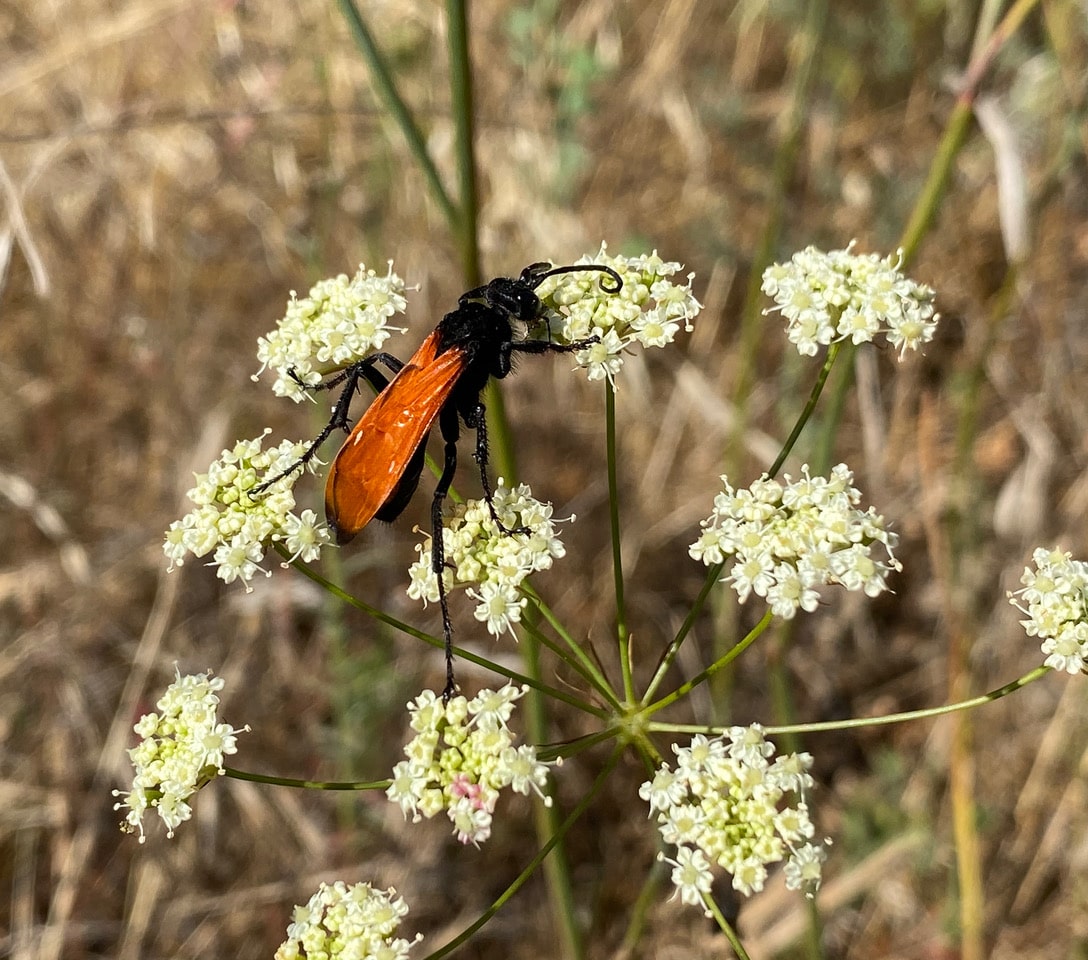
Flashes of orange wings have me scrambling up the steep slope of Yampah Bowl to photograph a Thisbe’s Tarantula Hawk, Pepsis thisbe (family Pompillidae) nectaring on Yampah flowers. I have been seeing these large wasps around lately, but they are wary and skittish while hunting on the ground. One that is distracted by food is usually easier to approach.
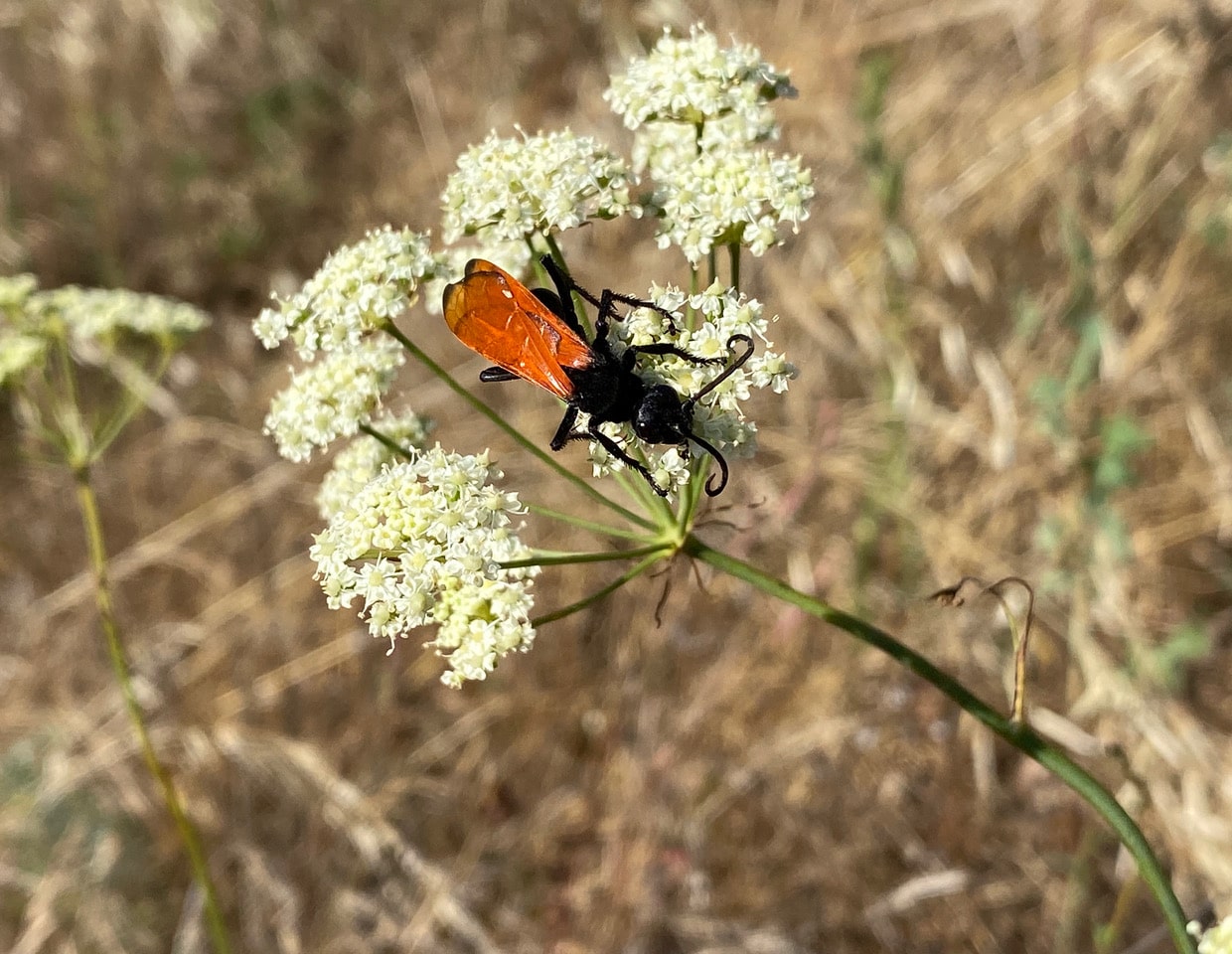
A Tarantula Hawk is a spider wasp (family Pompilidae) that preys on tarantulas. They comprise several species in the genera Pepsis and Hemipepsis. Common species are up to 2 in. long, making them among the largest of wasps, and have blue-black bodies and bright, orange colored wings (Some species have black wings.) The bright colors advertise to potential predators the wasps’ ability to deliver a powerful sting, considered one of the most painful insect stings in the world.
The female tarantula hawk stings a tarantula between the legs, paralyzing it, then drags the prey to a specially prepared burrow, where a single egg is laid on the spider’s abdomen, and the burrow entrance is covered. When the wasp larva hatches, it penetrates the spider’s abdomen, and feeds on it from the inside, avoiding vital organs for as long as possible to keep the spider alive. The wasp larva pupates within the spider and eventually emerges as an adult to continue the life cycle.

Adult Tarantula hawks are nectivorous (feeding on nectar). They have been known to become “flight-challenged” after consuming fermented fruits.
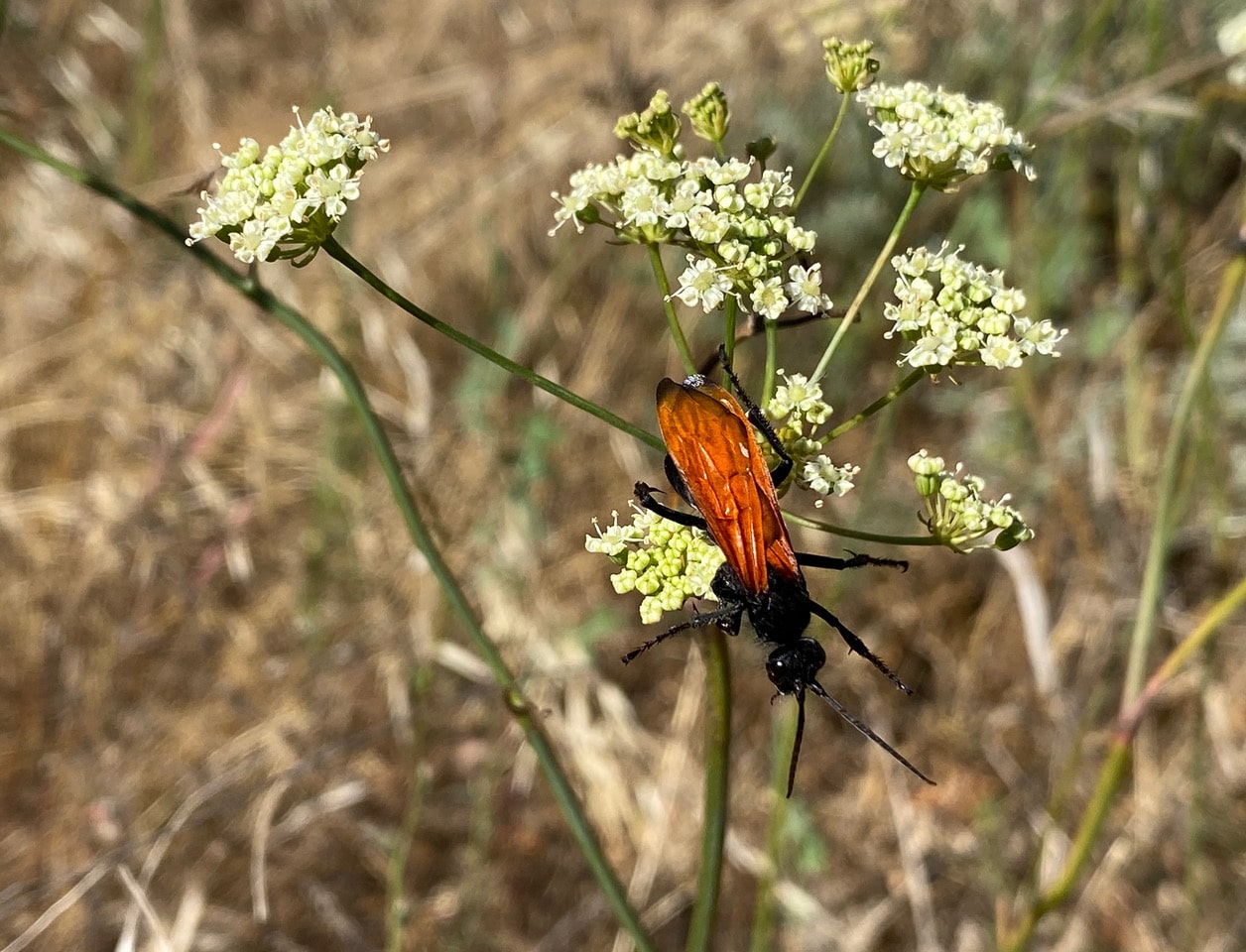
Pepsis is a New World genus. Fifteen species occur in the United States, with most occurring in the deserts. Tarantula hawks occur wherever tarantulas are found. Pepsis thisbe is the most northern ranging of the genus.

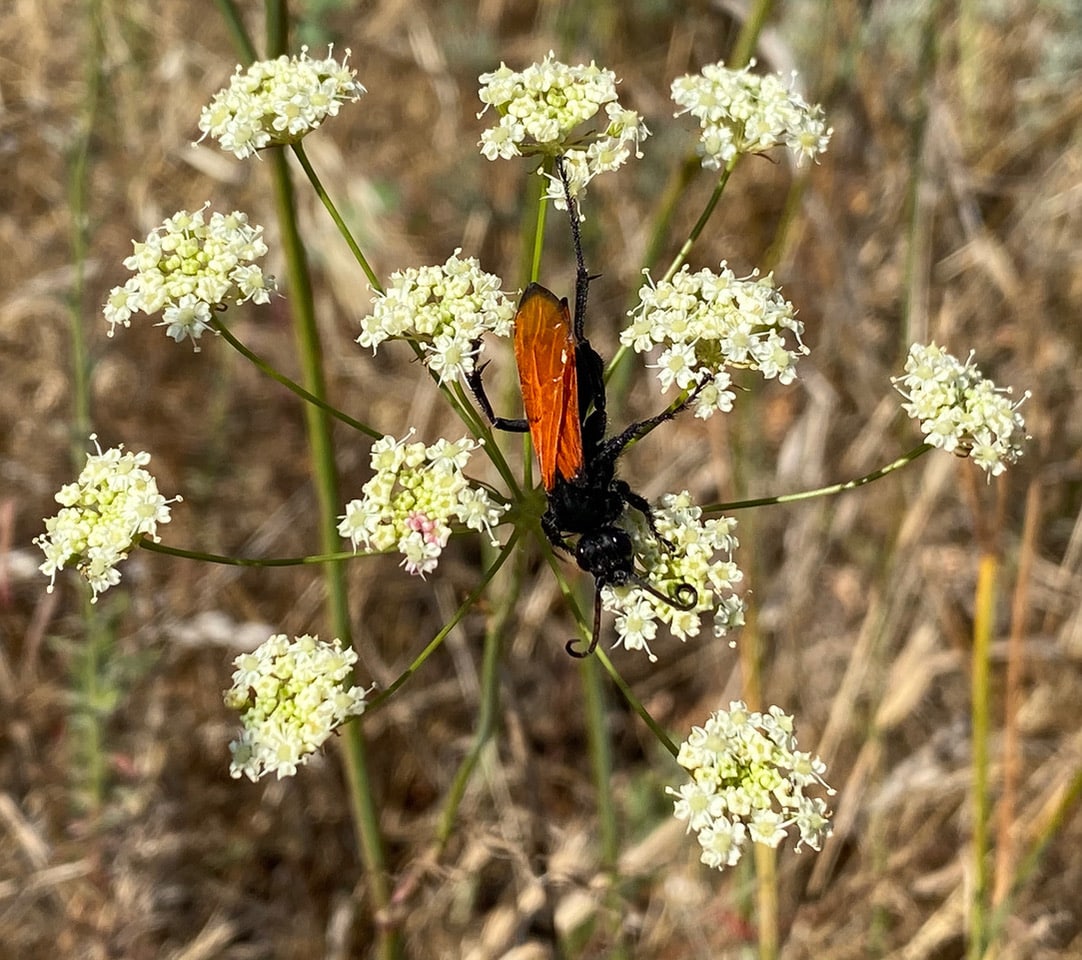
Tarantula Hawks generally do not sting unless provoked, but their sting is one of the most painful of all insects. Males do not have stinger, but females have a 1/4 in. (7mm) stinger. Their sting has been described as “blinding, fierce, and shockingly electric”. Roadrunners are one of the few animals that will risk being stung to feed on tarantula hawks.
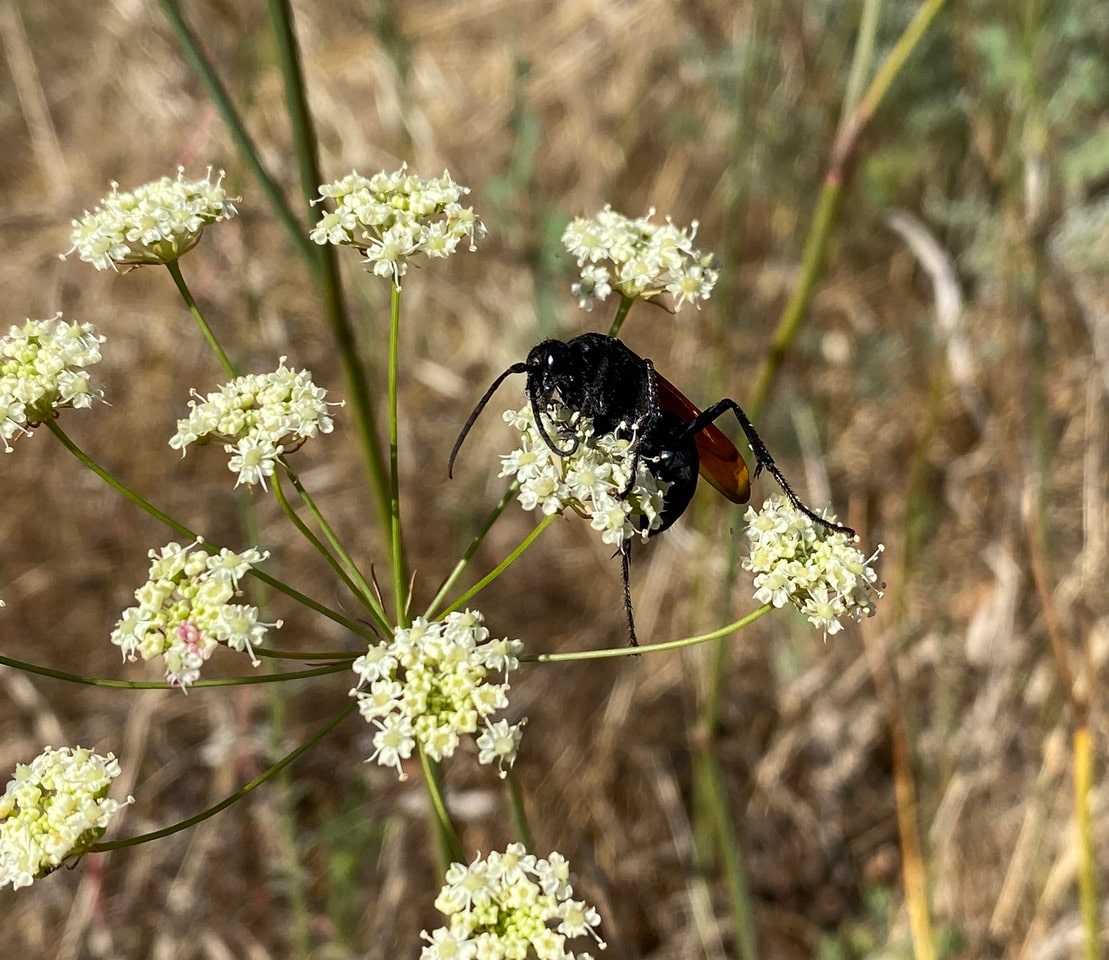


Members of the family Pompilidae (Spider Wasps) typically have long, spiny legs; the hind femur is often long enough to reach past the tip of the abdomen. The tibia of the rear legs usually have a conspicuous spine at their distal end.