

Pollinator Post 7/9/23 (3)
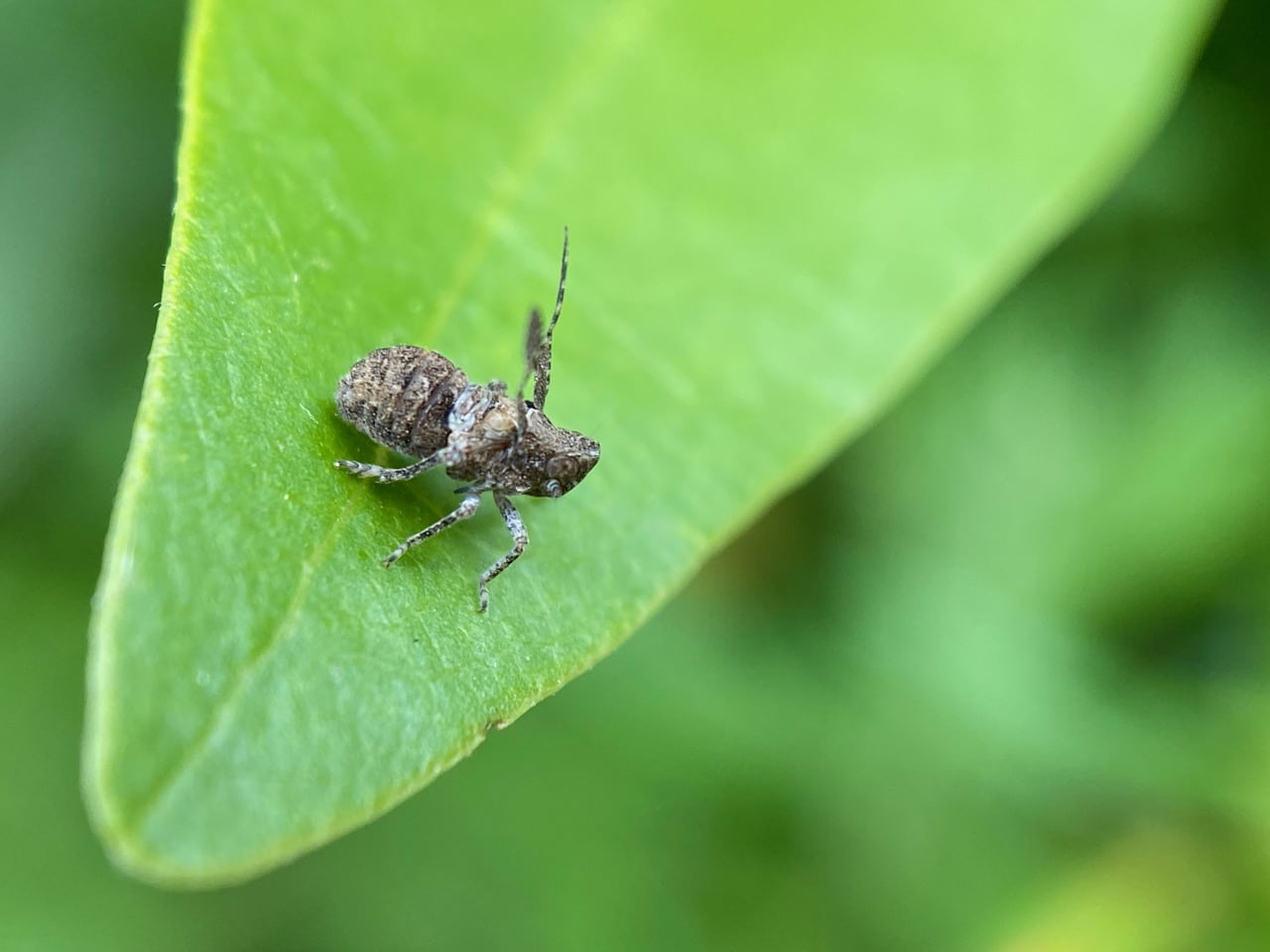 Ooh, there’s a tiny odd looking insect on a Bay Tree leaf. From the way it holds up its narrow wings vertically, I recognize it as a Planthopper in the genus Danepteryx (family Tropiduchidae).
 Tropiduchidae is a relatively small, advanced planthopper family. Members of the genus Danepteryx are sometimes called Upright-winged Hoppers. Most of the genus is endemic to California, but members of the family are more broadly found in southwestern US and extreme northern Mexico. Planthoppers may be small, but they attract mates from afar by sending vibrational calls along plant stems and leaves using fast, rhythmic motions of their abdomen.
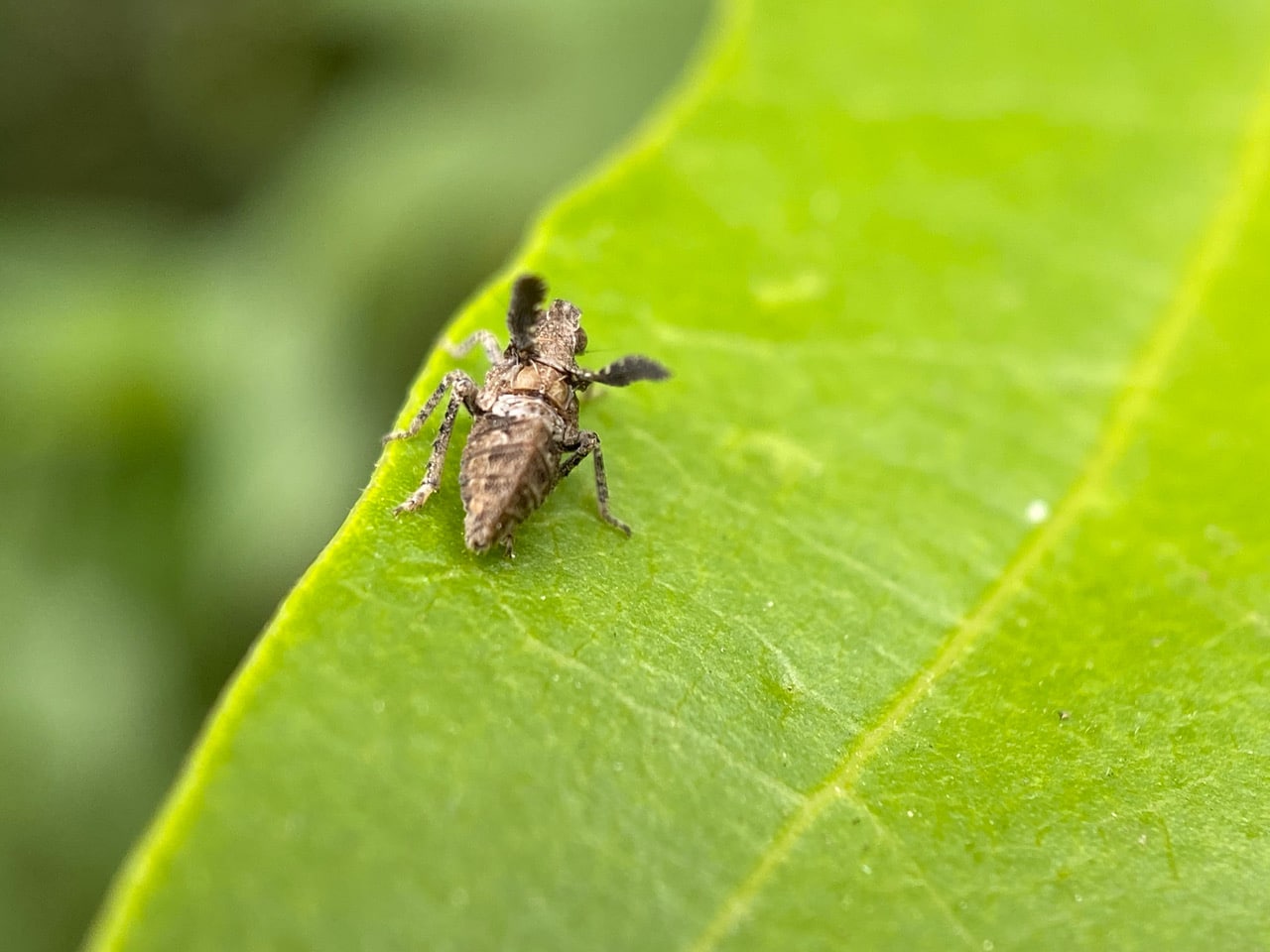
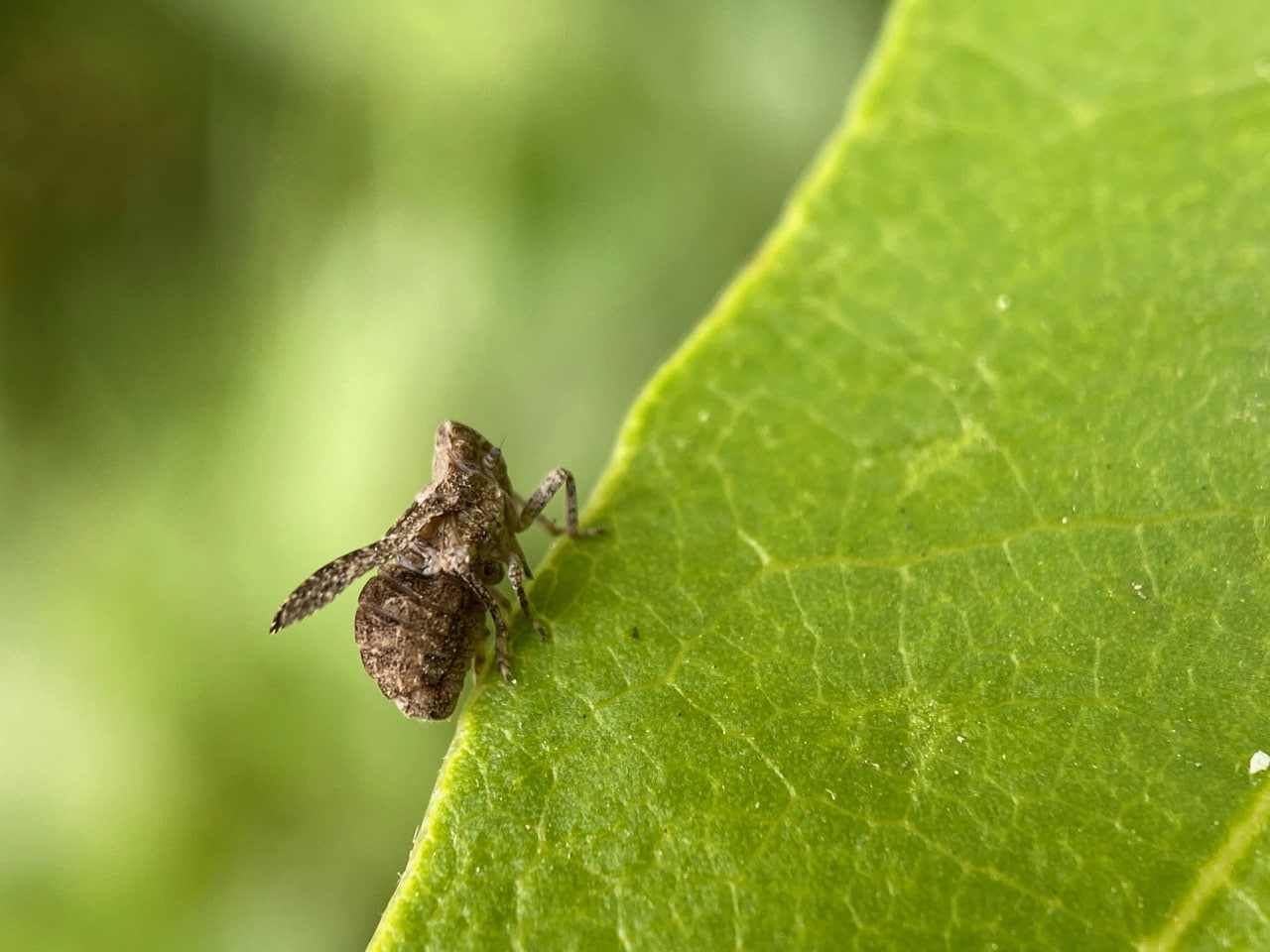

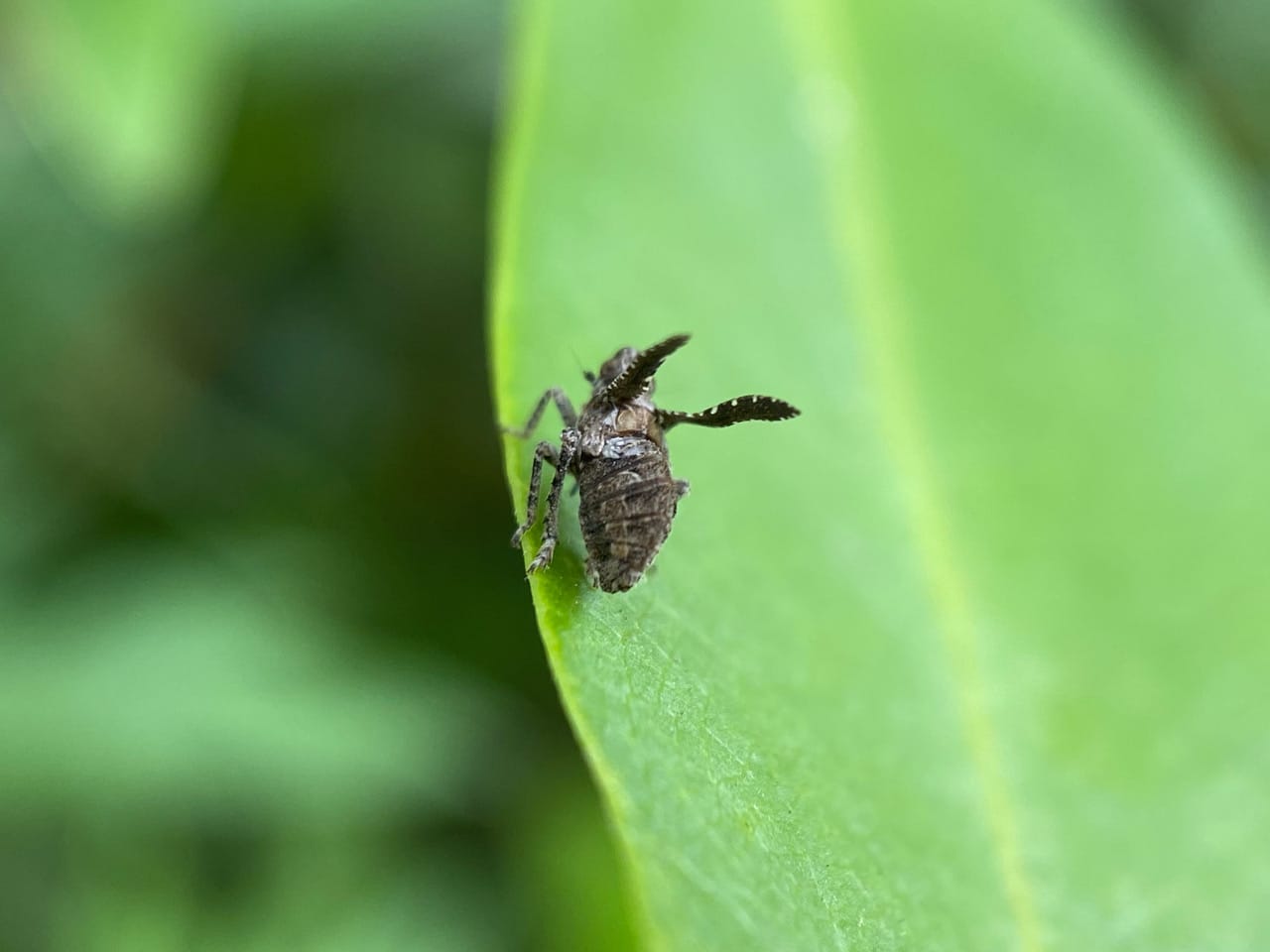


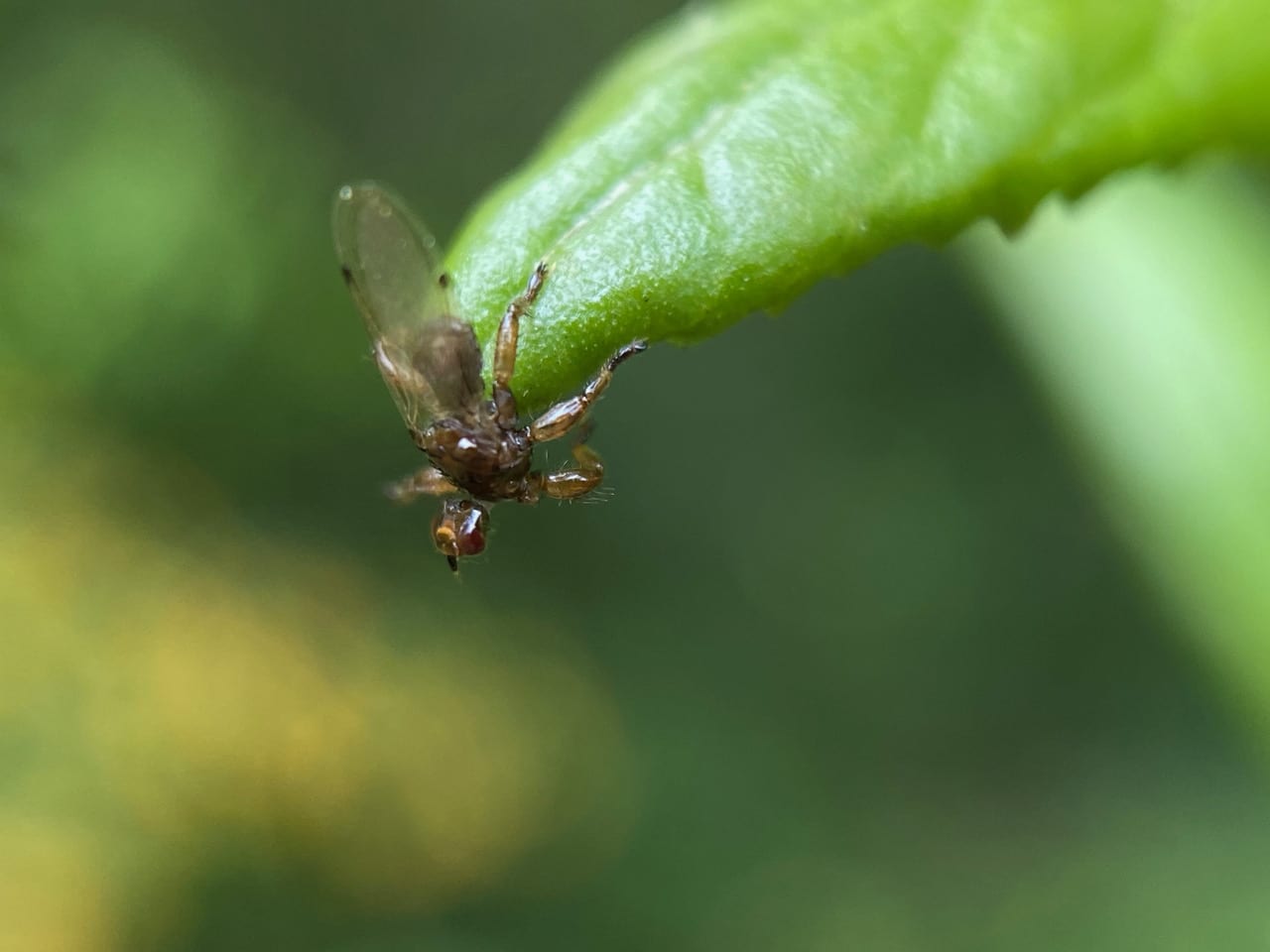
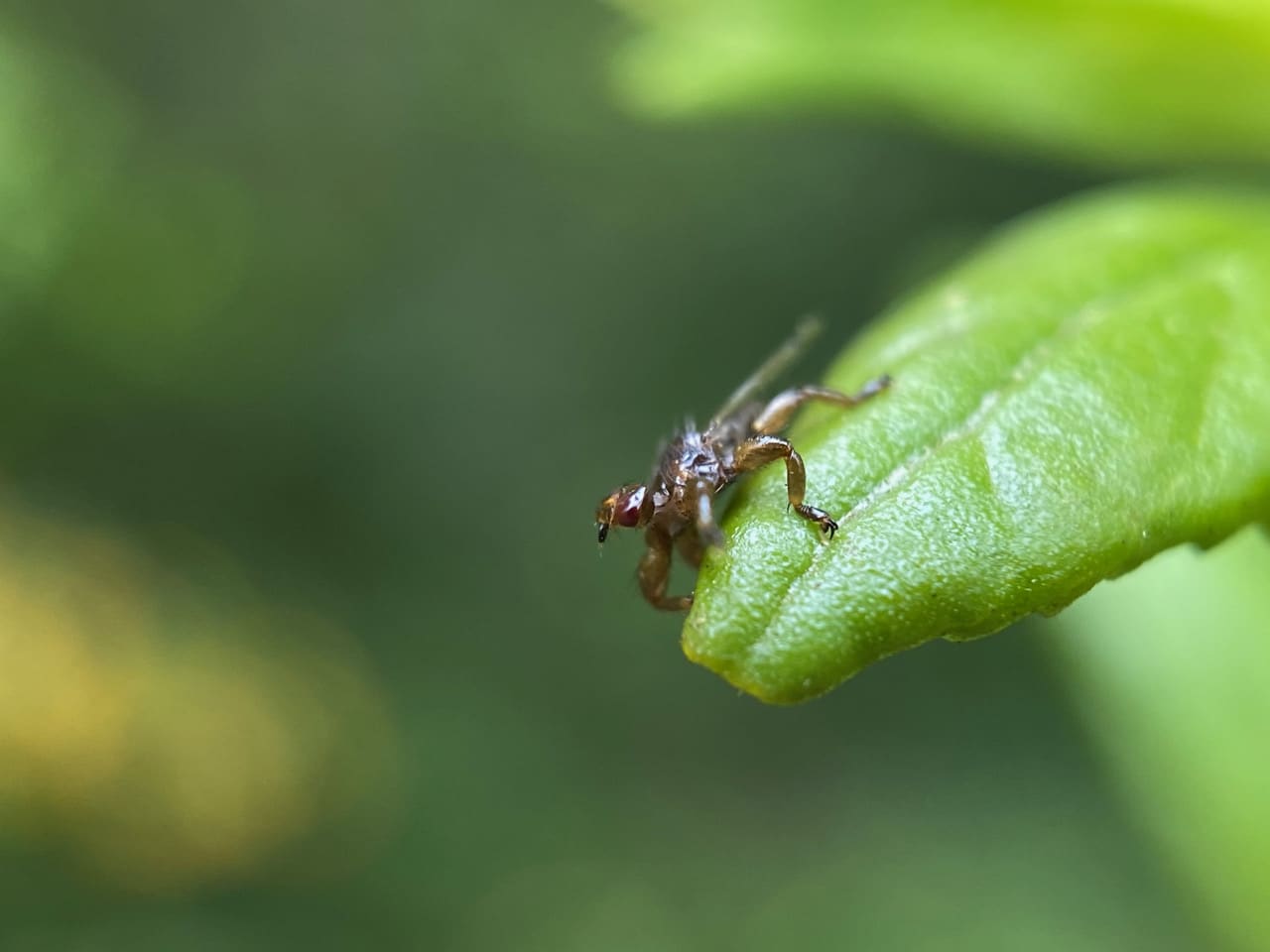


Instead of jumping away as I have expected, the planthopper simply runs away.
The Planthoppers have the first mechanical gear system ever observed in nature. The tiny bug uses mechanical gears on its joints to precisely synchronize the kicks of its hind legs as it jumps forward.
As members of the order Hemiptera (true bugs), Planthoppers have a piercing-sucking mouthpart that is used to extract plant sap. Here you can see the rostrum folded under the body when not in use.
The hind wings seem to be differently colored than the forewings – black bordered with white spots. The Planthopper does not fly away. I wonder if those tiny wings are capable of flight?
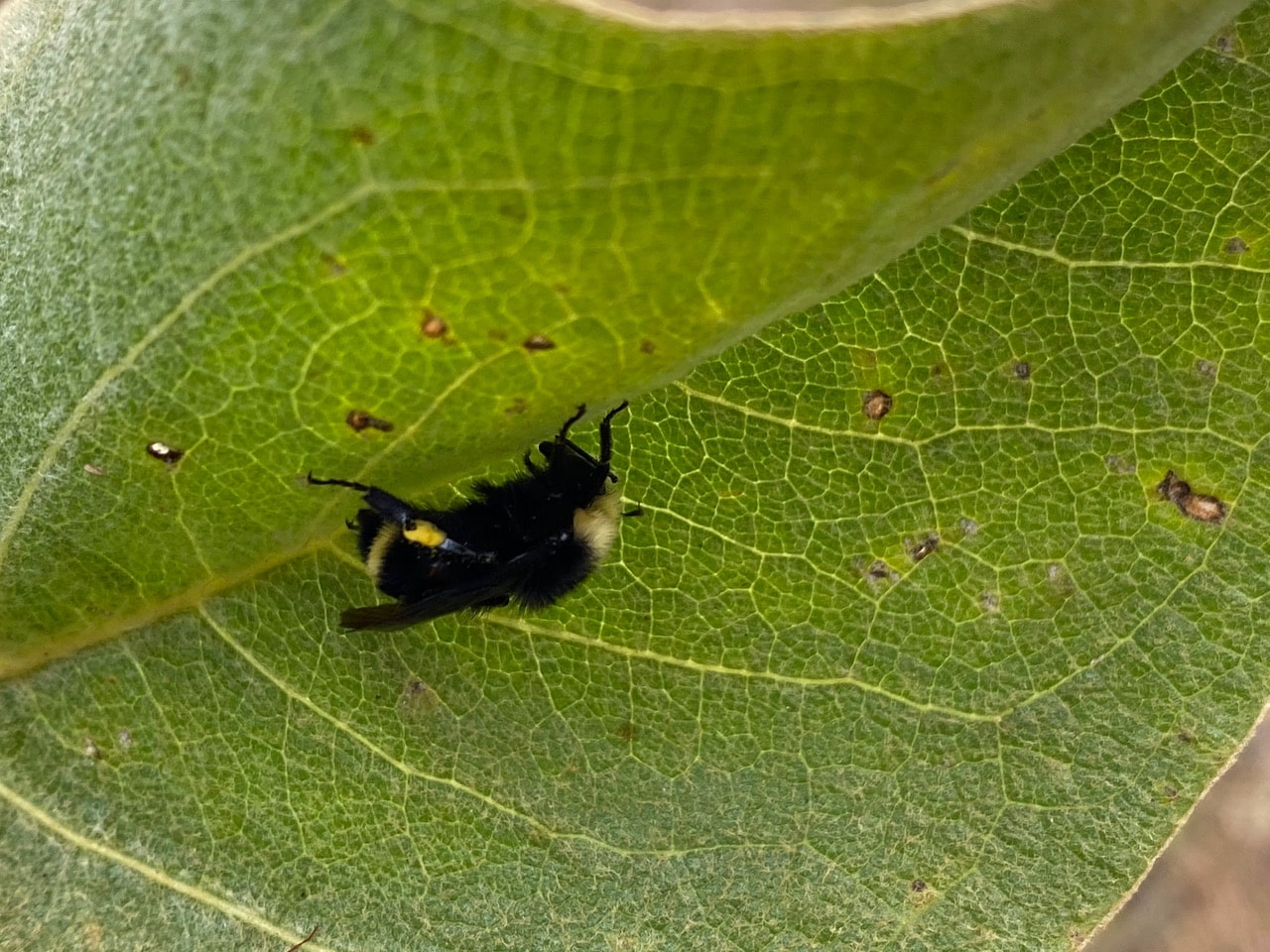
It is still foggy and cold, and the winds have picked up. Even the bumble bees are succumbing to the weather. This Yellow-faced Bumble Bee, Bombus vosnesenskii is taking a nap in the shelter of a Coyote Brush.
And this one has taken shelter under a leaf of Woolly Mule’s Ear, Wyethia helenioides.
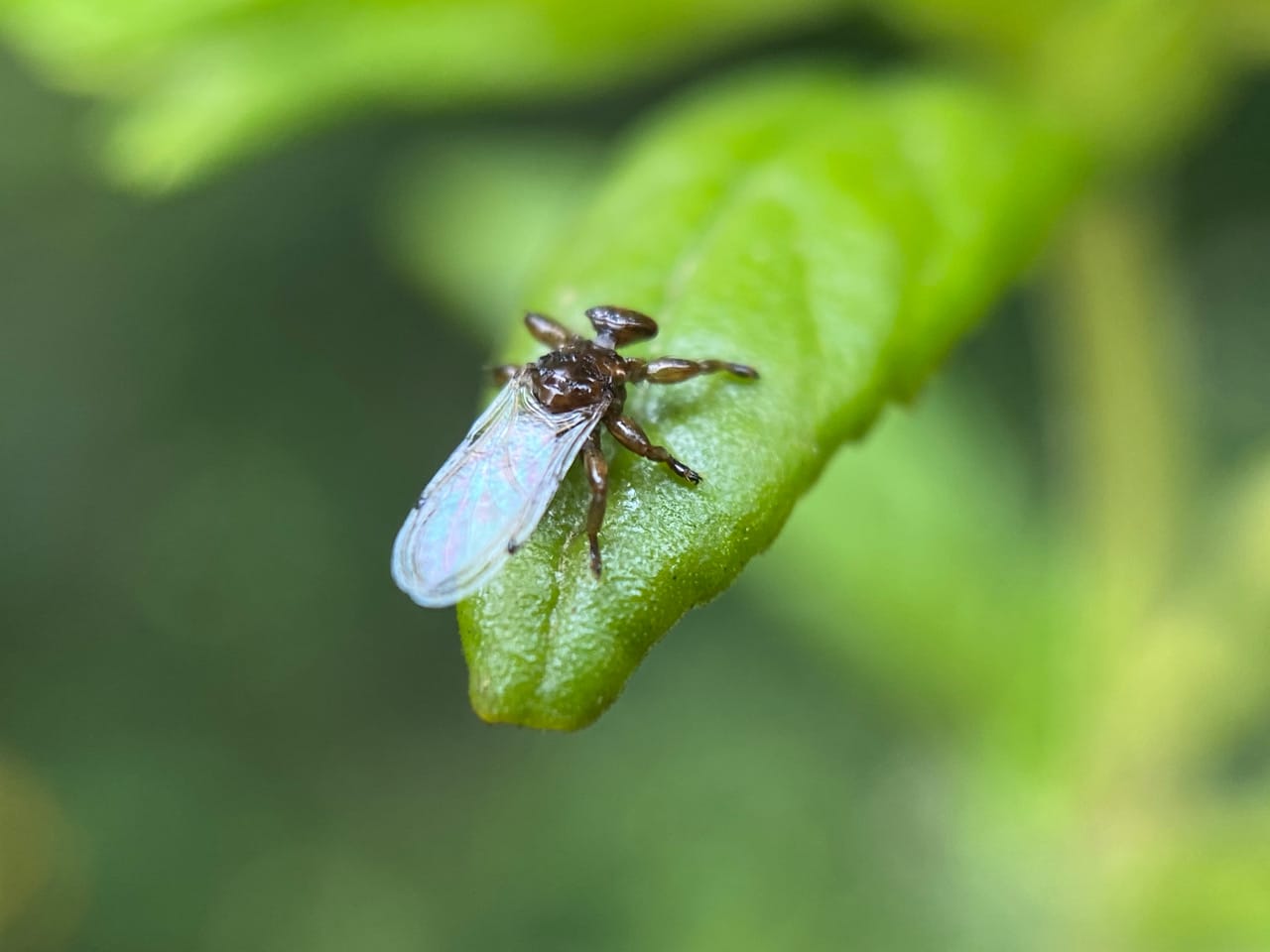
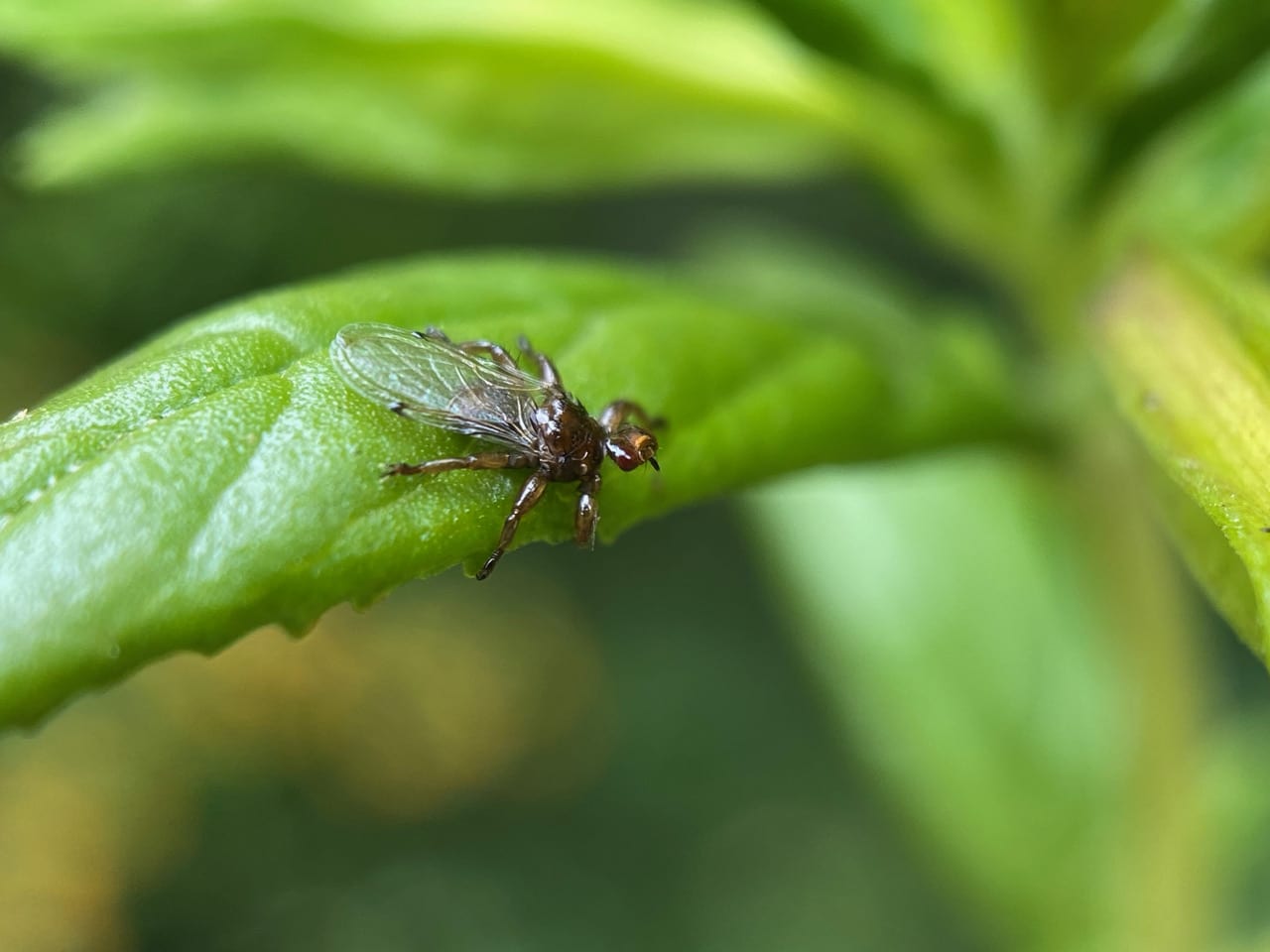
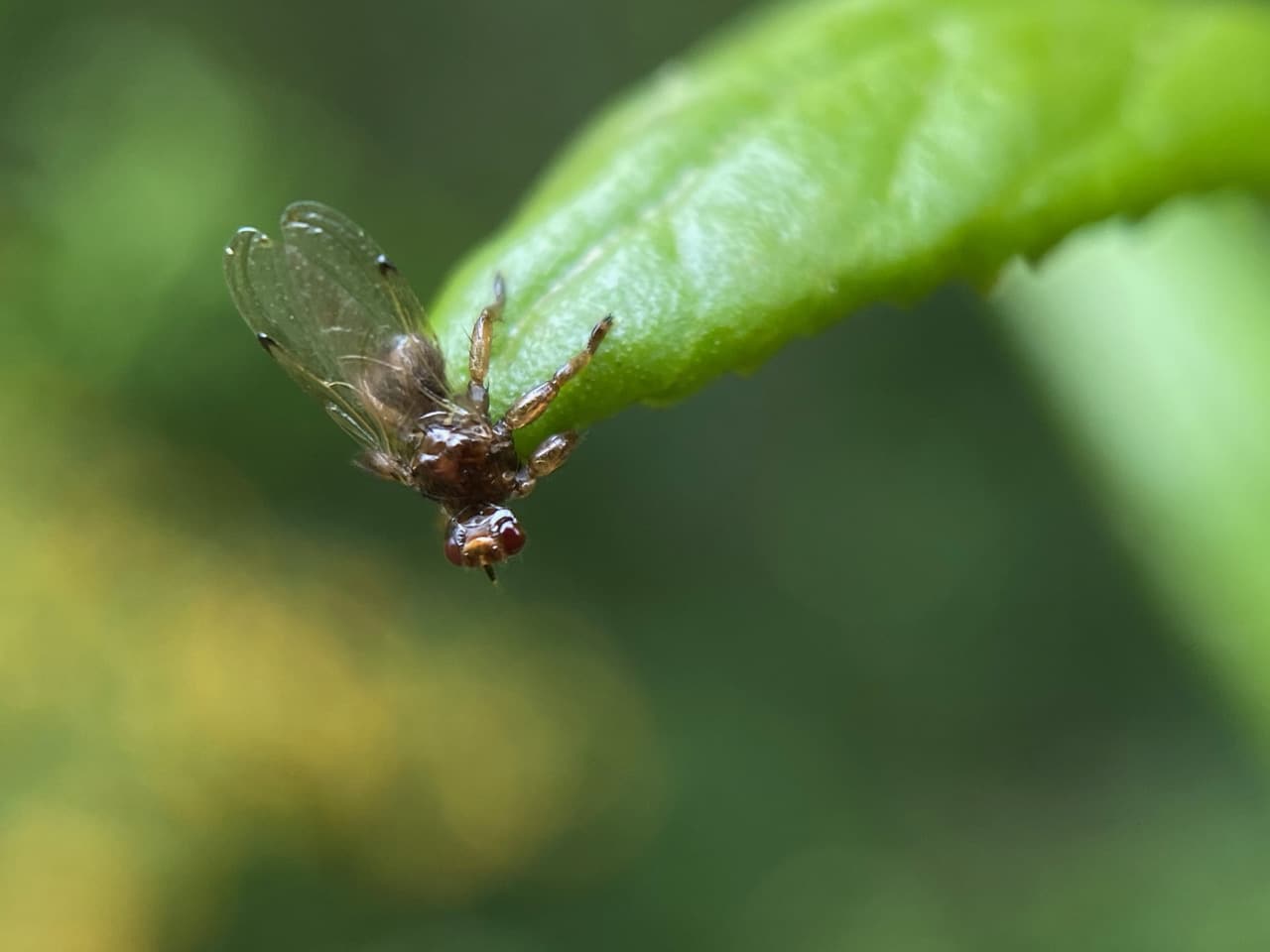
Wow, another weird encounter! Having seen this critter just days ago, I recognize it right away. It is a Western American Deer Ked, Lipoptena depressa (family Hippoboscidae). Its life history is even more bizarre than the way it looks.
Hippoboscidae, the louse flies or keds are obligate parasites of mammals and birds. The winged species can fly reasonably well, while others with vestigial or no wings are flightless and highly apomorphic. Most of the larval development takes place within the mother’s body, and pupation occurs almost immediately.
The Western American Deer Ked, Lipoptena depressa is a blood-feeding parasite of the mule deer, Odocoileus hemionus in the western US and Canada. The female fly produces a single larva at a time, retaining the larva internally until it is ready to pupate. The larva feeds on the secretions of a milk gland in the uterus of the female. After three larval instars, a white prepupa is deposited which immediately forms a hard dark puparium. The pupa is usually deposited where the deer slept overnight. When the pupa has completed its development, a winged adult emerges and flies in search of a suitable host, upon which the fly sheds its wings and is permanently associated with the same host.
While it looks uncomfortably like a tick at first glance, the way the Deer Ked holds its strange head reminds me of Wall-E, that adorable robot in the 2008 Pixar movie.
What is that thing that it wears on its head between the eyes like a head lamp?
The Deer Ked does not run away from me, but seems curious and eager to investigate. I wonder if it senses my body heat? Or my breath?
I am happy to know that Deer Keds do not feed on humans!
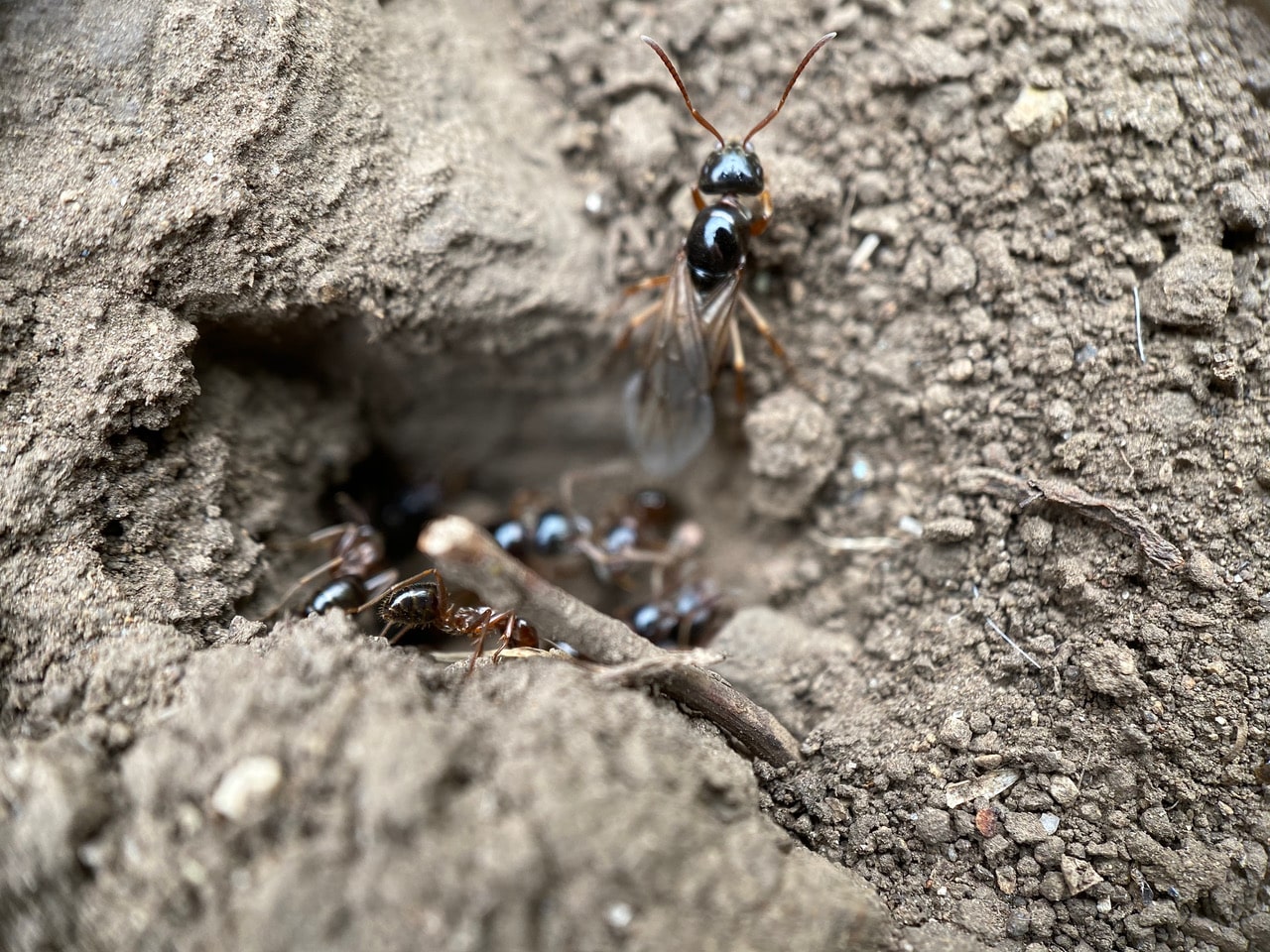
An excited group of Field Ants, Formica subpolita (family Formicidae) are gathered at the entrance of their nest at the edge of the trail. The small workers seem to be moving soil particles to clear or widen the path, while larger alates (winged reproductives) step out cautiously to test the air, waving their long antennae. Perhaps a nuptial flight is imminent?
Nuptial flight is an important phase in the reproduction of most ant, termite, and some bee species. A mature ant colony seasonally produces winged virgin queens and males, called alates. In what is known as the haplo-diploidy sex determination system, unfertilized eggs develop into males, while fertilized eggs usually develop into wingless, sterile workers, but may develop into virgin queens if the larvae receive special nutrition. Young queens and males stay in their parent colony until conditions are right for the nuptial flight. The flight requires warm, rain-free and relatively windless weather, often after some rain. Different colonies of the same species often use environmental cues to synchronize the release of the alates so that they can mate with individuals from other nests, thereby avoiding inbreeding. The sudden take off of huge numbers of the ants all at once also serves to momentarily overwhelm their predators (birds, lizards, etc.) to ensure that a few alates will survive to establish new colonies.
During the nuptial flight, each virgin queen usually mates with several males. The sperm is stored in a special organ in her abdomen, the spermatheca, and lasts throughout her lifetime. Once the alates have mated, the role of the males is over, and they soon die. The mated queens quickly chew off their own wings and begin looking for a suitable site in which to nest and set up a new colony. She digs herself an underground chamber and lays her first few eggs, which she rears to adulthood. After the first workers appear, the queen’s role in the colony typically becomes one of exclusive egg-laying.
A large alate with orange abdomen emerges momentarily to test the air…..
… but quickly retreats down the nest. This happens repeatedly, while the workers continue their work of moving dirt out to the periphery of the nest hole.
Here’s an alate that is all black. It seems to be more slender and smaller. I think it is a male alate, while the ones with the orange abdomen are the virgin queens. They are all waiting for the right conditions for their nuptial flight, emerging from the nest to test the air every now and then. I don’t think the nuptial flight will be happening today – it’s simply too windy today. Better luck tomorrow?