

Pollinator Post 7/9/23 (2)

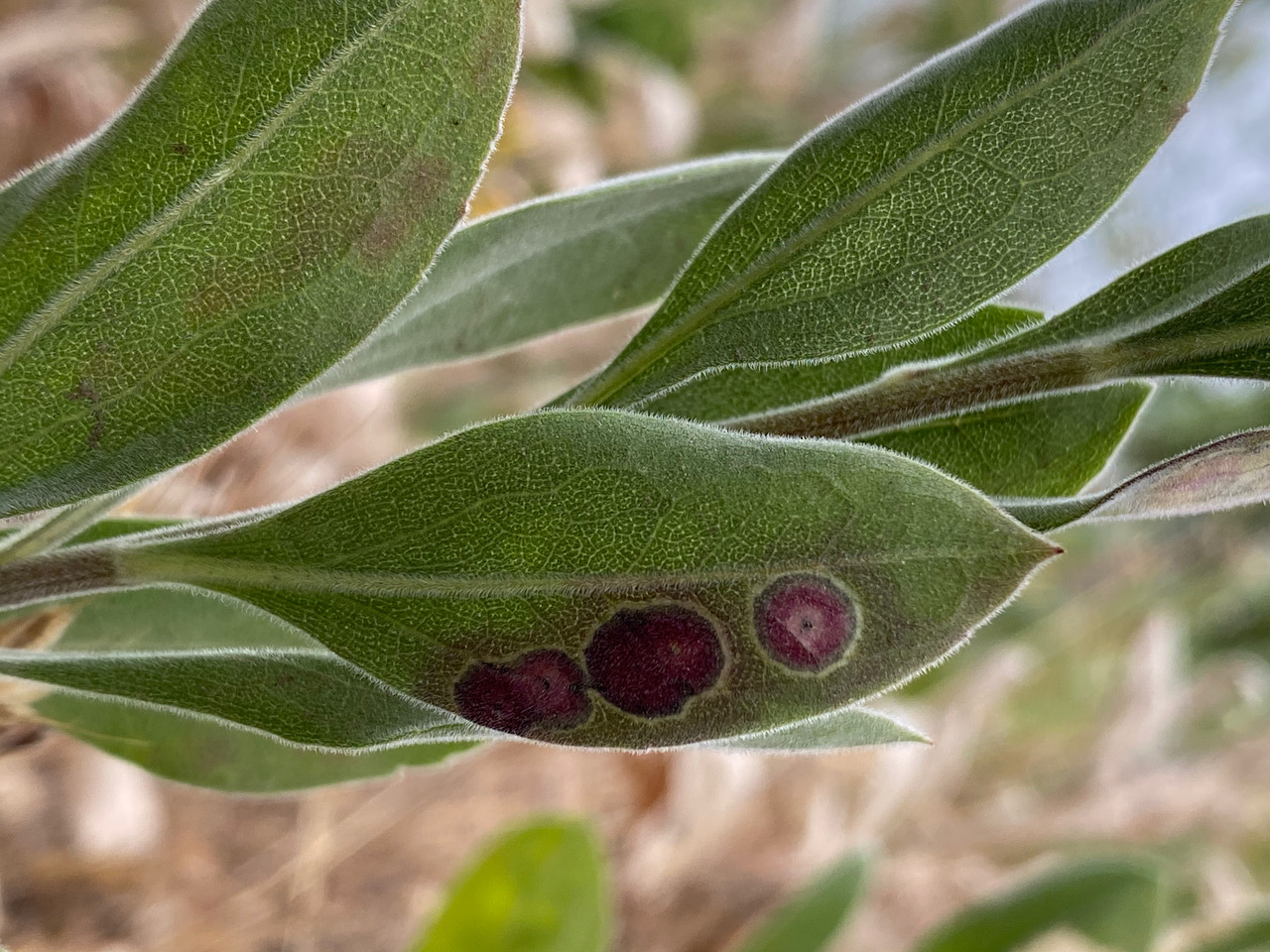
Close to Diablo Bend, I find these round, colorful blisters on some of the leaves of Calfornia Goldenrod, Solidago velutina ssp. californica. This is what is visible on the underside of the leaves.
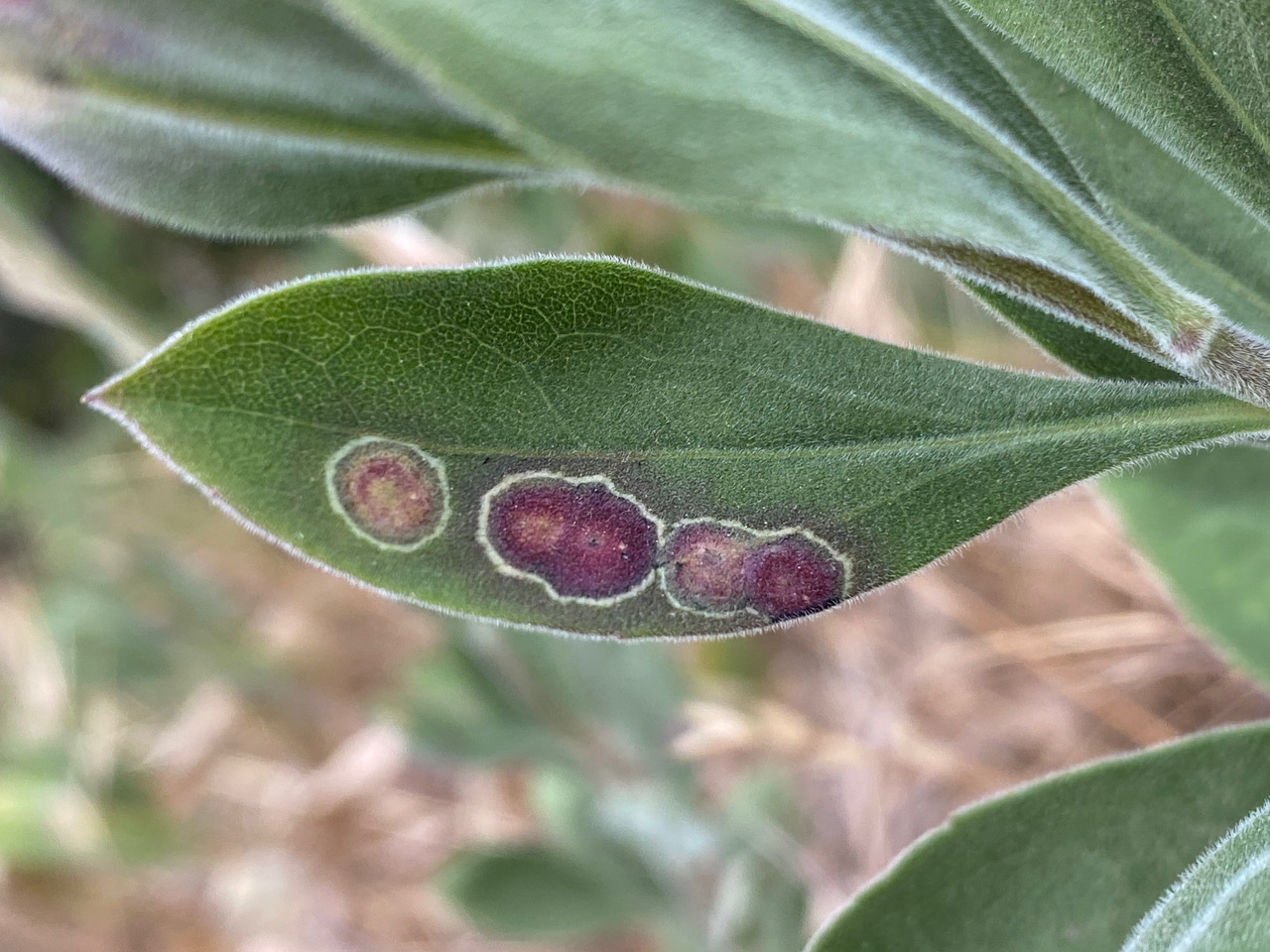
This is the upper surface of the leaf.
The blisters are actually a well-known goldenrod gall, induced by the gall midge Asteromyia carbonifera (family Cecidomyiidae). The midge induces flat, circular galls in the leaves of various goldenrods (Solidago). One to ten or more larvae develop in each gall. Color and size of the gall vary by host species and number of larvae. The galls contain a symbiotic fungus, Botryosphaeria dothidea, which the larva apparently does not eat. The fungus seems to confer some protection against parasitoid wasps. Females carry spores of the fungus.

It’s 10:20 am at Diablo Bend and the fog hasn’t lifted.
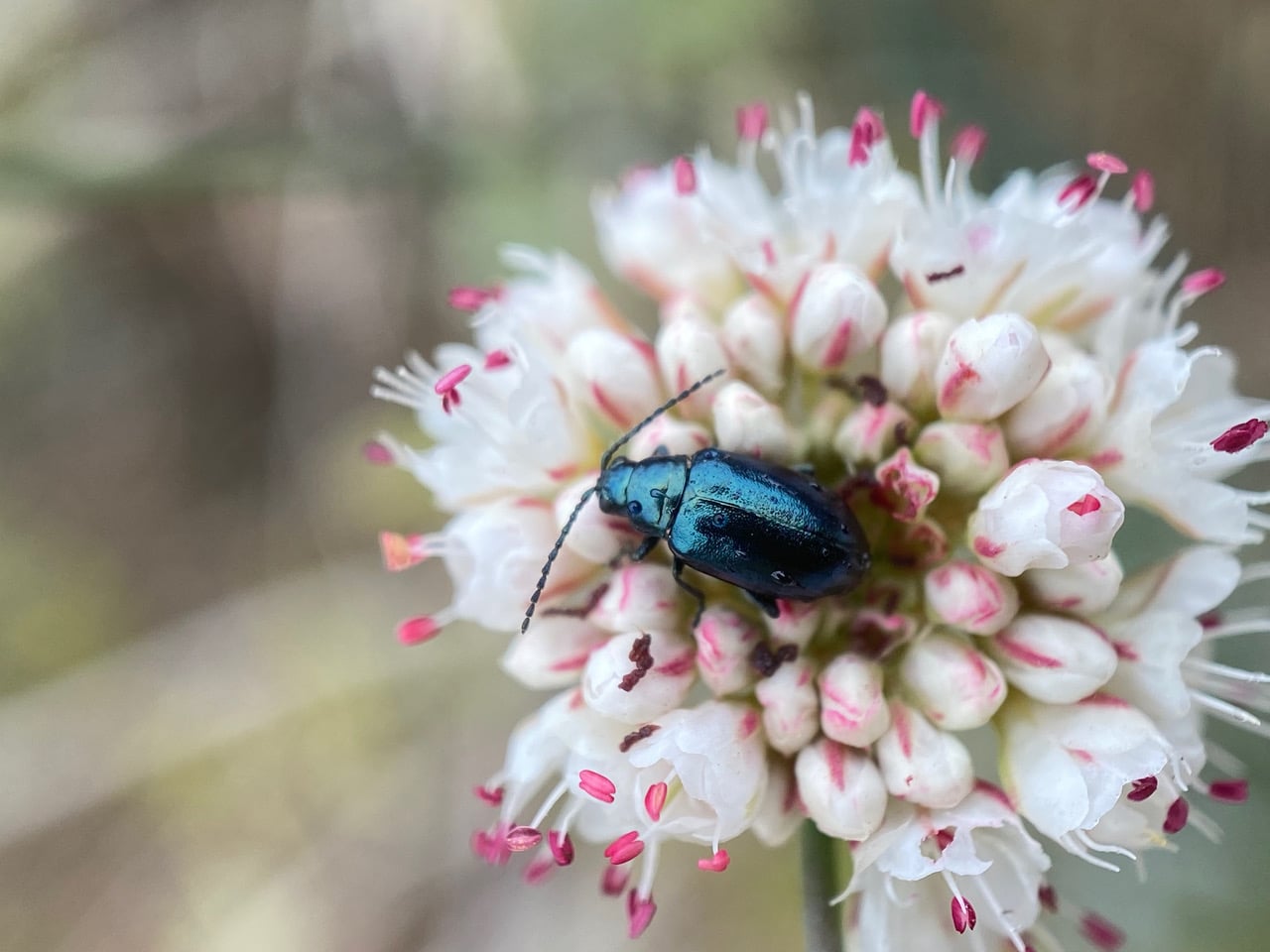
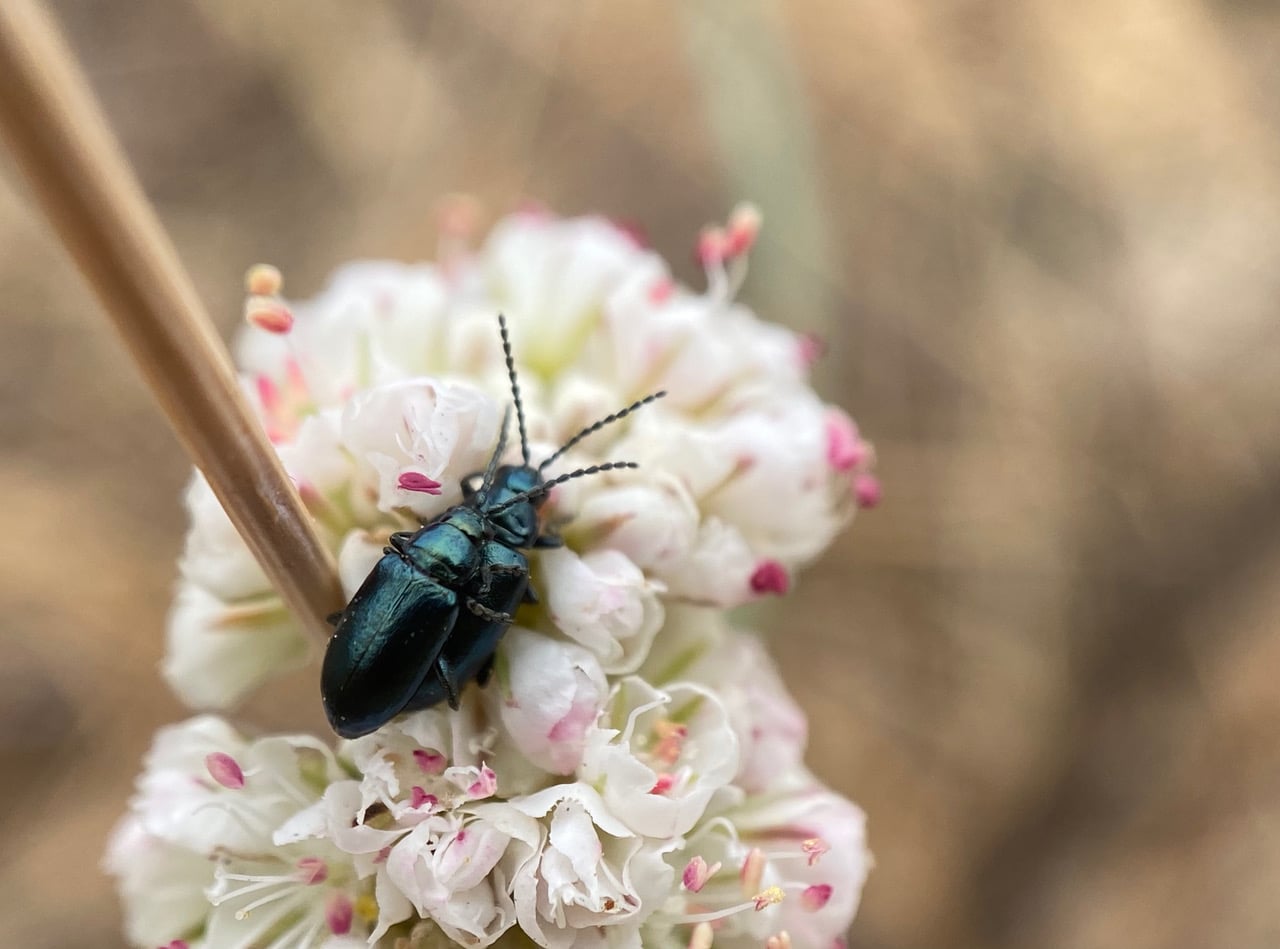
Water droplets have condensed on the Flea Beetle, Altica sp.(family Chrysomelidae) on an inflorescence of Nude Buckwheat, Eriogonun nudum.
Flea Beetles are in the largest subfamily (Alticinae) of the family Chrysomelidae, or Leaf Beetles. The name Altica is derived from the Greek word haltikos, meaning good jumpers. The beetles have strong hind legs allowing them to jump long distances like true fleas. Altica flea beetles are 3-9 mm in length, and females are typically larger then males. Most Altica beetles have hard outer wings elytra that are metallic blue to green in color that protect similarly colored metallic bodies that reflect purple and bronze colors and are elongate oval in shape. Antennae have 11 segments and are filiform (threadlike).
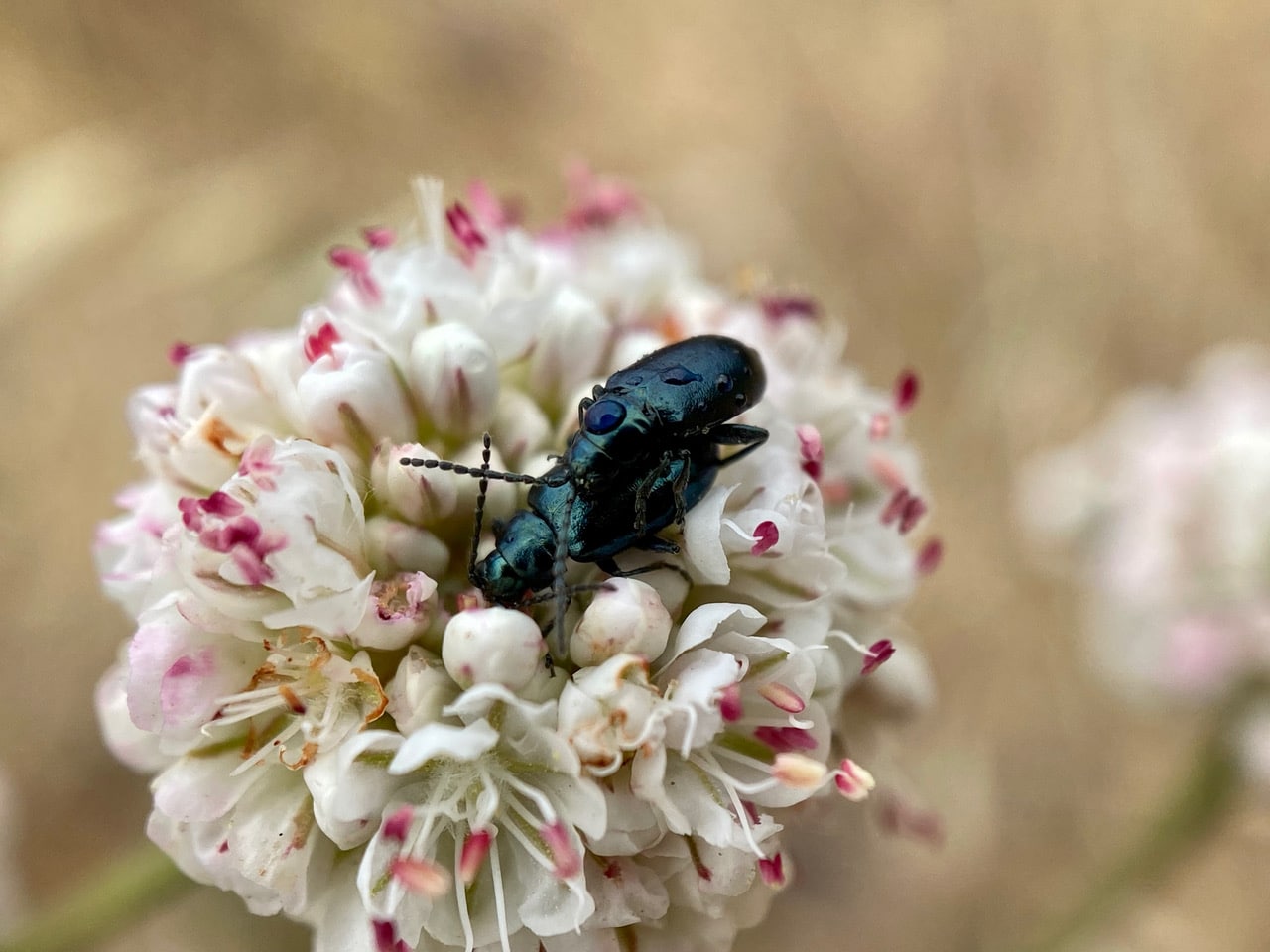
And on this mating pair.
 Here’s another pair of mating Flea Beetles. The fog does not seem to dampen their reproductive fervor.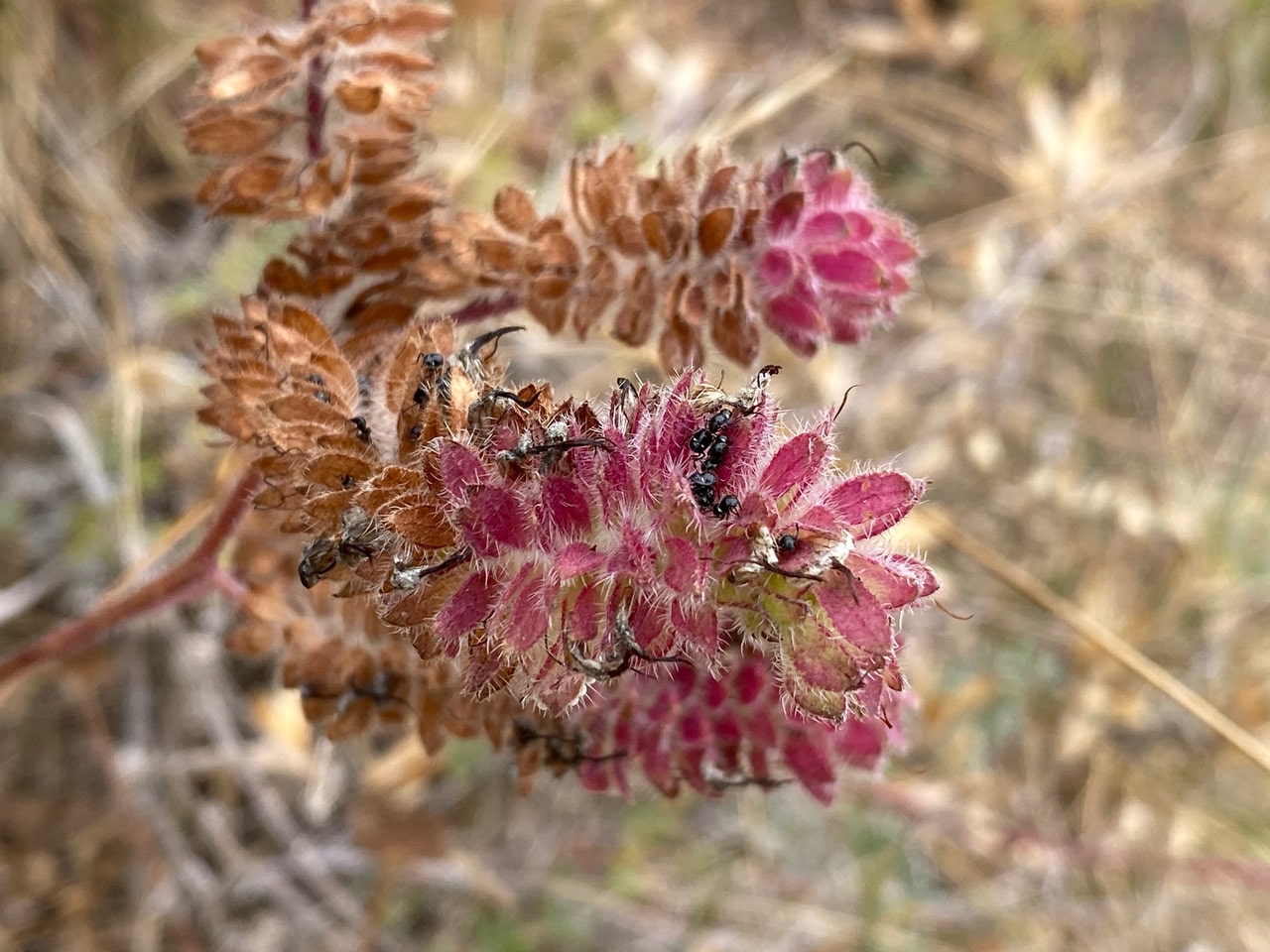
Some Phacelia seed heads have turned a beautiful pinkish-mauve color. What are those black spots on the bracts? They seem to be moving.

Seen through the macro lens, those black spots resolve into newly hatched nymphs of the Red-shouldered Stink Bug, Thyanta custator (family Pentatomidae).
Pentatomidae is a family of insects belonging to the order Hemiptera or “true bugs”. As hemipterans, the pentatomids have piercing-sucking mouthparts, and most are phytophagous, including several species that are severe pests on agricultural crops.
All Pentatomids have 5-segmented antennae, and they generally have a large triangular scutellum in the center of the back. The body shape of adults is generally shield-shaped when viewed from above. The common name of Stink Bug refers to their ability to release a pungent defensive spray when threatened, disturbed, or crushed.
The Red-shouldered Stink Bug is a generalist feeder and is reported to be a minor pest on a variety of crops including beans, corn, peaches, and wheat.
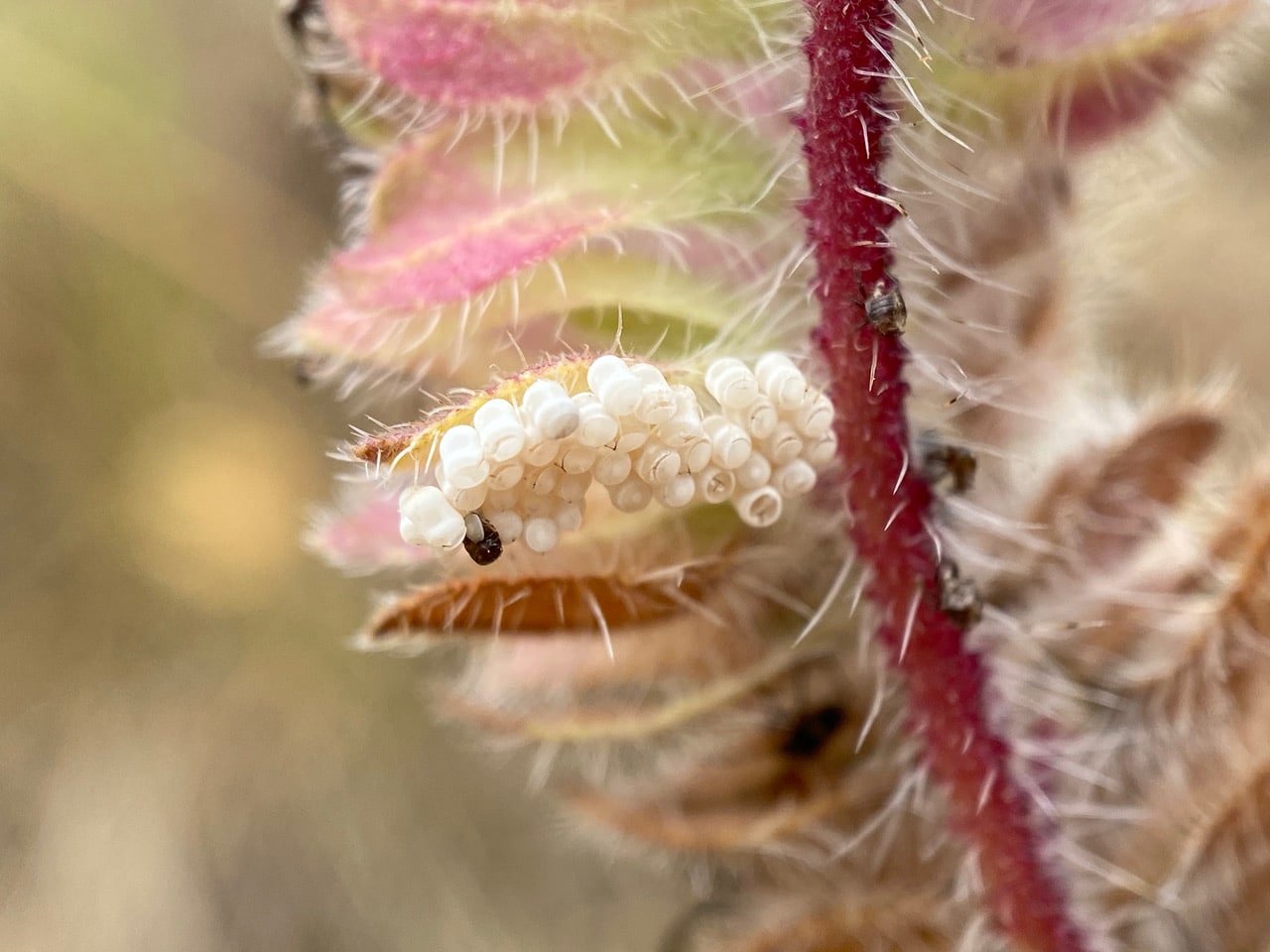
I lift the seed head and find the empty egg shells underneath. Stink Bug eggs are typically barrel-shaped with pop tops. The eggs are usually laid in a tight cluster, and the nymphs hatch out synchronously.
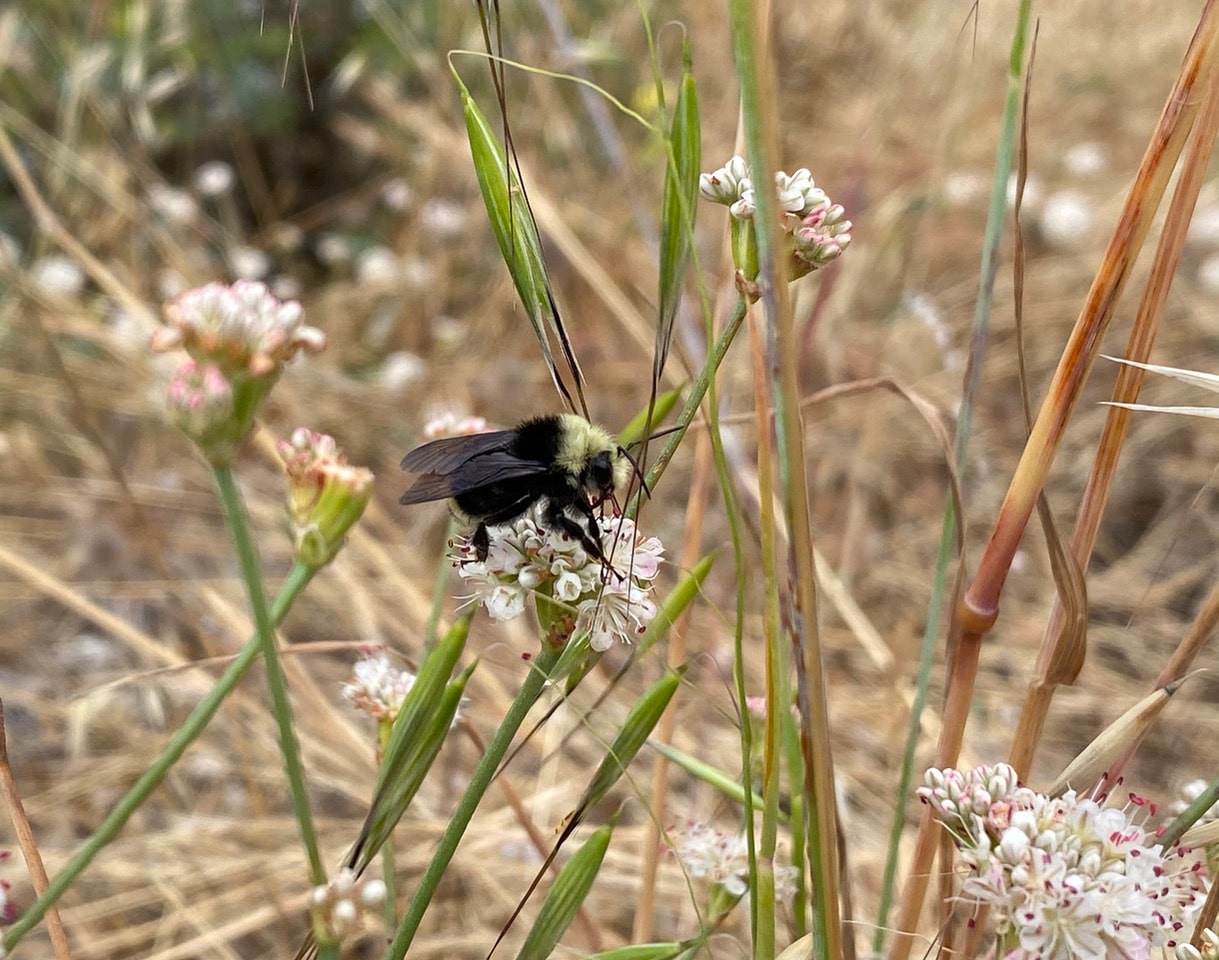
10:40 am. The first insect out flying at Diablo Bend is a cold-tolerant Yellow-faced Bumble Bee. It is foraging on the Nude Buckwheat flowers.
We have long been taught that insects are “cold blooded”, their body temperatures rising and falling with ambient temperature. As it turns out, Bumble Bees are capable of physiological thermoregulation. Their flight muscles can only function within a narrow temperature range, between 30 C and about 44 C. On cold days, bumble bees shiver their flight muscles to produce heat. The flight muscles are in the thorax, and this is the body segment that bumble bees warm up with their shivering. The circulatory system of a bumble bee is an open one, consisting of one blood vessel (the “heart”) running from the head to the abdomen.
As blood is pumped through the heart from the thorax into the abdomen, it passes through a narrow “waist” or petiole that connects the two body segments. In cold conditions, the warm thoracic blood is pumped in a slow, steady flow through the petiole. As it passes through the petiole, it passes cooler blood flowing outside of the heart from the abdomen back to the thorax. As the cooler blood passes the warmer blood, it picks up heat from the blood being pumped through the heart. Then it carries the heat back into the thorax. This elegant physiological mechanism is called countercurrent heat exchange. The mechanism allows the bumble bee’s flight muscles to be warmed up quickly, and it prevents unnecessary loss of heat from the abdomen when the bee is foraging on cold days.
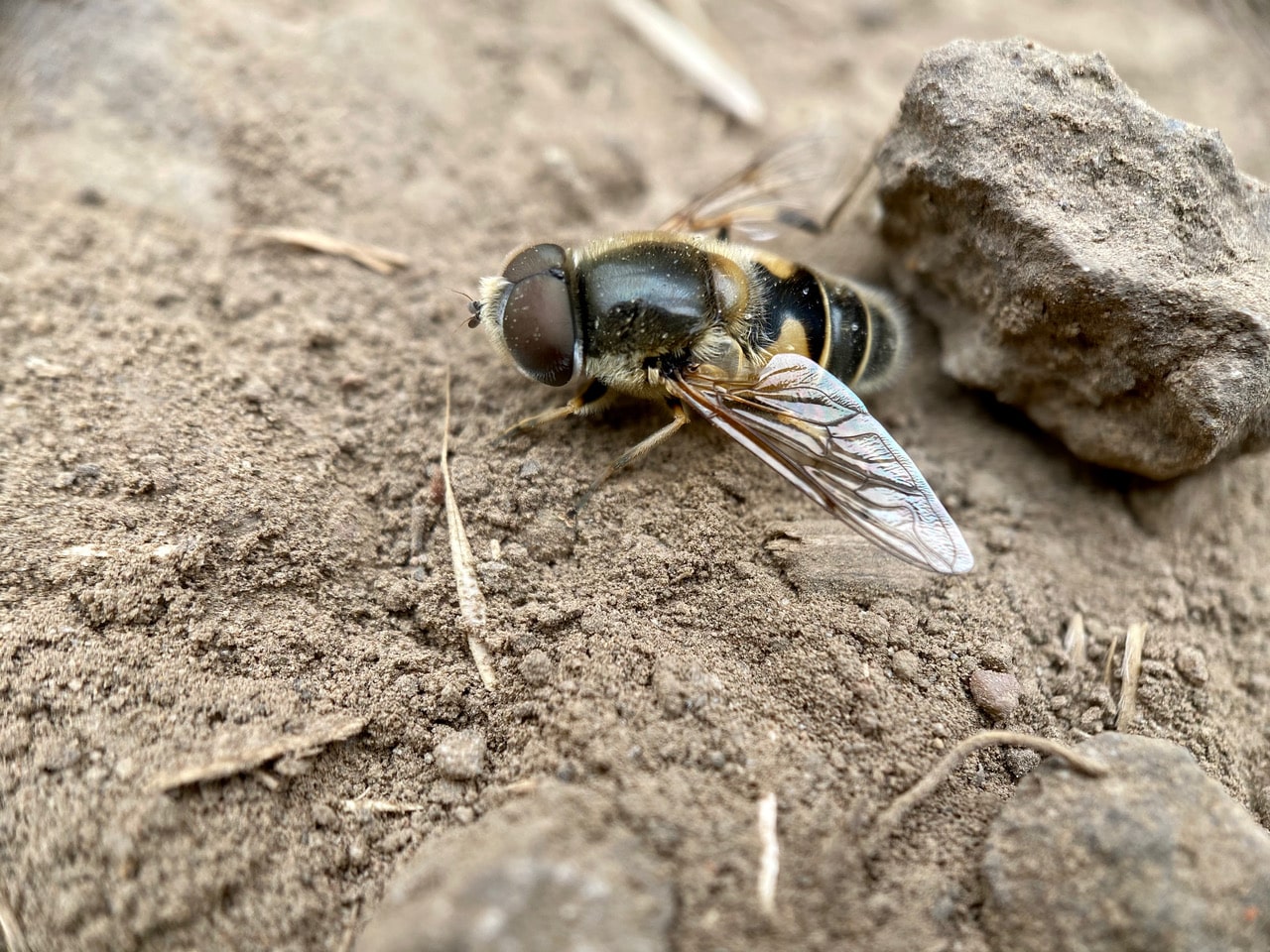
A Black-footed Drone Fly, Eristalis hirta (family Syrphidae) lands on the trail and remains there, motionless. It is rather unusual for this species of hover fly to land on the ground. It does not appear to be injured. Perhaps grounded by the cold and the wind?
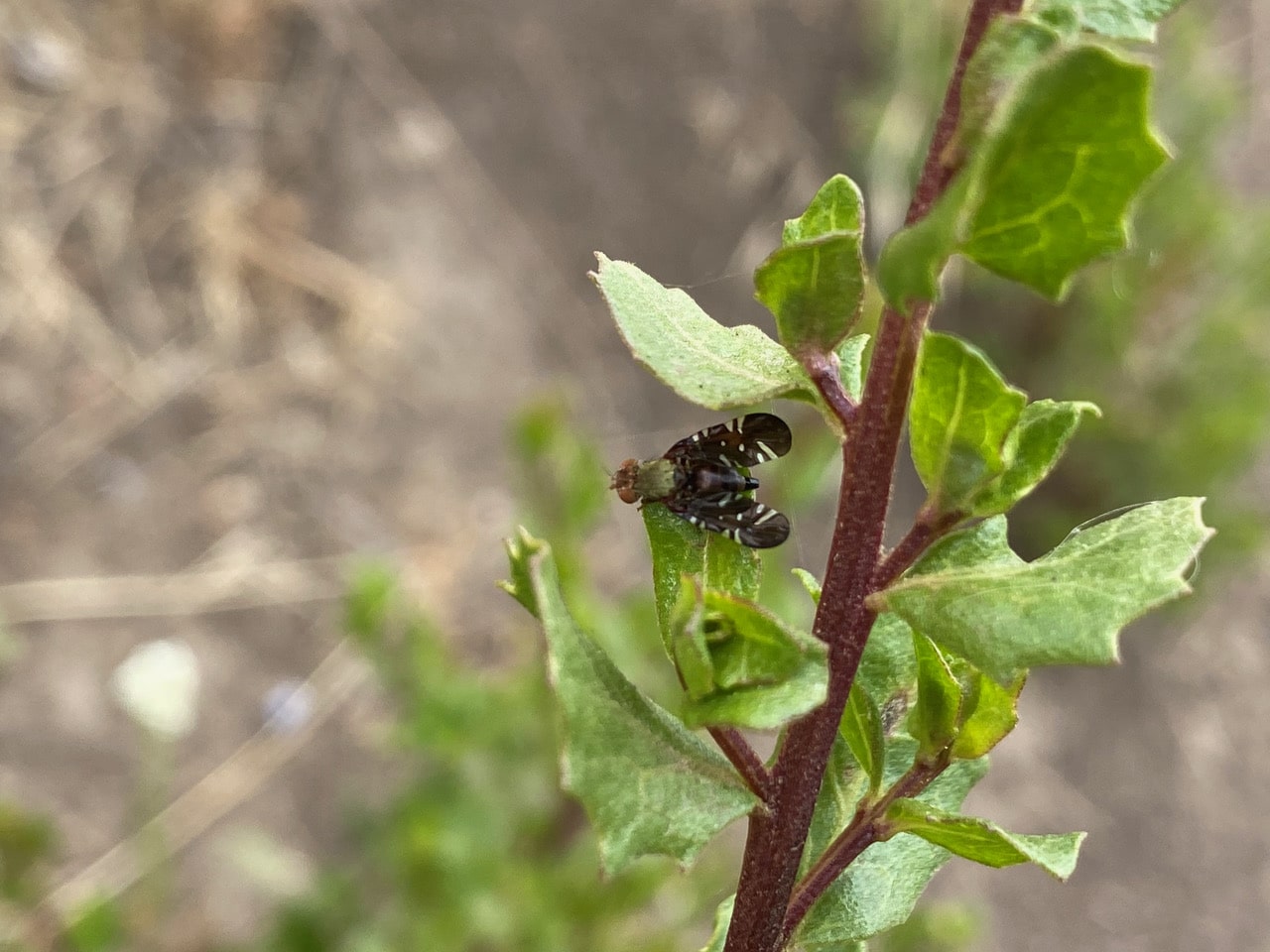
Ooh, that’s a Desert Broom Gallfly, Aciurina thoracica (family Tephritidae). It’s large dark picture wings are visible from a distance, especially if the fly is waving them. This species of fruit flies is known to induce galls on Baccharis sarothroides in southern California. I think the flies also lay eggs on our Coyote Brush, Baccharis pilularis.
 The Fruit Fly is female, as evidenced by the oviscape at the tip of her abdomen. I can get really close to the insect, as she is not moving around much today, probably because of the cold. What an interesting head with a sunken space between the eyes bordered by bristles.
  Some Dance Flies (family Empididae) are still hanging on the petals of the Soap Plant flowers that have not fully closed.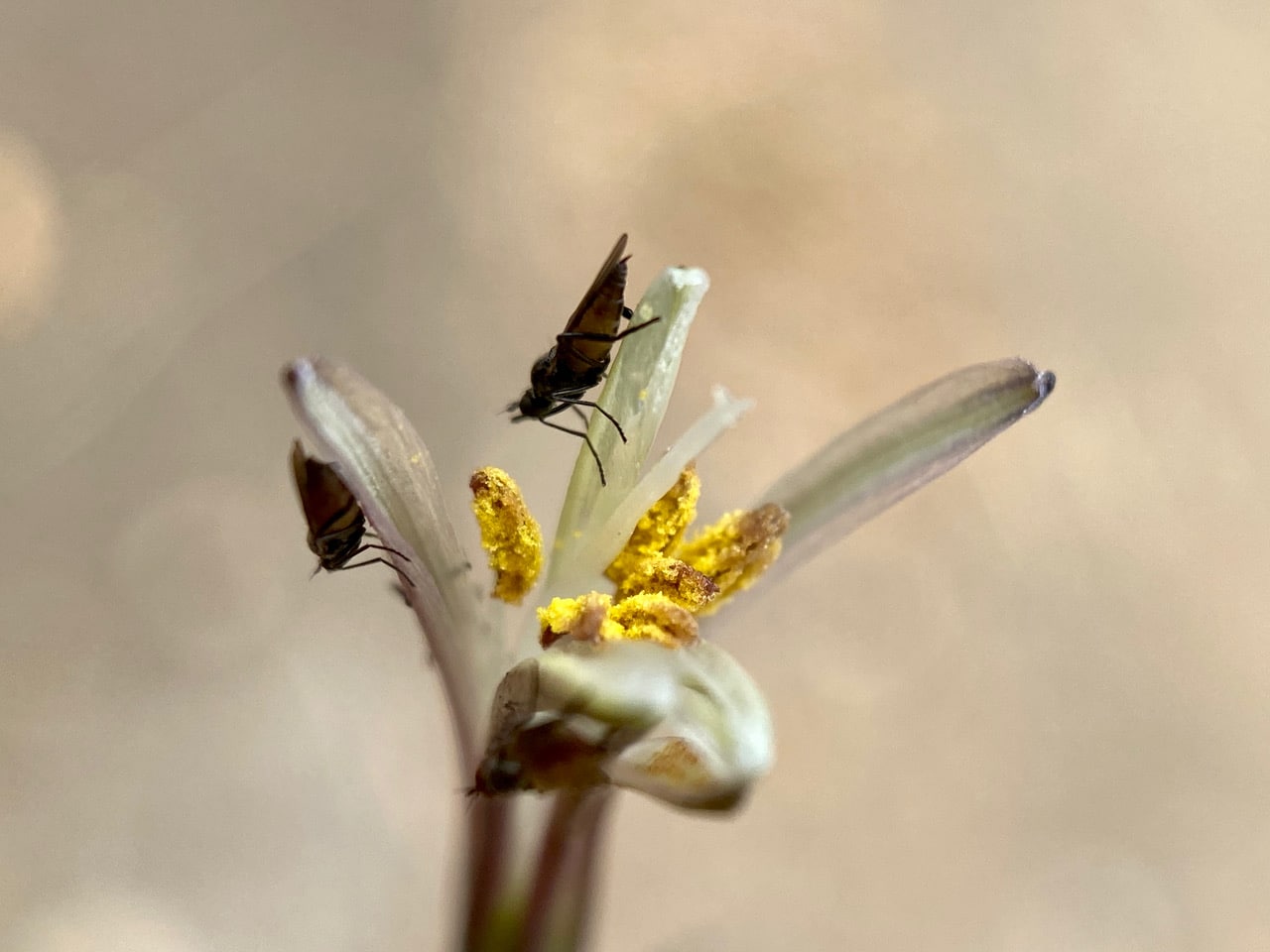
The yellow pollen on the anthers looked that they have been thoroughly pecked over through the night by the Dance Flies. It must have been a busy night for the Soap Plant.
Soap Plant, Chlorogalum pomeridianum is a perennial that grows from a bulb. The plant is easily recognized by its linear, wavy-edged leaves. The generic name Chlorogalum means “green milk”, referring to the green juice exuded by a broken leaf. The specific epithet pomeridianum, or “past mid-day”, is the Latin phrase which gave rise to our abbreviation “p.m.” This refers to the plant’s trait of opening its flowers late in the day.
The white star-like flowers have a very short life – in the late afternoon one row of buds opens, starting from the bottom of the long stalk. Each flower remains open through the night, but twists closed (the wilted tepals twist around the fertilized ovary) by the morning and never opens again.
The flowers are pollinated during the afternoon by large bees (honey bees, carpenter bees, and bumble bees), and, after dark, by sphingid moths.
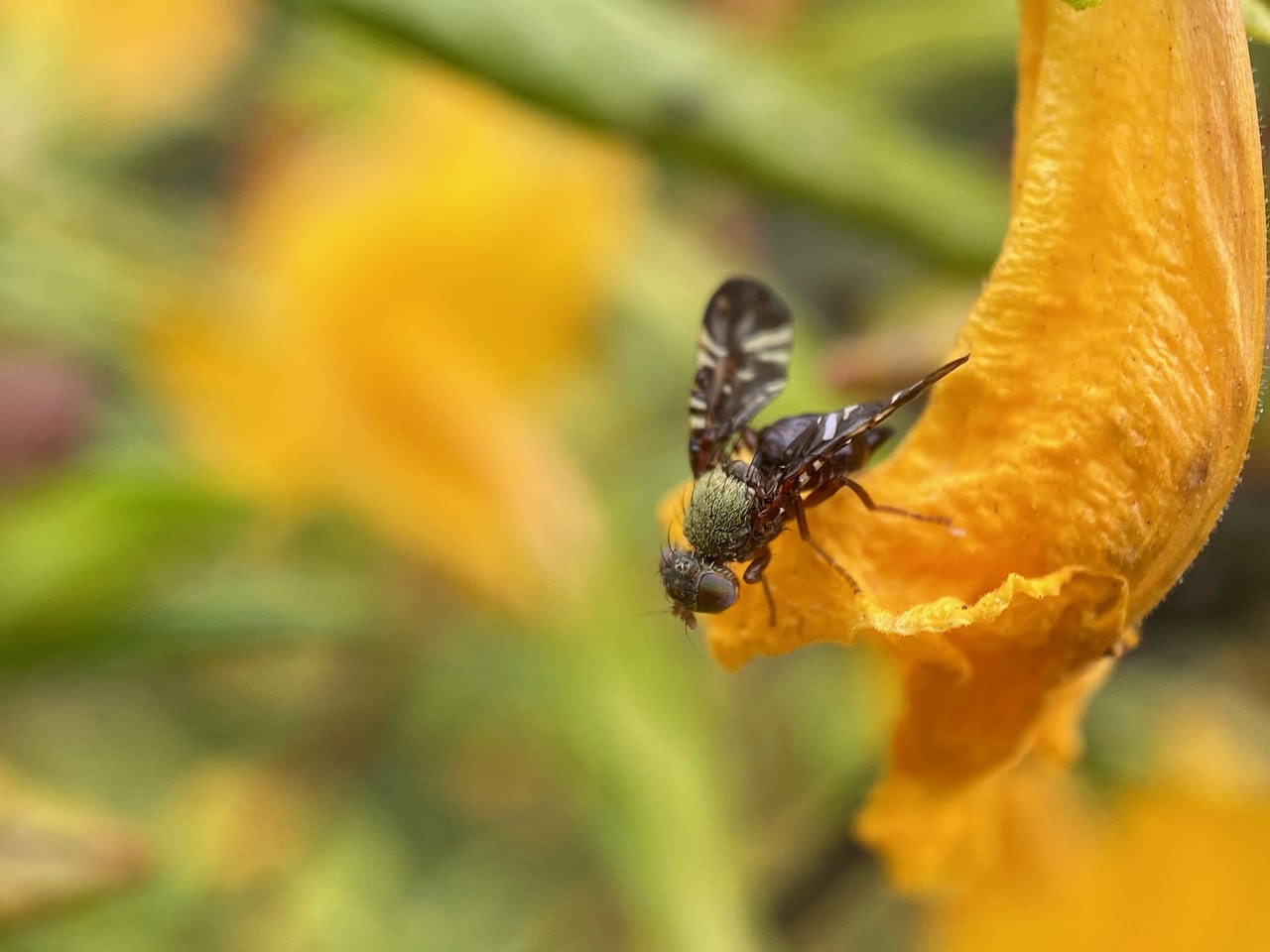
A female Desert Broom Gallfly, Aciurina thoracica (family Tephritidae) is perched on a wilted flower of Sticky Monkeyflower.
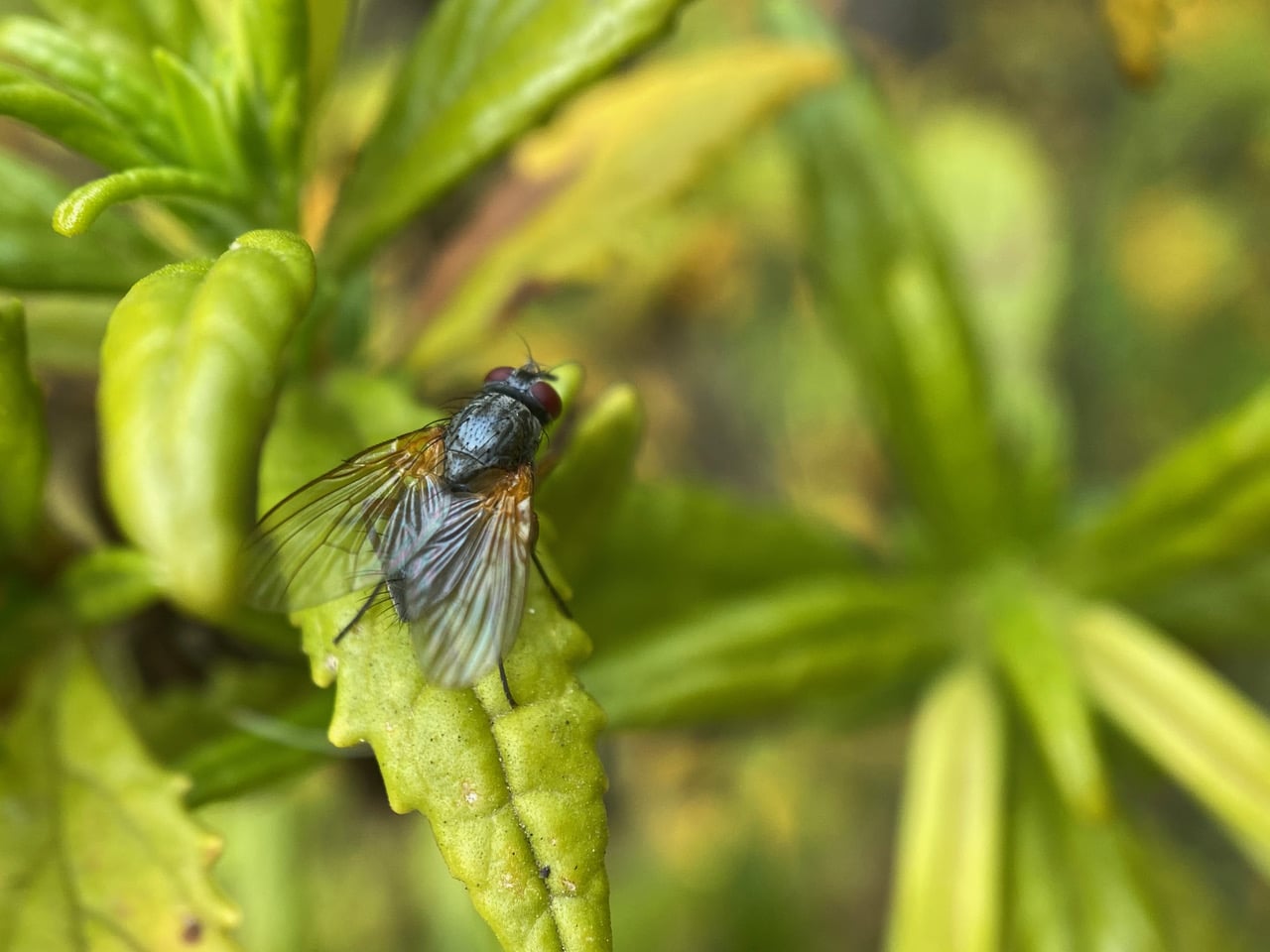
Here’s a fly that is frequently found on Sticky Monkeyflower. It has never been identified by iNaturalist.

The unidentified fly has a pair of orange calypters under its wings.
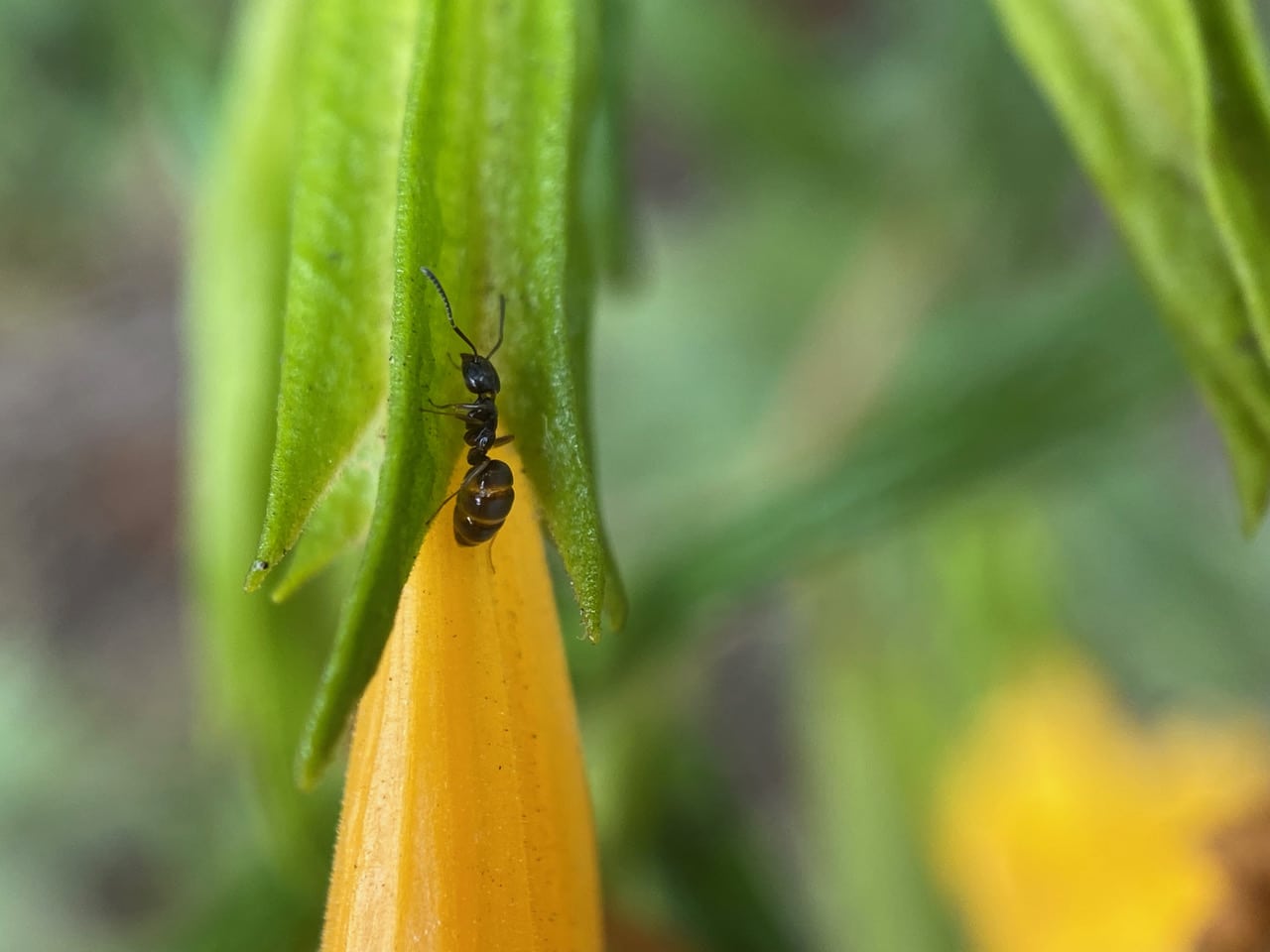
An Odorous House Ant, Tapinoma sessile (family Formicidae) is exploring the outside of a Sticky Monkeyflower.
The ant is native to North America, ranging from southern Canada to northern Mexico. The species is found in a vast diversity of habitats, including within houses. The ants mainly feed on floral nectar and other sugary food. They also forage for honeydew produced by aphids and scale insects that they guard and tend.
Odorous House Ants are small ants, the workers measuring 2-3 mm. As in all members of the subfamily Dolichoderinae (odorous ants), this species does not possess a sting, instead relying on the chemical defense compounds produced from the anal gland. Such compounds are responsible for the smell given off by the ants when crushed or disturbed.
T. sessile colonies are polydomous (consist of multiple nests) and polygynous (contain multiple reproductive queens). The species practices seasonal polydomy – the colony overwinters in a single nest, and forms multiple nests during spring and summer when resources are more abundant and spread out.
The Odorous House Ants are rather docile, with little propensity for attack, preferring to use chemical secretions instead of biting. For this reason they are vulnerable to the invasion of the aggressive Argentine Ants, Linepithema humile.
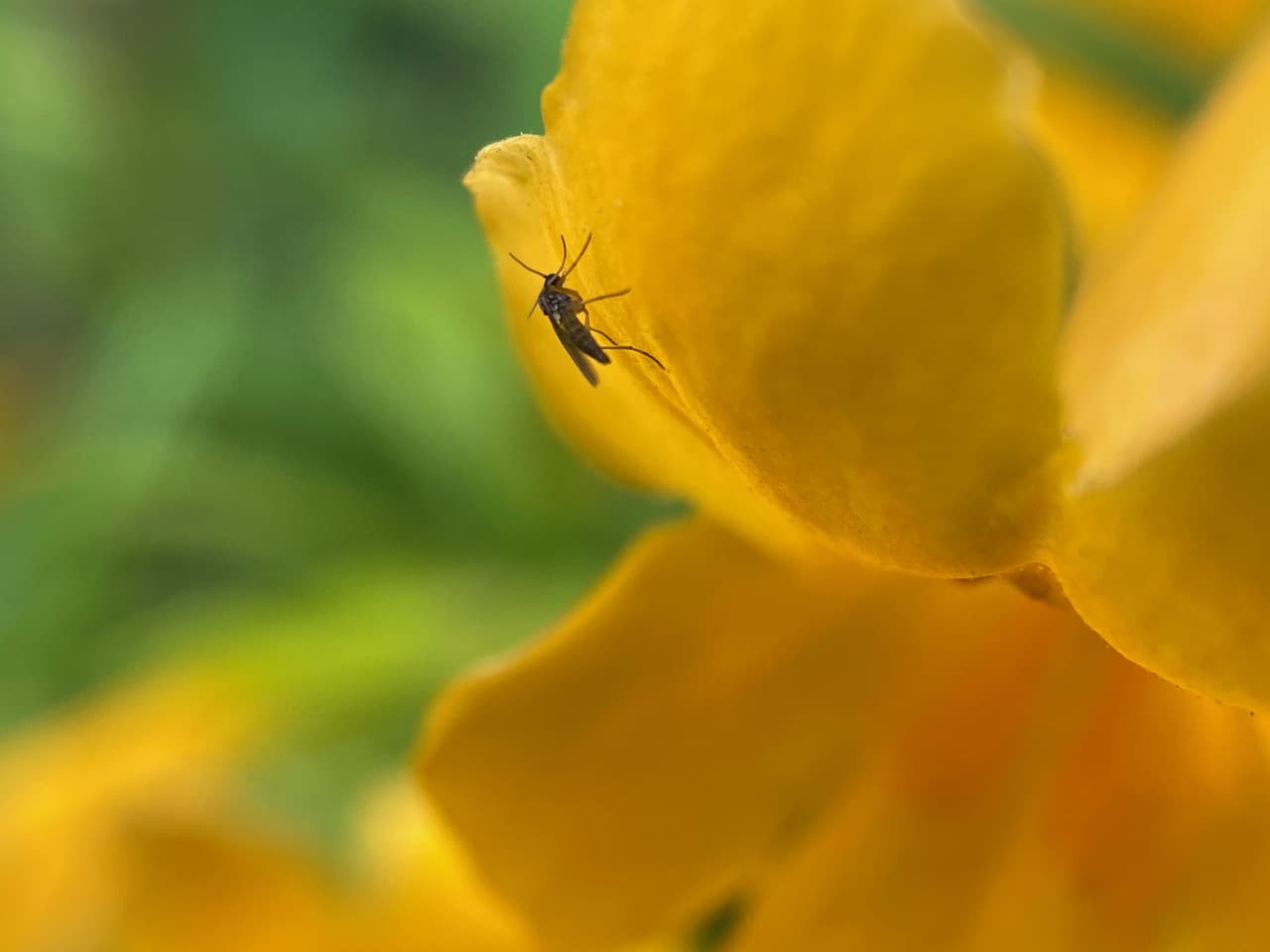
A Fungus Gnat (family Mycetophilidae) lands on the upper lip of a Sticky Monkeyflower.
The Mycetophilidae are a family of small flies, often known by their common name of Fungus Gnats. They are generally found in the damp habitats favored by their host fungi and sometimes form dense swarms. The delicate-looking flies are similar in appearance to mosquitoes. Adults have slender legs with segmented antennae that are longer than their head. Adult fungus gnats do not damage plants or bite people. Larvae, however, when present in larger numbers, can damage roots and stunt plant growth. Females lay tiny eggs in soil or moist organic debris. Most of the fungus gnat’s life is spent as a larva and pupa in organic matter or soil. There may be many overlapping generations each year. They are most common during winter and spring in California when water is more available and cooler temperatures prevail.
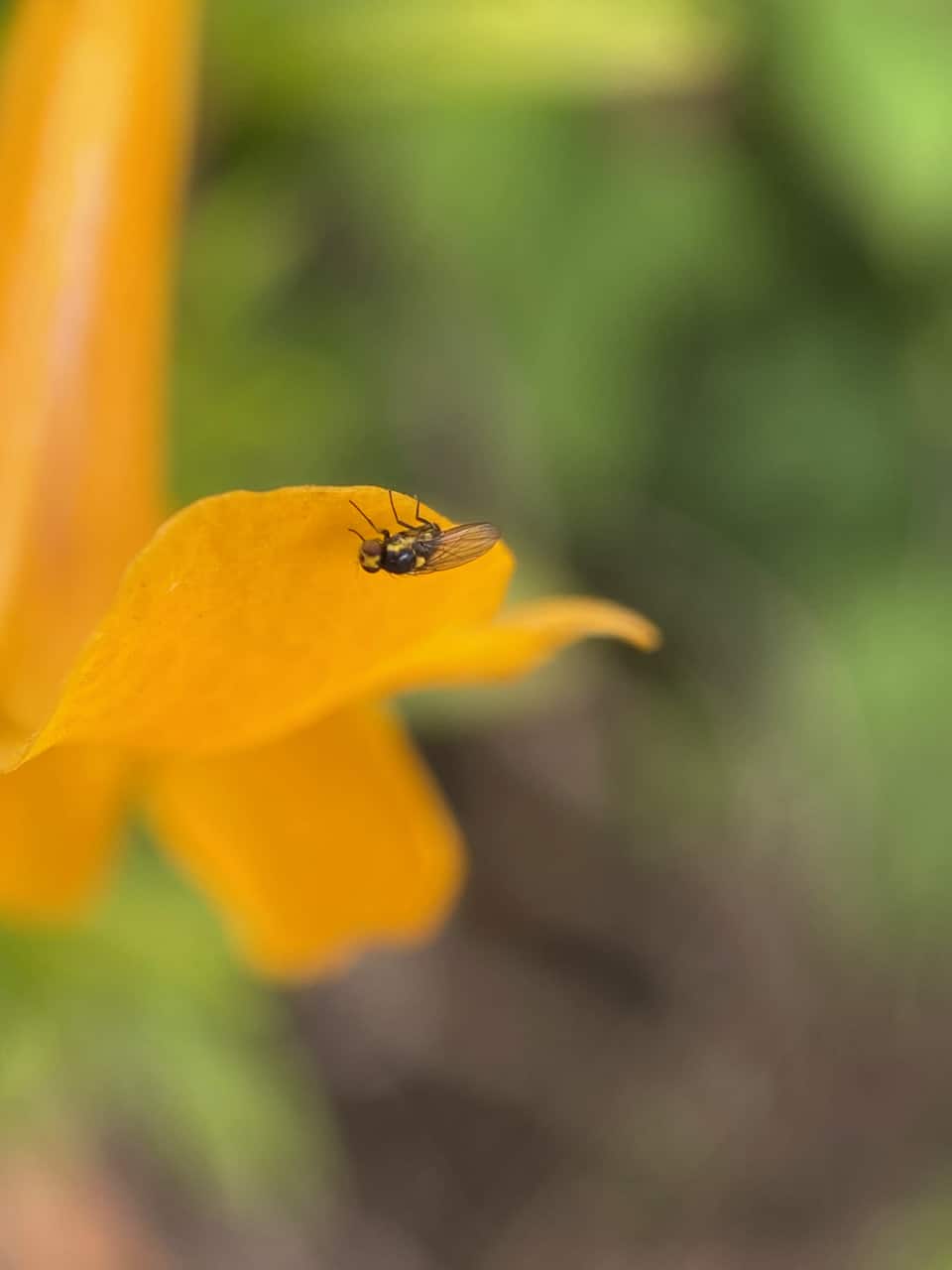
A speck of an insect, it is still recognizable as a fly under the macro lens. For this size, I suspect a leaf miner. A Diptera expert on iNaturalist has confirmed my suspicion – the tiny fly is indeed a Leaf-miner Fly (family Agromyzidae, subfamily Phytomyzinae).
The Agromyzidae are a family commonly referred to as the Leaf-miner Flies, for the feeding habits of their larvae, most of which are leaf miners on various plants. They are small flies, most species in the range of 2-3 mm. Agromyzidae larvae are phytophagous, feeding as leaf miners, less frequently as stem miners or stem borers. A few live on developing seeds, or produce galls. There is a high degree of host specificity. A number of species attack plants of agricultural or ornamental value, so are considered pests. The shape of the mine is often characteristic of the species and therefore useful for identification. Adults occur in a variety of habitats, depending on the larval host plants.