

Pollinator Post 7/9/23 (1)
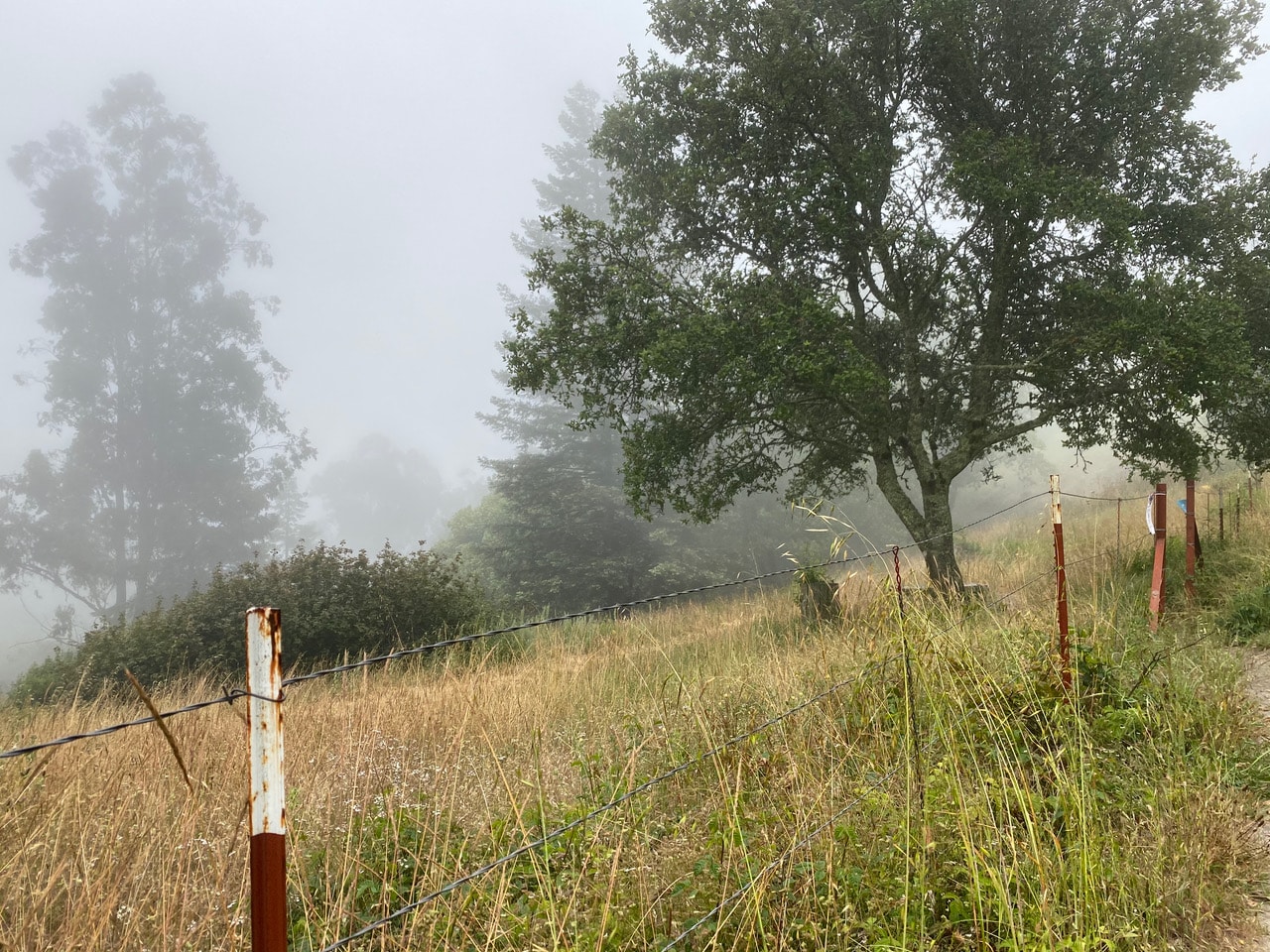
I arrive at Siesta Gate at 9 am to find the garden still socked in with fog. Maybe I should’ve stayed in bed?




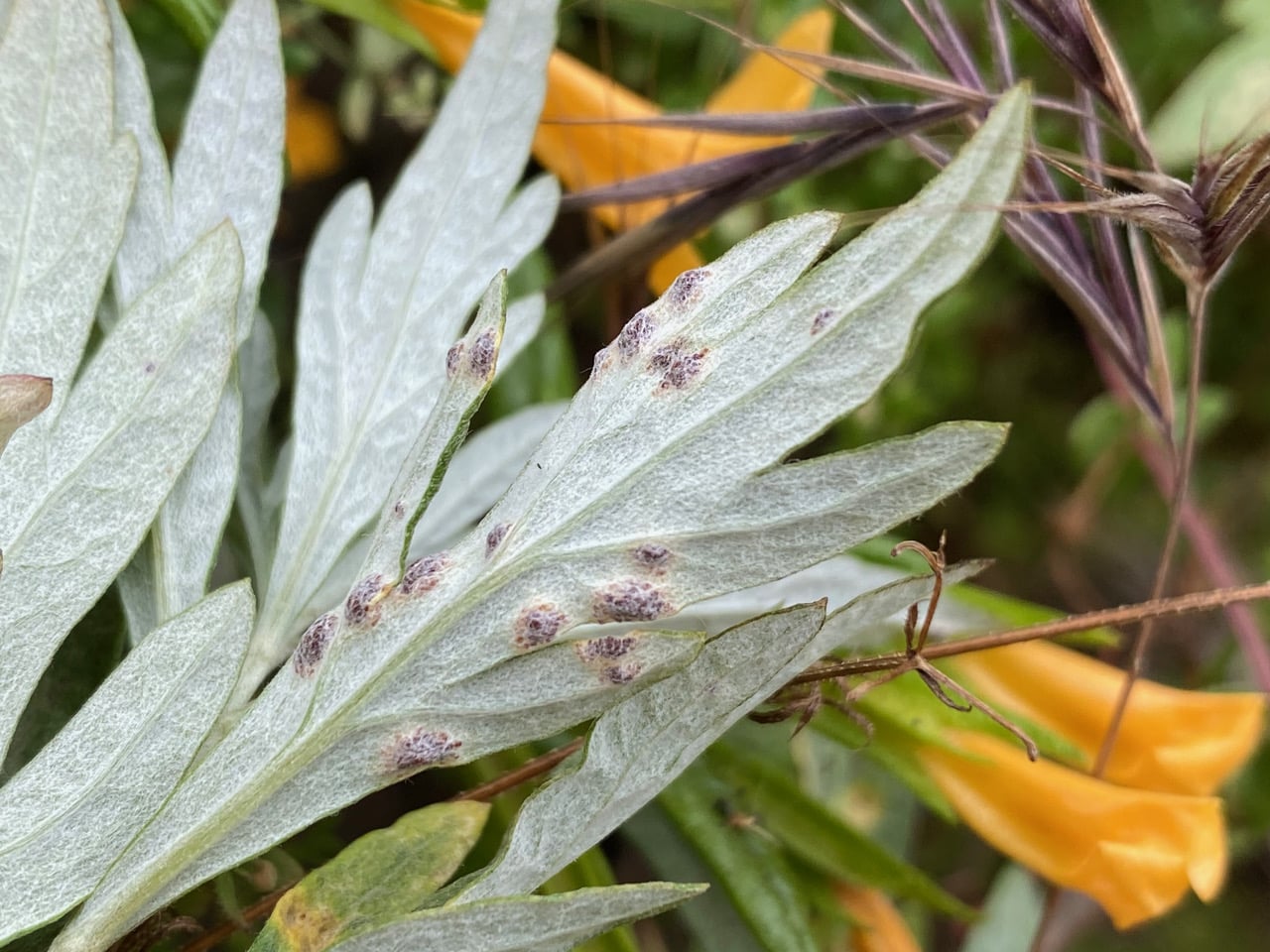
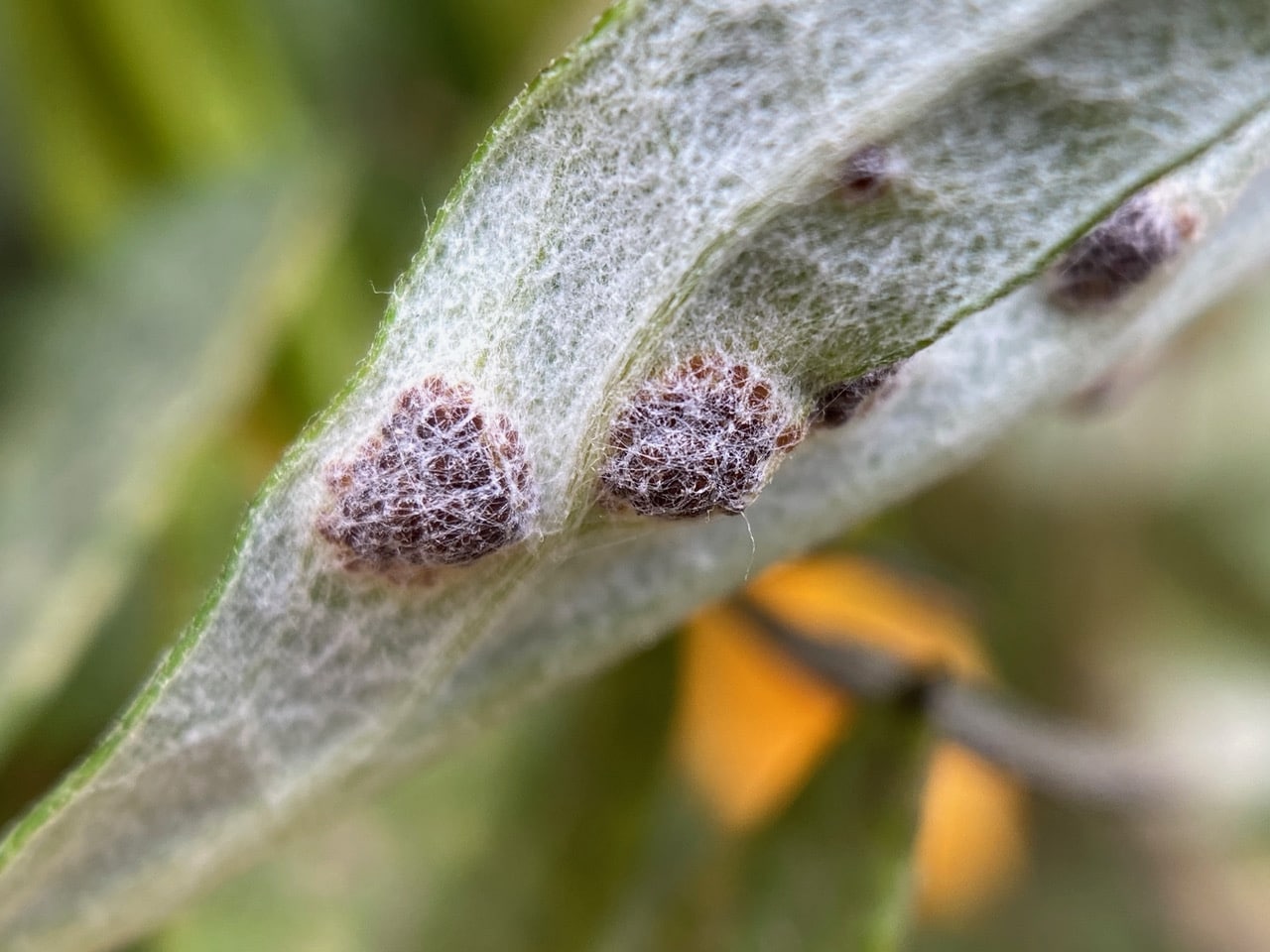 On maximum magnification of my macro lens, this is what those raised bumps look like on the underside of the leaf. I can’t tell if those brown things are individual critters. Eriophyid Mites?


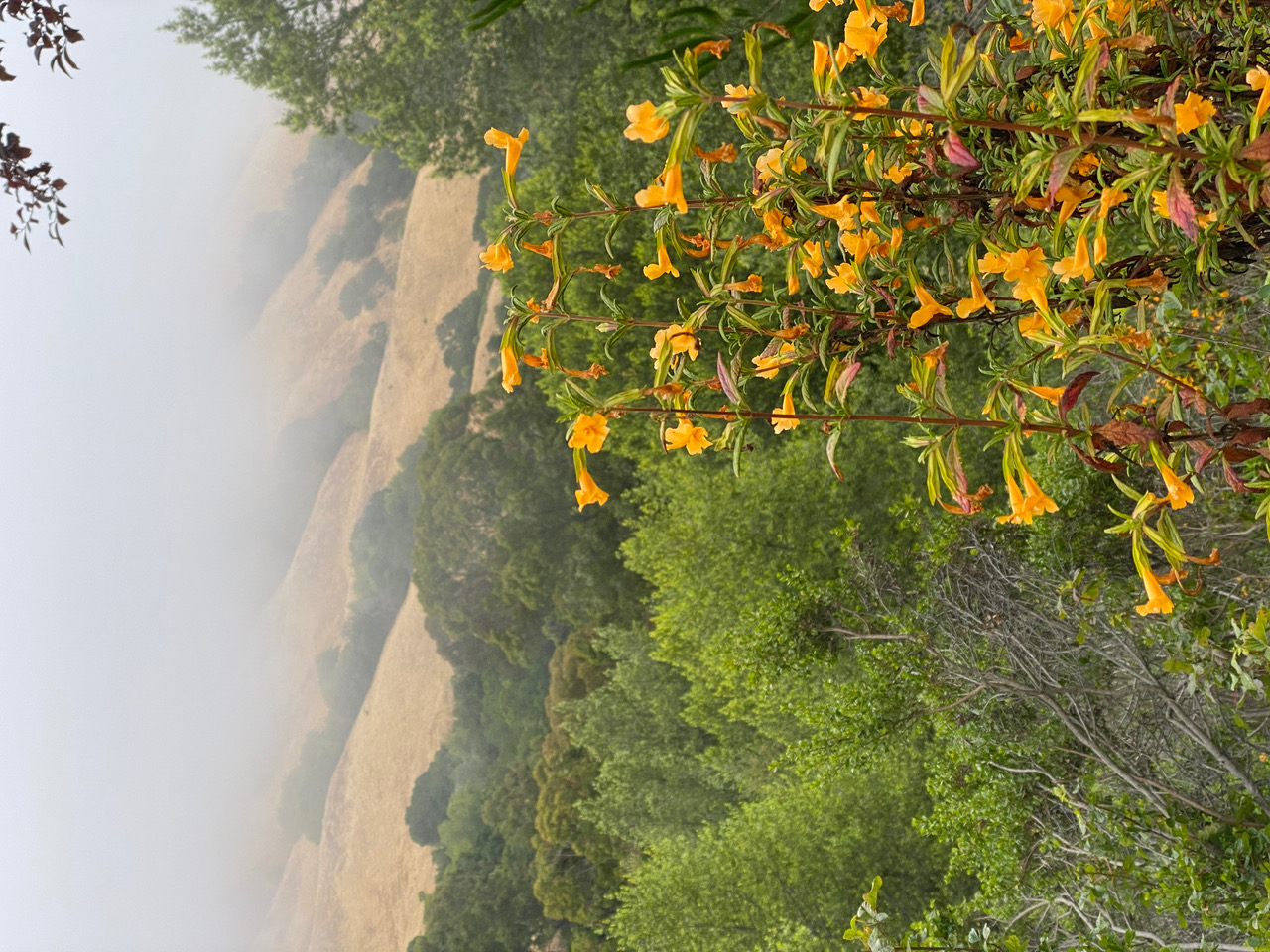


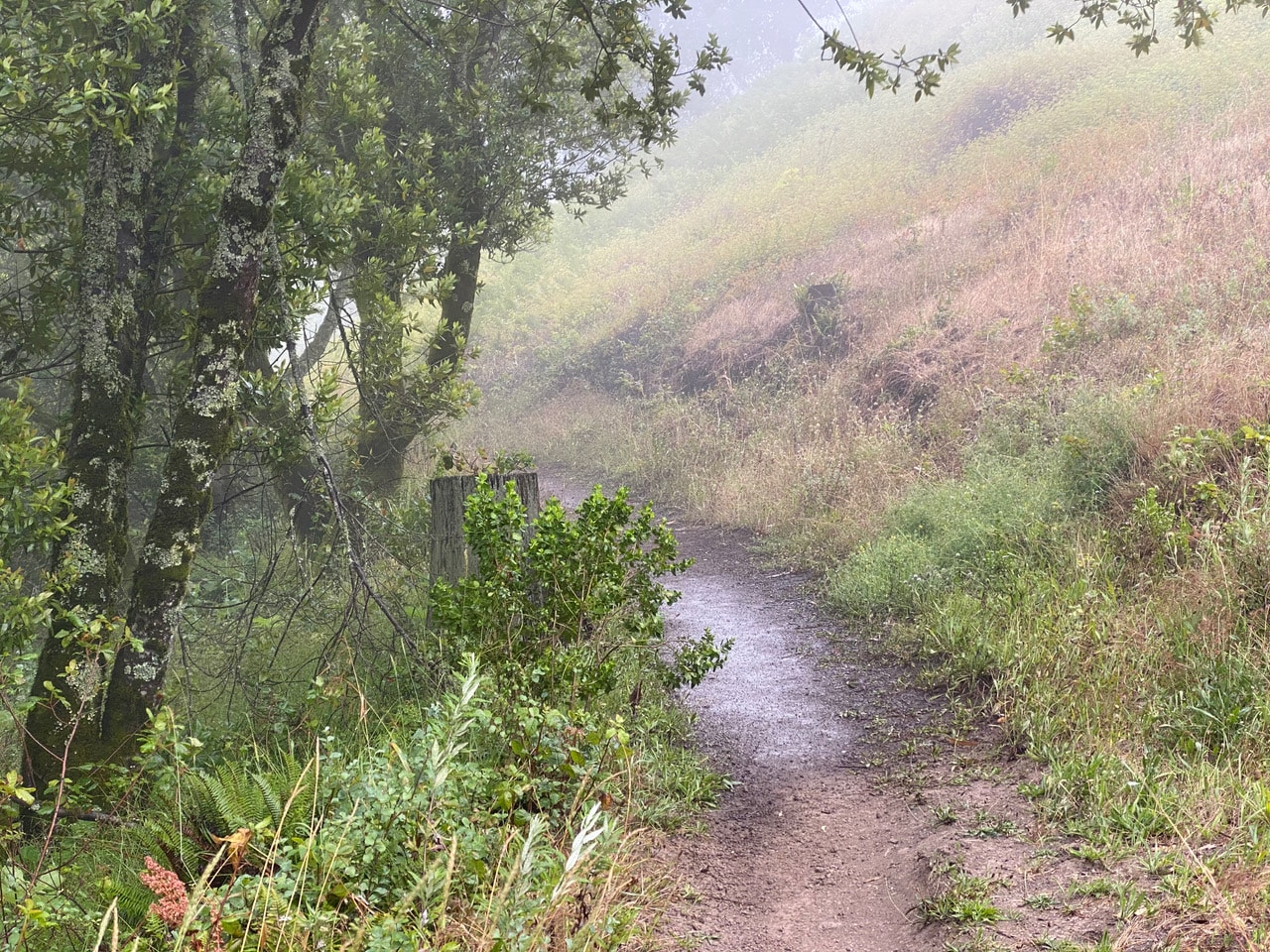
It’s lovely to walk in the fog on a summer day – the air feels clean. I hear the pitter-patter of fog drip on my hat whenever I pass a tree.
The flowers of Farewell-to-Spring, Clarkia rubicunda are still tightly closed, drenched in condensed fog.
A Red-shouldered Stink Bug nymph looks miserable, immobilized by the cold on a grass seed head.
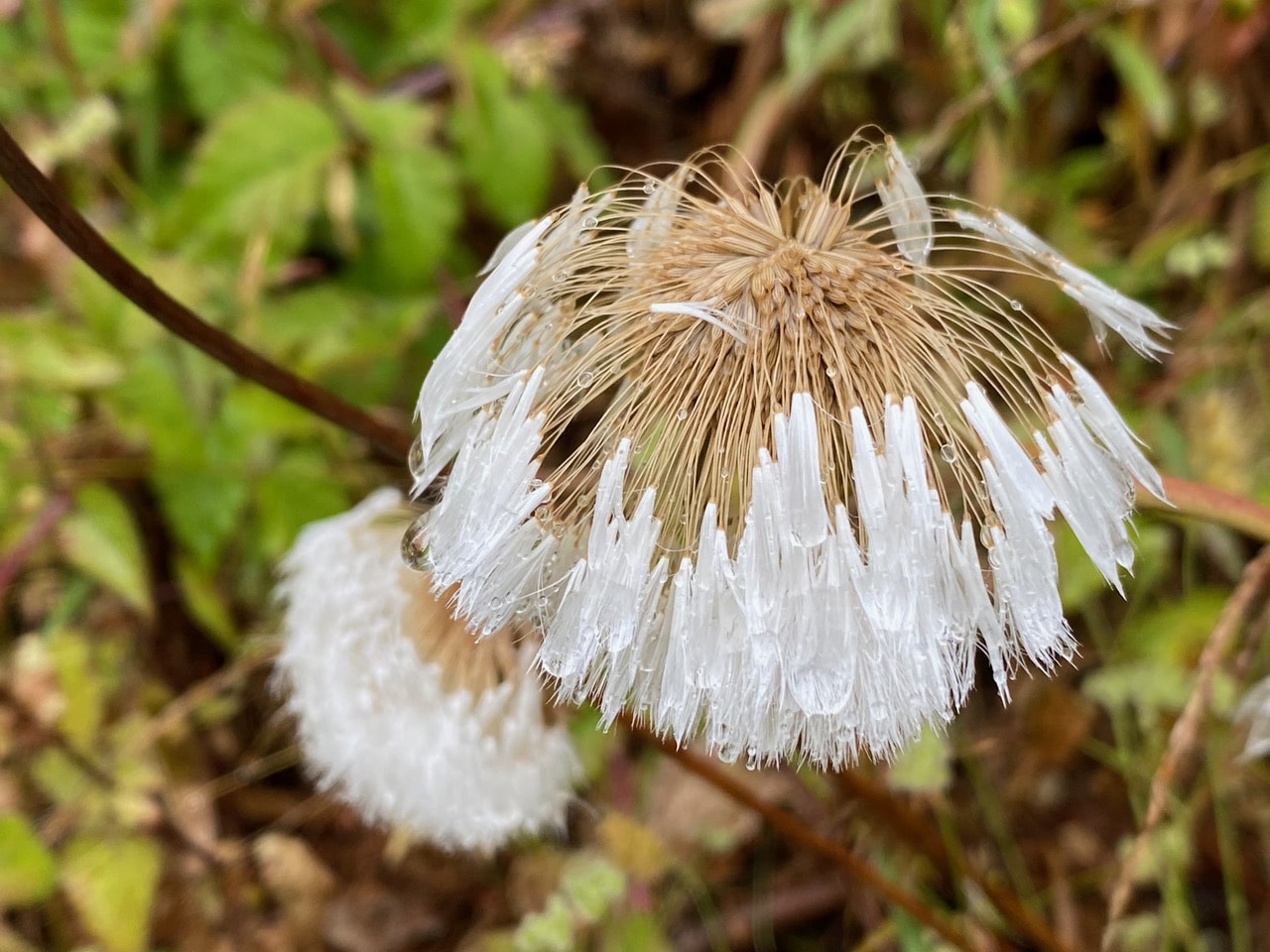
Usually light and airy globes, the seed heads of the California Dandelion, Agoseris grandiflora droop with the weight of water.
I can’t imagine what the Skyline Gardens would be without the blessings of summer fog.
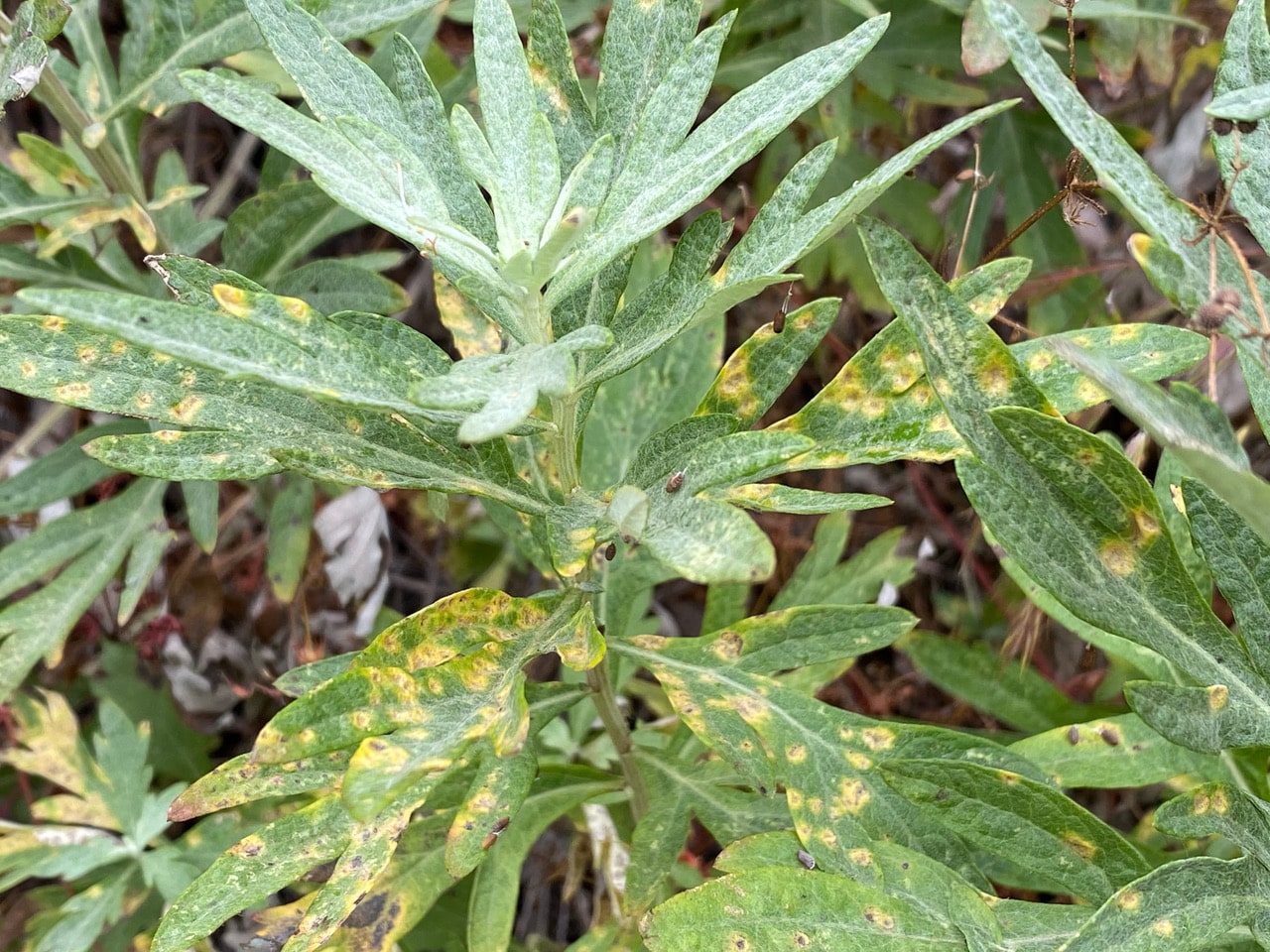
Something is invading the patch of California Mugwort, Artemisia douglasiana. The lower leaves have patches of yellow surrounding little pits. The damage is reminiscent of the Eriophyid Mite infestation on our California Everlasting at the Swale.
Directly under the pits on the leaf surface are brown raised bumps on the underside. These look distinct from what appears on the underside of the California Everlasting leaves. Hmm…..
On maximum magnification of my macro lens, this is what those raised bumps look like on the underside of the leaf. I can’t tell if those brown things are individual critters. Eriophyid Mites?Eriophyid Mites (family Eriophyidae) are translucent, cigar-shaped microscopic mites that cause deformities on many plant species. These mites are noticed when their feeding causes abnormalities of plant tissues such as perineum, galls, brooms, leaf curling, blisters, rusts, etc. Eriophyid mites seldom cause serious injury or stress to plants; damage is normally aesthetic.
An American Winter Ant is out and about on the foliage of a Sticky Monkeyflower, Diplacus aurantiacus. These ants are in their elements during cool weather.
The American Ant, Prenolepis imparis is a widespread North American ant. A dominant woodland species, it is most active during cool weather, when most other ant species are less likely to forage. This species is one of a few native ants capable of tolerating competition with the invasive Argentine Ant, Linepithema humile. They are also aggressive toward other ants and produce abdominal secretions that are lethal to Argentine Ants. Prenolepis imparis is a generalist omnivore. Foragers are known for tending to aphids or scale insects from which they consume excreted honeydew, aggregating on rotting fruit, and exploiting protein-rich sources such as dead worms. The colony enters estivation (a hibernation-like state) and becomes inactive above ground for the warmer months, during which time eggs are laid and brood are reared. Reproductives overwinter and emerge on the first warm day of spring for their nuptial flight.
A Scudder’s Bush Katydid nymph is exploring the terrain of a Sticky Monkeyflower.
Scudderia is a genus of katydids in the family Tettigoniidae. They are sometimes called bush katydids and are 30-38 mm in length. They are mostly found in North America. Scudder’s Bush Katydids are herbivores, with nymphs feeding primarily on flowers and adults preferring woody deciduous plants.
Few insects are out on a cool, sunless day like this.
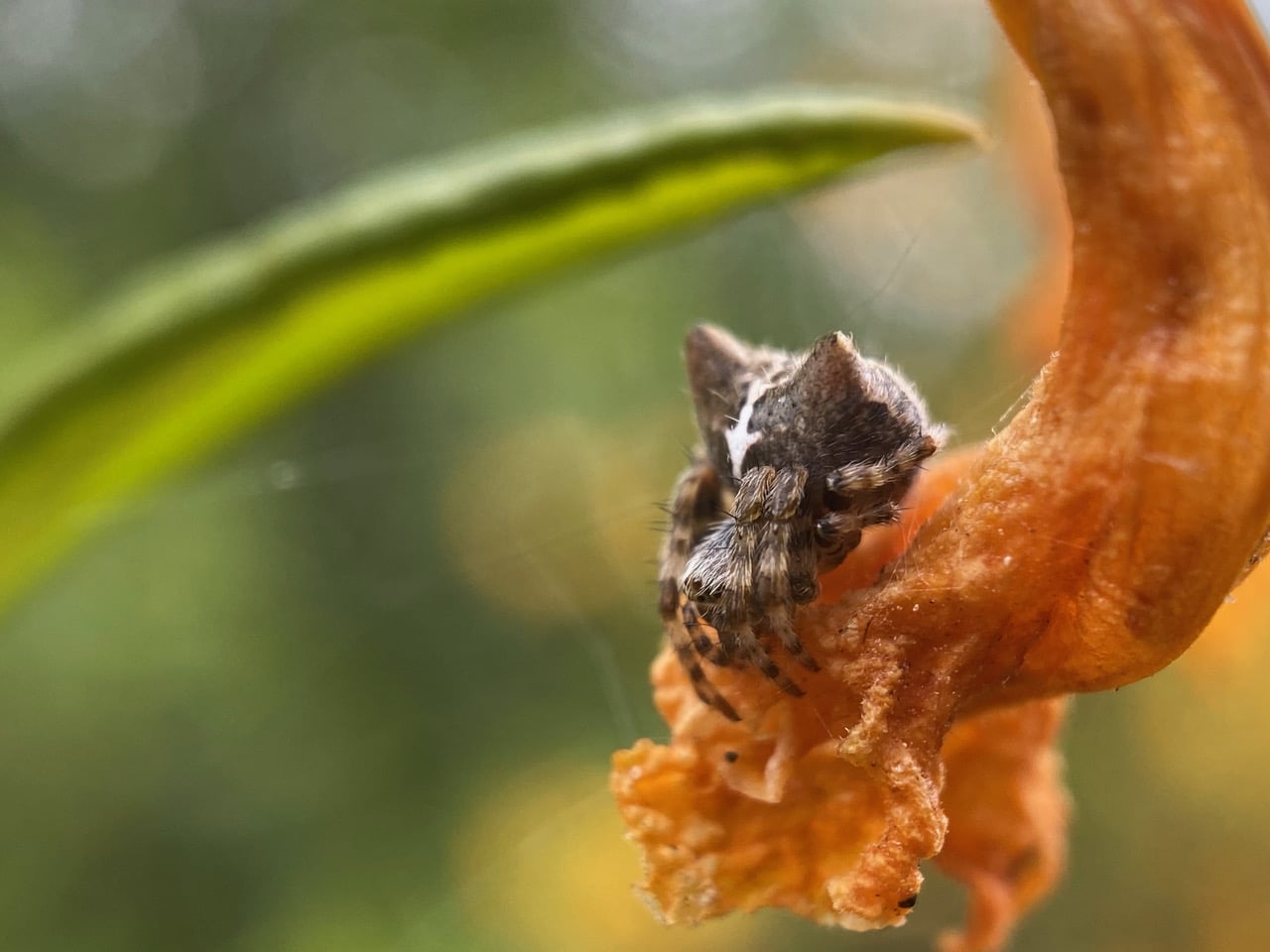
A small spider sits quietly on a spent flower of Sticky Monkeyflower in a tangle of silk web.
From this angle, it is clear that the spider has two prominent tubercles on its round abdomen. The spider has been identified as the Two-tubercled Orbweaver, Gibbaranea bituberculata (family Araneidae). This individual is probably a female, as its abdomen is large and spherical.
Gibbaranea bituberculata is a species of ‘orbweavers’ belonging to the family Araneidae. They are found in sunny habitats on shrubs, edges and low plants, where they can make their webs near the ground. Their basic color is very variable, but usually it is brownish, with whitish shades. The cephalothorax is covered with lying down hairs.
Orb-weaver spiders are members of the spider family Araneidae. They are the most common group of builders of spiral wheel-shaped webs often found in gardens, fields, and forests. Generally, orb-weavers are three-clawed builders of flat webs with sticky spiral capture silk. The third claw is used to walk on the non-sticky part of the web. Typically, the prey insect that blunders into the sticky lines is stunned by a quick bite, and then wrapped in silk.
The dorsal markings are white on the front, and black on the back of the abdomen! What a striking little spider!