

Pollinator Post 7/8/25 (1)
Andy, Ron and I have planned to visit Jewel Lake in Tilden Regional Park this morning.
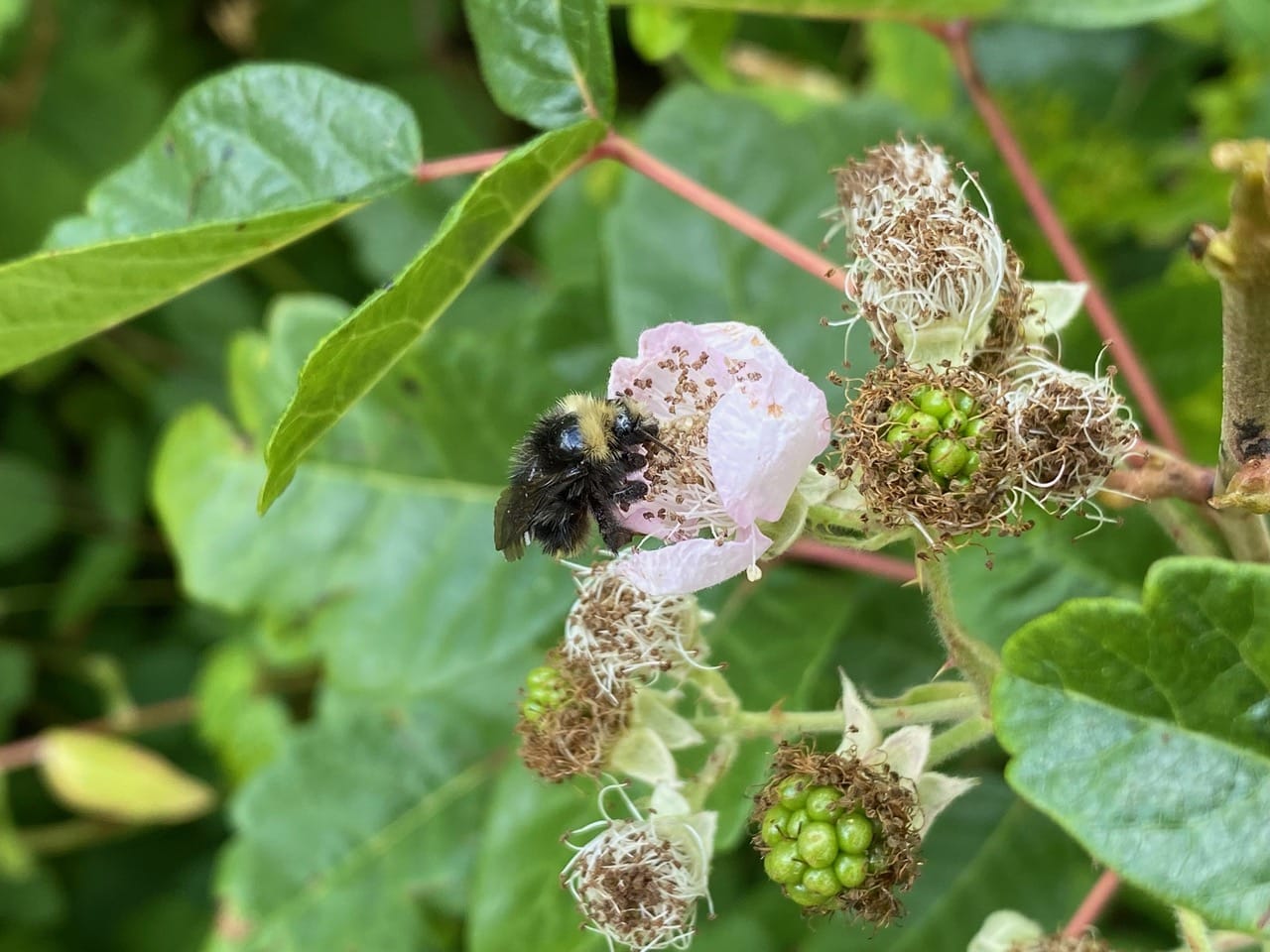
While waiting for the others at the Little Farm parking lot, I check on the Armenian Blackberry, Rubus armeniacus that is blooming along the sidewalk. An old, disheveled bumble bee is hanging weakly on one of the flowers, not moving much. It has lost most of the hairs on its thorax, which now looks bald and shiny. Its head appears to be black – is it a Yellow-faced Bumble Bee that has lost hairs on the head?
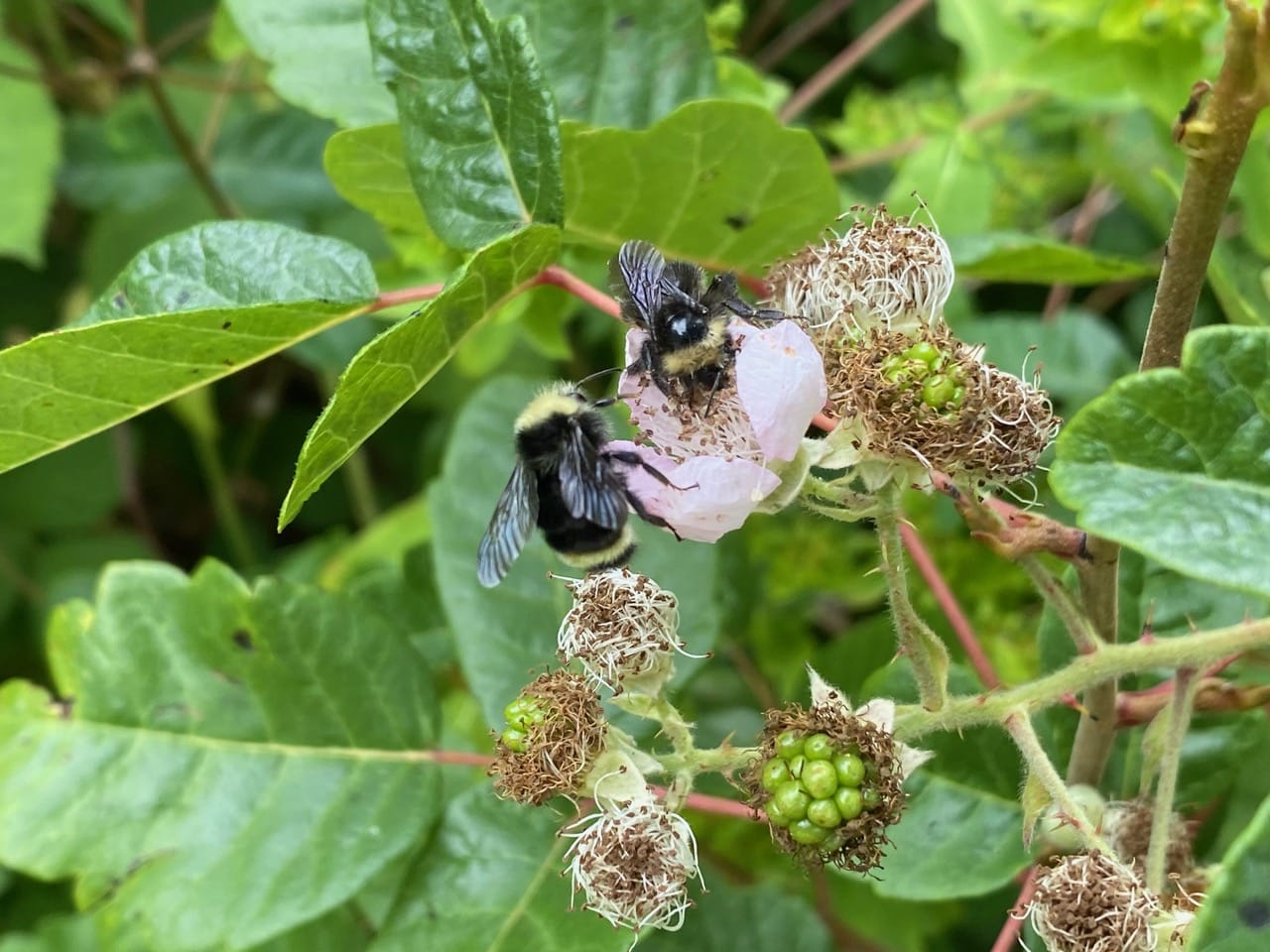
Another bumble bee with yellow head comes in to check on the old bee several times, but not in an aggressive way. I wonder what is going on? What is the attraction? Are they hive mates?
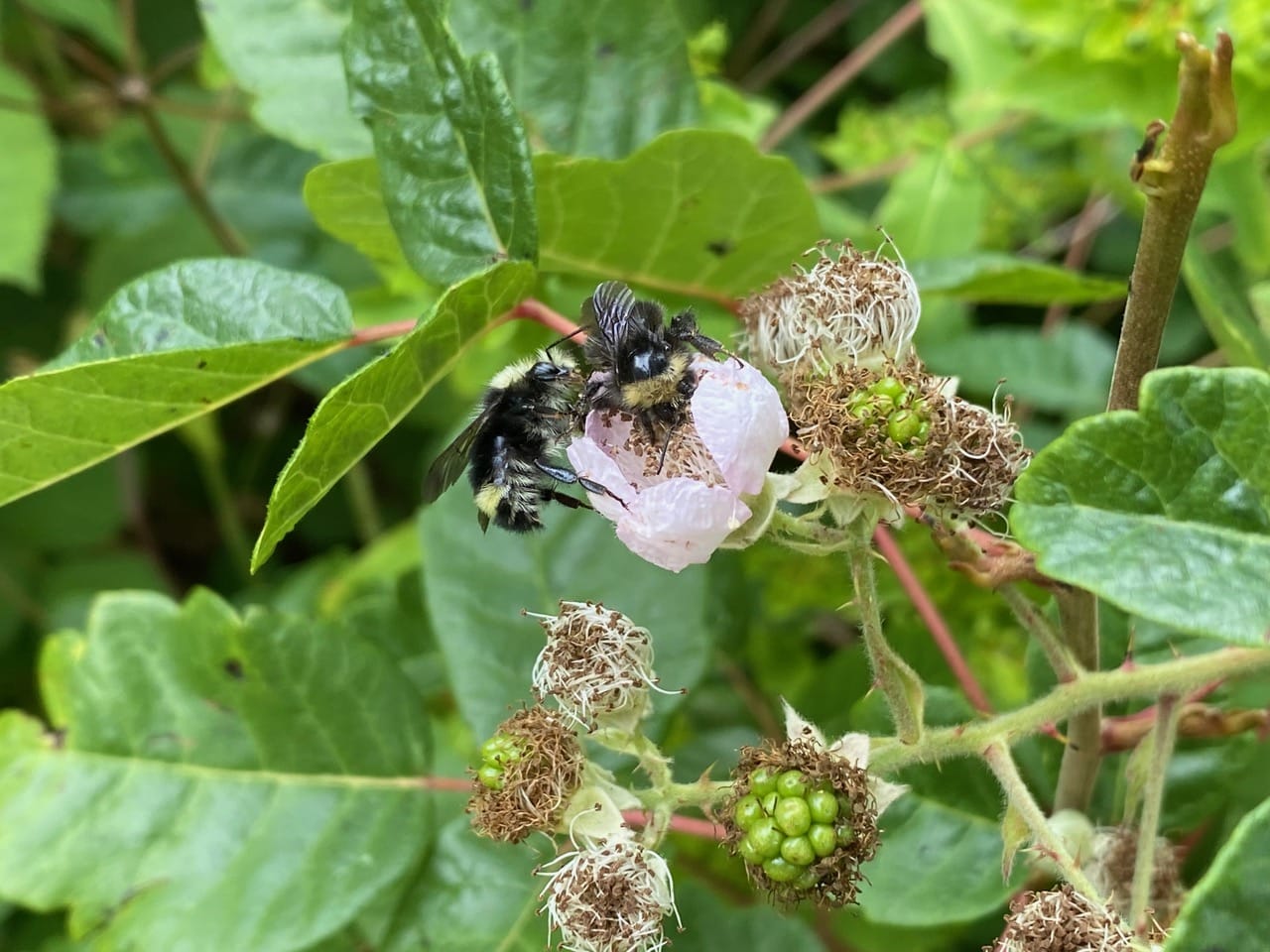
I happen to get a glimpse of the robust bee on its side. Note the yellow hairs on the underside of its abdomen. I have never seen this on a Yellow-faced Bumble Bee. iNaturalist has suggested that it might be a Fog-belt Bumble Bee, Bombus caliginosus (family Apidae). A new one for me!
The Fog-belt Bumble Bee, also known the Obscure Bumble Bee, Bombus caliginosus (family Apidae) is native to the West Coast of the United States, where its distribution extends from Washington to Southern California. The common name likely refers to the species’ preference for relatively humid, foggy coastal areas. The bee is very similar to the Yellow-faced Bumble Bee, Bombus vosnesenskii, and the two can only be told apart by the structure of the male ganitalia. The Fog-belt Bumble Bee tends to have longer hairs, however, and yellow hairs are found on the underside of the abdomen, where the Yellow-faced has only black hairs on the underside. This bumble bee has been noted on numerous families of plants. Queens emerge from hibernation in late January, the first workers appear in early March, and the males follow by the end of April. The colony dissolves in late October when all the inhabitants of the hive die except the new queens.
Relatively few confirmed recent records of the species reflect in part the severe difficulties in identifying this species due to its great similarity to the more widely distributed Yellow-faced Bumble Bees. I have a feeling these bees are more common in our area than we are aware of.
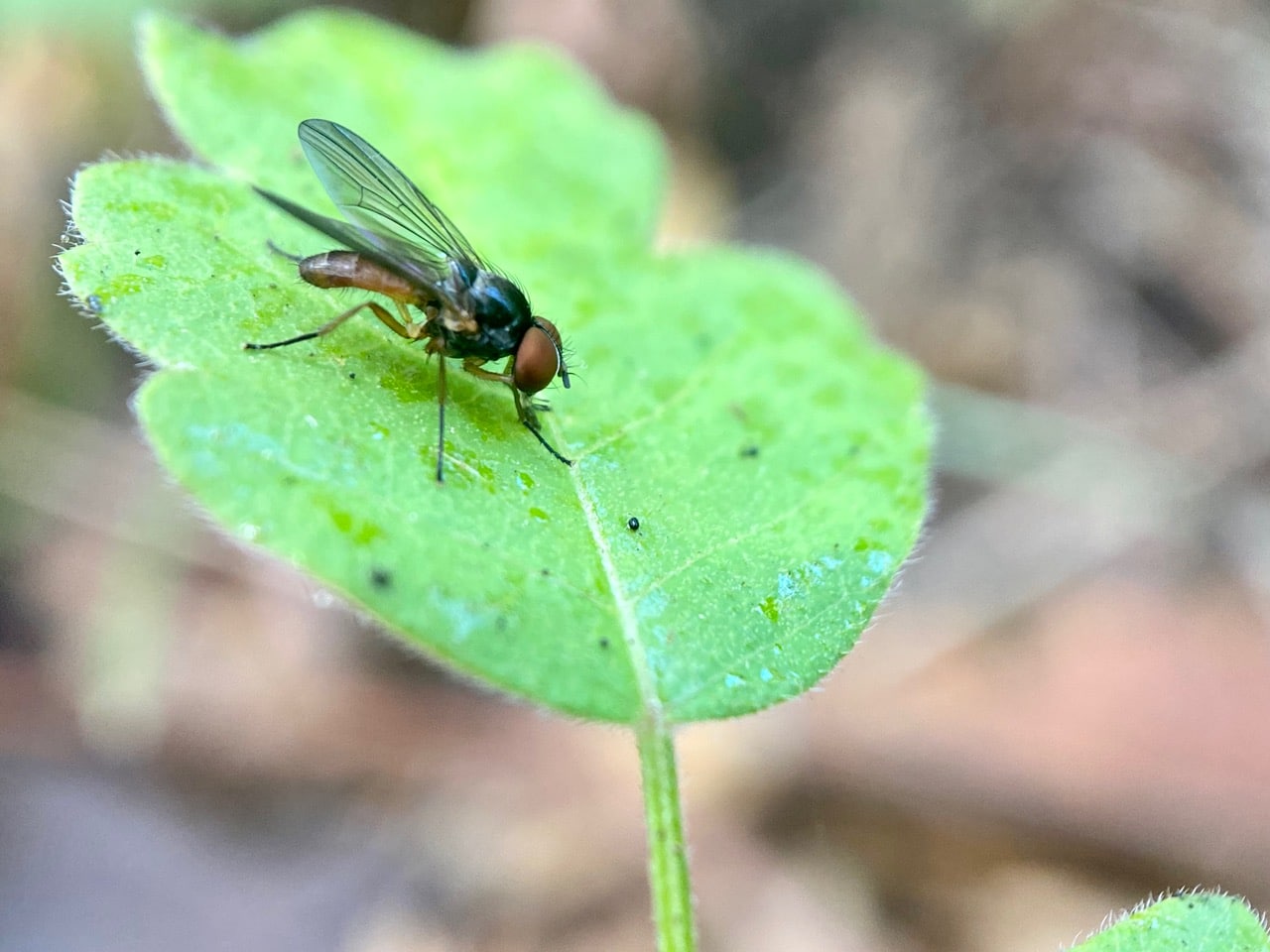
A small fly with a slim, yellowish abdomen lands on a leaf in the forest undergrowth. It is the most common fly we are to see the rest of the morning hiking through the forest on the Upper Packrat Trail. Unfortunately, iNaturalist’s AI fails to identify it, even to family. This happens a lot for flies in my experience. They are highly diverse and difficult to identify, and not many people are interested in studying them. Flies tend to have a bad rap, probably due to their association (real or perceived) with filth. Actually many flies play vital functions in the ecosystem as decomposers and recyclers of organic matter. It is unfortunate that they are not getting the attention and acknowledgement they deserve.
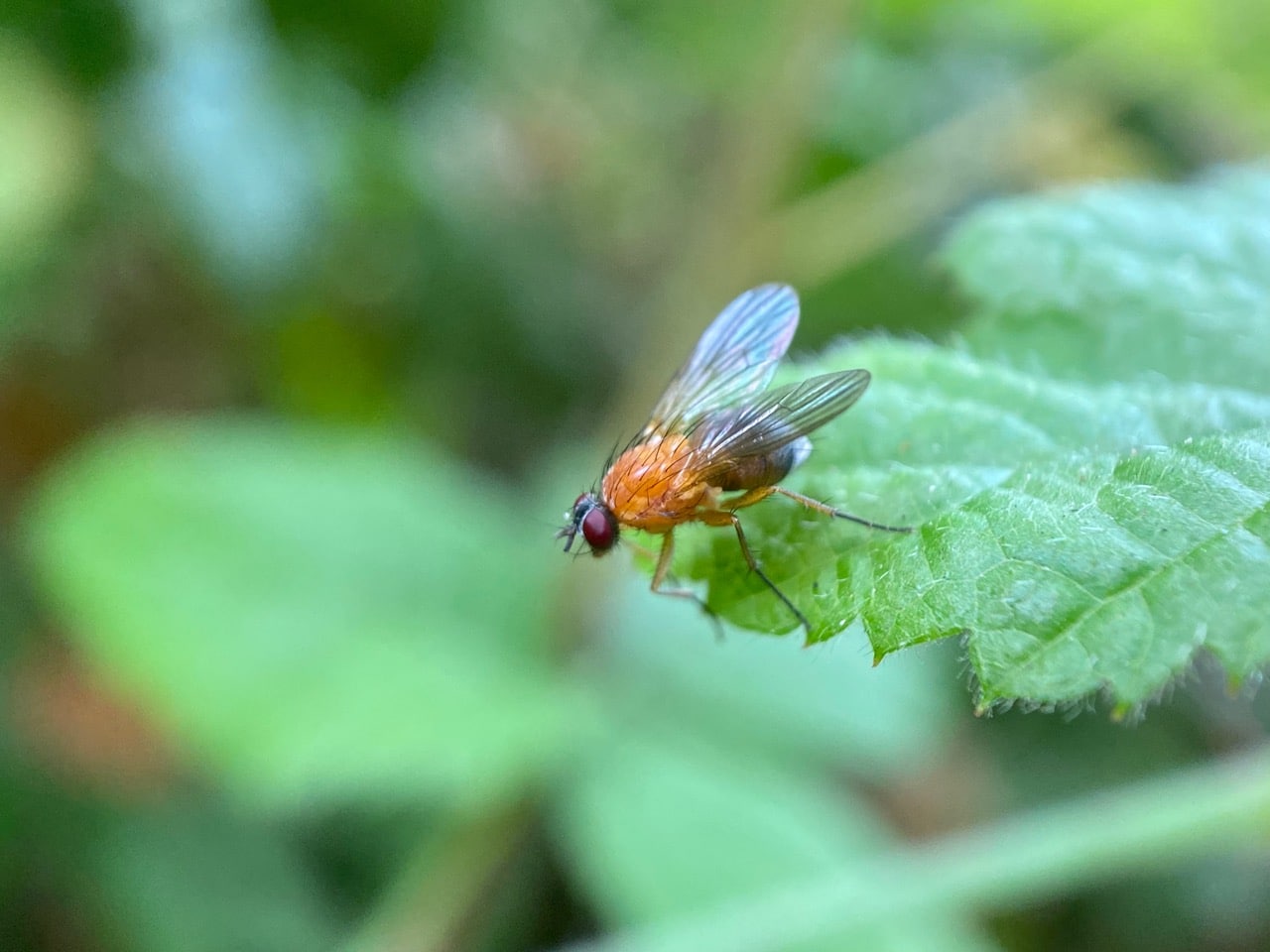
Here’s a fly I recognize. It belongs to the family Lauxaniidae. These flies are widespread and common, and they don’t even have a common name.
Some 1800 species of Lauxaniidae have been described. They have a cosmopolitan distribution. Most species inhabit forests, where the adults usually are found sitting on leaves of the moist and shady understory. Lauxaniidae are small flies (2-7 mm in length). They are often rather plump, dull, yellowish-brown or black, or partly lustrous flies. Many species have iridescent reddish/purplish or greenish eyes. Larvae are mostly saprophagous, feeding on decaying vegetation, soil, bird nests, etc. Adults may visit flowers.
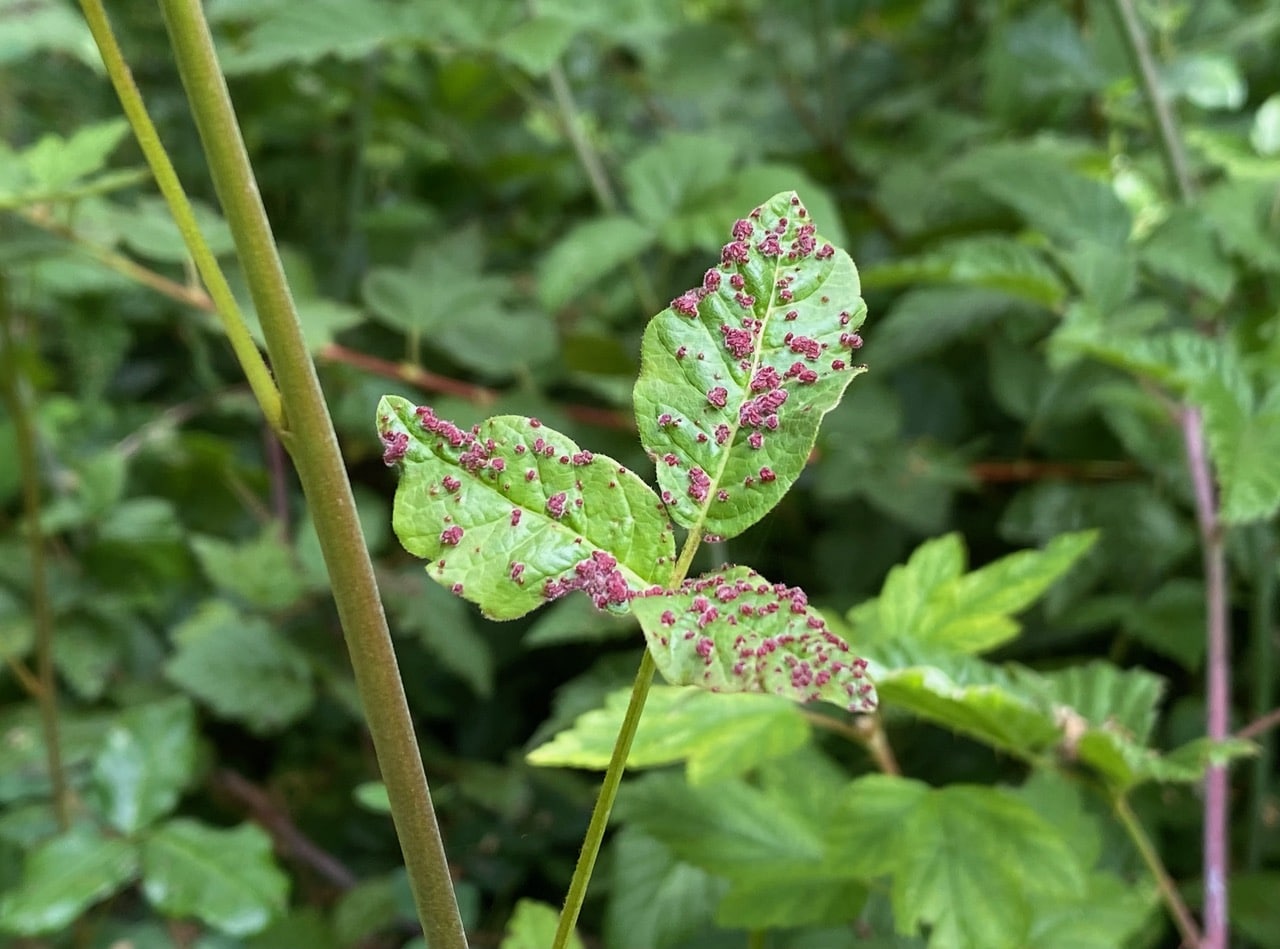
Look, that Western Poison Oak, Toxicodendron diversilobum seems to be suffering from a rash! One has to laugh at the poetic justice!
The red growths on the upper surface of the leaves are actually galls induced by the Eriophyid Mite, Aculops rhois (family Eriophyidae, class Arachnida).
Eriophyid Mites are microscopic mites that often go undetected. Unlike most adult mites that have four pairs of legs, eriophyid mites have only two pairs. They are slow-moving, usually white or yellow in color, and have a distinctive “carrot” shape. They are very host-specific. Most eriophyid mites make their home on the surface of leaves where their feeding can cause bronzing or reddening but some are also responsible for creating galls on leaves or witches’-broom on stems and flower buds. Adult females overwinter in cracks and crevices of twigs and bud scales. Females lay eggs in the spring. The young mites that hatch out resemble the adults. Numerous generations are produced each year. They are primarily spread by wind.

An unidentified dark fly is running around on a leaf like a chicken with its head cut off. What is going on? It has clear wings, one of which has a distinct white patch, like it’s been painted on. I have never seen anything like it.
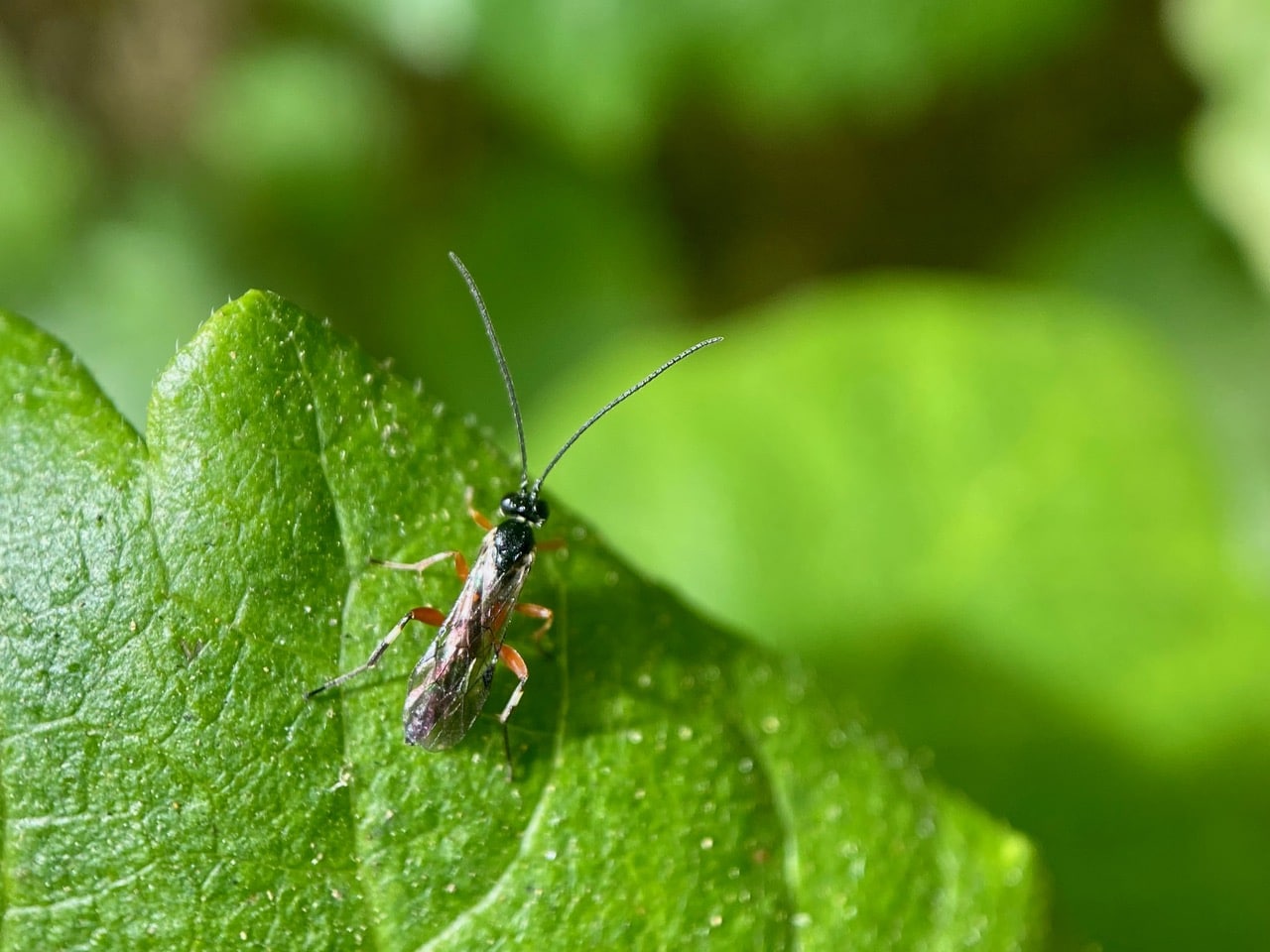
A small wasp has landed on a leaf, its long antennae waving. It is the well-known Common Hover Fly Parasitoid Wasp, Diplazon laetatorius (family Ichneumonidae).
This species likely has the greatest geographic range of any Ichneumonid (and perhaps any hymenopteran), having been recorded from the Canadian Arctic to Argentina, from Norway to South Africa, and Japan to New Zealand including many remote oceanic islands. Its wide range is likely a result of human agriculture that has spread it along with aphids and aphidophagous syrphids. The tricolor hind tibia with median white band is a diagnostic feature.
Adults feed on nectar. Larvae feed mainly on the larvae of aphidophagous syrphid flies (hover flies larvae that feed on aphids). Often seen on plants wherever aphids and hover fly larvae are found.
Females lay eggs inside or near hover fly larvae. The wasp larva hatches and develops inside the host, feeding on its tissues. After consuming the host, the wasp larva pupates, often within the host’s body. The adult wasp emerges from the pupa, ready to reproduce and continue the cycle. The species is mainly parthenogenetic, reproducing without males. Unfertilized eggs develop into female clones. Males are extremely rare.

Barely a speck, a Whitefly, Aleyrodes sp. (family Aleyrodidae) has landed on a leaf.
Despite their name, Whiteflies are not true flies. Rather, they are in the order Hemiptera along with aphids, mealybugs, and scales. They comprise the family Aleyrodidae. These are small insects, most with wingspan of less than 3 mm and a body length of 1-2 mm. Adults have four wings, and are usually covered with a white, powdery, waxy substance. Like all members of Hemiptera, Whiteflies have piercing-sucking mouthparts that they use to extract sap from plants. Whiteflies typically feed on the underside of plant leaves, tapping into the phloem of plants, introducing toxic saliva, and excreting copious quantities of honeydew. Since the whiteflies congregate in large numbers, infested plants can be quickly overwhelmed. Damage consists of yellowing and wilting of the foliage, reduction in crop yield. Honeydew and the resulting sooty mold may interfere with photosynthesis in the affected plant. Whiteflies are capable of transmitting viral pathogens to host plants.
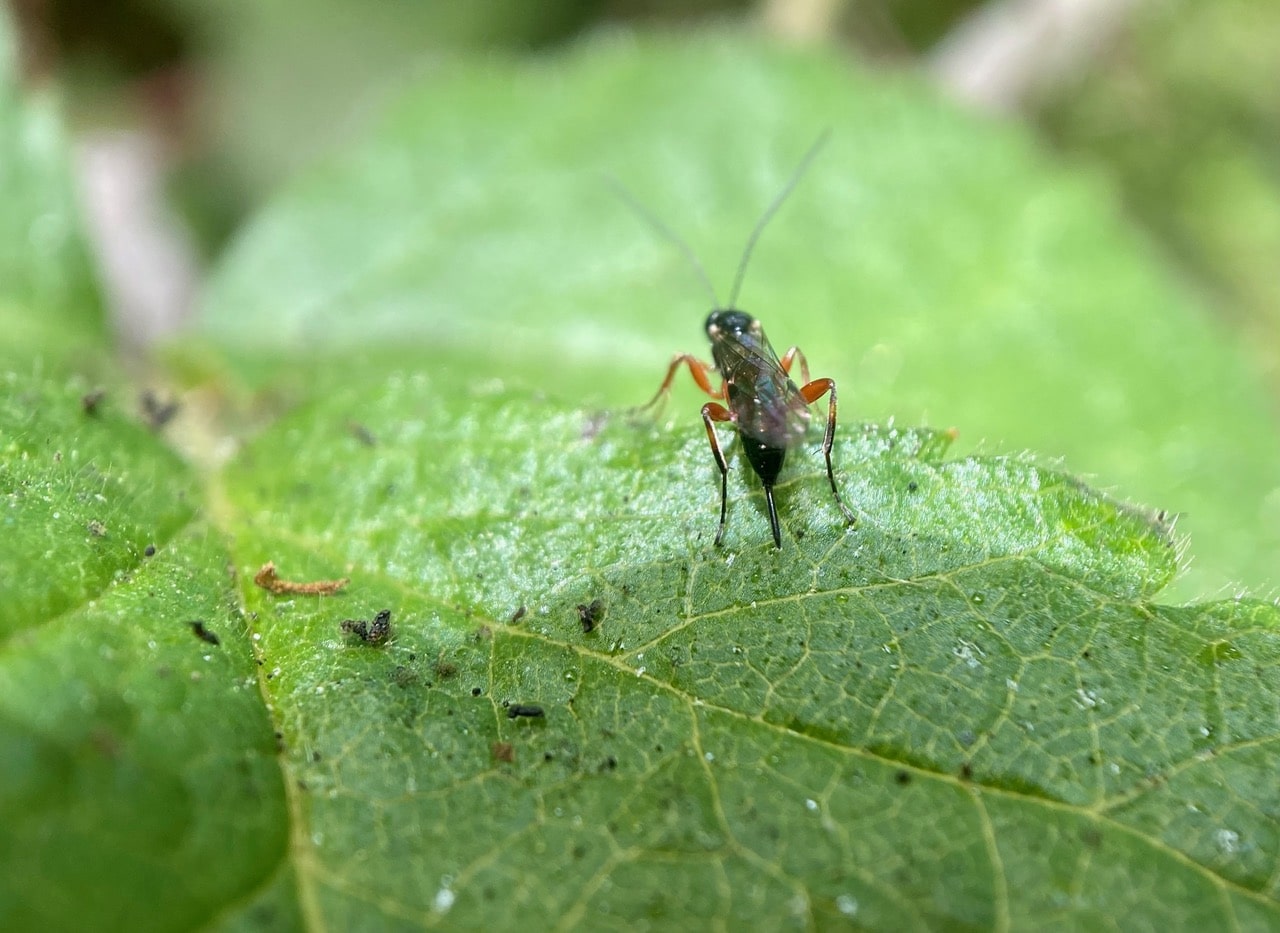
A small wasp with long antennae is perched on a leaf. It has a short, sturdy ovipositor, obviously a female.
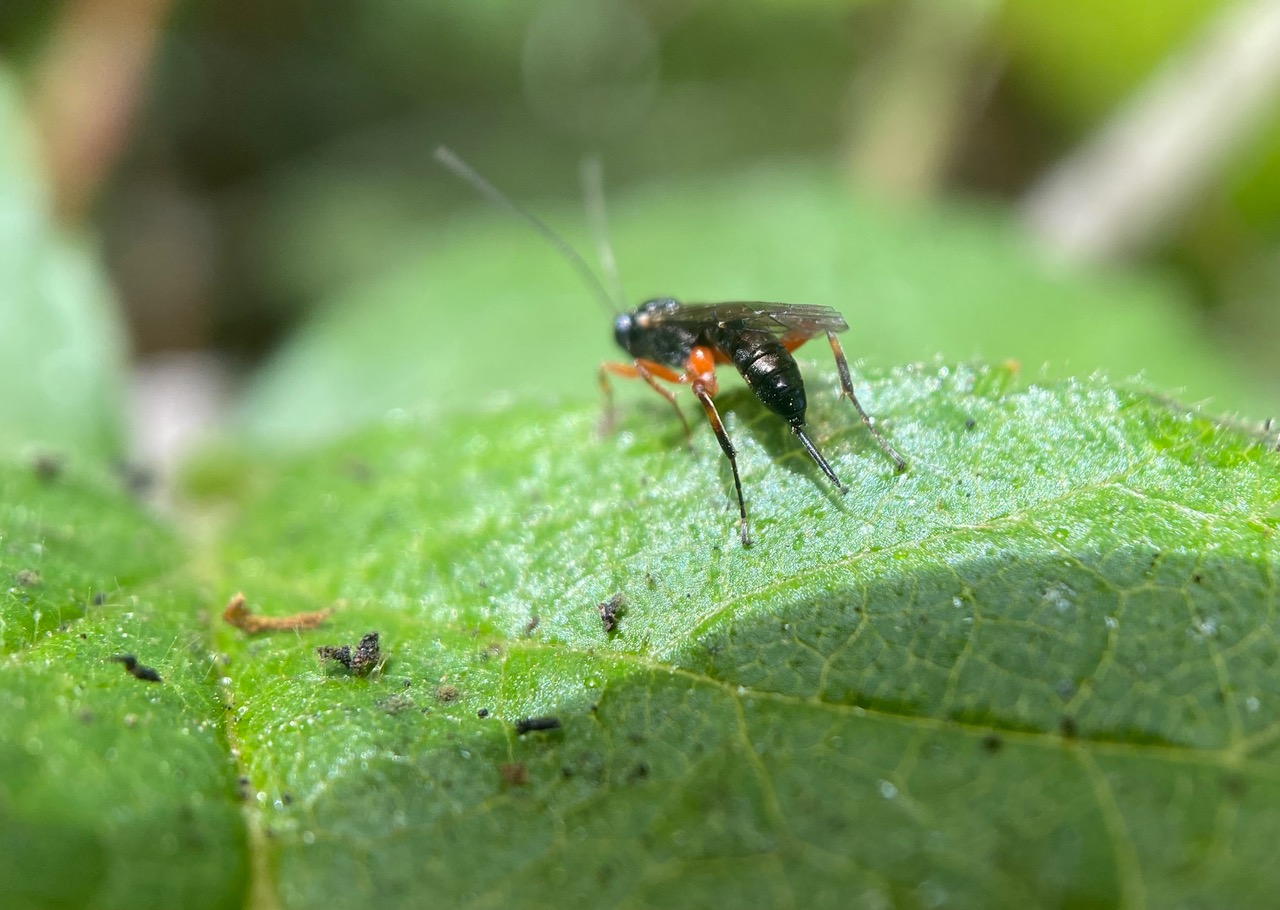
iNaturalist can only identify the wasp to the superfamily Ichneumonoidea.
The superfamily Ichneumonoidea comprises the two largest families within Hymenoptera: Ichneumonidae and Braconidae, both with a cosmopolitan distribution. Members of the two families are distinguished by wing venation. Ichneumonoids are solitary wasps, and the vast majority are parasitoids; the larvae feed on or in another insect, eventually killing it. In general, ichneumonoids are host specific, and only attack one or few closely related host species. Many species use polydnaviruses to suppress the immune systems of their host insects.
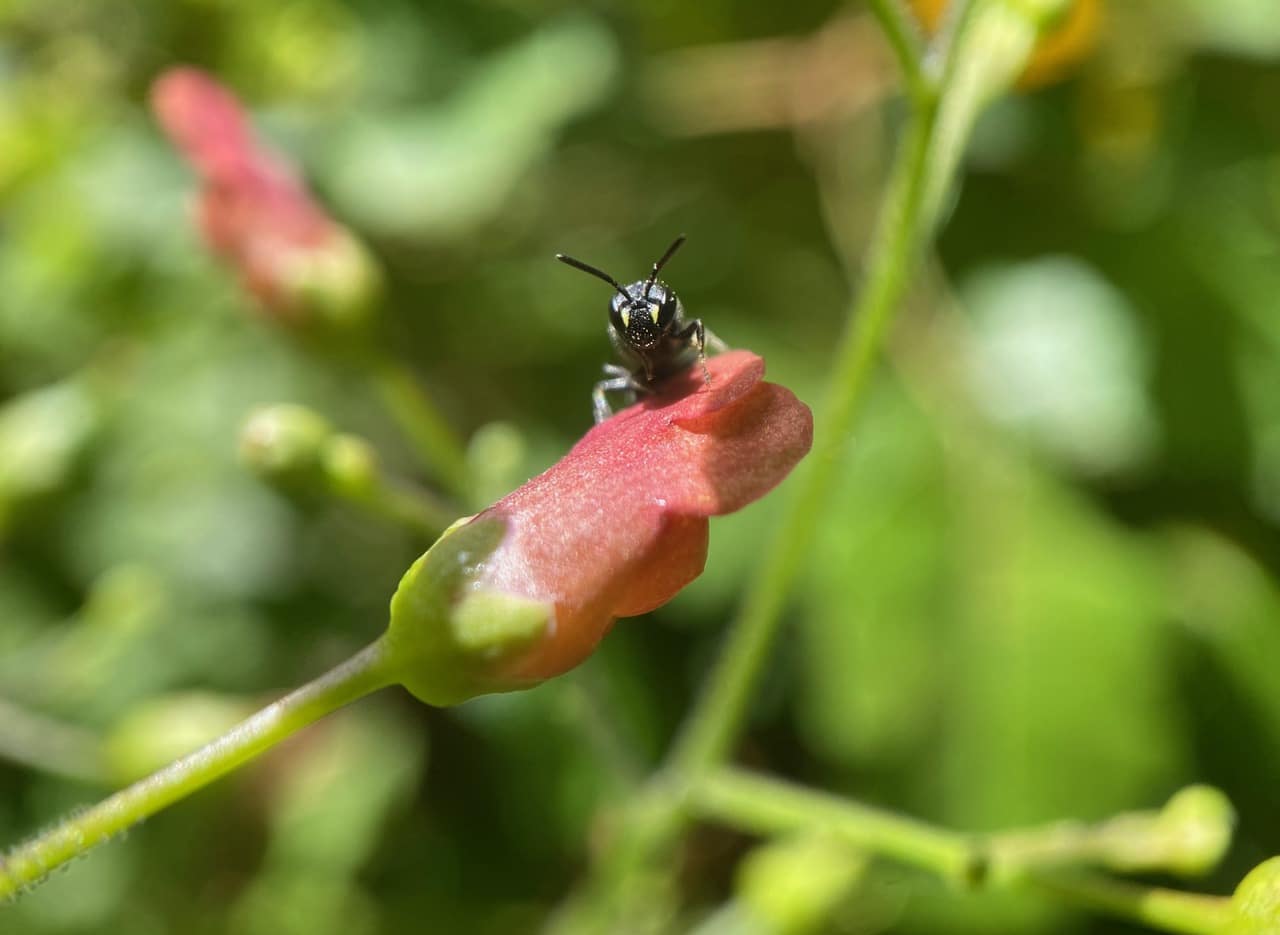
A small black bee enters a flower of Bee Plant, Scrophularia californica. I wait patiently for it to come out to find out who it is. Hey, that’s the face of a female Masked Bee, Hylaeus sp. (family Colletidae).
Hylaeus (family Colletidae) are shiny, slender, hairless, and superficially wasp-like bees. They are small, 5 to 7 mm long, usually black with bright yellow or white markings on their face and legs. These markings are more pronounced on the males. Hylaeus do not carry pollen and nectar externally, they instead store their food in the crop and regurgitate it upon returning to their nests. They are primarily generalist foragers. Hylaeus are short-tongued, but their small body size enables them to access deep flowers. Hylaeus nest in stems and twigs, lining their brood cells with self-secreted cellophane-like material. They lack strong mandibles and other adaptations for digging, using instead pre-existing cavities made by other insects.
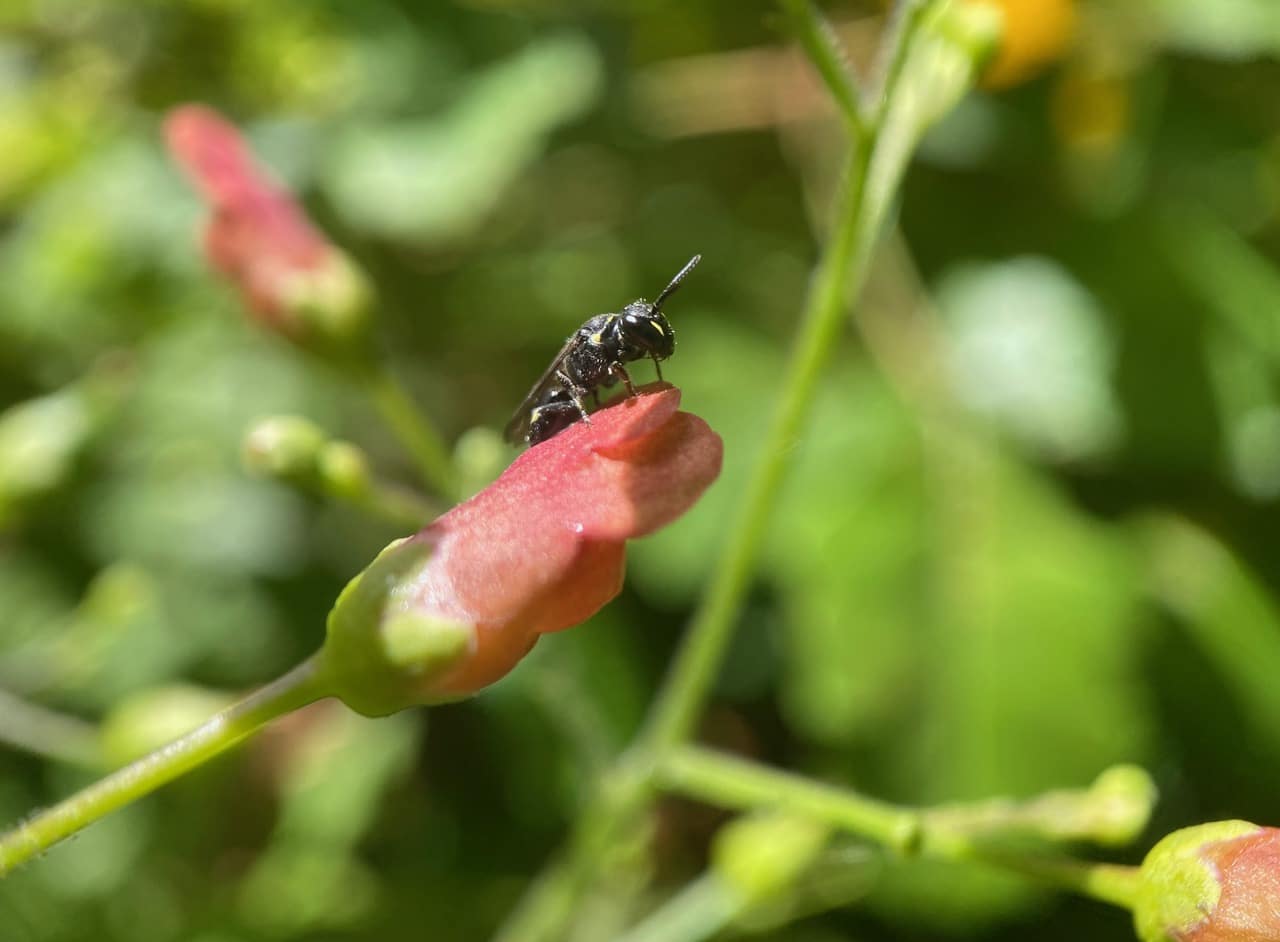
The little bee grooms herself briefly before flying off. Note the absence of scopa on her body. The nectar and pollen she has gathered are in her crop. The crop is a specialized section of the insect’s digestive system responsible for storing ingested food before it moves further along the digestive tract. Hylaeus females provision their brood cells with a semi-liquid mixture of nectar and pollen, unlike many other solitary bees that use a dough-like “bee bread”.
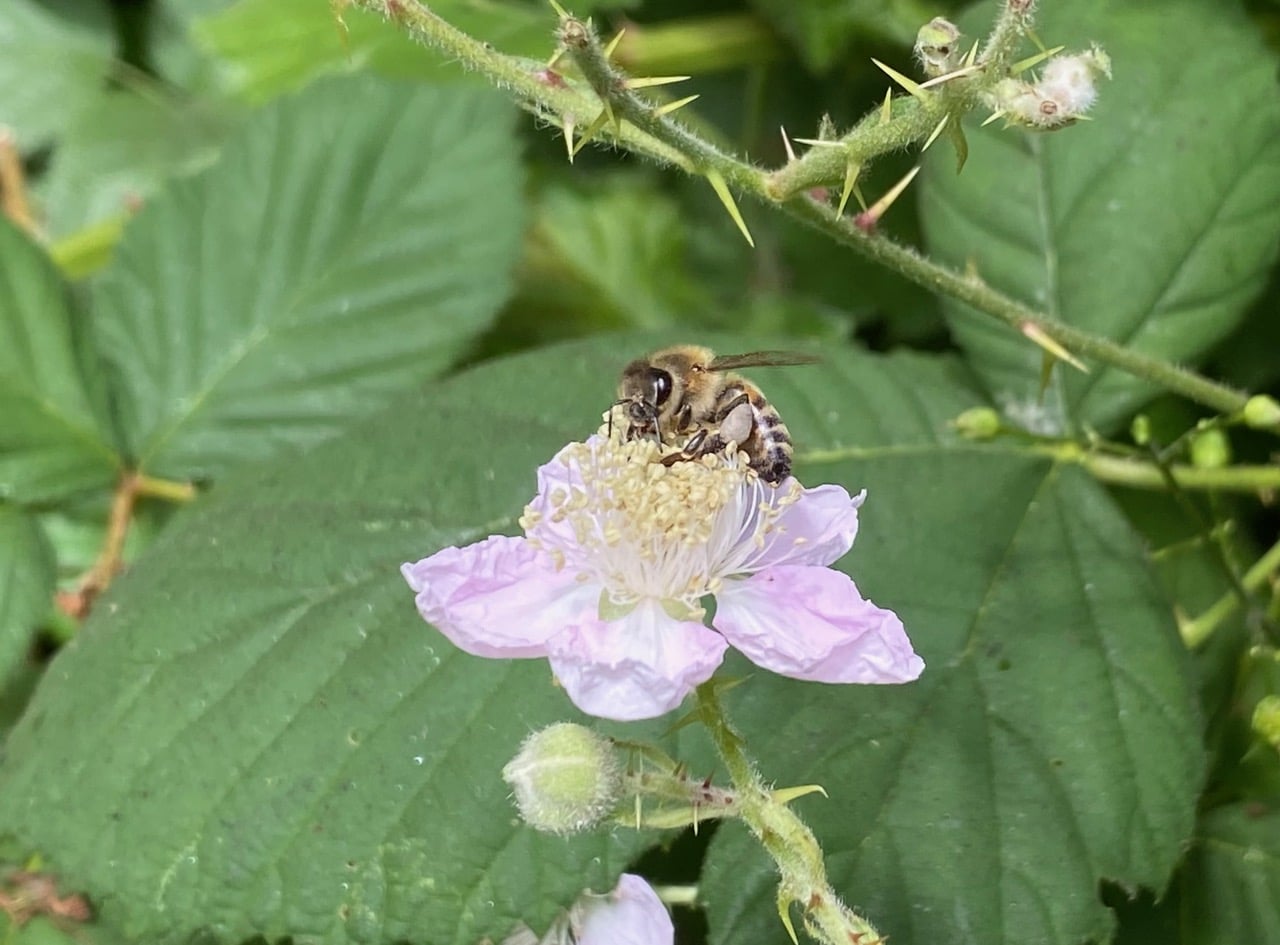
In the sunny forest clearings, Armenian Blackberry, Rubus armeniacus grows in profusion. Several different bees converge on the flowers to collect pollen and nectar. Note the putty-colored pollen in this Honey Bee’s pollen basket or corbicula.

A small black bee with a slim build and parallel-sided abdomen is quick and agile on the stamens. I only manage to take a picture from a distance. The bee appears to have some pollen on the underside of its abdomen. A member of the Megachilidae family? iNaturalist has helped identify it as Megachile angelarum (family Megachilidae).
The family Megachilidae includes the Leafcutter (genus Megachile), Mason (genus Osmia), and Wool Carder Bees (genus Anthidium). Females carry pollen on the underside of their abdomen.
Megachile angelarum is sometimes called the Los Angeles Resin Bee. Like most other Leafcutter Bees, they nest in cavities. But the species is unusual in that the females collect resins and gums to partition their nest cells, instead of using pieces of cut leaves or petals. The resin they use is exuded from the stems, buds, and bark of various plants, especially the conifers. Since this bee does not cut leaves, it lacks teeth on its mandibles, unlike other bees in the genus. It is a robust-sized bee, with females typically measuring 10-11 mm in length, and males a bit smaller, at 8-9 mm. The species is found in western North America, ranging from southern British Columbia, Canada to California, Arizona and New Mexico, U.S.A. and Baja California, Mexico. These bees inhabit various natural landscapes within their range, including forests, grasslands, and urban areas. Their nesting sites include cavities in wood, plant stems, and other suitable sheltered locations. The flight season is from May into September, with peak flight activity from June to August.
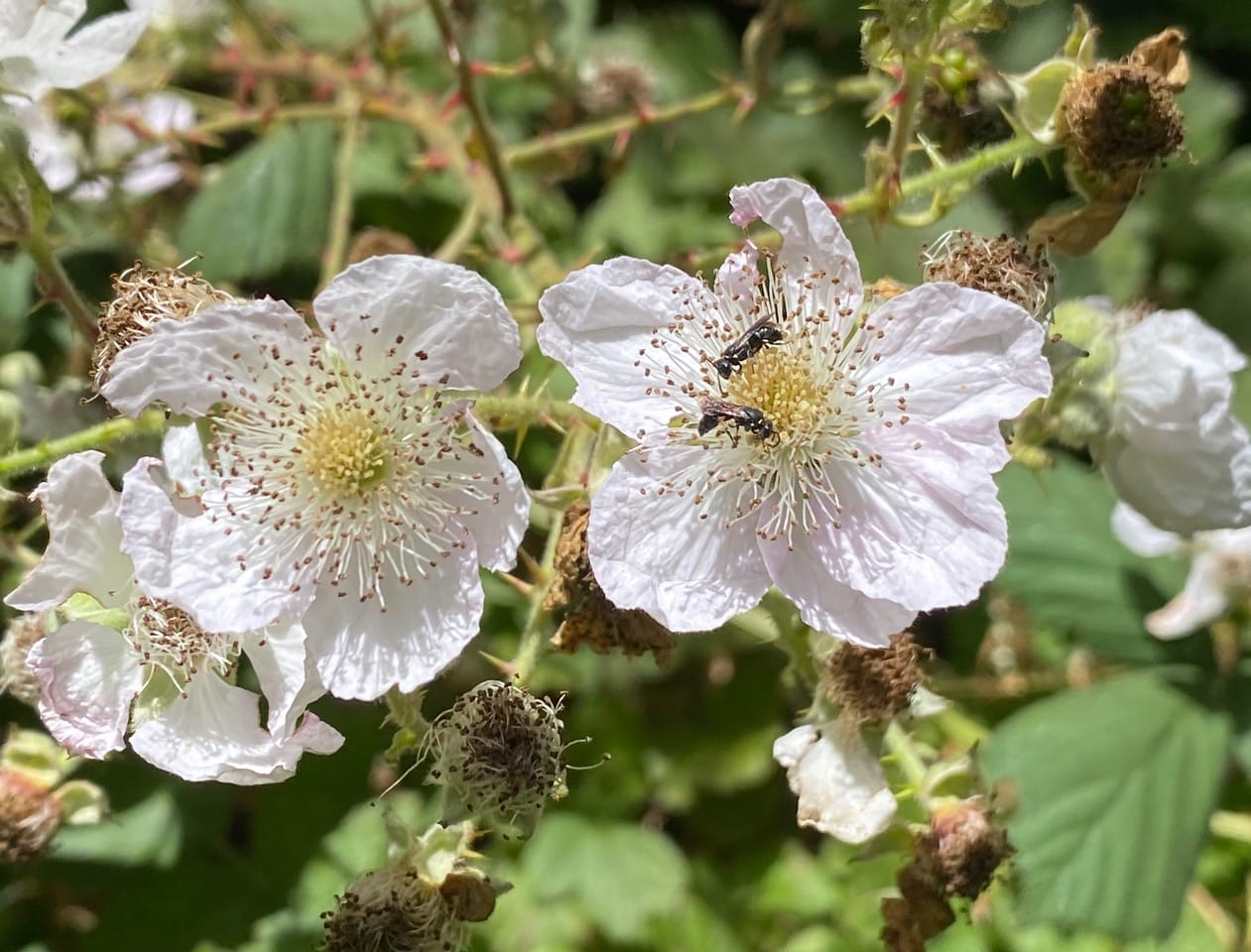
A couple of Masked Bees, Hylaeus sp. (family Colletidae) are collecting pollen from the stamens of the blackberry flower.
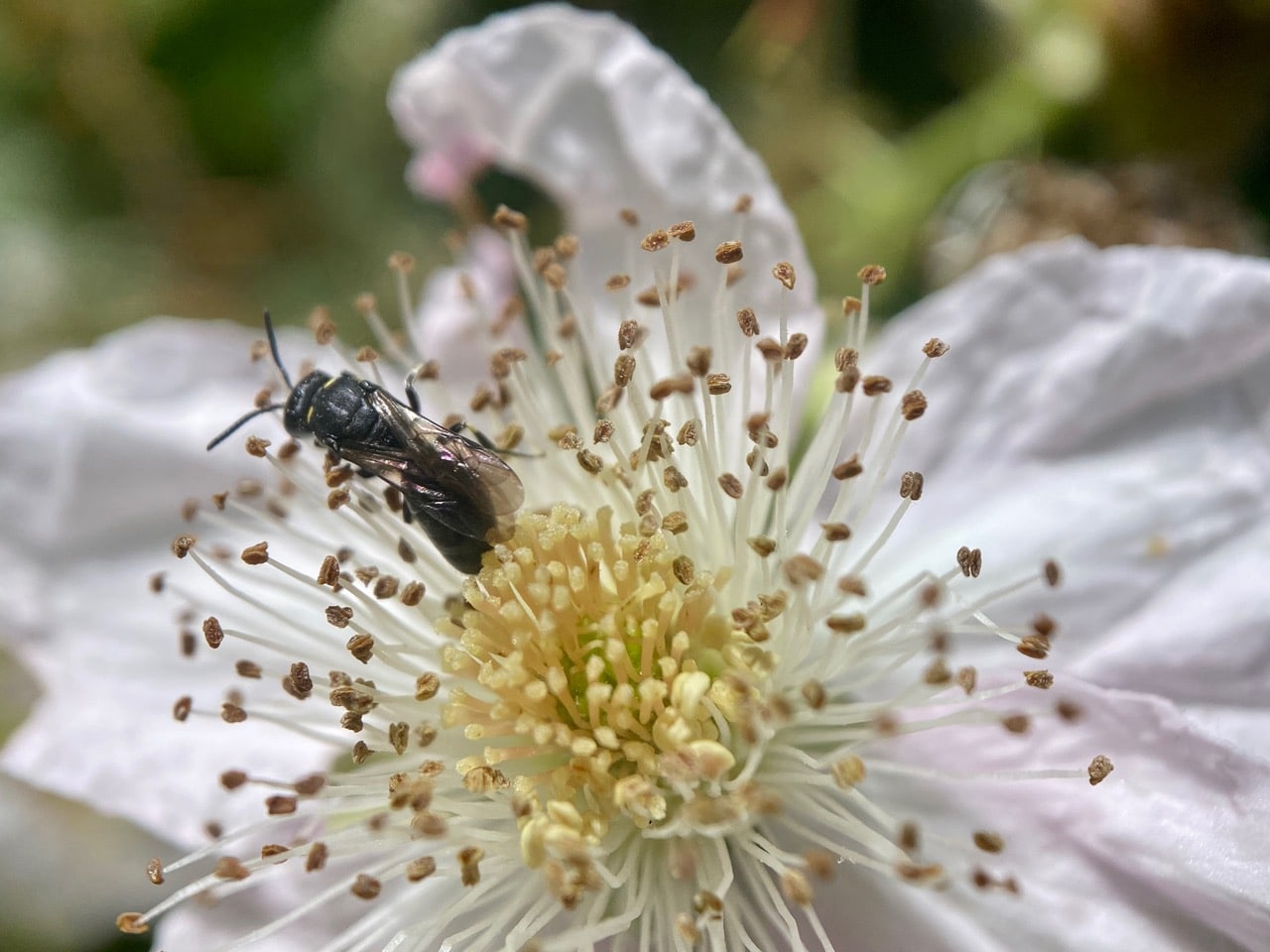
Close-up of one of the Masked Bees, Hylaeus sp. (family Colletidae). Note the yellow markings on the body of the bee.
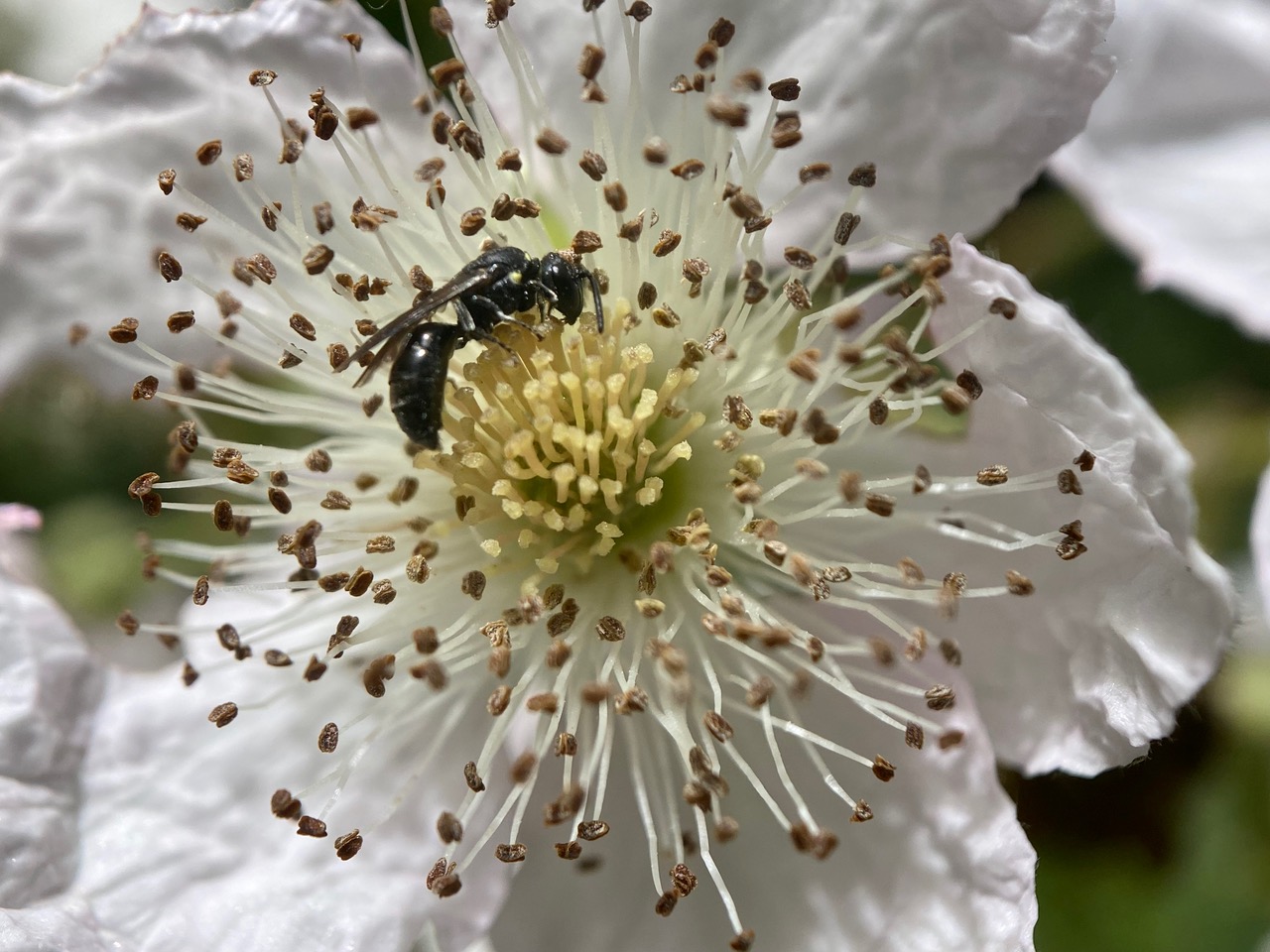
The Masked bee is now on the styles and stigmas (female parts) of the flower, surrounded by the dark-tipped stamens (male parts). Unlike our native California Blackberry, Rubus ursinus which is dioecious, with male and female flowers on separate plants, the Armenian Blackberry, Rubus armeniacus has bisexual flowers with both male and female parts. All the flowers of this plant are capable of producing fruits.
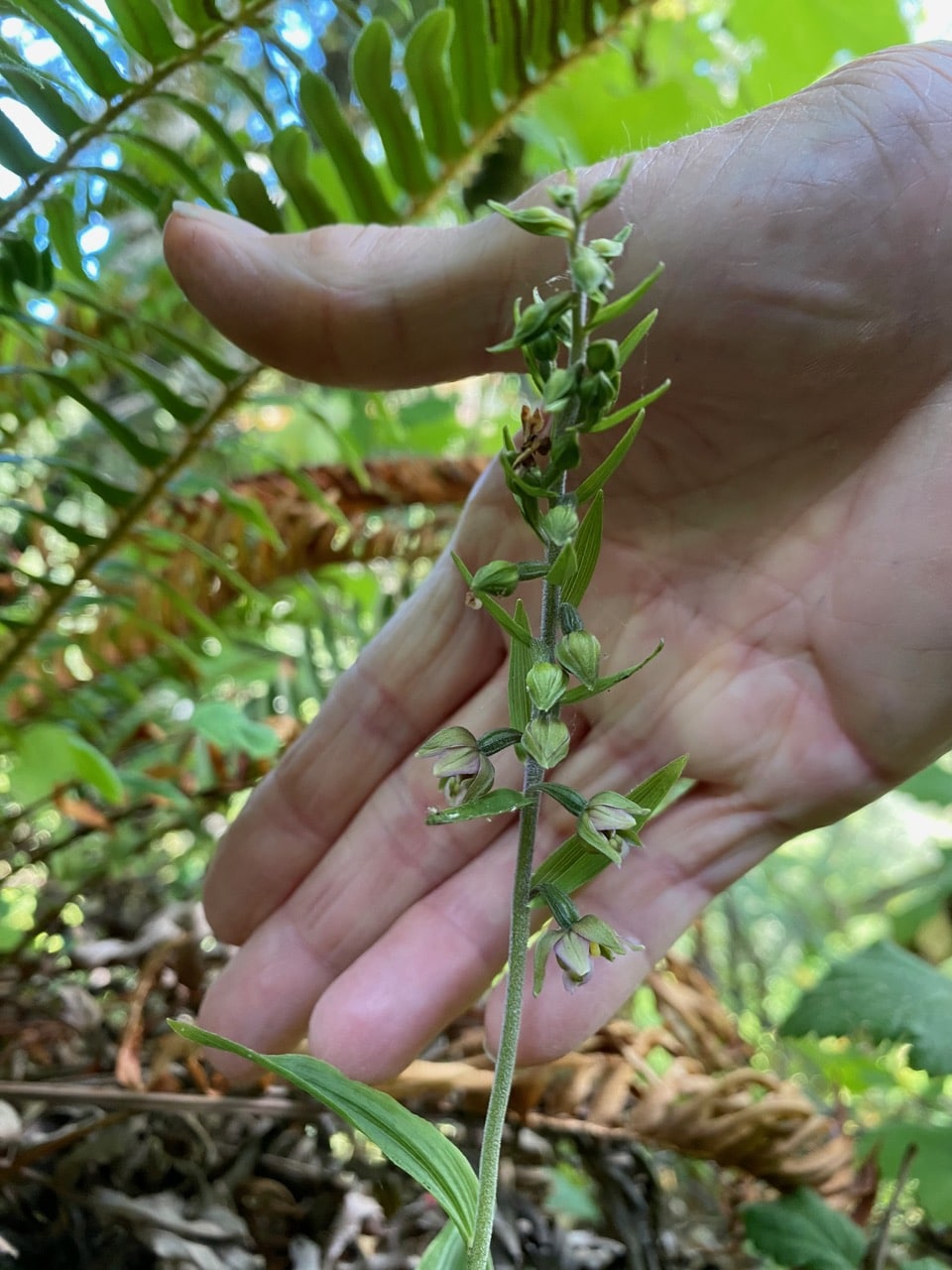
Andy’s hand provides a backdrop and scale for the weedy Broad-leaved Helleborine, Epipactis helleborine blooming in the shade along the Upper Packrat Trail.
Originally native throughout much of Europe, North Africa, and Asia, the Broad-leaved Helleborine Orchid can now be found growing throughout many temperate and sub-tropical regions of the world. The hardy orchid thrives in disturbed habitats. Like all orchids, the species requires fungi for germination and growth. While many orchids are picky about their fungal partners, the Broad-leaved Helleborine are a generalist, able to partner with over 60 distinct groups of mycorrhizal fungi. Although wasps, notably the Yellowjackets are thought to be the most effective pollinators, myriad other insects including flies, beetles and butterflies will visit these blooms. What is the attraction?
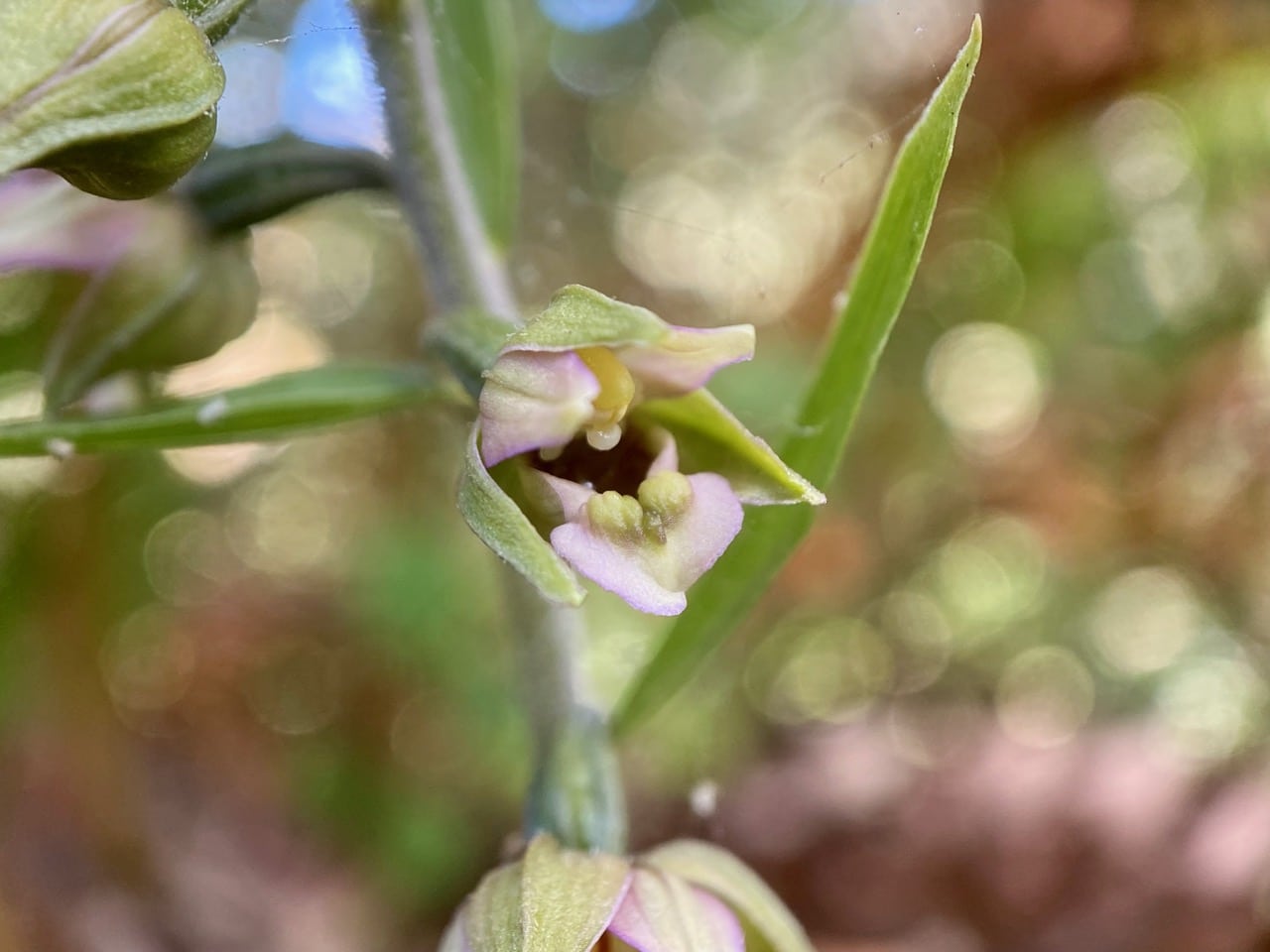
Close-up of the flower of the Broad-leaved Helleborine. Nectar is produced in the cup-shaped lower lip of the flower.
The Broad-leaved Helleborine Orchid is a wizard of chemistry. Scientists have found a diverse array of chemicals, a witch’s brew of insect attractants in the nectar. For starters, there’s vanillin which attracts a broad range of insects. Then there’s the kairomones, similar to aphid alarm pheromones that attract the predators of aphids such as the hover flies. A series of compounds called green-leaf volatiles are in the nectar as well. Many plants produce these compounds when their leaves are damaged by insect feeding; they also serve as a dinner bell for predatory insects. If you observe the visitors to the flowers, especially the Yellowjacket wasps, you’d discover that the insects quickly become intoxicated. There is a plethora of narcotics in the Broad-leaved Helleborine nectar, including various types of alcohols and opioids like Oxycodone. This narcotic concoction induces the intoxicated visitors to spend a lot more time at each flower than they would if they remain sober.

I carefully stick a finger into the little orchid flower, and come away with a pair of pollinia on the corner of my nail. This would normally happen to a pollinator when it sticks its head into the flower to access the nectar.
Orchid pollinia are specialized, sticky pollen masses found in orchids that are transferred as a unit to other flowers by pollinators. These structures, typically occurring in pairs, are connected to a viscidium, a sticky disc that adheres to insects or other pollinators. When a pollinator visits another orchid, the pollinia are deposited on the stigma, facilitating pollination and fertilization.
A little further along the trail, we encounter a Yellowjacket on a spike of Broad-leaved Helleborine Orchid. Unfortunately I am not fast enough to capture the action.

Gee, what happened to this Chokecherry, Prunus Virginiana ? Its leaves are covered with strange, pinkish finger-like growths. These are obviously galls.
Plant galls are abnormal growths, resembling tumors or warts, that form on plants due to the influence of other organisms such as insects, mites, bacteria, fungi, or nematodes, providing them with food, shelter, and protection. The gall-inducing organism lays eggs or penetrates the plant tissue, triggering a response in the plant. The plant cells begin to proliferate and reorganize, forming the gall tissue within which the gall organism feeds, protected from predators and harsh environmental conditions. Different gall-inducing organisms can create galls with unique appearances, shapes, and colors, allowing for identification of the gall-maker.
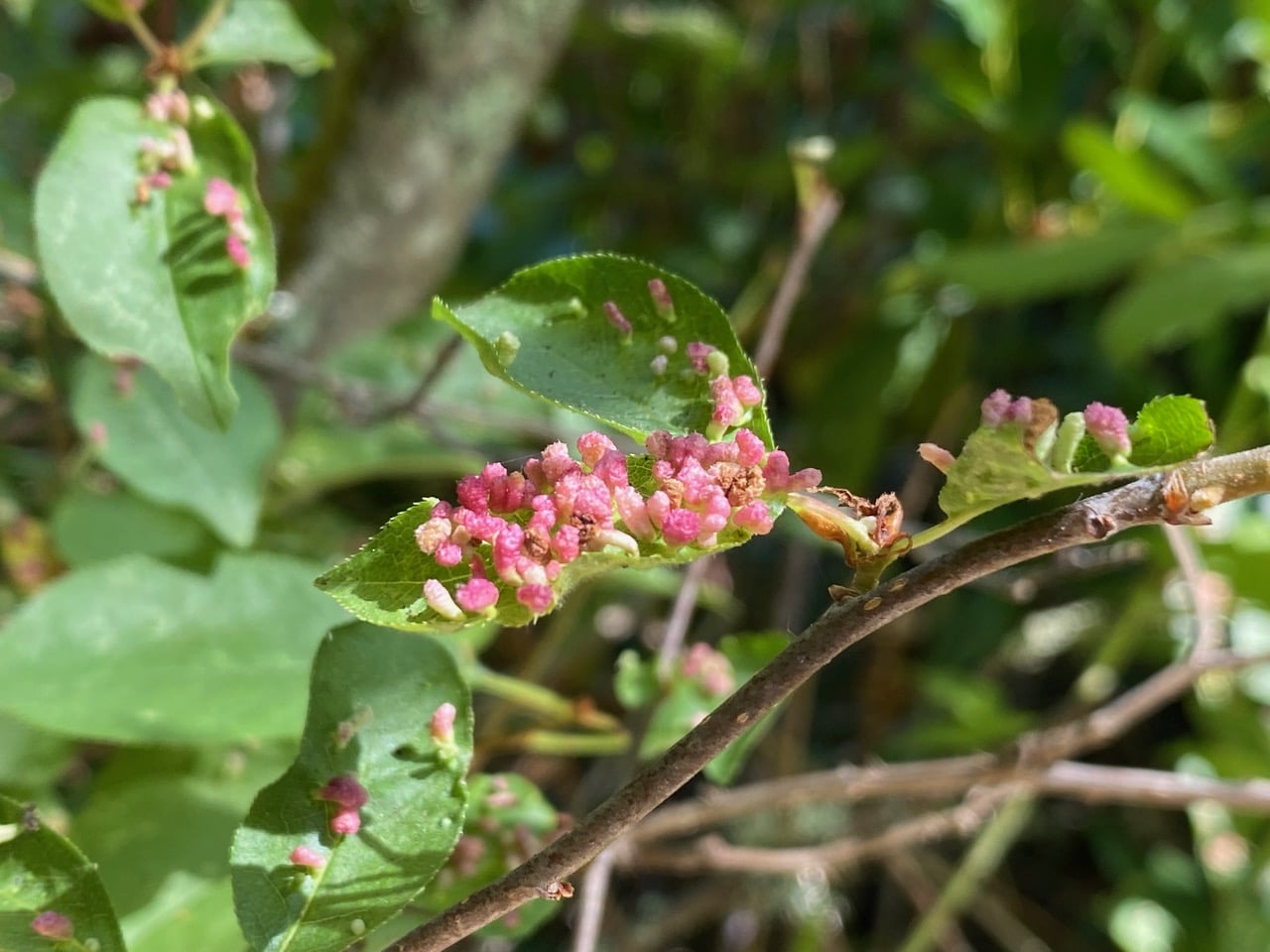
The galls on the Chokecherry leaves are induced by the Plum Finger Gall Mite, Eriophyes emarginatae (family Eriophyidae, class Arachnida).
Eriophyid Mites are microscopic mites that often go undetected. Unlike most adult mites that have four pairs of legs, eriophyid mites have only two pairs. They are slow-moving, usually white or yellow in color, and have a distinctive “carrot” shape. They are very host-specific. Most eriophyid mites make their home on the surface of leaves where their feeding can cause bronzing or reddening but some are also responsible for creating galls on leaves or witches’-broom on stems and flower buds. Adult females overwinter in cracks and crevices of twigs and bud scales. Females lay eggs in the spring. The young mites that hatch out resemble the adults. Numerous generations are produced each year. They are primarily spread by wind.
Mite galls on Chokecherry leaves are abnormal growths caused by eriophyid mites, tiny arachnids that feed on the underside of leaves. These galls, often appearing as finger-like protrusions or pouch-like structures on the upper leaf surface, are generally harmless to the tree. While they may by unsightly they typically do not cause significant damage to the plant’s overall health.
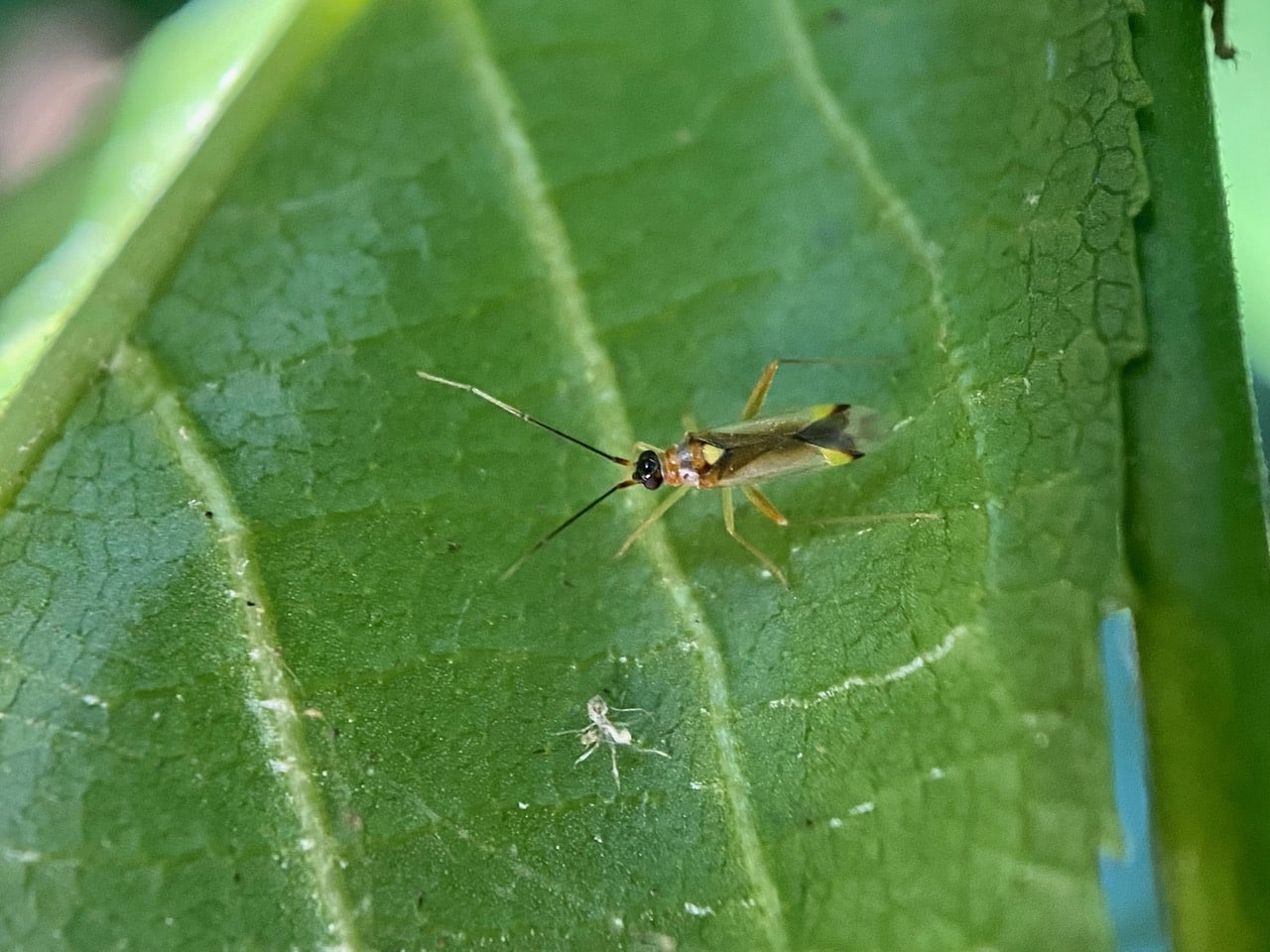
A tiny Mirid Bug, Campyloneura virgula (family Miridae) is moving on the back of a Chokecherry leaf. It is probably hunting for gall mites!
Campyloneura virgula (family Miridae) is the only species in the genus Campyloneura. The species has been introduced to the United States from Europe. Adults can reach a length of 4-5 mm, easily recognizable by the coloration of its yellow cuneus tipped with dark red. This common predatory bug hunts for small insects, such as aphids and red mites. Adults’ flight time is from June to October during which they can be found on numerous deciduous trees. The species is notable for its reproduction – males are extremely rare, as C. virgula reproduces primarily without mating (parthenogenesis).
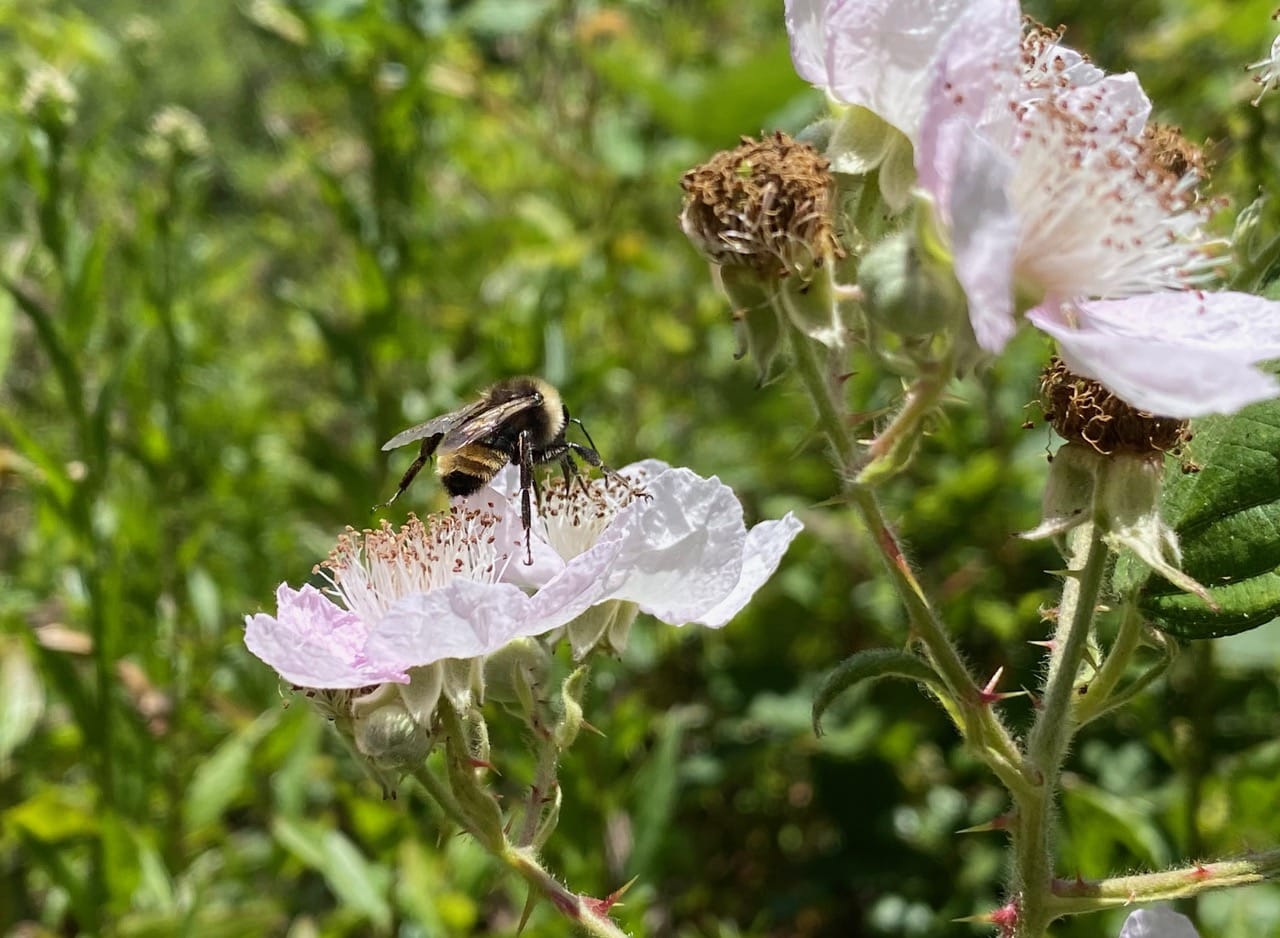
Armenian Blackberry is blooming profusely in a forest clearing, attracting a plethora of insects. That looks like a male Yellow-faced Bumble Bee….
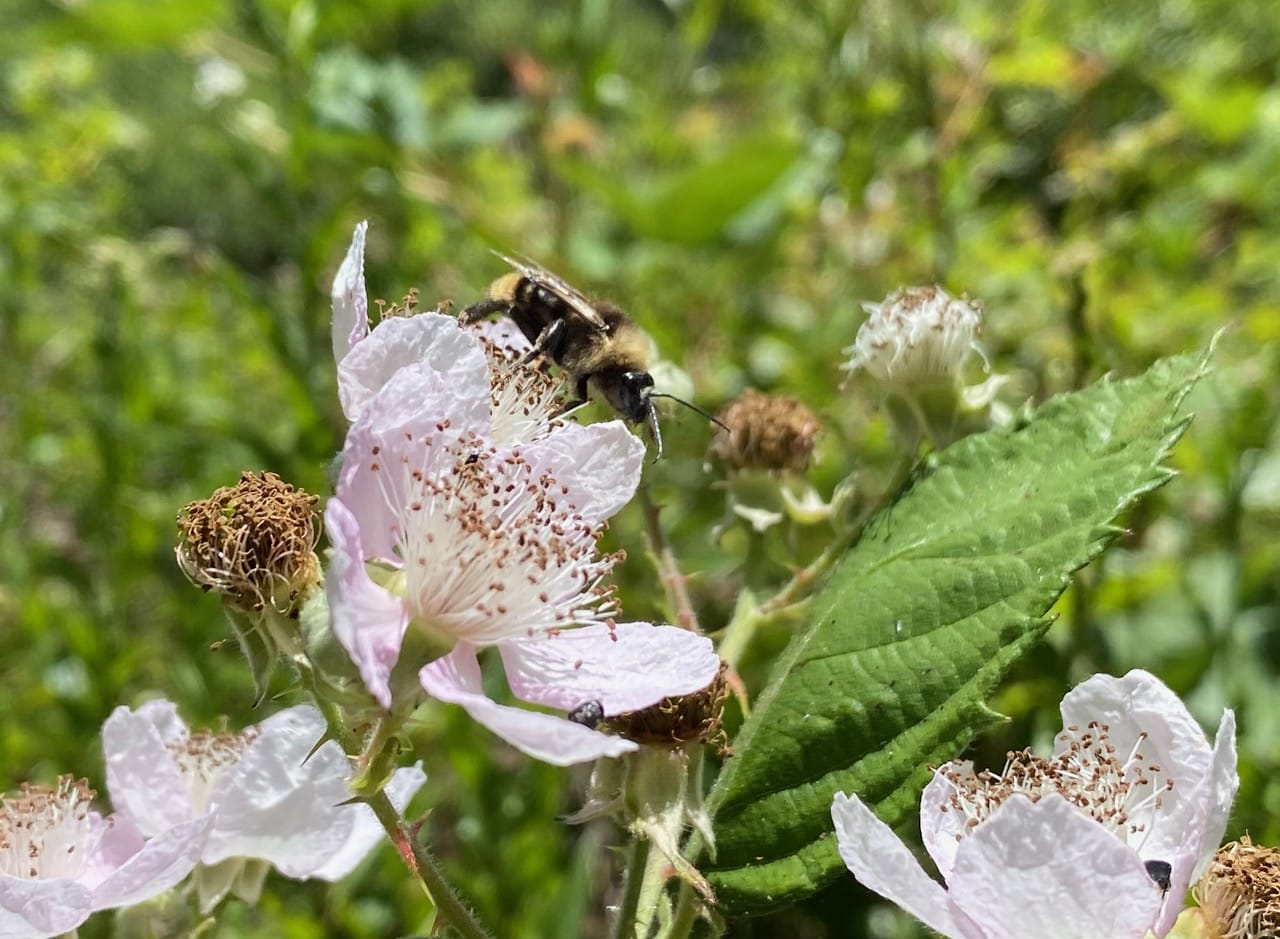
… until it turns around and I see its black head. It is a California Bumble Bee, Bombus californicus (family Apidae)!
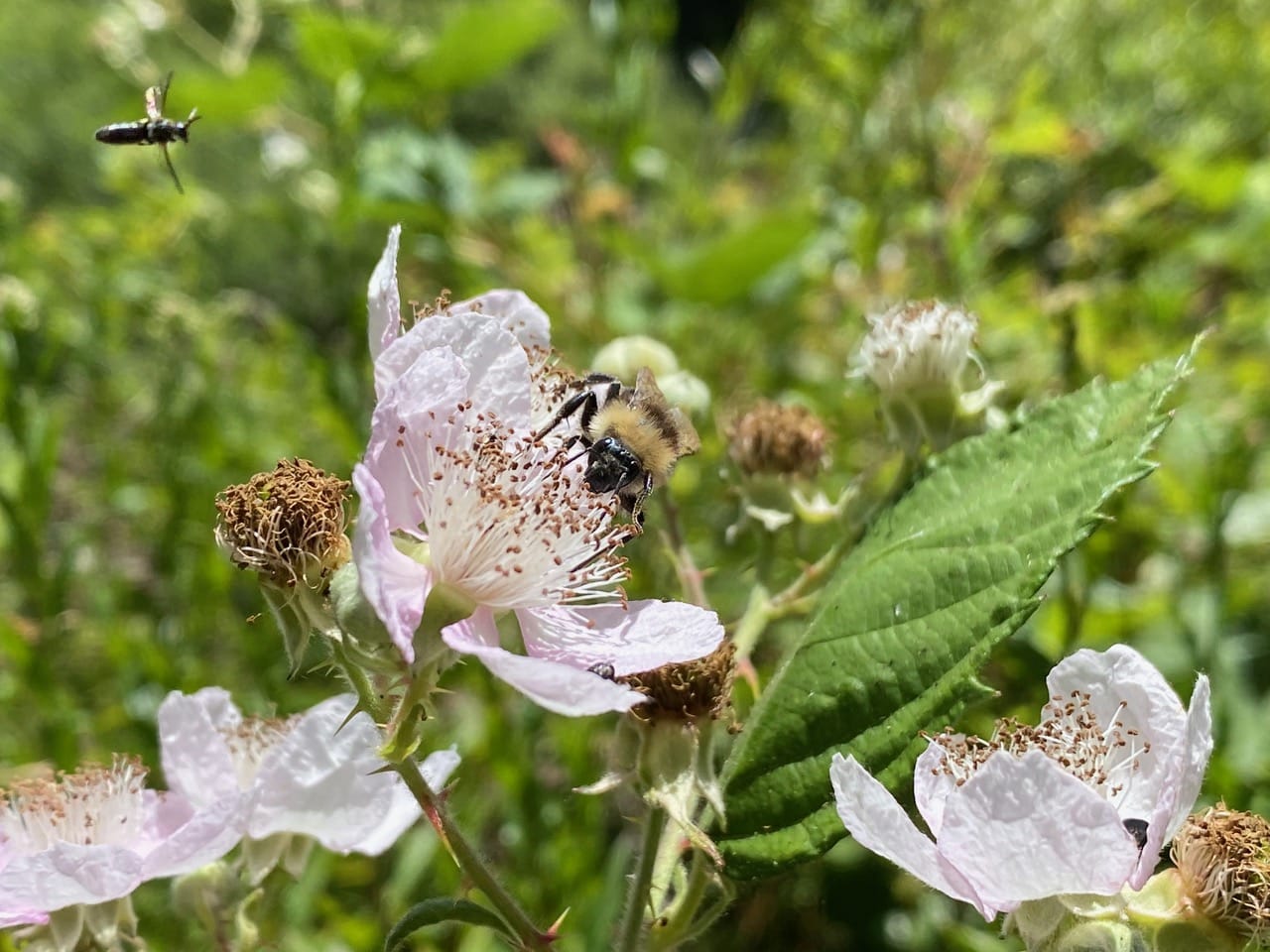
Bombus californicus, the California Bumble Bee, is found in Central and the western half of North America. The species is now classified as Vulnerable by the IUCN. It was the most common bumble bee in California until about the 1990s when its numbers and distribution began to decline. Many factors may have contributed to its decline, including invasive species, pesticide use, commercial bumble bee rearing, habitat destruction, and climate change.
Although morphologically the species is quite variable, the “typical” color pattern of female B. californicus is black with only a single strong yellow band anteriorly on the thorax, and another single yellow band near the apex of the abdomen. Males exhibit considerably more variation.
The California Bumble Bee is an important pollinator in alpine environments in its native range. They are social bees having a queen and workers. Their colonies last for one year. New queens overwinter, usually underground, and found new colonies from scratch the following year. Queens emerge from April through mid July. Workers are present from April to September. The species is known to pollinate sage, blueberry bushes, red clover, California poppies, and many other species of flowers.