

Pollinator Post 7/8/23 (3)

A Flea Beetle, Alticus sp.(family Chrysomelidae) is feeding on the flowers of Nude Buckwheat, Eriogonum nudum.
Flea Beetles are in the largest subfamily (Alticinae) of the family Chrysomelidae, or Leaf Beetles. The name Altica is derived from the Greek word haltikos, meaning good jumpers. The beetles have strong hind legs allowing them to jump long distances like true fleas. Altica flea beetles are 3-9 mm in length, and females are typically larger then males. Most Altica beetles have hard outer wings elytra that are metallic blue to green in color that protect similarly colored metallic bodies that reflect purple and bronze colors and are elongate oval in shape. Antennae have 11 segments and are filiform (threadlike).
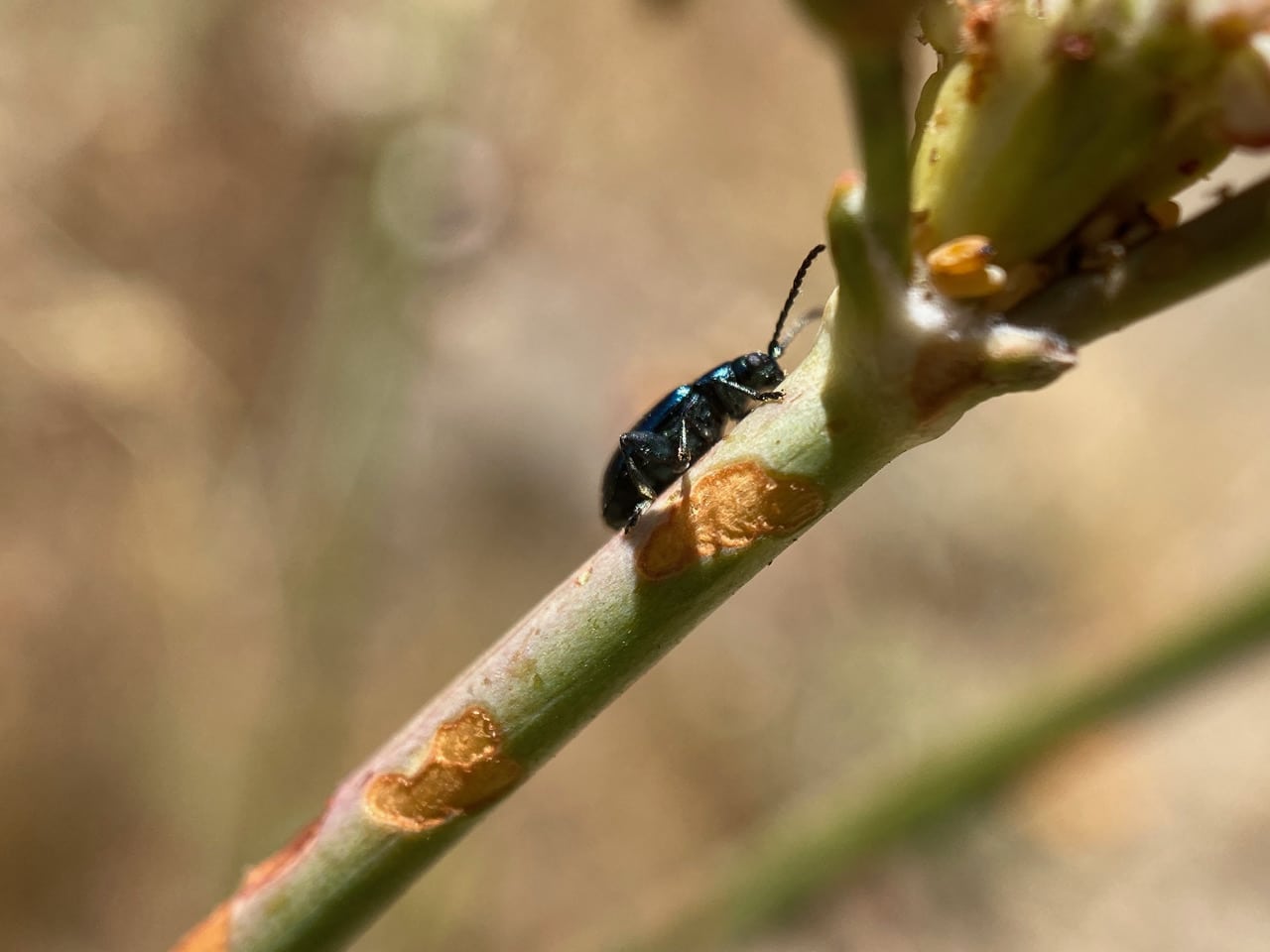
A Flea Beetle, Alticus sp. is crawling up the stem of Nude Buckwheat. Note the scars left on the stem by beetle feeding.
The life history patterns of common flea beetles are very similar among Altica species with the major difference being host plant preference. Adults and larvae Altica flea beetles feed on all sorts of plant tissues, and all species are fully herbivorous. Many are serious pests of cultivated plants, including food crops. Others are beneficial due to their use in biocontrol of invasive weeds.
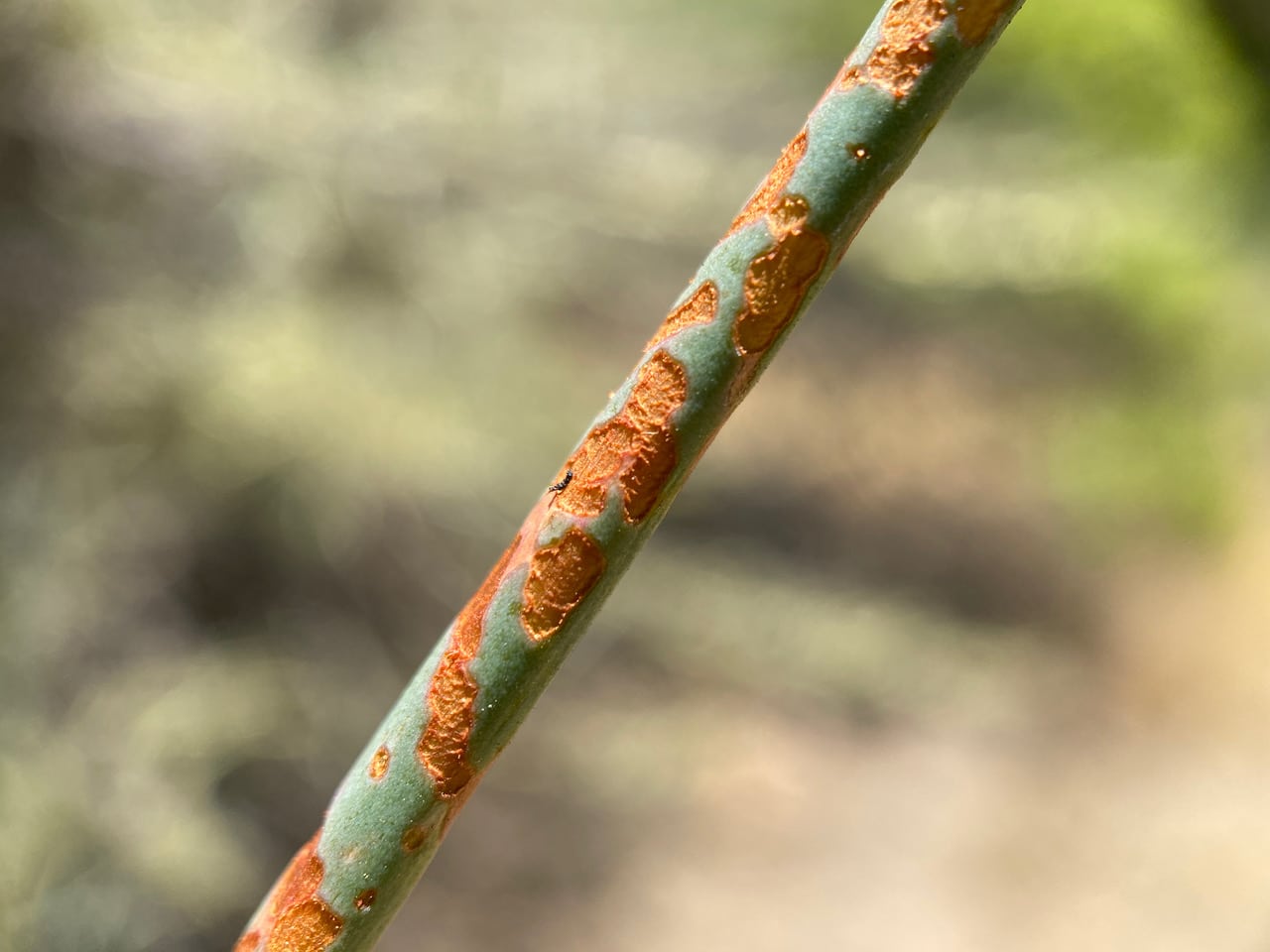
Flea Beetle chew marks on a stem of Nude Buckwheat.

I am just about to take a picture of a pair of mating Flea Beetles, Alticus sp., when out comes the male’s huge aedeagus. He proceeds to insert it into the female while I watch in disbelief. Beetle porn!
An aedeagus is a reproductive organ of male insects through which they secrete sperm from the testes during copulation with a female. It can be thought of as the insect equivalent of a mammal’s penis.
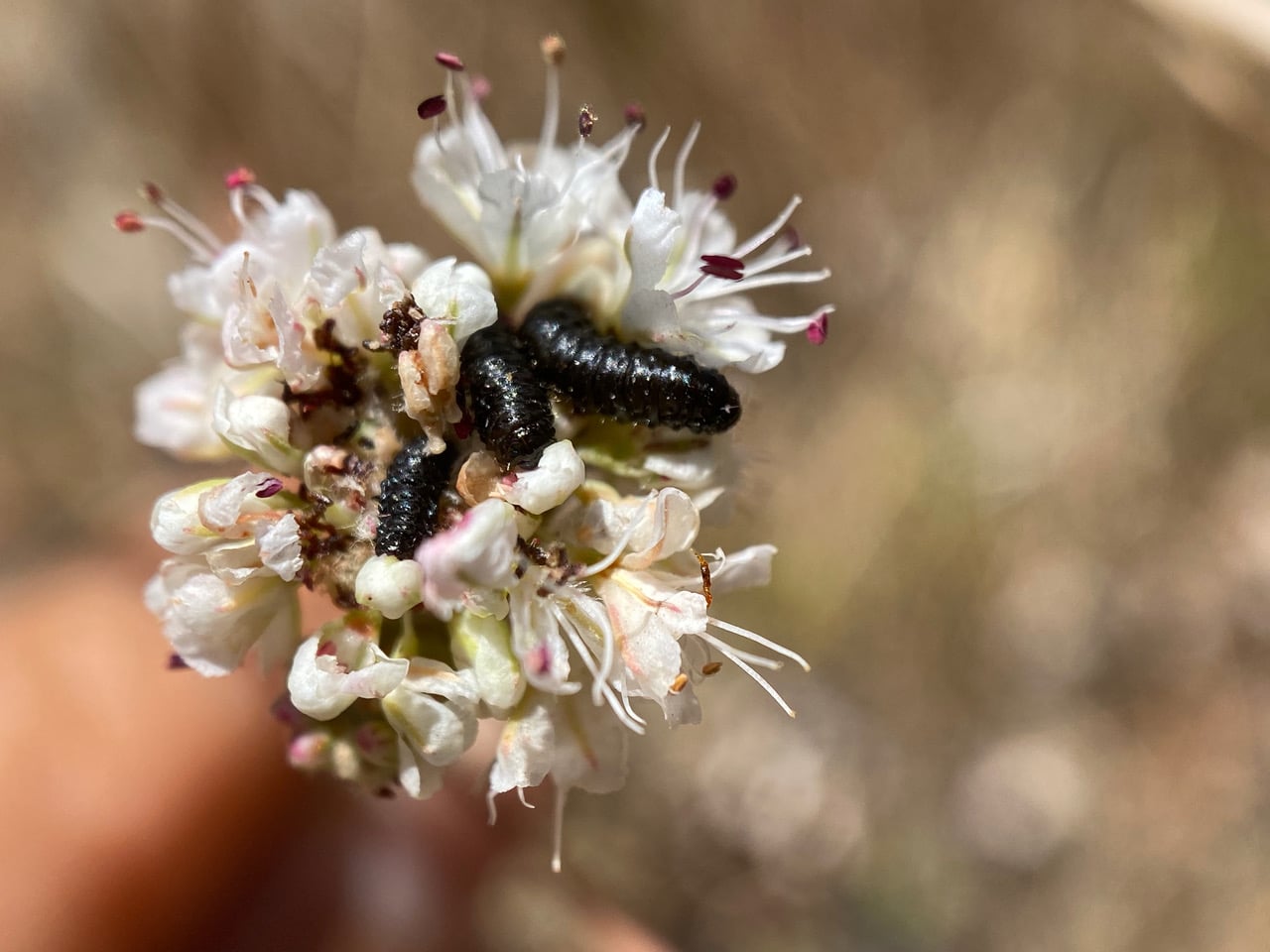
Flea Beetle reproduction is occurring in earnest on the Nude Buckwheat. Their larvae are already appearing on several inflorescences. They are dark and shiny and caterpillar-like. They feed on the flower parts and leave unsightly frass/debris on the flower clusters.
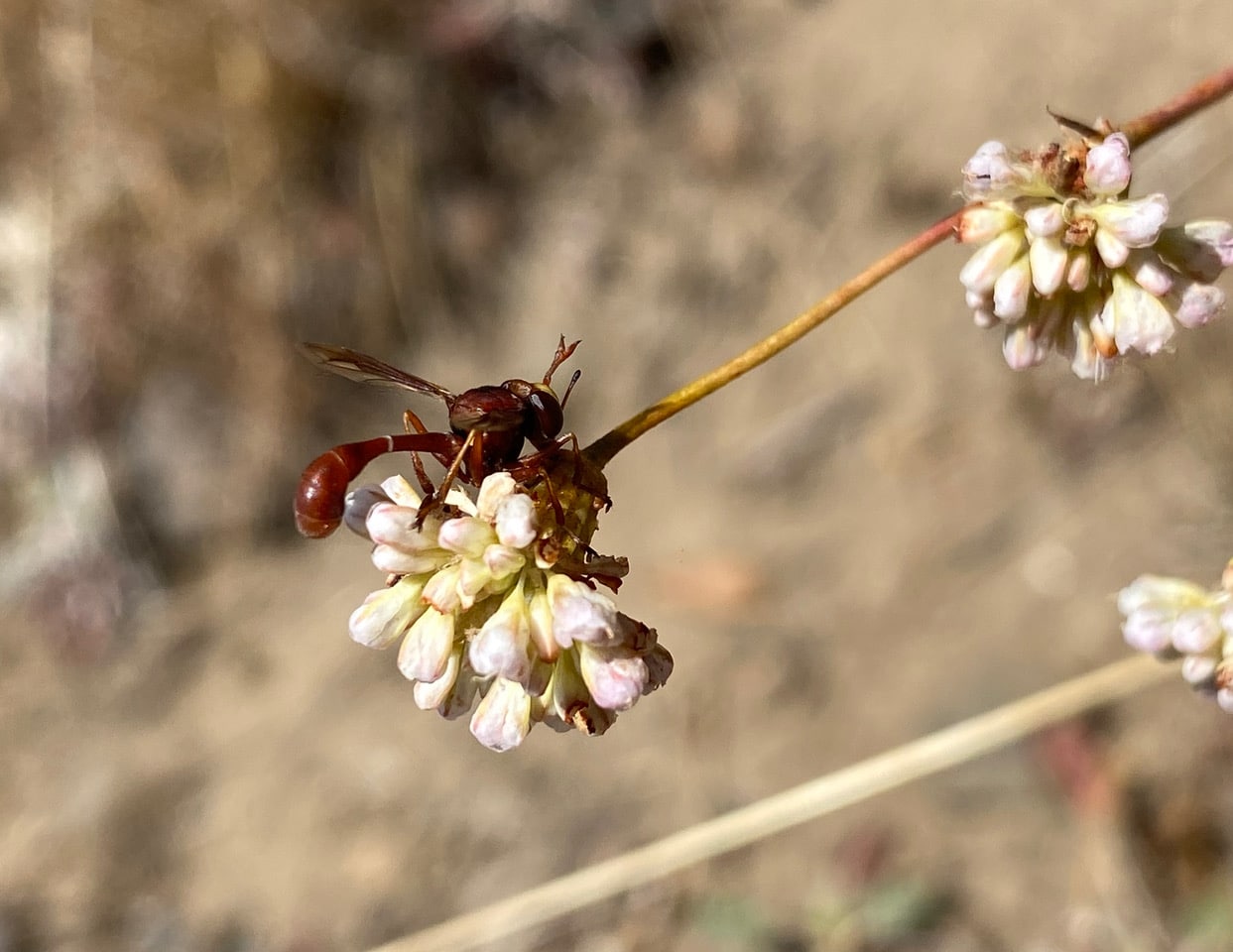 As I look up from the beetles, my heart misses a beat. On the next Nude Buckwheat, a reddish wasp-like insect is perched on an inflorescence. It is a Thick-headed Fly, Physocephala burgessi (family Conopidae), a parasitoid of bumble bees!
 The small and little-known family of Conopidae, commonly called the Thick-headed Flies, are distributed worldwide. Remarkable mimics of wasps and bees, the flies are frequently found at flowers, feeding on nectar with their long probosces. The larvae of all Conopids are internal parasitoids, mostly of aculeate (stinging) Hymenoptera (wasps, bees). Adult females aggressively intercept their hosts in flight to deposit eggs. Vulnerable foraging bees are likely the most susceptible to parasitism by Conopids. The female’s abdomen is modified to form what amounts to a “can opener” to pry open the segments of the host abdomen as the egg is inserted. The fly larva feeds on the host from the inside out. The vast majority of parasitized bumble bees bury themselves by burrowing into the ground right before they die. This behavior does not matter to the bees – they are doomed. But it is critical for the flies – if the host dies underground, the fly is sheltered from the elements, predators and parasites.
The life spans of parasitized bumble bees are not significantly shortened, though as the parasitoid grows, the bee can’t carry home as much nectar. Bumble bees will chill, literally, to put off the inevitable, seeking cooler spots, even sleeping outside at night to slow the growth within them. If many of the workers in a colony are infested, future queens may be smaller in size and may not have enough energy to get through the winter.
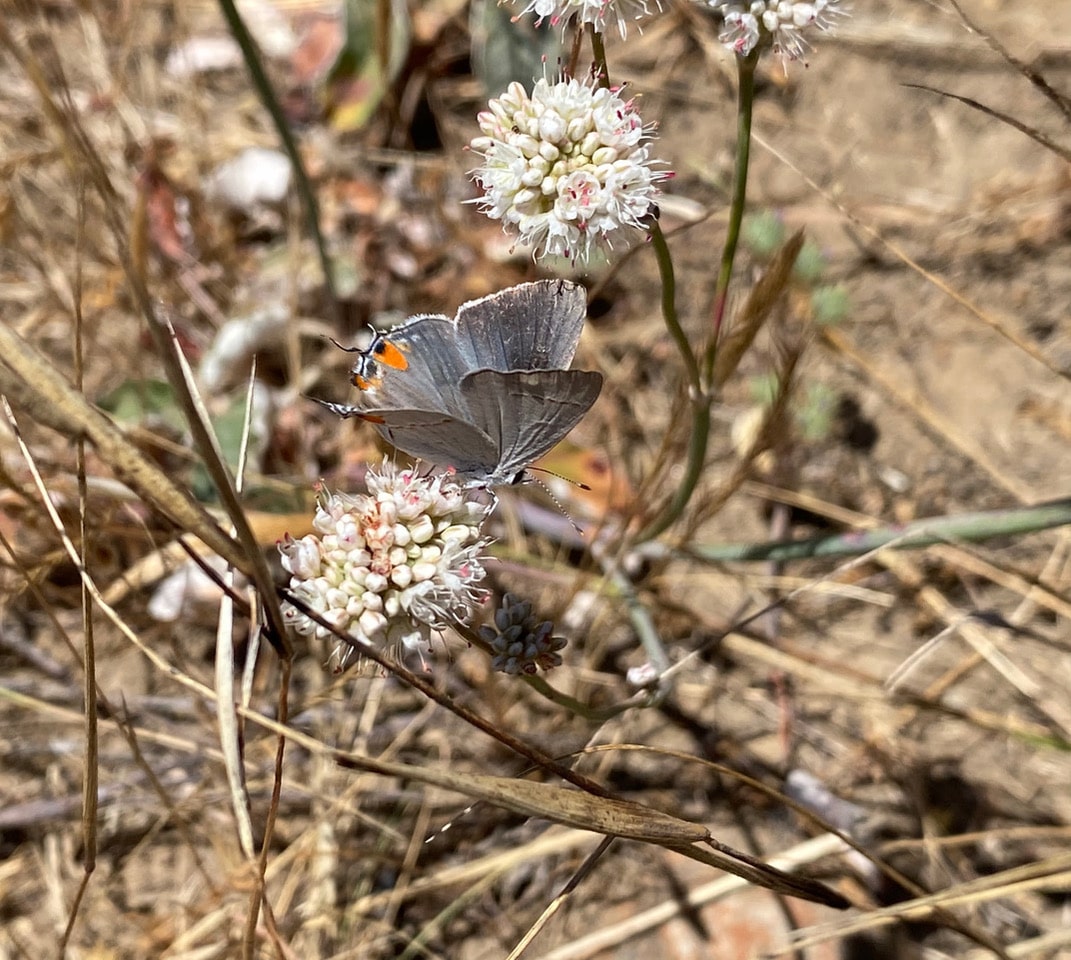
A Gray Hairstreak, Strymon melinus (family Lycaenidae) alights on an inflorescence of Nude Buckwheat.
Why the name “hairstreak”? These small butterflies have a slim, hair-like tail on the lower corner of each hindwing. Gray Hairstreak also has colorful false eyespots near the base of each tail. The eyespots and antenna-like tails are believed to fool predators into mistaking its tail for its head. Hairstreaks even add a behavioral component – a nectaring hairstreak often rubs its wings up and down, simulating the movement of twitchy antennae. This may fool birds, lizards, and spiders into attacking the wrong end, sparing the life of the butterfly.

Female Gray Hairstreaks lay eggs singly on the flowers, flower buds, young fruits and nearby leaves of a host plant. Host plants include a wide variety of plants, notably from the pea (Fabaceae) and mallow (Malvaceae) families. The caterpillars are greenish at the start, but older individuals range in color from gray to pink. As in many species of Lycaenidae, Gray Hairstreak larvae are myrmecophiles (ant-lovers) – often tended by ants. Ants harvest a sweet liquid from the caterpillar’s dorsal nectary organ (“honey gland”) and in exchange may protect them from predators. Larvae of many Lycaenidae species also communicate with ants via ant-like sounds (clicks and hums) or by sending vibrations through the substrate.
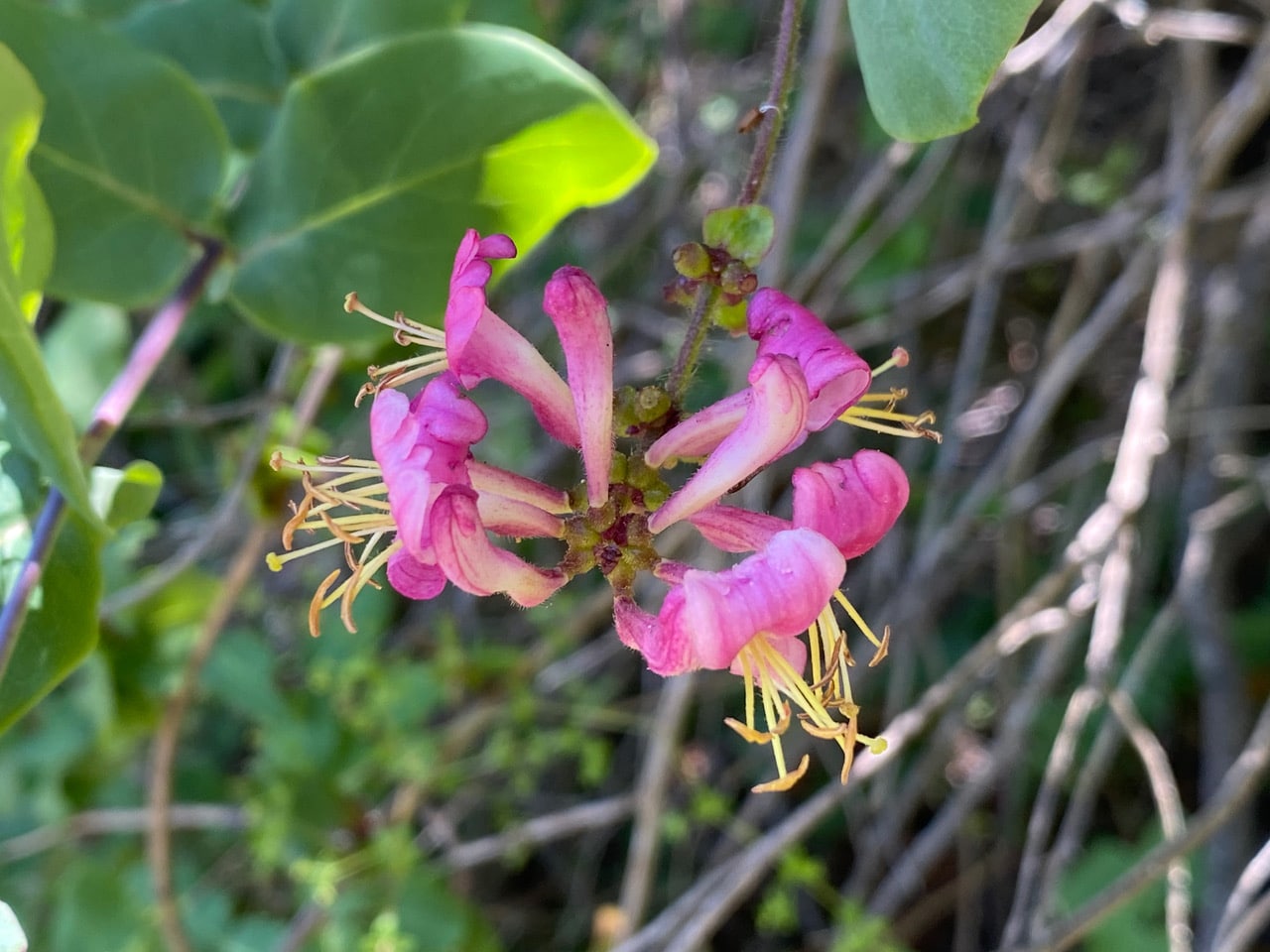
Along the shady stretch of Skyline Trail through the woodlands, the California Honeysuckle, Lonicera hispidula is blooming. I often wonder who pollinate these pendulous tubular flowers with fully exserted reproductive parts. Long-tongued moths that hover in front of the flowers without having to land?
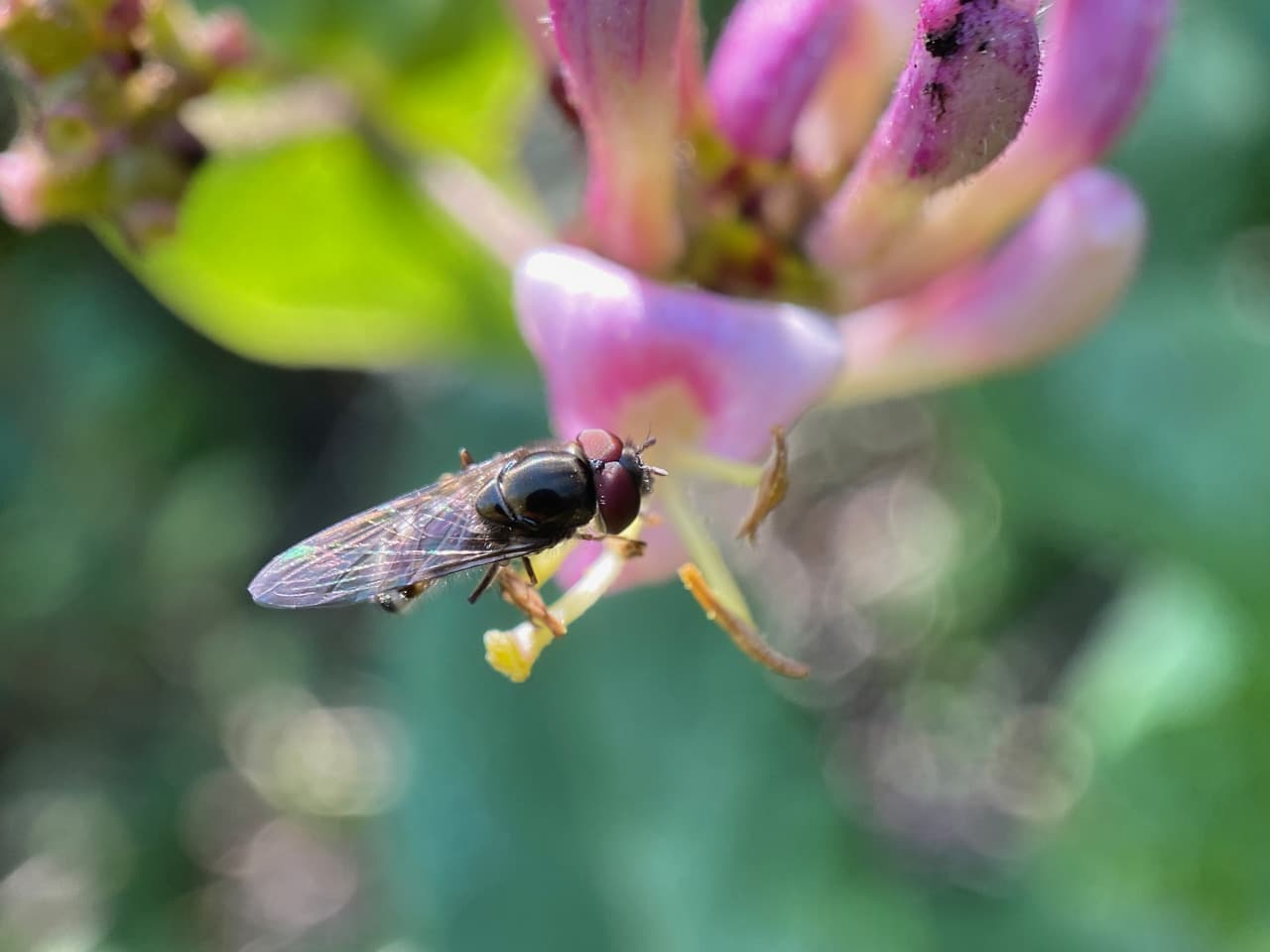 Hey, here’s something I have not considered – small insects can perch on the reproductive structures themselves! A hover fly is showing me how this can be accomplished.
A Sedgesitter, Platycheirus sp. (family Syrphidae) lands on the style of a California Honeysuckle flower.
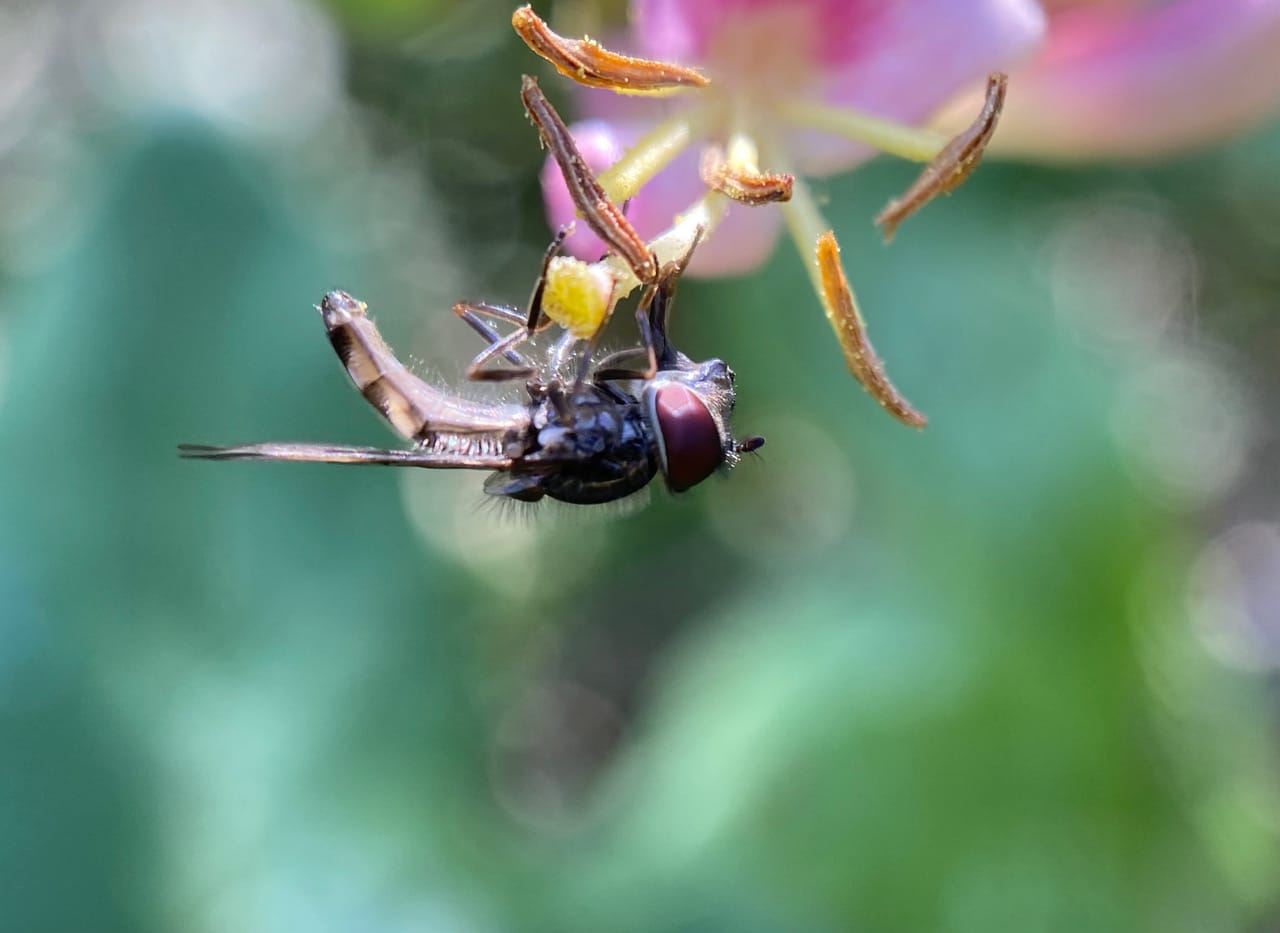
The fly extends it proboscis to feed on the pollen of a nearby anther.

Then it turns around to sample the stigma. While feeding, the hover fly makes contact with both the male and female reproductive organs of the honeysuckle flower repeatedly, as both the stigma and the anthers are crowded together and at the same level. Pollen transfer on the hairy fly is very likely. Many plants can prevent self-pollination by having self-incompatible pollen. Fertilization does not occur if self-pollen is deposited on its own stigma.

A brown Leafhopper (family Cicadellidae) is resting on a Poison Oak leaf. The characteristic rows of comb-like spines along its hind legs make for easy identification of Leafhoppers.
Leafhopper is the common name given to true bugs in the family Cicadellidae. The bugs are plant feeders that suck plant sap from grass, shrubs, or trees. Their hind legs are modified for jumping, and are covered with hairs that facilitate the spreading of a secretion over their bodies that act as a water repellent and carrier of pheromones. They undergo partial metamorphosis, and have various host associations, varying from very generalized to very specific.
While sucking the sap of plants, these insects excrete any extra sugar as a sticky liquid commonly called honeydew. This is a serious hazard for small insects, possibly sticking the insect to a leaf, or gluing its body parts together. Some bugs deal with this problem by shooting the waste away from their bodies at high speed. Leafhoppers have a unique solution – they make brochosomes, a proteinaceous material within a special gland in their guts, and secrete them by the billions in a milky anal fluid, and spread them over their bodies using their legs. When the fluid dries, the brochosomes form a powdery coating, and the leafhoppers spread them even further using comb-like hairs on their legs. The brochosomal coat is superhydrophobic, and acts as a water-repellent, non-stick coating protecting the leafhoppers from their own sticky exudates.
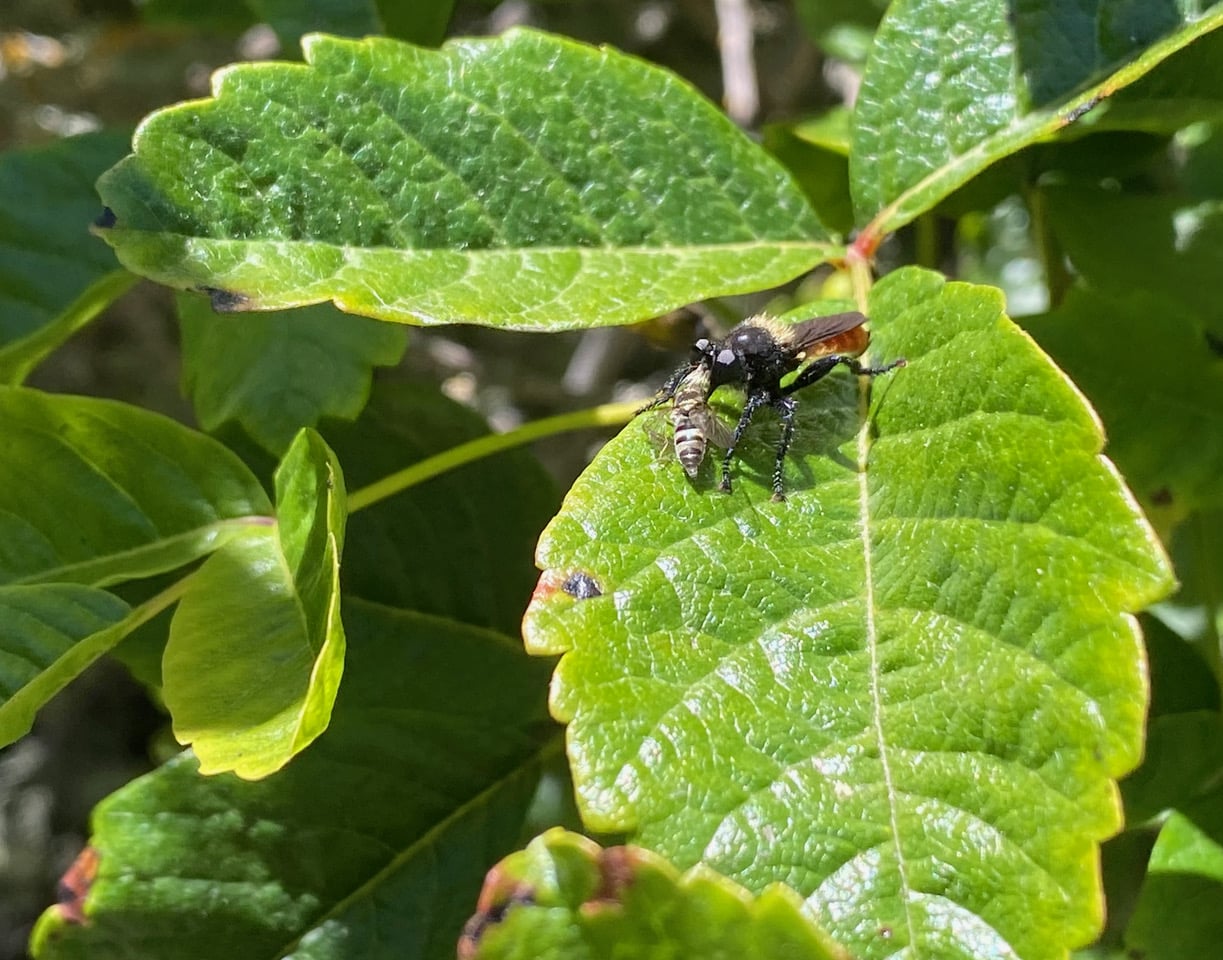
There’s a faint snap in the air and something lands on the Poison Oak by the trail. Whoa, a Robber Fly (family Asilidae) has caught a hover fly!
Asilids have three simple eyes (ocelli) in a characteristic depression on the tops of their head between their two large compound eyes. This feature is clearly visible in the front view and is a morphological peculiarity of Asilidae. The face also has a characteristic dense bundle of mustache-like bristles, called a “mystax”. Apparently the mystax helps protect the head and face of the fly from its struggling prey bent on defense.
The name “robber flies” reflects their notoriously aggressive predatory habits; they feed mainly or exclusively on other insects and, as a rule, they wait in ambush and catch their prey in flight. Asilids have long, stout, spiny legs for capturing prey. The fly attacks its prey by stabbing it with its short, strong proboscis, injecting the victim with saliva containing neurotoxic and proteolytic enzymes which very rapidly paralyze the victim and digest the insides; the fly then sucks the liquefied material through the proboscis. In general, Asilids attack a very wide range of prey, including other flies, beetles, butterflies and moths, various bees, ants, wasps, dragonflies, damselflies, grasshoppers, and some spiders. Larvae of robberflies live in soil, rotting wood, leaf mold, and similar materials, some being predatory and others detritivorous.
iNaturalist has identified our fly as a Bee-mimic Robber Fly, in the genus Laphria. Adults are predaceous on flying insects, including bees and other robber flies. Larvae are predators of insects living in rotten wood.
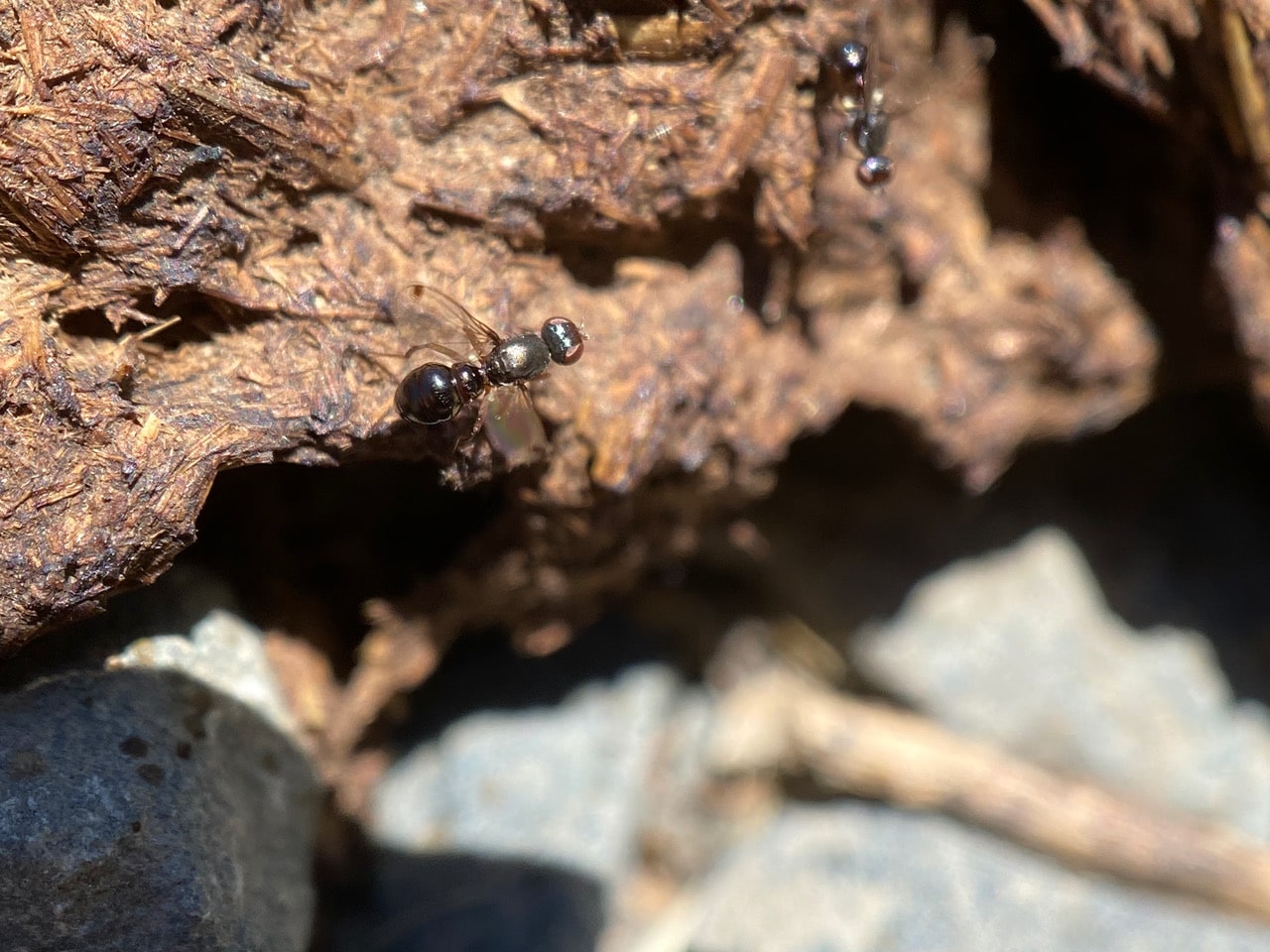
Approaching the Steam Train Entrance, I come across a pile of horse dung on the trail. Small, ant-like insects are running all over the partially dry dung. On closer examination they turn out to be the same insect as the one I saw earlier on the Nude Buckwheat – the fly that looked like a winged ant.

It’s not easy to get a good picture of these feisty flies – they are constantly on the move, and their body is very glossy.

Thanks to iNaturalist, the flies are quickly identified. They are Black Scavenger Flies or Ensign Flies, in the family Sepsidae. Over 300 species are described worldwide. They are usually found around dung or decaying plant and animal material. Many species resemble winged ants, having a “waist” and glossy black body. The head is rounded. Many Sepsidae have a curious wing-waving habit made more apparent by dark patches at the wing tip. Adult flies are found mostly on mammal excrement, where eggs are laid and larvae develop, and on nearby vegetation, carrion, fermenting tree sap, and shrubs and herbs.
Revolting as their dietary habits might seem, these flies serve a vital function in the ecosystem as decomposers/recyclers of organic matter. Nature’s clean-up crew. Imagine a world without them!