

Pollinator Post 7/8/23 (2)
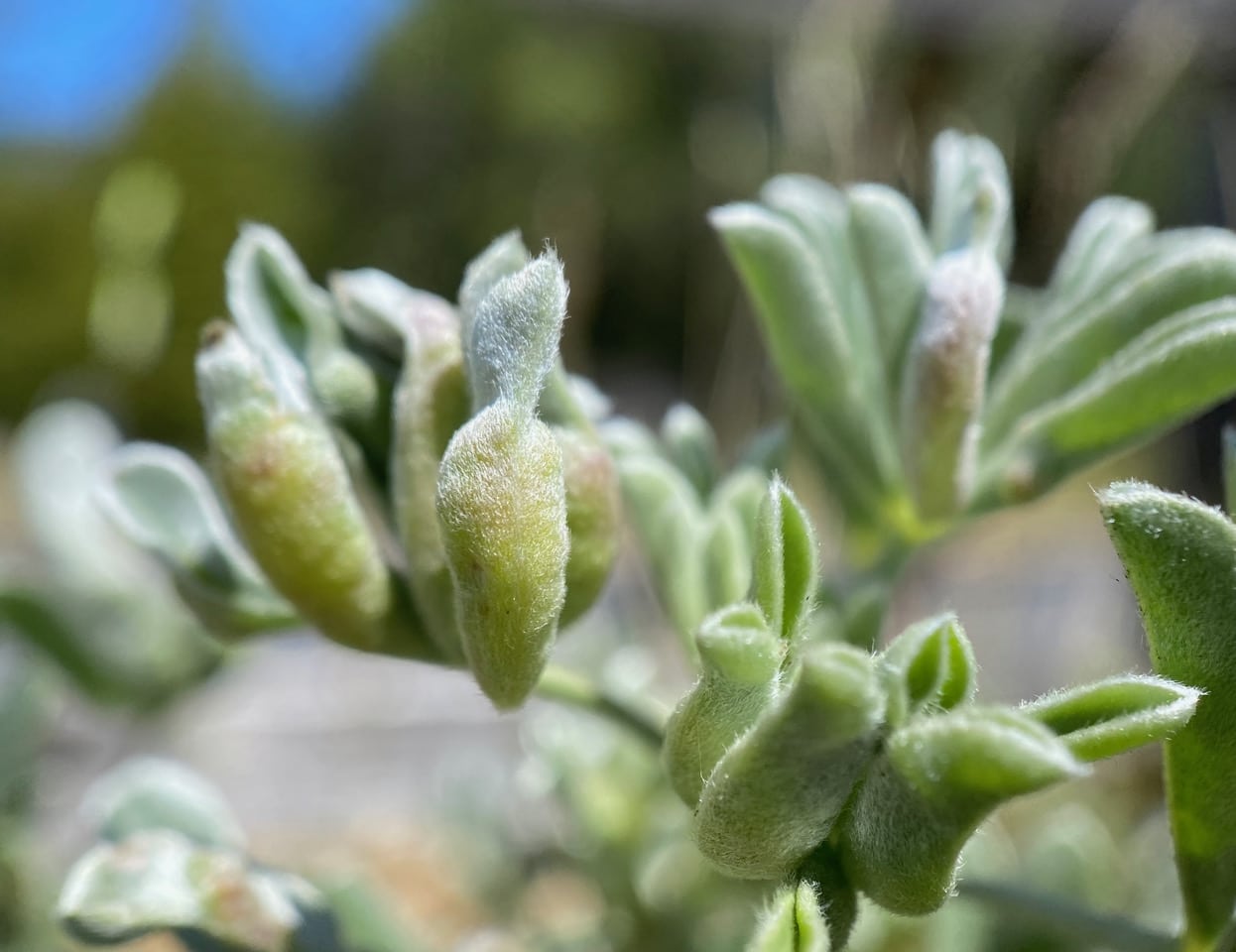 The gall flies have been busy on the Silverleaf Lupines by the Steam Train entrance. Just about every other leaflet on the plants have been galled.
These fleshy structures are galls induced by the Leaf-fold-gall Midge, Dasineura lupinorum (family Cecidomyiidae). Females lay their eggs on unopened leaflets in growing buds. Newly hatched larvae crawl between the closed halves of the leaflets and begin feeding, stimulating formation of the swollen galls. The larvae complete development inside the gall and remain there through pupation. The midge produces several generations per year.

The fruits on the Cow Parsnip, Heracleum maximum (family Apiaceae) have turned brown and dry.
The flattened fruit of Apiaceae consists of a cremocarp, a double unit which usually splits vertically into two separate mericarps when ripe. Dark colored resin canals called vitae (or simply, oil tubes) are embedded in the fruit wall and visible externally. The vitae contain essential oils. The resin ducts in the fruits have been shown to protect the seeds from insect predation and to have antimicrobial (including antifungal) properties. Cow Parsnip is generous to pollinators as flowers, but is not amenable to sharing its seeds!
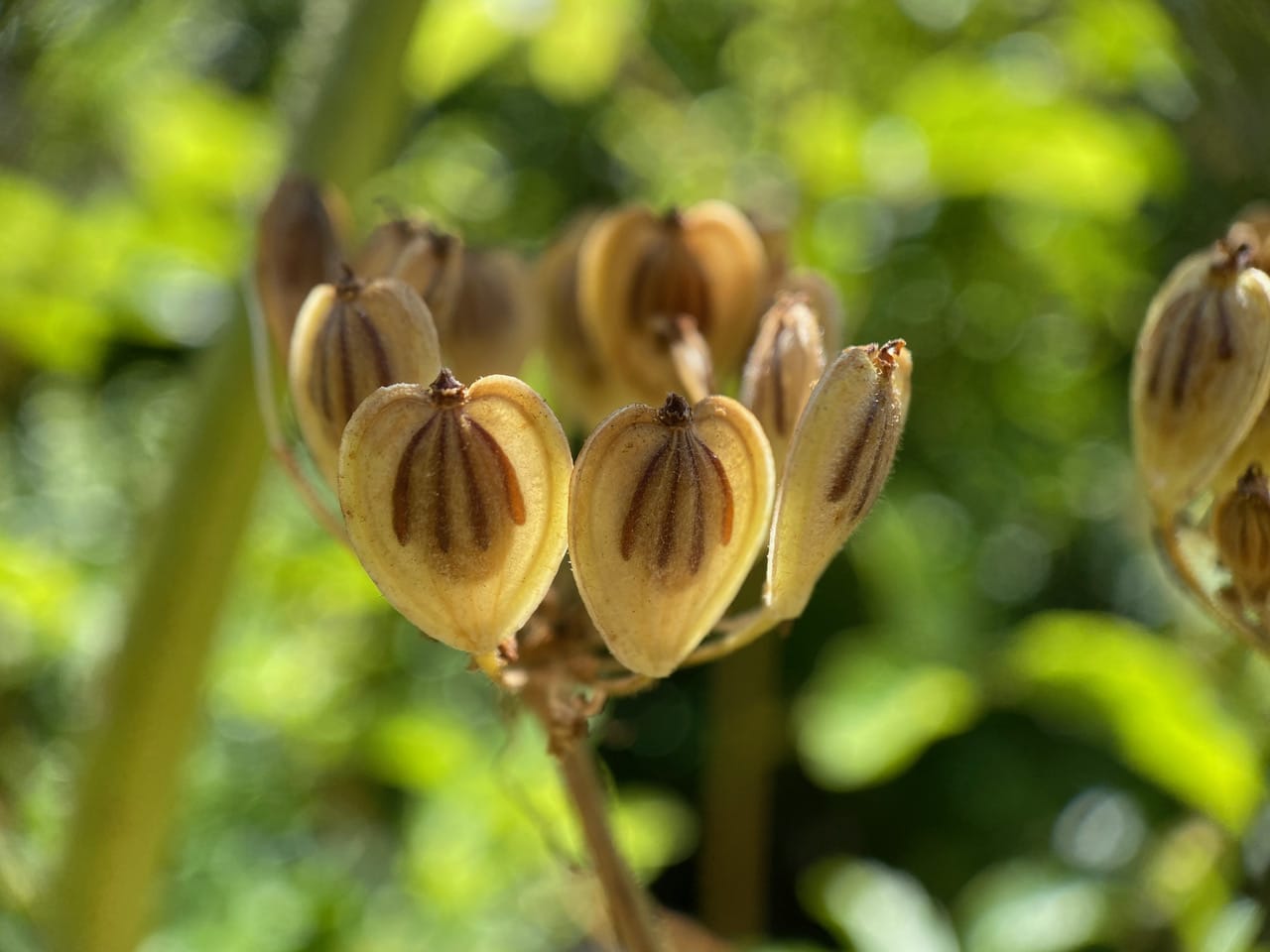
Backlit by the sun, the oil tubes show up prominently on these Cow Parsnip fruits.
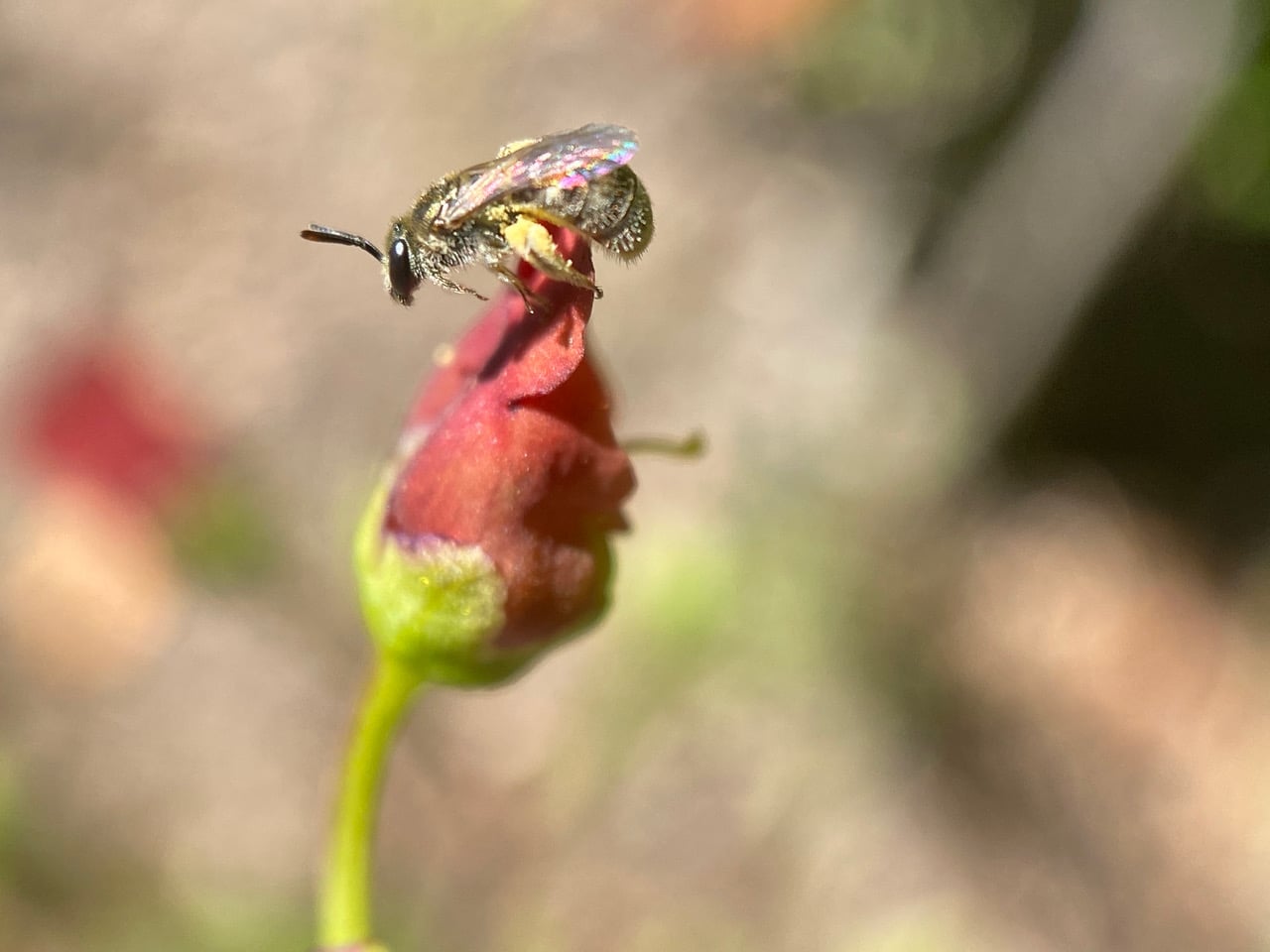
A metallic Sweat Bee, Complex Lasioglossum pilosum (family Halictidae) climbs on top of a flower of California Bee Plant, Scrophularia californica.
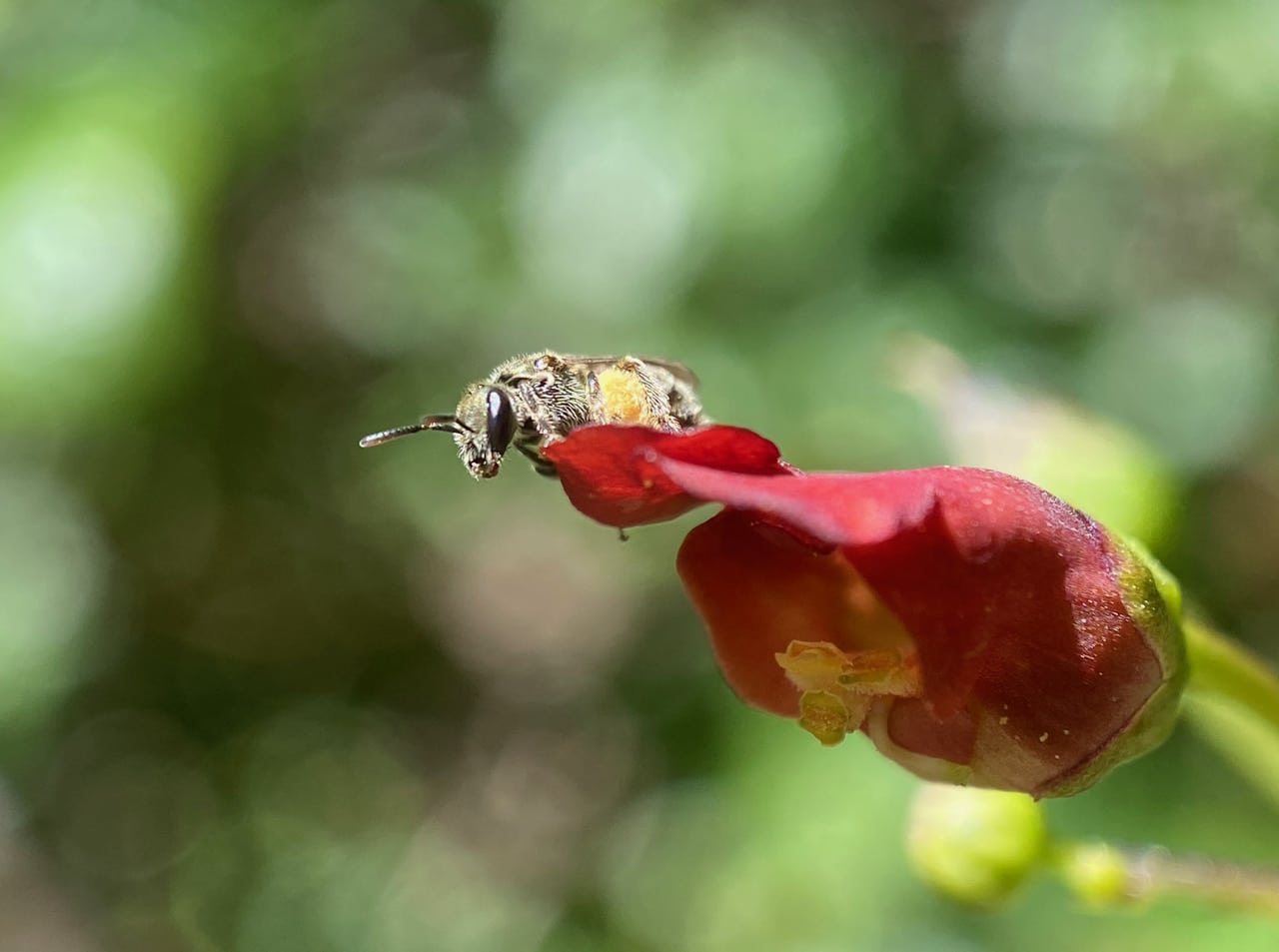
She is quite a hairy bee.
 The bee carries pollen on her entire hind legs as well as on the underside of her abdomen. That’s characteristic of the Halictidae family.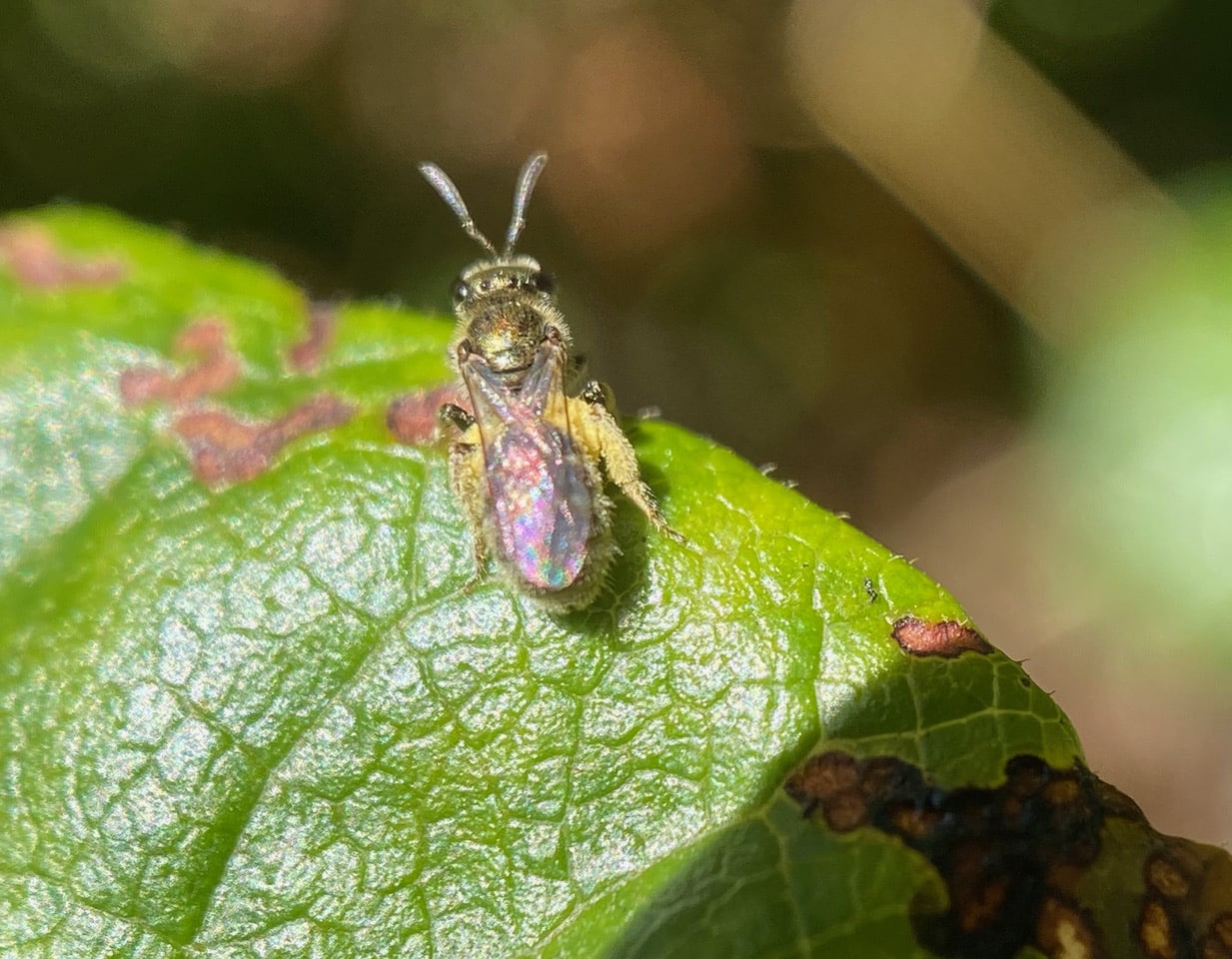
The bee flies off to groom herself on a Poison Oak leaf.

She also spends some time moving her mouthparts, probably cleaning them.
Halictidae is the second-largest family of bees. They are commonly called Sweat Bees, as they are often attracted to perspiration.
The sweat bee genus Lasioglossum is the largest of all bee genera, containing over 1700 species worldwide. They are highly variable in size, color, and sculpture; among the more unusual variants, some are kleptoparasites, some are nocturnal, and some are oligolectic. Most Lasioglossum species nest in the ground, but some nest in rotten logs.
Social behavior among species of Lasioglossum is extraordinarily variable; species are known to exhibit solitary nesting, primitive eusociality, and social parasitism. Colony sizes vary widely, from small colonies of a single queen and four or fewer workers to large colonies of over 400 workers and perennial life cycles.
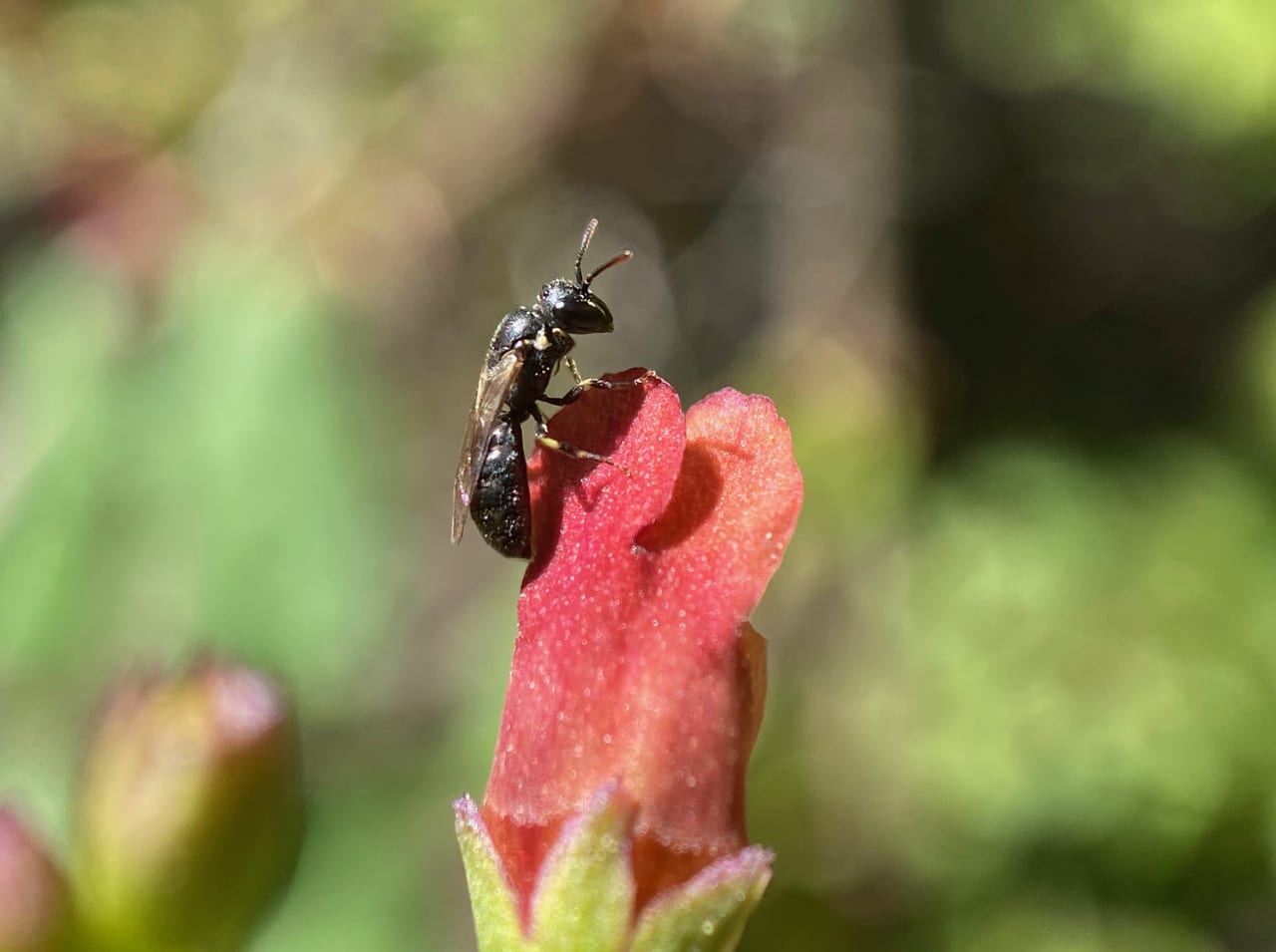
Ooh, that’s a different little bee on the Bee Plant flower! It is a female Masked Bee, Hylaeus sp. (family Colletidae). Note the sliver of yellow marking next to her eye, and the absence of any scopa (pollen collecting hairs) on her body.
Hylaeus (family Colletidae) are shiny, slender, hairless, and superficially wasp-like bees. They are small, 5 to 7 mm long, usually black with bright yellow or white markings on their face and legs. These markings are more pronounced on the males. Hylaeus do not carry pollen and nectar externally, they instead store their food in the crop and regurgitate it upon returning to their nests. They are primarily generalist foragers. Hylaeus are short-tongued, but their small body size enables them to access deep flowers. Hylaeus nest in stems and twigs, lining their brood cells with self-secreted cellophane-like material. They lack strong mandibles and other adaptations for digging, using instead pre-existing cavities made by other insects.

At Siesta Nose, there seems to be fewer Nude Buckwheat, Eriogonum nudum in bloom this year. Why?
A male Forked Globetail, Sphaerophoria sulphuripes (family Syrphidae) is visiting an inflorescence of Nude Buckwheat. The Globetail is easily distinguished from the other hover flies, especially the males. They have an elongate body, and the abdomen is usually reddish near the tip. The genitals are curled under the tip of the abdomen, forming a bulbous structure, hence the common name Globetail. There’s distinct sexual dimorphism in the genus – the females look quite different.
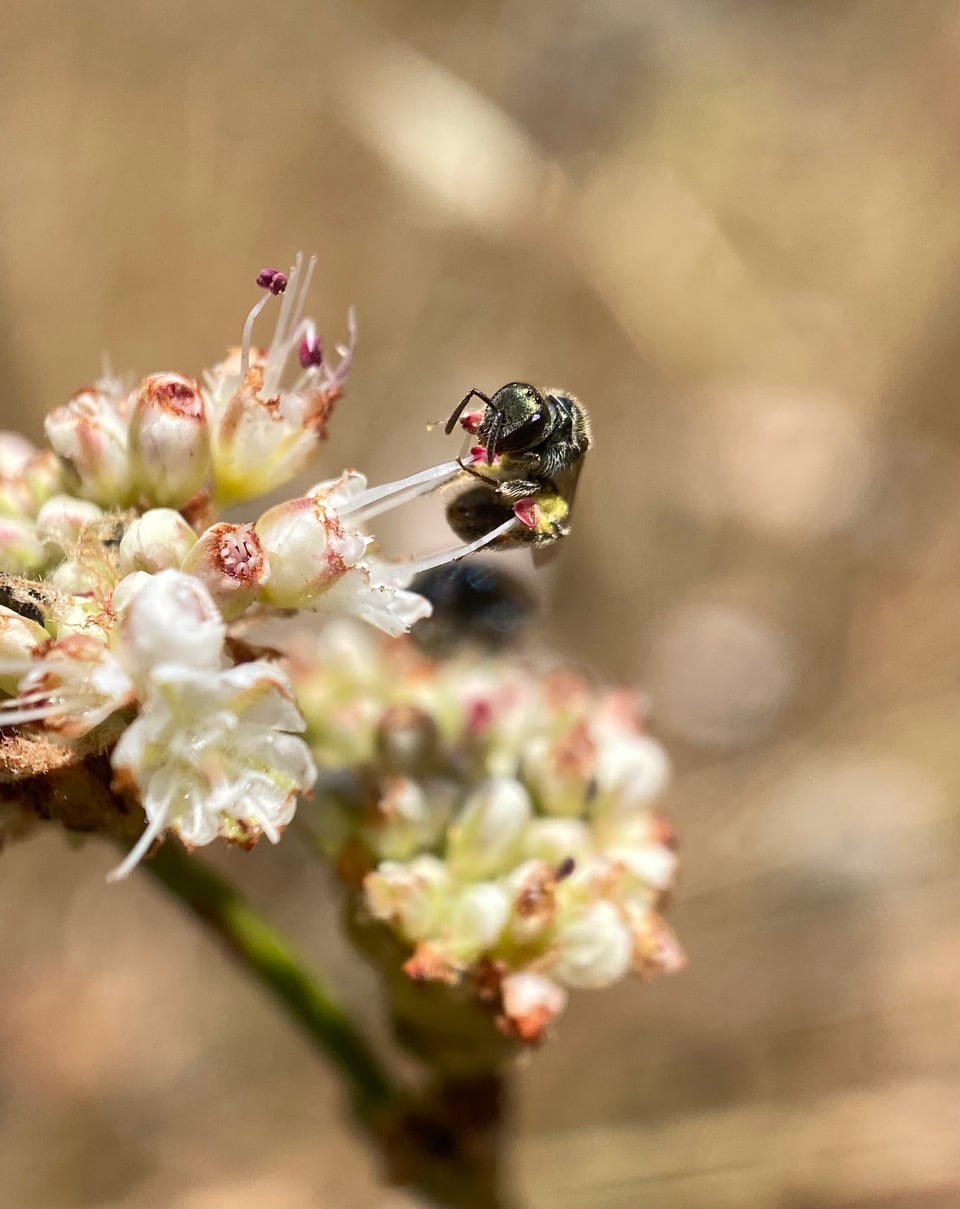
Hanging on the stamens, a tiny Metallic Sweat Bee, Lasioglossum (Dialictus) sp. (family Halictidae) is collecting pollen from the anthers of a Nude Buckwheat flower.

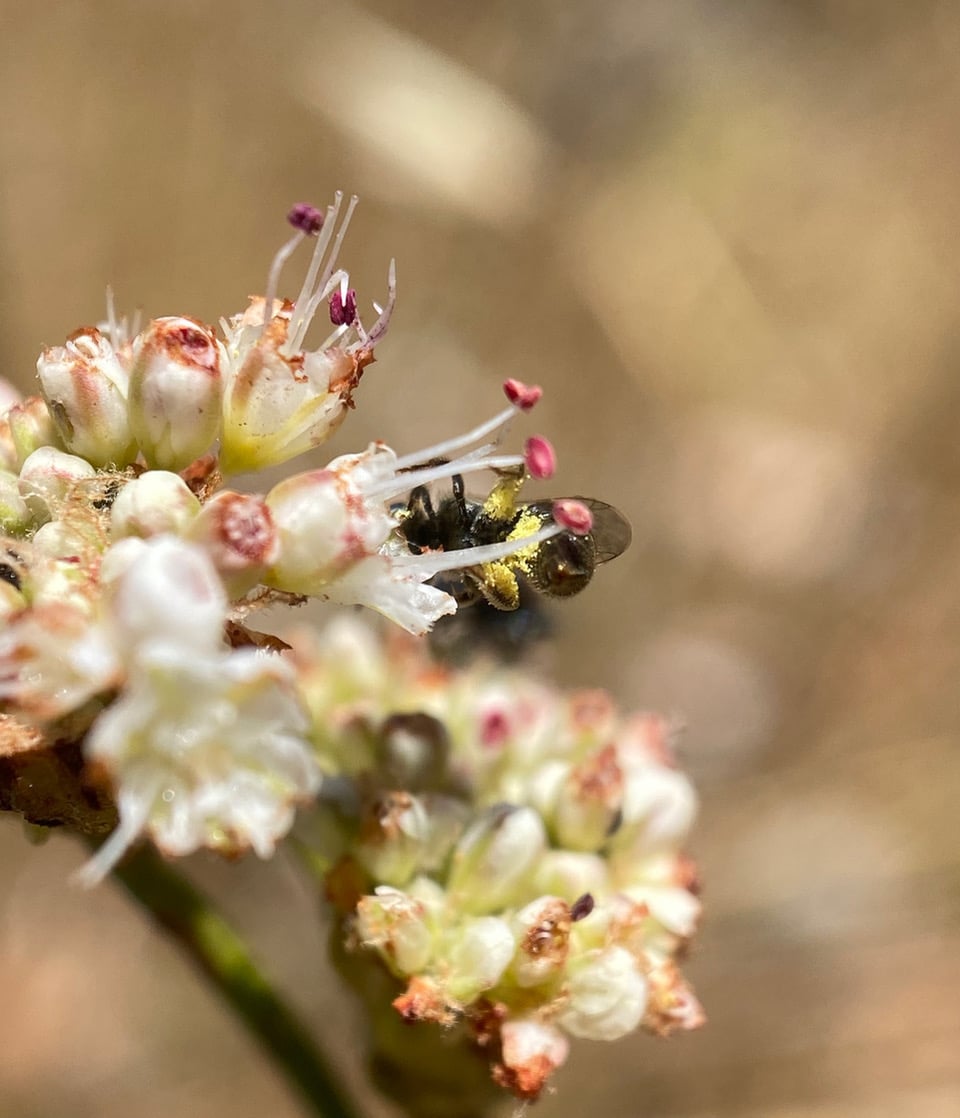
This view of the bee shows that she carries pollen on the entirely hind legs as well as on the underside of her abdomen. This is characteristic of the family Halictidae.
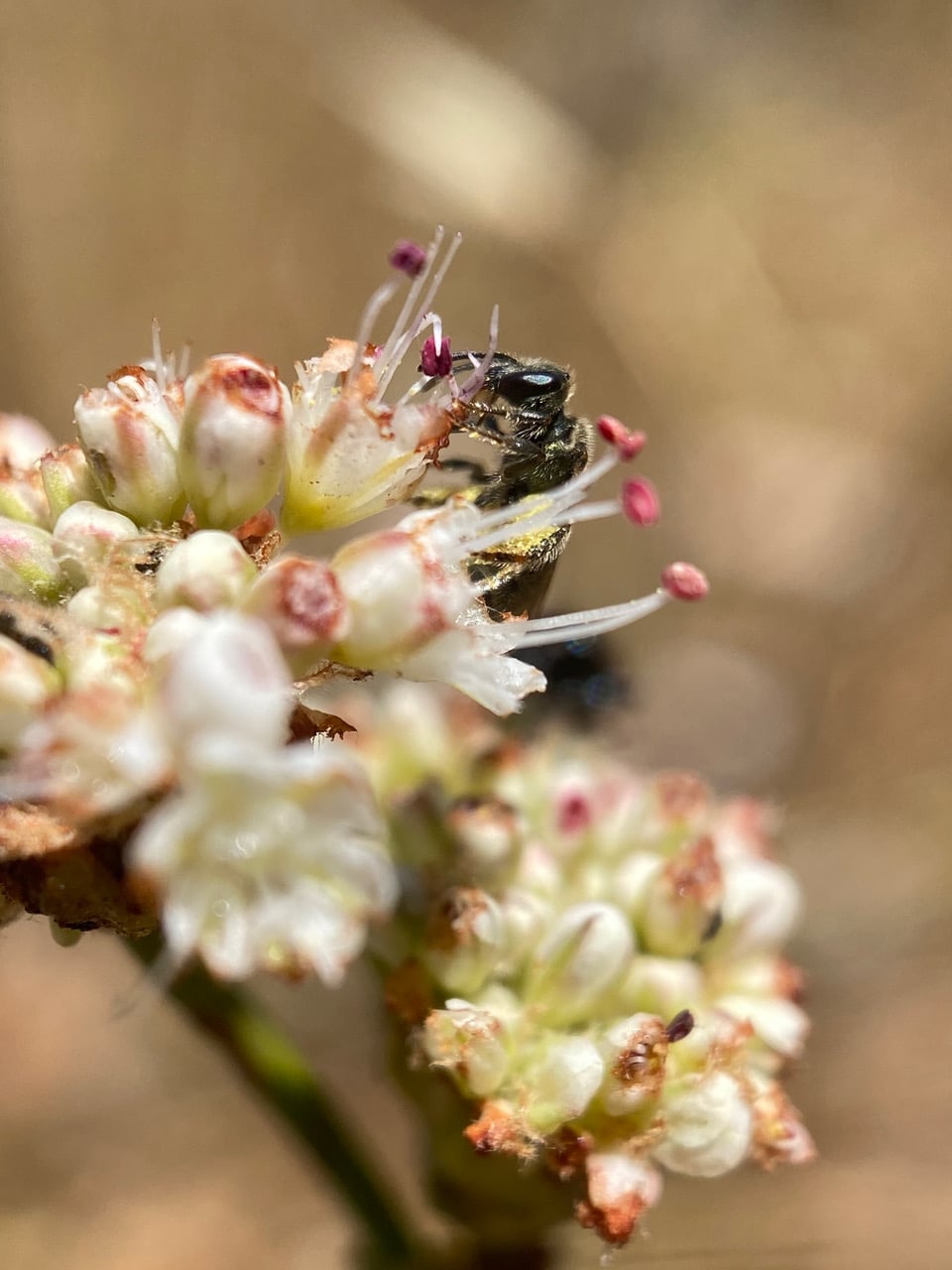
On to the next flower.
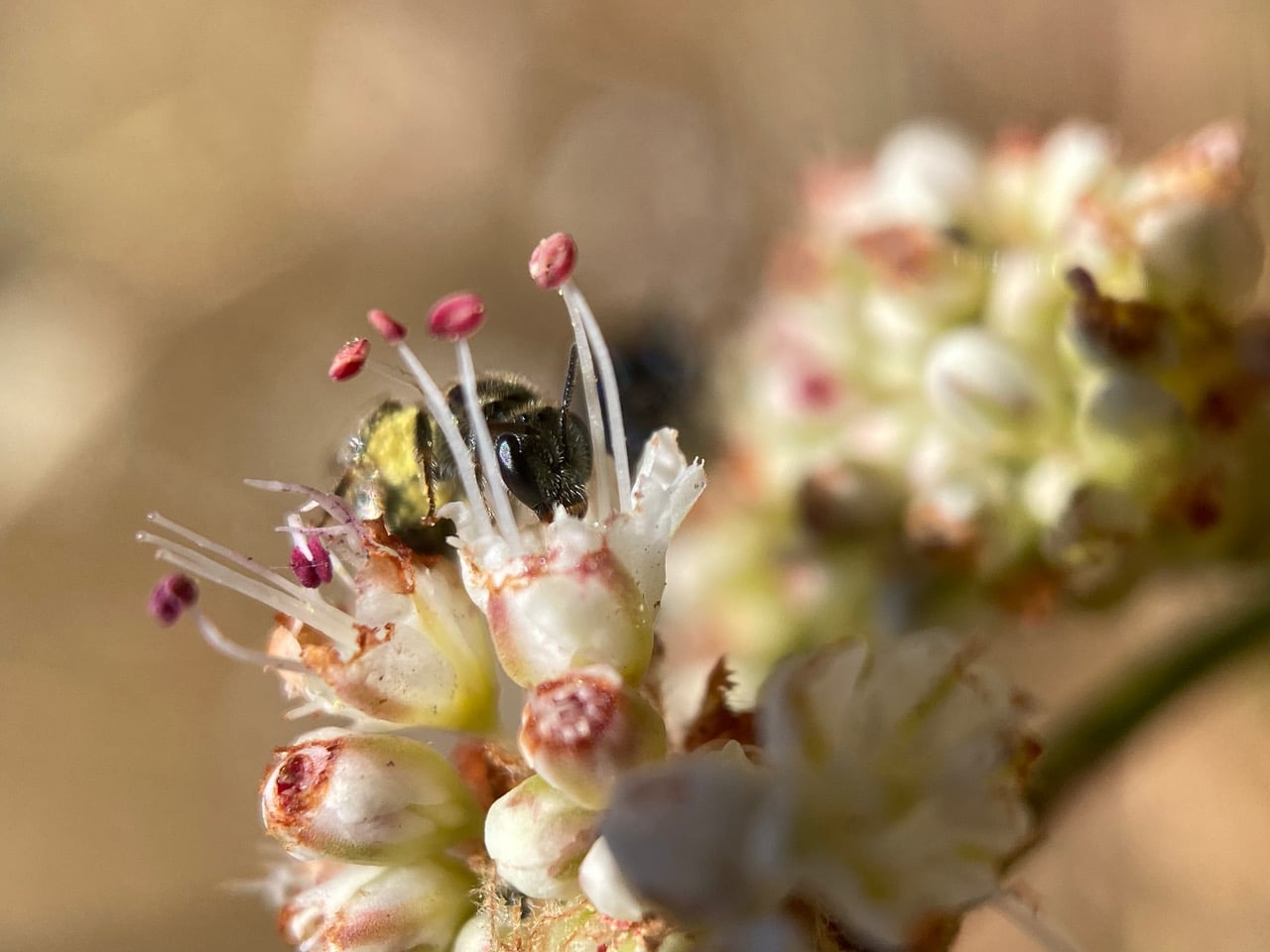
The bee is also taking nectar from Nude Buckwheat flowers.

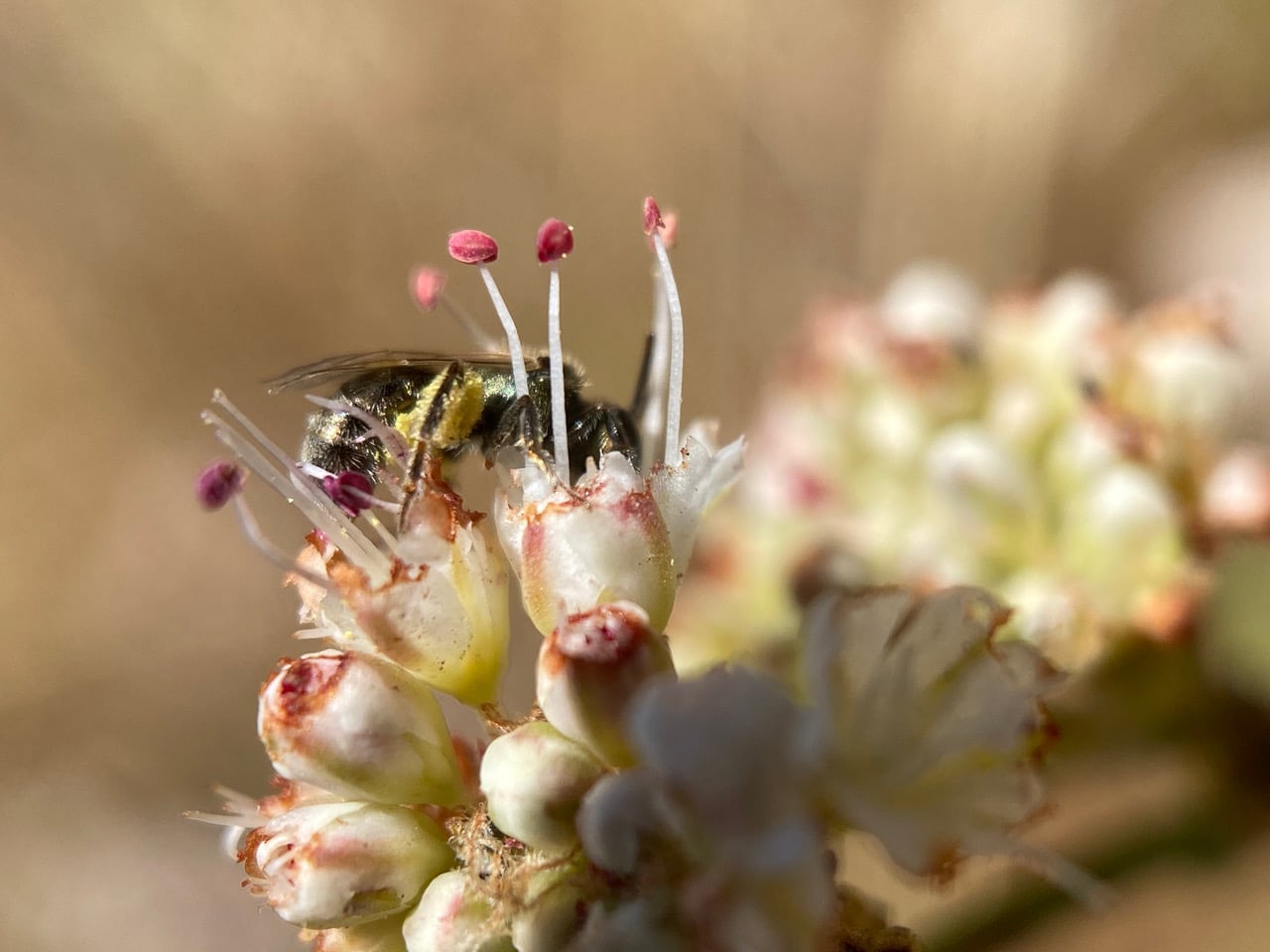
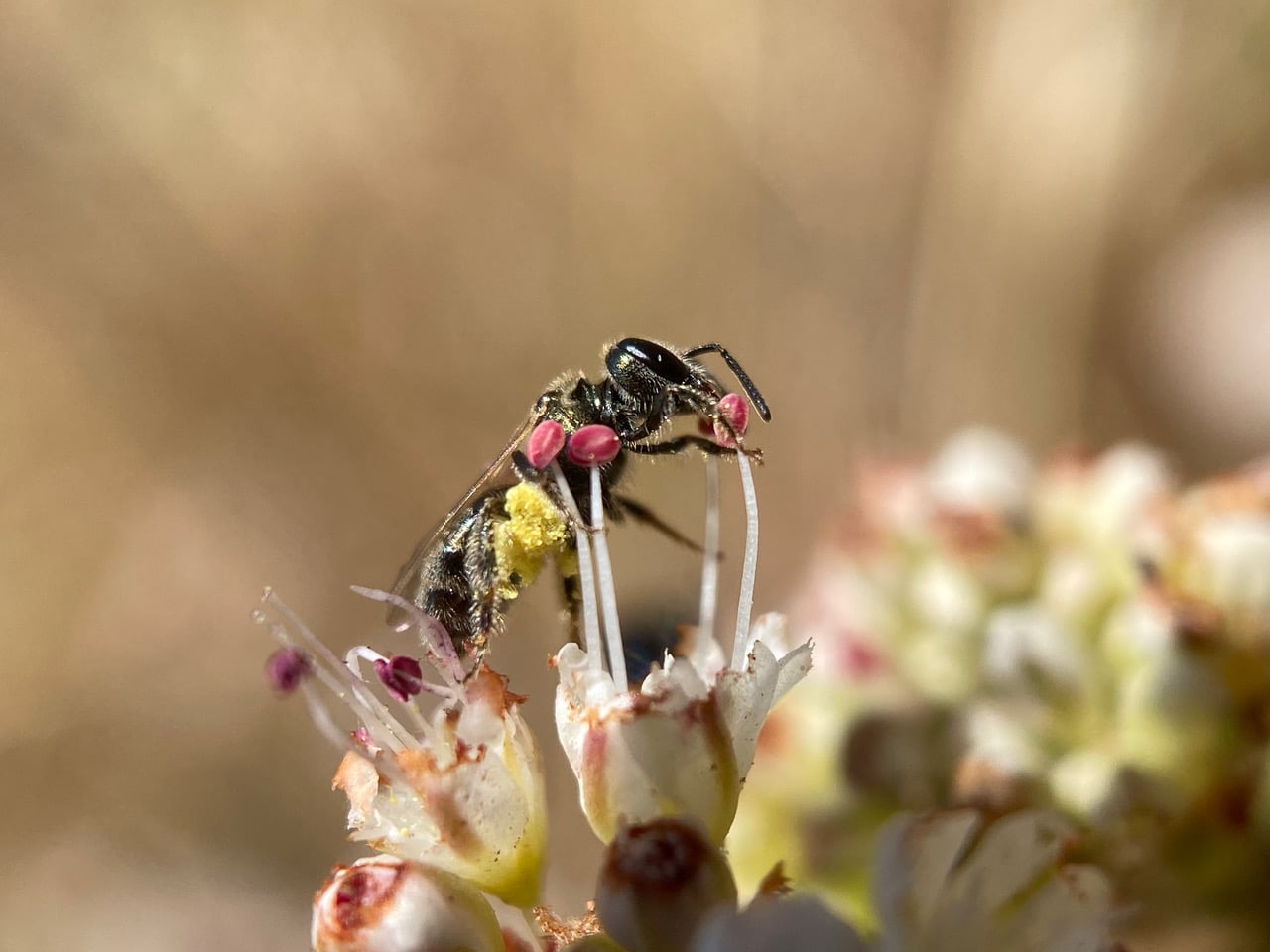
Reaching up for more pollen. The small flowers of Buckwheat and the bee seem well matched for each other.
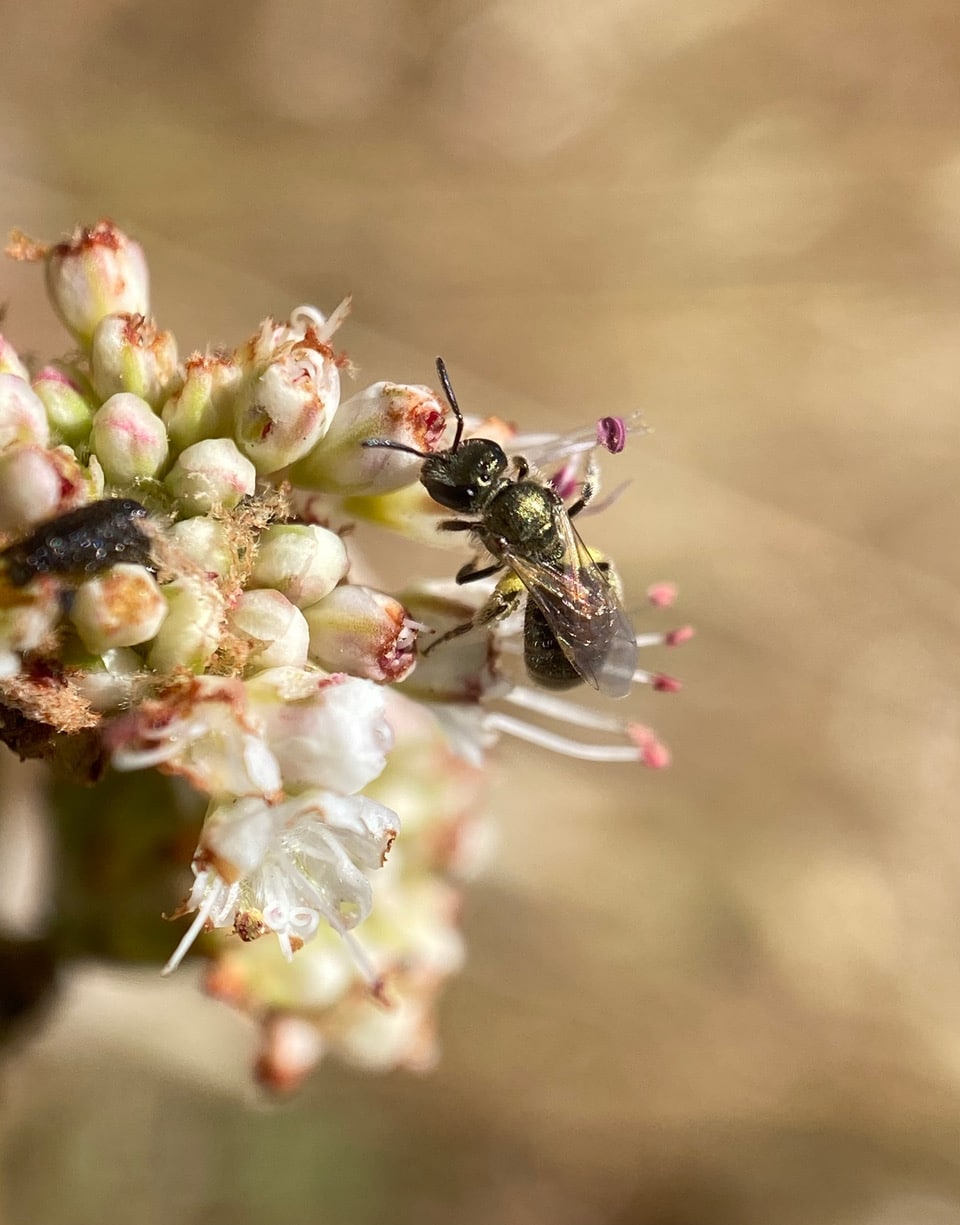

There are three insects in this picture. The Sweat Bee we have been following, the shiny blue back of a Flea Beetle, Altica sp.(family Chrysomelidae), and at the bottom, a larva of the Flea Beetle. Both the adult and larva beetle feed on the buckwheats with their chewing mouthparts.
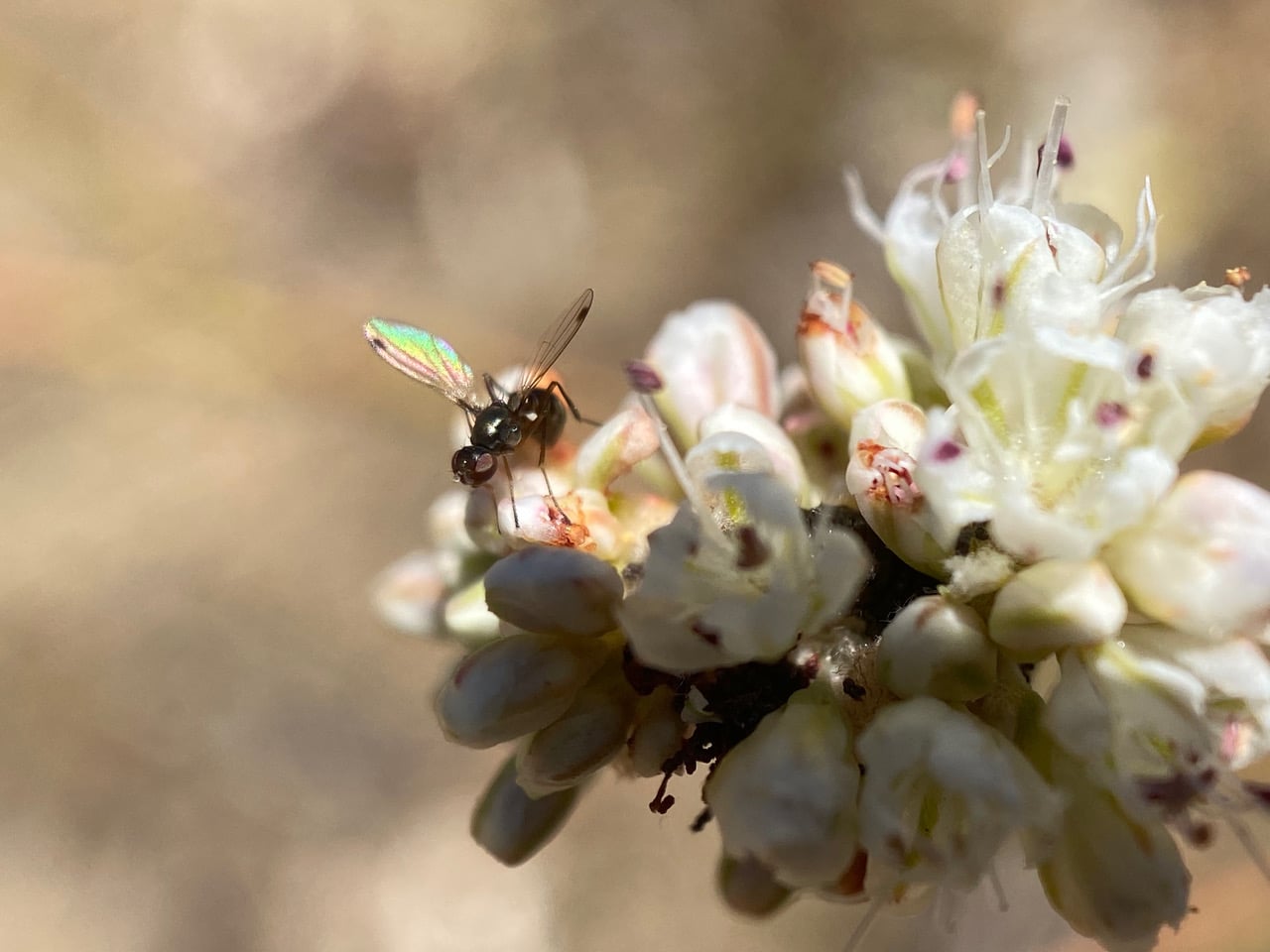
Who’s that tiny glossy critter that is waving its wings as it moves around on the Nude Buckwheat flowers?
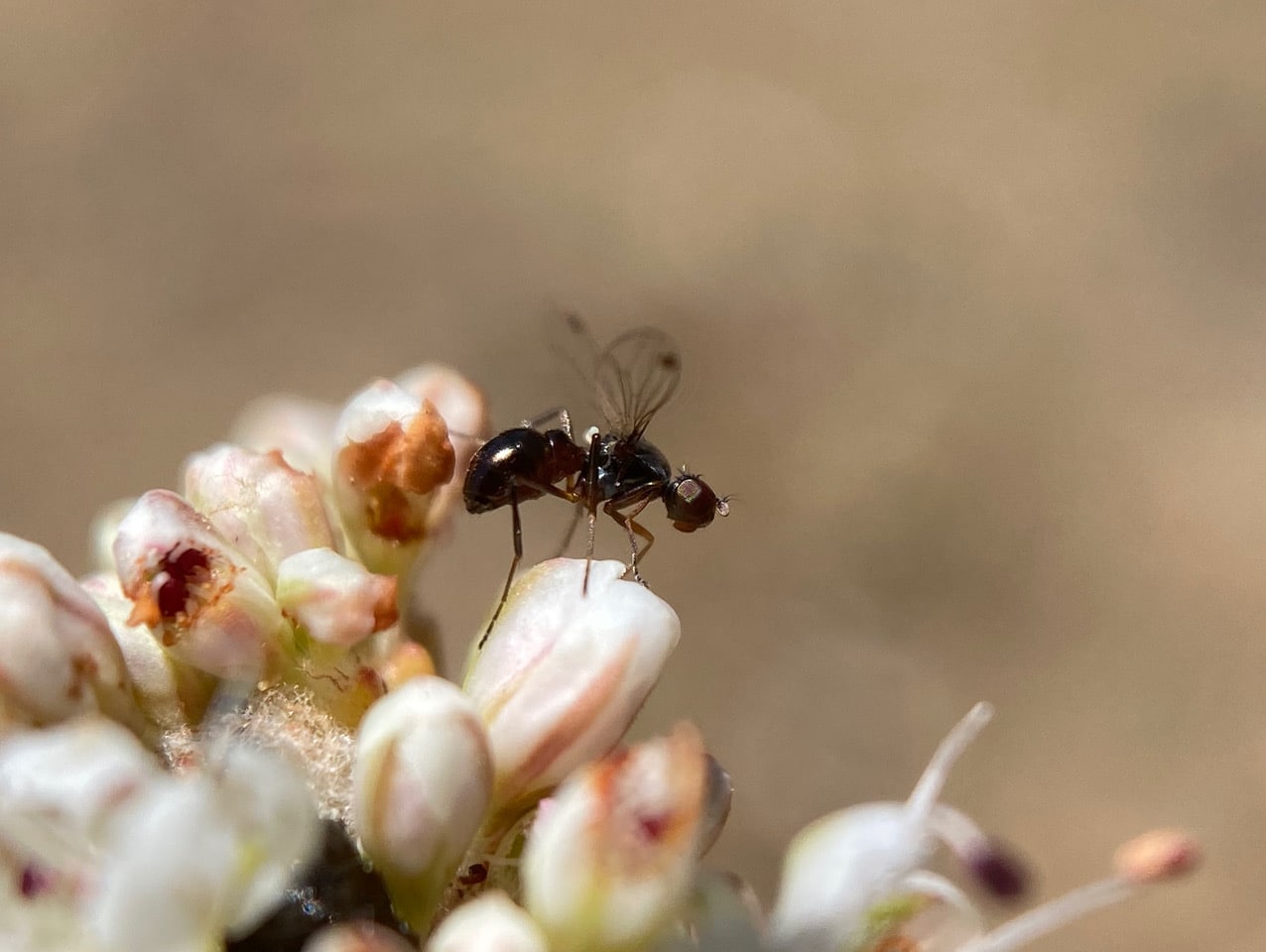
It looks very much like a winged ant, with a “waist”. An ant reproductive out on a nuptial flight? No way, the antennae are aristate – it is a fly (order Diptera)!

There are other clues that the insect is a fly – it has halteres! See the tiny white lollipops under the wings?
Halteres are the modified hind wings in Diptera (flies). They are shaped like ‘drum sticks’ or “lollipops” with a slender shaft connected to the thorax. Halteres are highly sophisticated balance organs, functioning as gyroscopes; they oscillate during flight. This is why the flies have only two wings (hence the name Diptera).