

Pollinator Post 7/8/23 (1)
I take advantage of the cool morning to spend time with the tarweeds at Siesta Gate before their flowerheads close up.
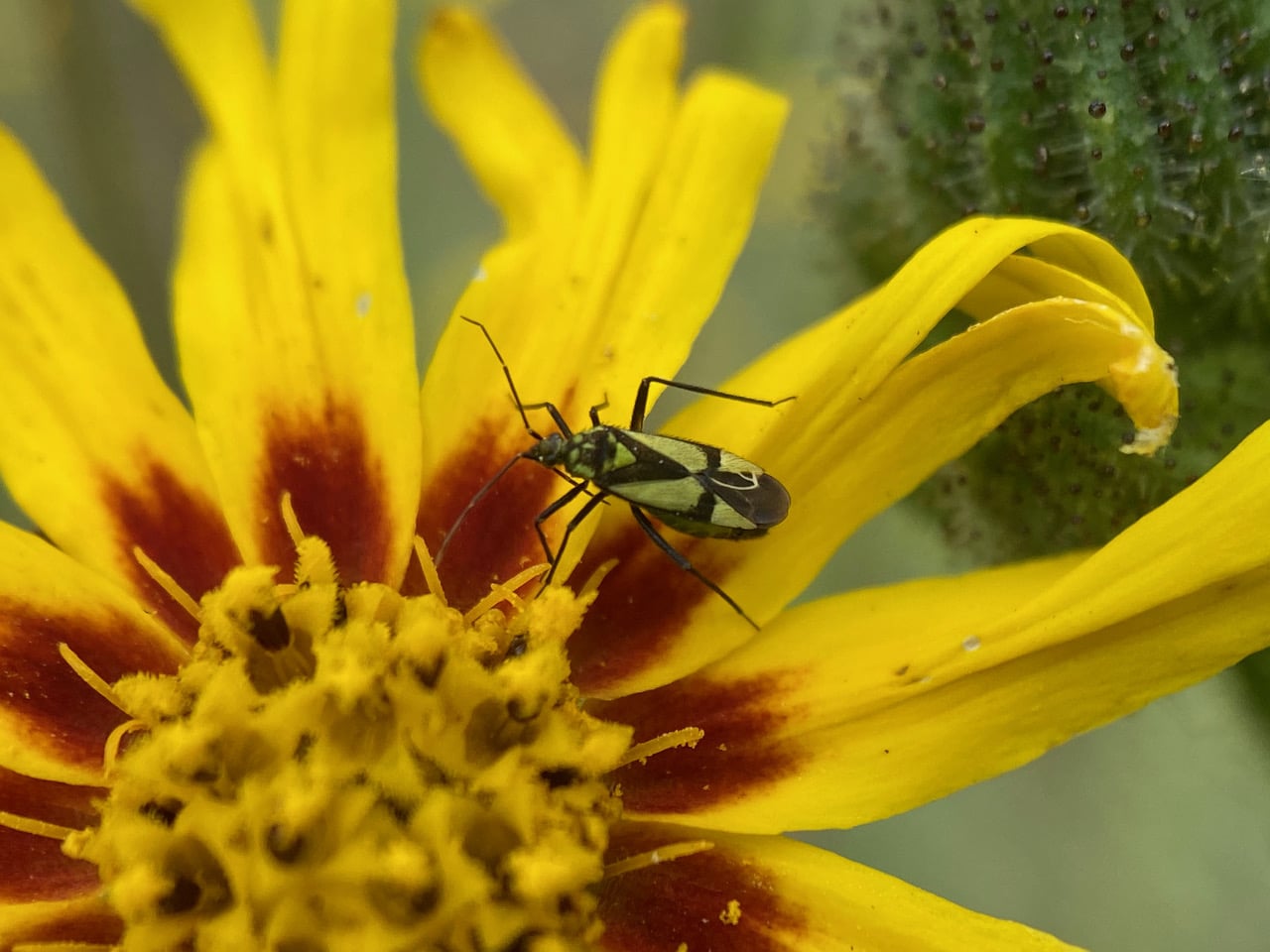
A Plant Bug, Macrotylus essigi (family Miridae) is roaming a flowerhead of Elegant Tarweed, Madia elegans. As a member of the order of “true bugs” or Hemiptera, it has a piercing-sucking mouthpart for feeding. The rostrum is visible here, folded under the body when not in use.





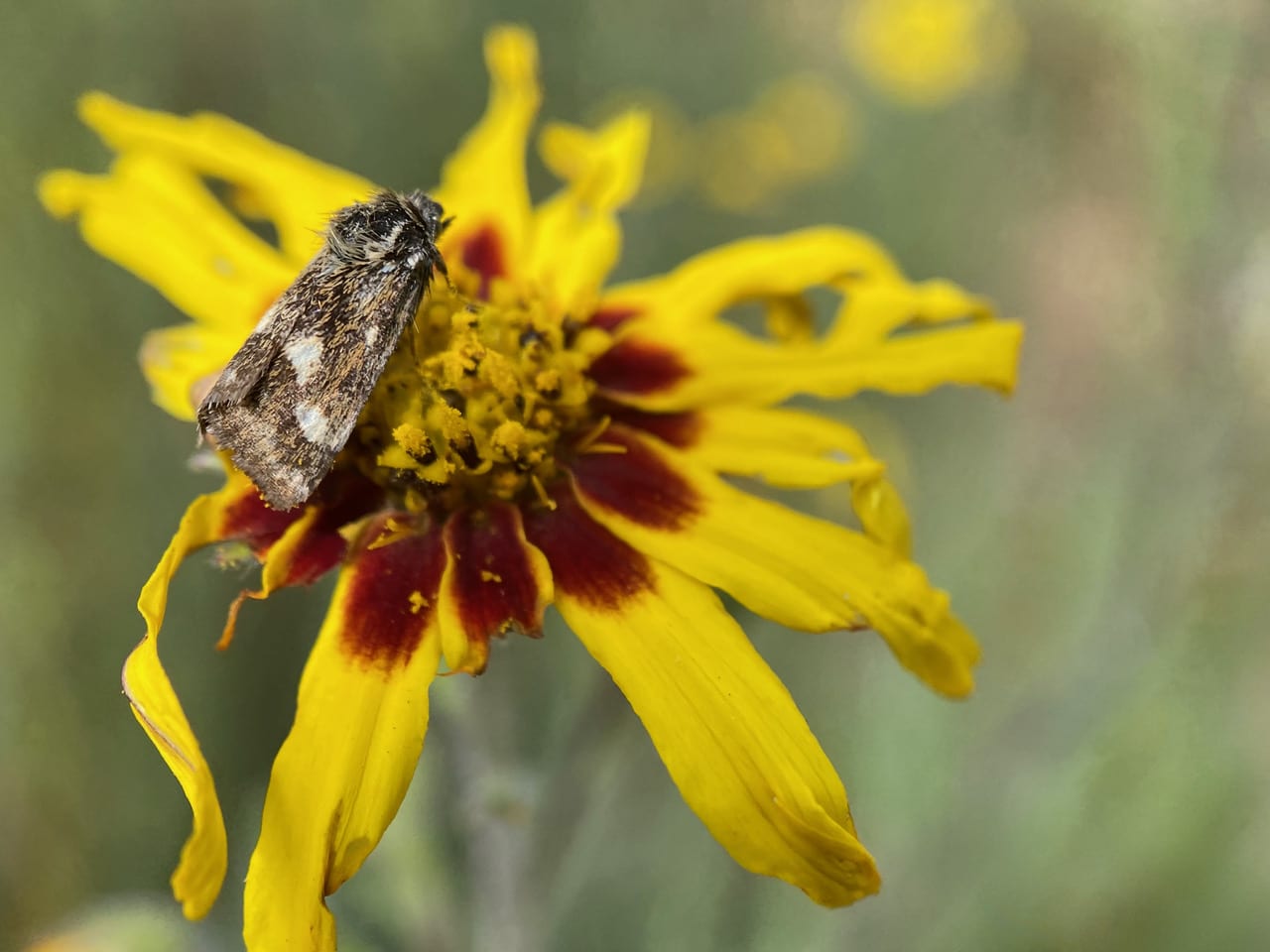

 A Darker-spotted Straw Moth, Heliothis phloxiphaga (family Noctuidae) stops for nectar on a flowerhead of Elegant Tarweed.




A female Forked Globetail, Sphaerophoria sulphuripes (family Syrphidae) is feeding on Elegant Tarweed. Adult hover flies visit flowers for both nectar and pollen, and are good pollinators, second only to bees. Hover fly larvae occupy different niches in the ecosystem, depending on the species. Some feed on aphids, serving as natural pest control, while some species develop in semi-aquatic habitats feeding on decaying vegetation, serving the vital role of decomposers/recyclers of organic matter. The larvae of Sphaerophoria are aphidophagous.
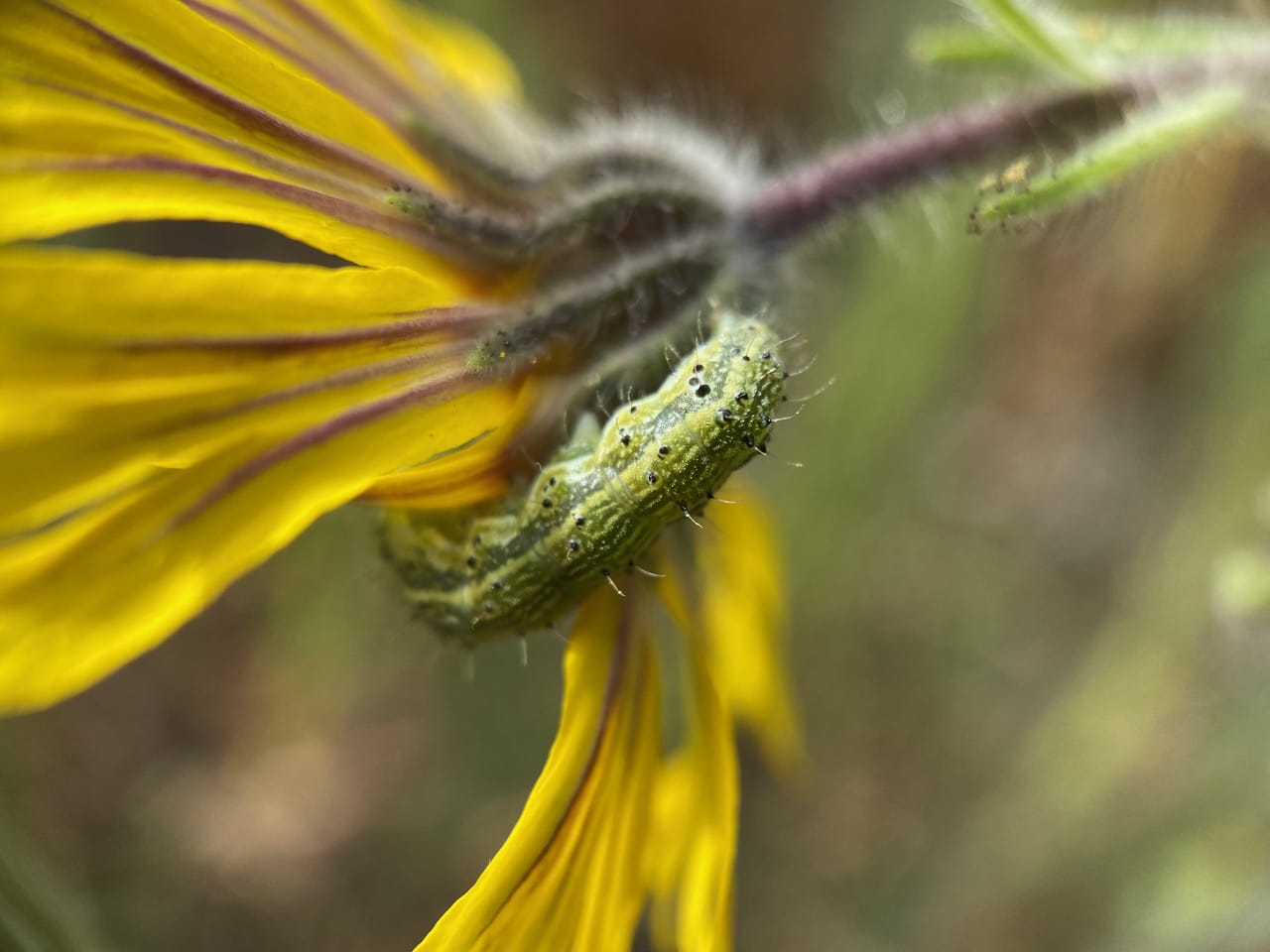
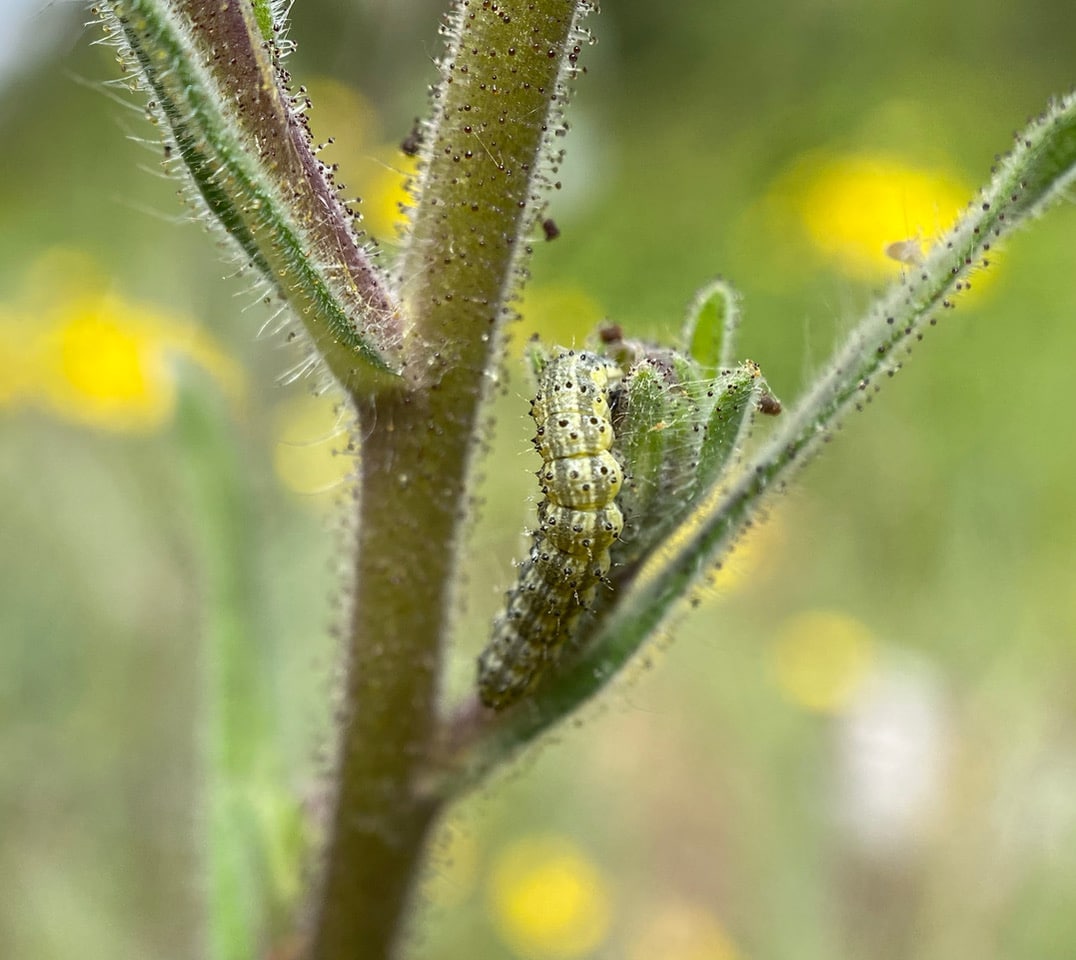
A caterpillar of the Small Owlet Moth, Heliothodes diminutiva (family Noctuidae) is curled around a droopy flowerhead of Elegant Tarweed.
As is usual for these caterpillars, its head is buried in the florets, feeding on the reproductive parts and immature seeds.
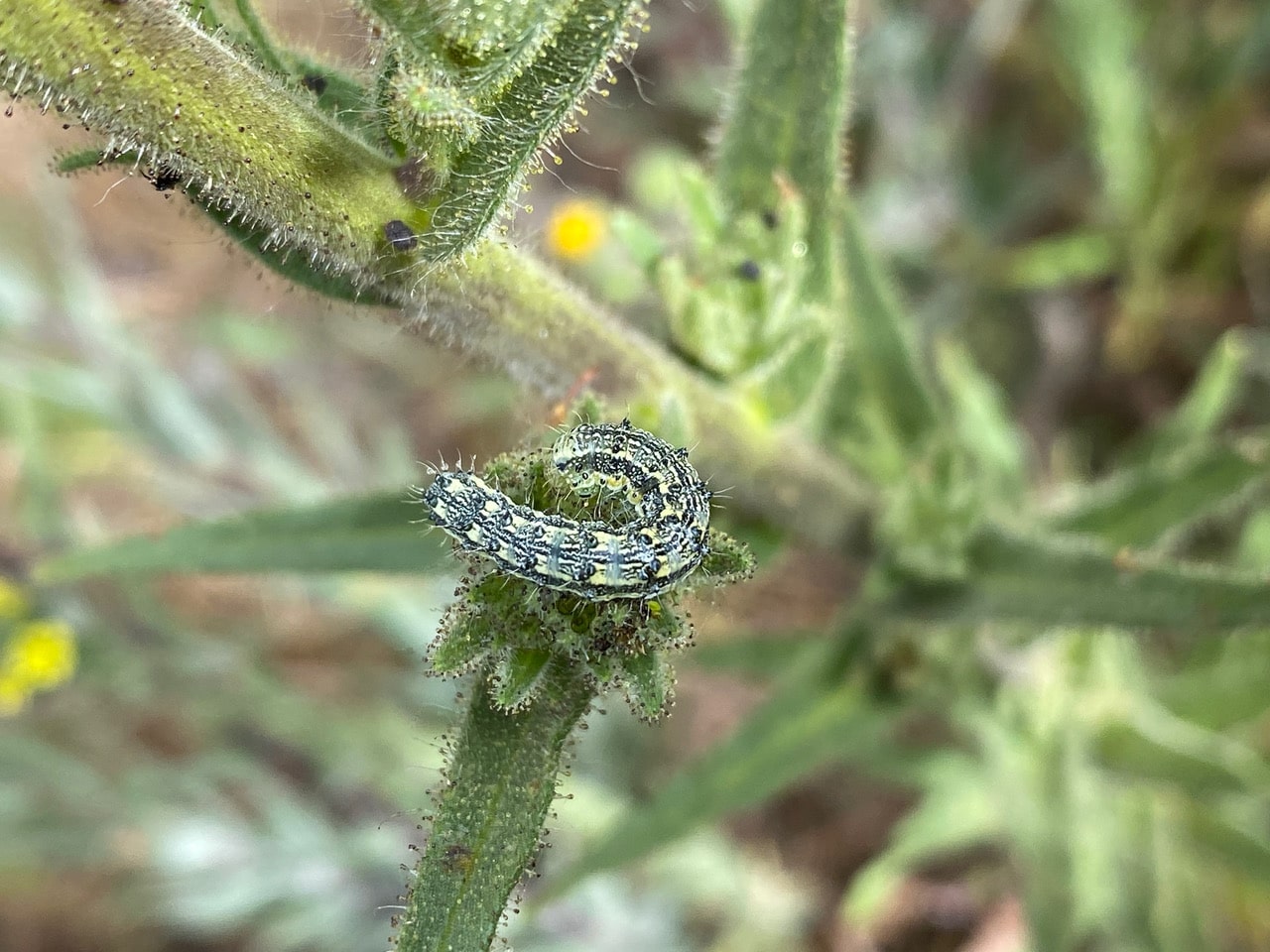
A young caterpillar is resting on a developing flowerhead.
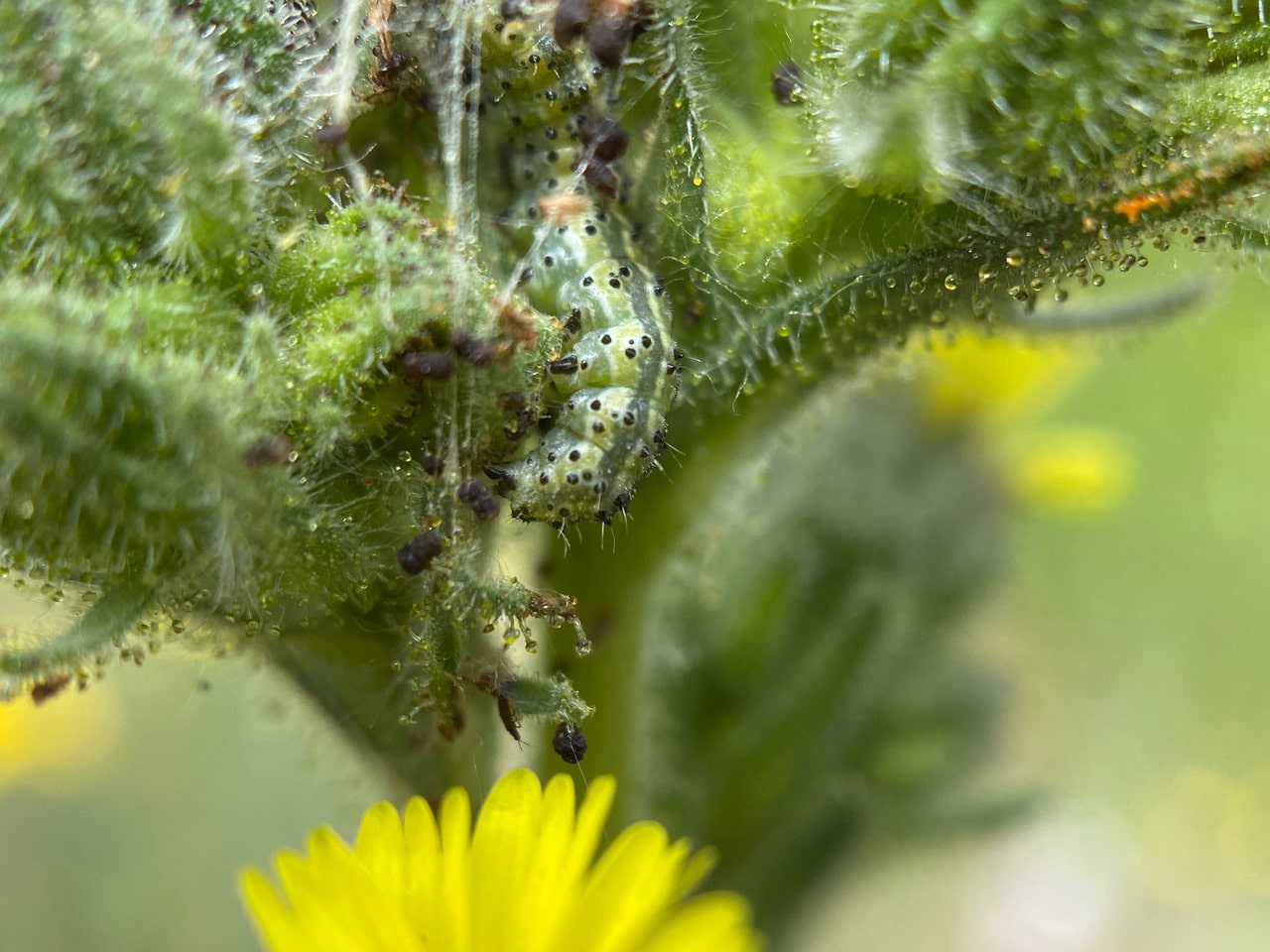
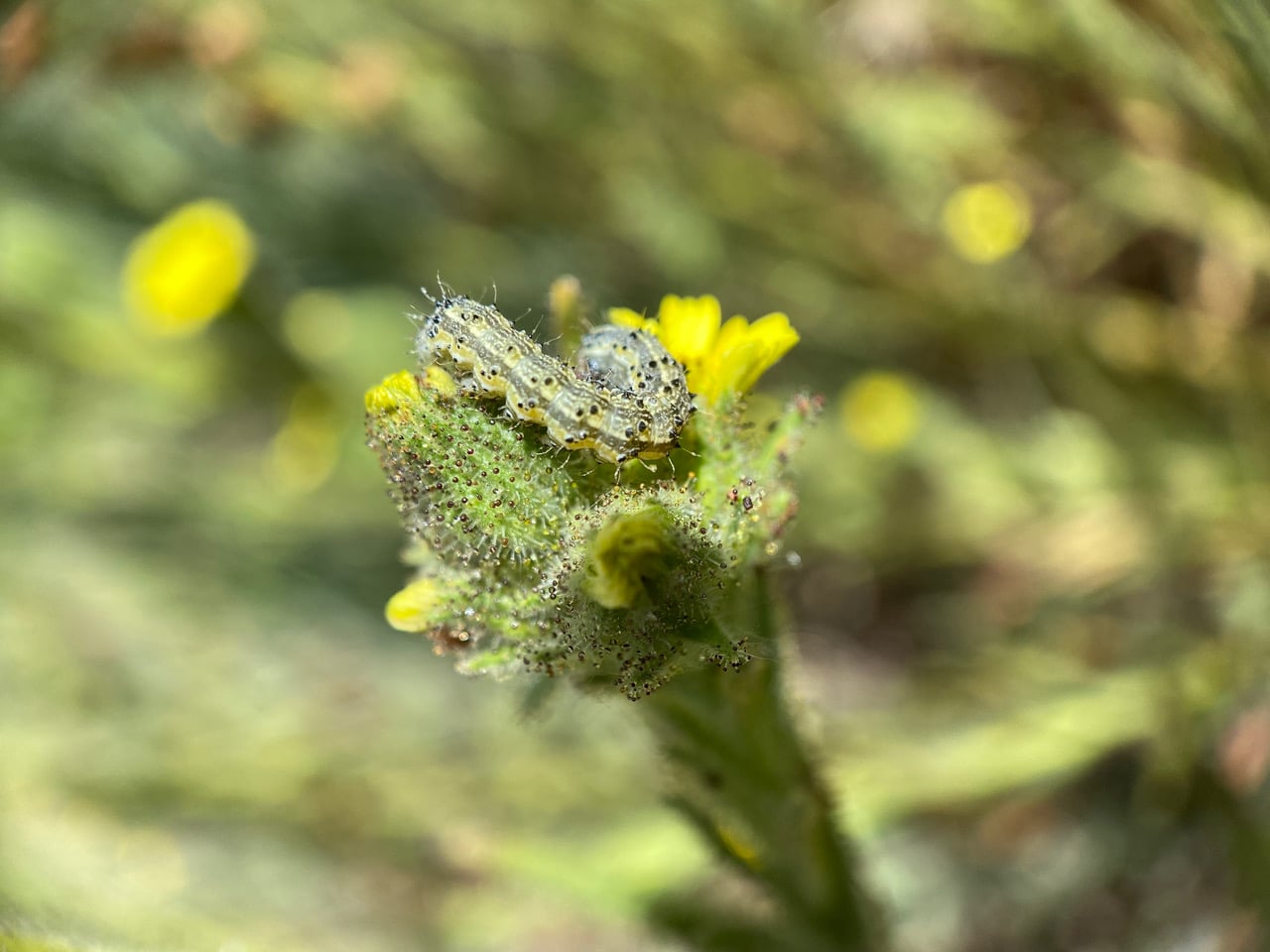
Here’s a young caterpillar reaching up into a developing flowerhead of Elegant Tarweed. Note the frass (insect poop) around it. The best way to search for caterpillars is to look for the frass they leave behind.
This caterpillar’s head is totally buried in its food.
This caterpillar is on Coast Tarweed, Madia sativa. It could be a larva of the Straw Moth, Heliothis sp. or the Small Owlet Moth, Heliothodes diminutiva. I have yet to learn how to distinguish the two at this stage. Eventually they can be distinguished simply by size. Heliothis are a much larger moth than Heliothodes, and they seem to prefer the Coast Tarweed as their host plant.
All heads in the flowerheads….
A Small Owlet Moth, Heliothodes diminutiva (family Noctuidae) is resting on a flowerhead of Elegant Tarweed, its wings folded tent-like over its body.
Here’s a Small Owlet Moth taking nectar from the flowers of Elegant Tarweed. Although the caterpillars are destructive to the Elegant Tarweed, the adult butterflies are good pollinators for the plant. It’s a love-hate relationship that is played out between many species of Lepidoptera (moths and butterflies) and their host plants.
A Darker-spotted Straw Moth, Heliothis phloxiphaga (family Noctuidae) stops for nectar on a flowerhead of Elegant Tarweed. The Darker-spotted Straw Moth is a medium-sized tan moth with darker markings. The species is found across the US and southern Canada. They frequent wooded edges, meadows, and other open areas. They are active from March through October. Adults are both nocturnal and diurnal in activity, and are often found feeding and ovipositing during the day. Like other Heliothis species, the larvae feed on the flowering parts and seeds of the host plant.
Ready for lift off.
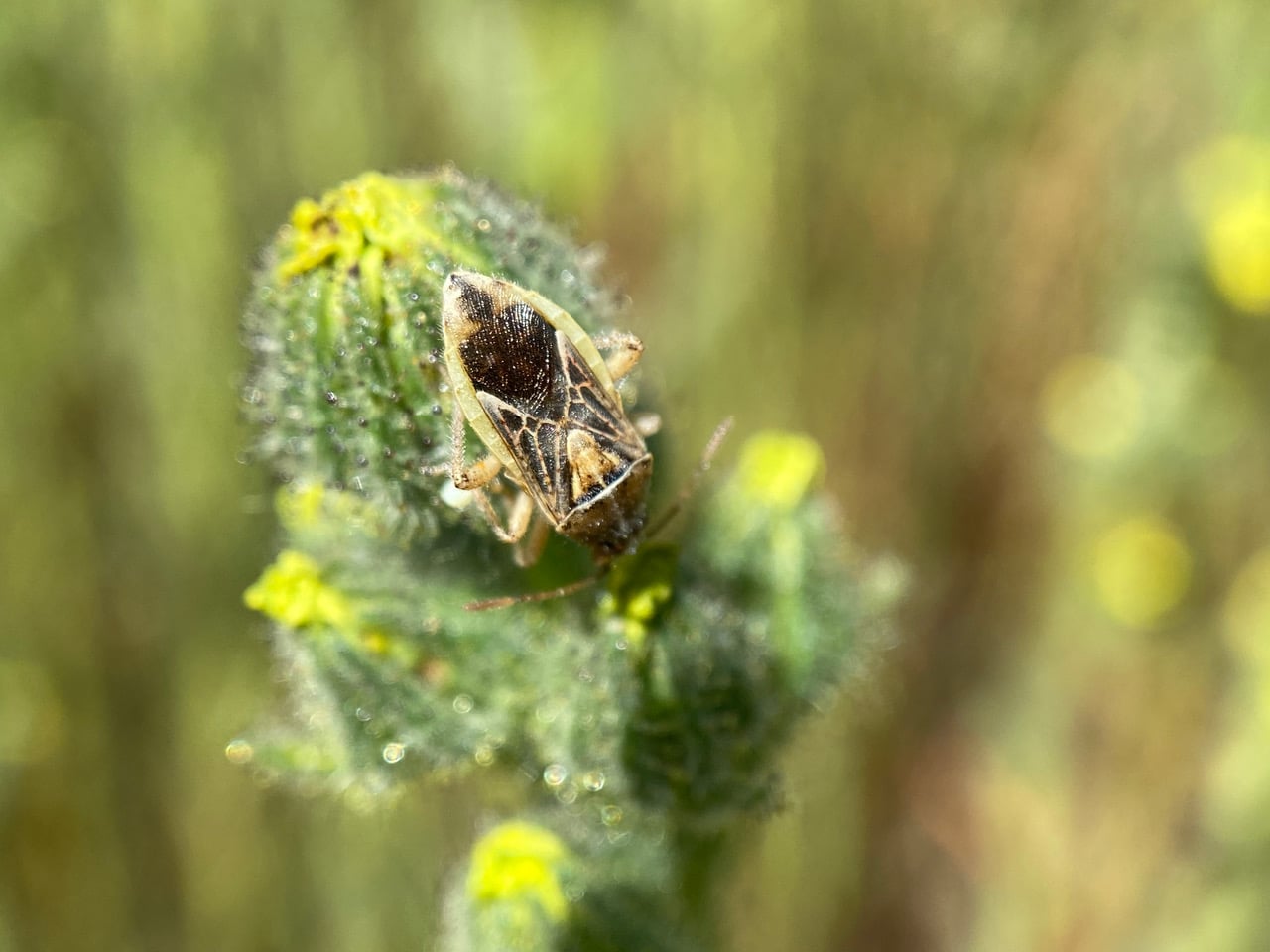
A pair of Scentless Plant Bugs (family Rhopalidae) is mating on a cluster of Coast Tarweed flowerheads. The larger one on the right is the female.
Rhopalidae are a family of true bugs in the order Hemiptera. They differ from the related Coreids in lacking well-developed scent glands. All are plant feeders, using their piercing-sucking mouthparts. They live for the most part on weeds, and are not considered economically important.
The Rhopalidae are a family in the order Hemiptera (true bugs). Hemiptera means “half-wing”, referring to the unique front pair of wings, which are leathery near their base and membranous towards the tips. Most species hold their wings flat over their backs with the two membranous portions overlapping. This combined with a triangular structure called a scutellum (located between the attachment sites of the two front wings) creates an X-shaped pattern on the back of many species of Hemiptera.
What with caterpillars munching and bugs mating, the tarweed patch is bursting with life!
Wow, that’s a large Crab Spider, Mecaphesa sp. (family Thomisidae) on an Elegant Tarweed flowerhead! Never seeing a spider on the tarweeds last year, I have thought that spiders are not capable of dealing with the stickiness of the plants. This spider looks well-fed – obviously life is good here for this predator!
Members of the family Thomisidae do not spin webs, and are ambush predators. The two front legs are usually long and more robust than the rest of the legs. Their common name derives from their ability to move sideways or backwards like crabs. Most Crab Spiders sit on or beside flowers, where they grab visiting insects. Some species are able to change color over a period of some days, to match the flower on which they are sitting.
Mecaphesa is distinguished from the other genera of Crab Spider by the size and arrangement of the eight eyes (in two curved rows of four). Mecaphesa is also often hairy, with tiny hairs protruding from the head, legs, and body.