

Pollinator Post 7/7/24

From my past experience with male Summer Longhorn Bees, Melissodes sp. (family Apidae), I know that they gather to sleep in aggregation at around 5 pm in the summer. At 7 pm on this fine day, I decide to make a quick trip to the parking strip in Alameda where I have seen them foraging on the Elegant Tarweed, Madia elegans yesterday.
7:30 pm There they are – already sleeping on the seed heads of a tall senescing Elegant Tarweed that Naomi has pointed out to me as their regular roost site. I am glad that there’s still adequate light at this hour to photograph the bees. There is a total of 16 longhorn males, clustered on three adjacent seed heads on top of the plant.
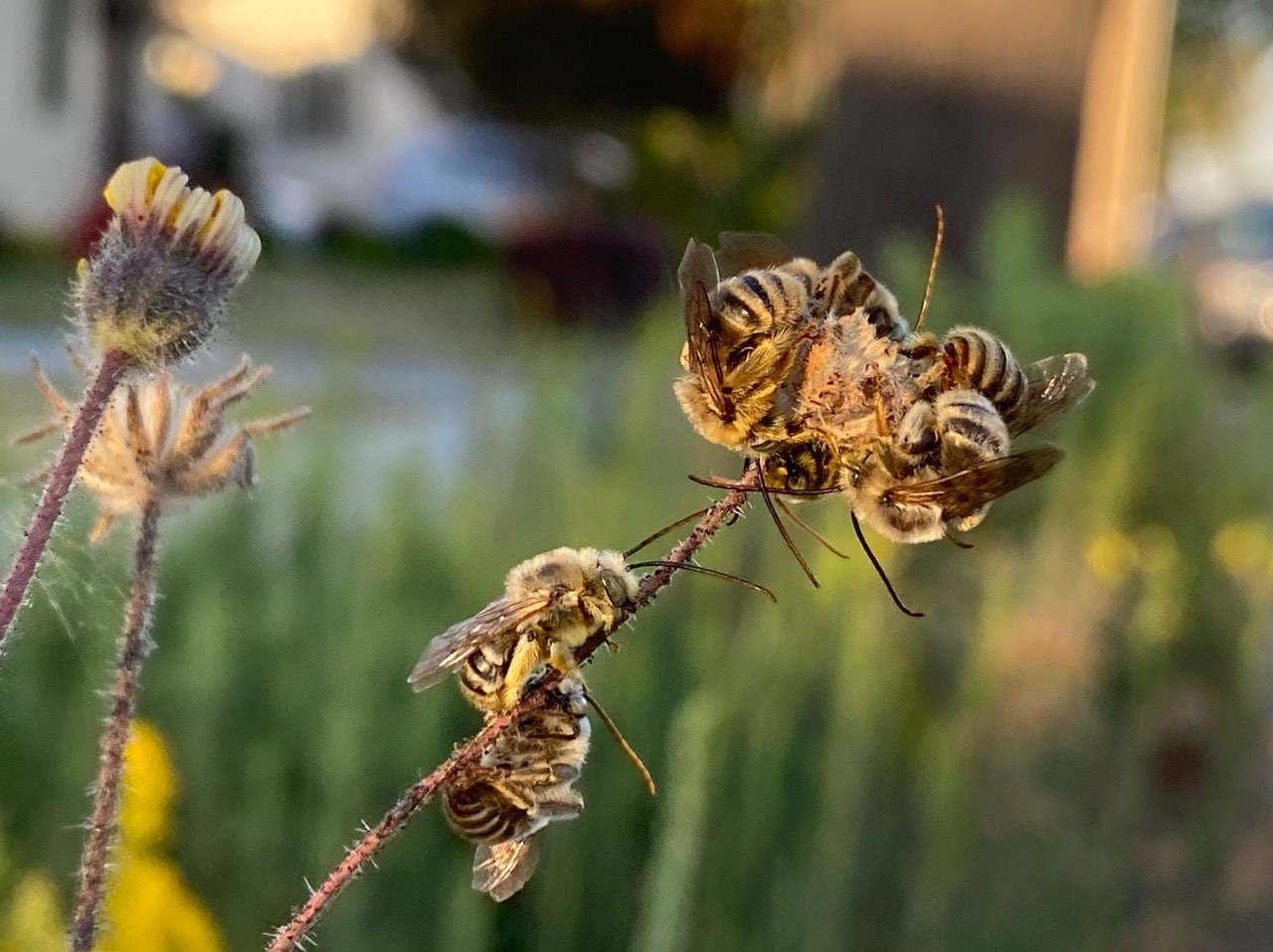
This is the largest cluster, with two individuals holding onto the stem below the seed head.
The Summer Longhorn Bees, Melissodes sp. (family Apidae) are medium to large bees, stout-bodied, usually with gray hair on the thorax and pale hair bands on the abdomen. Males usually have yellow markings on their faces and have very long antennae from which their common name is derived. They are active May to September, with peak flight in late June to early August. The females prefer flat, bare ground for digging their solitary nests, though they sometimes nest in aggregations. Pollen is transported in scopae on the hind legs. Pollen loads are often copious and brightly colored and thus very distinguishable. Melissodes are specialists on Asteraceae – females gather pollen from flowers of Aster, Bidens, Coreopsis, Cosmos, Encelia, Gaillardia, Helianthus, and Rudbeckia ssp.
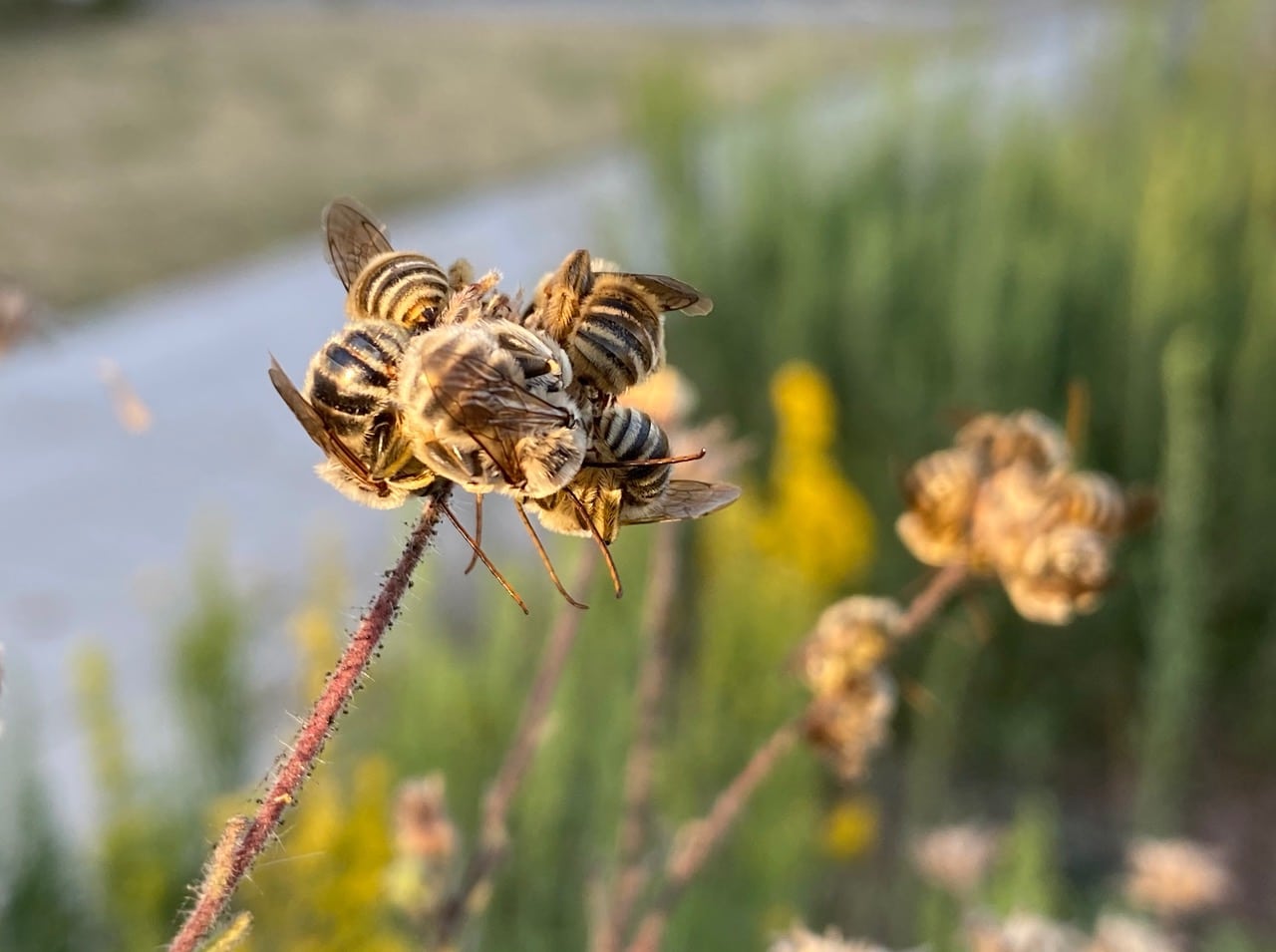
Here’s another cluster of sleeping Longhorn males.
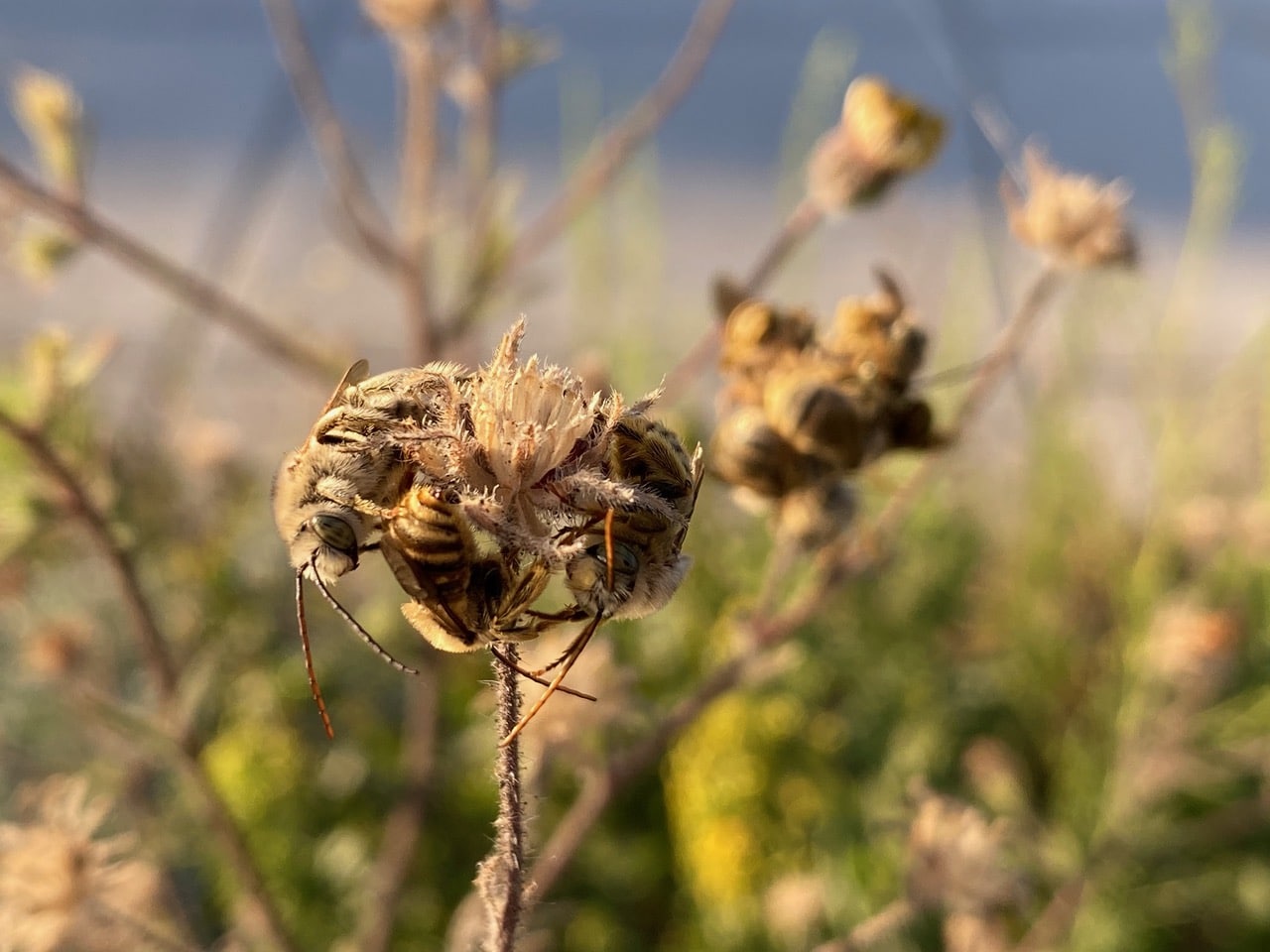
Note that the bees’ eyes are wide open although they are asleep. Bees do not have eyelids!
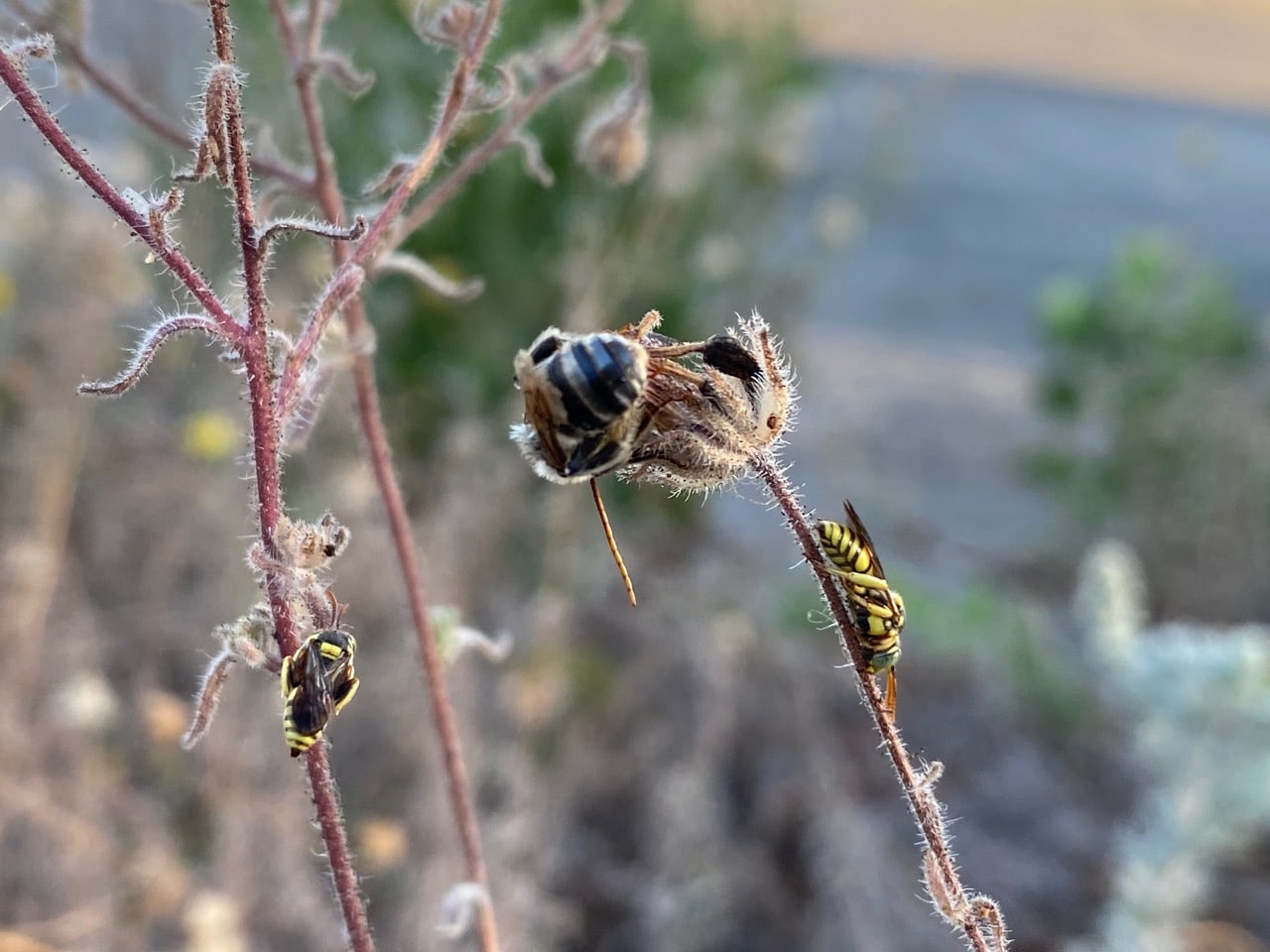
On a short withered Elegant Tarweed on the other side of the big tree, I find the two Cuckoo Bees sleeping in the same vicinity where I saw them yesterday, just inches off the ground. This time in the company of a single sleeping male longhorn! What is the attraction here? Cuckoo Bees and their host bee? Did they emerge from the same nest? Why is this longhorn male sleeping away from the others of his kind?
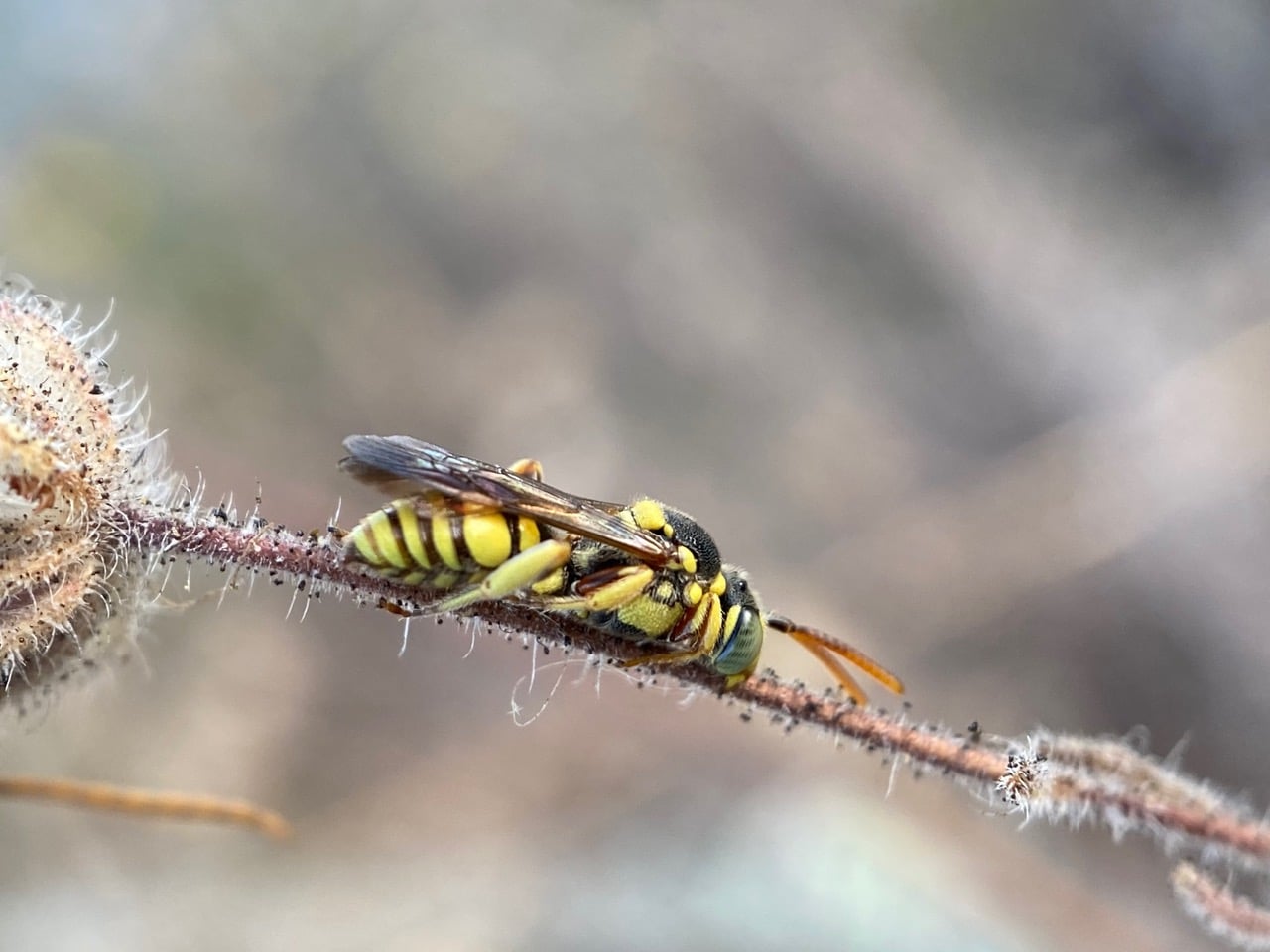
This is the Cuckoo Bee, Nomada suavis (family Apidae) right under the seed head on which the longhorn is sleeping. It is holding onto the stem with its mandibles.
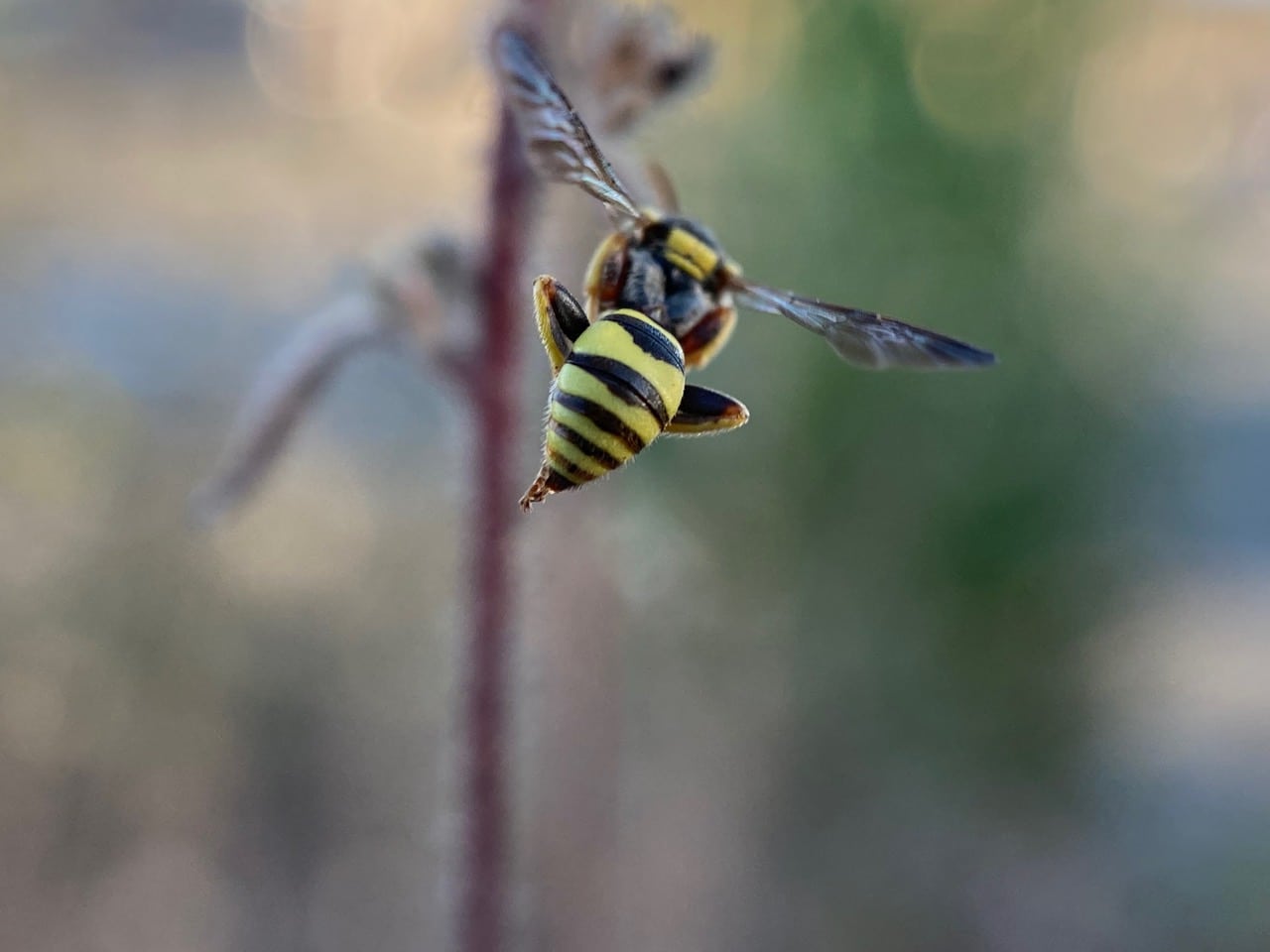
This is the other Cuckoo Bee.
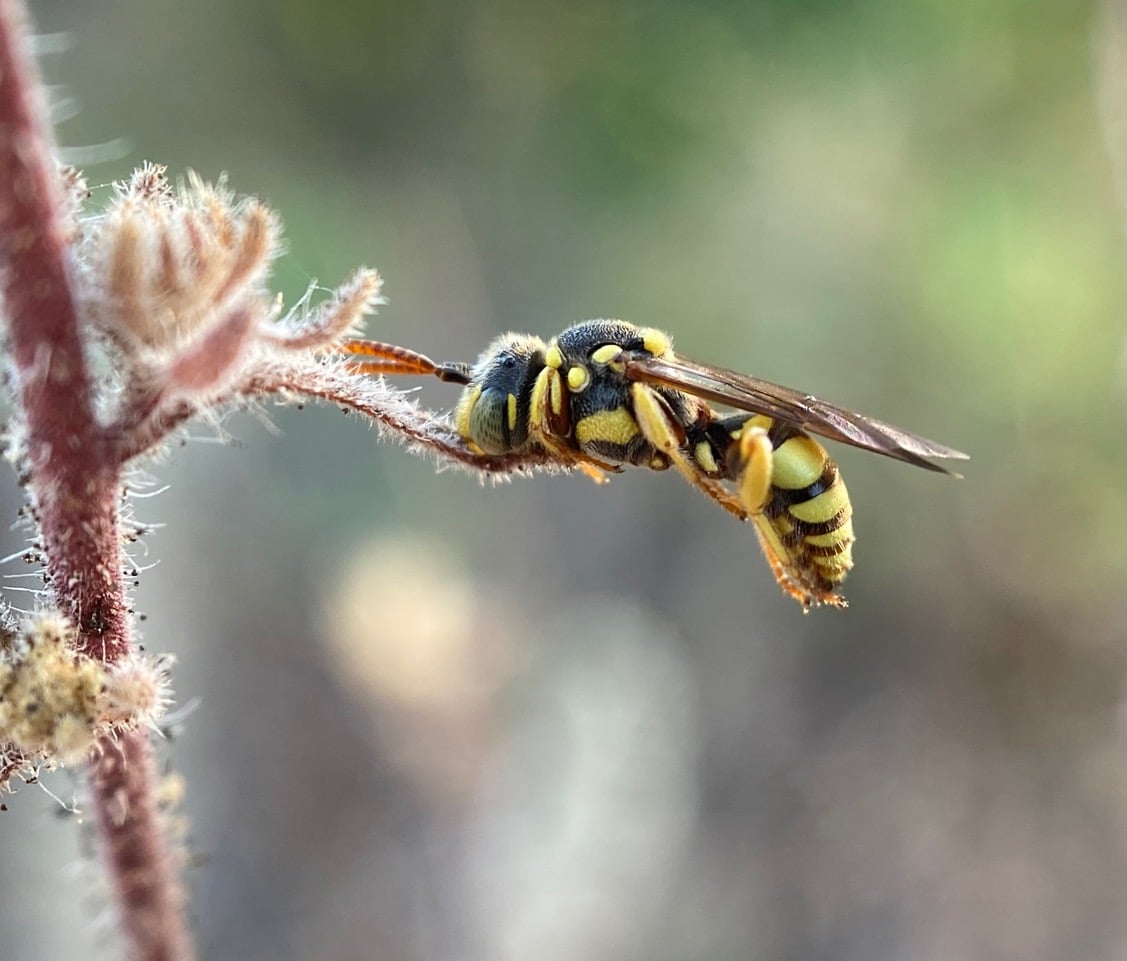
Another view of the second Cuckoo Bee. It has clamped its mandibles on a dried leaf. What an odd sleeping position!
Nomad Bees in the genus Nomada is one of the largest genera in the family Apidae, and the largest genus of Cuckoo Bees. Nomada are kleptoparasites of many different types of ground-nesting bees as hosts, primarily the genus Andrena. They lack a pollen-carrying scopa, and are mostly hairless, as they do not collect pollen to feed their offspring. Adults visit flowers for nectar. The bees are extraordinarily wasp-like in appearance, often with yellow or white integumental markings on their abdomen.
Nomad Bees occur worldwide. All known species parasitize ground-nesting bees, and their habitats and seasonality correlate closely with their hosts. In early spring, females scout out their hosts, searching for nests to parasitize. The female Nomada sneaks into the host’s nest while the resident female is out foraging, then lays eggs in the nest. The parasite larva that hatches out kills the host offspring and feeds on the host’s provisions. This type of parasitism is termed brood parasitism. The parasites pupate in the host cell and finally emerge as adults the following season along with the hosts.