

Pollinator Post 7/6/24/ (1)

Naomi, a friend and professional gardener told me of some interesting bee activities in the parking strip in front of her neighbor’s garden that she has helped plant with California natives.
I arrive early, hoping to see some sleeping aggregation of male Summer Longhorn Bees. The planted strip is modest by any measure, located along a busy street, partially shaded by two trees and spanning the length of a single residential property.
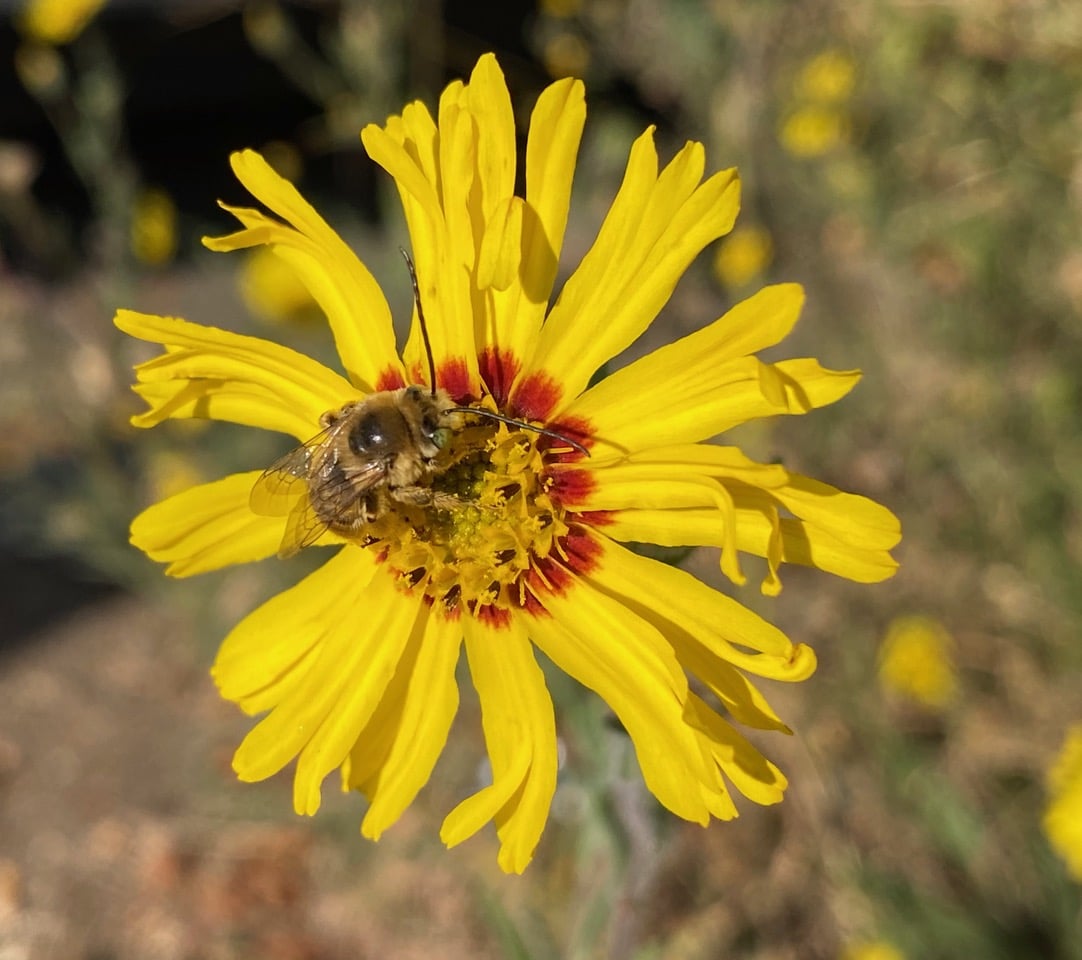
Hey, that’s a male Summer Longhorn Bee, Melissodes sp. (family Apidae) out foraging on a flowerhead of Elegant Tarweed, Madia elegans. They are already awake and active on this sunny morning!
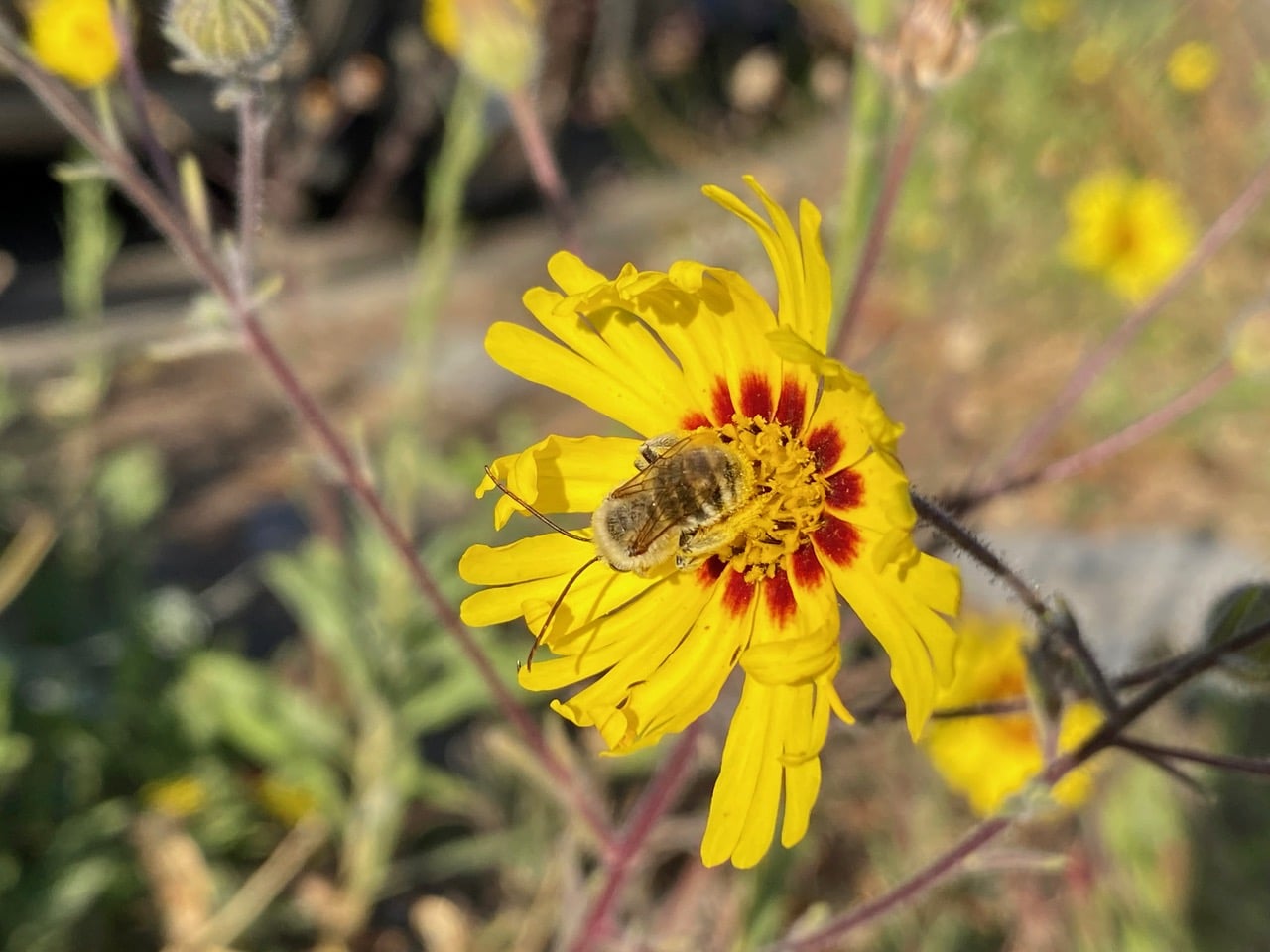
In fact, there are quite a few of the male longhorn bees!
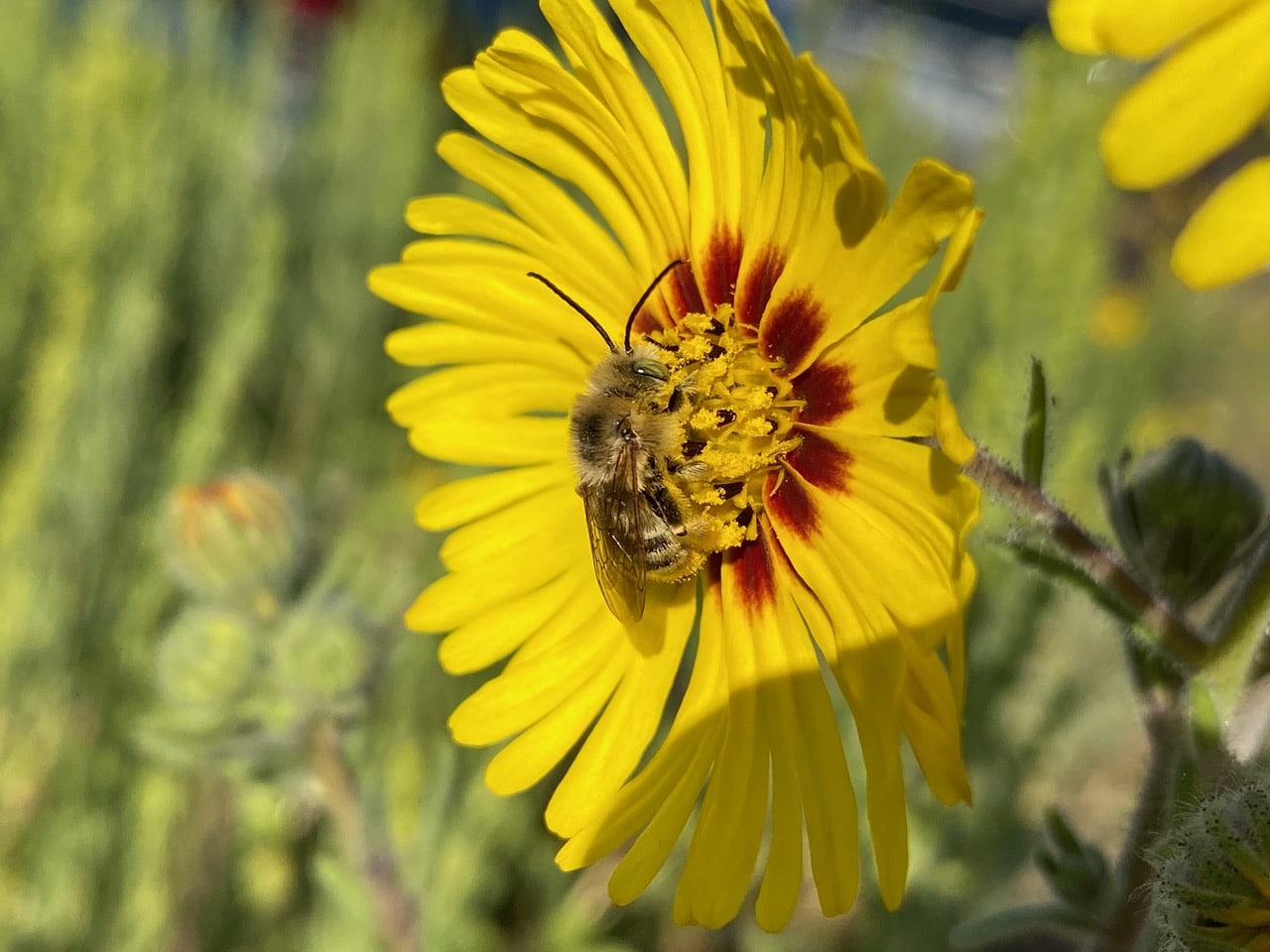
The Summer Longhorn Bees, Melissodes sp. (family Apidae) are medium to large bees, stout-bodied, usually with gray hair on the thorax and pale hair bands on the abdomen. Males usually have yellow markings on their faces and have very long antennae from which their common name is derived. They are active May to September, with peak flight in late June to early August. The females prefer flat, bare ground for digging their solitary nests, though they sometimes nest in aggregations. Pollen is transported in scopae on the hind legs. Pollen loads are often copious and brightly colored and thus very distinguishable. Melissodes are specialists on Asteraceae – females gather pollen from flowers of Aster, Bidens, Coreopsis, Cosmos, Encelia, Gaillardia, Helianthus, and Rudbeckia ssp.
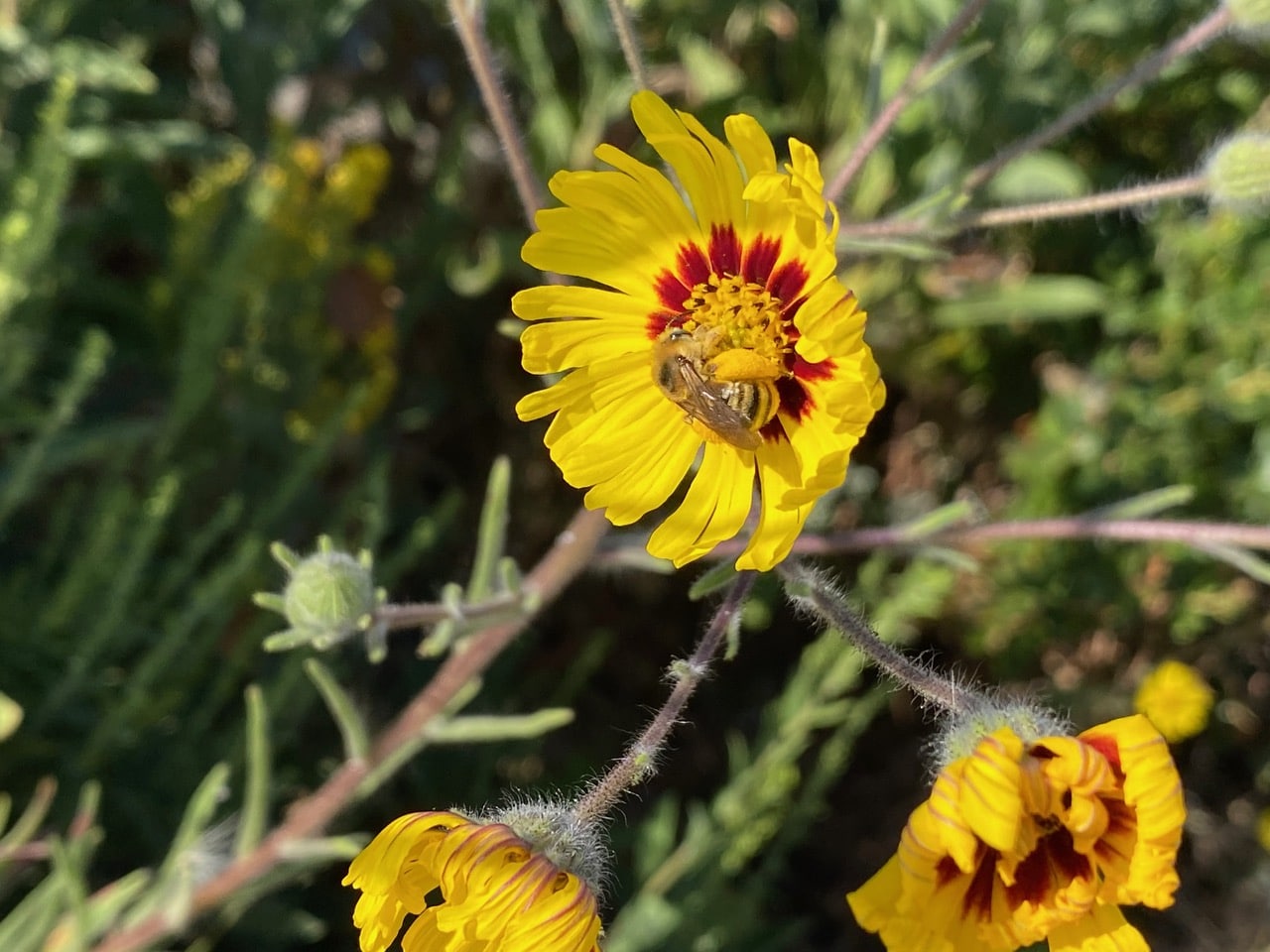
Ooh, that’s a female Summer Longhorn Bee, Melissodes sp. (family Apidae) collecting pollen on a flowerhead of Elegant Tarweed.

As the female rotates in the middle of the flowerhead in fancy footwork, I can almost see the pollen load in her scopae grow in real time!
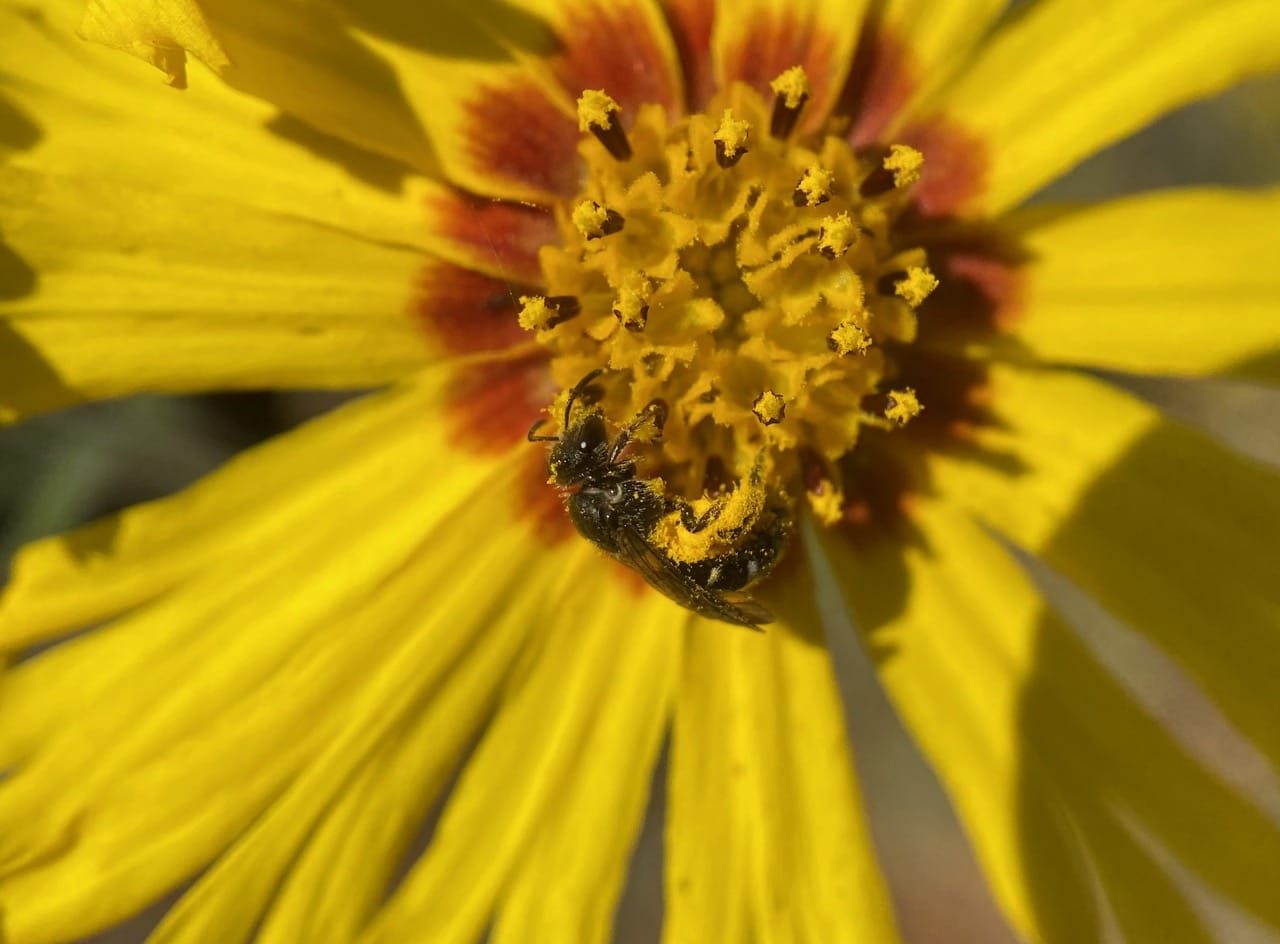
A Sweat Bee, Halictus sp. (family Halictidae) is gathering pollen into her scopae on her hind legs as well as under her abdomen.
Halictus is found worldwide; they are most common in the Northern Hemisphere. All are generalists, foraging from a wide variety of flowering plants. Many species are social and produce several generations per year. This is not surprising as most blooming plants are season-specific; a bee that requires pollen and nectar across multiple seasons would not thrive as a specialist. All Halictus in North America nest in the ground, often in aggregations; and they may nest in the same area for decades.
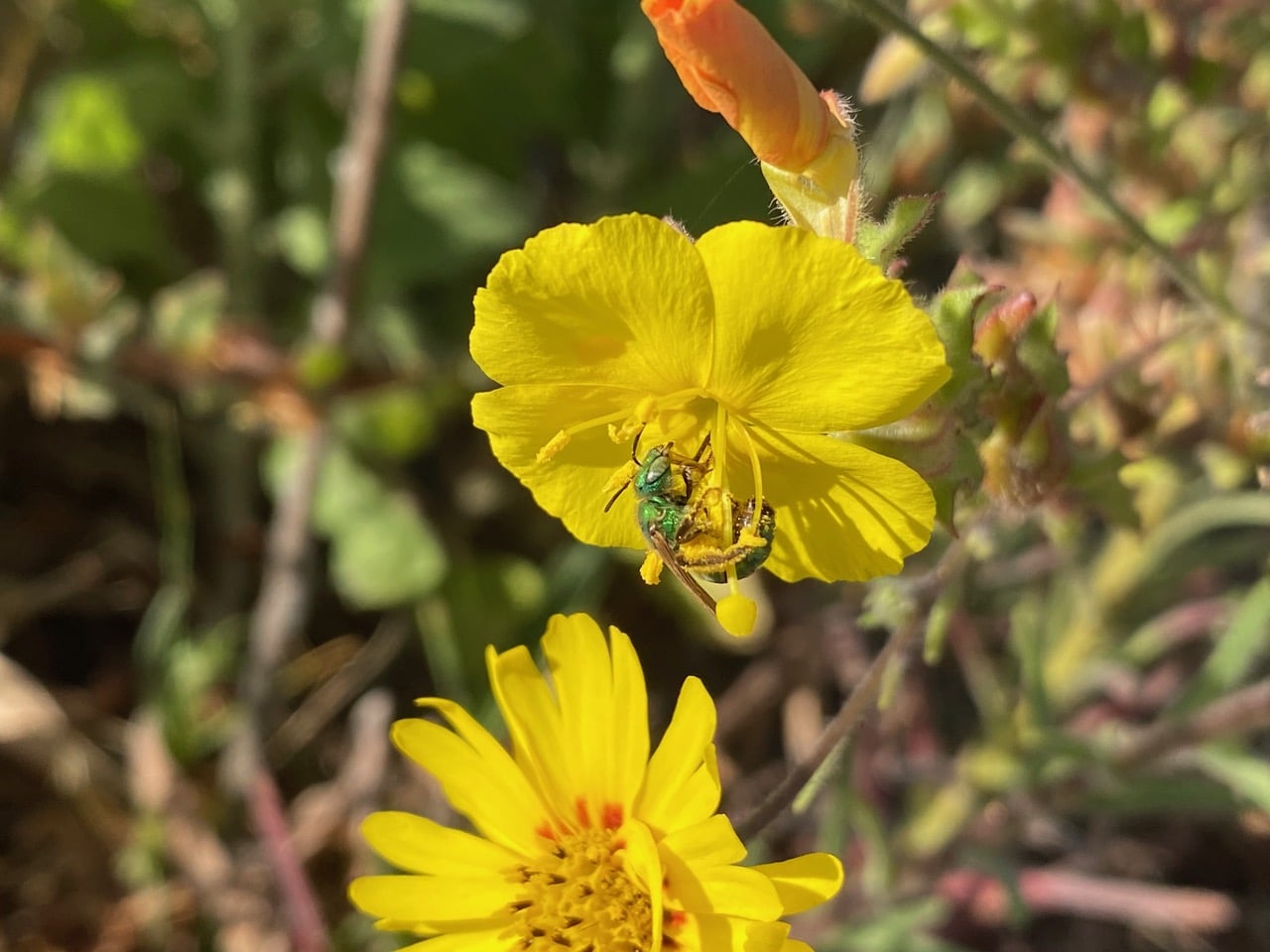 Growing among the Elegant Tarweed is a shorter, ground-hugging plant, the Beach Evening Primrose, Chamissoniopsis cheiranthifolia. A female Striped Sweat Bee, Agapostemon sp. (family Halictidae) is visiting one of the lemon-yellow flowers. The striking iridescent green bee first gathers pollen from the anthers.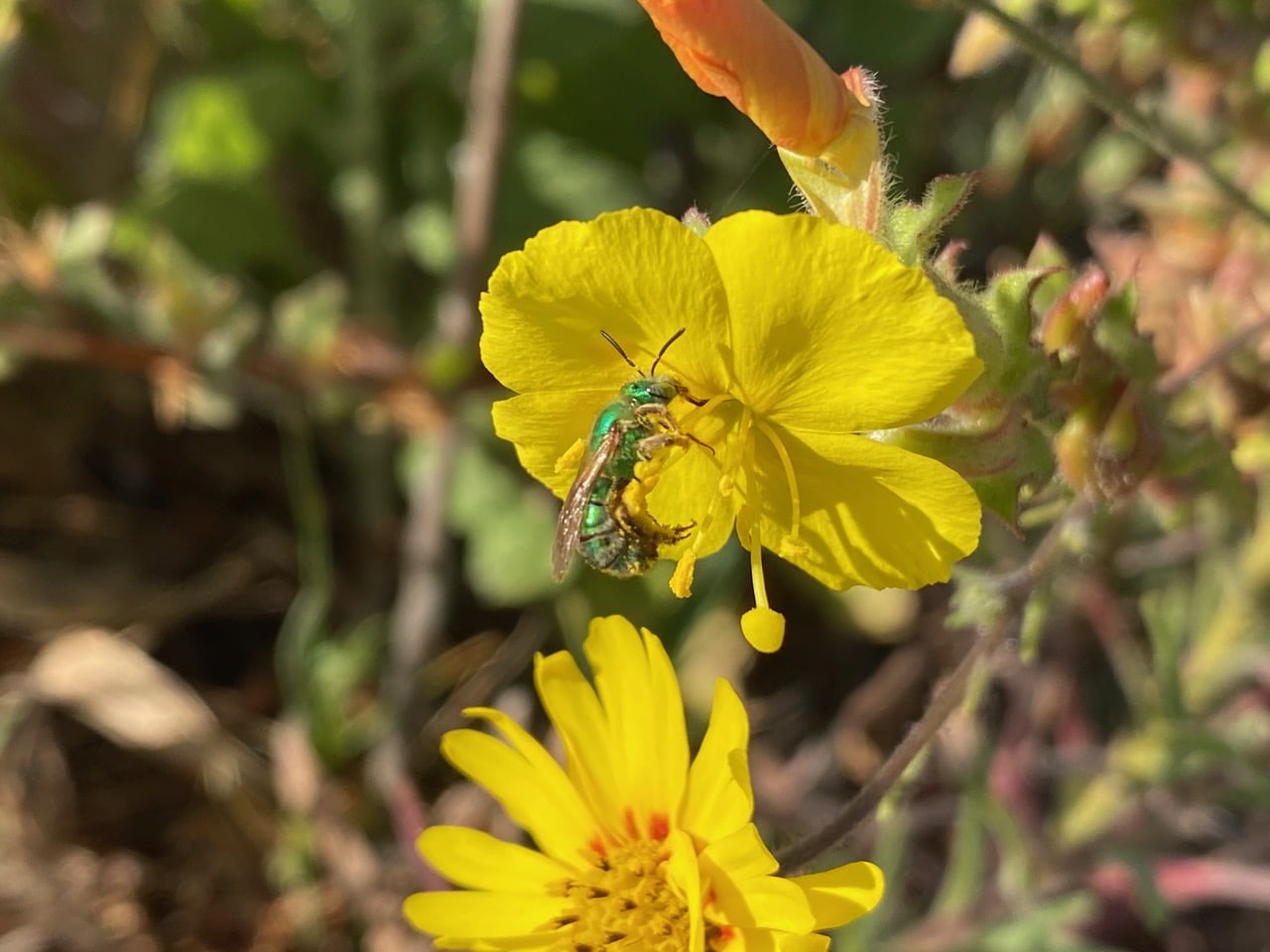
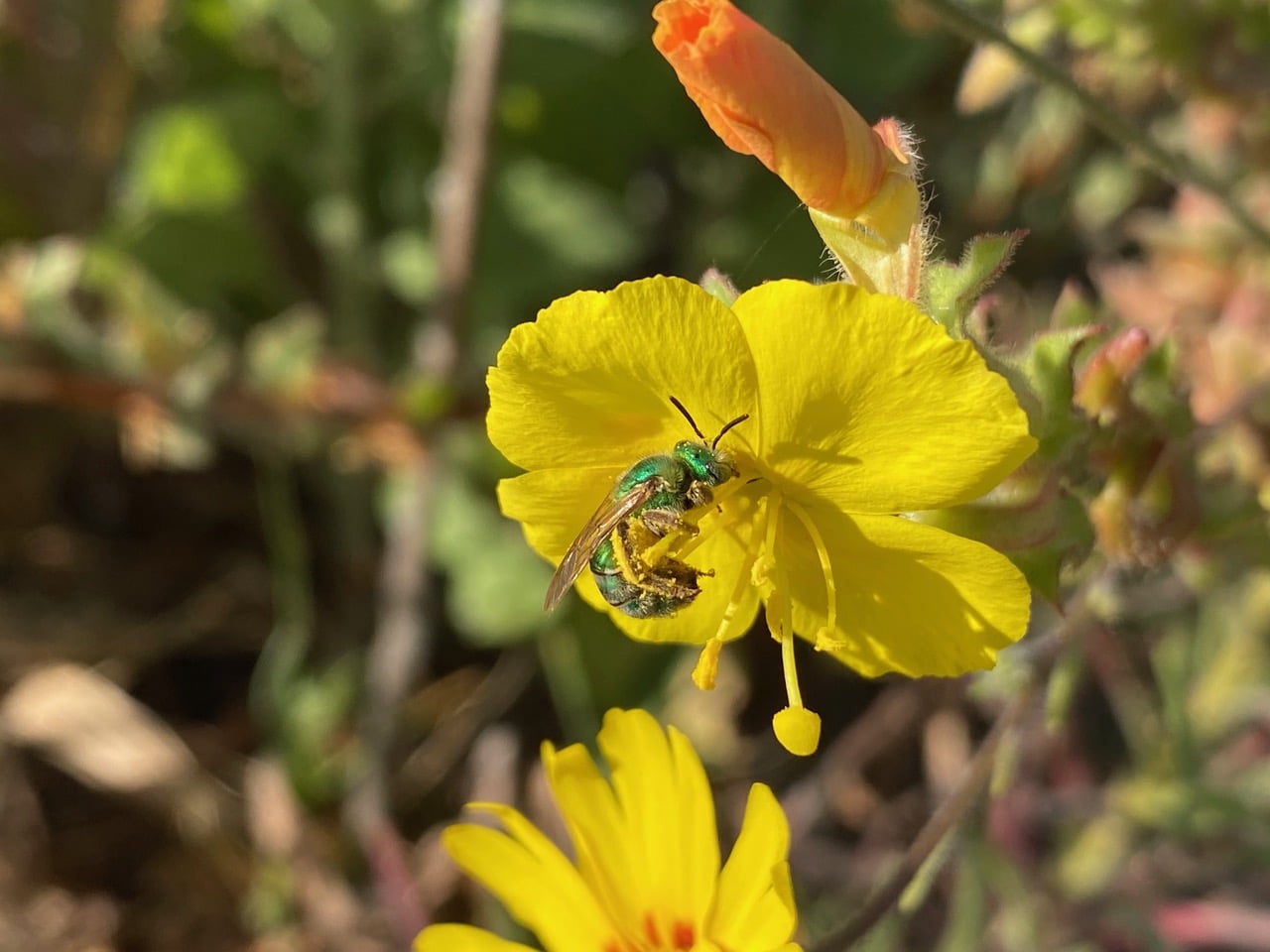
Then she reaches down for nectar at the base of the flower.

The genus Agapostemon is widespread and abundant throughout North America. They are most diverse and abundant in temperate regions and southwestern U.S. deserts. Agapostemon are commonly called “sweat bees” because they are closely related to, and resemble bees in the Halictus and Lasioglossum genera. Unlike those bees however, Agapostemon are not attracted to human sweat.
Agapostemon are brightly colored metallic green or blue bees measuring 7 to 14.5 mm long. Most species have a metallic green head and thorax, and black-and-yellow striped abdomen; some females are entirely bright green or blue. Females carry pollen on scopal hairs located on their hind legs. Agapostemon are generalists. Like other members of the family Halictidae, they are short-tongued and thus have difficulty extracting nectar from deep flowers. Males are often seen flying slowly around flowers looking for females. The bees favor flowers with high densities. These bees are active summer to fall.

A female Striped Sweat Bee, Agapostemon sp. (family Halictidae) is foraging on a flowerhead of Elegant Tarweed.
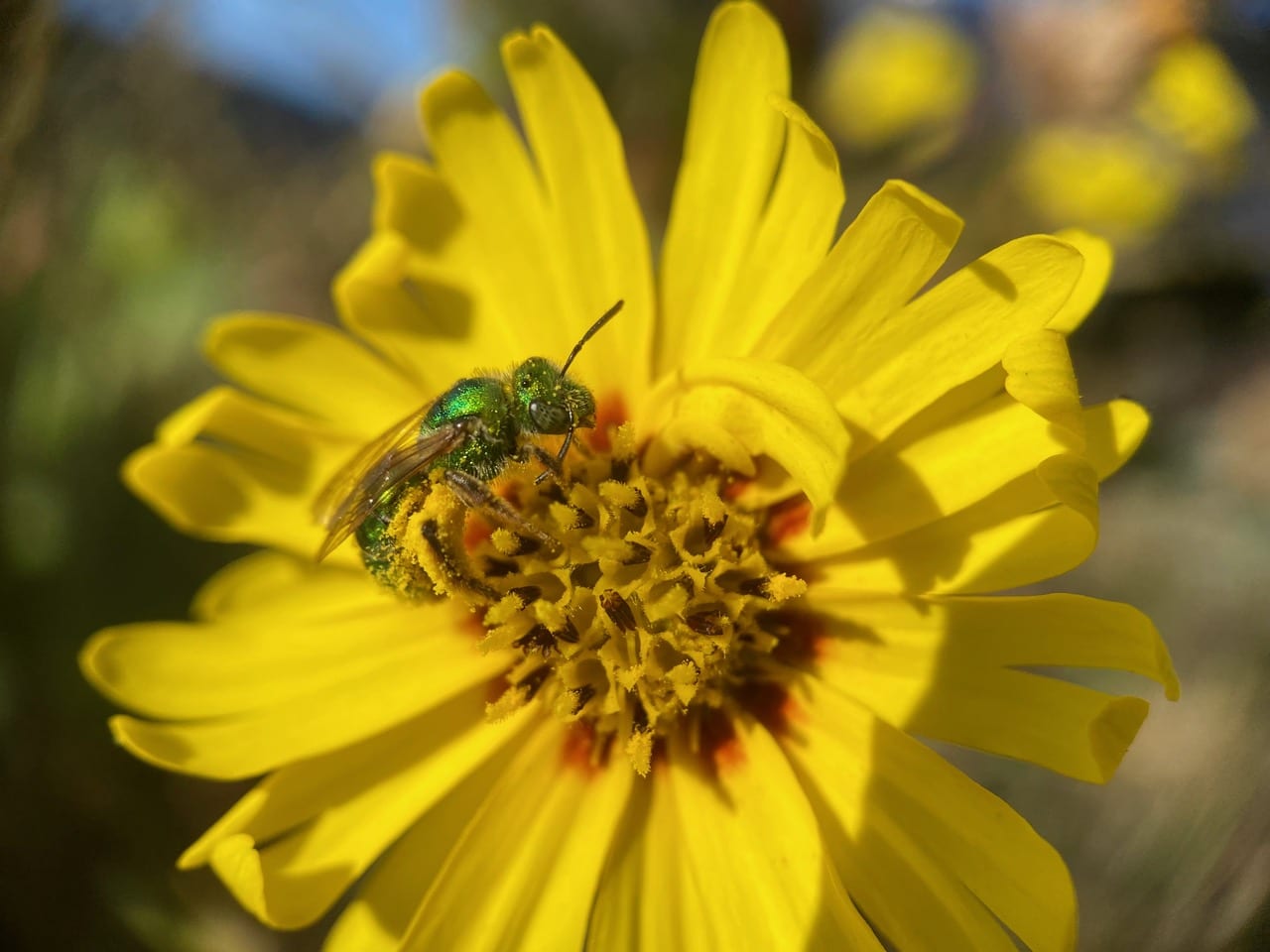
It’s a sticky job. She pauses for a brief moment to clean her antennae.
All bees have an antenna cleaner on each of their two forelegs. The antenna cleaners consists of two parts: a notch in the basitarsus, which is fitted with stiff hairs, and a corresponding spur on the tibia. To clean its antenna, the bee raises its foreleg over its antenna and then flexes it tarsus. The action allows the spur to close the notch, forming a ring around the antenna. The bee pulls each antenna through the bristles to clean it of debris such as pollen or dust which might interfere with the many sensory organs within the antenna. A bee’s antennae serve numerous functions: smell, taste, perceive humidity and temperature, feel, monitor gravity and flight speed and even detect sound waves to help guide the bee in its daily activities.
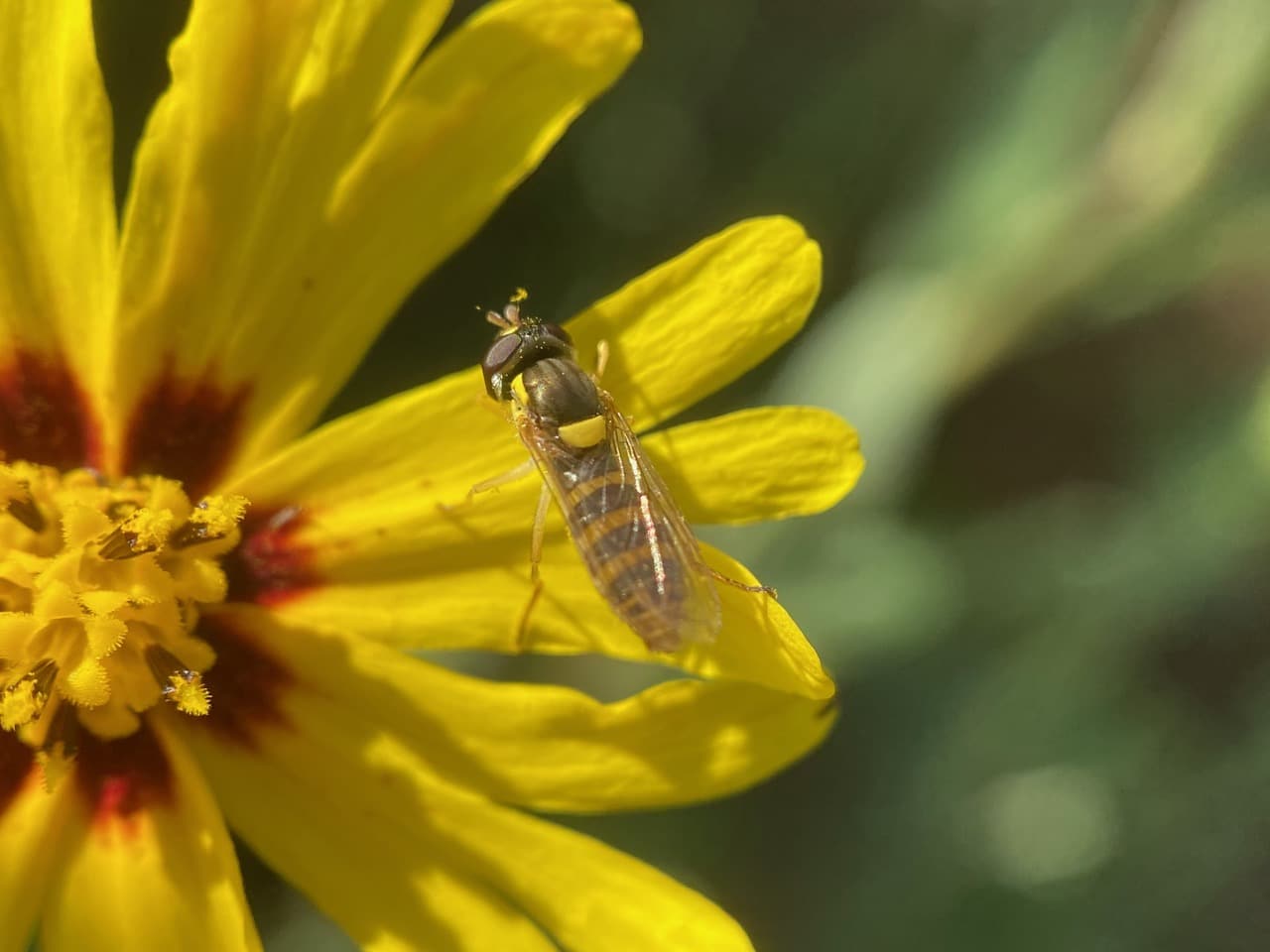
A female Forked Globetail, Sphaerophoria sulphuripes (family Syrphidae) lands on a flowerhead of Elegant Tarweed.
The most unusual feature of the Forked Globetails is their marked sexual dimorphism – the males have a slender abdomen with a reddish, swollen tip. Females do not have any red on their body. The species is native to western North America. Adults visit flowers for nectar and pollen. Larvae feed on aphids and other soft-bodied insects.
