

Pollinator Post 7/6/23 (3)
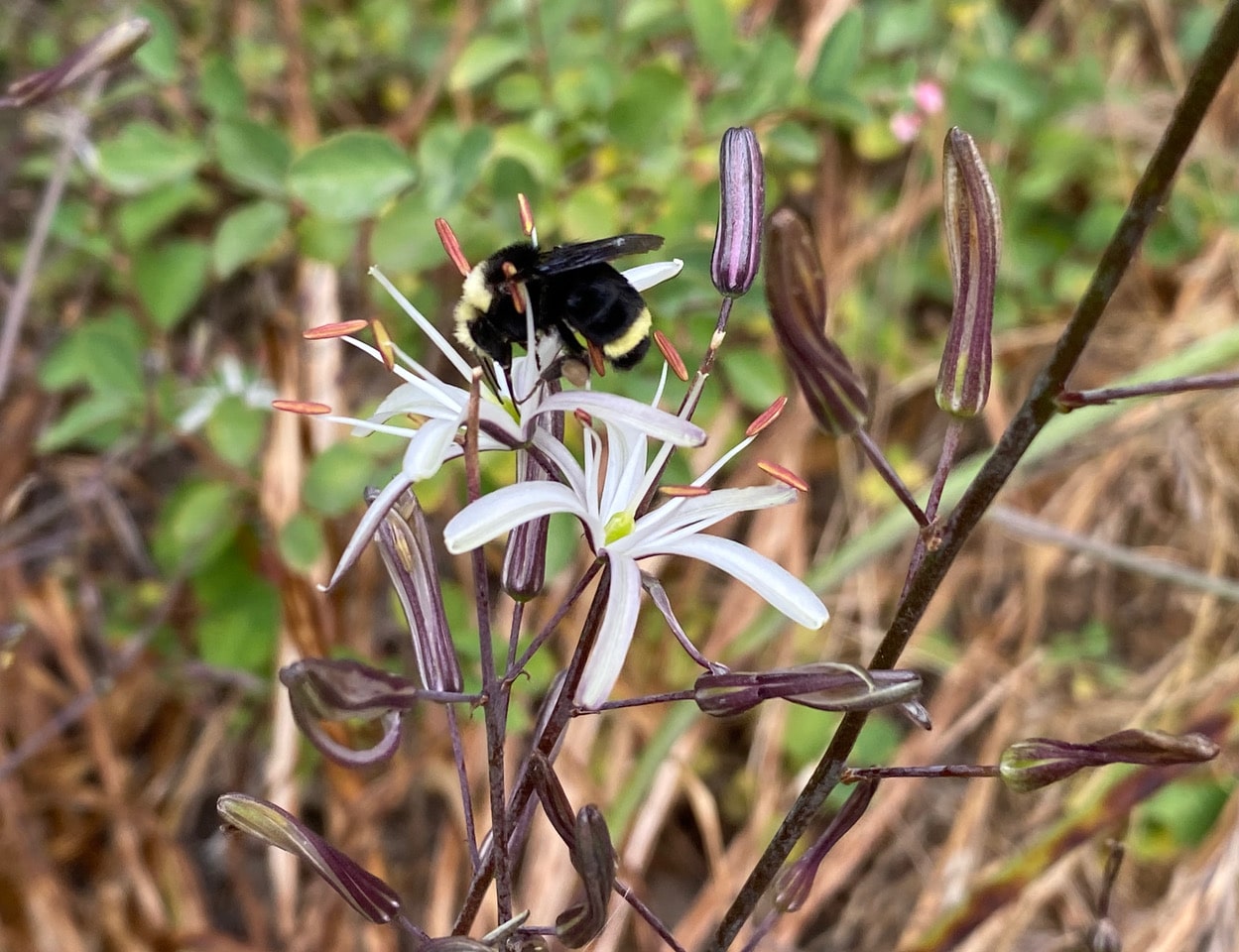
A few Yellow-faced Bumble Bees are flying around the newly open Soap Plant flowers, occasionally landing to take nectar.

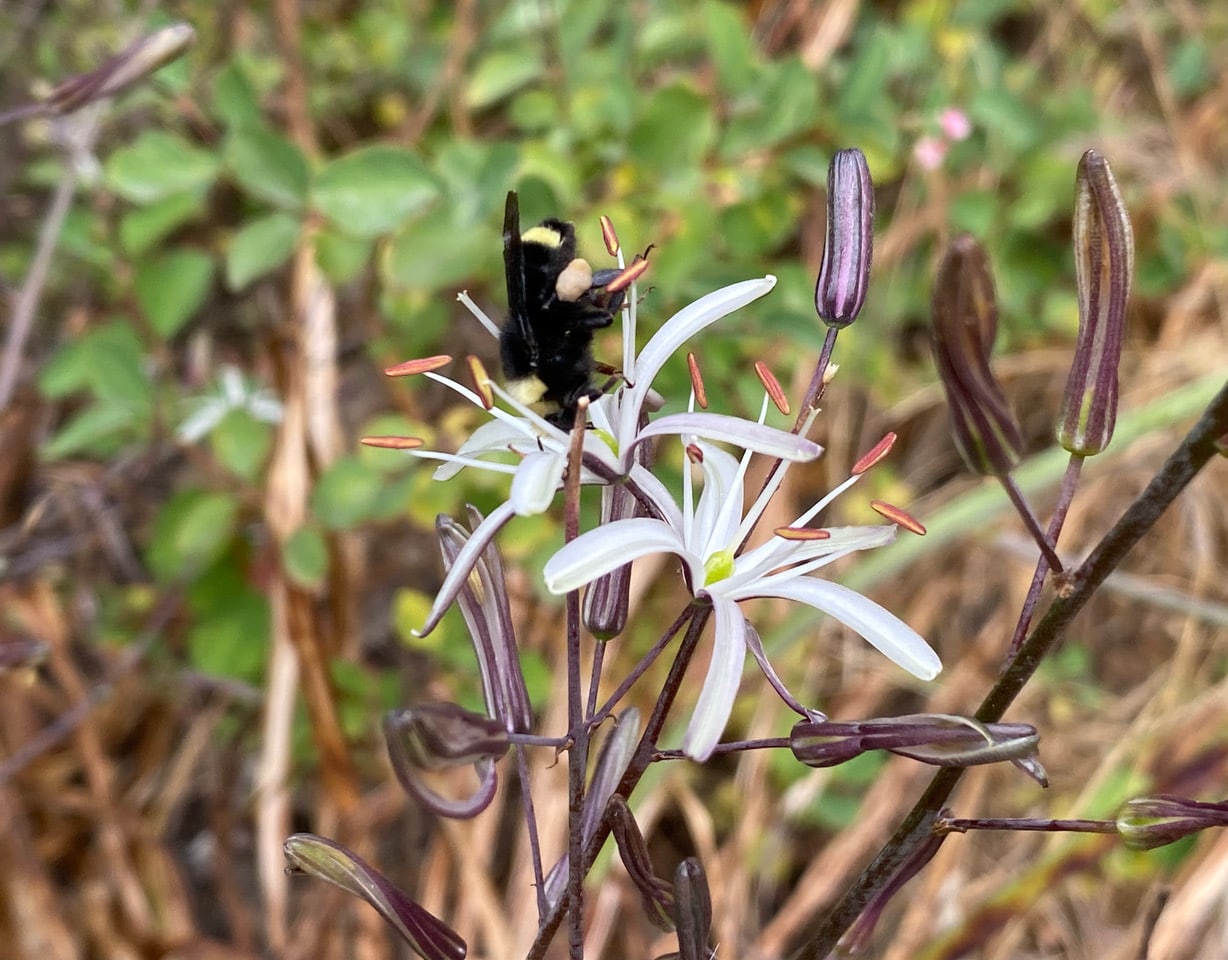
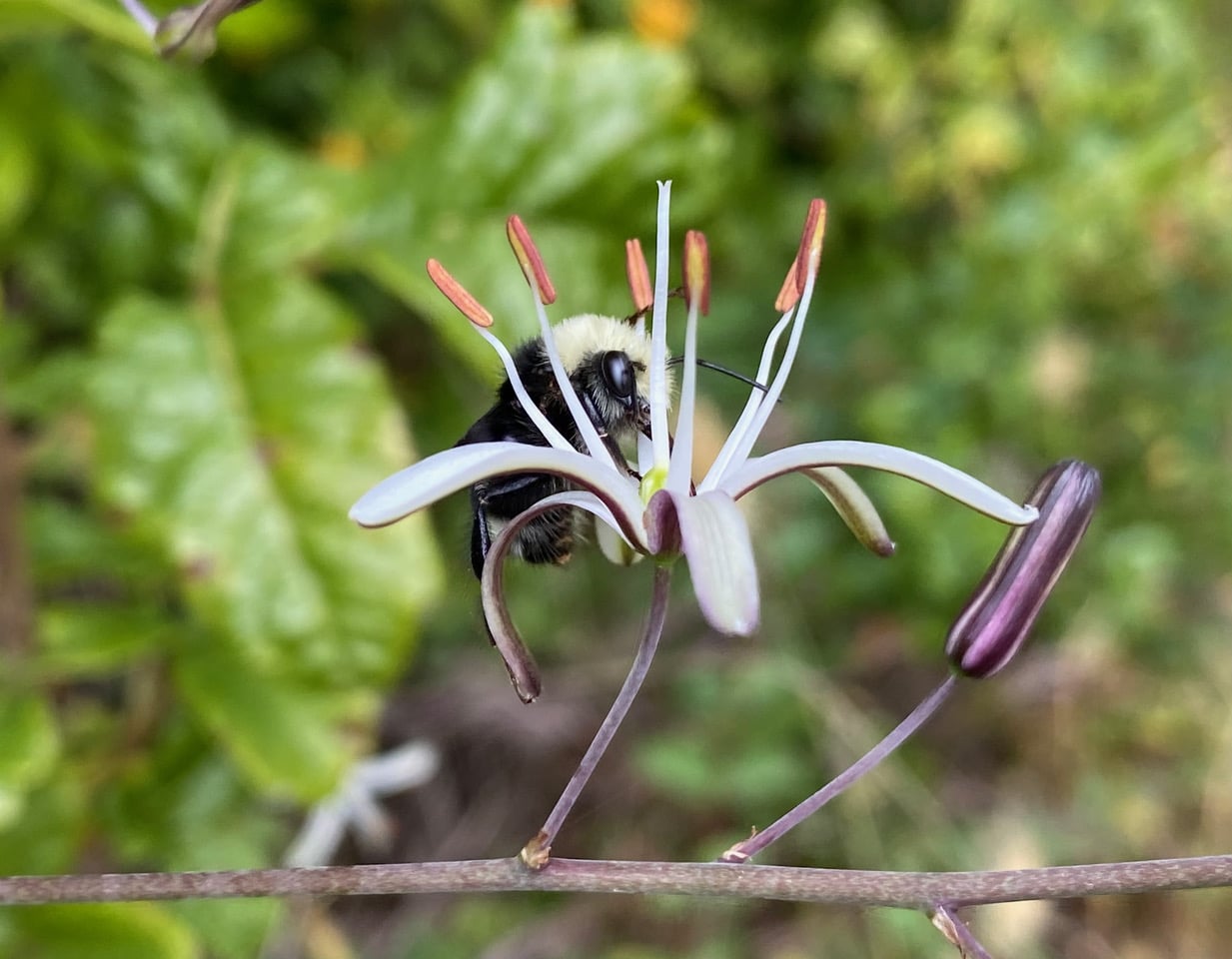
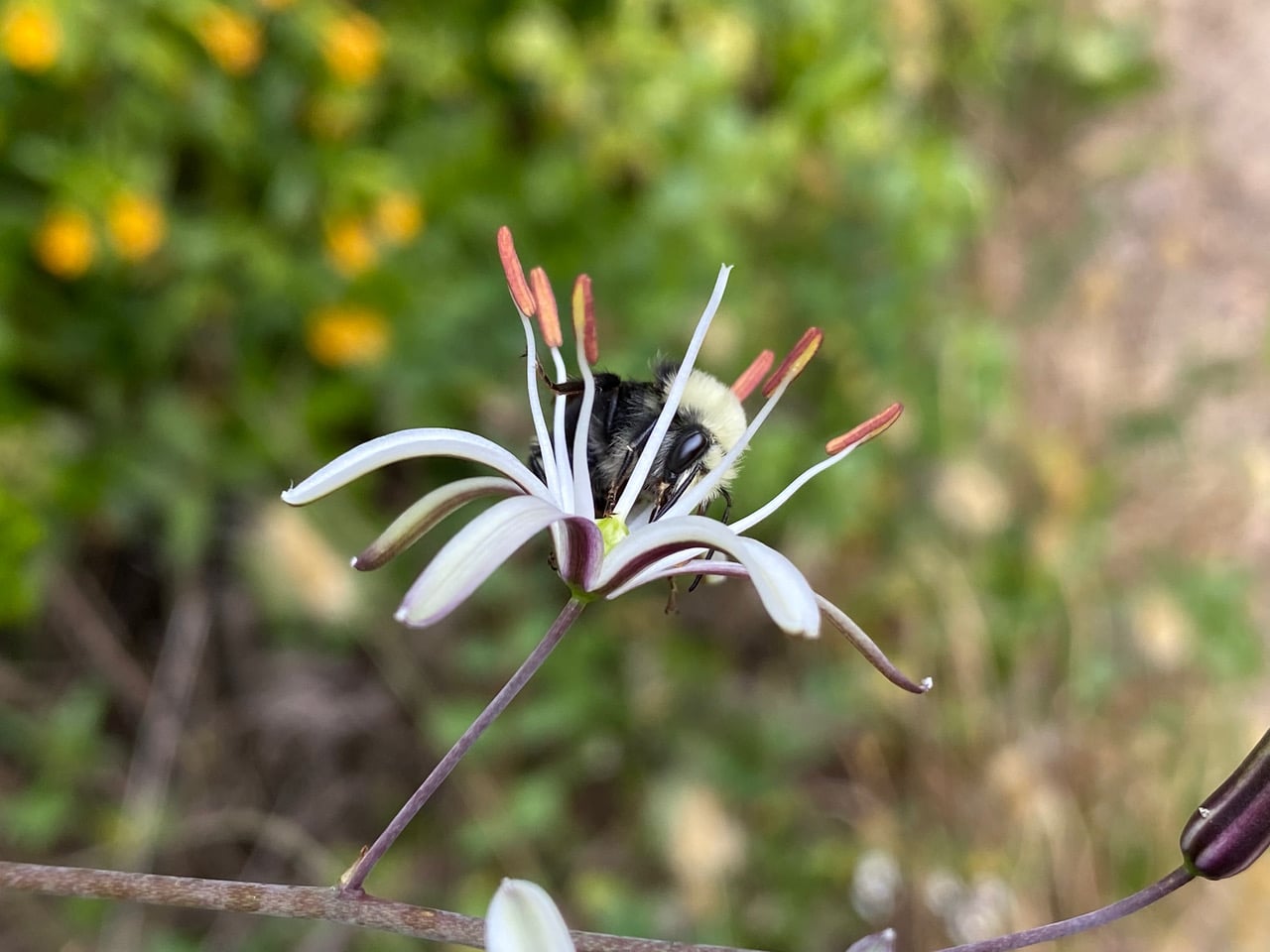

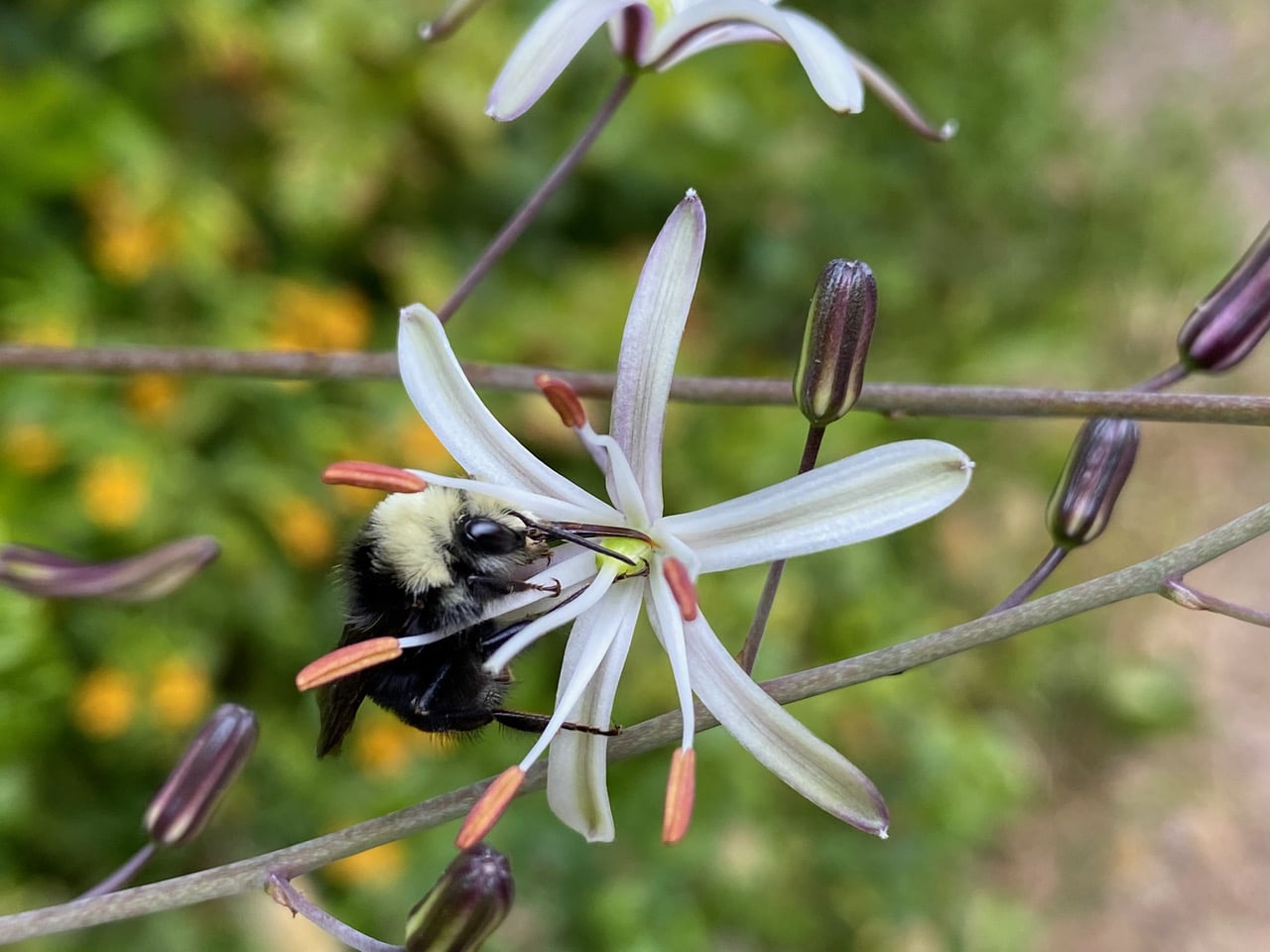
Check out that long tongue! It is soaking up the nectar at the base of the flower under the green ovary. I am delighted to observe the Bumble Bees’ antics and agility around the Soap Plant flowers. They can access the sweet stuff from any angle.
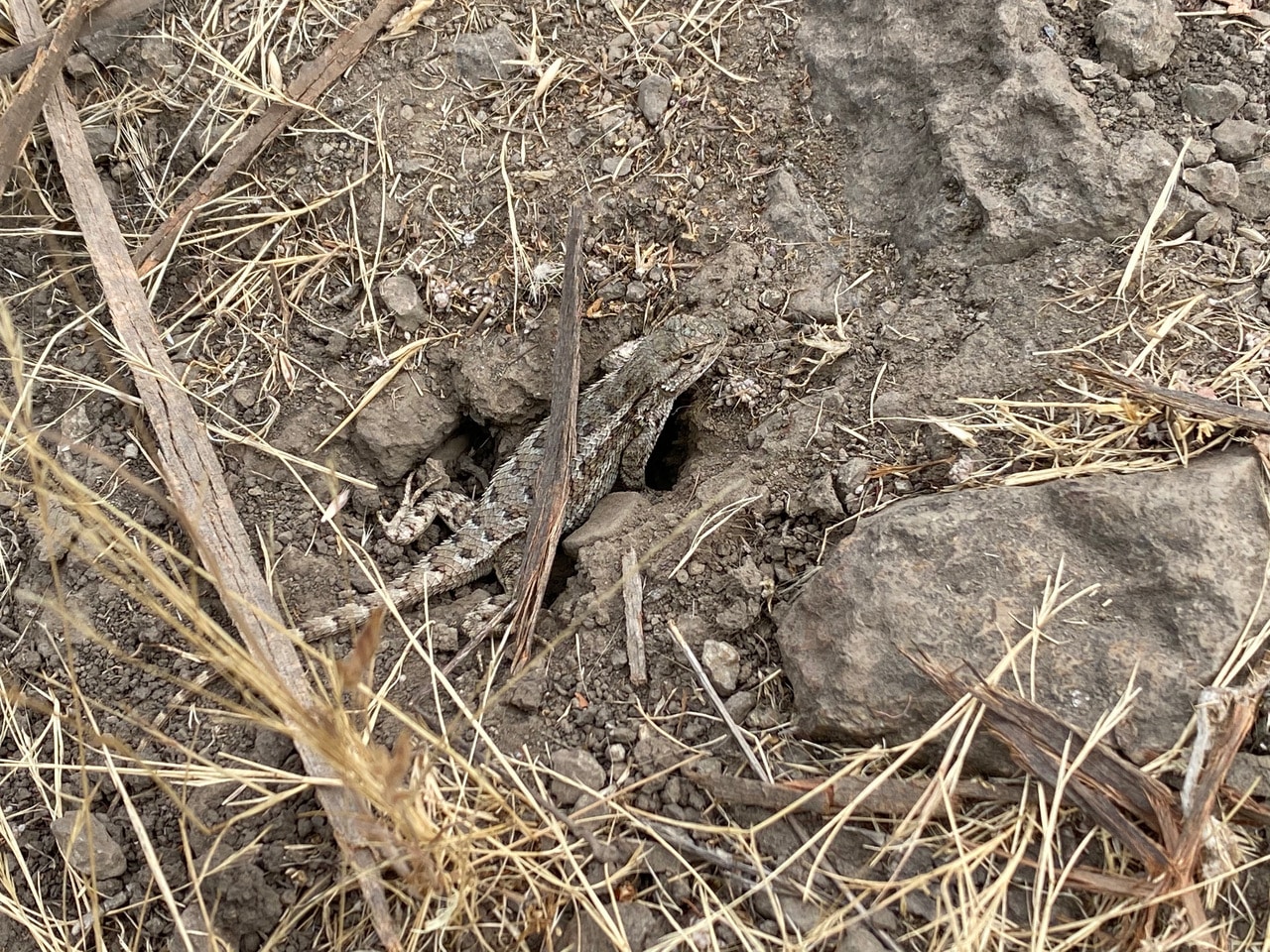
A Western Fence Lizard stops momentarily in front of me before running off into the undergrowth.

A chunky bee is resting motionless in a flower of Farewell-to-Spring. It is about the size of a bumble bee, but without the yellow and black coloration. A sleeping male Digger Bee, Anthophora sp.? Male solitary bees do not participate in nest building, so they do not have a home to return to at the end of the day. They usually spend the night out, among foliage or flowers. Twice while I was a volunteer at the Bridgeview Pollinator Garden, I have found male Digger Bees asleep in Clarkia flowers in the early morning.
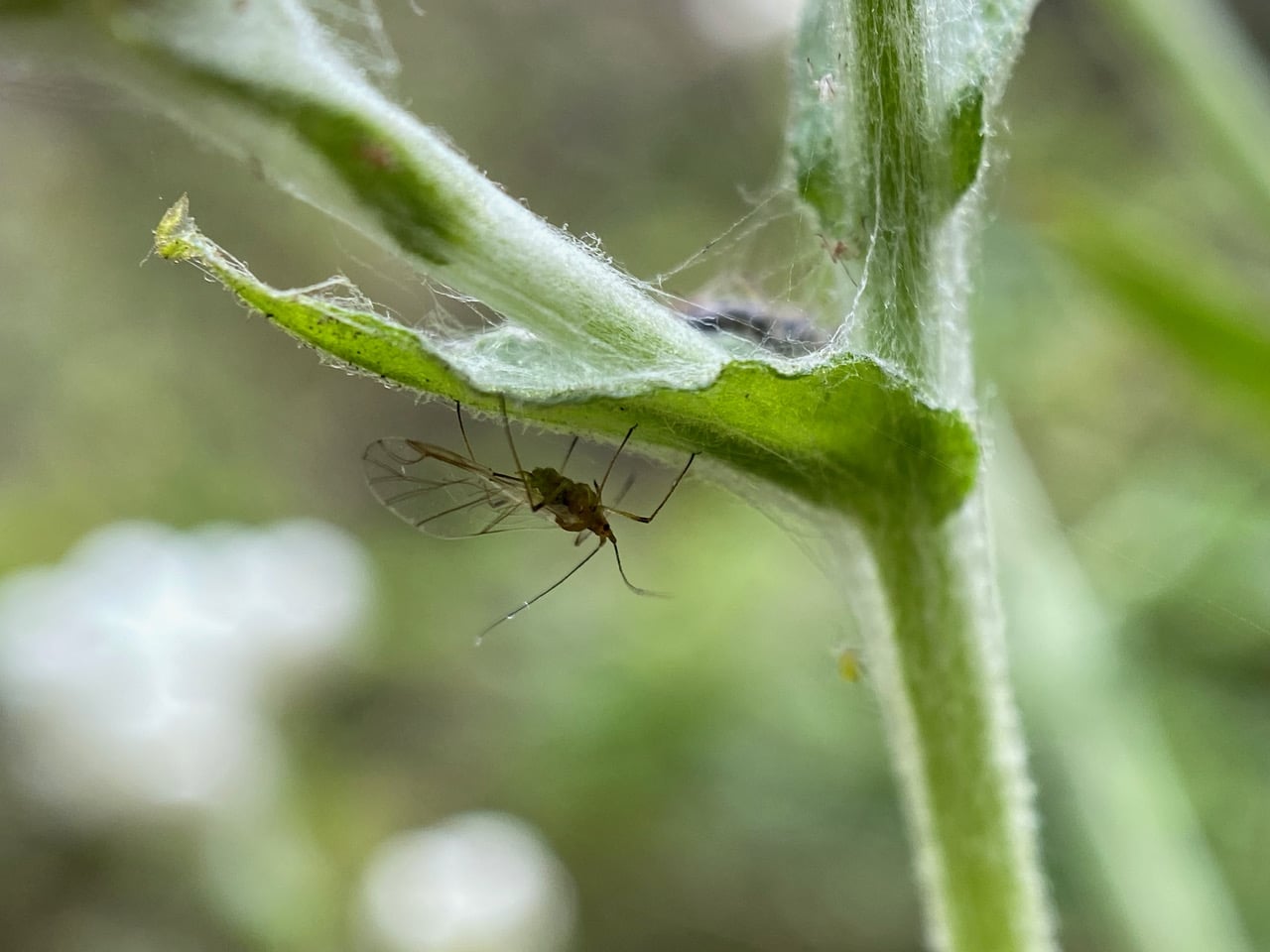
A winged aphid is resting under the leaf of California Everlasting, Pseudognaphalium californicum.
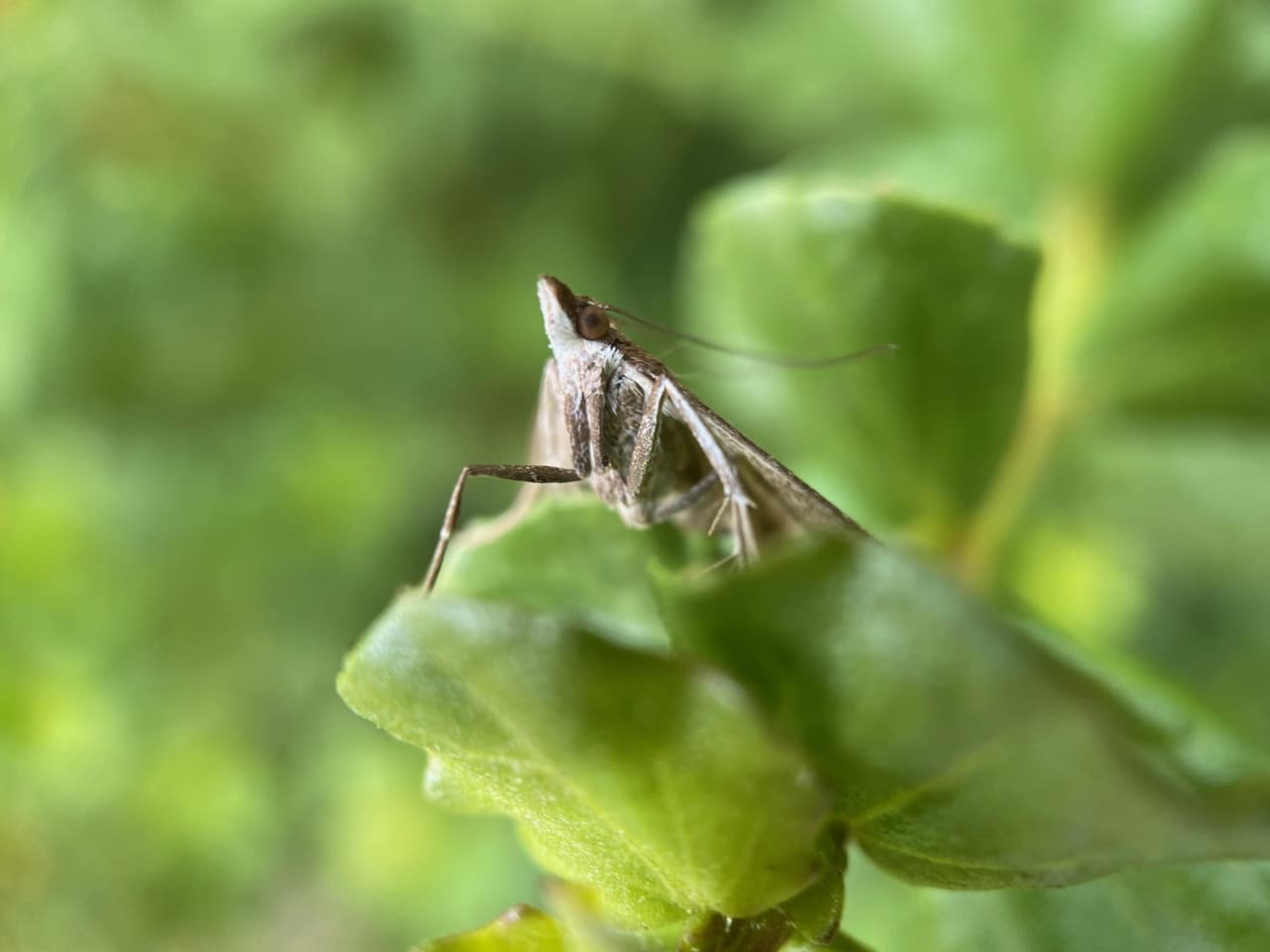
A moth lands on a Coyote Brush and immediately assumes this posture with its snout pointing skyward, while remaining stock still.
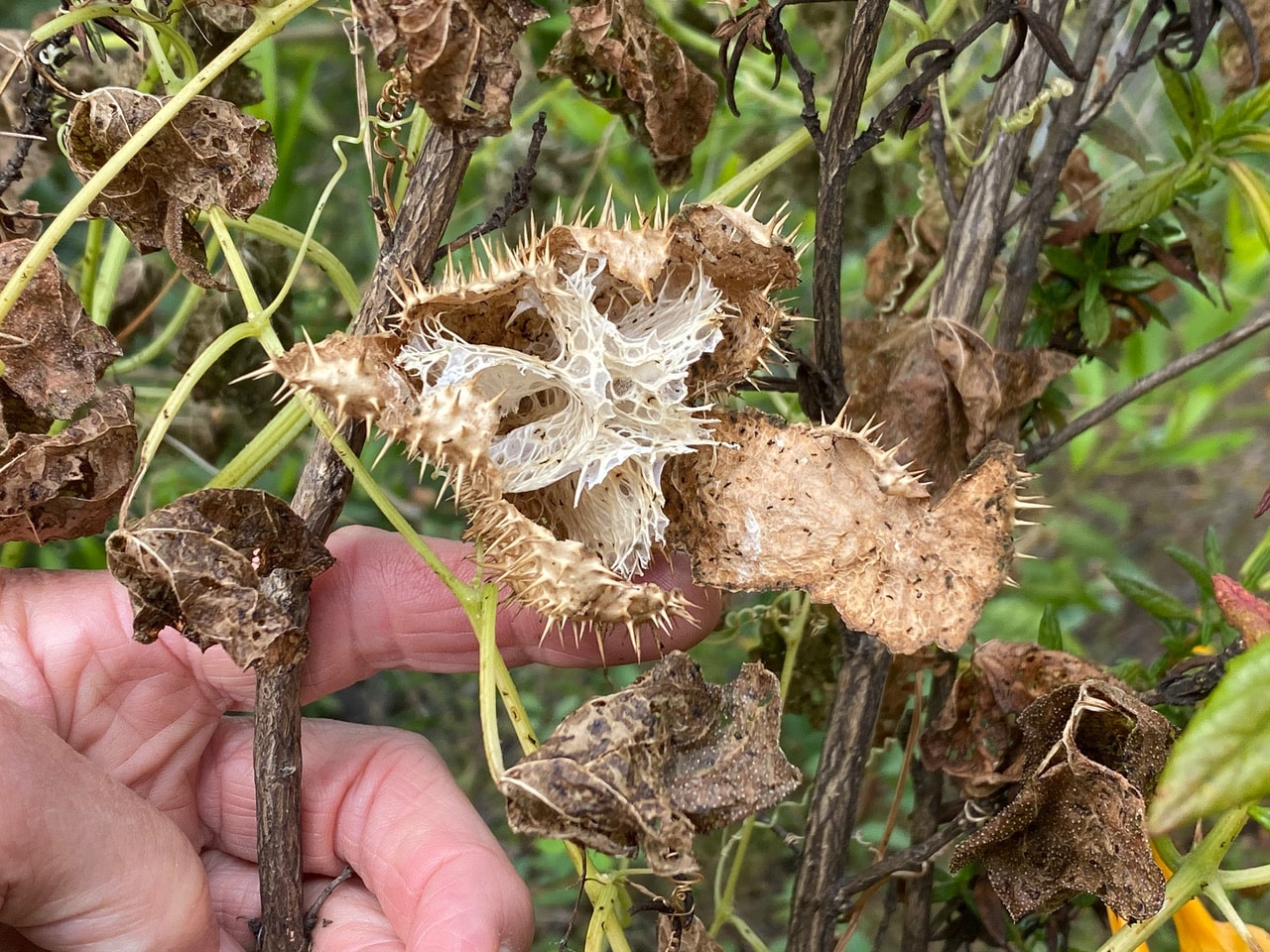
Andy finds a California Manroot, Marah fabacea that has died back, draped over a Sticky Monkeyflower shrub. She tilts one of the dried fruits so we could see the inside. All the seeds are already gone, leaving only the white lace-like membranes that separate the seed chambers.
The fruit of Marah fabacea is spherical, 4-5 cm in diameter, and covered with prickles. Unripe fruits are bright green, ripening to yellow. The fruit swells as it ripens until finally rupturing and releasing the large brown seeds.

Will the Dance Flies (family Empididae) feed on the Soap Plant nectar all through the night?

This female Dance Fly (family Empididae) has climbed up to a ripe anther to gorge on the pollen.
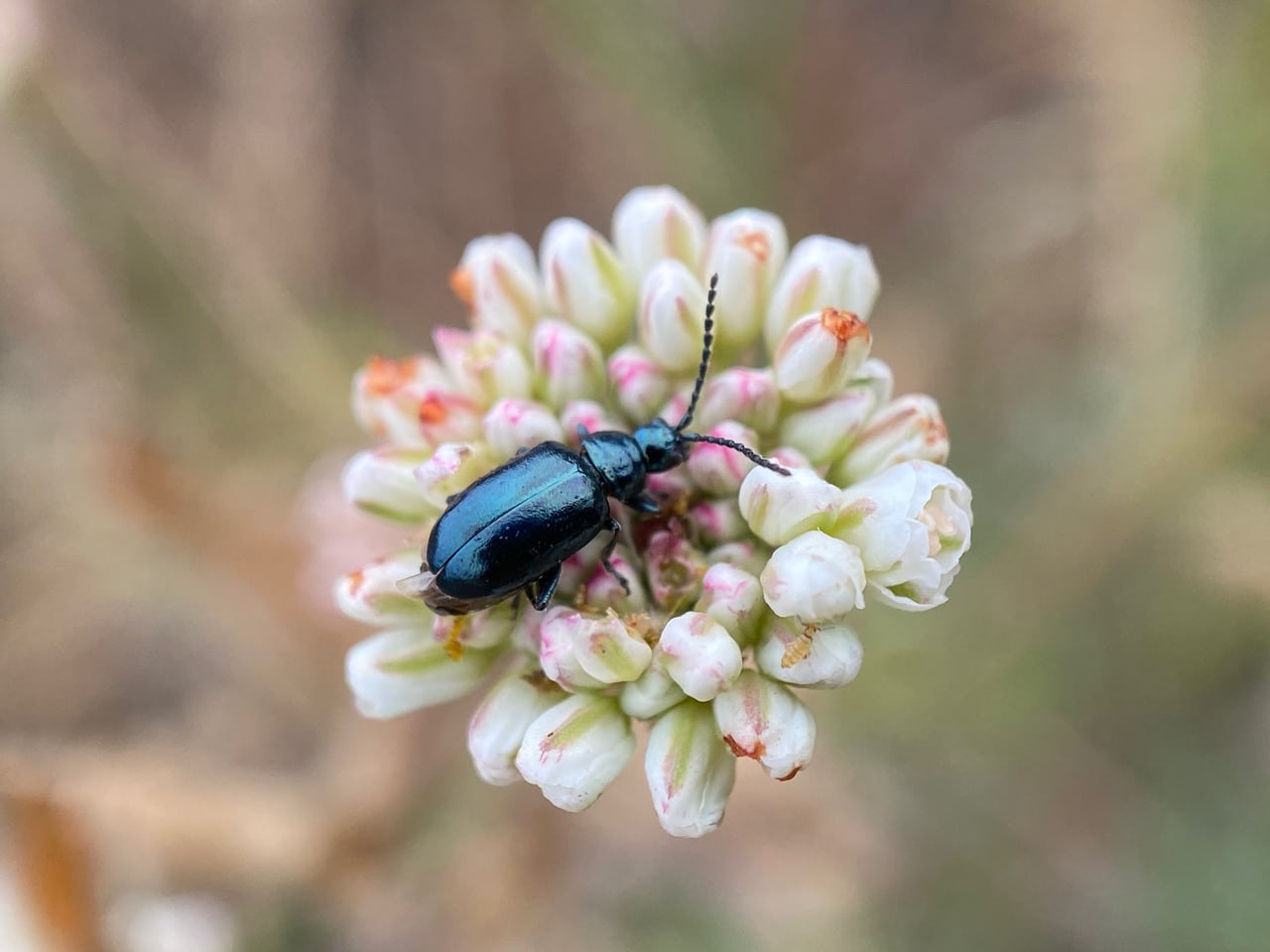
This Flea Beetle, Altica sp. (Chrysomelidae) is apparently asleep on the inflorescence of Nude Buckwheat, Eriogonum nudum. It is not running away from my camera.
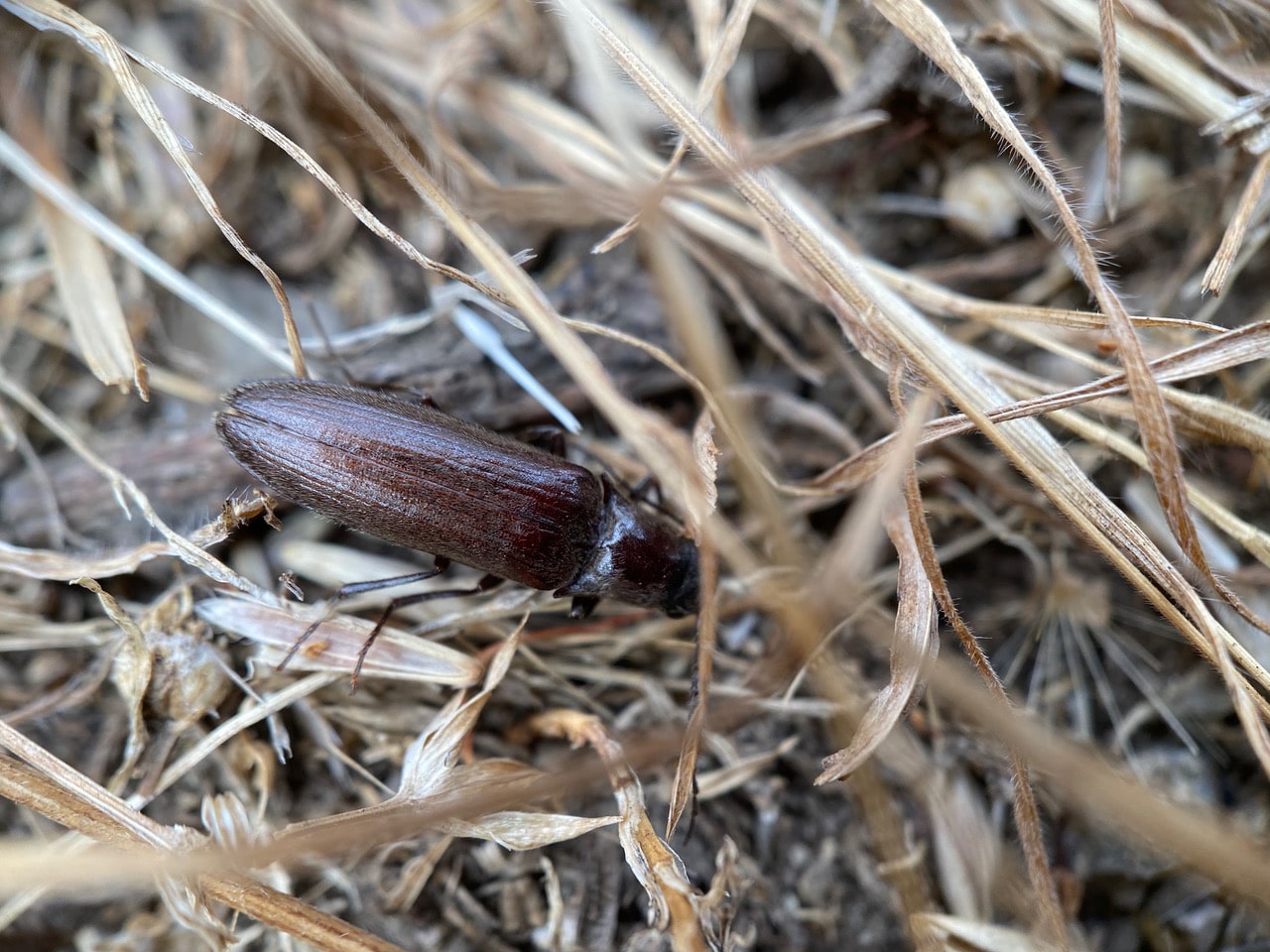
A Click Beetle (family Elateridae) crash-lands into the undergrowth of dry grass by the trail.
Elateridae or Click Beeltes are a cosmopolitan beetle family characterized by the unusual click mechanism they possess. A spine on the prosternum can be snapped into a corresponding notch on the mesosternum, producing a violent “click” that can bounce the beetle into the air. Clicking is mainly used to avoid predation, although it is also useful when the beetle is on its back and needs to right itself. How do click beetles jump? – YouTube
Adult Click Beetles are typically nocturnal and phytophagous (feeding on plants). Their larvae, called wireworms, are usually saprophagous, living on dead organisms, but some species are agricultural pest, and others are active predators of other insect larvae.
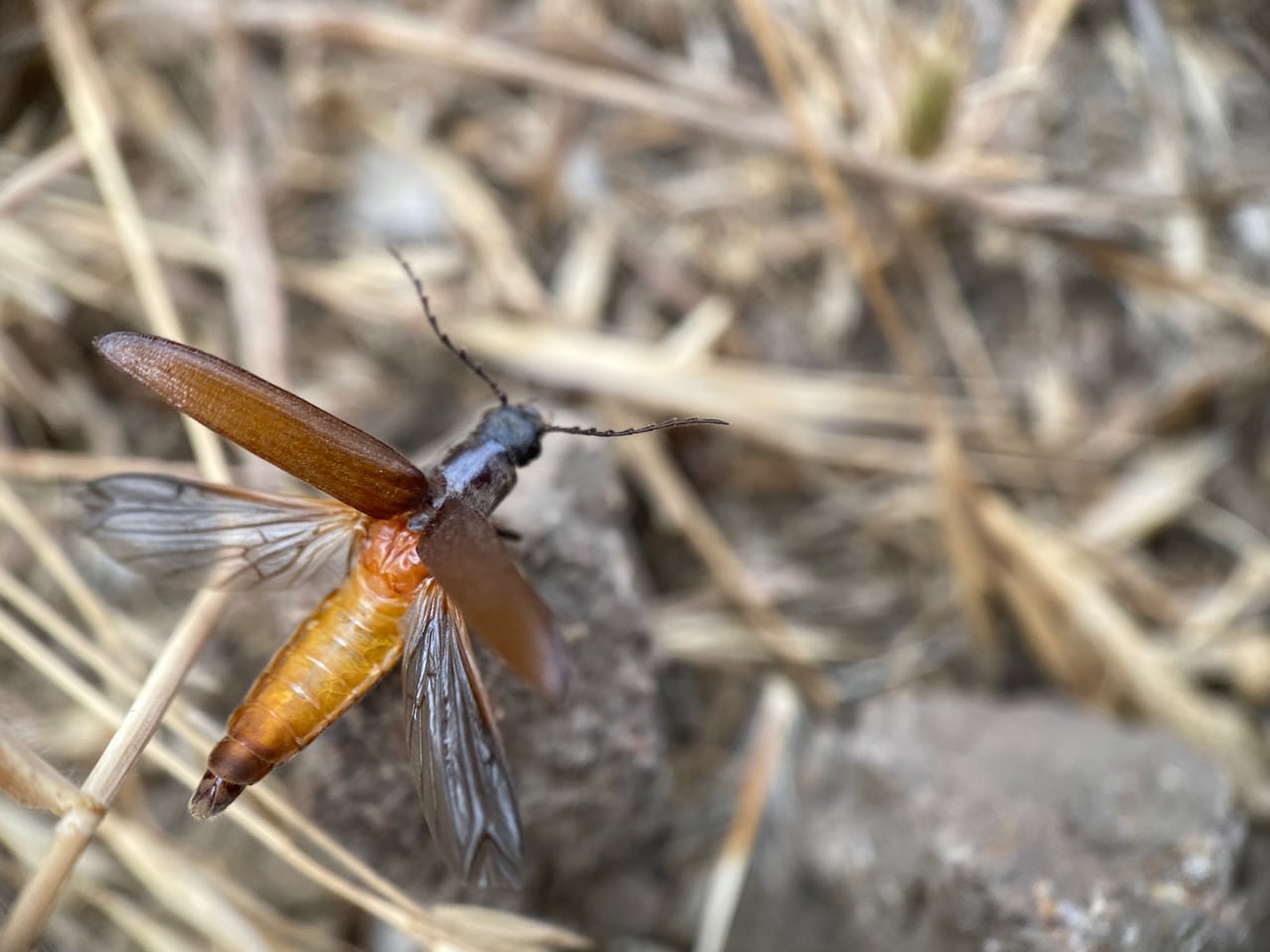
Finding a perch on a rock, it finally launches itself back into the air. We get a glimpse of its orange abdomen when it lifts its elytra and spreads its membranous hind wings.
An elytron is a modified, hardened forewings of beetles (order Coleoptera). The elytra primarily serve as protective wing-cases for the hindwings underneath, which are used for flying.
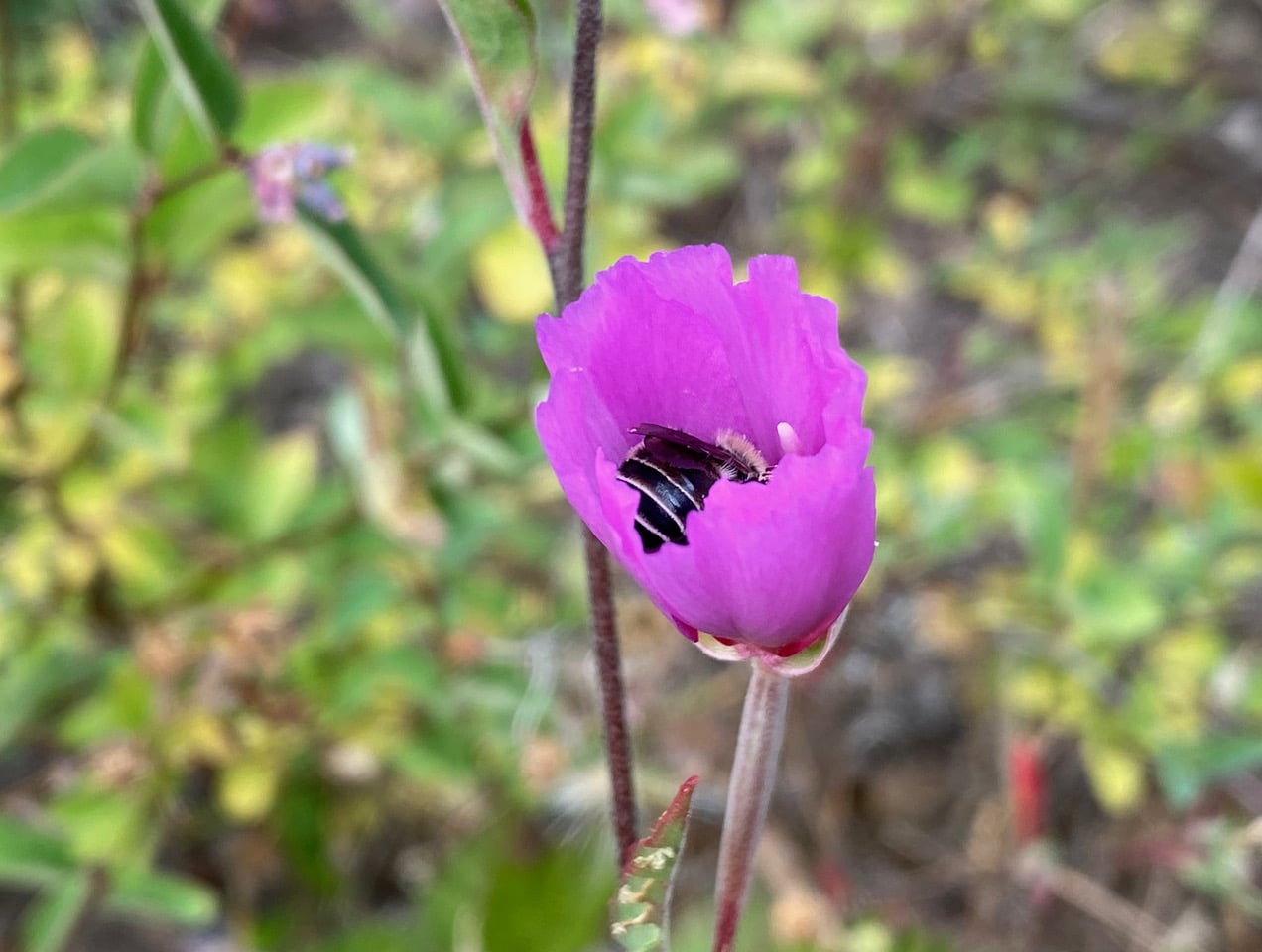
5:50 pm. We pass the same Clarkia rubicunda flower that hosted the sleeping bee. In just a little over an hour, the flower looks quite different now that it is partially closed. I peek inside – the bee is still there, tucked in more snuggly, sheltered from the cold winds. Now that I can clearly see the white bands on the black abdomen, I am almost sure that it is a Digger Bee, Anthophora sp. Nite-nite, Bee!

One last look at the Brown Elfin caterpillar on the Soap Plant. Did it weave the silk mesh around the fruit? Why?
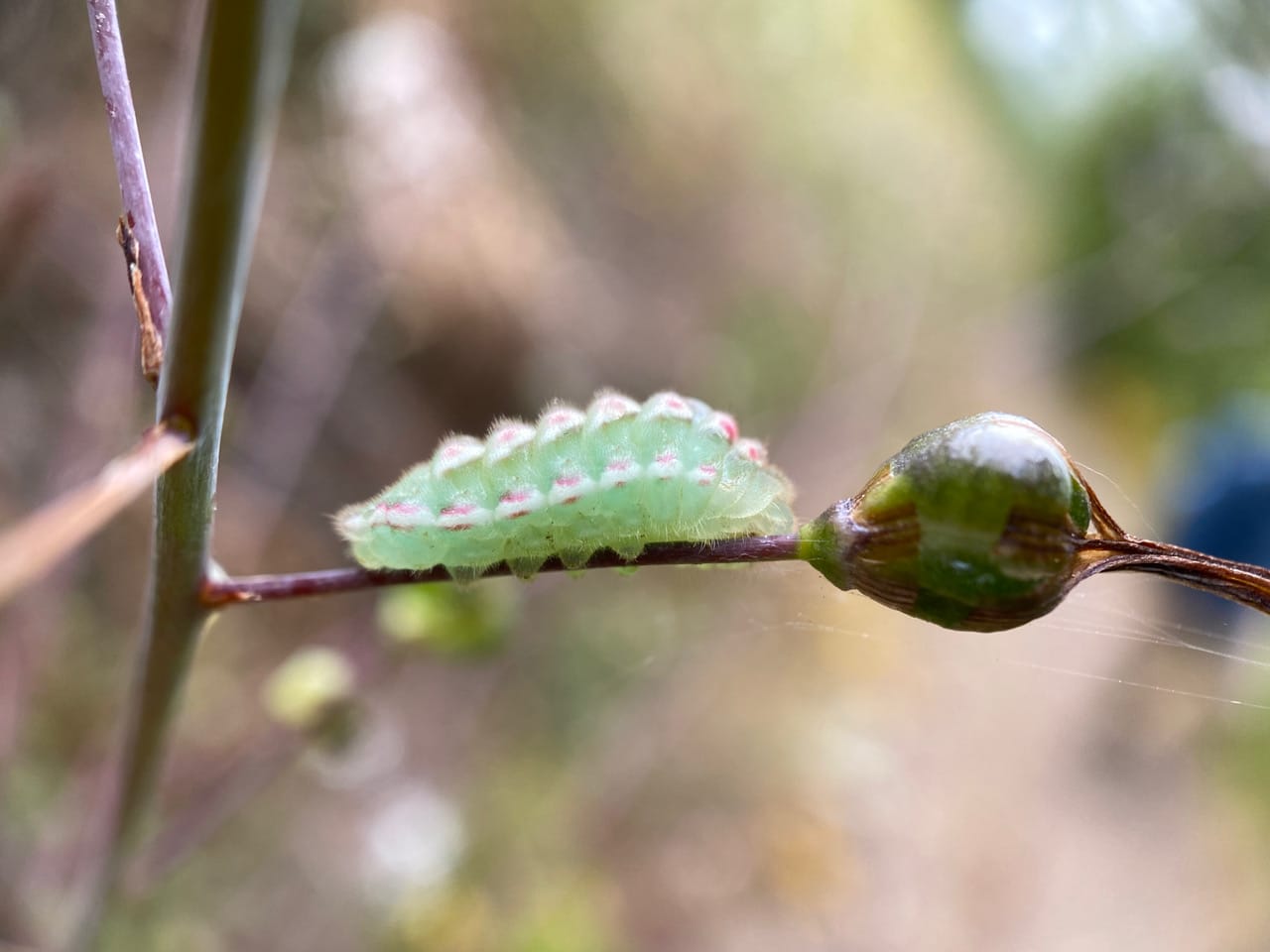
From another angle, we can see the fleshy little prolegs of the caterpillar, and its tiny head (facing the fruit). Animated jelly. What an intriguing life form!