

Pollinator Post 7/6/23 (1)
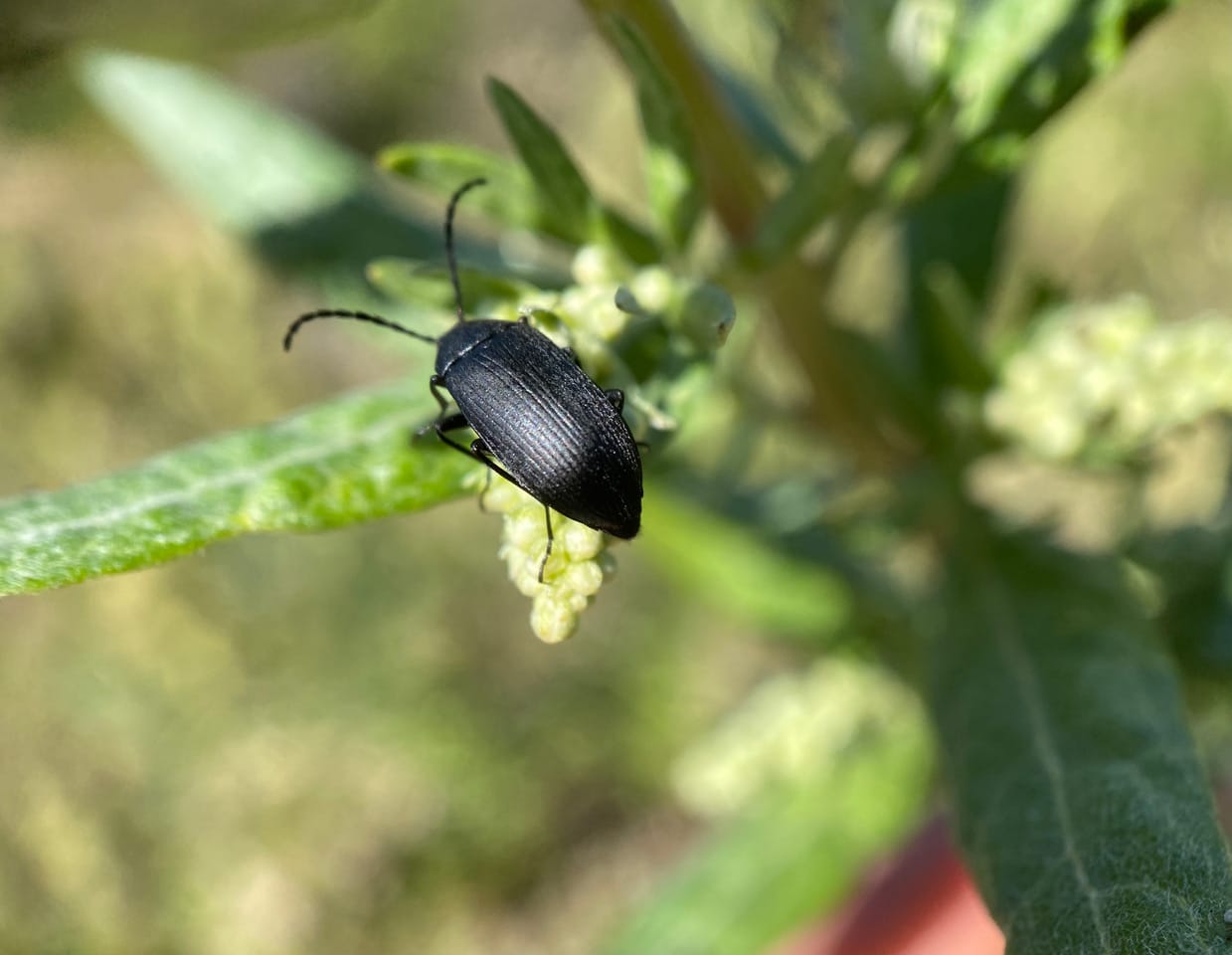
A Comb-clawed Beetle (subfamily Alleculinae, family Tenebrionidae) is moving around on a blooming California Mugwort, Artemisia douglasiana.

Comb-clawed Beetles (subfamily Alleculinae, family Tenebrionidae) are known for the comblike appearance of their claws (hind tarsi). Their oval bodies are typically a glossy brown or black in color. The adults are usually found on flowers or leaves, and the larvae in rotten wood or humus.
Although its elytra look seamlessly fused, they are not – the beetle eventually flies away!
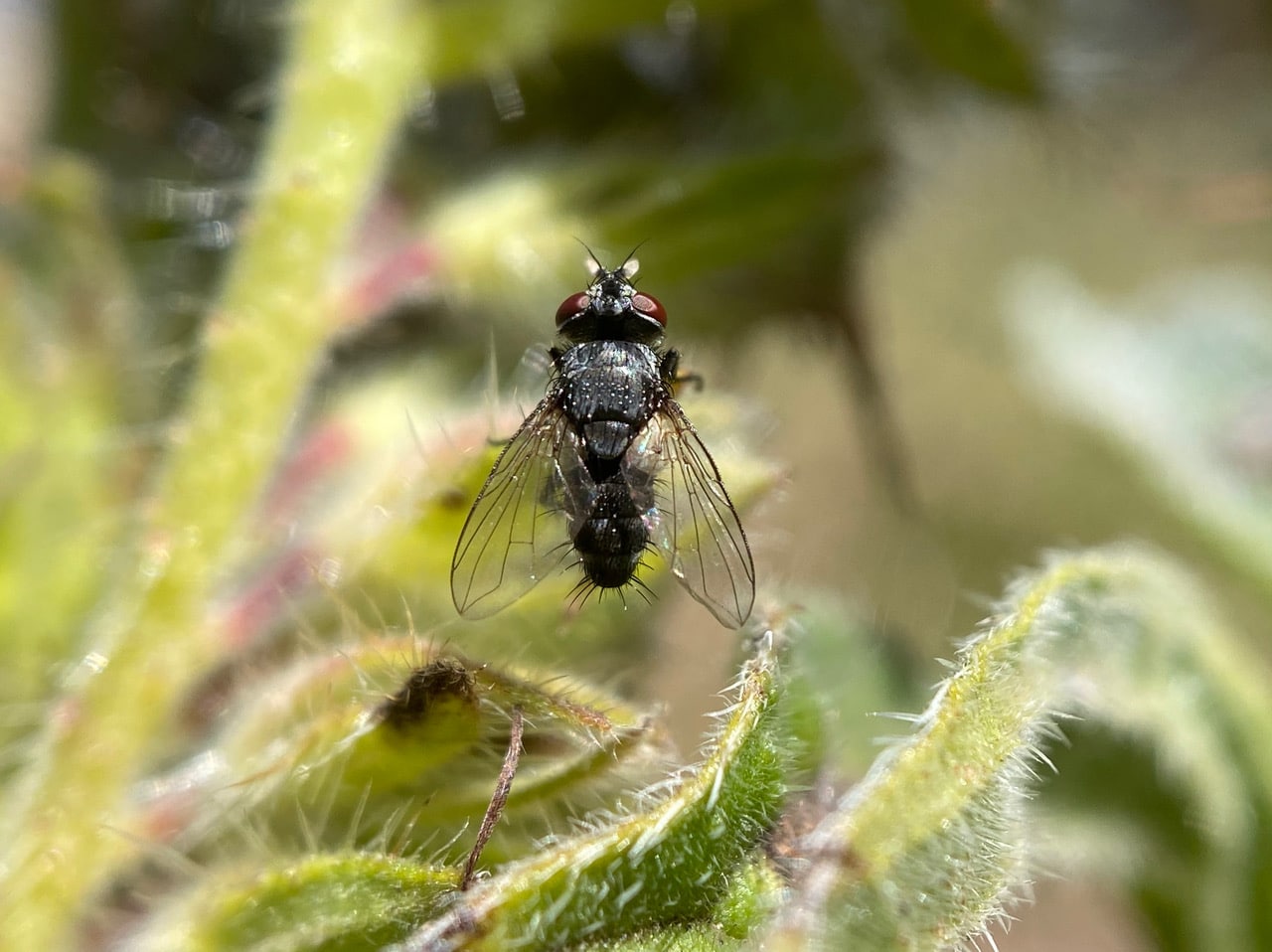 A tiny, bristly fly is running tirelessly on an inflorescence of California Phacelia, Phacelia californica. Intrigued by its diminutive size, I try to take pictures of it in every angle, in the hopes that it could be identified.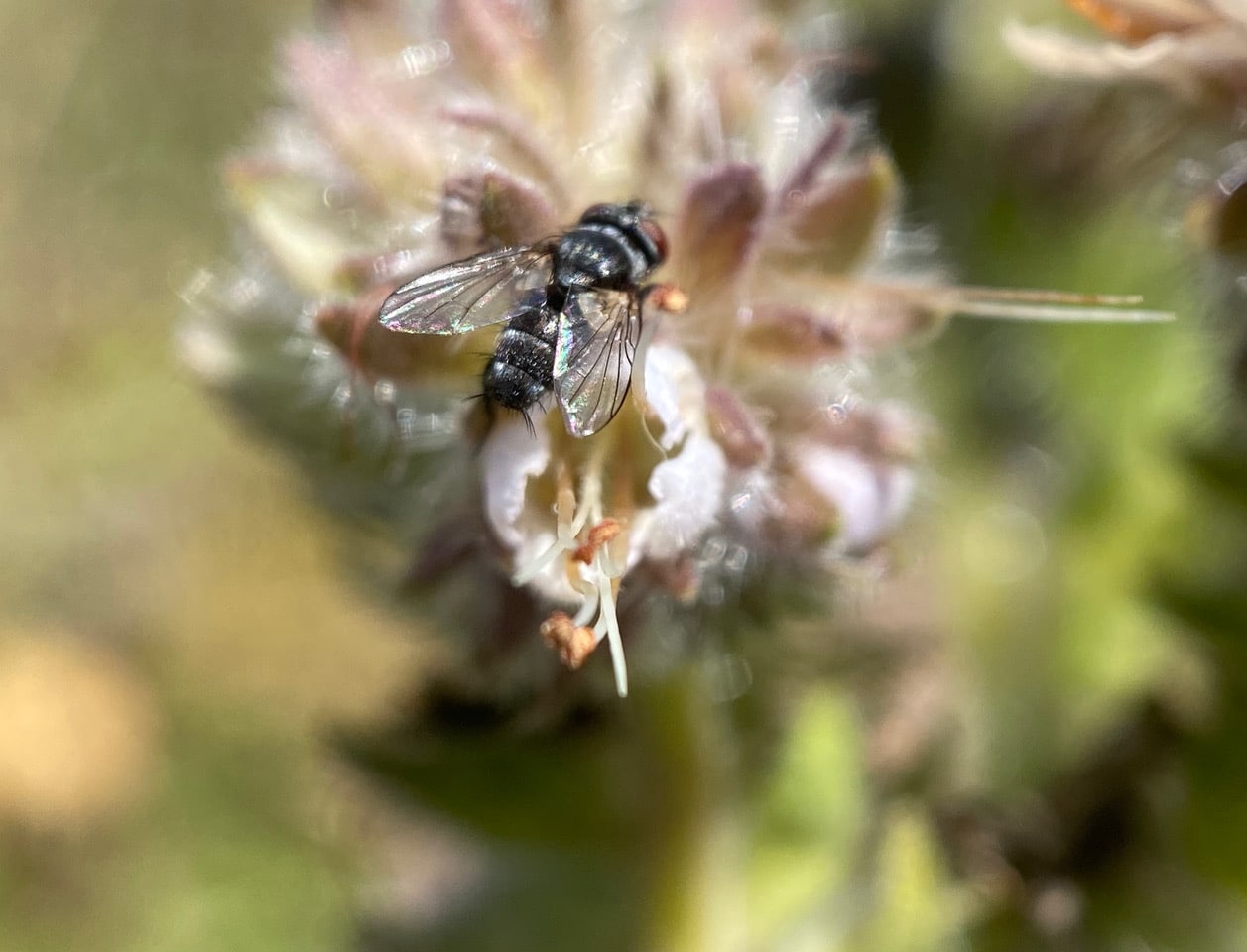
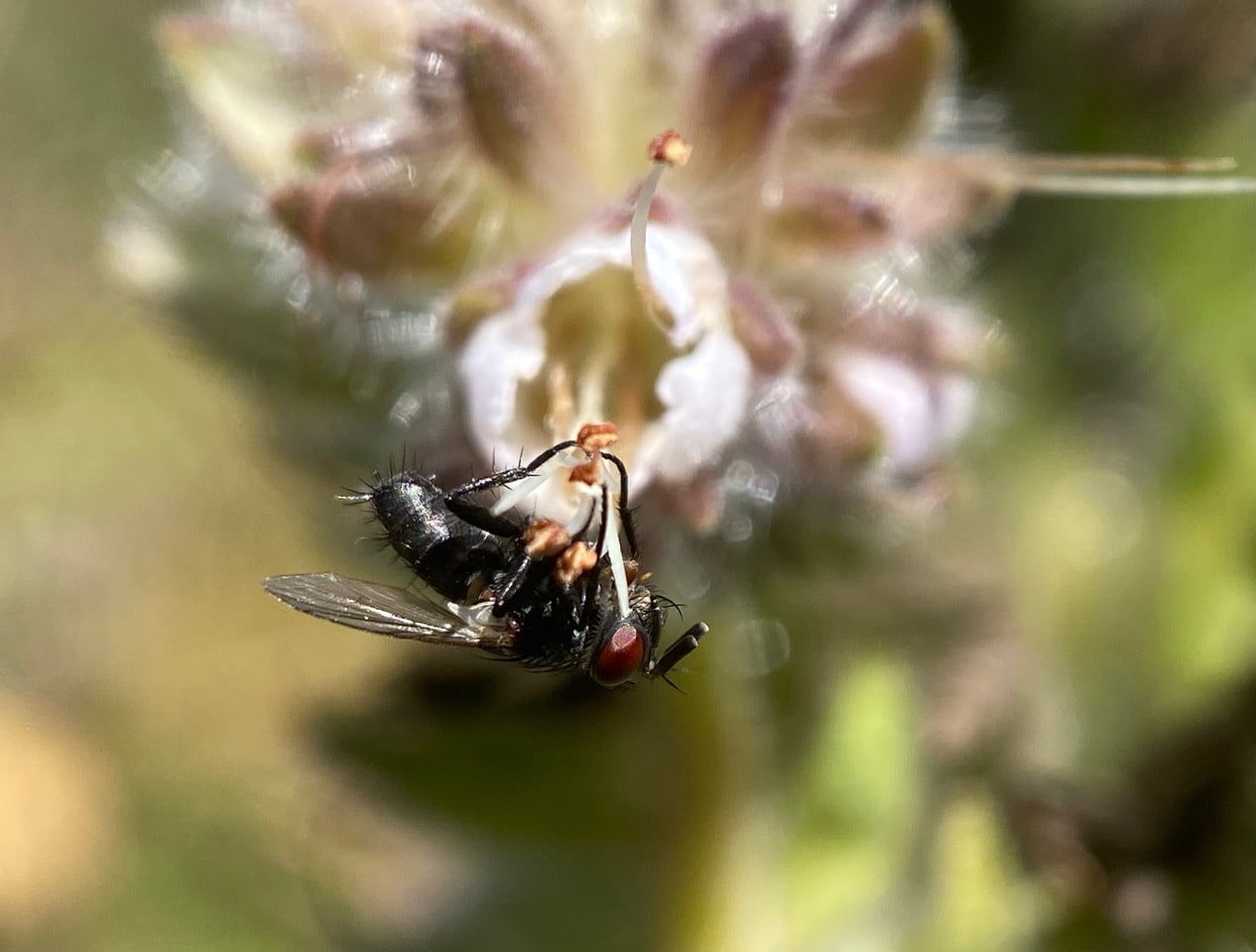
Wow, such long antennae for a fly!

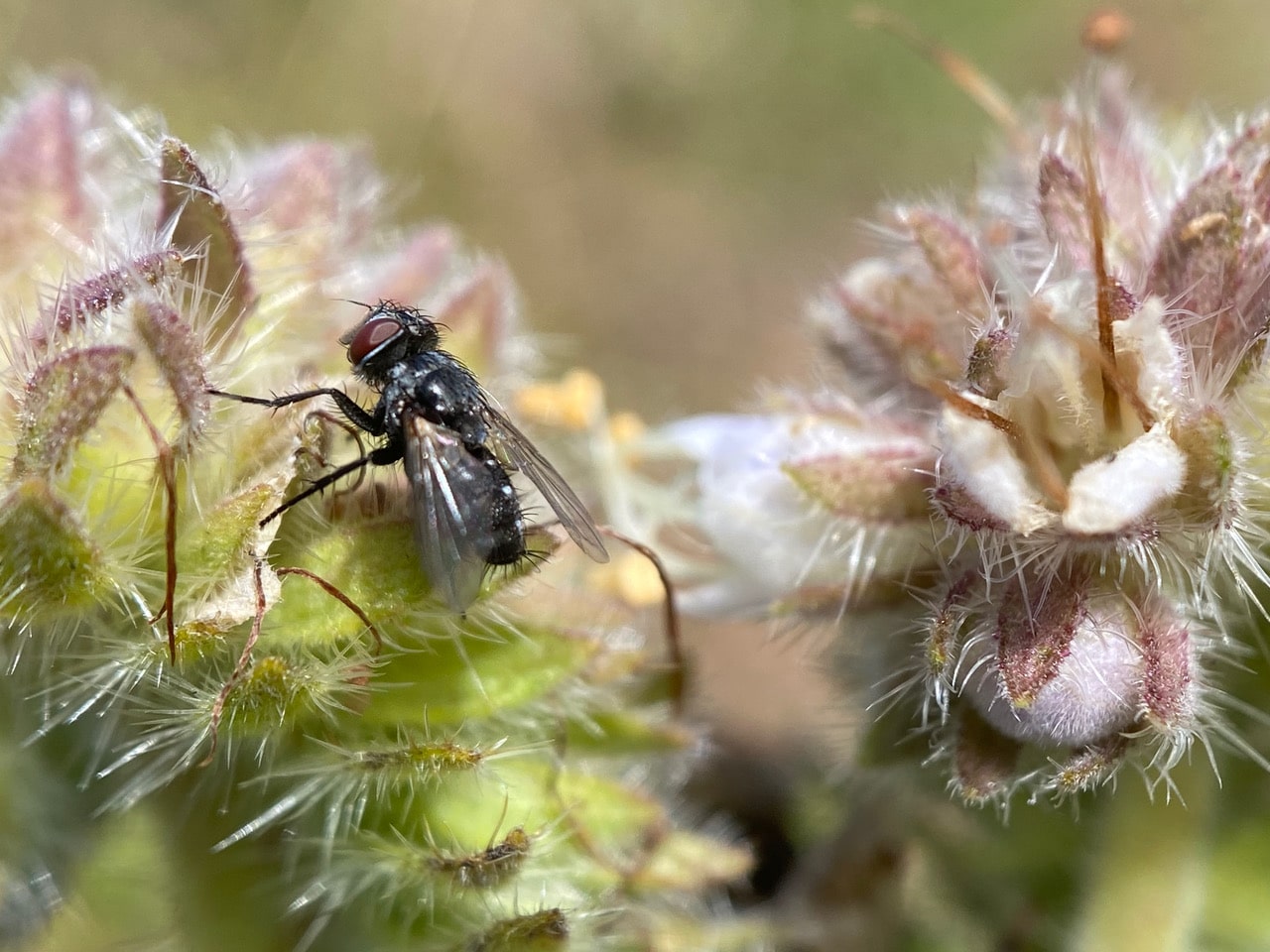

Those long antennae!
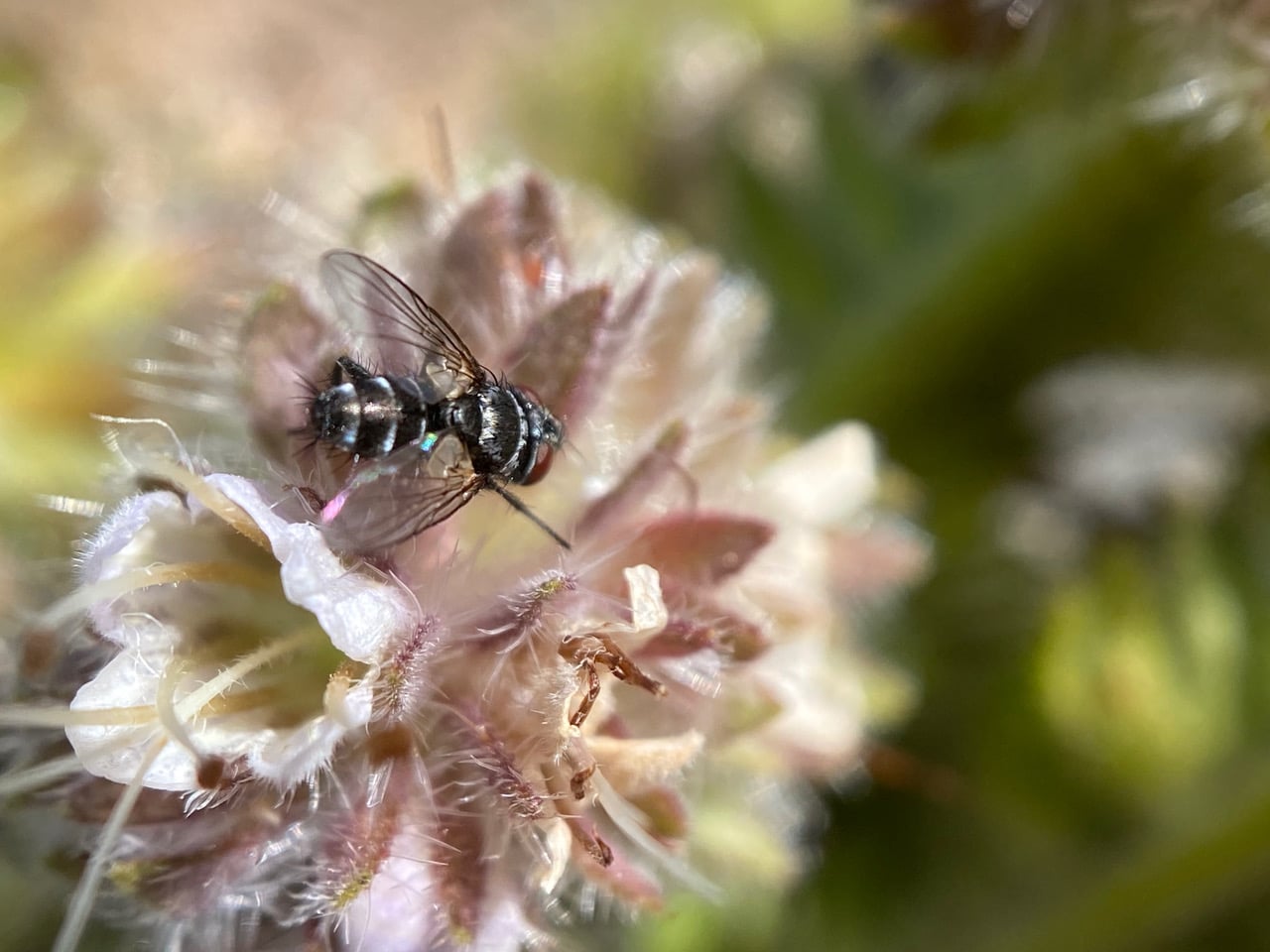
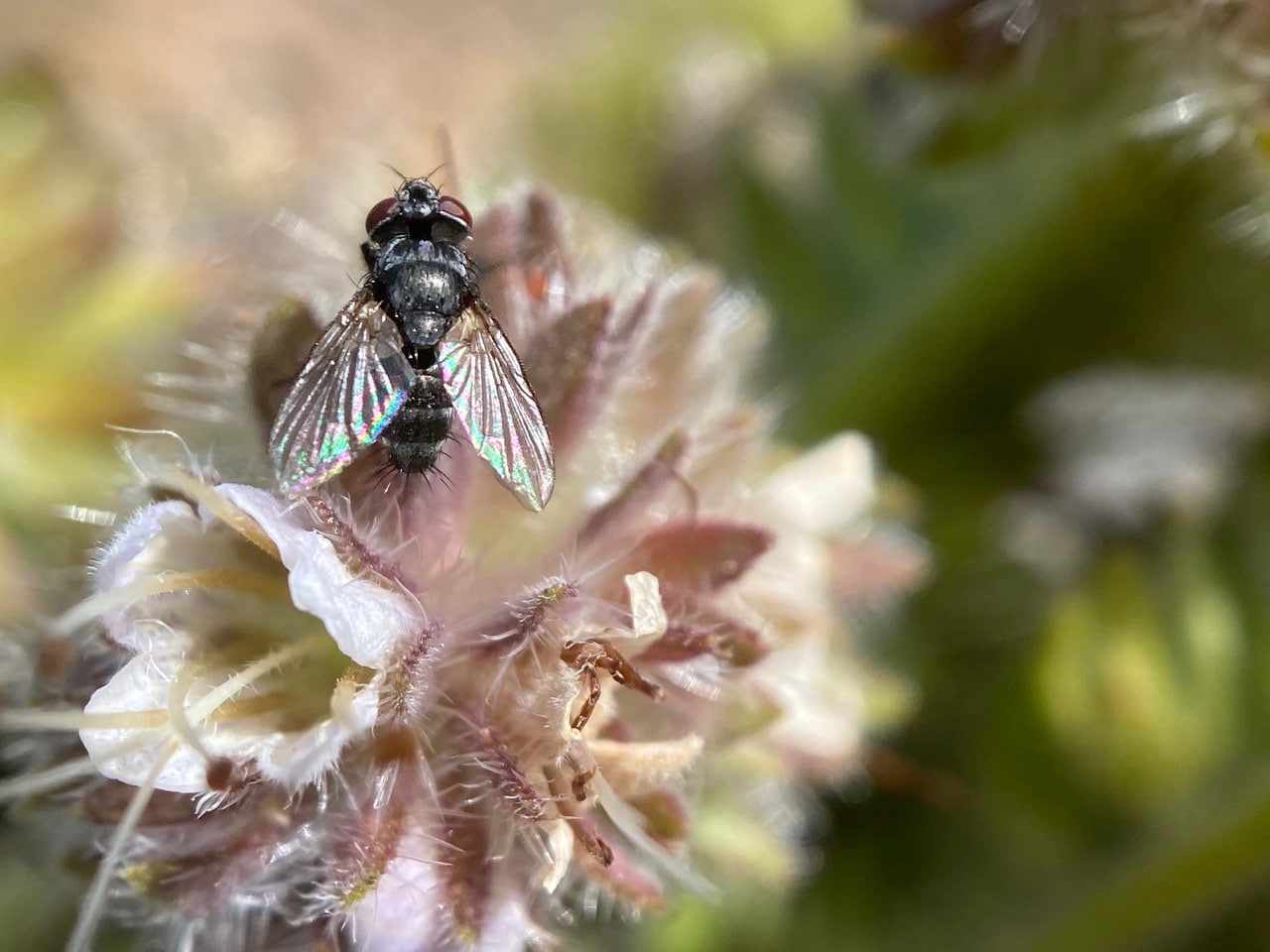
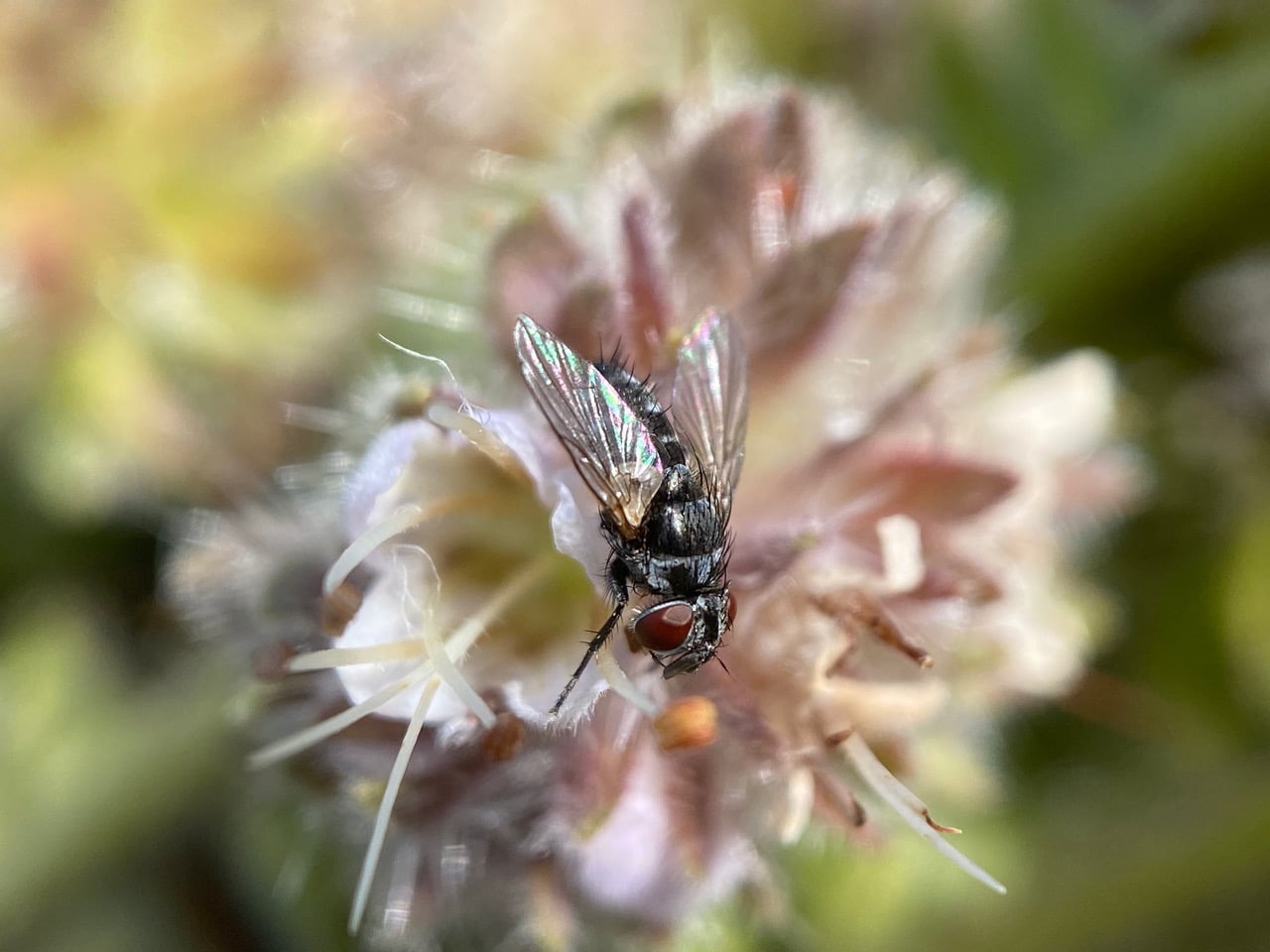
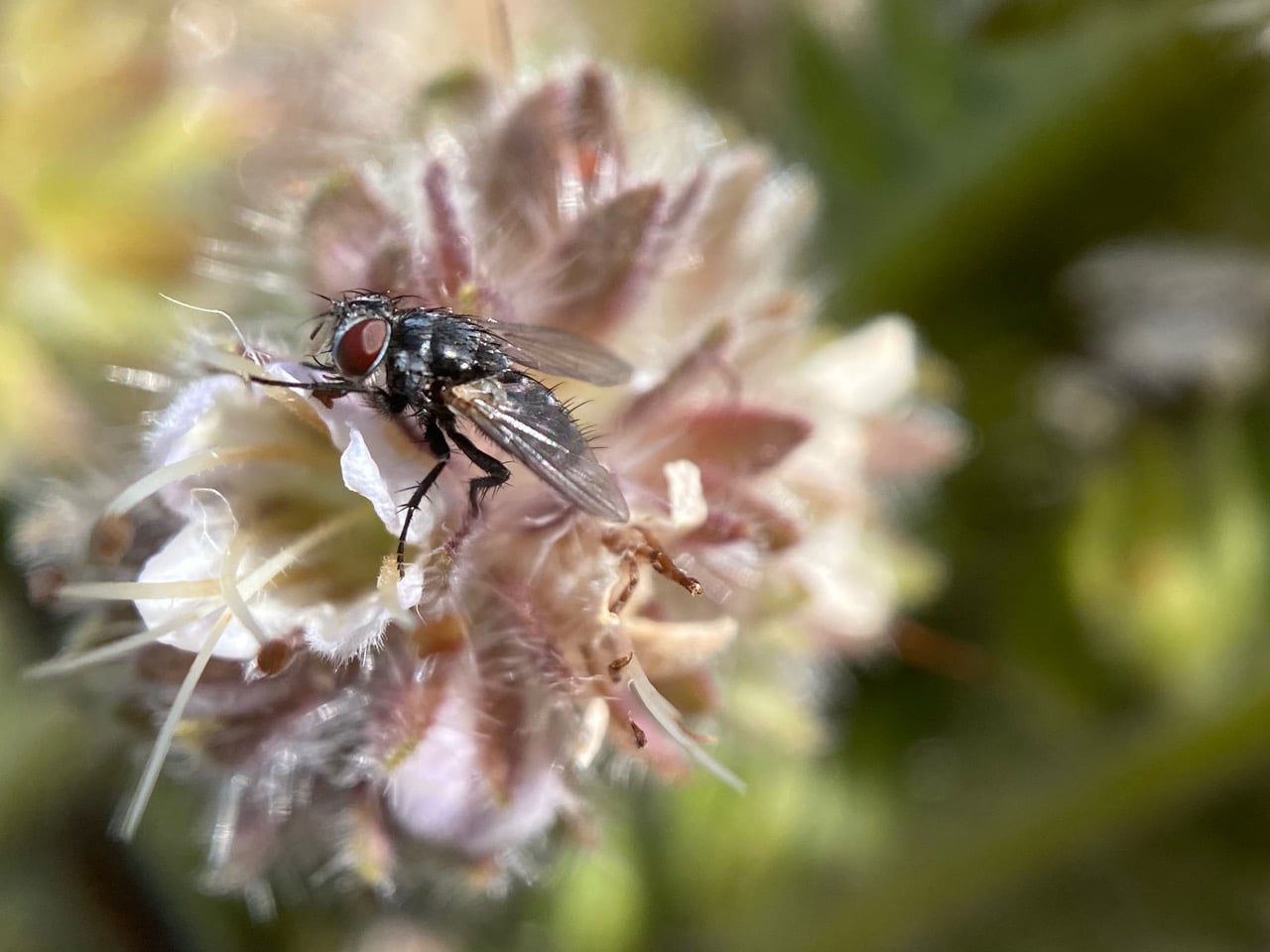

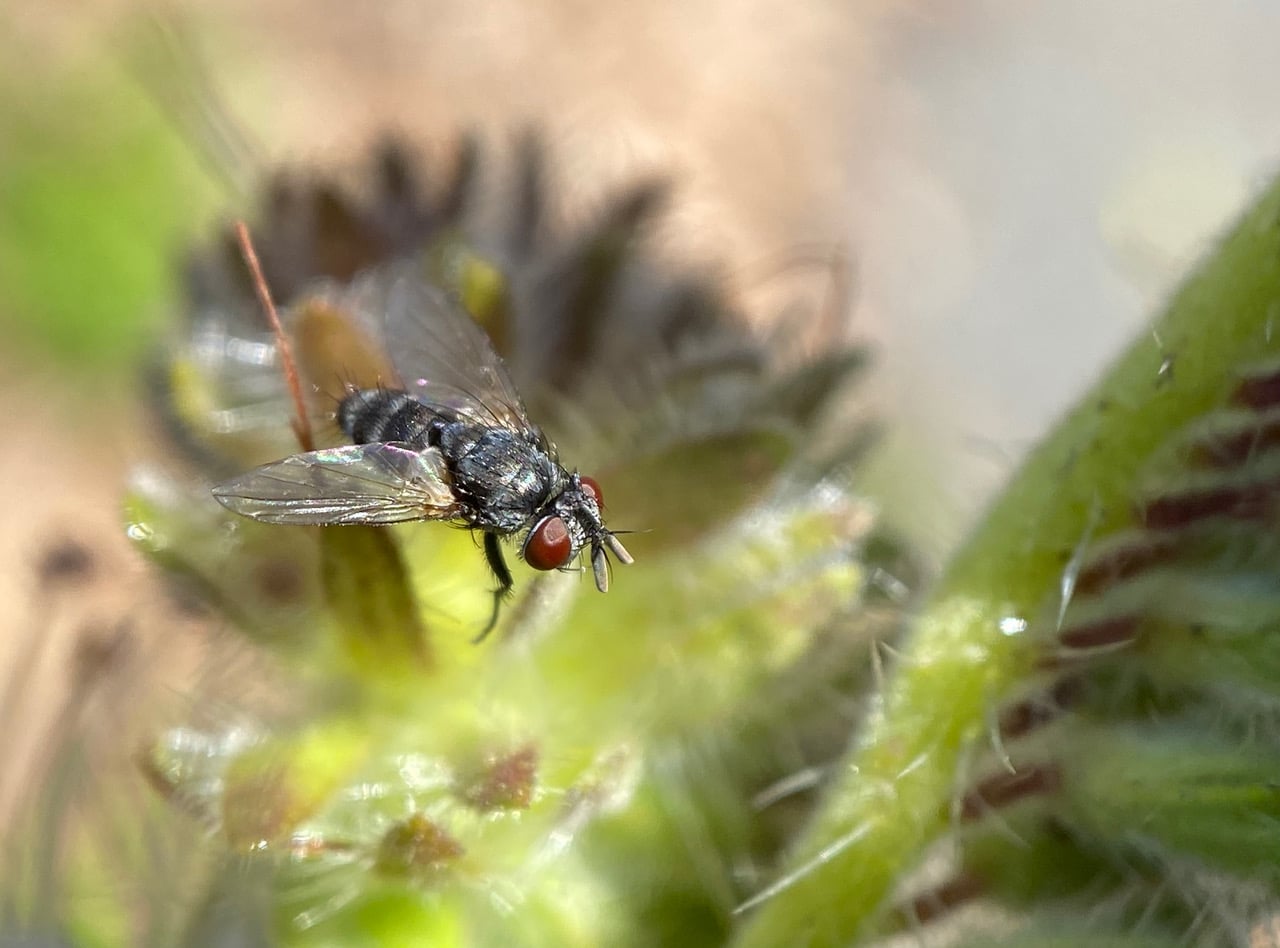
Thanks to iNaturalist, the fly has been identified – Metopia sp. (subfamily Miltogramminae, family Sarcophagidae).
Members of the family Sarcophagidae are commonly called Flesh Flies. Many have black and gray longitudinal stripes on the thorax and checkering on the abdomen, red eyes, and a bristled abdomen sometimes with a red tip. They differ from most flies in that they are ovoviviparous, opportunistically depositing hatched or hatching maggots instead of eggs on carrion, dung, decaying material, open wounds of mammals, hence their common name. The adults mostly feed on fluids from animal bodies, nectar, sweet foods, fluids from animal waste and other organic substances. While we may find their habits revolting, Flesh Flies perform important roles in the ecosystem – the larvae as decomposers/recyclers, and the adults as pollinators.
Metopia is not your ordinary Flesh Flies (family Sarcophagidae). Its larvae occupy a special niche. As kleptoparasites, they develop in the nests of bees and wasps, feeding on the provisions that the females have prepared for their own young. The female Metopia enters the nest of its host to deposit its larvae.
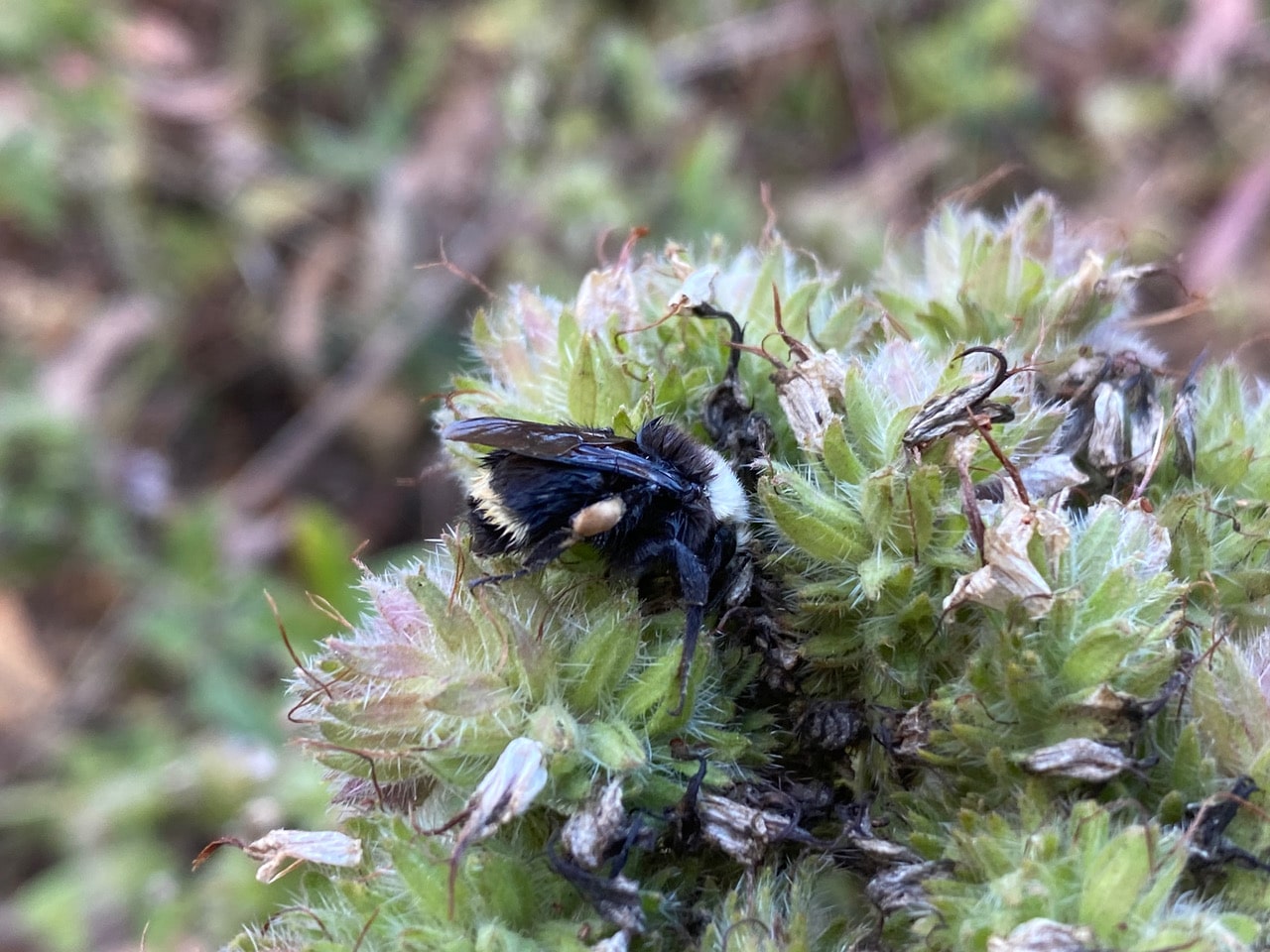
The California Phacelia along the paved road are fast fading, and less bumble bees are foraging on them now. Here’s the reason why. The Bumble Bees are approaching the end of their season as well. This Yellow-faced Bumble, Bombus vosnesenskii is perched motionless on an inflorescence, its hairs matted and unkempt. It is probably dead. The queen bumble bees are the only members of the colony that will overwinter, hibernating in some safe spot after mating with the drones.

A Spotted Cucumber Beetle, Diabrotica undecimpunctata (family Chrysomelidae) is feeding on the pollen of a Sticky Monkeyflower, Diplacus aurantiacus.
Members of the family Chrysomelidae are commonly known as Leaf Beetles. Adults and larvae feed on all sorts of plant tissues, and all species are fully herbivorous. Many are serious pests of cultivated plants, including food crops. Others are beneficial due to their use in biocontrol of invasive weeds. Chrysomelids are popular among insect collectors, as many are conspicuously colored, typically in glossy yellow to red or metallic blue-green hues, and some have spectacularly bizarre shapes. Photos of Leaf Beetles (Family Chrysomelidae) · iNaturalist
Native to North America, the Spotted Cucumber Beetle can be a major agricultural pest, causing damage to crops in the larval as well as adult stages of their life cycle. Larvae, sometimes known as rootworms feed on the roots of emerging plants. In the adult stage the beetles cause damage by eating the flowers, leaves, stems and fruits of the plant.
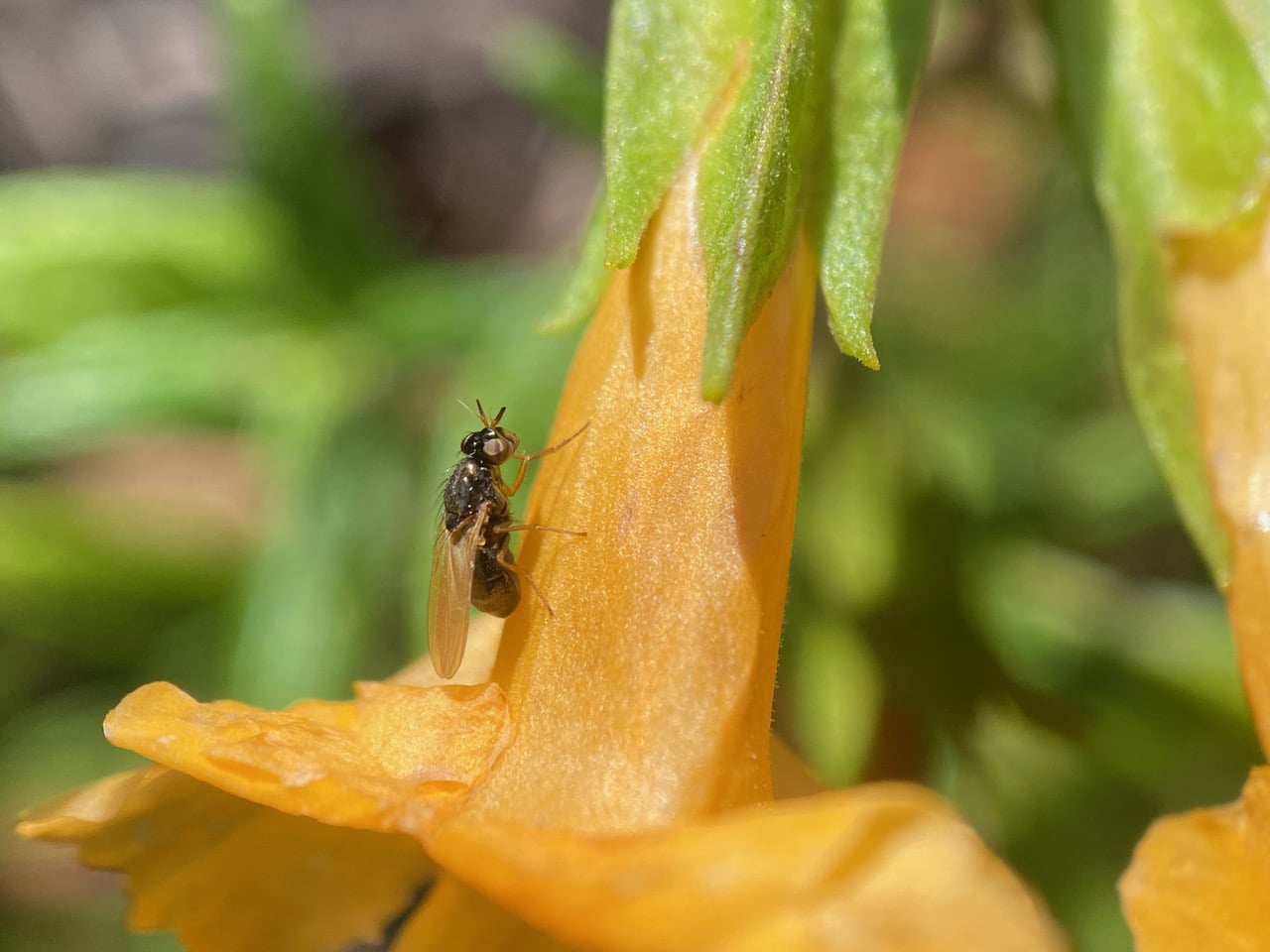
A tiny fly with a sad hunched appearance walks up the back of a Sticky Monkeyflower. I have never seen antennae with such long arista! The fly also has orange wings to match the color of the flower!
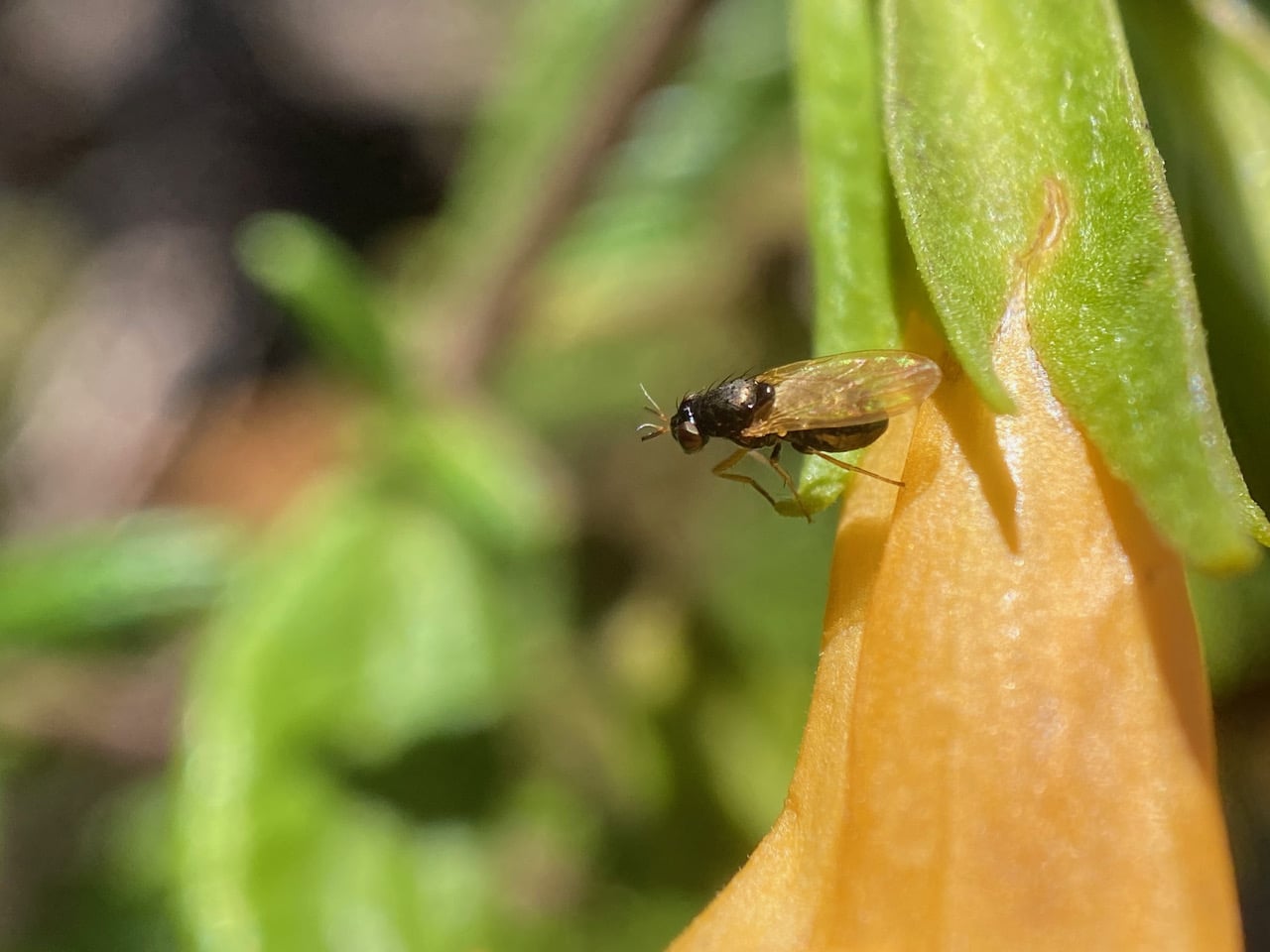
The long aristae are quite visible in this view. The fly has yet to be identified.
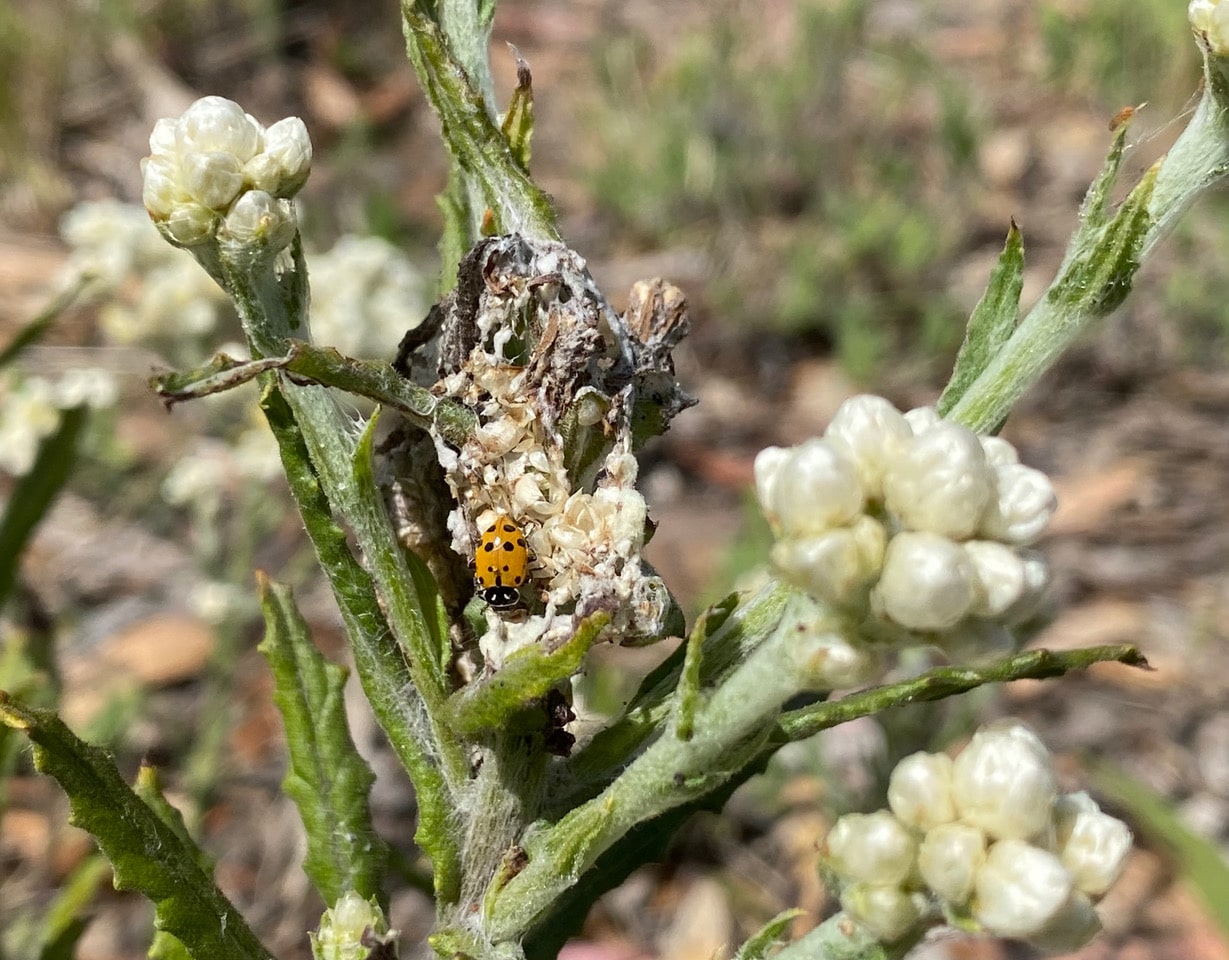
There are many collapsed nests of the American Lady caterpillars left on the California Everlasting, Pseudognaphalium californicum, but I don’t find any of the caterpillars today. Just an occasional Ladybeetle on the nests. I am seeing paler Ladybeeetles lately, more orange than red. I wonder if that has to do with the nutritional status of the beetles when they are developing?
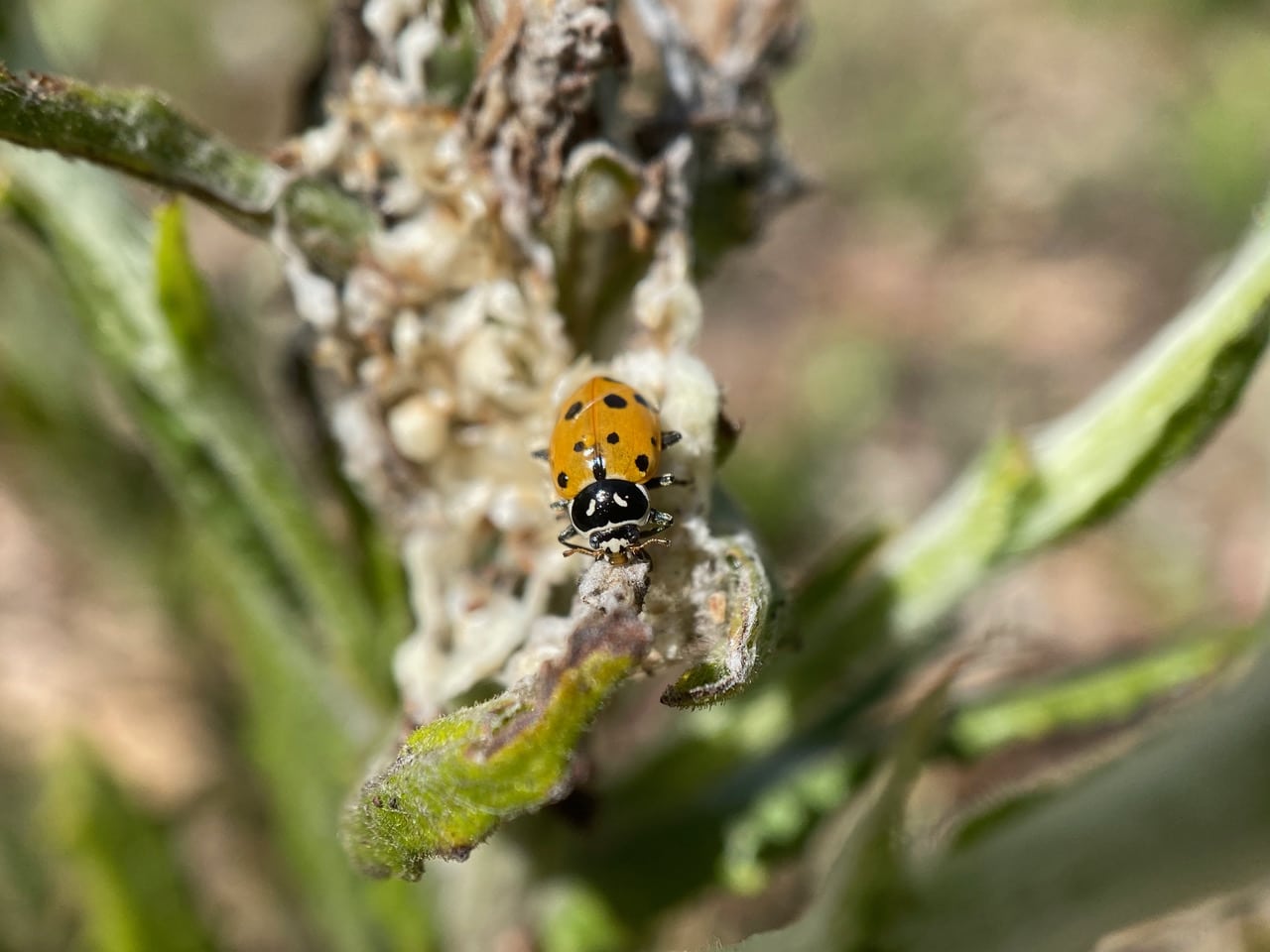
The Convergent Ladybeetle, Hippodamia convergens (family Coccinellidae) is feeding on something very small that is invisible to me. Maybe the abandoned caterpillar nest is now hosting some small insects or mites?
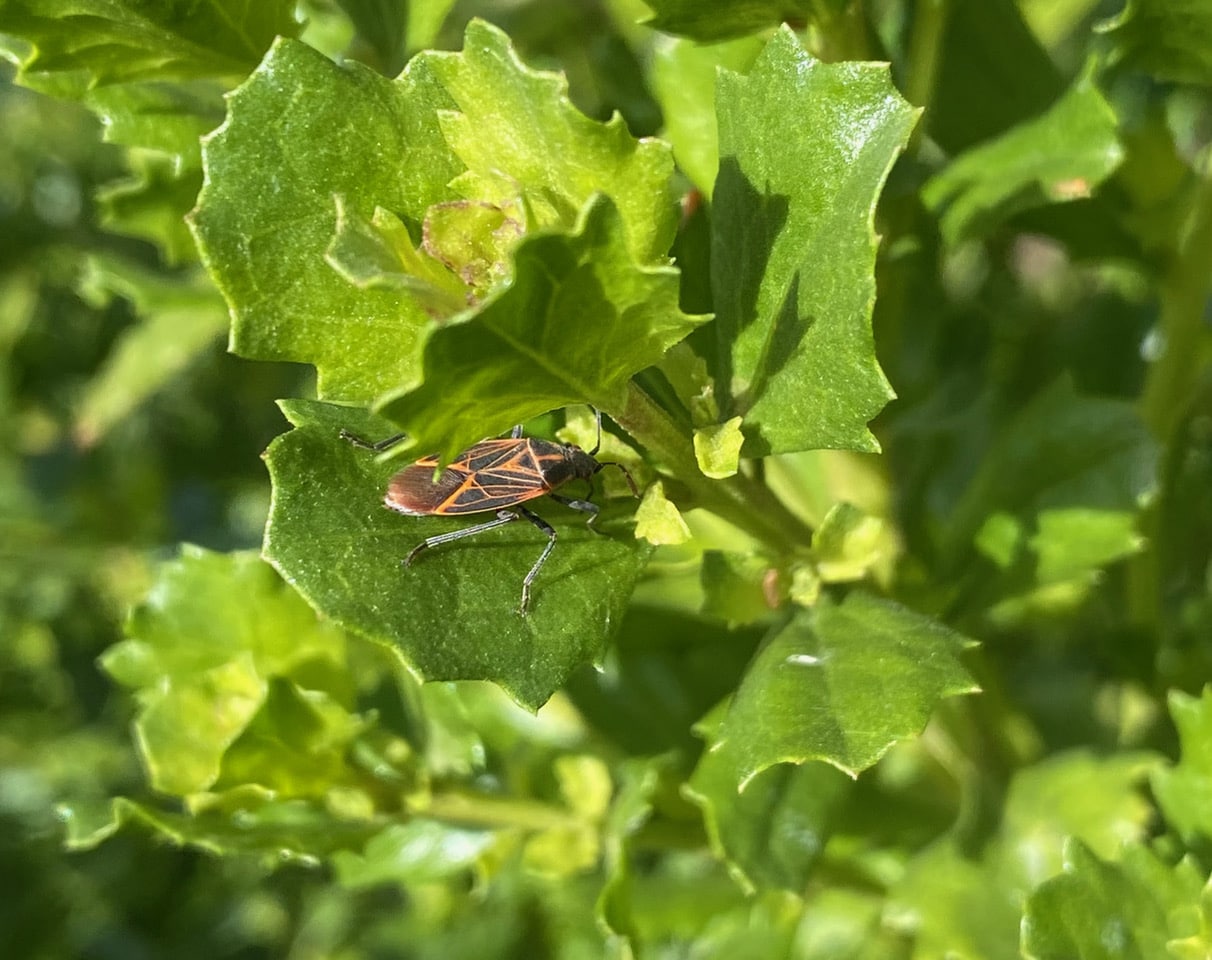
A Western Boxelder Bug, Boisea rubrolineata (family Rhopalidae) is hiding in the foliage of Coyote Brush.
Boxelder bugs are true bugs (order Hemiptera) in the family Rhopalidae (Scentless Plant Bugs). They usually feed on the leaves, flowers, and seedpods of the box elder tree (Acer negundo), and occasionally occur on maple and ash trees. They may feed on the fruits of trees in the Rose family (We have a large non-native plum tree nearby along the trail!)
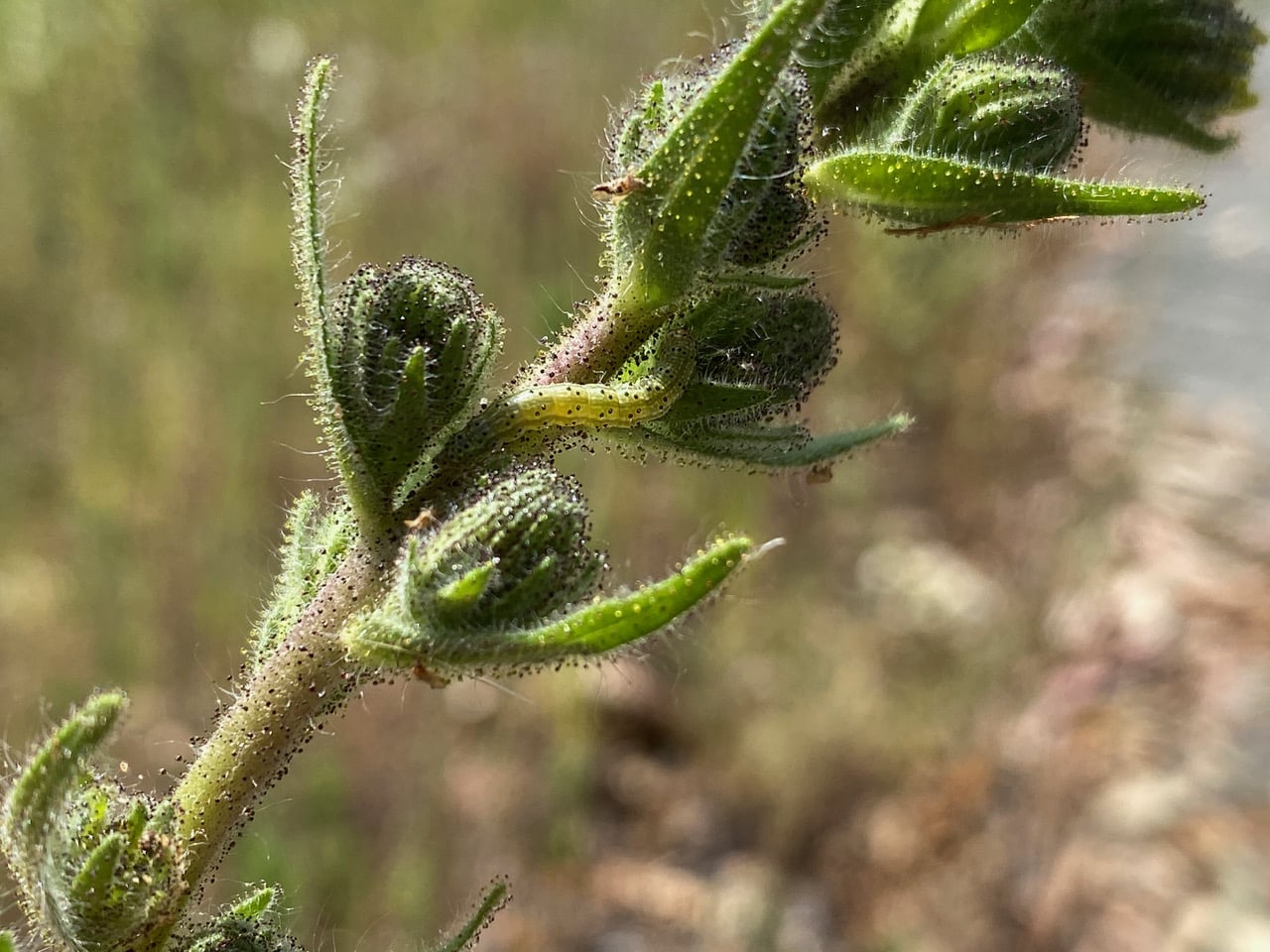
Do you see a caterpillar on this Coast Tarweed, Madia sativa?
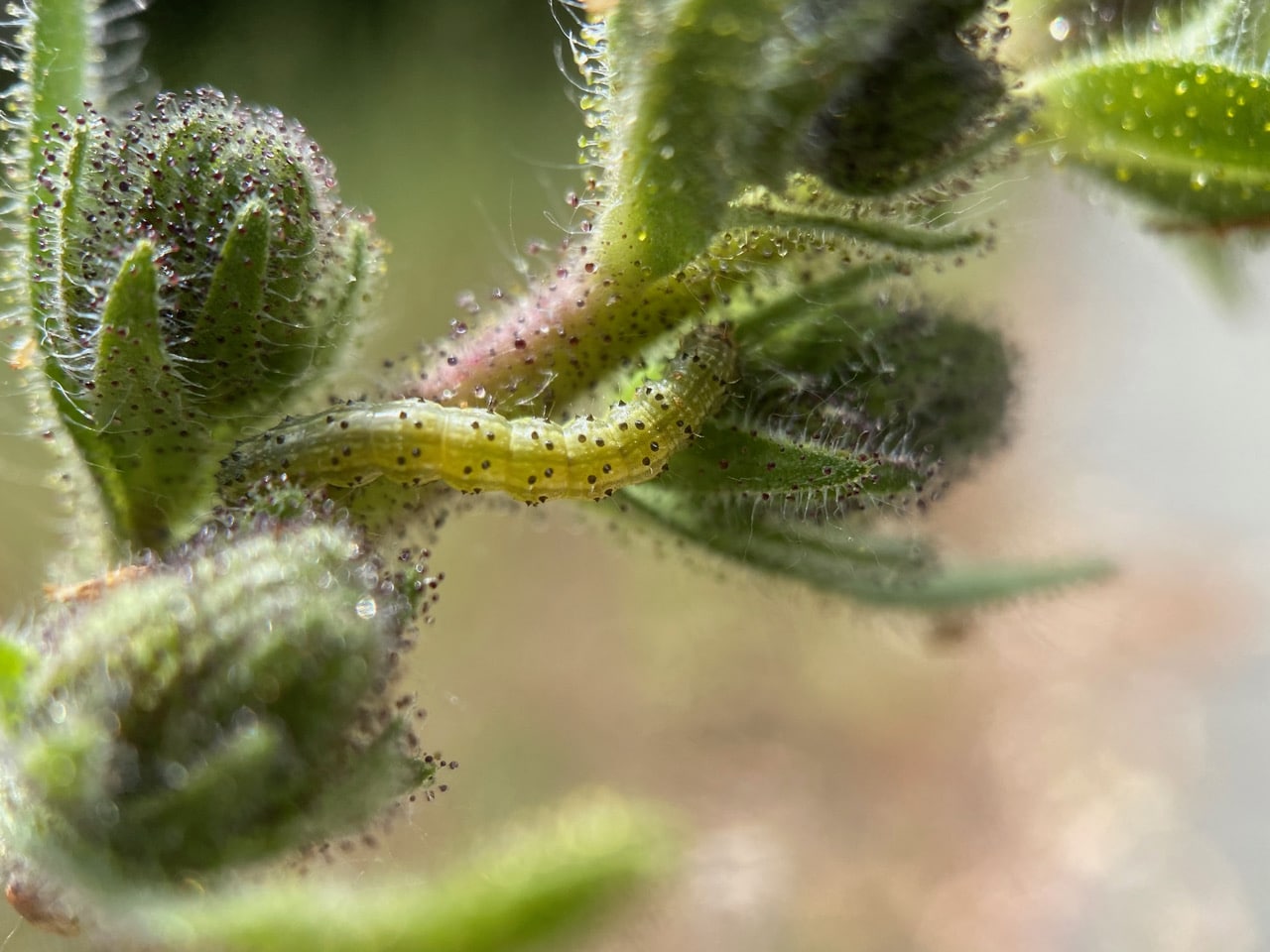
Now?
That’s a caterpillar of the Small Owlet Moth, Heliothodes diminutiva (family Noctuidae) reaching for an immature flowerhead of Coast Tarweed. It is perfectly adapted for living on the sticky plant, traveling on its own highway of silk that it lays down as it moves forward. And it is well-camouflaged against its host plant, complete with fake tar spots.
The Small Heliothodes Moth, Heliothodes diminutiva (family Noctuidae) is day-active. It is found from California, through Oregon to Washington, most often on plants in the family Asteraceae, especially tarweeds.